
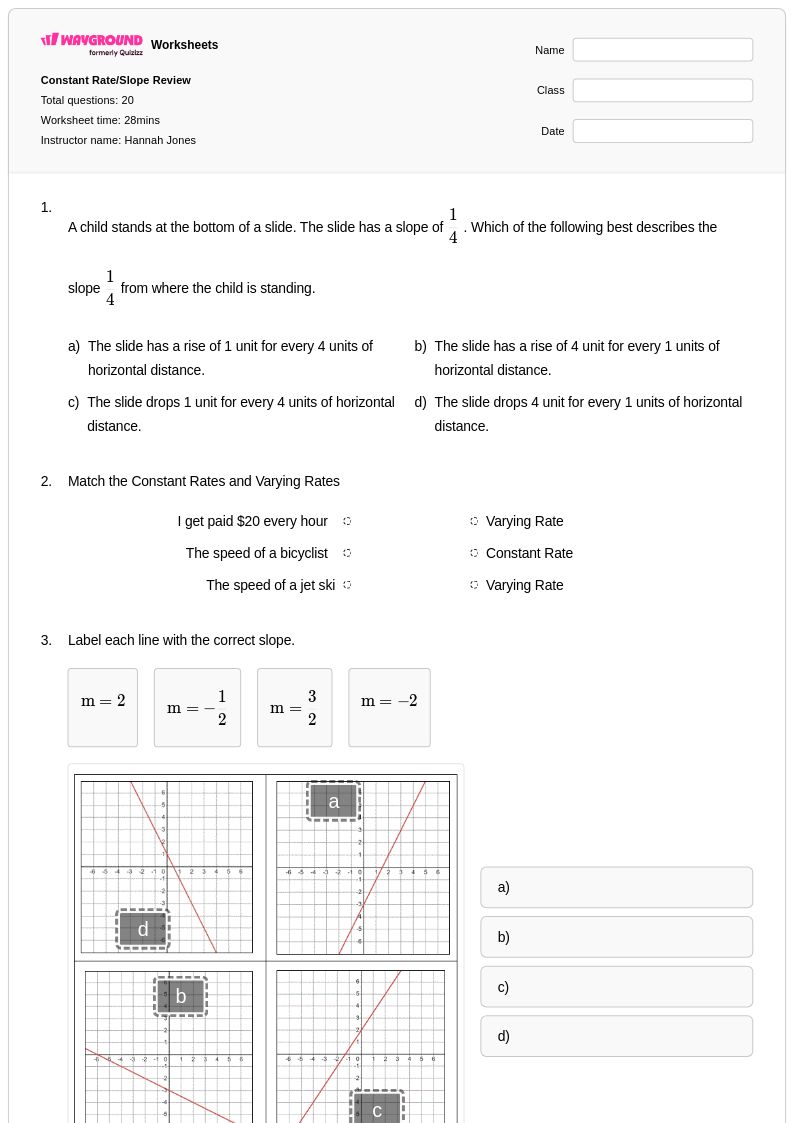
20 Q
6th - 8th
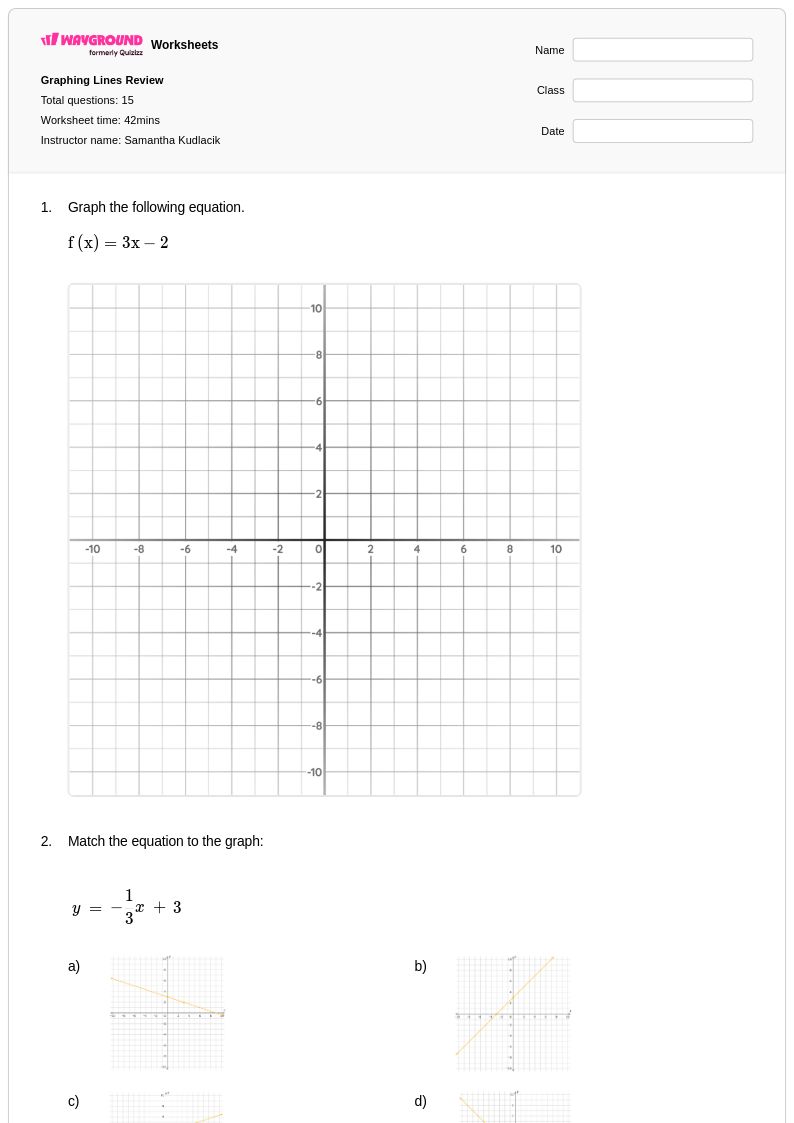
15 Q
6th - 8th
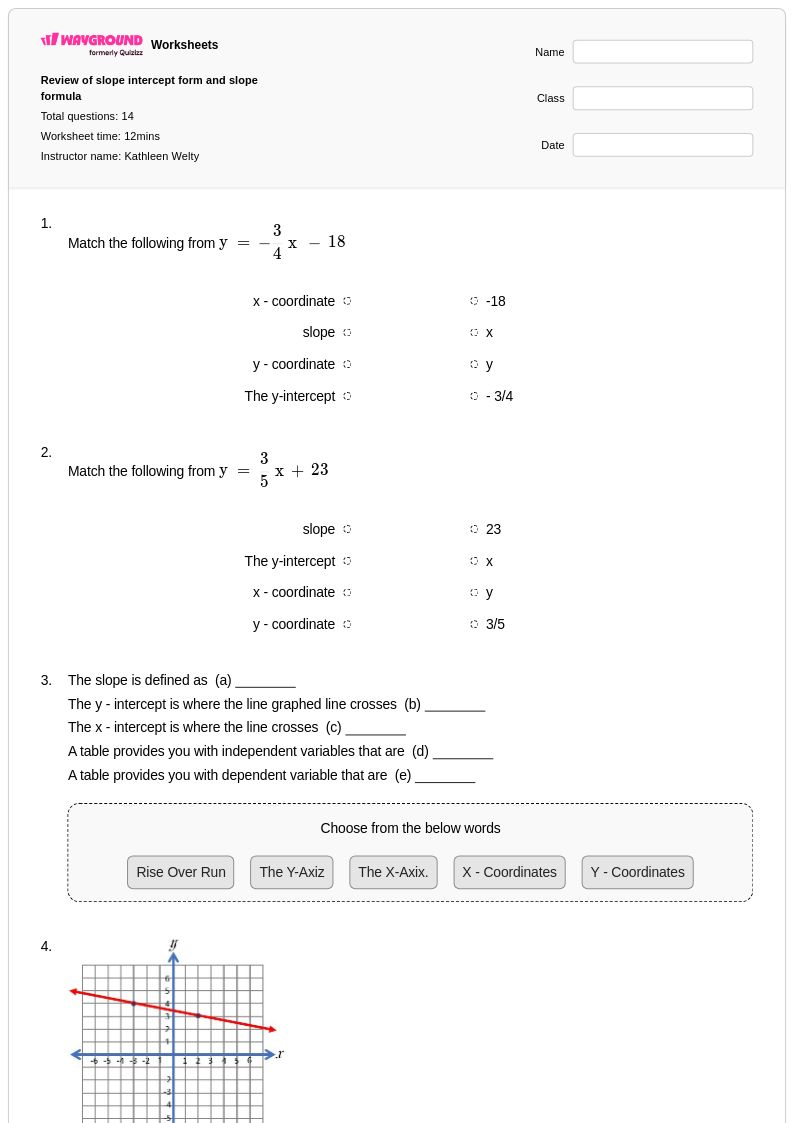
14 Q
6th - 12th
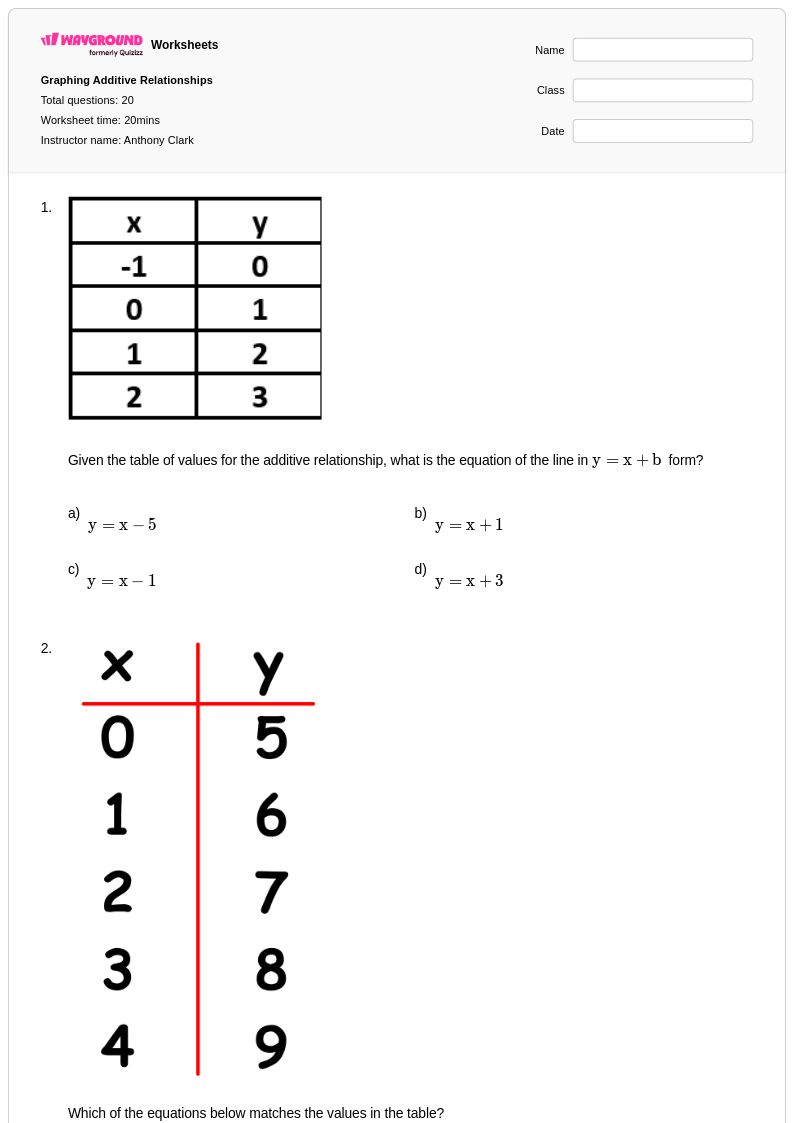
20 Q
6th - Uni
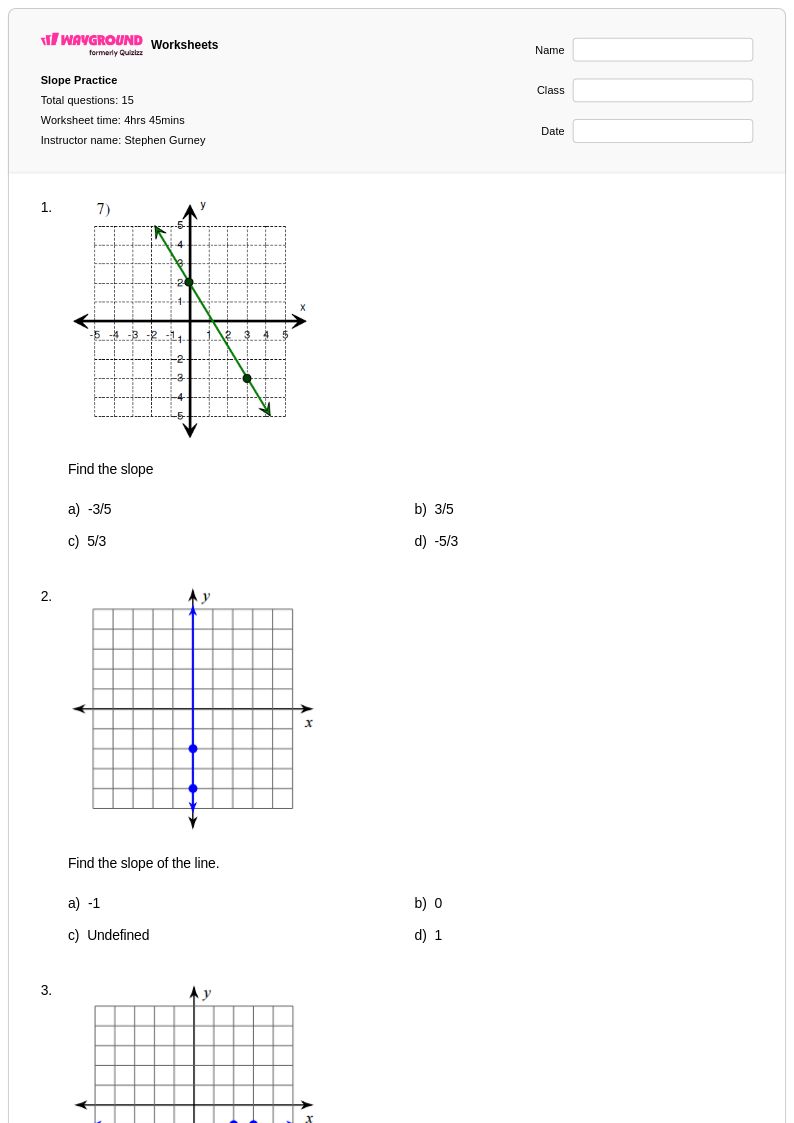
15 Q
6th - 8th
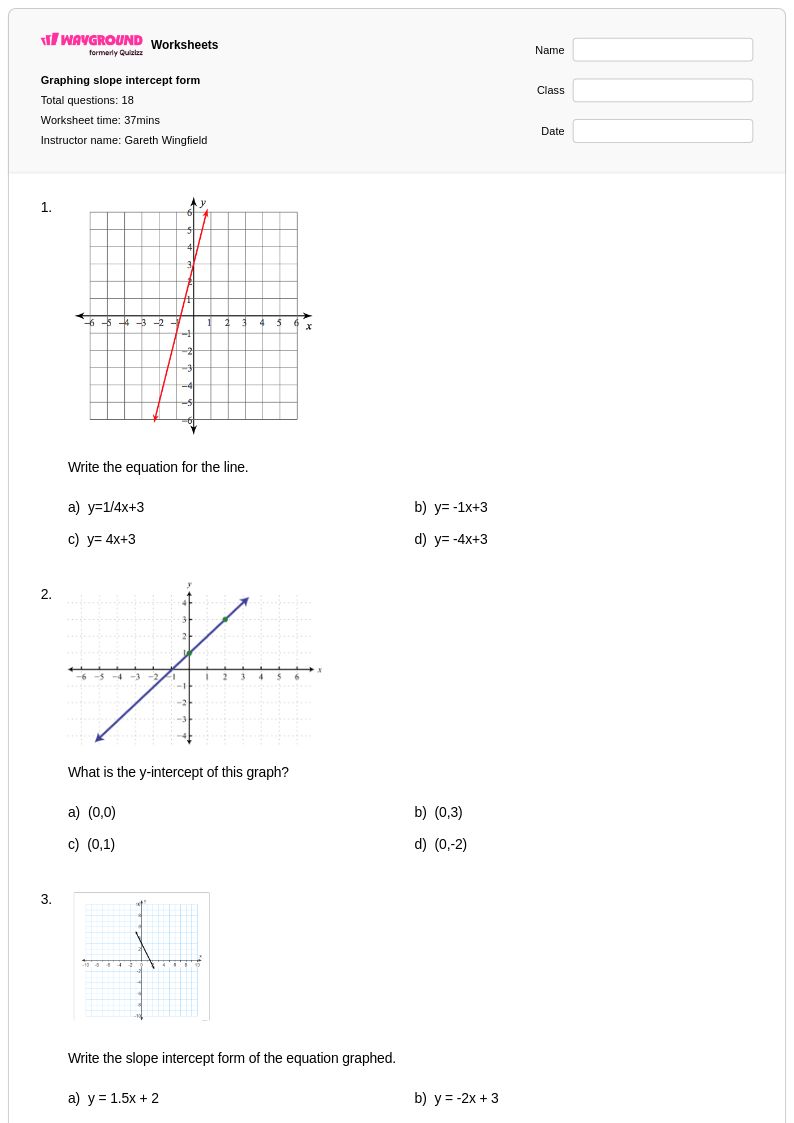
18 Q
5th - 8th
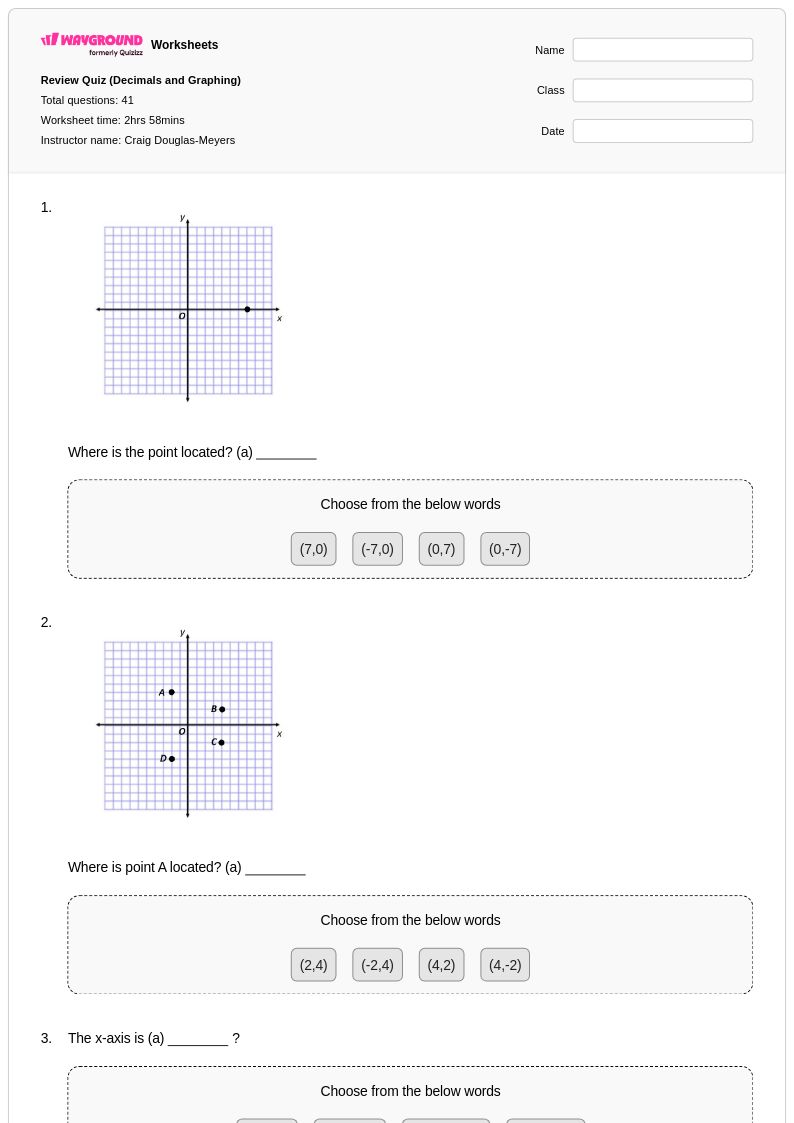
41 Q
6th
20 Q
6th - 9th
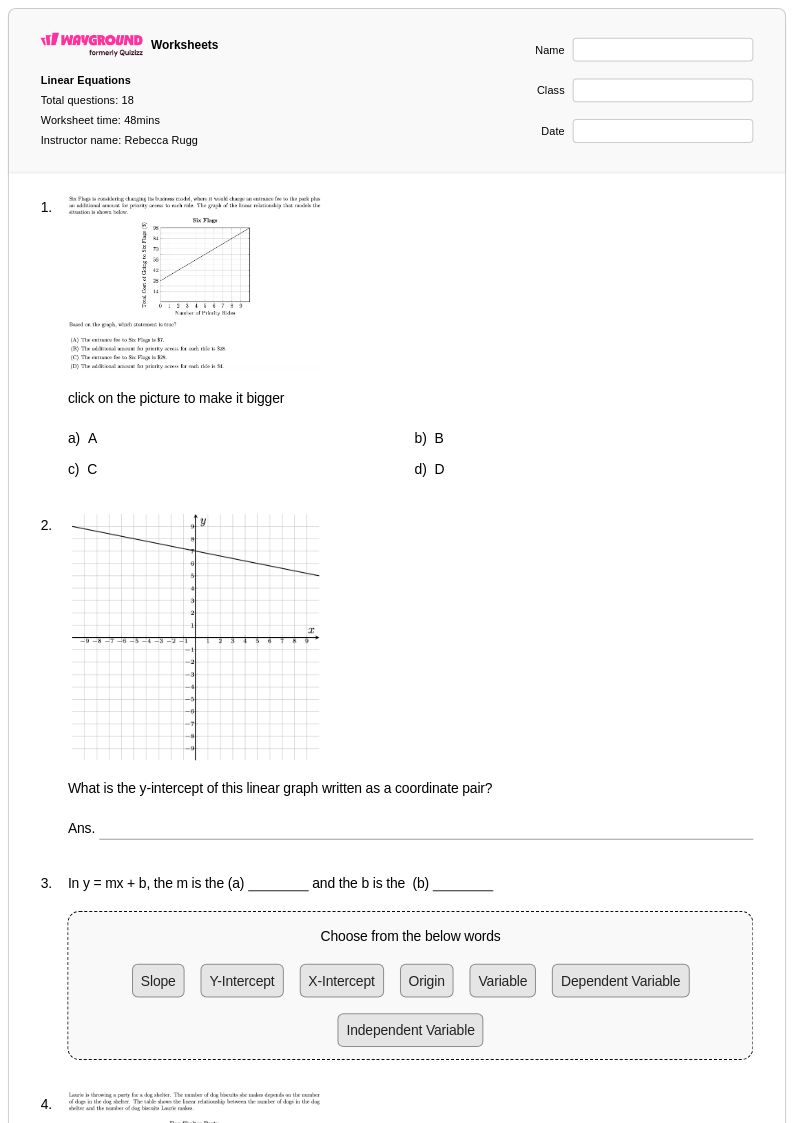
18 Q
6th - 8th
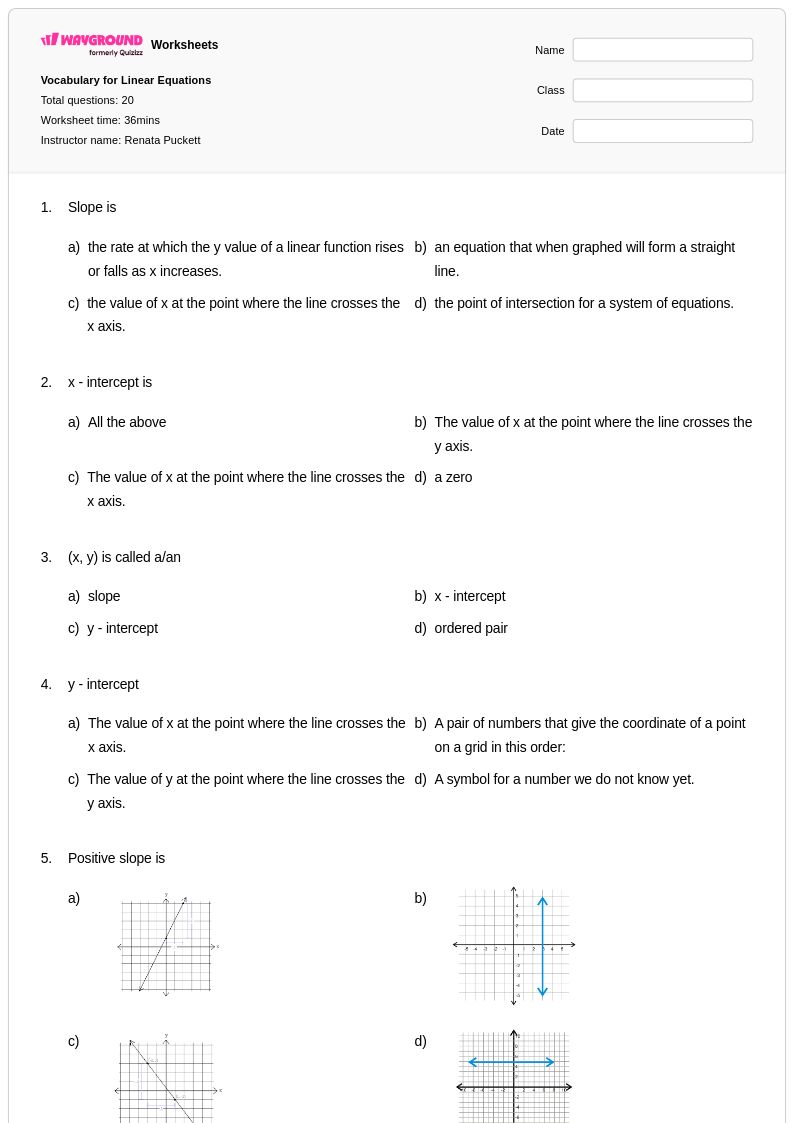
20 Q
6th - Uni
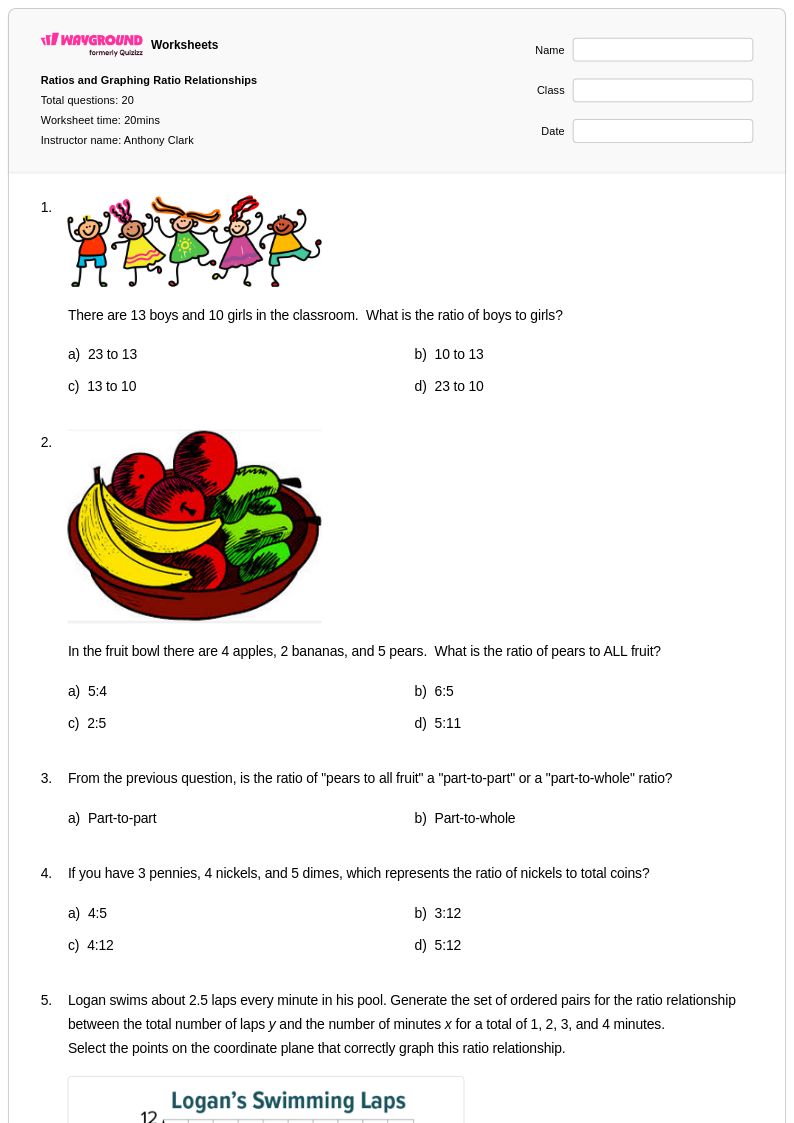
20 Q
6th - Uni
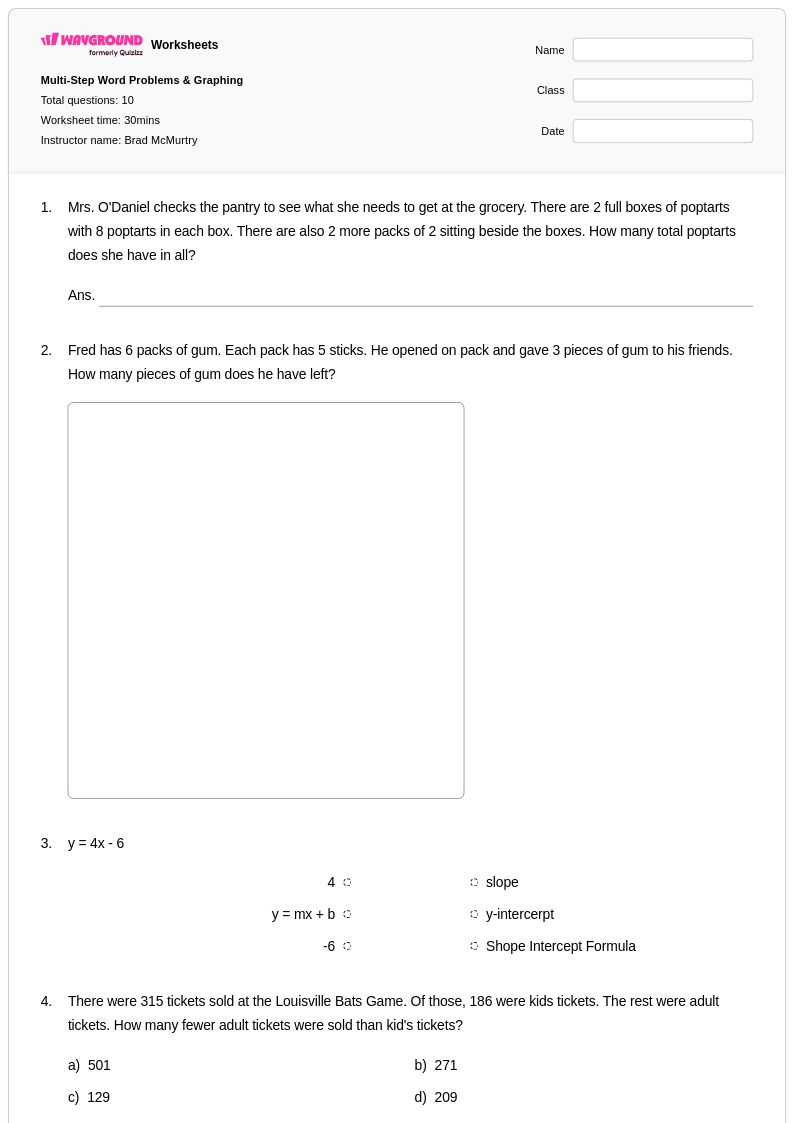
10 Q
6th - 8th
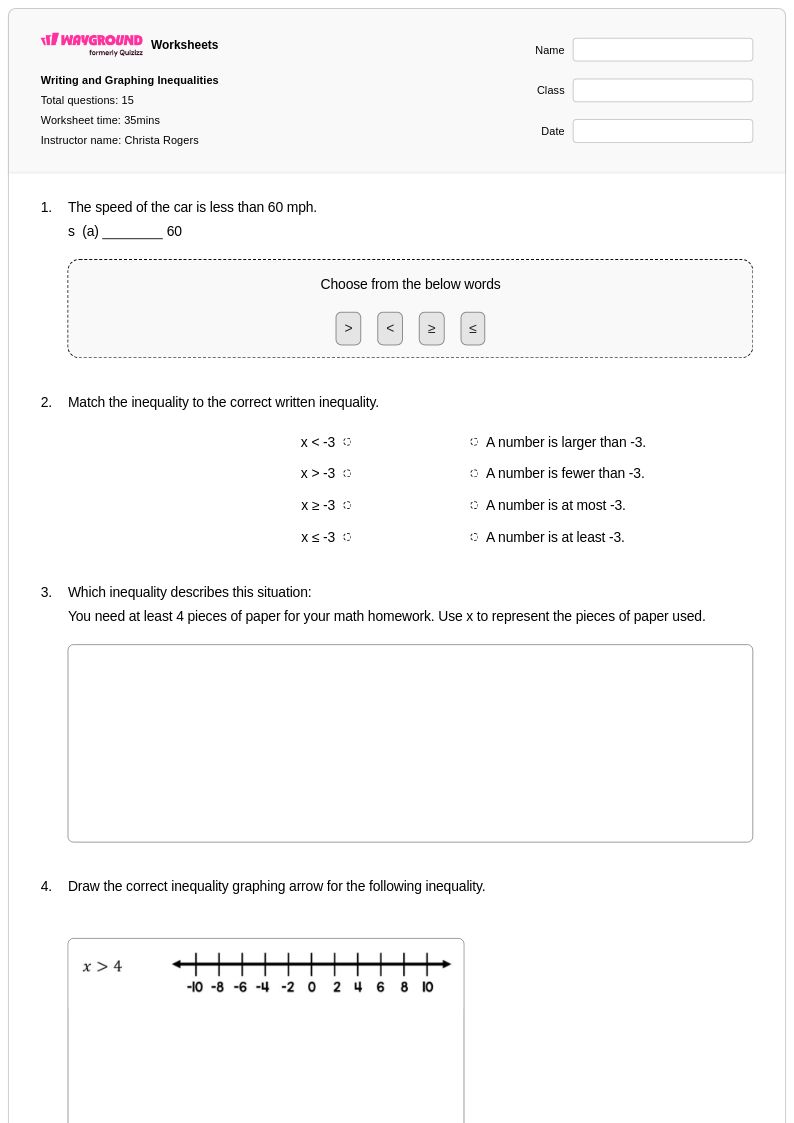
15 Q
6th
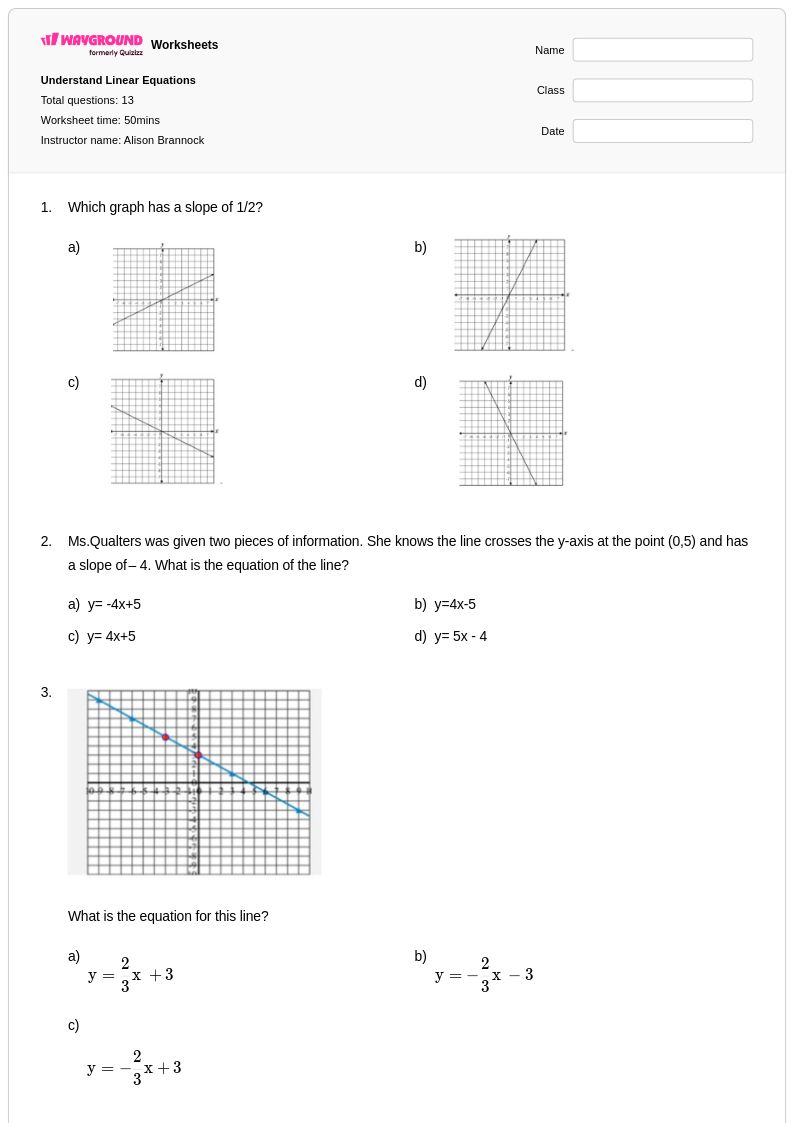
13 Q
6th - 8th
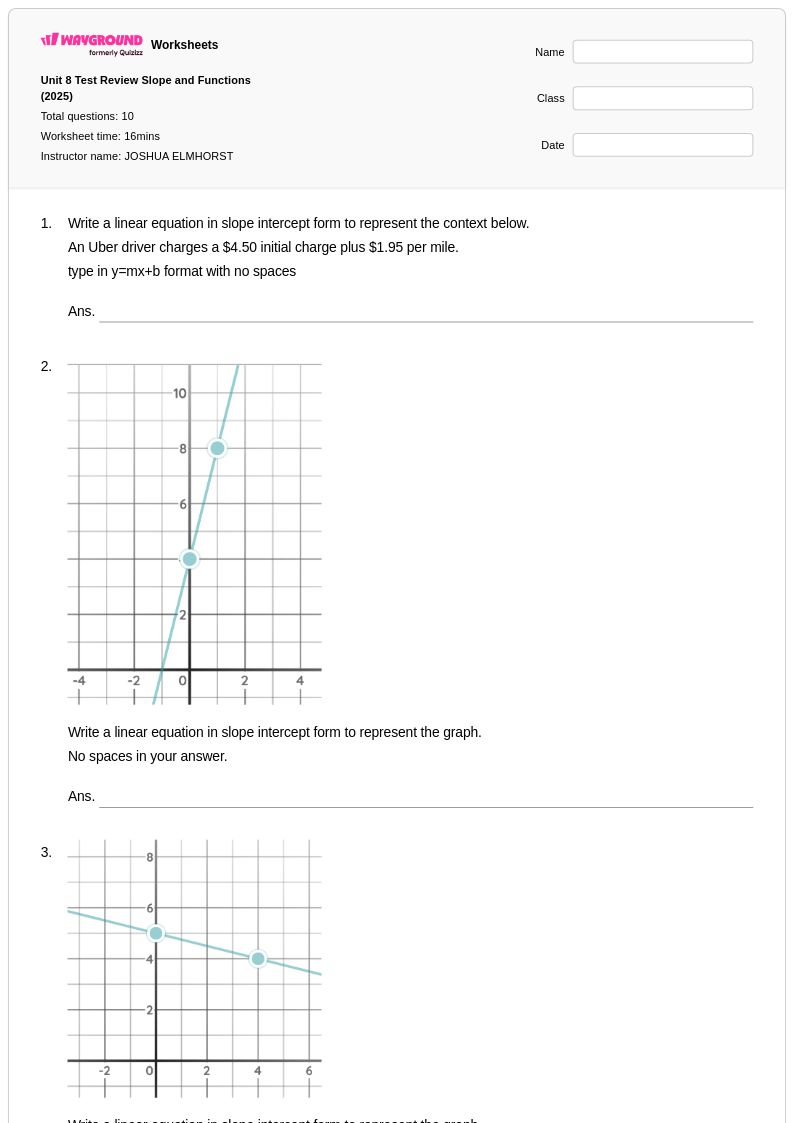
10 Q
6th - 8th
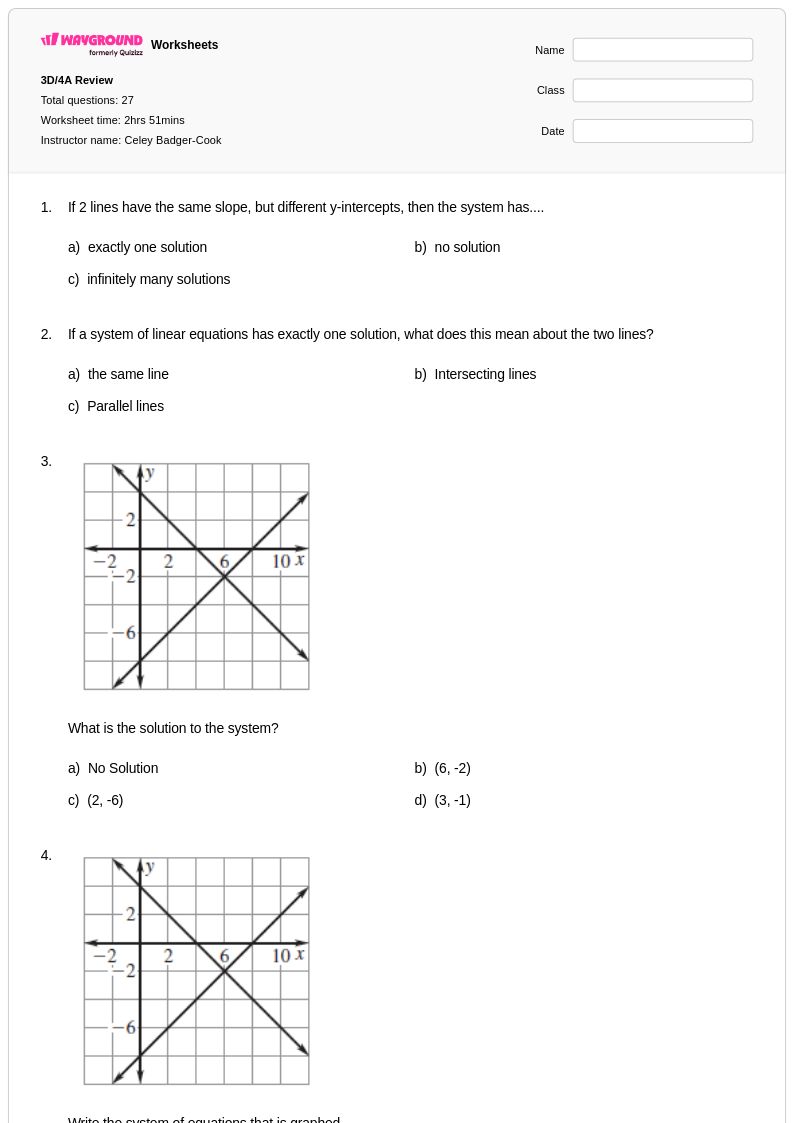
27 Q
6th - 8th
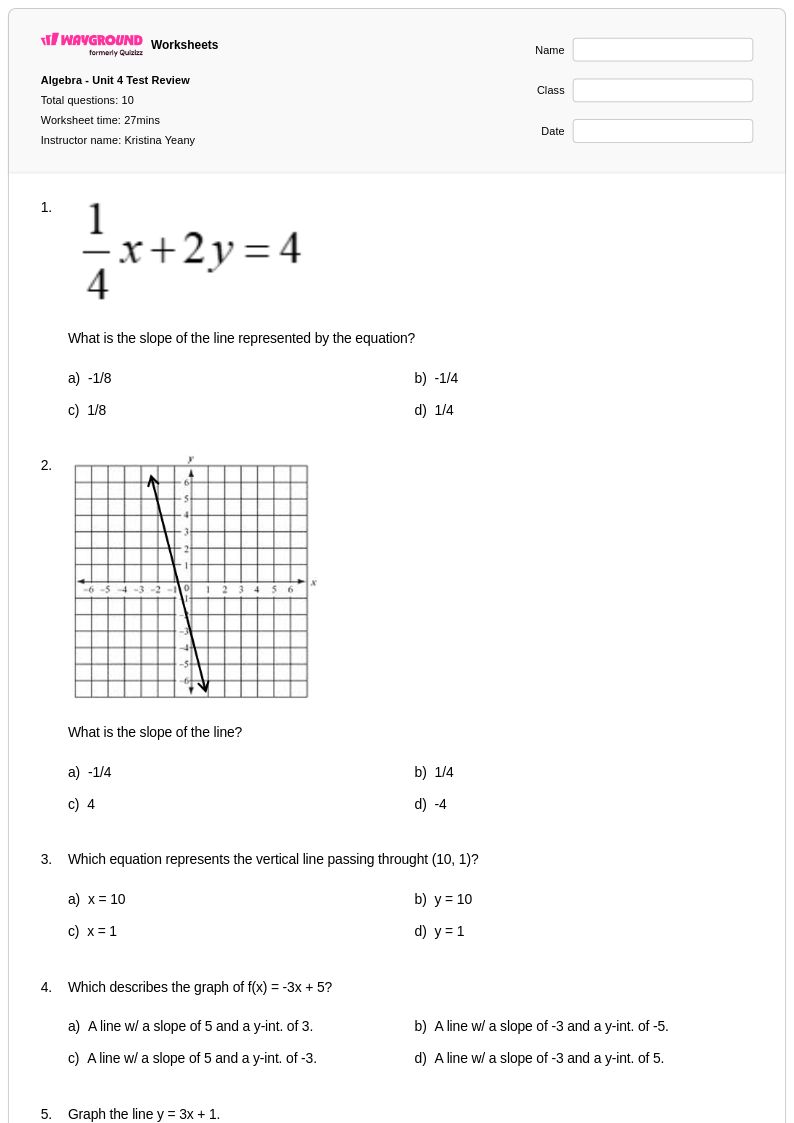
10 Q
6th - 8th
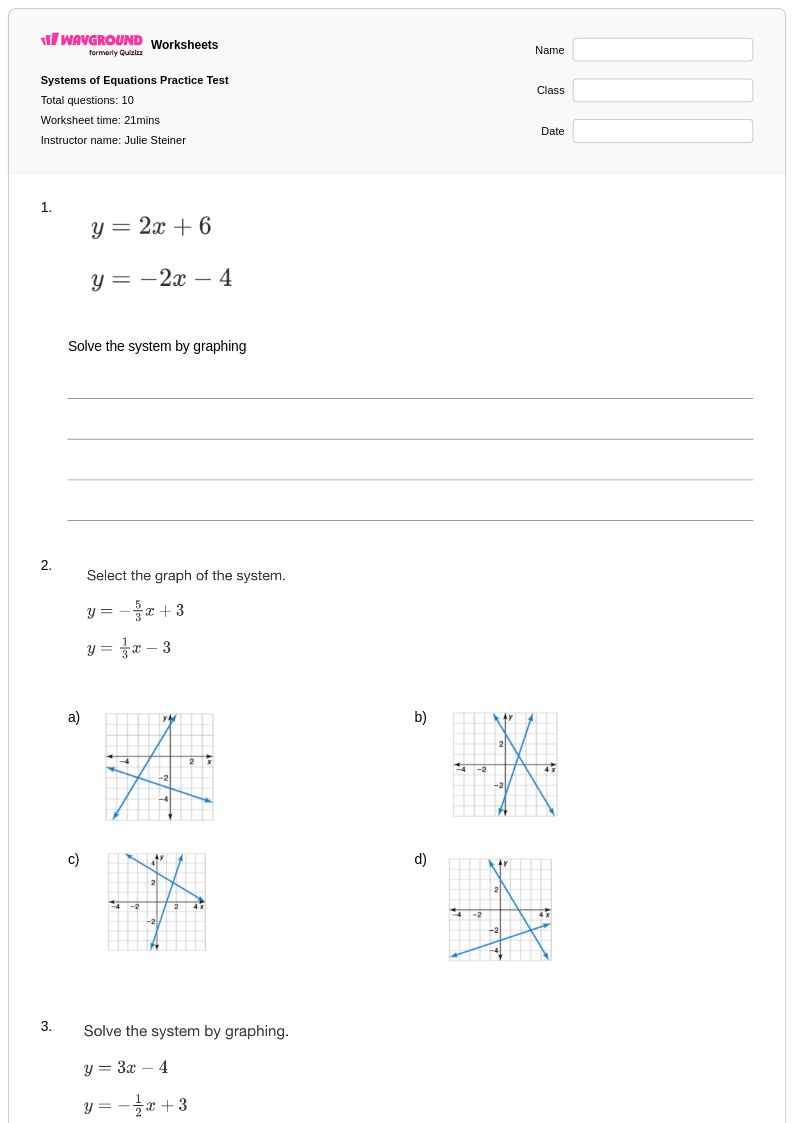
10 Q
6th - 8th
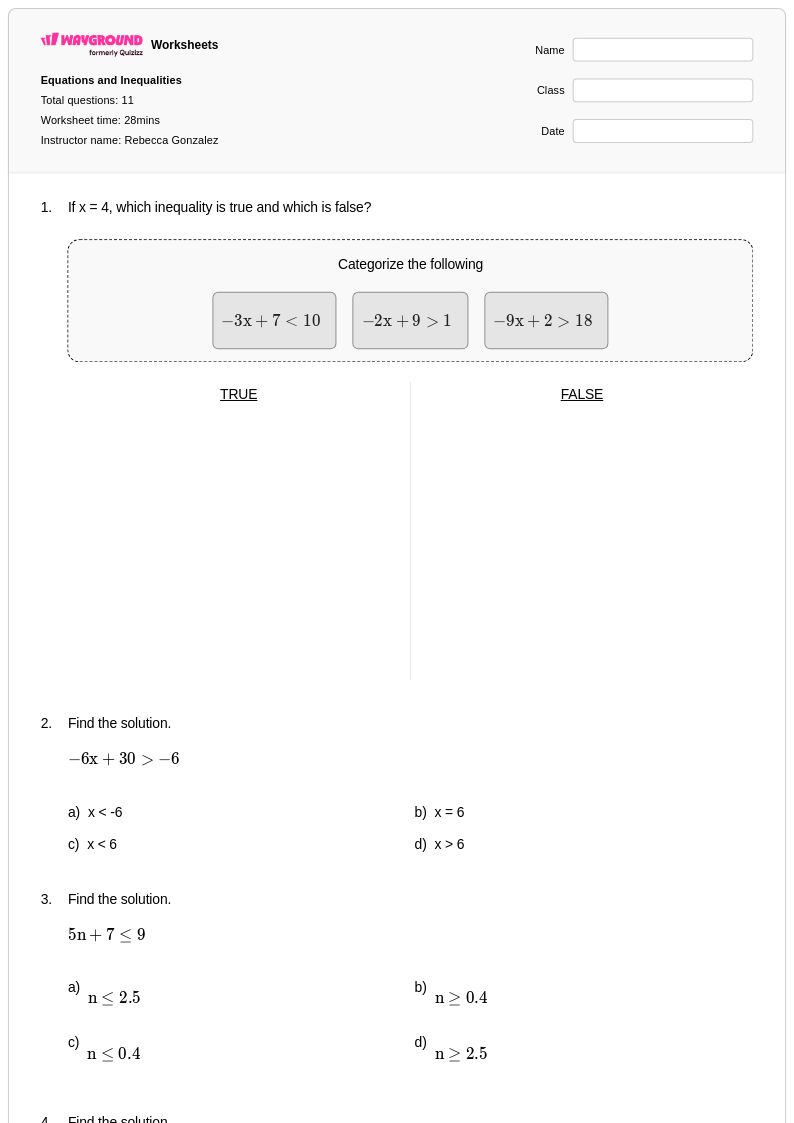
11 Q
6th - 8th
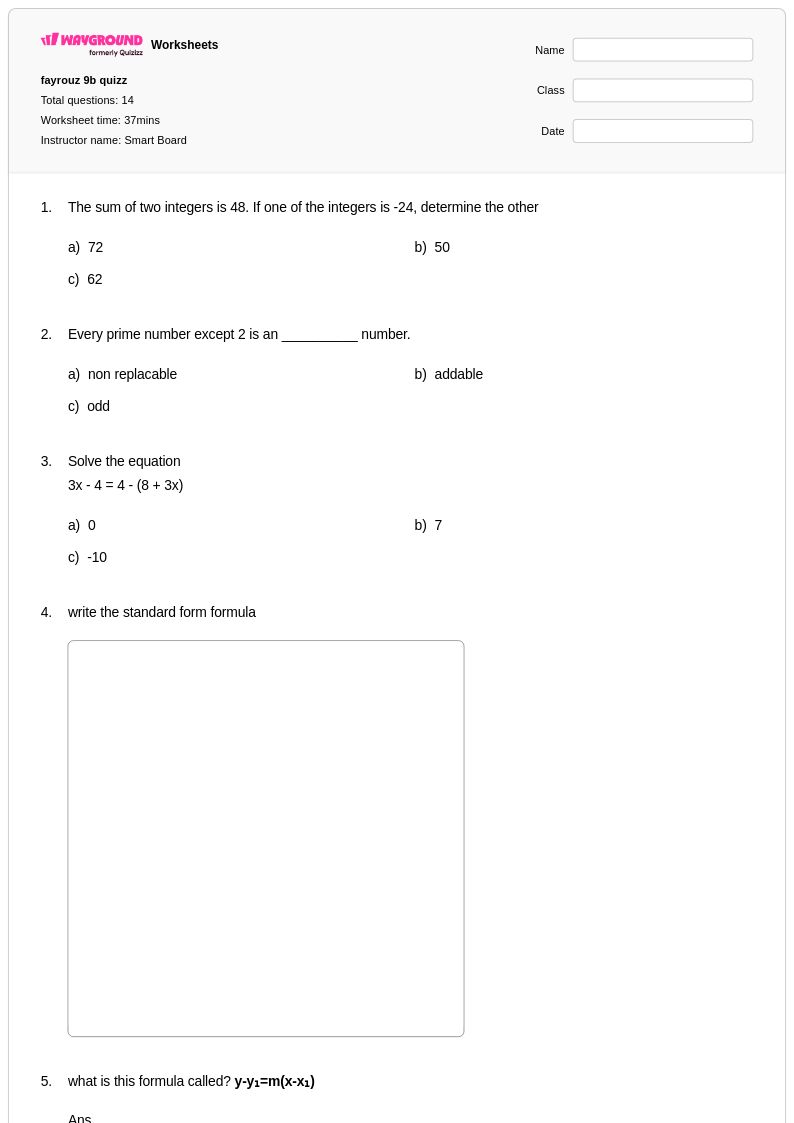
25 Q
6th
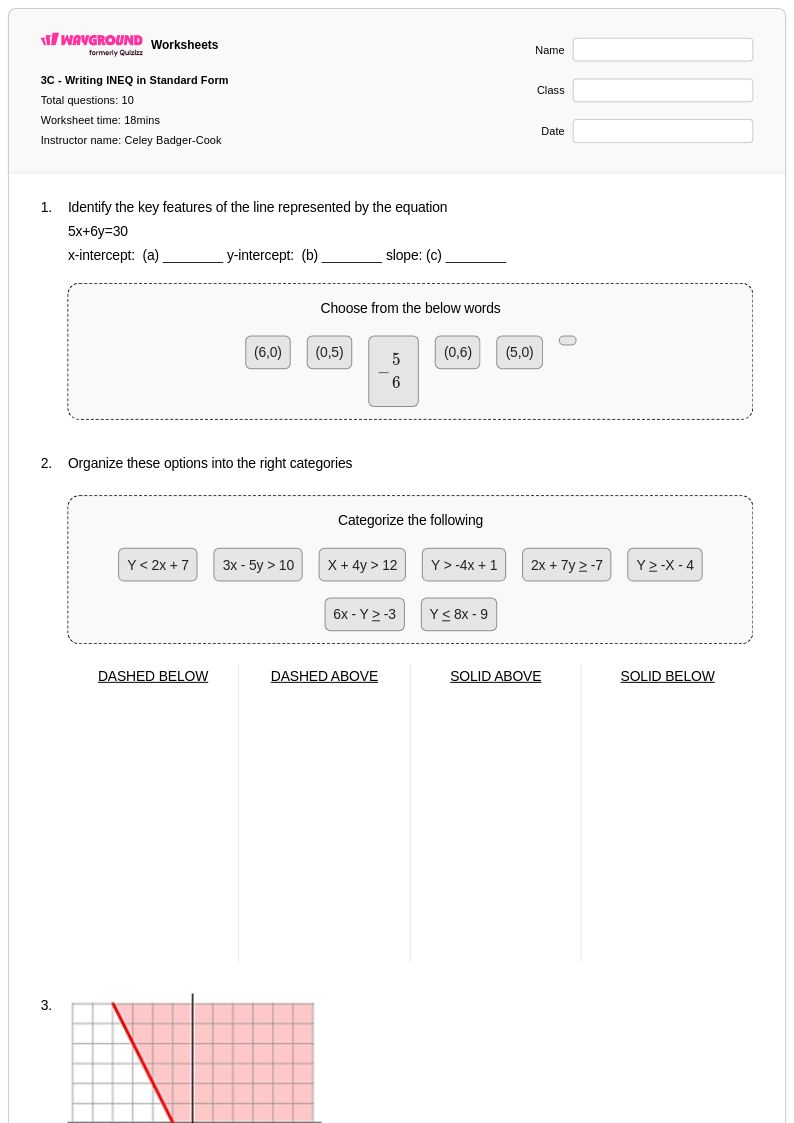
10 Q
6th - 8th
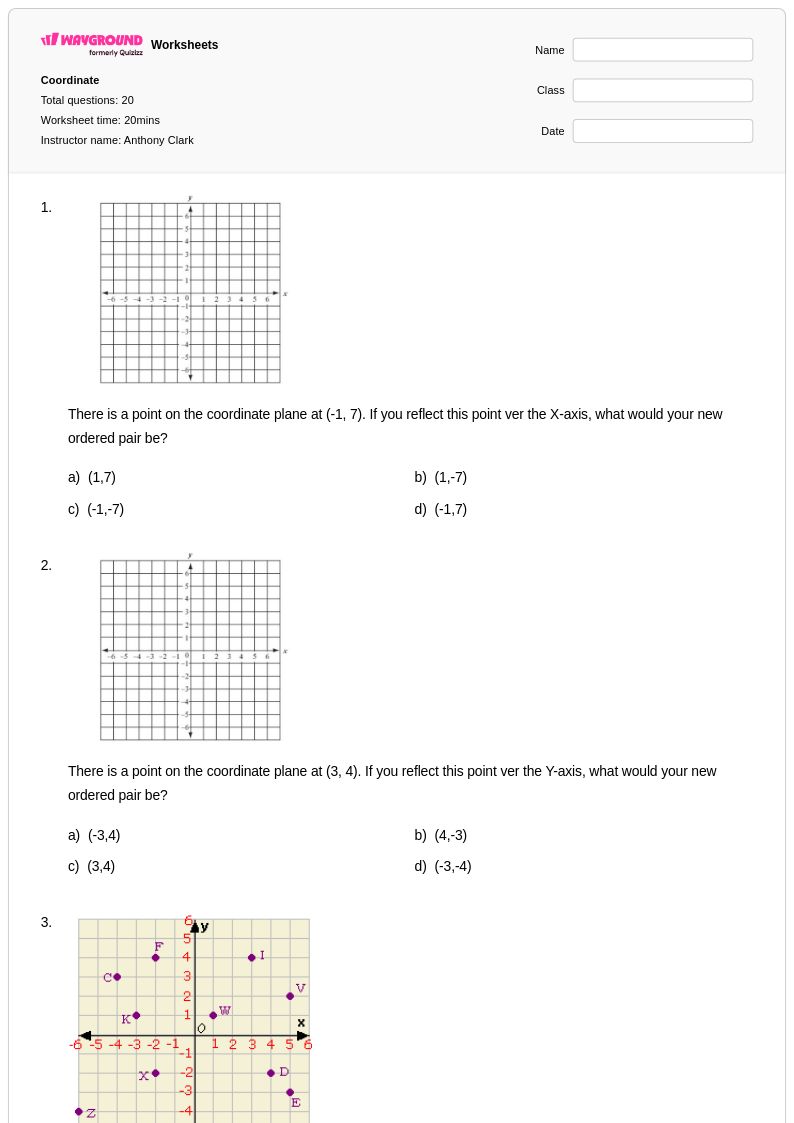
20 Q
6th - Uni
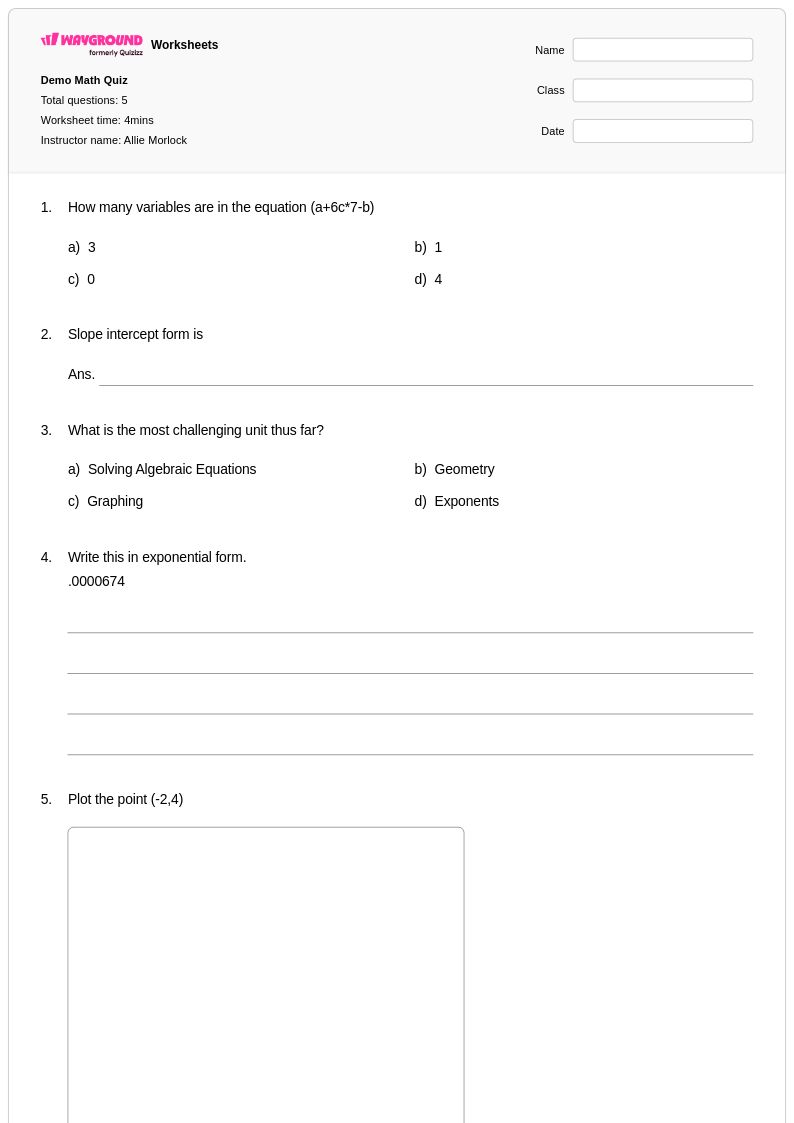
5 Q
6th - 8th
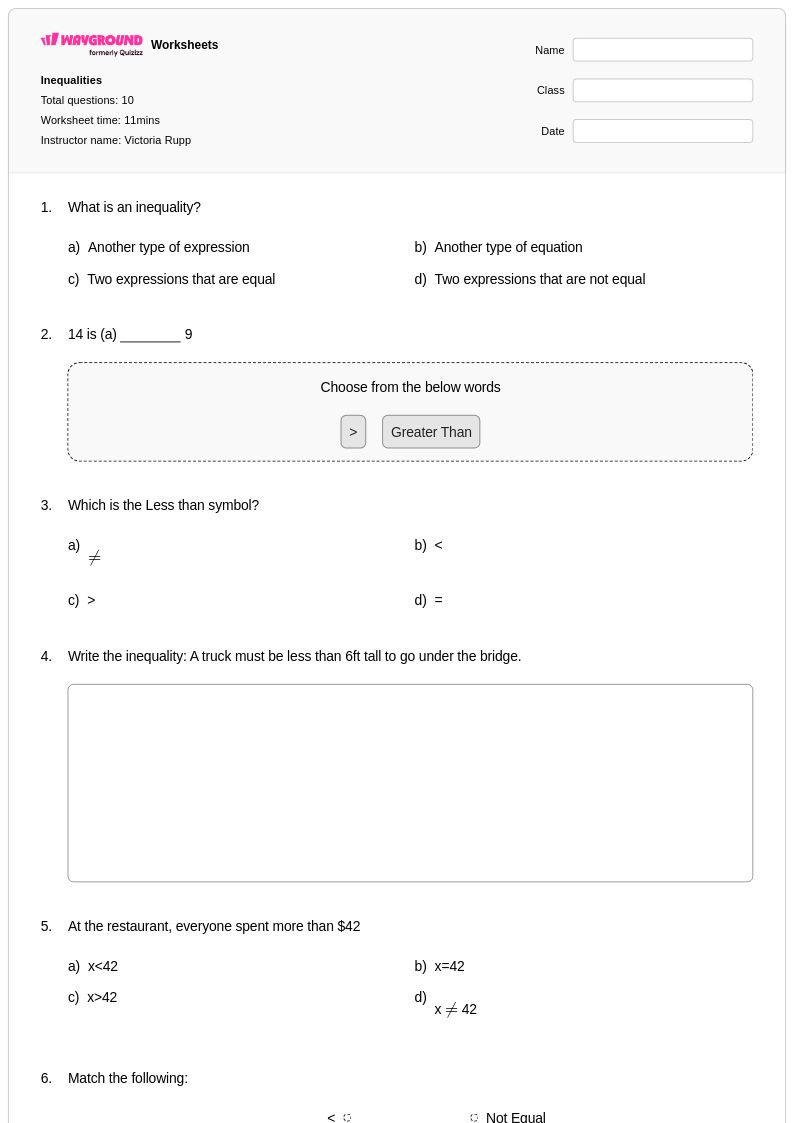
10 Q
6th
Explore Other Subject Worksheets for grade 6
Explore printable Graphing Slope worksheets for Grade 6
Graphing slope worksheets for Grade 6 students available through Wayground (formerly Quizizz) provide essential foundational practice for understanding the relationship between two variables on a coordinate plane. These comprehensive worksheets guide sixth-grade students through the fundamental concepts of slope, including identifying positive and negative slopes, calculating slope using rise over run, and interpreting slope as a rate of change in real-world contexts. The collection includes carefully structured practice problems that progress from basic slope identification on graphed lines to more complex applications involving slope calculations between two points. Each worksheet comes with a complete answer key and is available as free printable pdf resources, making them accessible for both classroom instruction and independent practice at home.
Wayground (formerly Quizizz) empowers mathematics teachers with an extensive library of millions of teacher-created graphing slope resources specifically designed for Grade 6 algebra instruction. The platform's robust search and filtering capabilities allow educators to quickly locate worksheets that align with specific curriculum standards and match their students' skill levels. Teachers can easily customize these materials to provide targeted differentiation, whether students need additional remediation with basic coordinate graphing or enrichment with advanced slope applications. The flexible format options include both printable pdf versions for traditional paper-based learning and digital formats for interactive online practice, enabling seamless integration into any lesson planning approach while supporting diverse learning environments and individual student needs.
FAQs
What aspects of slope are typically taught in Grade 6?
What's the best way to introduce slope to 6th graders?
What kind of practice problems are on this 6th-grade worksheet?
What are common sticking points for 6th graders with slope?
How can I use this 6th-grade slope worksheet?