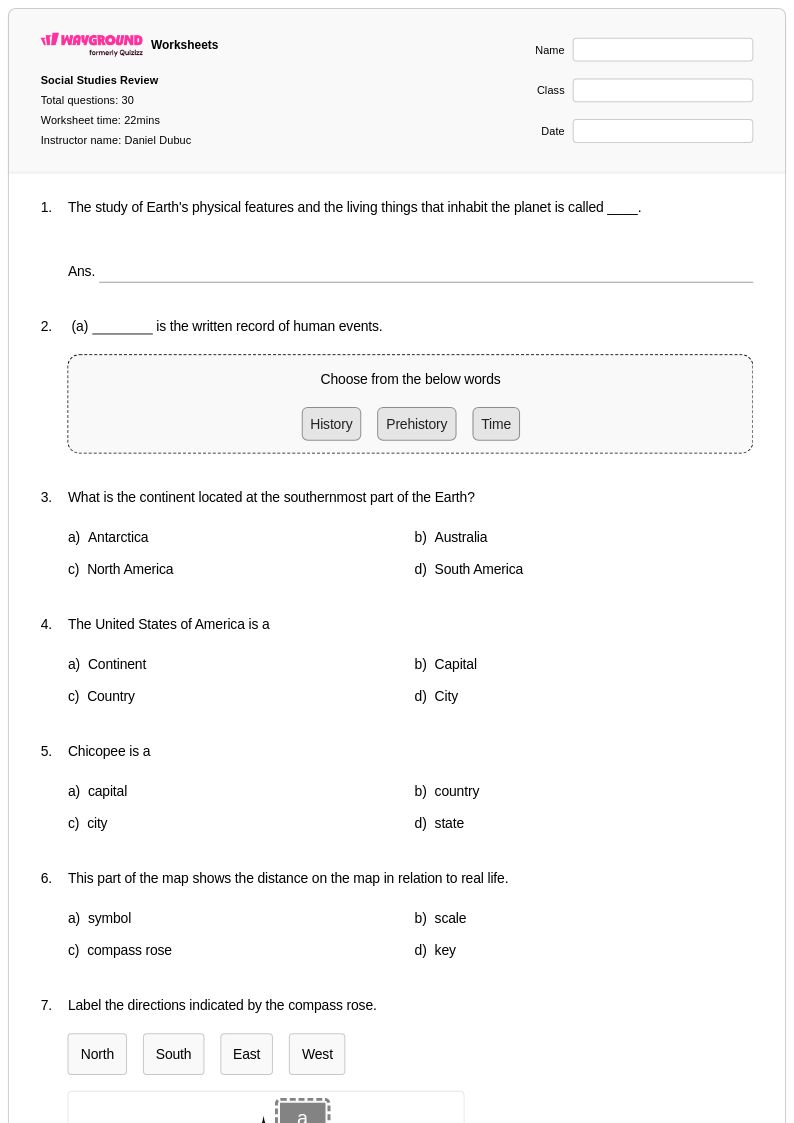
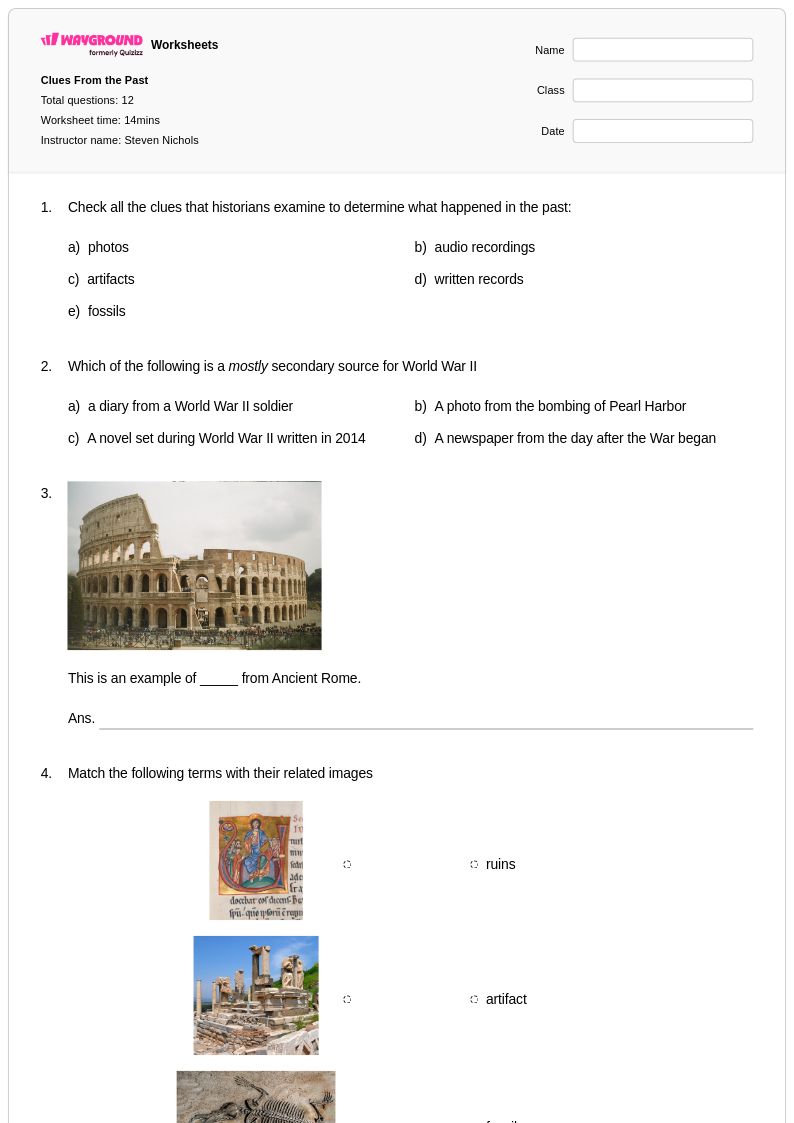
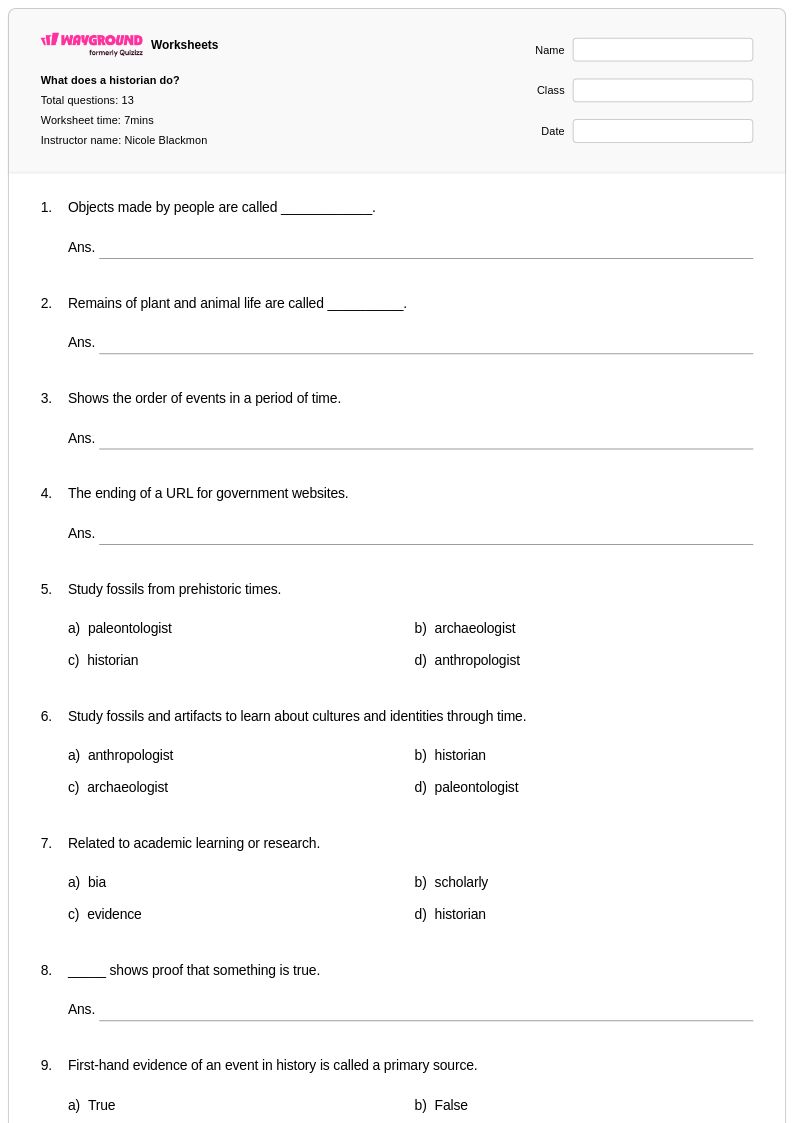
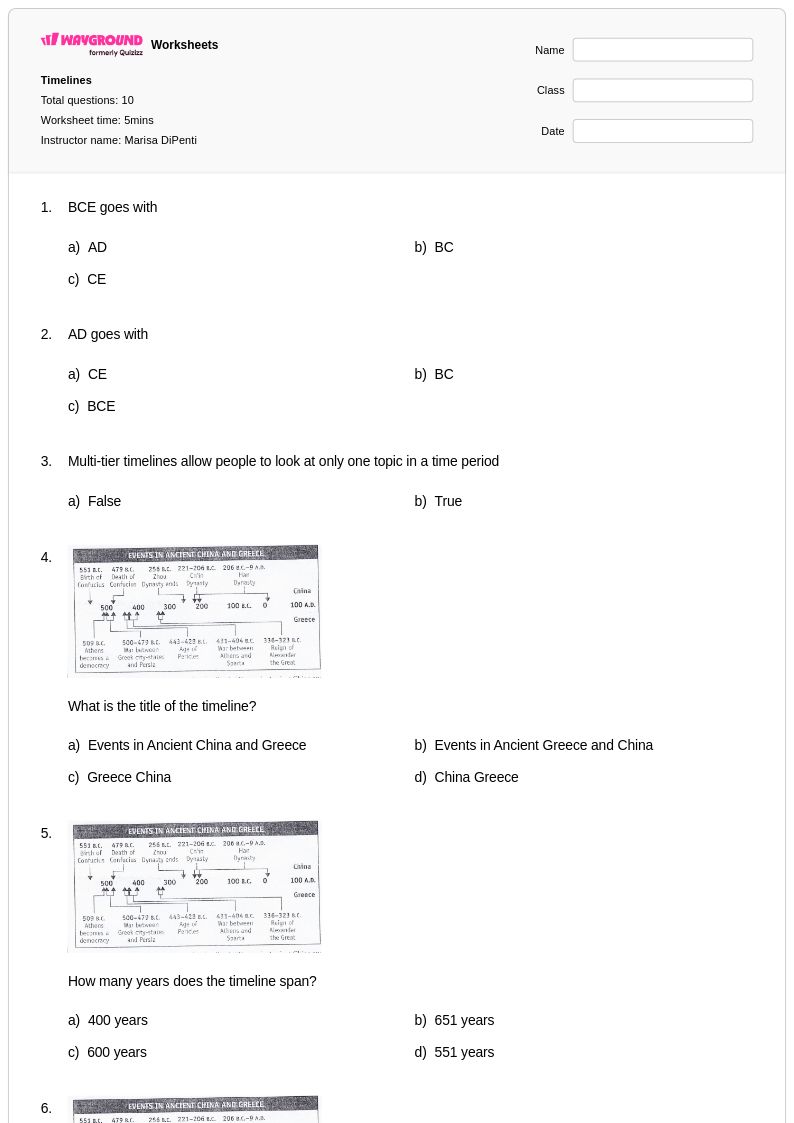
Explore Wayground's comprehensive collection of free historical eras worksheets and printables that help students master key periods in history through engaging practice problems, interactive activities, and detailed answer keys.
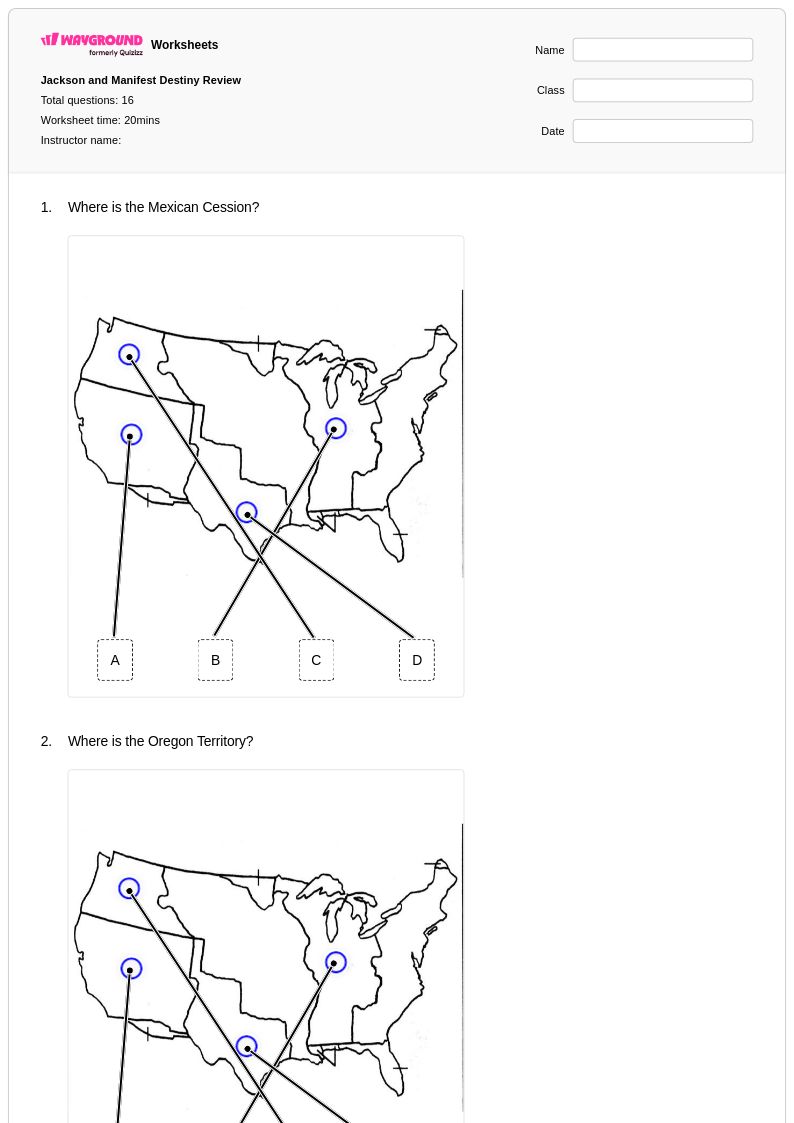
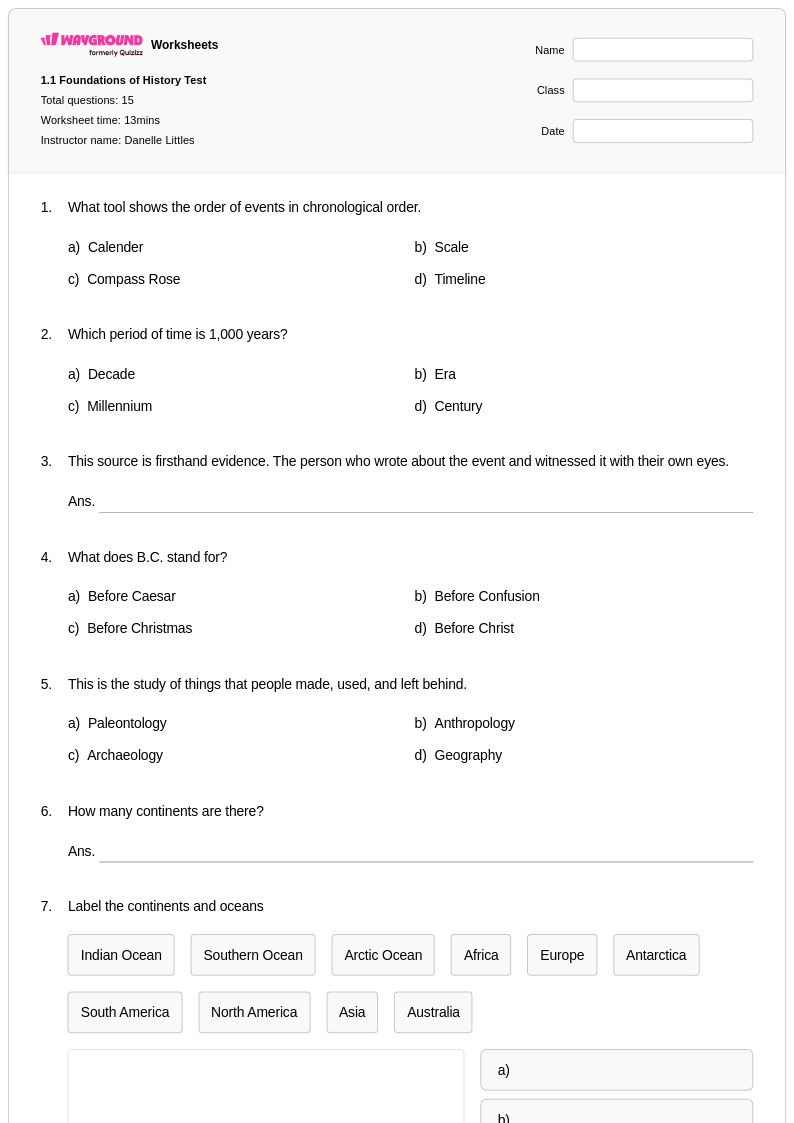
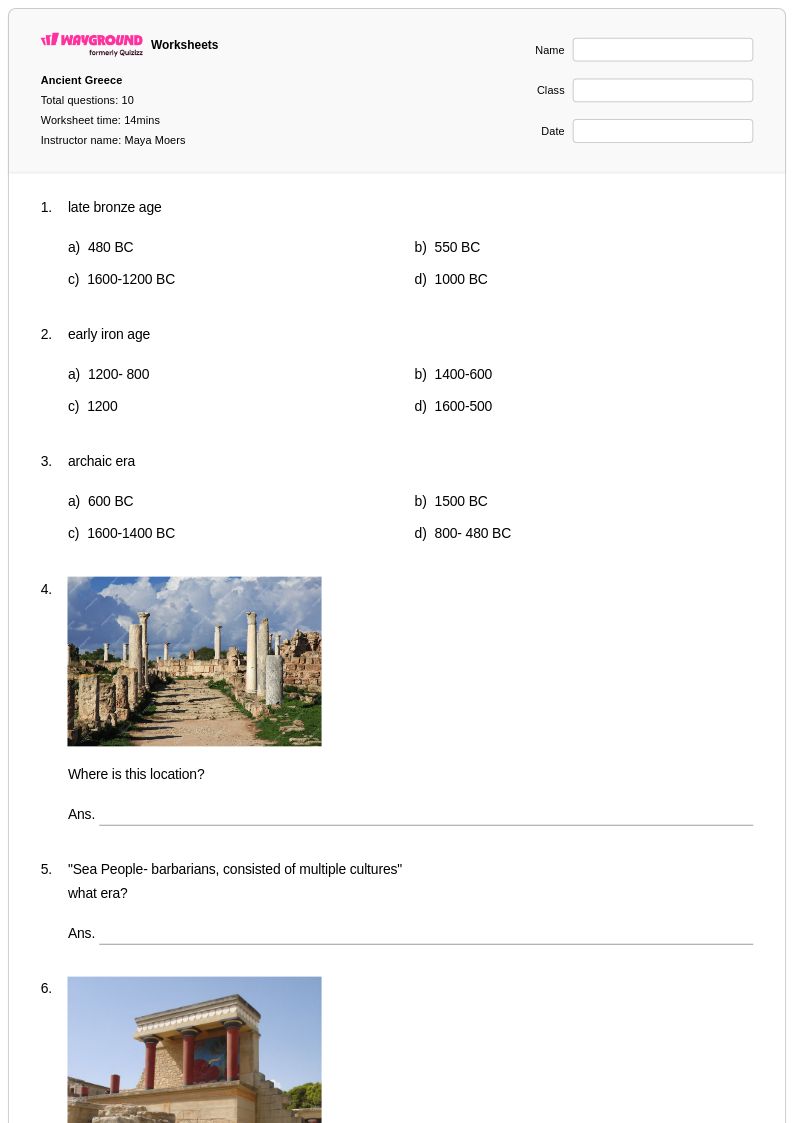
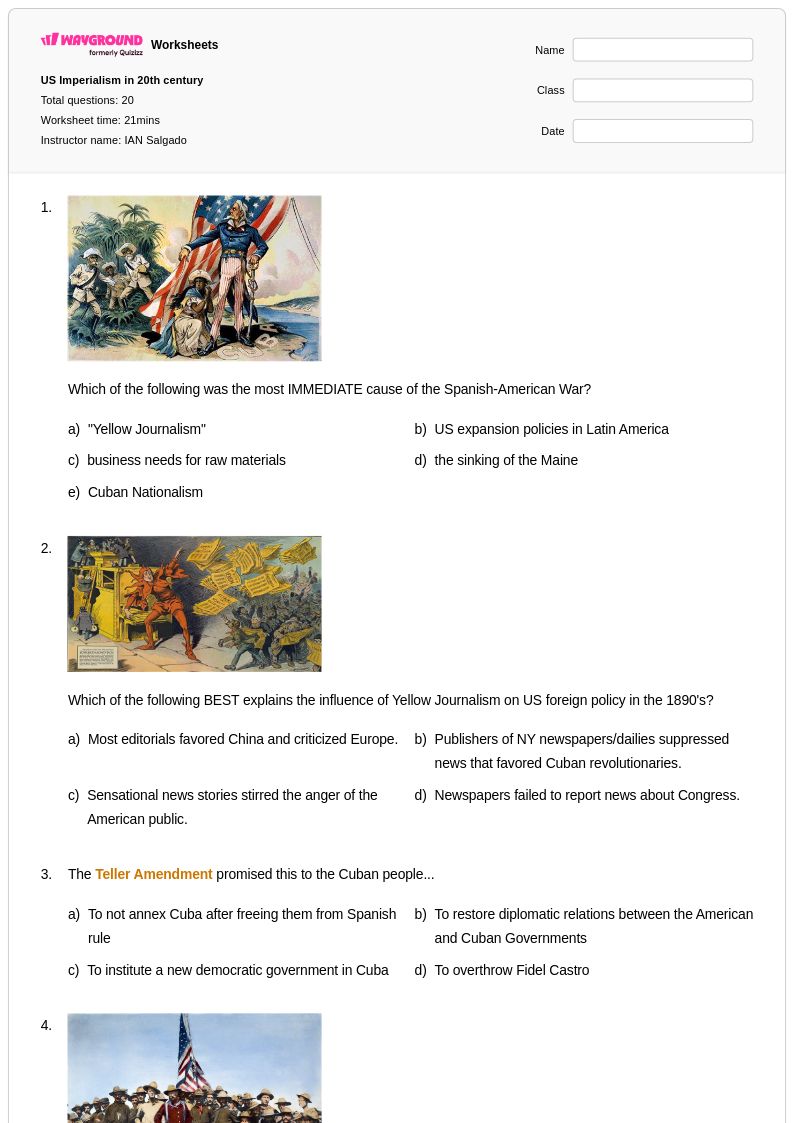
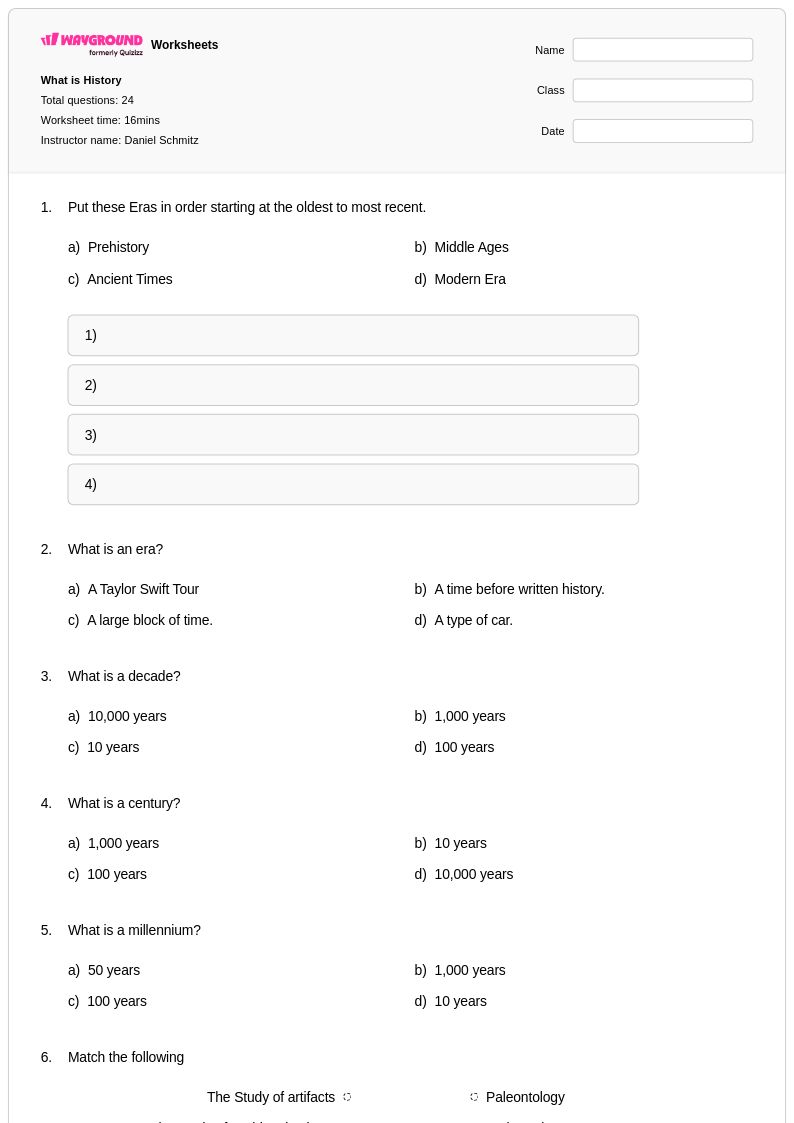
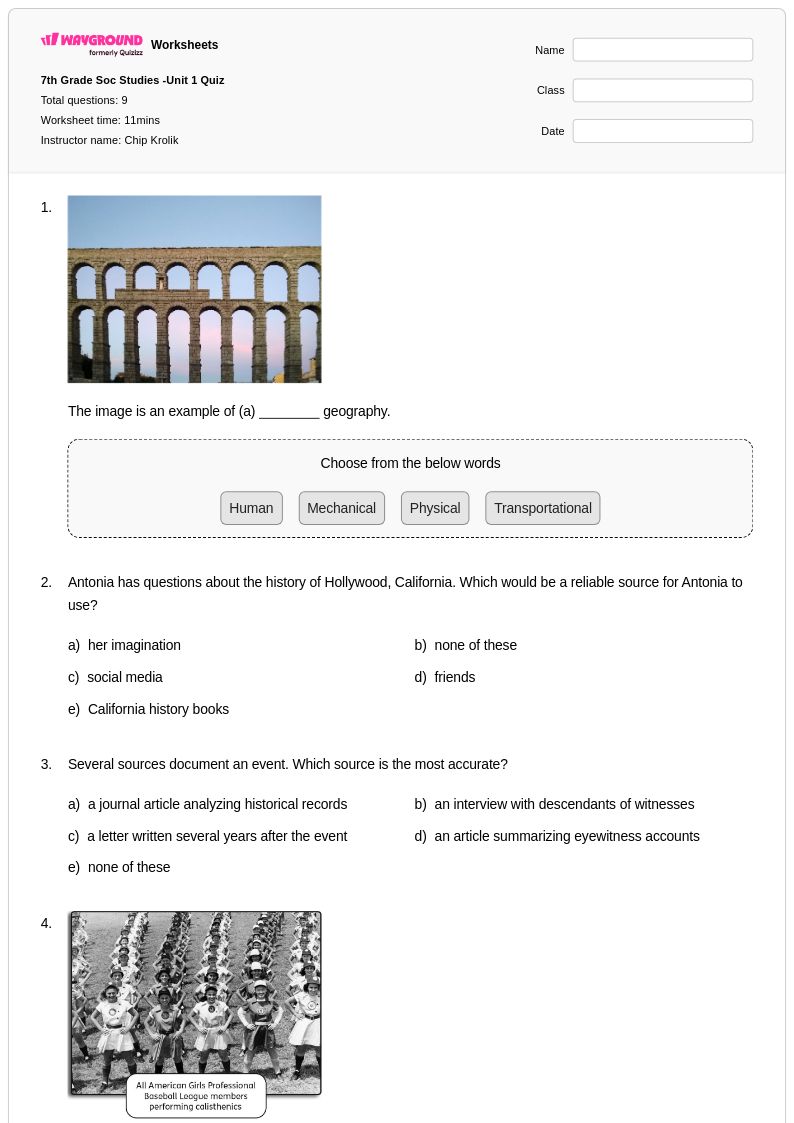
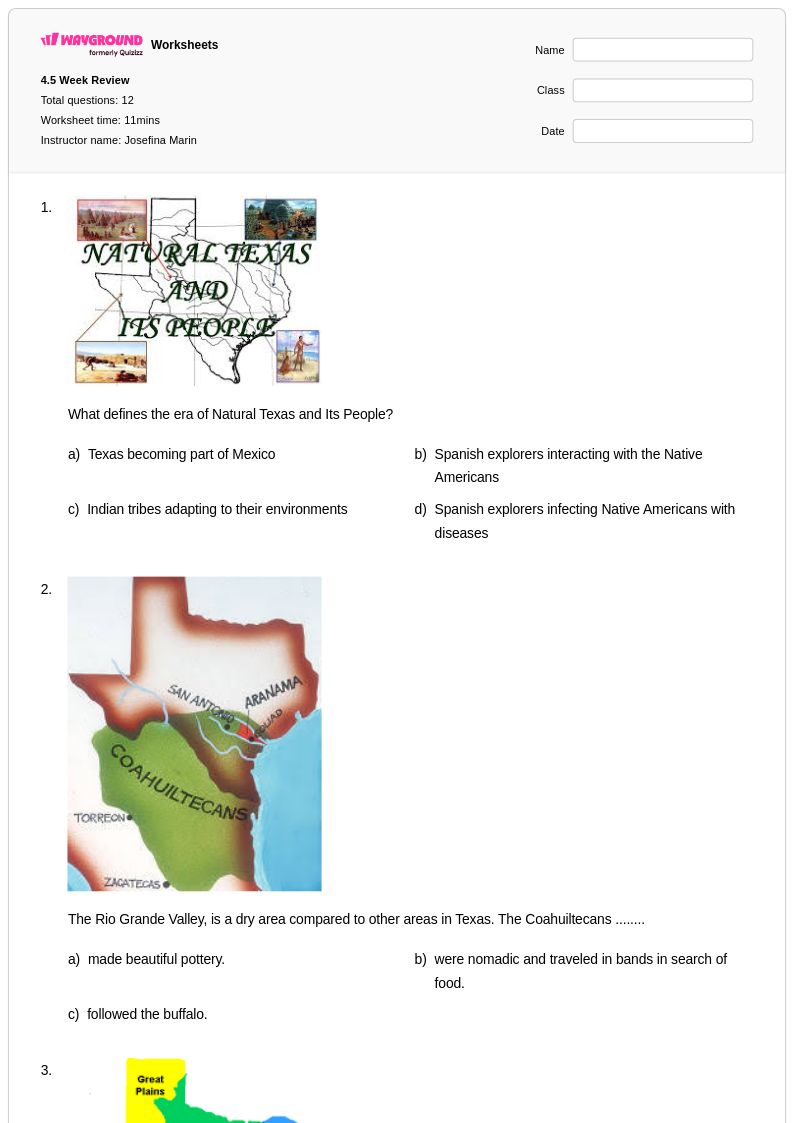
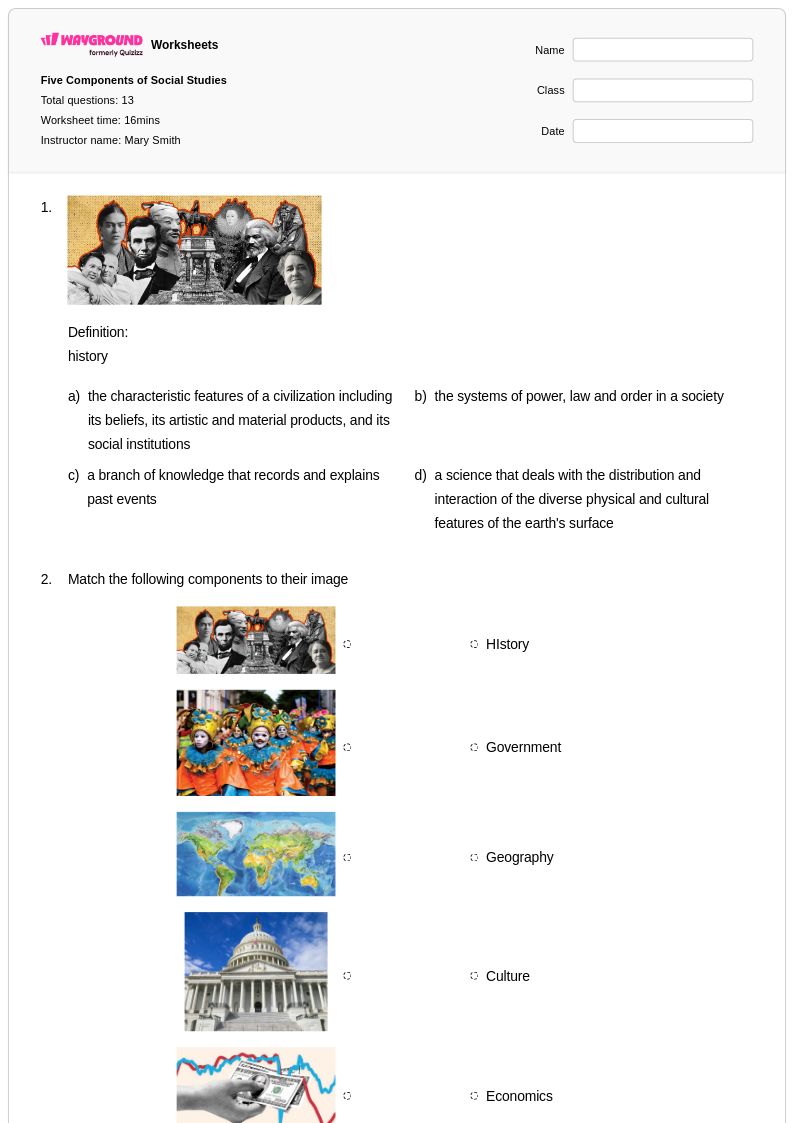
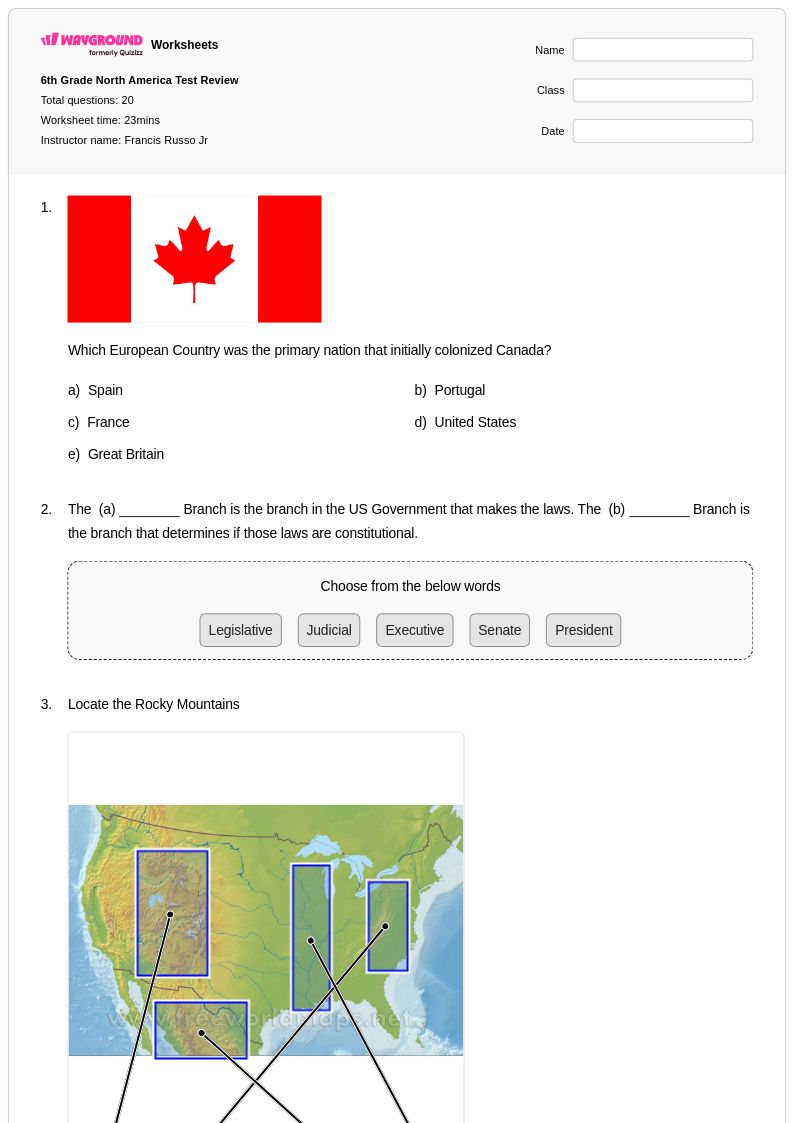
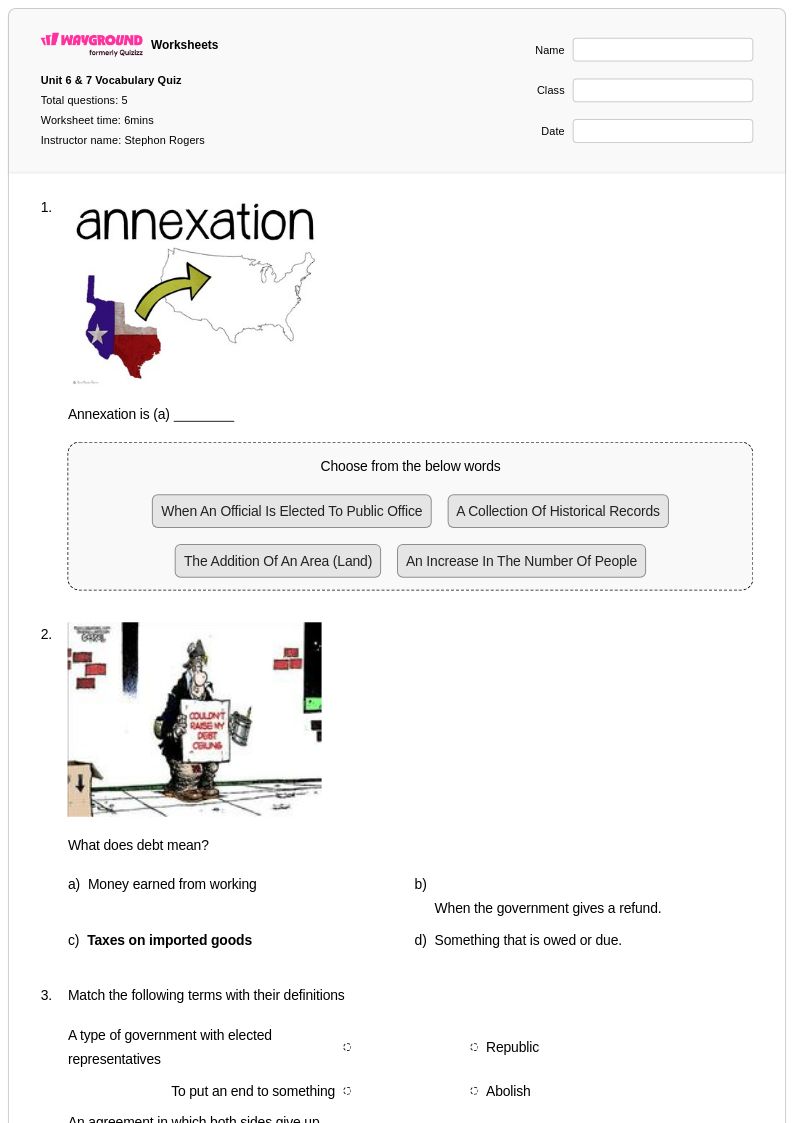
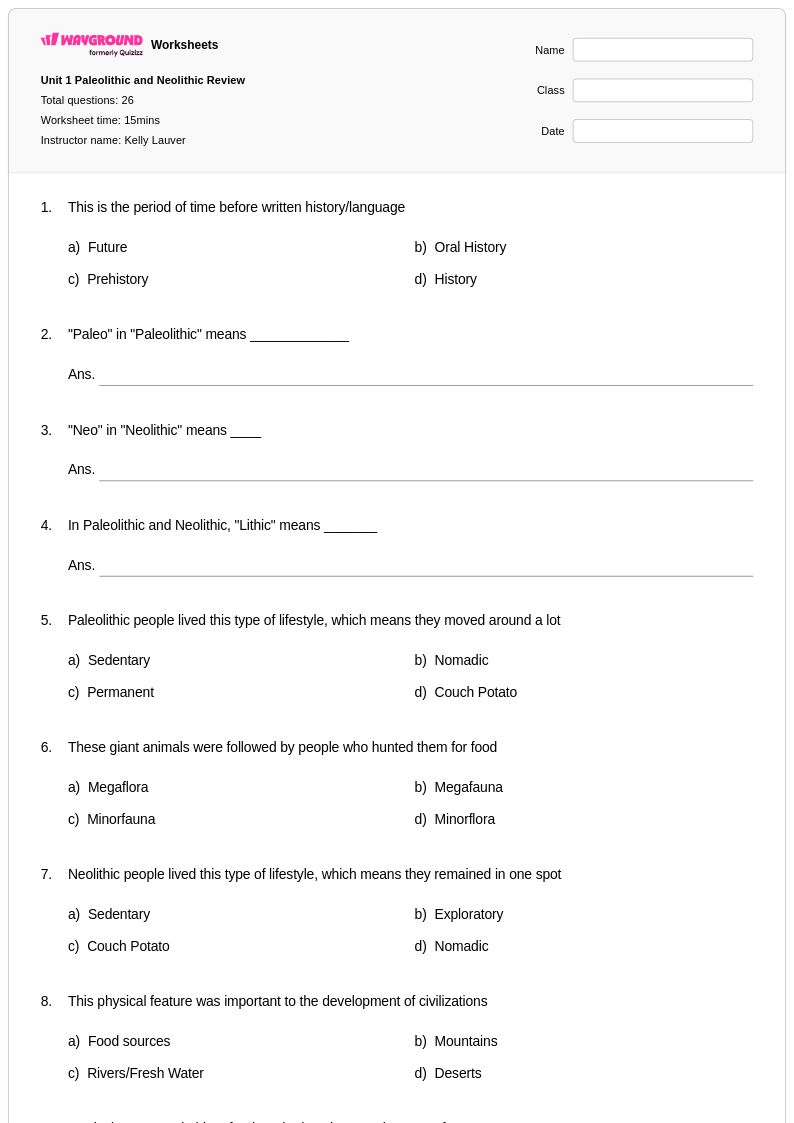
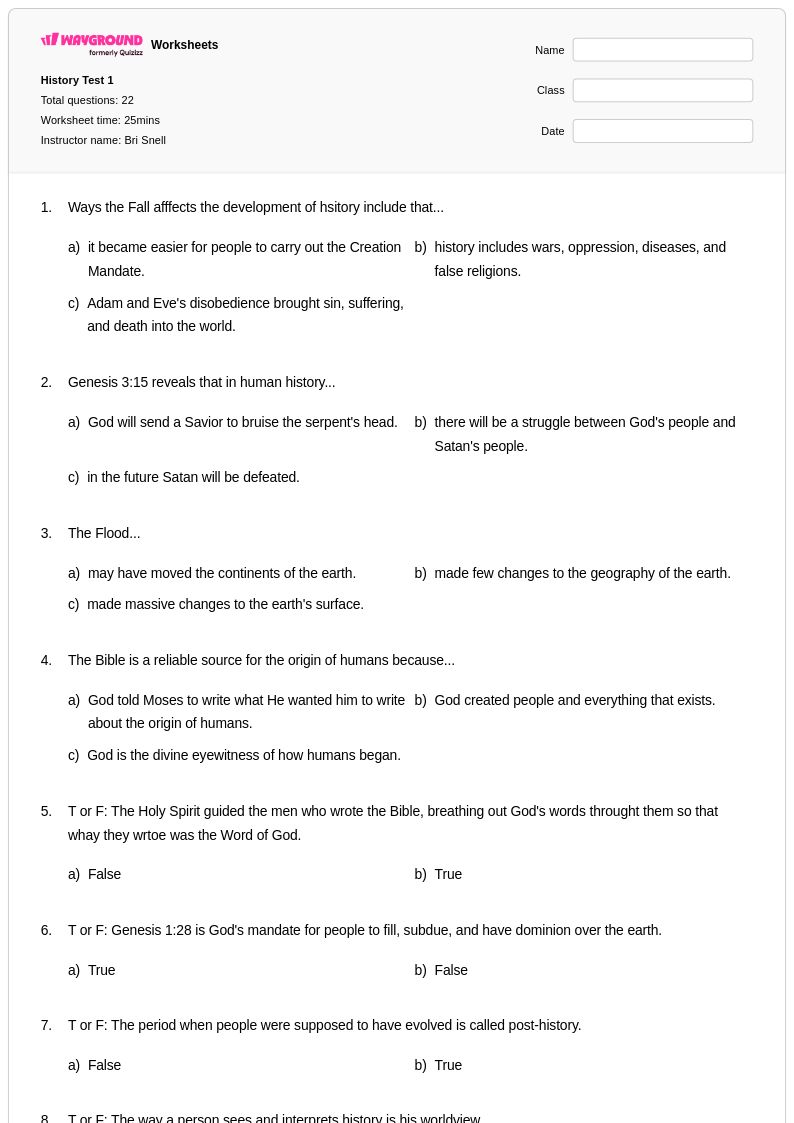
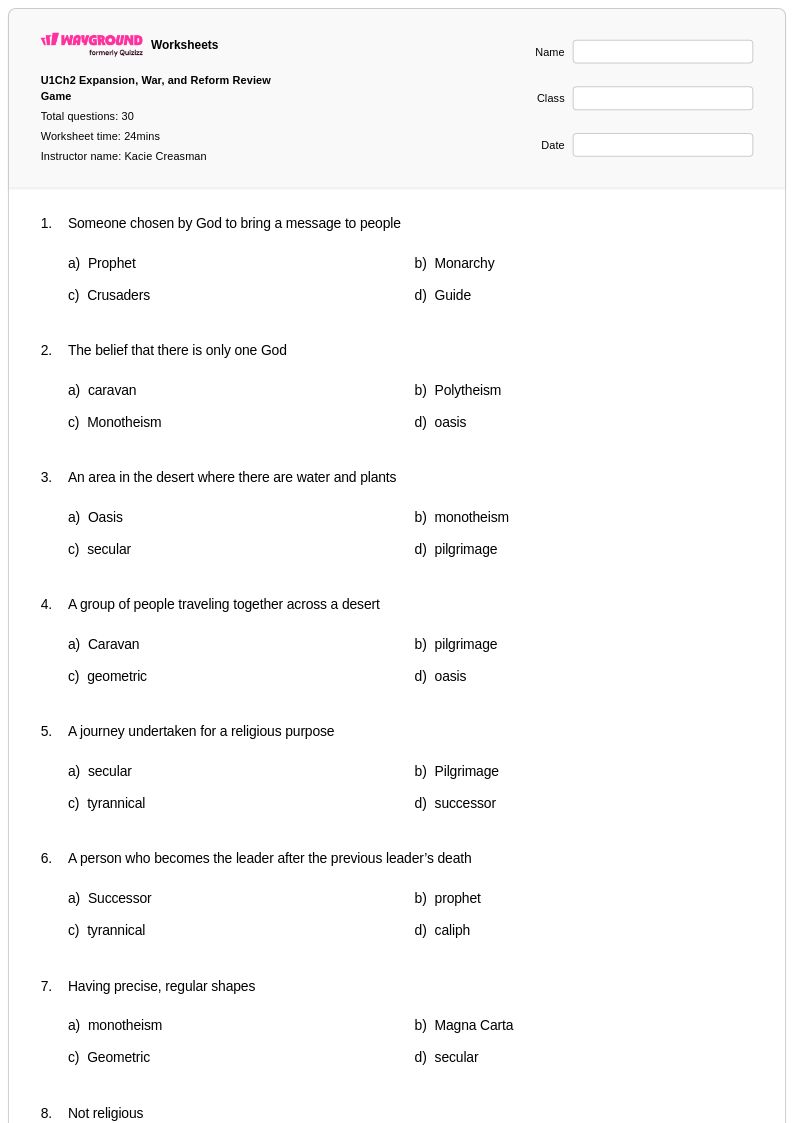
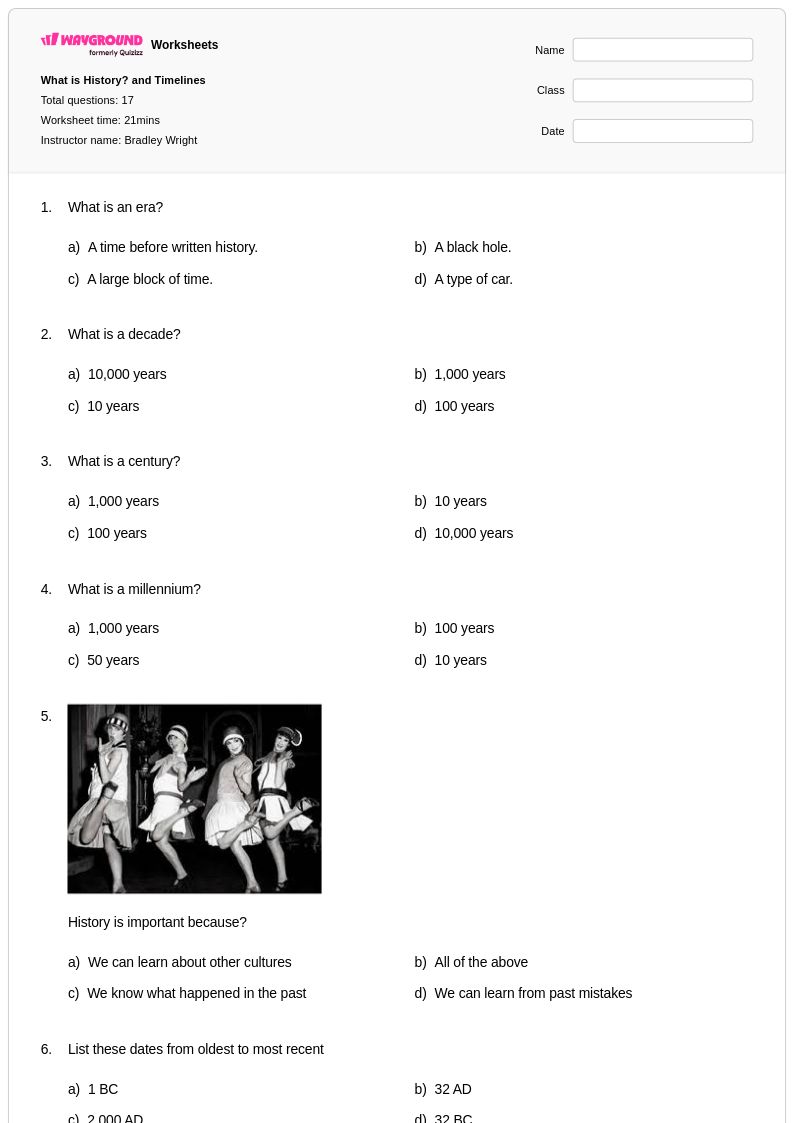
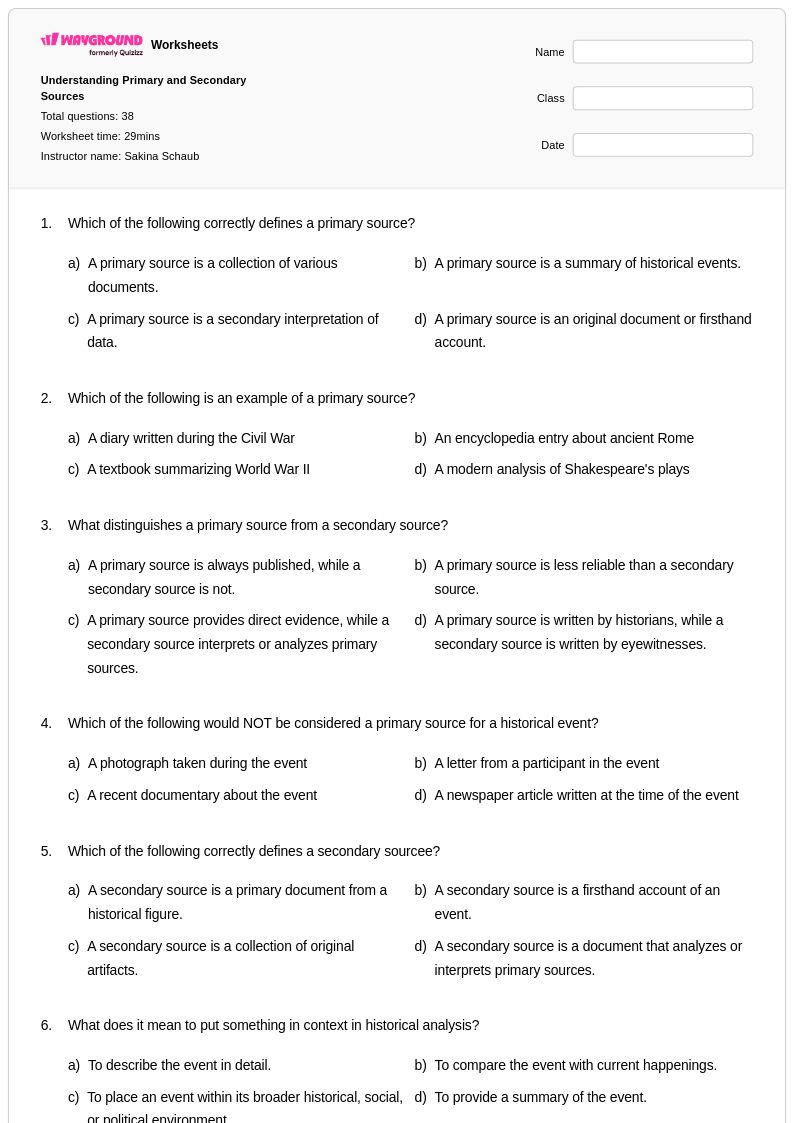
Historical eras worksheets available through Wayground (formerly Quizizz) provide educators with comprehensive resources to guide students through the major periods that have shaped human civilization. These carefully crafted materials help students develop critical thinking skills as they analyze the characteristics, causes, and consequences of different time periods, from ancient civilizations through modern history. The worksheets strengthen essential historical analysis abilities including chronological reasoning, pattern recognition, and the ability to compare and contrast societal developments across different eras. Each printable resource includes detailed answer keys to support effective instruction, and the free pdf format ensures accessibility for diverse classroom needs. Students engage with practice problems that challenge them to identify turning points, understand cultural transformations, and evaluate the lasting impact of historical periods on contemporary society.
Wayground (formerly Quizizz) empowers teachers with an extensive collection of millions of teacher-created historical eras worksheets that streamline lesson planning and enhance student learning outcomes. The platform's robust search and filtering capabilities allow educators to quickly locate materials aligned with specific curriculum standards and tailored to their instructional objectives. Teachers can easily differentiate instruction by accessing worksheets at varying complexity levels, ensuring that all students can engage meaningfully with content about historical periods. The flexible customization tools enable educators to modify existing resources or create entirely new materials, while the availability of both printable and digital pdf formats accommodates diverse classroom environments and teaching preferences. These comprehensive features support targeted remediation for struggling learners, provide enrichment opportunities for advanced students, and offer consistent skill practice that reinforces understanding of how historical eras connect to form the broader narrative of human development.
FAQs
How do I teach historical eras in a way that helps students see connections across time periods?
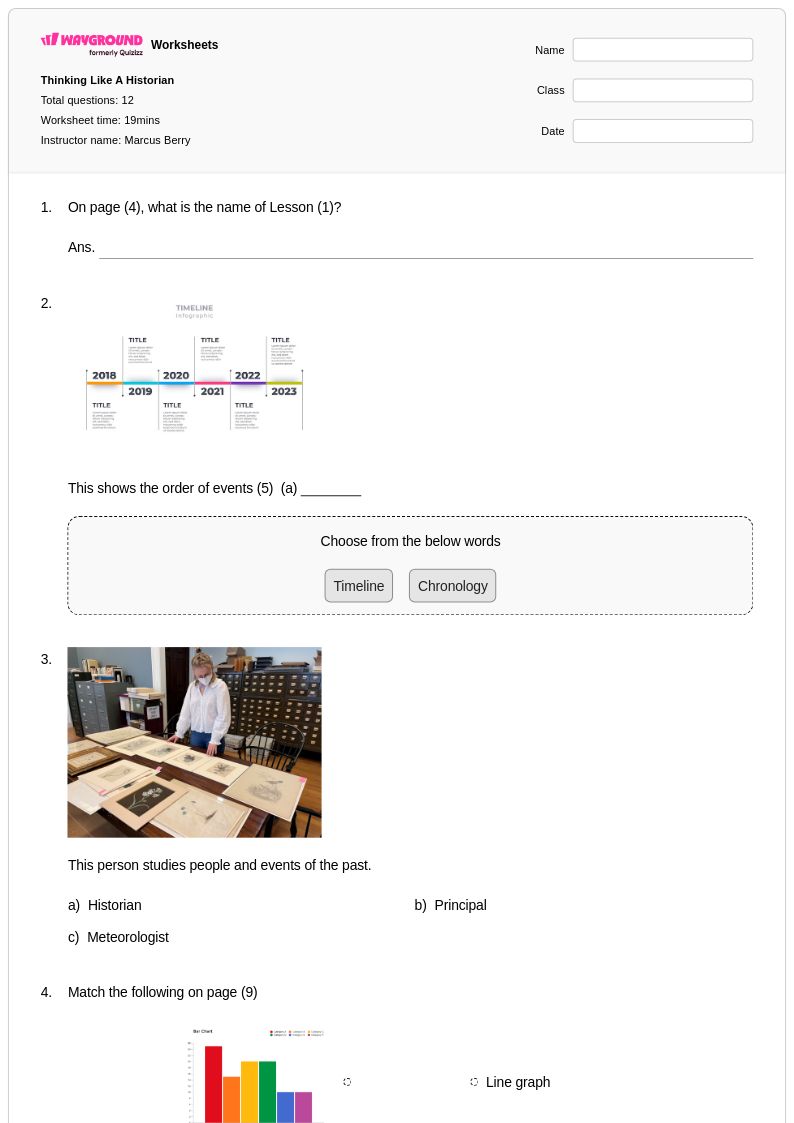
Teaching historical eras effectively requires building a chronological framework first, then layering in thematic connections such as trade, governance, and cultural exchange. Use timelines and anchor events to help students situate each era before analyzing its characteristics. Comparing two eras directly, such as ancient civilizations versus the medieval period, helps students recognize patterns in how societies rise, develop, and decline. Encouraging students to ask 'what caused this shift?' at each transition point builds the chronological reasoning they need for deeper historical analysis.
What exercises help students practice identifying and comparing historical eras?
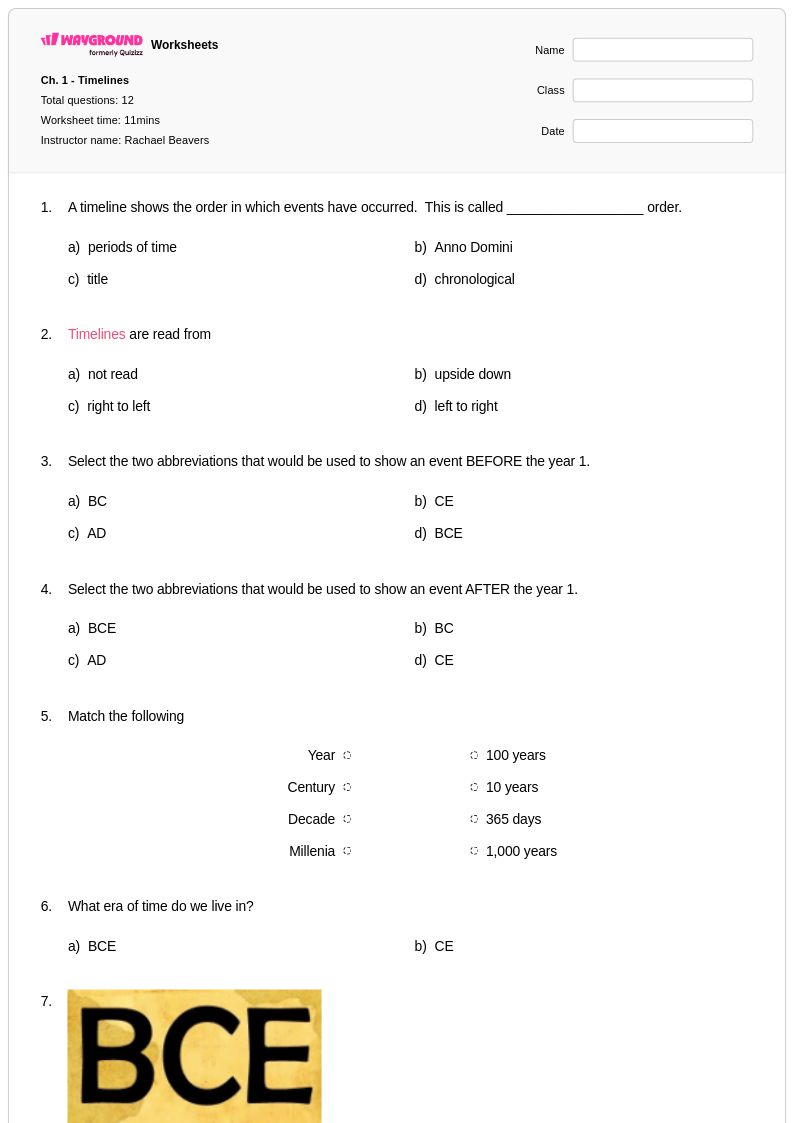
Effective practice exercises for historical eras include timeline sequencing tasks, cause-and-effect mapping, and compare-and-contrast activities that ask students to evaluate societal developments across different periods. Identifying turning points, such as the fall of Rome or the Industrial Revolution, challenges students to think critically about what defines the boundary between one era and the next. Worksheets that ask students to match characteristics, events, or figures to specific eras reinforce chronological reasoning and pattern recognition. These formats also prepare students for the analytical writing tasks common in history assessments.
What are the most common mistakes students make when studying historical eras?
One of the most frequent errors is treating historical eras as fixed, clearly defined blocks rather than overlapping transitions shaped by gradual change. Students also tend to memorize dates without understanding the underlying causes and consequences that define each period, which limits their ability to make analytical arguments. Another common misconception is conflating geographical regions with eras, for example, assuming all ancient civilizations developed simultaneously or ended at the same time. Targeted practice that asks students to explain why an era ended, not just when, helps address these gaps.
How do I use historical eras worksheets to support students at different skill levels?
Historical eras worksheets can be differentiated by adjusting the complexity of the analytical tasks, from basic identification and sequencing for foundational learners to cause-and-effect analysis and cross-era comparison for advanced students. On Wayground, teachers can access worksheets at varying complexity levels and use built-in accommodation tools to support individual learners, including read aloud for students who need audio support and reduced answer choices to lower cognitive load for struggling students. These accommodations can be assigned per student without disrupting the rest of the class. Having both printable PDF and digital formats available also allows teachers to deploy the same content across different learning environments.
How do I use Wayground's historical eras worksheets in my classroom?
Wayground's historical eras worksheets are available as printable PDFs for traditional classroom use and in digital formats for technology-integrated learning environments, including the option to host them as a quiz directly on the Wayground platform. Teachers can use them as formative assessments, guided practice, homework, or review activities before major tests. Each worksheet includes a detailed answer key, making it straightforward to provide feedback or facilitate self-correction. The digital format is particularly useful for blended learning settings where students complete work independently at their own pace.