
6 Q
4th - 12th

25 Q
7th
39 Q
6th - 11th

15 Q
7th
15 Q
5th - 8th
10 Q
7th - 12th

14 Q
7th
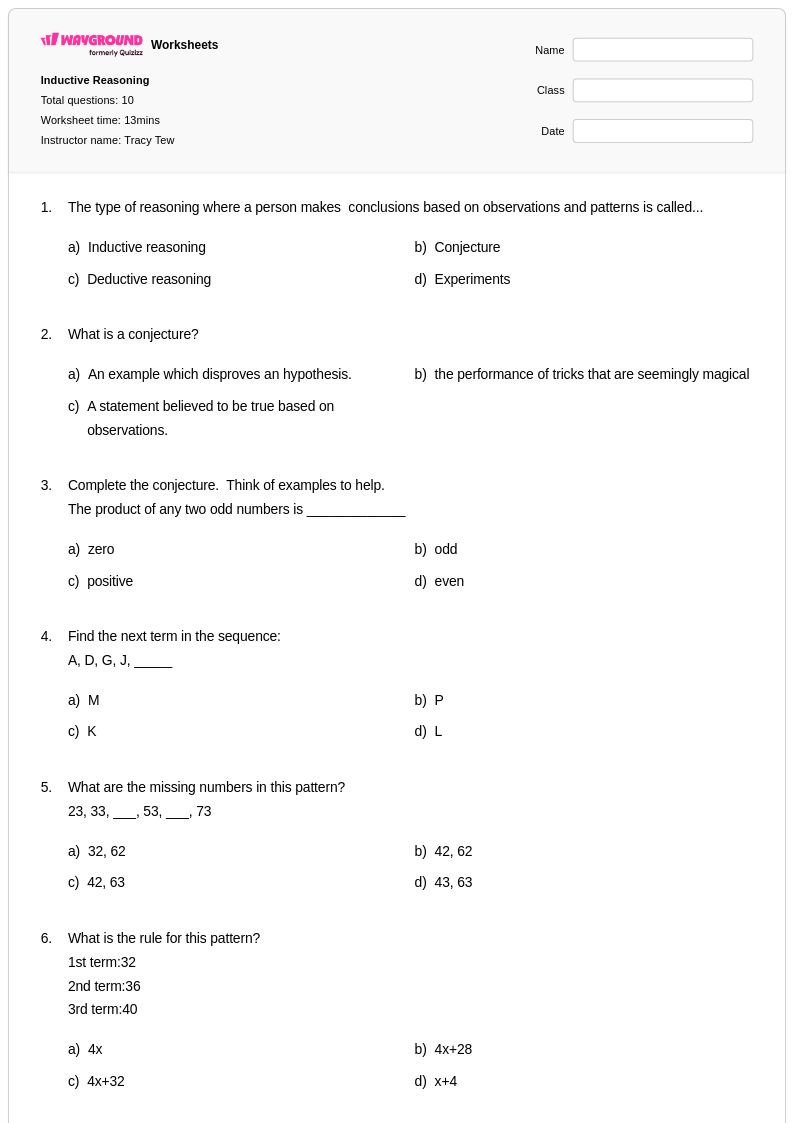
10 Q
7th - 10th
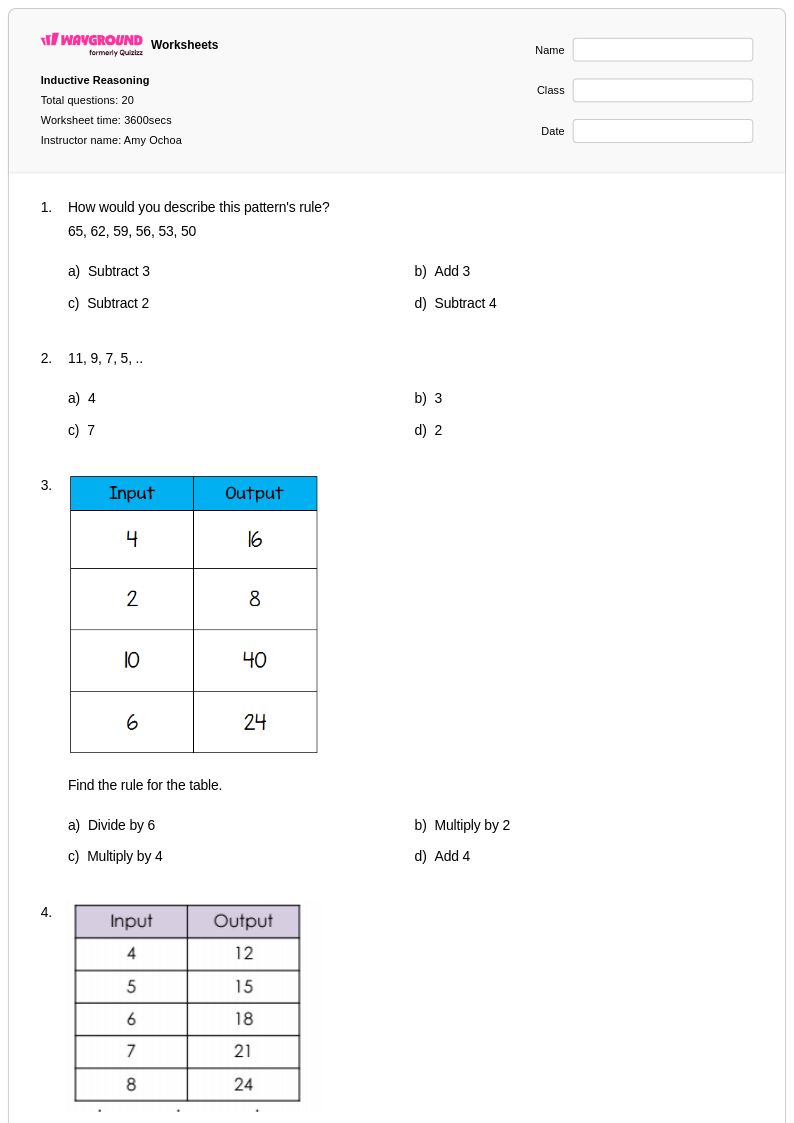
20 Q
7th - 9th
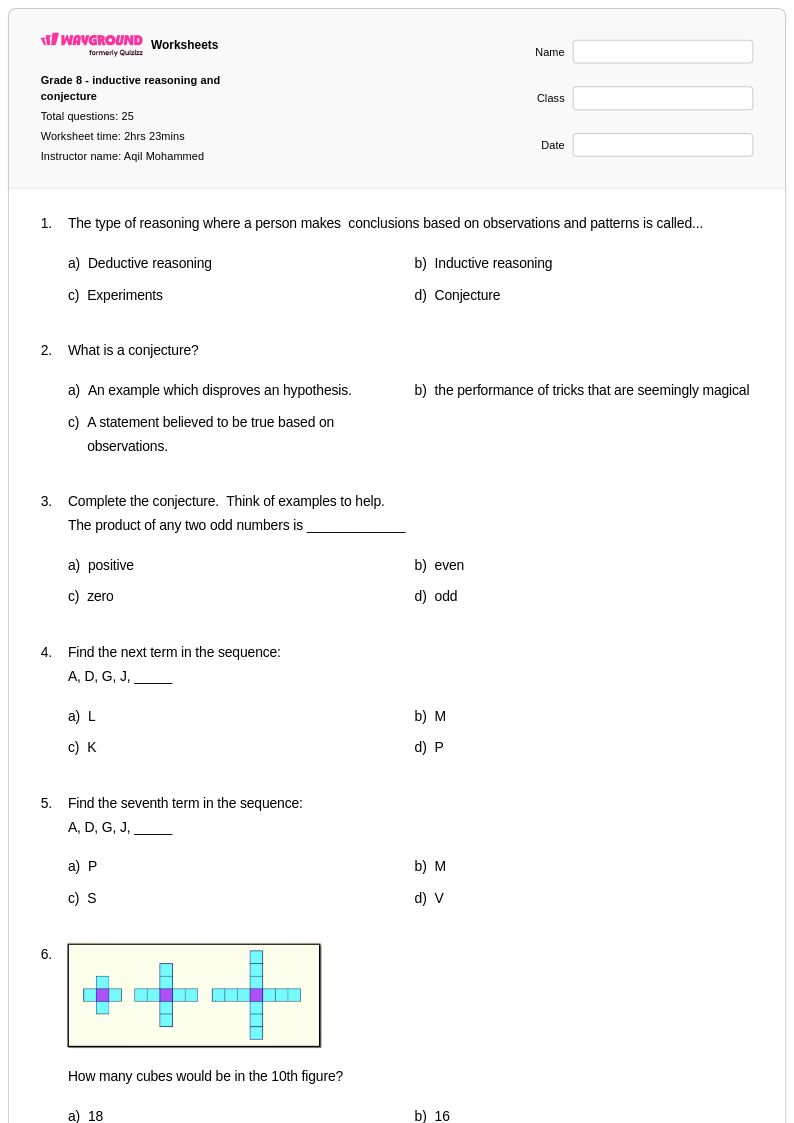
25 Q
5th - 8th
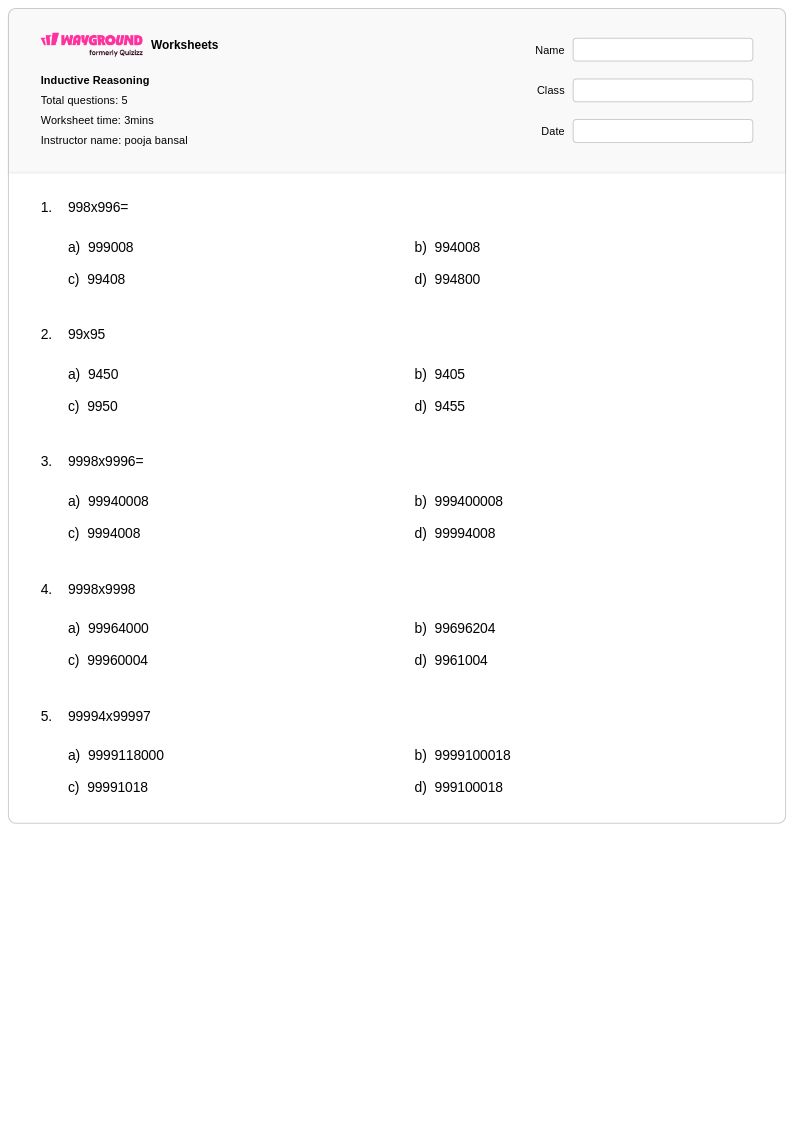
5 Q
6th - 9th
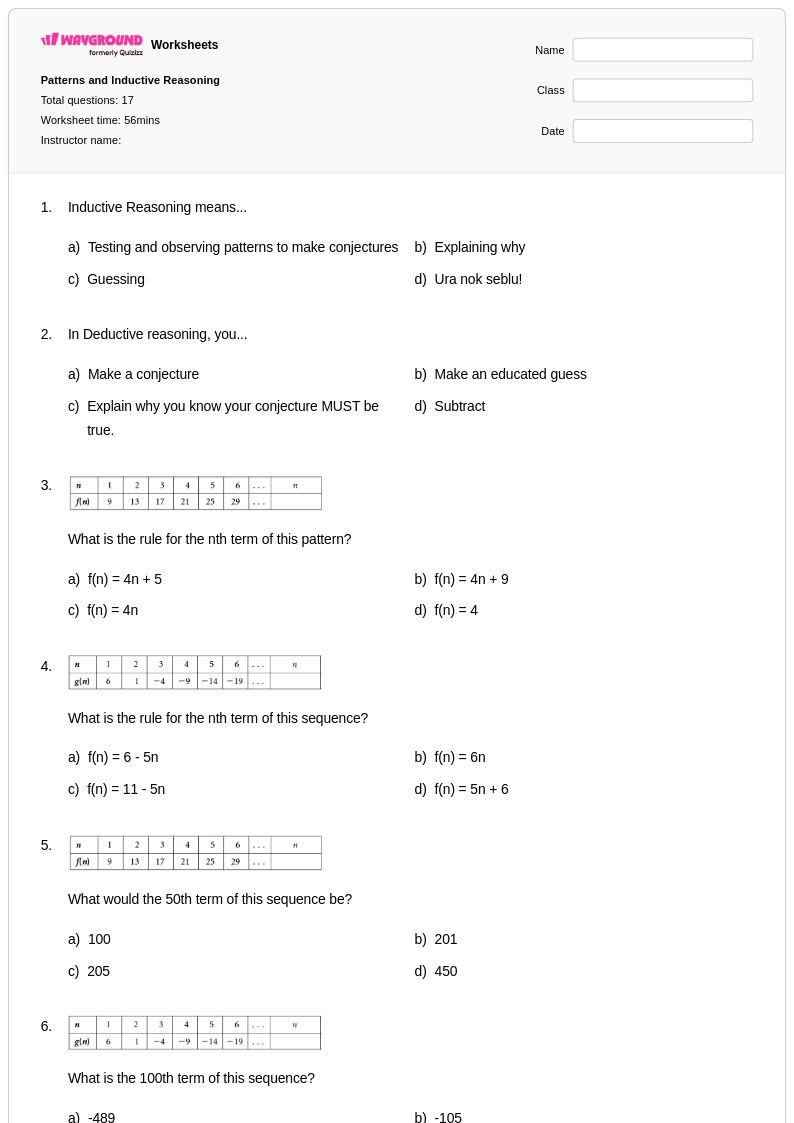
17 Q
6th - 10th
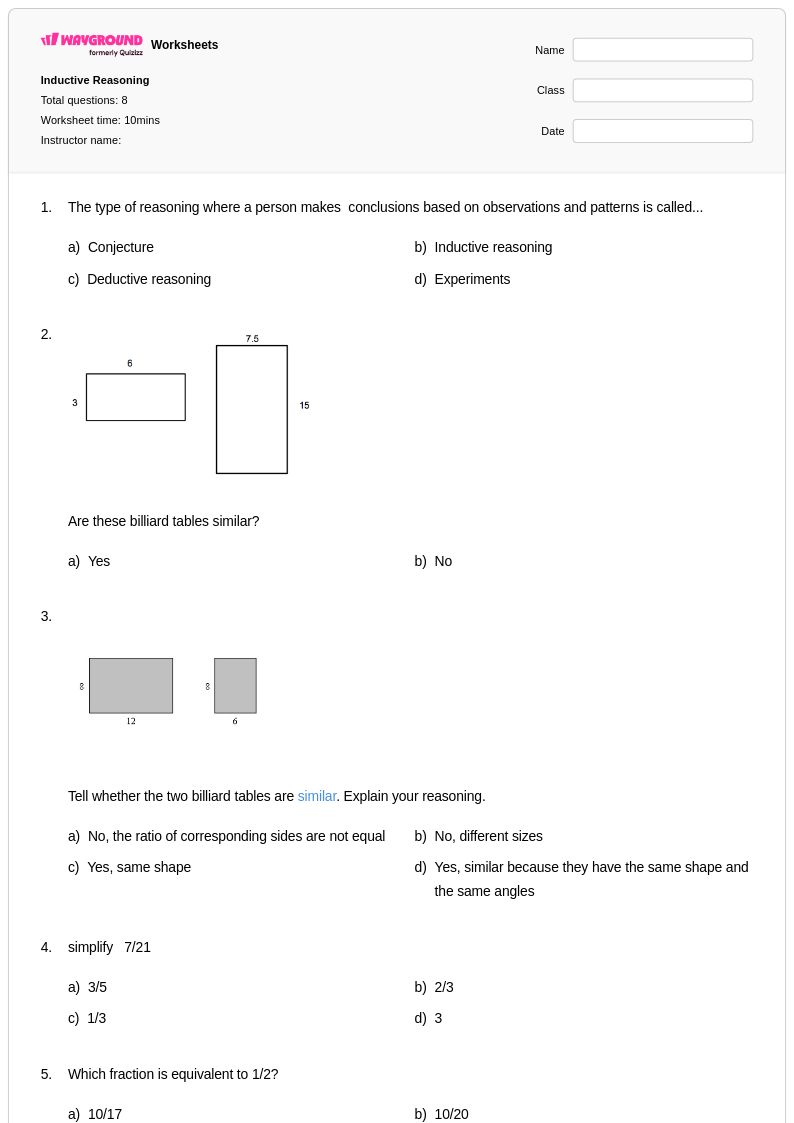
8 Q
6th - 8th
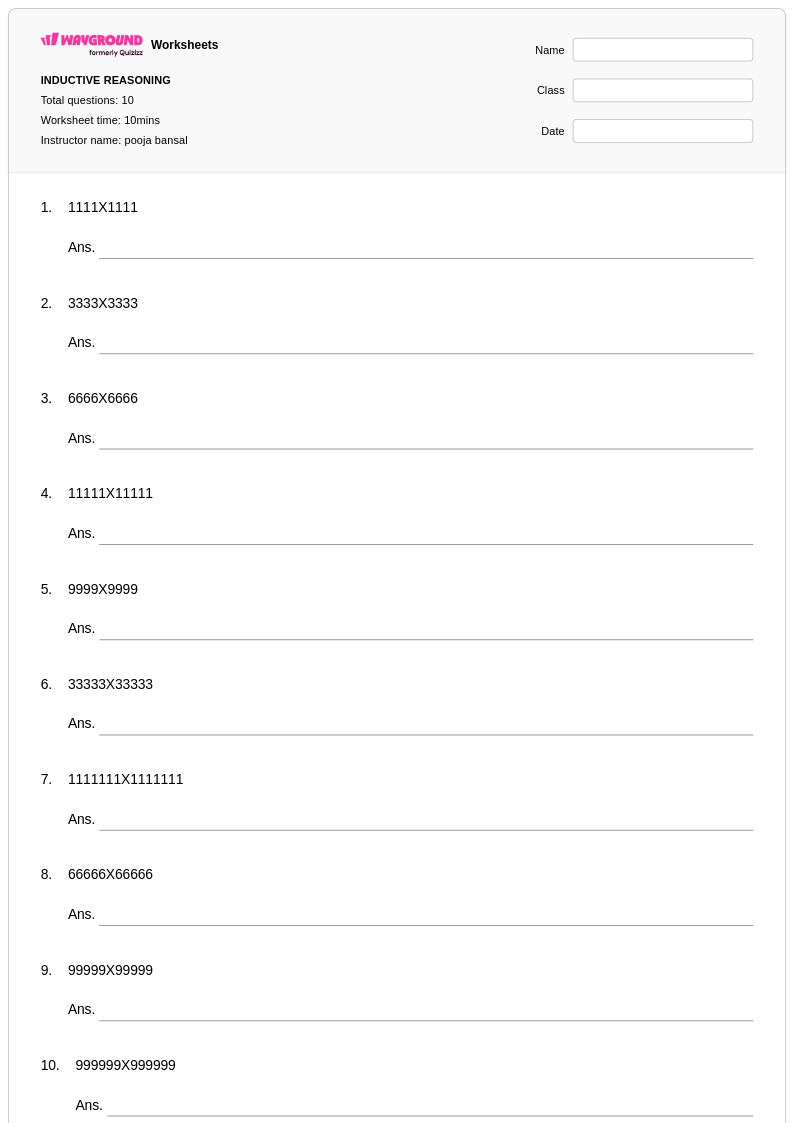
10 Q
6th - 8th
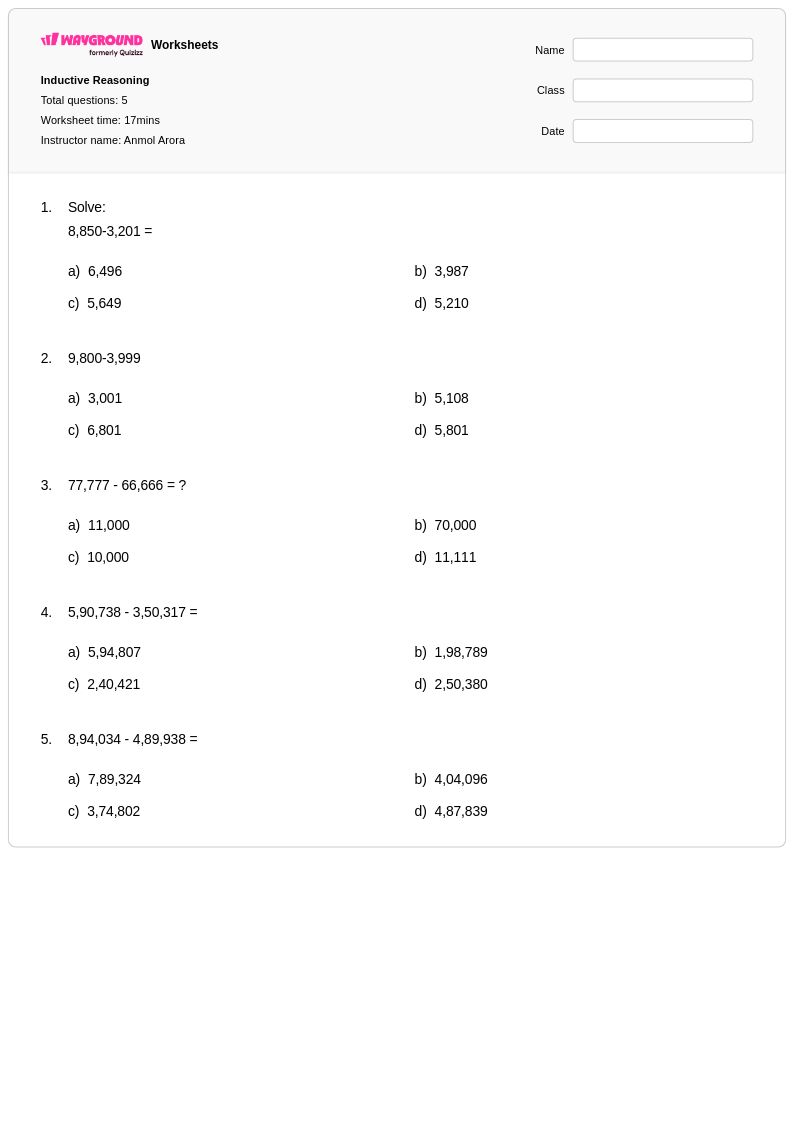
5 Q
6th - 9th
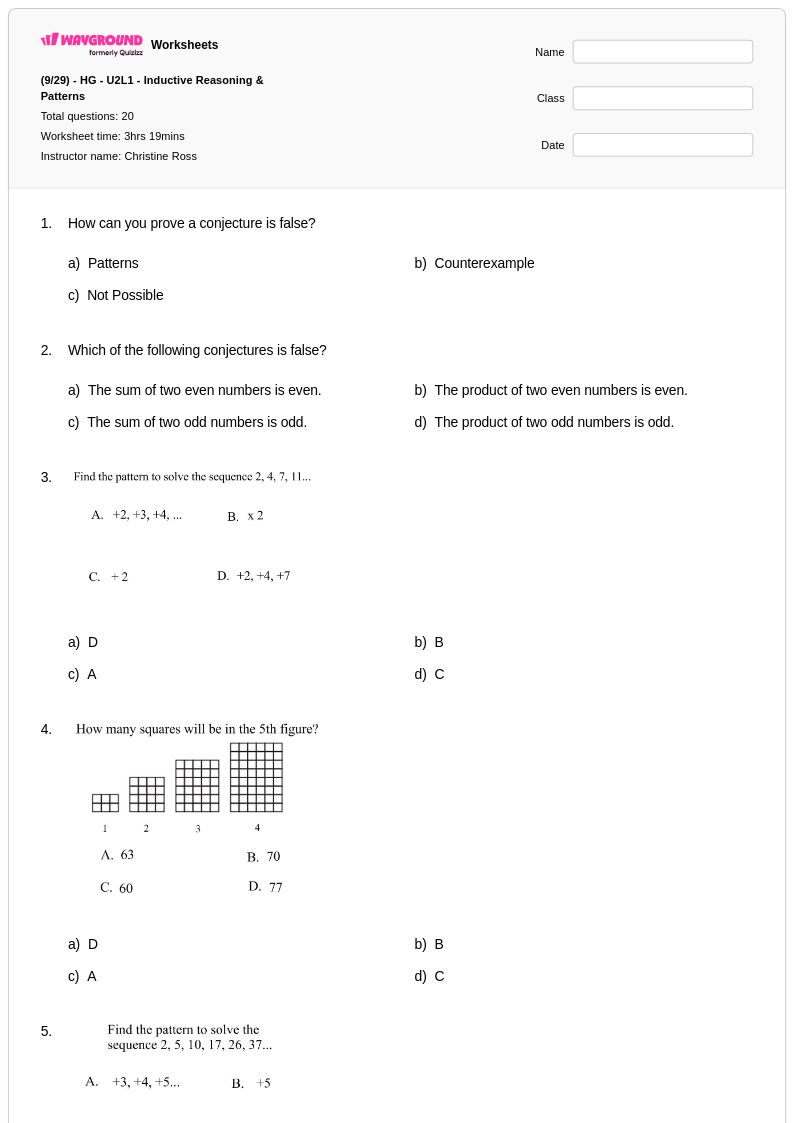
20 Q
7th - 10th
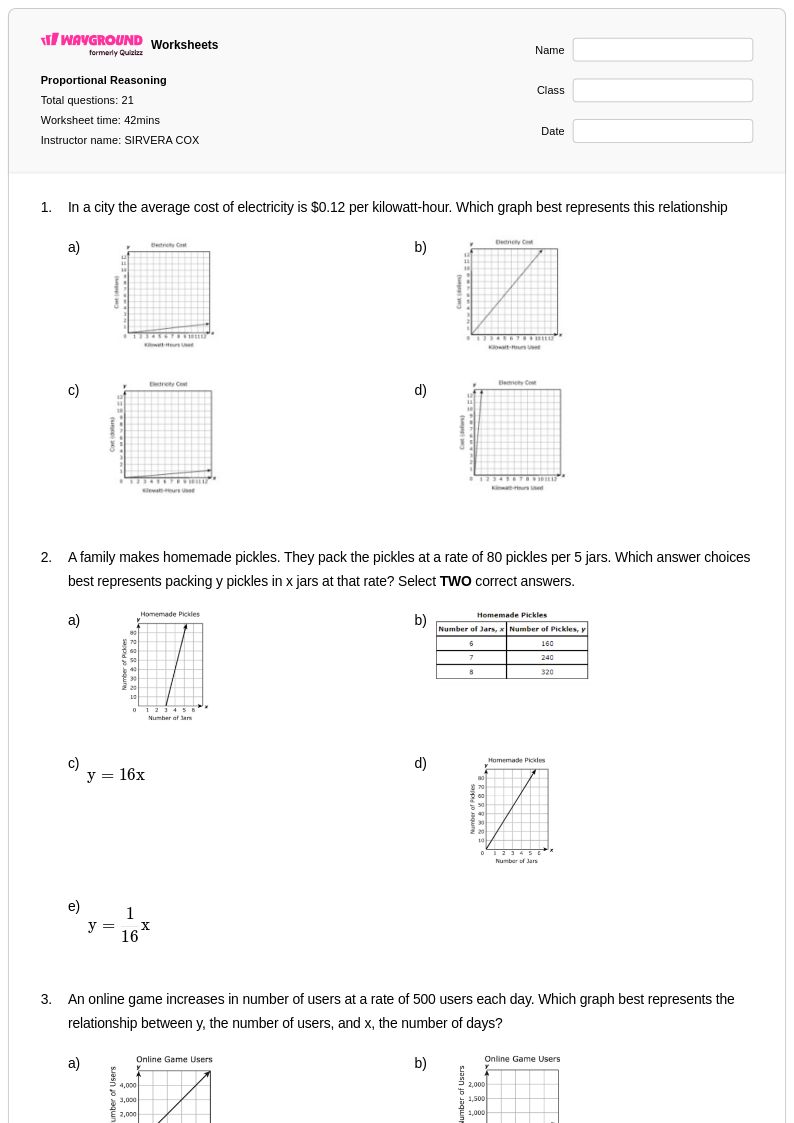
21 Q
7th
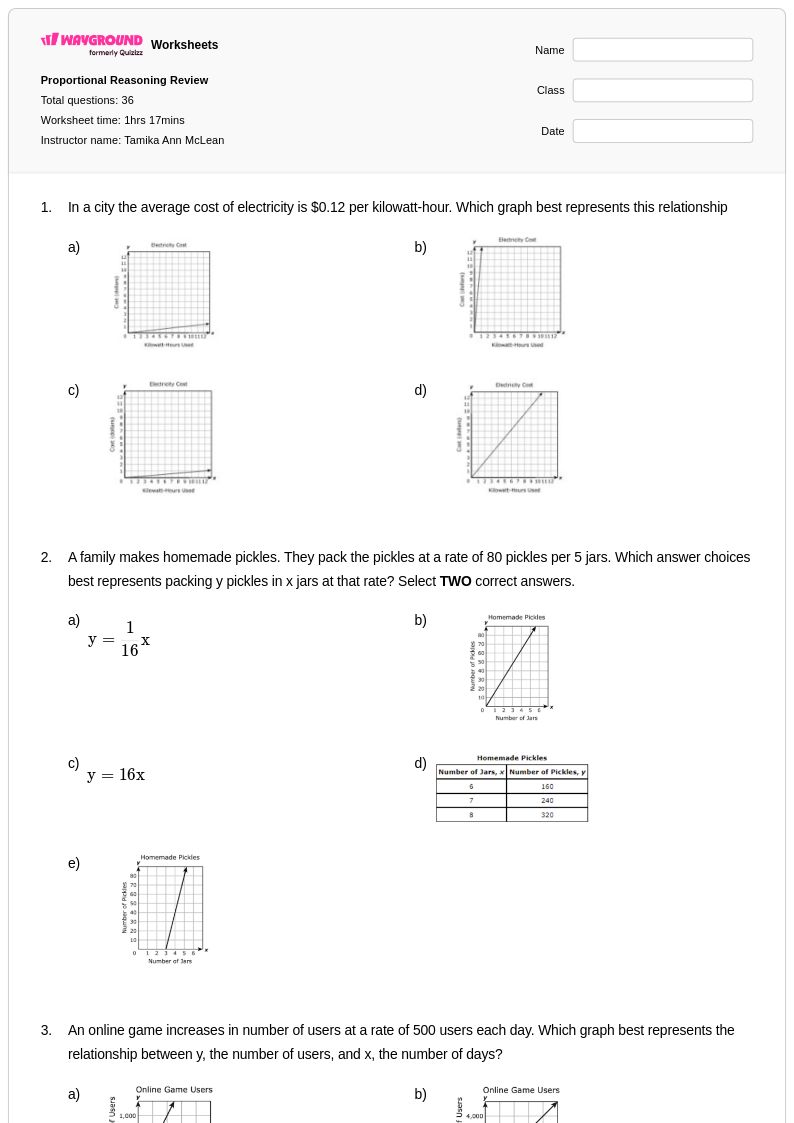
36 Q
7th
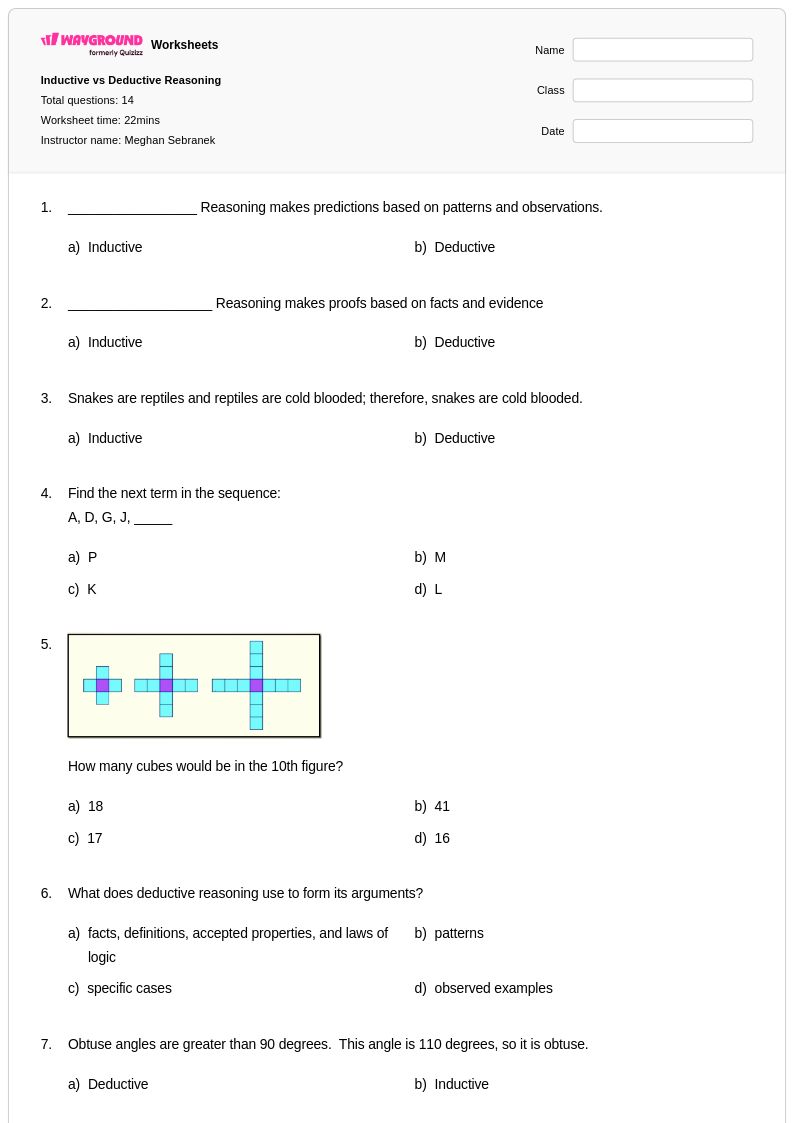
14 Q
5th - Uni
28 Q
6th - Uni
19 Q
7th
10 Q
7th - 10th
10 Q
7th
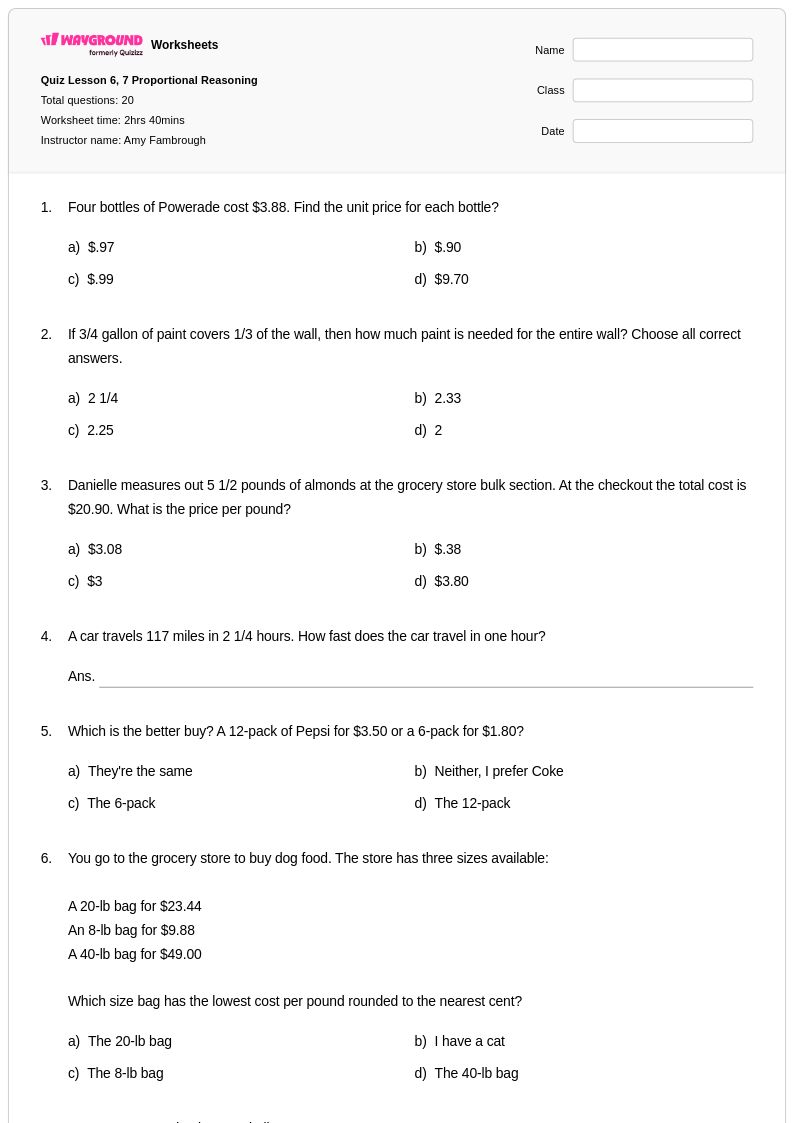
20 Q
6th - 8th
Explore Inductive Reasoning Worksheets by Grades
Explore Other Subject Worksheets for grade 7
Explore printable Inductive Reasoning worksheets for Grade 7
Inductive reasoning worksheets for Grade 7 mathematics through Wayground (formerly Quizizz) provide students with essential practice in recognizing patterns, making generalizations, and developing logical thinking skills fundamental to algebraic concepts. These comprehensive worksheets guide seventh-grade students through systematic observation of numerical sequences, geometric patterns, and algebraic relationships, helping them learn to formulate conjectures based on specific examples and evidence. Each worksheet collection includes carefully scaffolded practice problems that progress from simple pattern recognition to more complex reasoning tasks, complete with detailed answer keys that allow students to verify their logical processes. The free printable resources are designed to strengthen critical thinking abilities while building confidence in mathematical reasoning, with pdf formats ensuring easy access for both classroom instruction and independent study.
Wayground's extensive collection of teacher-created inductive reasoning resources offers educators millions of differentiated materials specifically designed to support Grade 7 algebra instruction and mathematical reasoning development. The platform's advanced search and filtering capabilities enable teachers to quickly locate worksheets aligned with specific curriculum standards, while customization tools allow for seamless modification of difficulty levels and problem types to meet diverse learning needs. These versatile resources are available in both printable and digital formats, making them ideal for traditional classroom settings, homework assignments, and remote learning environments. Teachers can effectively use these materials for lesson planning, targeted remediation of reasoning skills, enrichment activities for advanced learners, and ongoing skill practice that reinforces students' ability to think mathematically and develop sound logical arguments in algebraic contexts.
FAQs
What is expected for inductive reasoning in 7th grade?
What's an effective strategy for teaching this to 7th graders?
What kind of practice problems are best for 7th grade?
What is a common error for 7th graders with inductive reasoning?
How can I use this Grade 7 worksheet in my class?
How does this topic align with 7th-grade standards?