
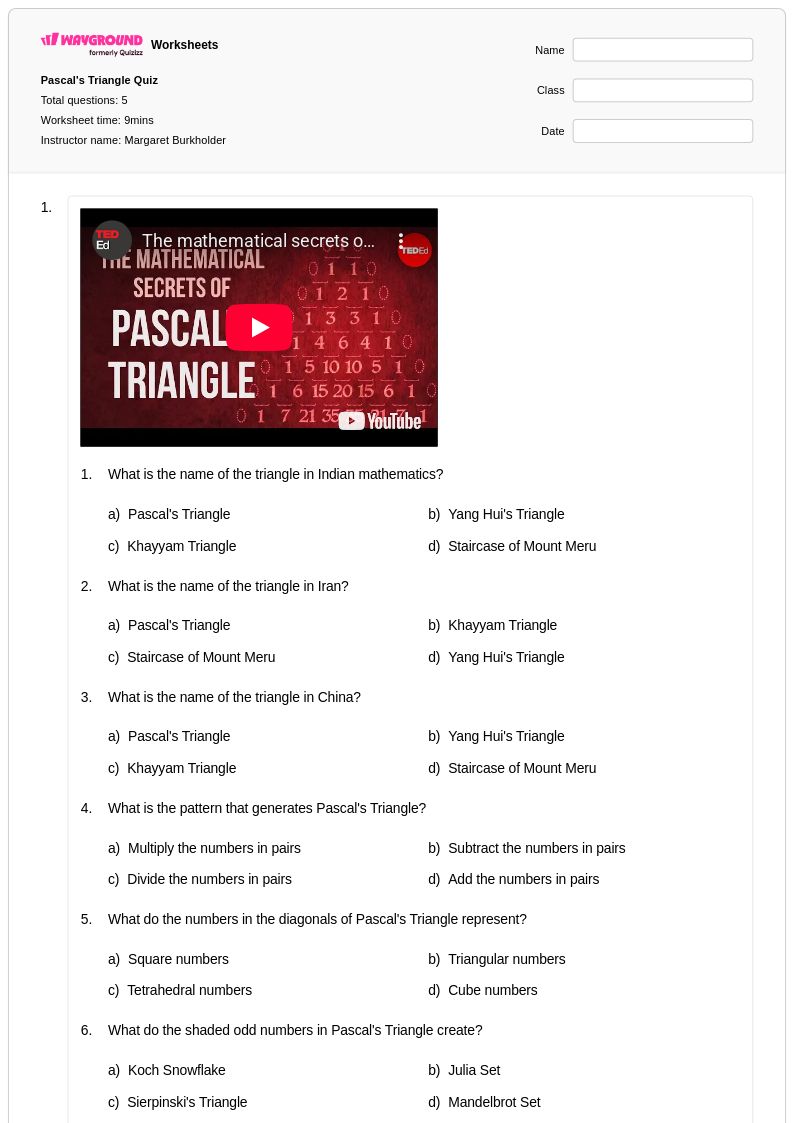
13 Q
6th - 8th
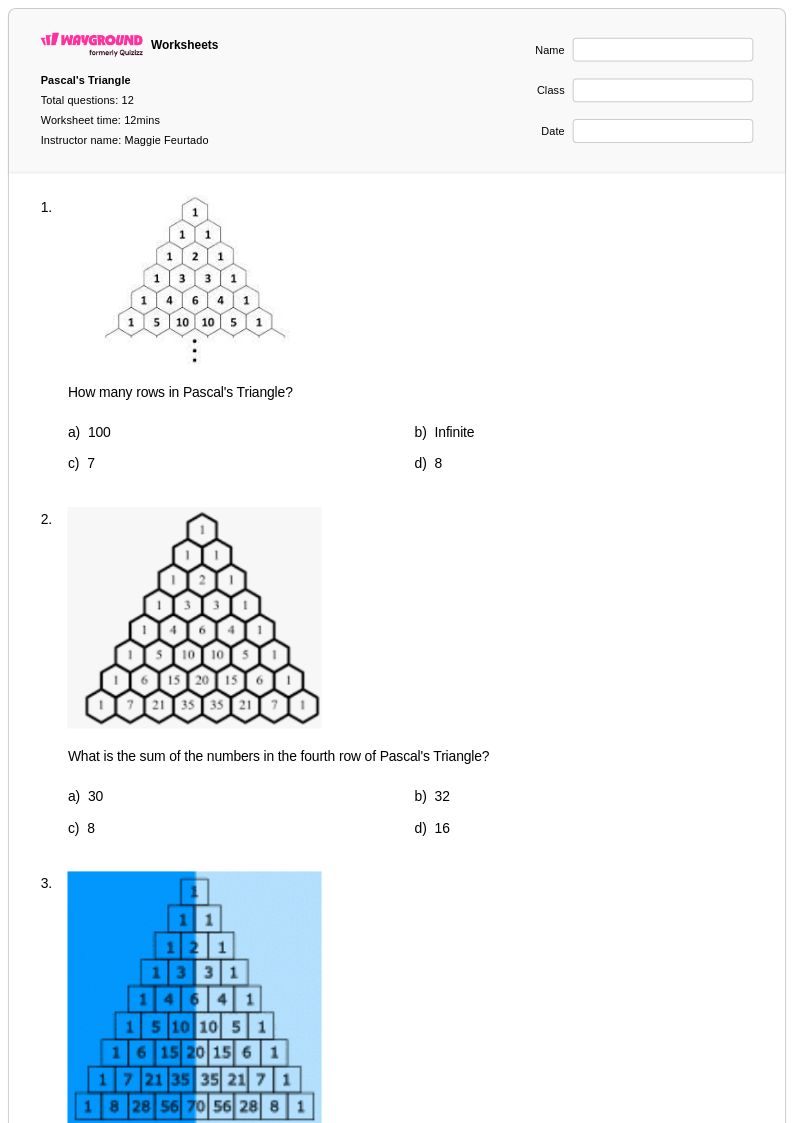
12 Q
6th - 8th
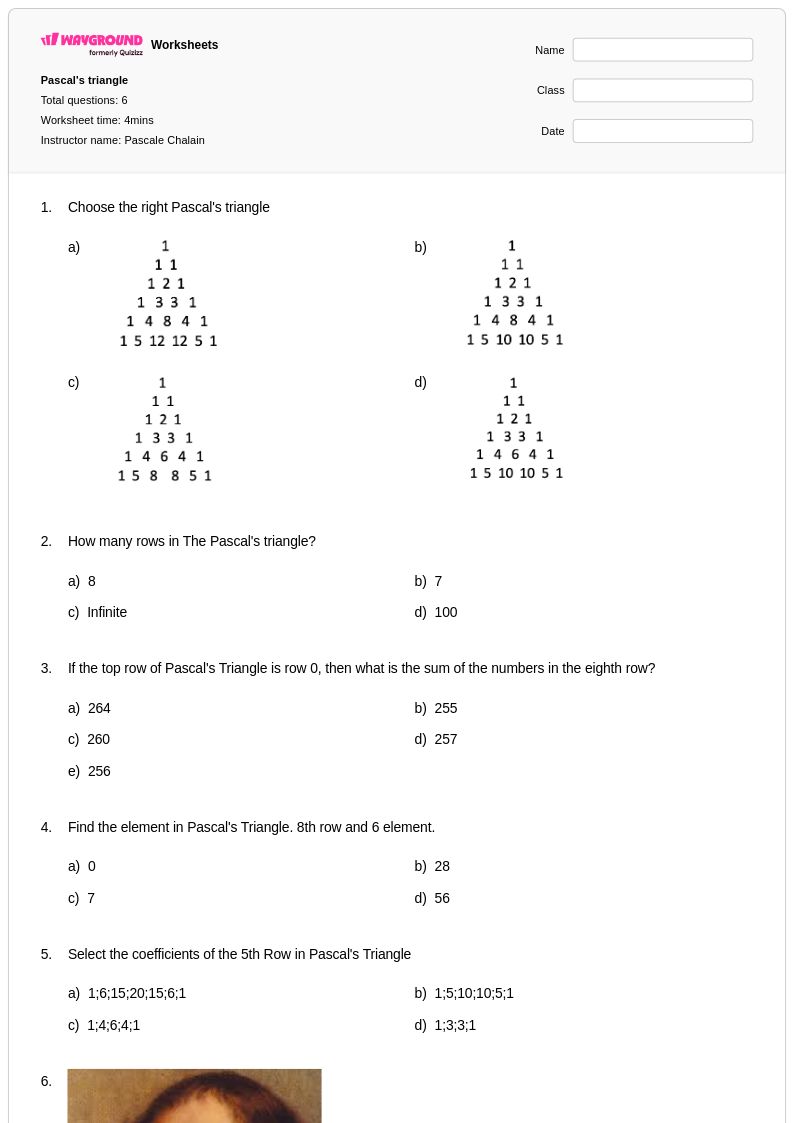
6 Q
7th
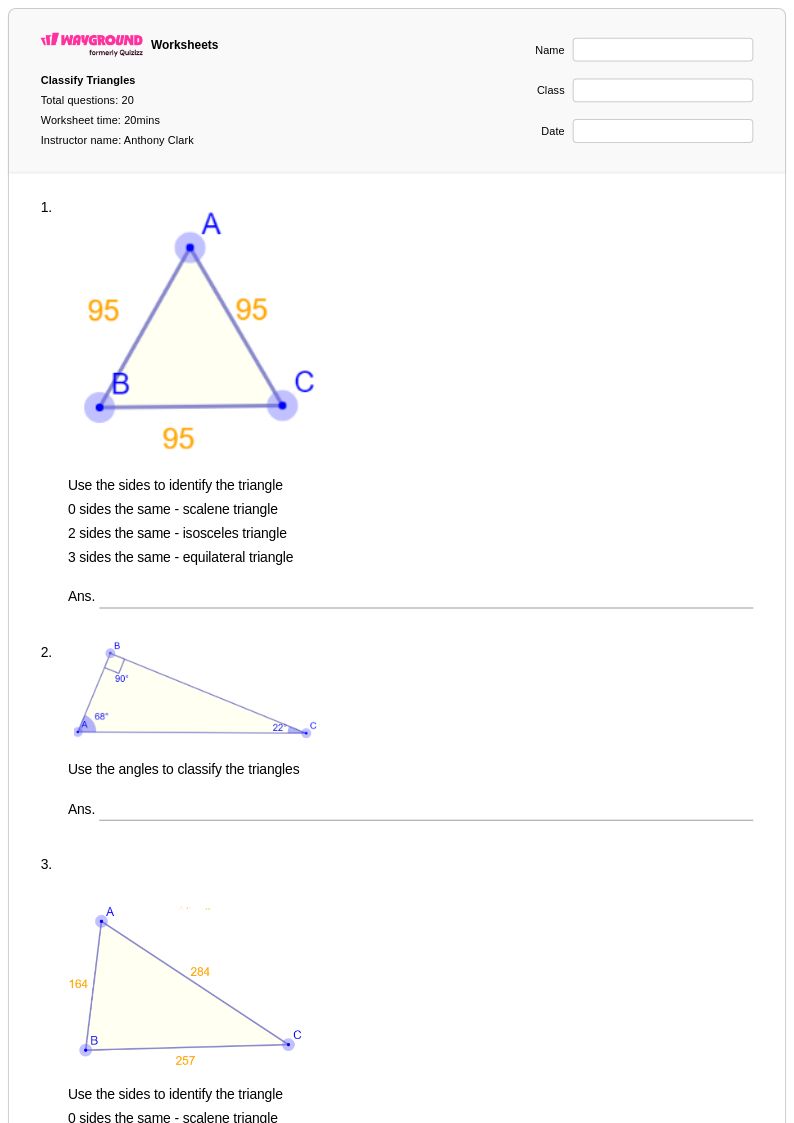
20 Q
5th - Uni
20 Q
7th - Uni
20 Q
7th - Uni
20 Q
7th - Uni
20 Q
7th - Uni
20 Q
3rd - Uni
15 Q
7th - Uni
15 Q
5th - Uni
20 Q
4th - Uni
20 Q
7th - Uni
15 Q
7th - 9th
15 Q
7th - Uni
20 Q
5th - Uni
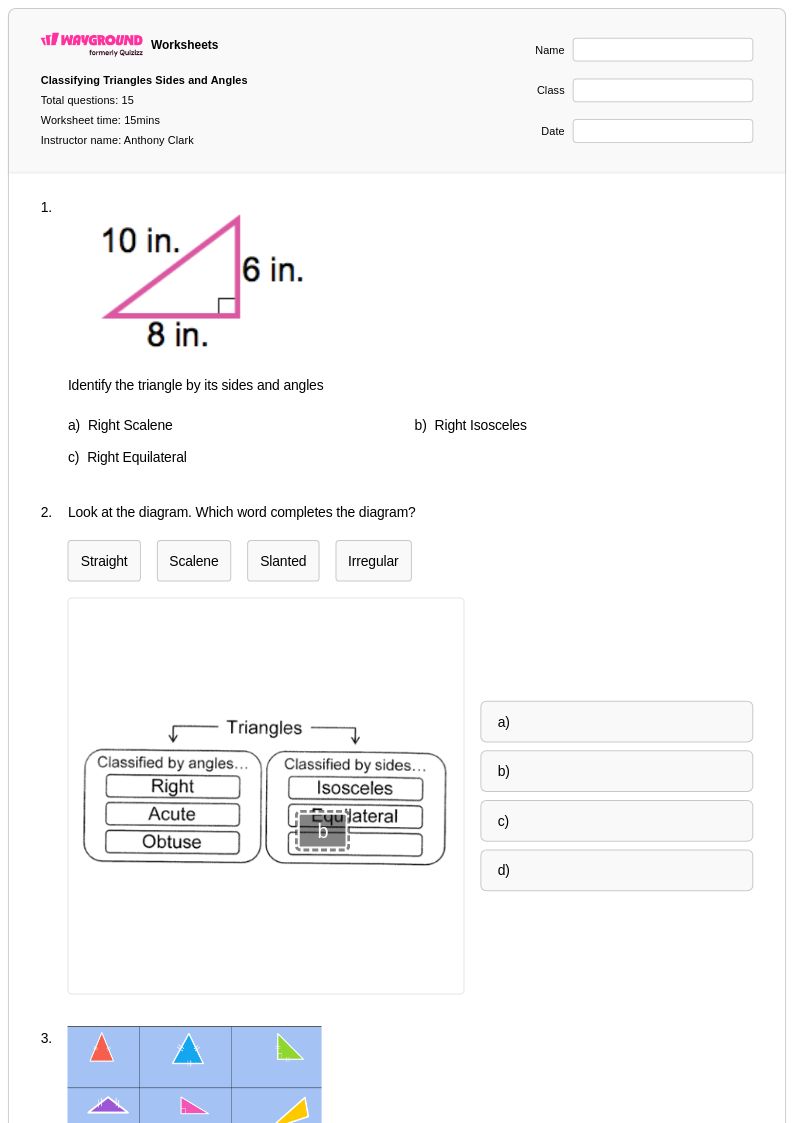
15 Q
5th - Uni
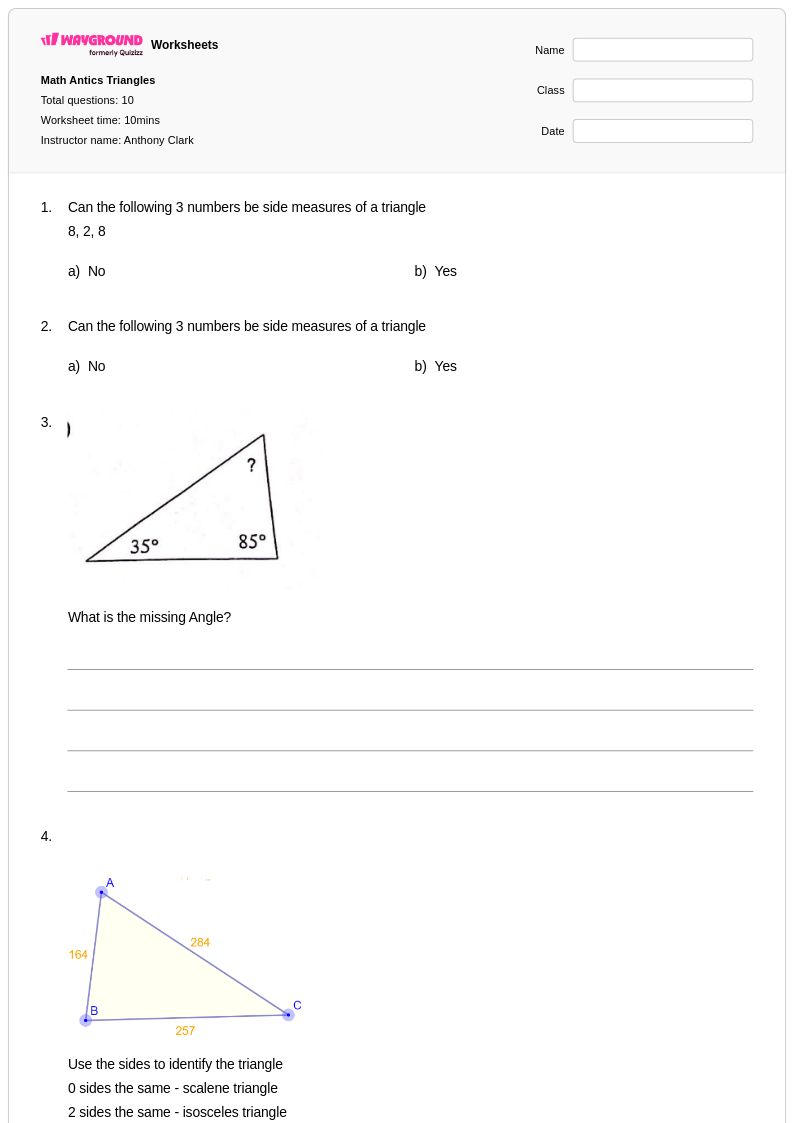
10 Q
7th - Uni
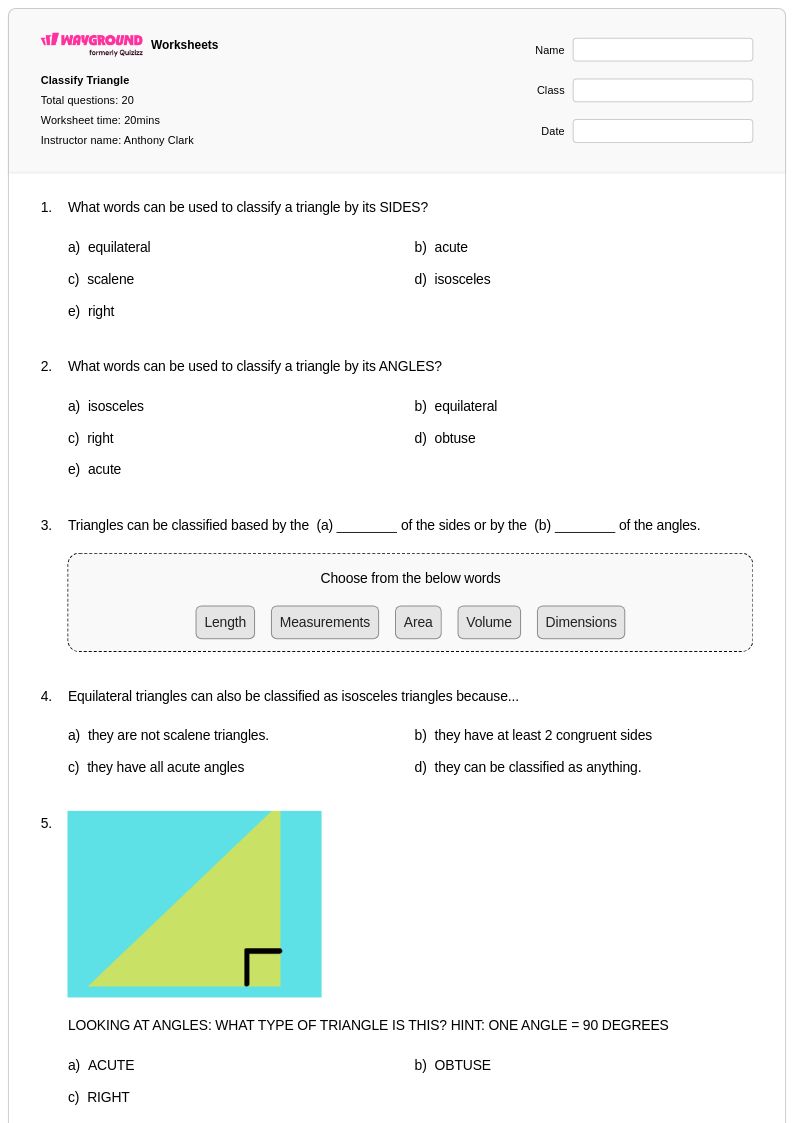
20 Q
5th - Uni
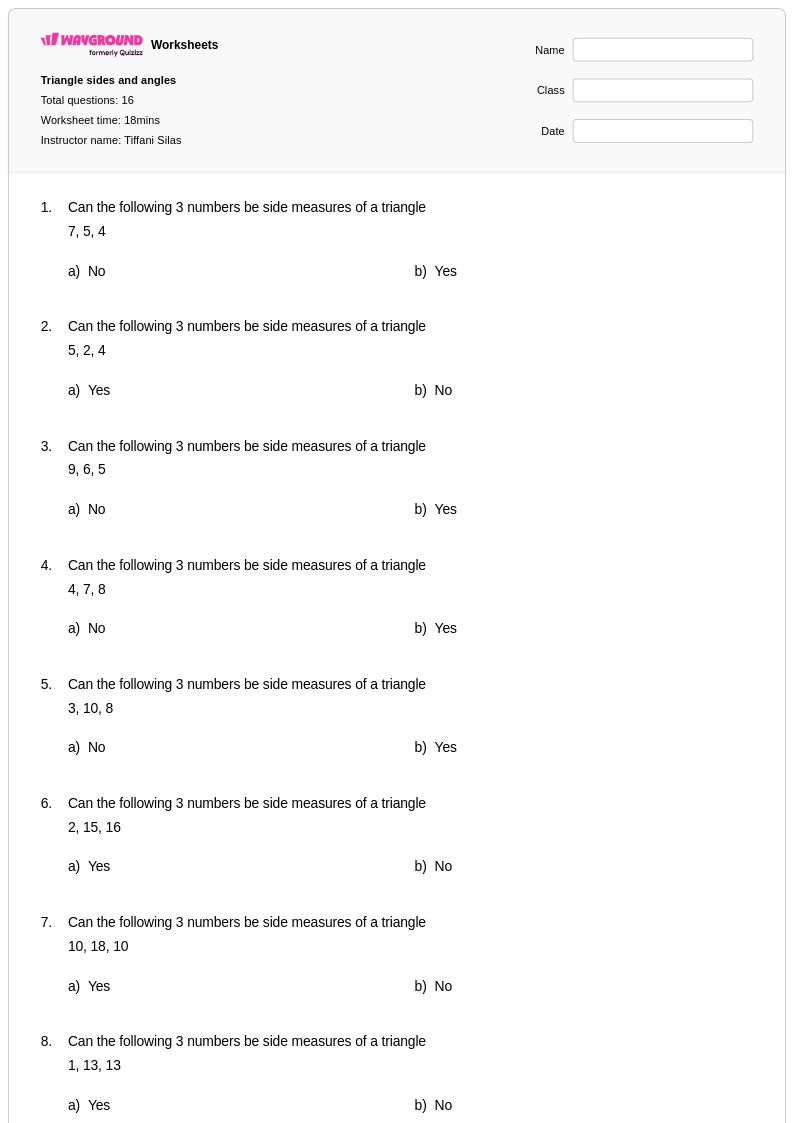
16 Q
7th
15 Q
5th - Uni
20 Q
5th - Uni
20 Q
7th - Uni
15 Q
5th - Uni
Explore Other Subject Worksheets for grade 7
Explore printable Pascal's Triangle worksheets for Grade 7
Pascal's Triangle worksheets for Grade 7 students available through Wayground (formerly Quizizz) provide comprehensive practice with this fundamental mathematical pattern that bridges arithmetic and algebraic concepts. These carefully designed resources help seventh-grade students discover the intricate relationships within Pascal's Triangle, including how each number represents the sum of the two numbers above it, the connection to binomial coefficients, and the various number patterns hidden within its rows. Students strengthen critical mathematical skills including pattern recognition, number sense, and logical reasoning while exploring applications such as combinations and probability foundations. Each worksheet collection includes detailed answer keys and is available as free printables in convenient pdf format, ensuring teachers have complete resources for both classroom instruction and independent practice problems.
Wayground (formerly Quizizz) supports mathematics educators with an extensive library of millions of teacher-created Pascal's Triangle resources that can be easily located through robust search and filtering capabilities. Teachers benefit from worksheets aligned to mathematical standards that accommodate diverse learning needs through built-in differentiation tools, allowing for seamless customization based on student readiness levels and learning objectives. The platform's flexible format options include both printable pdf worksheets for traditional classroom use and interactive digital versions that engage students through technology-enhanced learning experiences. These comprehensive tools enable educators to effectively plan sequential lessons, provide targeted remediation for students who need additional support with pattern recognition, offer enrichment opportunities for advanced learners ready to explore deeper mathematical connections, and deliver consistent skill practice that builds confidence with algebraic thinking foundations.
FAQs
How can I teach Pascal's Triangle in 7th grade?
What are good practice problems for 7th graders?
What misconceptions might 7th graders have?
How does Pascal's Triangle relate to the 7th-grade math curriculum?
How do I use this Wayground worksheet?
How can I support diverse learners with this topic?