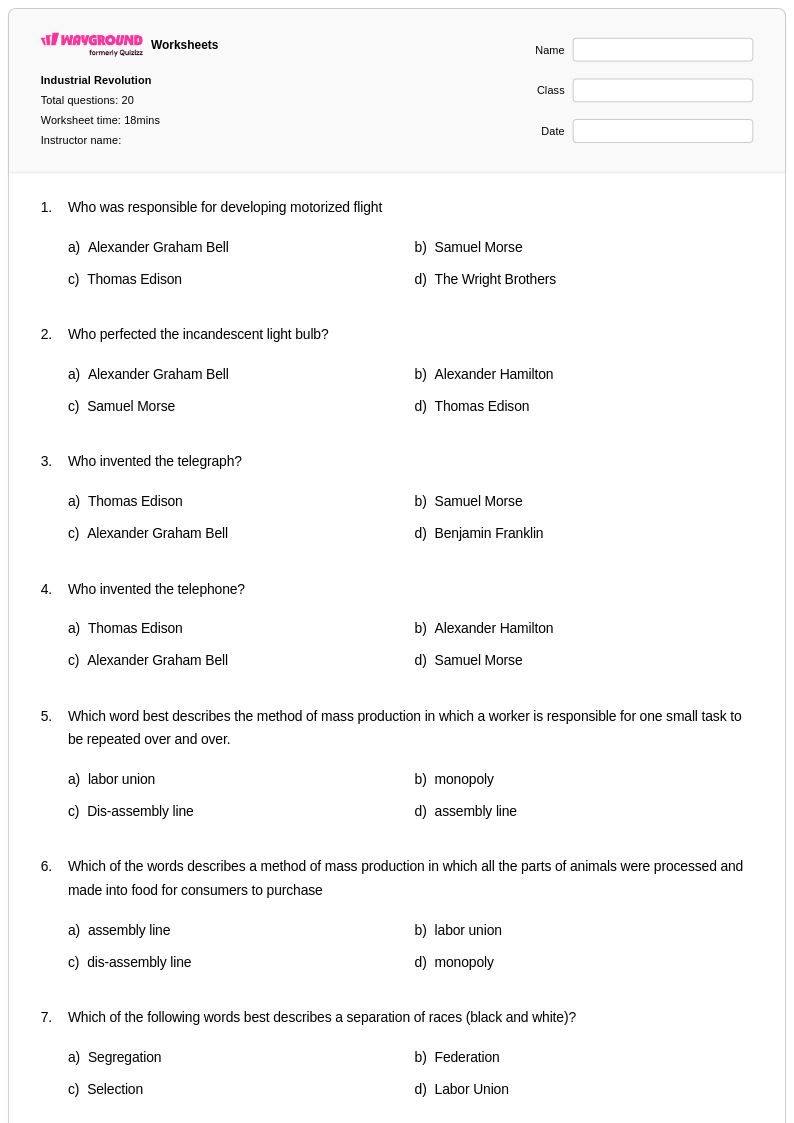
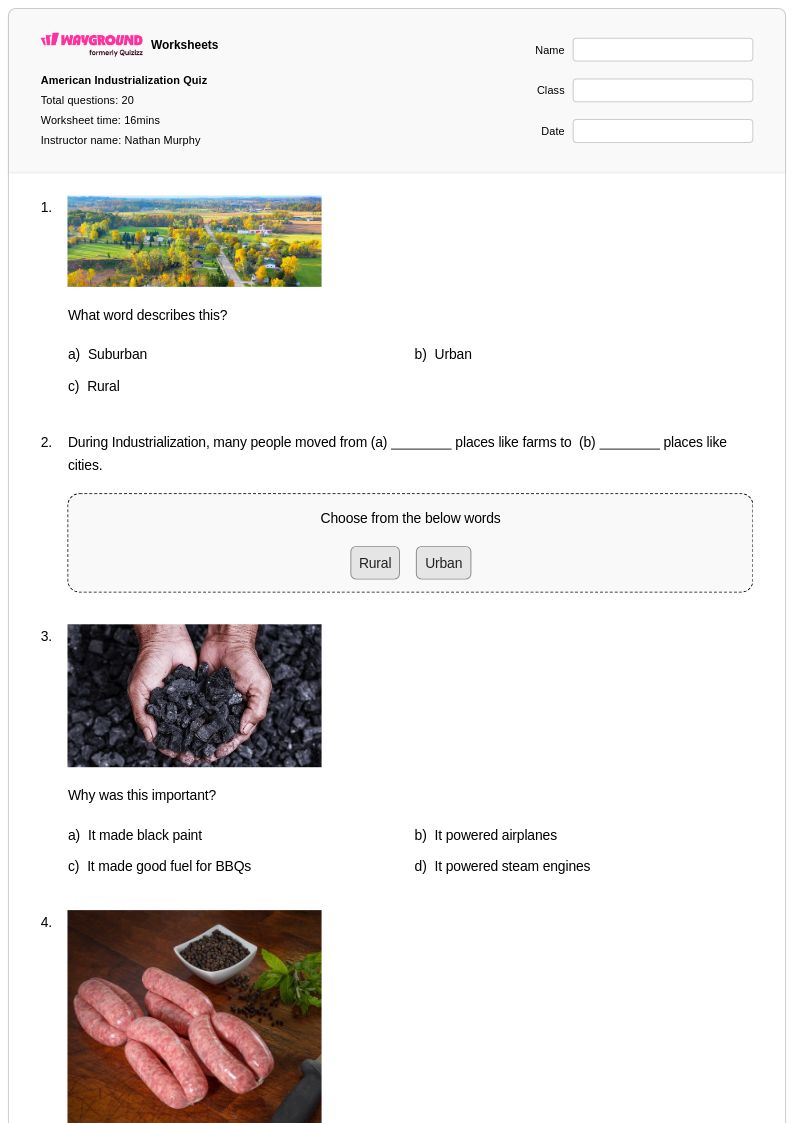
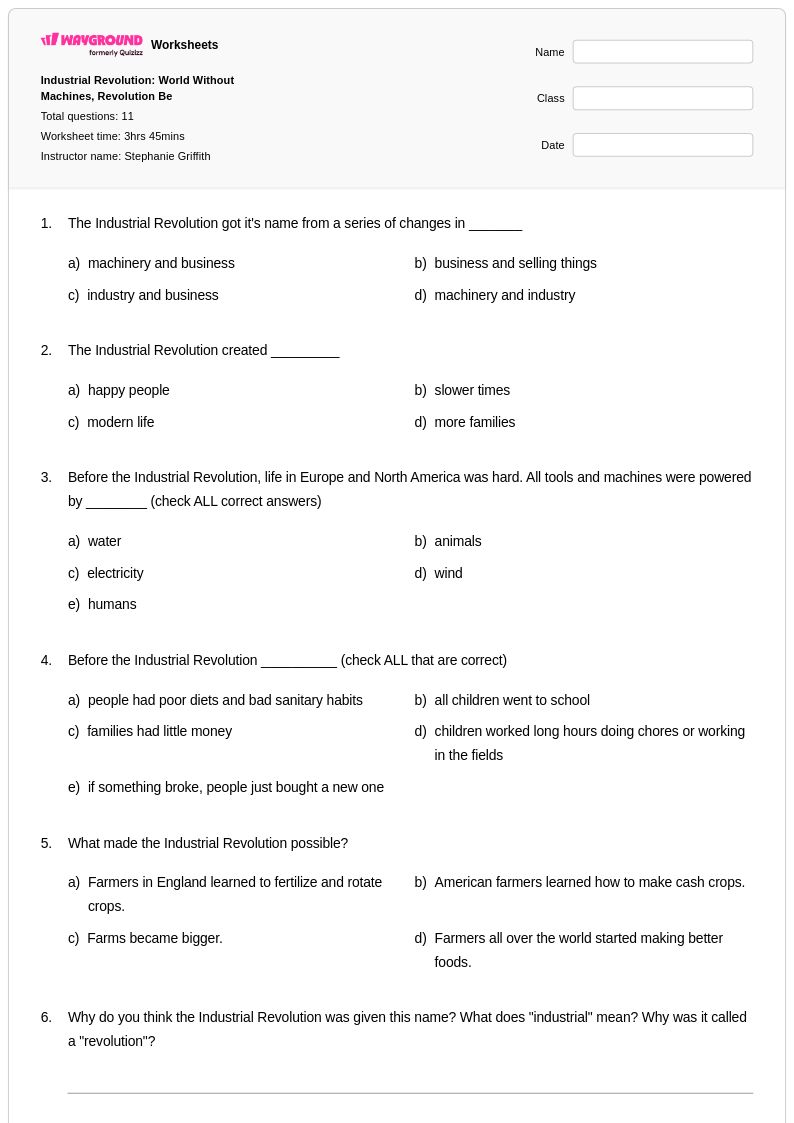
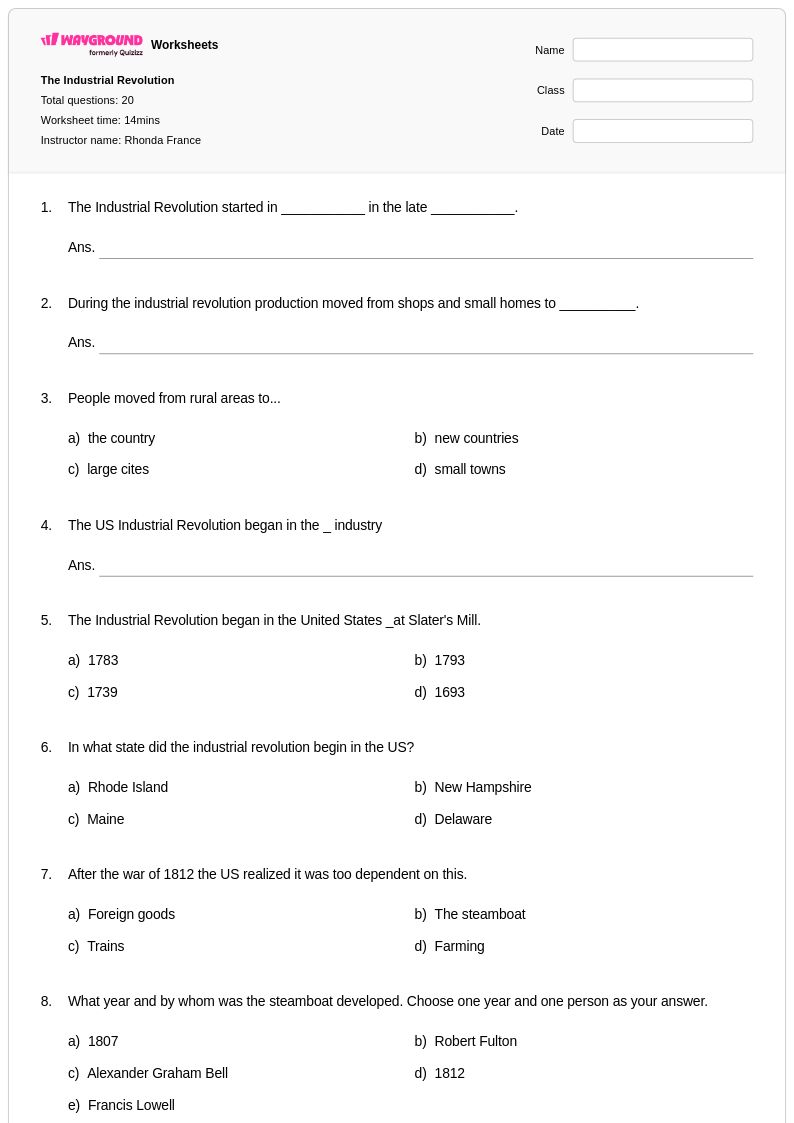
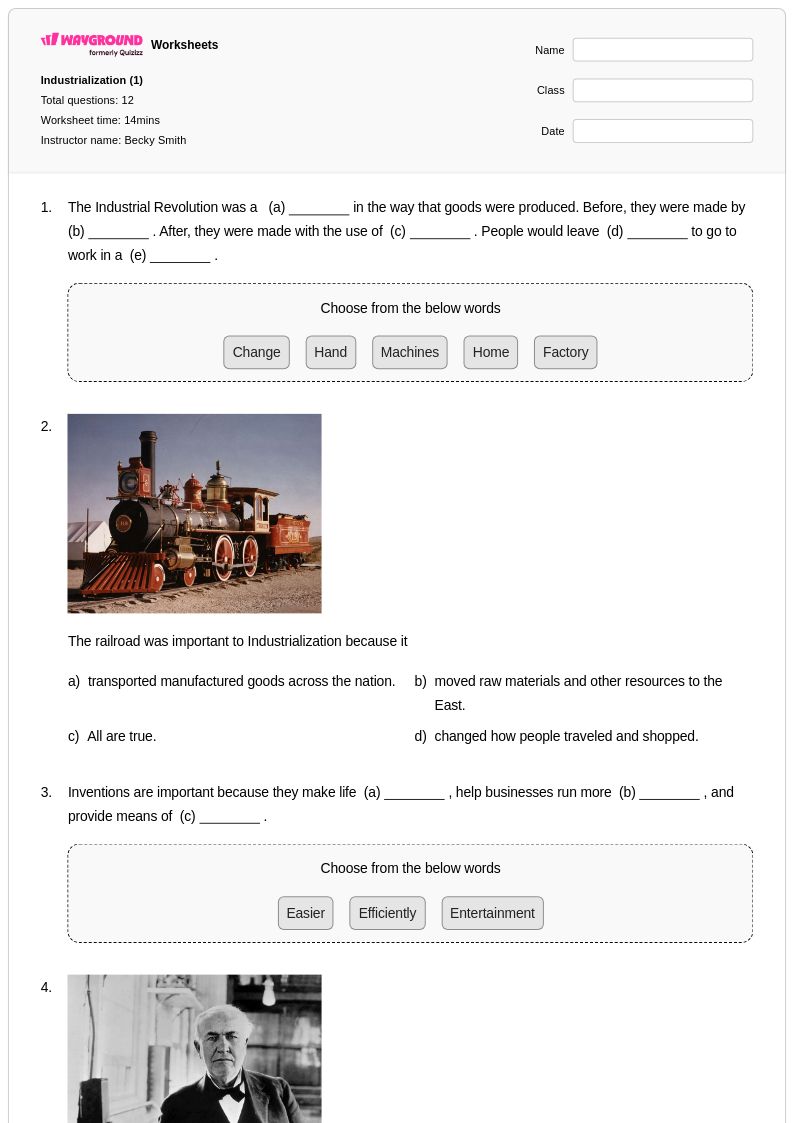
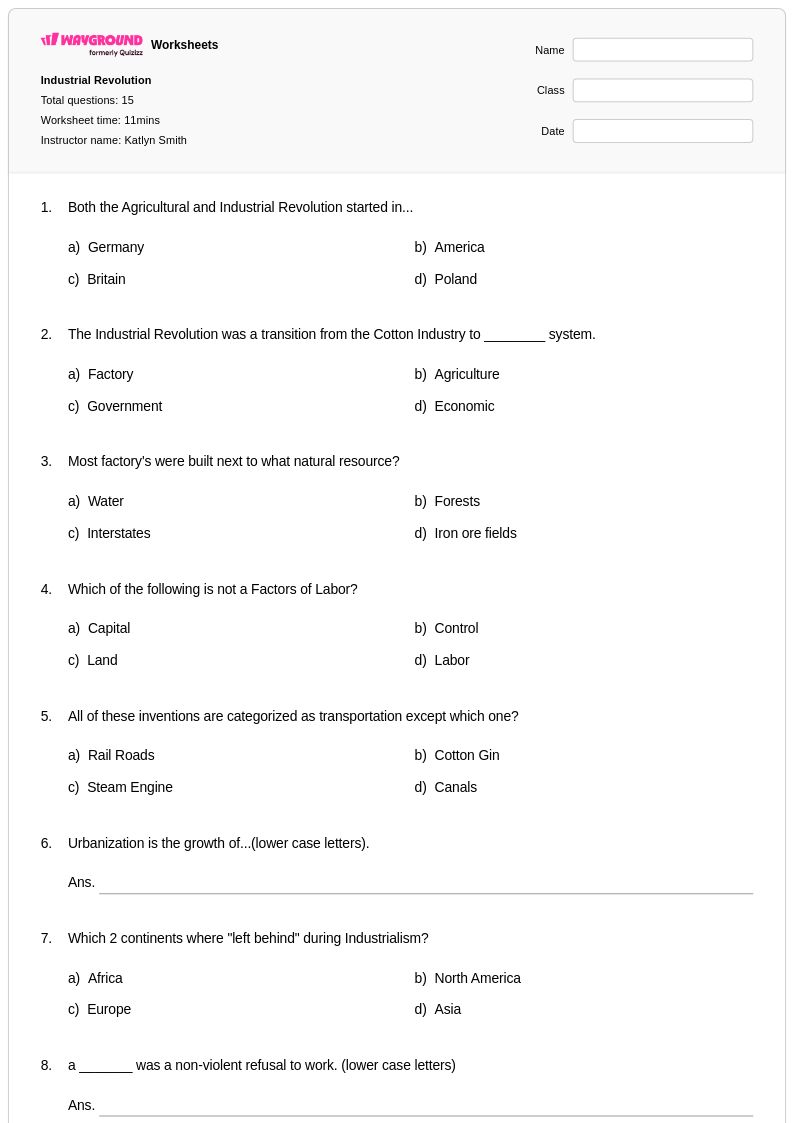
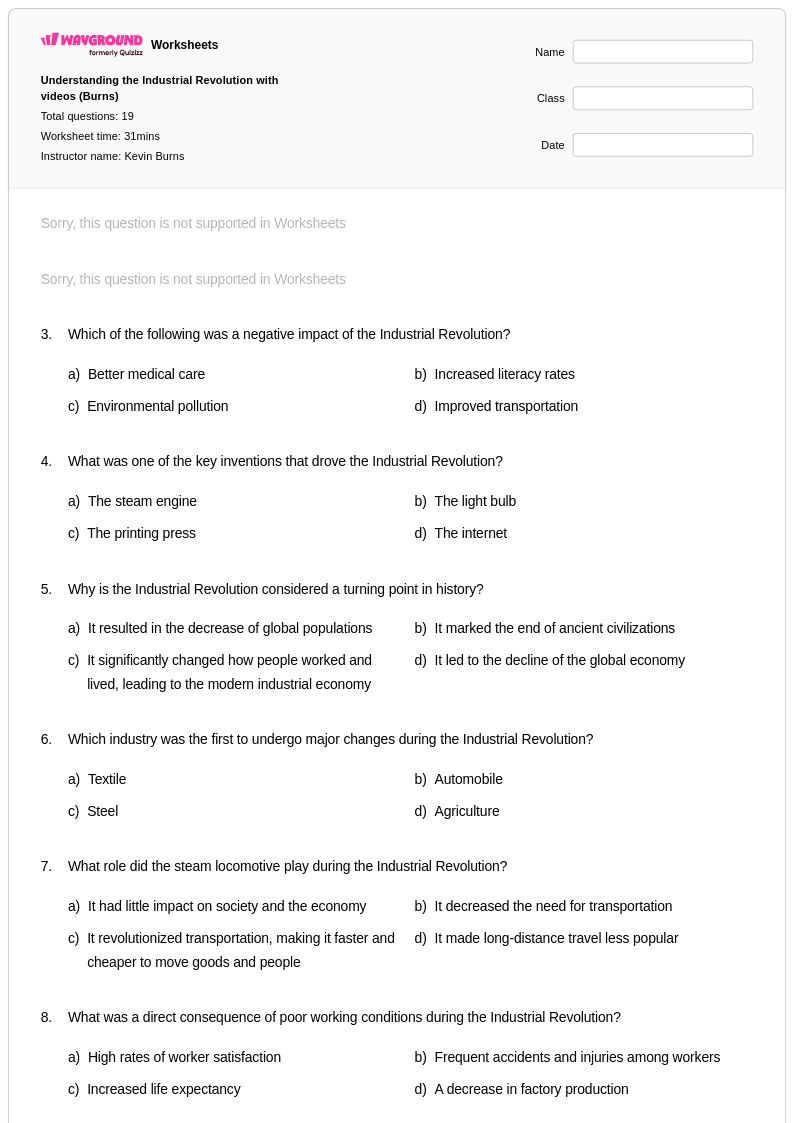
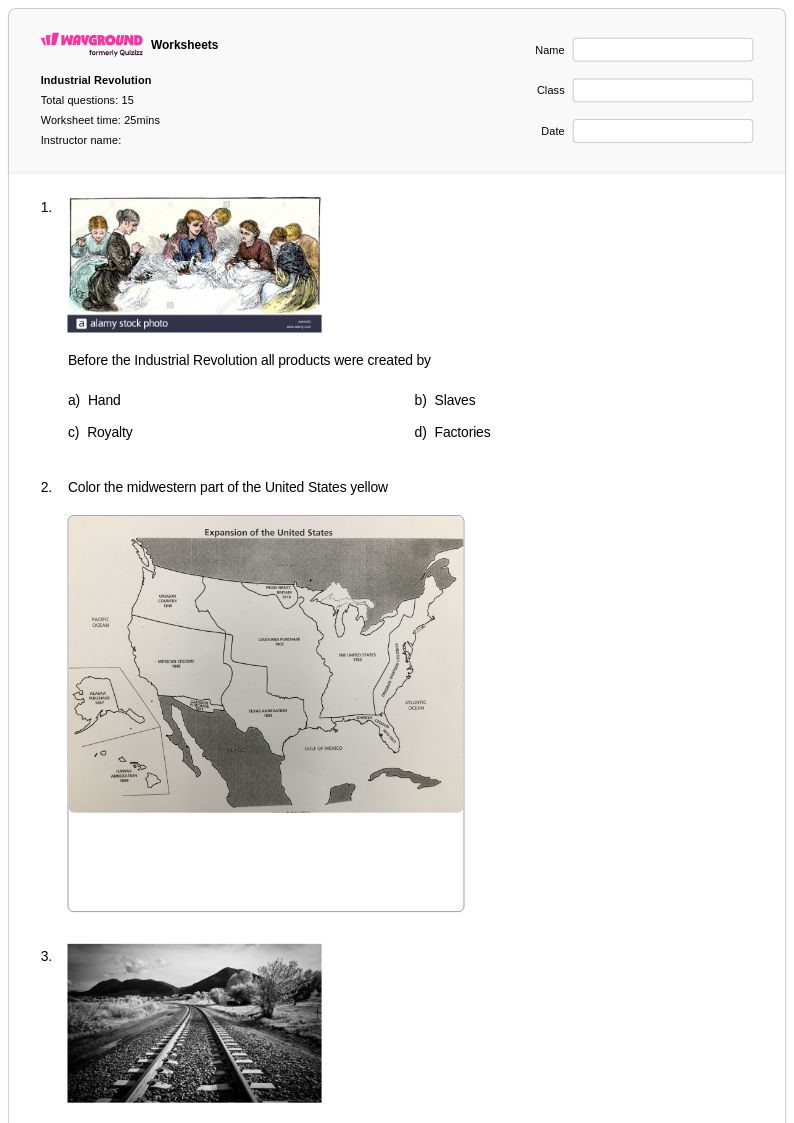
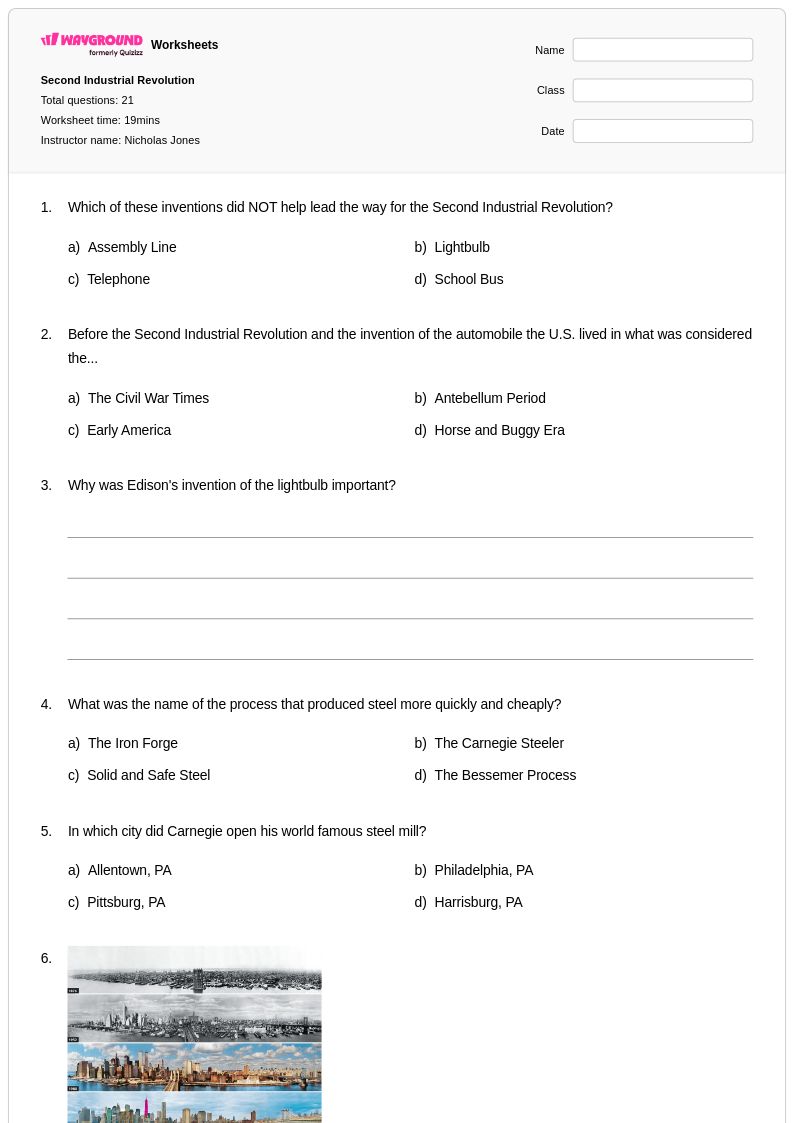
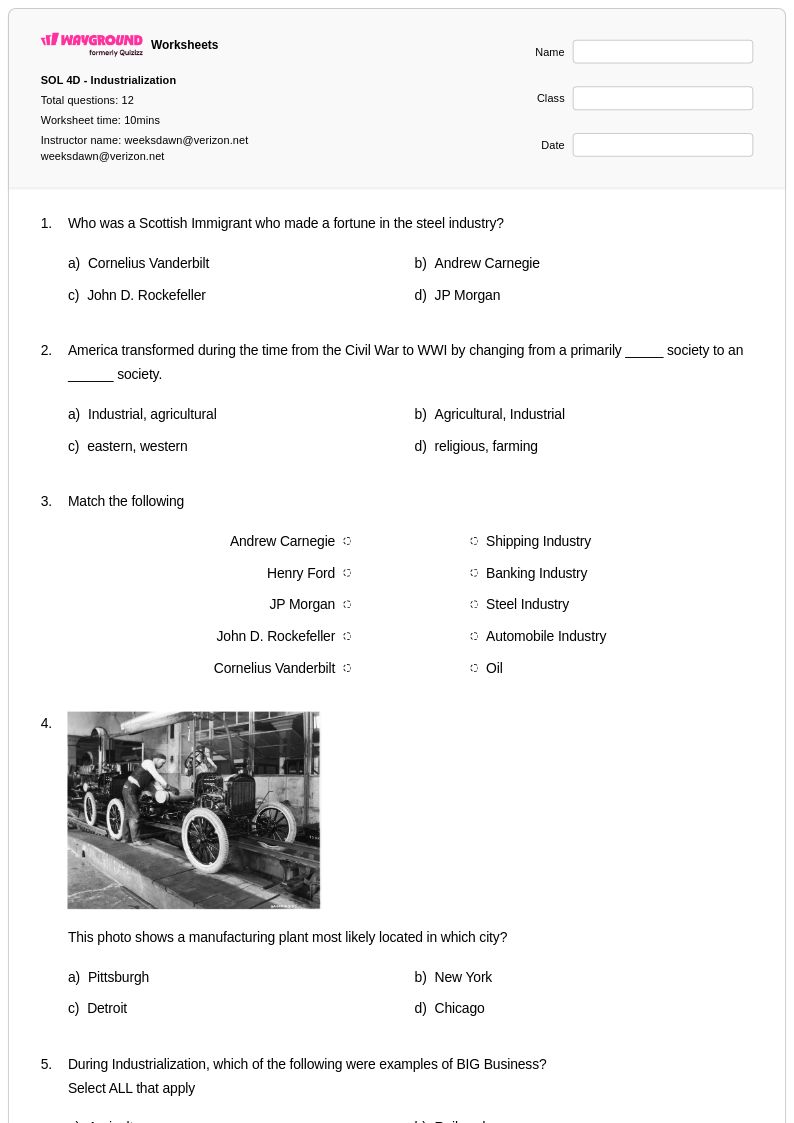
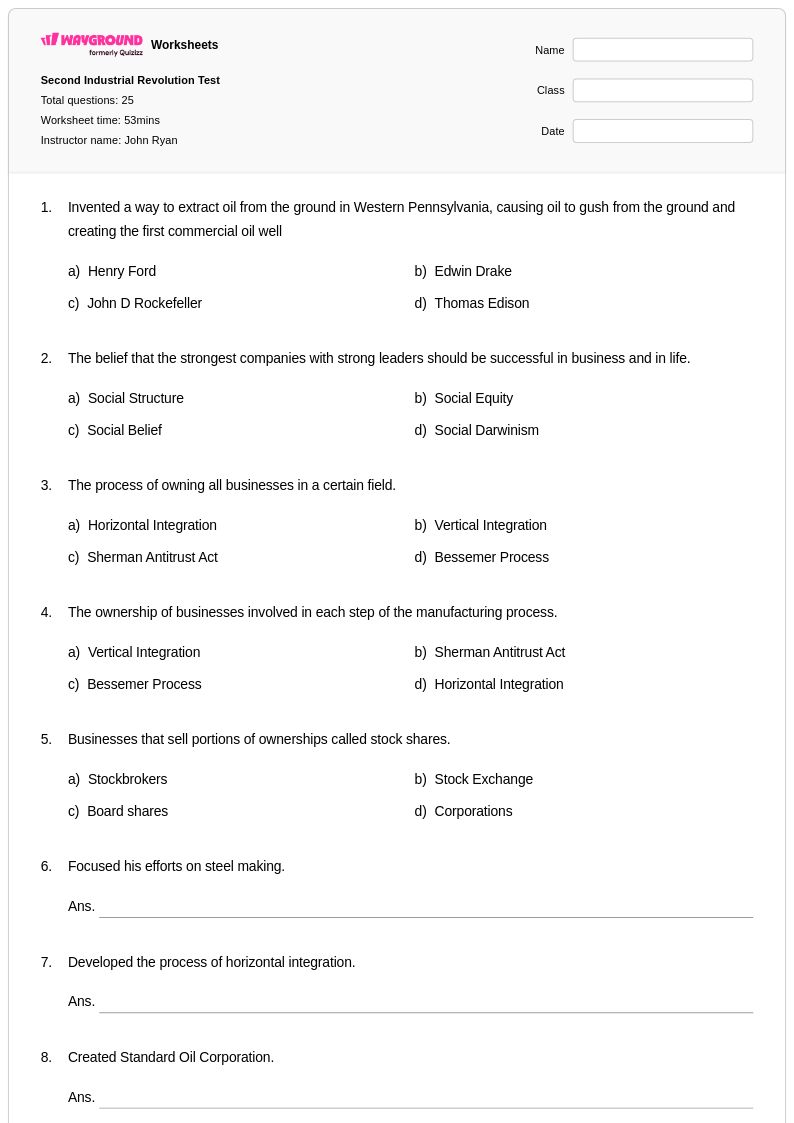
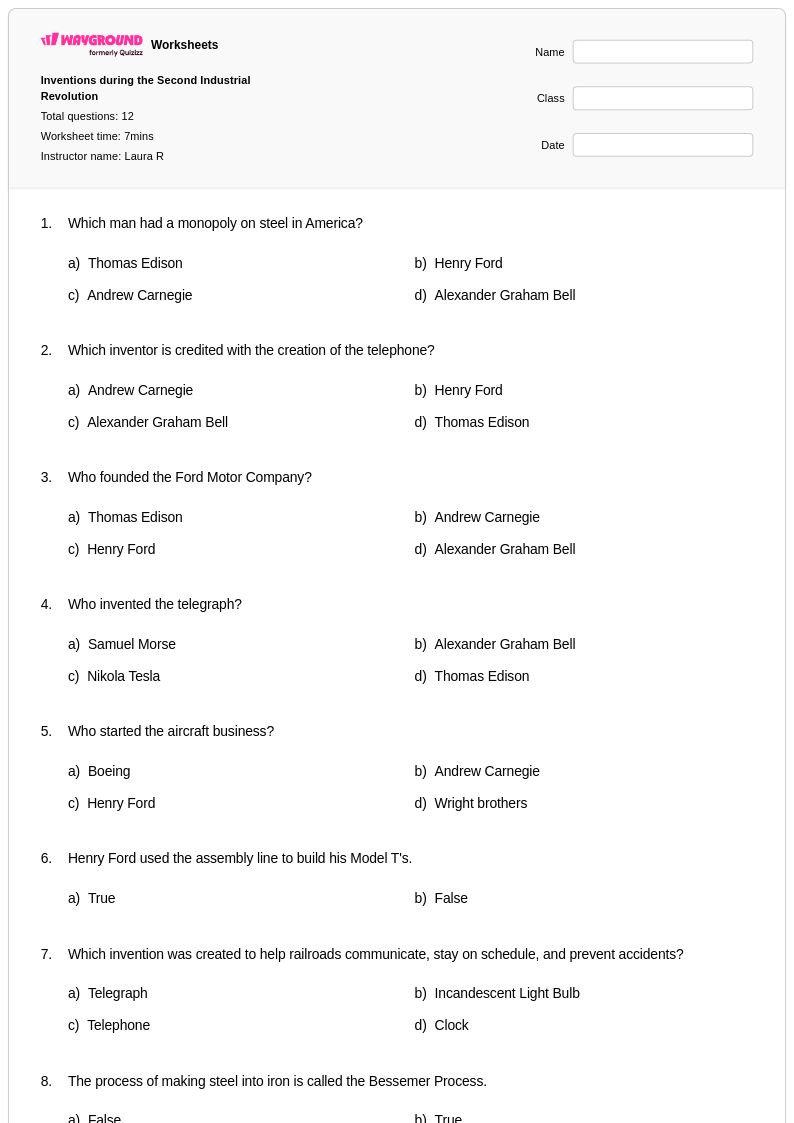
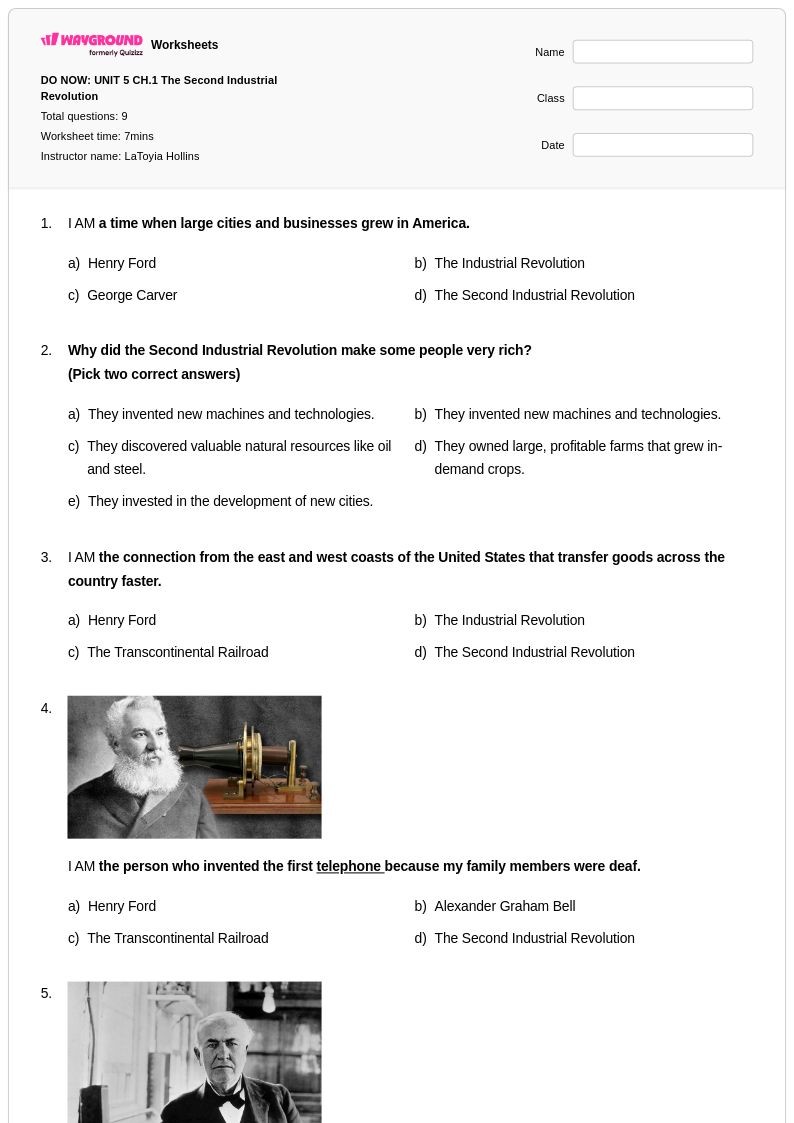
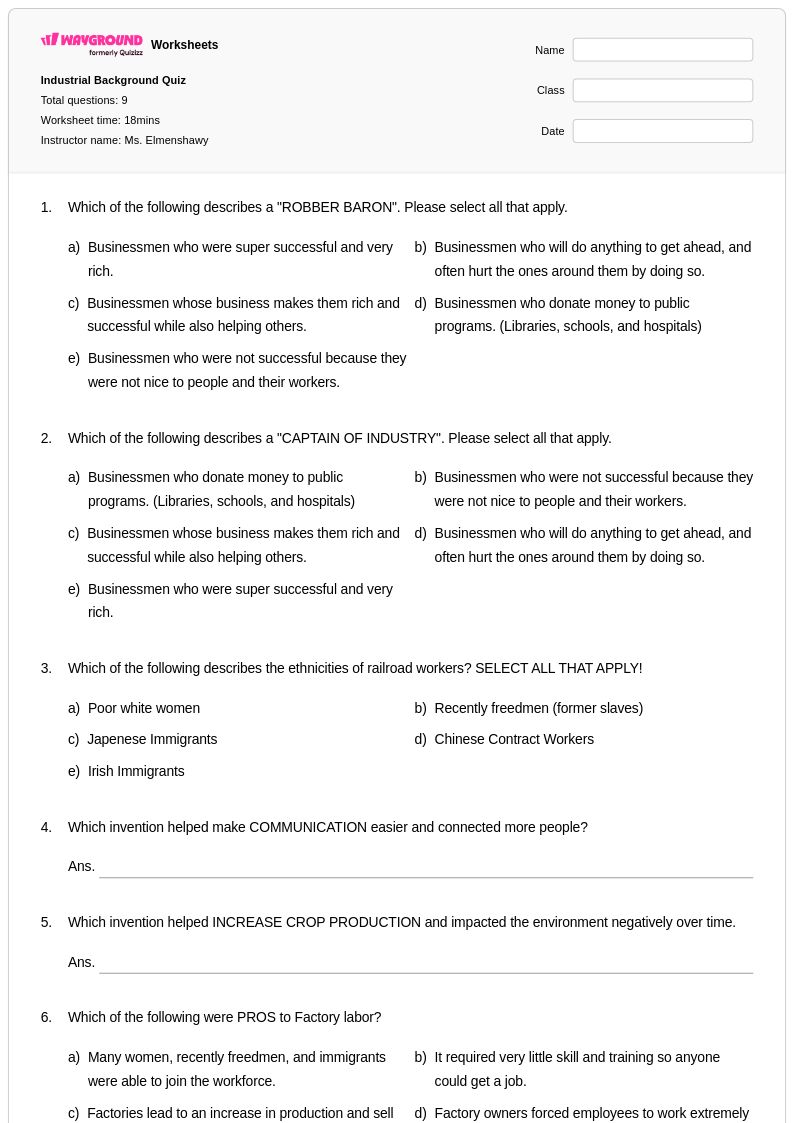
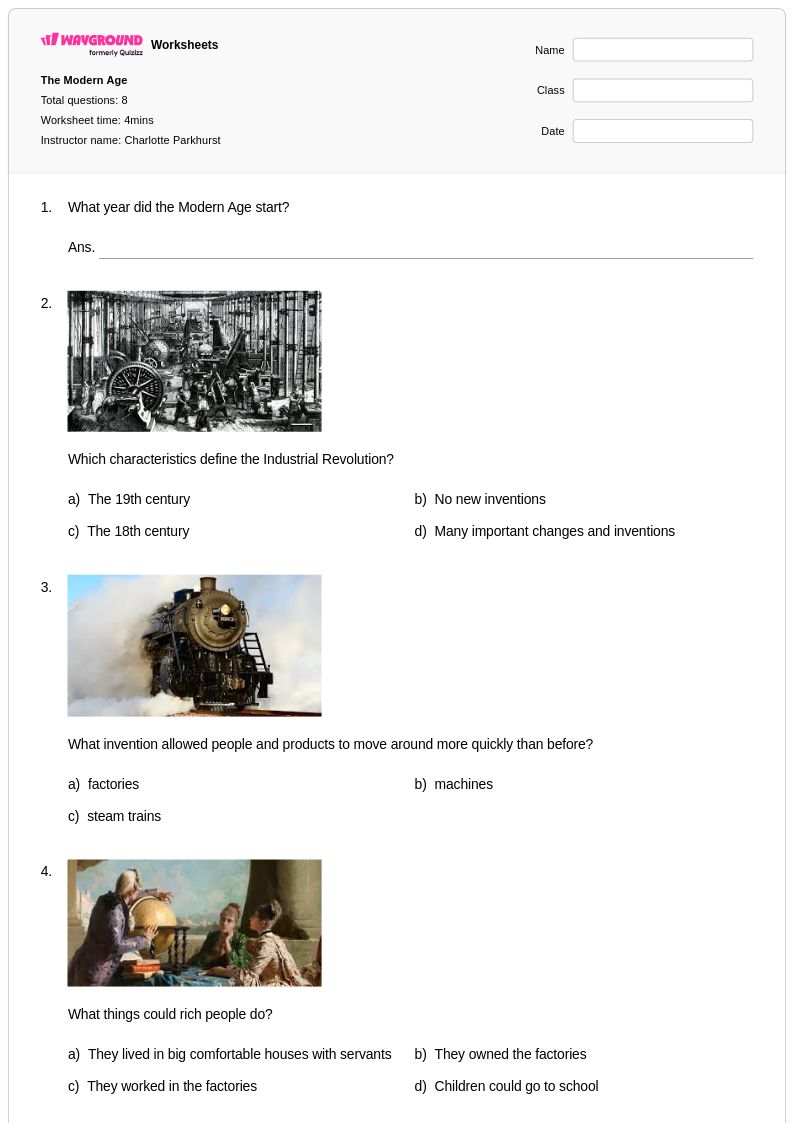
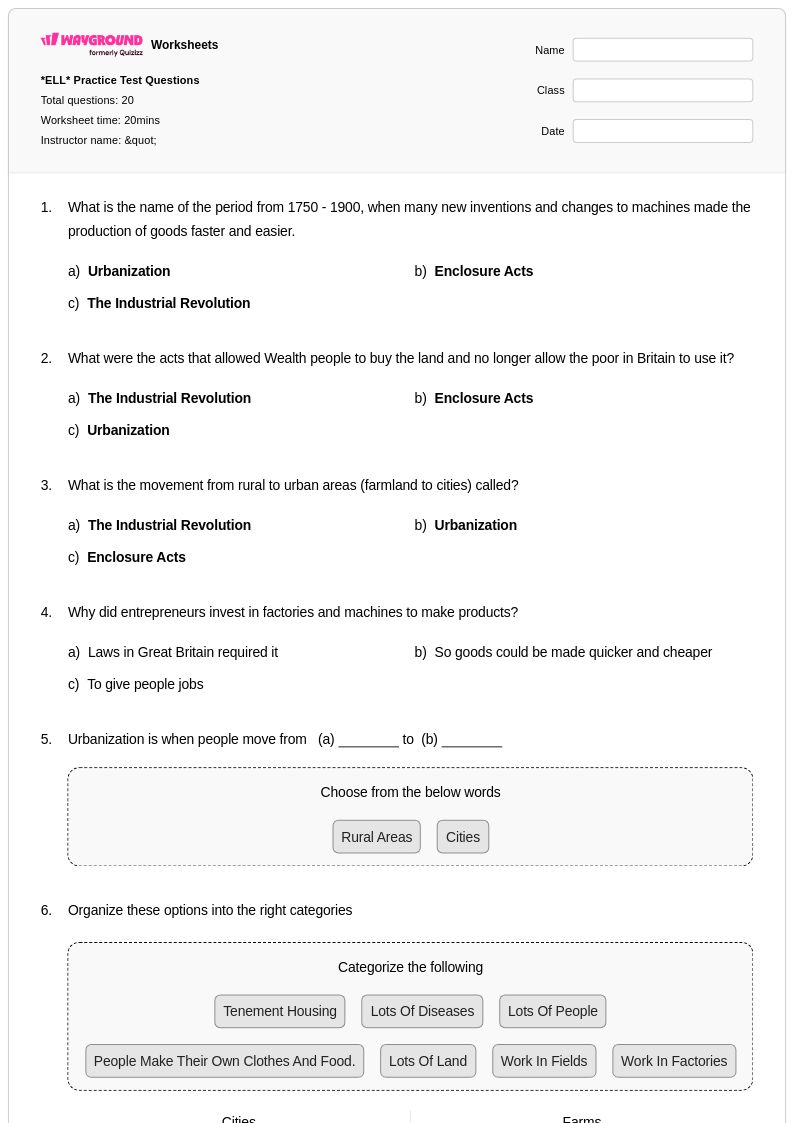
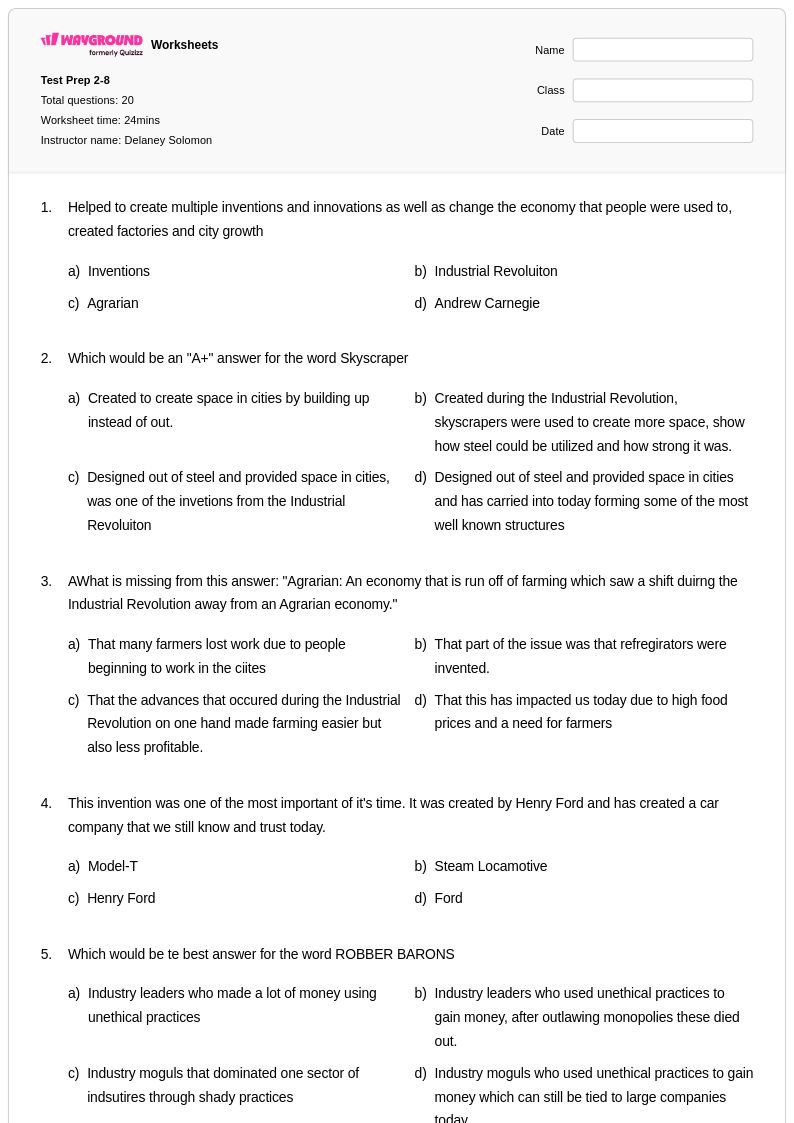
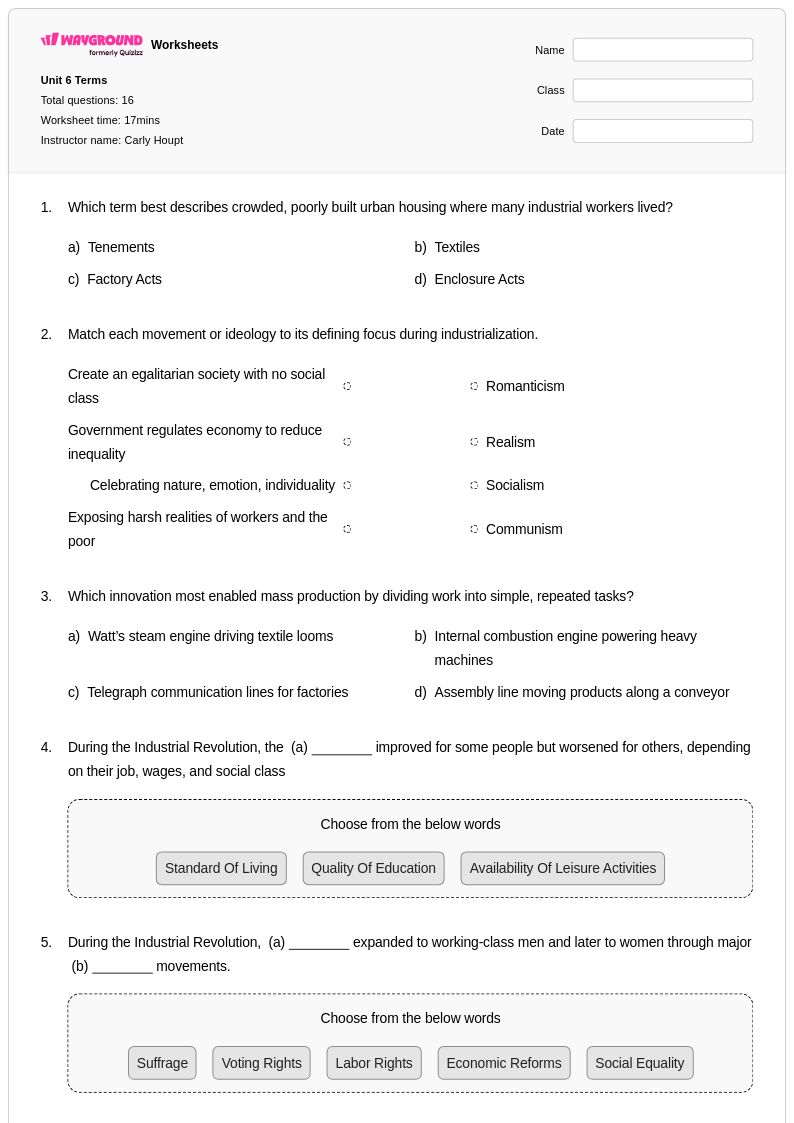
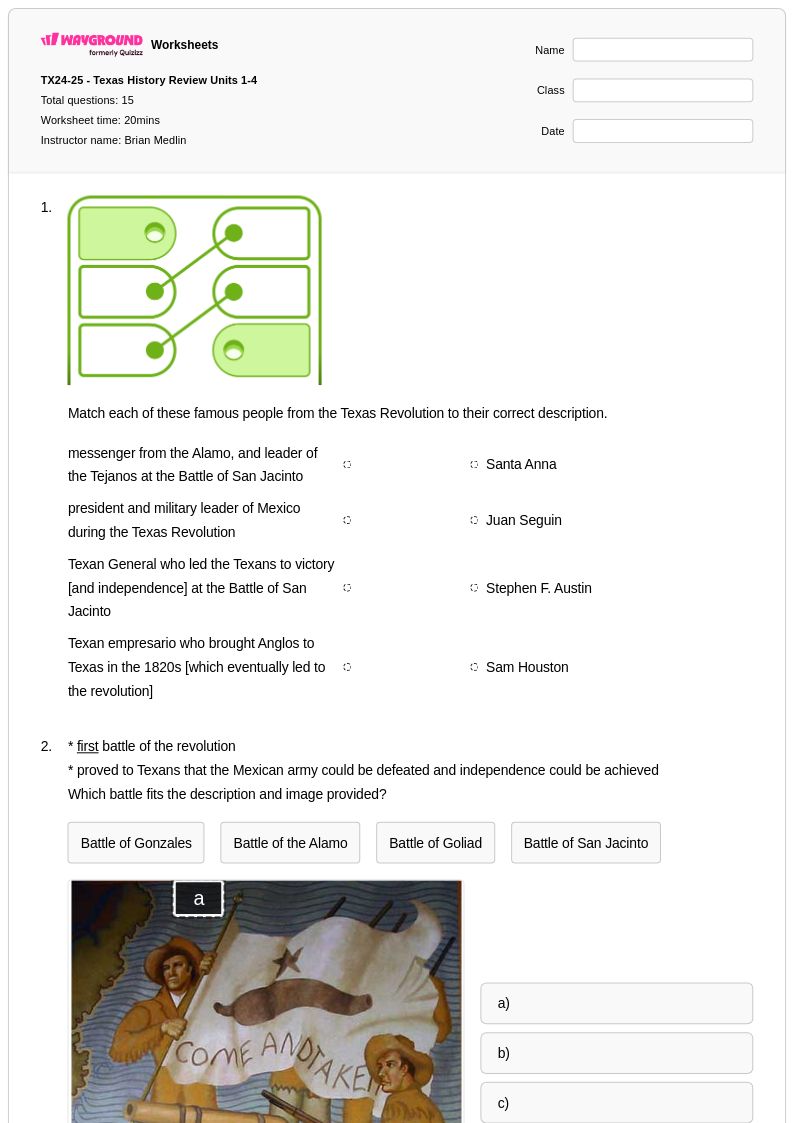
Explore Wayground's comprehensive collection of free Industrial Revolution inventions worksheets and printables that help students discover groundbreaking innovations like the steam engine, cotton gin, and telegraph through engaging practice problems and detailed answer keys.
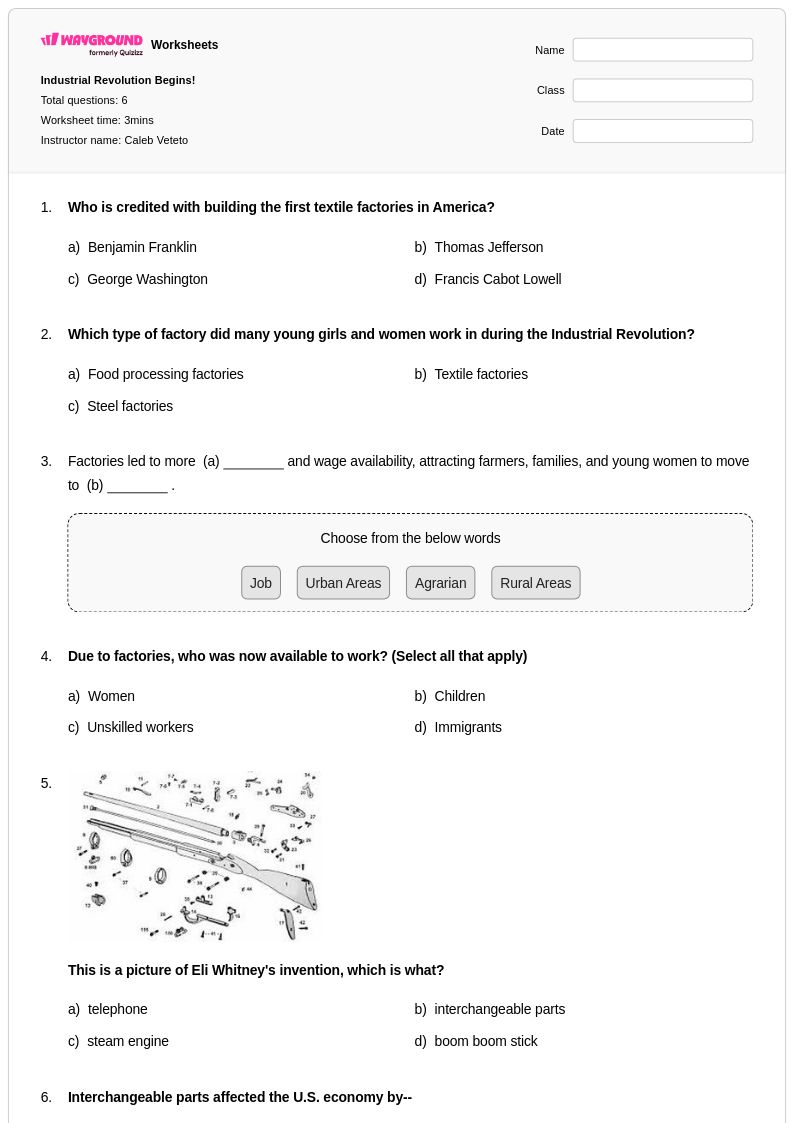
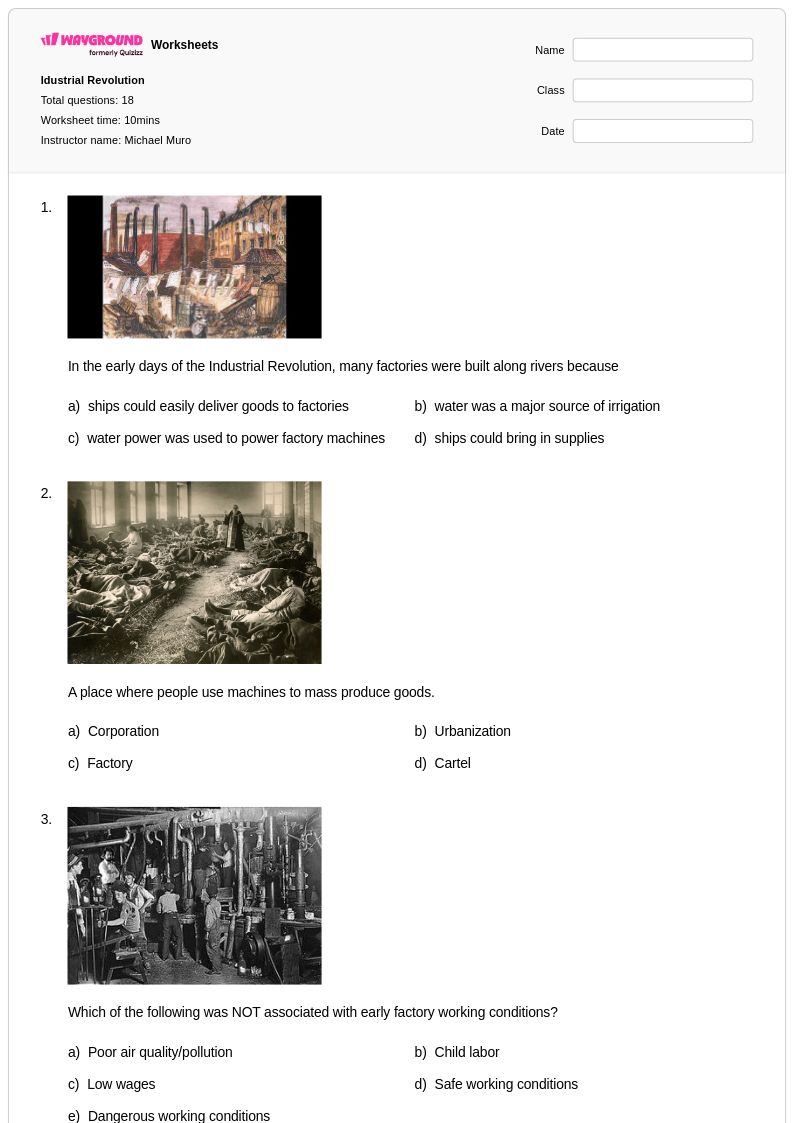
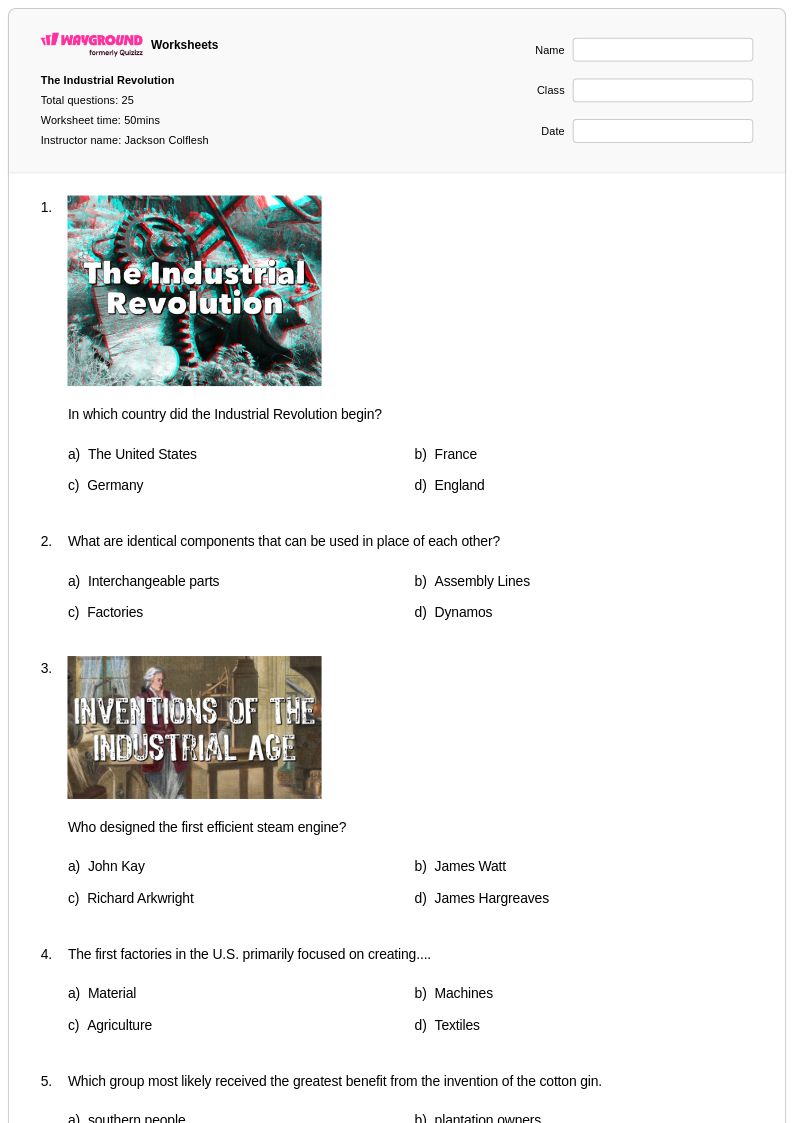
Industrial Revolution inventions worksheets from Wayground (formerly Quizizz) provide comprehensive educational resources that help students explore the groundbreaking technological advances that transformed society during the 18th and 19th centuries. These expertly designed worksheets guide learners through critical inventions such as the steam engine, cotton gin, spinning jenny, and power loom, strengthening analytical skills as students examine how each innovation revolutionized manufacturing, transportation, and daily life. The collection includes detailed practice problems that challenge students to connect cause and effect relationships between inventions and societal changes, while comprehensive answer keys support both independent learning and classroom instruction. Available as free printables in convenient pdf format, these resources enable students to develop critical thinking skills while mastering essential historical concepts about technological progress and industrial transformation.
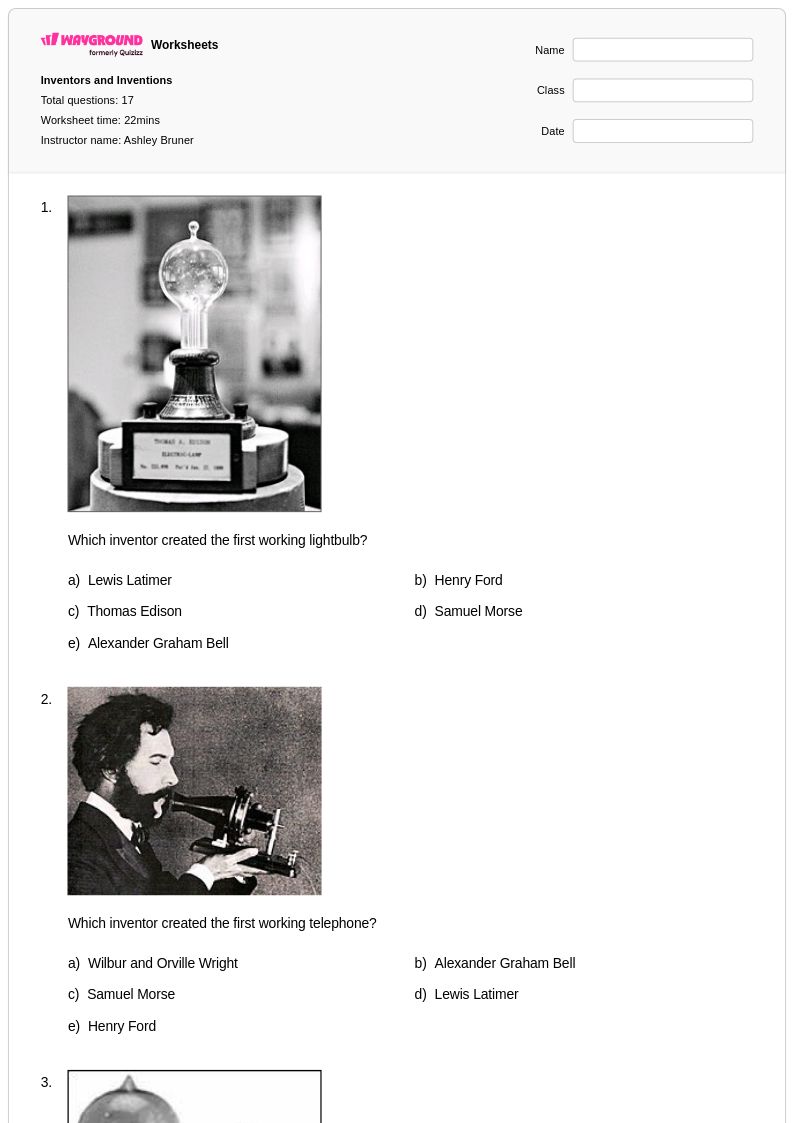
Wayground (formerly Quizizz) empowers educators with millions of teacher-created resources focused on Industrial Revolution inventions, featuring robust search and filtering capabilities that allow instructors to quickly locate materials aligned with specific learning standards and curriculum requirements. The platform's differentiation tools enable teachers to customize worksheets for varying skill levels, ensuring that both struggling learners and advanced students can engage meaningfully with content about pivotal inventions like the telegraph, railroad systems, and factory machinery. Available in both printable and digital formats including downloadable pdf versions, these flexible resources support diverse instructional approaches for lesson planning, targeted remediation, and enrichment activities. Teachers can seamlessly integrate these materials into their social studies curriculum to provide students with sustained practice in analyzing primary sources, interpreting historical timelines, and evaluating the lasting impact of industrial innovations on modern society.
FAQs
How do I teach Industrial Revolution inventions to middle or high school students?
Start by grounding students in the economic and social conditions that made invention necessary, then introduce key innovations chronologically: the spinning jenny and power loom transformed textile production, the steam engine reshaped transportation and manufacturing, and the telegraph revolutionized communication. Cause-and-effect analysis works particularly well here because students can trace how each invention created demand for the next. Primary source documents, inventor biographies, and timeline activities help students move beyond memorization toward genuine historical reasoning.
What exercises help students practice understanding Industrial Revolution inventions?
The most effective exercises ask students to connect inventions to their societal consequences rather than simply identify who invented what. Cause-and-effect graphic organizers, comparative analysis tasks (e.g., life before and after the steam engine), and sequencing activities that place inventions within a broader industrial timeline all build analytical depth. Worksheets that challenge students to evaluate how innovations like the cotton gin or railroad systems changed manufacturing, labor, and daily life reinforce both content knowledge and historical thinking skills.
What mistakes do students commonly make when learning about Industrial Revolution inventions?
Students frequently treat inventions as isolated events rather than as responses to existing social and economic pressures, which leads to shallow analysis. Another common error is conflating invention with immediate widespread adoption; in reality, many technologies took decades to transform society. Students also tend to underestimate the interdependence of inventions, such as how factory machinery required advances in iron production and coal mining to become viable. Worksheets that explicitly ask students to identify preconditions and downstream effects help correct these misconceptions.
How can I use Industrial Revolution inventions worksheets to support different skill levels in my class?
Tiered worksheets allow you to assign more scaffolded tasks to struggling learners while offering open-ended analysis prompts to advanced students covering the same inventions. On Wayground, teachers can apply individual accommodations such as read aloud support, reduced answer choices, and extended time to specific students without disrupting the rest of the class, making it straightforward to differentiate within a single assignment on topics like the steam engine or telegraph.
How do I use Wayground's Industrial Revolution inventions worksheets in my classroom?
Wayground's Industrial Revolution inventions worksheets are available as printable PDFs for traditional classroom use and in digital formats for technology-integrated environments, including the option to host them as a quiz directly on Wayground. Teachers can use them for direct instruction, independent practice, formative assessment, or homework, and each worksheet includes a complete answer key to support both self-paced learning and teacher-led review.
How do I assess whether students understand the impact of Industrial Revolution inventions?
Effective assessment goes beyond recall and asks students to explain causation: why did the cotton gin accelerate the expansion of slavery, or how did the railroad transform the geography of trade? Short constructed-response tasks, timeline interpretation questions, and prompts that ask students to evaluate which invention had the greatest long-term impact are reliable indicators of deeper understanding. Answer keys that model strong analytical responses also help students self-assess and revise their thinking.