Free Printable Intake and Output Worksheets for Grade 11
Explore Grade 11 Life Science intake and output worksheets through Wayground's comprehensive collection of free printables and practice problems with answer keys to help students master cellular processes and organism energy flow.
Explore printable Intake and Output worksheets for Grade 11
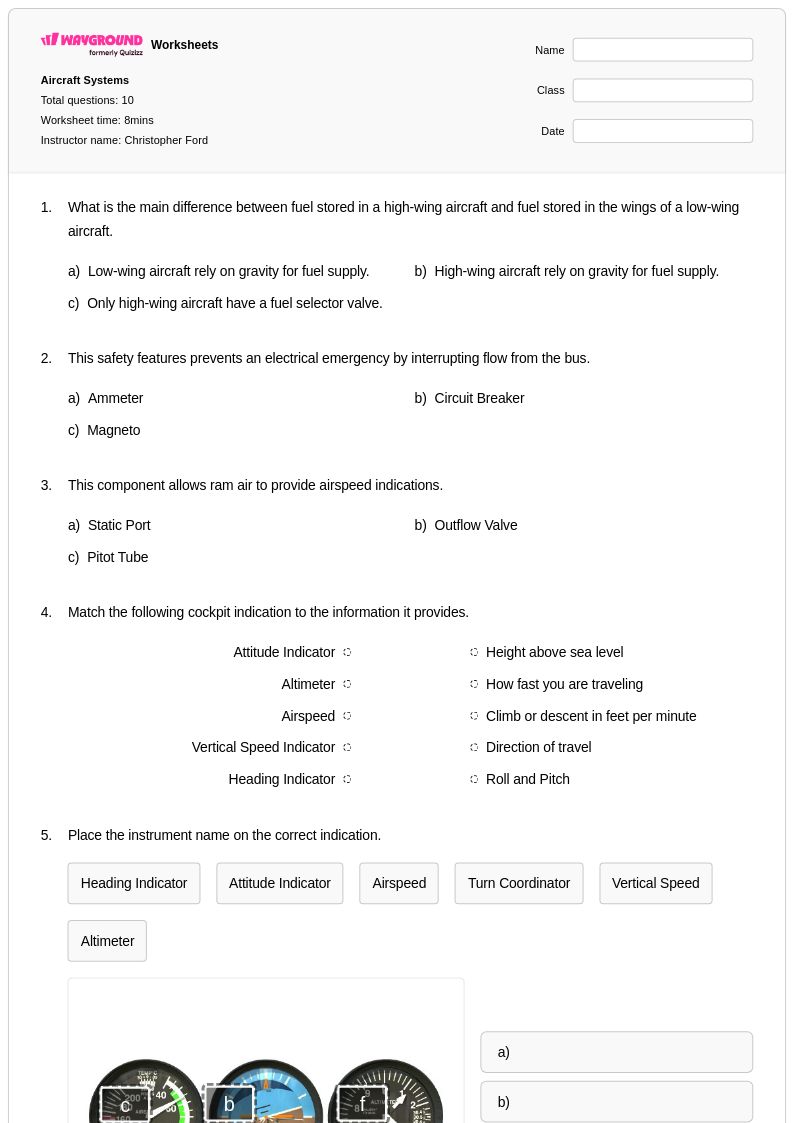
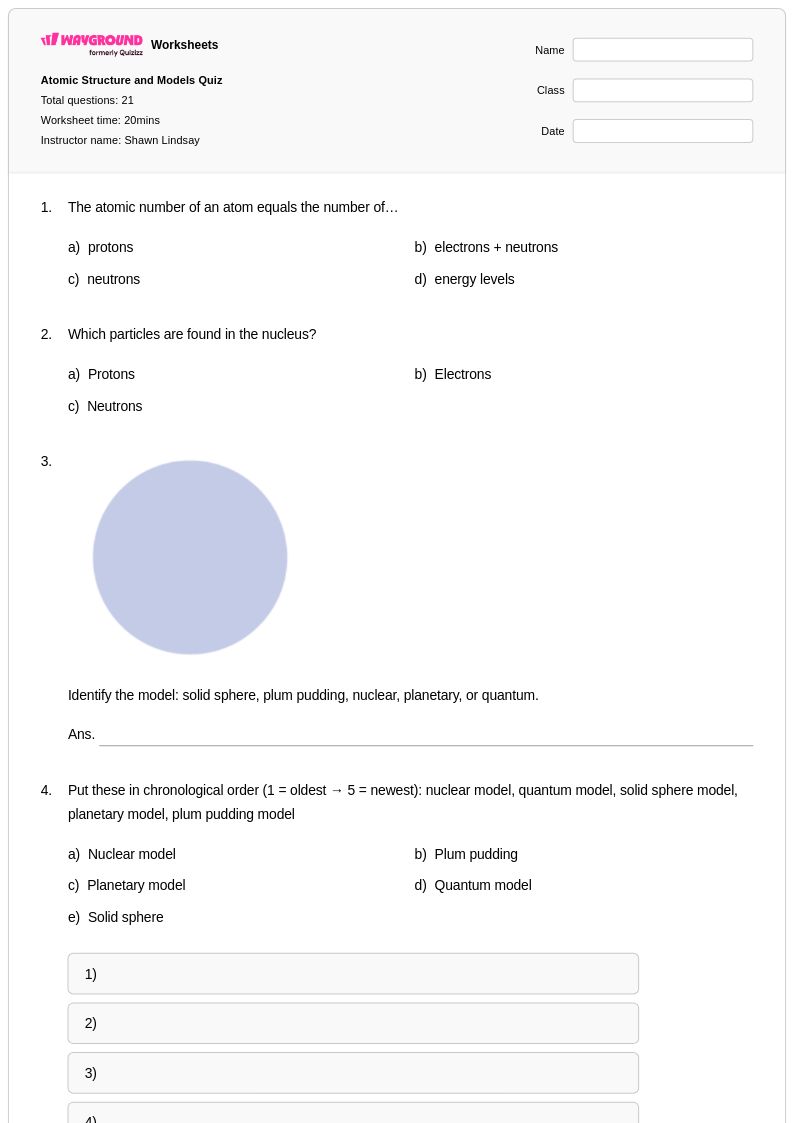
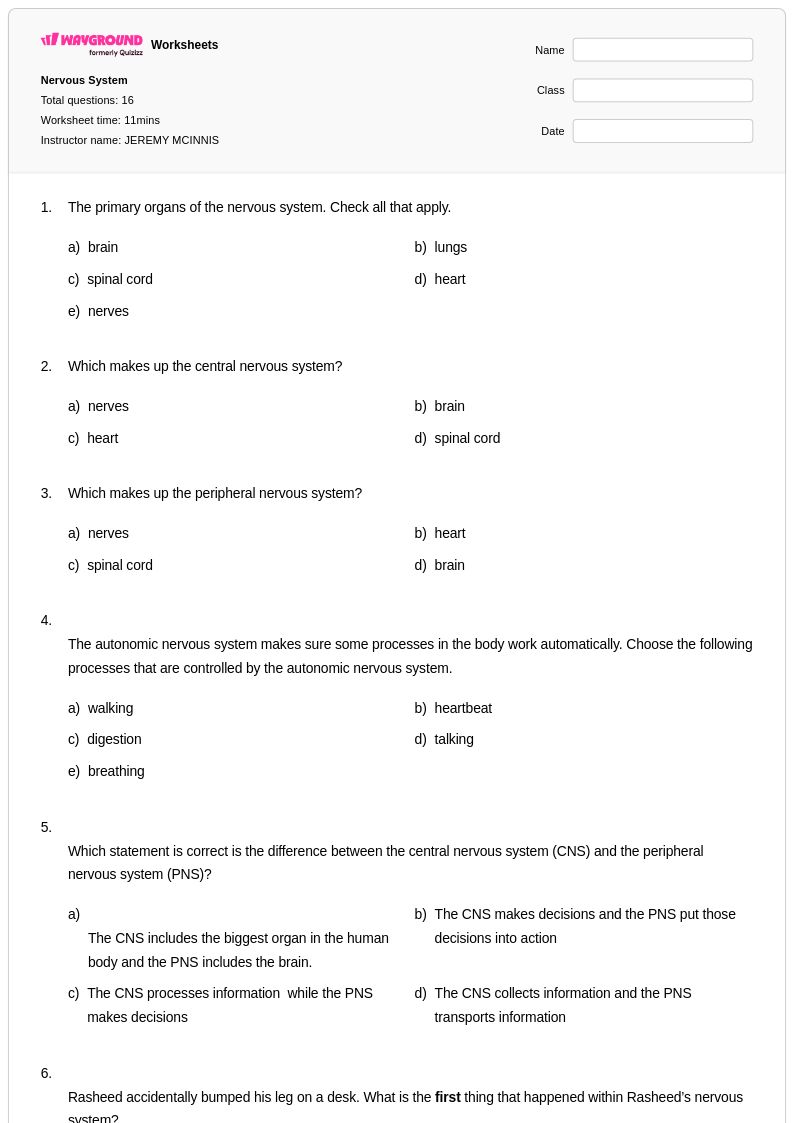
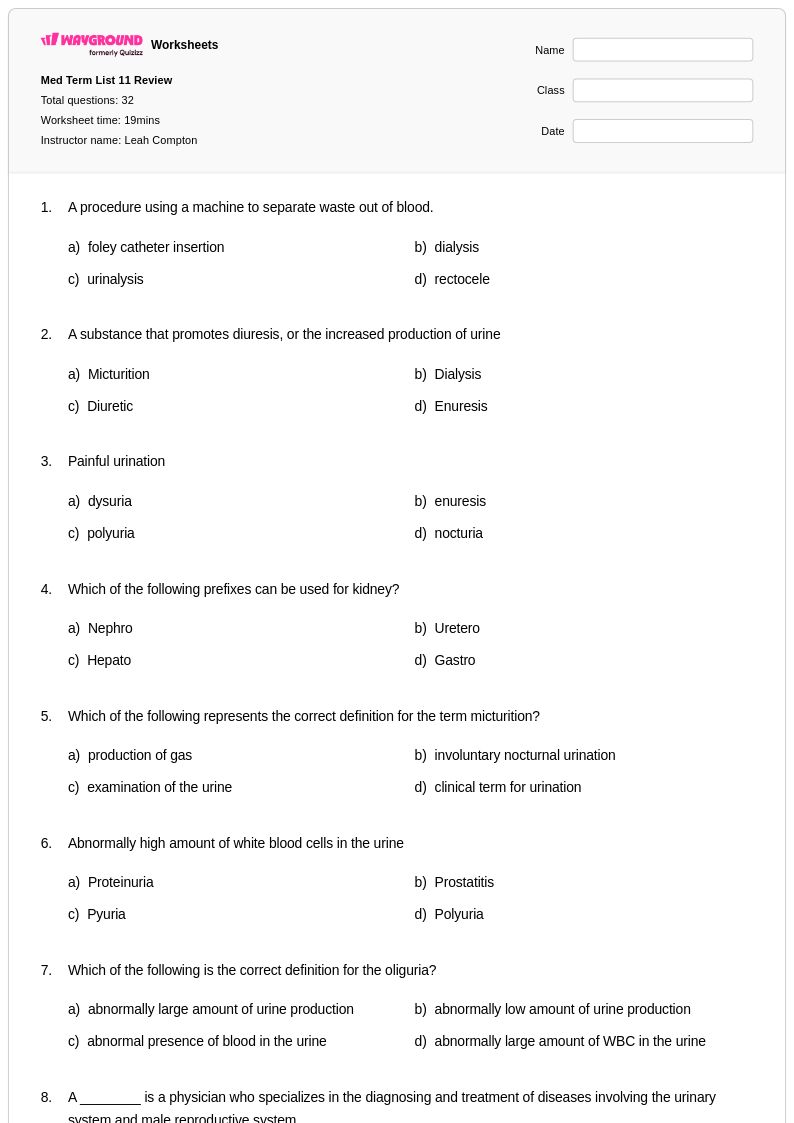
Intake and output processes represent fundamental physiological concepts that Grade 11 life science students must master to understand how organisms maintain homeostasis and survive in their environments. Wayground's comprehensive collection of intake and output worksheets provides students with targeted practice examining how living systems acquire essential materials like nutrients, water, and oxygen while eliminating metabolic wastes and toxins. These educational resources strengthen critical thinking skills as students analyze respiratory, digestive, excretory, and circulatory system functions through detailed diagrams, data interpretation exercises, and comparative studies across different organism types. Each worksheet includes a complete answer key and is available as a free printable pdf, allowing students to work through practice problems that reinforce their understanding of gas exchange, nutrient absorption, waste filtration, and the intricate balance required for cellular survival.
Wayground, formerly Quizizz, empowers educators with millions of teacher-created resources specifically designed to support life science instruction on complex physiological processes. The platform's advanced search and filtering capabilities enable teachers to quickly locate intake and output worksheets aligned with specific curriculum standards and differentiated for varying student ability levels. Teachers can customize these materials to focus on particular organ systems or metabolic pathways, then deploy them in both printable and digital pdf formats to accommodate diverse classroom needs. These flexible tools prove invaluable for lesson planning, targeted remediation for students struggling with system integration concepts, enrichment activities for advanced learners exploring comparative physiology, and regular skill practice that builds student confidence in analyzing how organisms process materials essential for life.
FAQs
How do I teach intake and output in a life science class?
Begin by anchoring the concept in familiar examples — breathing, eating, and urination — before introducing the biological terminology. From there, move students through progressively complex systems: cellular respiration, the digestive system, and whole-organism homeostasis. Using diagrams that label inputs (nutrients, water, oxygen) and outputs (waste products, carbon dioxide) alongside guided questioning helps students build a working mental model before tackling independent practice.
What exercises help students practice intake and output concepts?
Effective practice exercises include labeling diagrams of the digestive and respiratory systems, completing tables that compare intake and output processes across different organisms, and analyzing case studies where homeostasis is disrupted. Problems that ask students to classify substances as inputs or outputs — and explain why — reinforce the underlying logic rather than surface-level memorization. Intake and output worksheets on Wayground include practice problems structured around these formats, with answer keys for self-assessment.
What misconceptions do students commonly have about intake and output in organisms?
A common misconception is that intake and output only refer to eating and excreting, when in reality the concept spans cellular respiration, gas exchange, and osmosis as well. Students also frequently confuse the directionality of processes, for example treating carbon dioxide as an intake substance rather than an output of cellular respiration. Another error is conflating mechanical digestion with chemical digestion when identifying where intake processes begin.
How can I differentiate intake and output worksheets for students with different ability levels?
For struggling learners, simplify tasks by focusing on one organism system at a time and providing partially completed diagrams or word banks. Advanced students can be challenged with cross-organism comparisons or scenarios that require them to predict what happens when an intake or output process fails. On Wayground, teachers can apply accommodations such as reduced answer choices, read aloud support, and extended time to individual students, so each learner engages with the same content at an appropriate challenge level.
How do I use intake and output worksheets from Wayground in my classroom?
Wayground's intake and output worksheets are available as printable PDFs for traditional classroom use and in digital formats for technology-integrated environments, including the option to host them as a quiz directly on the platform. Teachers can assign them as independent practice, partner review, or formative assessments depending on instructional goals. Each worksheet includes a complete answer key, making them equally useful for student self-assessment and teacher-led grading.
How does intake and output connect to the concept of homeostasis?
Intake and output are the mechanisms through which organisms maintain homeostasis — the stable internal conditions required for cellular function. When intake and output are balanced, concentration of nutrients, gases, and waste products stays within the ranges cells need to function. Teaching this connection helps students see intake and output not as isolated processes but as coordinated regulatory systems, which is a foundational understanding for later topics like the nervous system, endocrine system, and kidney function.