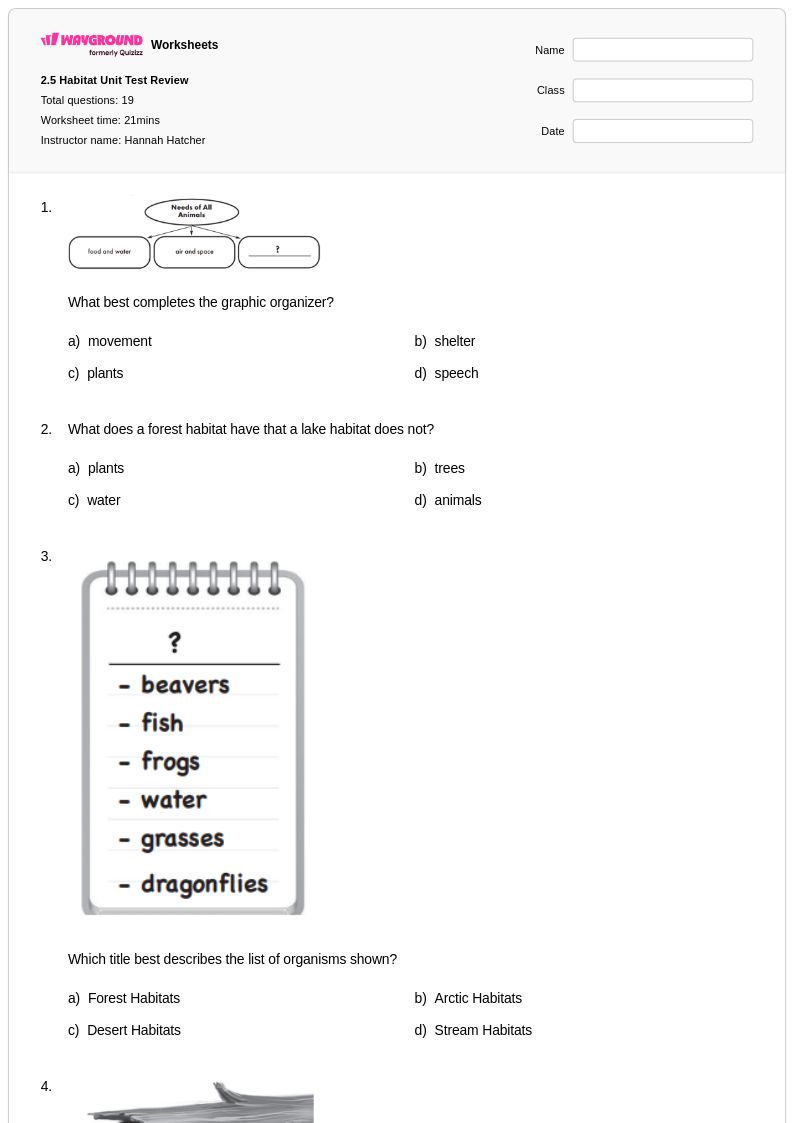
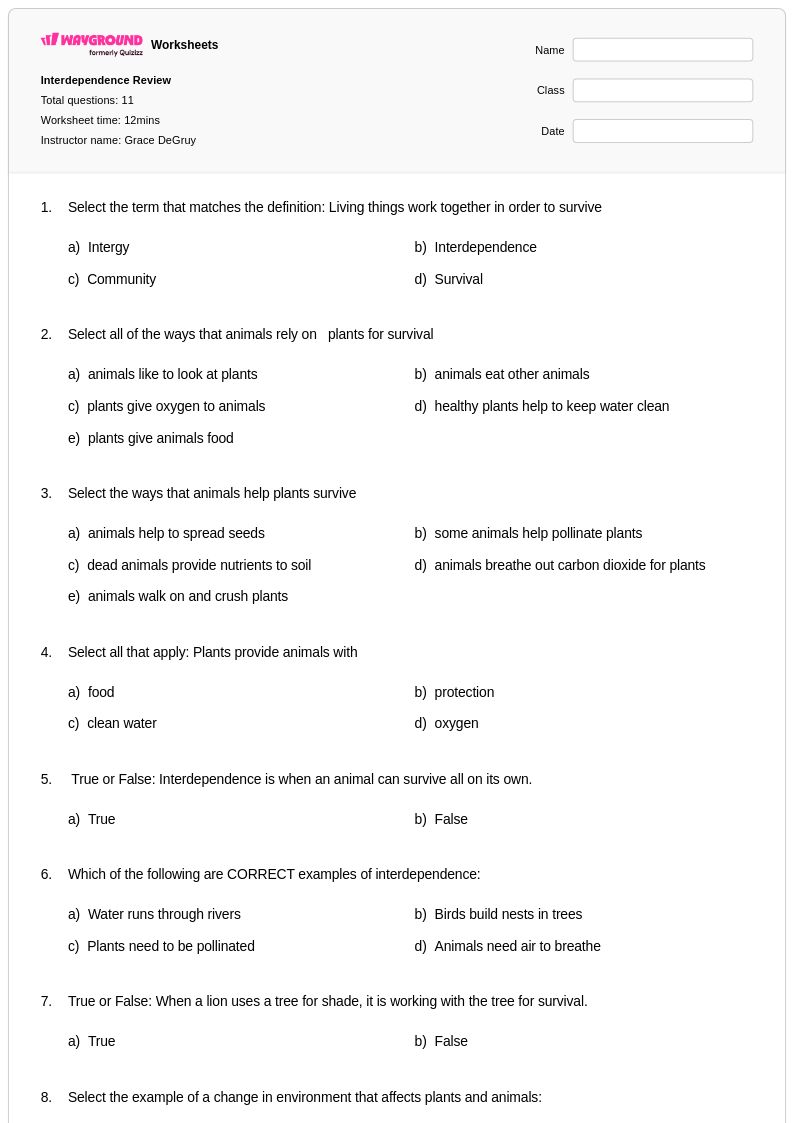
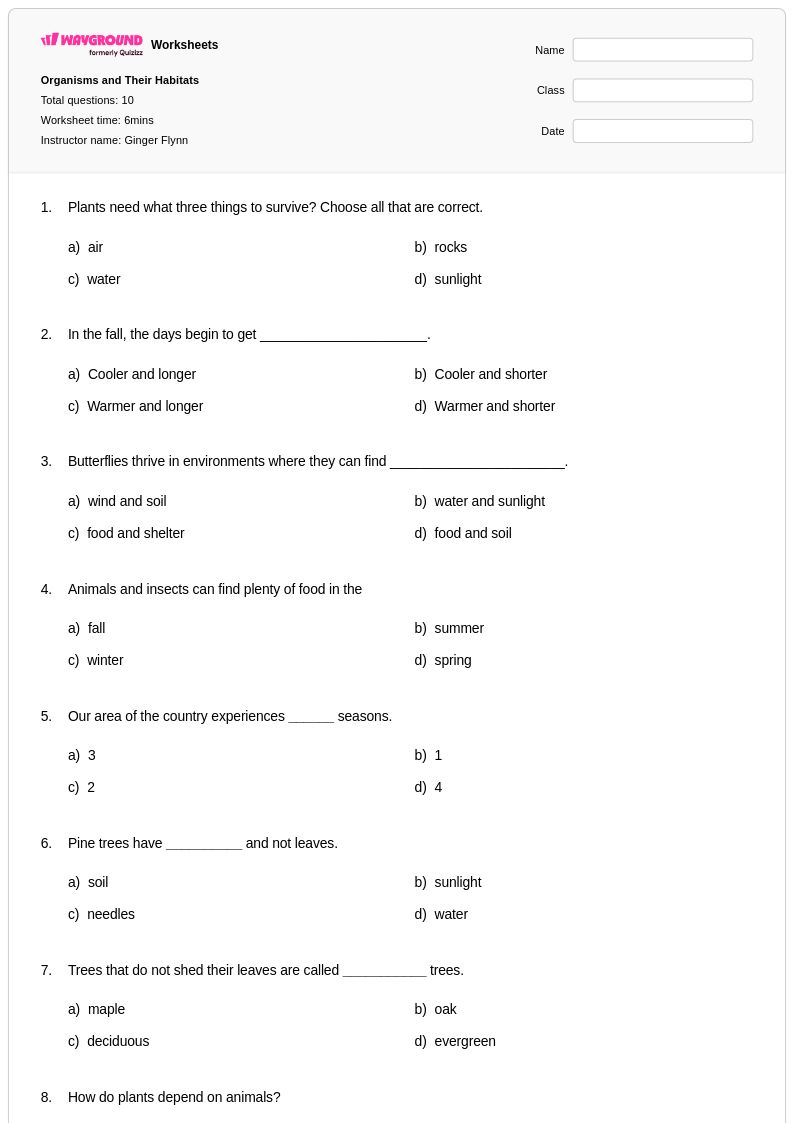
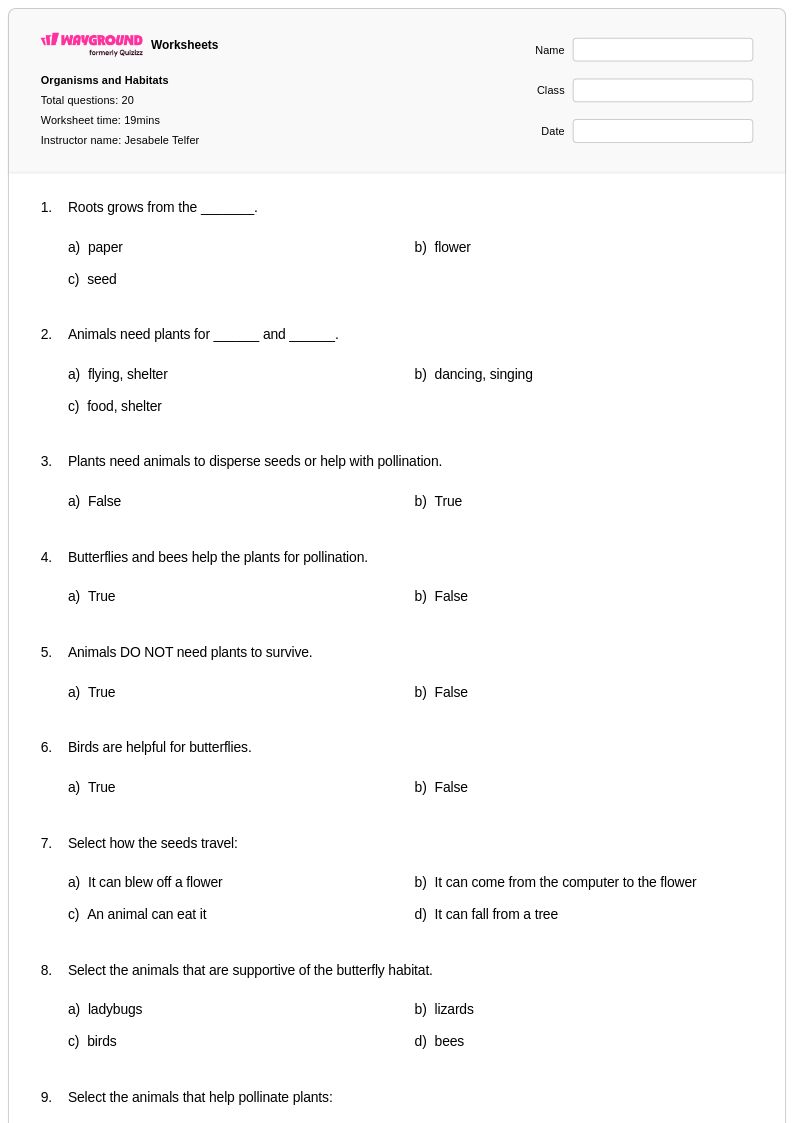
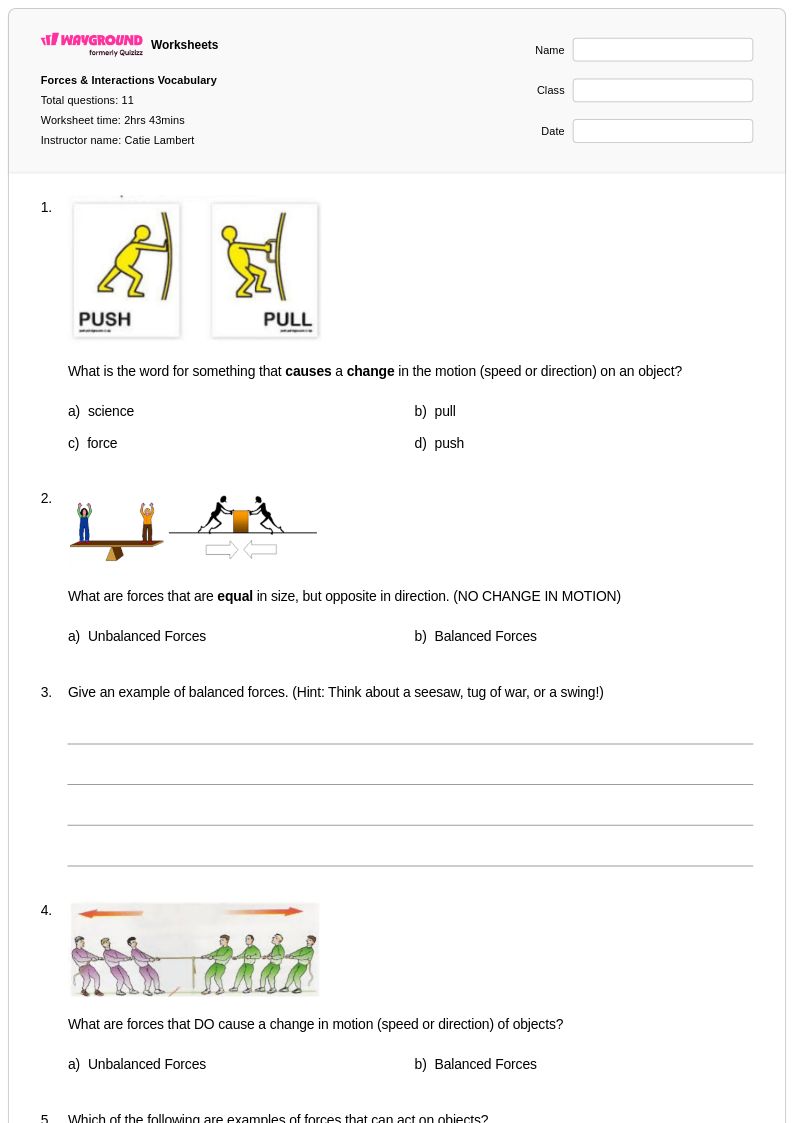
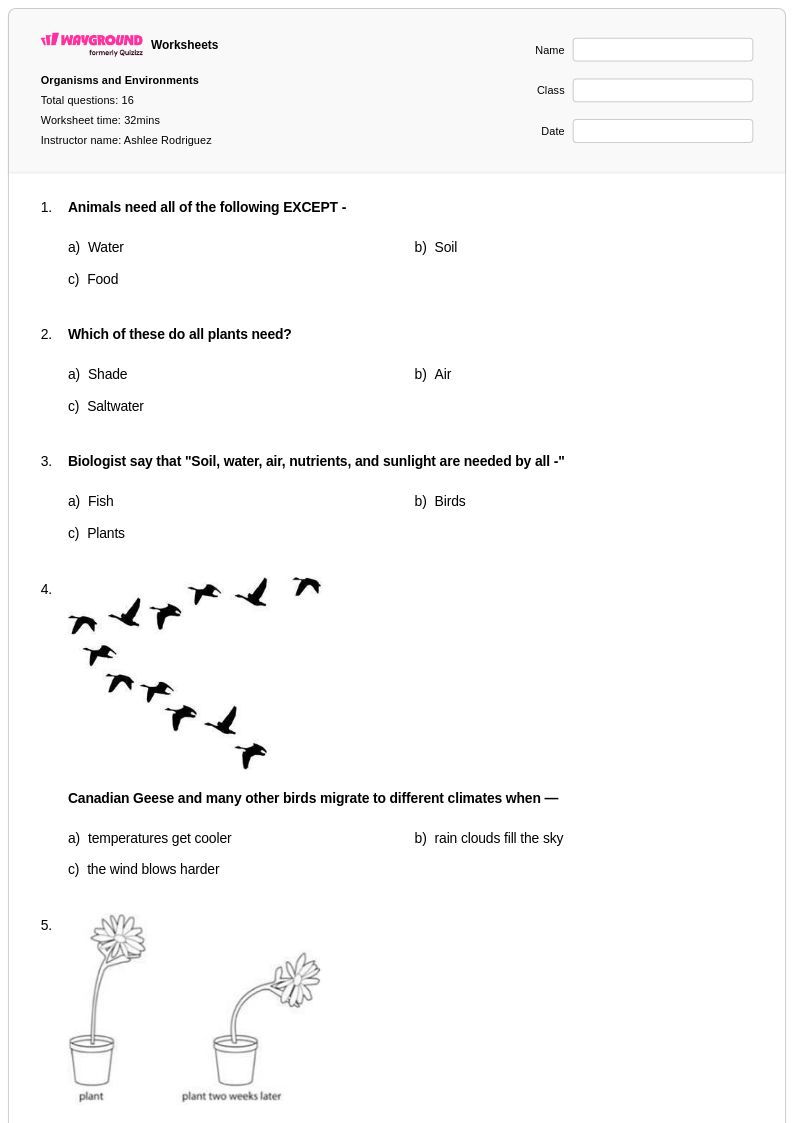
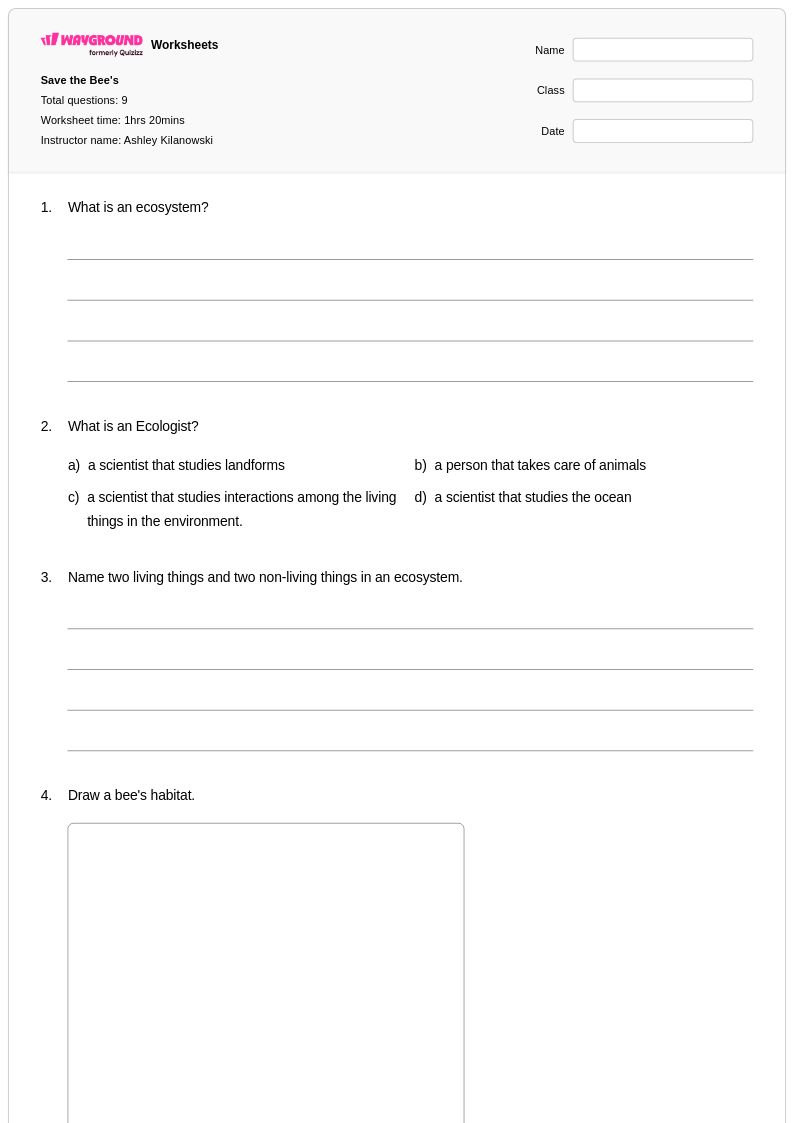
Free Printable Interactions in an Ecosystem Worksheets for Grade 2
Grade 2 biology worksheets help young learners explore interactions in an ecosystem through engaging printables, practice problems, and free PDF resources with comprehensive answer keys for effective learning.
Explore printable Interactions in an Ecosystem worksheets for Grade 2
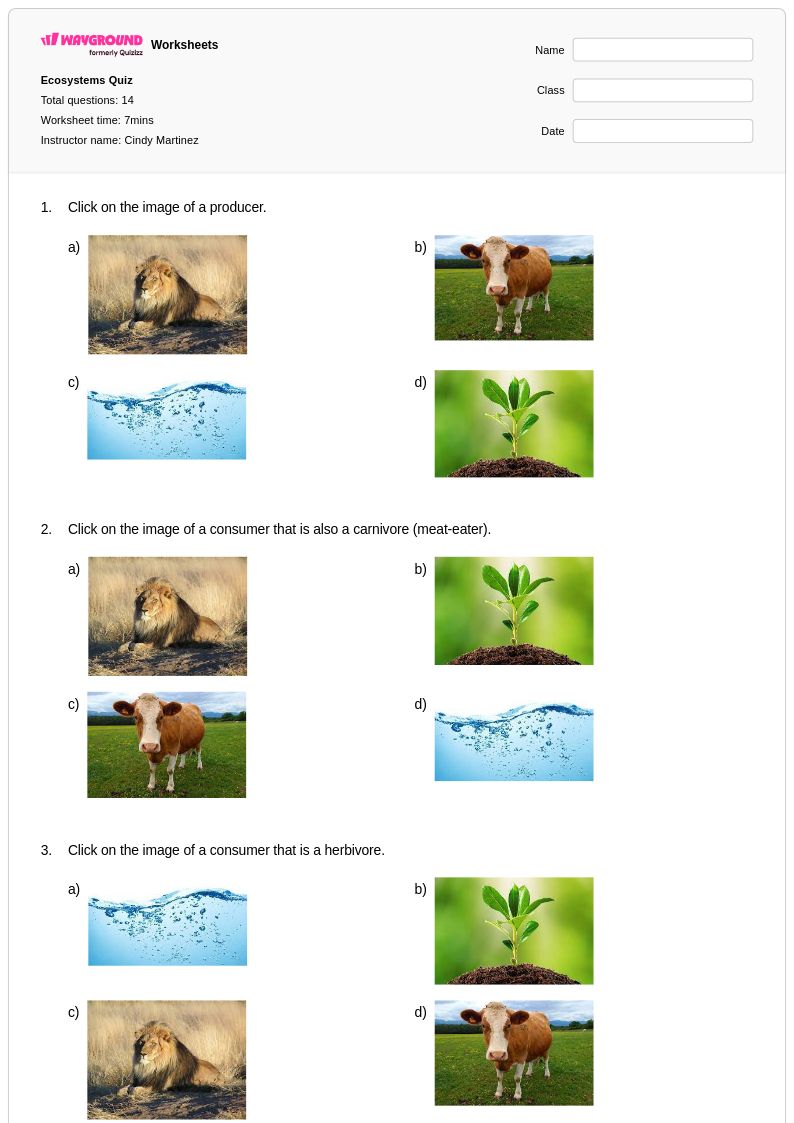
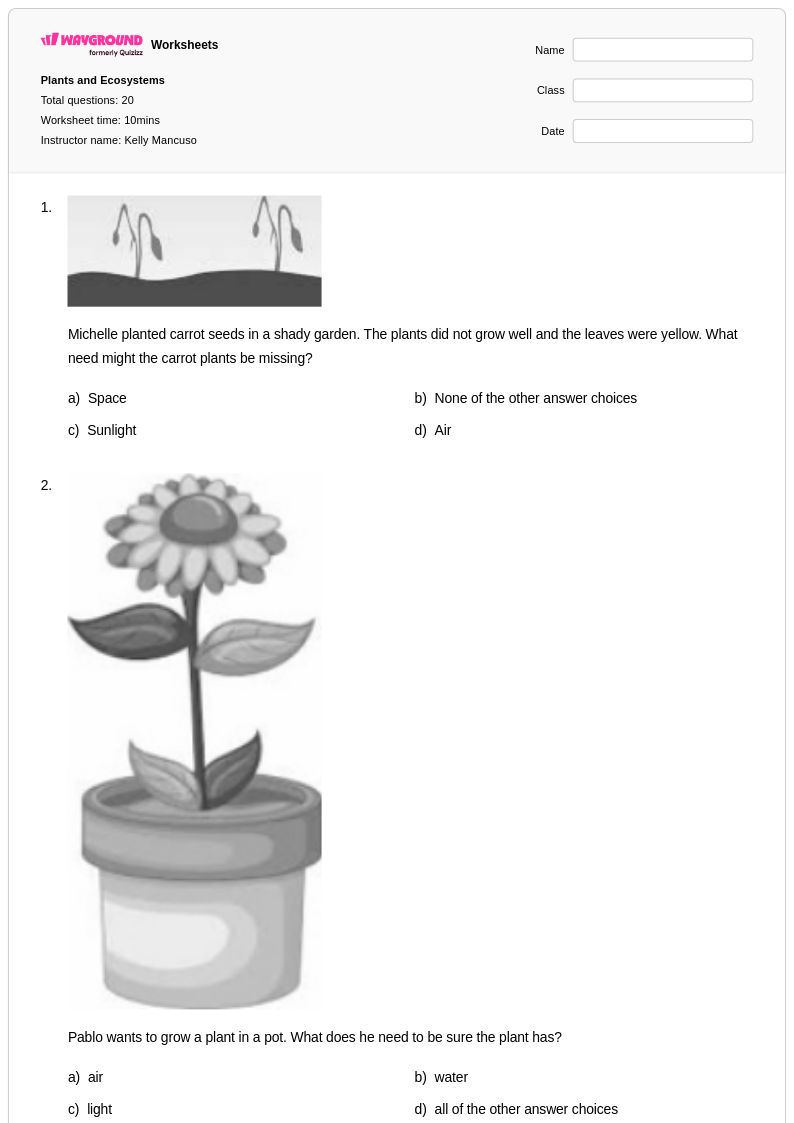
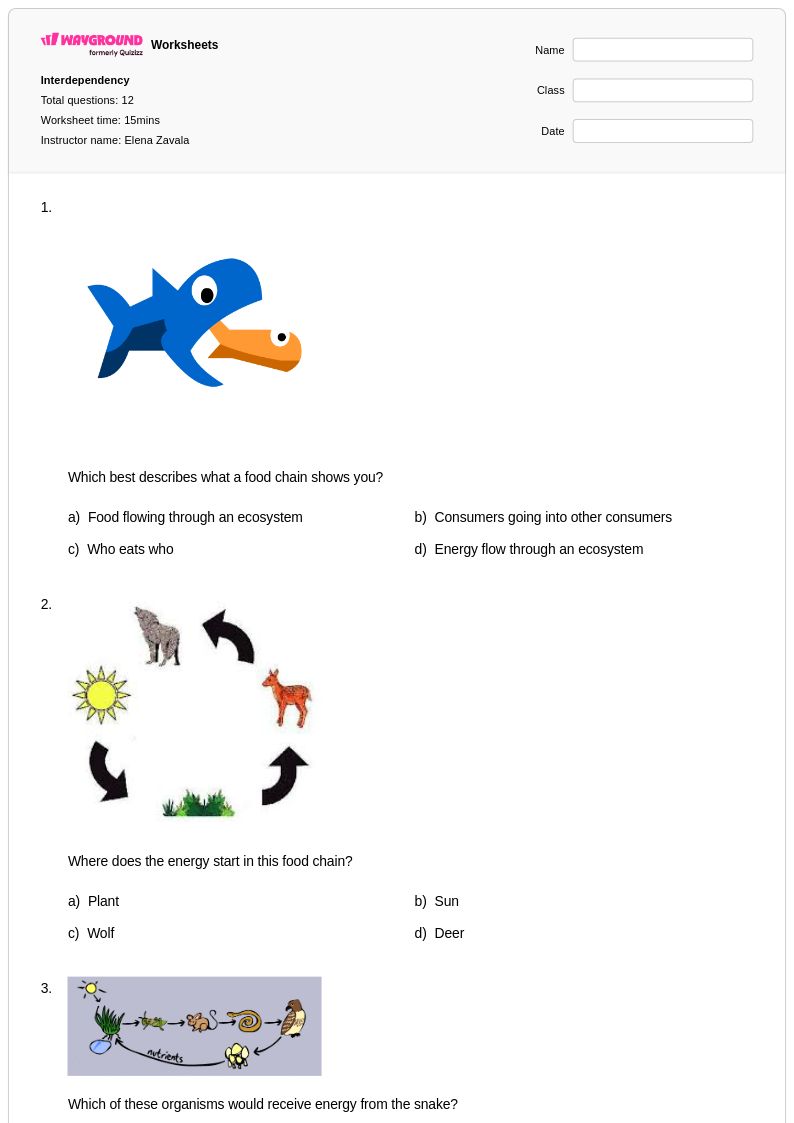
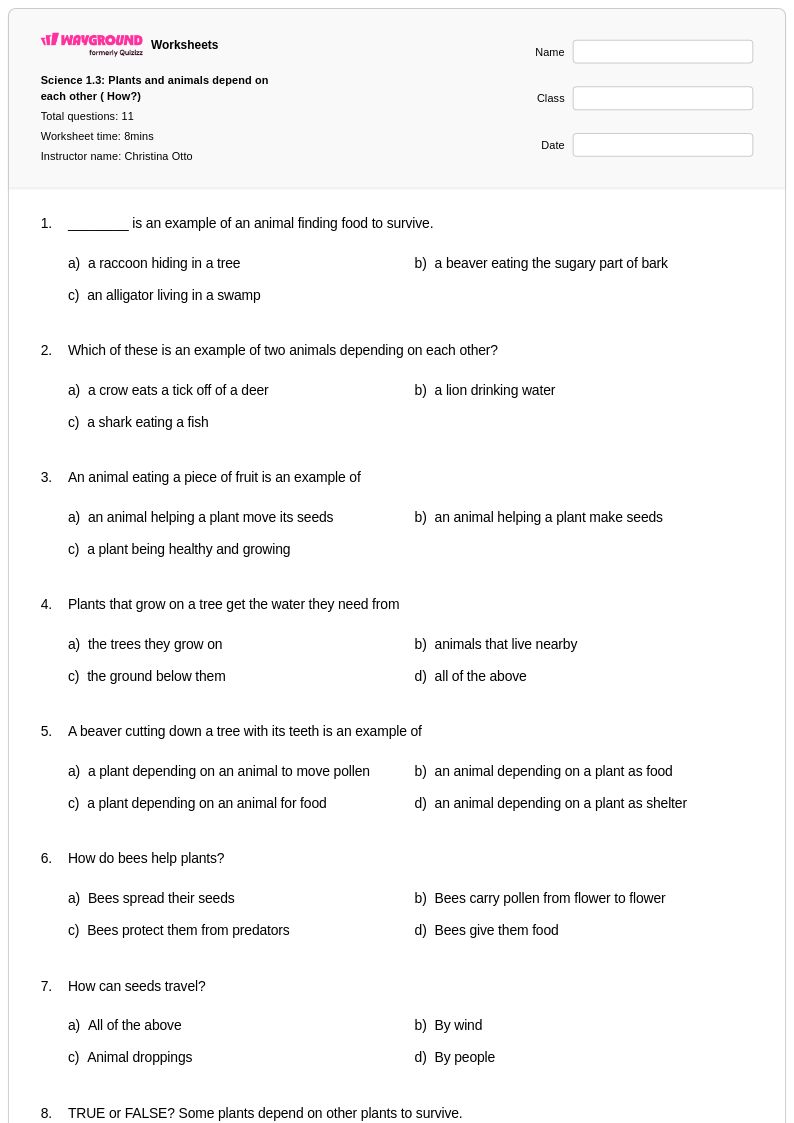
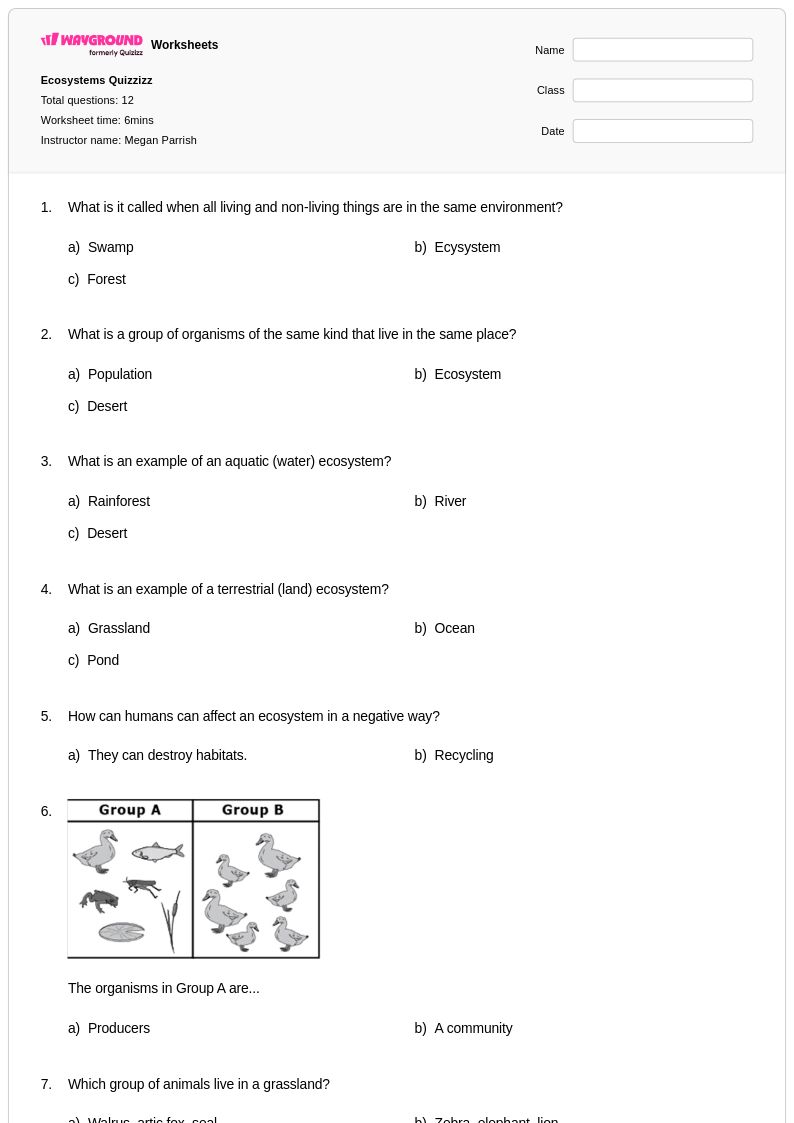
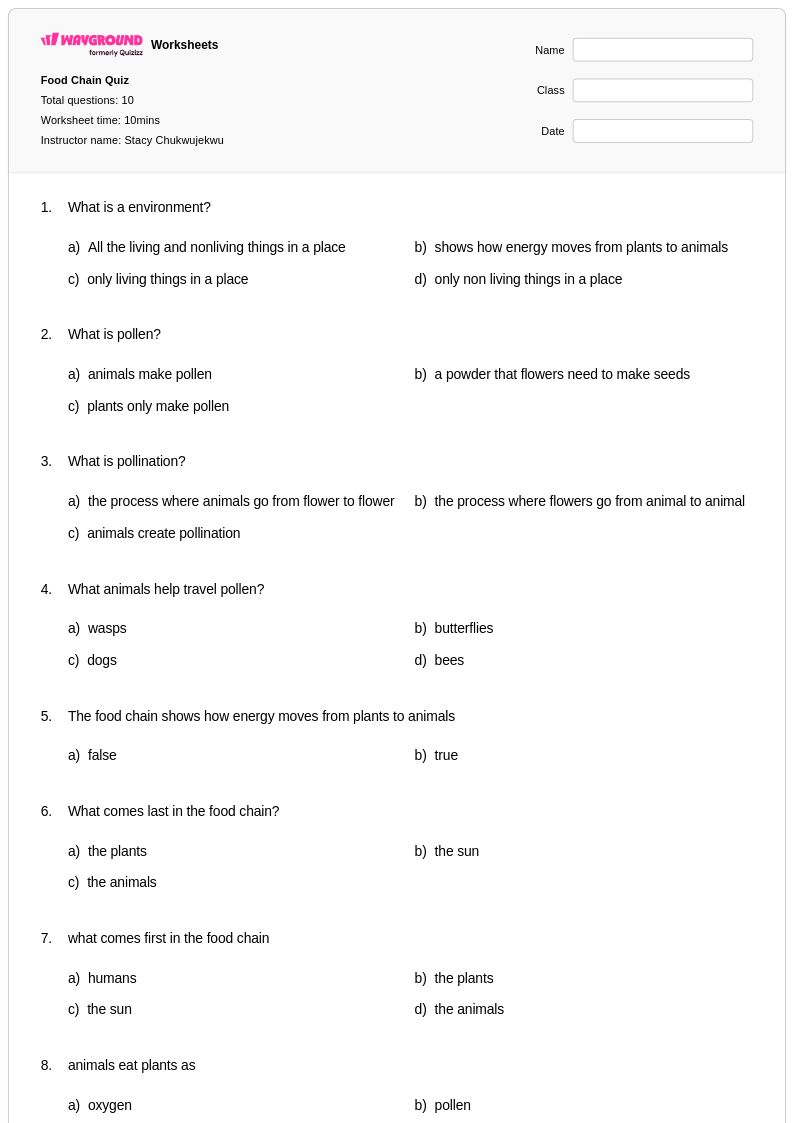
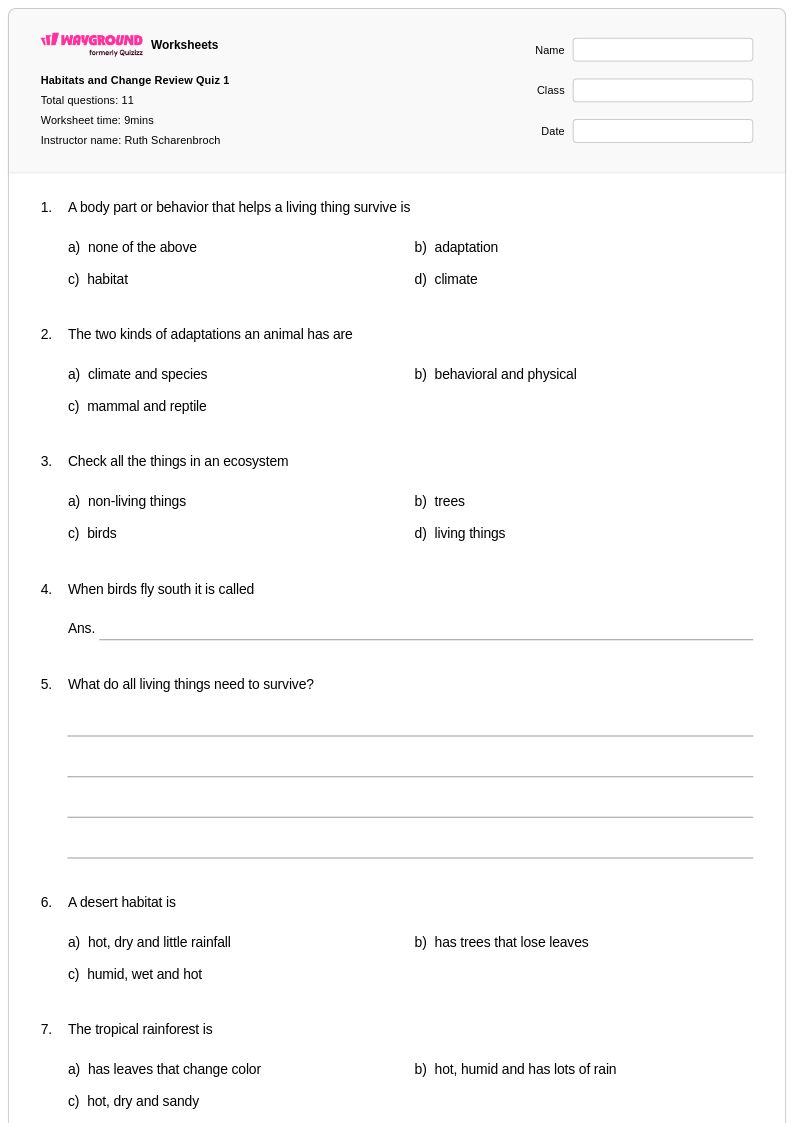
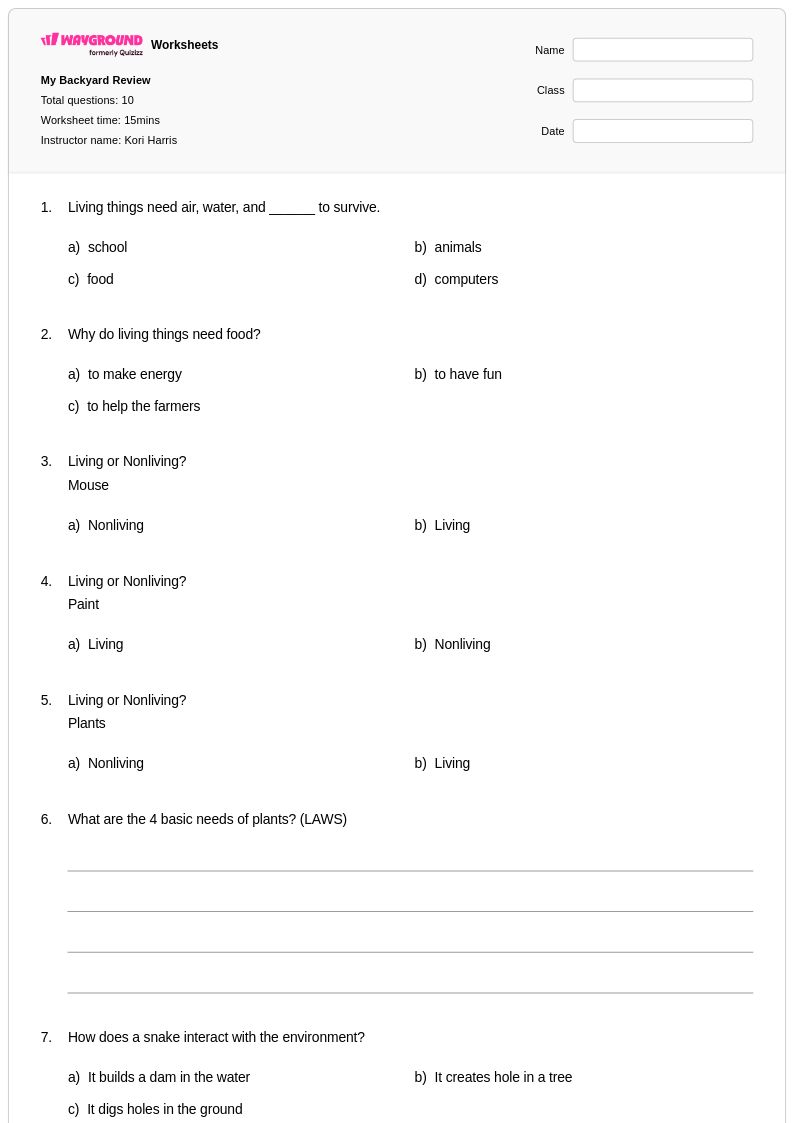
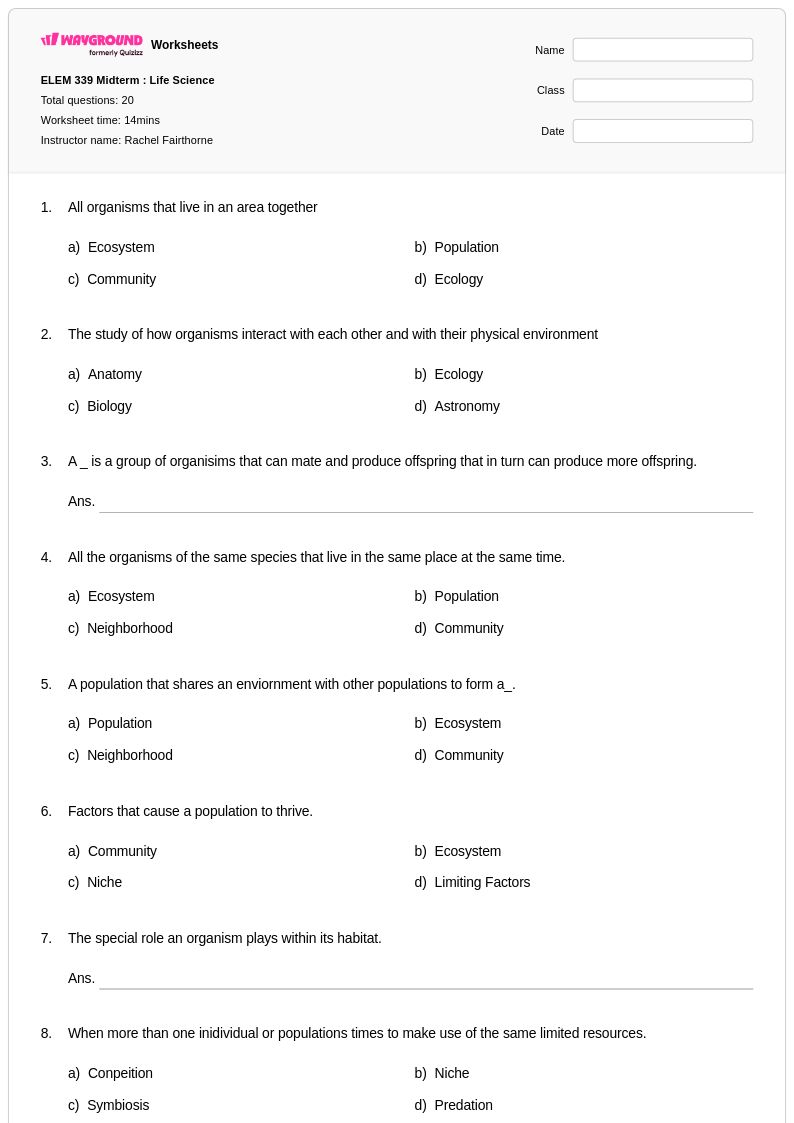
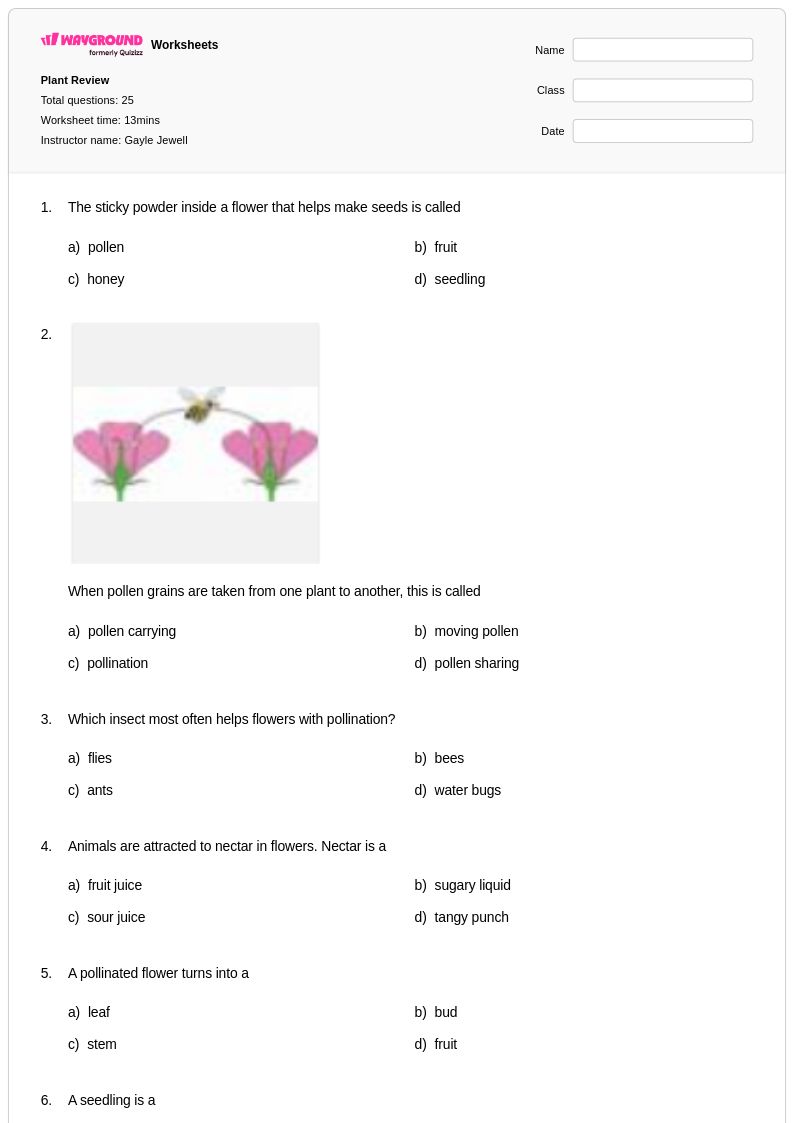
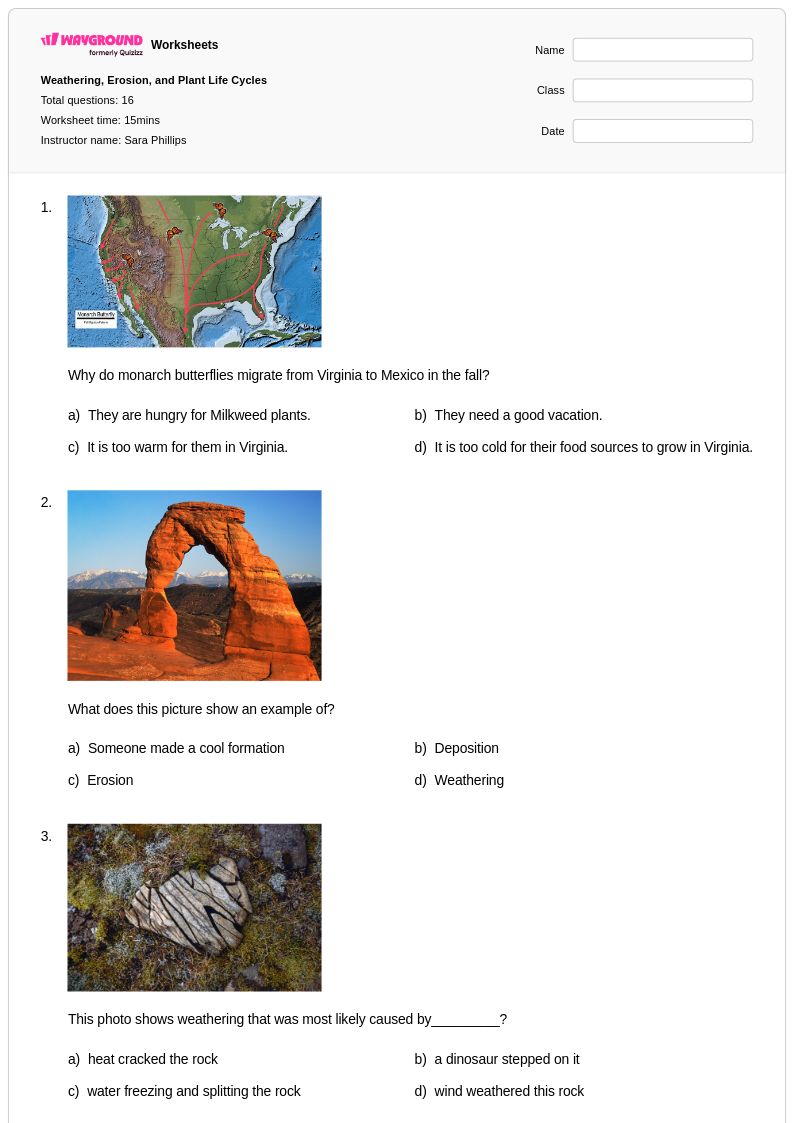
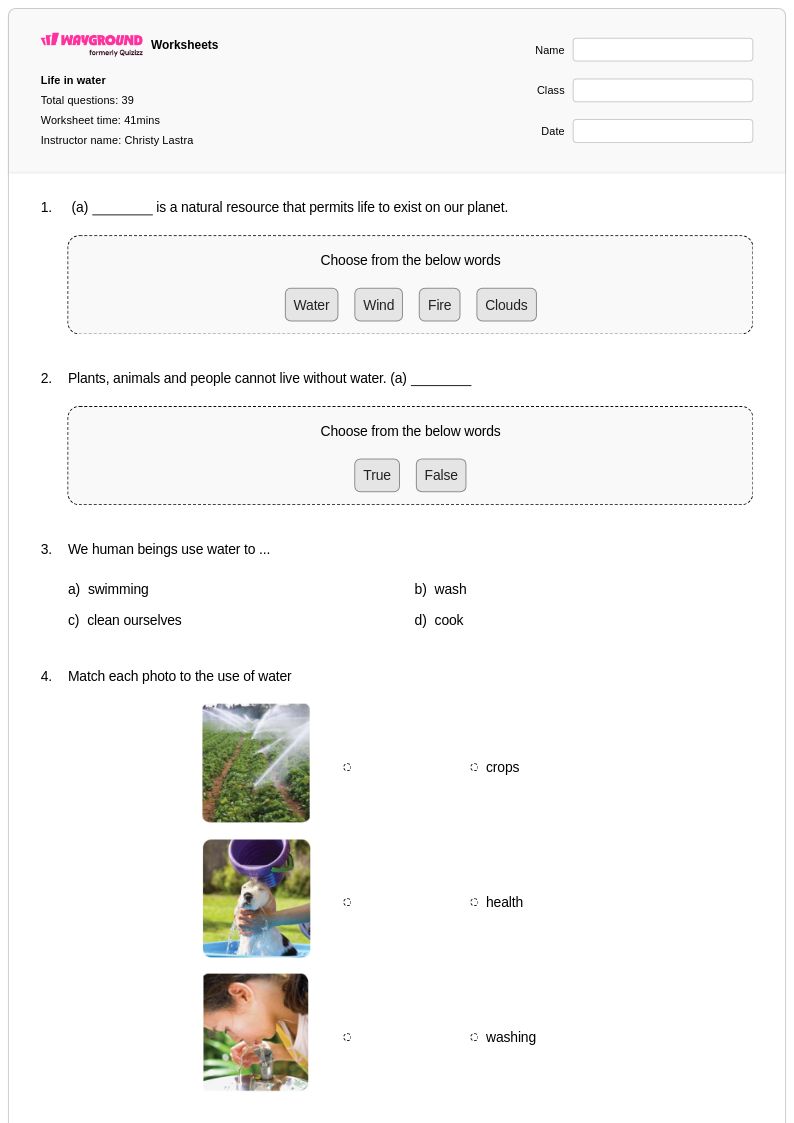
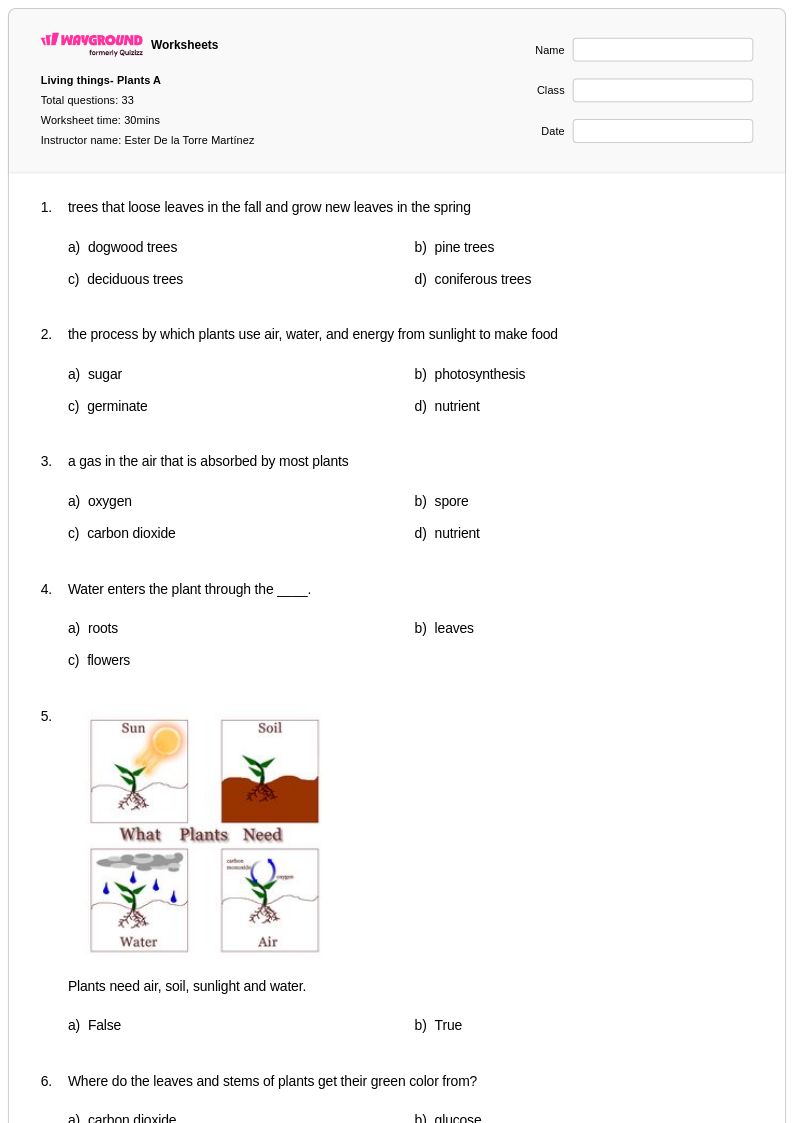
Interactions in an Ecosystem worksheets for Grade 2 through Wayground provide young learners with foundational understanding of how living and non-living things connect and depend on each other in nature. These carefully designed practice problems introduce students to basic ecological relationships through age-appropriate activities that explore food chains, habitats, and the interdependence between plants, animals, and their environment. Each worksheet strengthens critical thinking skills as students observe, classify, and make connections between different ecosystem components, building essential science literacy that aligns with elementary biology standards. The comprehensive collection includes engaging exercises with detailed answer keys, ensuring both independent practice and guided instruction opportunities, while free printable pdf formats make these resources accessible for classroom use, homework assignments, and skill reinforcement activities.
Wayground supports Grade 2 teachers with an extensive library of millions of teacher-created Interactions in an Ecosystem resources that streamline lesson planning and enhance student engagement across diverse learning needs. The platform's robust search and filtering capabilities allow educators to quickly locate materials that align with specific curriculum standards and learning objectives, while built-in differentiation tools enable customization for various skill levels within the same classroom. Teachers can access these ecosystem worksheets in both printable and digital pdf formats, providing flexibility for traditional classroom instruction, remote learning environments, and hybrid educational models. This comprehensive resource collection facilitates targeted remediation for struggling students, enrichment opportunities for advanced learners, and consistent skill practice that reinforces key biological concepts about how organisms interact within their natural environments.
FAQs
How do I teach interactions in an ecosystem to biology students?
Start by grounding students in the concept of ecological roles before introducing relationship types such as predator-prey dynamics, competition, and symbiosis. Use real-world case studies like wolf reintroduction in Yellowstone or coral reef food webs to show how one change ripples through an entire ecosystem. Scaffolding instruction from individual organism relationships toward whole-system energy flow helps students build conceptual depth before tackling complex scenarios.
What kinds of practice problems help students understand predator-prey relationships and food webs?
Effective practice includes interpreting food web diagrams to trace energy flow, analyzing population graphs to identify predator-prey cycles, and predicting what happens to a food web when one species is removed. Scenario-based problems that ask students to evaluate the consequences of an invasive species or habitat loss are particularly strong for applying ecological reasoning. These question types mirror the analytical thinking required on biology assessments.
What misconceptions do students commonly have about symbiosis and ecological relationships?
A common error is treating all close species interactions as mutualistic, when commensalism and parasitism are equally prevalent. Students also frequently confuse competition with predation, or assume that predators always reduce prey populations to extinction rather than maintaining dynamic balance. Another persistent misconception is that energy transfers between trophic levels are efficient, when in reality only about 10% is passed on, which directly shapes ecosystem structure.
How can I use ecosystem interaction worksheets to assess student understanding?
Ecosystem interaction worksheets work well as formative checks after introducing each relationship type, and as summative tools once the full unit on ecological dynamics is complete. Tasks that ask students to annotate food webs, classify relationships from field-study descriptions, or predict population consequences reveal whether students can apply concepts, not just recall definitions. Answer keys allow teachers to give targeted feedback quickly and identify which ecological concepts need reteaching.
How do I use Wayground's interactions in an ecosystem worksheets in my classroom?
Wayground's ecosystem interaction worksheets are available as printable PDFs for traditional classroom use and in digital formats for technology-integrated or hybrid environments, and teachers can also host them as a quiz directly on Wayground. The platform's search and filtering tools let teachers locate worksheets targeting specific concepts such as symbiosis, energy flow, or population dynamics, making it straightforward to match materials to a lesson's exact focus. For students who need accommodations, Wayground supports settings such as extended time, read-aloud, and reduced answer choices, all configurable per student without notifying the rest of the class.
How do I differentiate ecosystem interaction worksheets for students at different skill levels?
For students who need additional support, start with worksheets that present pre-labeled food web diagrams and ask students to classify single relationships before moving to multi-organism scenarios. More advanced students benefit from open-ended analysis tasks such as designing a food web for a specific biome or evaluating real ecological data. On Wayground, teachers can apply accommodations including reduced answer choices and read-aloud at the individual student level, so differentiation happens within a single shared assignment without singling any student out.