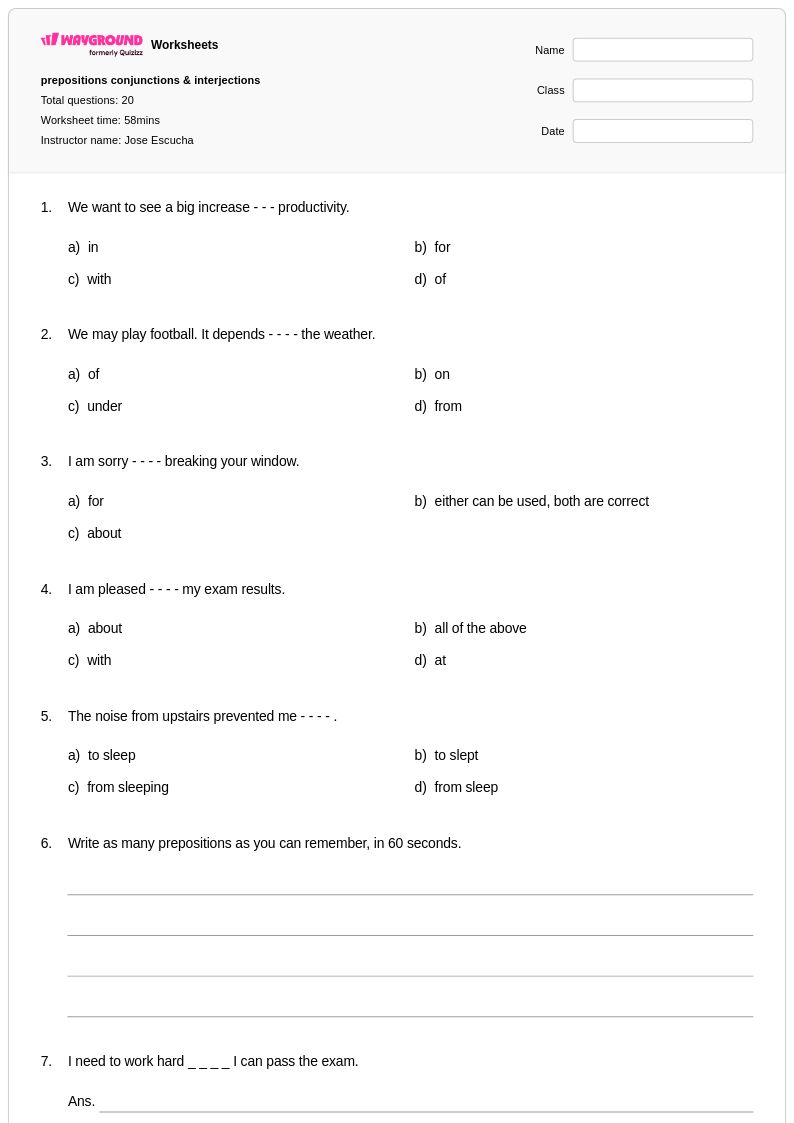
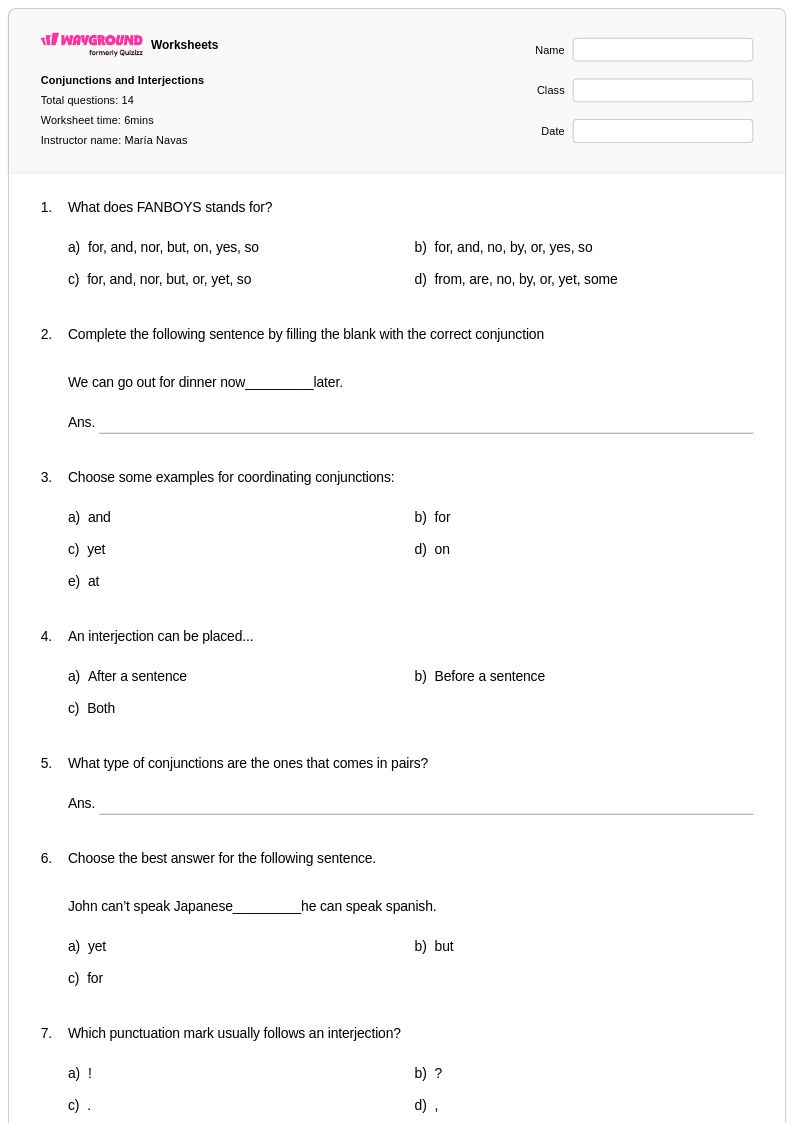
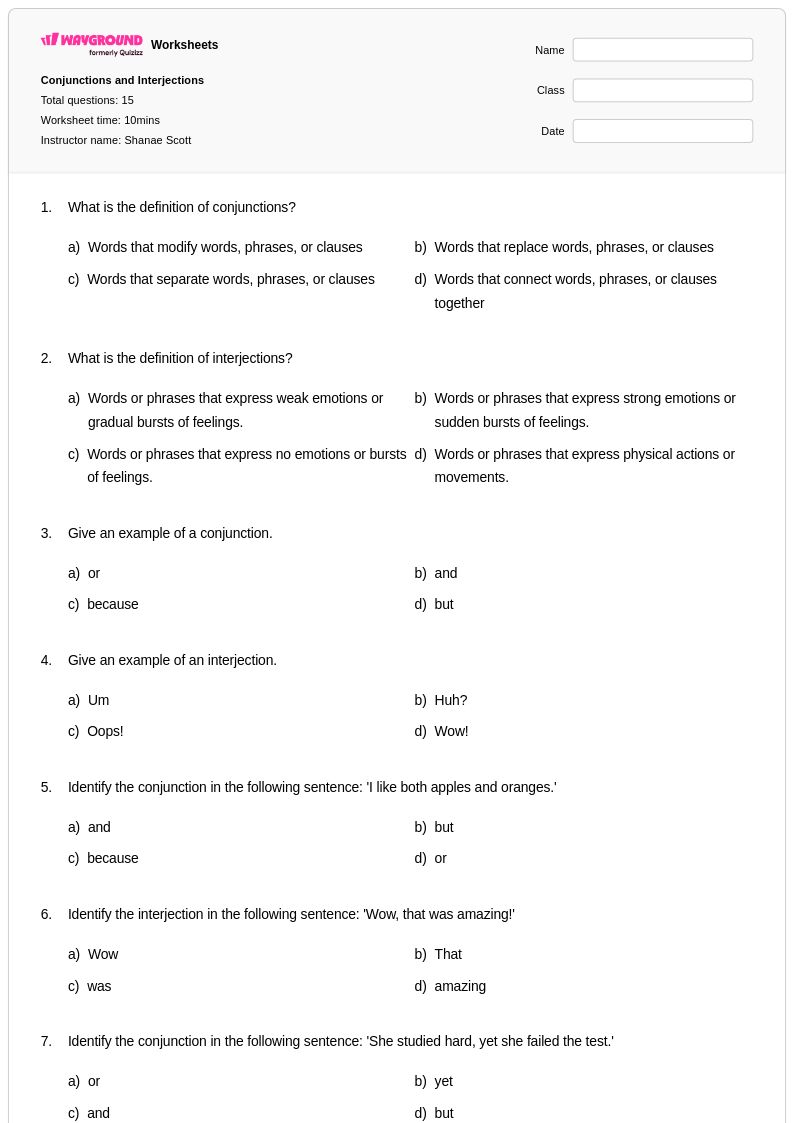
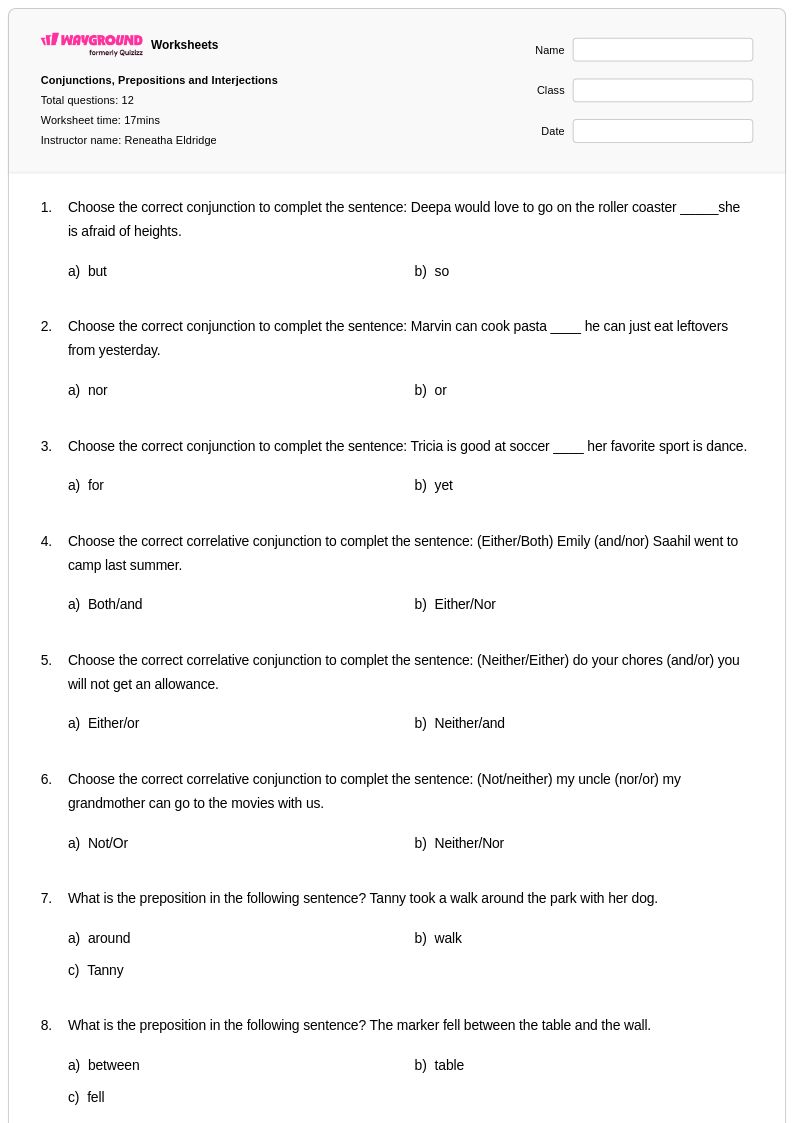
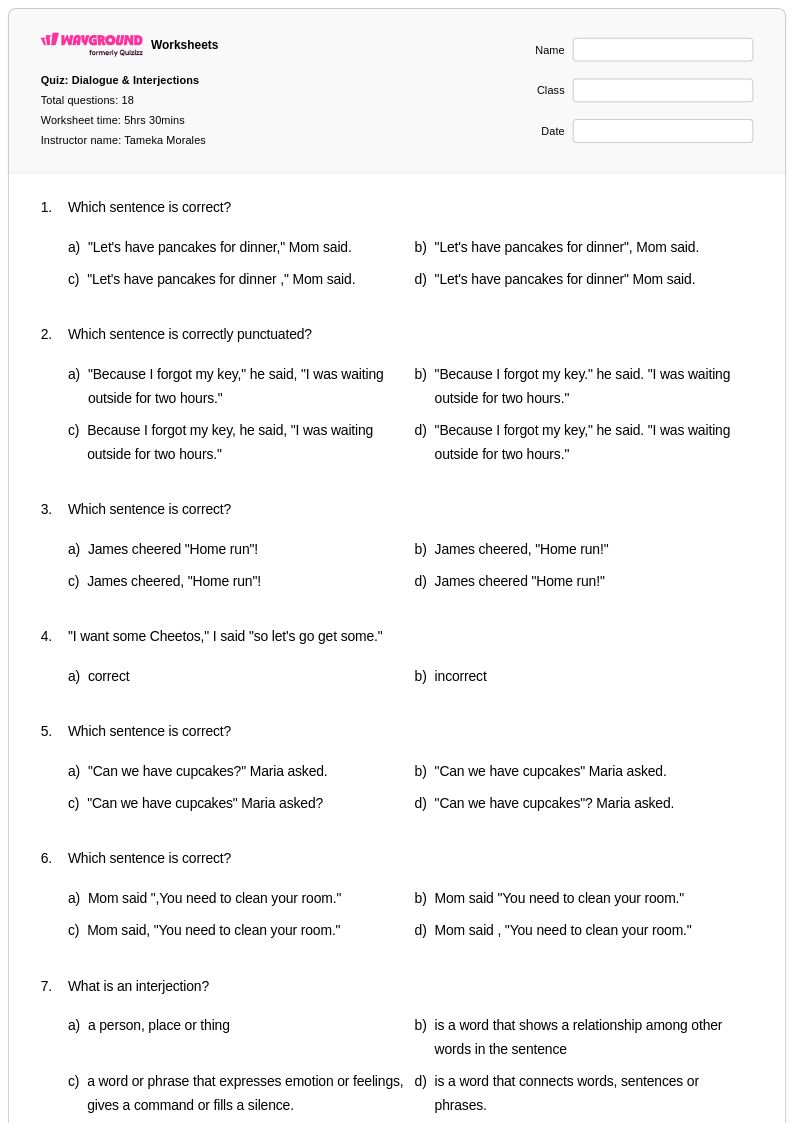
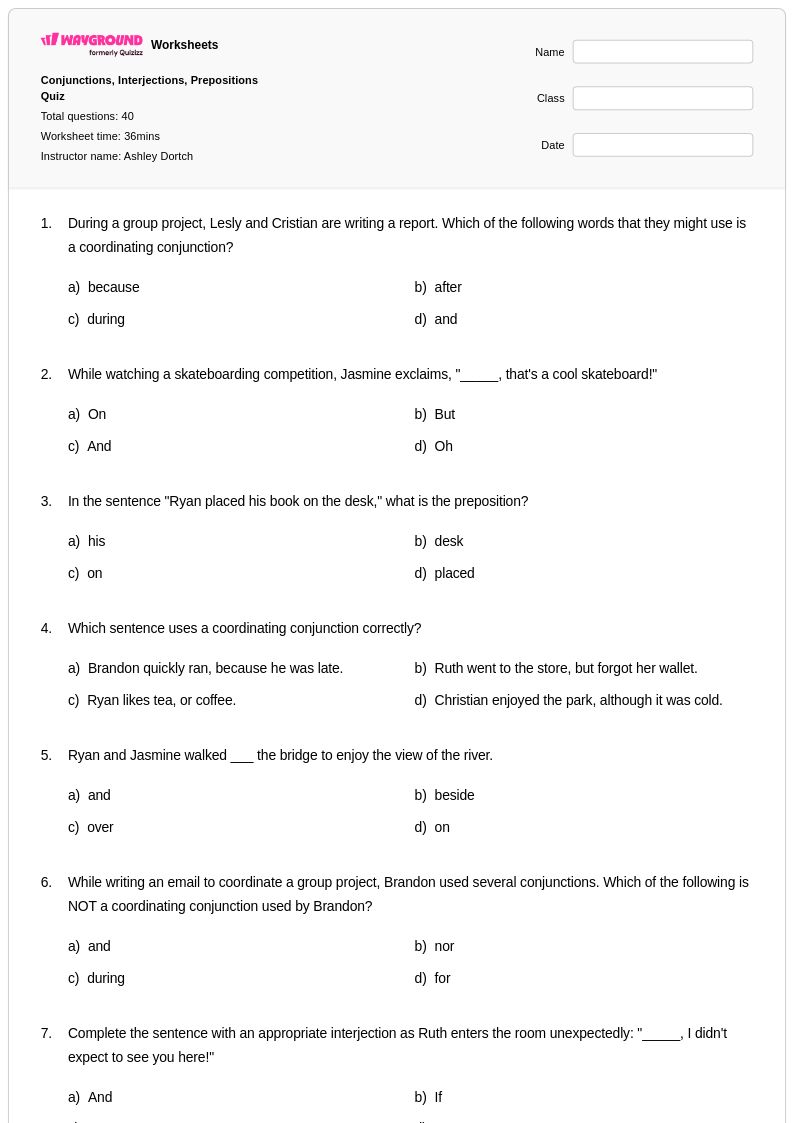
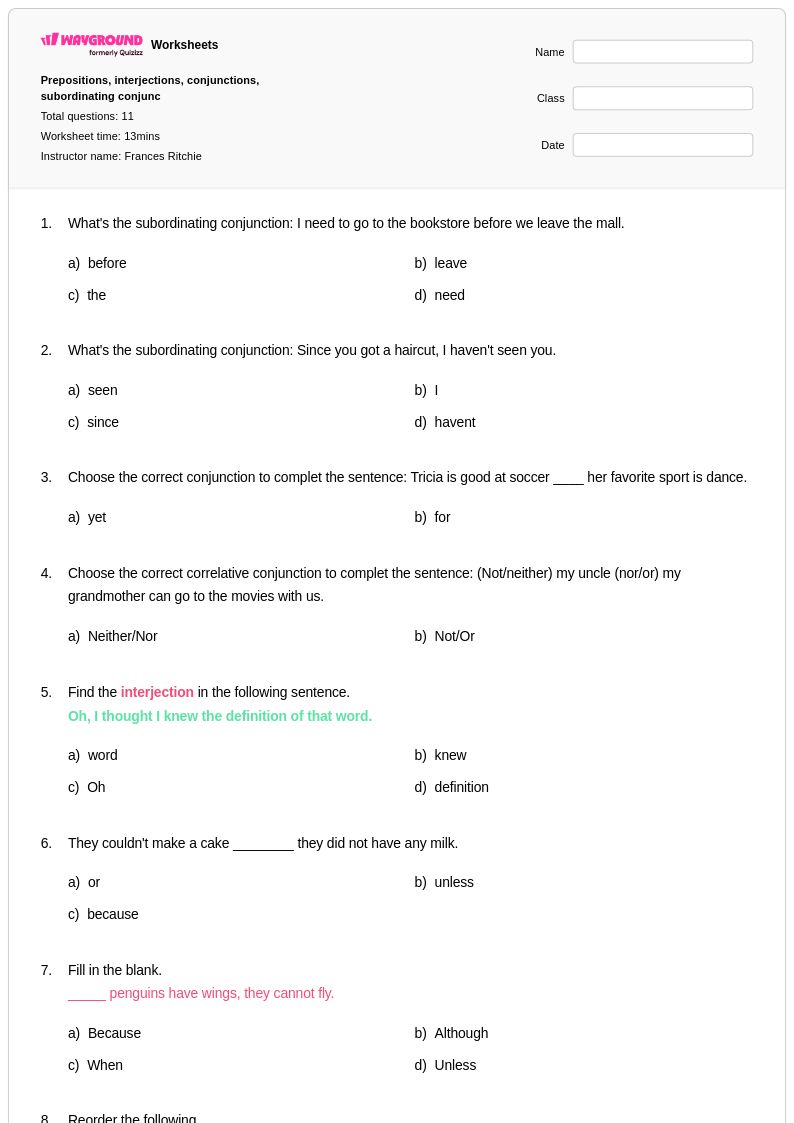
Enhance students' understanding of interjections with Wayground's comprehensive collection of free worksheets, printables, and practice problems that include detailed answer keys to master these expressive parts of speech.
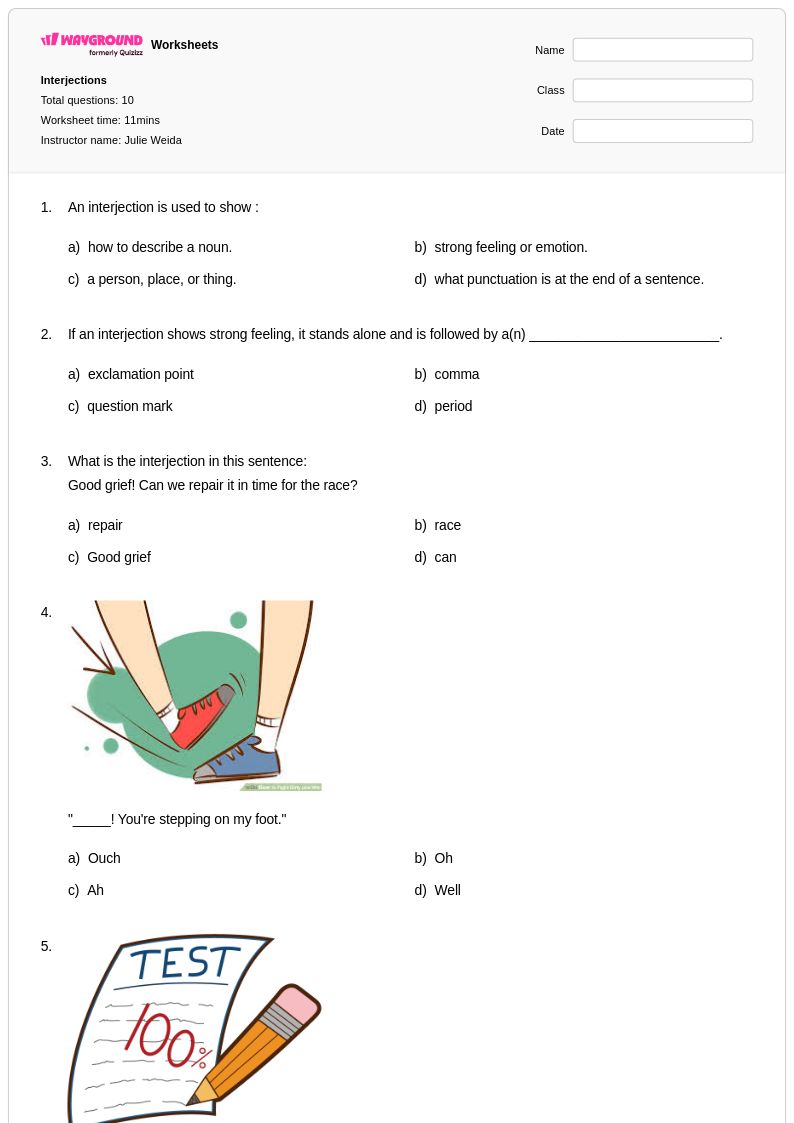
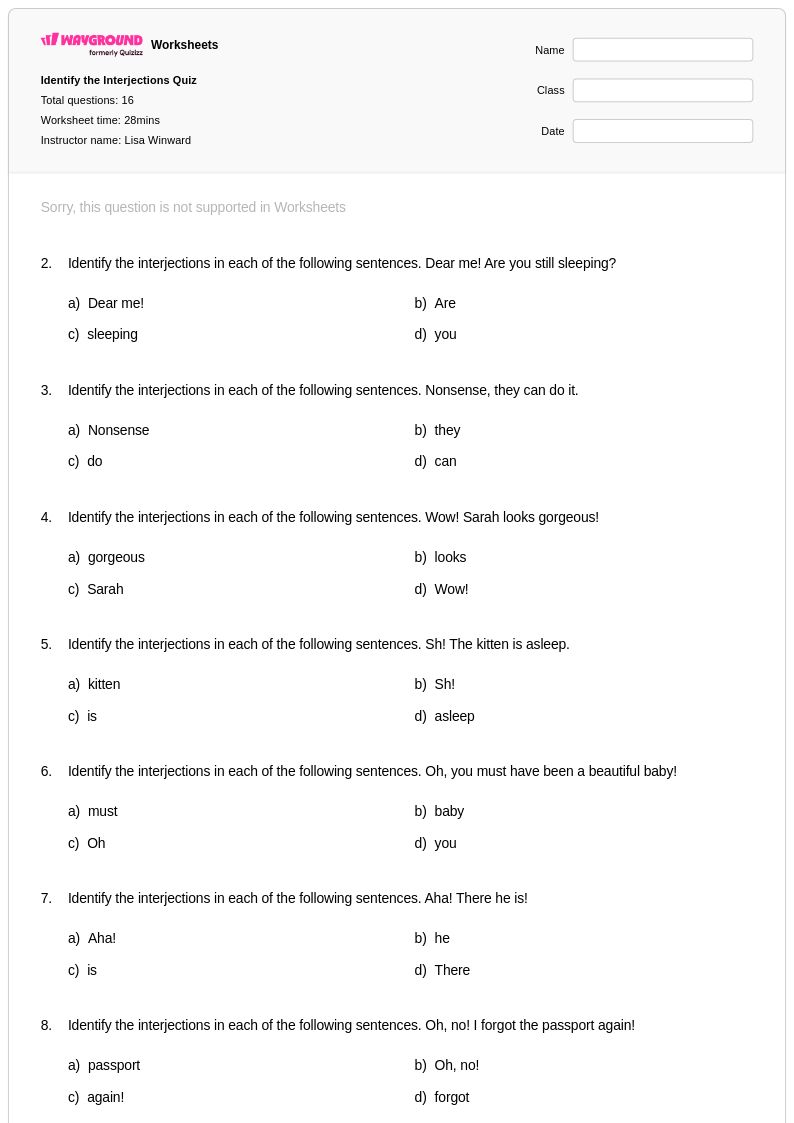
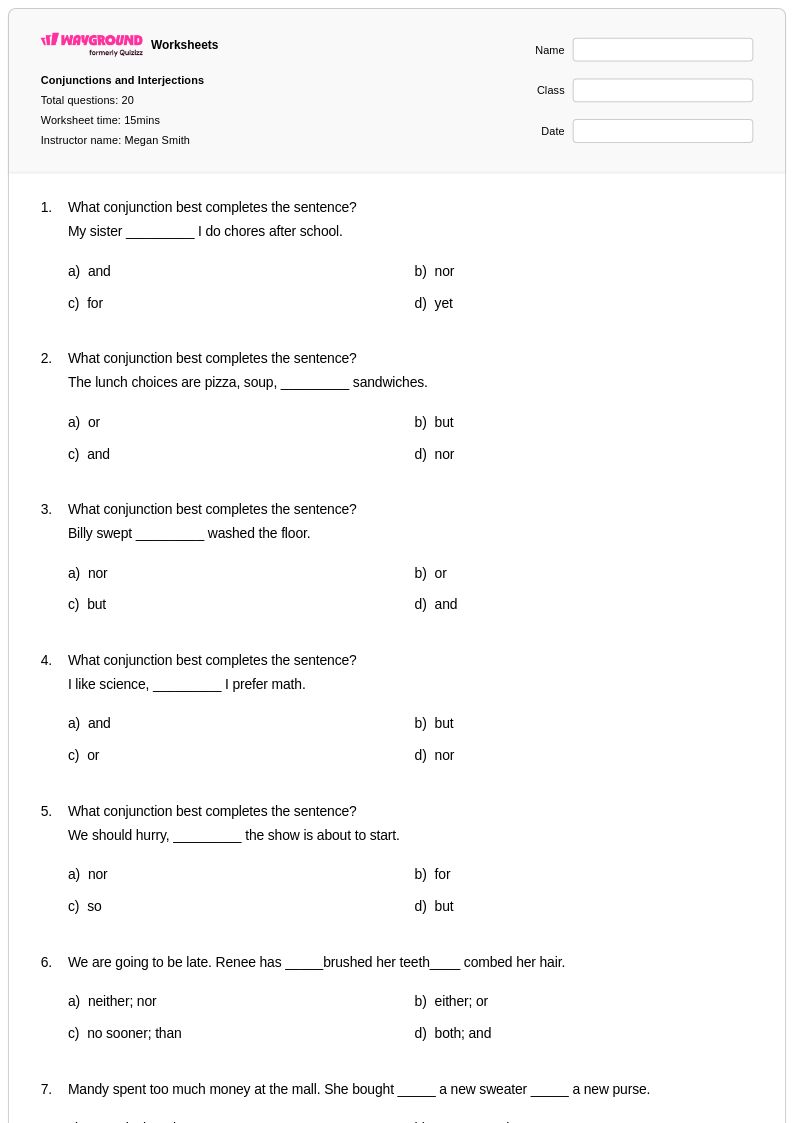
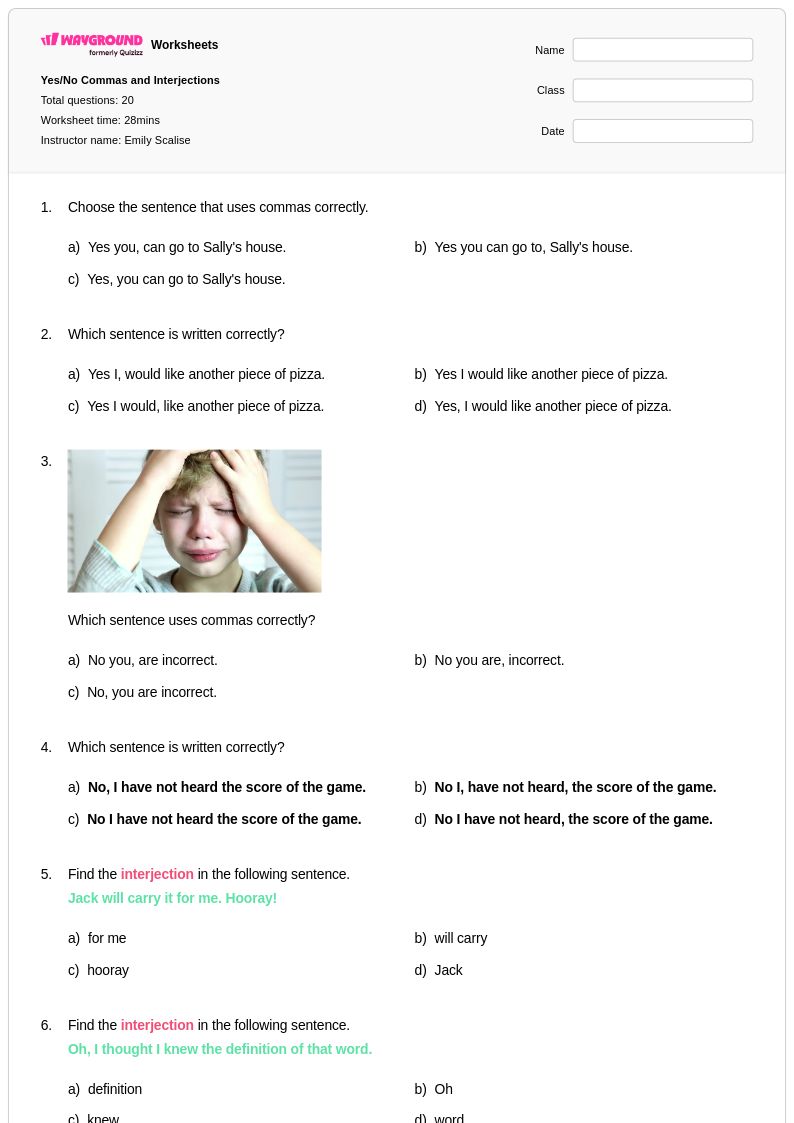
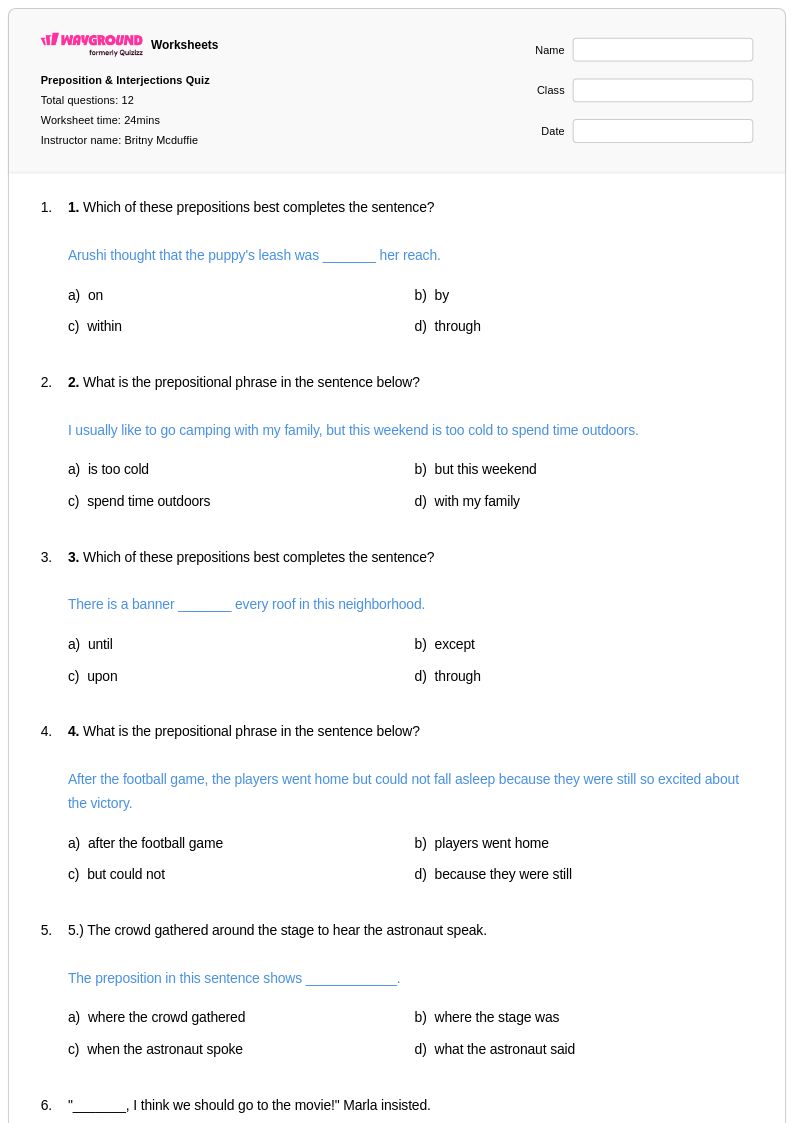
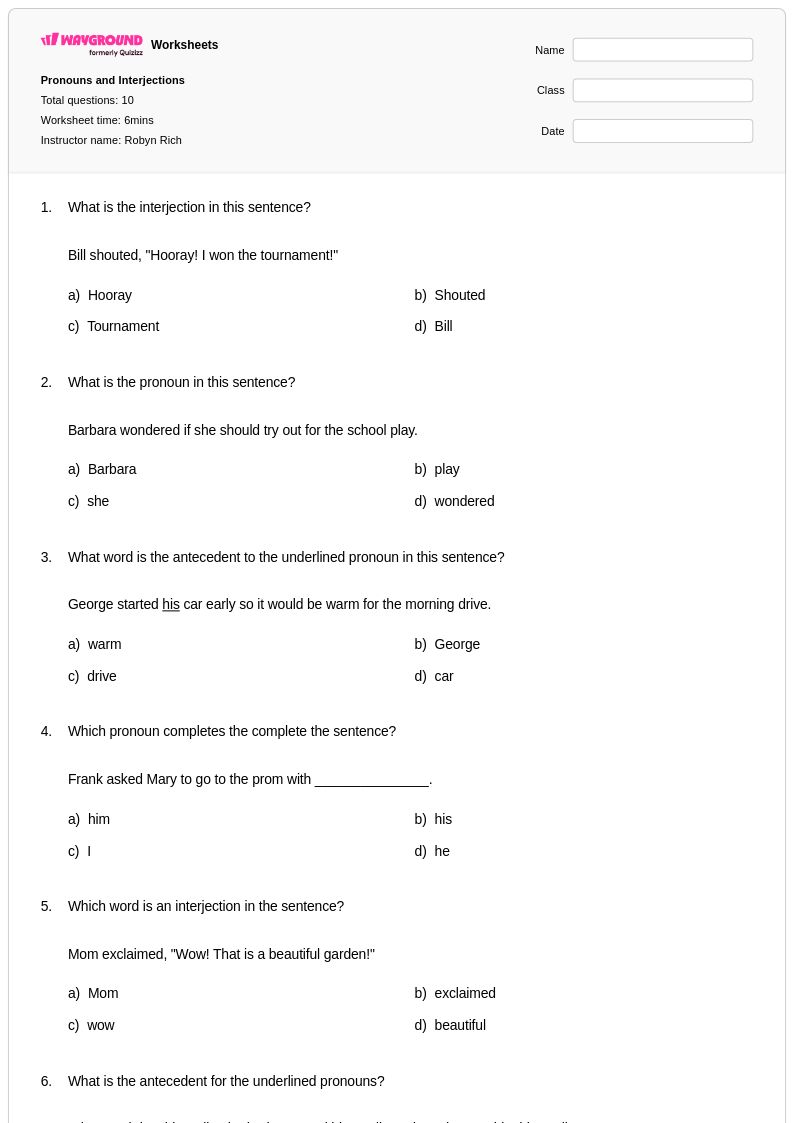
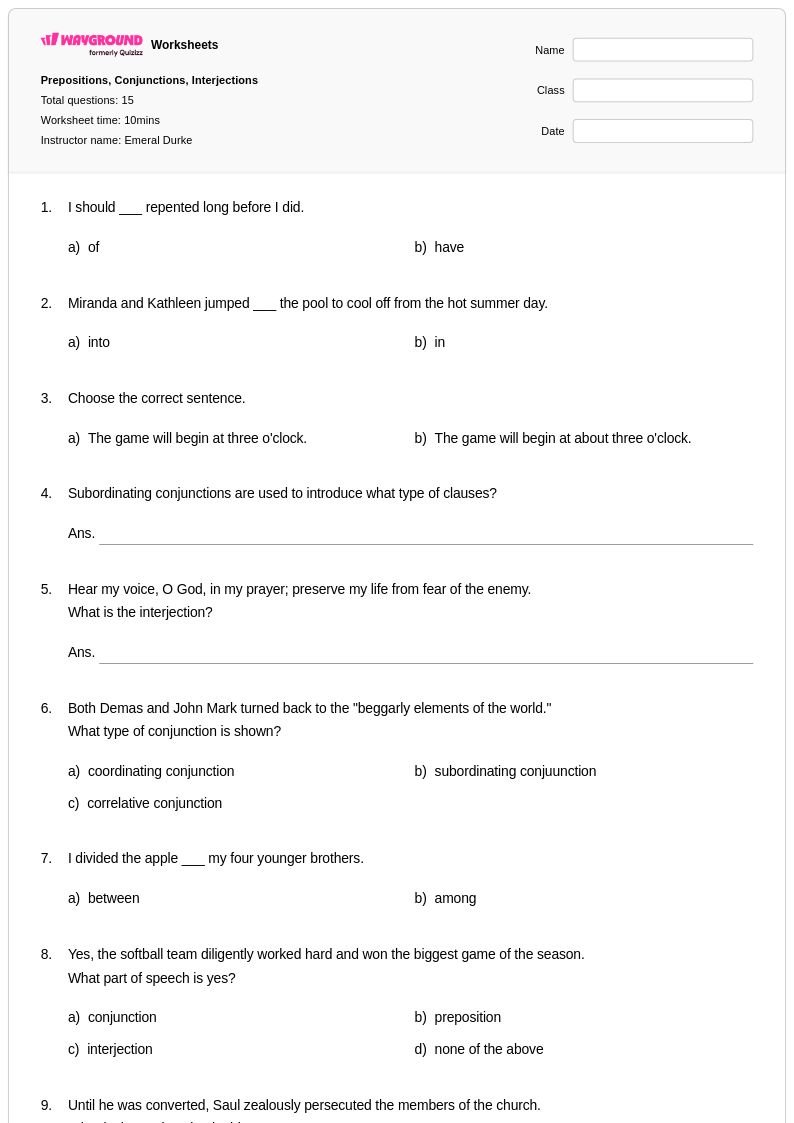
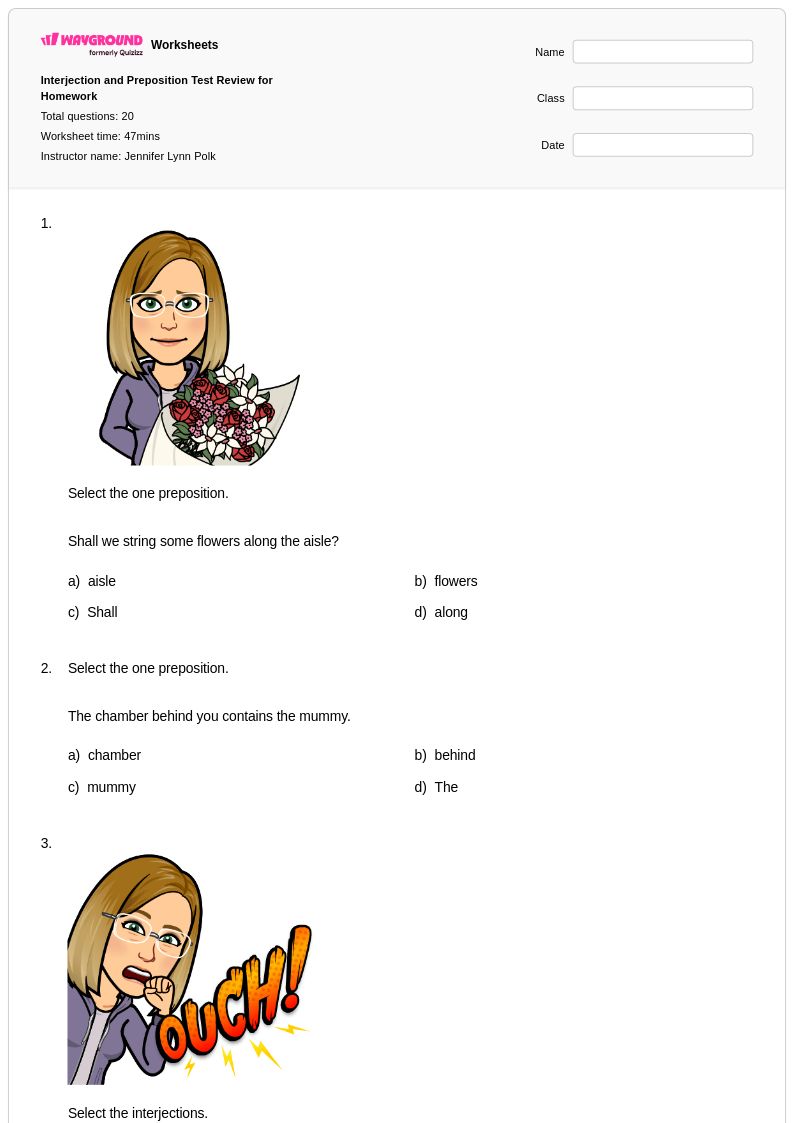
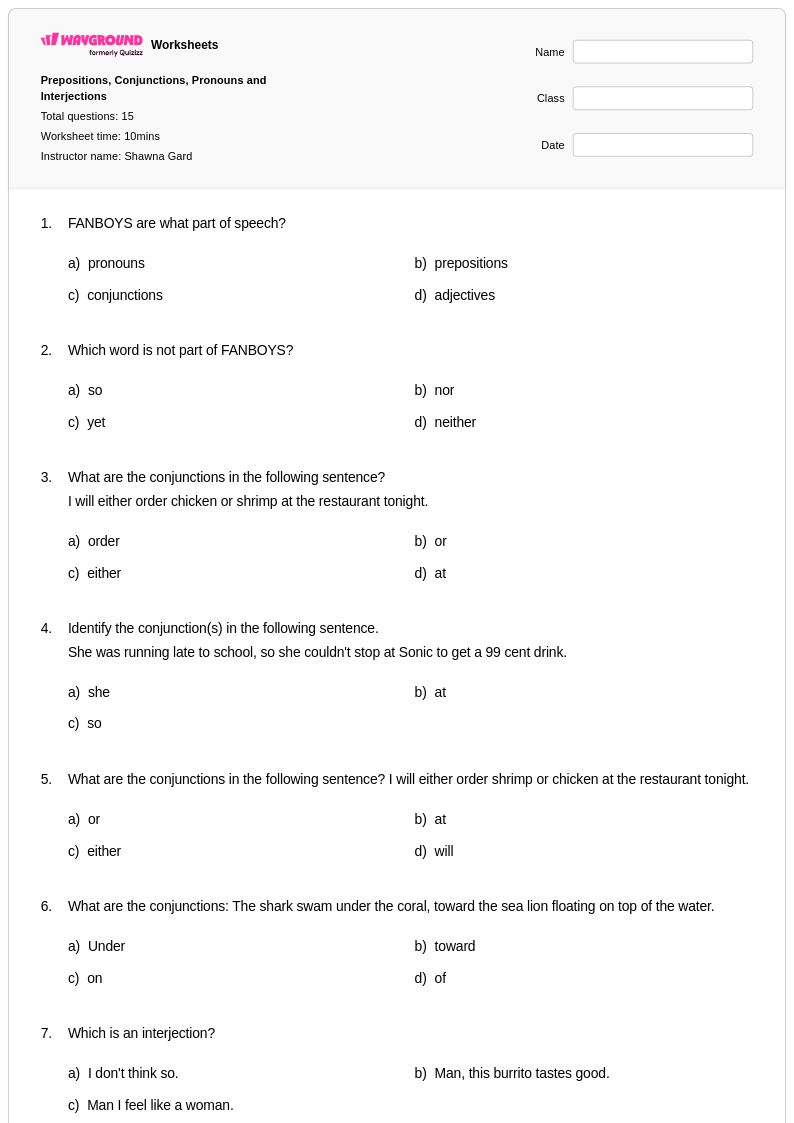
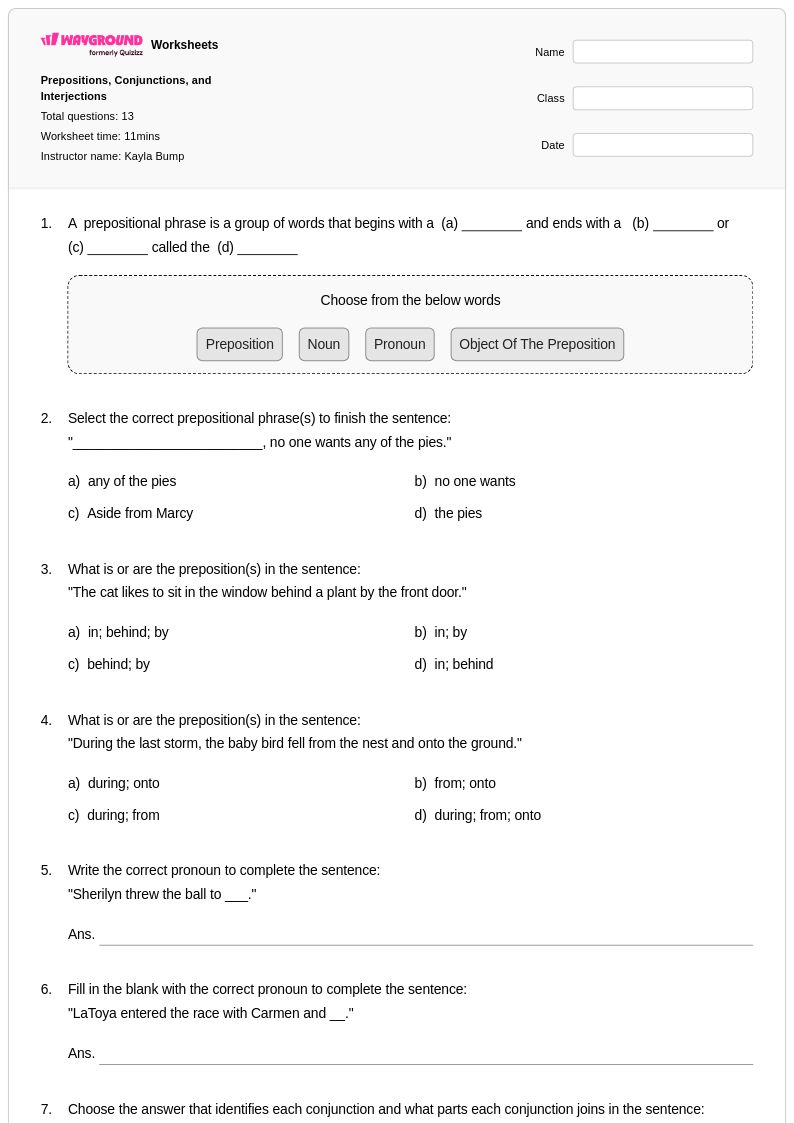
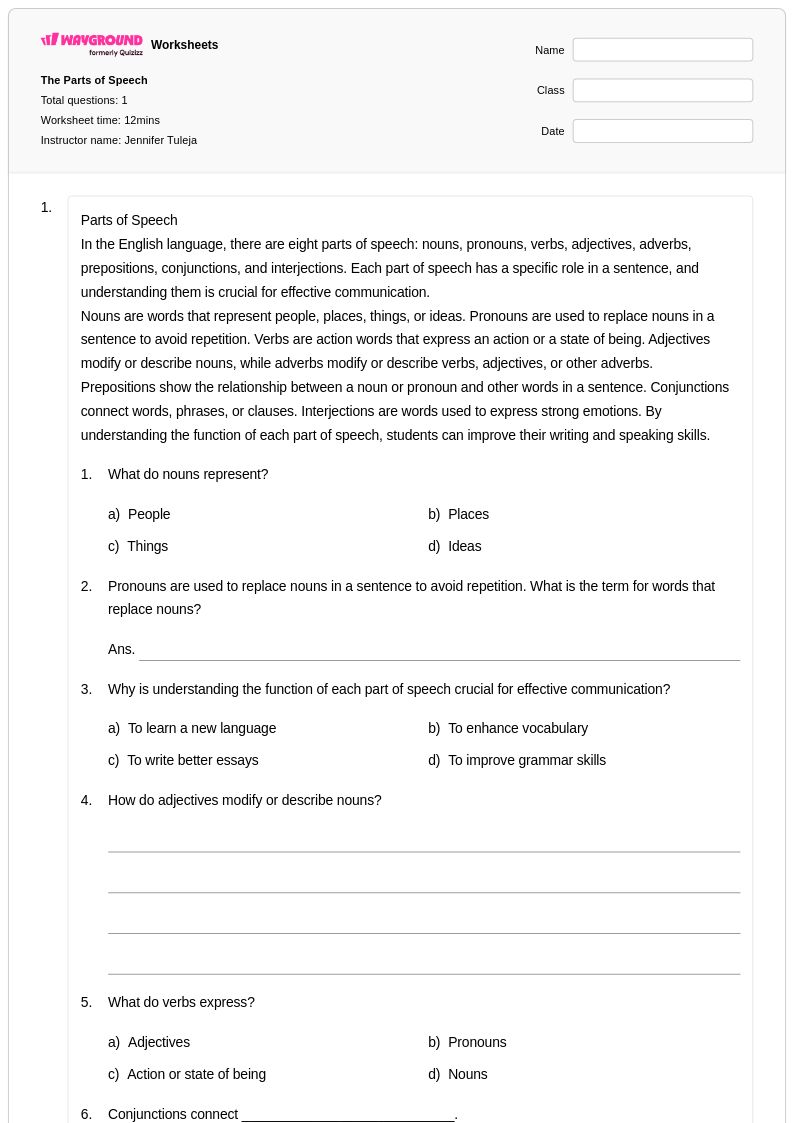
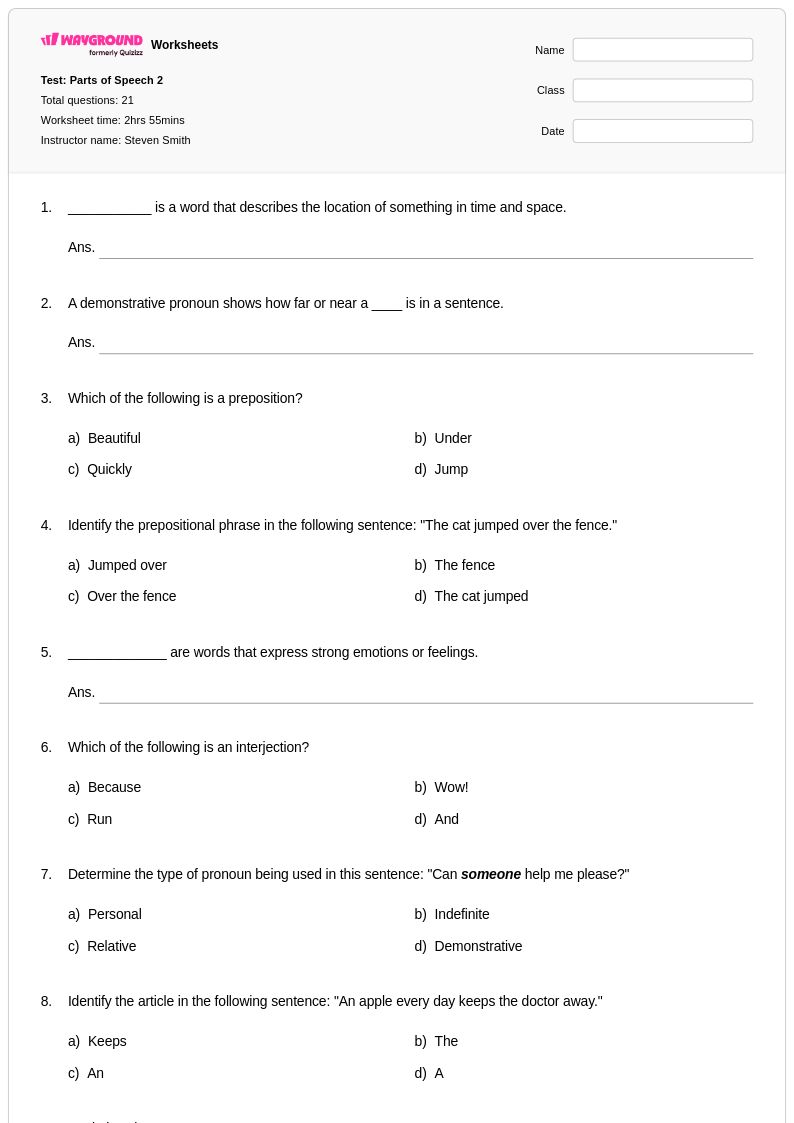
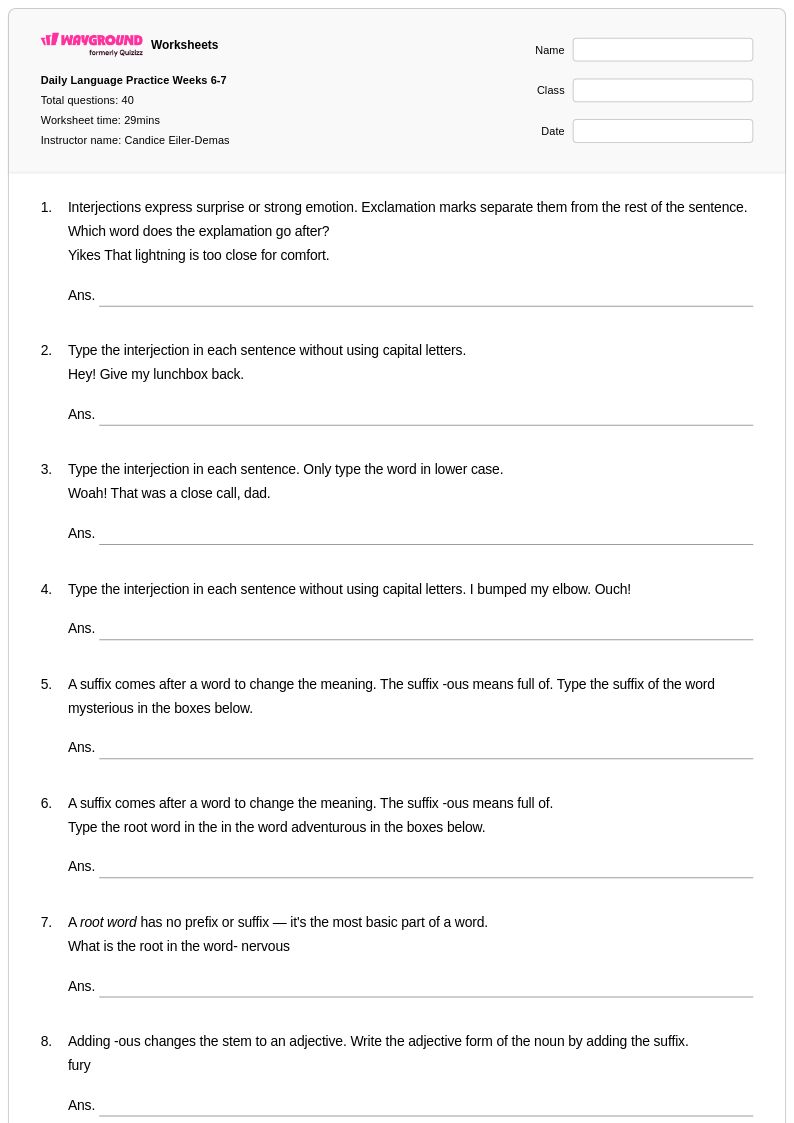
Interjections worksheets available through Wayground (formerly Quizizz) provide comprehensive practice for students learning to identify, classify, and properly use these expressive words and phrases in written and spoken communication. These educational resources focus on building essential grammar skills by teaching students to recognize interjections as words that express strong emotion, surprise, or sudden feeling, such as "wow," "ouch," "hooray," and "alas." The worksheets feature diverse practice problems that challenge students to distinguish interjections from other parts of speech, punctuate them correctly with exclamation points or commas, and understand their role in adding emotional emphasis to sentences. Each worksheet includes a detailed answer key and is available as a free printable pdf, making it easy for educators to incorporate interjection practice into daily lessons or assign as independent study materials.
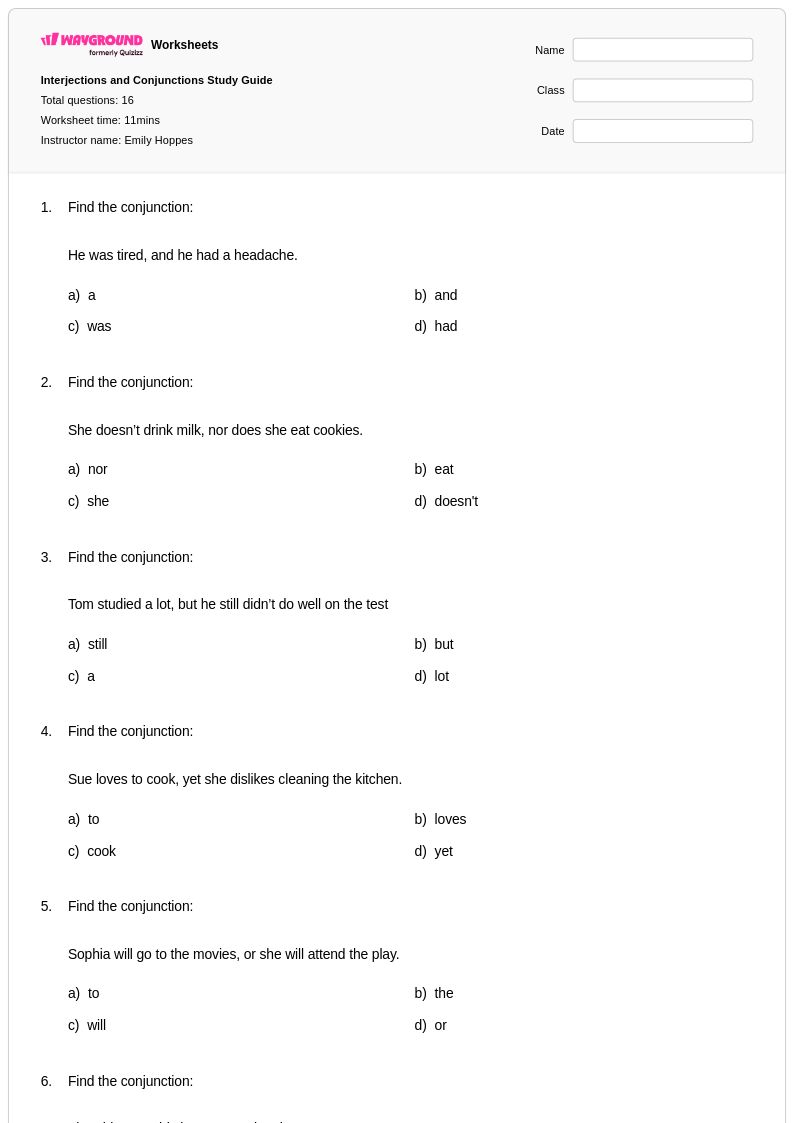
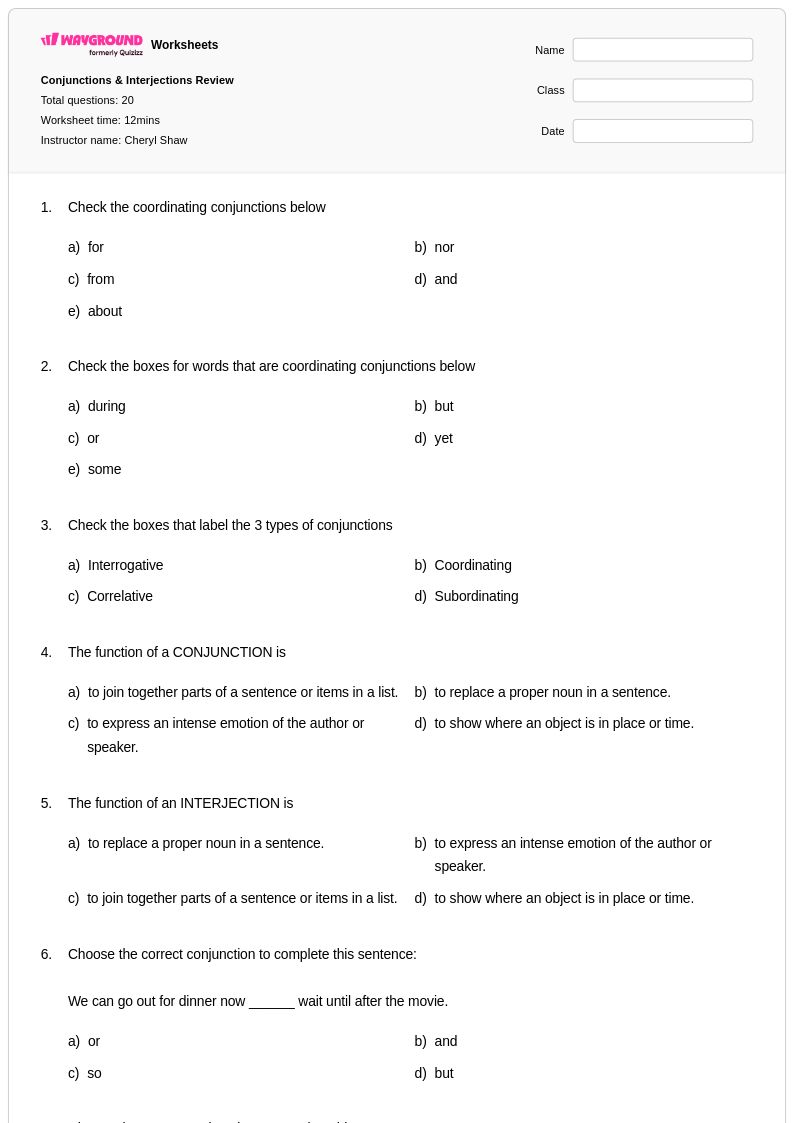
Wayground (formerly Quizizz) supports teachers with an extensive collection of interjections worksheets sourced from millions of educator-created resources, offering robust search and filtering capabilities that allow instructors to find materials perfectly suited to their classroom needs. The platform's advanced differentiation tools enable teachers to customize worksheets for various skill levels, ensuring that struggling students receive appropriate scaffolding while advanced learners encounter more challenging interjection identification and usage tasks. These resources are available in both printable and digital formats, including downloadable pdfs, giving educators the flexibility to deliver instruction through traditional paper-based activities or interactive online exercises. This comprehensive approach to interjections instruction supports effective lesson planning, targeted remediation for students who struggle with parts of speech concepts, enrichment opportunities for quick learners, and consistent skill practice that reinforces proper grammar usage across all writing contexts.
FAQs
How do I teach interjections to students who are new to parts of speech?
Start by grounding interjections in emotional recognition — ask students to think about what they say when they're surprised, hurt, or excited, then show them how those spontaneous words ("wow," "ouch," "hooray") are a formal part of speech. Once students connect interjections to real emotional moments, introduce punctuation rules: exclamation points signal strong emotion, while commas indicate milder reactions. Building from spoken examples to written sentences helps students internalize both identification and proper usage before moving to independent practice.
What exercises help students practice identifying and using interjections correctly?
Effective practice exercises include sentence-sorting tasks where students distinguish interjections from other parts of speech, fill-in-the-blank activities that require choosing an appropriate interjection based on emotional context, and punctuation correction tasks where students decide whether an exclamation point or comma fits. Writing exercises asking students to incorporate interjections naturally into original sentences reinforce usage in context rather than just rote identification.
What mistakes do students commonly make when learning about interjections?
The most frequent error is treating all interjections as requiring exclamation points, when milder interjections like "well" or "oh" typically take a comma and integrate into the sentence without dramatic emphasis. Students also frequently confuse interjections with nouns or exclamatory sentences, particularly when the interjection is a word that can function as another part of speech. Targeted practice distinguishing interjections by their emotional intensity and correct punctuation pattern helps correct both misconceptions.
How do I differentiate interjections practice for students at different skill levels?
For students who are still building foundational grammar skills, scaffolded worksheets that provide a word bank of common interjections and sentence frames with clear emotional cues reduce cognitive load while keeping the concept accessible. More advanced learners can be challenged with open-ended writing tasks, analysis of interjections in literary texts, or exercises classifying interjections by type and emotional register. On Wayground, teachers can apply accommodations such as reduced answer choices or read-aloud support for individual students, ensuring each learner engages with interjection content at an appropriate level without disrupting the rest of the class.
How do I use Wayground's interjections worksheets in my classroom?
Wayground's interjections worksheets are available as free printable PDFs for traditional classroom use and in digital formats for technology-integrated environments, including the option to host them as a quiz directly on Wayground. Each worksheet includes a detailed answer key, making them straightforward to assign as in-class practice, warm-up activities, or independent homework. The range of problem types across the collection allows teachers to sequence instruction from basic identification through correct punctuation and contextual usage.