
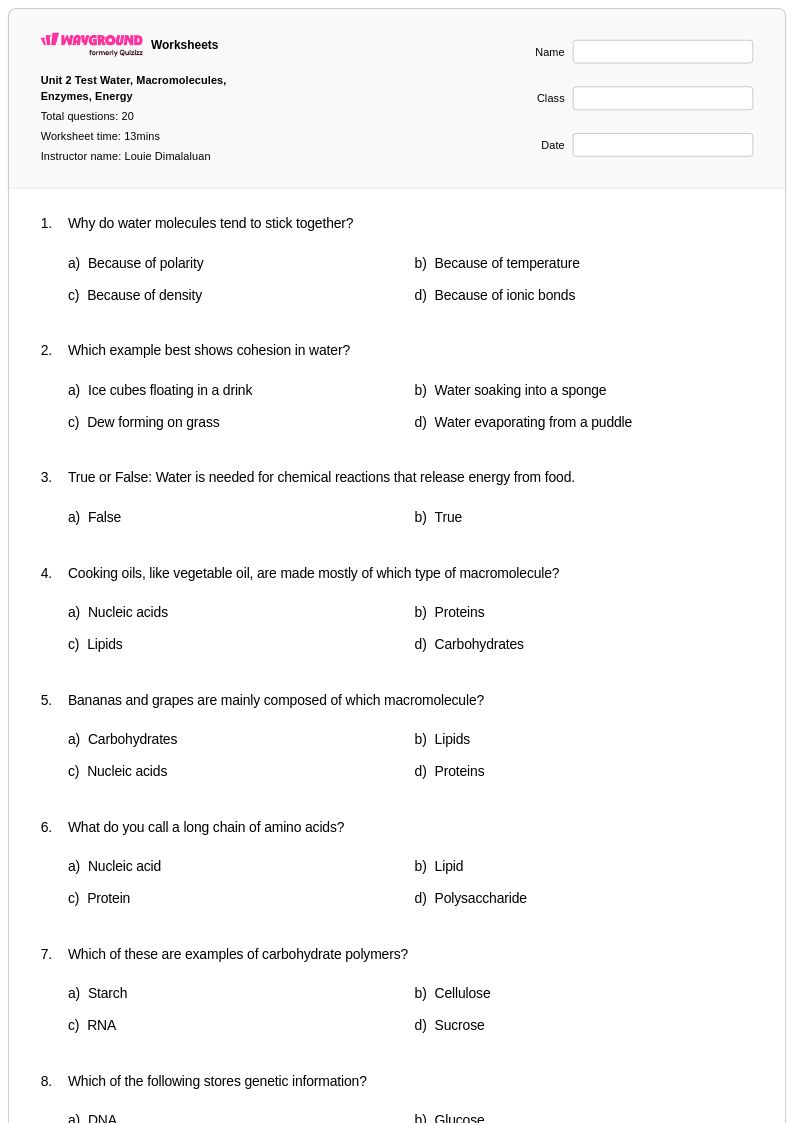
20 Q
9th - 12th
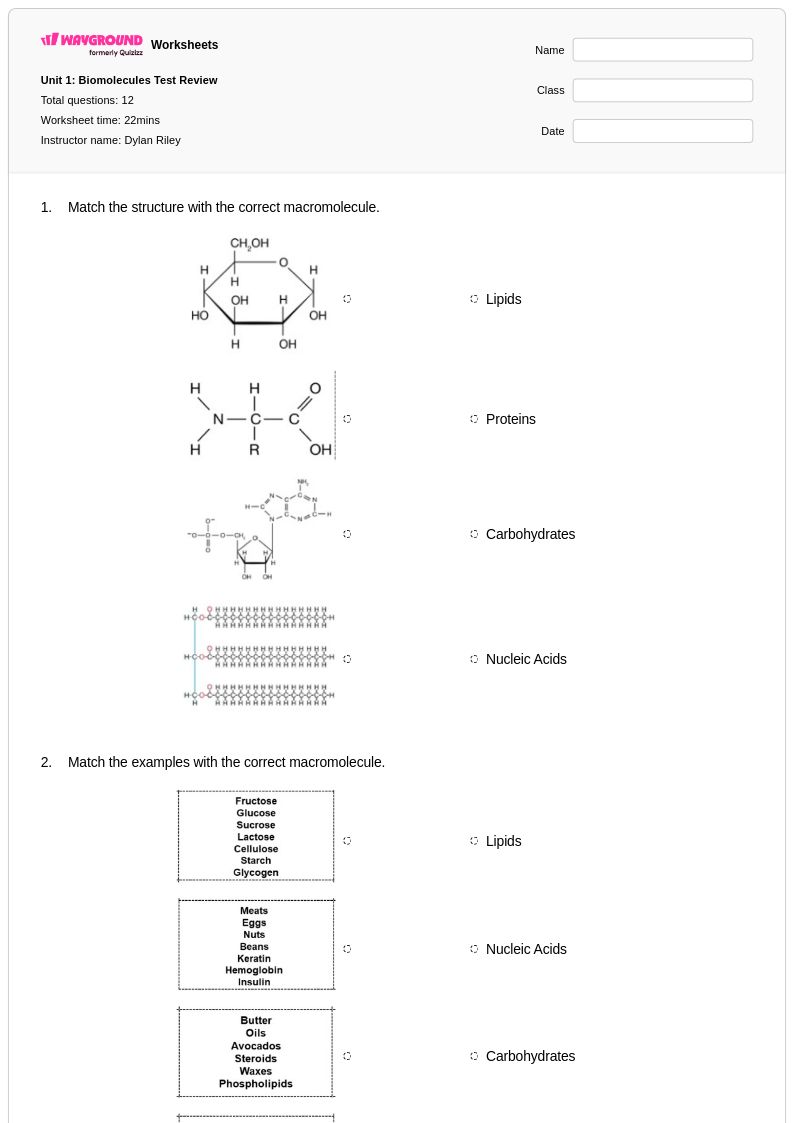
12 Q
9th - 12th
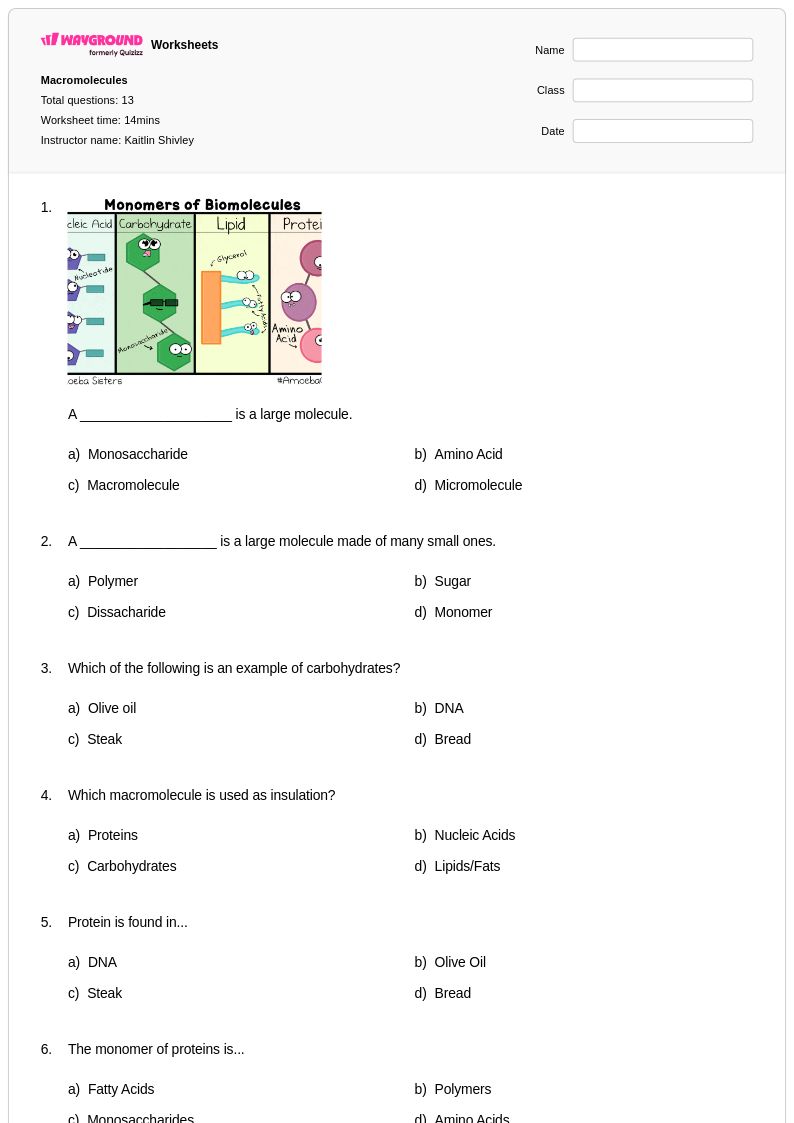
13 Q
9th - 12th
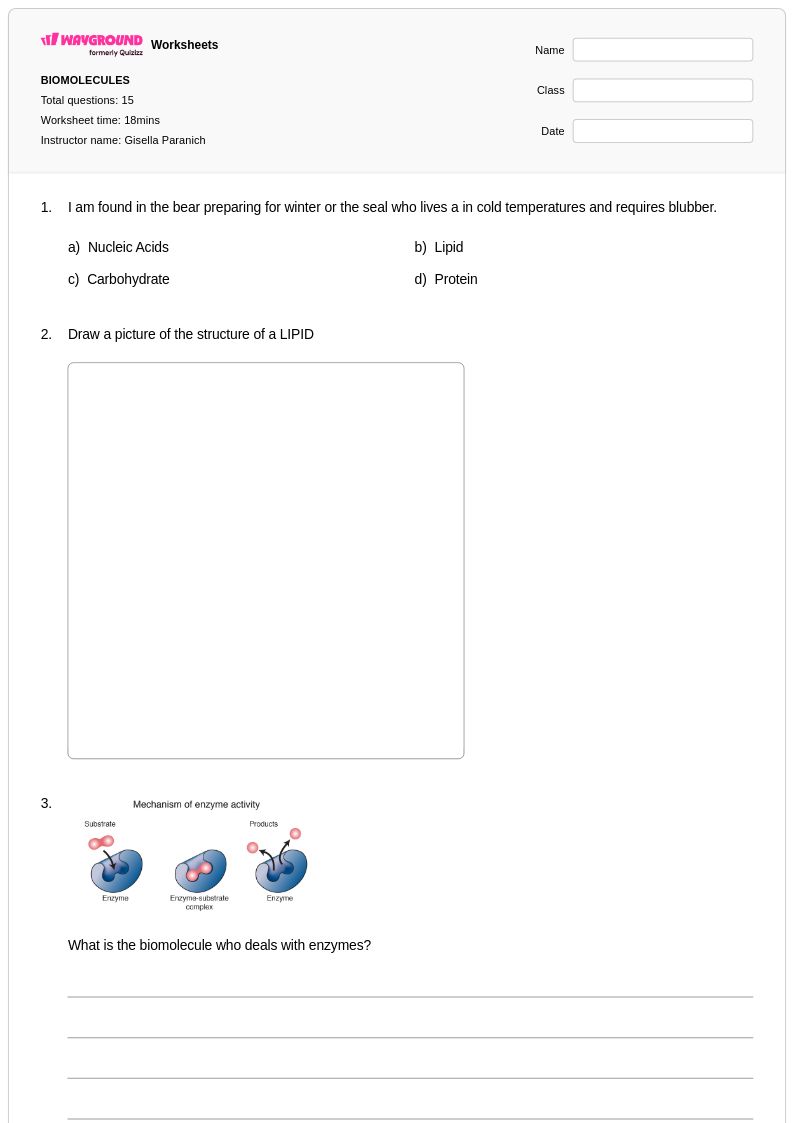
15 Q
7th - 12th
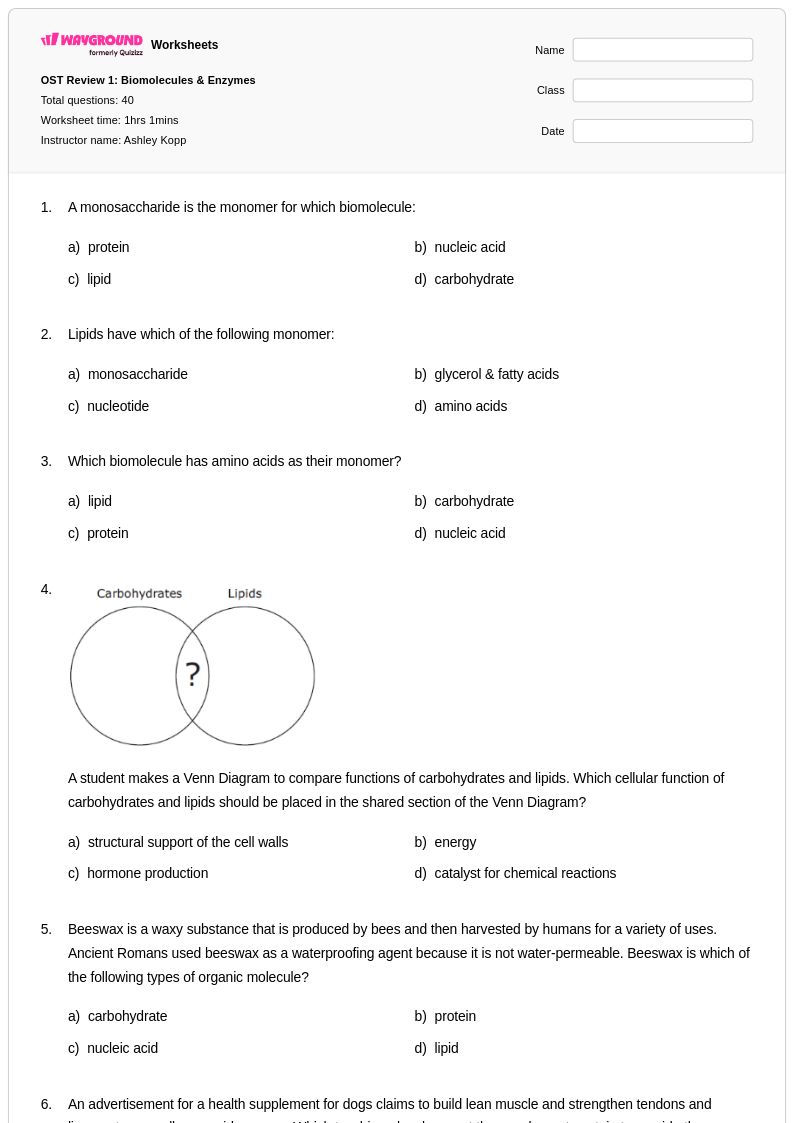
40 Q
10th
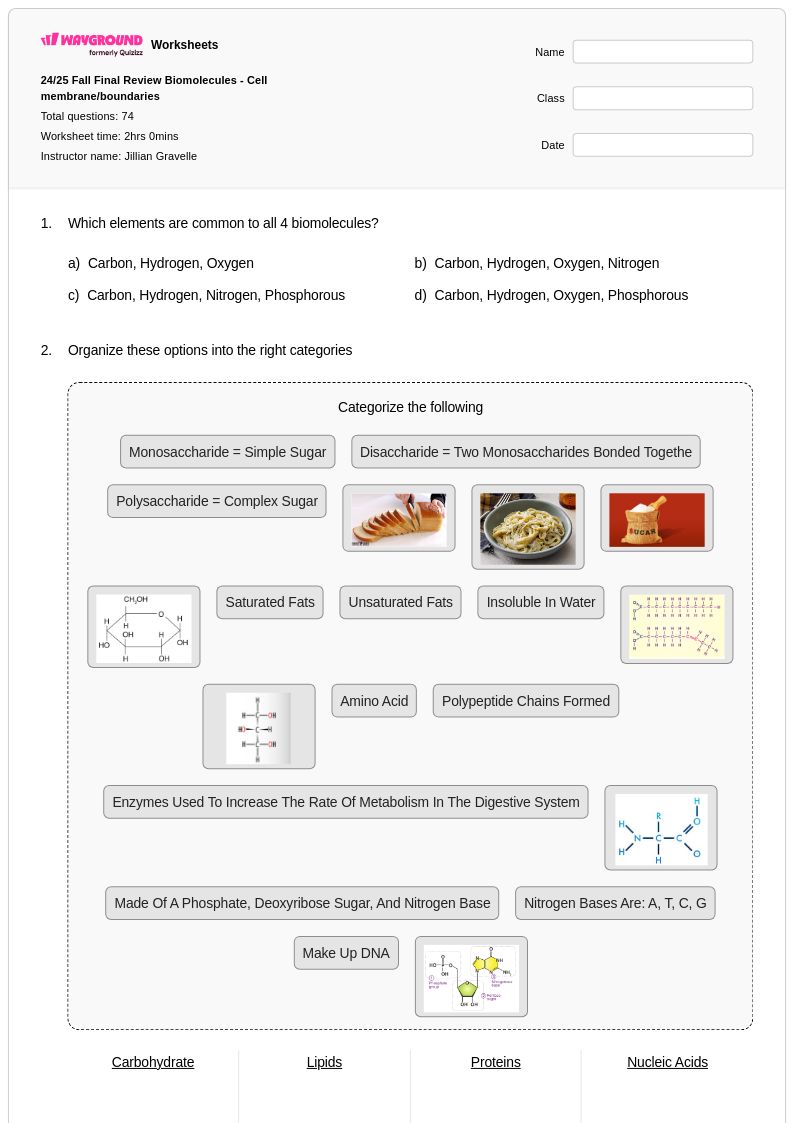
74 Q
10th
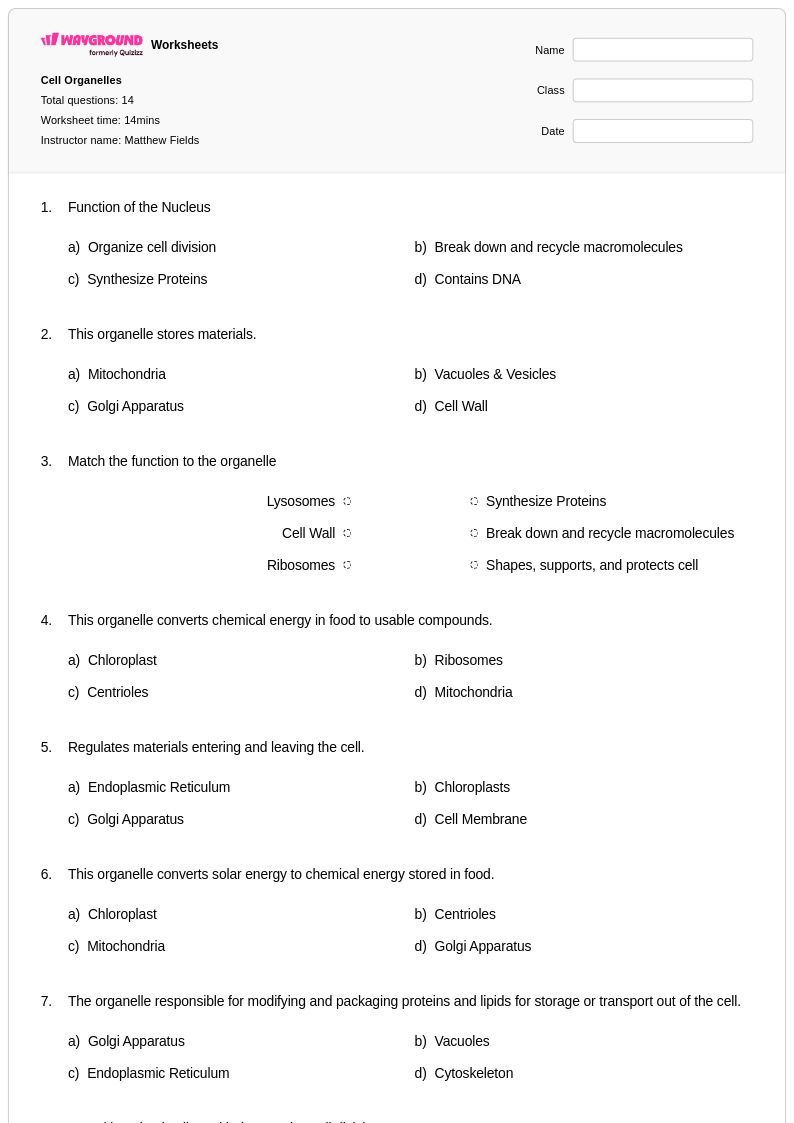
14 Q
10th
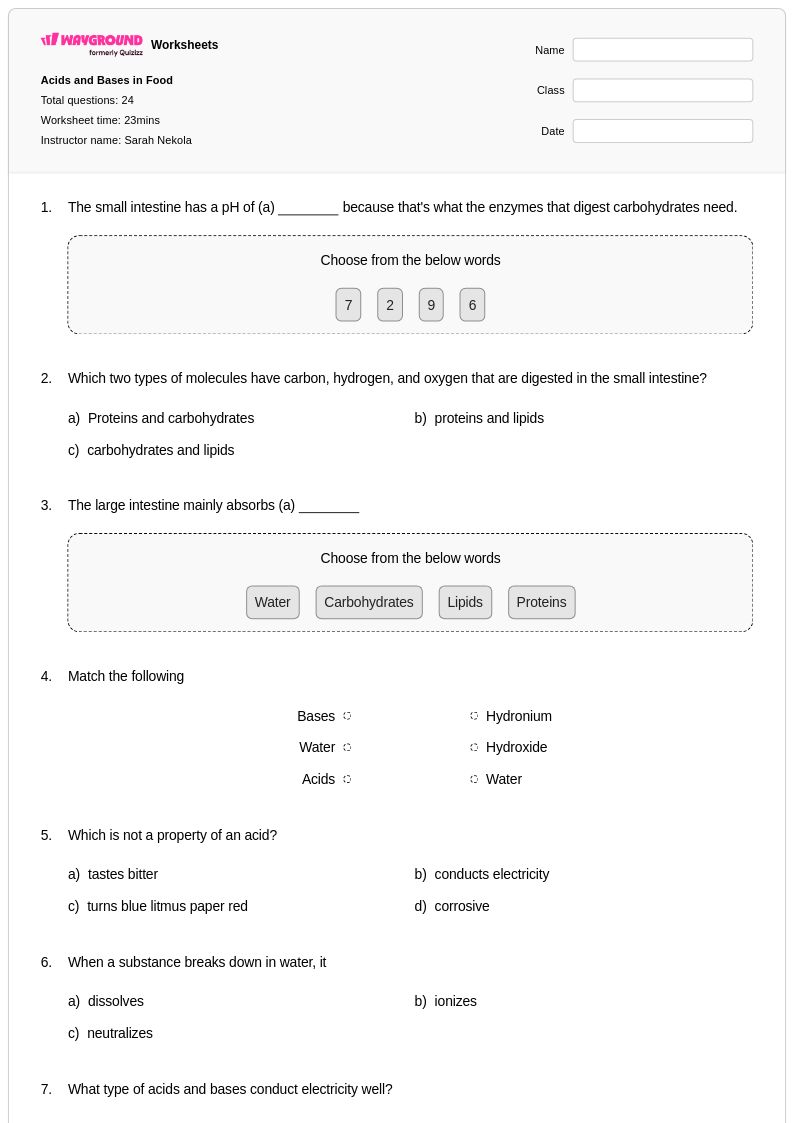
24 Q
10th
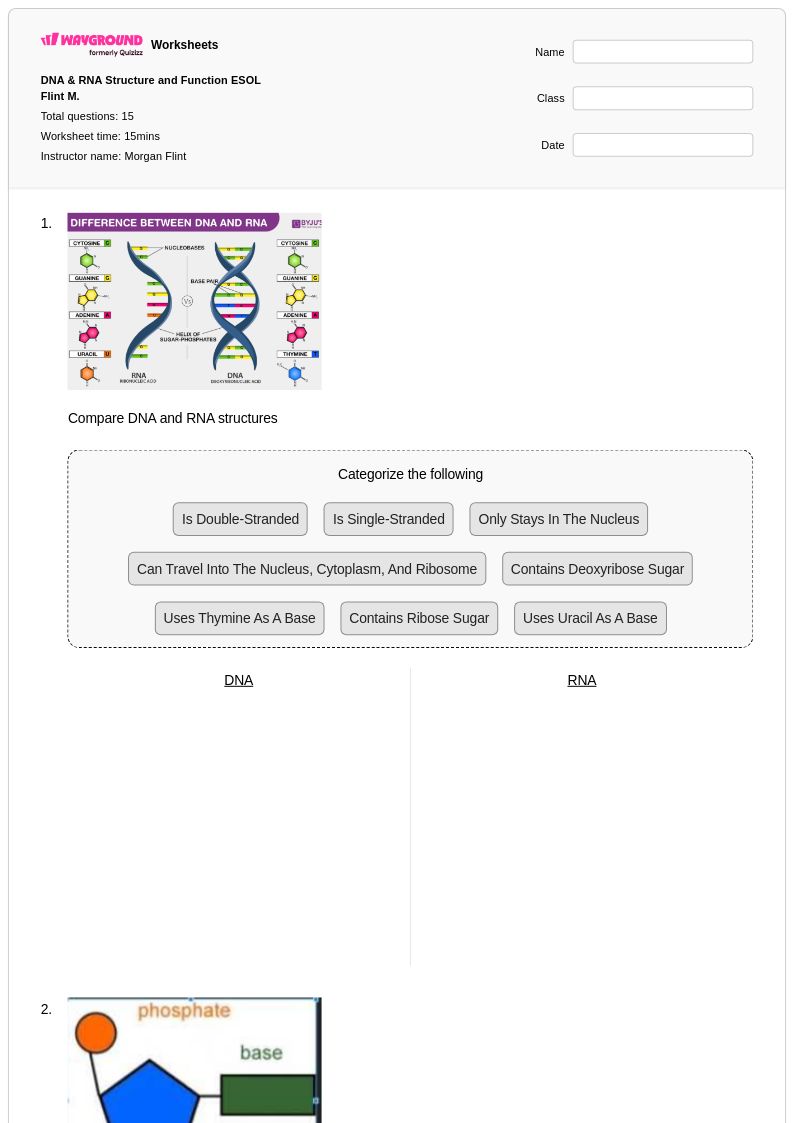
15 Q
10th
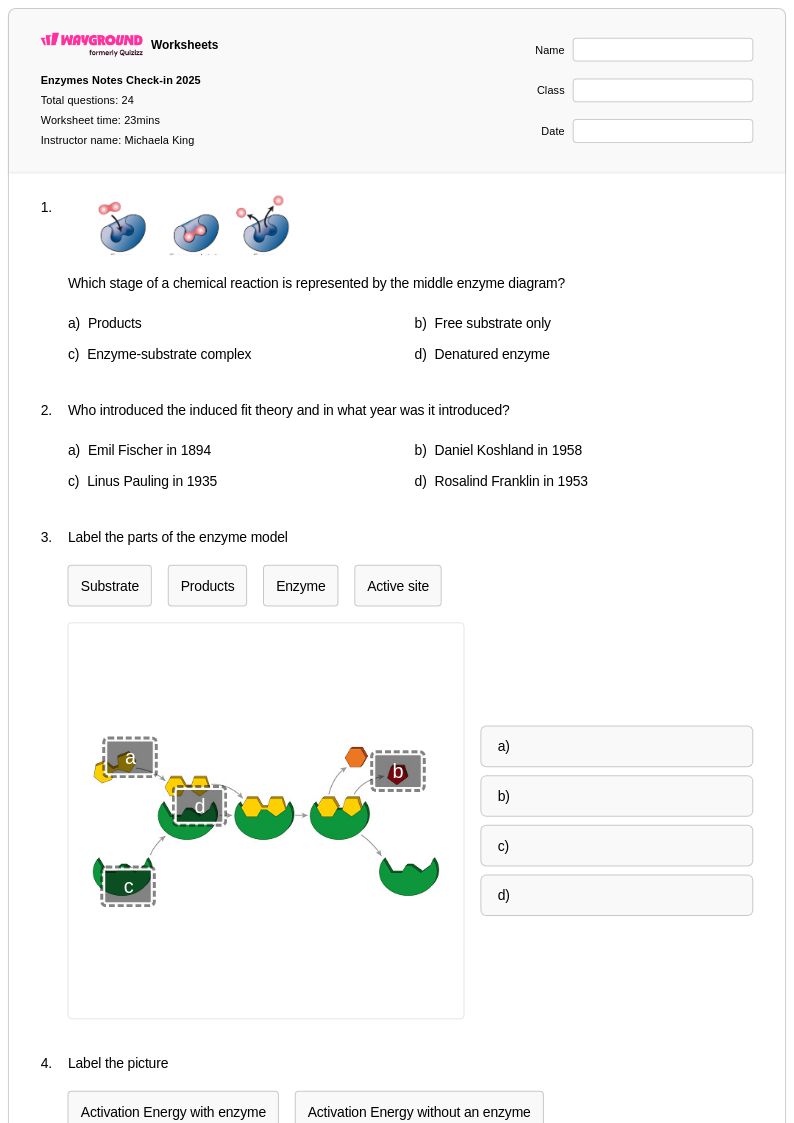
24 Q
9th - Uni
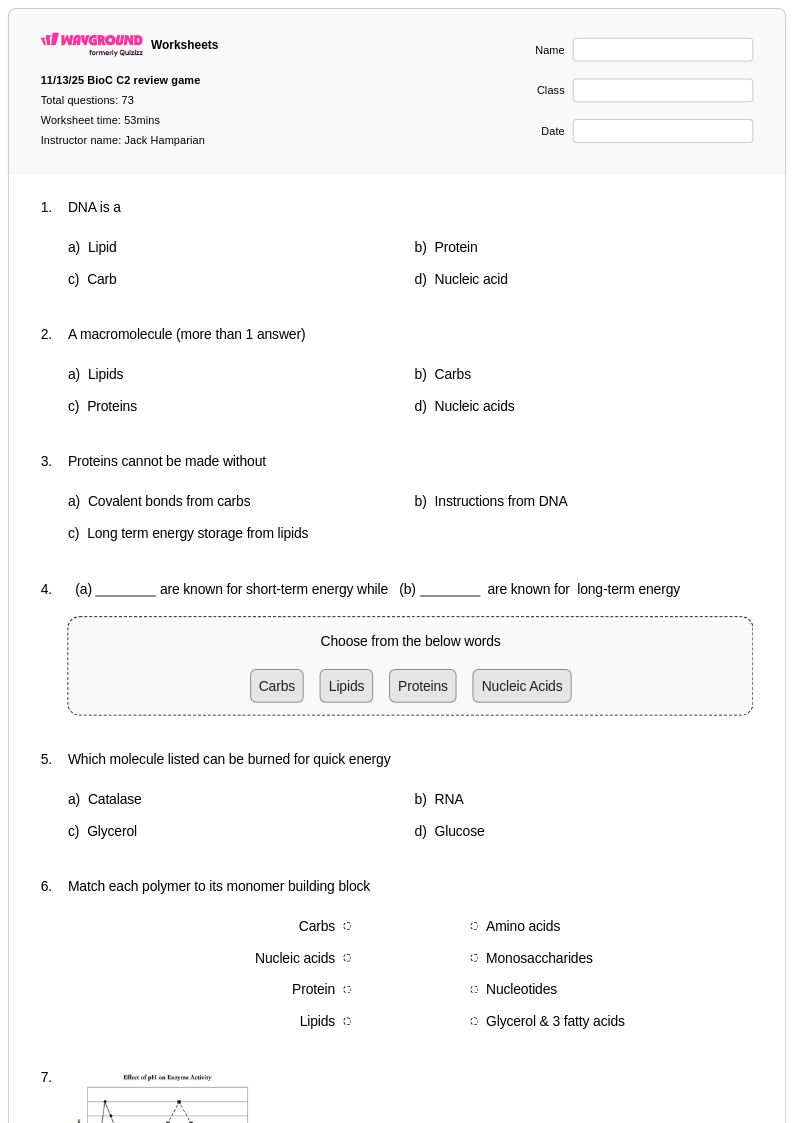
73 Q
10th
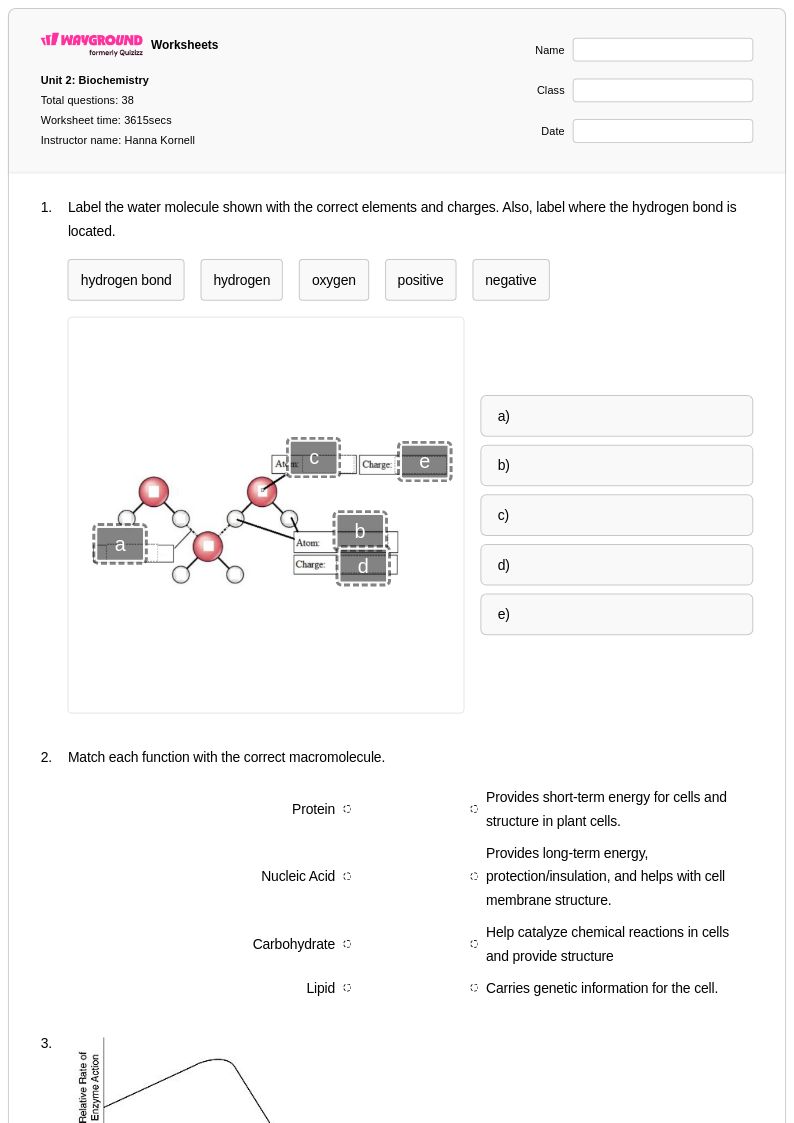
38 Q
9th - 12th
54 Q
9th - 12th
10 Q
9th - 12th
31 Q
10th
12 Q
9th - 12th
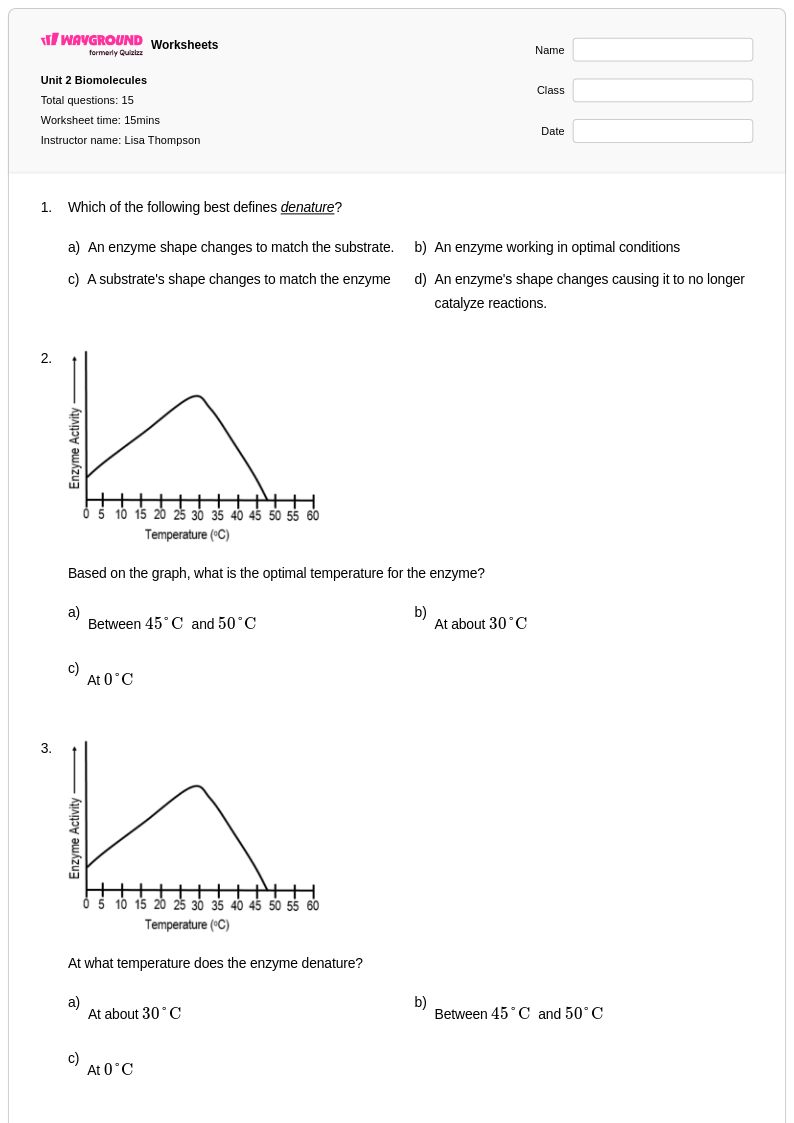
15 Q
10th - Uni
20 Q
10th
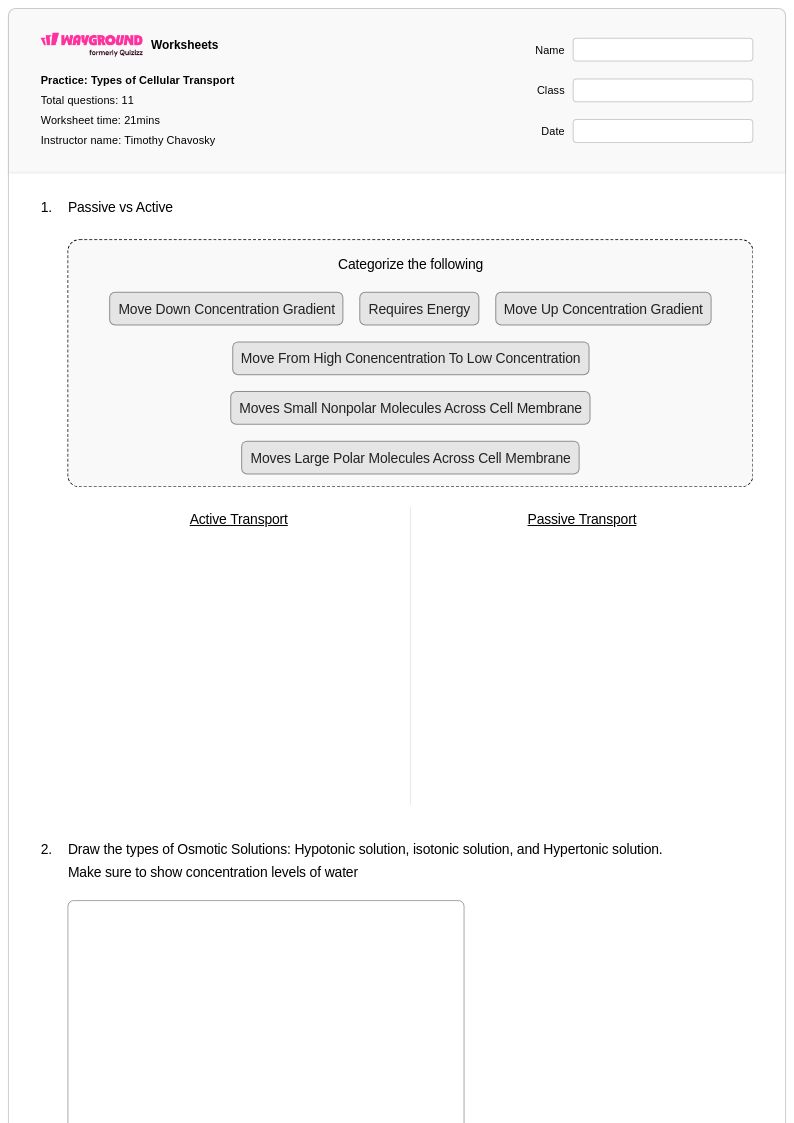
11 Q
9th - 12th
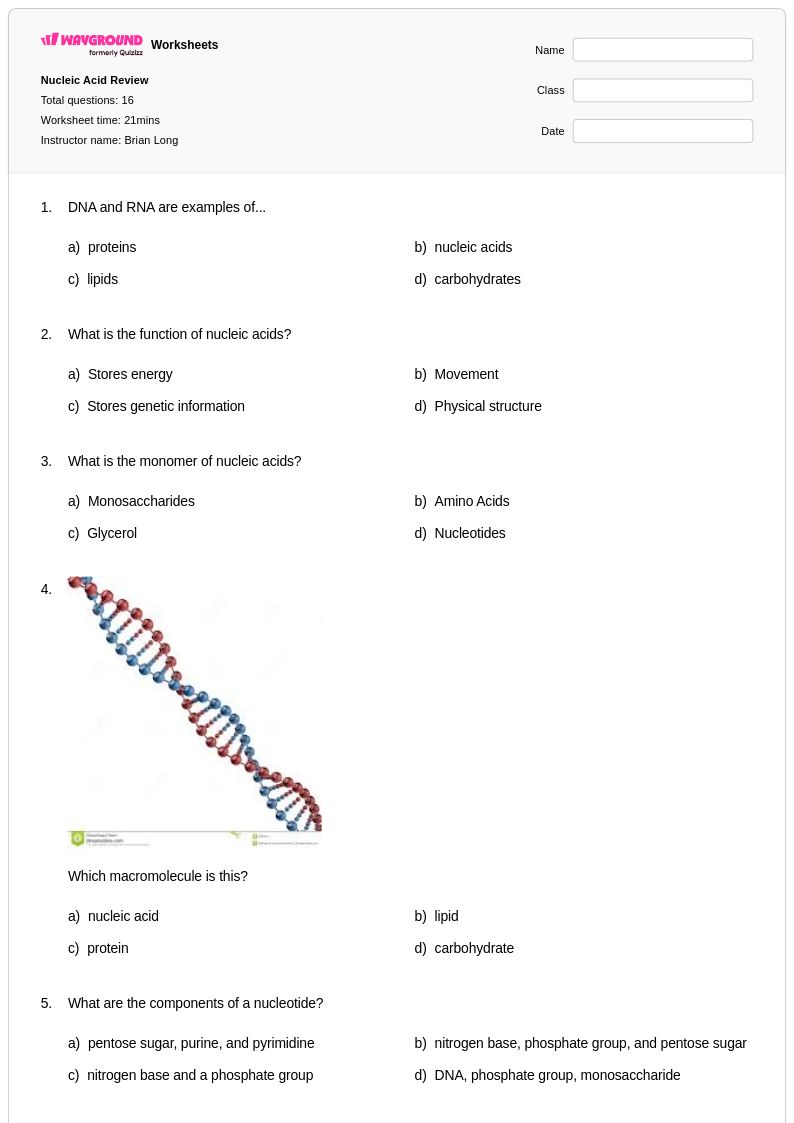
16 Q
10th - 11th
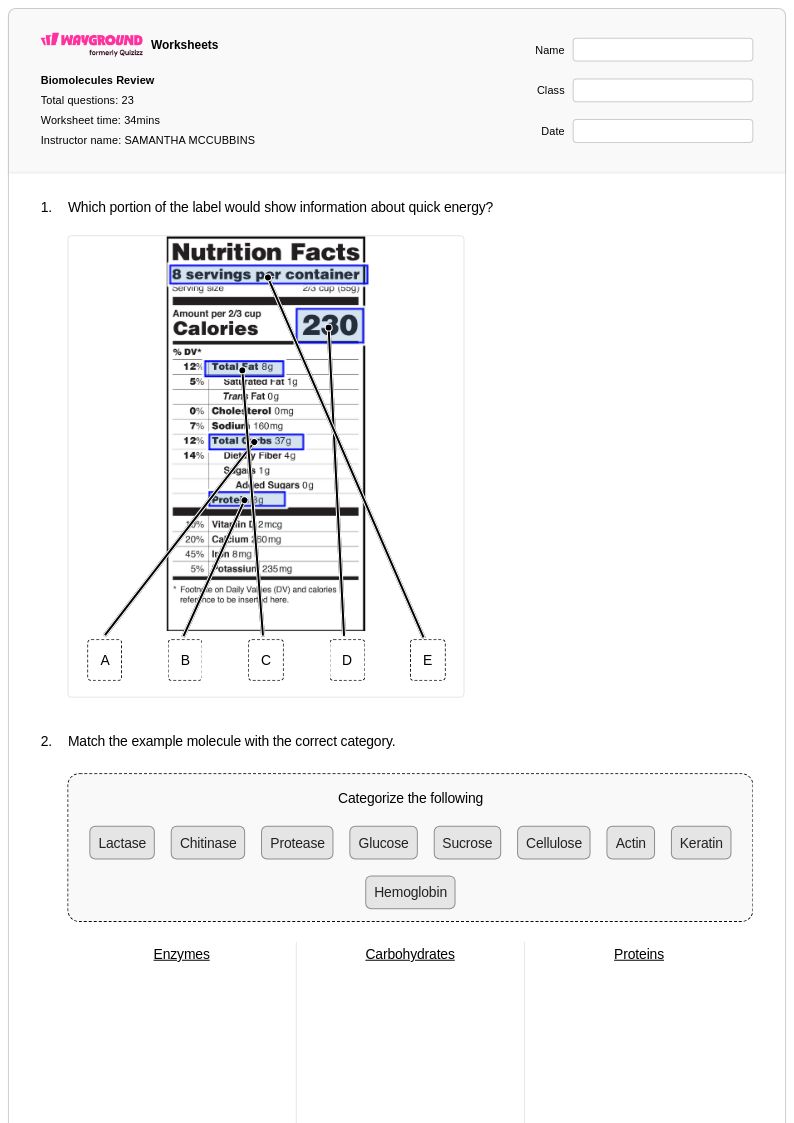
26 Q
9th - 12th
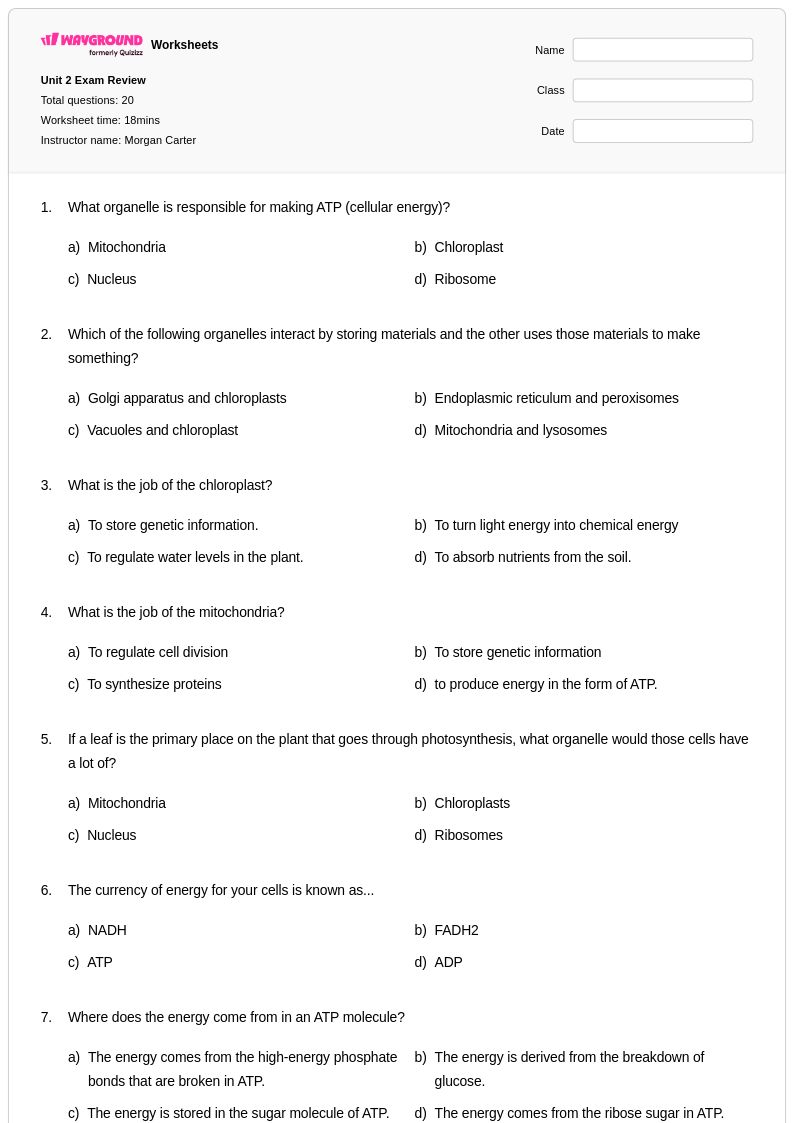
20 Q
9th - 12th
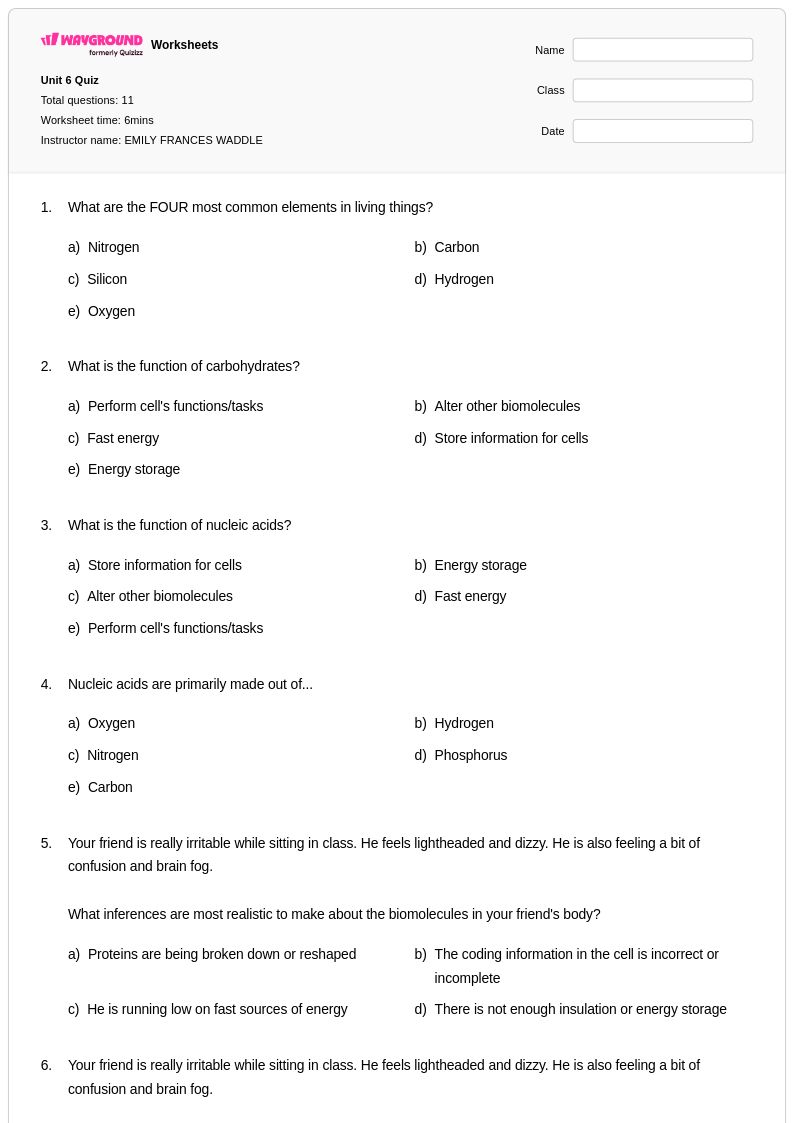
11 Q
9th - 12th
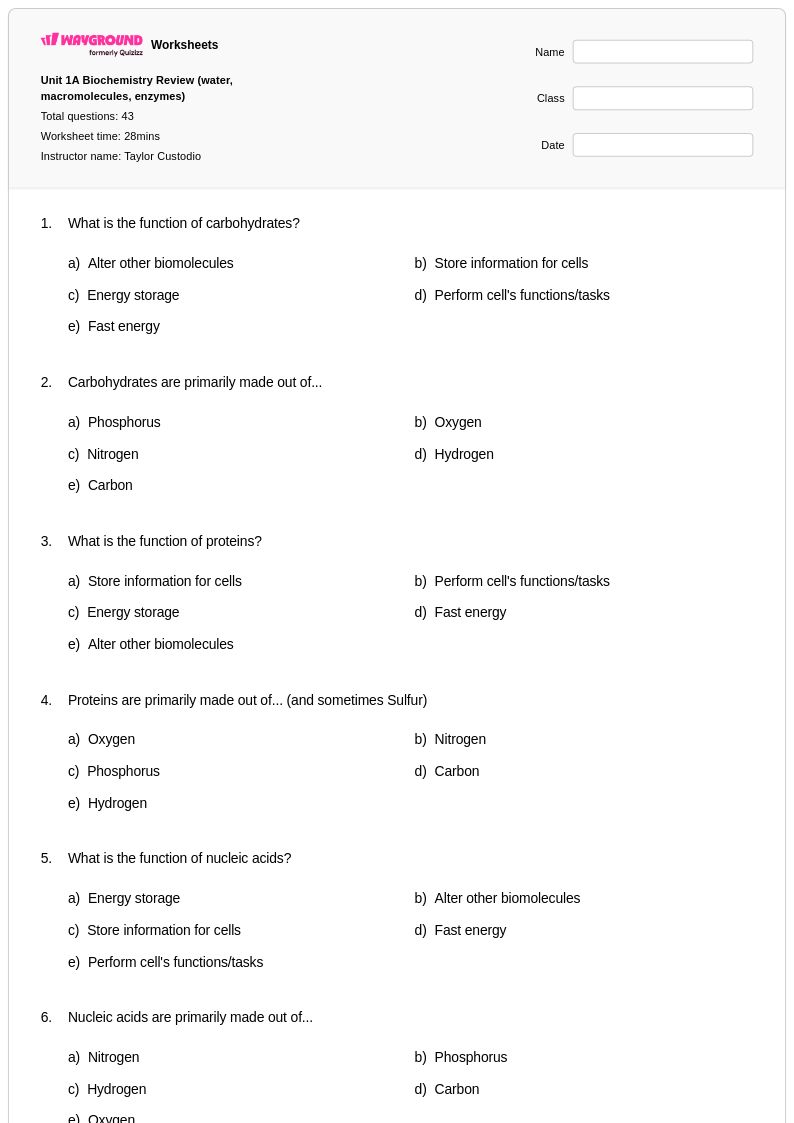
43 Q
9th - 12th
Explore Other Subject Worksheets for grade 10
Explore printable Lipids worksheets for Grade 10
Lipids worksheets for Grade 10 students available through Wayground (formerly Quizizz) provide comprehensive coverage of these essential biomolecules, focusing on their structure, function, and biological significance. These educational resources strengthen students' understanding of fatty acids, triglycerides, phospholipids, and steroids while developing critical analysis skills needed to interpret lipid molecular diagrams and metabolic pathways. The practice problems within these worksheets challenge students to identify different types of lipids, explain their roles in cell membrane structure, energy storage, and signaling processes, while also examining the relationship between lipid structure and function. Each worksheet includes detailed answer keys that support independent learning and self-assessment, with free printables available in pdf format to accommodate various classroom and homework applications.
Wayground (formerly Quizizz) supports educators with an extensive collection of teacher-created lipids worksheets, drawing from millions of high-quality resources that can be easily accessed through advanced search and filtering capabilities. The platform's standards-aligned content ensures that Grade 10 lipids instruction meets curriculum requirements while offering differentiation tools that allow teachers to customize worksheets based on individual student needs and learning objectives. These flexible resources are available in both printable and digital formats, including downloadable pdfs, making them ideal for diverse instructional approaches from traditional classroom settings to hybrid and remote learning environments. Teachers can efficiently plan lessons, provide targeted remediation for struggling students, offer enrichment opportunities for advanced learners, and deliver consistent skill practice that reinforces understanding of lipid chemistry and biological functions.