
Recommended Topics for you
22 Q
9th - 12th
20 Q
9th - 12th
10 Q
8th - 11th
9 Q
11th
25 Q
9th - 12th
20 Q
10th - Uni
22 Q
9th - 12th
10 Q
9th - 12th
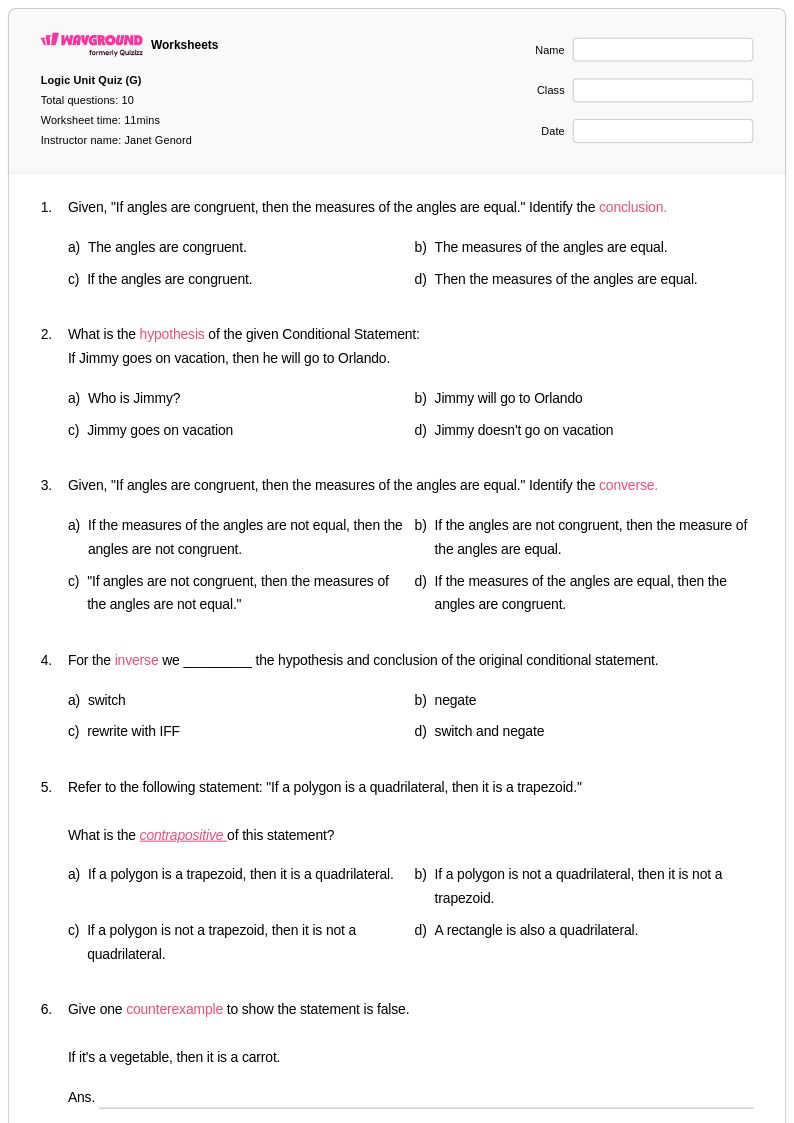
10 Q
8th - 11th
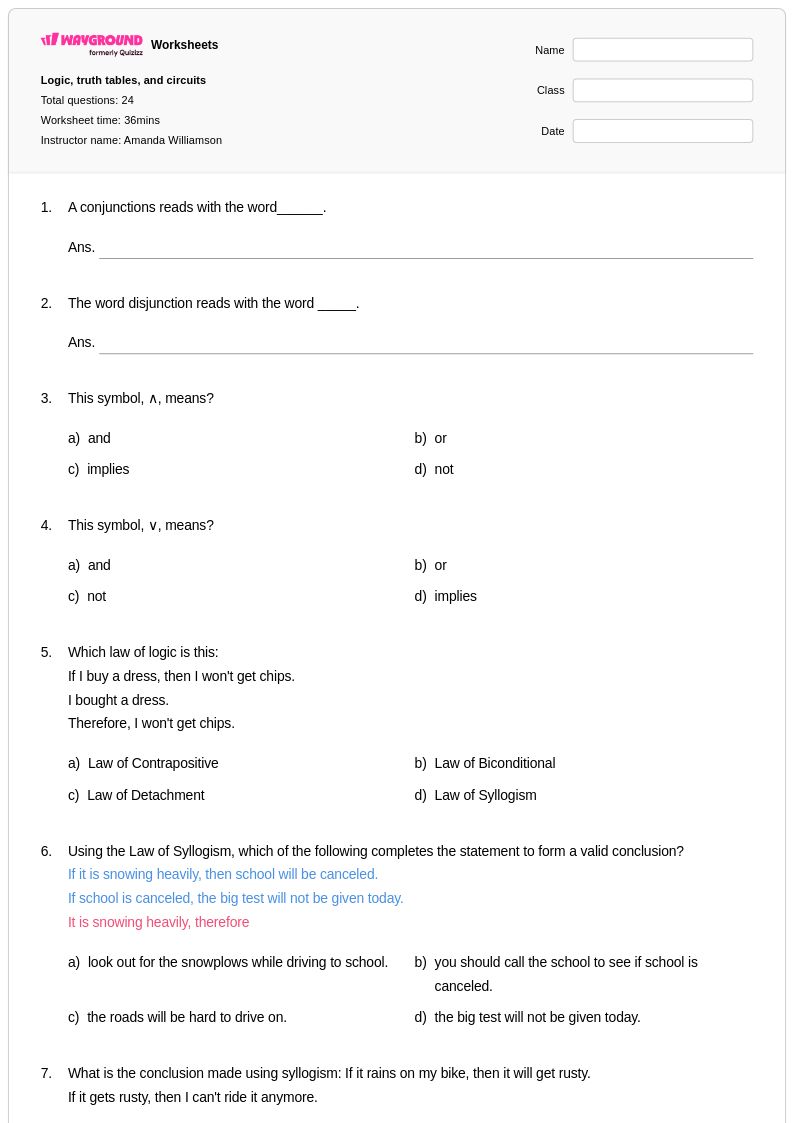
24 Q
7th - 11th
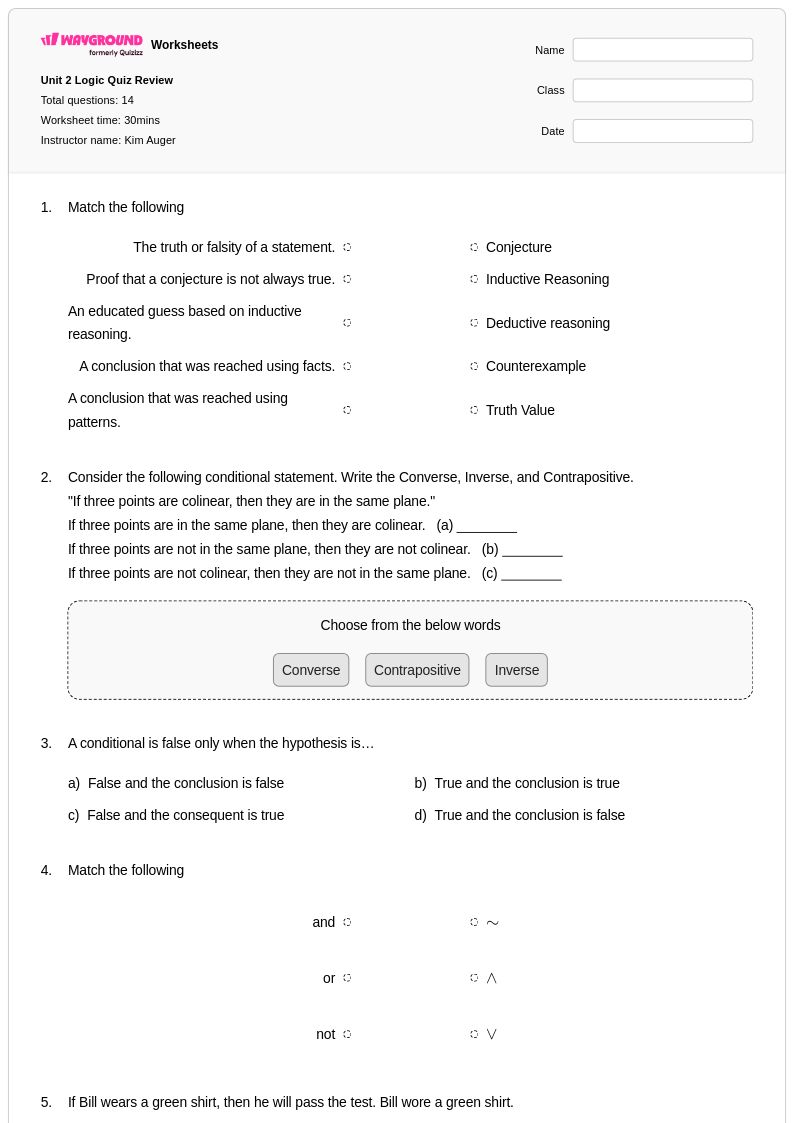
14 Q
9th - 12th
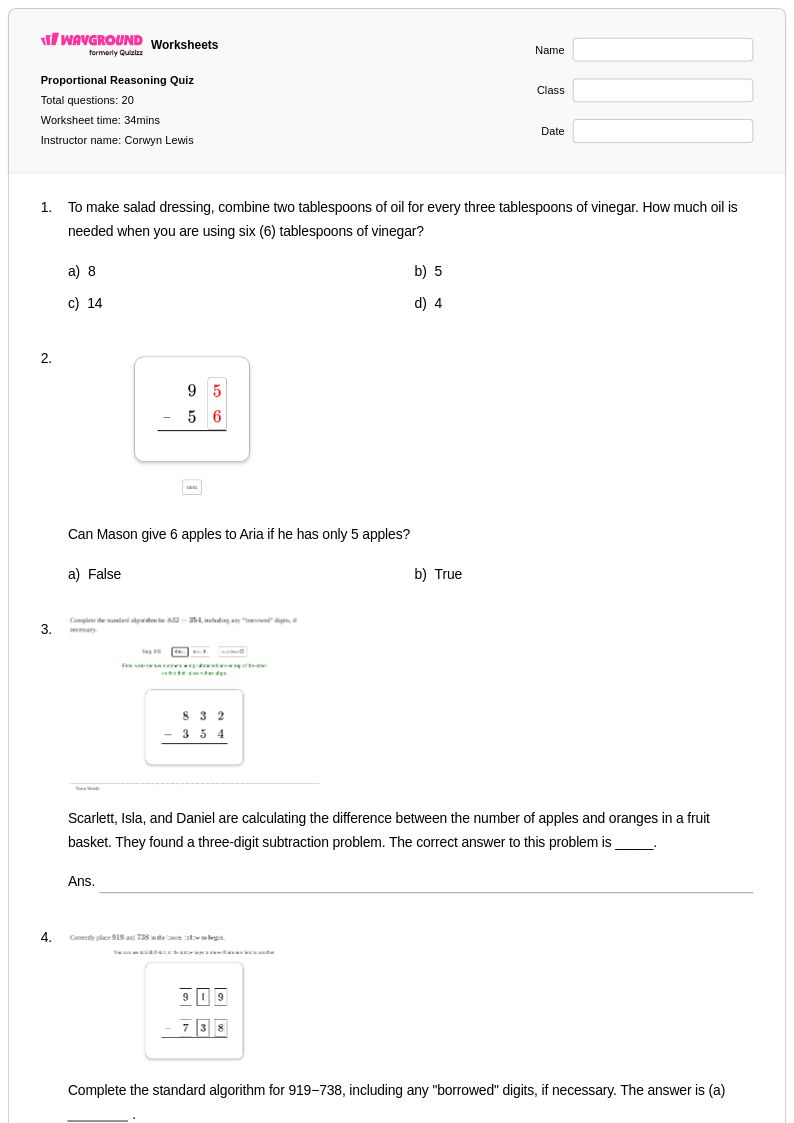
20 Q
11th
15 Q
8th - 11th
21 Q
9th - 12th
15 Q
9th - 12th
13 Q
9th - Uni
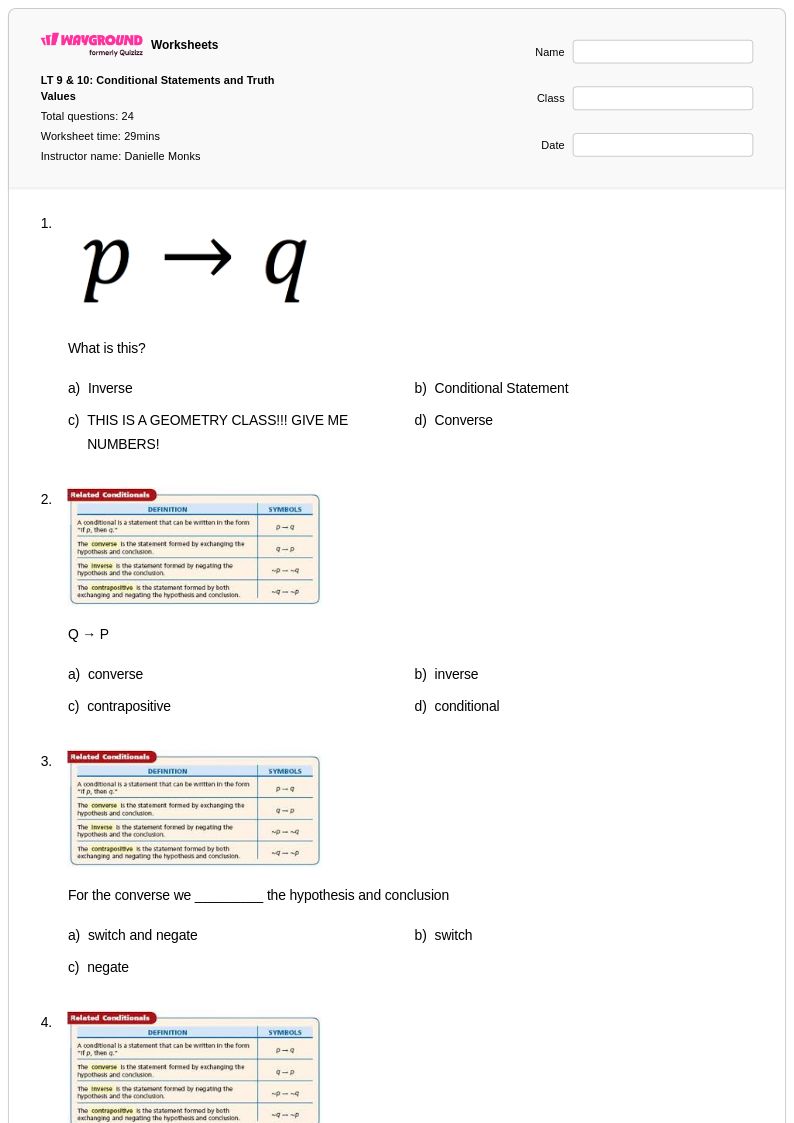
24 Q
9th - 12th
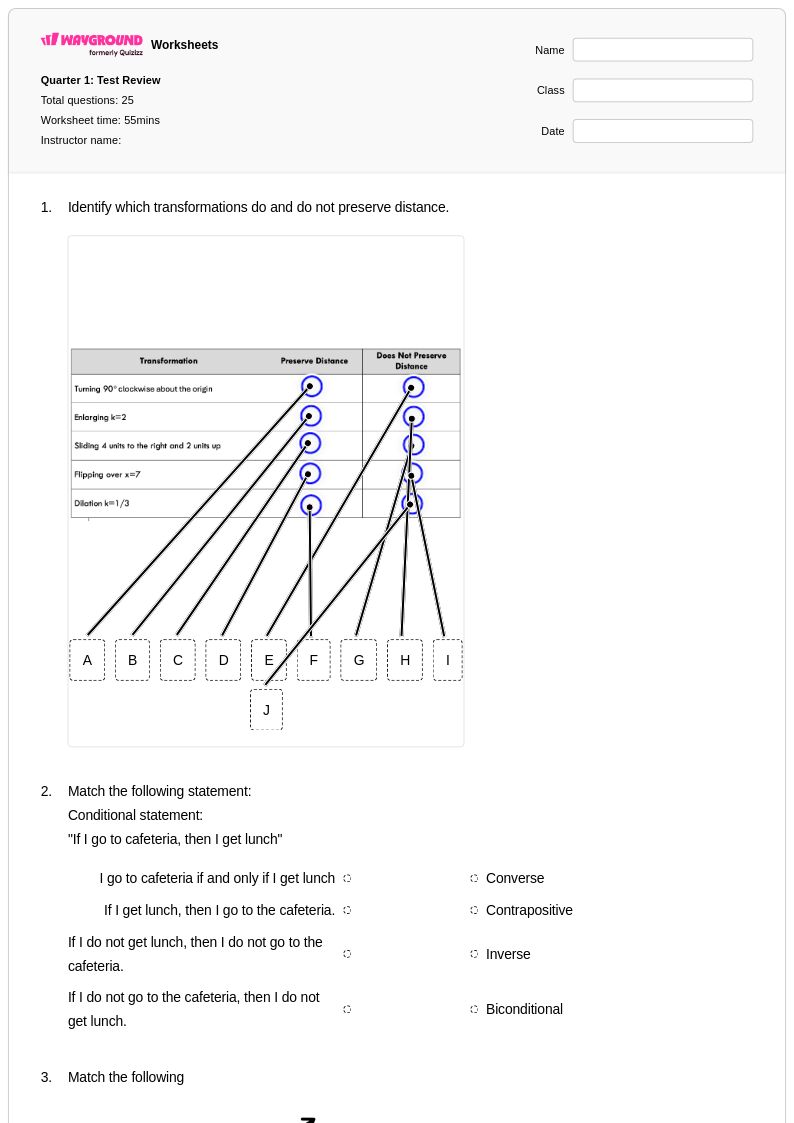
25 Q
9th - 12th
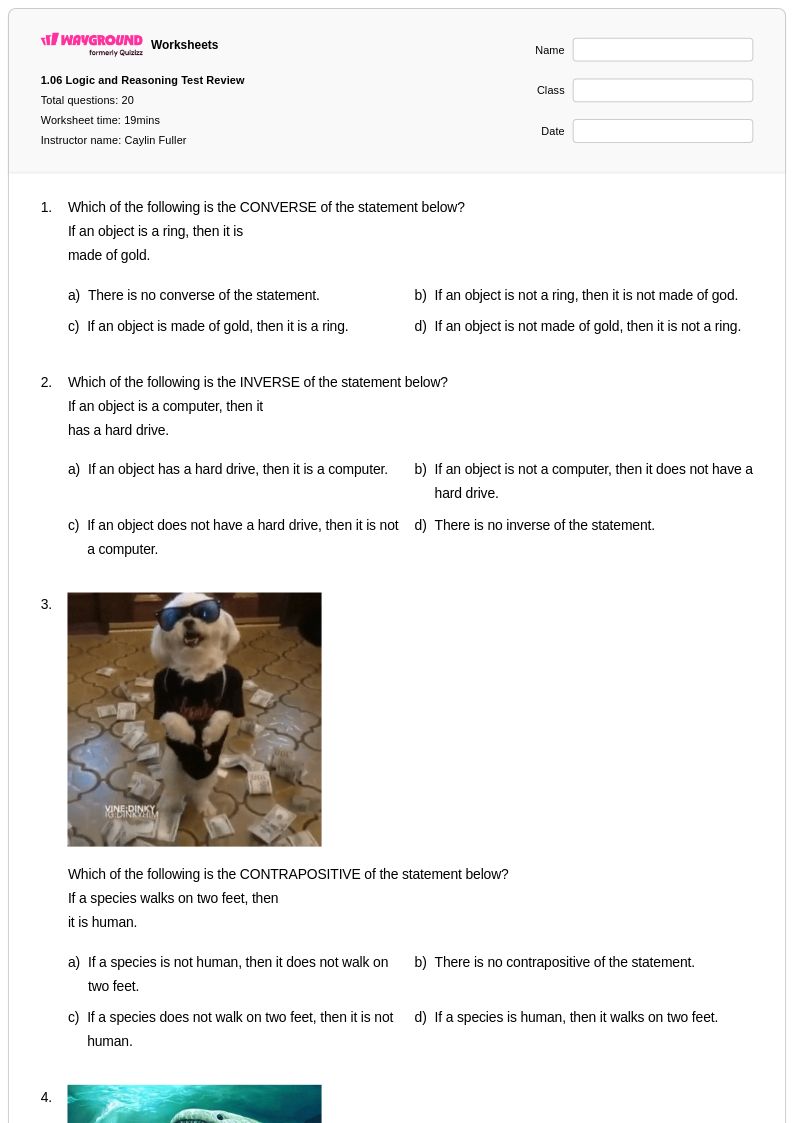
20 Q
9th - 12th
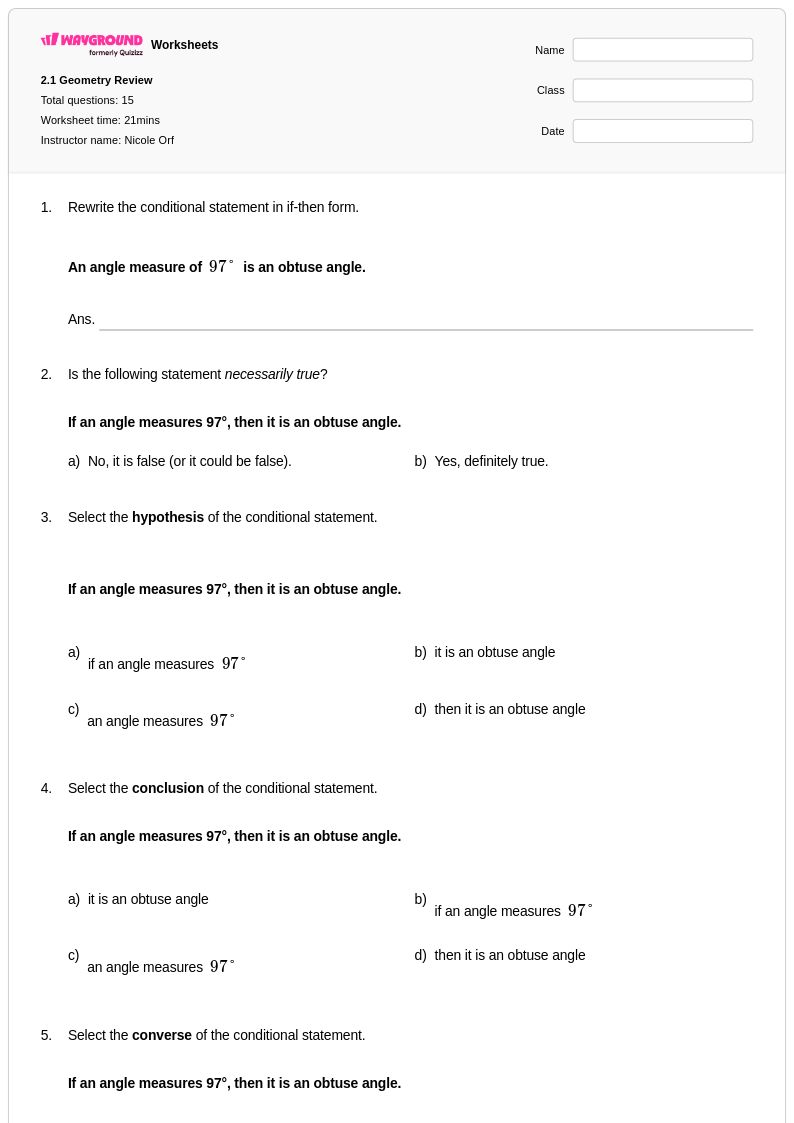
15 Q
10th - 12th
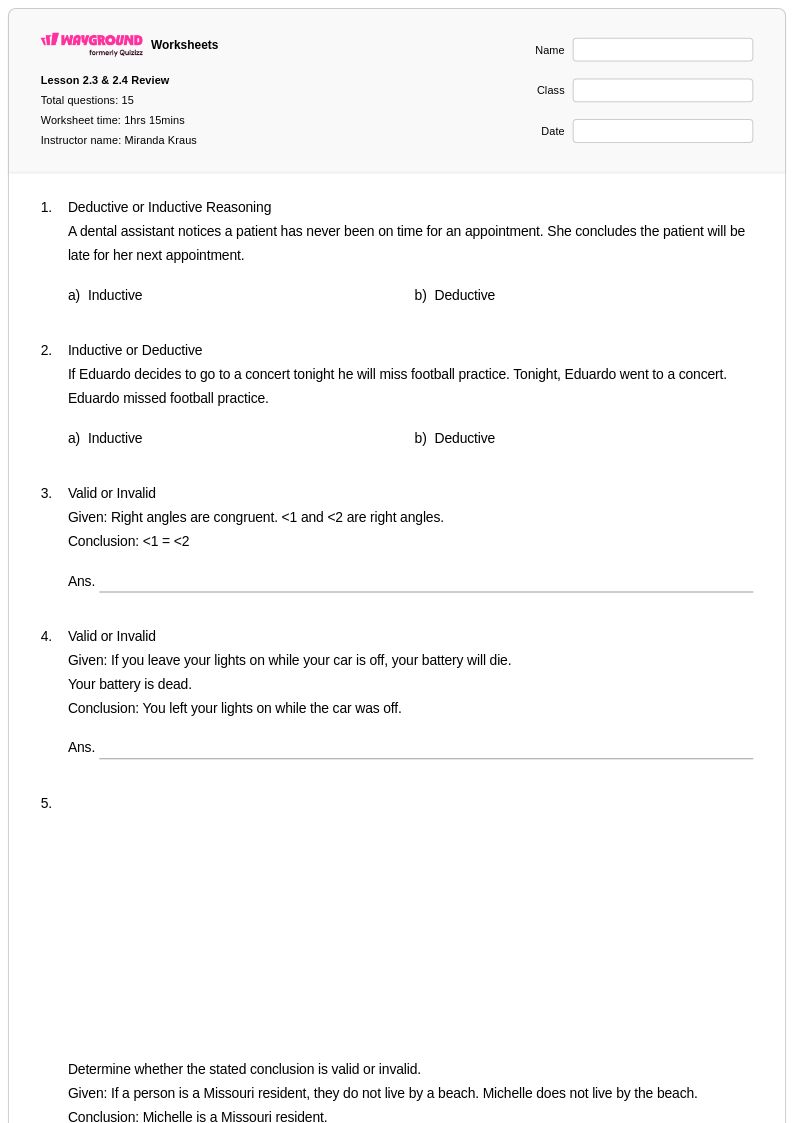
15 Q
11th
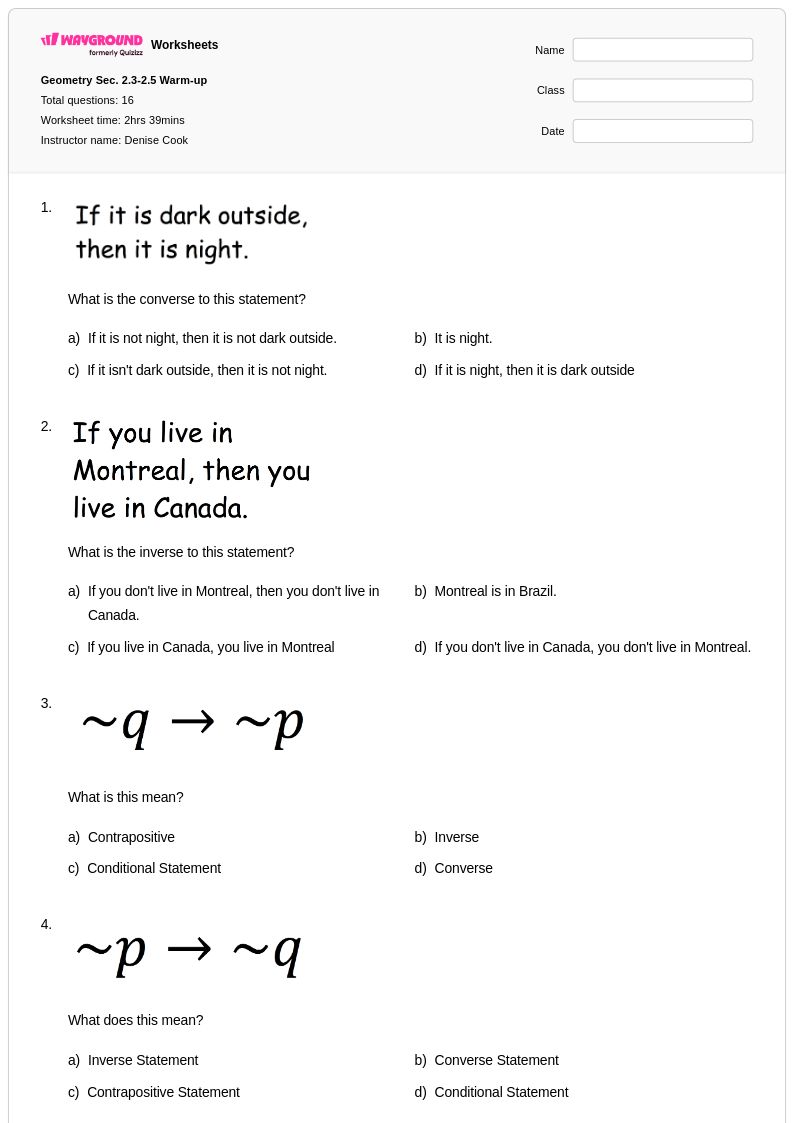
16 Q
9th - 12th
82 Q
9th - 12th
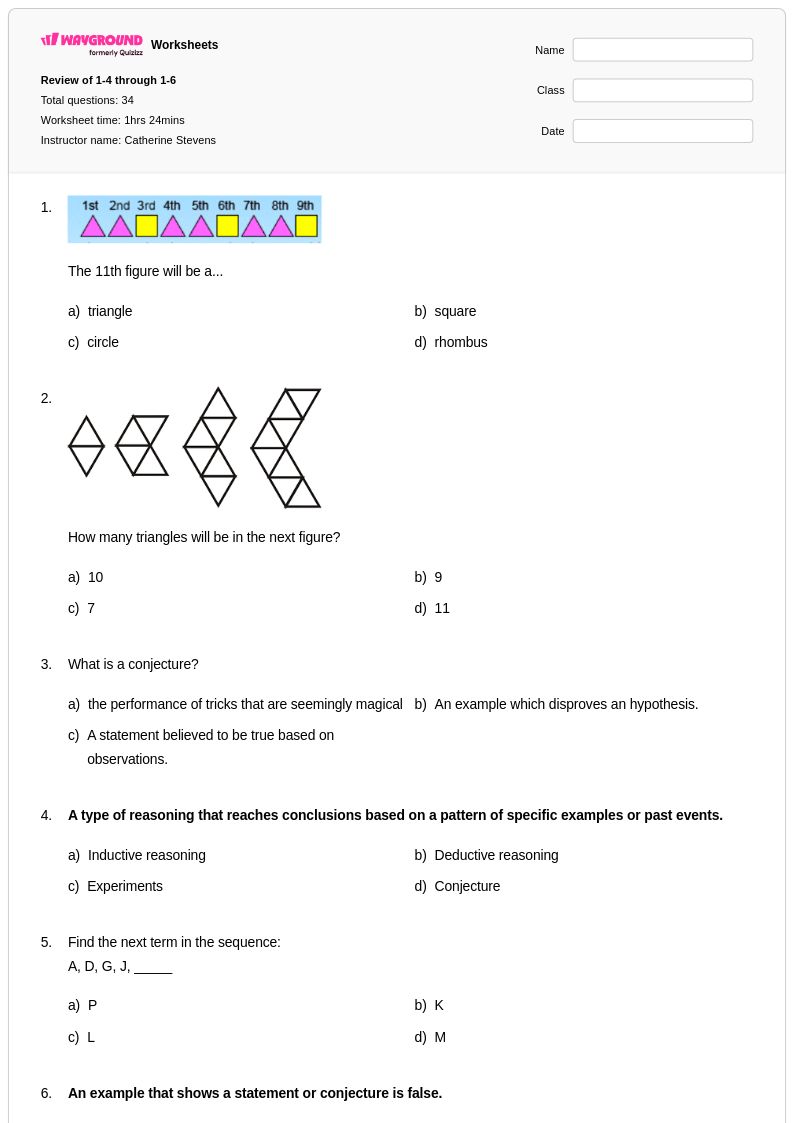
34 Q
9th - 12th
Explore Logic and Reasoning Worksheets by Grades
Explore Logic and Reasoning Worksheets for grade 11 by Topic
Explore Other Subject Worksheets for grade 11
Explore printable Logic and Reasoning worksheets for Grade 11
Logic and reasoning worksheets for Grade 11 mathematics available through Wayground (formerly Quizizz) provide students with comprehensive practice in critical thinking skills essential for advanced mathematical problem-solving. These carefully designed resources focus on developing students' abilities to construct valid arguments, identify logical fallacies, analyze conditional statements, and work with mathematical proof techniques including direct proof, indirect proof, and proof by contradiction. Each worksheet collection includes detailed answer keys that guide students through complex reasoning processes, while printable pdf formats ensure accessibility for both classroom and independent study. The practice problems progressively build students' competency in symbolic logic, truth tables, logical connectives, and the application of deductive and inductive reasoning methods that form the foundation for higher-level mathematics courses.
Wayground's extensive library contains millions of teacher-created logic and reasoning resources specifically tailored for Grade 11 mathematics instruction, offering educators powerful search and filtering capabilities to locate materials aligned with curriculum standards and individual classroom needs. The platform's differentiation tools enable teachers to customize worksheet difficulty levels and modify problem sets to accommodate diverse learning styles and academic readiness levels within their classrooms. Available in both printable and digital pdf formats, these comprehensive worksheet collections support flexible lesson planning while providing targeted resources for remediation, enrichment, and systematic skill practice. Teachers can seamlessly integrate these logic and reasoning materials into their instructional sequences, ensuring students develop the analytical thinking skills necessary for success in advanced mathematics, computer science, and other STEM disciplines that rely heavily on logical reasoning abilities.
FAQs
How should I teach logic and reasoning in Grade 11 math?
What are effective practice activities for Grade 11 mathematical reasoning?
Why do Grade 11 students struggle with truth tables and logical arguments?
How do I assign these Grade 11 logic and reasoning worksheets?
Are Grade 11 logic and reasoning worksheets aligned with Common Core math?
How can I support Grade 11 students who find symbolic logic difficult?
What level of logic and reasoning is taught in Grade 11?