
12Q
2nd - 4th
12Q
2nd - 4th
13Q
1st - 4th
20Q
1st - 5th
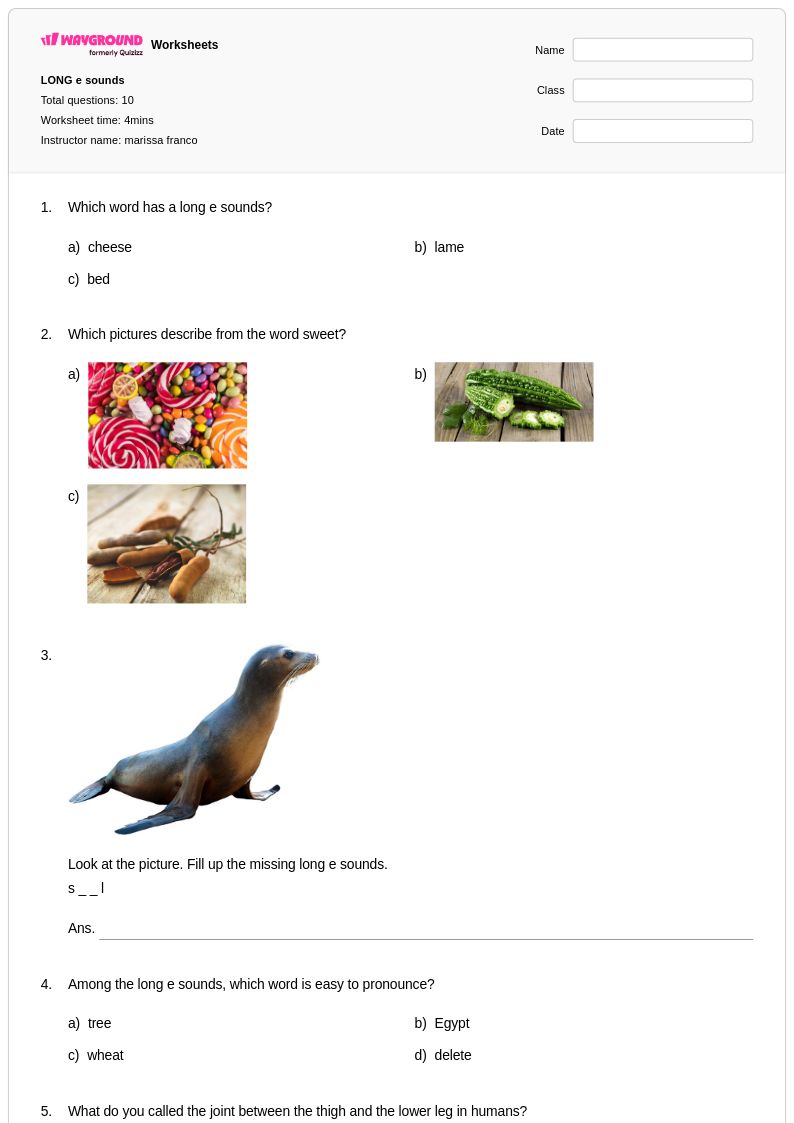
10Q
2nd
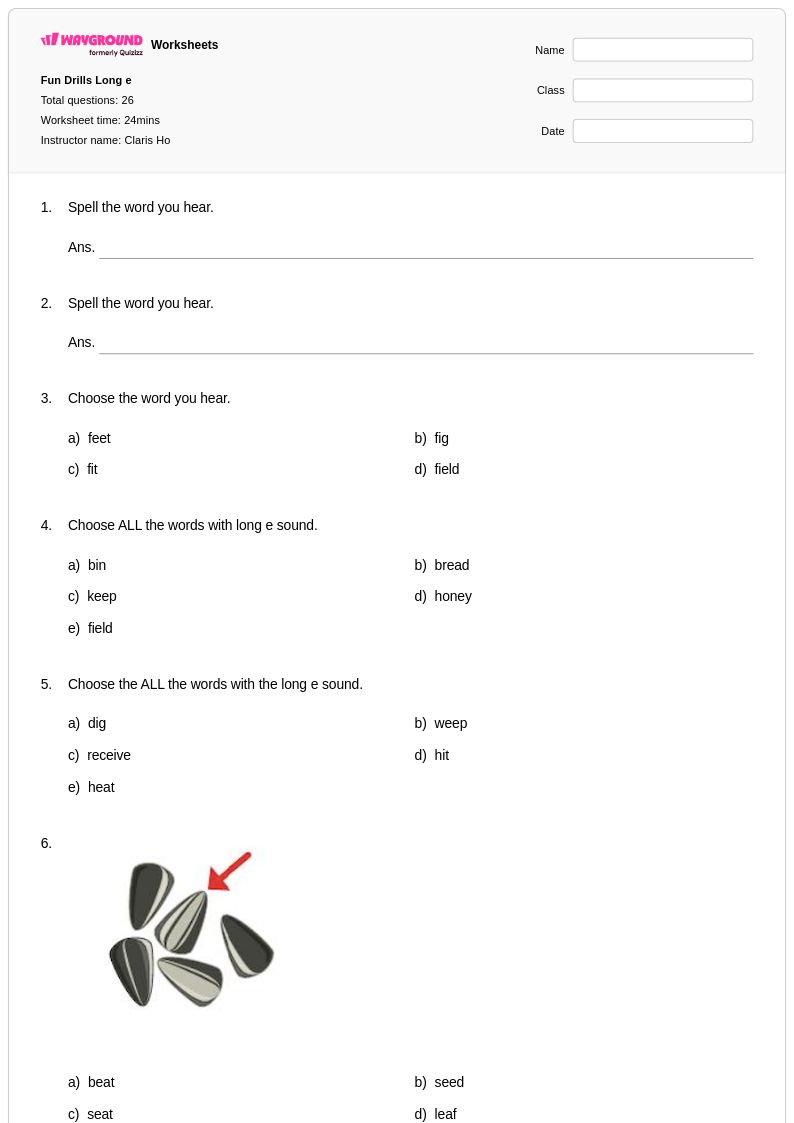
26Q
2nd
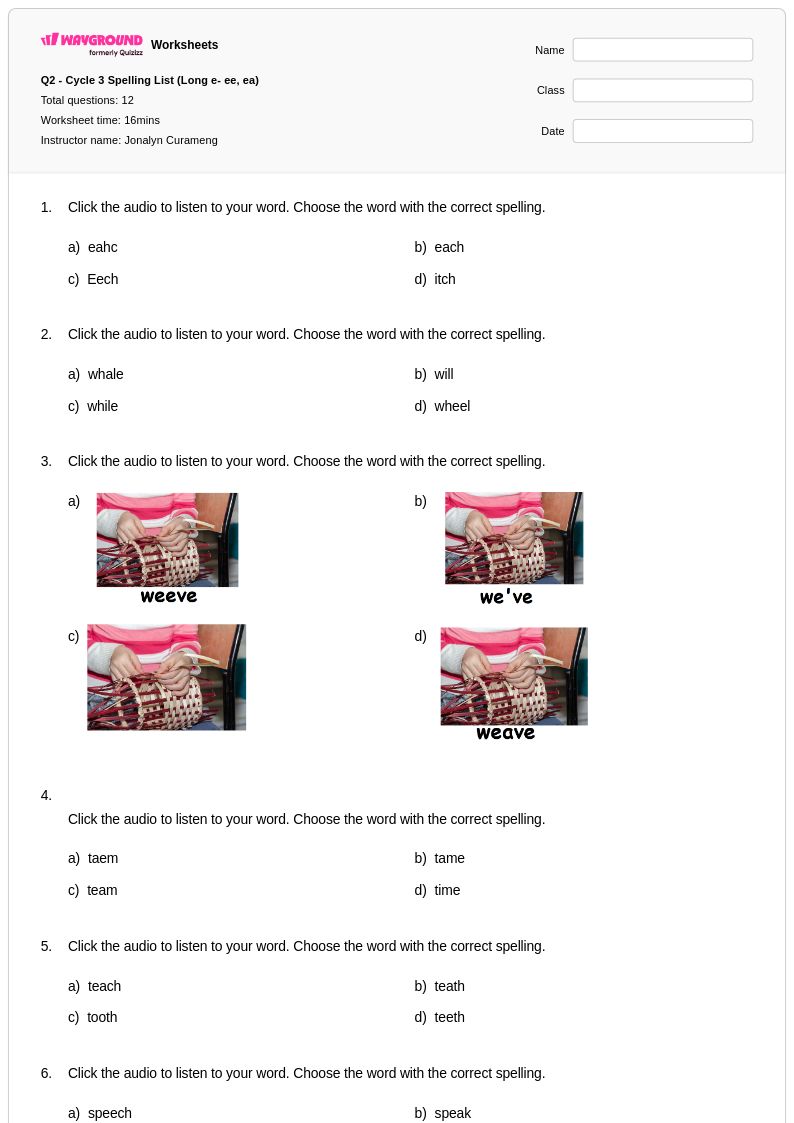
12Q
2nd
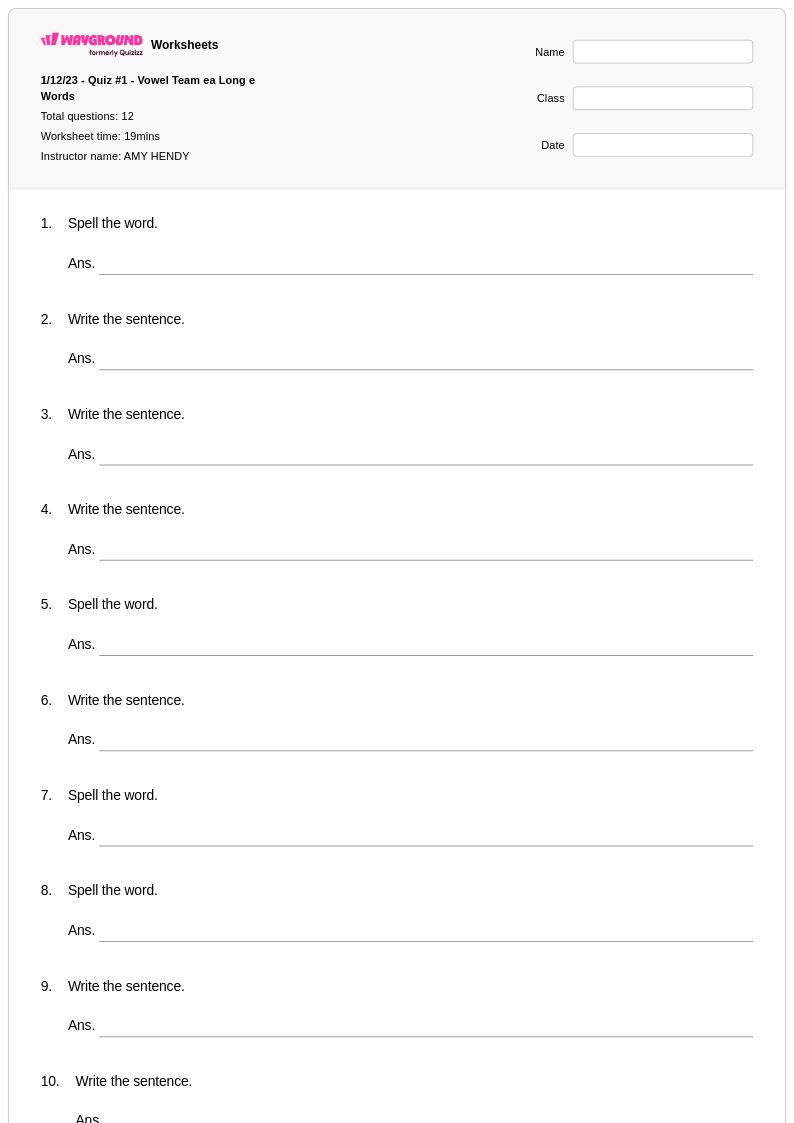
12Q
1st - 5th
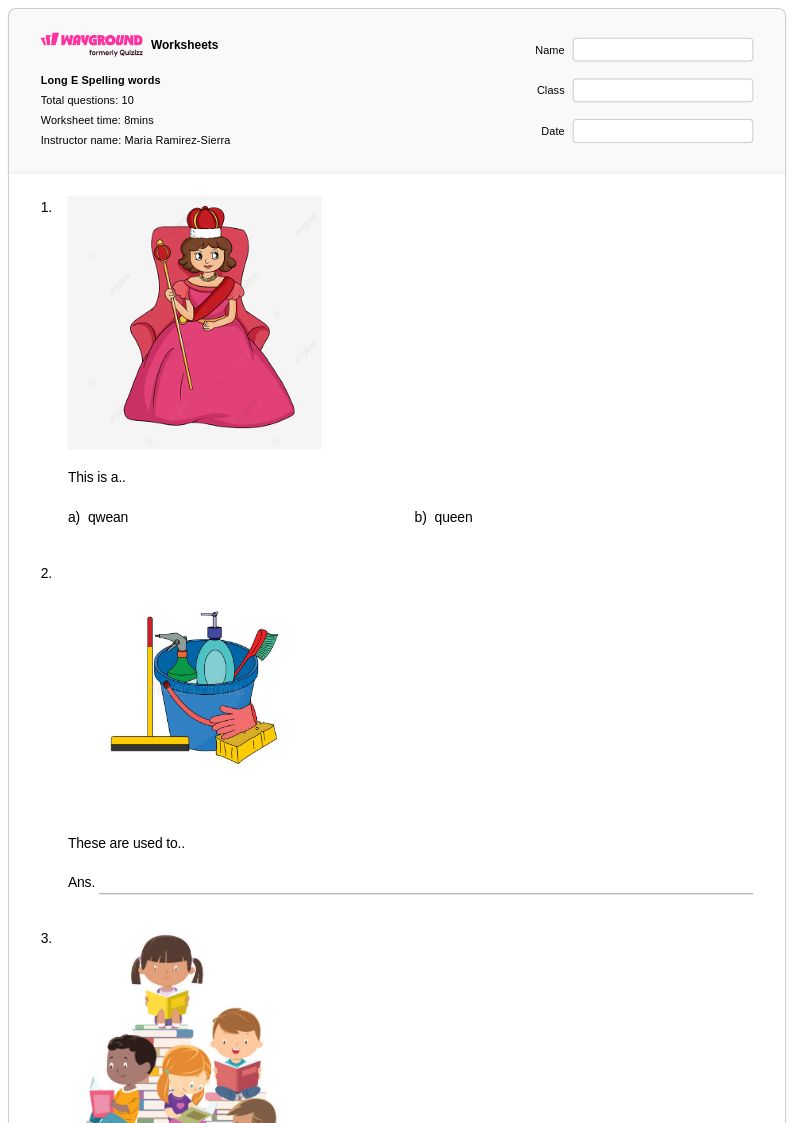
10Q
2nd
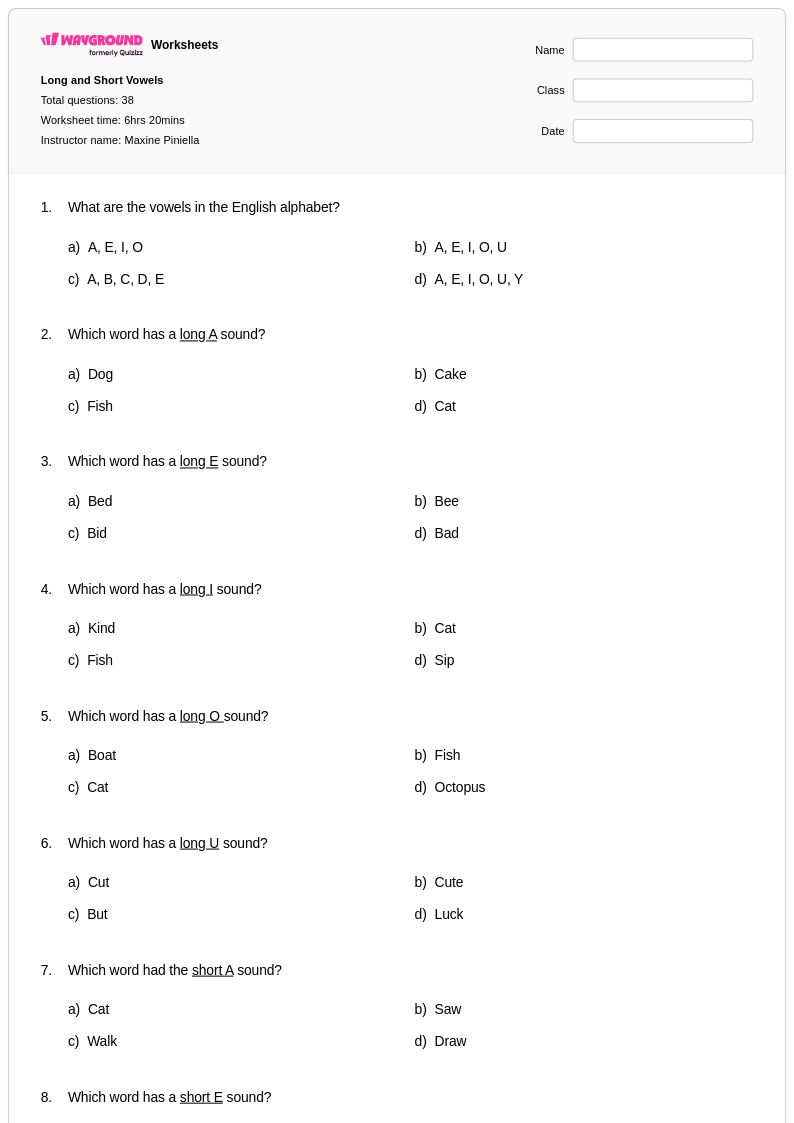
38Q
1st - 5th
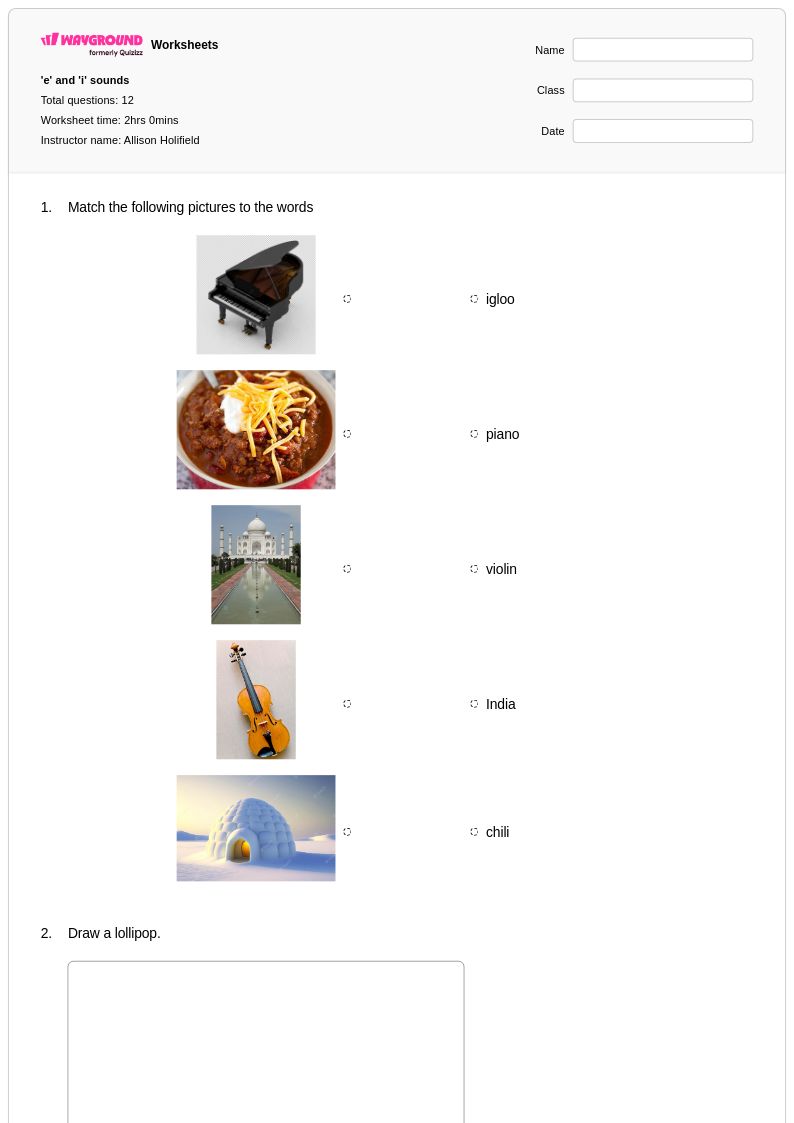
12Q
2nd
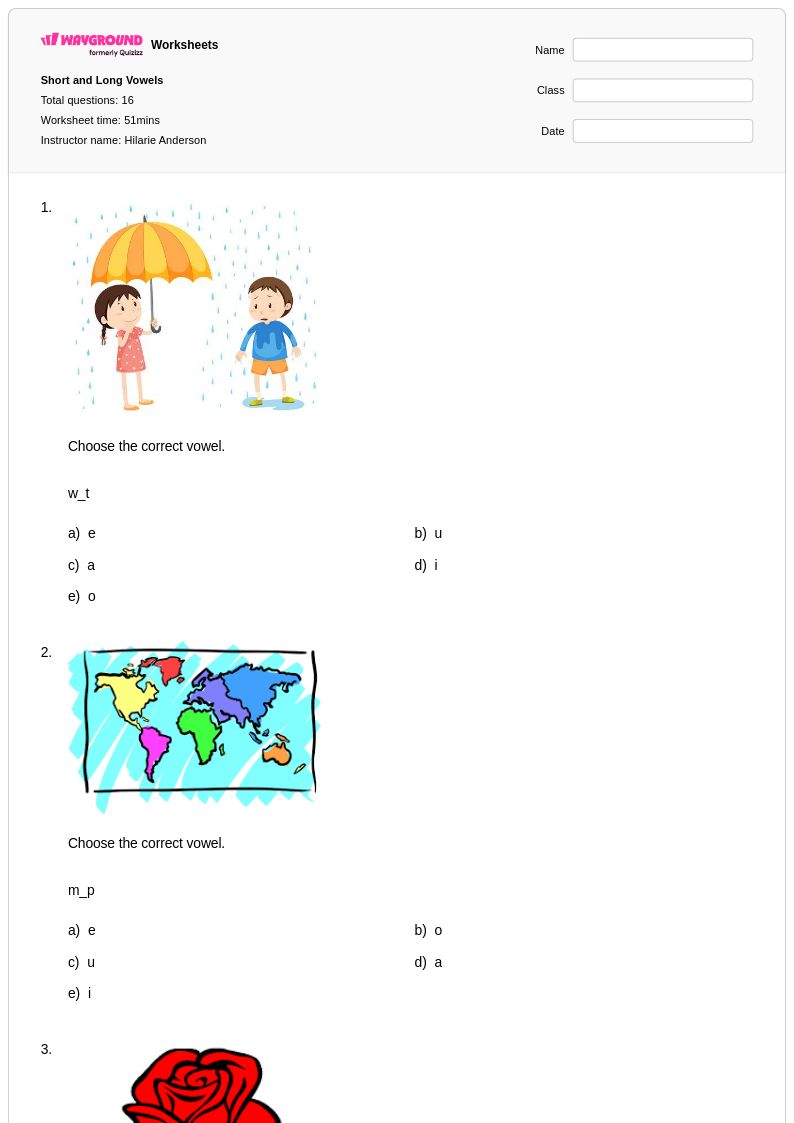
18Q
1st - Uni
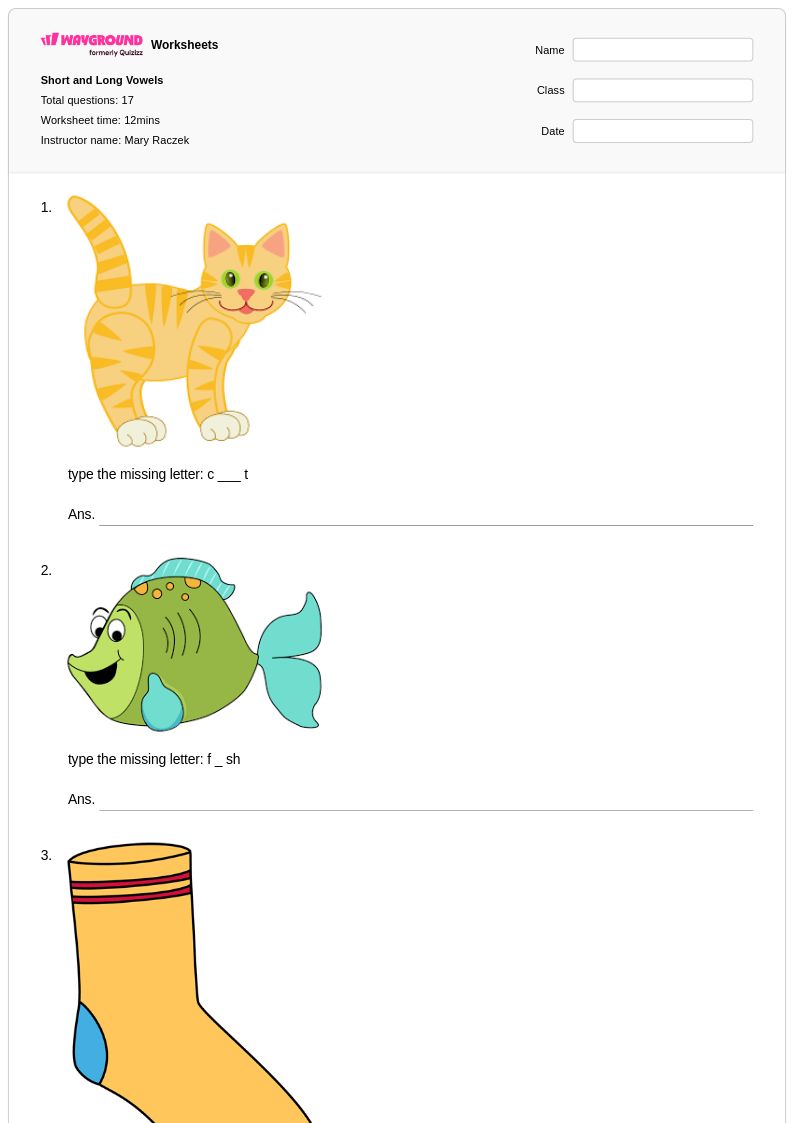
17Q
1st - 2nd
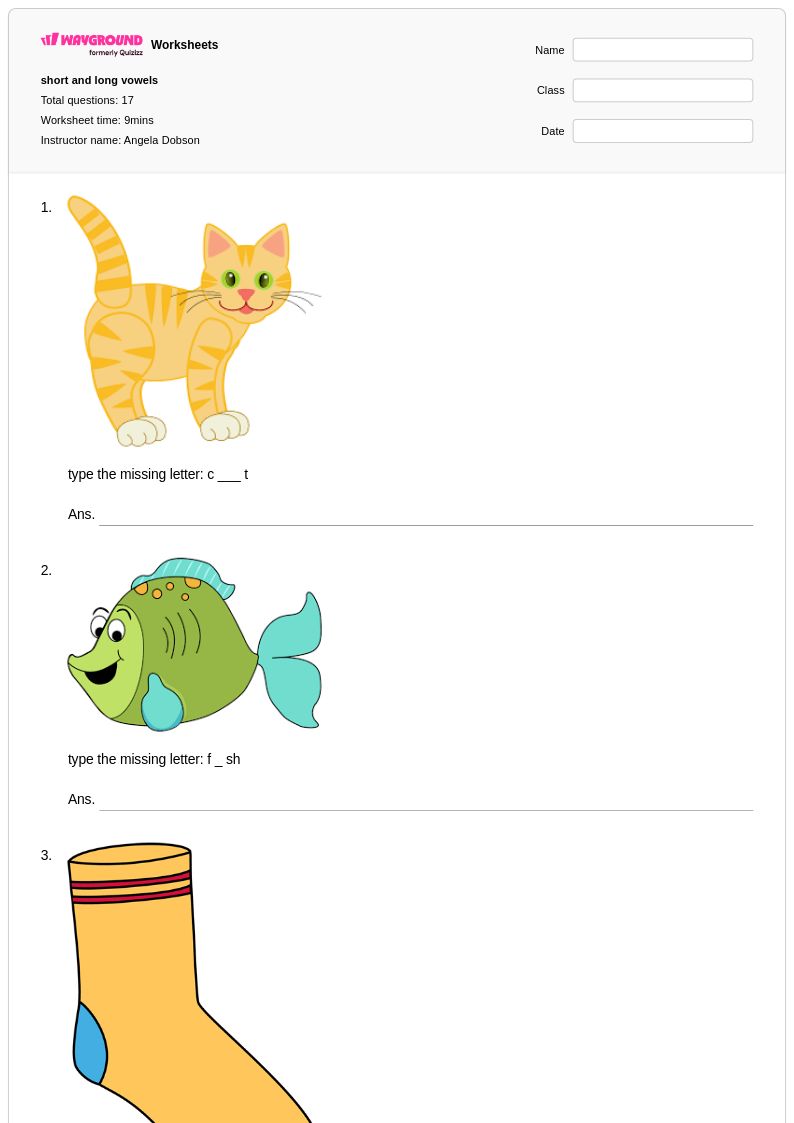
17Q
1st - 3rd
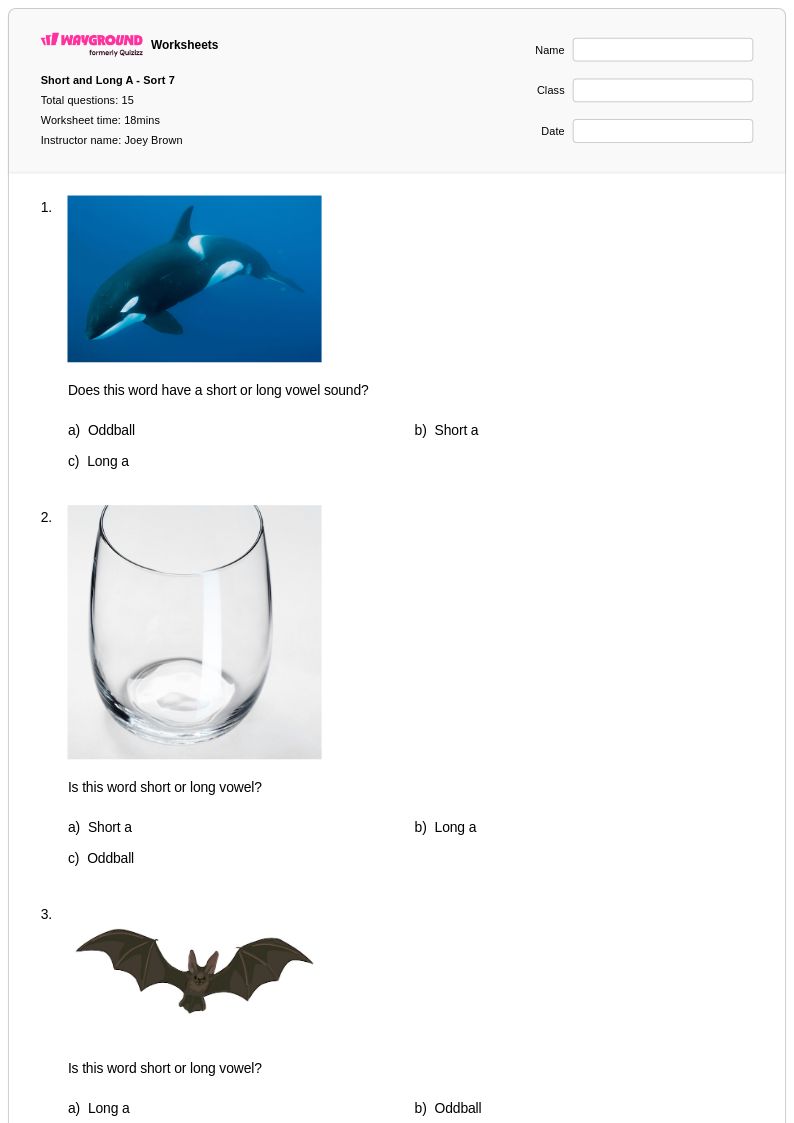
15Q
2nd
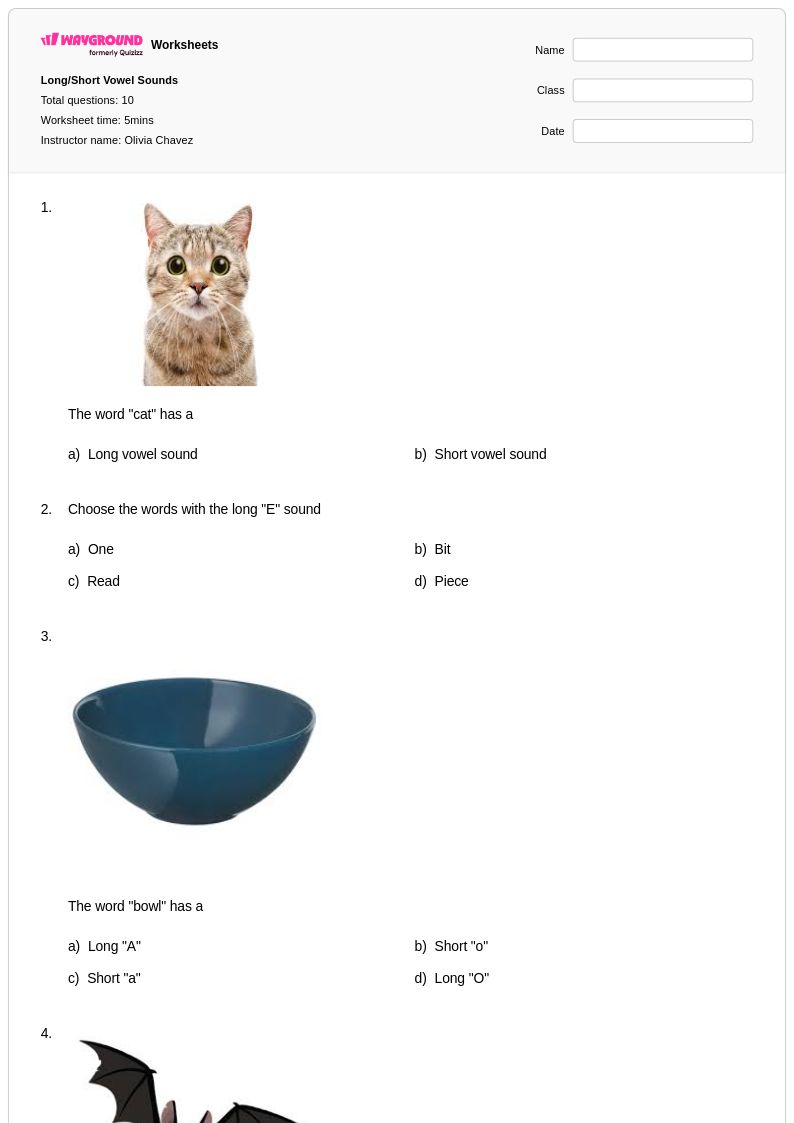
10Q
2nd
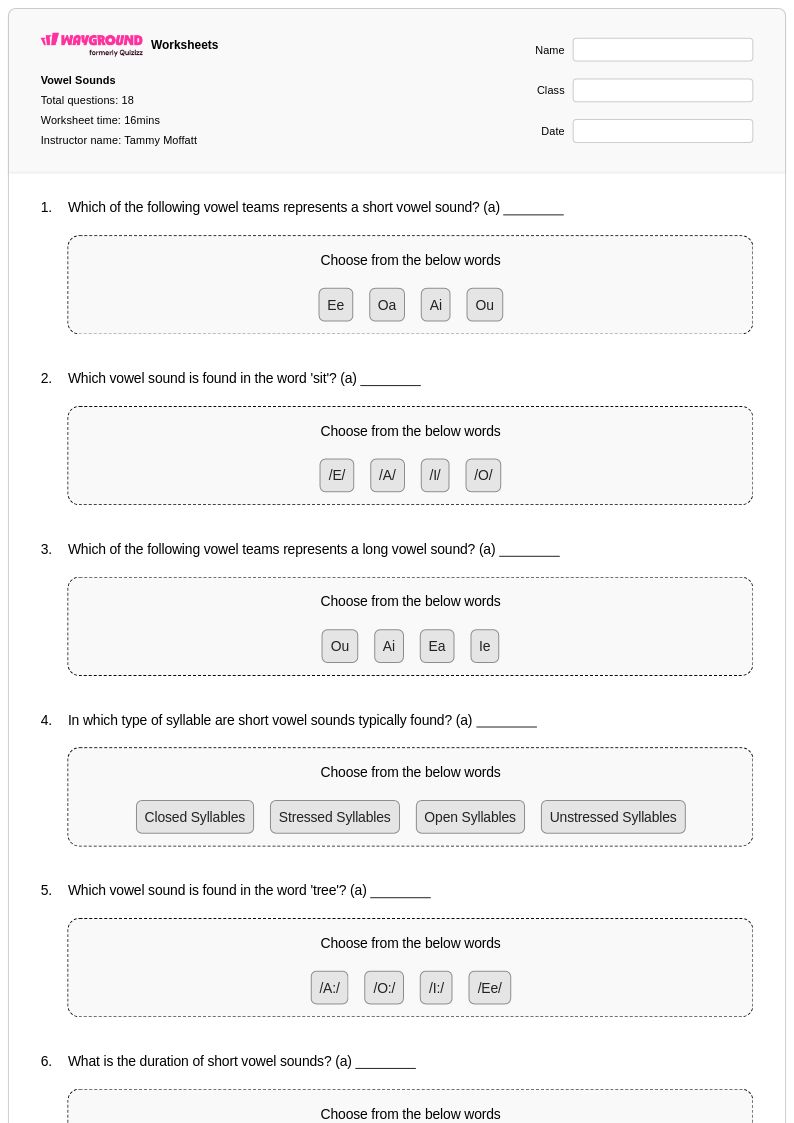
18Q
2nd
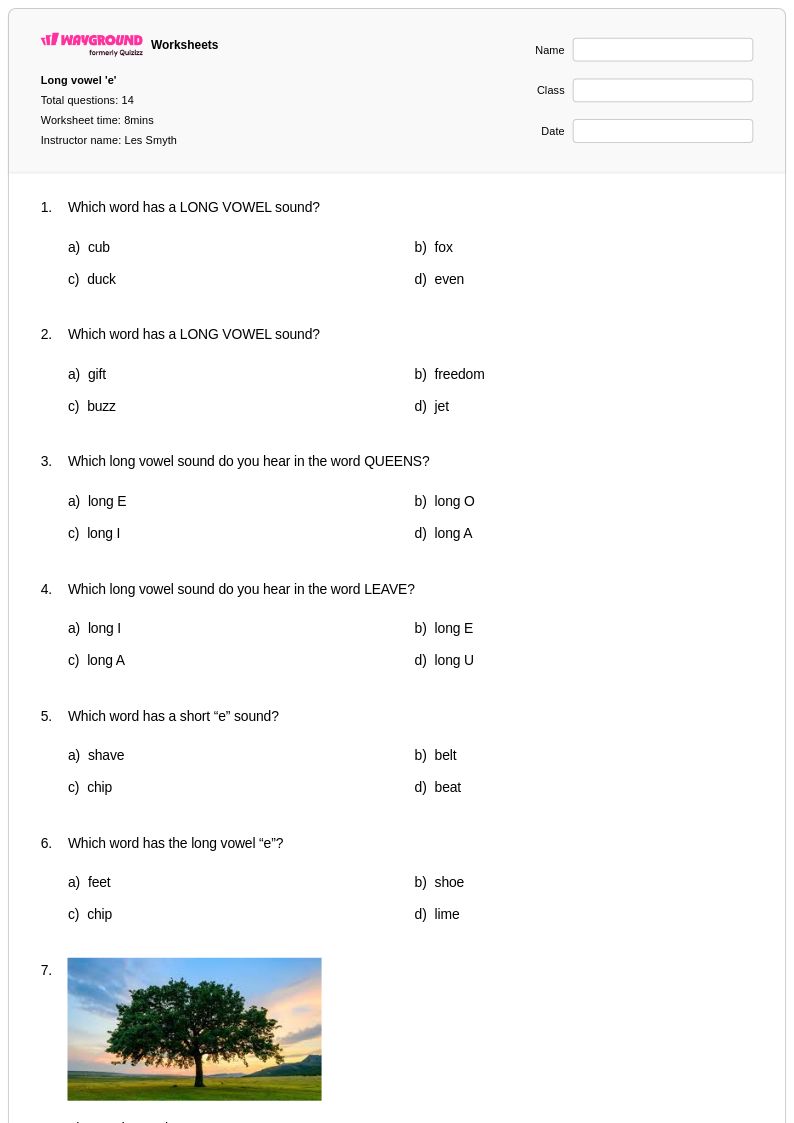
14Q
2nd
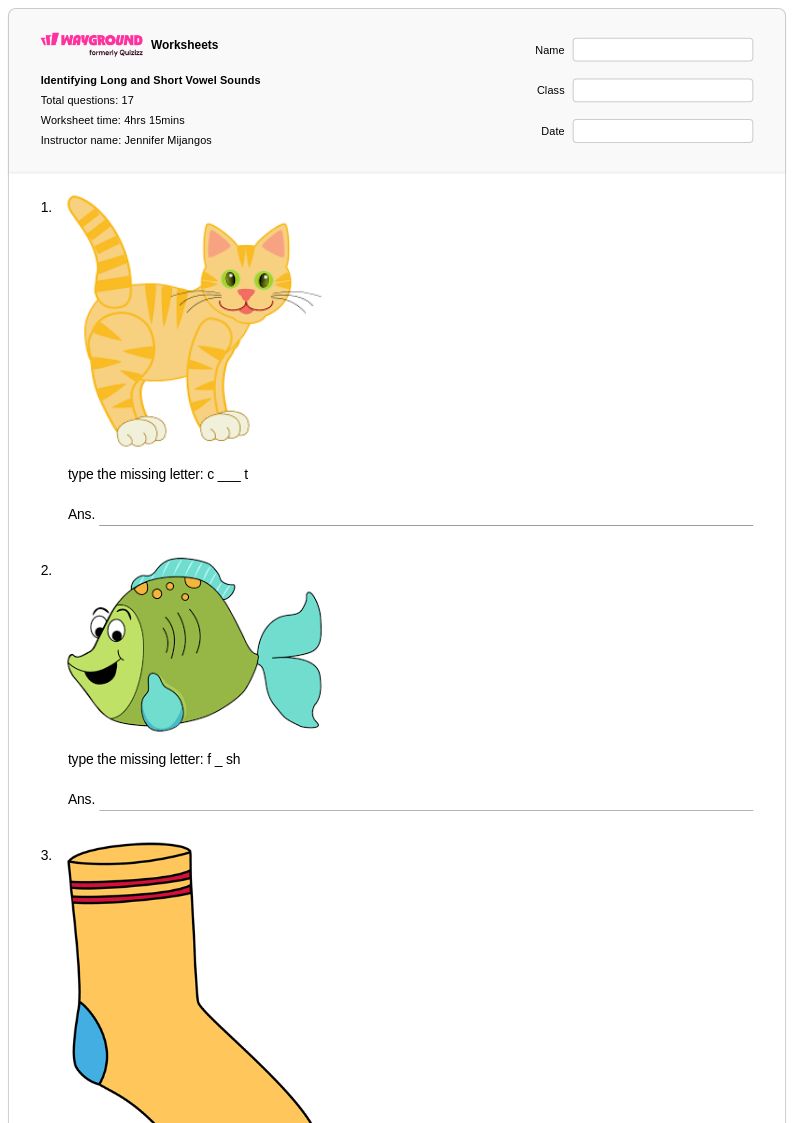
17Q
1st - 5th
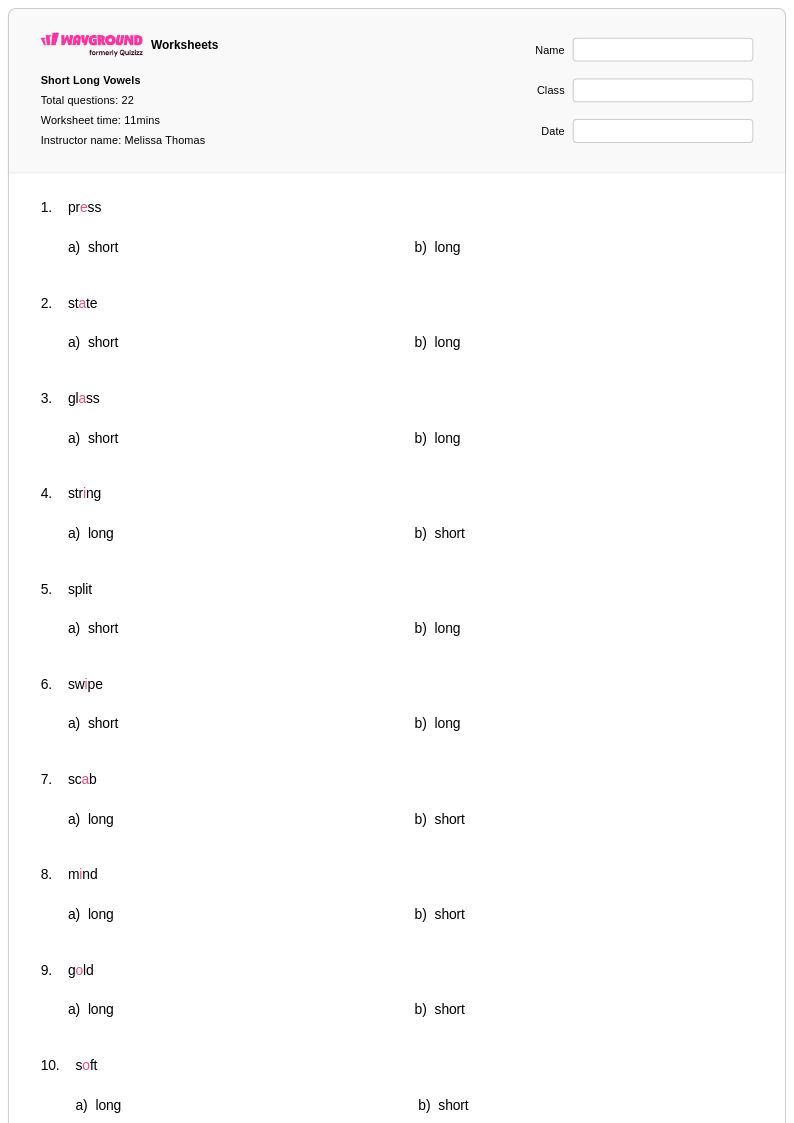
22Q
1st - 2nd
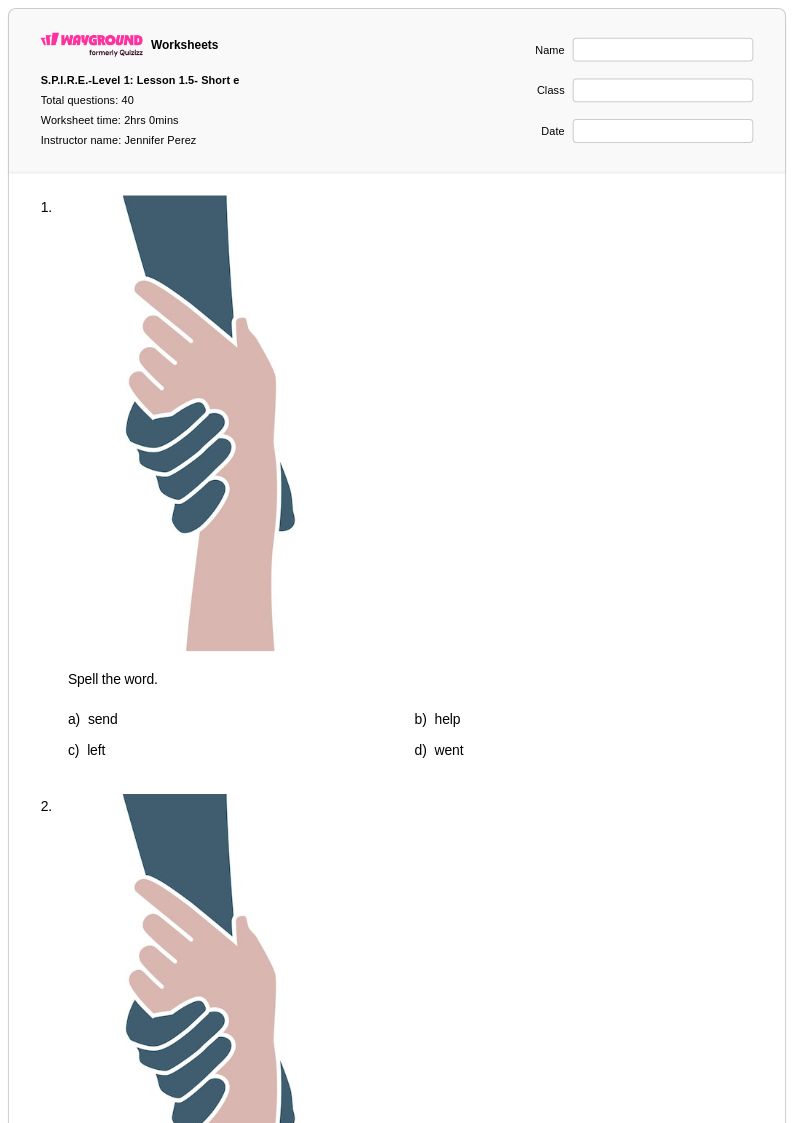
40Q
1st - 5th
11Q
1st - 3rd
17Q
2nd
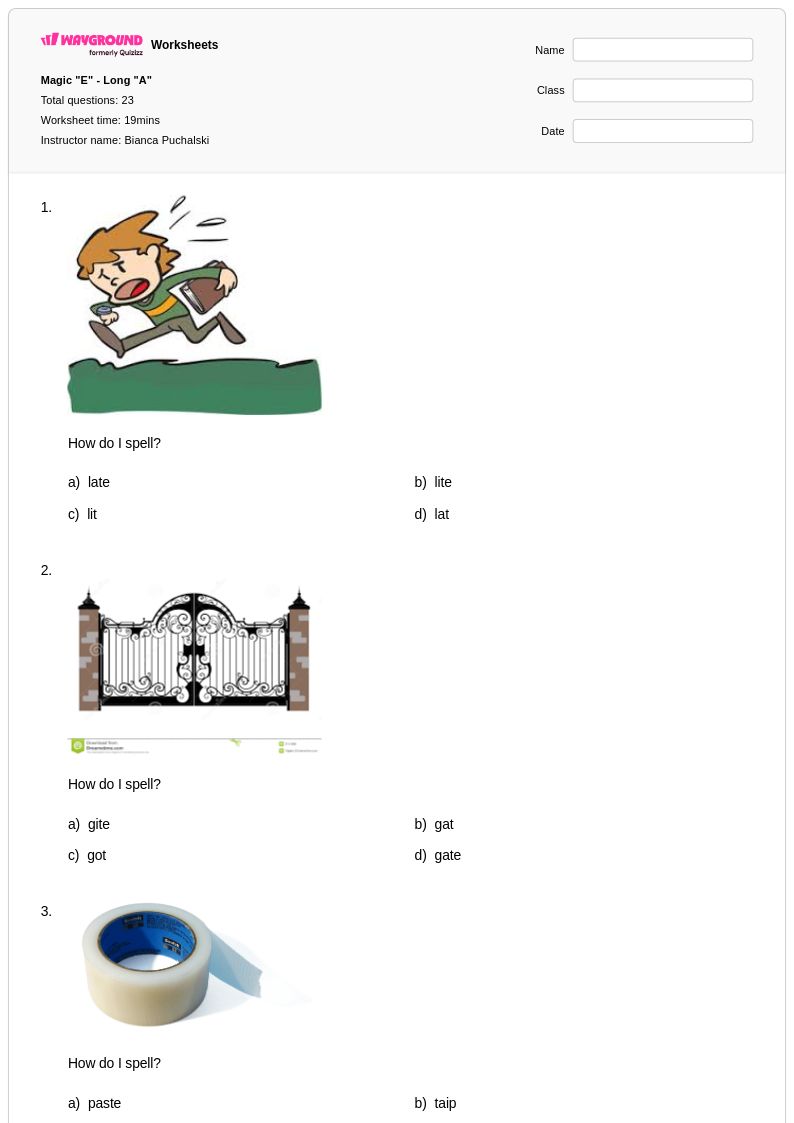
23Q
2nd - 5th
Explorar Long E/short E hojas de trabajo por grados
Explore otras hojas de trabajo de materias para grade 2
Explore printable Long E/short E worksheets for Grade 2
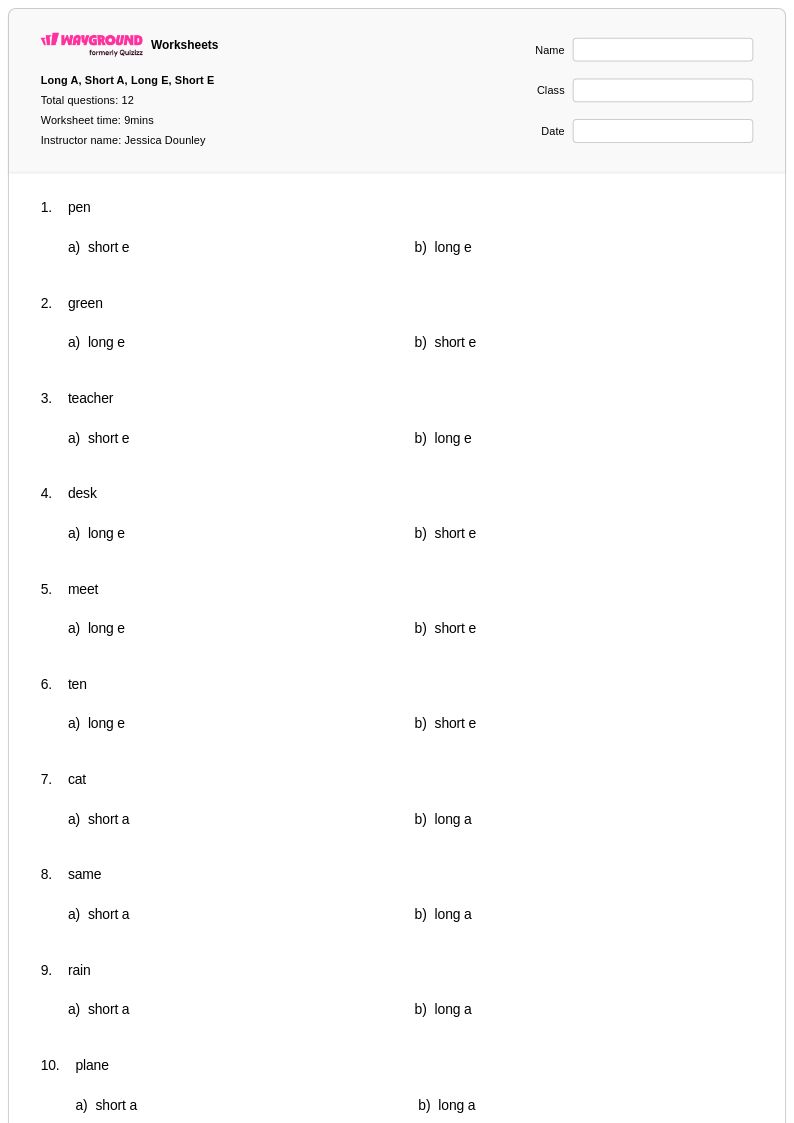
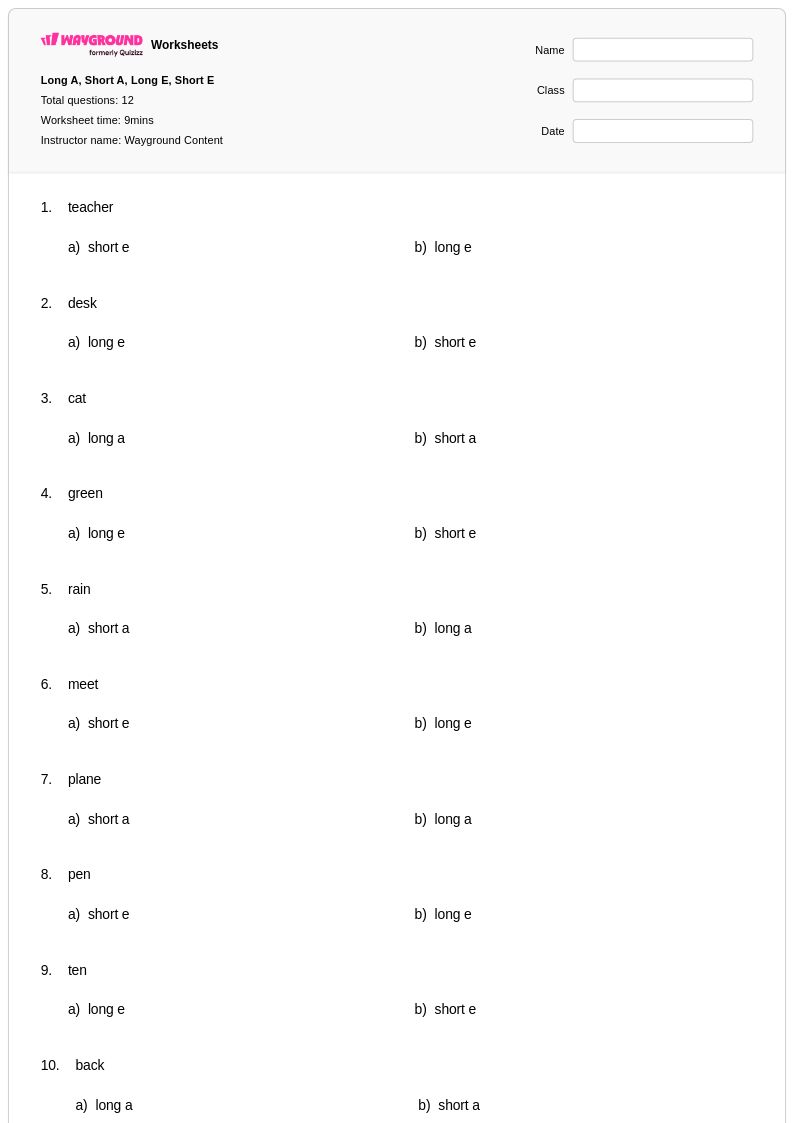
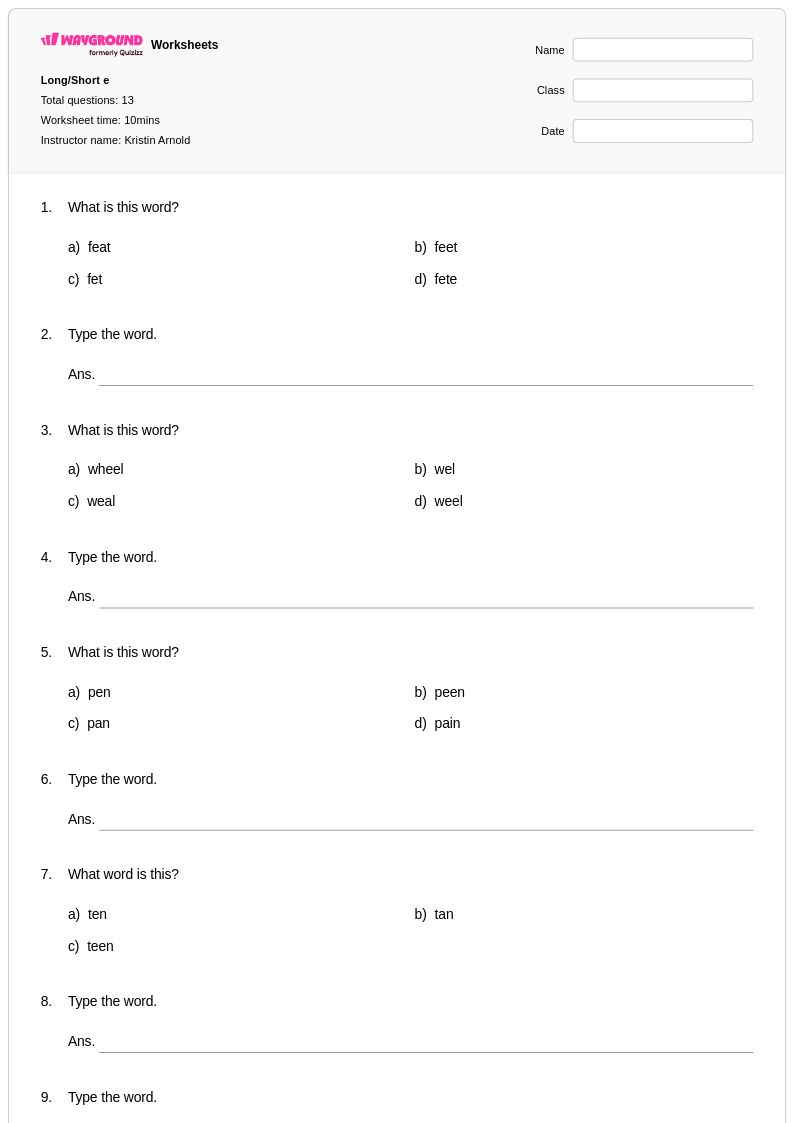
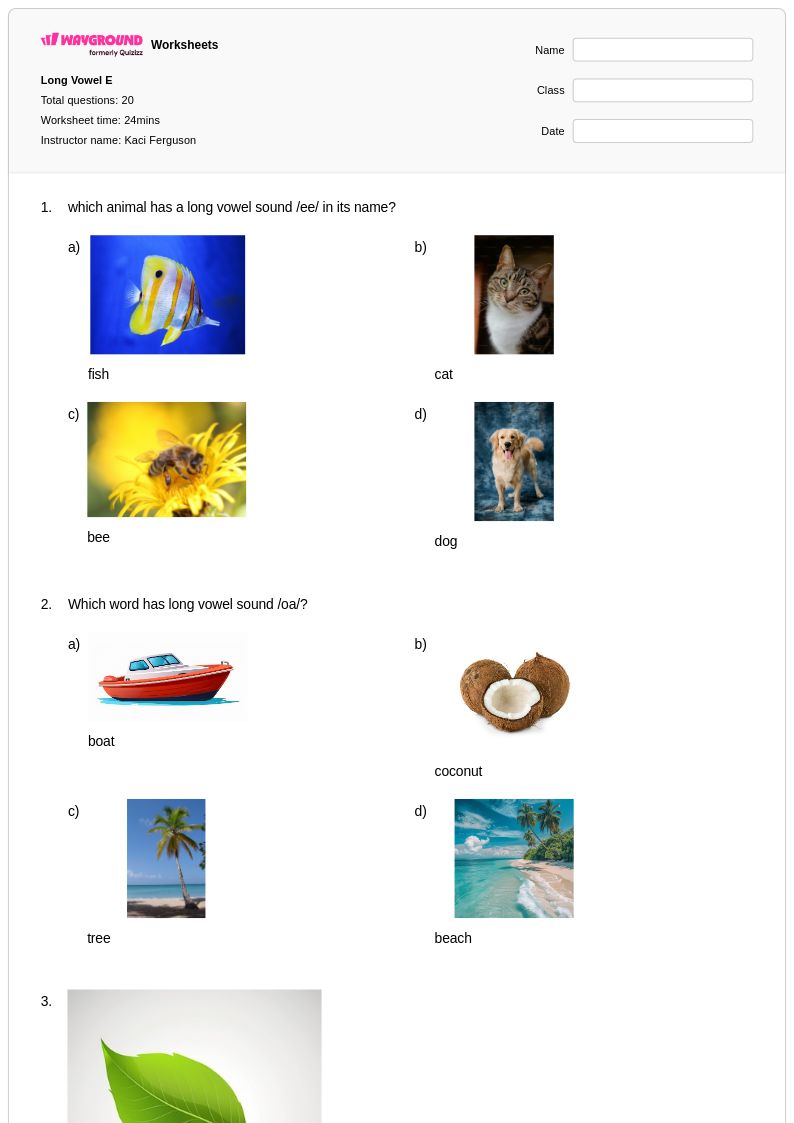
Long E and short E vowel sound worksheets for Grade 2 students available through Wayground (formerly Quizizz) provide essential phonics practice that strengthens fundamental reading and spelling skills. These carefully designed printables focus on helping young learners distinguish between the two distinct sounds of the letter E, building phonemic awareness through systematic practice problems that reinforce sound-symbol relationships. Students work with word families, picture identification exercises, and sorting activities that develop their ability to recognize when E produces its long sound as in "tree" and "feet" versus its short sound as in "bed" and "red." Each worksheet collection includes comprehensive answer keys and comes in convenient pdf format, making these free resources easily accessible for both classroom instruction and home practice.
Wayground (formerly Quizizz) empowers Grade 2 teachers with millions of educator-created long E and short E vowel worksheets that support differentiated phonics instruction across diverse learning needs. The platform's robust search and filtering capabilities allow teachers to quickly locate materials aligned with phonics standards and curriculum requirements, while customization tools enable modification of existing worksheets to match specific classroom objectives. Teachers can seamlessly integrate these resources into daily lesson planning, using printable versions for traditional pencil-and-paper activities or digital formats for interactive learning experiences. This extensive collection proves invaluable for targeted skill remediation, enrichment opportunities for advanced learners, and ongoing assessment of students' vowel sound recognition progress throughout the academic year.