Free Printable Long U/short U Worksheets for Grade 1
Explore Wayground's free Grade 1 long U and short U vowel worksheets with printables, practice problems, and answer keys to help students master vowel sound recognition and phonetic skills.
Explore printable Long U/short U worksheets for Grade 1
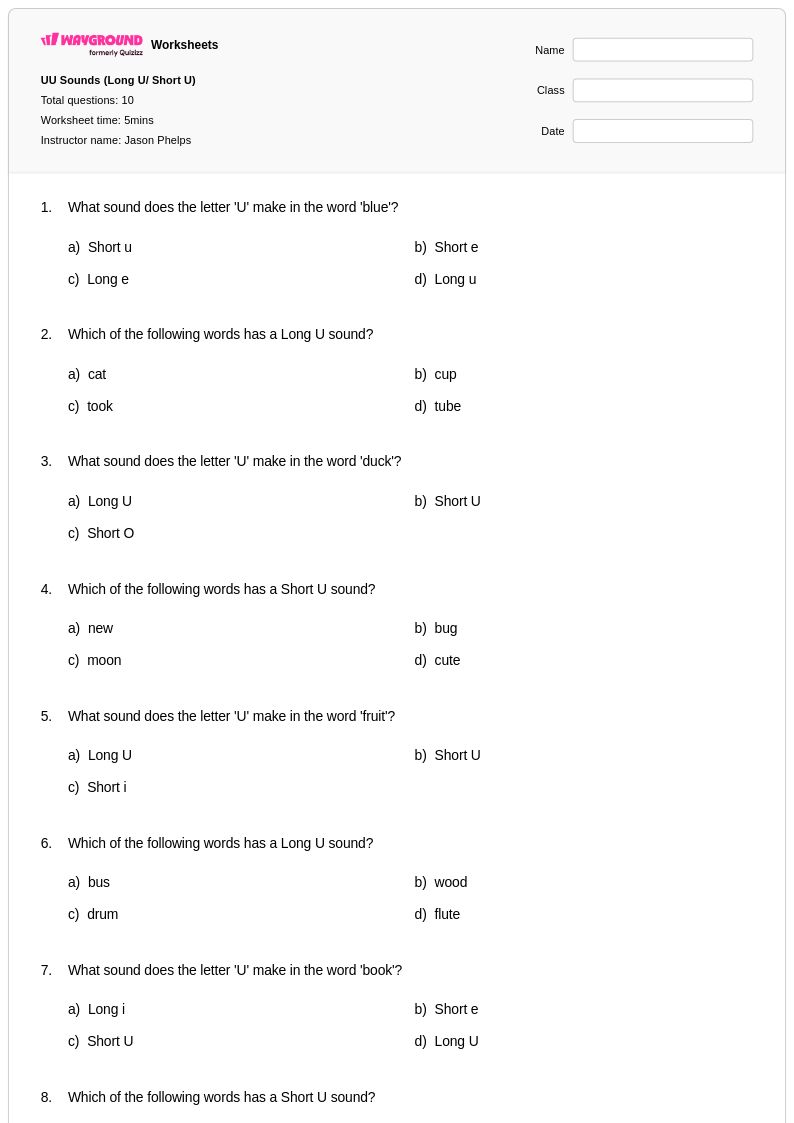
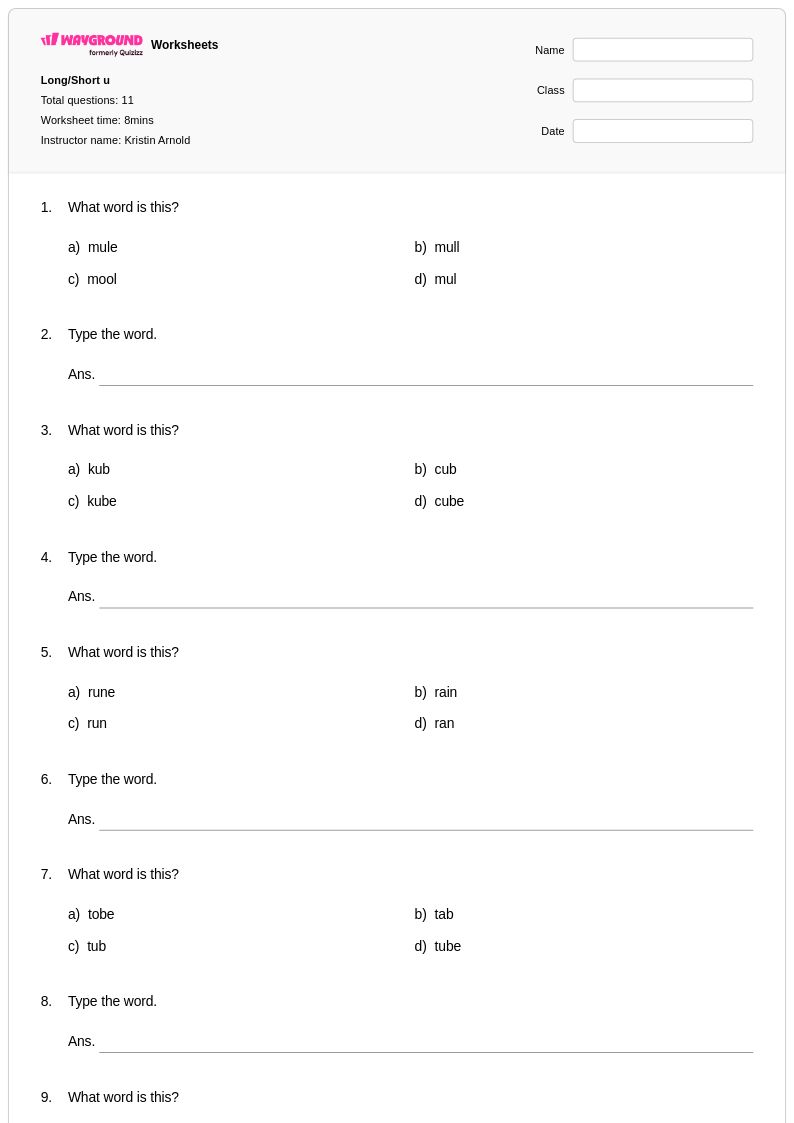
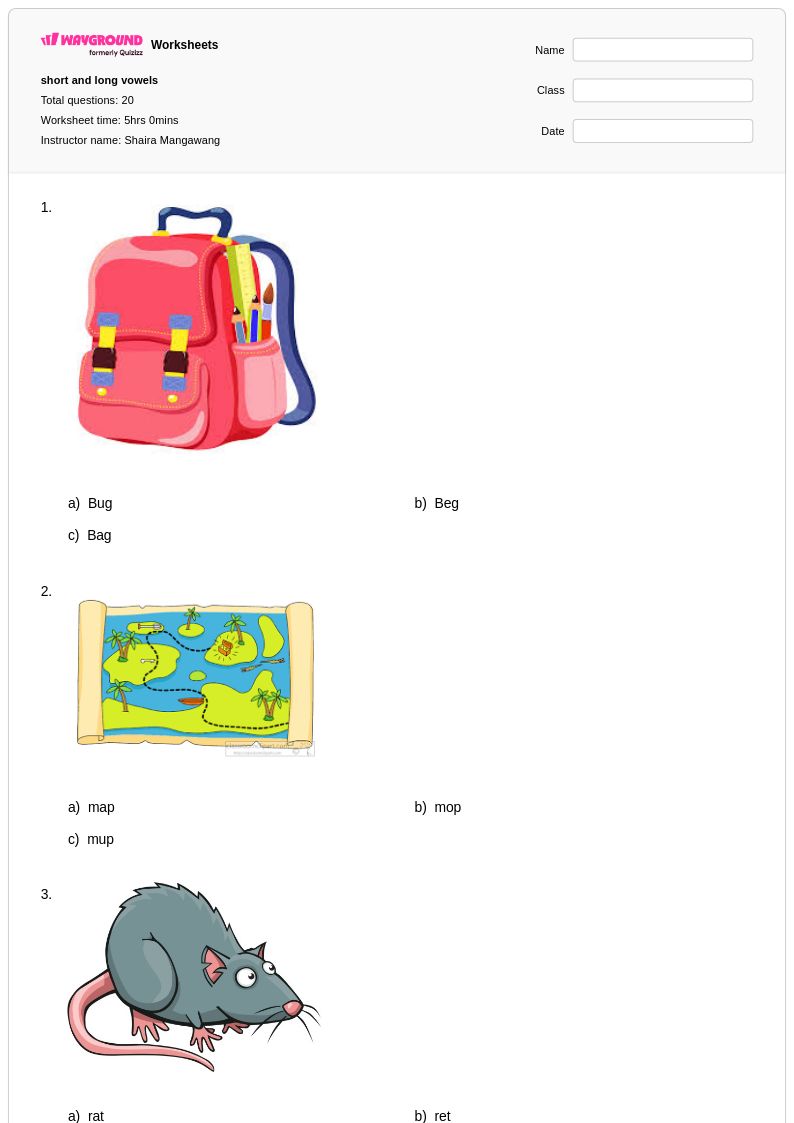
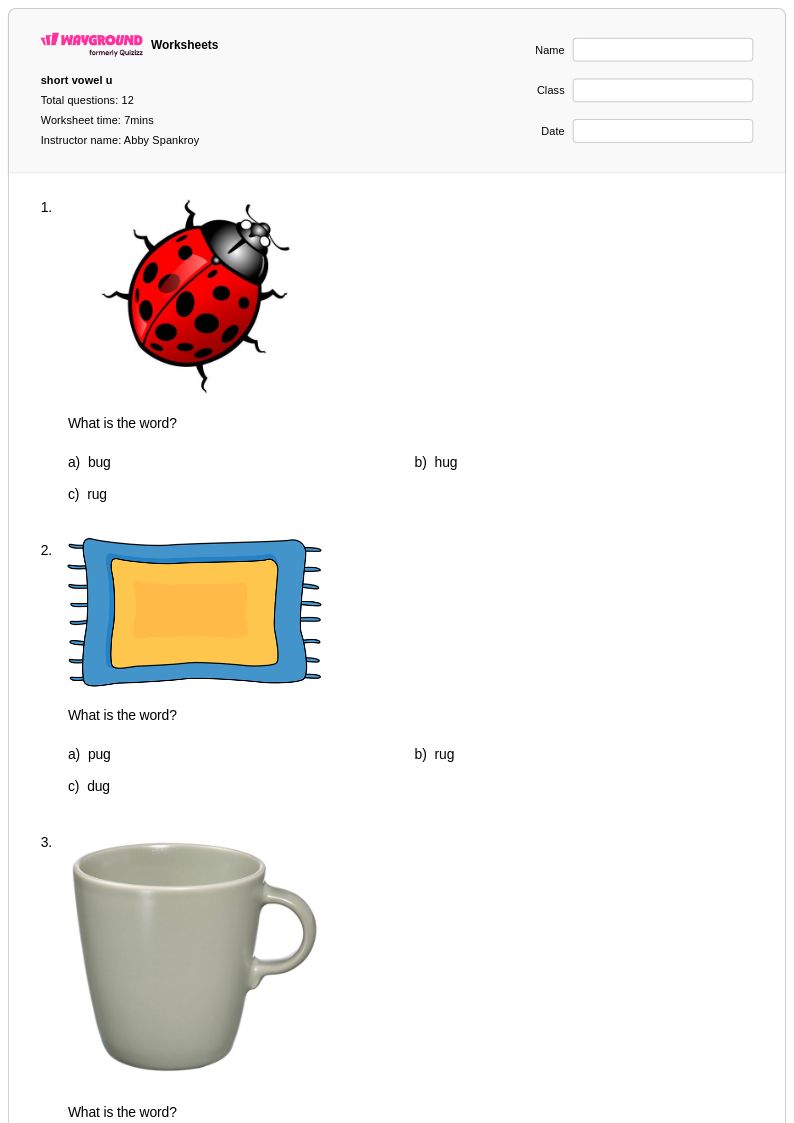
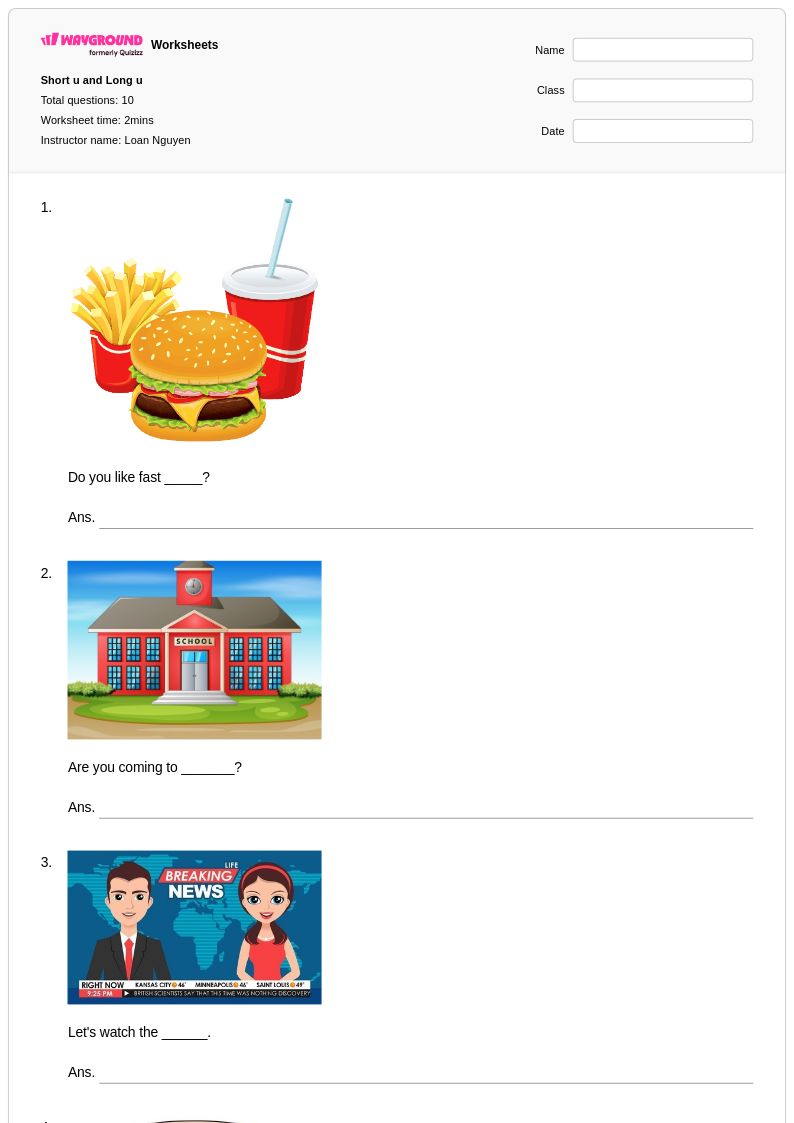
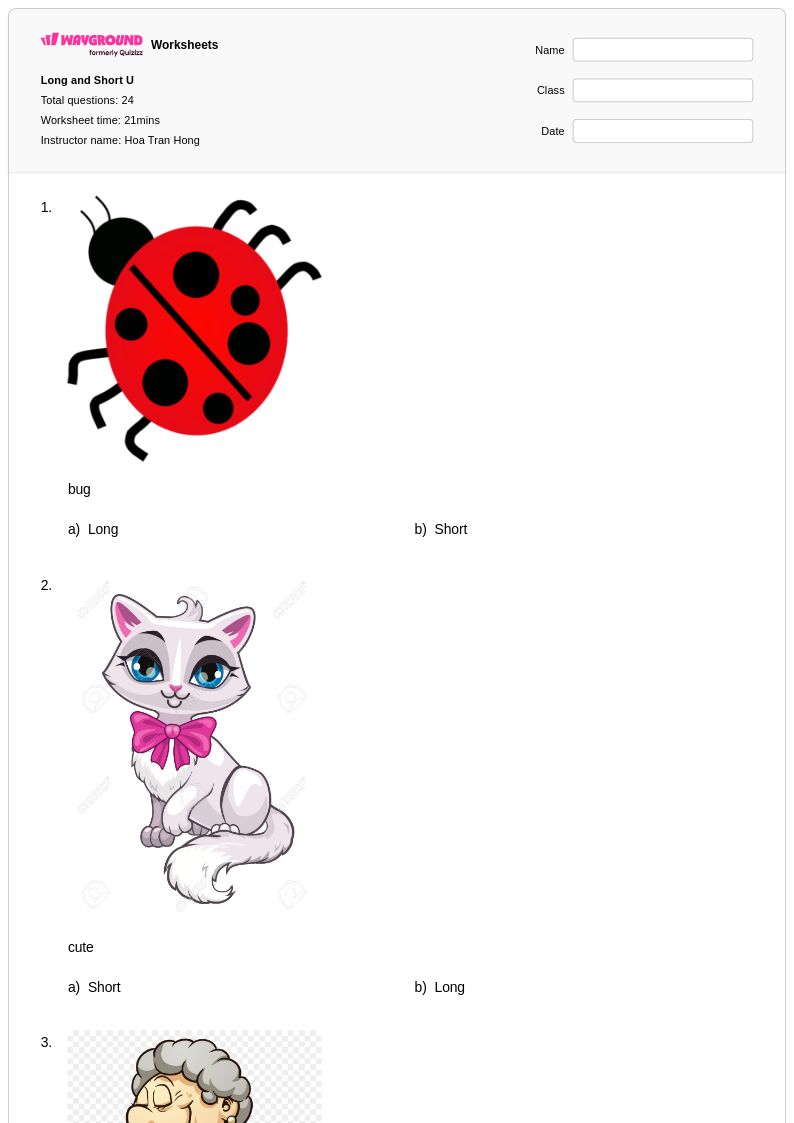
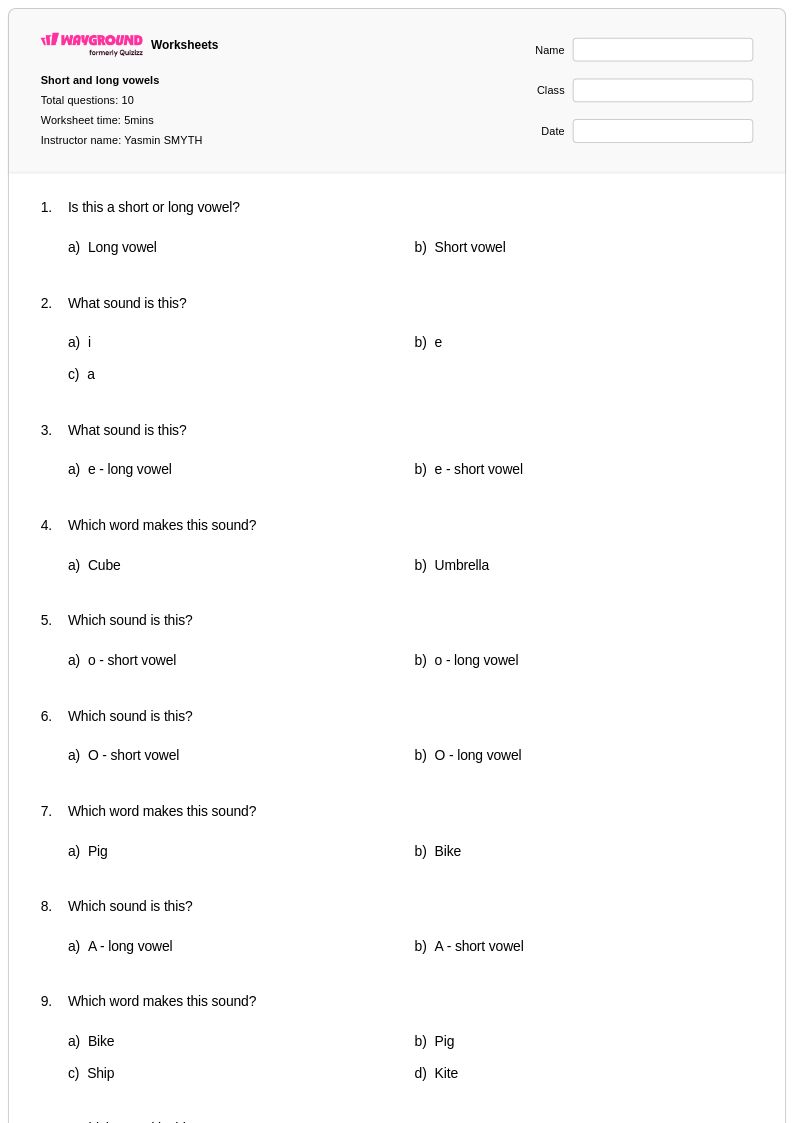
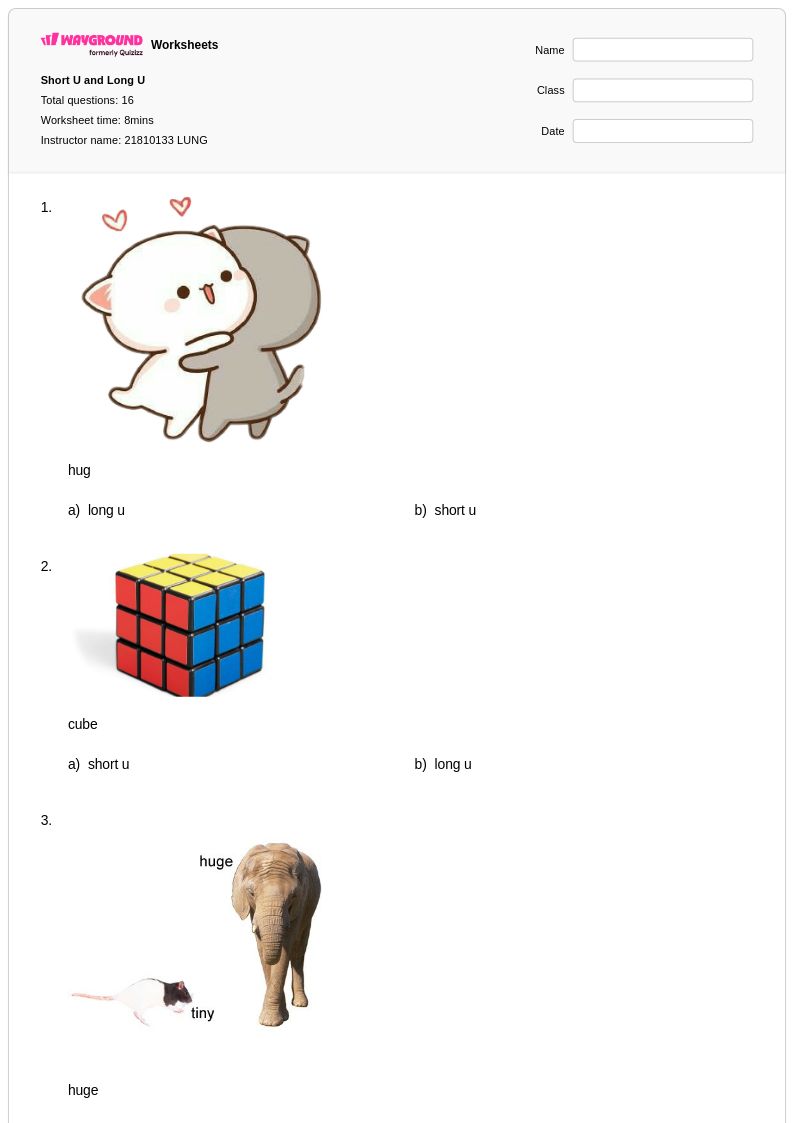
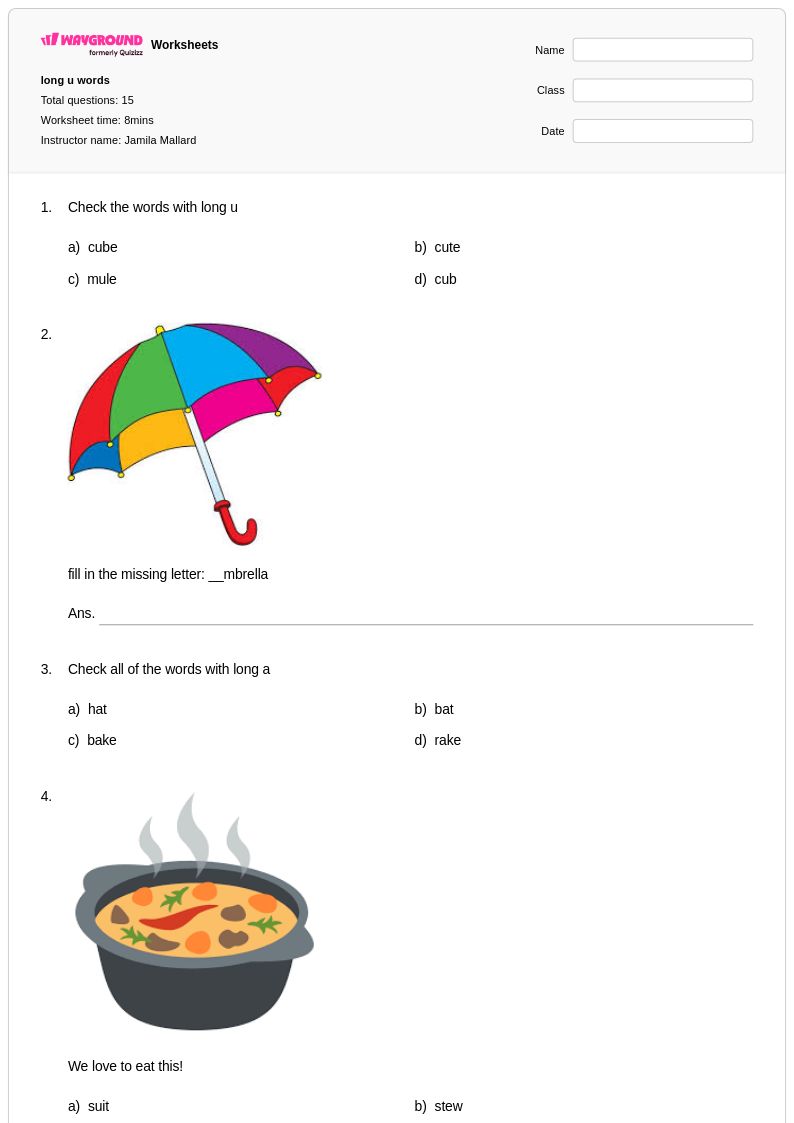
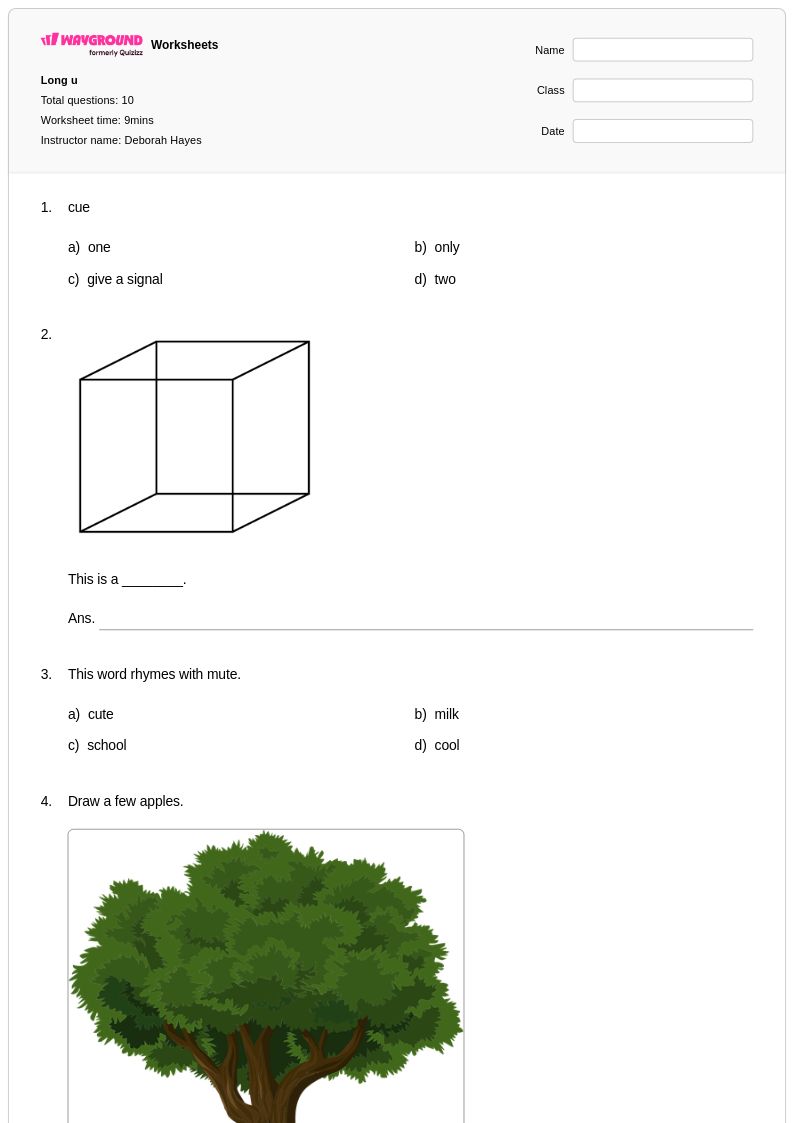
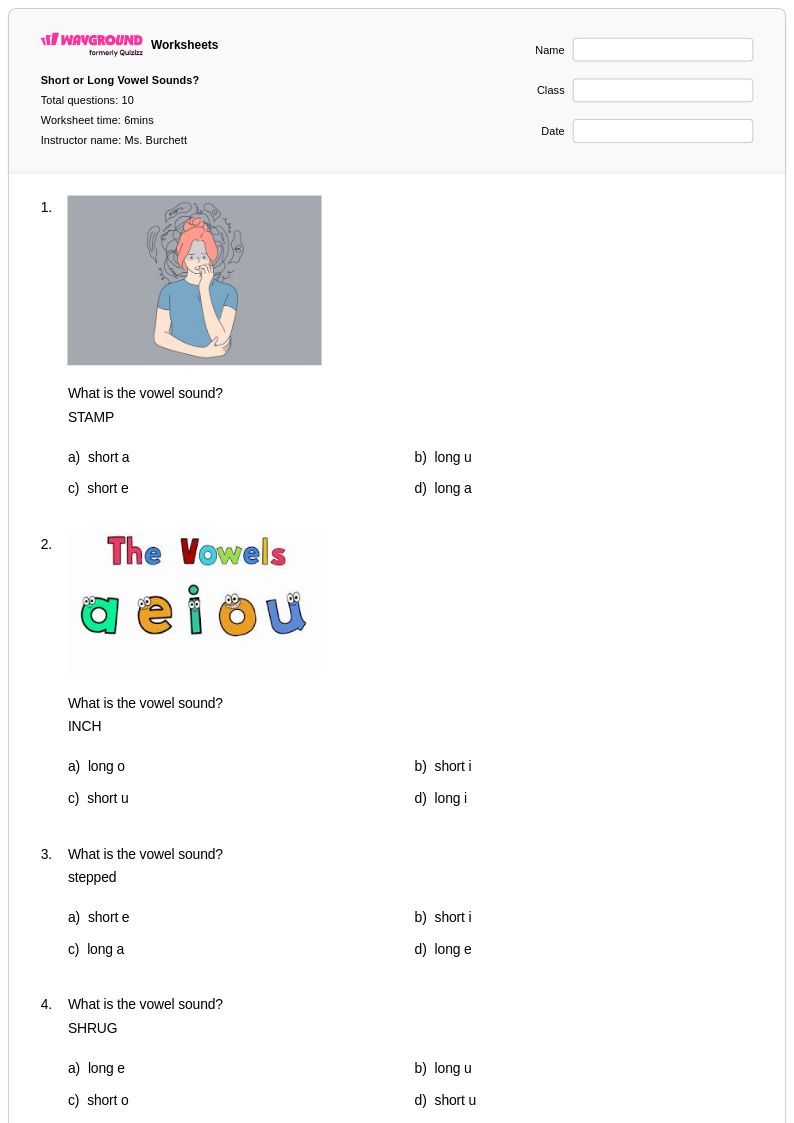
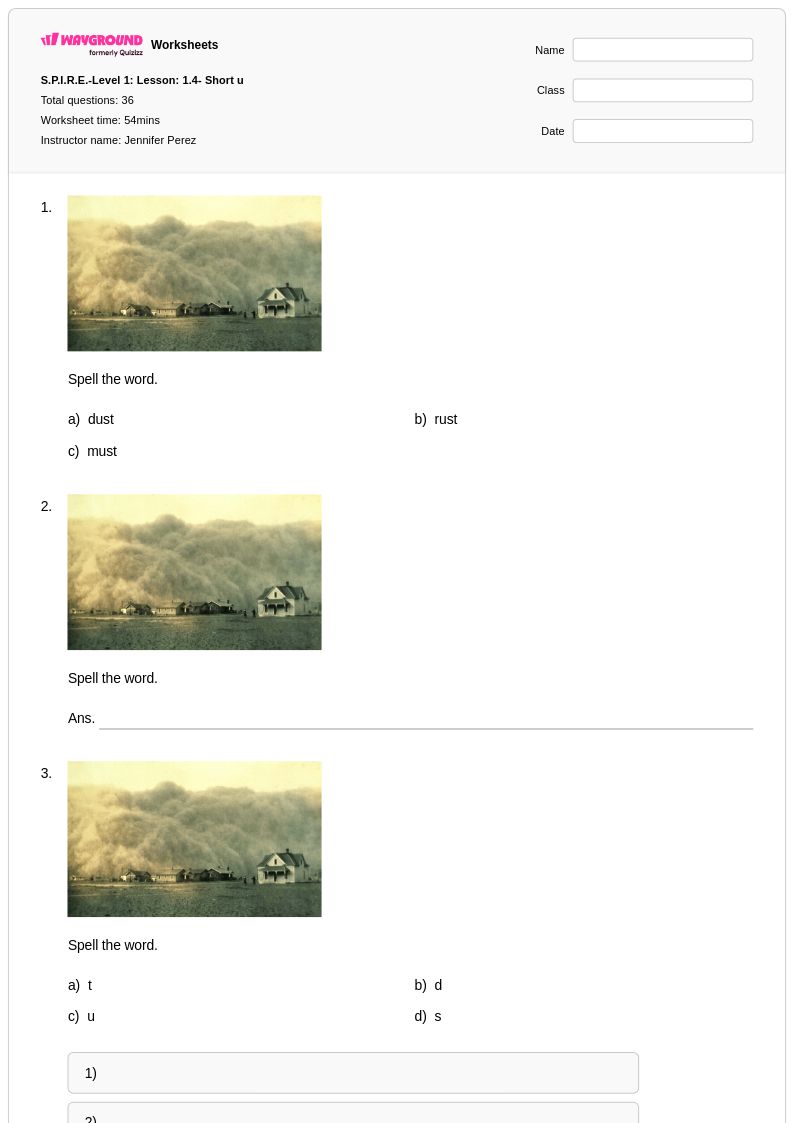
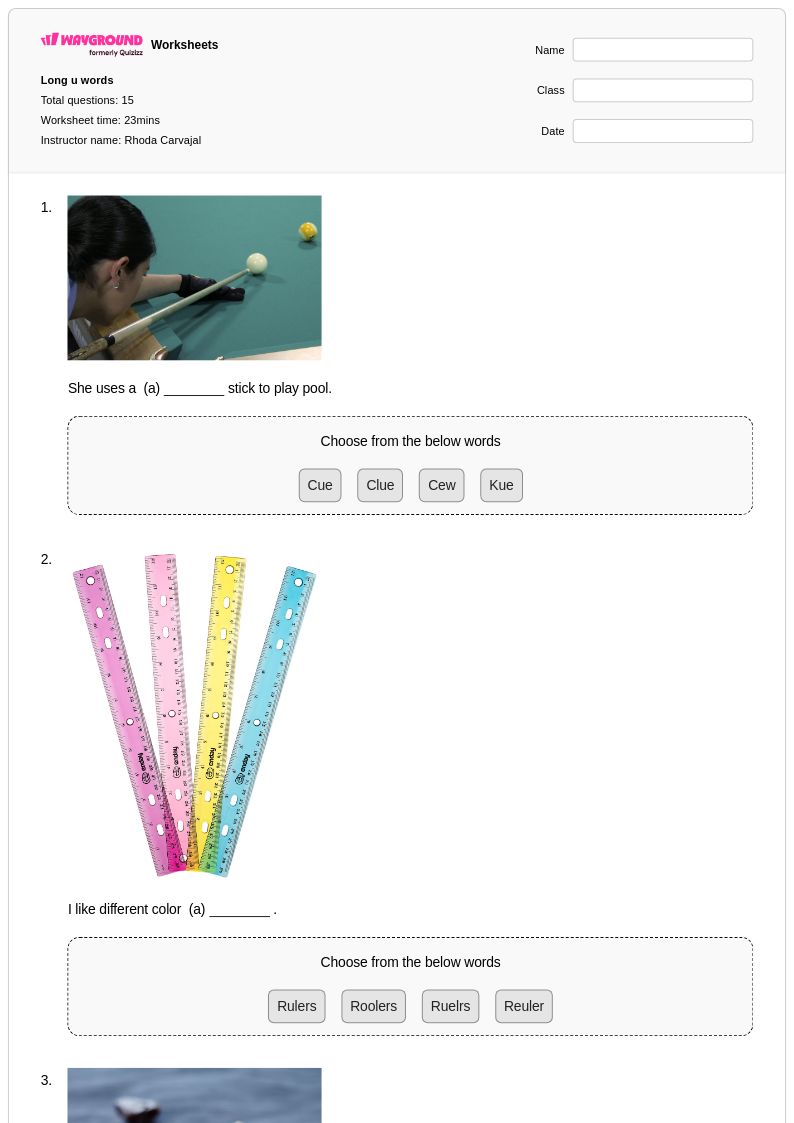
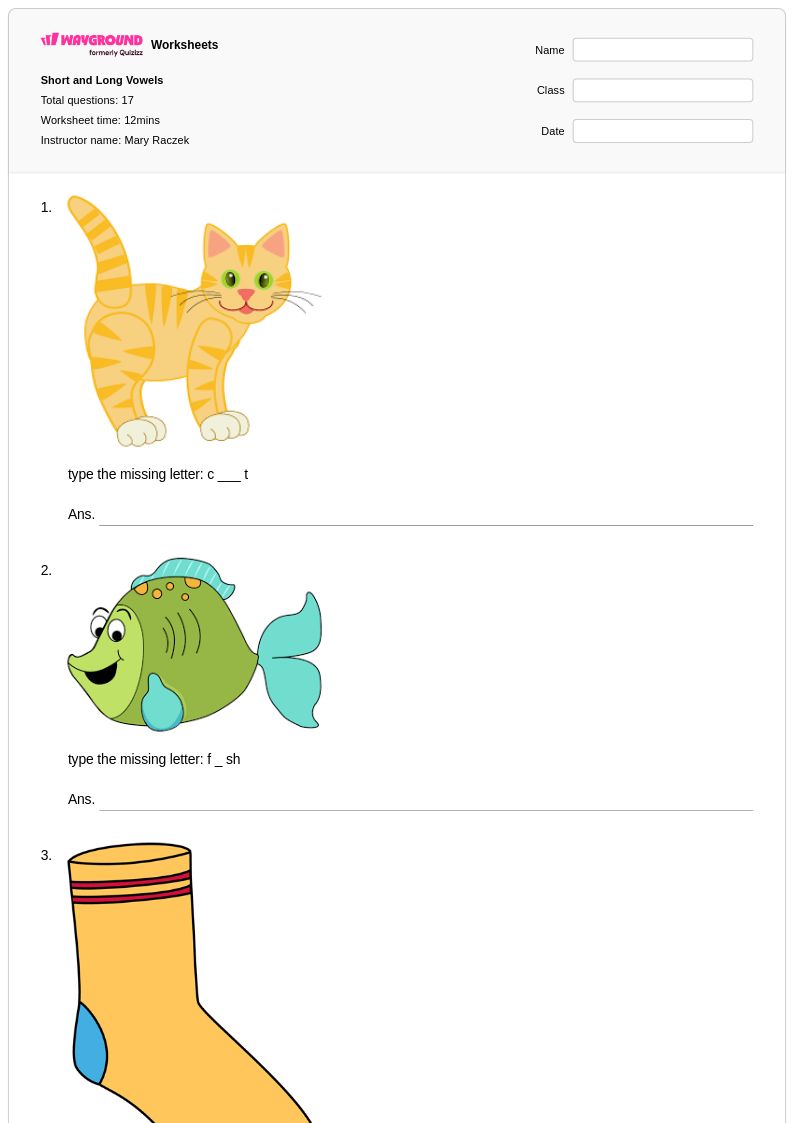
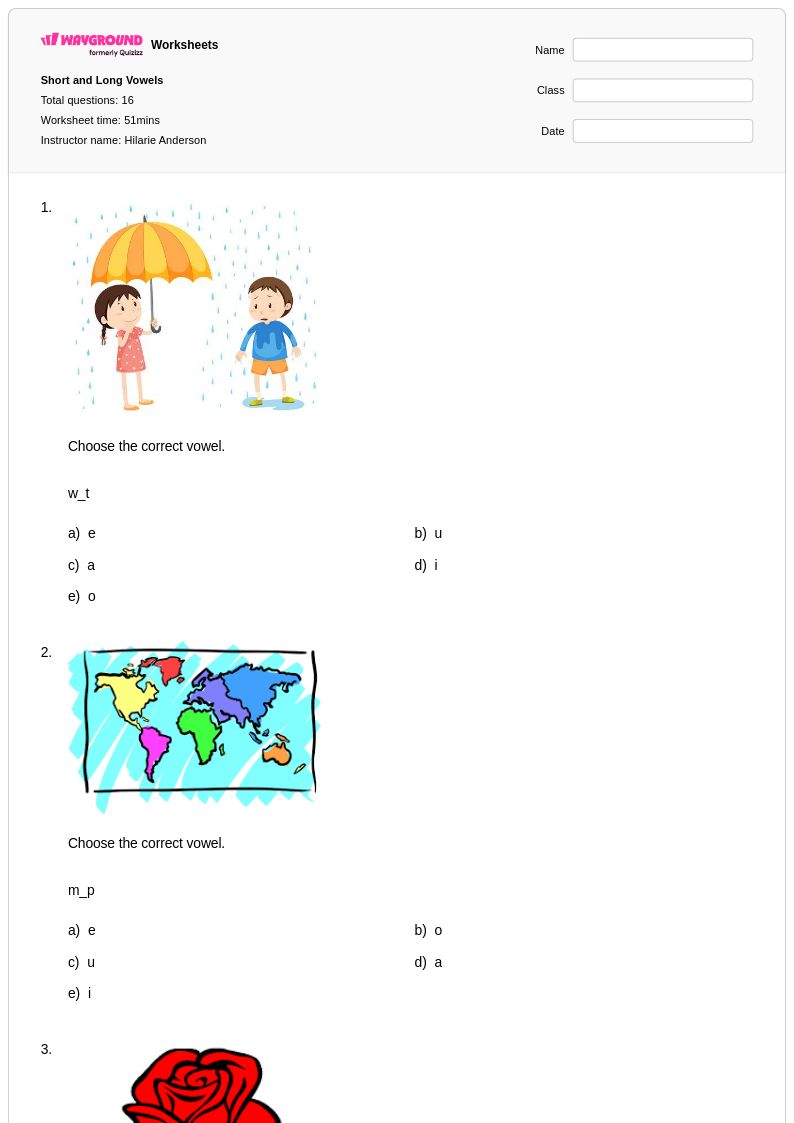
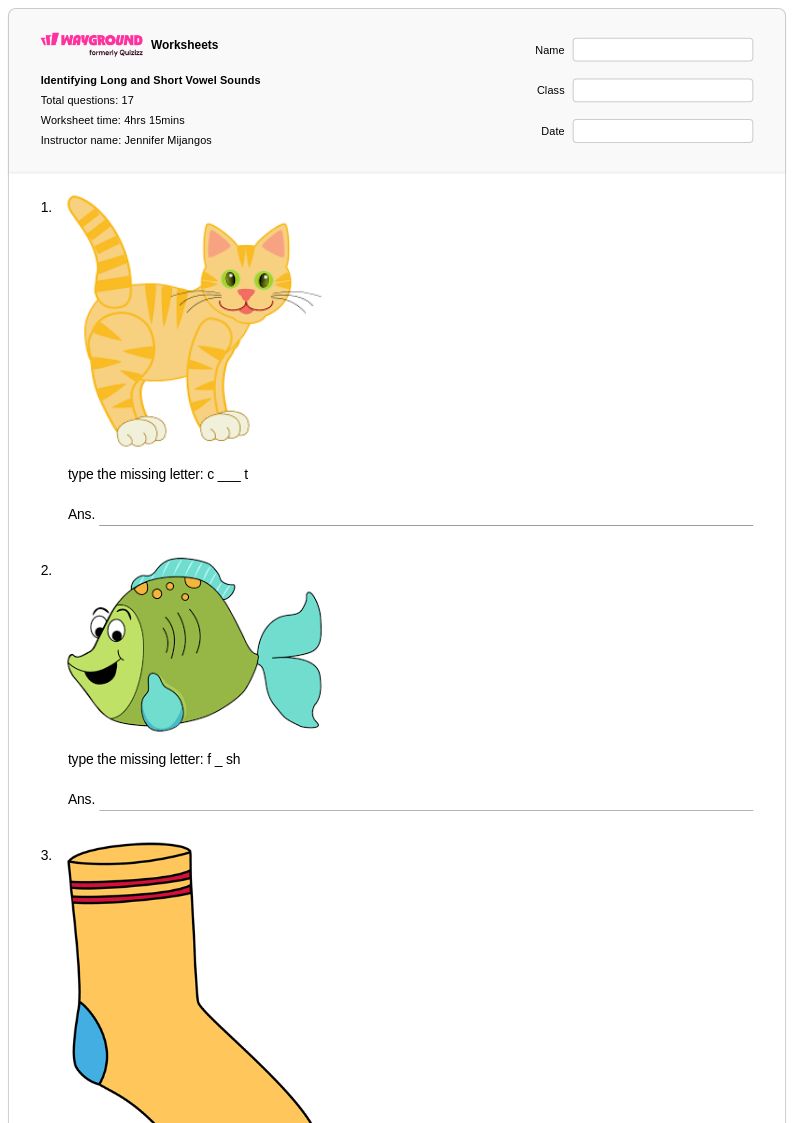
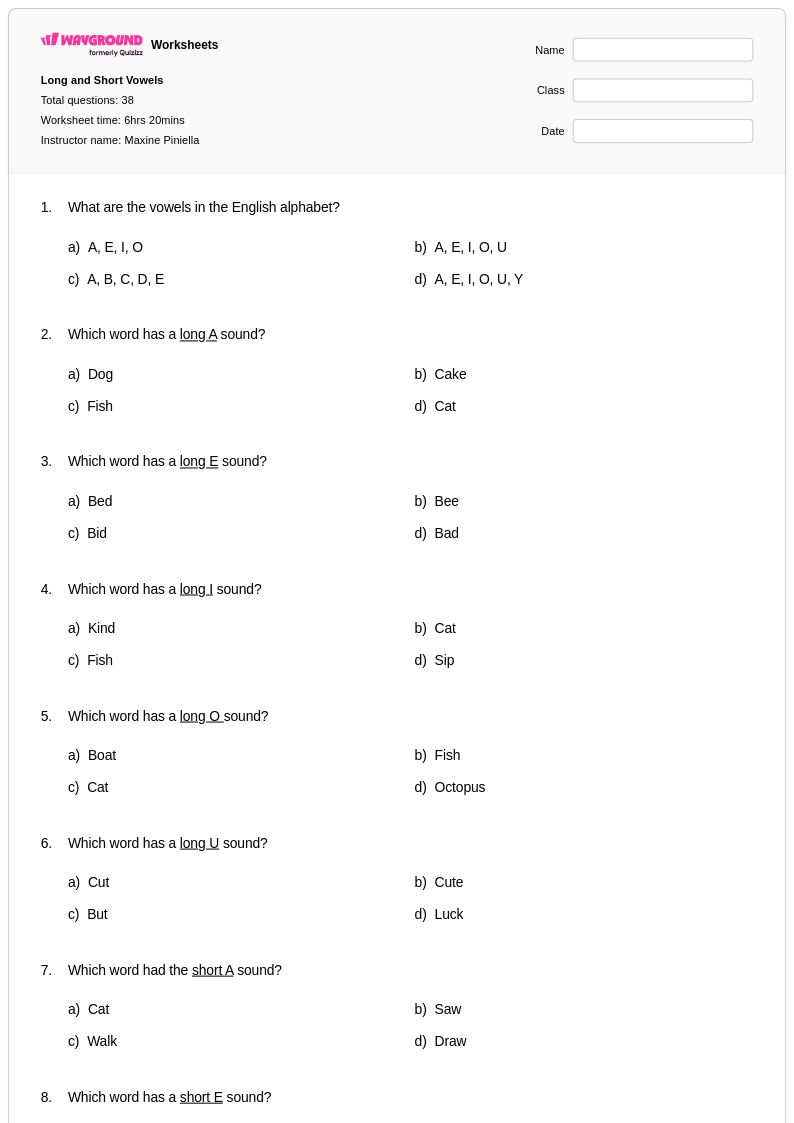
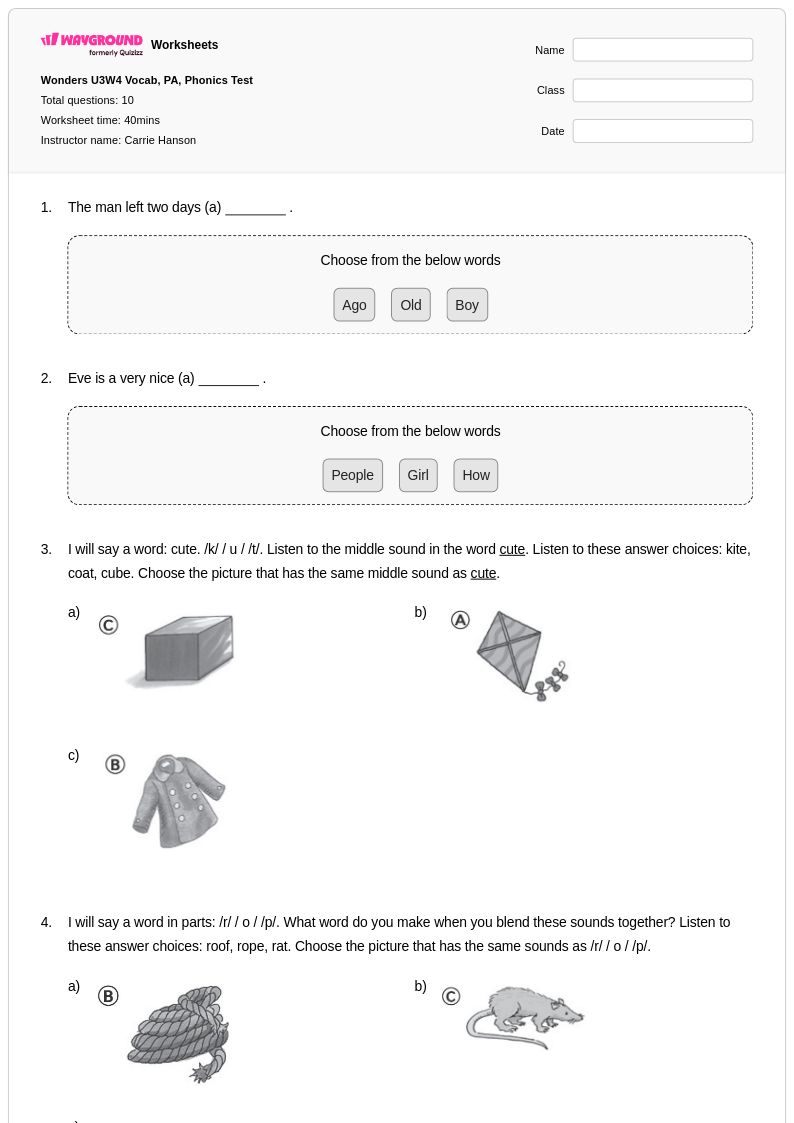
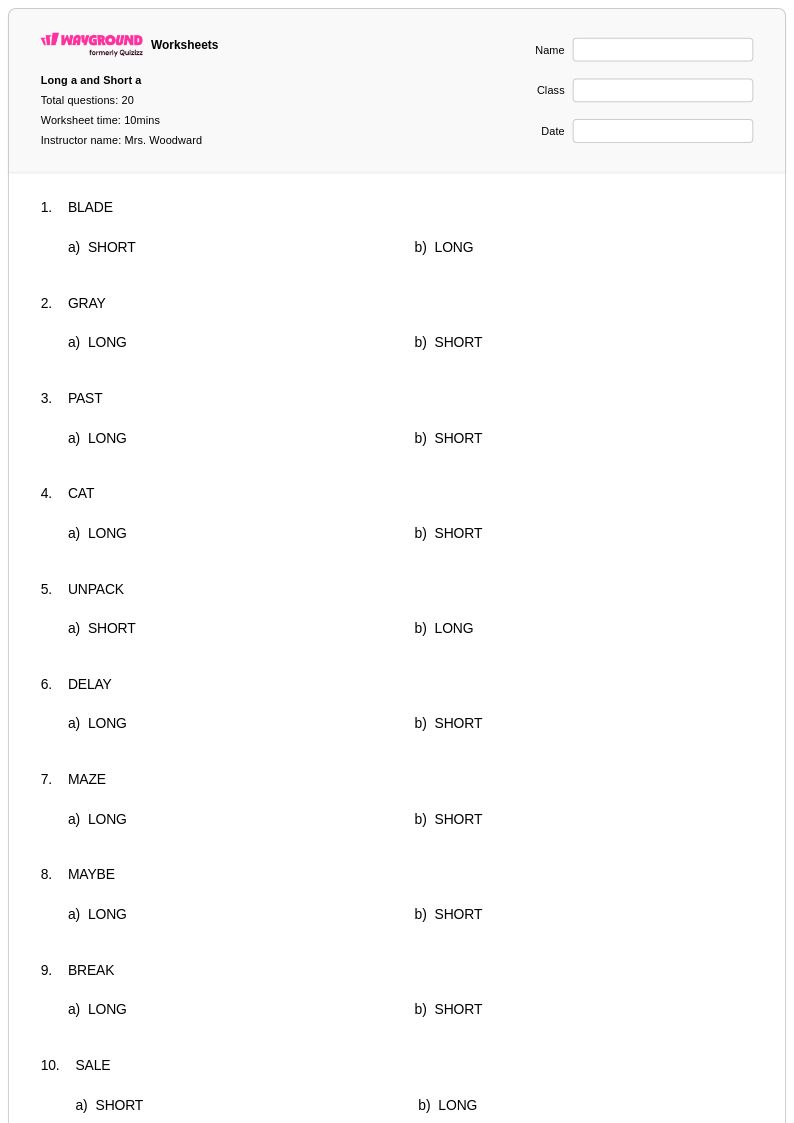
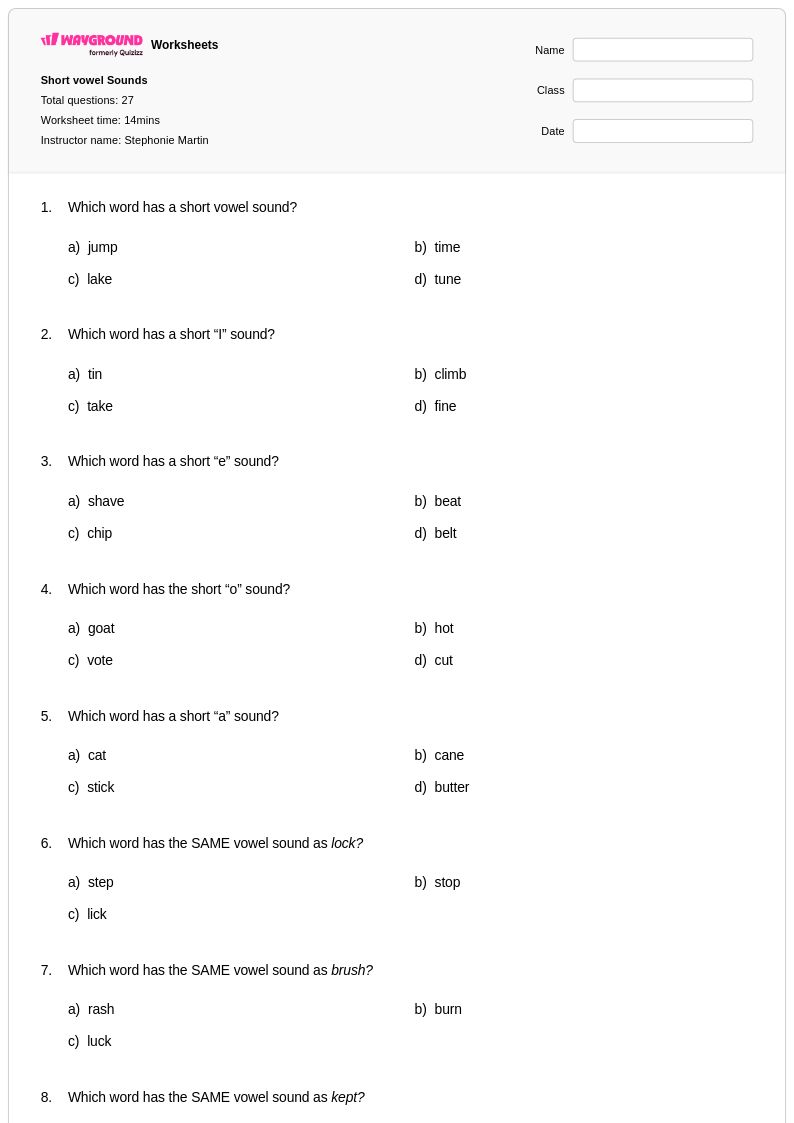
Long U and short U vowel sound worksheets for Grade 1 students available through Wayground (formerly Quizizz) provide essential phonetic instruction that builds the foundation for reading fluency and spelling accuracy. These comprehensive printables focus on helping young learners distinguish between the two distinct sounds of the letter U, with short U appearing in words like "cup," "bug," and "run," while long U creates the sounds heard in "cube," "tune," and "mule." Each worksheet collection includes systematic practice problems that guide students through visual recognition, auditory discrimination, and application exercises, supported by detailed answer keys that enable both independent learning and teacher-guided instruction. The free pdf resources incorporate engaging activities such as word sorting, picture matching, and fill-in-the-blank exercises that reinforce proper vowel sound identification while developing critical pre-reading skills essential for Grade 1 academic success.
Wayground's extensive library empowers educators with millions of teacher-created resources specifically designed to support long U and short U vowel instruction through advanced search and filtering capabilities that quickly locate grade-appropriate materials. The platform's standards-aligned worksheet collections offer flexible differentiation tools that accommodate diverse learning needs, allowing teachers to customize content difficulty and presentation format for individual students or small groups. These versatile resources are available in both printable pdf format for traditional classroom use and digital formats for interactive learning experiences, making lesson planning more efficient while providing targeted options for remediation and enrichment activities. Teachers can seamlessly integrate these phonics-focused worksheets into daily instruction, literacy centers, homework assignments, and assessment preparation, ensuring consistent skill practice that supports long-term reading development and phonemic awareness growth.
FAQs
How do I teach the difference between long U and short U sounds to early readers?
Start by anchoring each sound to a familiar word — 'cube' for long U and 'cup' for short U — so students have a reliable reference point before encountering new vocabulary. Then introduce spelling patterns systematically: short U typically appears in closed syllables (CVC), while long U often shows up in silent-e words or vowel teams. Word sorting activities, where students physically categorize words by vowel sound, are especially effective because they require active phonemic decision-making rather than passive recognition.
What exercises help students practice long U and short U vowel sounds?
Word sorting is one of the most effective practice formats because it forces students to discriminate between the two sounds in rapid succession using minimal pairs like 'tube' and 'tub' or 'cute' and 'cut.' Picture-to-word matching exercises are ideal for beginners who need a visual scaffold before decoding in print. As students gain confidence, reading comprehension passages that embed both vowel sounds in context help them apply recognition skills at the sentence level rather than in isolation.
What mistakes do students commonly make when learning long U and short U?
The most frequent error is over-applying the silent-e rule — students often assume any word ending in 'e' produces a long U sound, which breaks down with exceptions like 'come' or 'some.' Students also struggle with vowel teams such as 'oo' and 'ue,' which can produce the long U sound but don't follow the CVC-e pattern they've learned. Providing frequent exposure to minimal pairs and irregular words alongside rule-based practice helps students build flexible, accurate phonemic awareness rather than brittle pattern-matching.
How can I differentiate long U and short U practice for students at different reading levels?
For students who are still developing phonemic awareness, picture-word matching and oral sorting activities reduce the decoding burden and let them focus purely on sound discrimination. On-level students benefit from reading and spelling exercises that require them to apply vowel rules in context. Advanced readers can work with longer passages that include both vowel sounds alongside irregular spellings, pushing them toward flexible word recognition. On Wayground, teachers can apply individual accommodations such as Read Aloud support or reduced answer choices for students who need additional scaffolding, without disrupting the experience for the rest of the class.
How do I use Wayground's long U and short U worksheets in my classroom?
Wayground's long U and short U worksheets are available as printable PDFs for traditional classroom use and in digital formats for technology-integrated instruction, giving teachers flexibility depending on the lesson context. Teachers can use the printable versions for independent seat work or take-home practice, while the digital format allows worksheets to be hosted as a quiz directly on Wayground for real-time student interaction. Built-in answer keys make it easy to assess student work quickly, whether you're using the worksheets for initial instruction, targeted remediation, or enrichment activities.
How do I know if my students have mastered long U and short U vowel sounds?
Mastery goes beyond correctly labeling isolated words — students should be able to decode unfamiliar words with long U and short U patterns accurately and consistently during reading, not just on drill exercises. Dictation tasks, where students write words they hear rather than choose from options, are a strong indicator of internalized understanding. Common signs that mastery hasn't been reached include inconsistent spelling of minimal pairs, hesitation on silent-e words, and errors when vowel sounds appear in multi-syllabic words.