
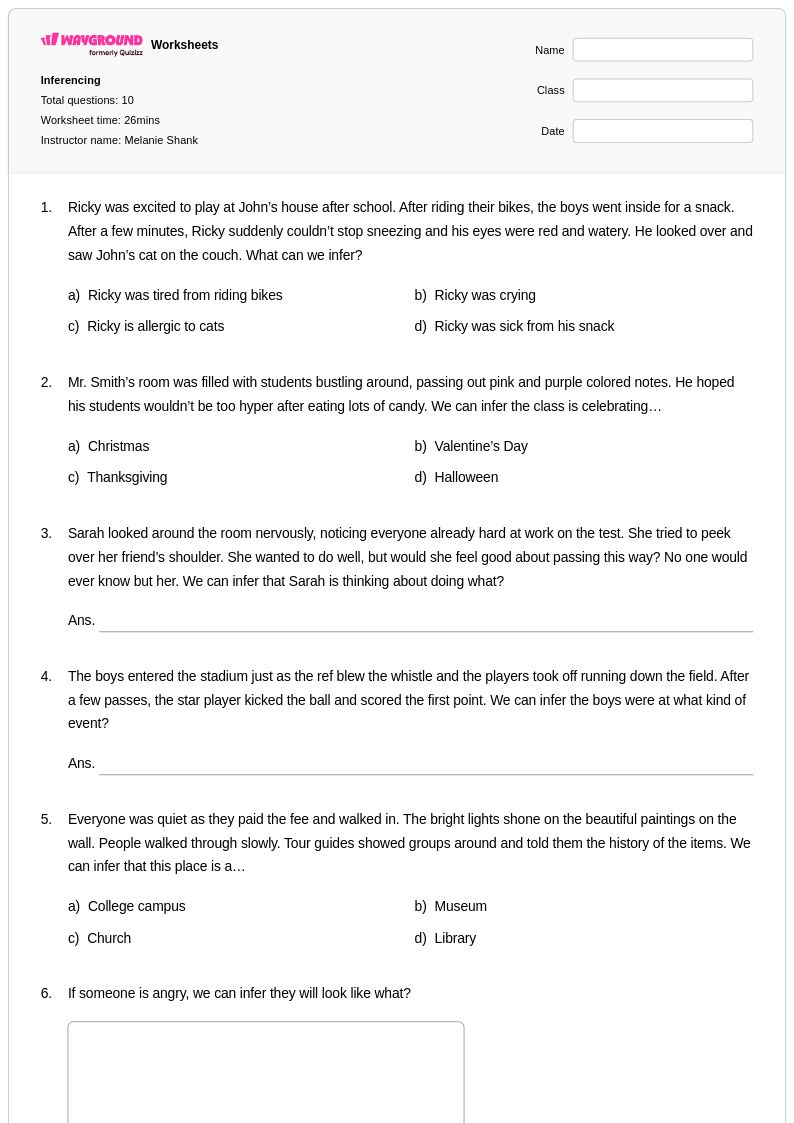
10 Q
5th
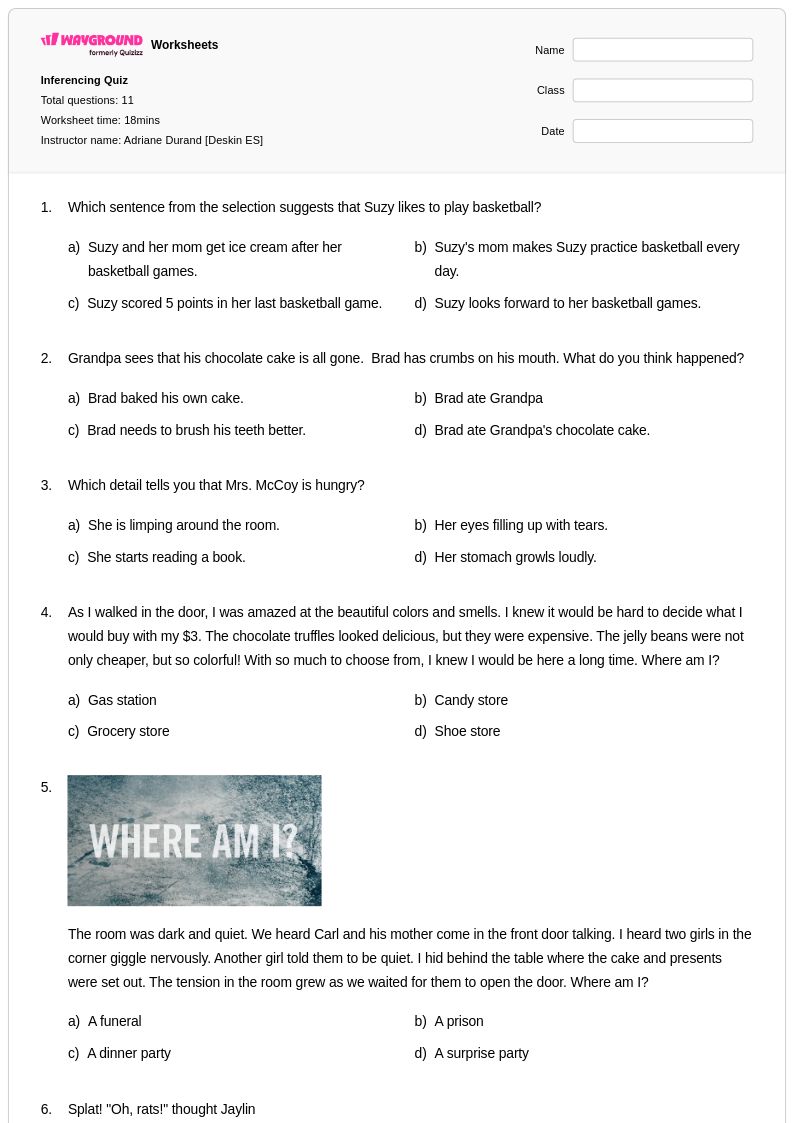
11 Q
1st - 5th
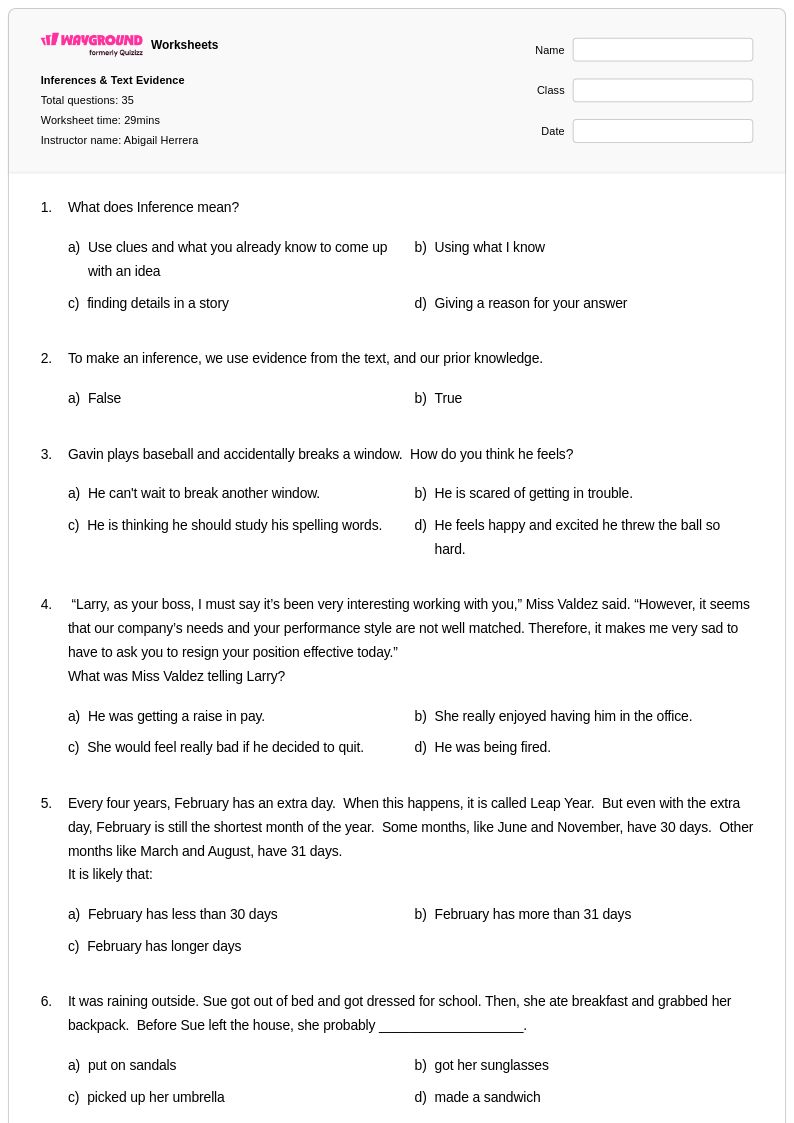
35 Q
7th
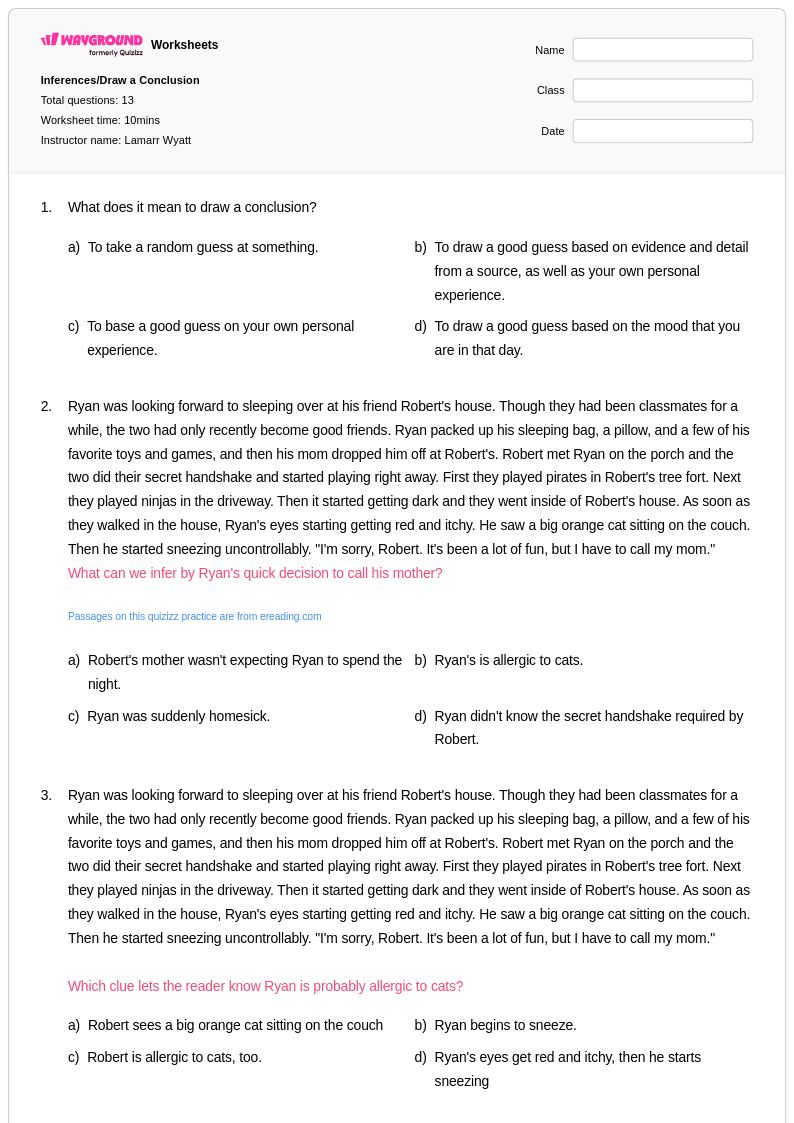
13 Q
5th
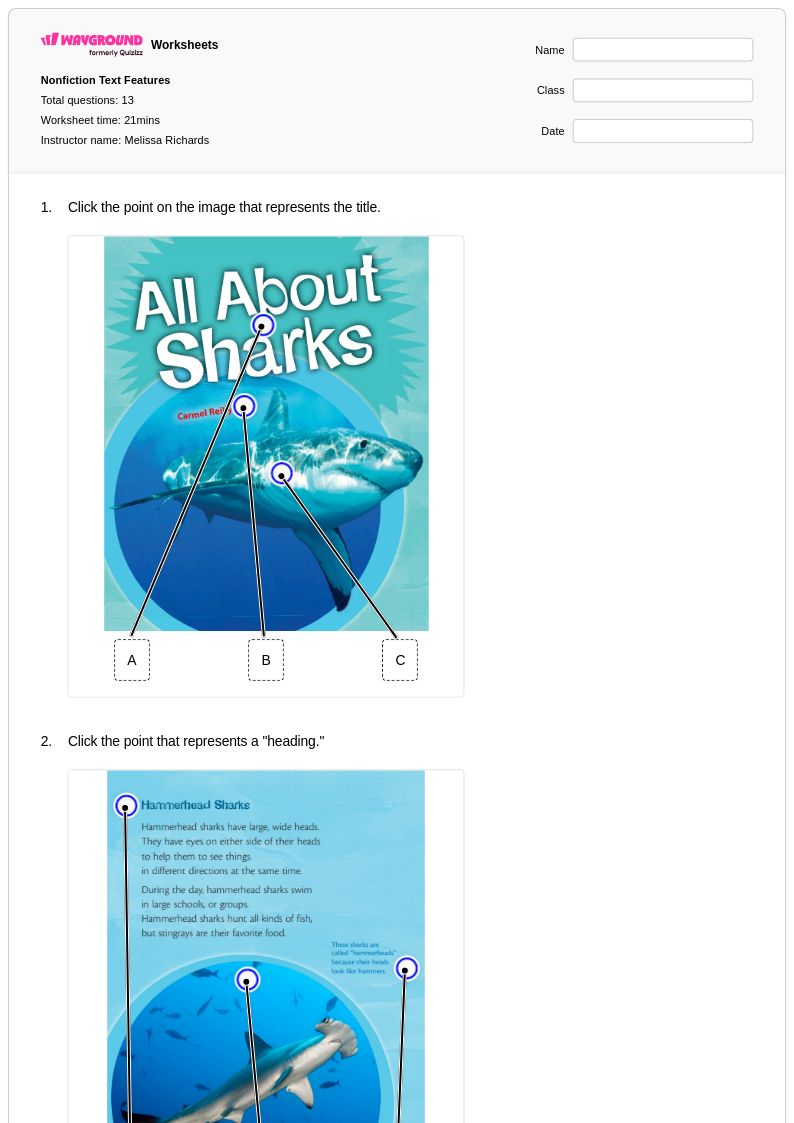
13 Q
2nd
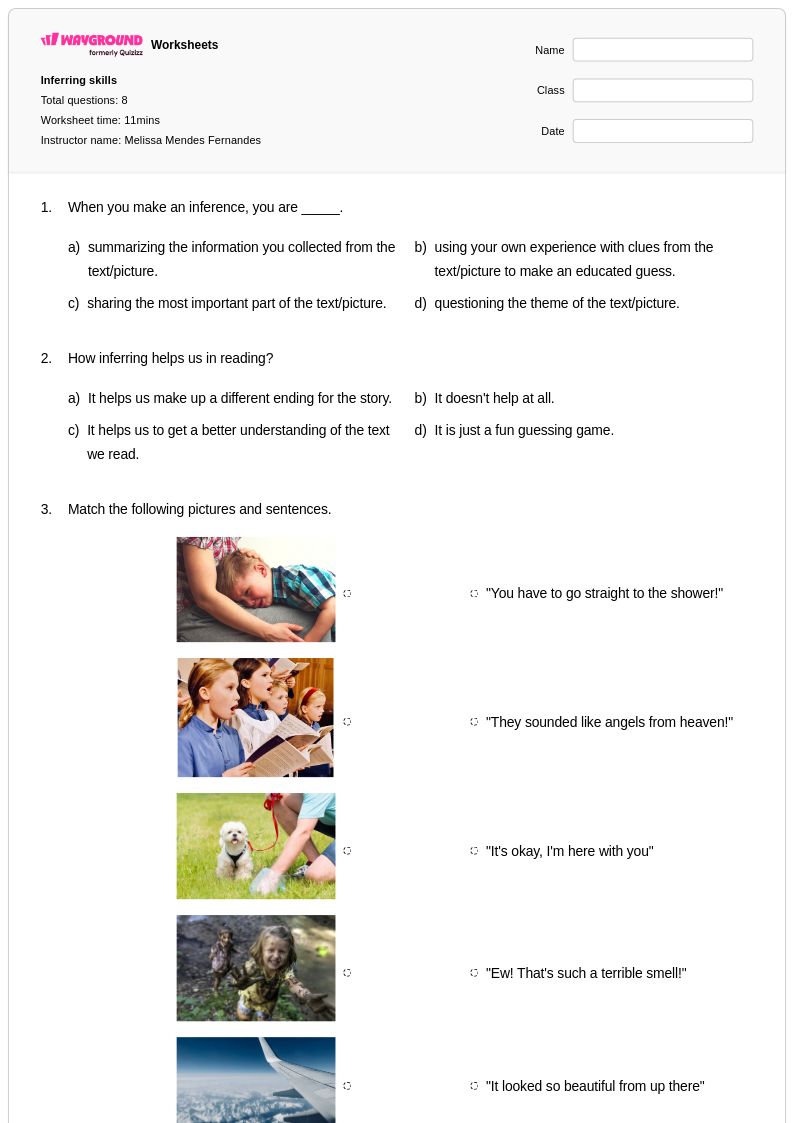
8 Q
2nd
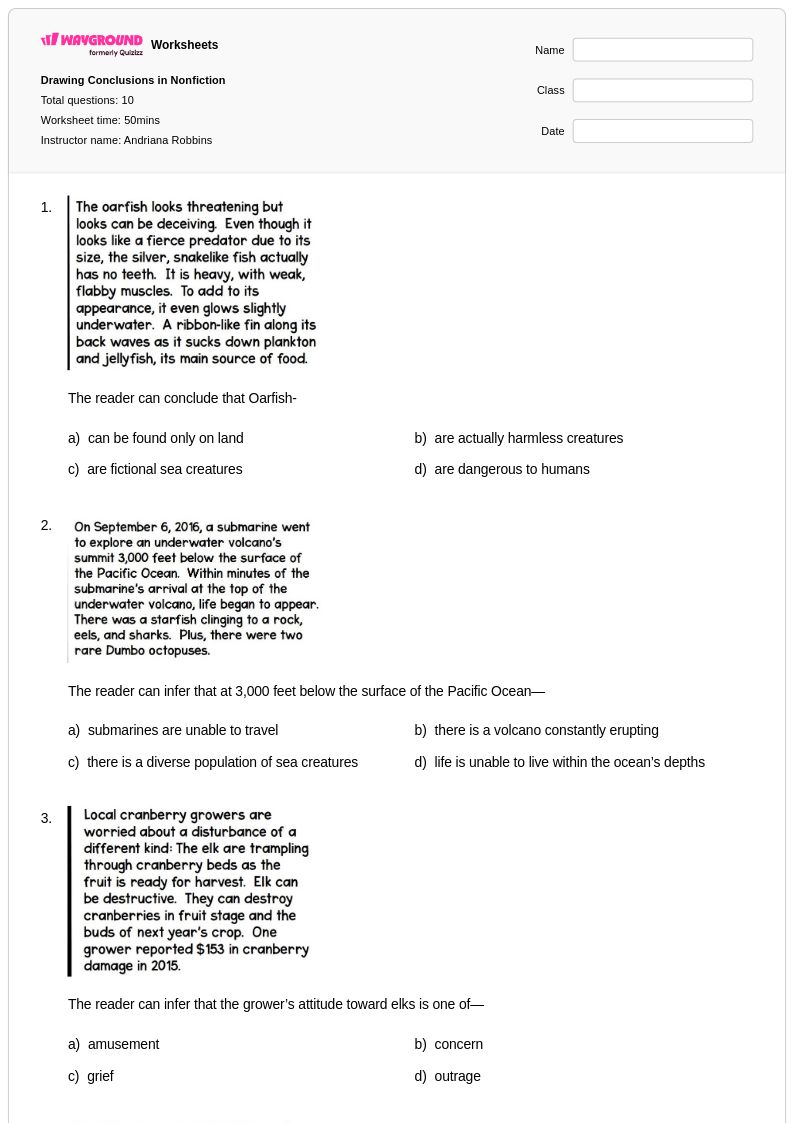
10 Q
4th
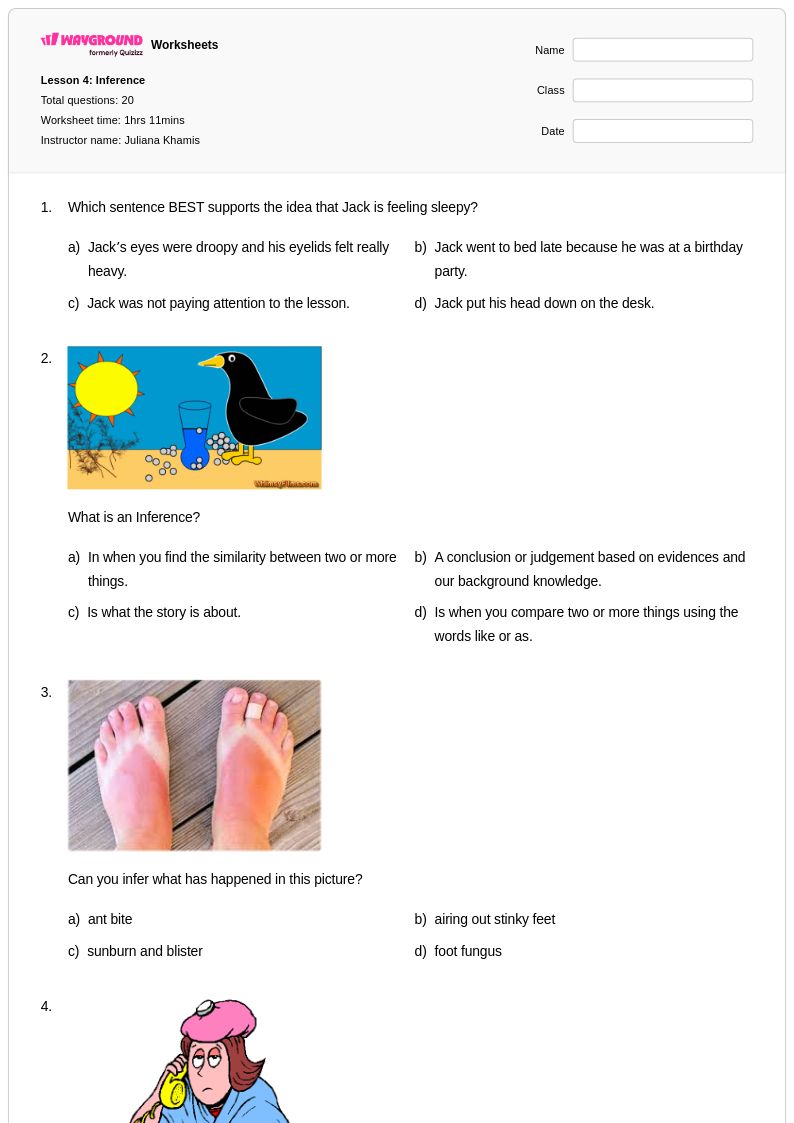
20 Q
11th
9 Q
4th
15 Q
4th
10 Q
6th
10 Q
3rd - 5th
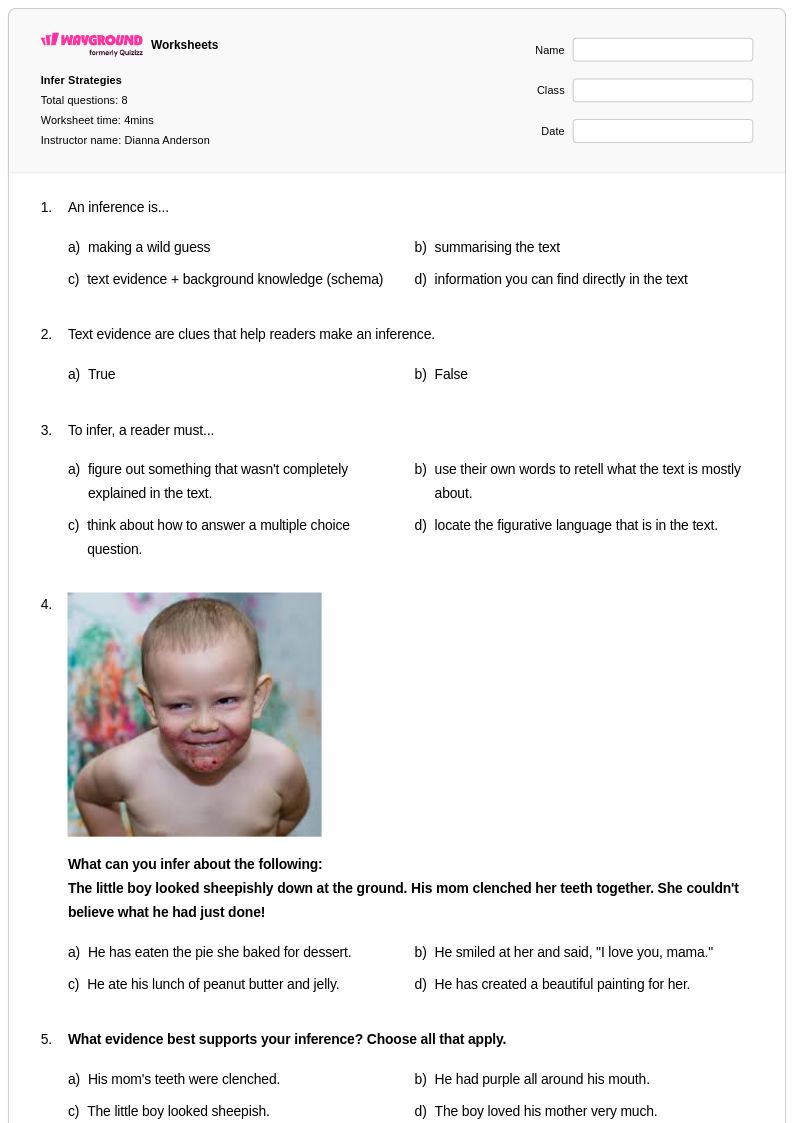
8 Q
6th
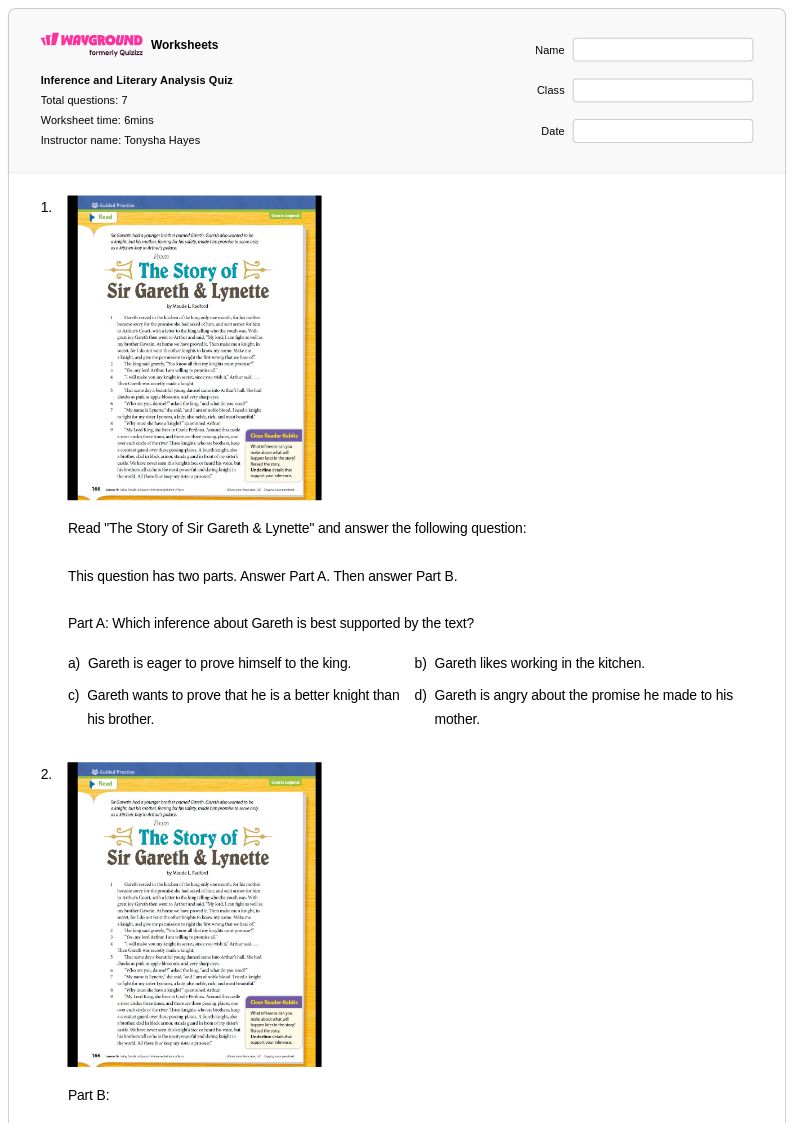
7 Q
4th - 5th
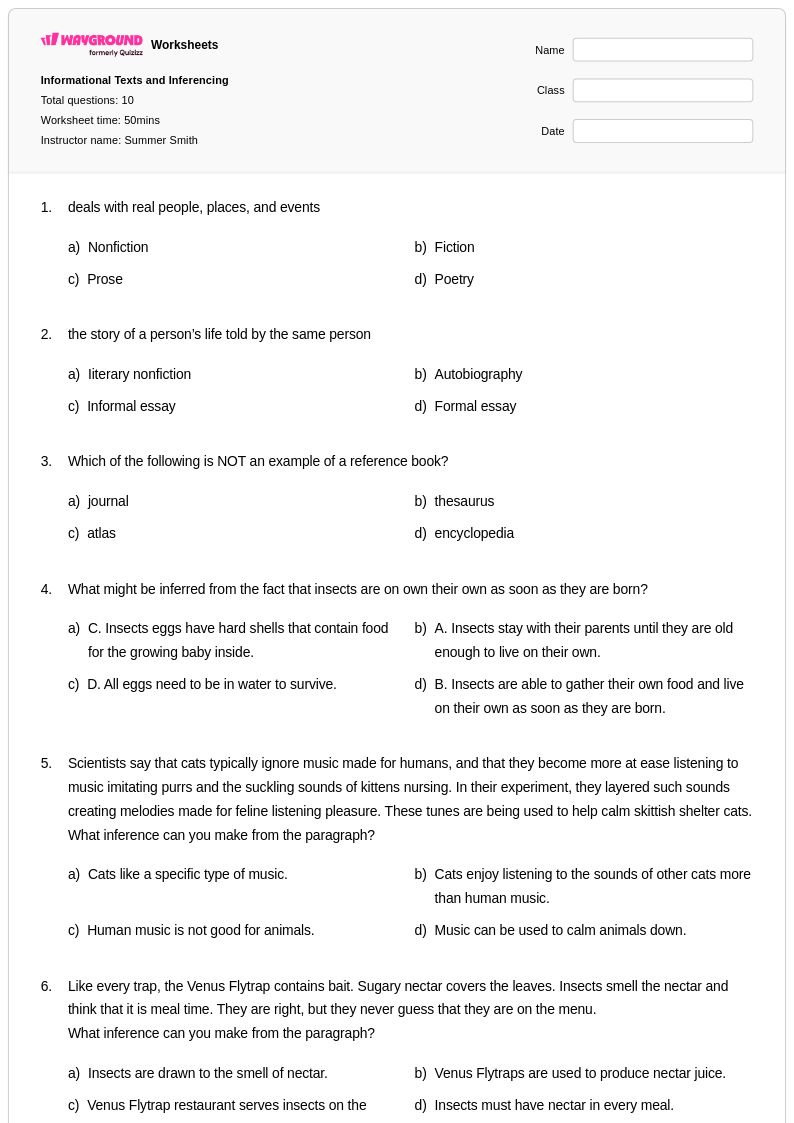
10 Q
6th
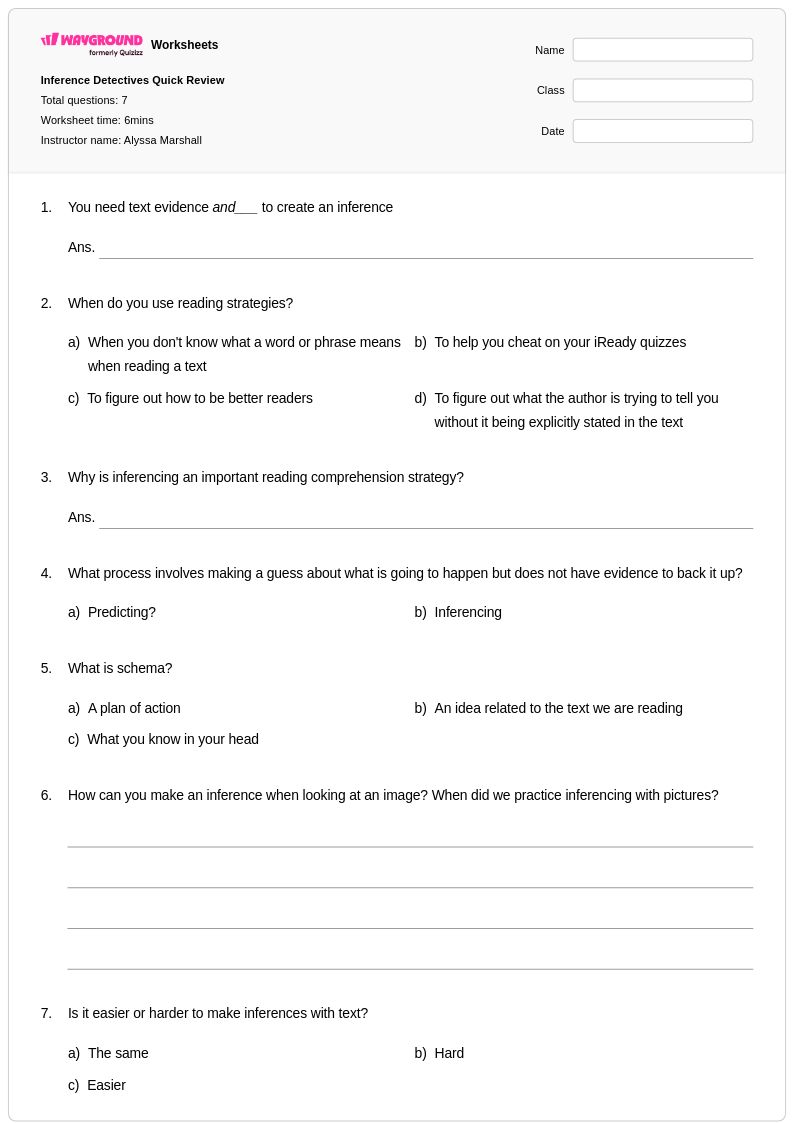
7 Q
5th
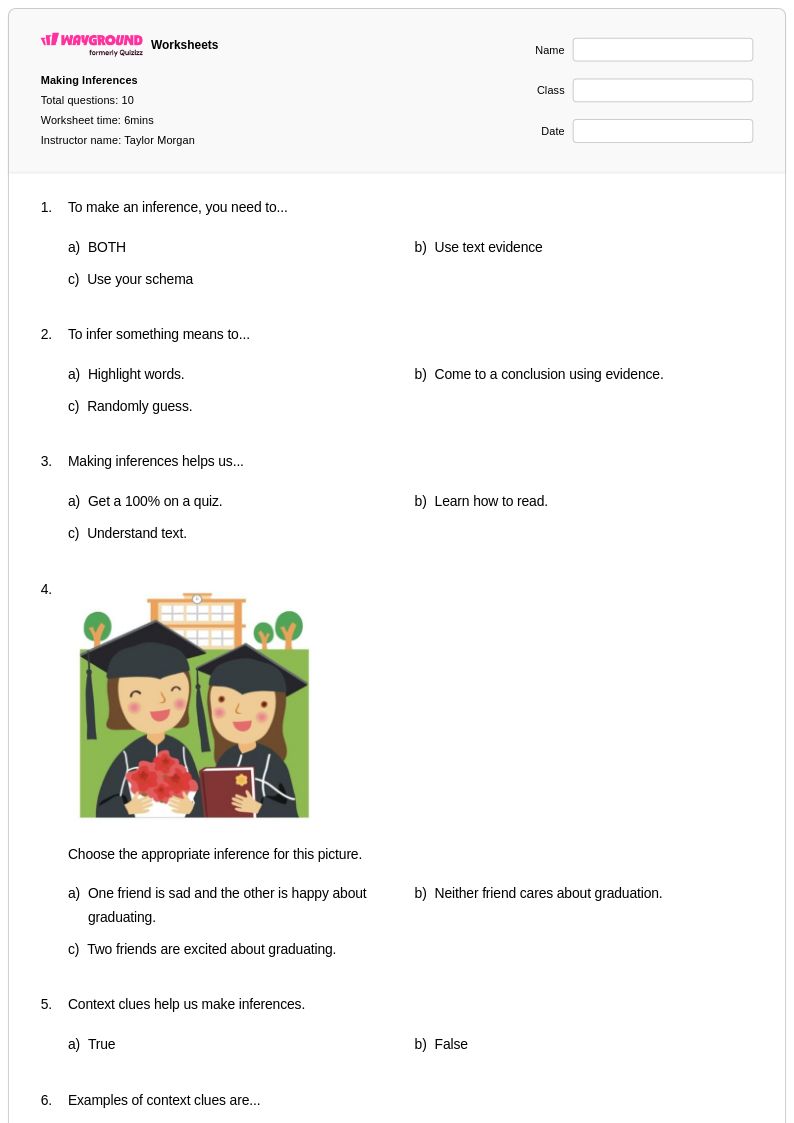
10 Q
3rd - 4th
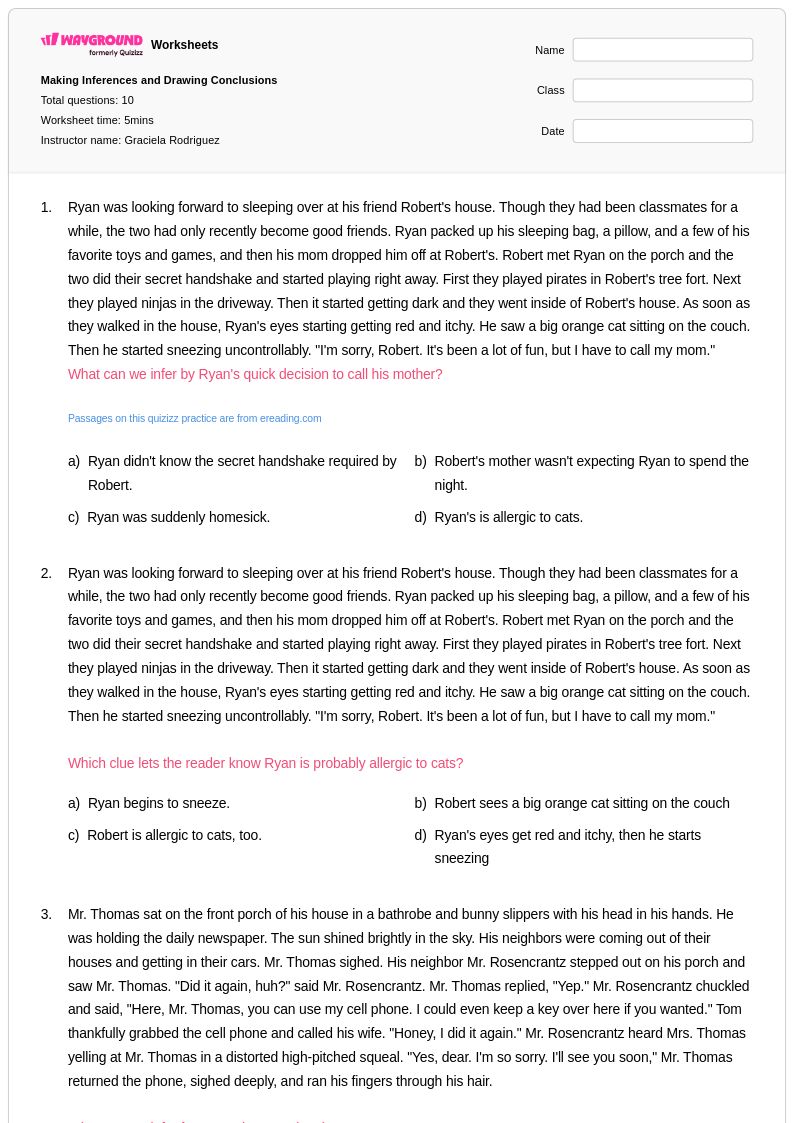
10 Q
9th - 12th
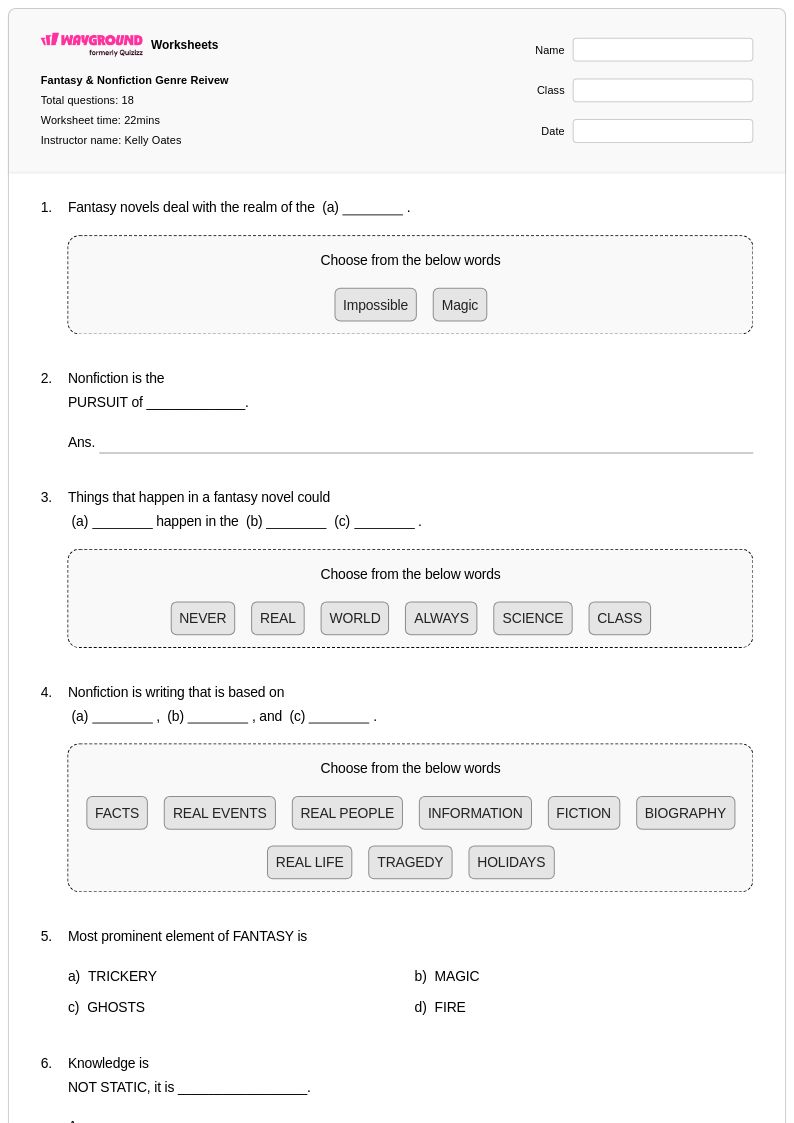
18 Q
6th
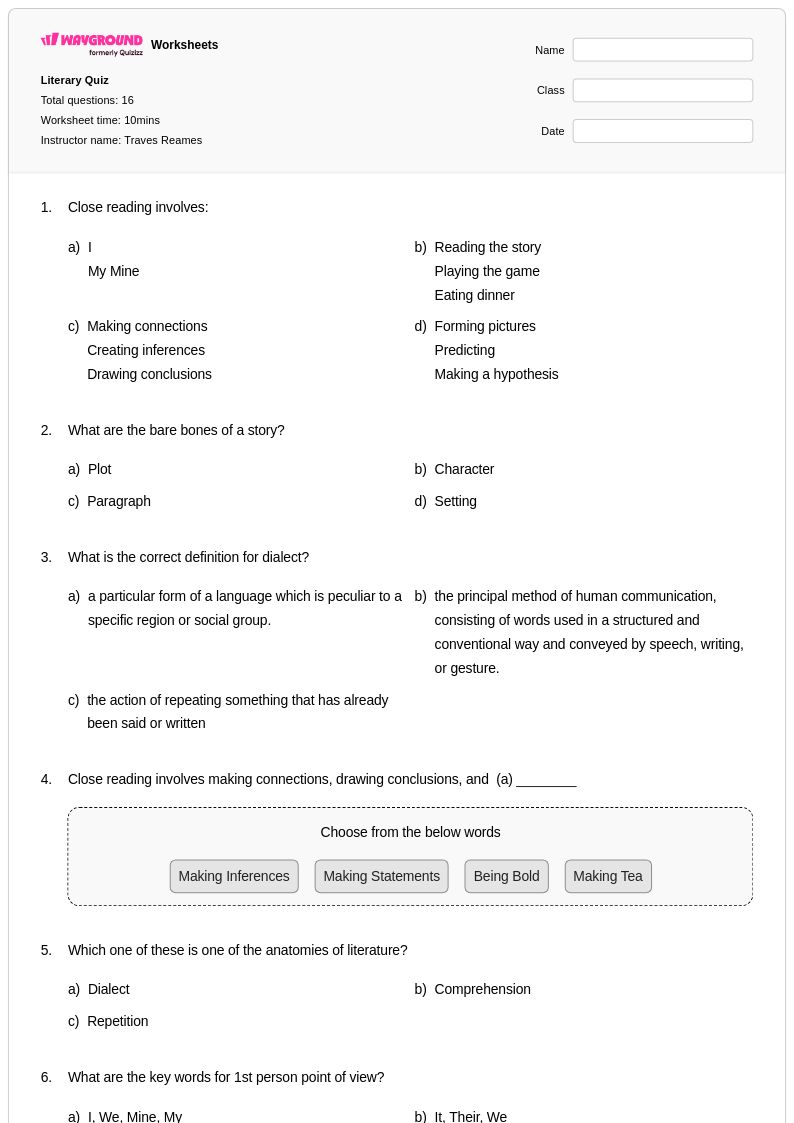
16 Q
7th
10 Q
7th
15 Q
9th
7 Q
8th
20 Q
7th - Uni
Explore Worksheets by Subjects
Explore printable Making Inferences in Nonfiction worksheets
Making inferences in nonfiction texts represents a fundamental reading comprehension skill that enables students to extract deeper meaning from informational materials by connecting explicit details with background knowledge to form logical conclusions. Wayground's comprehensive collection of making inferences in nonfiction worksheets provides students with structured practice opportunities to develop this critical thinking ability through carefully curated passages and targeted questions. These educational resources strengthen students' analytical skills by challenging them to identify supporting evidence, recognize implicit information, and draw reasonable conclusions from factual texts across various subjects including science, history, and current events. Each worksheet includes detailed answer keys that support both independent learning and guided instruction, while the free printable format ensures accessibility for diverse classroom environments and practice problems that progressively build inferential reasoning abilities.
Wayground's extensive library, featuring millions of teacher-created resources, empowers educators with robust search and filtering capabilities specifically designed to locate high-quality making inferences in nonfiction materials aligned with curriculum standards and individual student needs. The platform's differentiation tools enable teachers to customize worksheets based on reading levels and learning objectives, while flexible formatting options include both printable pdf versions for traditional classroom use and digital formats for interactive learning experiences. These comprehensive features streamline lesson planning by providing educators with ready-to-use materials for skill practice, targeted remediation for struggling readers, and enrichment opportunities for advanced students, ultimately supporting effective instruction that helps learners develop sophisticated reading comprehension strategies essential for academic success across all content areas.