Free Printable Mayan Number System Worksheets for Grade 7
Grade 7 students can master the fascinating Mayan Number System with our free printable worksheets and practice problems, complete with answer keys to help them understand this ancient vigesimal counting method.
Explore printable Mayan Number System worksheets for Grade 7
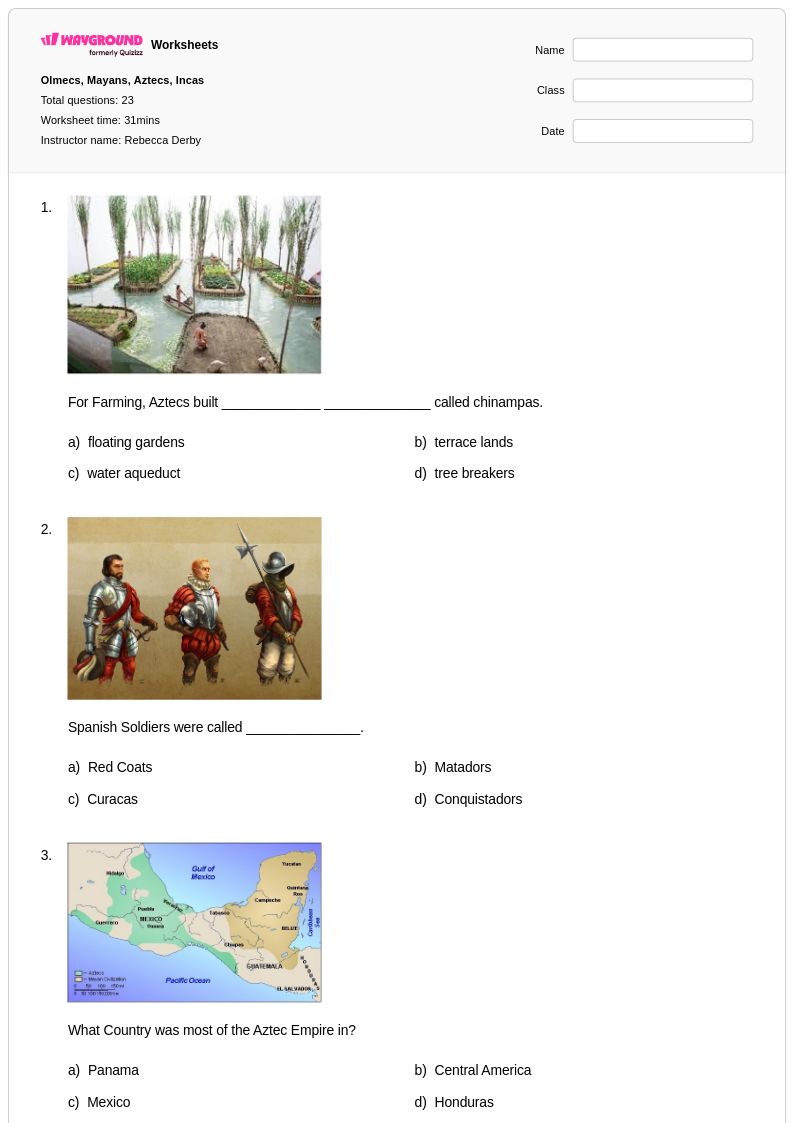
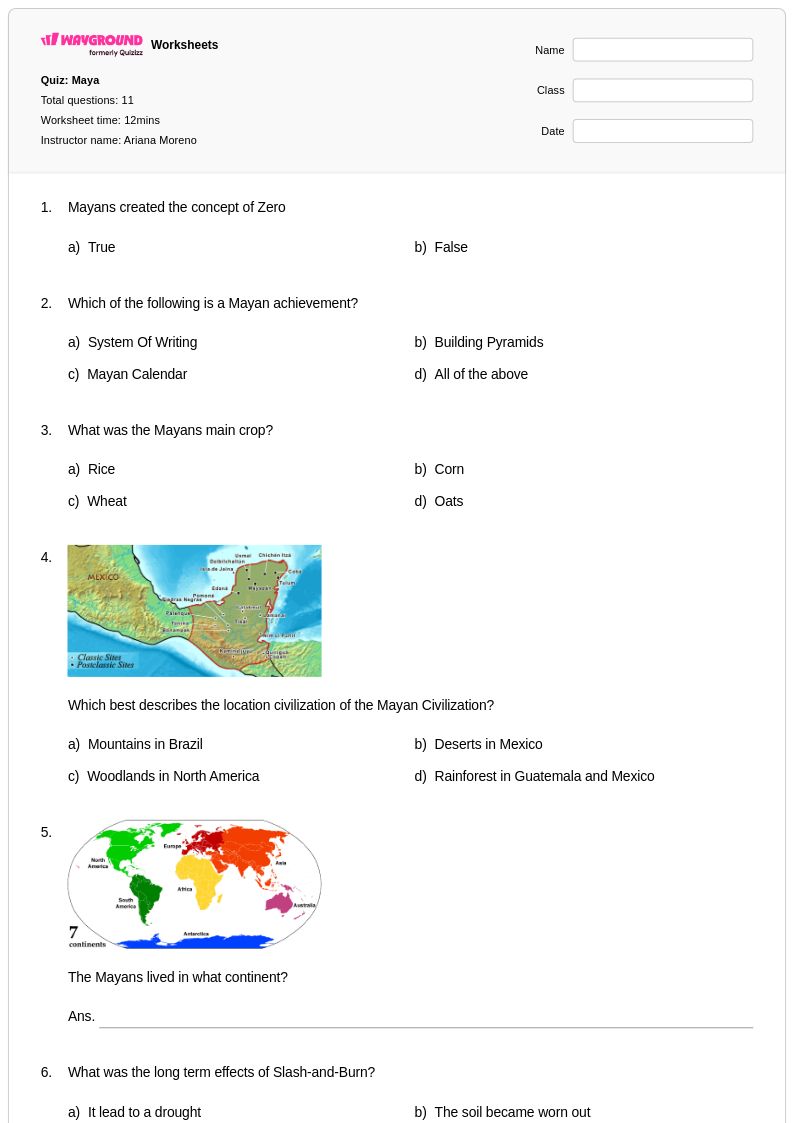
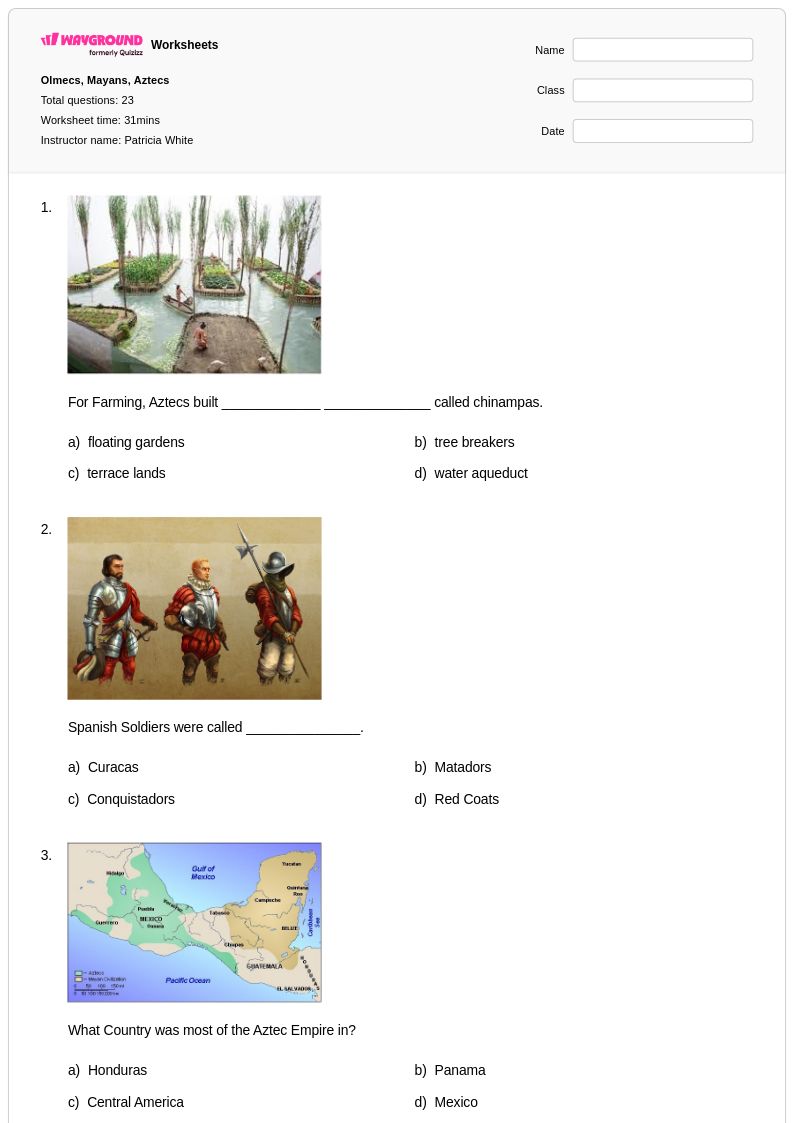
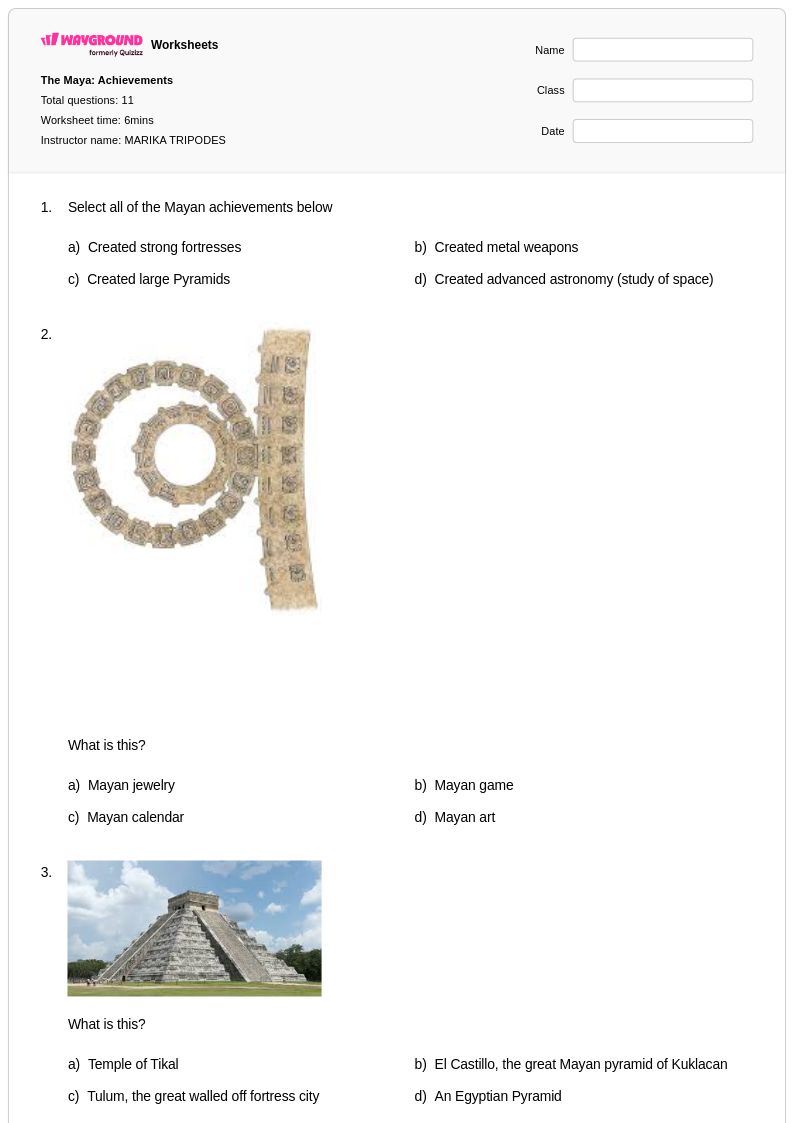
The Mayan Number System worksheets available through Wayground (formerly Quizizz) provide Grade 7 students with comprehensive practice in understanding one of history's most sophisticated mathematical innovations. These carefully designed resources help students master the vigesimal (base-20) counting system used by the Maya civilization, including the recognition and interpretation of Maya numerical symbols, the concept of positional notation, and the revolutionary use of zero as a placeholder. Each worksheet strengthens critical thinking skills as students decode ancient mathematical concepts, compare Maya numerals to modern decimal systems, and solve practice problems that demonstrate how this advanced system enabled complex astronomical and architectural calculations. Teachers can access complete answer keys and free printable pdf versions that make classroom implementation seamless while supporting diverse learning styles through varied problem formats.
Wayground's extensive collection of teacher-created resources ensures educators have access to millions of high-quality materials specifically designed for middle school social studies instruction. The platform's robust search and filtering capabilities allow teachers to quickly locate Mayan Number System worksheets that align with curriculum standards and match their students' specific learning needs. Advanced differentiation tools enable instructors to customize content complexity, while flexible formatting options provide both printable and digital pdf versions for hybrid learning environments. These features significantly enhance lesson planning efficiency and support targeted remediation for students who need additional practice with mathematical concepts in historical contexts, while also offering enrichment opportunities for advanced learners ready to explore connections between ancient Maya mathematics and modern mathematical principles.
FAQs
How do I teach the Mayan number system to students?
Start by introducing the three core symbols: a dot (value of 1), a bar (value of 5), and a shell (value of 0). Teach students how these symbols stack vertically in place values that increase by powers of 20, which is the foundation of the vigesimal base-20 system. Connecting this to students' existing knowledge of place value in the base-10 system helps anchor the new concept before moving into conversions and calculations.
What exercises help students practice reading and writing Mayan numbers?
Effective practice exercises include converting Hindu-Arabic numerals into Mayan notation and vice versa, identifying the value of each positional layer in a stacked Mayan number, and completing partially drawn Mayan numbers. Worksheets that ask students to perform simple addition using Mayan symbols reinforce both symbol recognition and an understanding of how the positional system operates.
What mistakes do students commonly make when learning the Mayan number system?
The most common error is applying base-10 place value logic to a base-20 system, causing students to misread the positional layers. Students also frequently confuse the shell symbol for zero as decorative rather than functional, which leads to miscounting place values. Another common mistake is misreading stacked symbols — for example, treating two bars as ten rather than recognizing them as a grouped value within a single position.
How does the Mayan number system connect to social studies and math standards?
The Mayan number system bridges mathematics and social studies by contextualizing place value and numeration within the study of ancient Mesoamerican civilizations. It supports math standards around base systems, place value, and number representation while also meeting social studies standards related to the contributions of ancient civilizations. This cross-curricular relevance makes it a strong addition to Maya civilization units at the upper elementary and middle school levels.
How can I use Mayan number system worksheets in my classroom?
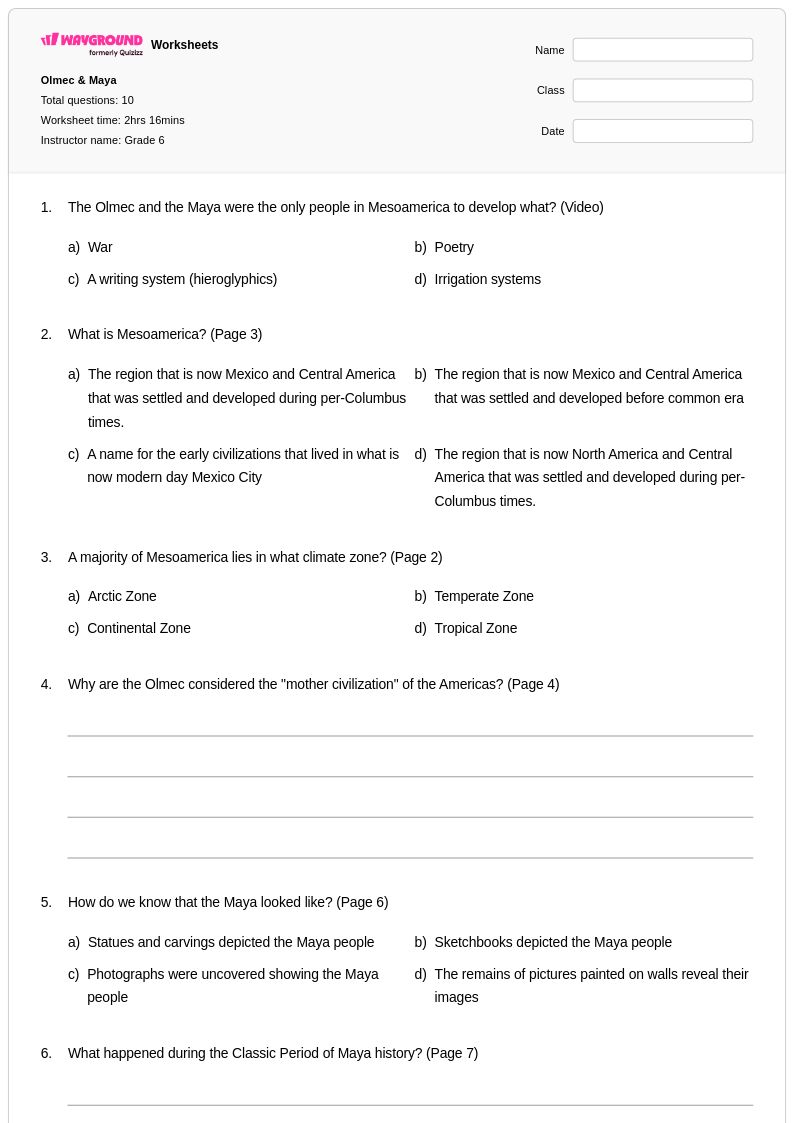
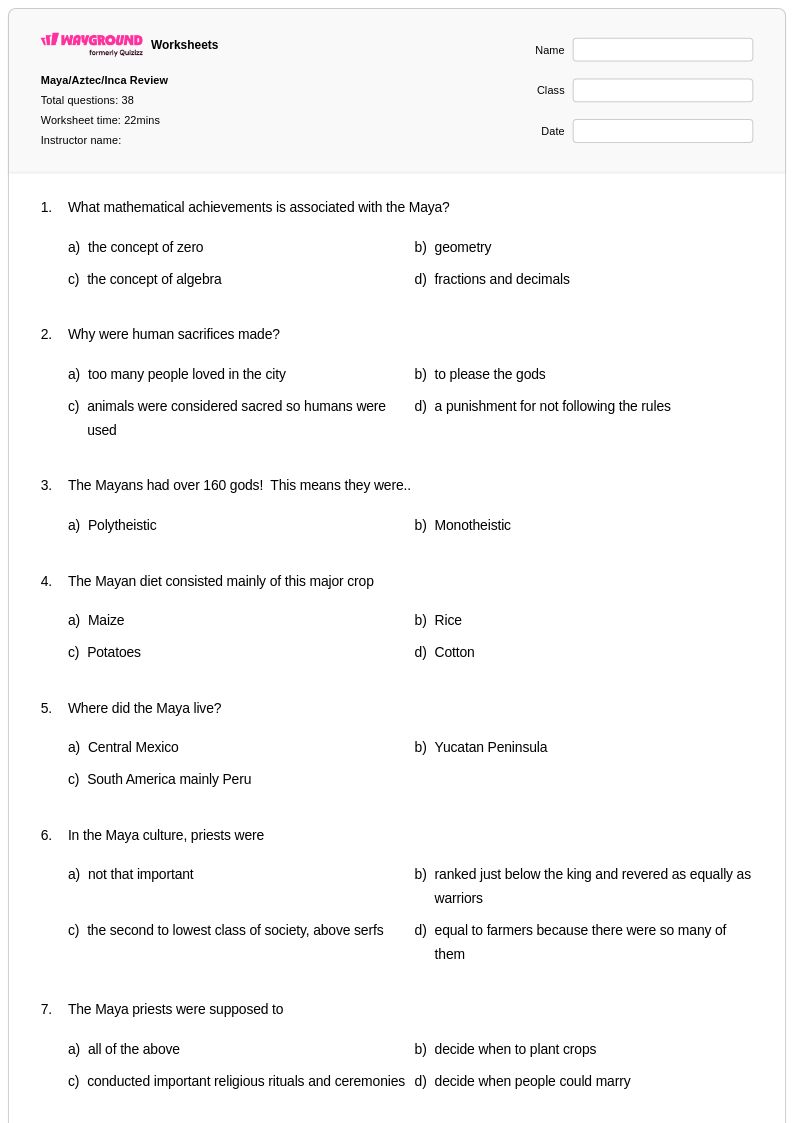
Wayground's Mayan number system worksheets are available as printable PDFs for traditional classroom use and in digital formats for technology-integrated environments, including the option to host them as a quiz on Wayground. Printable versions work well for hands-on independent practice or small group work during a Maya civilization unit, while digital formats allow for self-paced or assigned review. All worksheets include complete answer keys, reducing teacher prep time and making them suitable for both instruction and independent study.
How do I differentiate Mayan number system instruction for diverse learners?
For students who need additional support, begin with single-position Mayan numbers before introducing multi-layer stacked values, and use visual anchor charts pairing each symbol with its numeric equivalent. On Wayground, teachers can apply accommodations such as Read Aloud for students who benefit from audio support, reduced answer choices to lower cognitive load, and extended time for students who need it. These settings can be assigned individually so differentiated students receive tailored support while the rest of the class works through default settings.

![Mayan Review [New] - Printable Mayan-number-system Worksheets Grade 7 - Wayground](https://quizizz-static.s3.amazonaws.com/_media/worksheets-new/6446713778c20d001d20ac1c-mayan-review-new)