
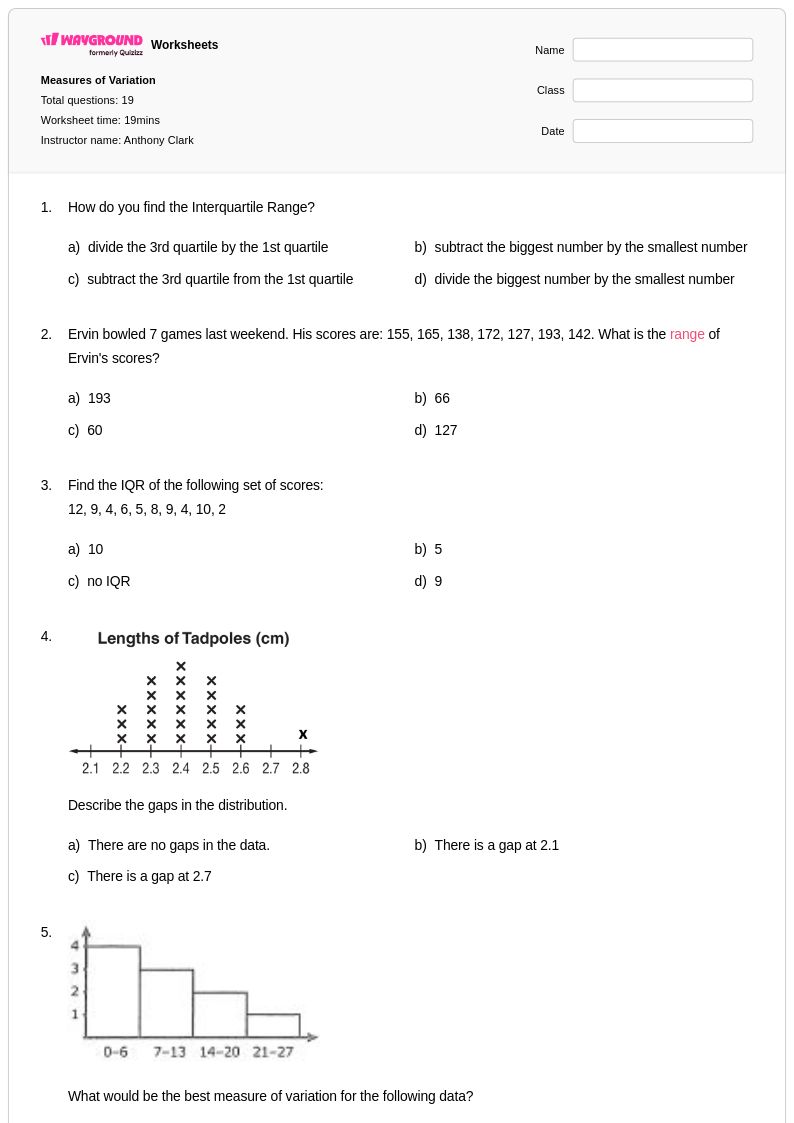
19 Q
6th - Uni
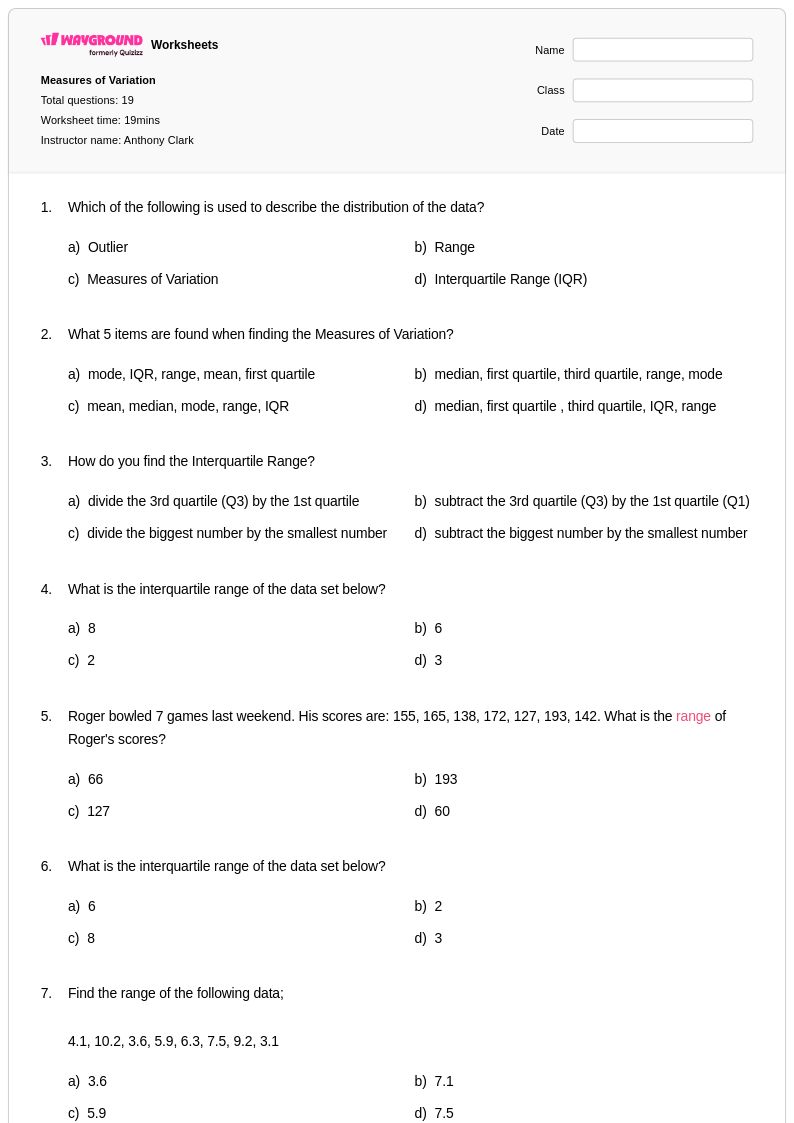
19 Q
6th - Uni
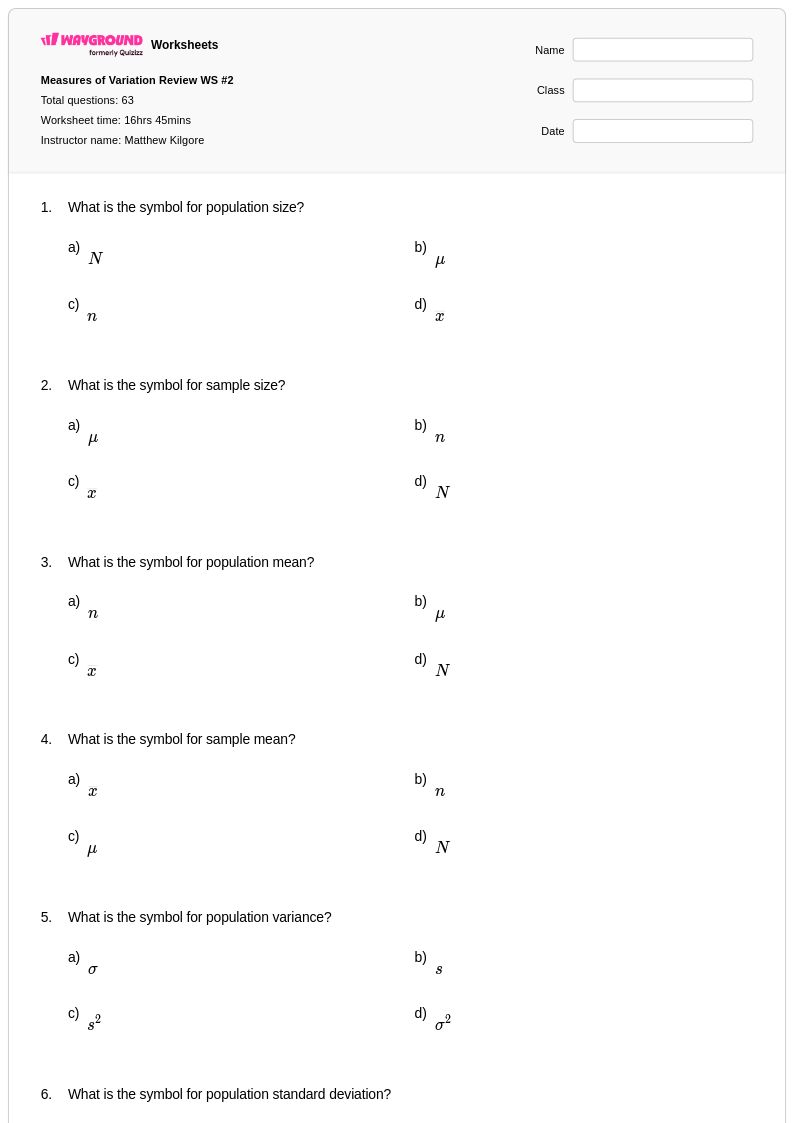
63 Q
11th - Uni
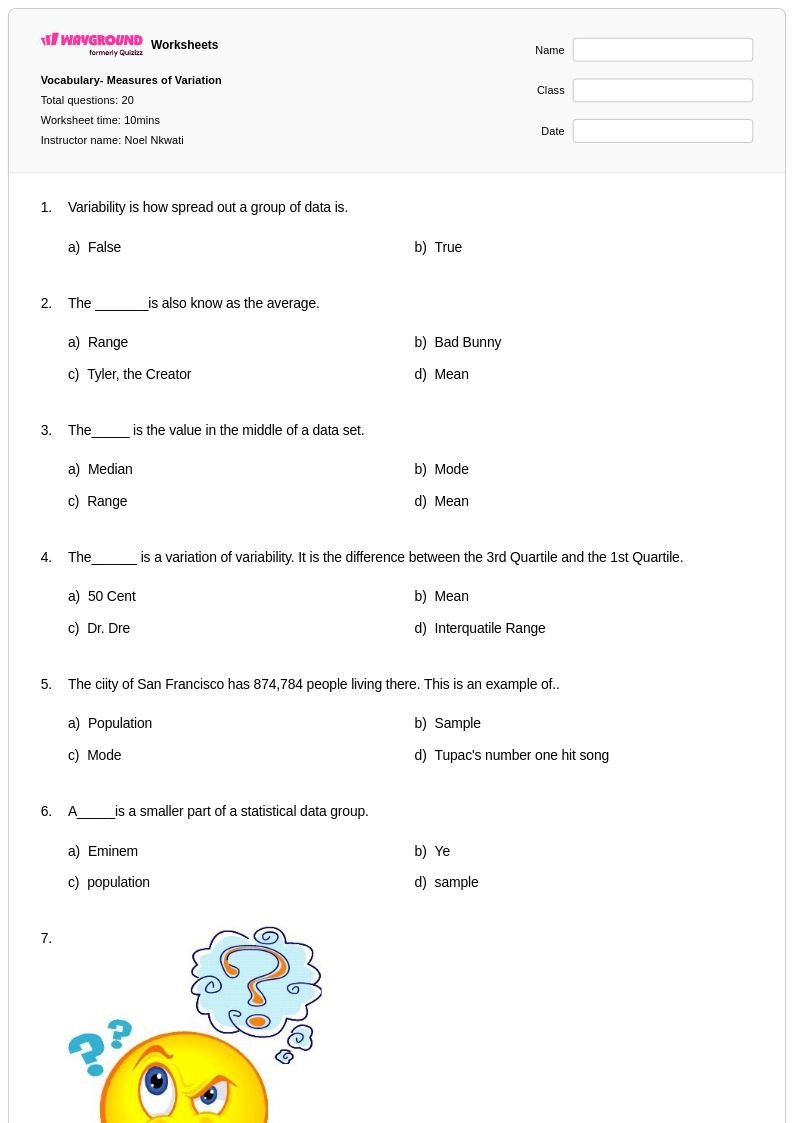
20 Q
10th - 12th
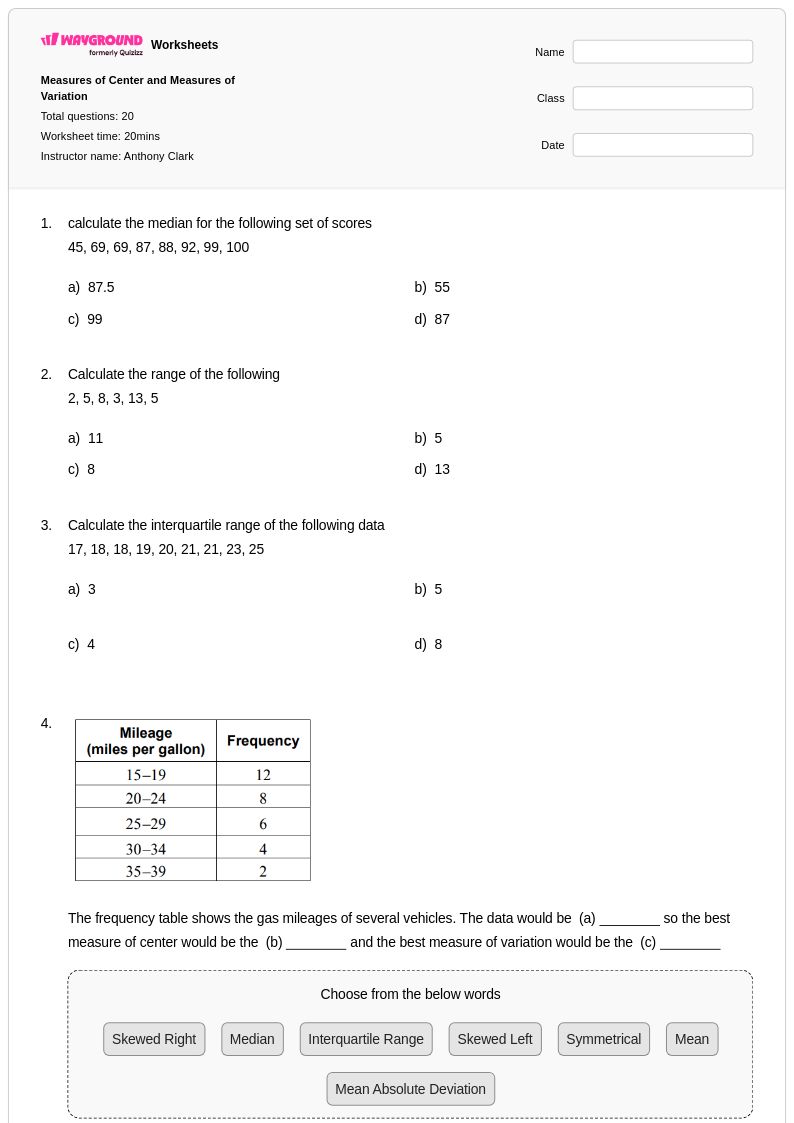
20 Q
7th - Uni
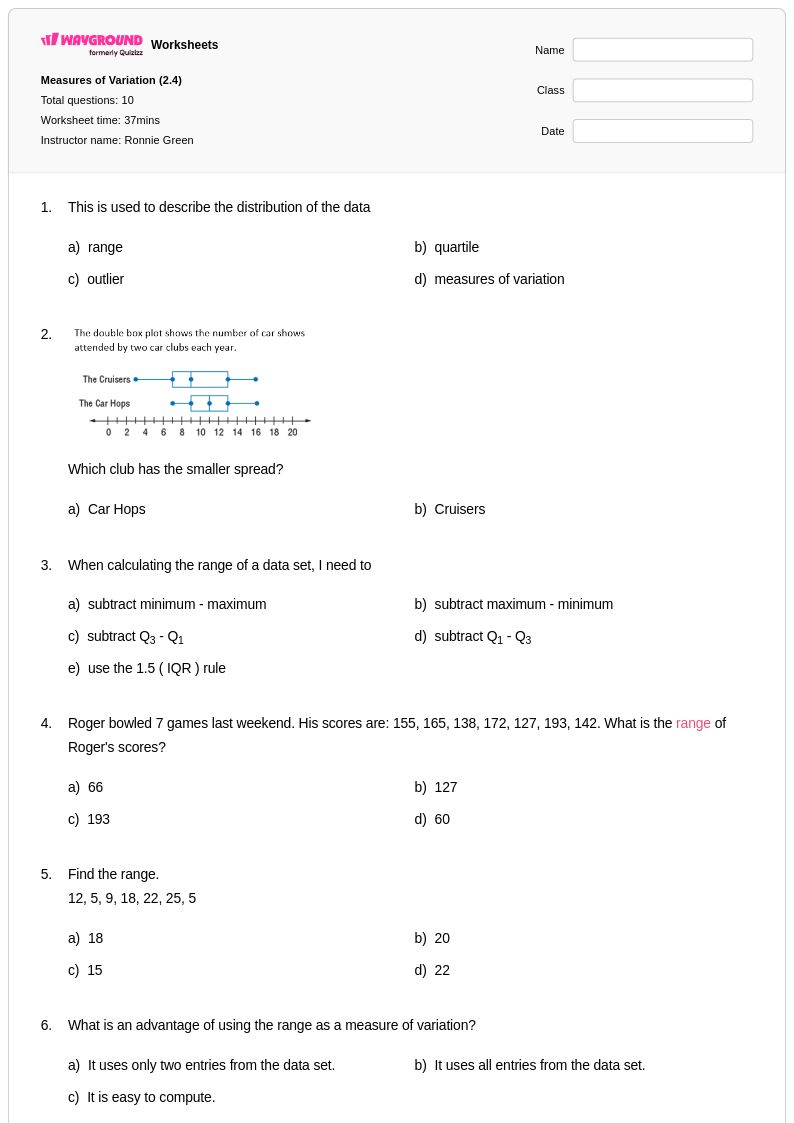
10 Q
9th - 12th
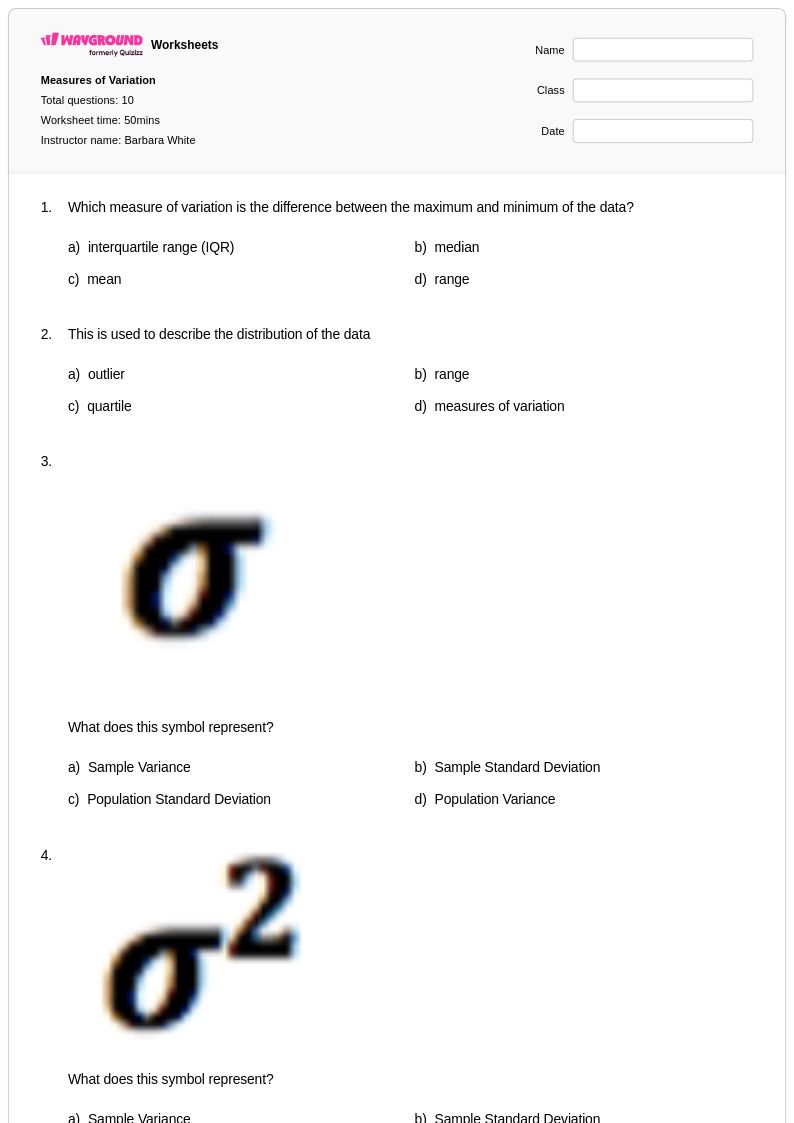
10 Q
10th - 12th
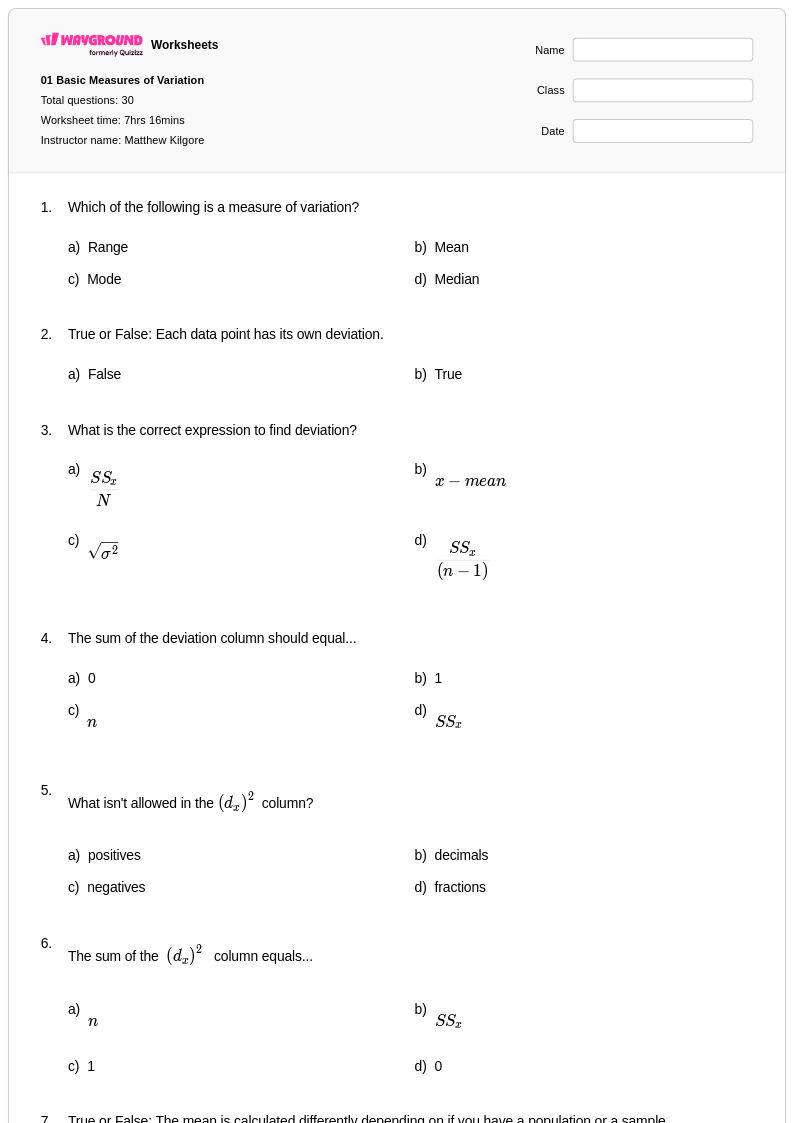
30 Q
11th - Uni
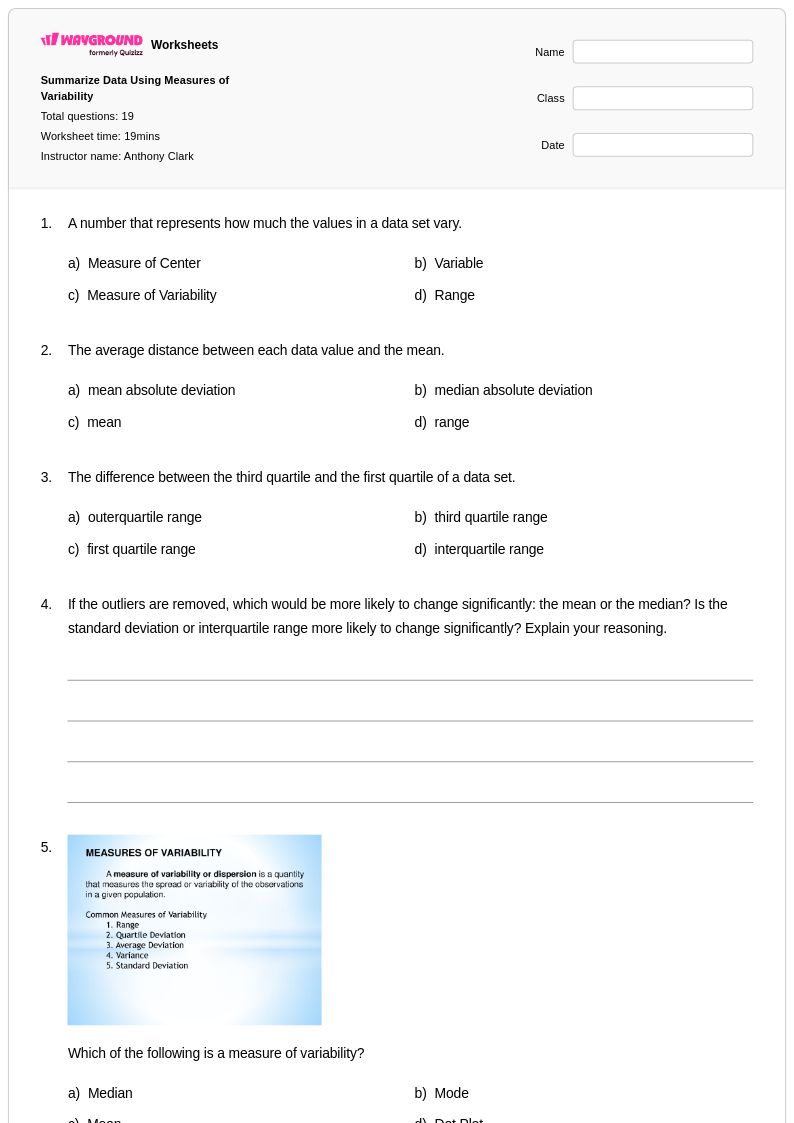
19 Q
6th - Uni
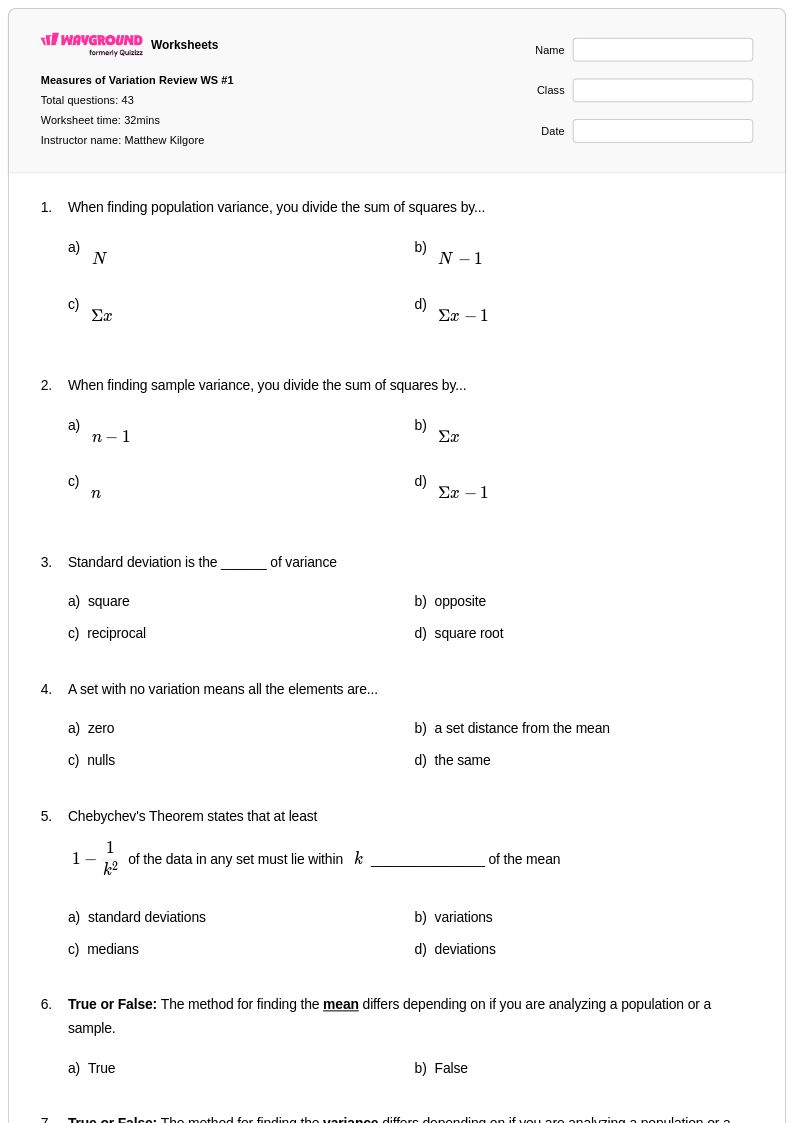
43 Q
11th - 12th
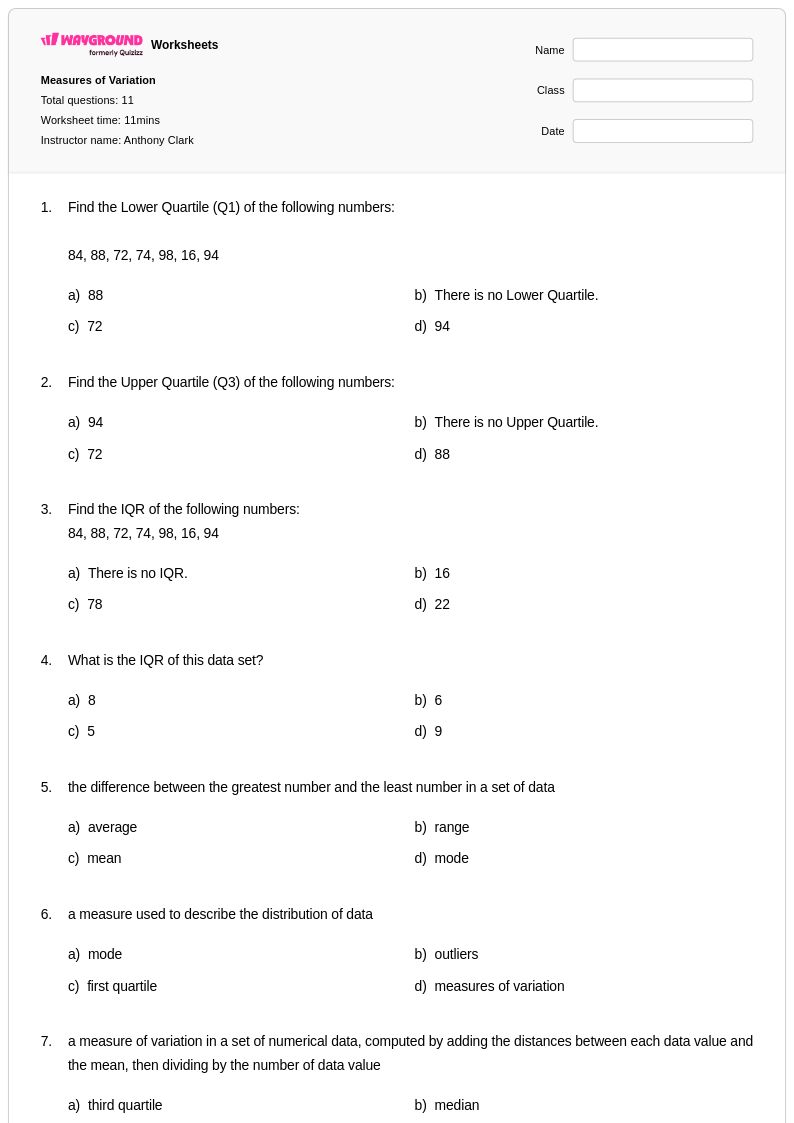
11 Q
6th - Uni
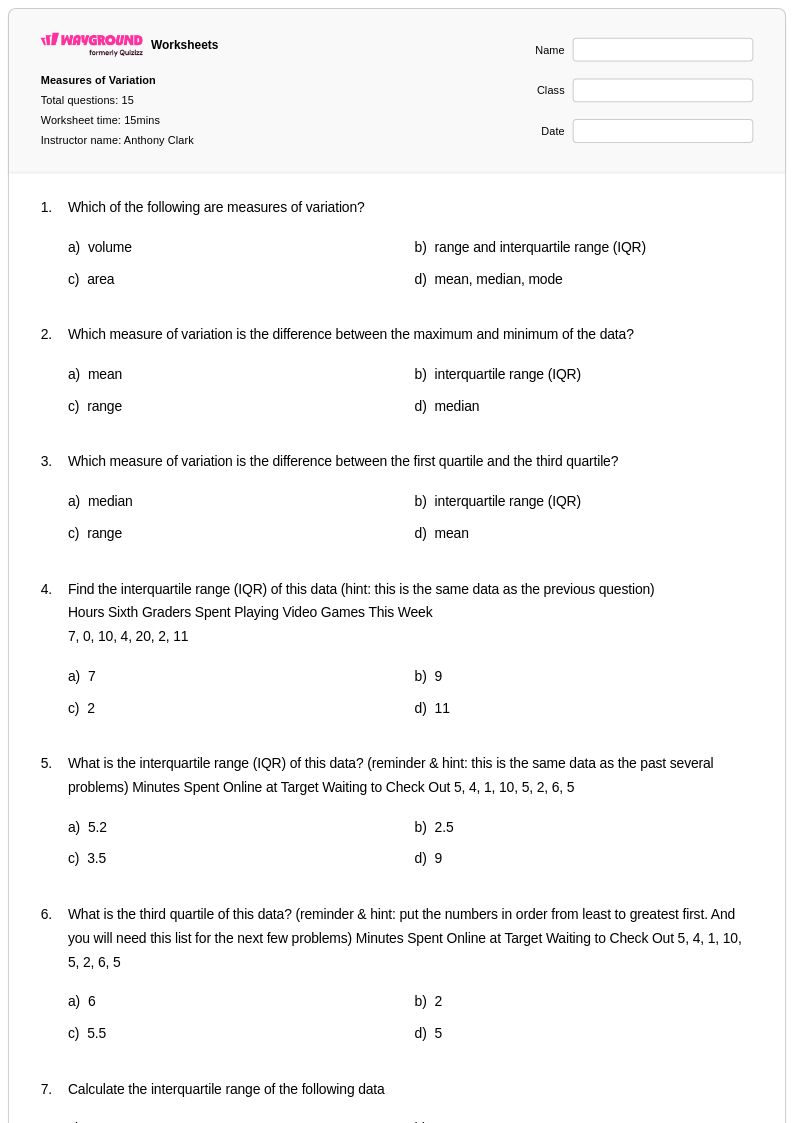
15 Q
6th - Uni
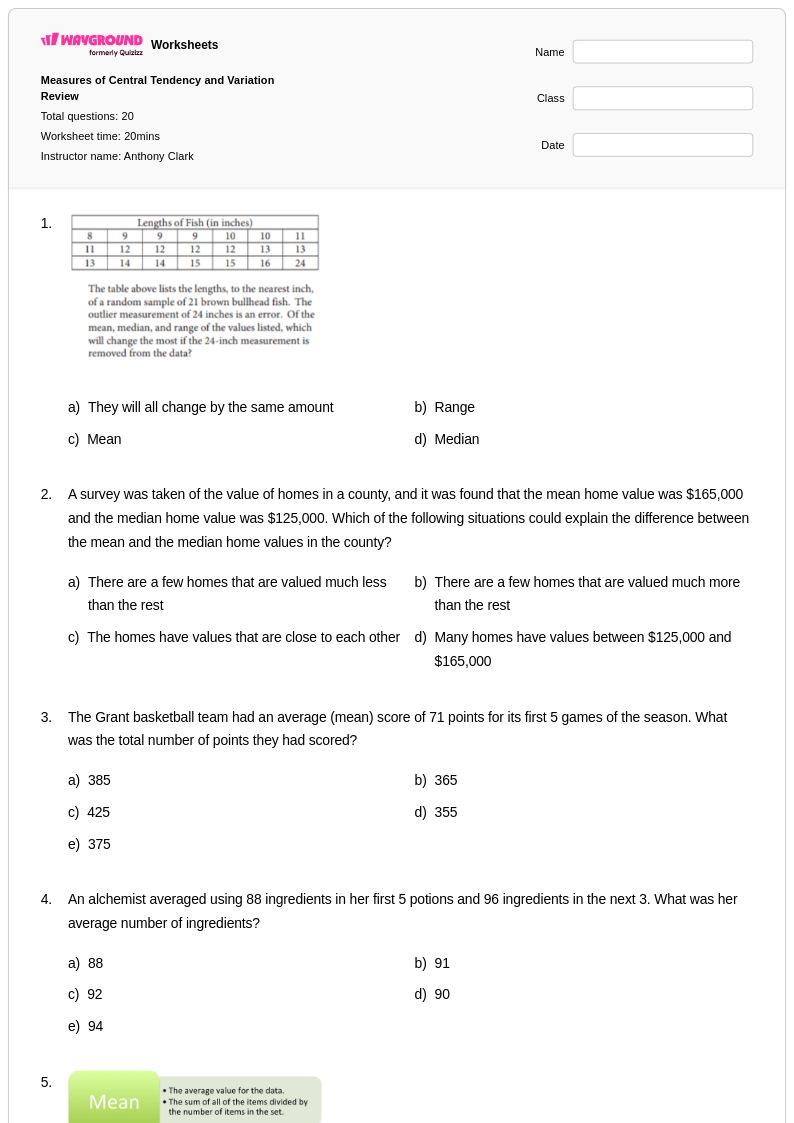
20 Q
7th - Uni
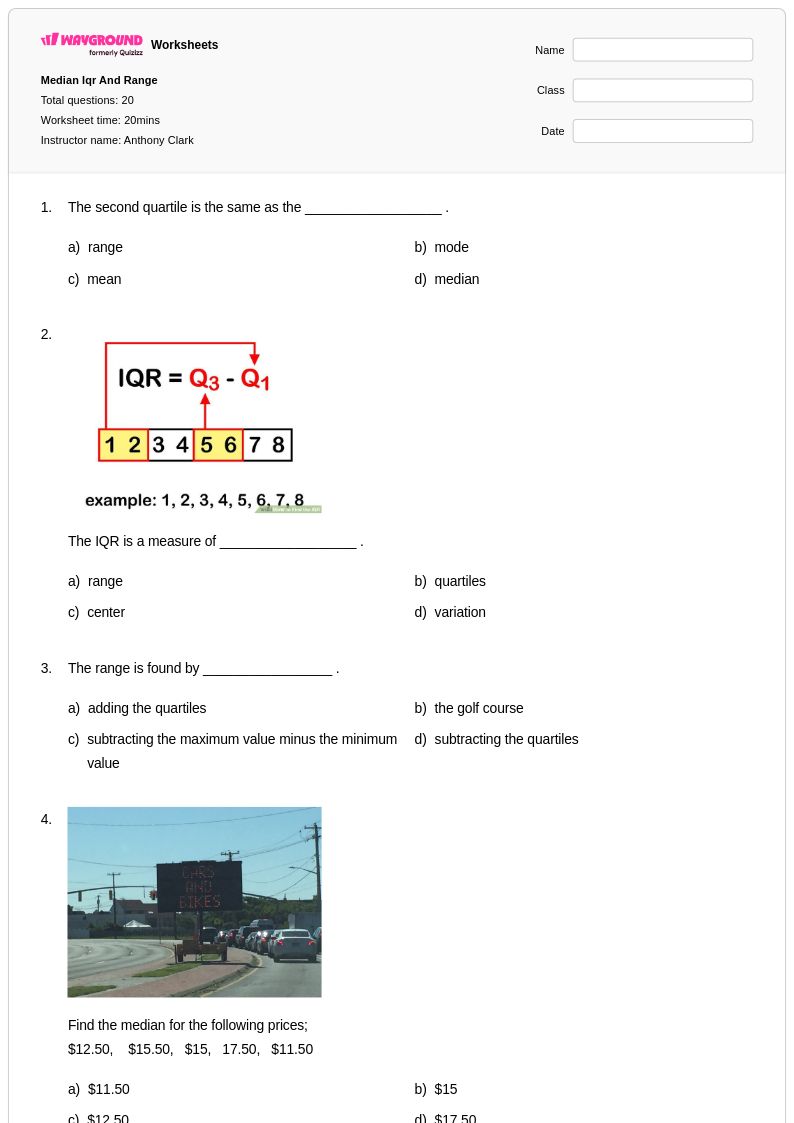
20 Q
6th - Uni
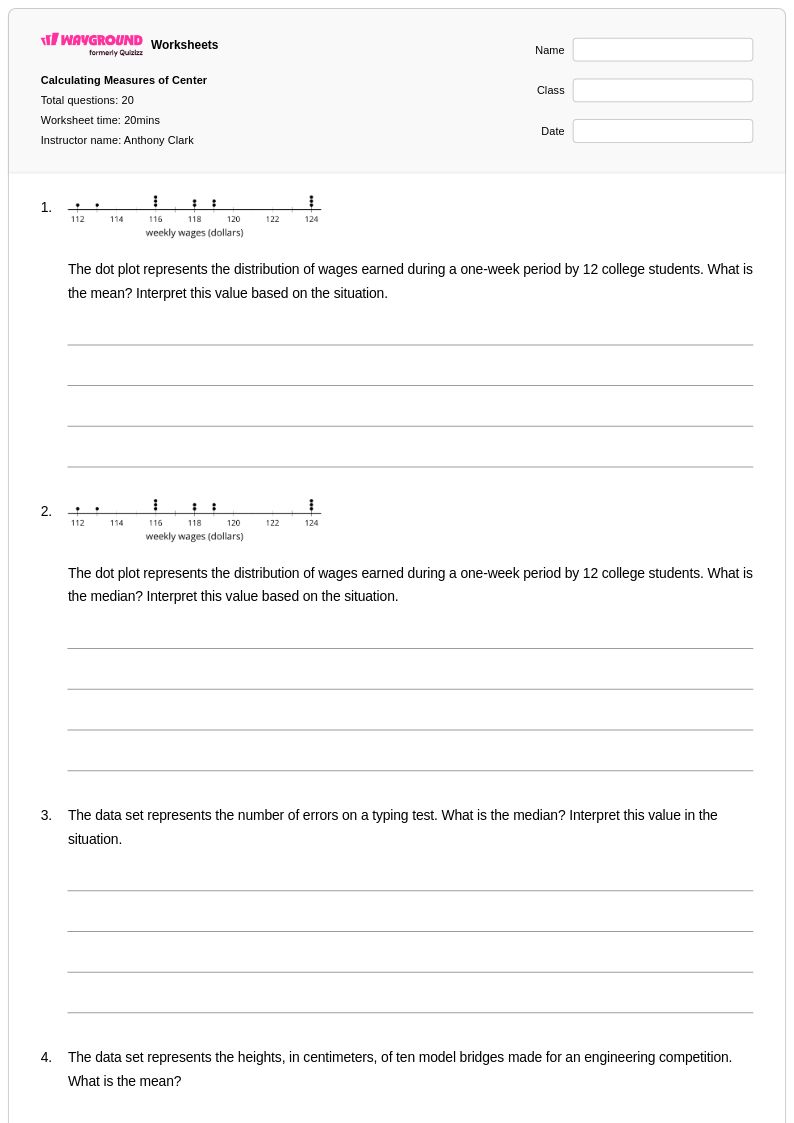
20 Q
6th - Uni
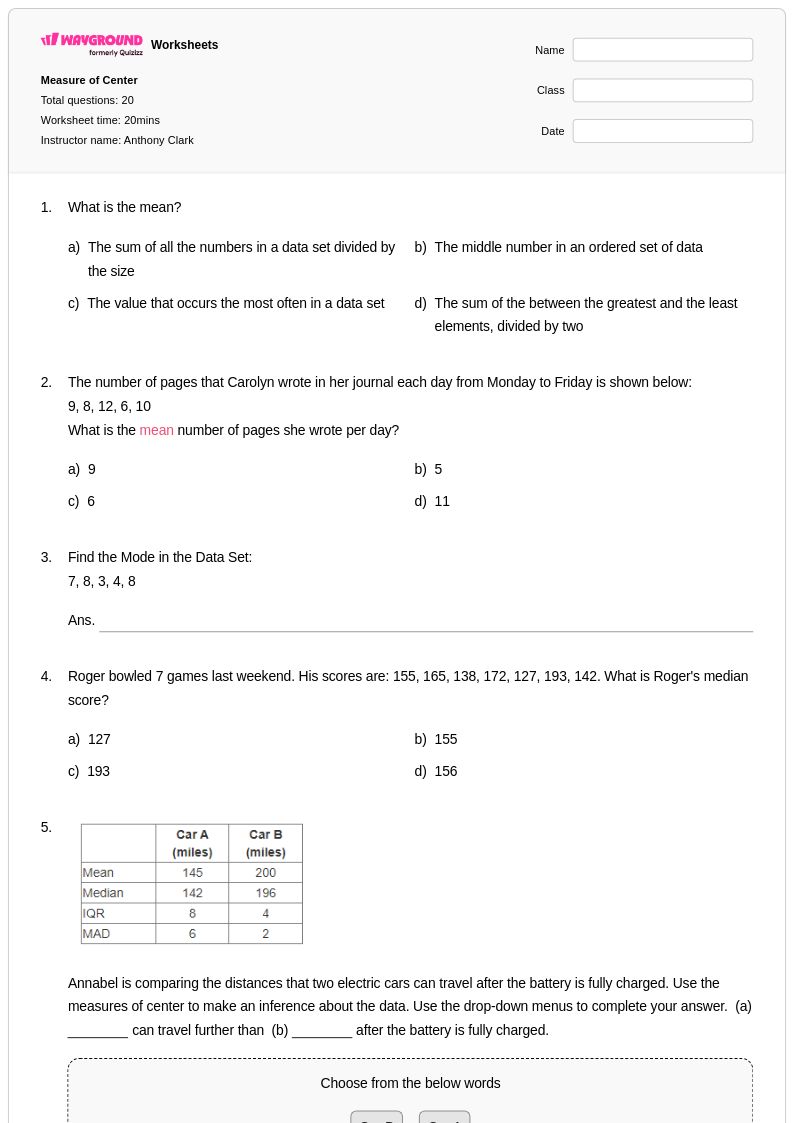
20 Q
6th - Uni
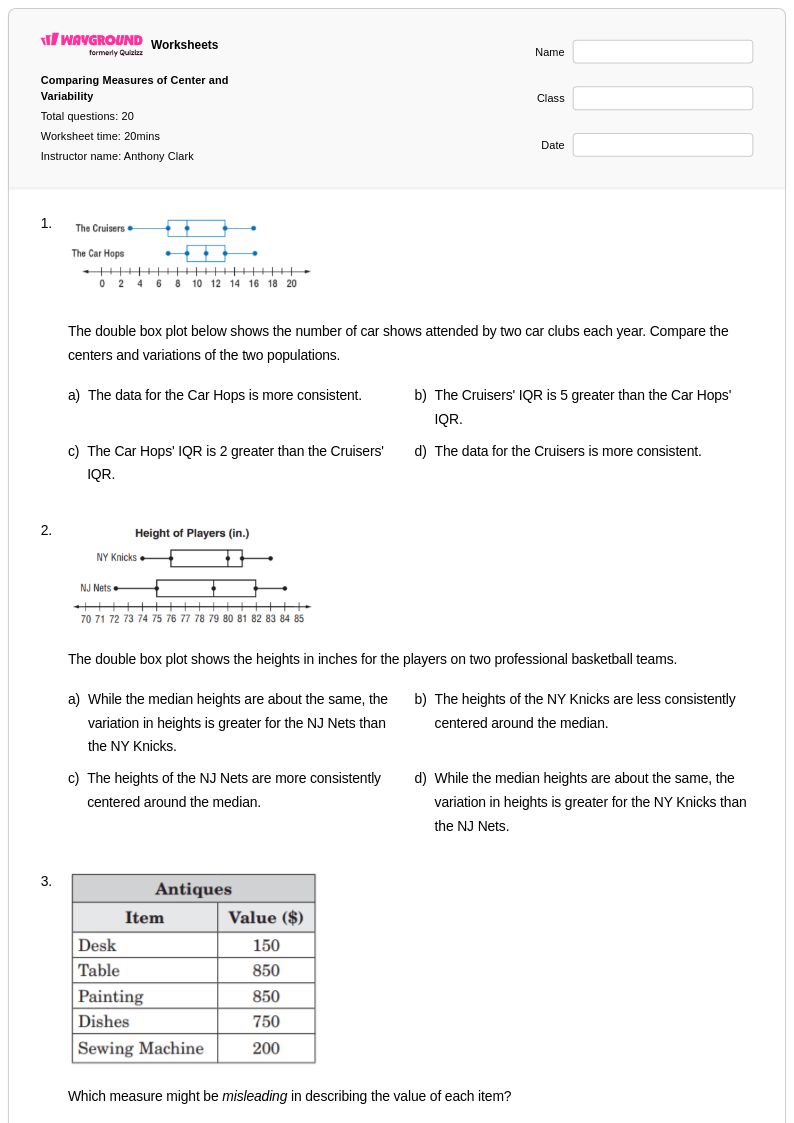
20 Q
7th - Uni
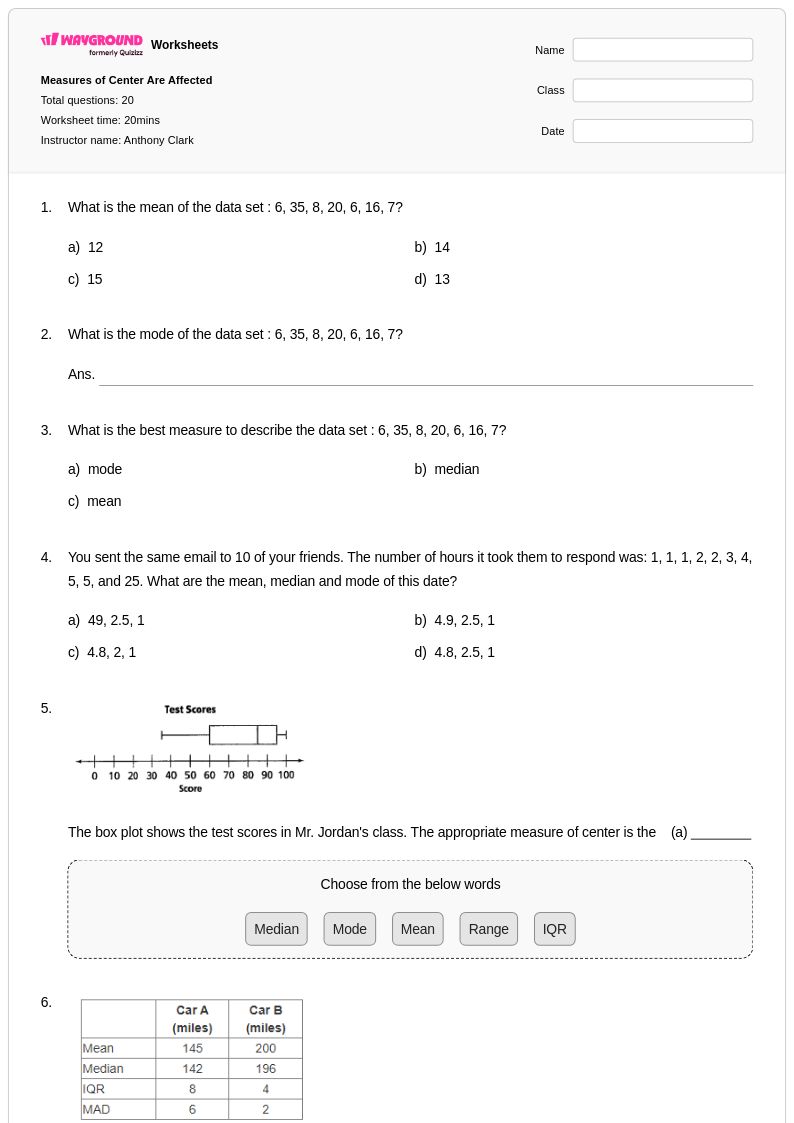
20 Q
6th - Uni
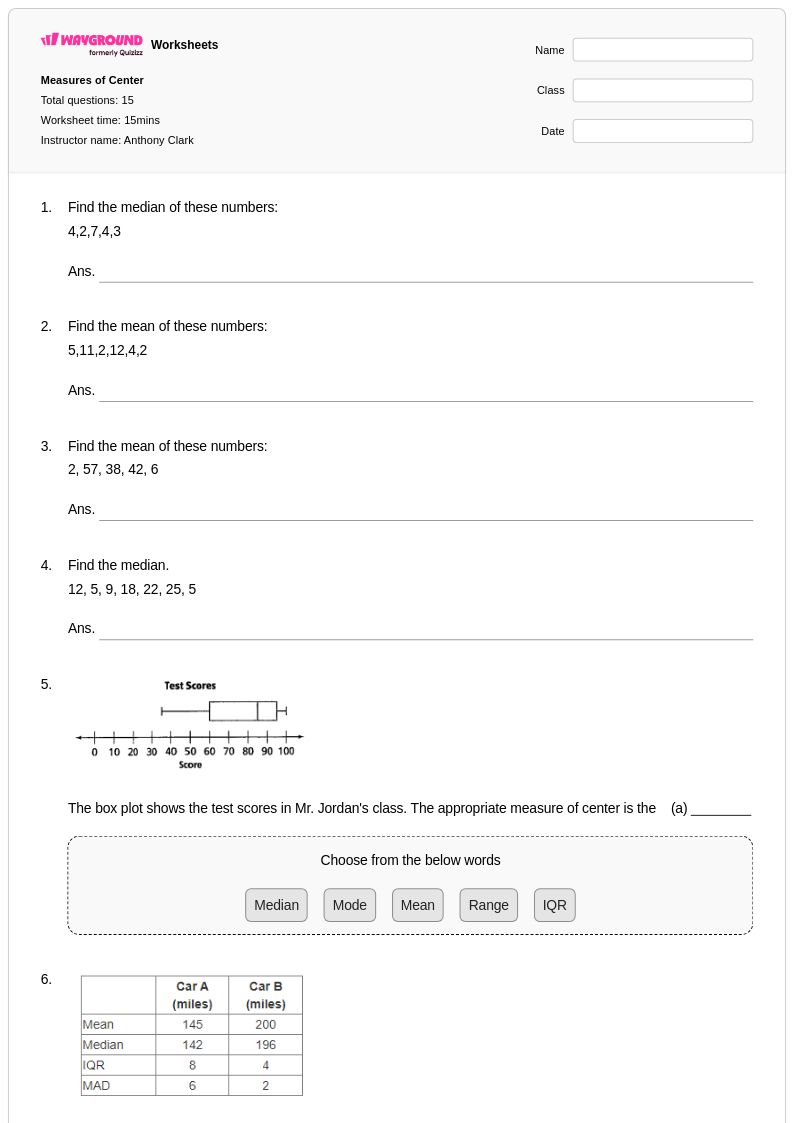
15 Q
6th - Uni
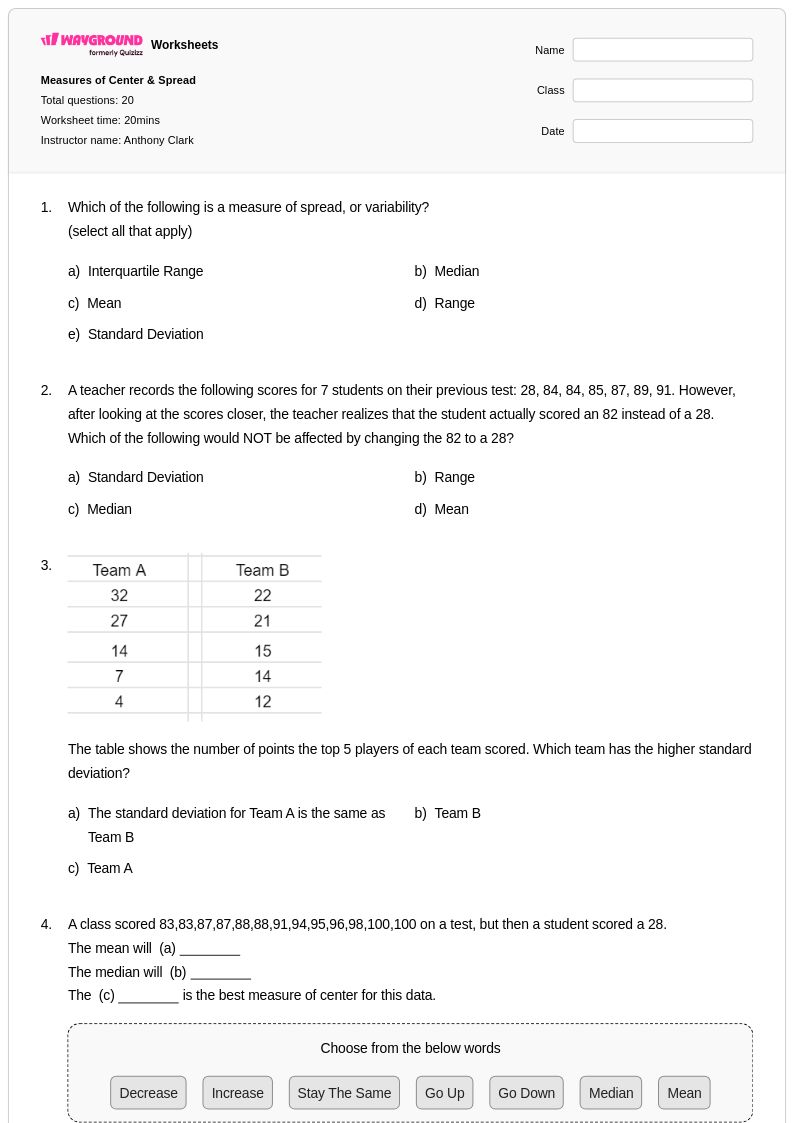
20 Q
9th - Uni
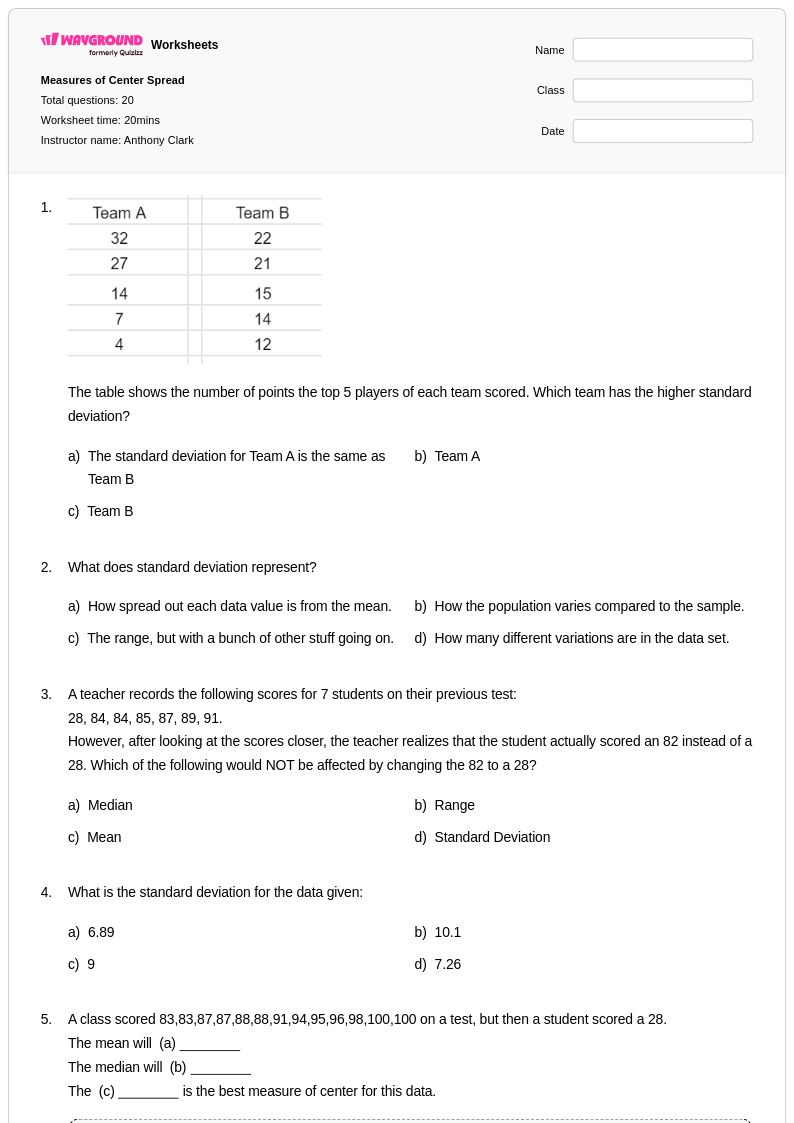
20 Q
9th - Uni
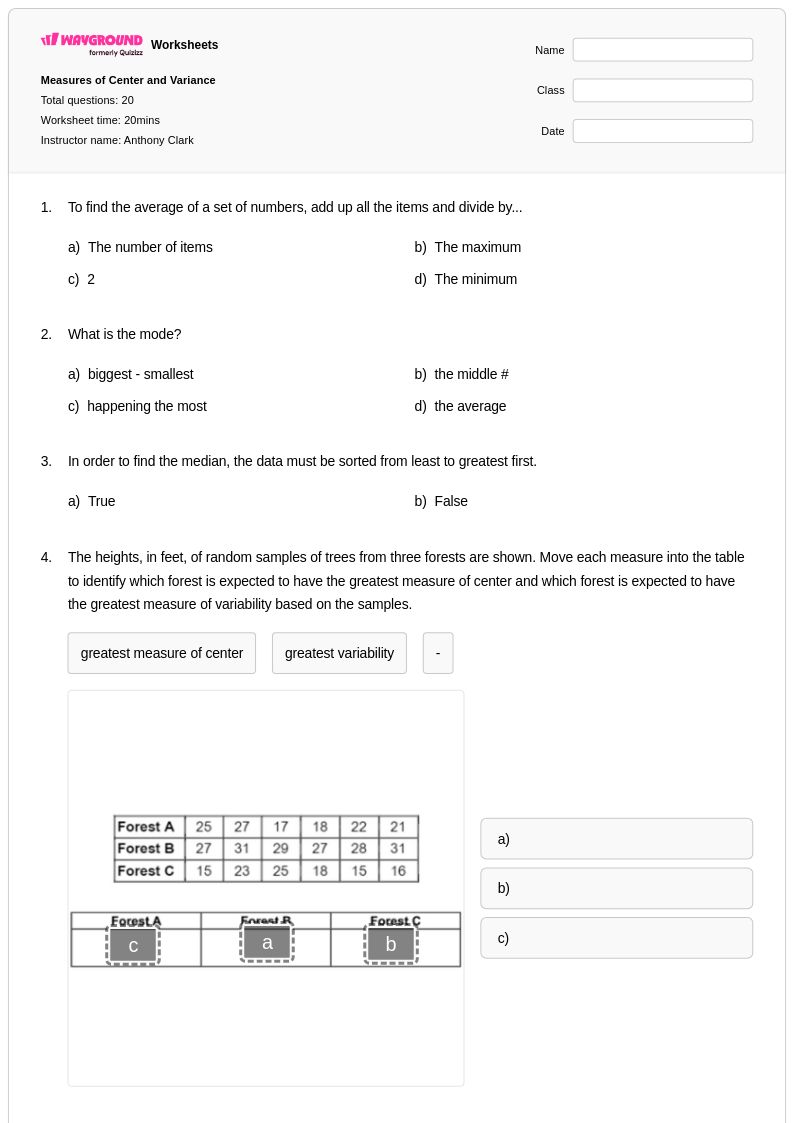
20 Q
6th - Uni
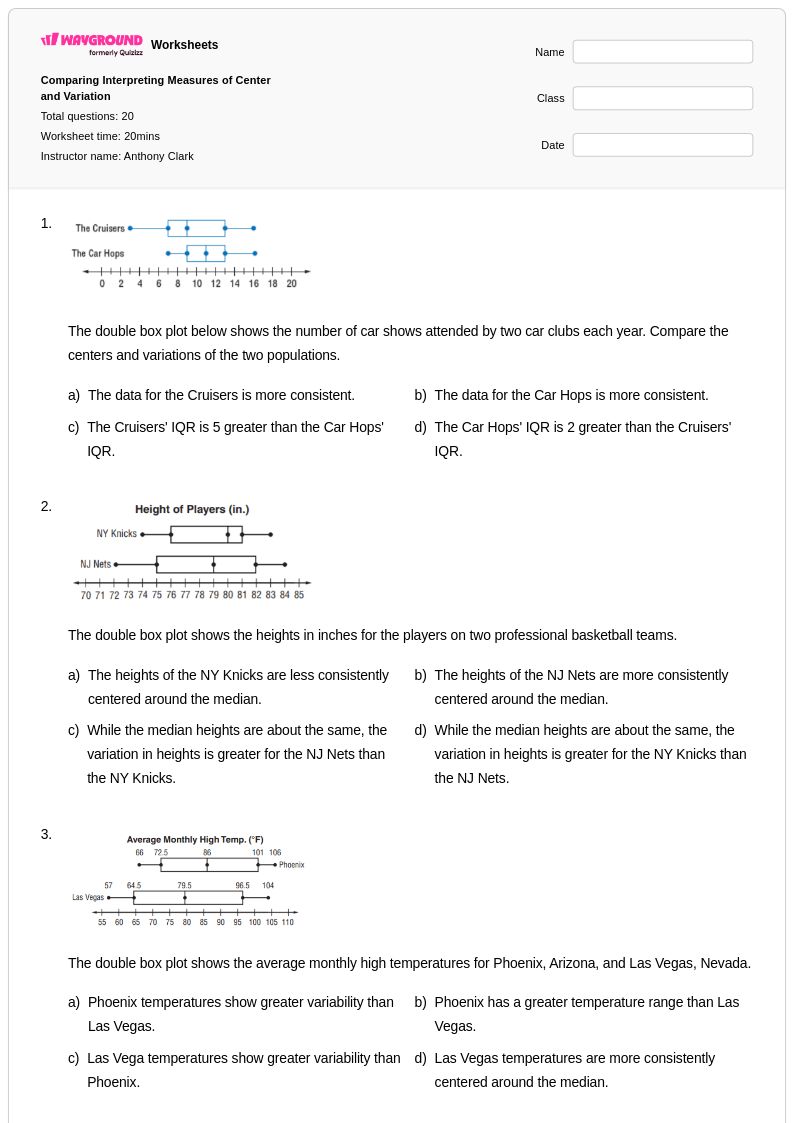
20 Q
6th - Uni
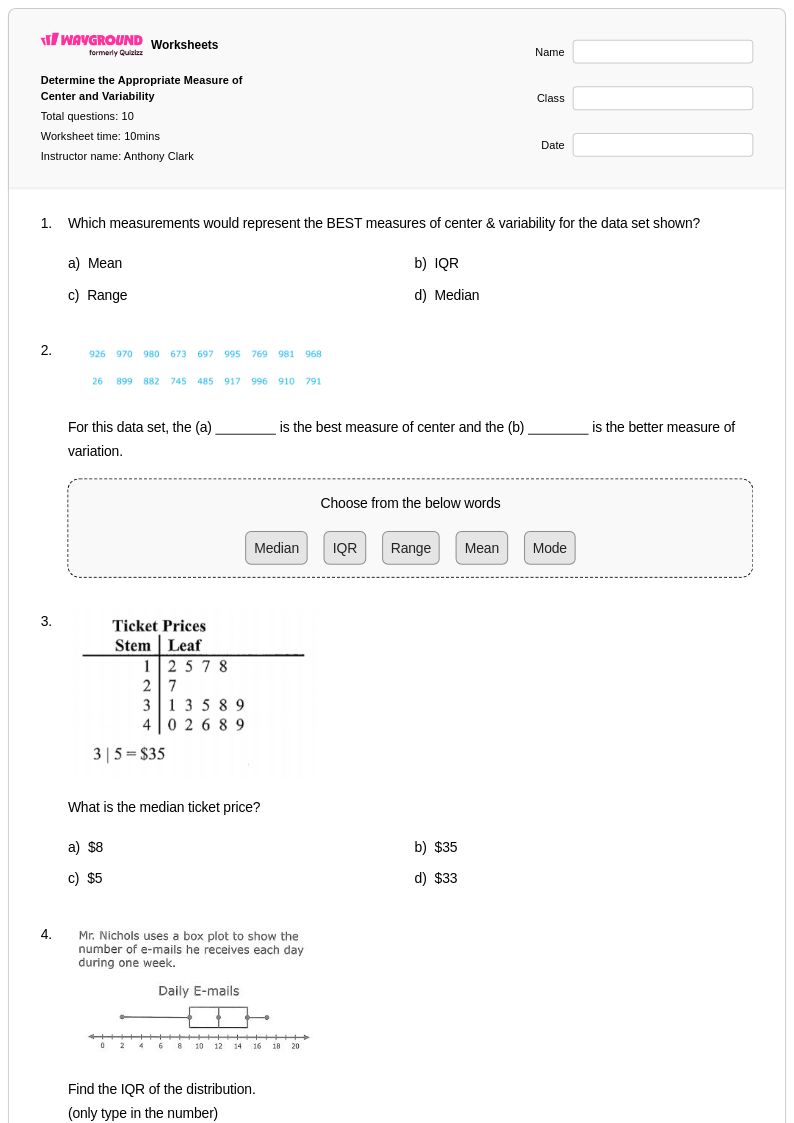
10 Q
9th - Uni
Explore Measures of Variation Worksheets by Grades
Explore Other Subject Worksheets for grade 11
Explore printable Measures of Variation worksheets for Grade 11
Measures of variation worksheets for Grade 11 mathematics provide students with comprehensive practice in analyzing data spread and variability through statistical calculations. These carefully designed resources help students master essential concepts including range, variance, standard deviation, interquartile range, and mean absolute deviation while developing critical analytical skills needed for advanced statistical reasoning. The worksheets feature diverse practice problems that guide students through step-by-step calculations, real-world data interpretation scenarios, and comparative analysis exercises that strengthen their understanding of how different measures reveal distinct aspects of data distribution. Each worksheet includes detailed answer keys and explanations that support independent learning, while the free printable format allows for flexible classroom implementation and individual study sessions.
Wayground, formerly Quizizz, empowers educators with an extensive collection of teacher-created measures of variation worksheets that streamline lesson planning and differentiated instruction for Grade 11 mathematics courses. The platform's millions of resources include standards-aligned materials that can be easily searched and filtered by specific statistical concepts, difficulty levels, and learning objectives to match diverse student needs. Teachers benefit from robust customization tools that allow them to modify existing worksheets or create targeted practice sets for remediation and enrichment purposes, while the dual availability of printable PDF formats and interactive digital versions provides maximum flexibility for both traditional and technology-enhanced learning environments. These comprehensive resources support effective skill practice through varied problem types and detailed solutions, enabling educators to confidently address the full spectrum of measures of variation concepts while accommodating different learning styles and academic readiness levels.
FAQs
How do I teach measures of variation in Grade 11?
What exercises are useful for practicing measures of variation?
What misconceptions do Grade 11 students have about measures of variation?
How should I use a Grade 11 measures of variation worksheet?
Are measures of variation aligned with Common Core math?
How can I differentiate a measures of variation worksheet?
What grade level are measures of variation taught at?