
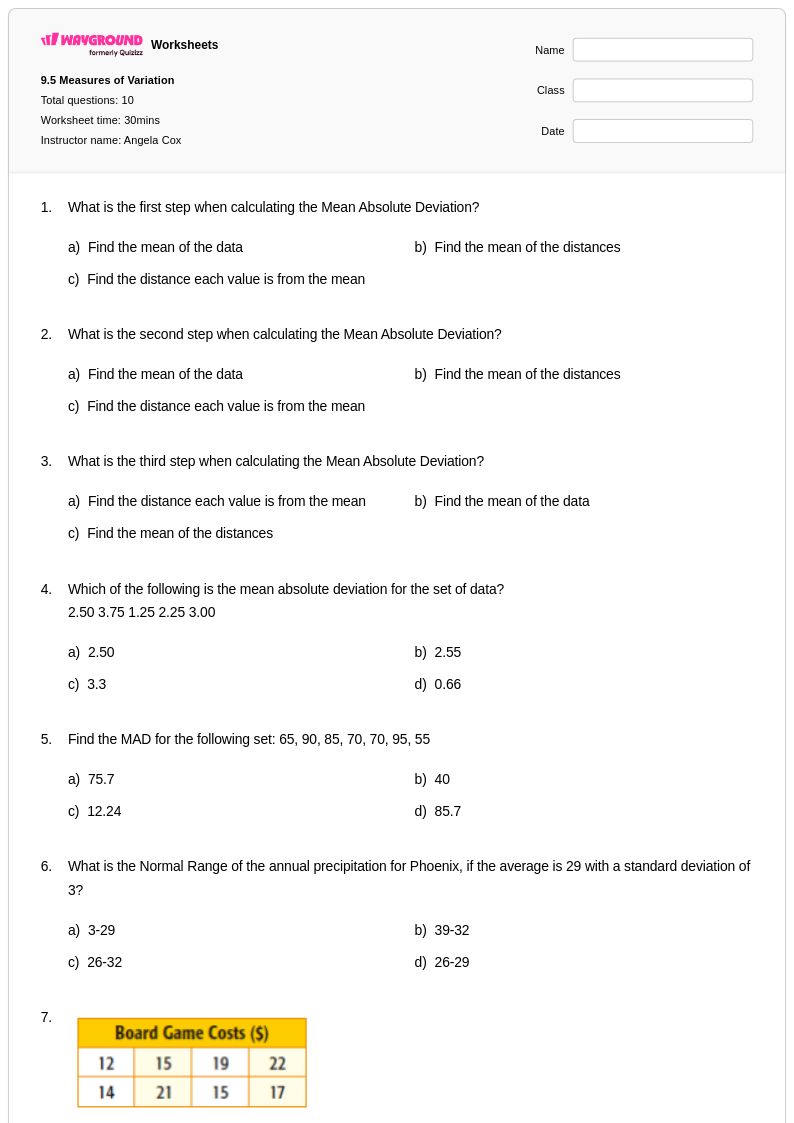
10 Q
8th
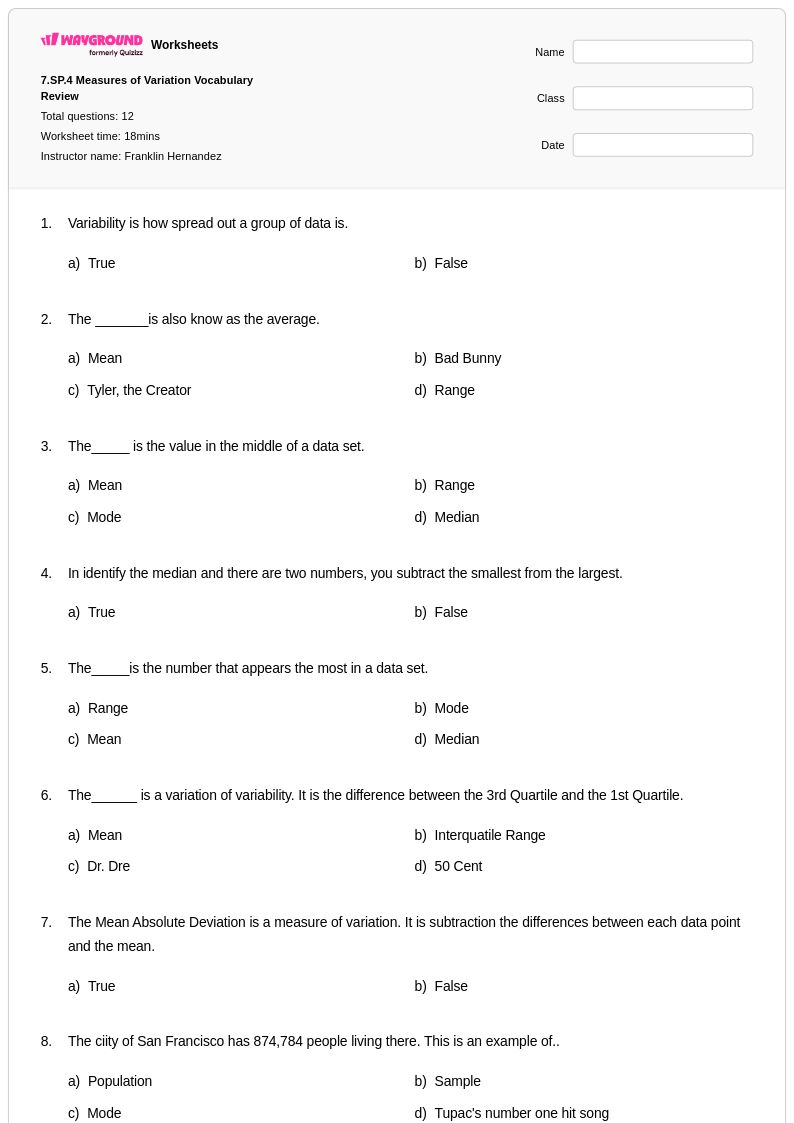
12 Q
6th - 8th
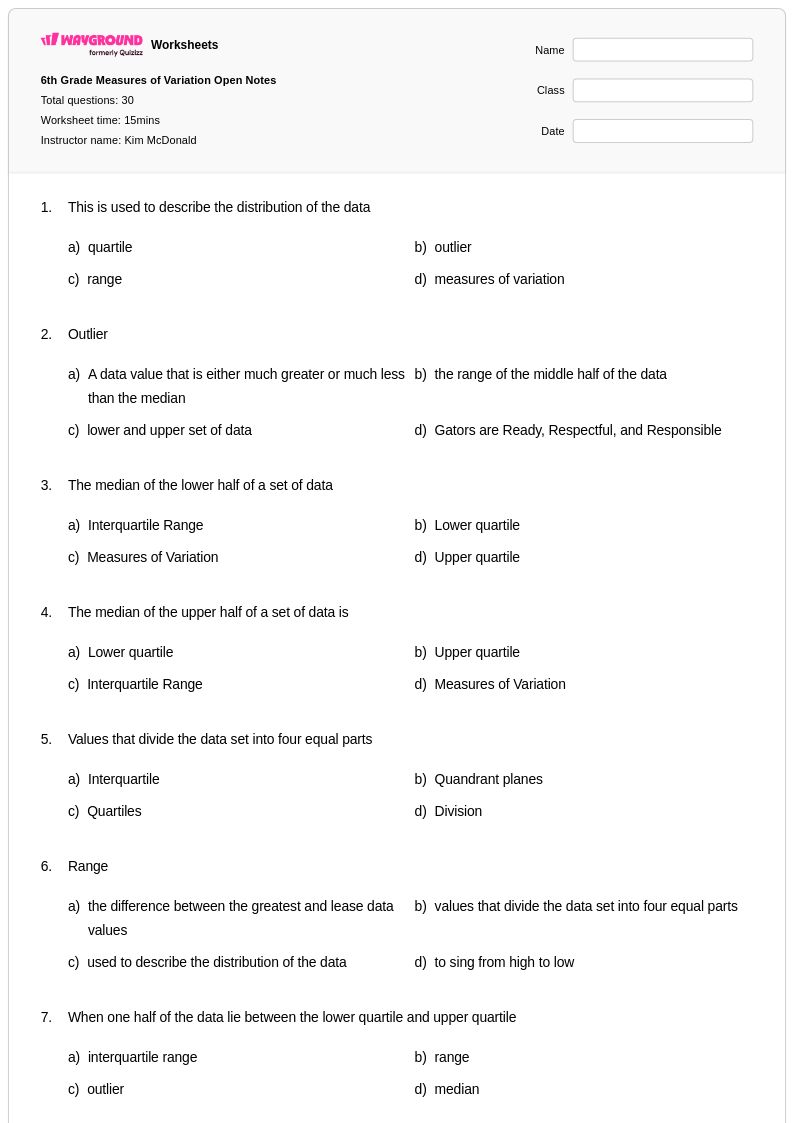
30 Q
6th - 8th
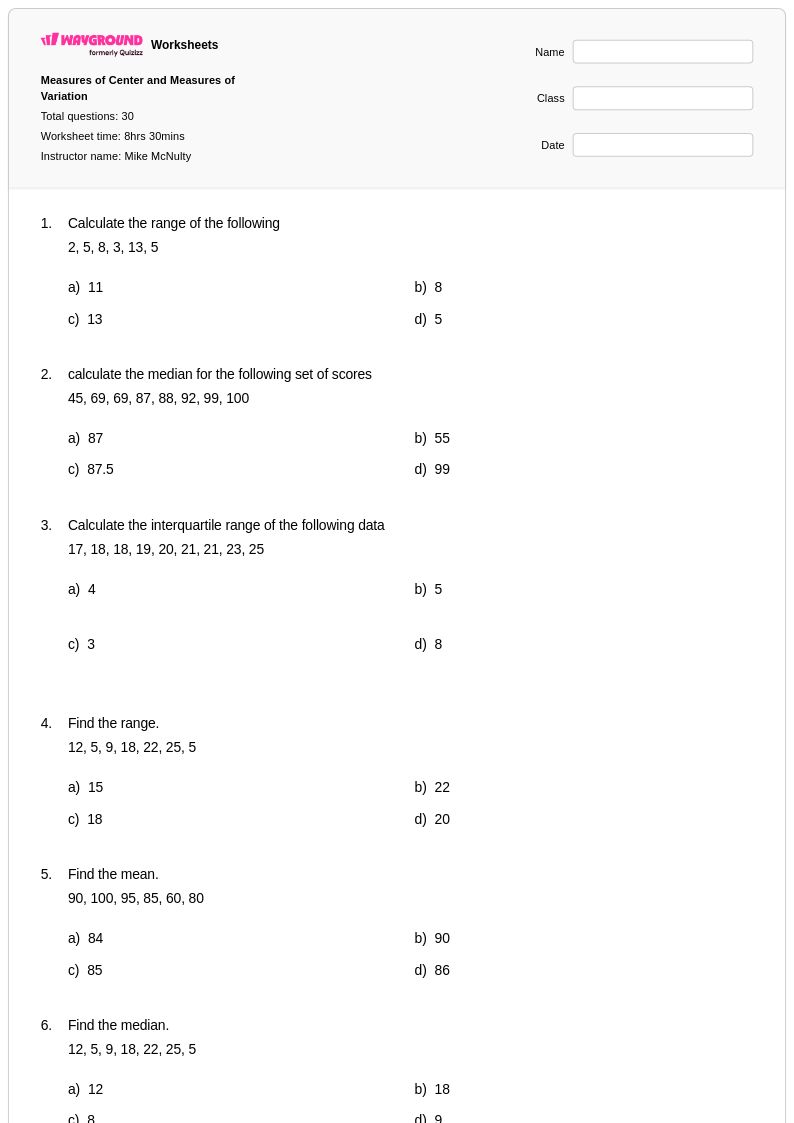
30 Q
6th - 8th
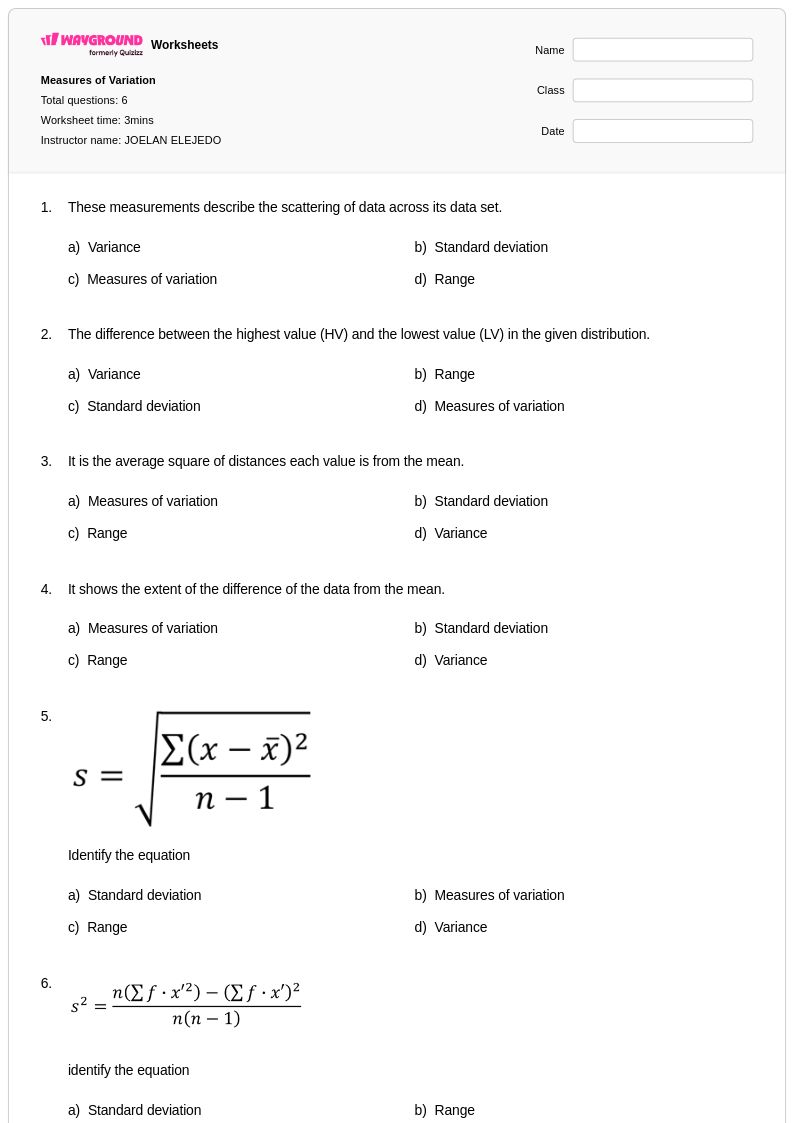
6 Q
8th
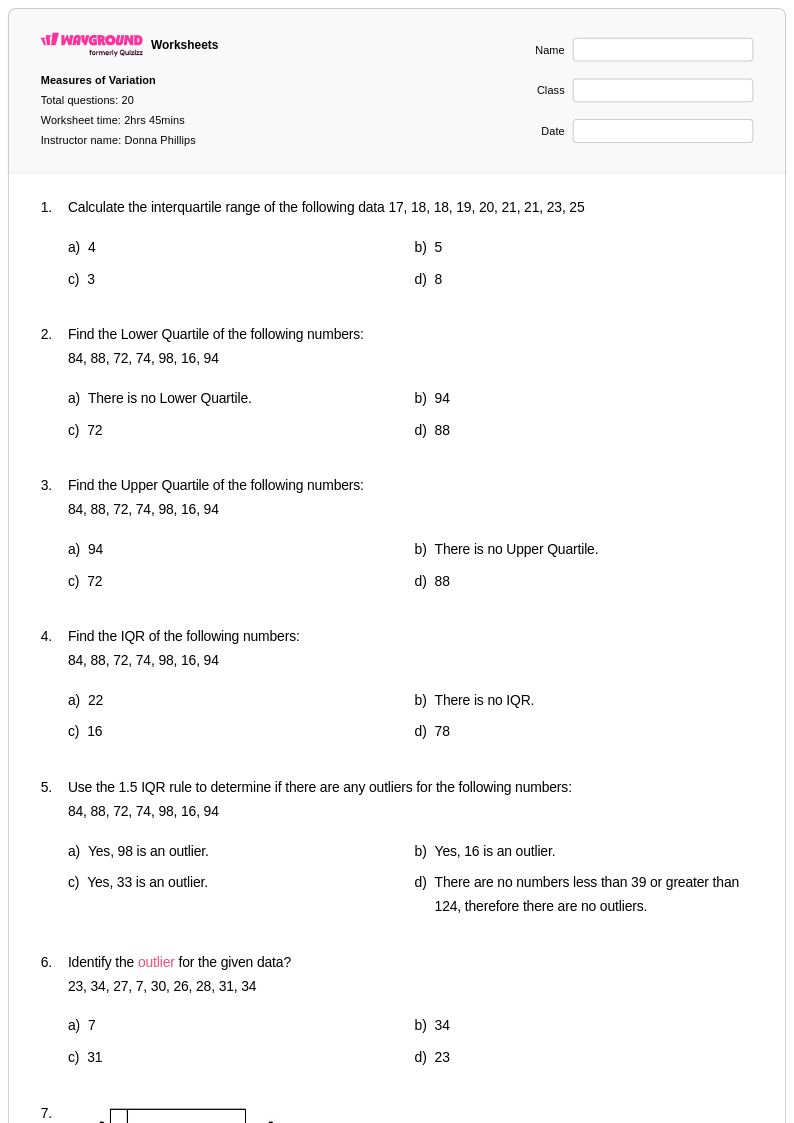
20 Q
7th - 8th
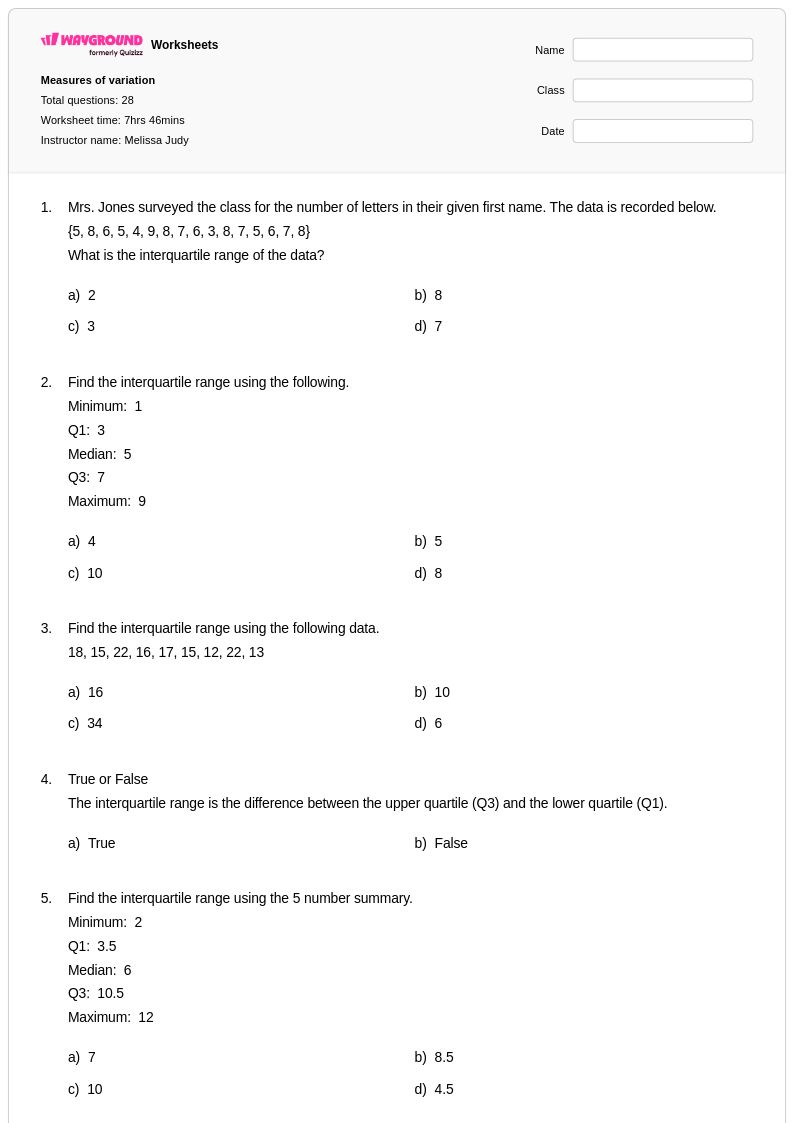
28 Q
6th - 8th
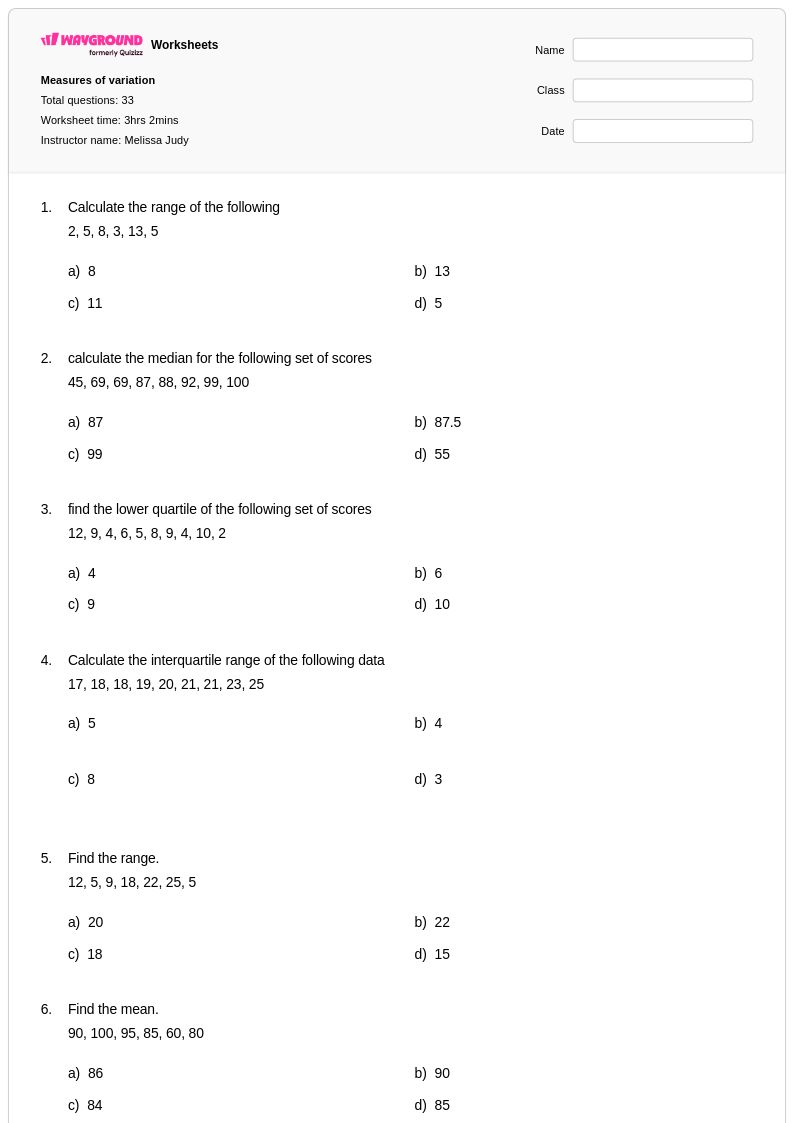
33 Q
6th - 8th
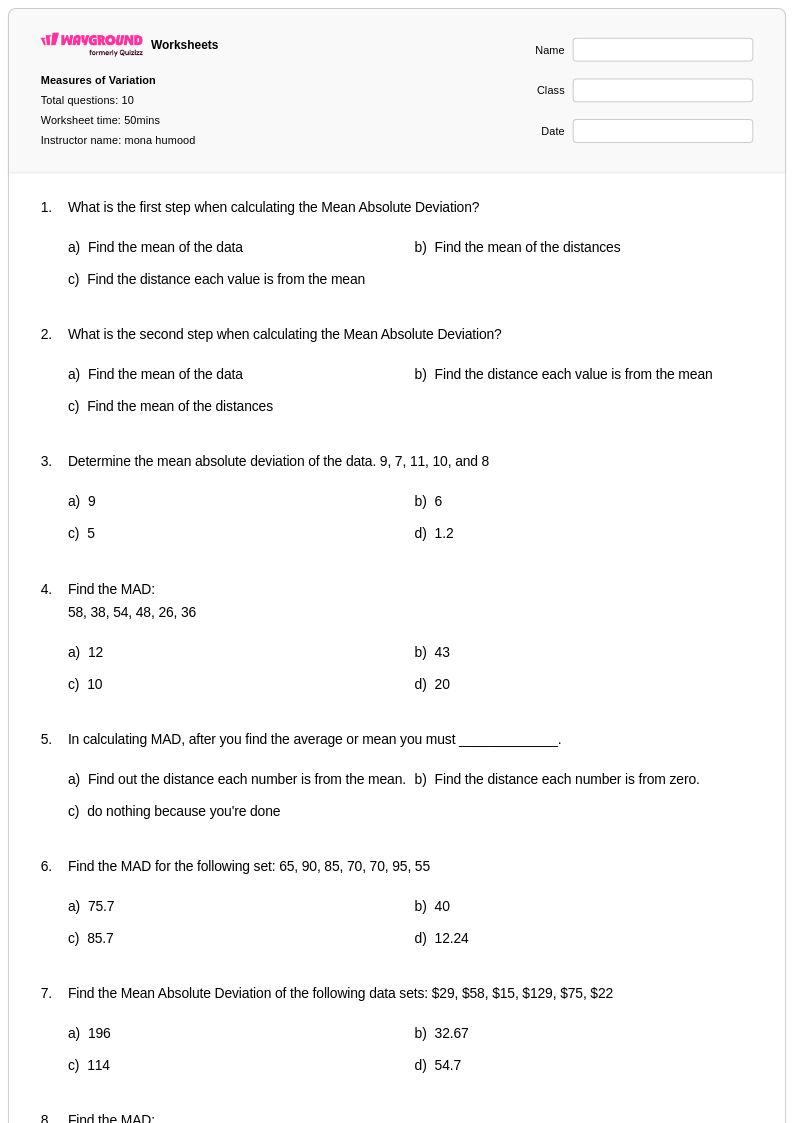
10 Q
8th
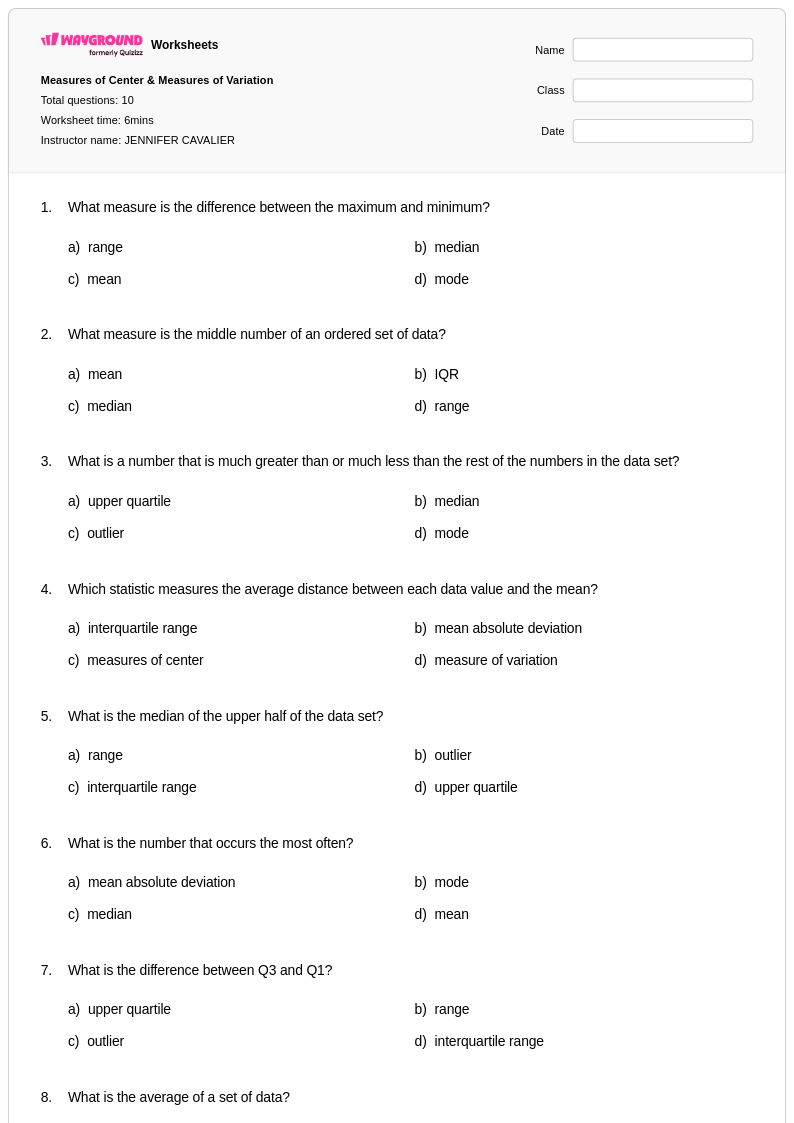
10 Q
6th - 8th
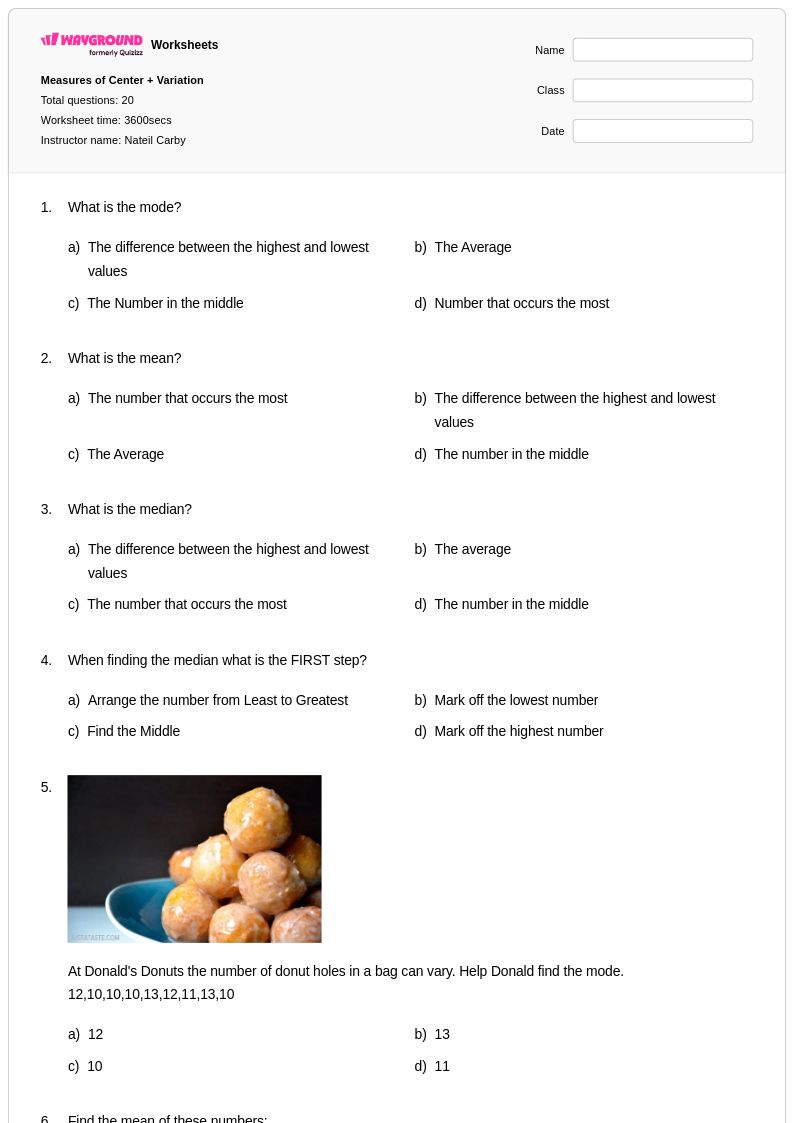
20 Q
6th - 8th
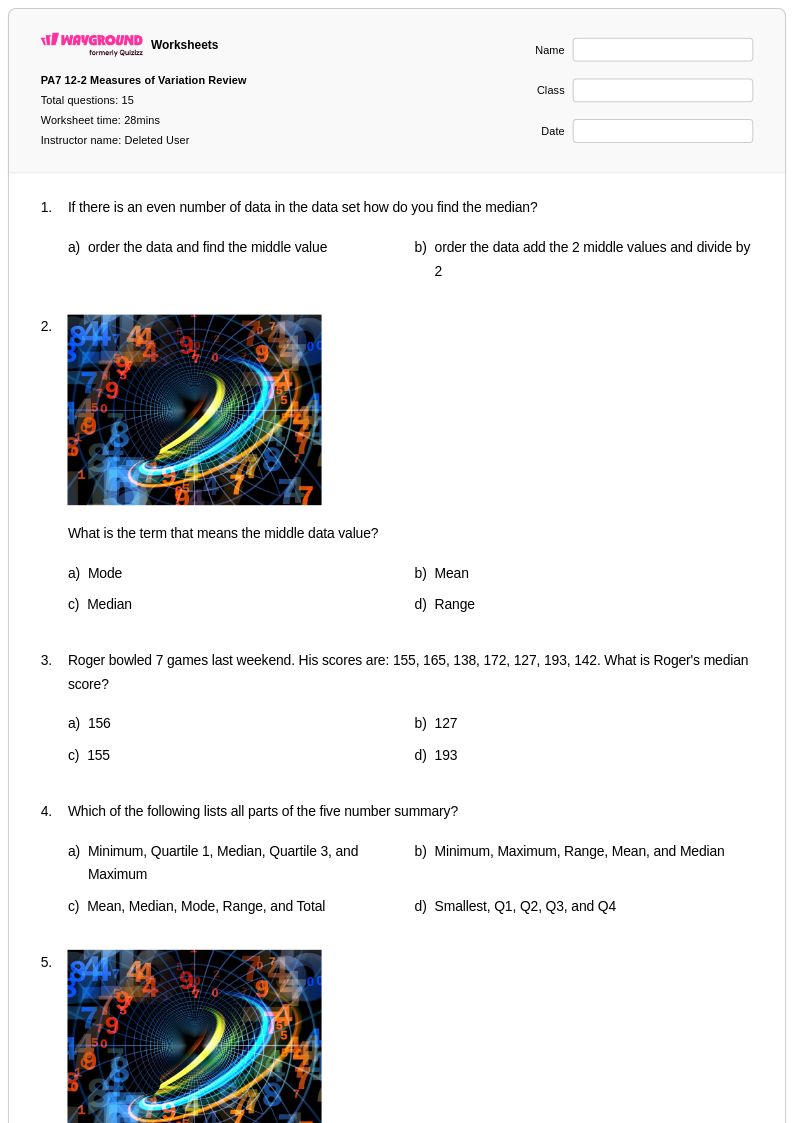
15 Q
7th - 8th
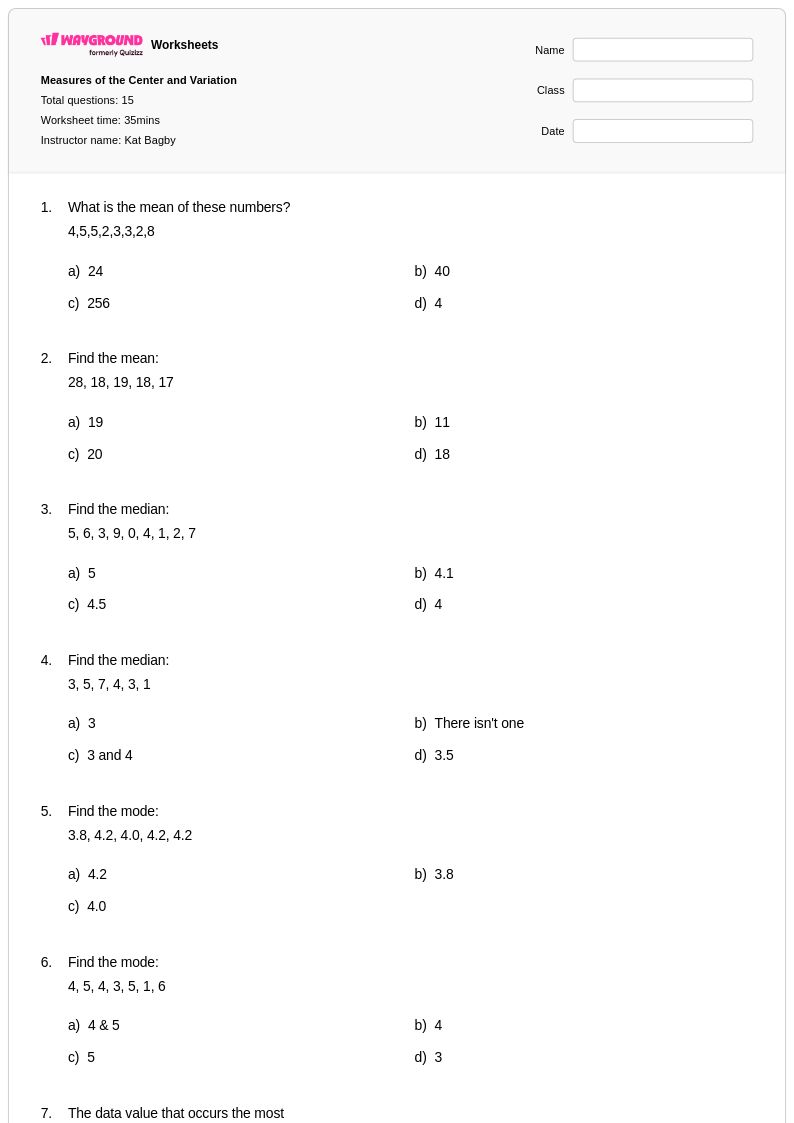
15 Q
6th - 8th
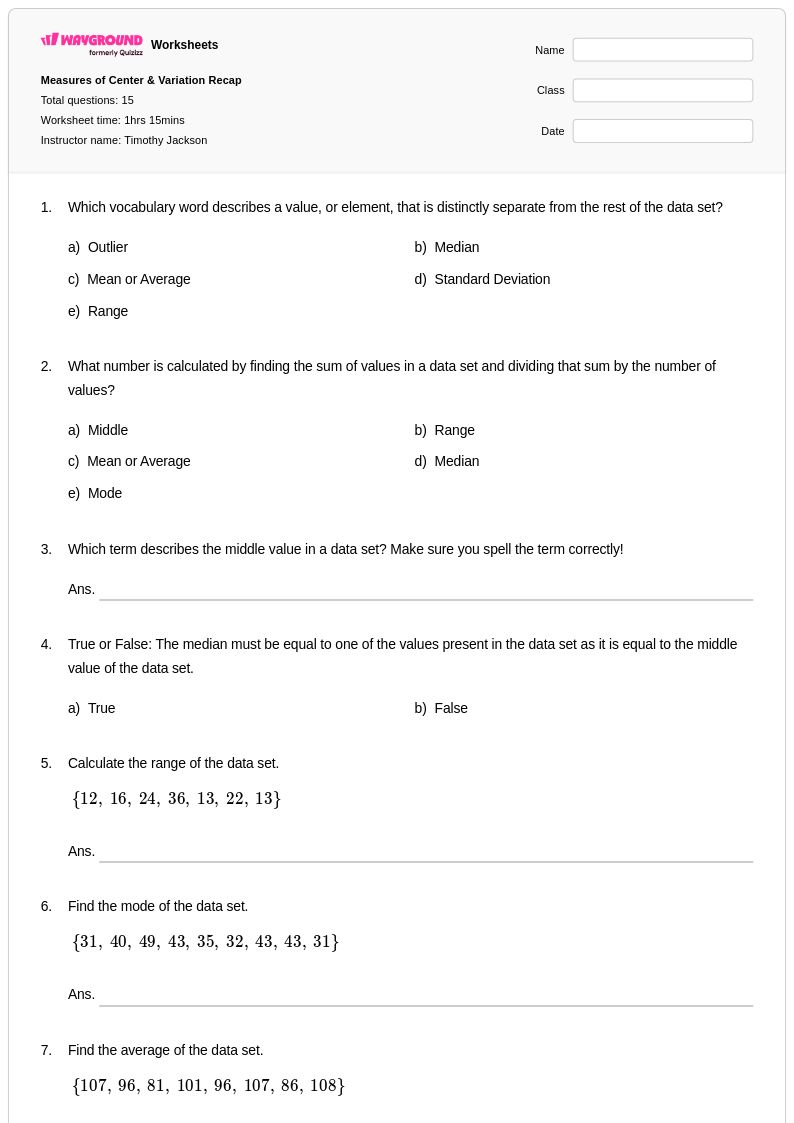
15 Q
5th - 8th
17 Q
8th
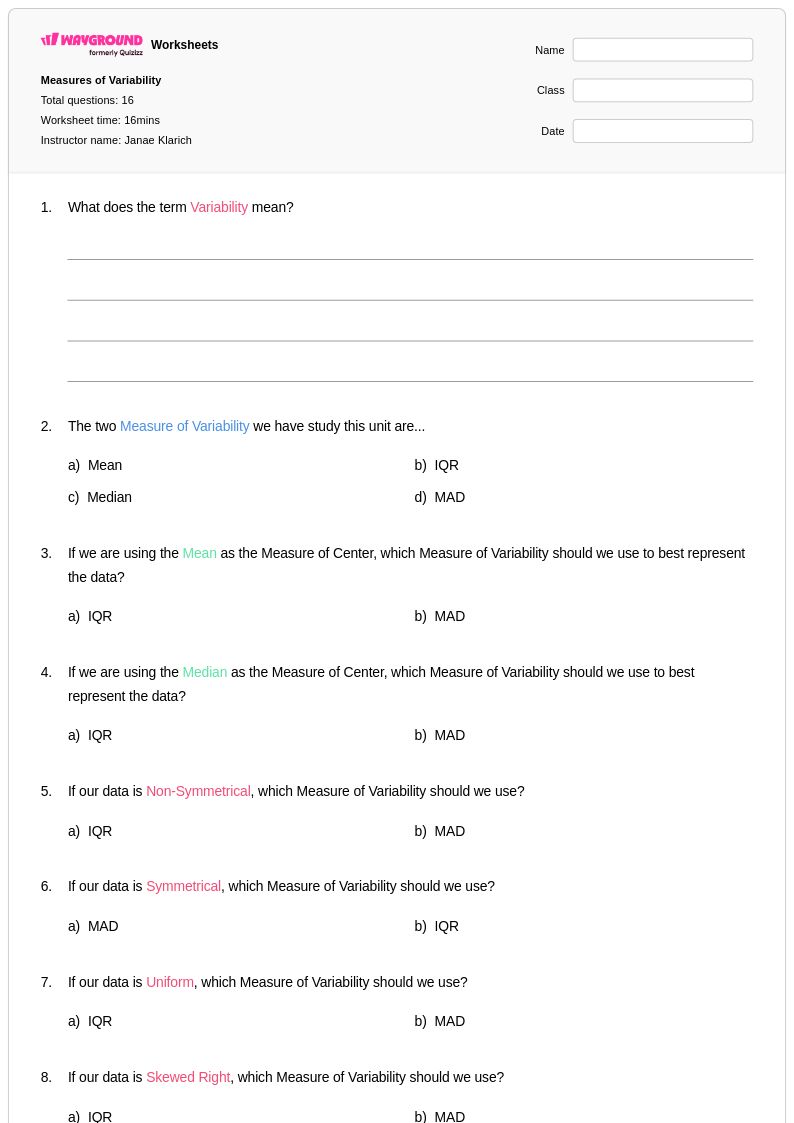
16 Q
8th - 9th
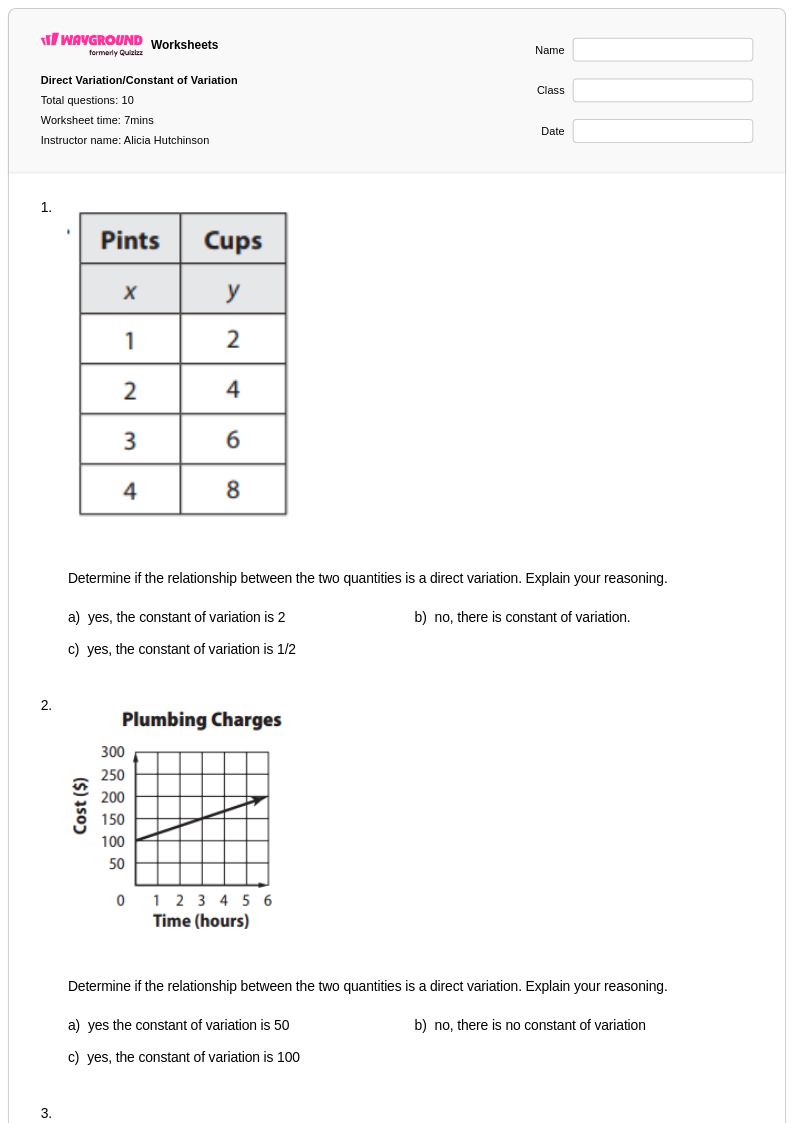
10 Q
6th - 8th
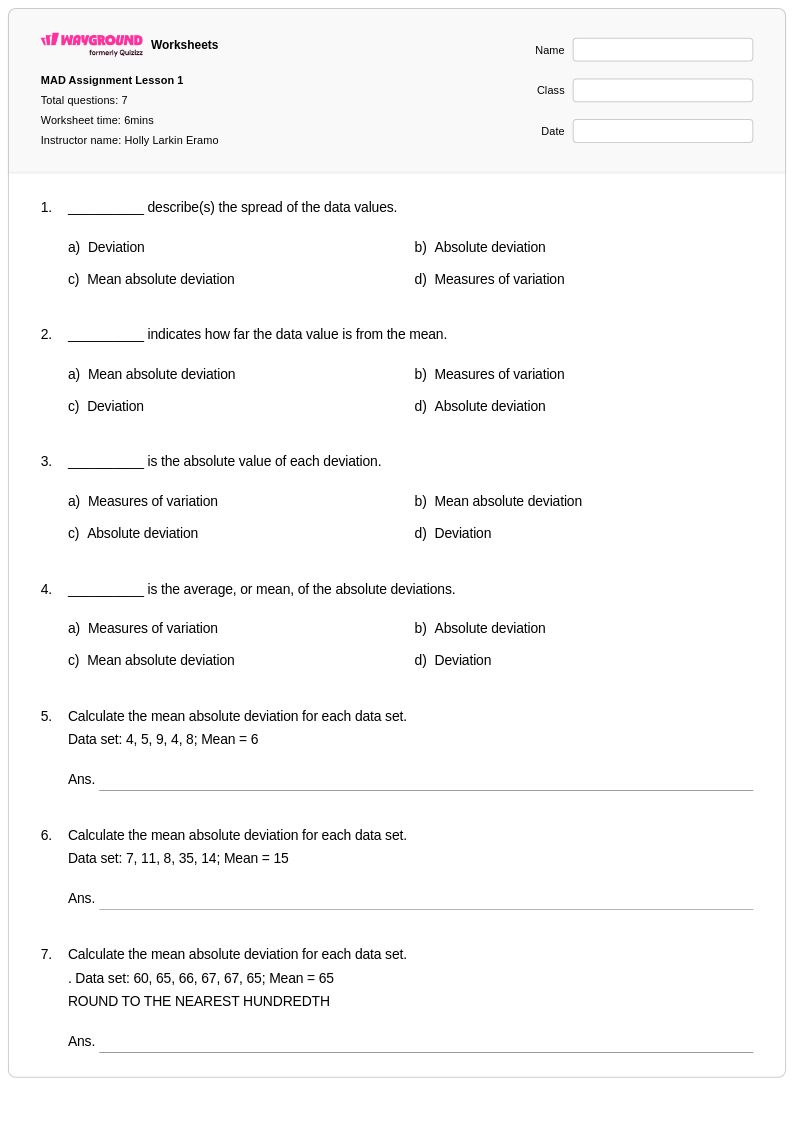
7 Q
8th
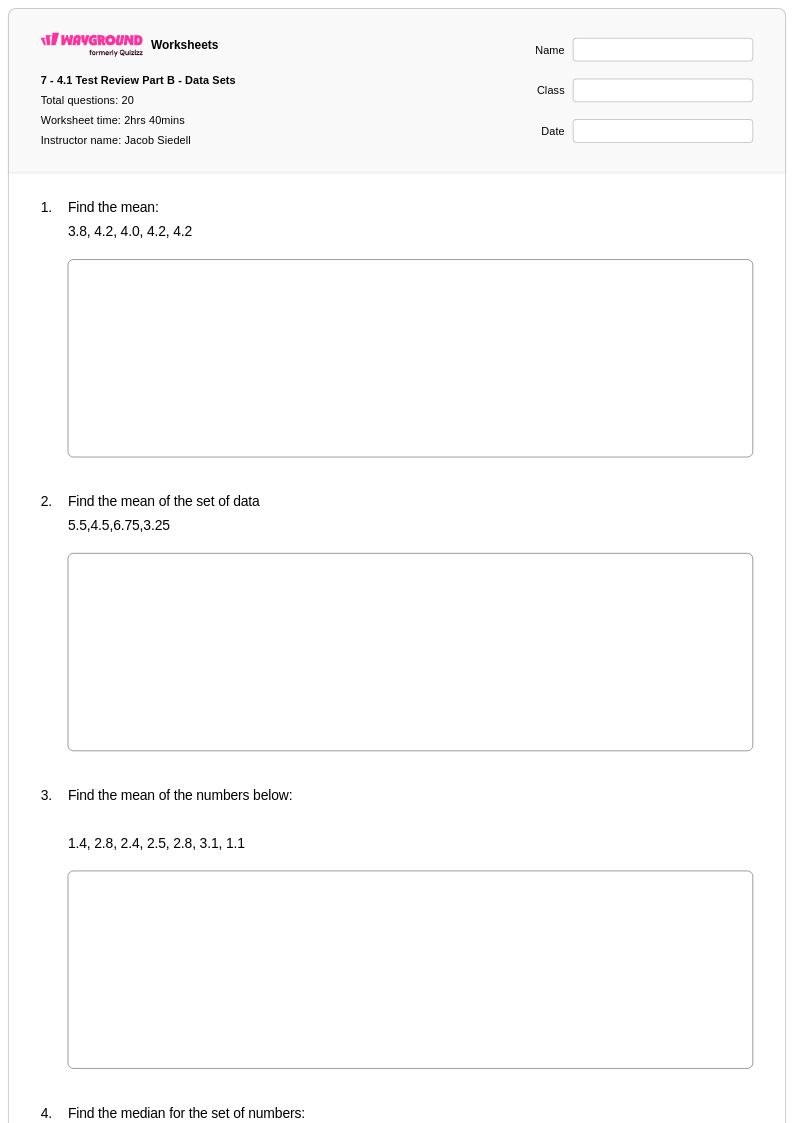
20 Q
6th - 8th
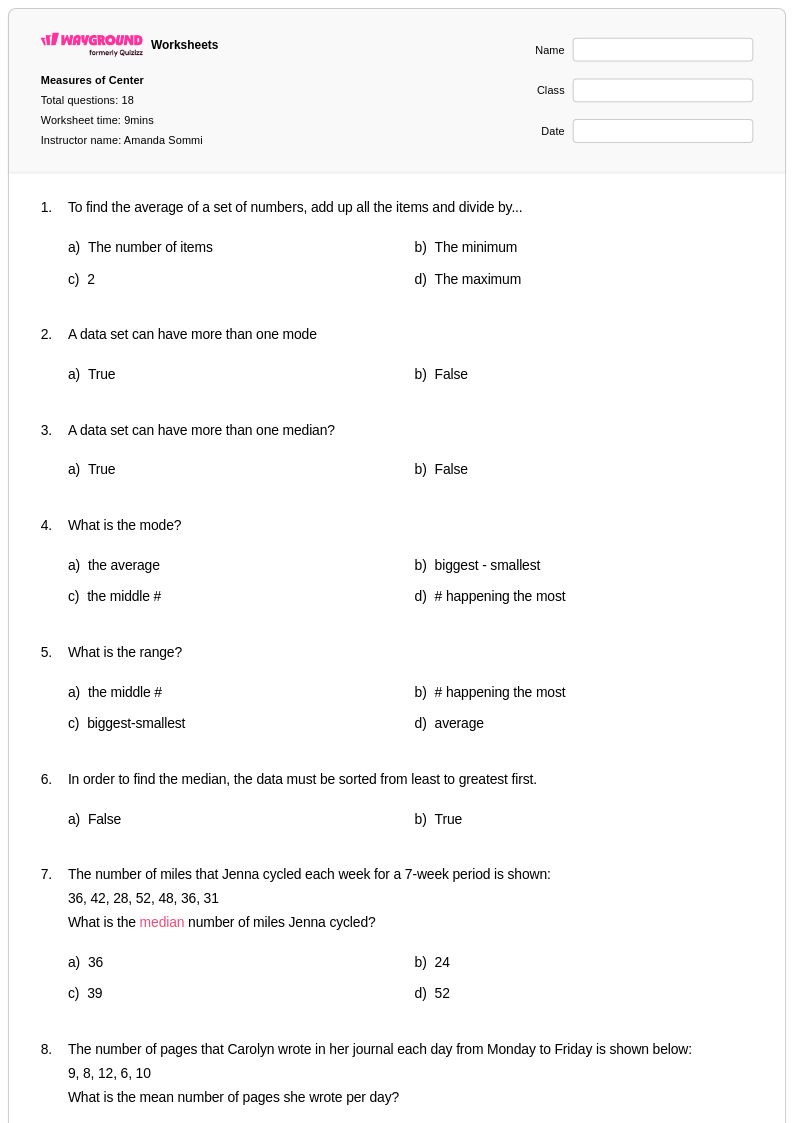
18 Q
6th - 8th
14 Q
6th - 8th
10 Q
6th - 8th
15 Q
6th - 8th
Explore Measures of Variation Worksheets by Grades
Explore Other Subject Worksheets for grade 8
Explore printable Measures of Variation worksheets for Grade 8
Measures of variation worksheets for Grade 8 mathematics provide students with comprehensive practice in understanding how data spreads and differs within datasets. These educational resources focus on essential statistical concepts including range, interquartile range, mean absolute deviation, and standard deviation, helping students develop critical analytical skills for interpreting data variability. The worksheets feature carefully structured practice problems that guide students through calculating different measures of spread, comparing datasets, and understanding what these measures reveal about data distribution. Each worksheet includes detailed answer keys that support independent learning and self-assessment, while the free printable format makes these resources accessible for classroom use, homework assignments, and targeted skill reinforcement.
Wayground, formerly Quizizz, empowers educators with an extensive collection of teacher-created measures of variation worksheets that streamline instruction and support differentiated learning approaches. The platform's millions of resources are easily searchable and filterable by specific statistical concepts, grade level, and standards alignment, enabling teachers to quickly locate materials that match their curriculum requirements and student needs. These versatile worksheets are available in both printable PDF format and interactive digital versions, providing flexibility for various teaching environments and learning preferences. Teachers can customize existing worksheets or create new ones to address specific skill gaps, support remediation efforts, provide enrichment opportunities for advanced learners, and ensure all students master these fundamental statistical concepts through targeted practice and assessment.
FAQs
How are measures of variation used in 8th grade math?
How can I connect measures of variation to 8th grade scatter plots?
What types of problems do these 8th grade worksheets cover?
What misconceptions do 8th graders have with variability in scatter plots?
How does the 8th grade Common Core curriculum handle statistical variation?
How can I assign these 8th grade statistics worksheets?