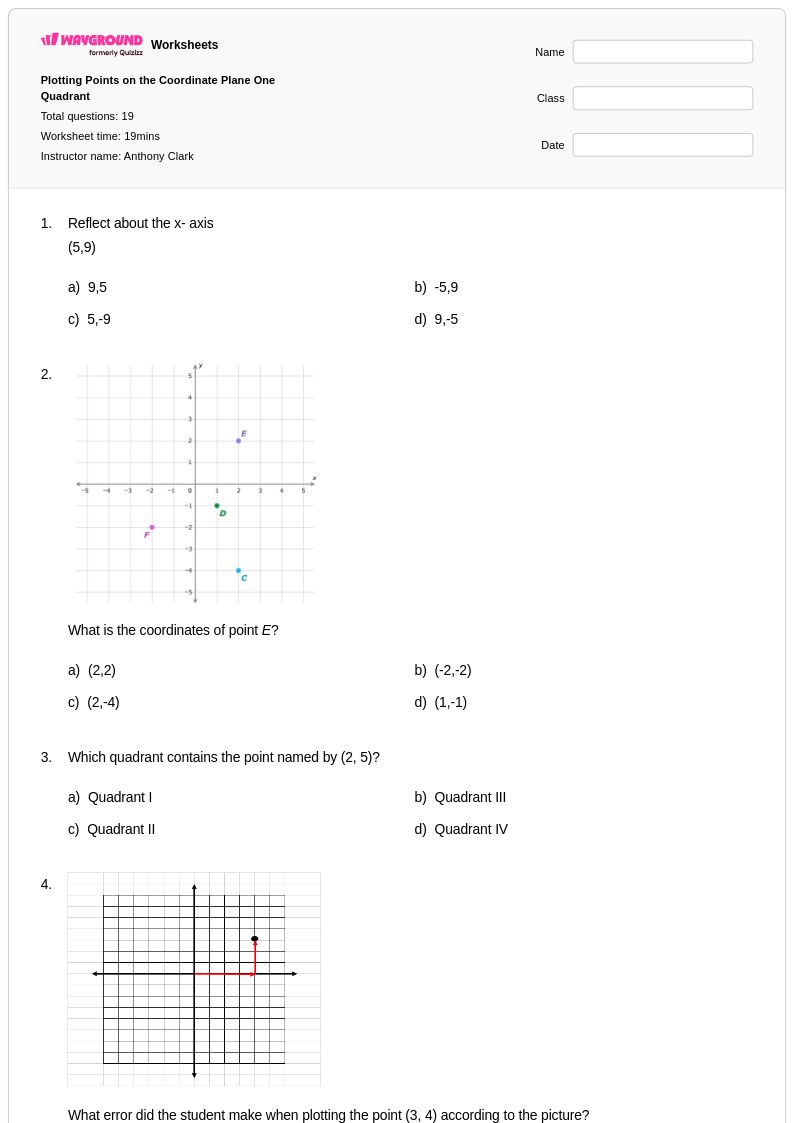
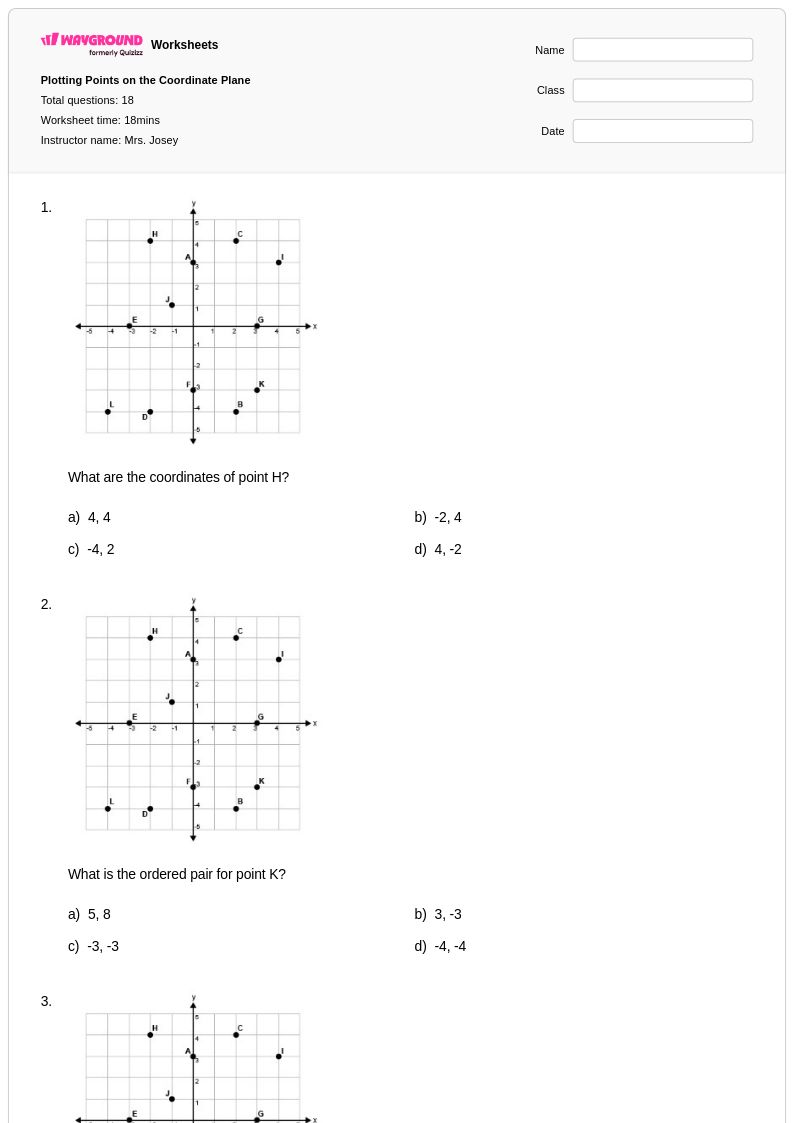
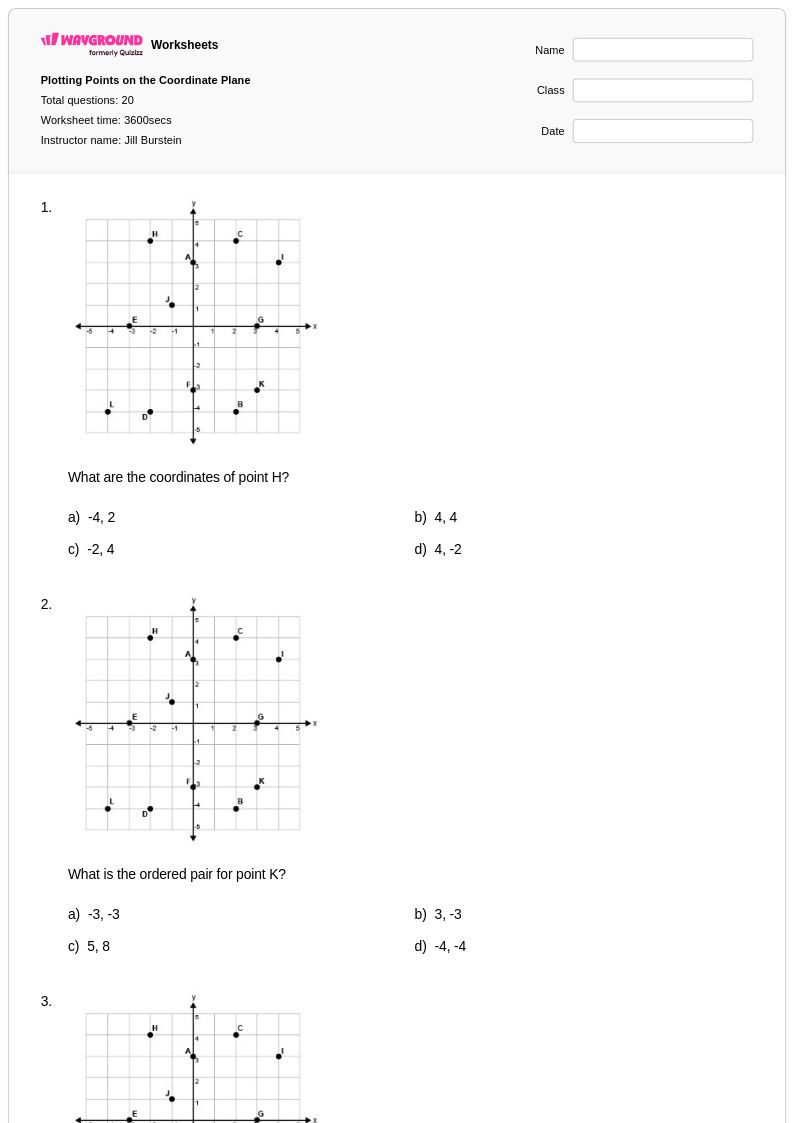
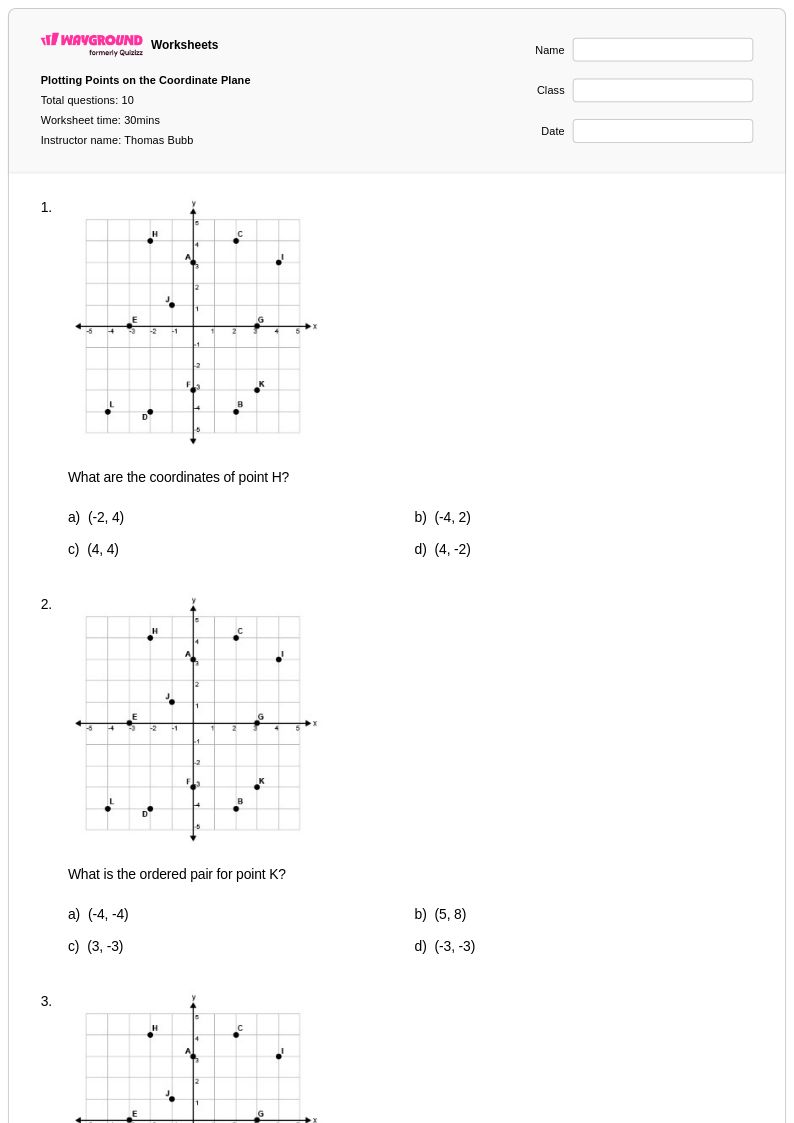
Free Printable Plotting Points on the Coordinate Plane Worksheets for Grade 8
Wayground's free Grade 8 plotting points on the coordinate plane worksheets offer comprehensive printables with practice problems and answer keys to help students master graphing skills and coordinate geometry fundamentals.
Explore printable Plotting Points on the Coordinate Plane worksheets for Grade 8
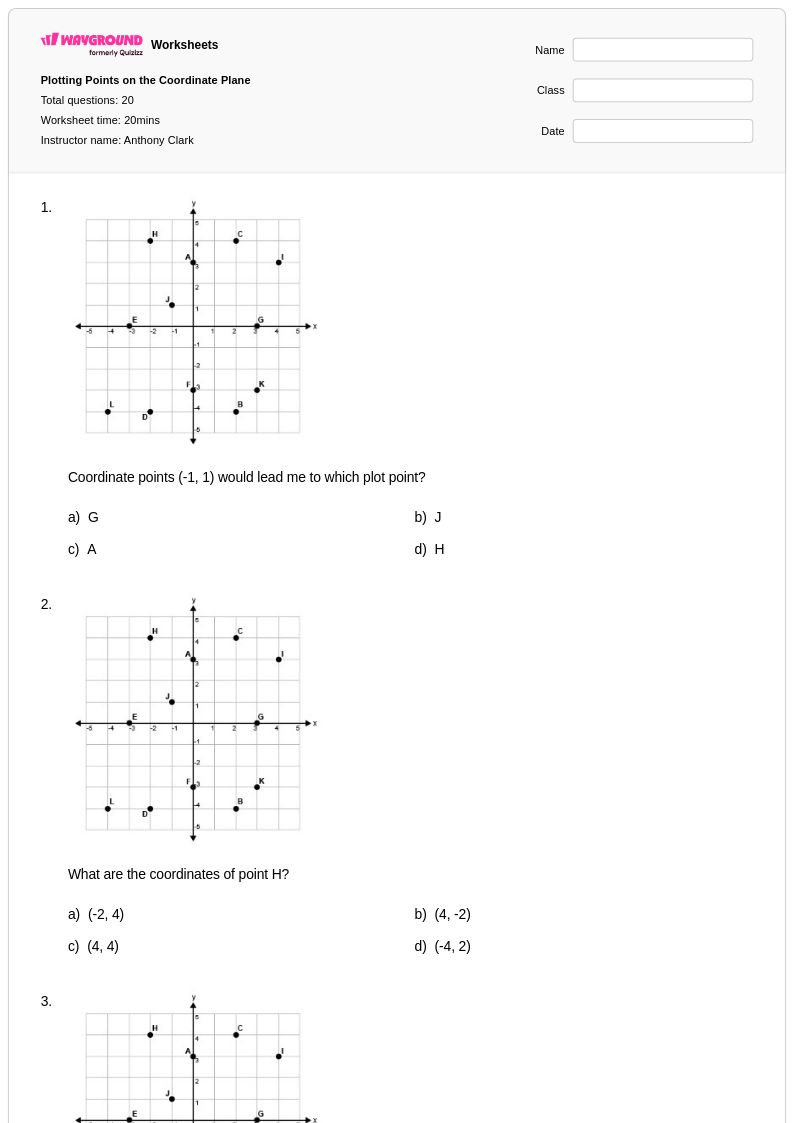
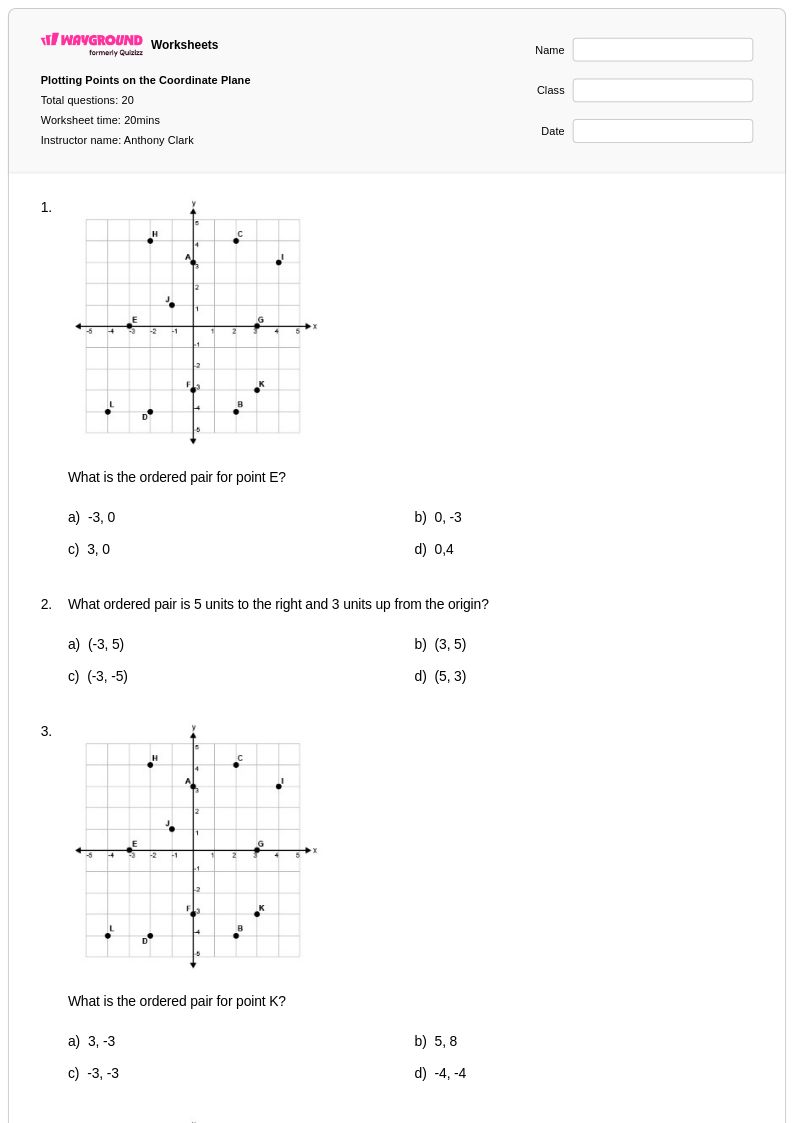
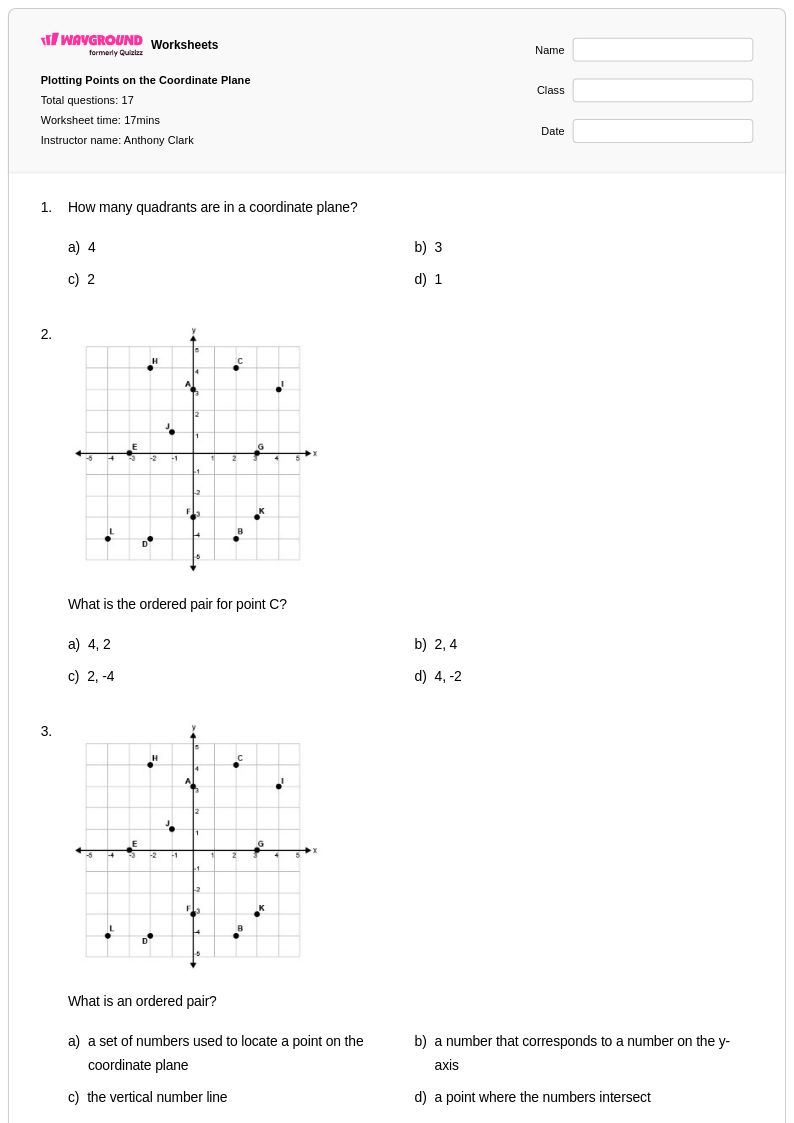
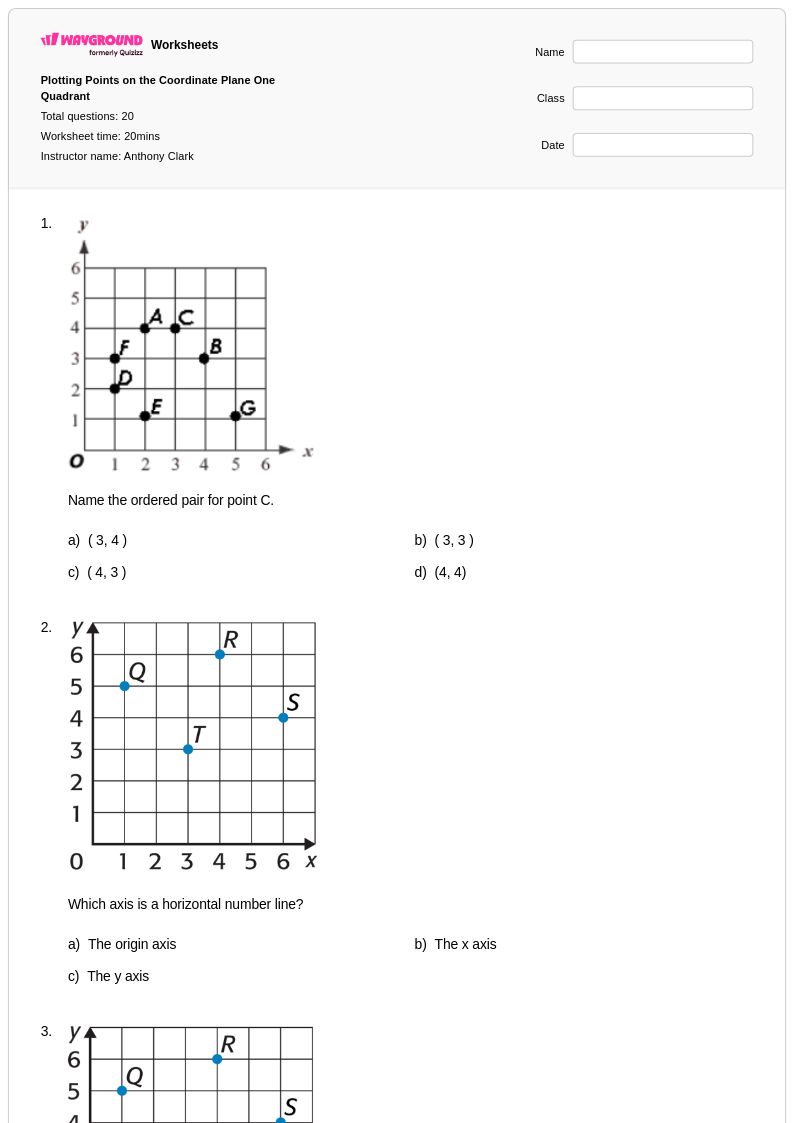
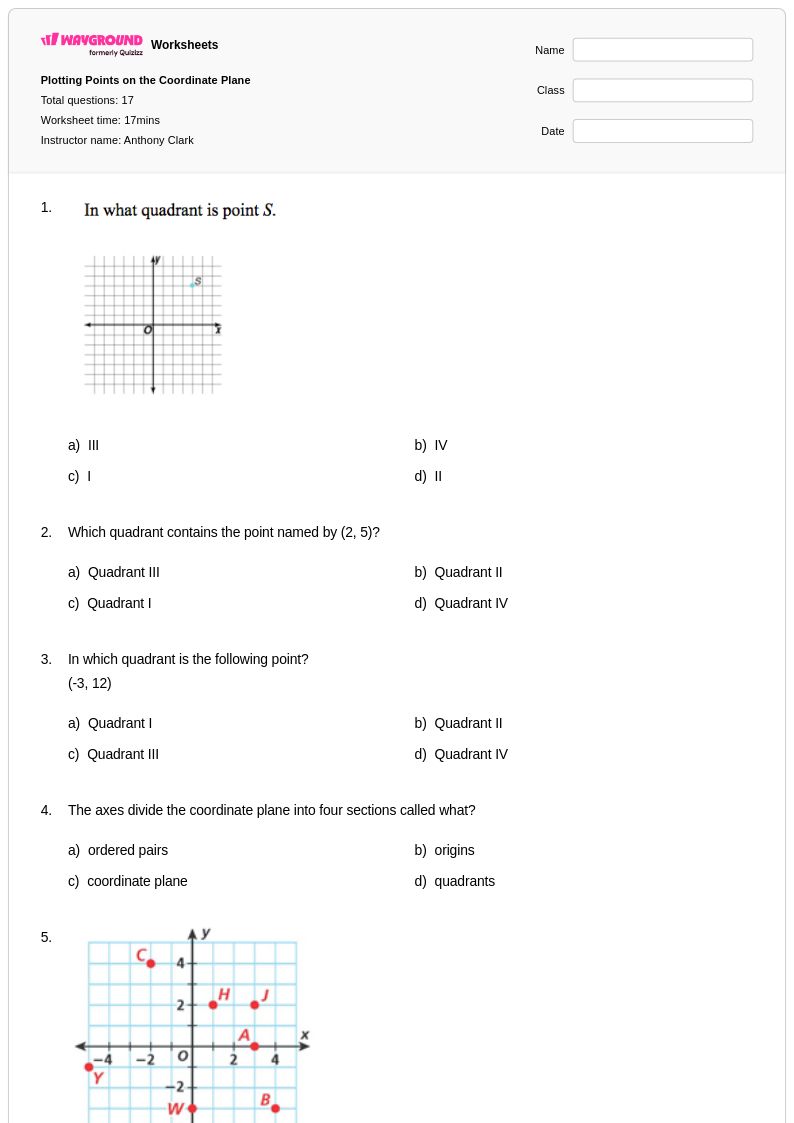
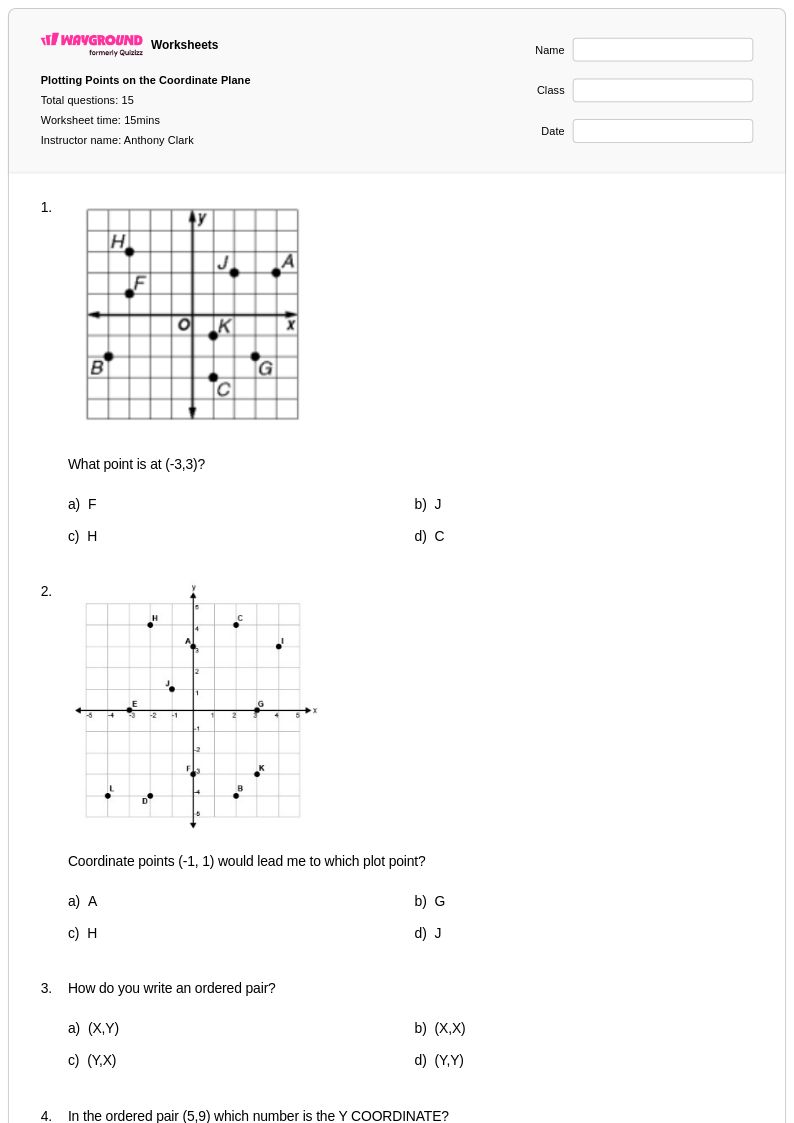
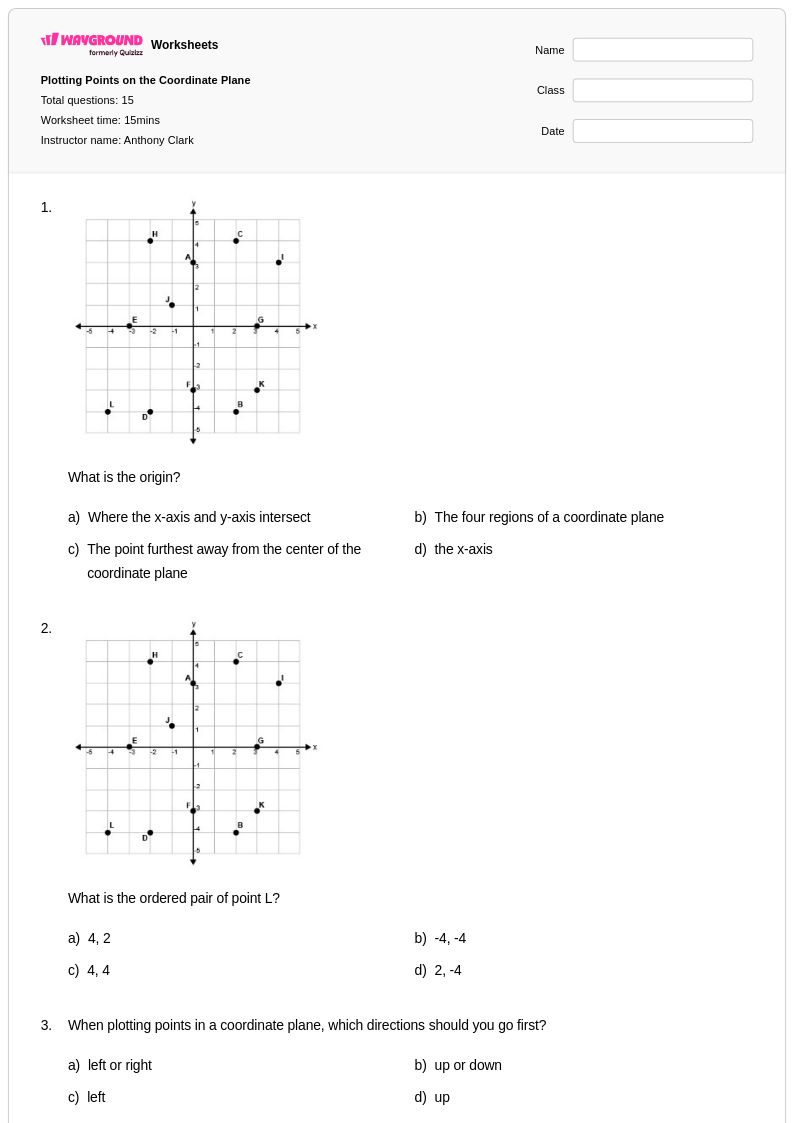
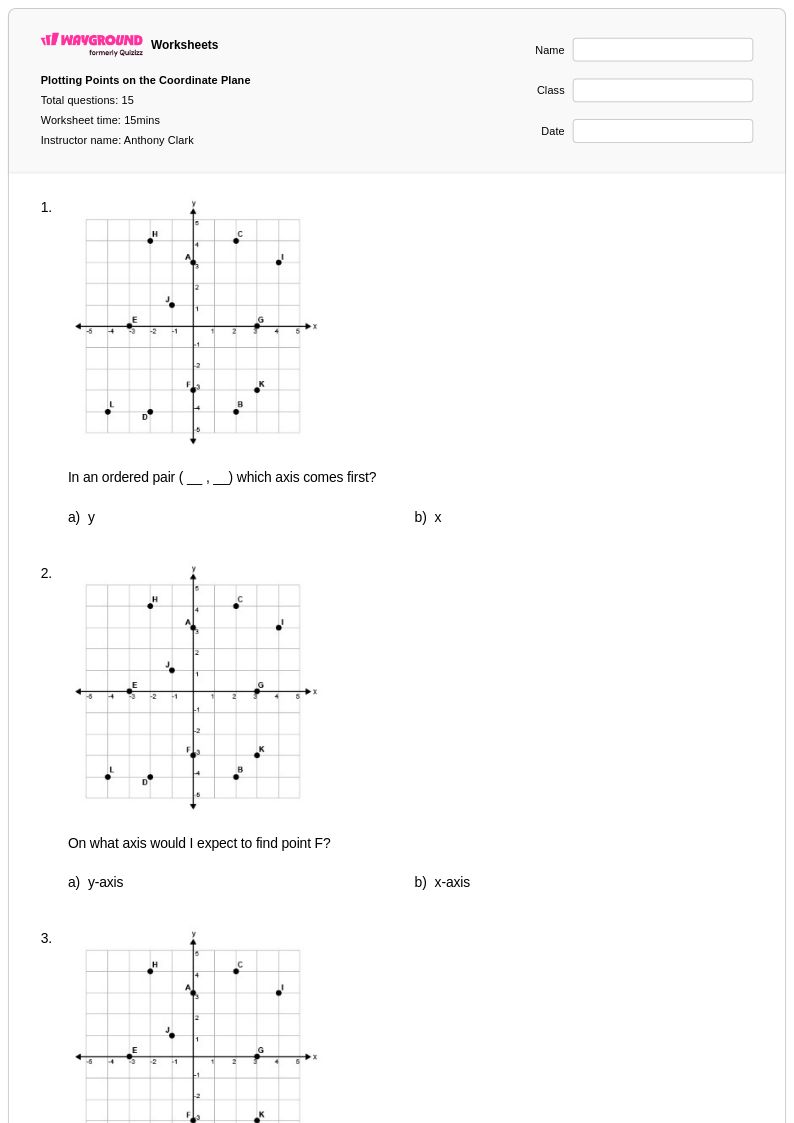
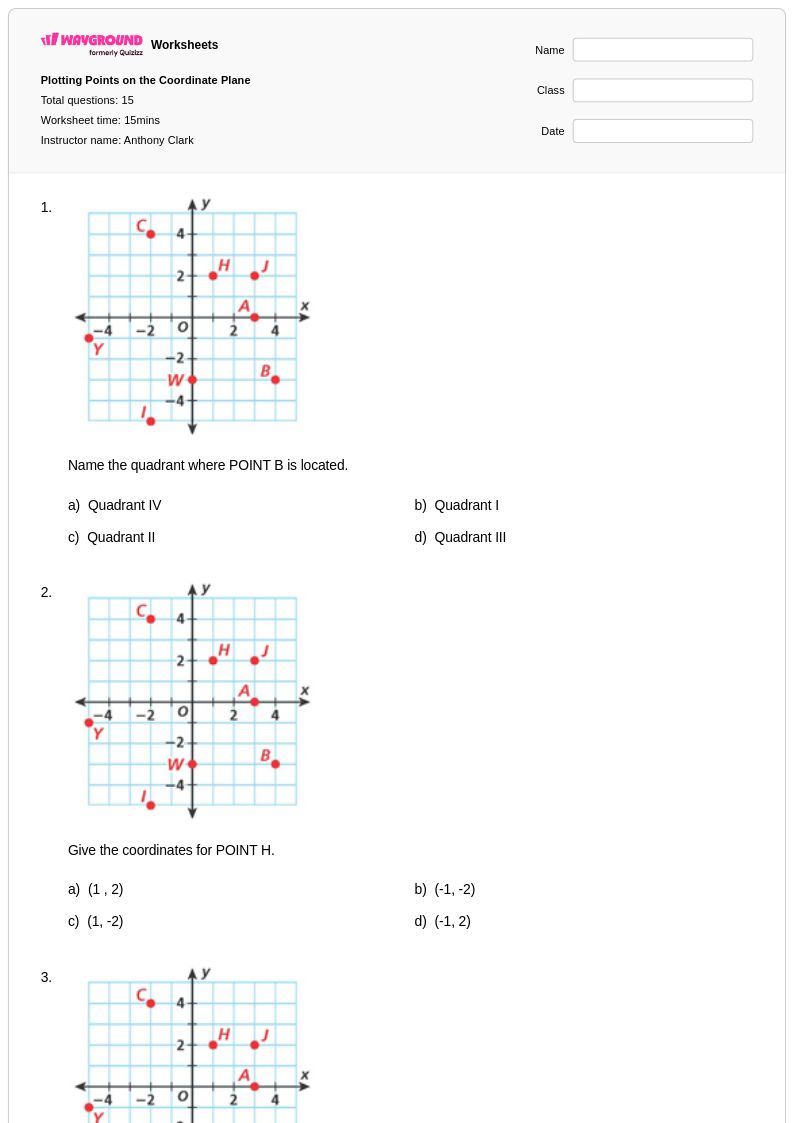
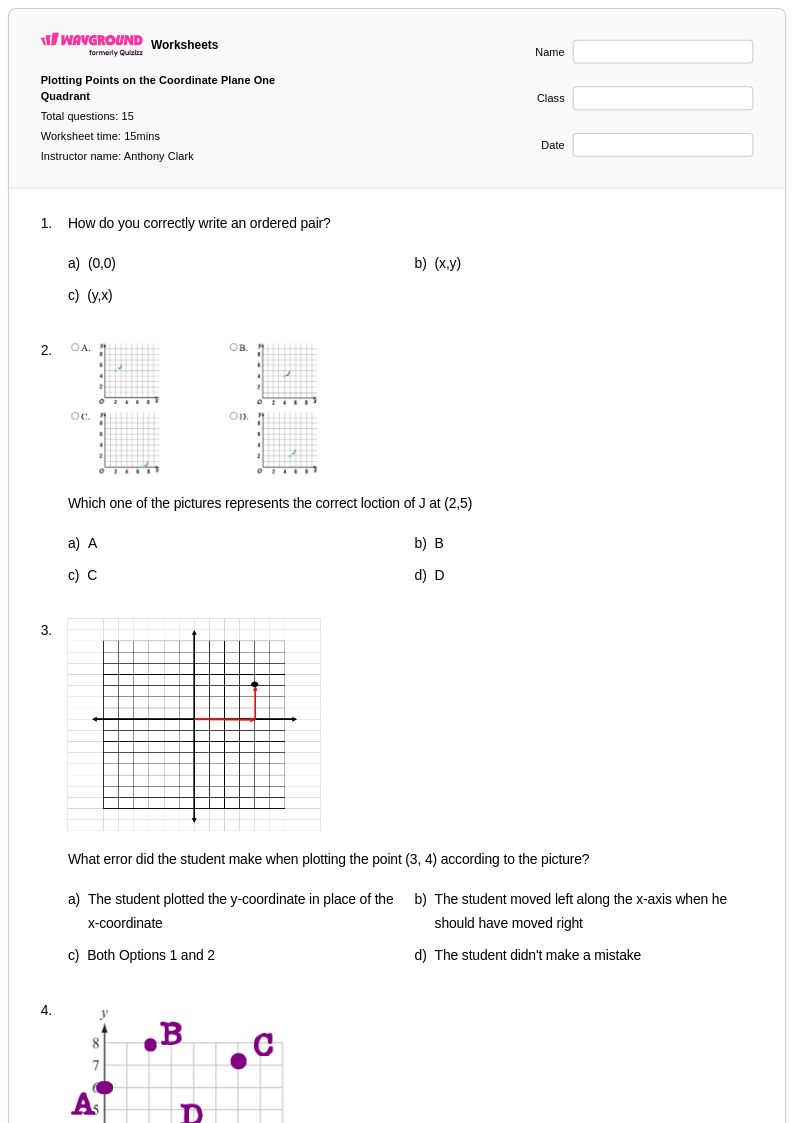
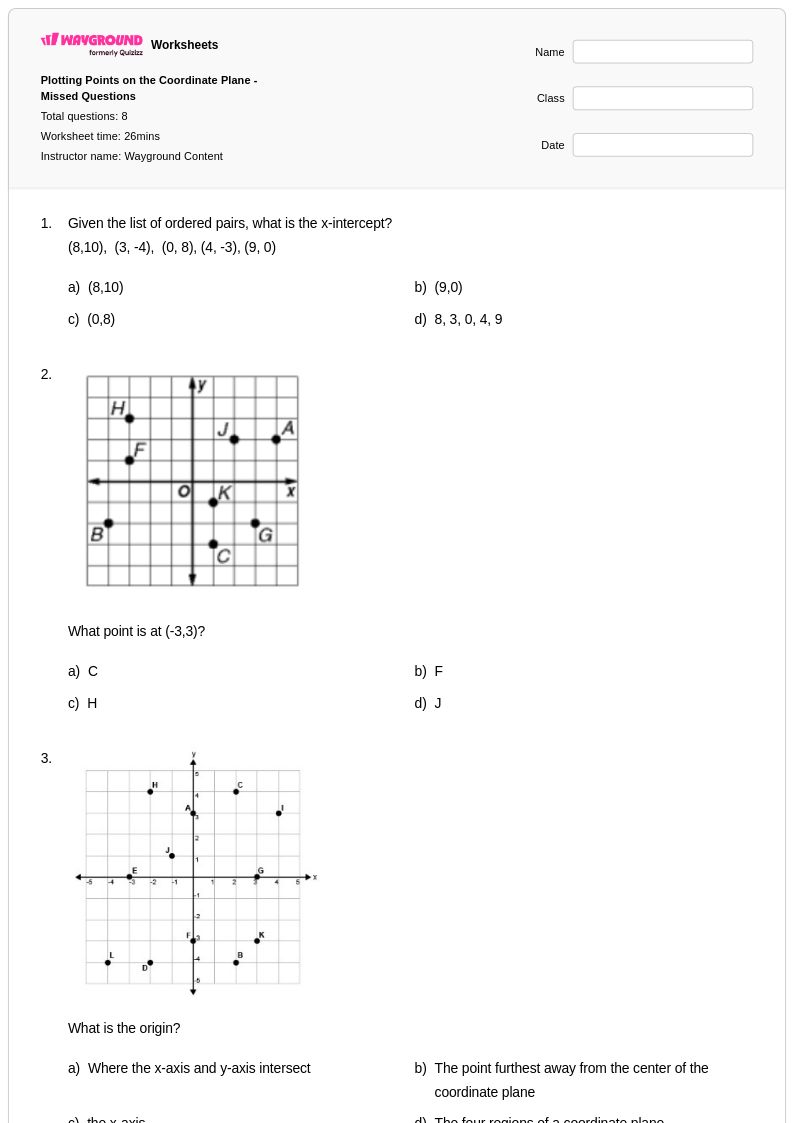
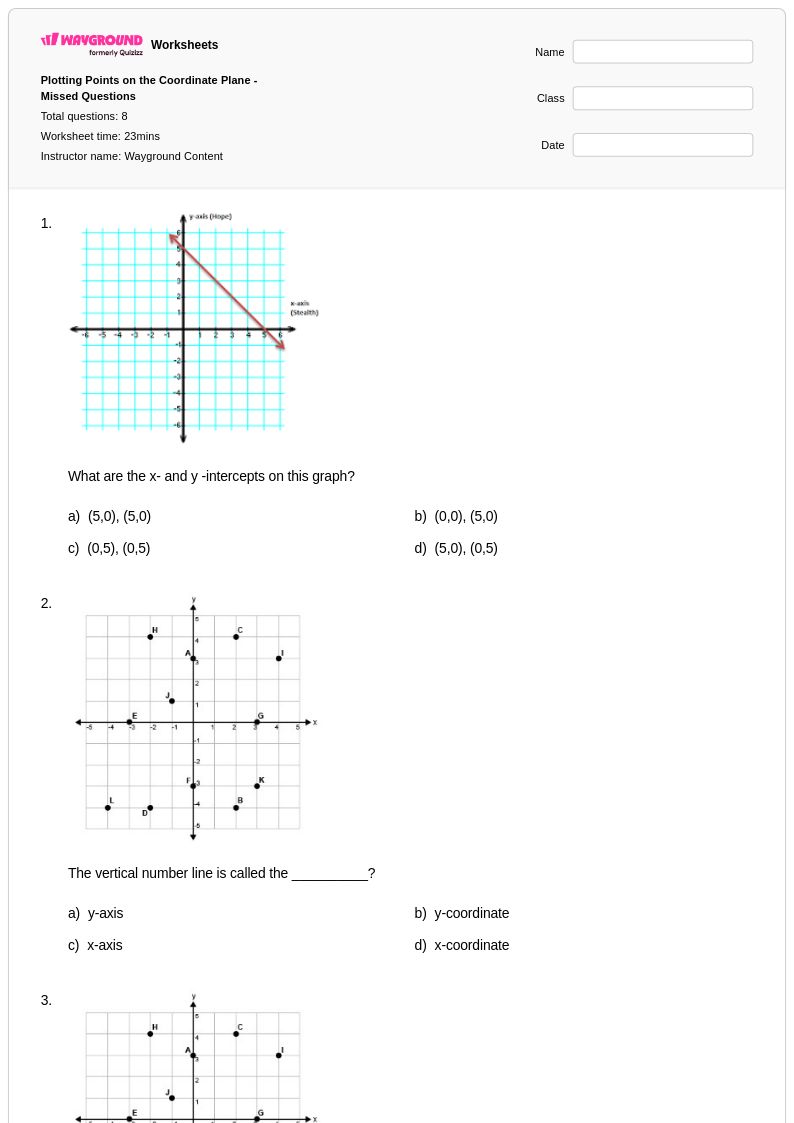
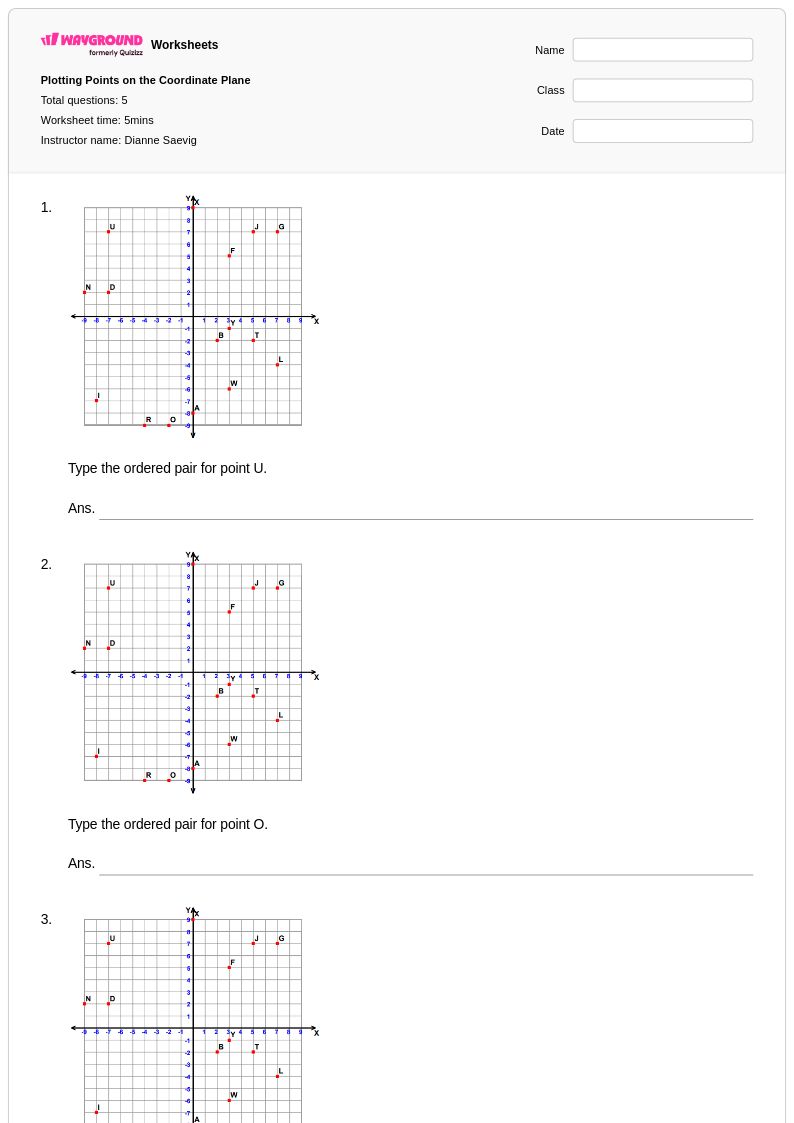
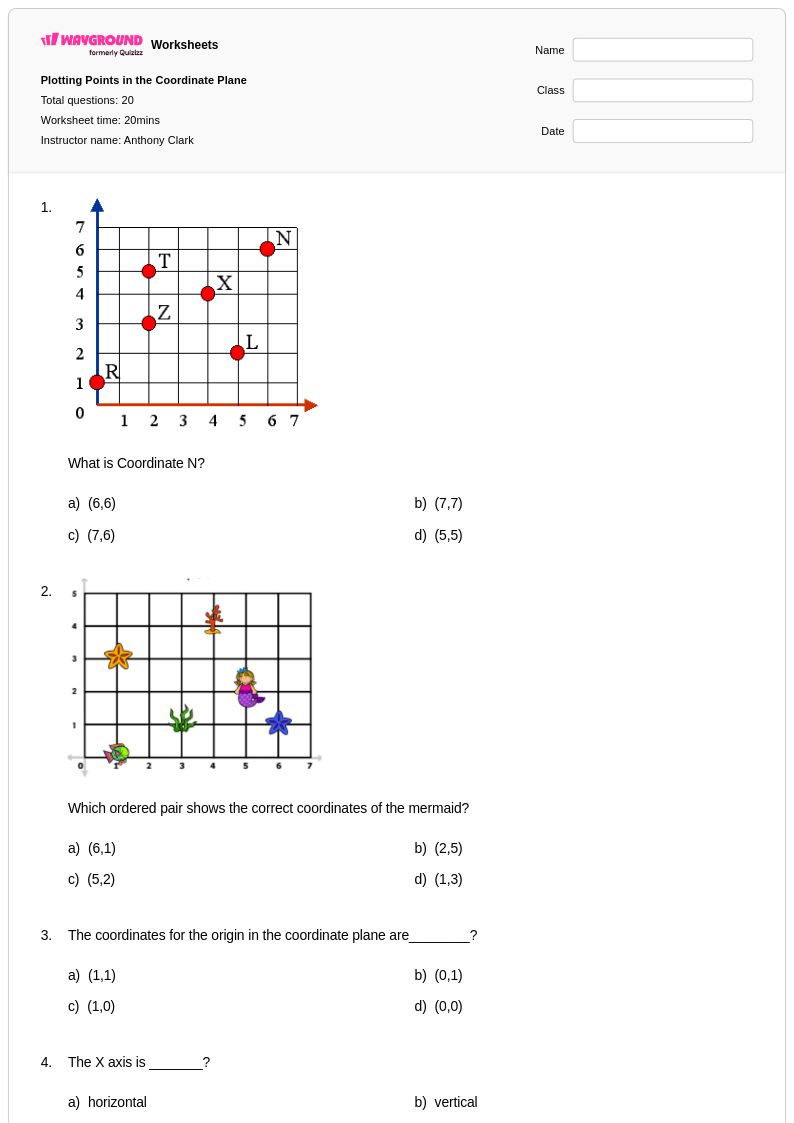
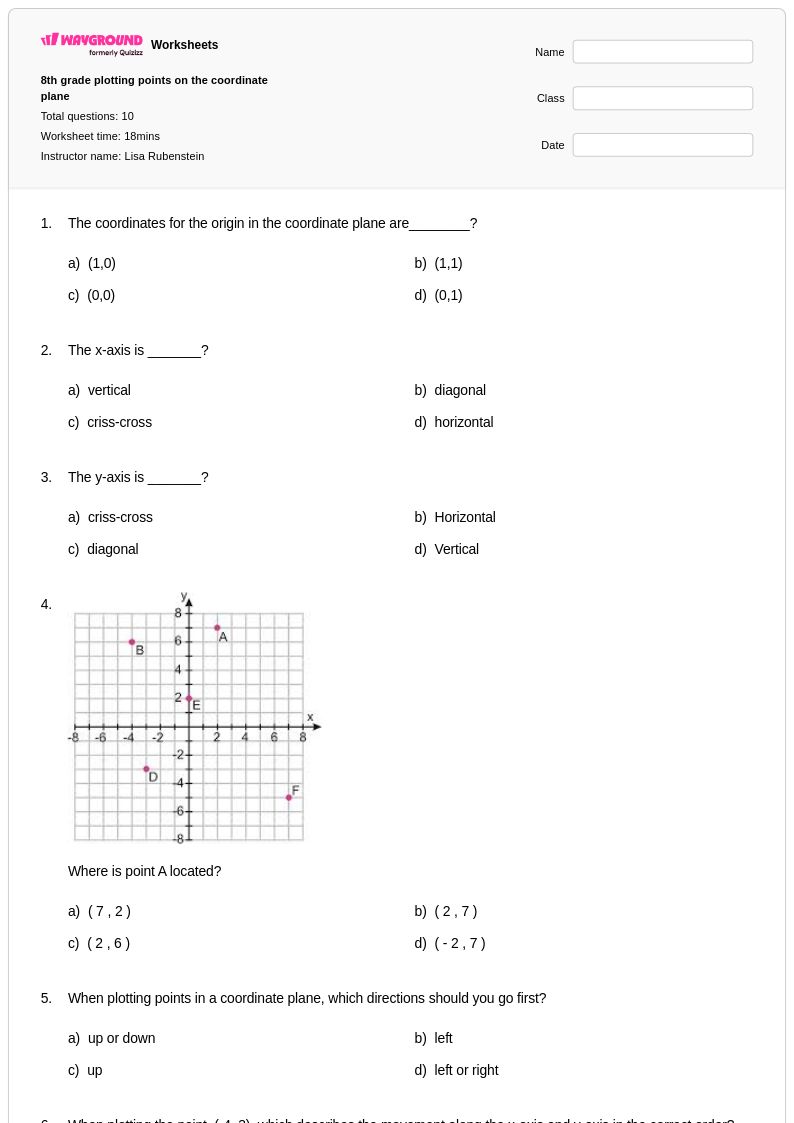
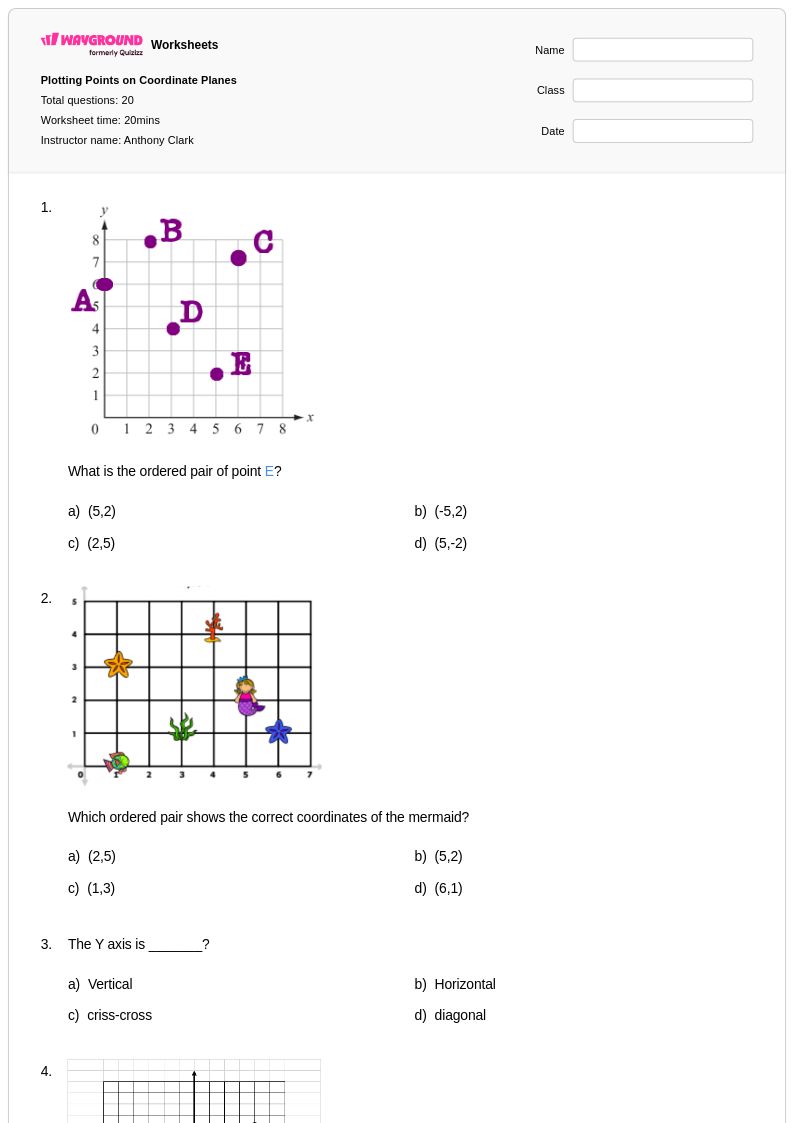
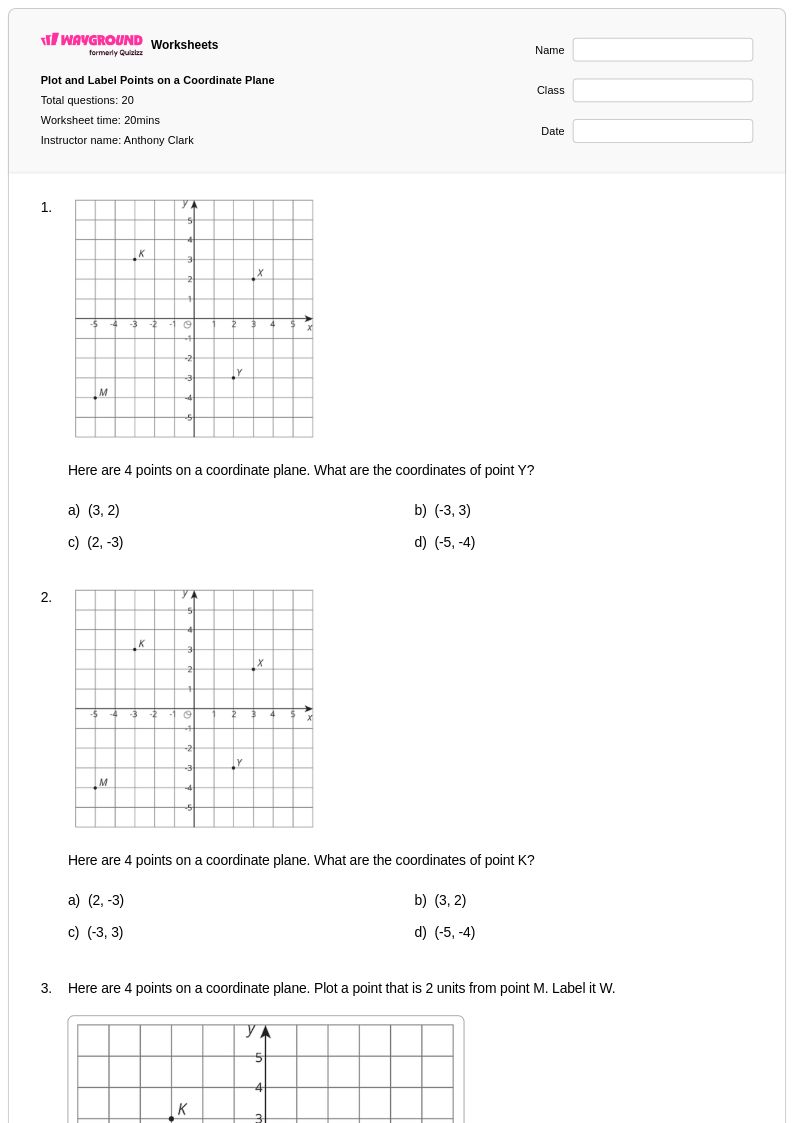
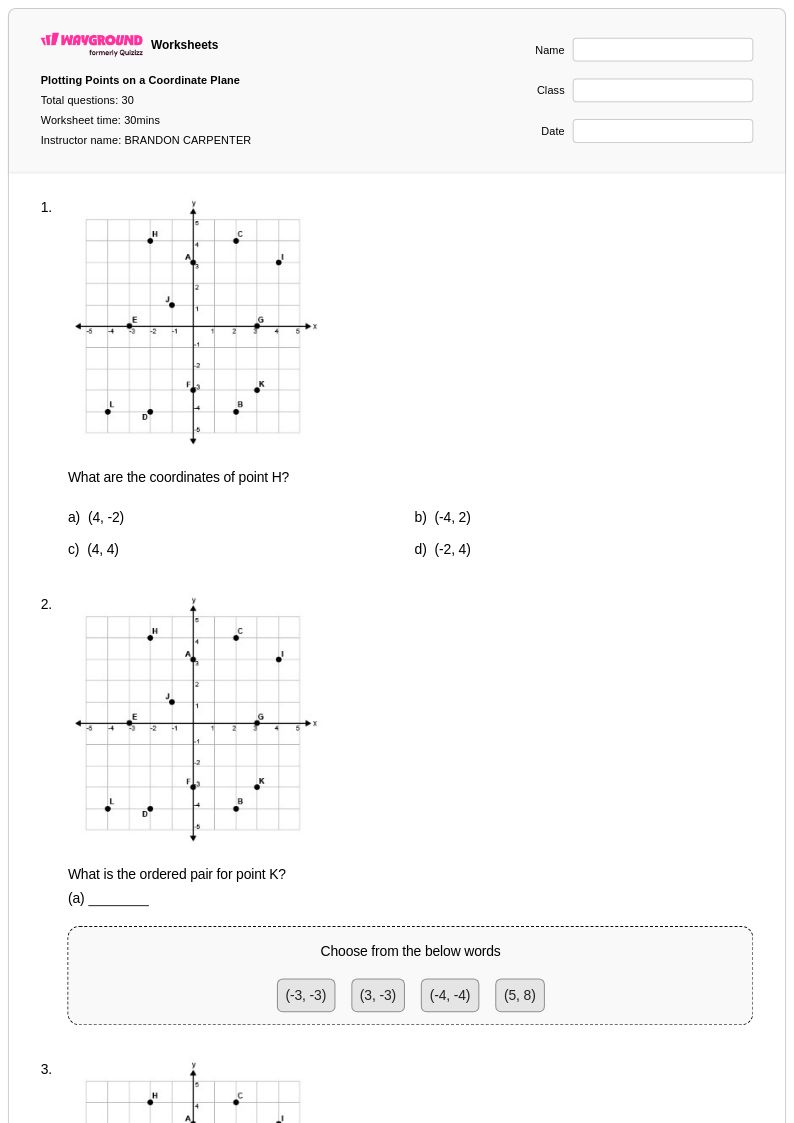
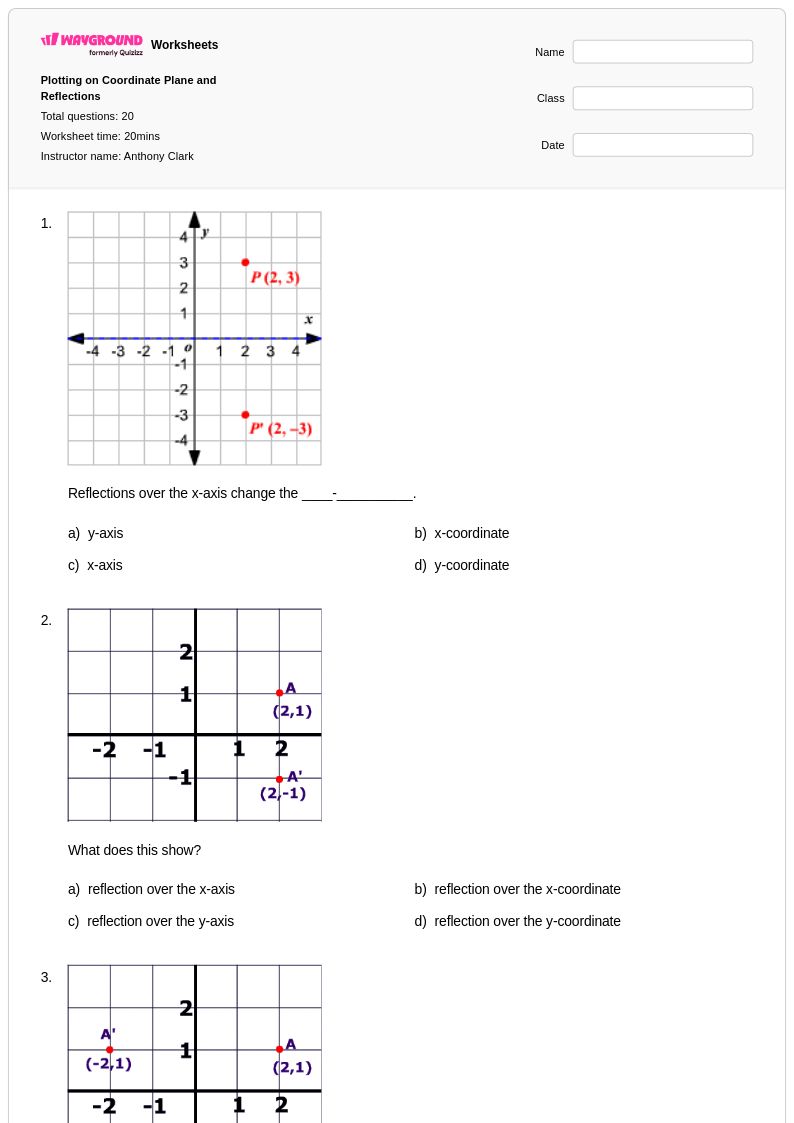
Plotting Points on the Coordinate Plane worksheets for Grade 8 students available through Wayground (formerly Quizizz) provide comprehensive practice in locating and graphing ordered pairs within the four quadrants of a coordinate system. These carefully designed practice problems strengthen students' spatial reasoning abilities and reinforce their understanding of positive and negative coordinates, x and y axes relationships, and precise point placement techniques. Each worksheet collection includes detailed answer keys that allow students to verify their plotting accuracy independently, while the free printable pdf format ensures accessibility for both classroom instruction and homework assignments that build foundational graphing skills essential for advanced mathematical concepts.
Wayground (formerly Quizizz) supports mathematics educators with an extensive library of millions of teacher-created coordinate plane resources that can be easily located through robust search and filtering capabilities aligned to curriculum standards. Teachers benefit from sophisticated differentiation tools that allow them to customize worksheet difficulty levels, modify coordinate ranges, and adjust problem complexity to meet diverse learning needs within their Grade 8 classrooms. The platform's flexible delivery options include both printable pdf worksheets for traditional paper-based practice and digital formats for interactive learning experiences, enabling educators to seamlessly integrate coordinate plane activities into lesson planning, targeted remediation sessions, enrichment opportunities, and ongoing skill practice that builds student confidence in mathematical graphing techniques.
FAQs
What is the focus of coordinate plane work in 8th grade?
In 8th grade, the coordinate plane becomes a dynamic space for exploring pre-algebra concepts. The focus shifts from simply plotting points to using coordinates to analyze functions, perform geometric transformations (translations, rotations, reflections), and apply the Pythagorean theorem to find distances between points.
How can I use the coordinate plane to teach transformations?
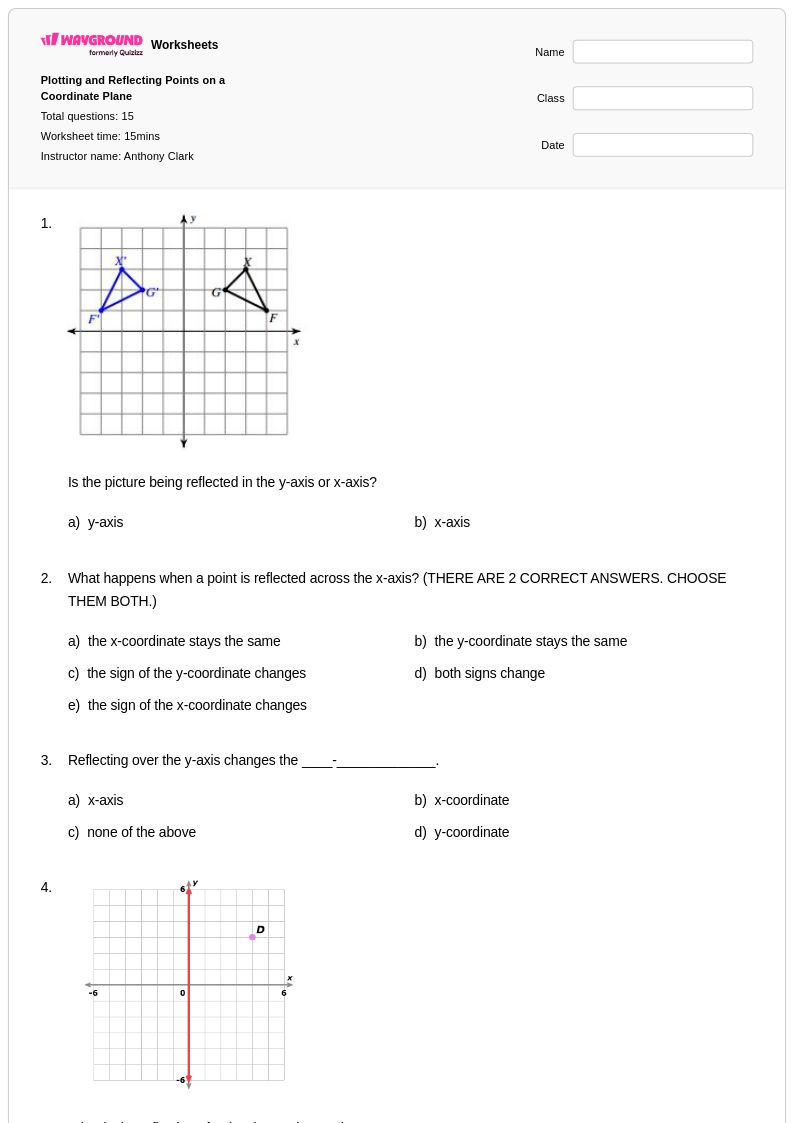
Start with a simple shape, like a triangle, defined by its vertices' coordinates. Provide a rule for a transformation, such as "add 5 to each x-coordinate" for a translation. Have students calculate the new coordinates for each vertex and plot the transformed shape (the image). This makes the abstract rules of transformations concrete and visual.
What exercises connect plotting points to functions?
Provide students with a simple linear function, like y = 2x + 1. Ask them to create an input/output table (x/y table) by choosing several values for x and calculating the corresponding y. Then, have them plot these (x, y) ordered pairs on the coordinate plane to see that they form a straight line, the graph of the function.
How can I use this 8th-grade worksheet in my classroom?
This worksheet is available in two flexible formats. You can assign it as a digital quiz on Wayground, which provides instant feedback to students. Or, you can print it as a PDF for traditional paper-and-pencil work. For printed assignments, the Wayground for Teachers app can help you grade student submissions quickly using the included answer key.
How does this topic align with 8th-grade math standards?
This work is central to the Common Core standards for 8th grade. It's essential for understanding functions (8.F.A.1) by graphing them as sets of ordered pairs. It's also critical for geometry (8.G.A.1, 8.G.A.3), where students use coordinates to describe the effects of dilations, translations, rotations, and reflections on two-dimensional figures.
What are common student errors when graphing transformations?
When performing translations, students might apply the rule incorrectly, such as subtracting when they should add. For reflections, they often struggle to reflect over lines other than the axes (e.g., y = x). With rotations, the most common error is rotating in the wrong direction (clockwise instead of counter-clockwise) or mixing up the new (x, y) coordinates.