Free Printable Menstrual Cycle Worksheets for Grade 7
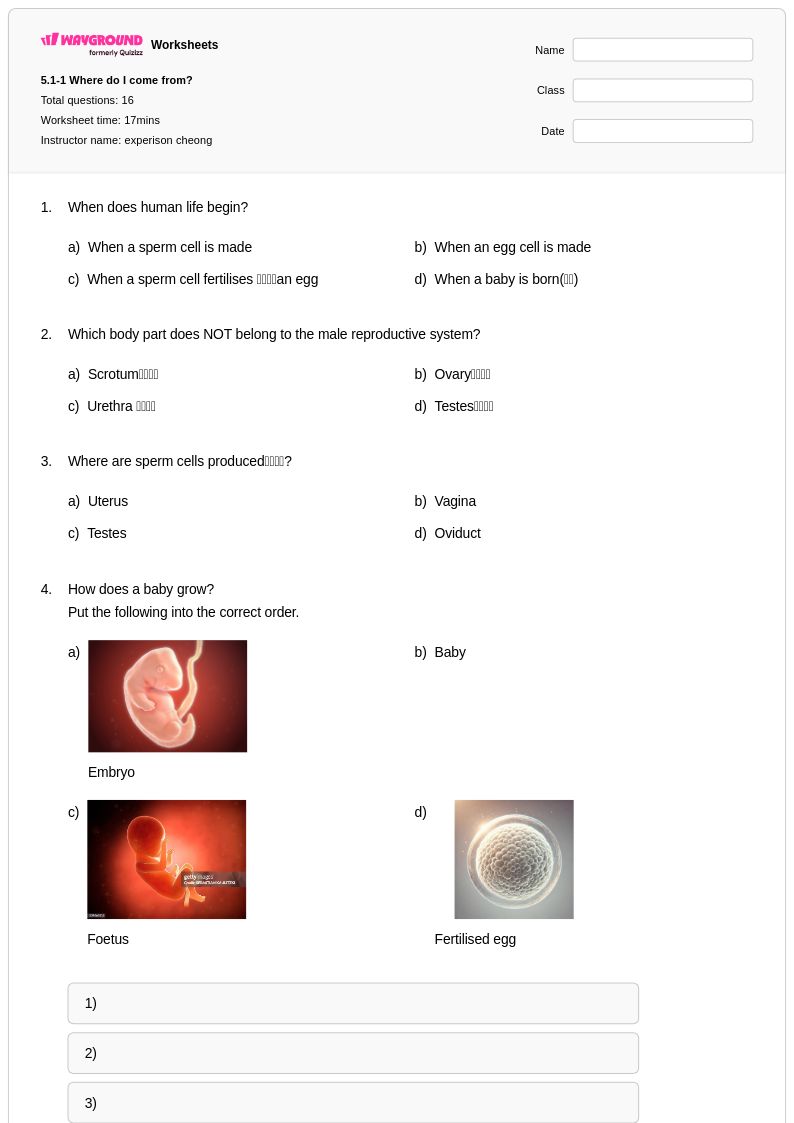
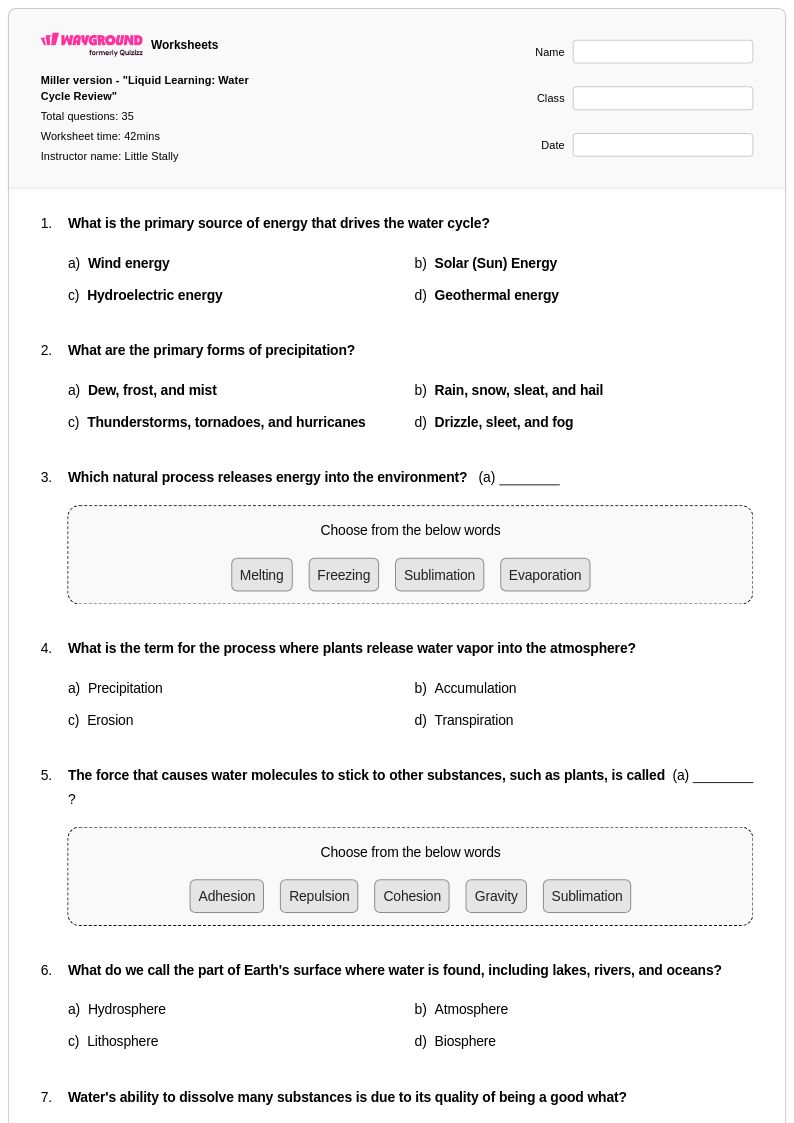
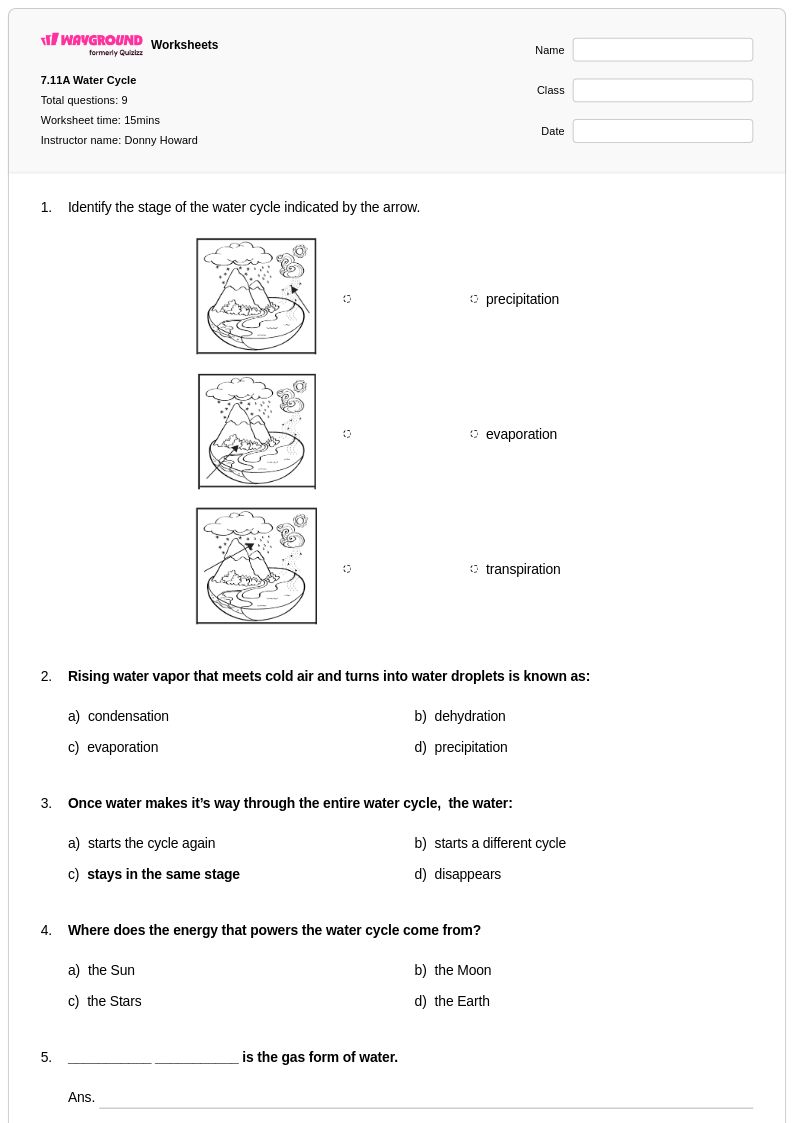
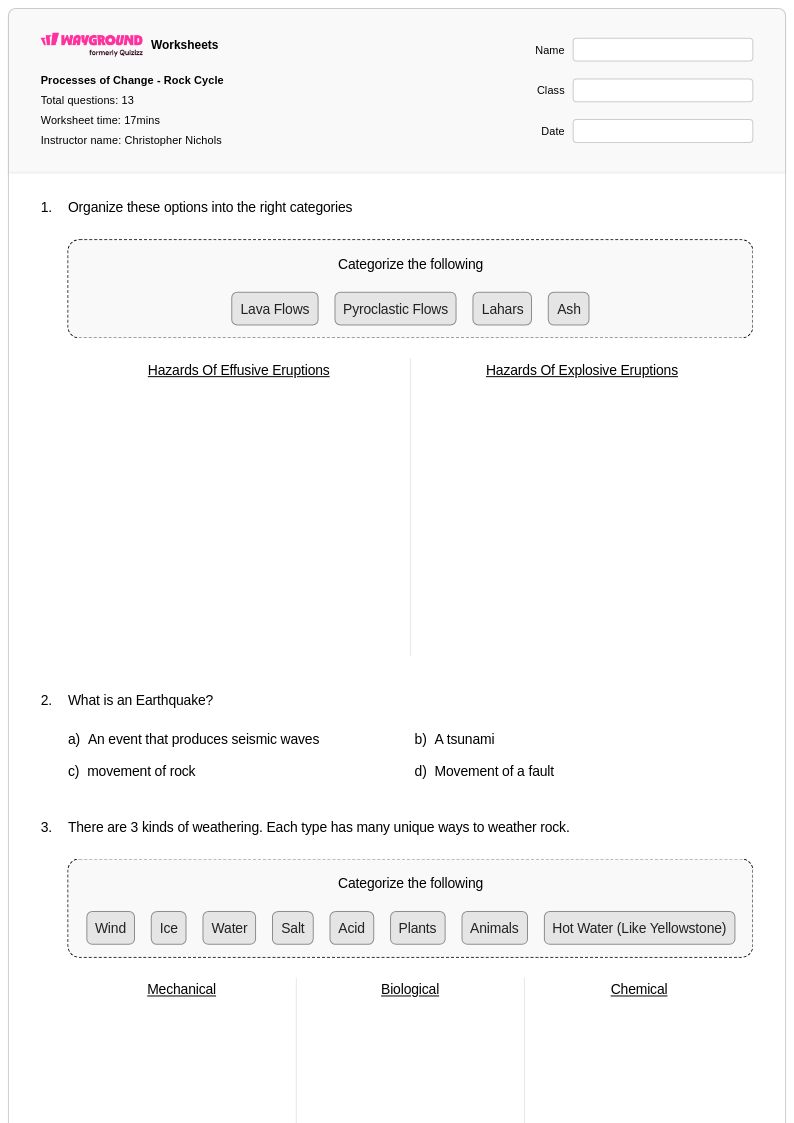
Grade 7 menstrual cycle worksheets from Wayground provide comprehensive printables and practice problems to help students understand reproductive health, hormonal changes, and biological processes, complete with answer keys and free PDF downloads.
Explore printable Menstrual Cycle worksheets for Grade 7
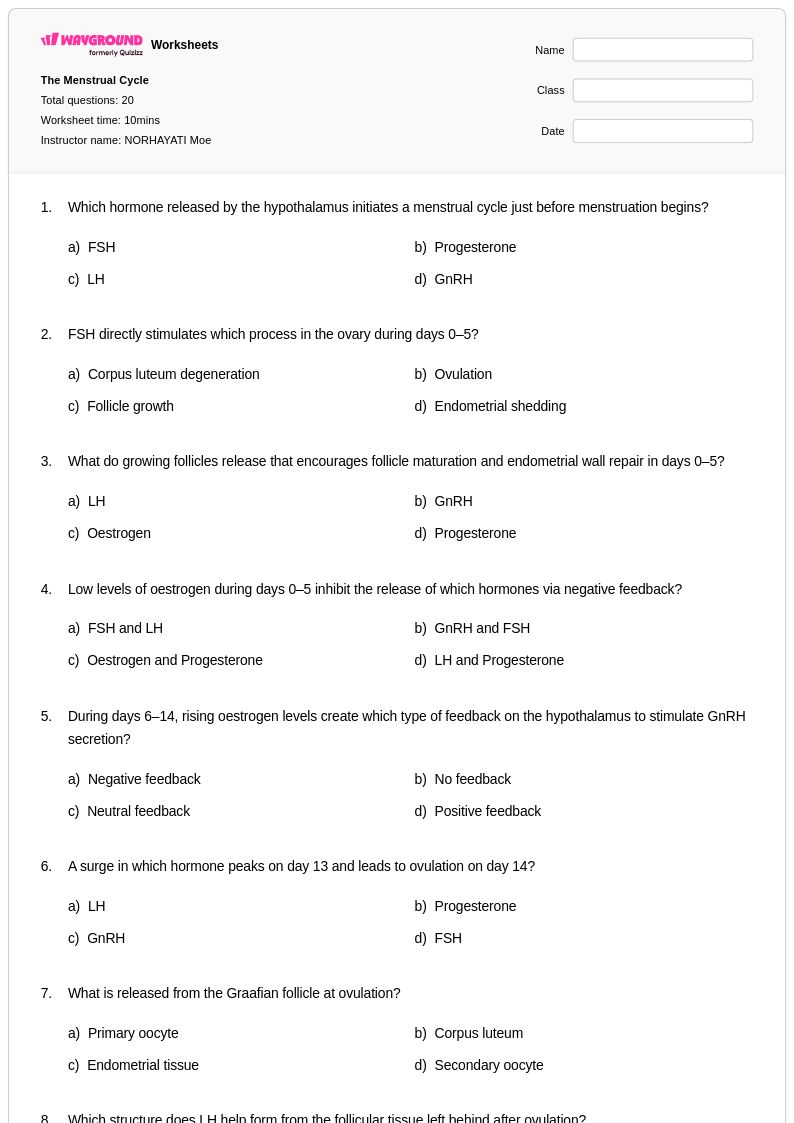
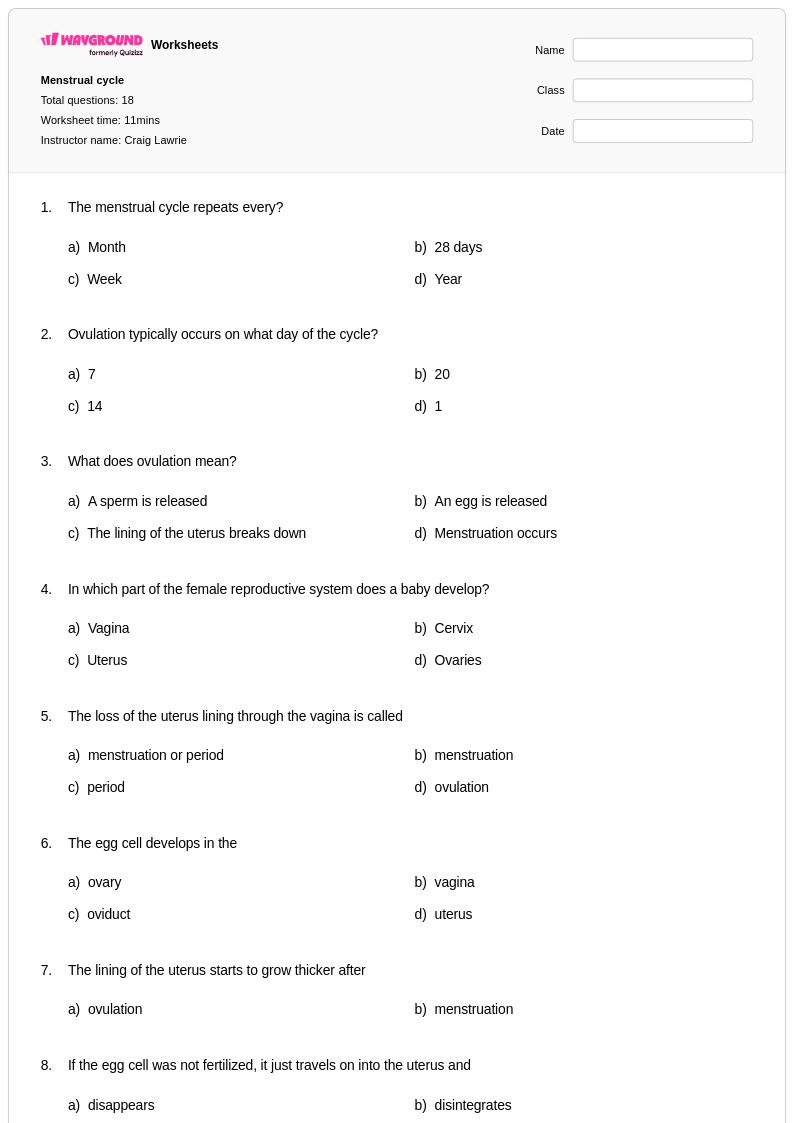
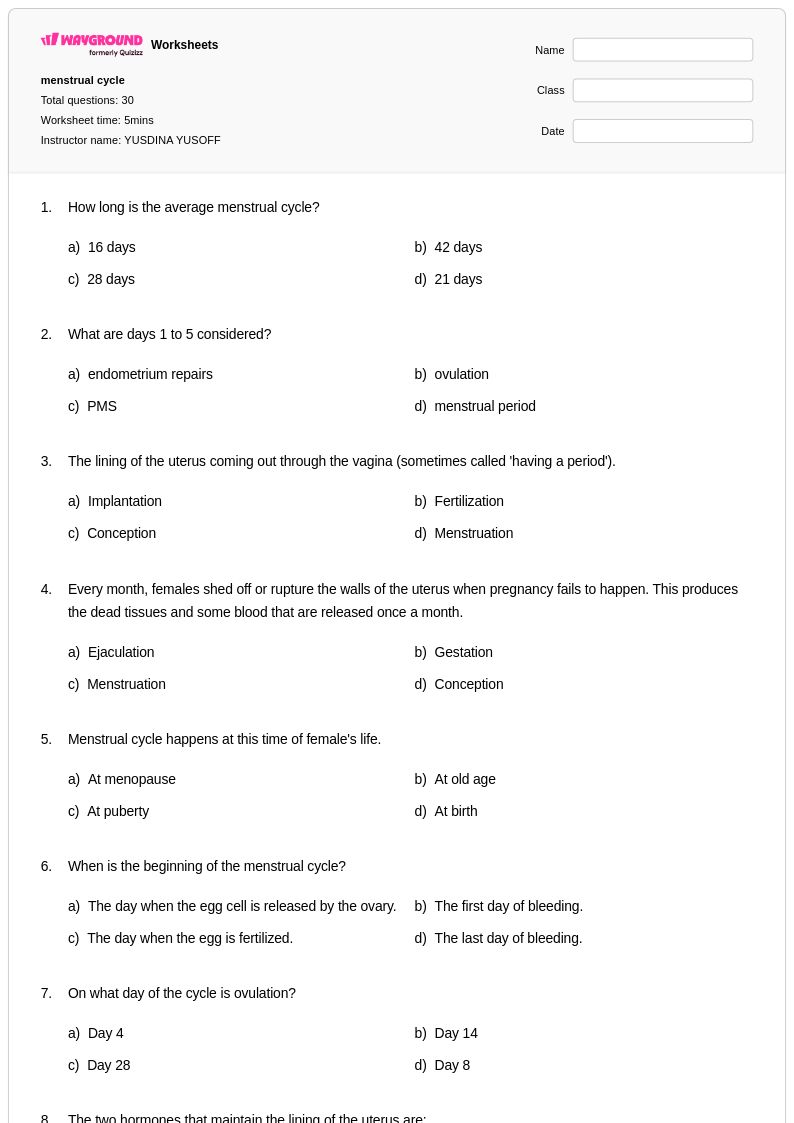
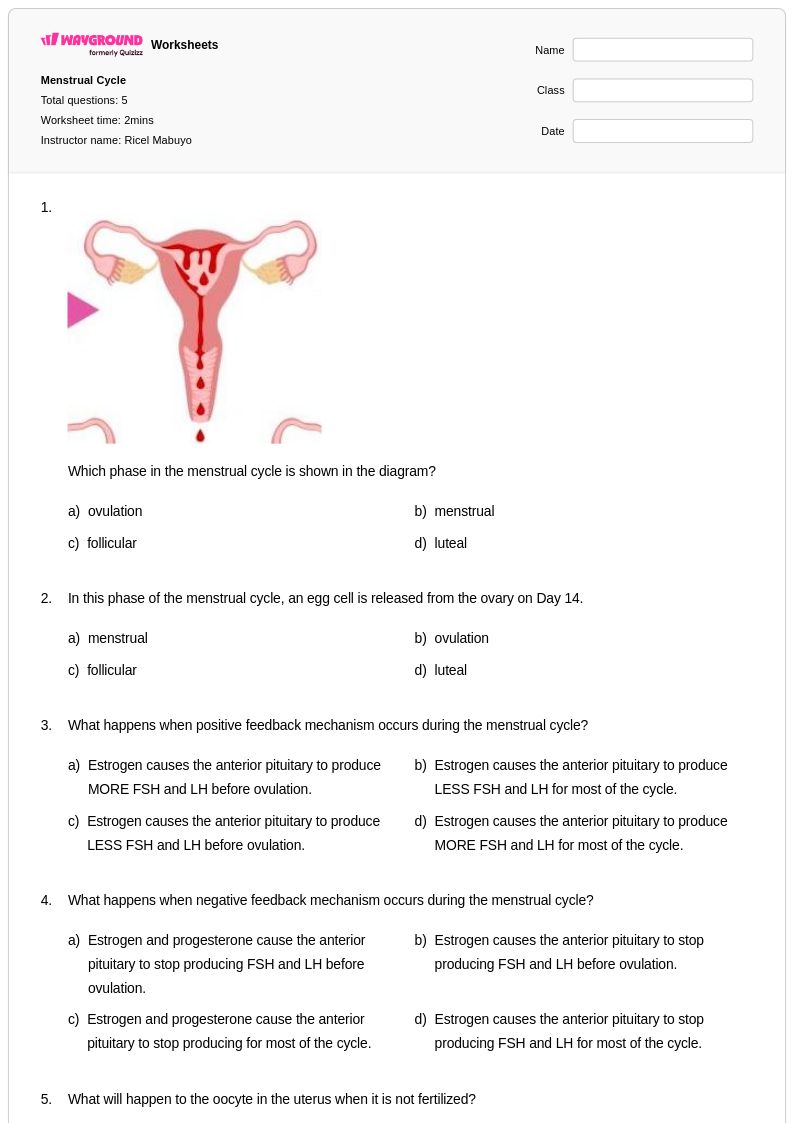
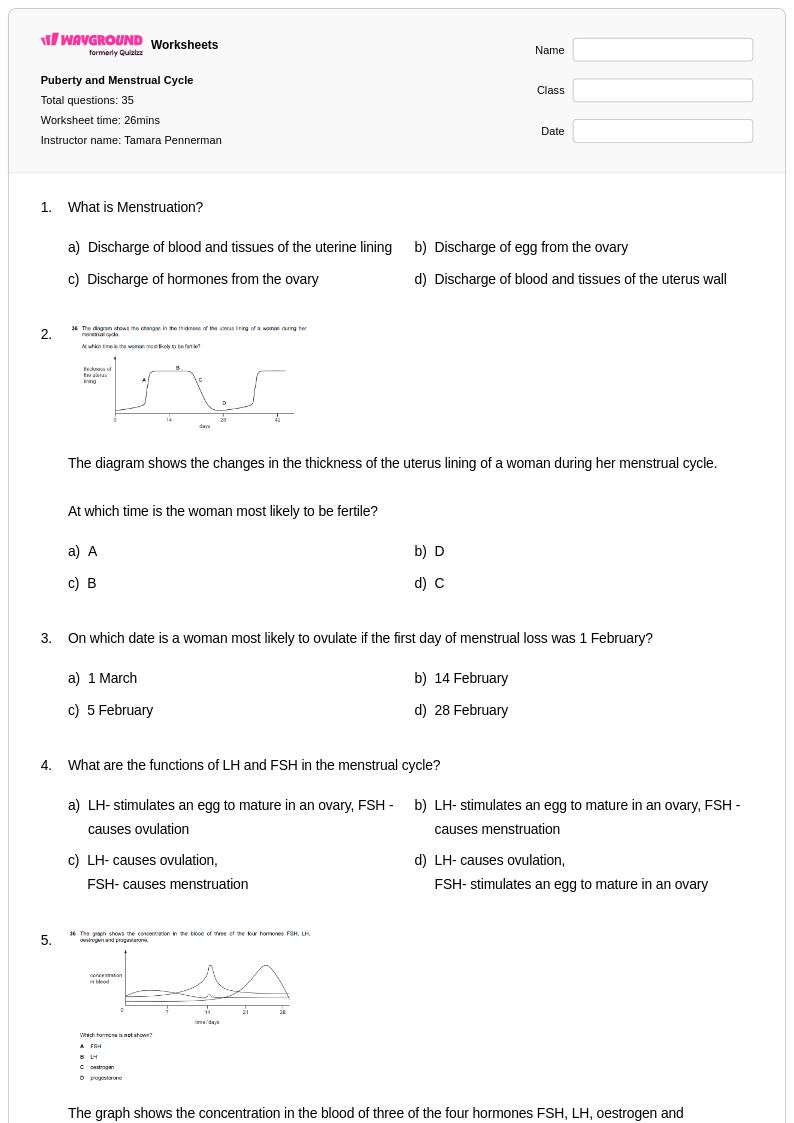
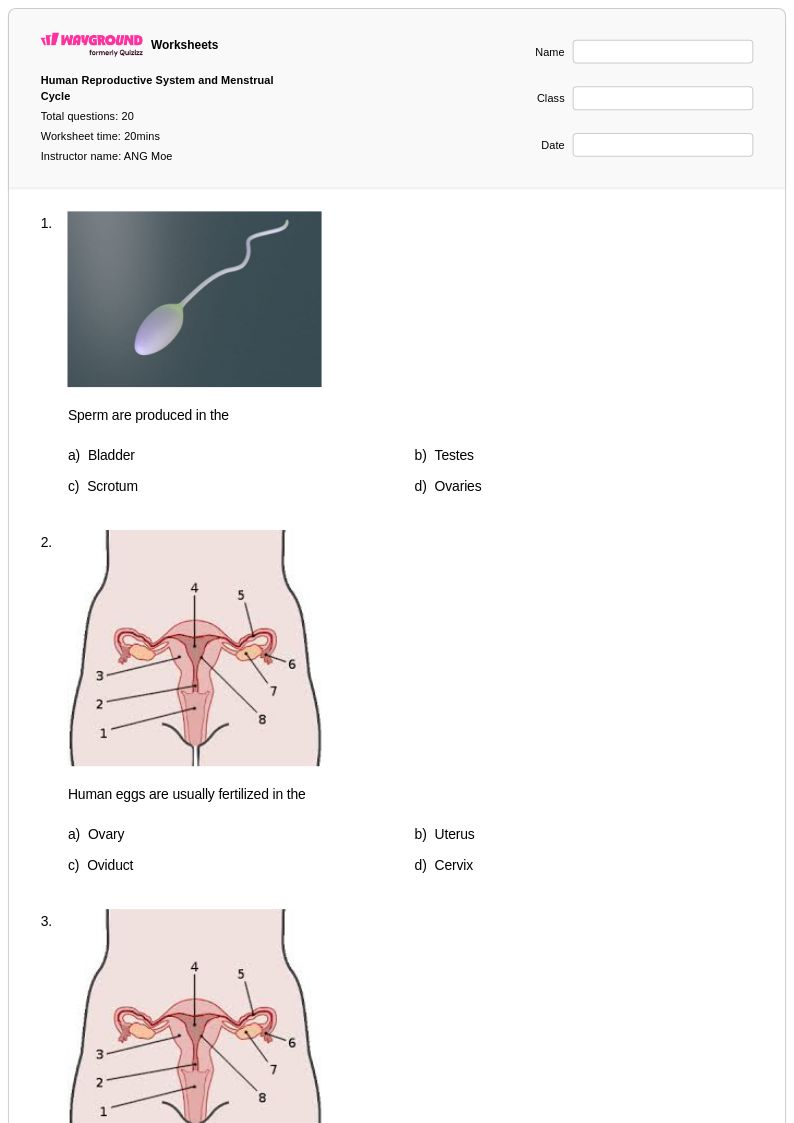
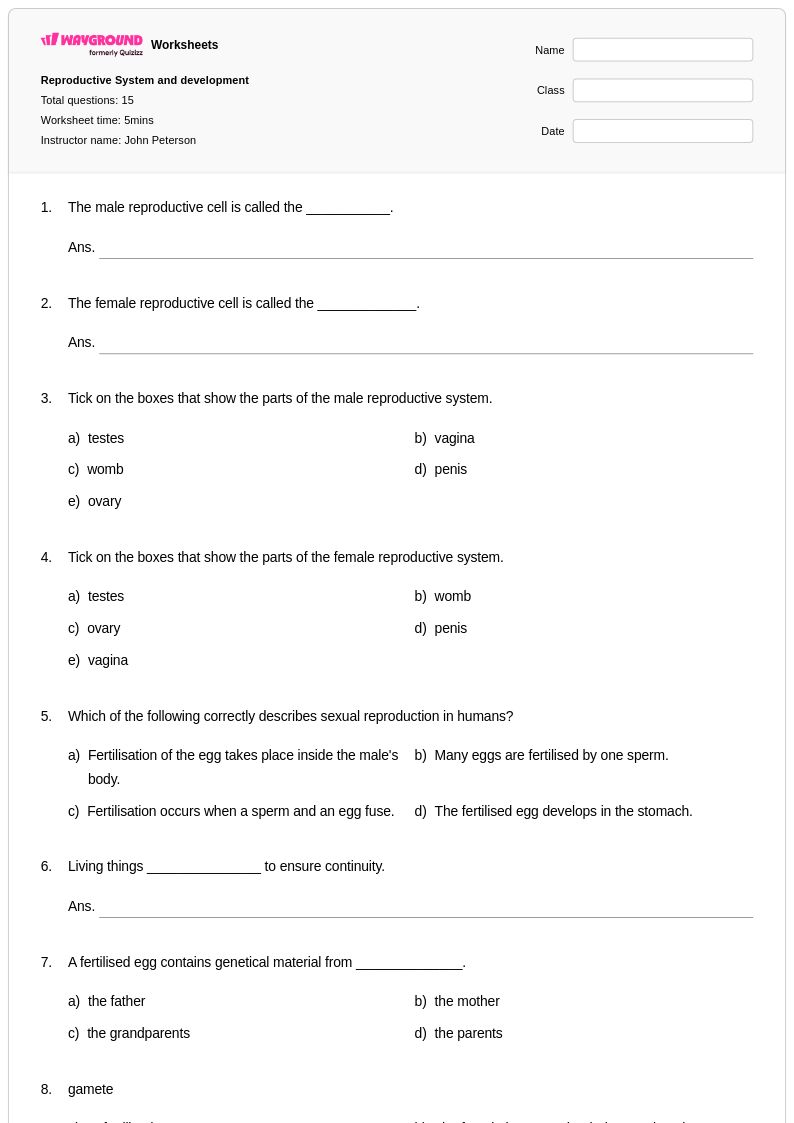
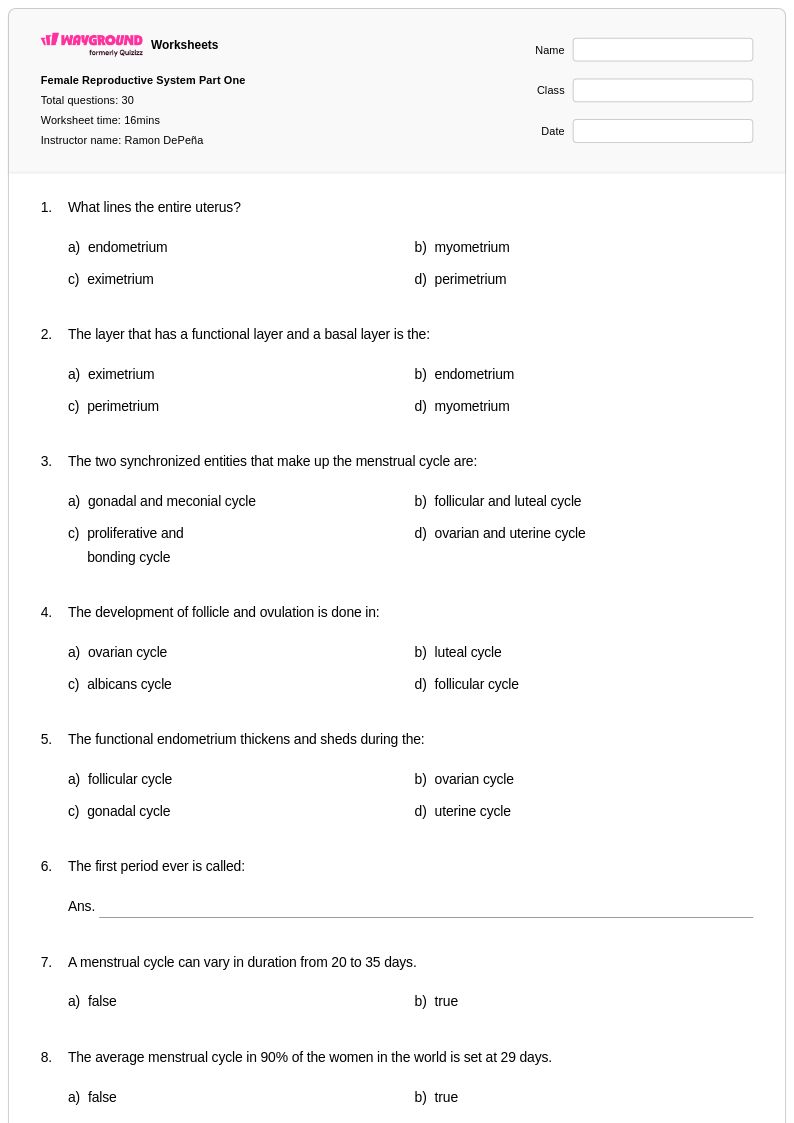
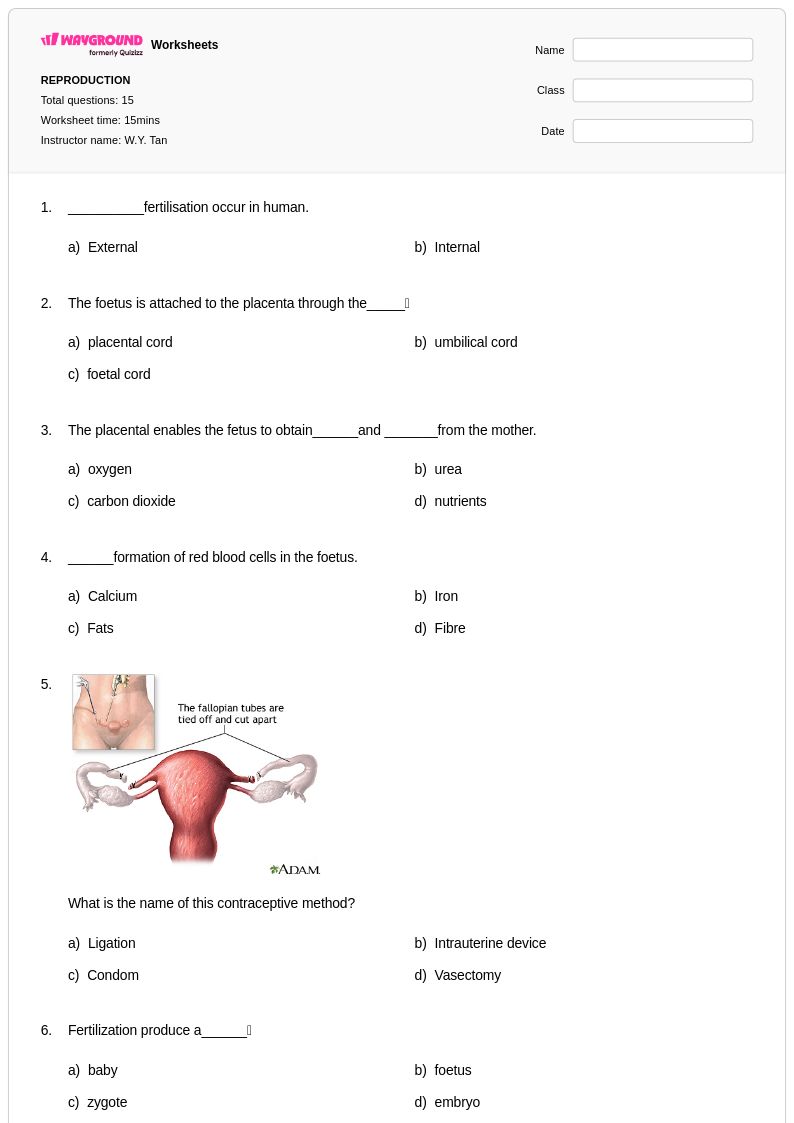
Menstrual cycle worksheets for Grade 7 students available through Wayground (formerly Quizizz) provide comprehensive resources for understanding this fundamental aspect of human reproductive biology. These educational materials guide seventh-grade learners through the complex hormonal changes, physical processes, and timing of the menstrual cycle, helping students develop a scientific understanding of female reproductive health. The worksheets strengthen critical thinking skills by engaging students with detailed diagrams, hormone tracking activities, and practice problems that reinforce key concepts such as ovulation, menstruation, and the roles of estrogen and progesterone. Each worksheet collection includes a complete answer key, and teachers can access these resources as free printables or downloadable pdf files, making it easy to incorporate evidence-based menstrual cycle education into classroom instruction or homework assignments.
Wayground (formerly Quizizz) empowers educators with millions of teacher-created menstrual cycle worksheets specifically designed for Grade 7 human biology instruction. The platform's robust search and filtering capabilities allow teachers to quickly locate age-appropriate materials that align with state science standards and curriculum requirements for reproductive health education. Differentiation tools enable instructors to modify worksheet complexity, ensuring that all students can access the content regardless of their reading level or prior knowledge of biological processes. These flexible customization options support diverse teaching approaches, whether educators need resources for initial concept introduction, skill practice sessions, remediation for struggling learners, or enrichment activities for advanced students. The availability of both printable and digital formats, including pdf downloads, streamlines lesson planning and allows teachers to seamlessly integrate menstrual cycle education into their existing human biology curriculum while maintaining sensitivity to diverse student needs and family values.
FAQs
How do I teach the menstrual cycle to students who find it confusing?
Breaking the menstrual cycle into its four phases — menstruation, follicular, ovulation, and luteal — and teaching each phase sequentially helps students build a coherent mental model before connecting hormonal changes to physical events. Using labeled diagrams that show rising and falling estrogen and progesterone levels alongside uterine lining changes gives students a visual anchor for what can otherwise feel like abstract biology. Reinforcing phase transitions with timeline-based practice problems helps students see the cycle as a coordinated system rather than a list of isolated facts.
What exercises help students practice understanding the menstrual cycle?
Practice problems that ask students to interpret hormone level graphs — identifying peaks in estrogen before ovulation and the progesterone surge during the luteal phase — are especially effective for building analytical skills. Labeling diagrams of the uterine lining at each phase, sequencing events in the correct order, and matching hormones to their functions in follicular development and ovulation all reinforce the interconnected nature of the cycle. These exercise types appear across Wayground's menstrual cycle worksheets and help students move from memorization toward genuine conceptual understanding.
What mistakes do students commonly make when learning about the menstrual cycle?
One of the most frequent errors is conflating ovulation with menstruation, with students incorrectly assuming they occur at the same time rather than roughly two weeks apart. Students also commonly misattribute hormone functions, for example assuming estrogen triggers ovulation directly rather than understanding that the LH surge is the proximate cause. A third common misconception is treating the 28-day cycle as a fixed biological rule rather than an average, which can cause confusion when applying the concept to real-world variation.
How can I differentiate menstrual cycle instruction for students at different levels?
For introductory learners, focus on phase names, their sequence, and the basic role of the uterine lining before introducing hormone graphs. More advanced students benefit from analyzing the feedback loops between the pituitary gland, ovaries, and uterus, including how FSH and LH regulate follicular development and the LH surge that triggers ovulation. Wayground's differentiation tools allow teachers to customize content difficulty and focus areas within the platform, making it easier to assign foundational or advanced material to individual students without preparing entirely separate lesson sets.
How do I use Wayground's menstrual cycle worksheets in my classroom?
Wayground's menstrual cycle worksheets are available as printable PDFs for traditional classroom use and in digital formats for technology-integrated environments, including the option to host them as a live quiz directly on Wayground. Teachers can use printable versions for guided practice, independent work, or assessment, while digital formats support remote instruction and immediate feedback. Each worksheet includes an answer key, so teachers can use them efficiently for both instruction and targeted review without additional preparation.
How do I support students with learning differences when teaching the menstrual cycle?
Students who struggle with dense scientific text benefit from having questions read aloud, a feature available through Wayground's Read Aloud accommodation, which can be assigned to individual students without alerting the rest of the class. Reducing answer choices for students with cognitive processing challenges can help them focus on distinguishing between key concepts like estrogen versus progesterone without being overwhelmed by distractors. Extended time settings, also configurable per student on Wayground, ensure that pacing accommodations are in place for assessments covering this content without disrupting the broader class workflow.