
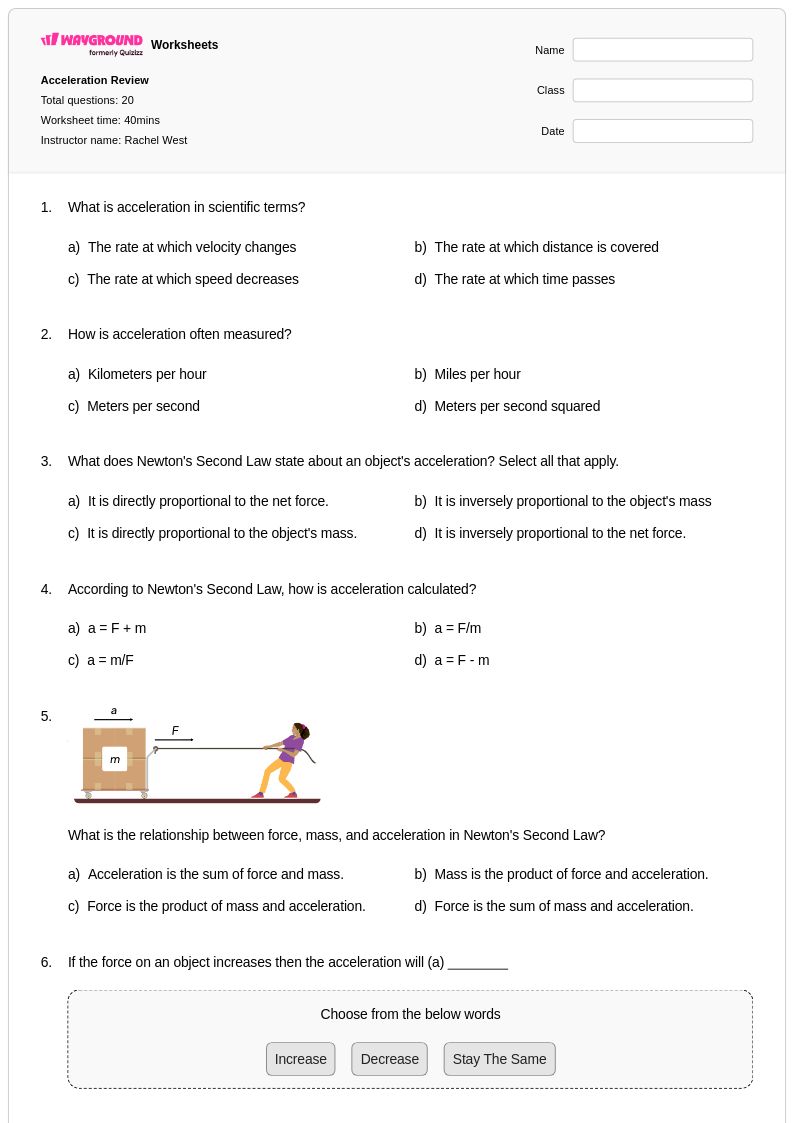
20 Q
8th - Uni
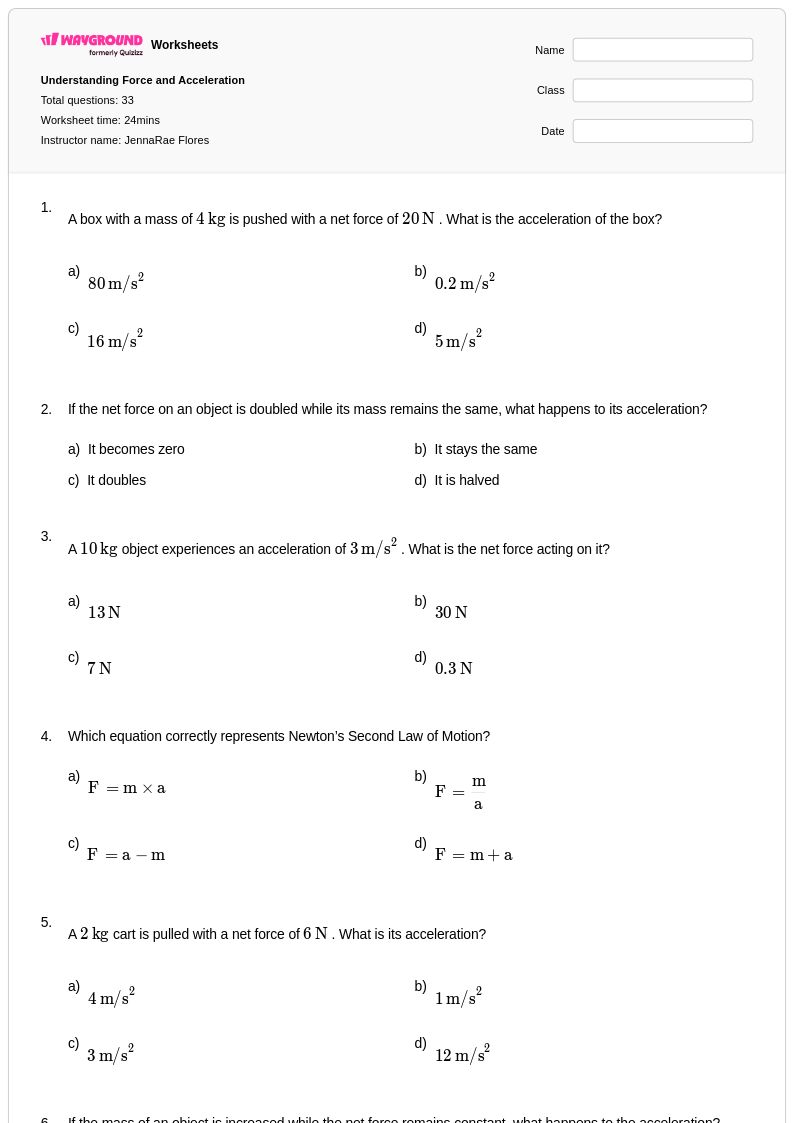
33 Q
8th - Uni
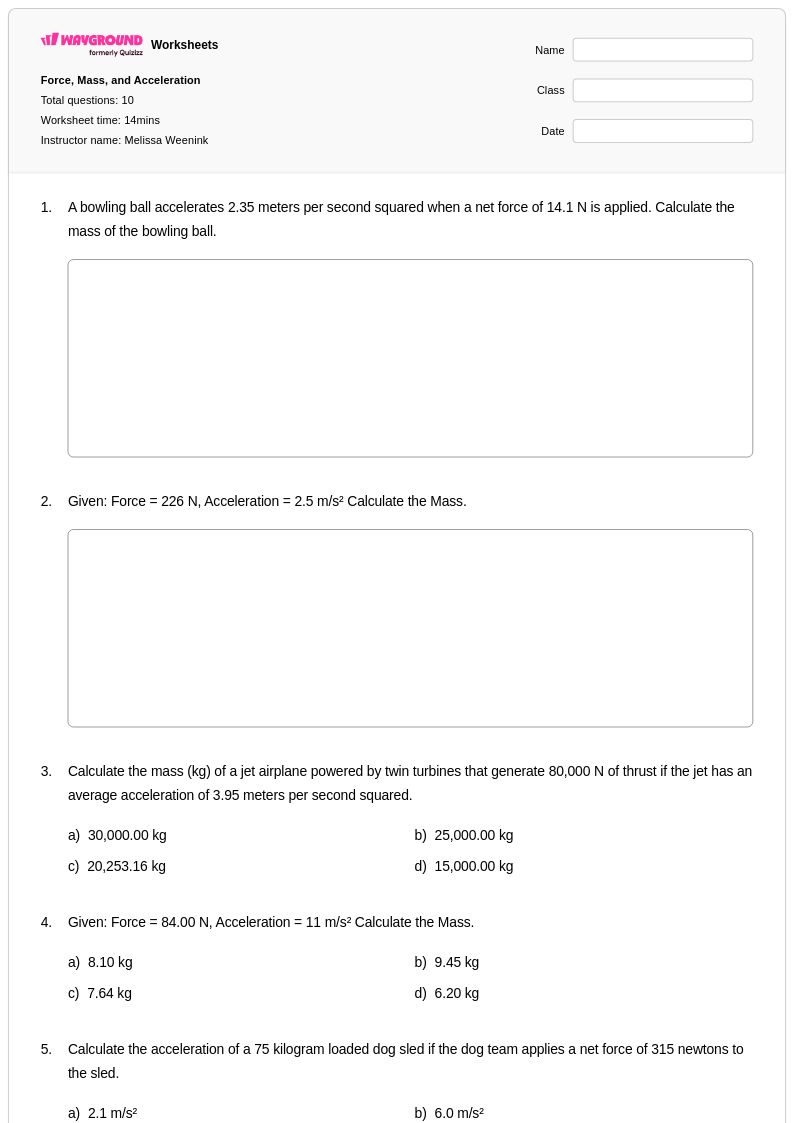
10 Q
8th - Uni
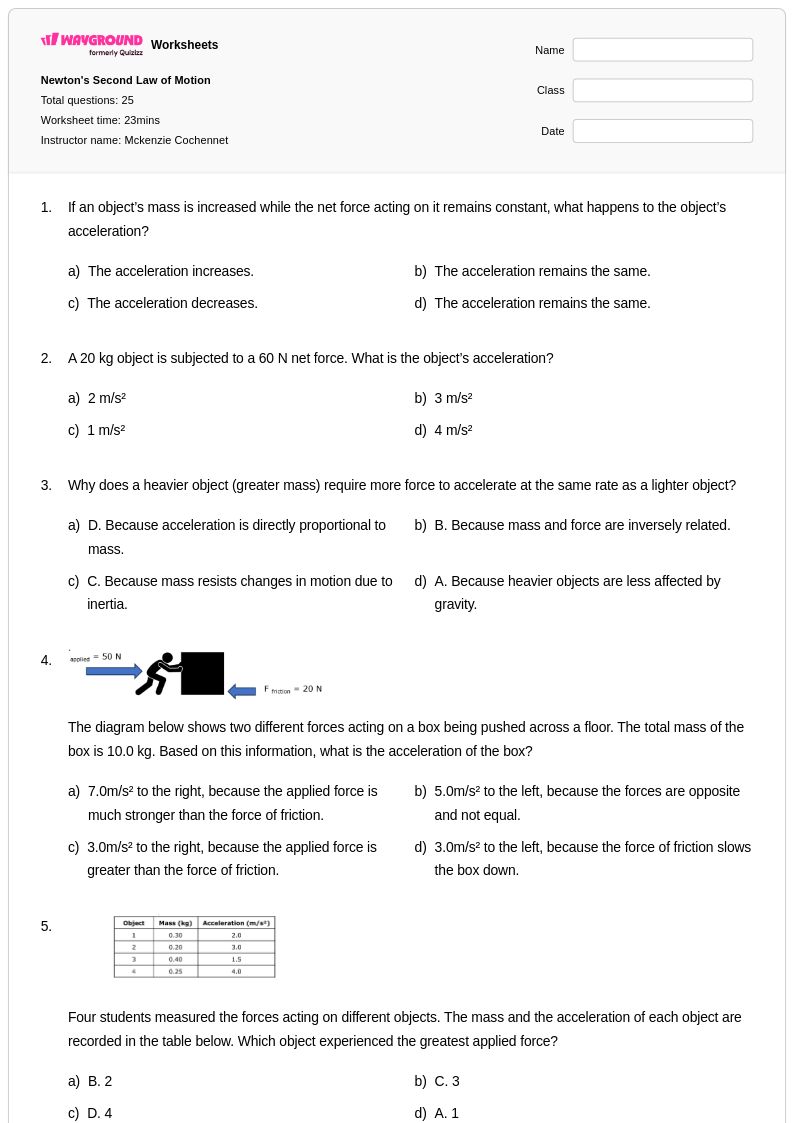
25 Q
8th - Uni

25 Q
8th - Uni
15 Q
8th - Uni
28 Q
8th - Uni
15 Q
8th - Uni
21 Q
9th - 12th
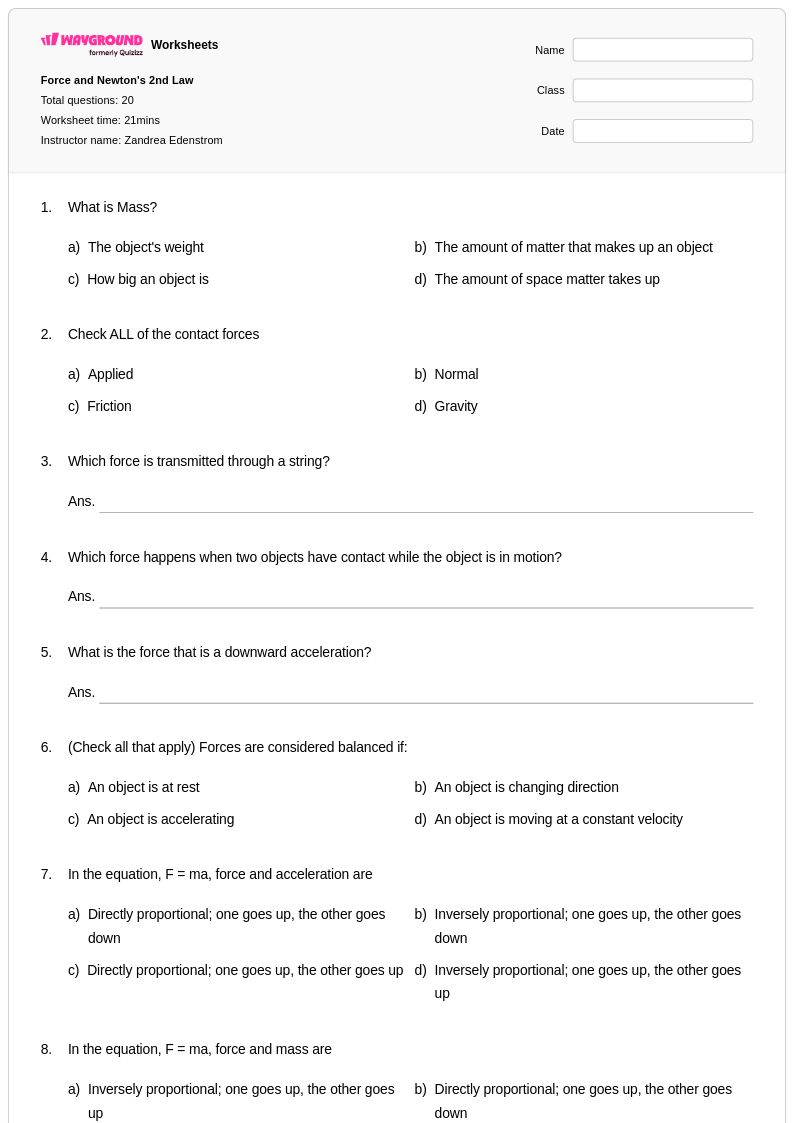
20 Q
7th - 12th
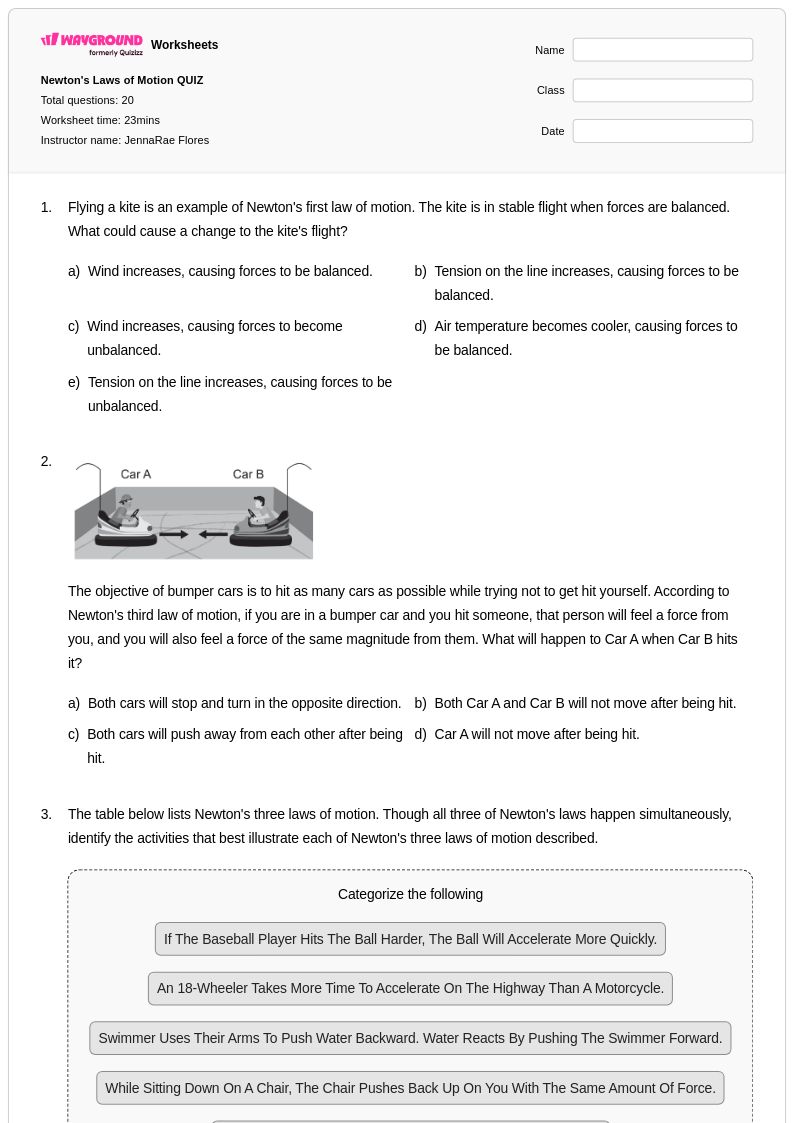
22 Q
8th - Uni
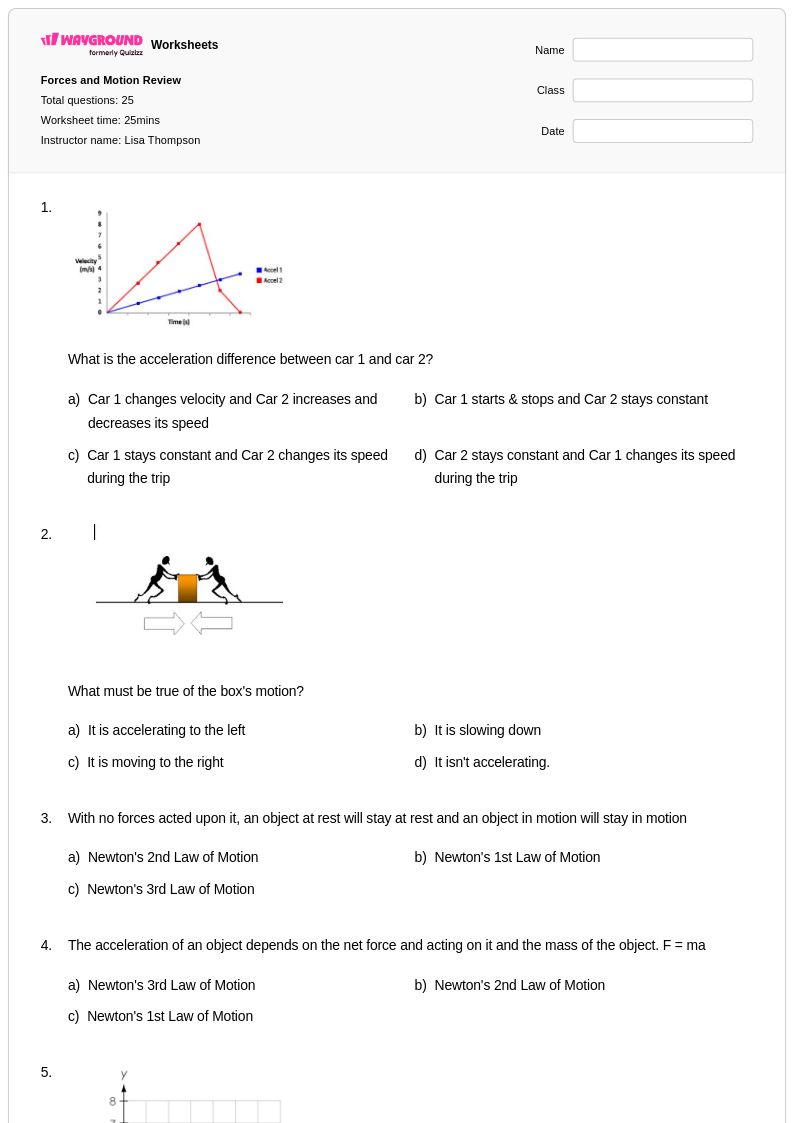
25 Q
8th - Uni
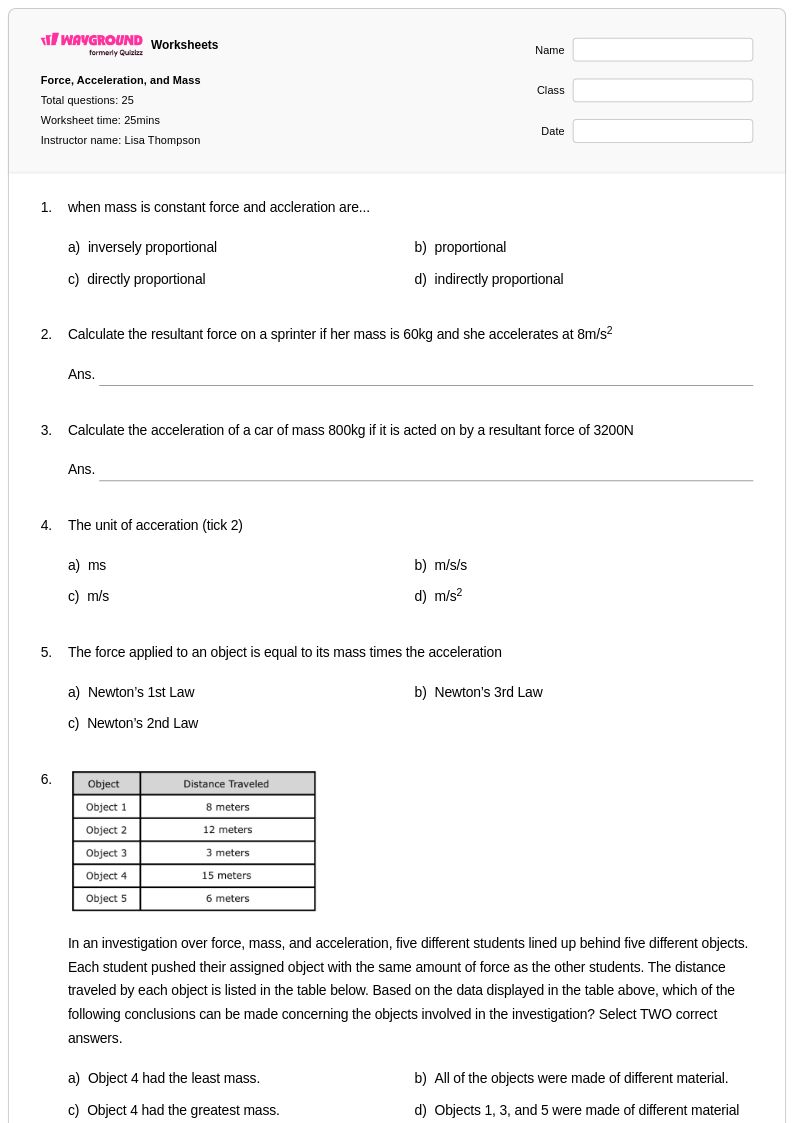
25 Q
8th - Uni
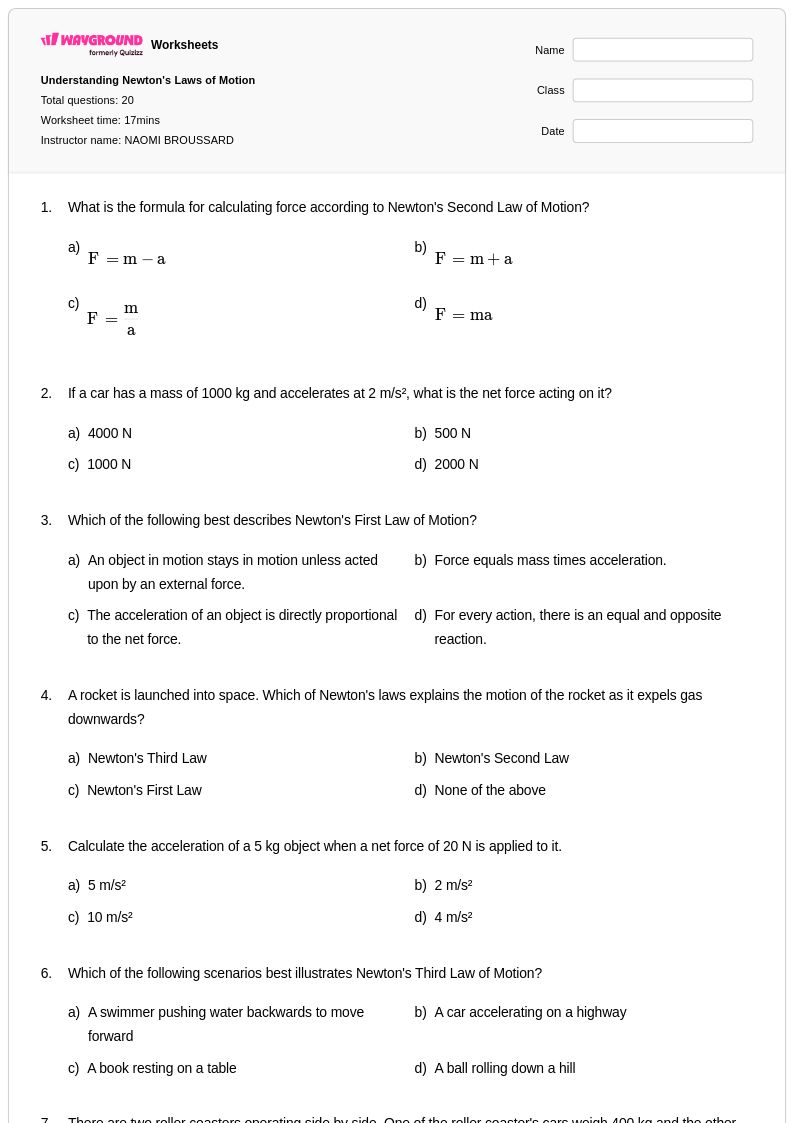
20 Q
8th - Uni
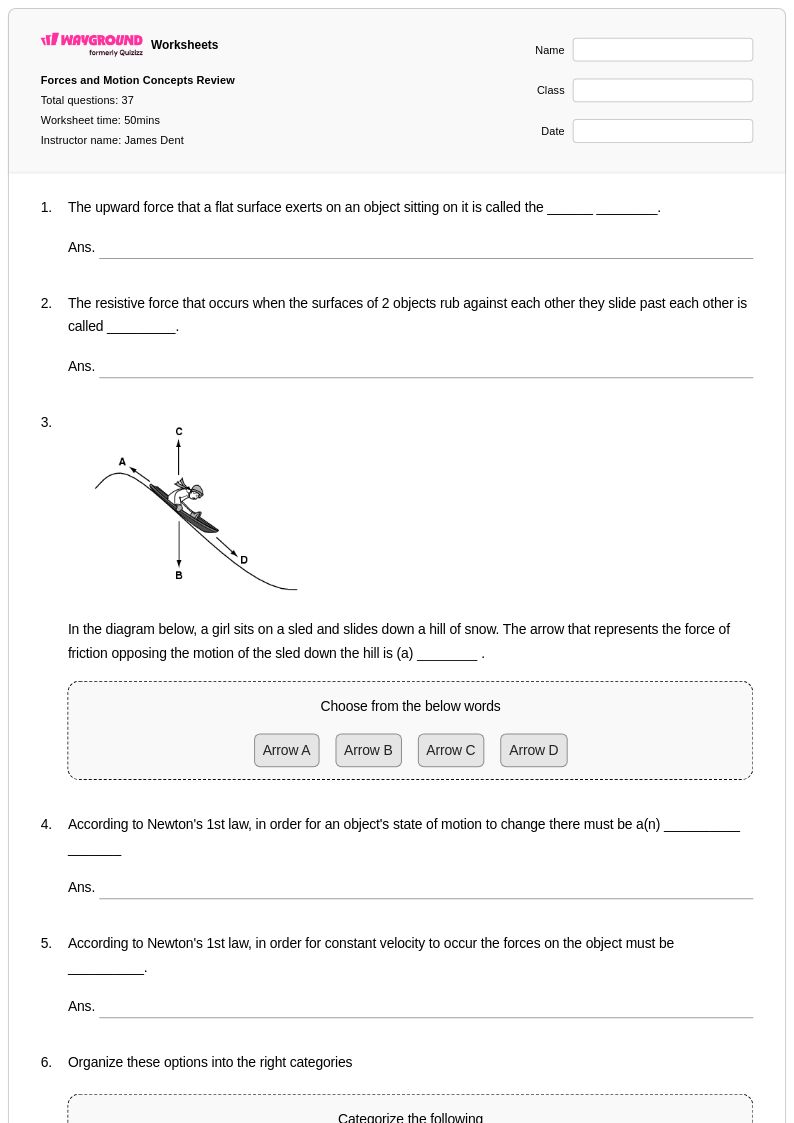
37 Q
9th - 12th
120 Q
9th - 12th
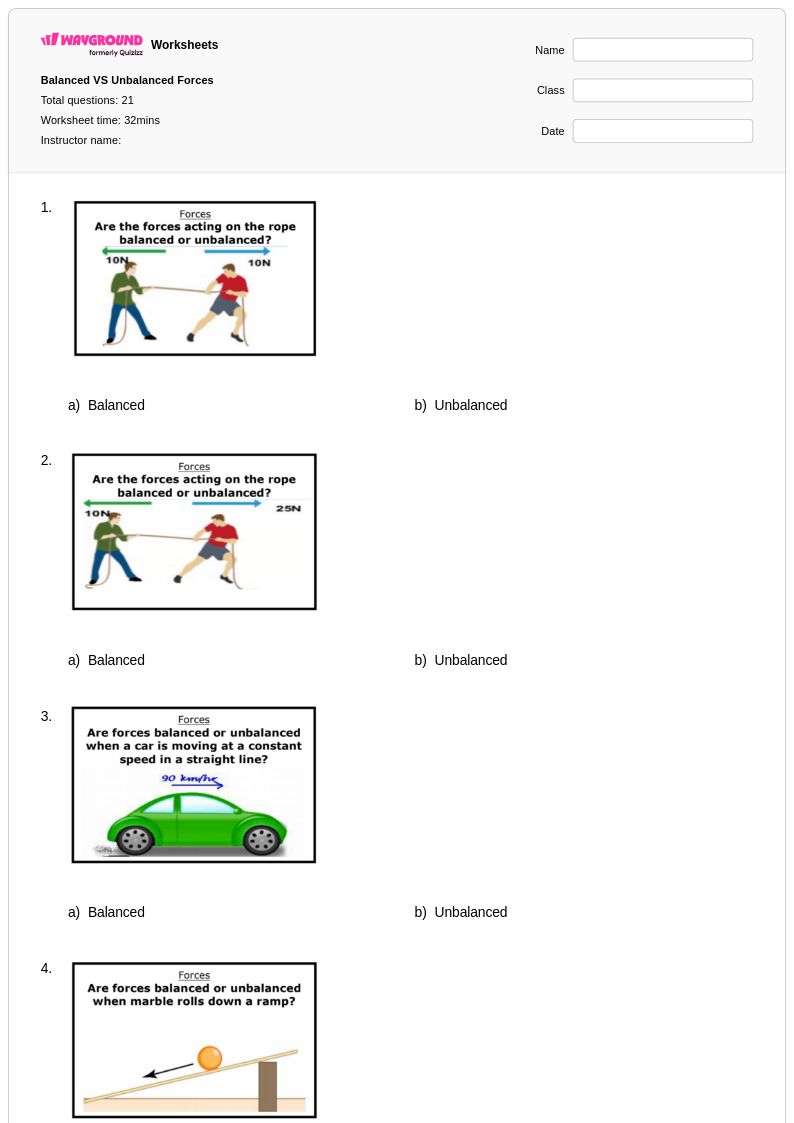
21 Q
12th
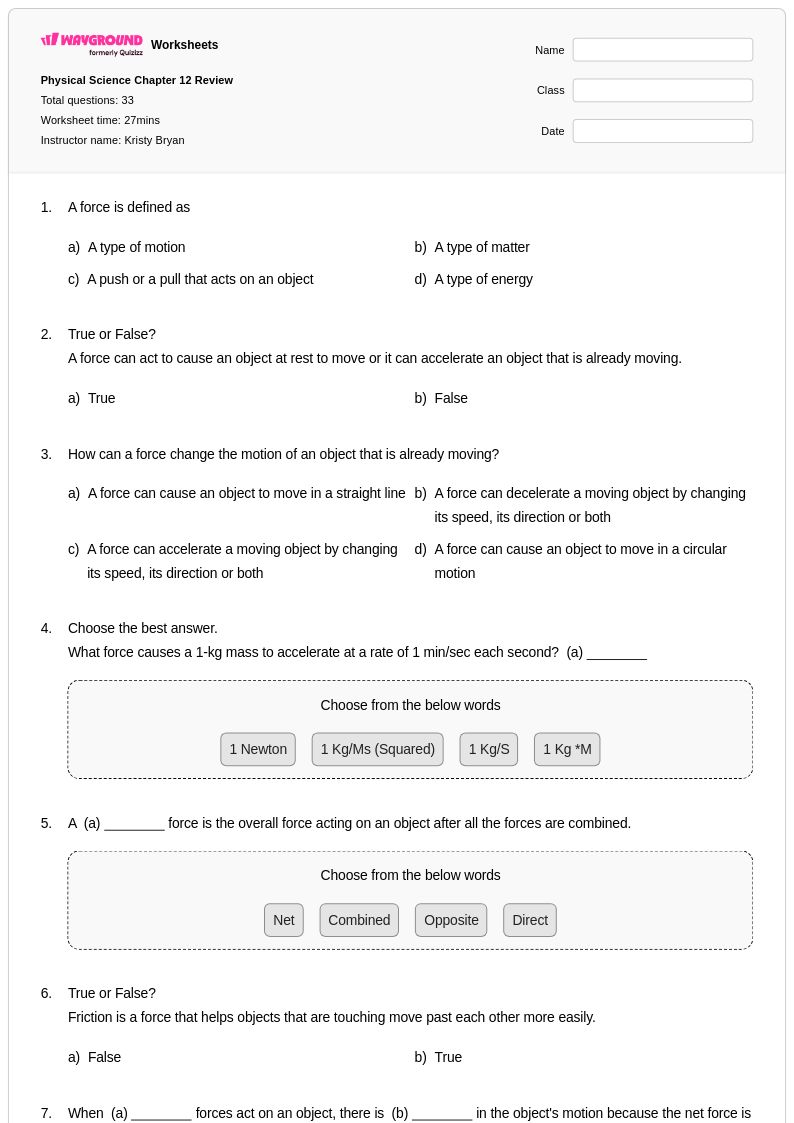
33 Q
9th - 12th
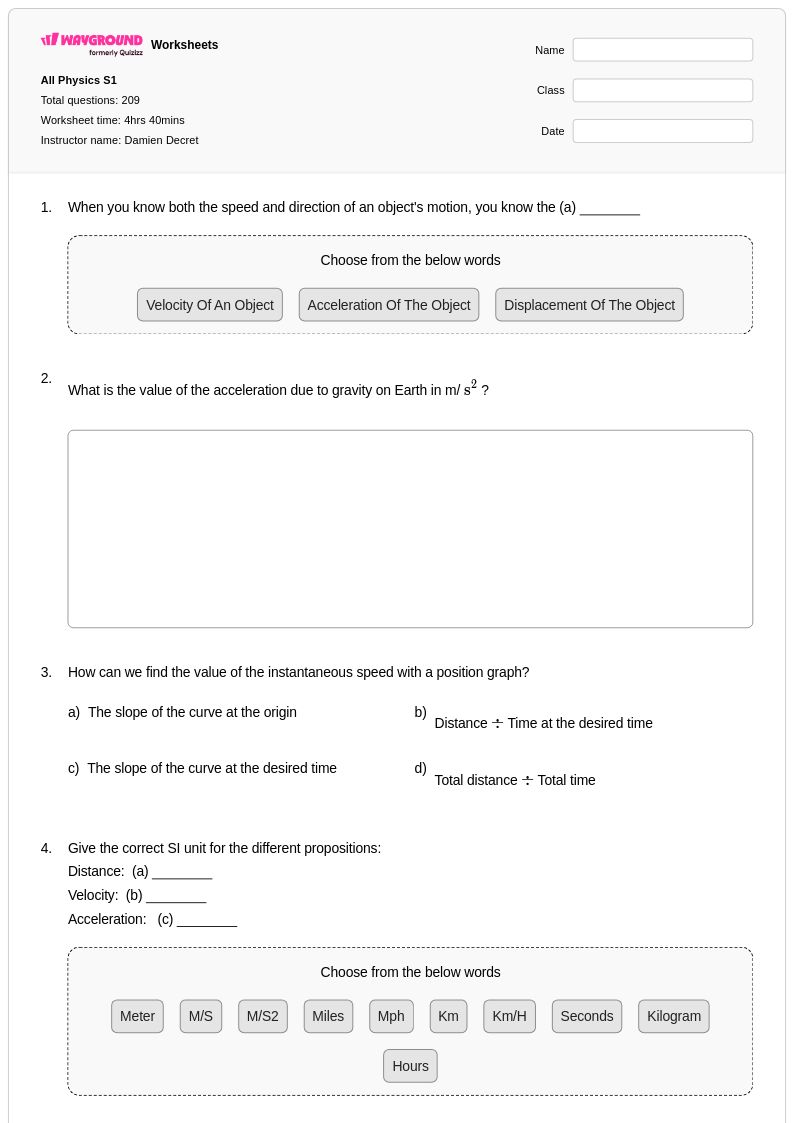
209 Q
12th
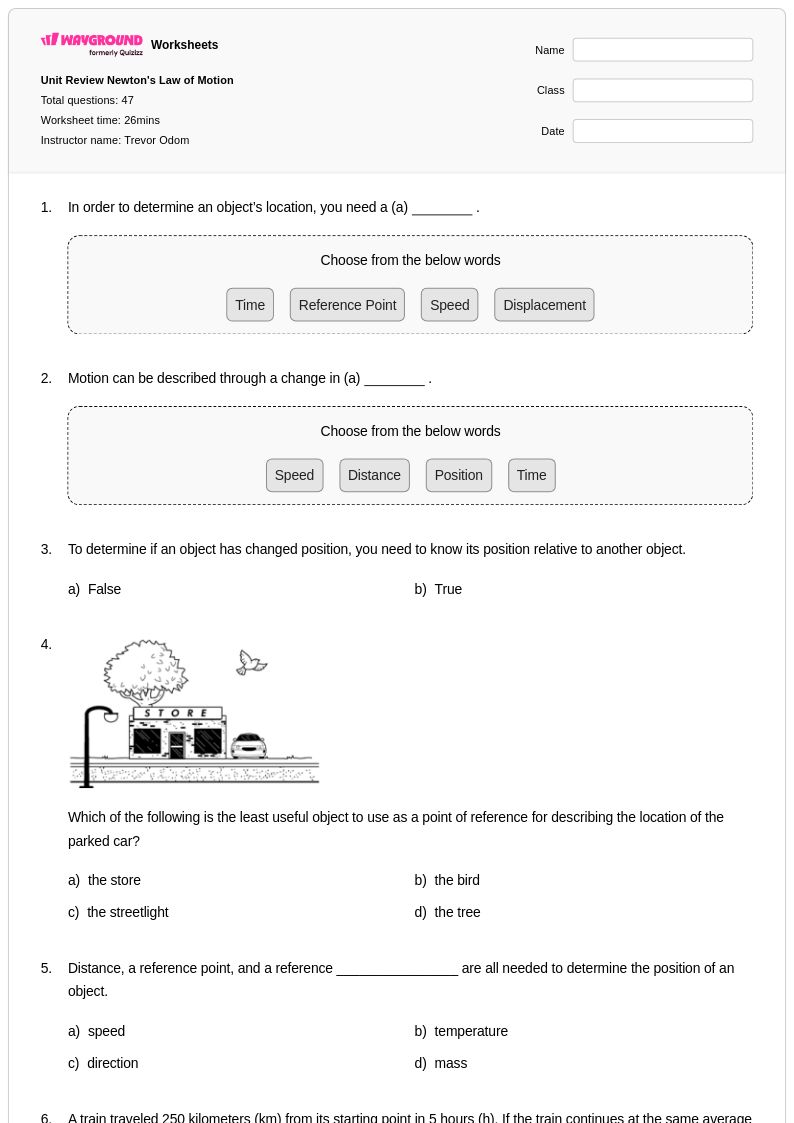
47 Q
8th - Uni
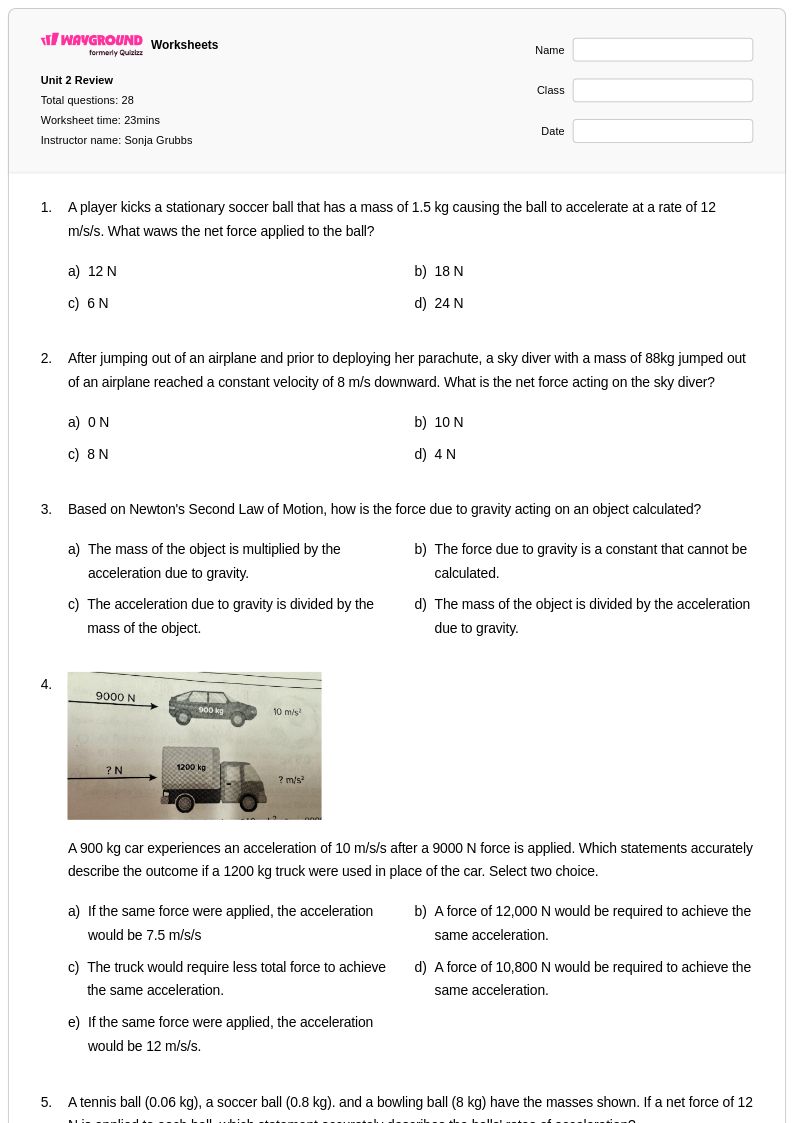
28 Q
8th - Uni
25 Q
9th - 12th
20 Q
8th - 12th
28 Q
9th - Uni
Explore Net Force and Acceleration Worksheets by Grades
Explore Other Subject Worksheets for grade 12
Explore printable Net Force and Acceleration worksheets for Grade 12
Net force and acceleration worksheets for Grade 12 students available through Wayground (formerly Quizizz) provide comprehensive practice with Newton's second law and its mathematical applications in complex physics scenarios. These expertly designed resources strengthen students' ability to analyze multi-force systems, calculate net forces using vector addition, and apply the fundamental relationship F = ma to solve sophisticated acceleration problems involving friction, inclined planes, and connected objects. The worksheets feature diverse practice problems that progress from basic force diagrams to advanced scenarios requiring students to determine unknown forces, masses, or accelerations in real-world contexts, with accompanying answer keys that provide detailed solution pathways and free pdf formats that support both classroom instruction and independent study.
Wayground's extensive collection of millions of teacher-created resources enables educators to locate precisely targeted net force and acceleration materials that align with Grade 12 physics standards and accommodate diverse learning needs through sophisticated search and filtering capabilities. Teachers can customize these printable and digital worksheet collections to differentiate instruction, selecting problems that range from foundational concept reinforcement to advanced problem-solving challenges that prepare students for college-level physics coursework. The platform's flexible formatting options, including downloadable pdf versions and interactive digital formats, streamline lesson planning while providing educators with powerful tools for remediation, skill practice, and enrichment activities that address varying student proficiency levels in force analysis and kinematic calculations.
FAQs
How do I teach students the relationship between net force and acceleration?
What practice problems help students get better at calculating net force and acceleration?
What mistakes do students commonly make when working with net force and acceleration?
How can I differentiate net force and acceleration instruction for students at different levels?
How do I use Wayground's net force and acceleration worksheets in my classroom?