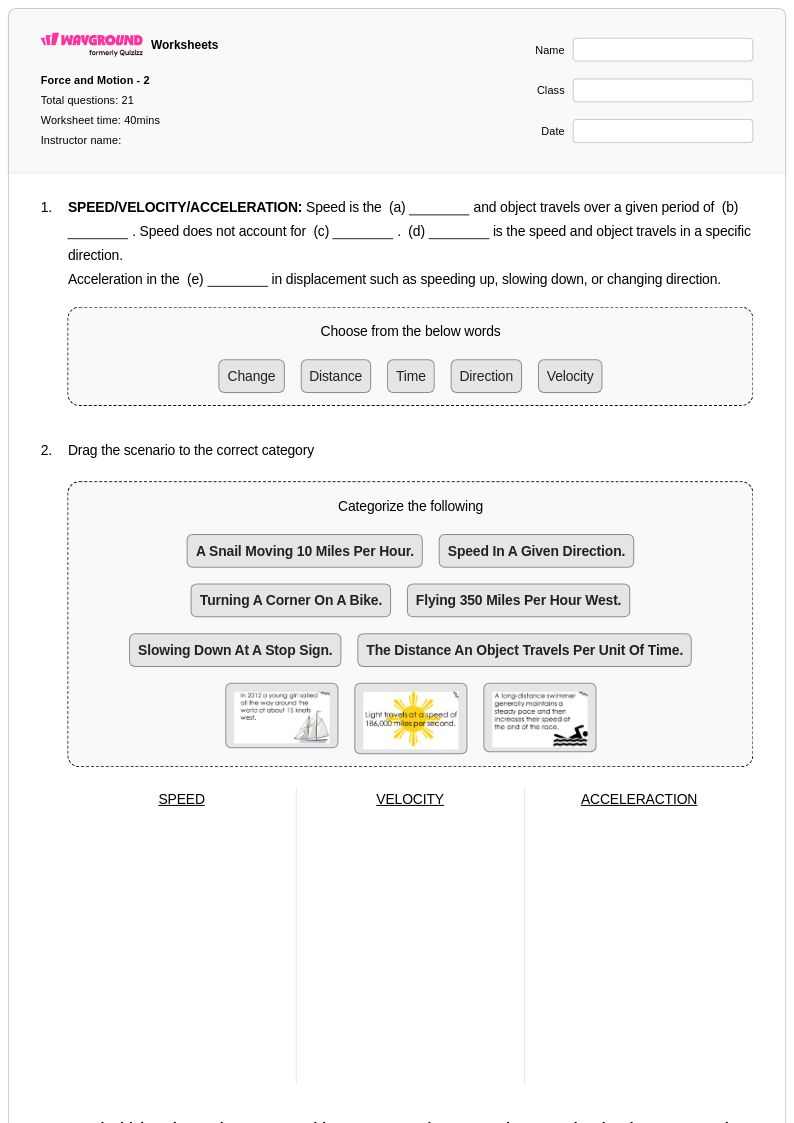
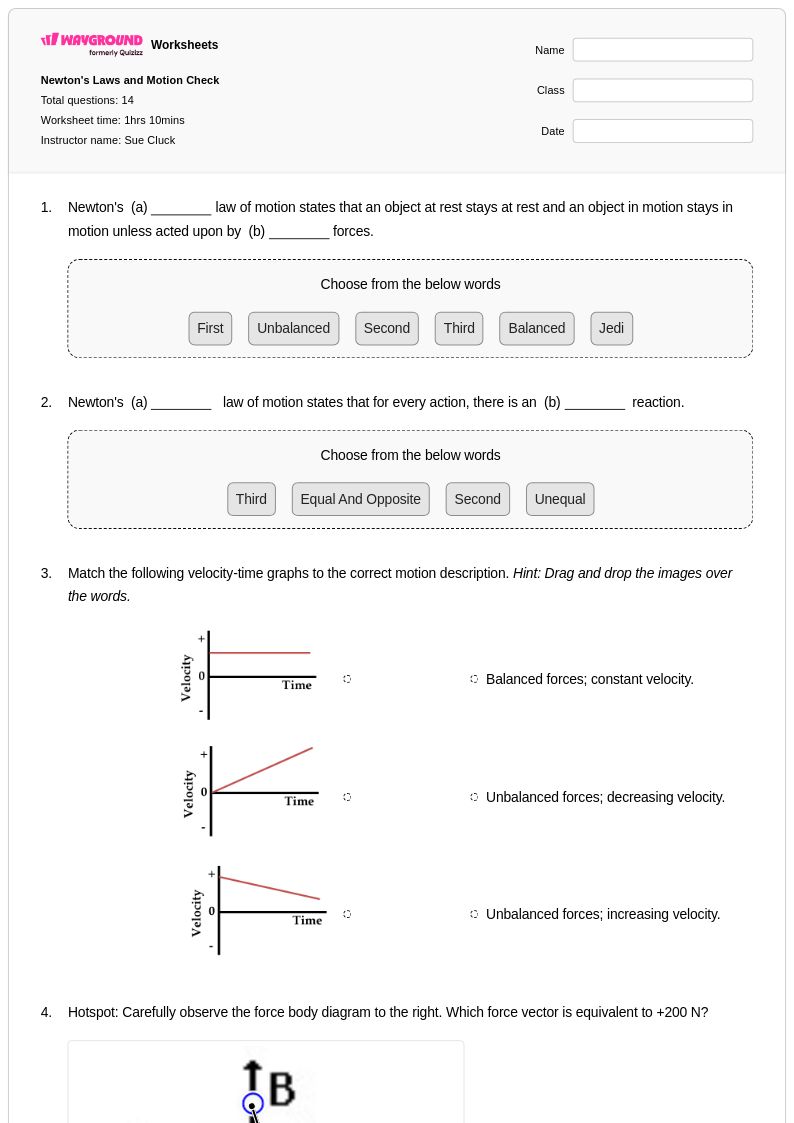
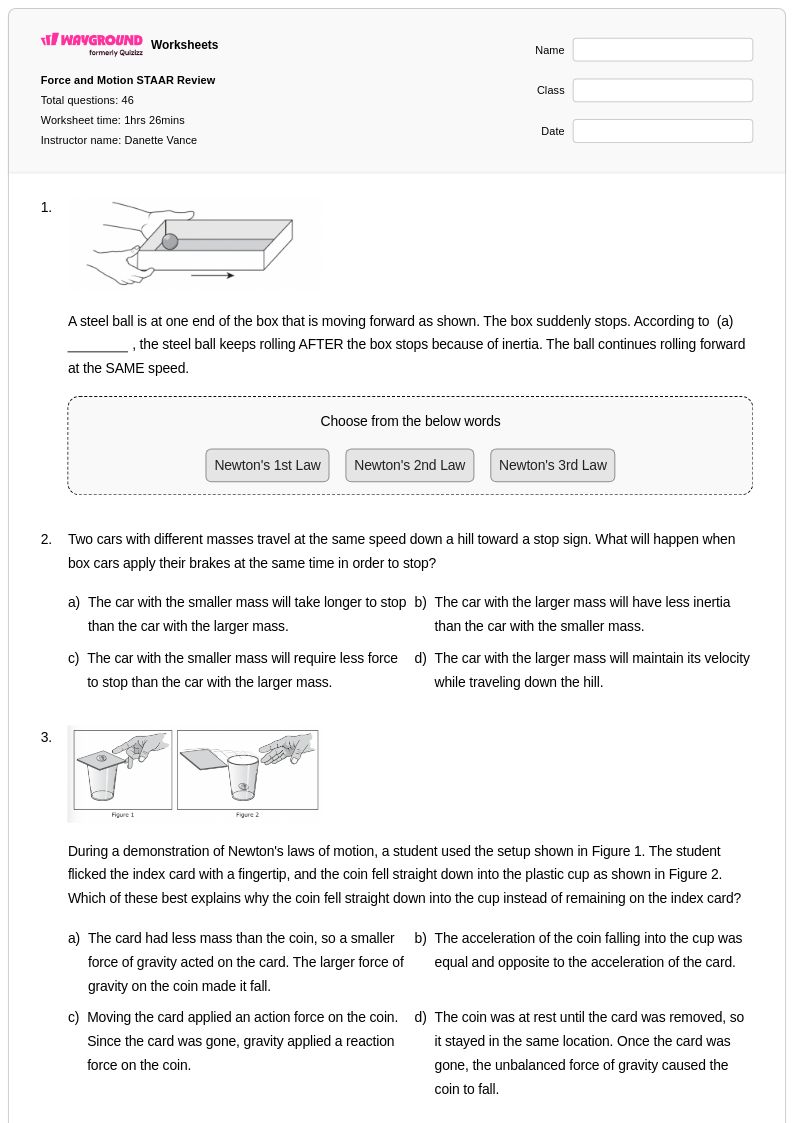
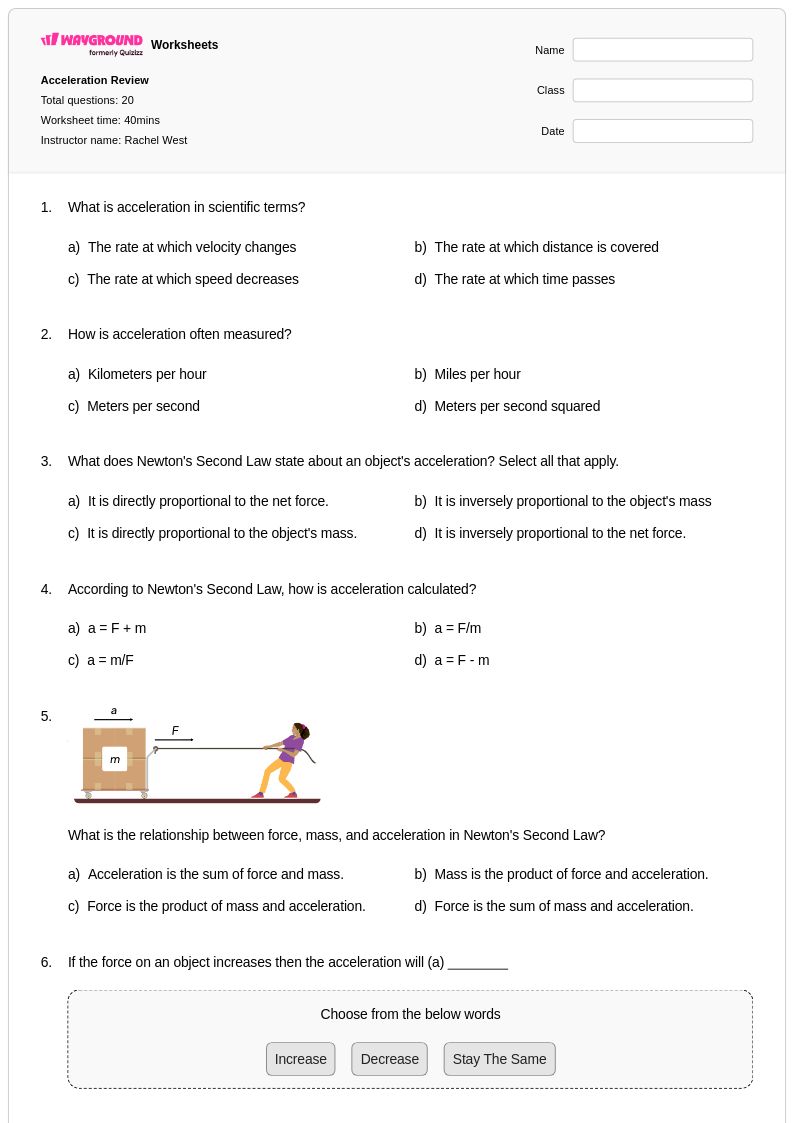
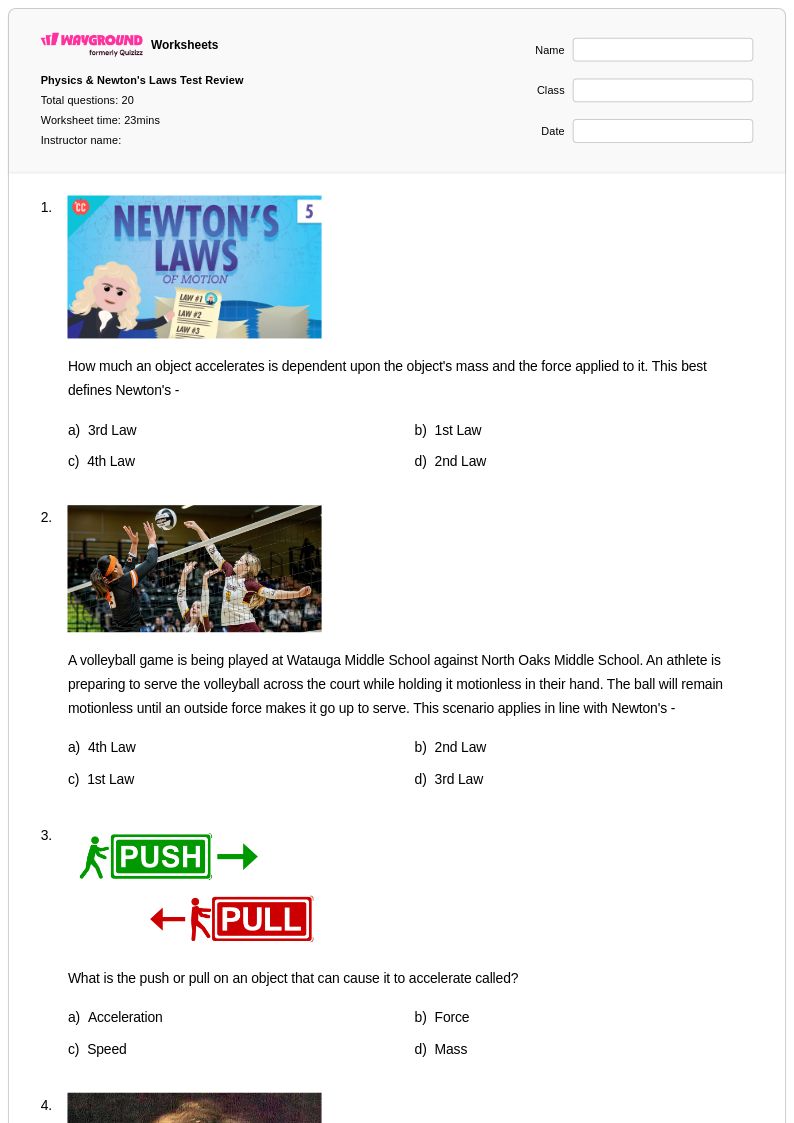
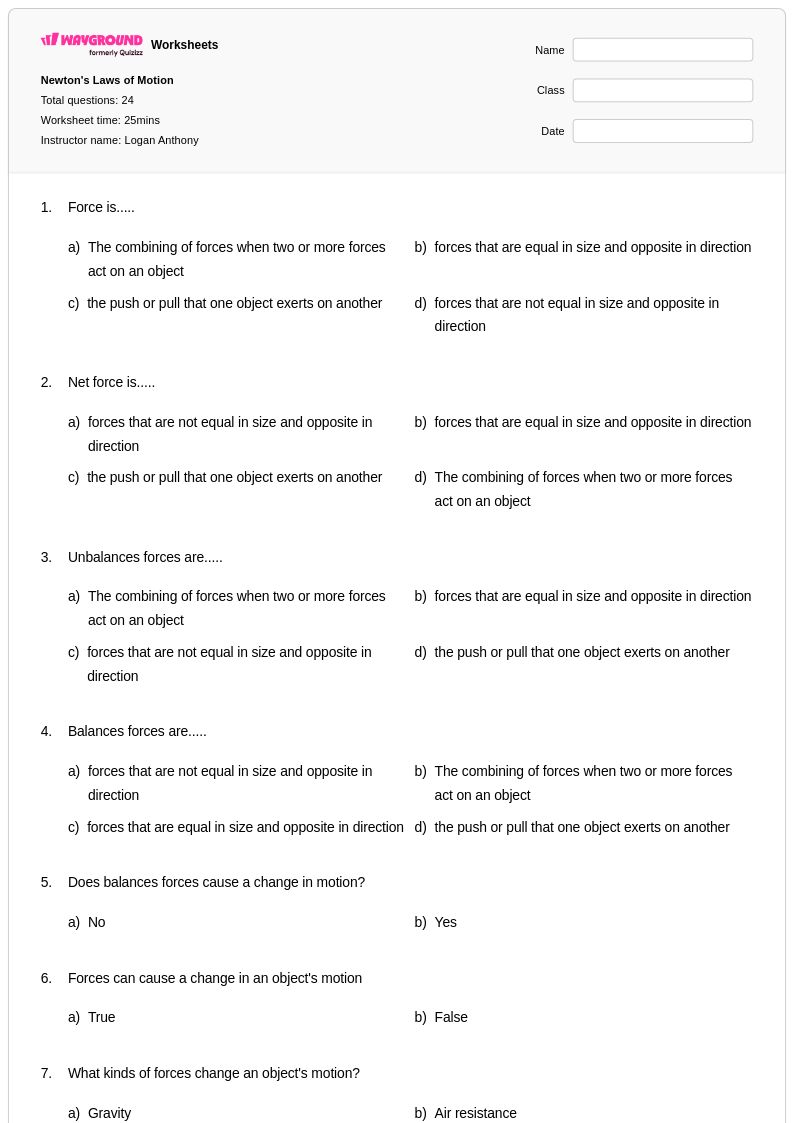
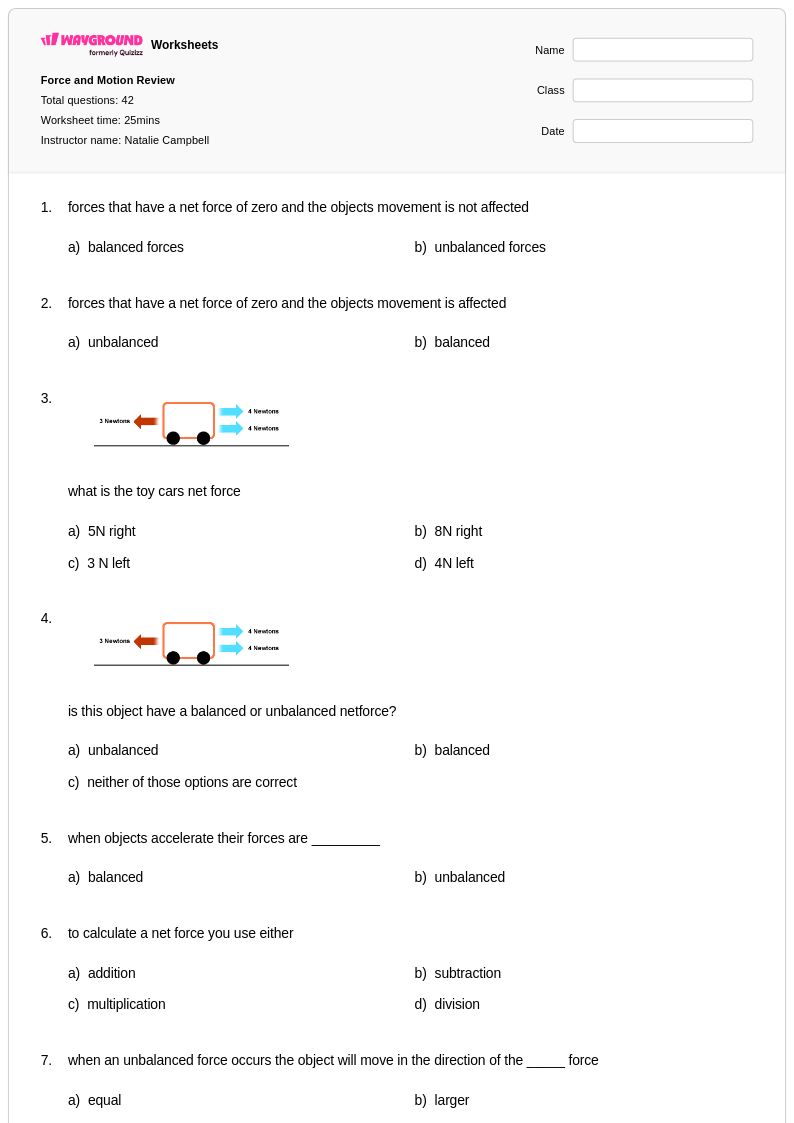
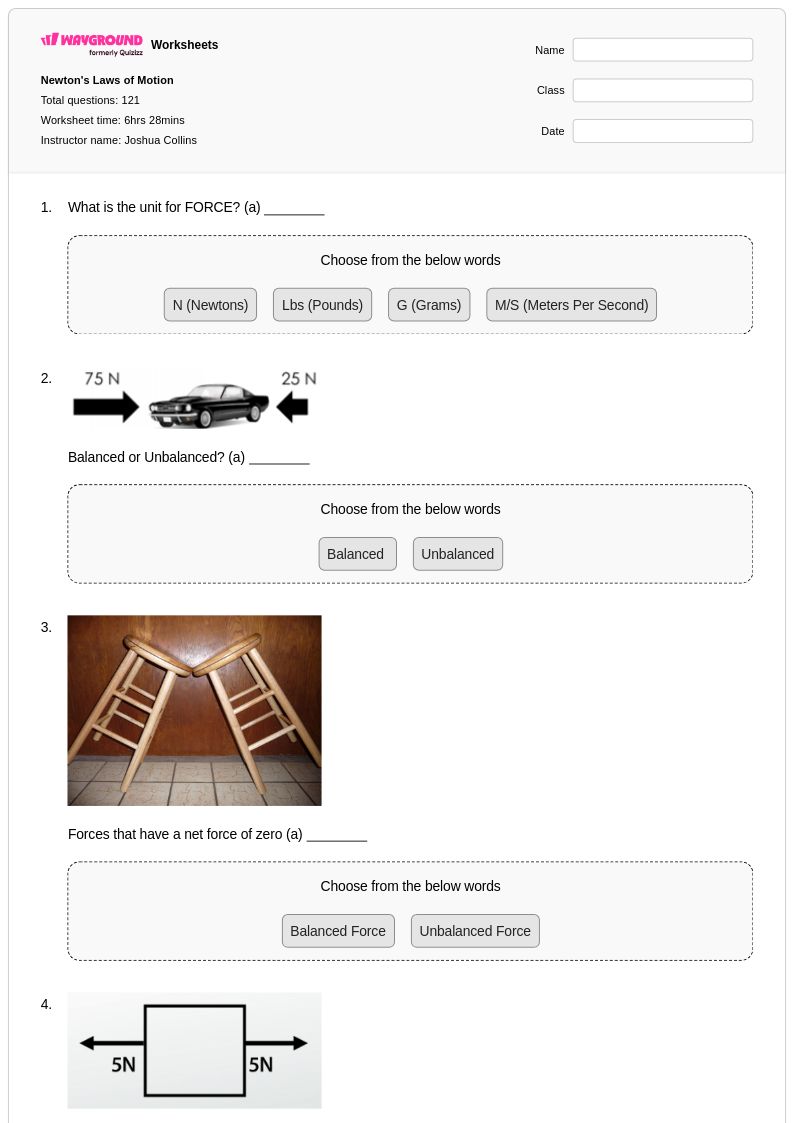
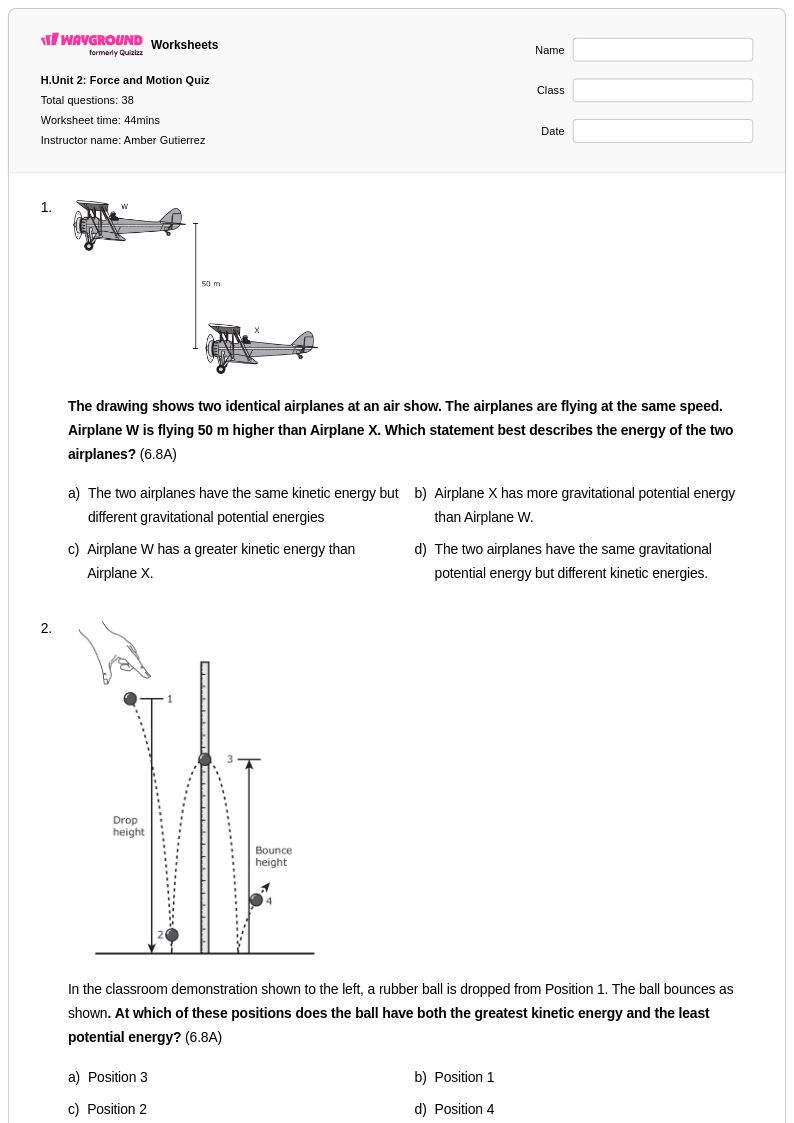
Free Printable Net Force and Acceleration worksheets
Explore Wayground's comprehensive collection of net force and acceleration worksheets, featuring free printable PDFs with practice problems and answer keys to help students master the relationship between forces and motion.
Explore printable Net Force and Acceleration worksheets
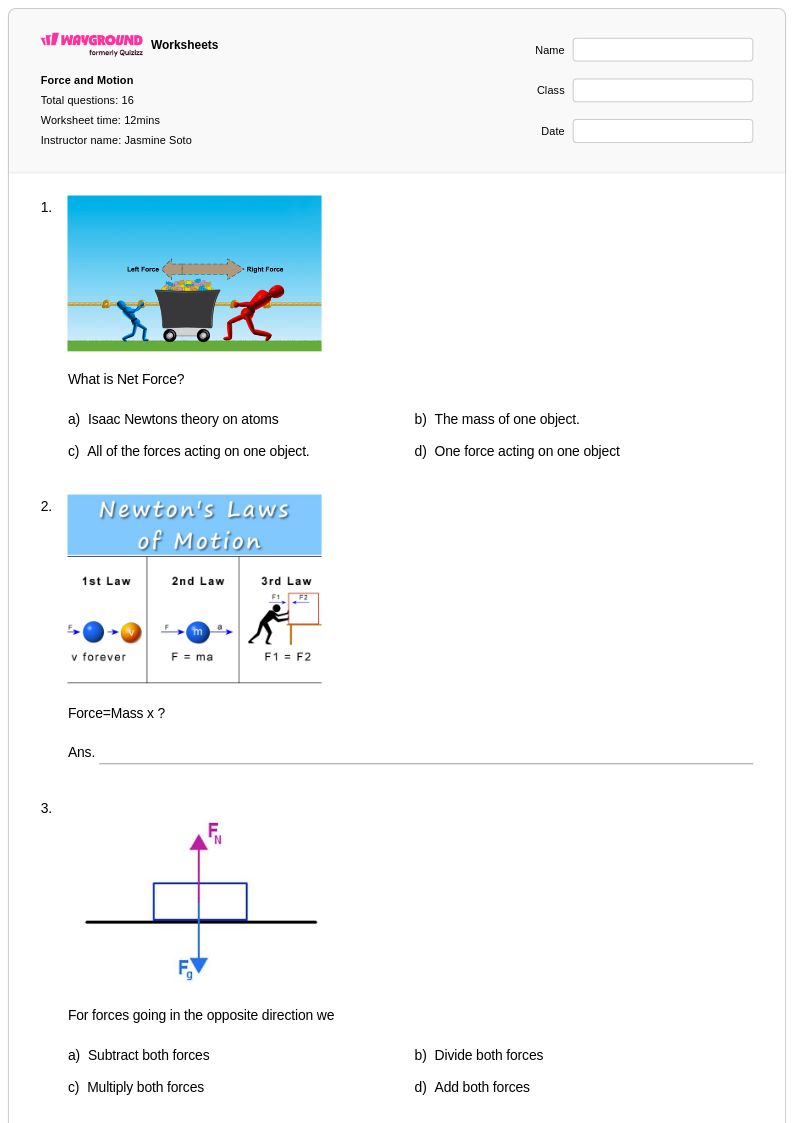
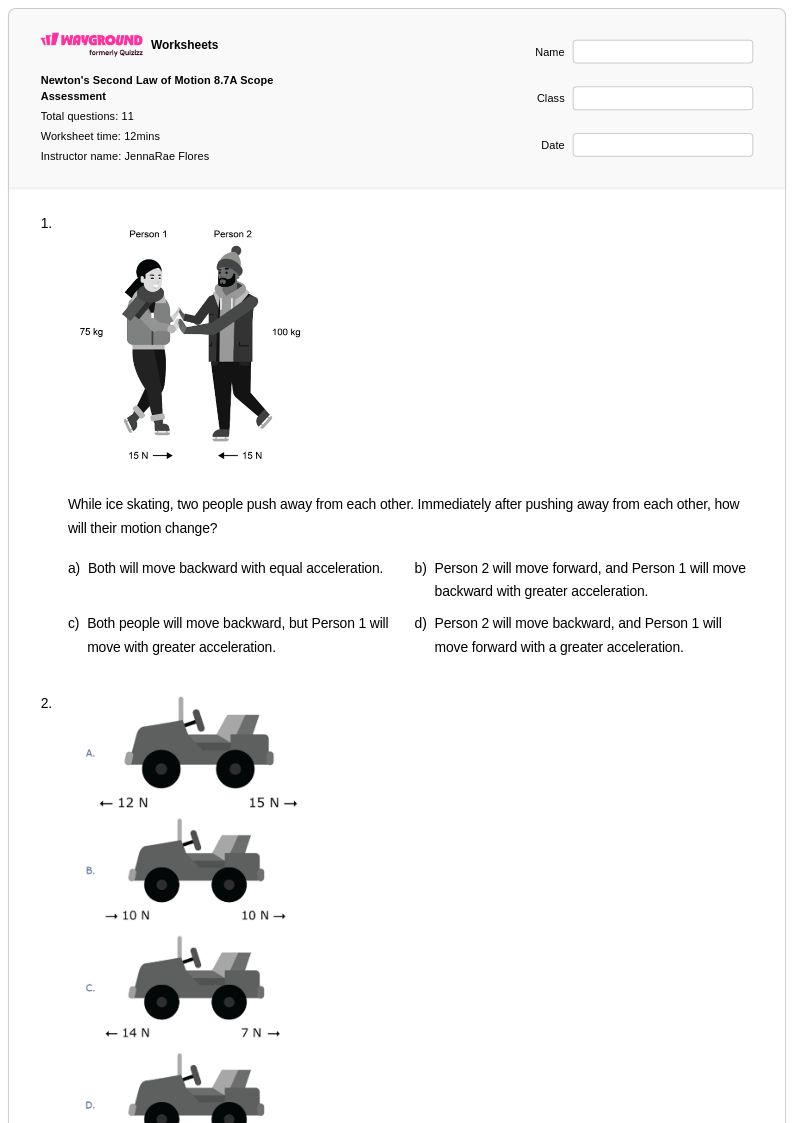
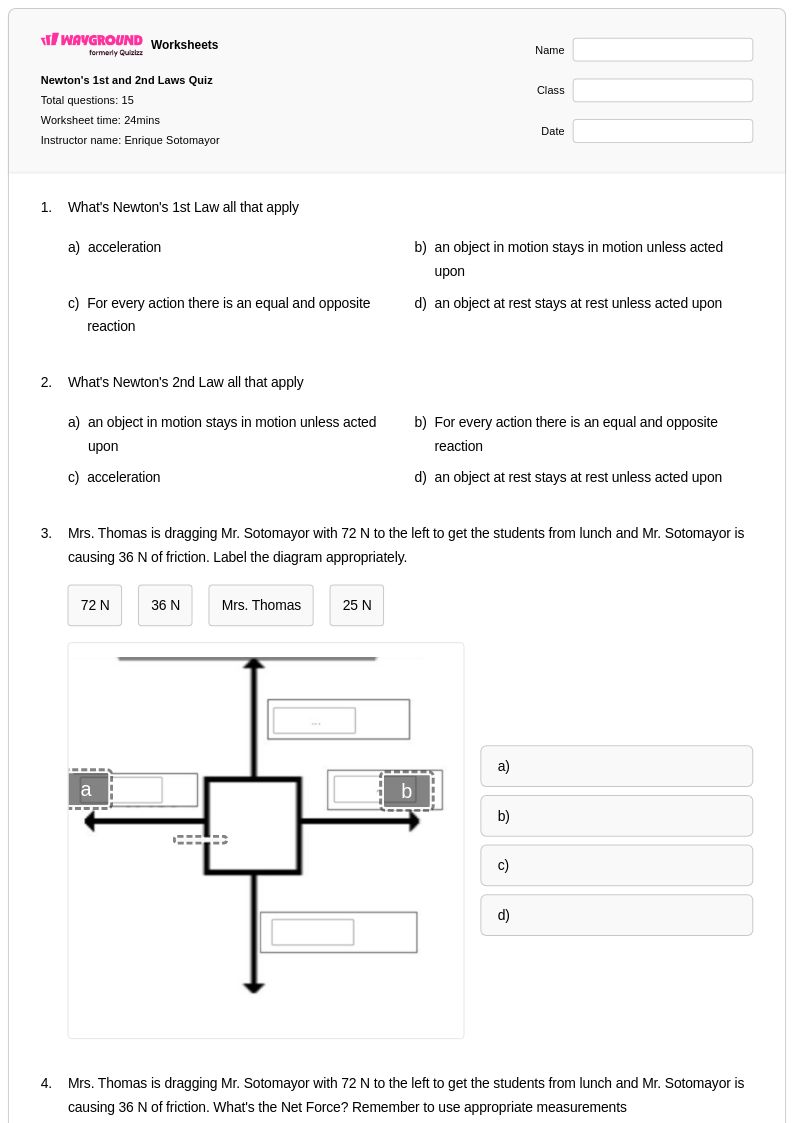
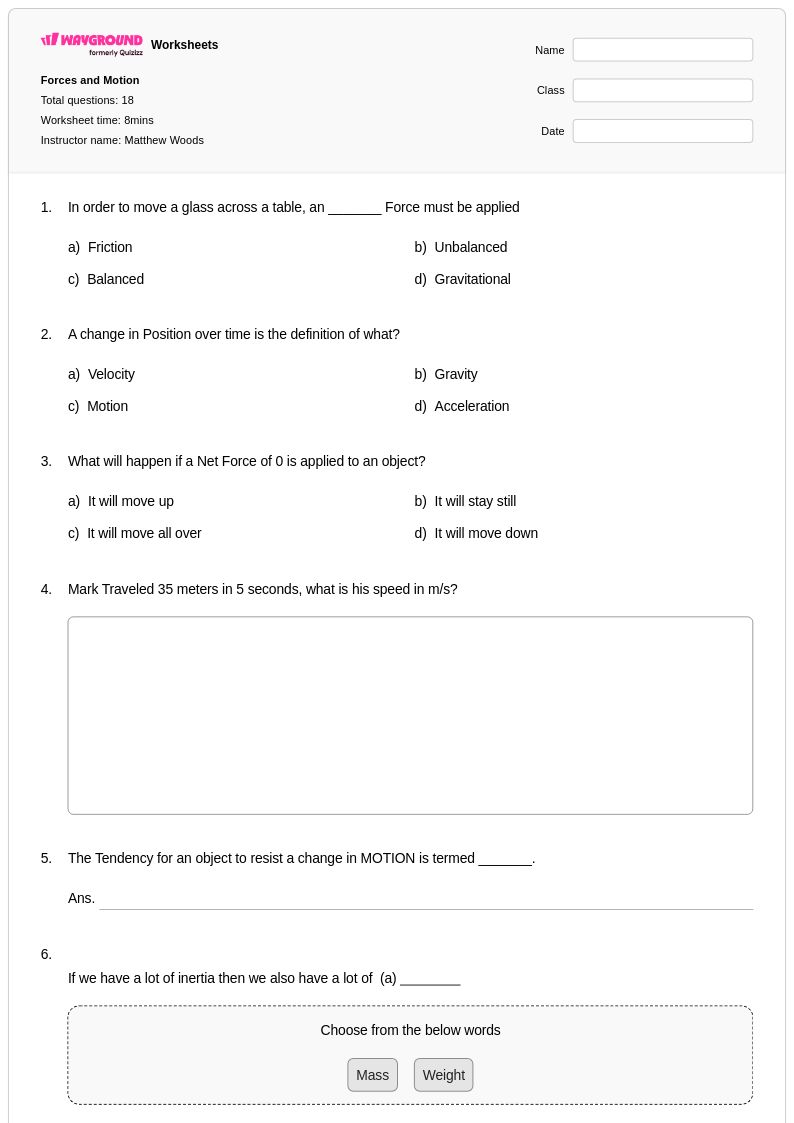
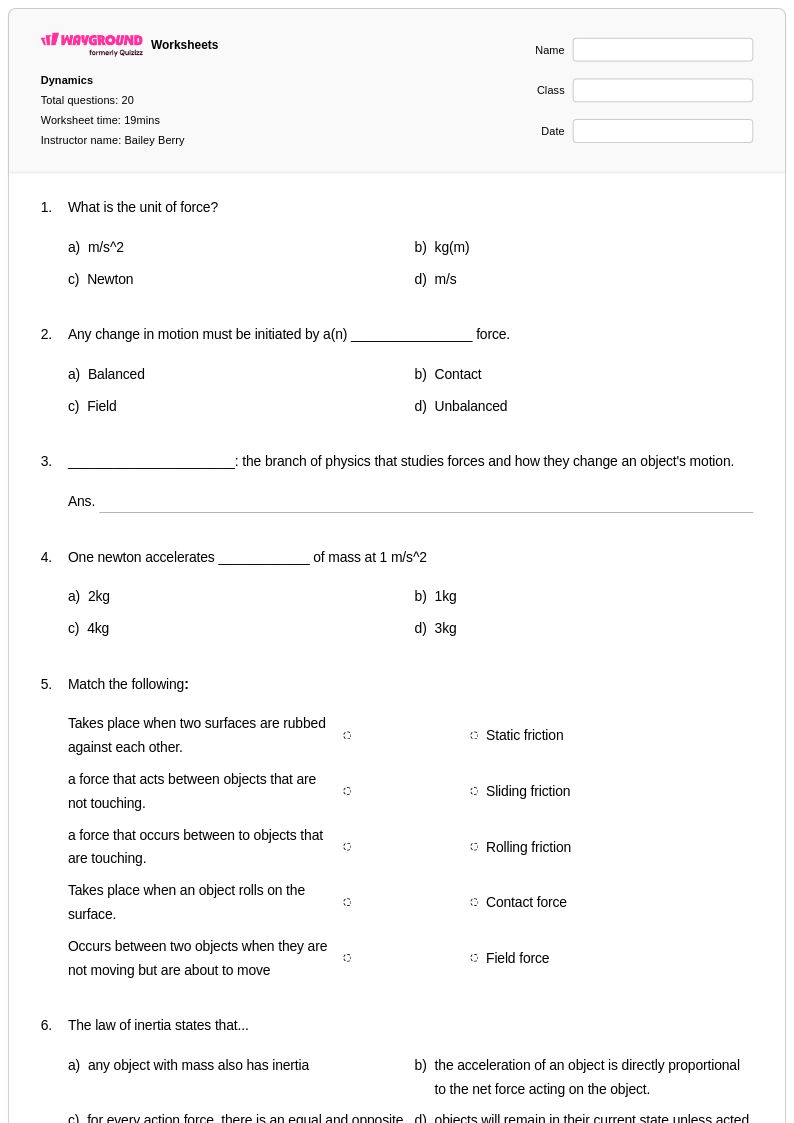
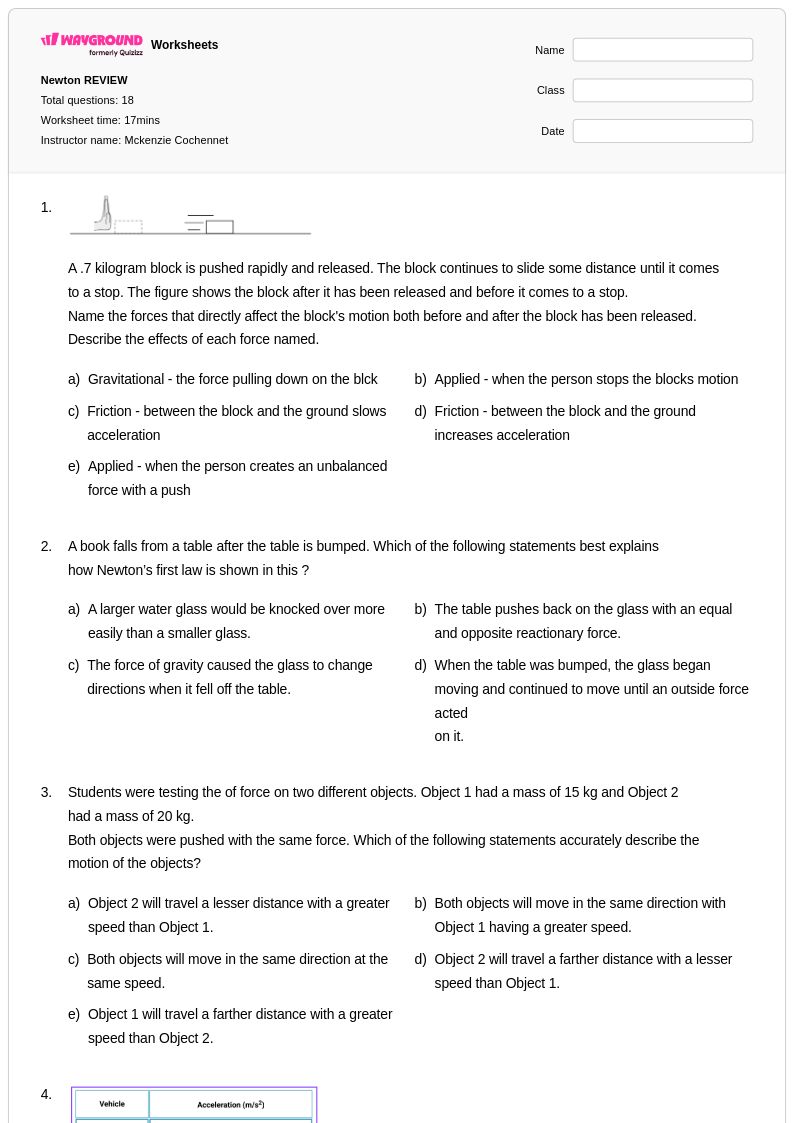
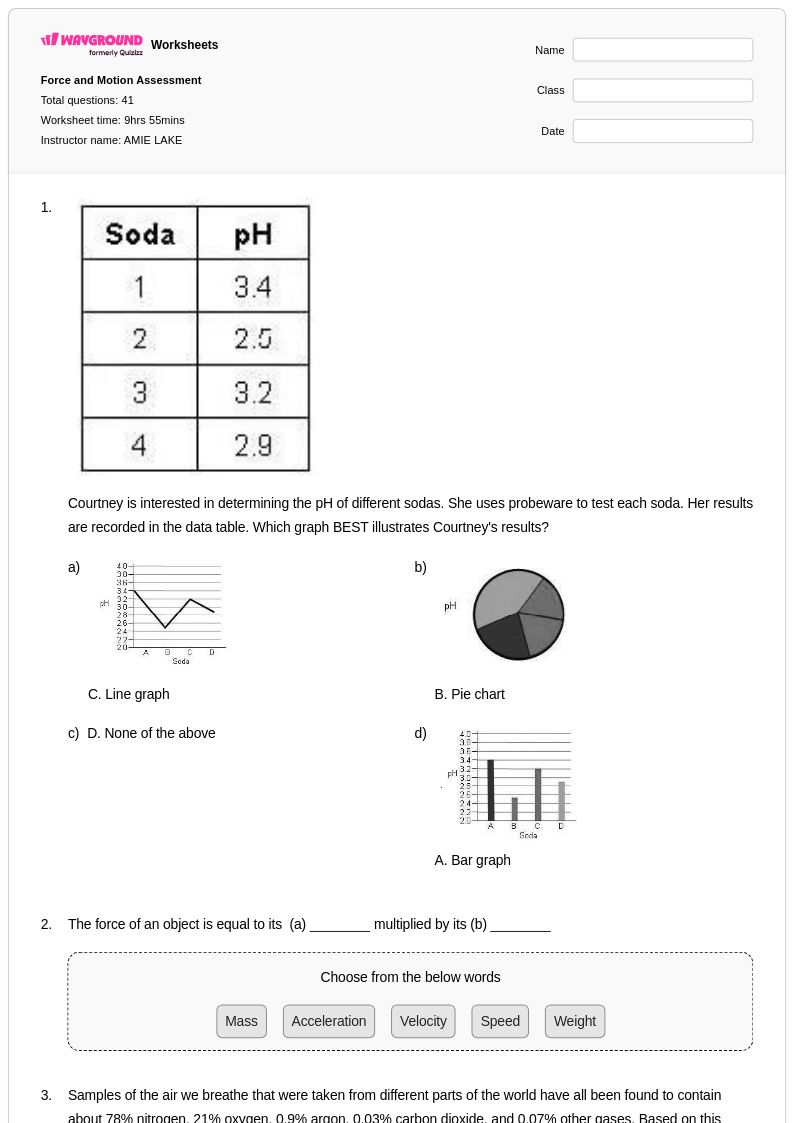
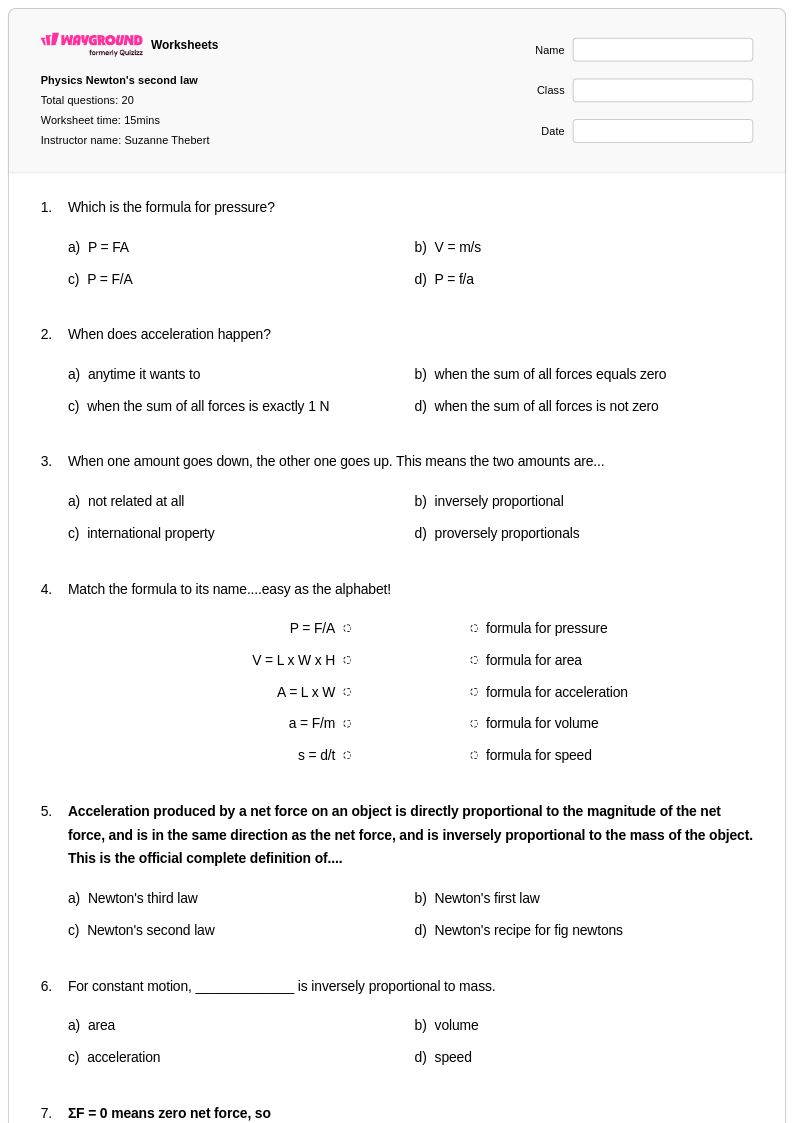
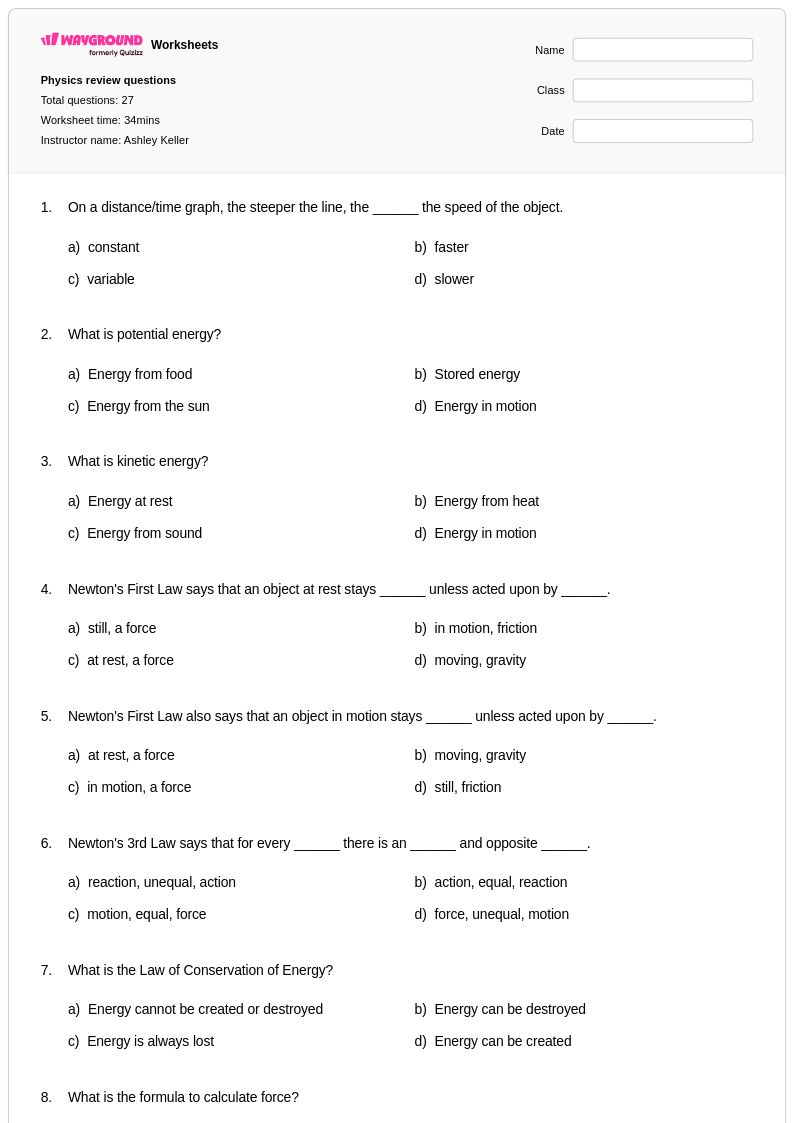
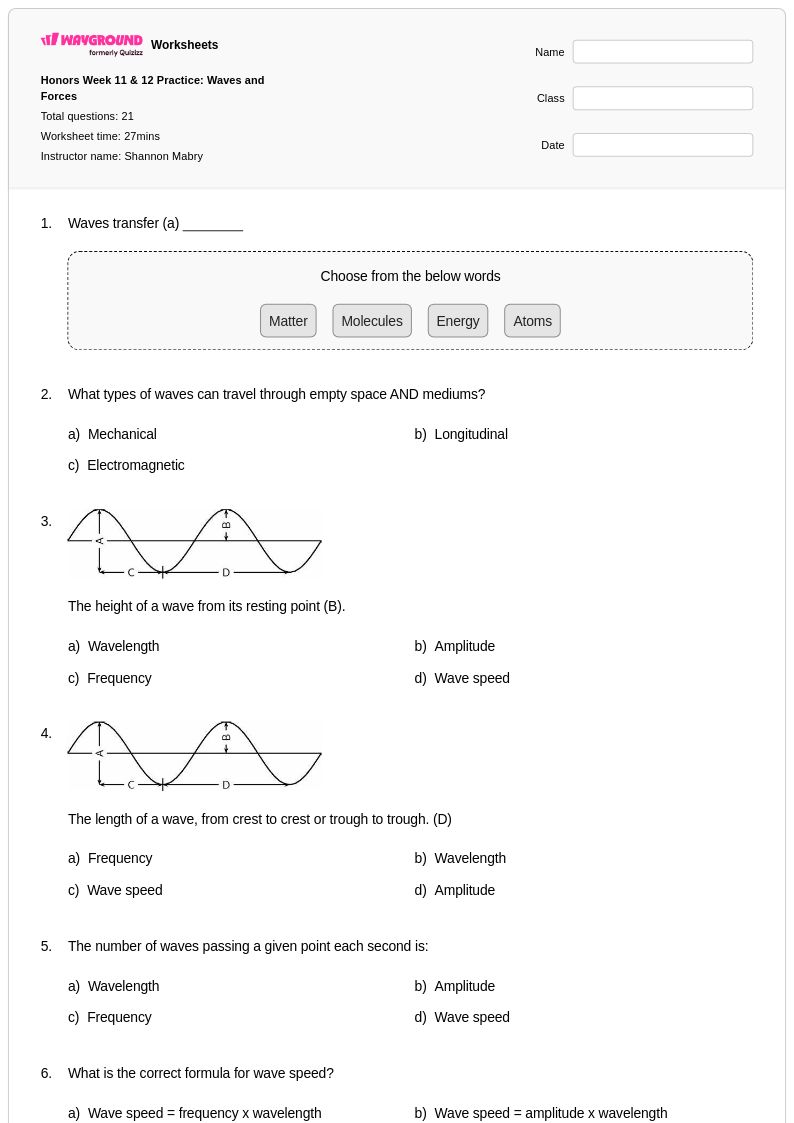
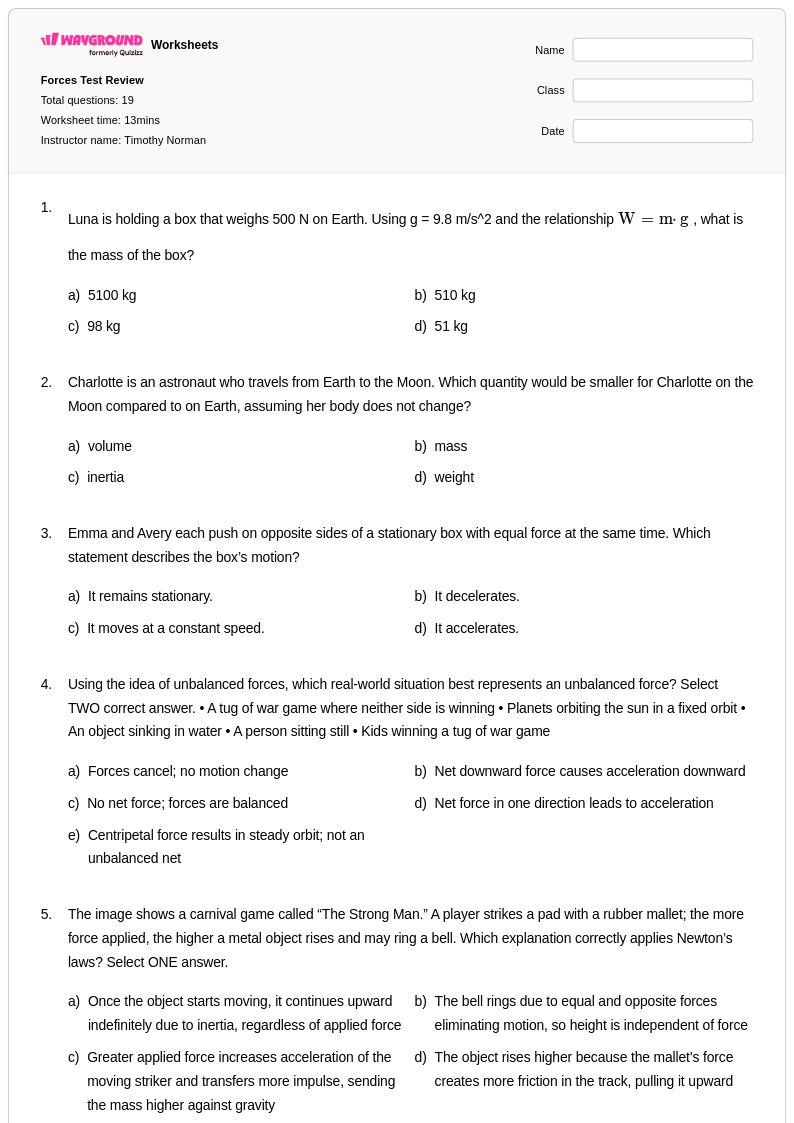
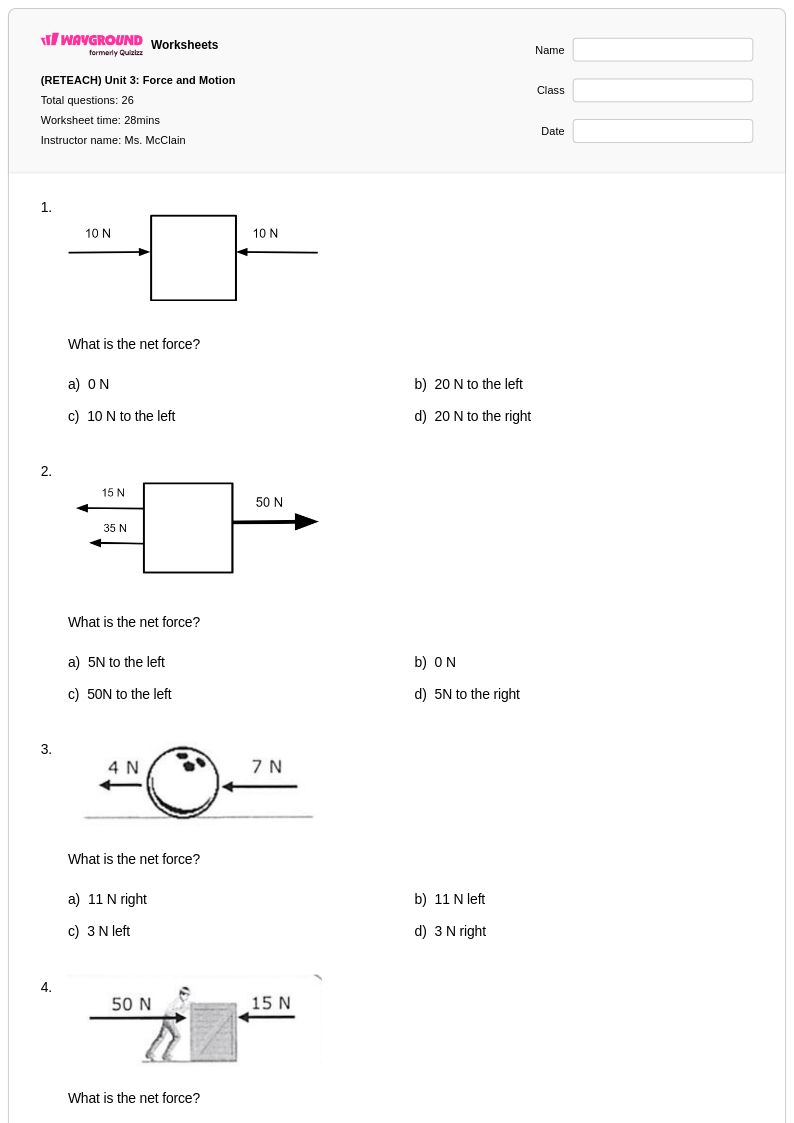
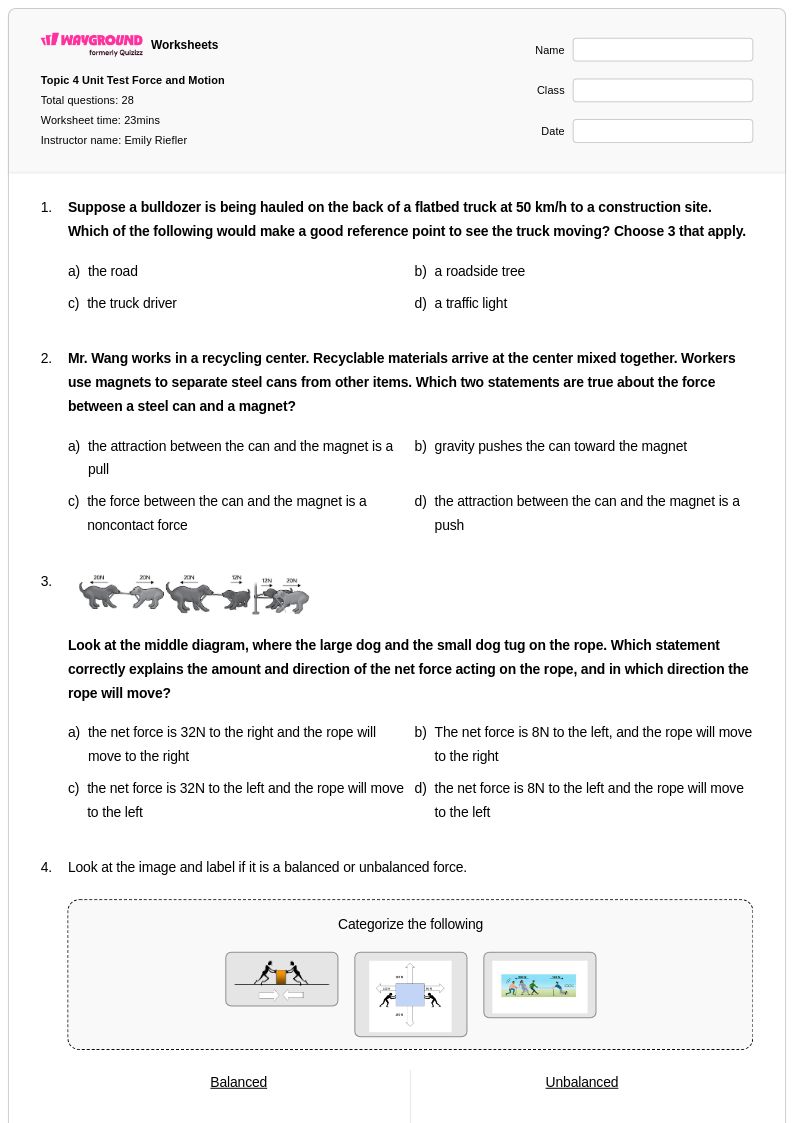
Net force and acceleration worksheets available through Wayground (formerly Quizizz) provide comprehensive practice opportunities for students to master Newton's second law and the fundamental relationship between forces and motion. These expertly designed resources help students develop critical problem-solving skills by working through scenarios involving multiple forces, calculating net force vectors, and determining resulting accelerations using F=ma equations. The worksheet collection includes detailed practice problems that progress from basic single-force situations to complex multi-force systems, complete with answer keys that enable independent learning and self-assessment. Students can access these materials as free printables in convenient PDF format, making them ideal for both classroom instruction and homework assignments that reinforce understanding of how unbalanced forces produce acceleration.
Wayground's extensive library supports science educators with millions of teacher-created resources specifically focused on net force and acceleration concepts, featuring robust search and filtering capabilities that allow instructors to quickly locate materials aligned with specific curriculum standards. The platform's differentiation tools enable teachers to customize worksheets based on individual student needs, offering various complexity levels from introductory force diagrams to advanced vector calculations. These resources are available in both printable and digital formats, including downloadable PDFs that facilitate seamless integration into lesson planning workflows. Teachers can effectively utilize these materials for targeted skill practice, remediation sessions for struggling learners, and enrichment activities for advanced students, ensuring comprehensive coverage of net force and acceleration principles across diverse learning environments.
FAQs
How do I teach students the relationship between net force and acceleration?
Start by grounding students in Newton's second law (F=ma) using concrete, single-force examples before introducing multi-force scenarios. Use force diagrams to make the direction and magnitude of each force visible, then guide students to calculate net force as a vector sum before solving for acceleration. Building from simple to complex problems helps students internalize why unbalanced forces produce acceleration while balanced forces result in no change in motion.
What practice problems help students get better at calculating net force and acceleration?
Effective practice should follow a progression: begin with single-force problems using F=ma directly, then move to two-force scenarios in the same direction, and finally introduce opposing forces where students must find the net vector. Problems involving everyday contexts, such as a car braking or a box being pushed across a surface, help students connect the math to physical intuition. Practicing all three variable forms of F=ma (solving for force, mass, and acceleration) ensures flexible understanding.
What mistakes do students commonly make when working with net force and acceleration?
The most common error is treating force as a scalar rather than a vector, causing students to add opposing forces instead of subtracting them when finding net force. Students also frequently confuse net force with individual forces, assuming a larger applied force means larger acceleration without accounting for friction or opposing forces. Another persistent misconception is believing that a moving object requires a continuous net force to maintain motion, rather than understanding that constant velocity means net force equals zero.
How can I differentiate net force and acceleration instruction for students at different levels?
For students who need additional support, begin with visual force diagrams and limit problems to one or two forces acting in a single direction before introducing vectors. Advanced students can work through multi-force systems, inclined plane problems, and scenarios requiring unit conversion. On Wayground, teachers can assign accommodations such as reduced answer choices to decrease cognitive load for struggling learners, or enable Read Aloud so question text is read to students who need it, all without signaling differences to the rest of the class.
How do I use Wayground's net force and acceleration worksheets in my classroom?
Wayground's net force and acceleration worksheets are available as printable PDFs for traditional classroom or homework use, and in digital formats for technology-integrated environments. Teachers can also host worksheets as a live quiz on Wayground, making them suitable for formative assessment or whole-class review. The included answer keys support independent learning and self-assessment, reducing the grading burden for teachers.