
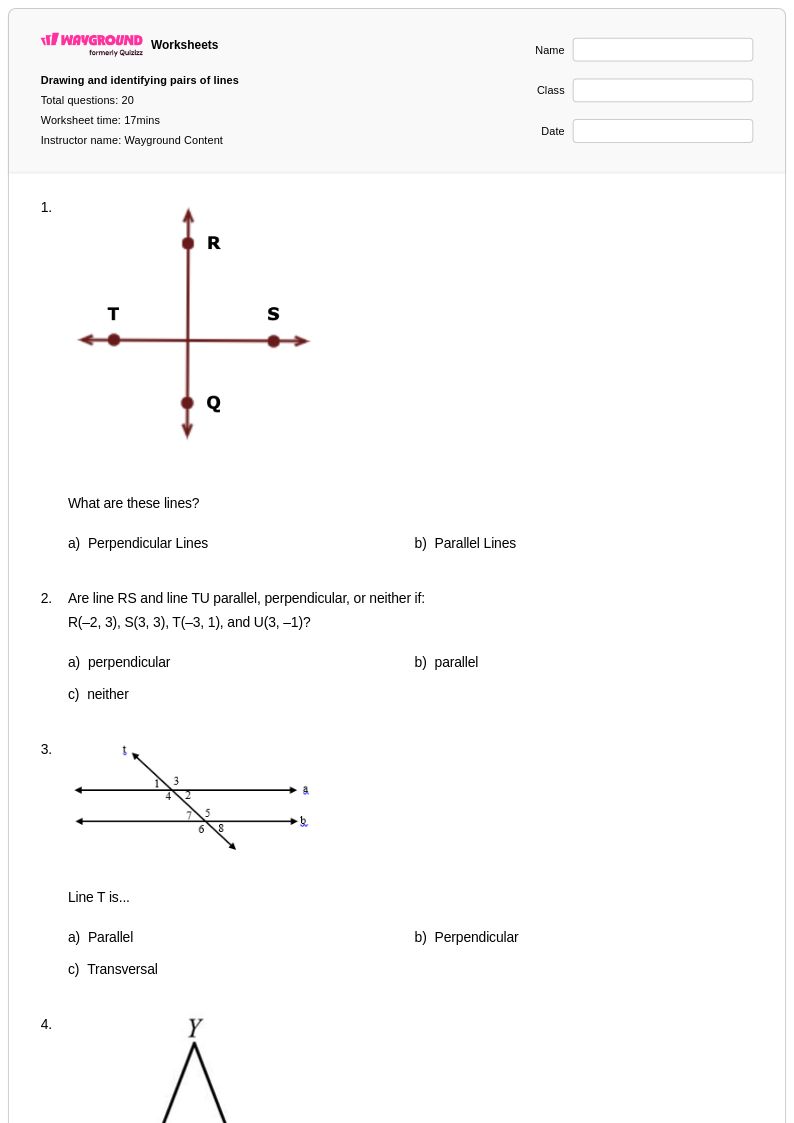
20 Q
4th - 12th
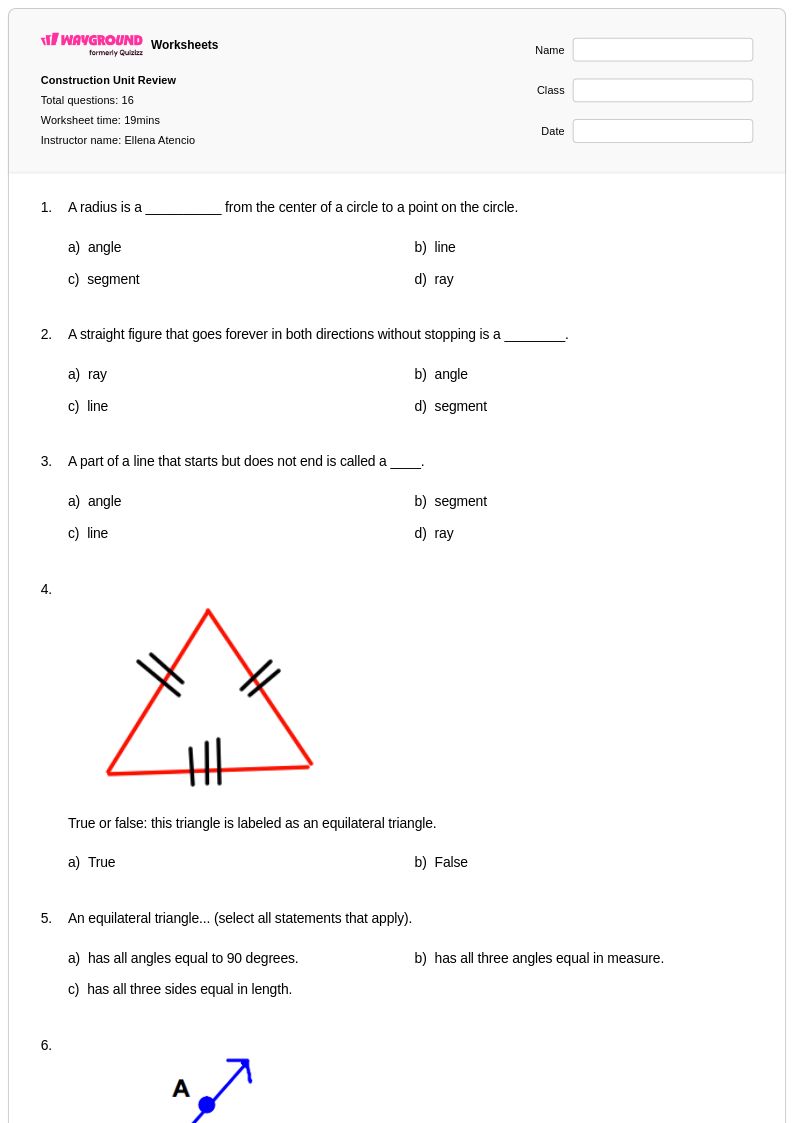
16 Q
6th - 10th
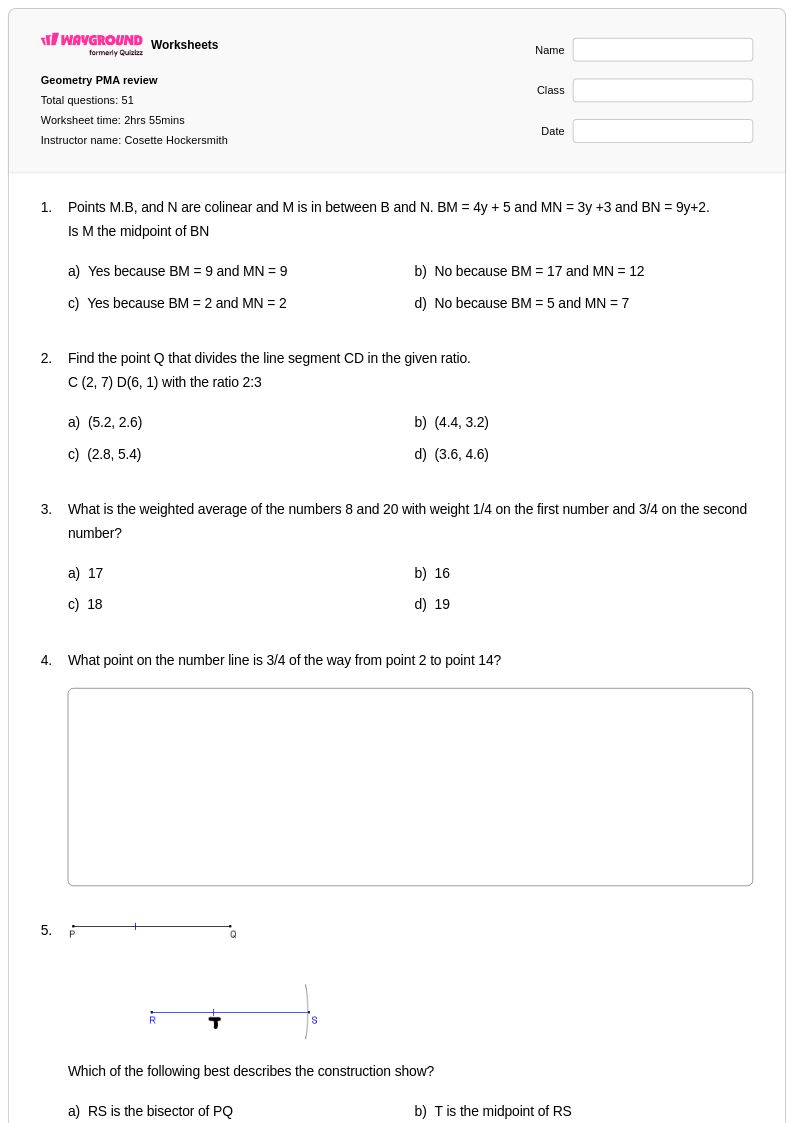
51 Q
6th - 8th
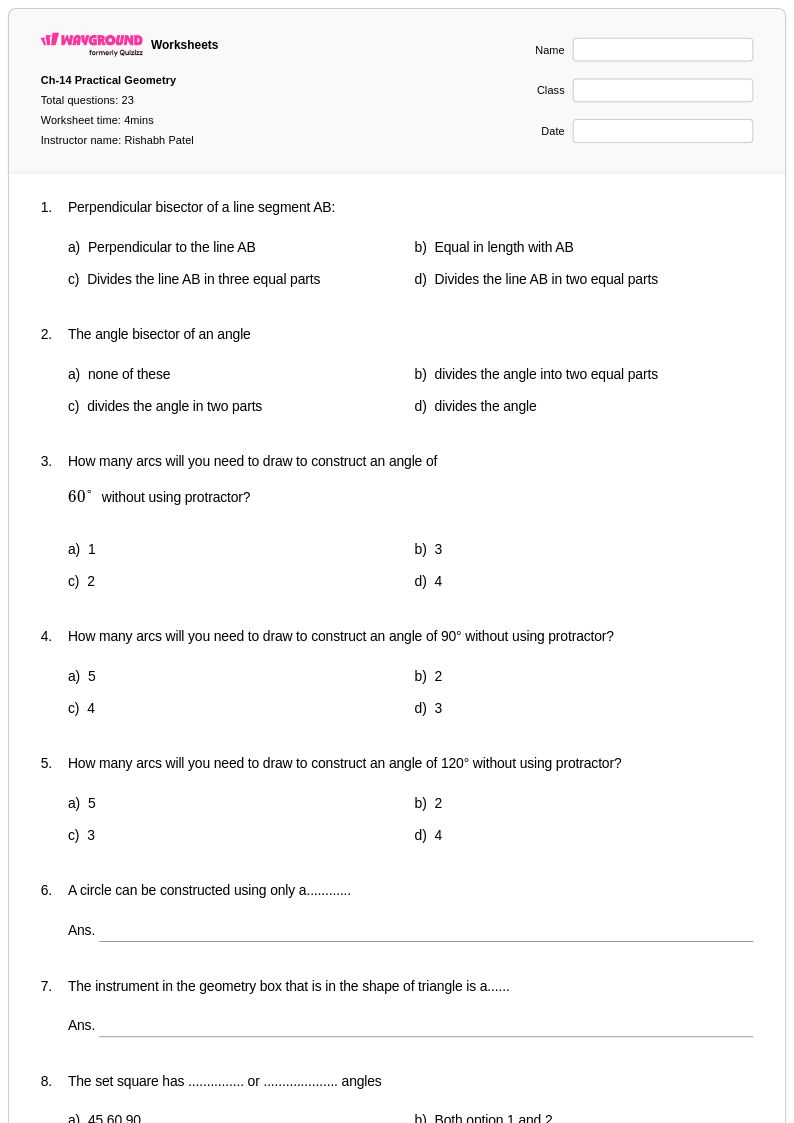
23 Q
6th
29 Q
6th - 12th
7 Q
6th - Uni
10 Q
6th - Uni
23 Q
6th
20 Q
4th - 12th
16 Q
5th - 6th
20 Q
5th - Uni
17 Q
6th
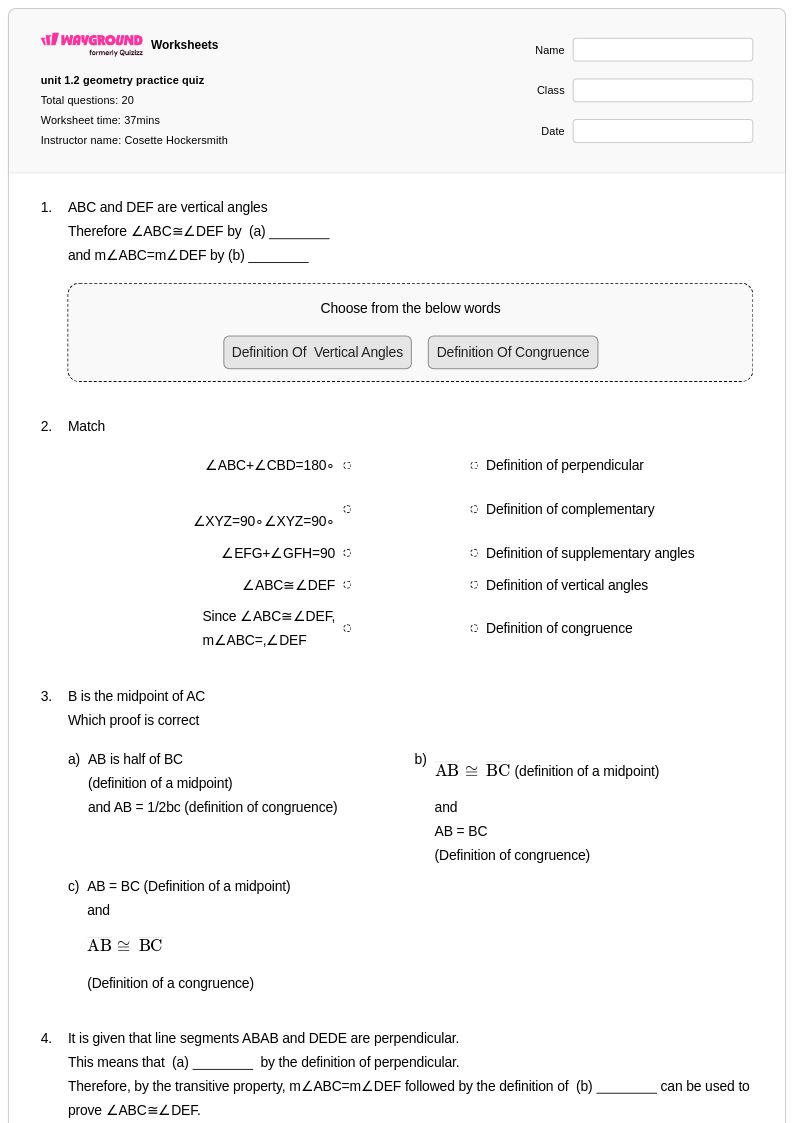
20 Q
6th - 8th
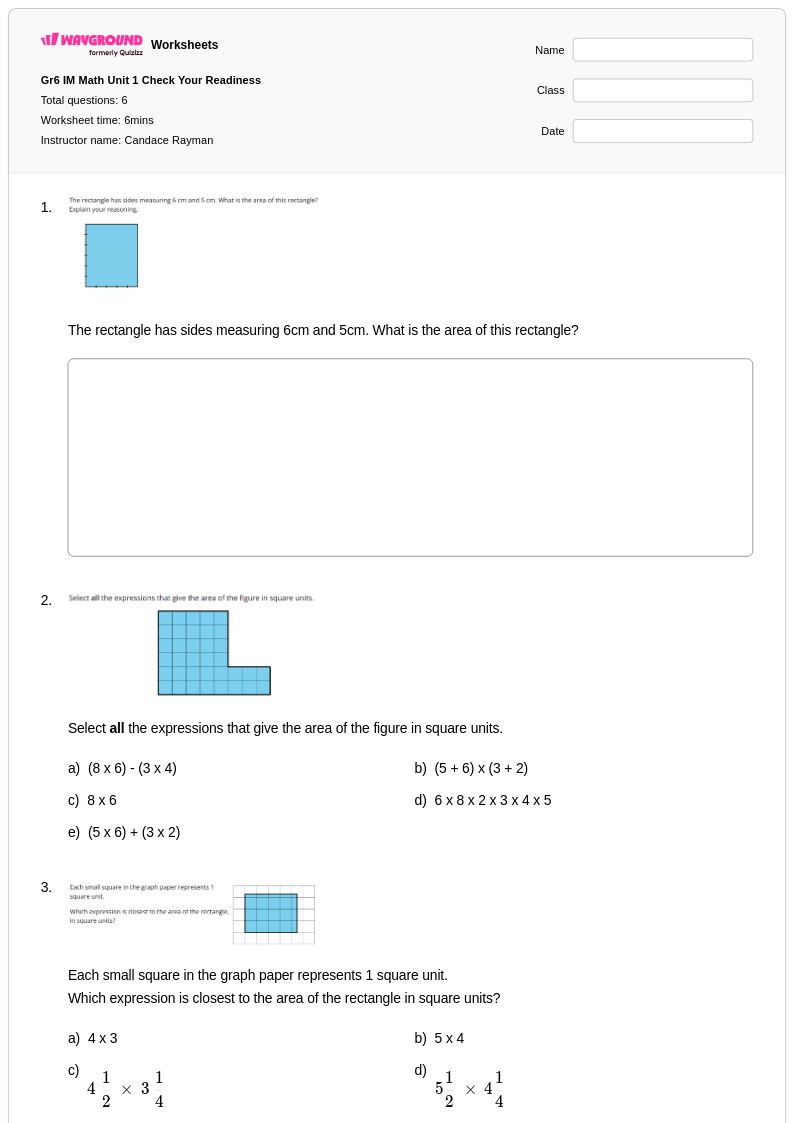
6 Q
6th
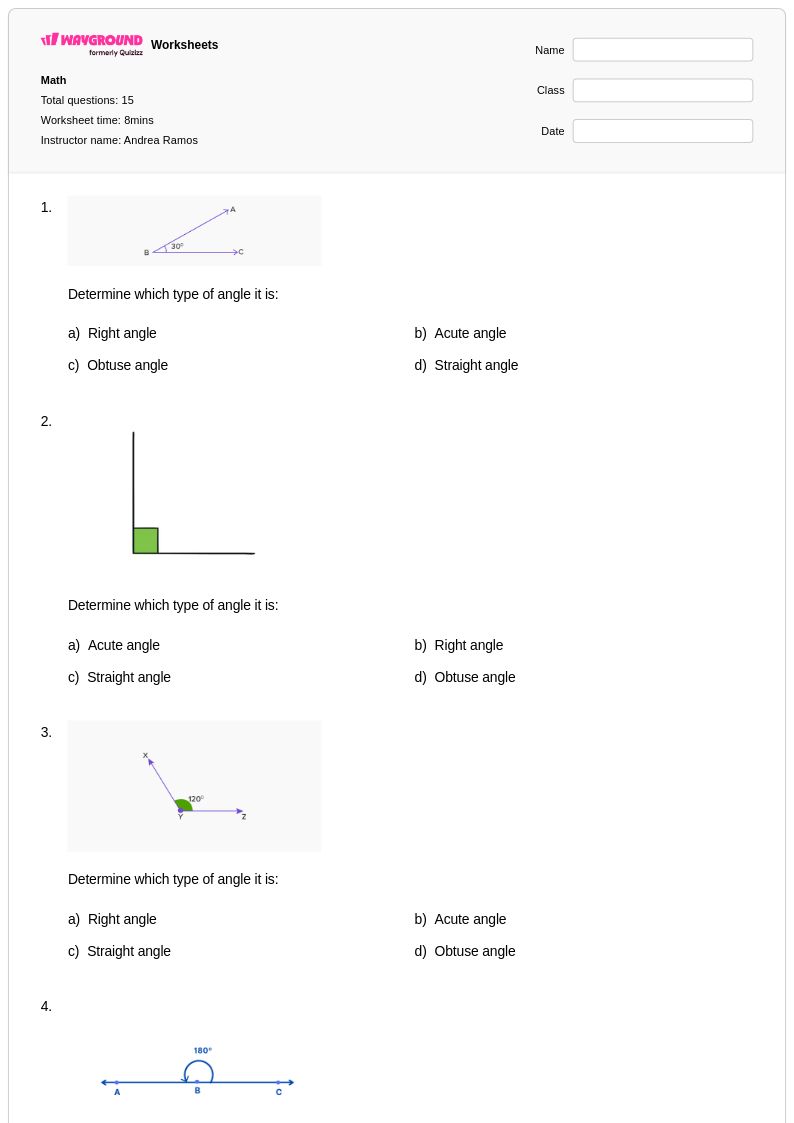
15 Q
6th
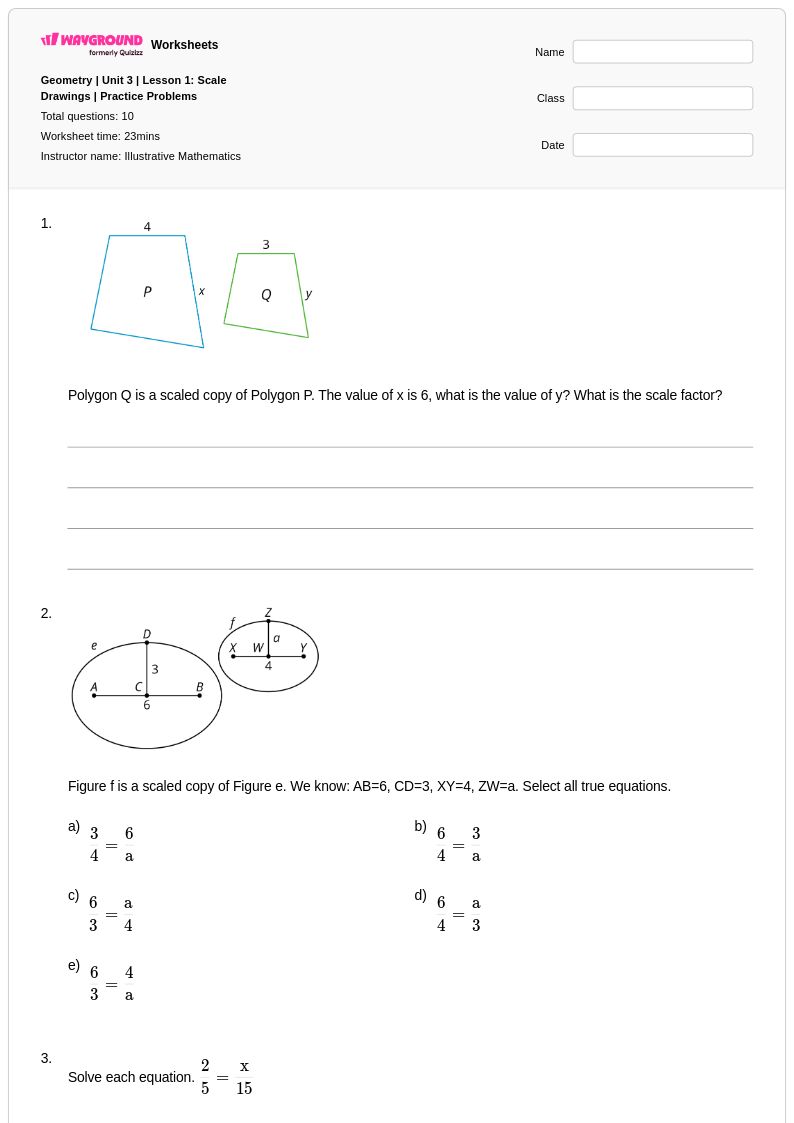
10 Q
6th - Uni
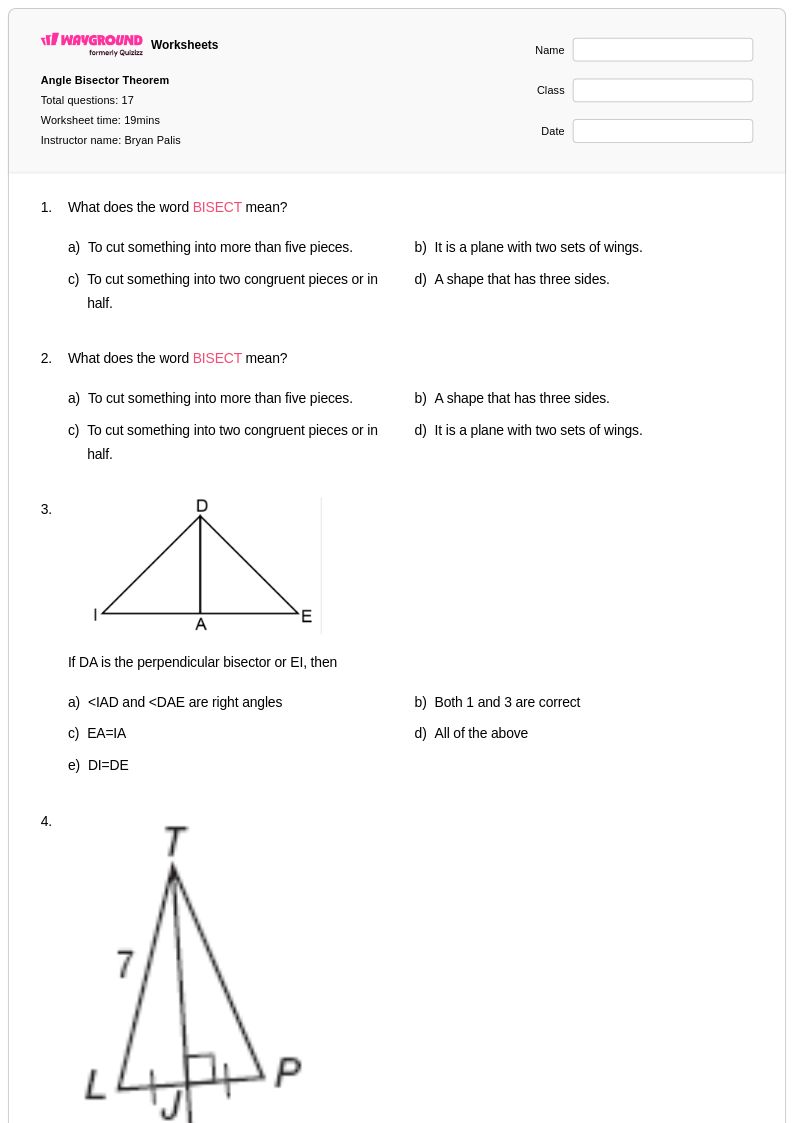
17 Q
6th
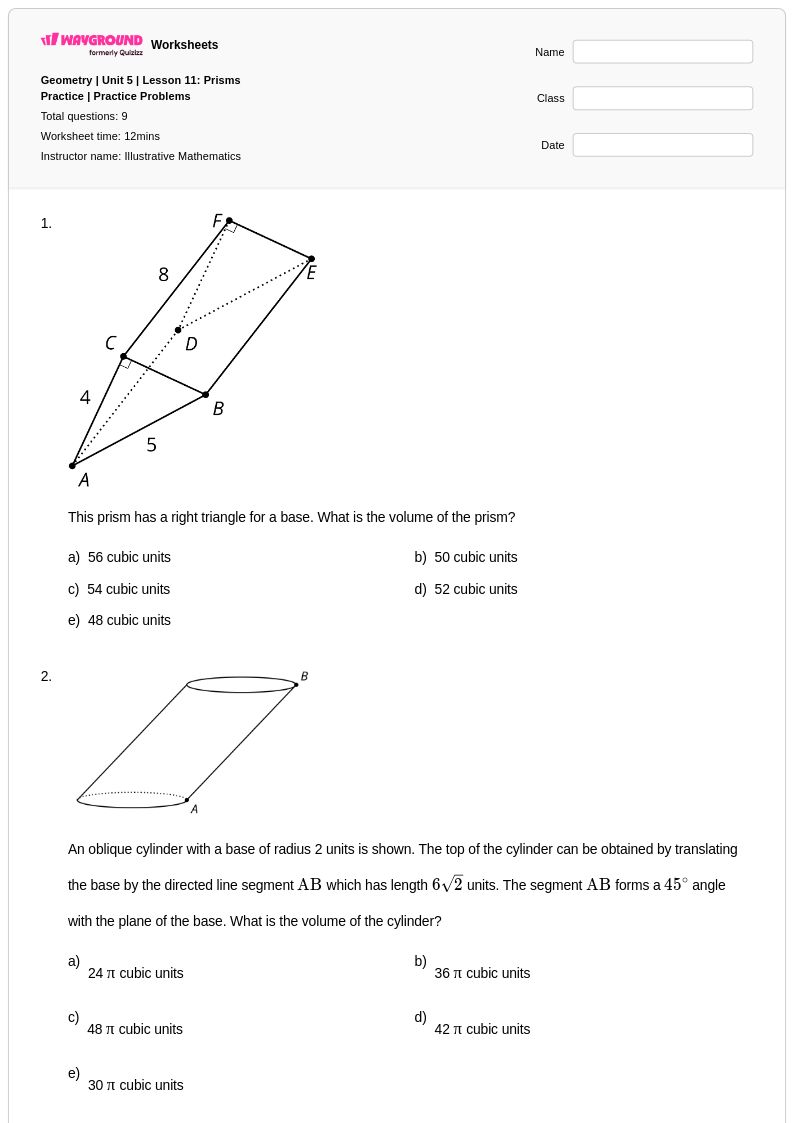
9 Q
6th - Uni
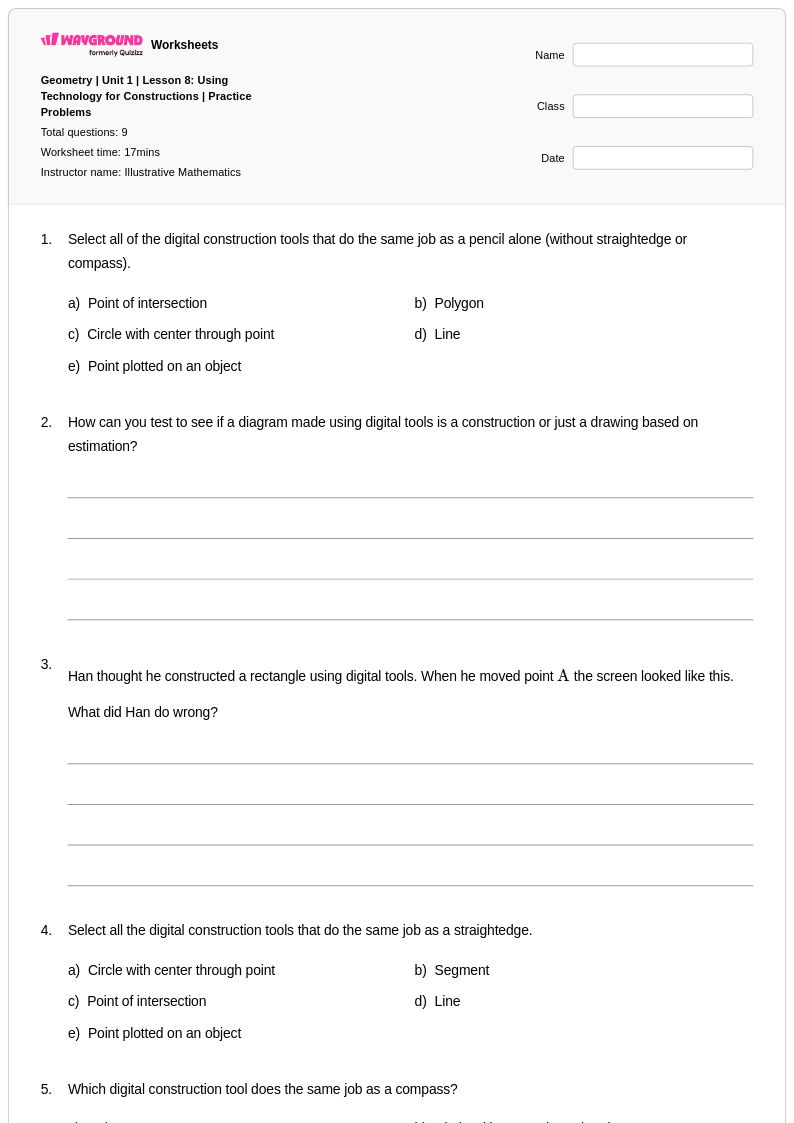
9 Q
6th - Uni
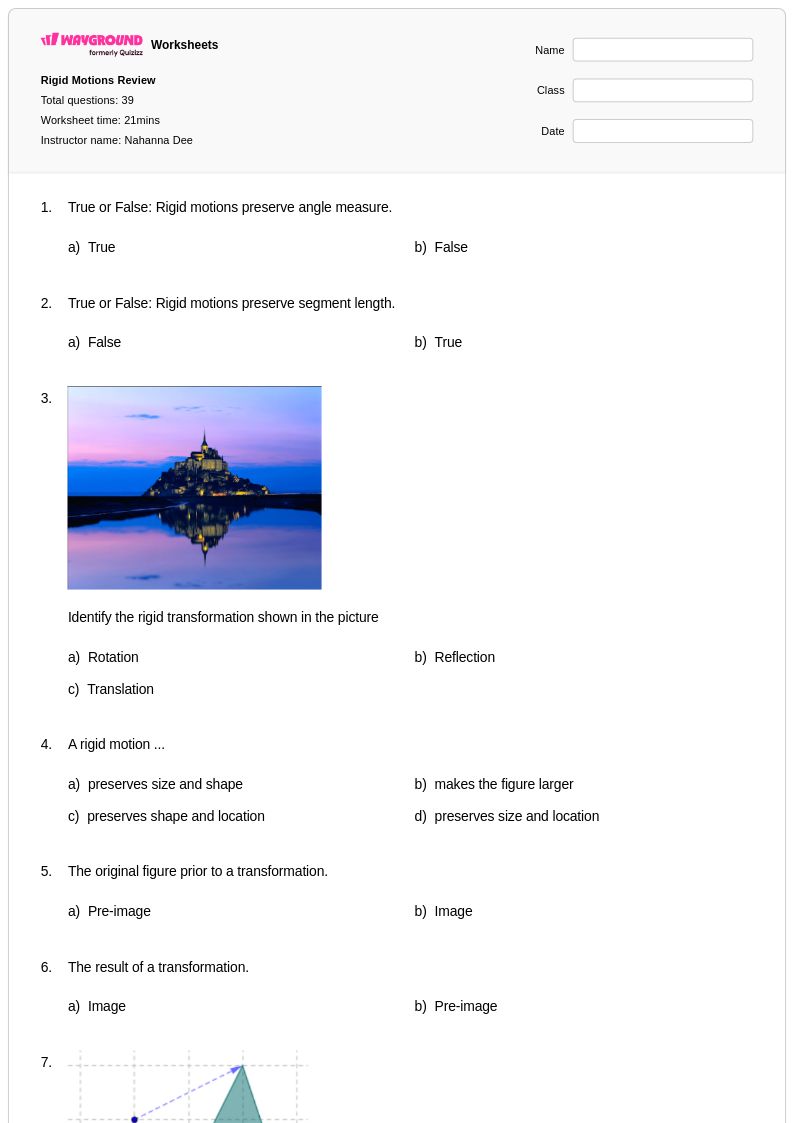
39 Q
6th - 11th
7 Q
6th - Uni
19 Q
6th - 8th
8 Q
6th - Uni
7 Q
6th
Explore Perpendicular Bisector Worksheets by Grades
Explore Other Subject Worksheets for grade 6
Explore printable Perpendicular Bisector worksheets for Grade 6
Perpendicular bisector worksheets for Grade 6 students available through Wayground (formerly Quizizz) provide comprehensive practice with this fundamental geometry concept that bridges basic line relationships and advanced geometric constructions. These carefully designed worksheets help students master the dual properties of perpendicular bisectors: creating right angles while dividing line segments into equal parts. Students develop critical spatial reasoning skills as they work through practice problems that require them to identify, construct, and analyze perpendicular bisectors using compass and straightedge techniques, coordinate geometry methods, and visual recognition exercises. Each worksheet collection includes detailed answer keys that support independent learning and self-assessment, with free printable pdf formats ensuring accessibility for both classroom instruction and home practice. The progressive difficulty structure strengthens foundational skills in measuring angles, calculating distances, and understanding the geometric relationships that form the basis for more complex topics like triangle centers and circle theorems.
Wayground (formerly Quizizz) empowers educators with an extensive library of millions of teacher-created perpendicular bisector resources that streamline lesson planning and support differentiated instruction for Grade 6 geometry students. The platform's robust search and filtering capabilities allow teachers to quickly locate worksheets aligned with specific curriculum standards, whether focusing on hands-on construction activities, coordinate plane applications, or conceptual understanding assessments. Teachers can customize existing materials or create new variations to address individual student needs, supporting both remediation for struggling learners and enrichment opportunities for advanced students. The flexible delivery options include traditional printable worksheets and interactive digital formats, enabling seamless integration into various teaching environments from traditional classrooms to hybrid learning models. These comprehensive tools facilitate targeted skill practice while providing teachers with the resources needed to assess student progress and adjust instruction based on individual mastery of perpendicular bisector concepts and related geometric principles.
FAQs
What do 6th graders learn about perpendicular bisectors?
How can I introduce perpendicular bisectors to my 6th grade class?
What kind of practice is best for 6th graders with this topic?
What common mistakes do 6th graders make with perpendicular bisectors?
How can I use this Grade 6 worksheet with my students?
How does this topic fit into the 6th grade math curriculum?