Free Printable Plot Elements Worksheets for Grade 3
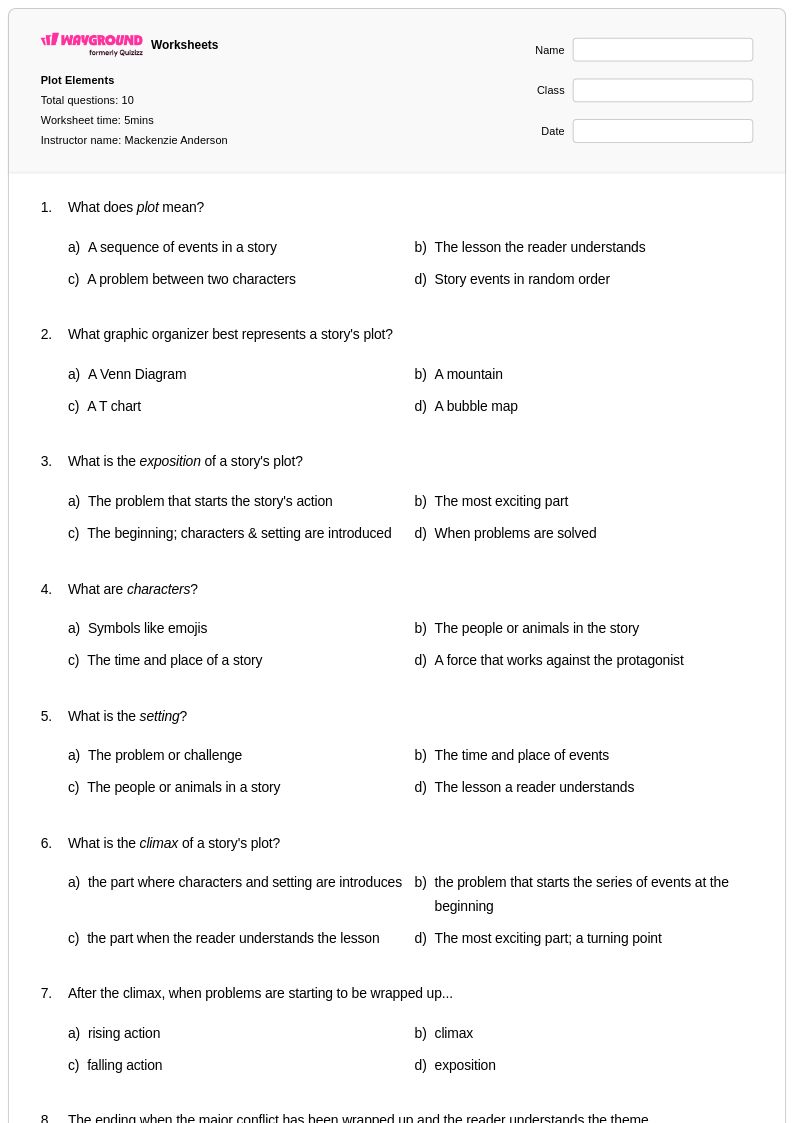
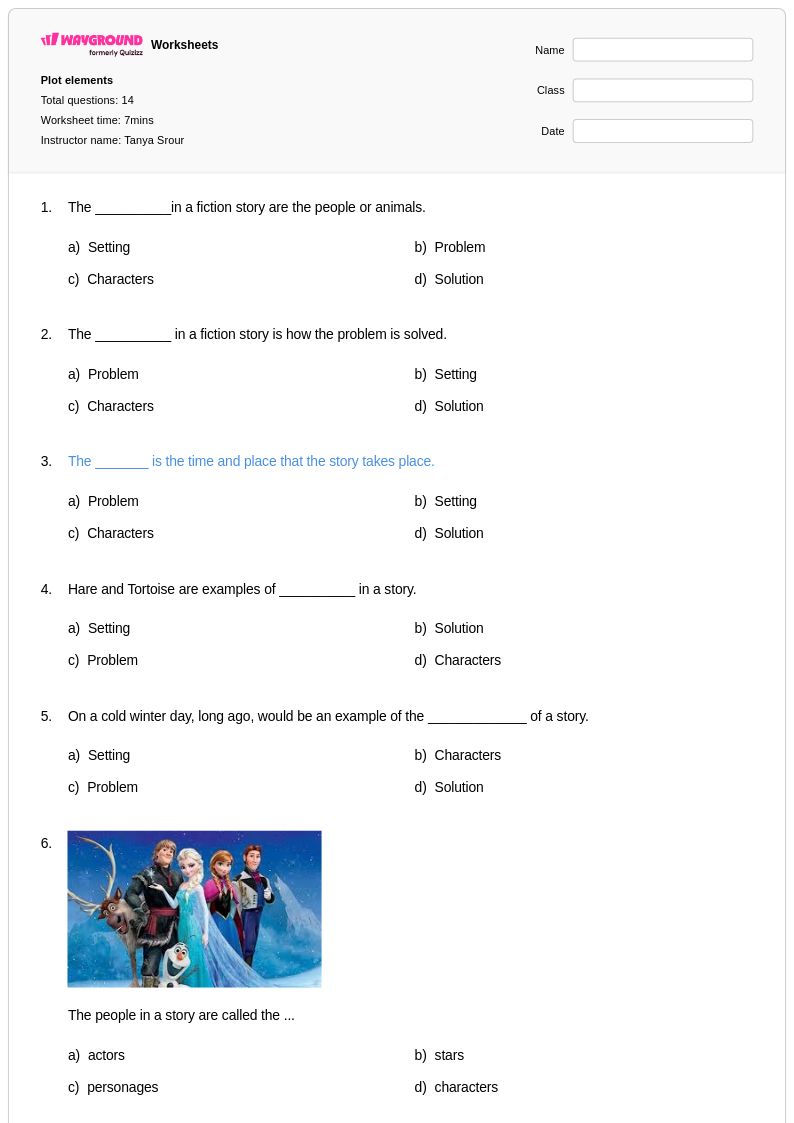
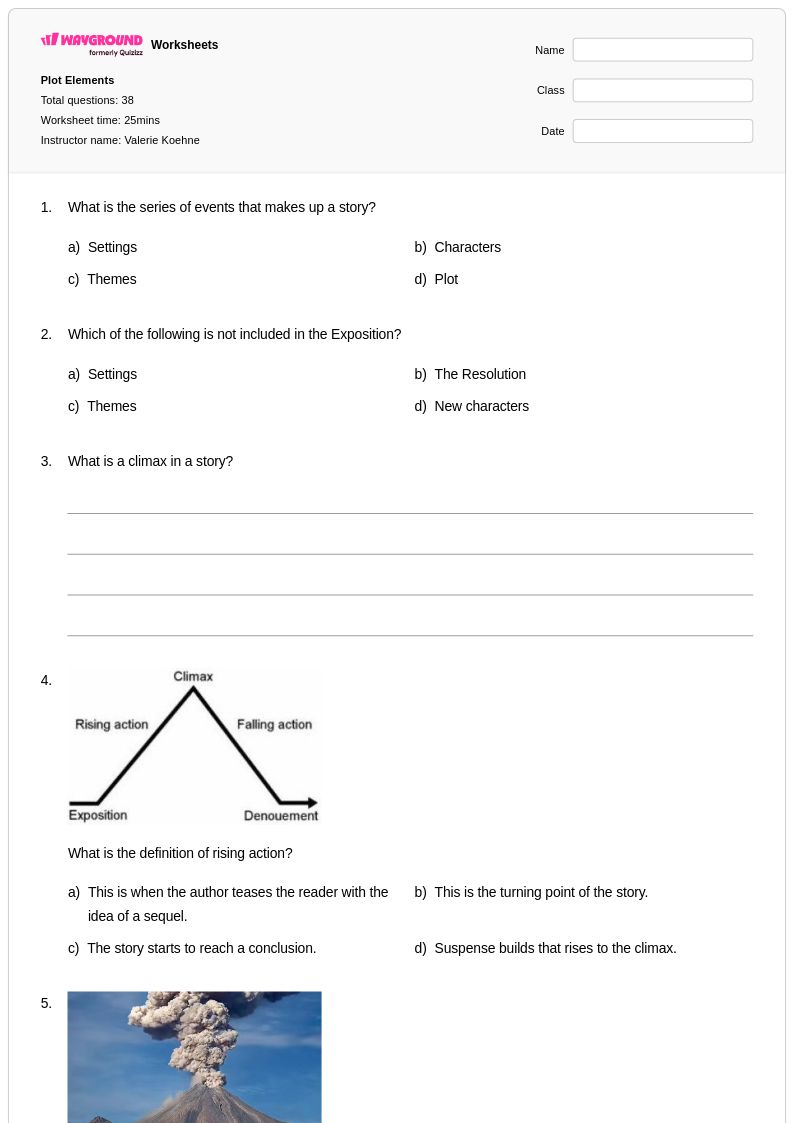
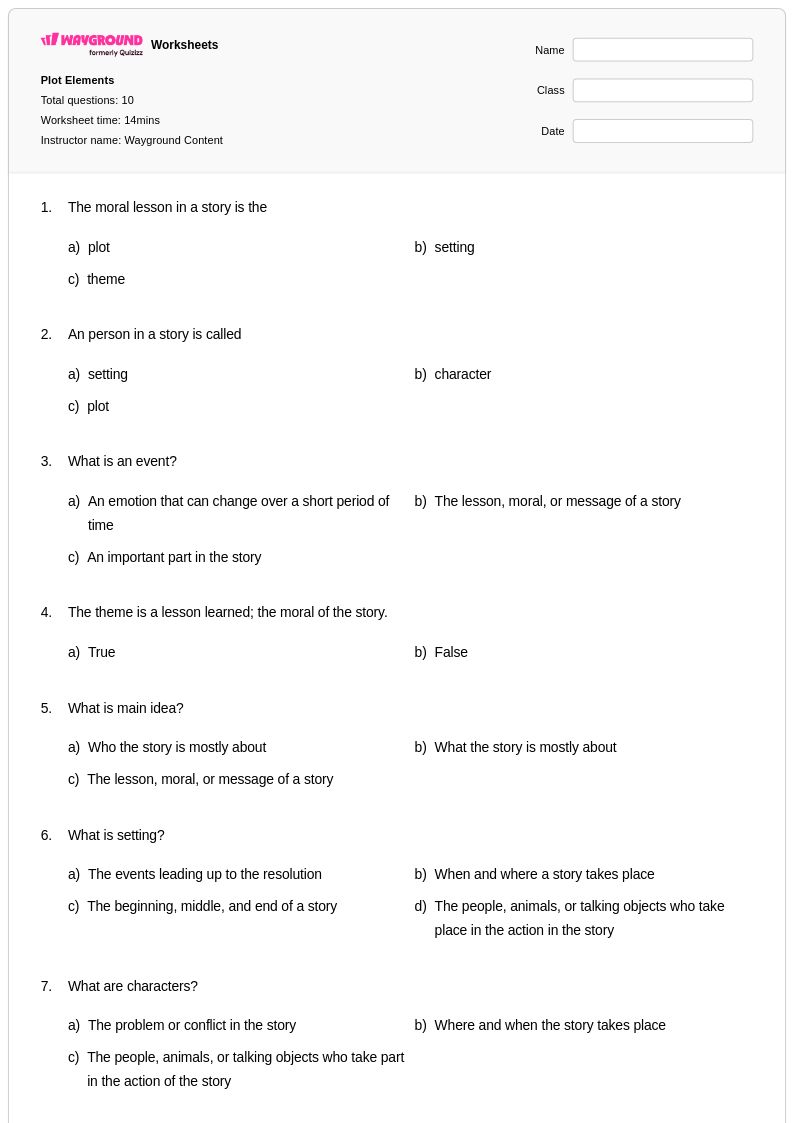
Explore free Grade 3 plot elements worksheets and printables that help students identify story components like characters, setting, and conflict through engaging reading comprehension practice problems with complete answer keys.
Explore printable Plot Elements worksheets for Grade 3
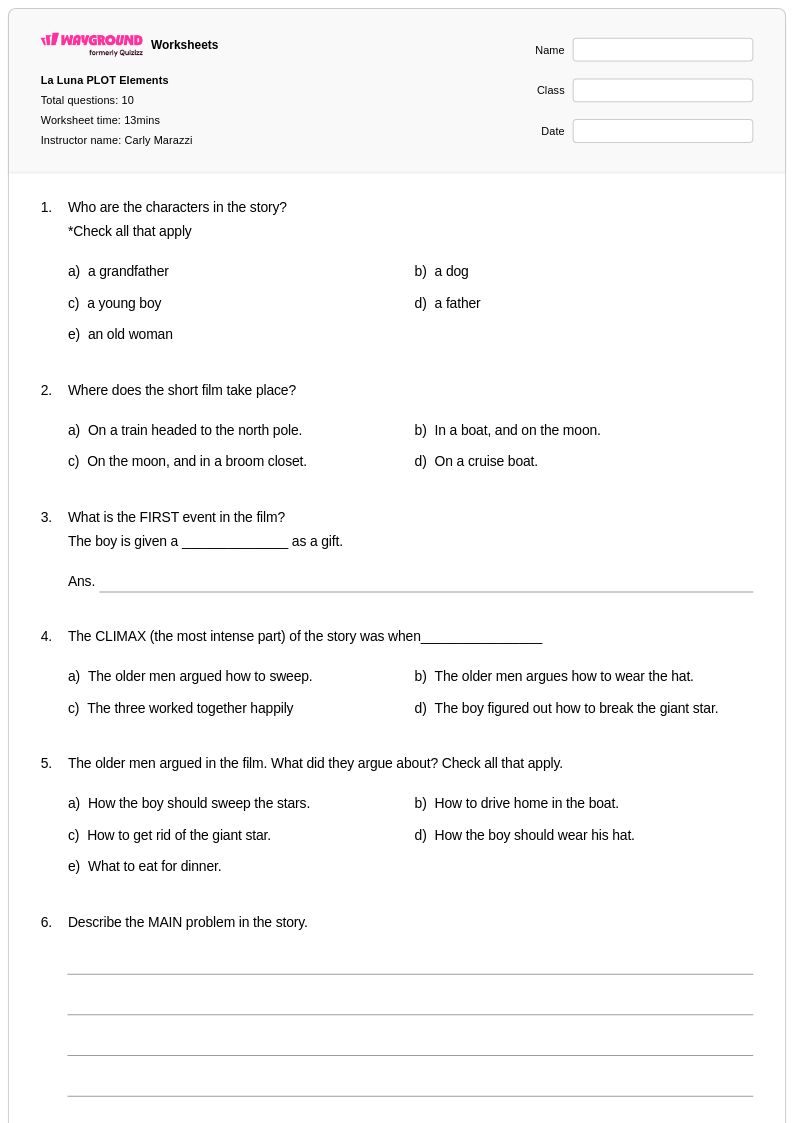
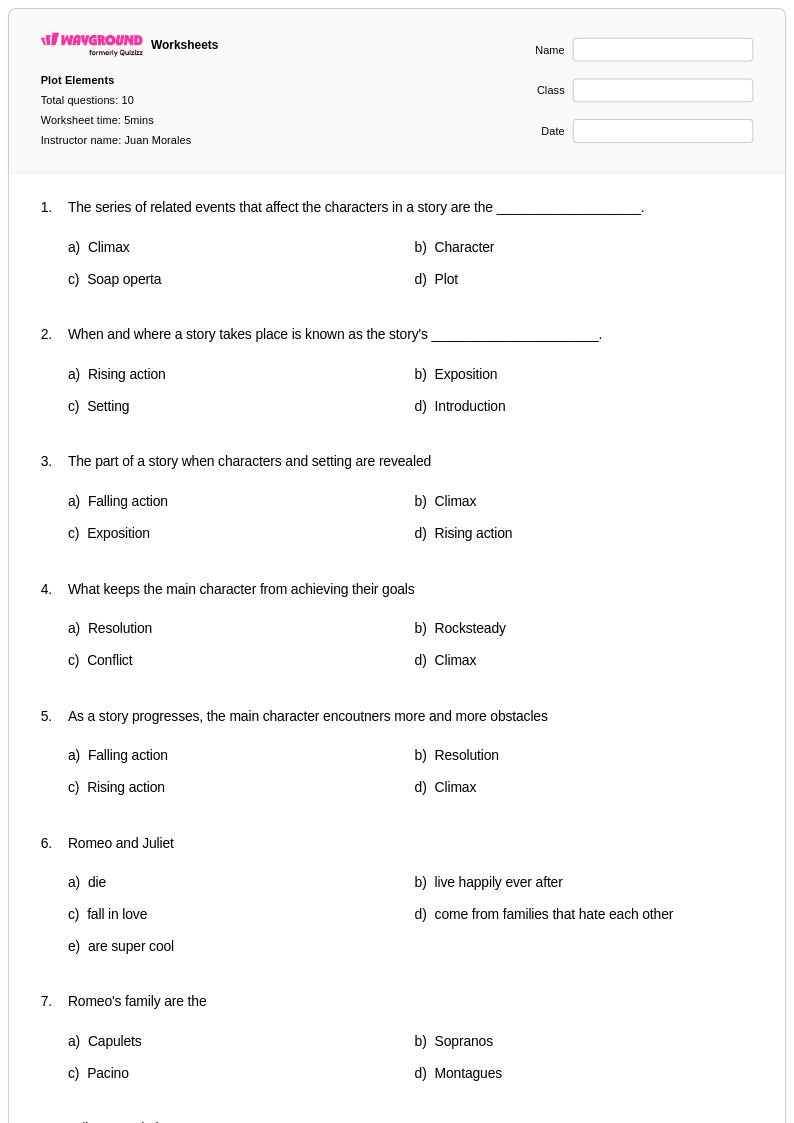
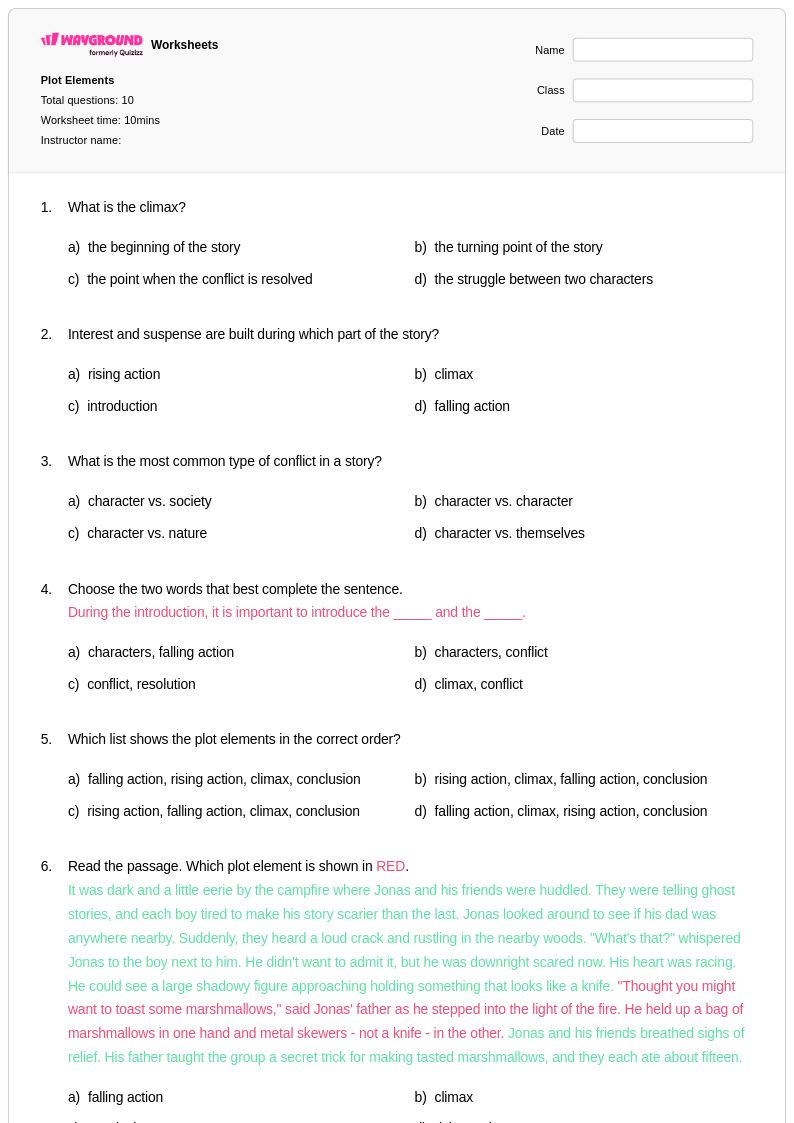
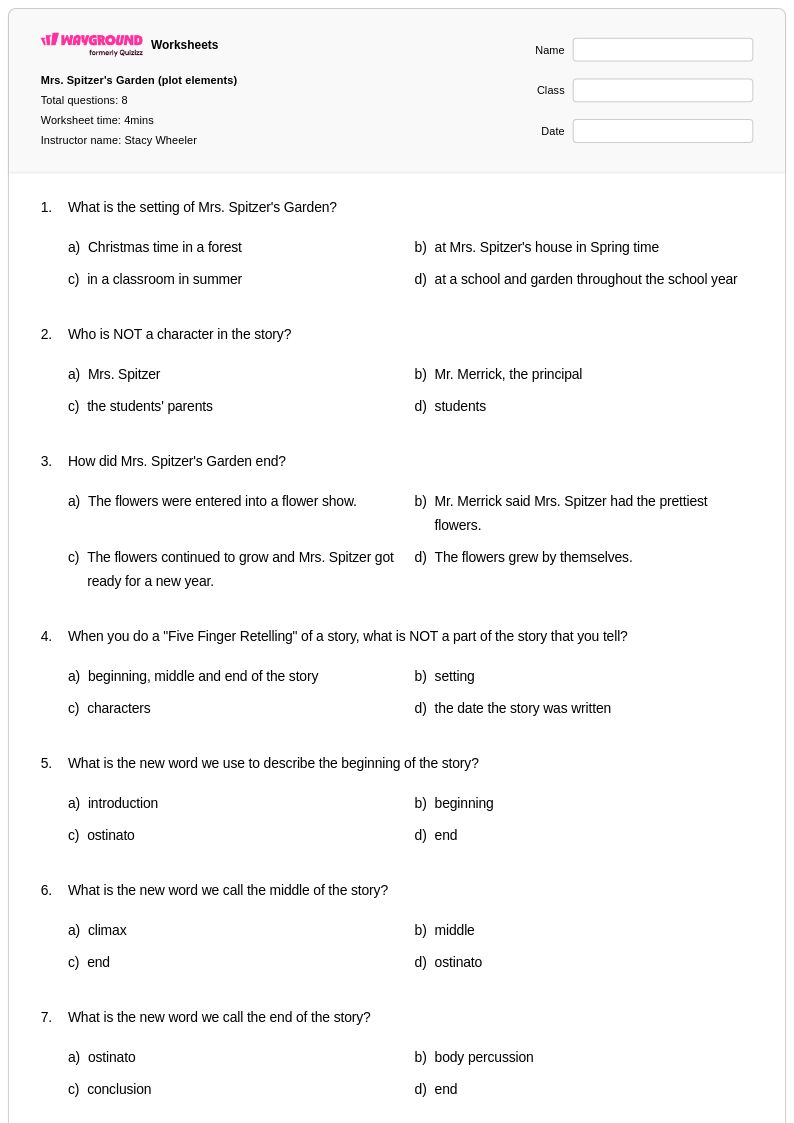
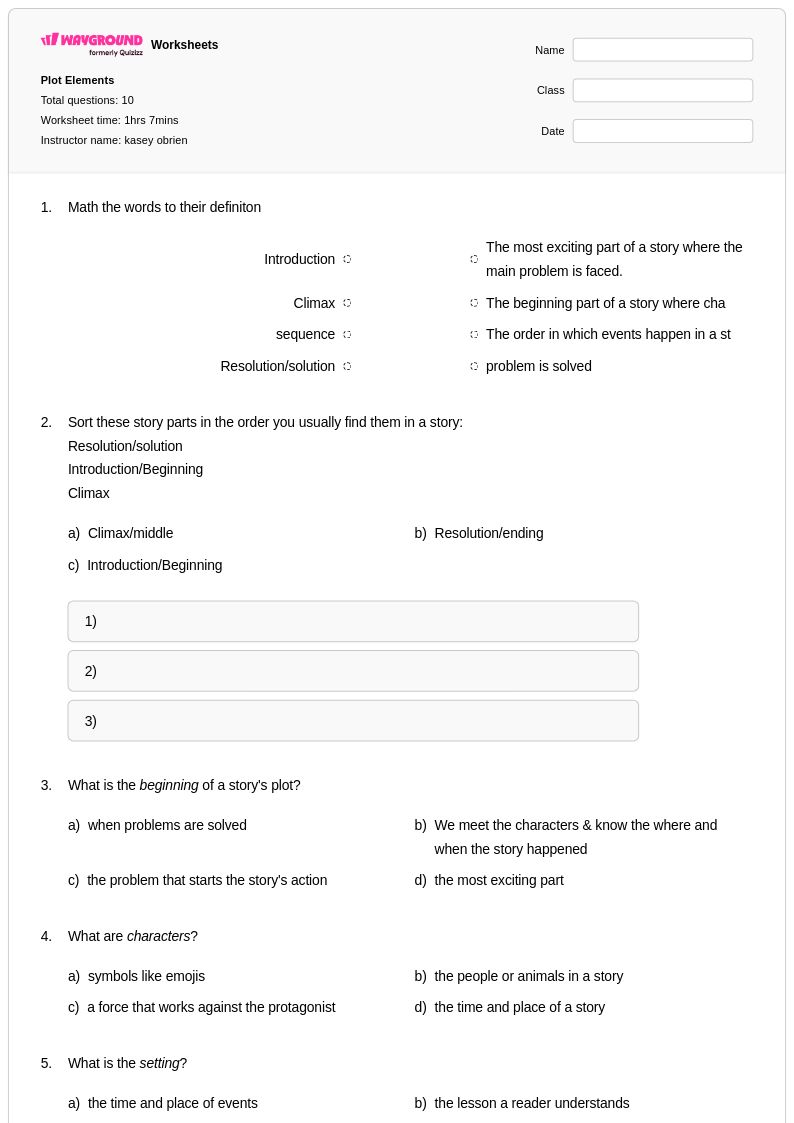
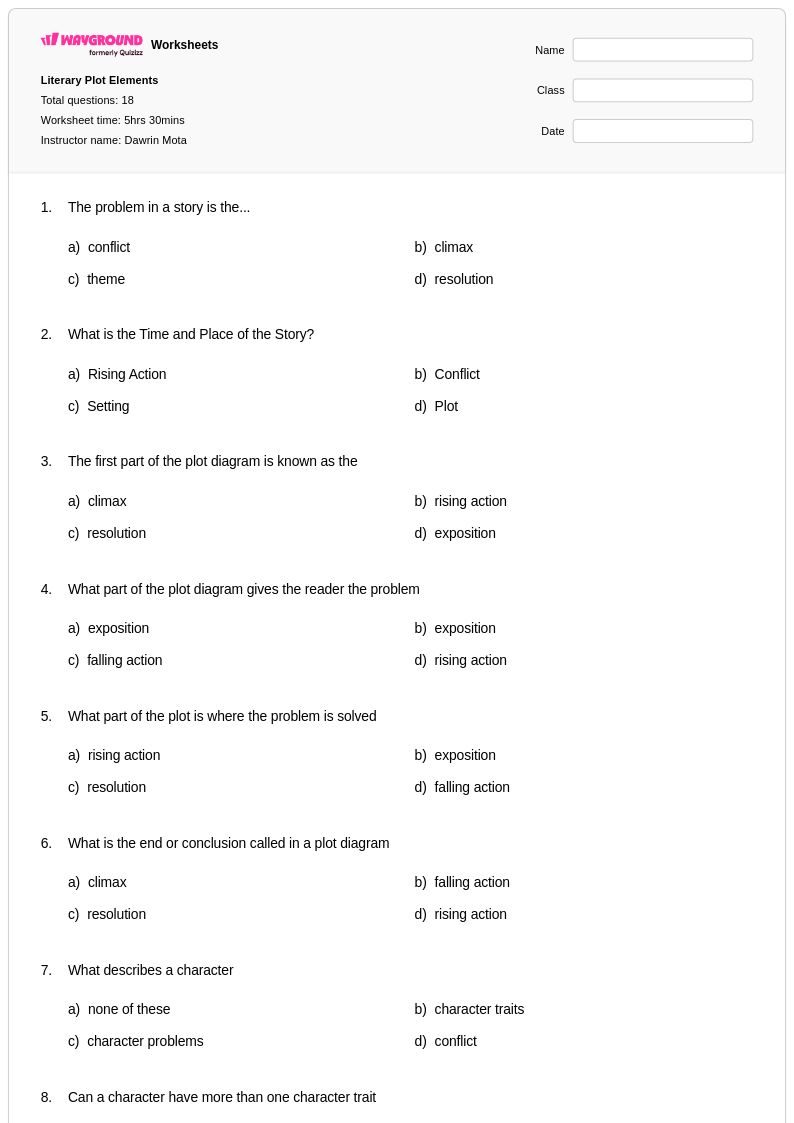
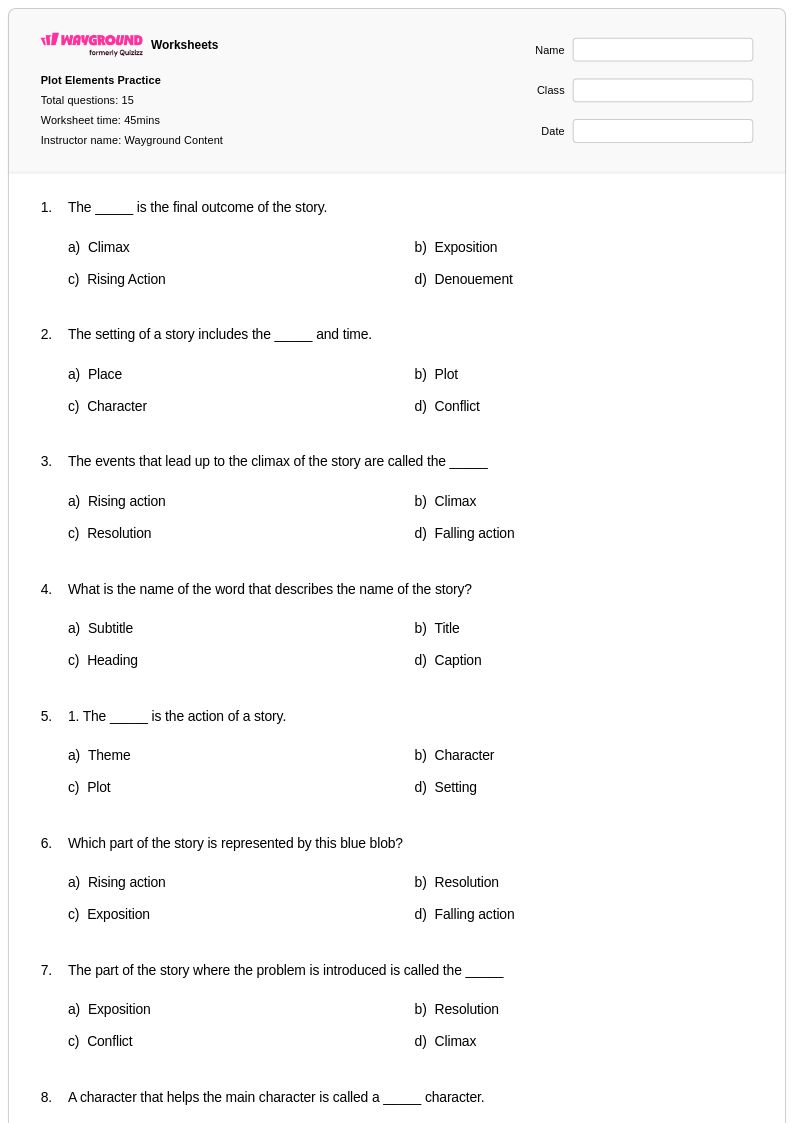
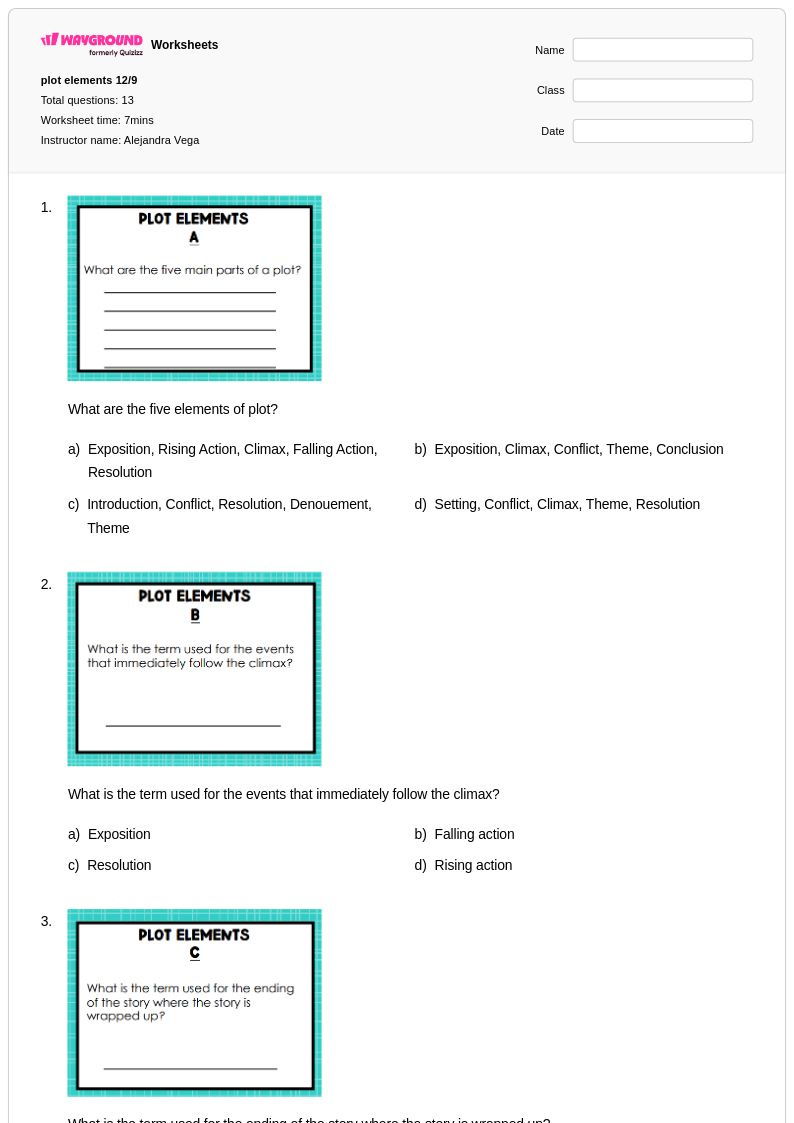
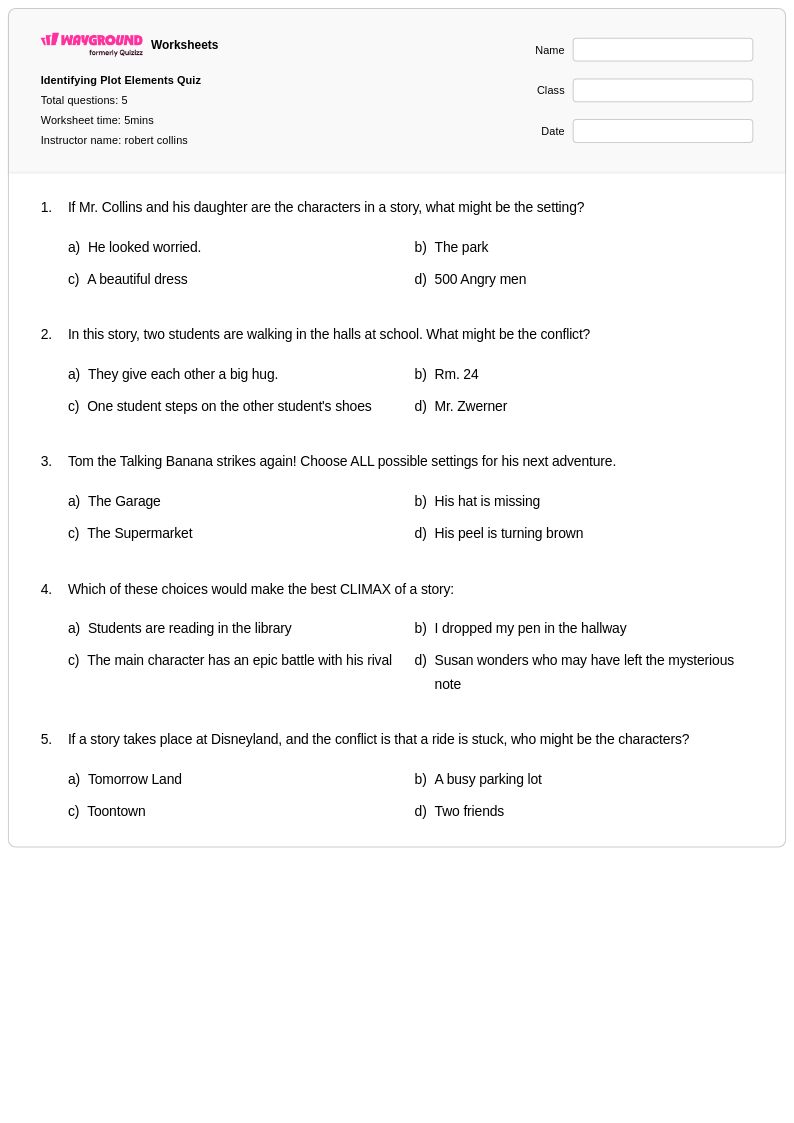
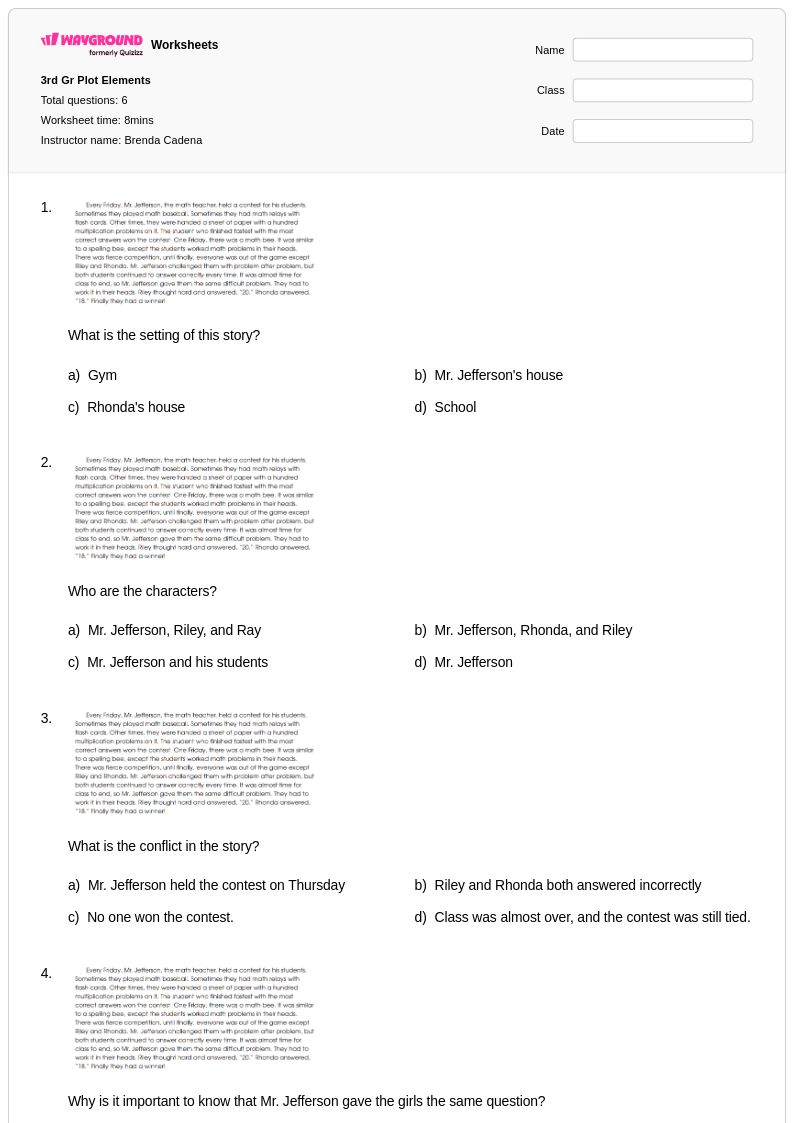
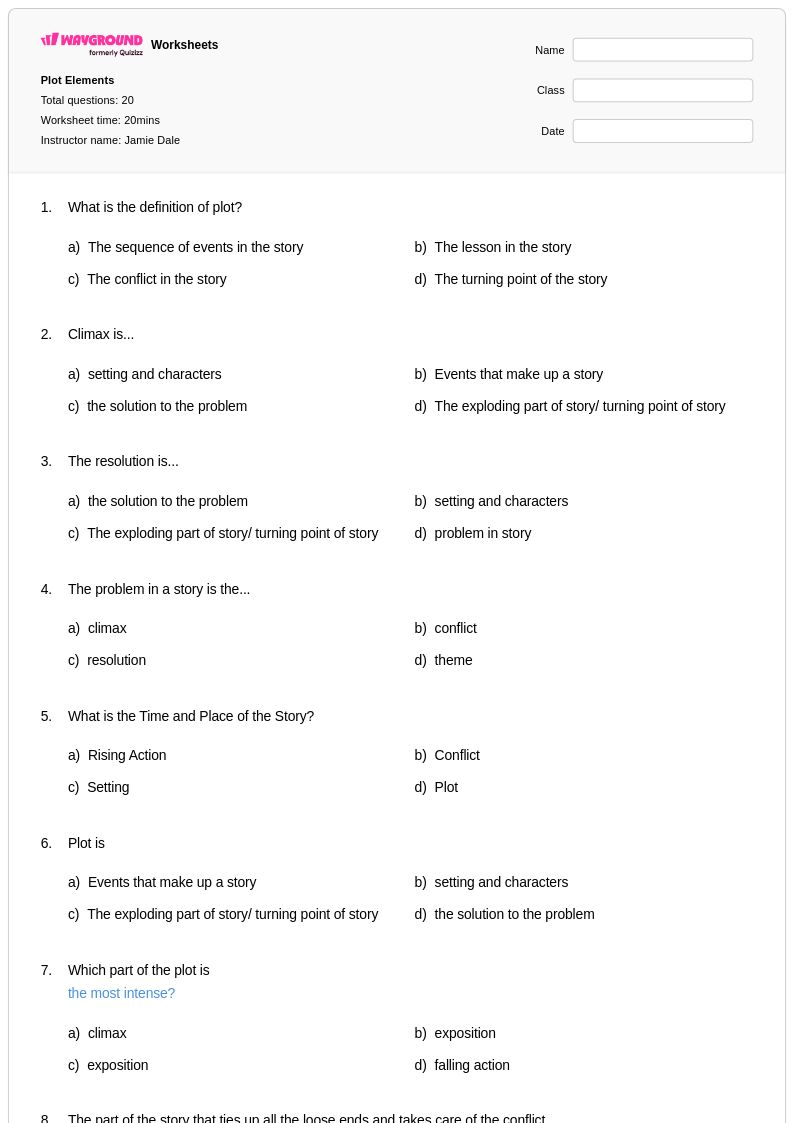
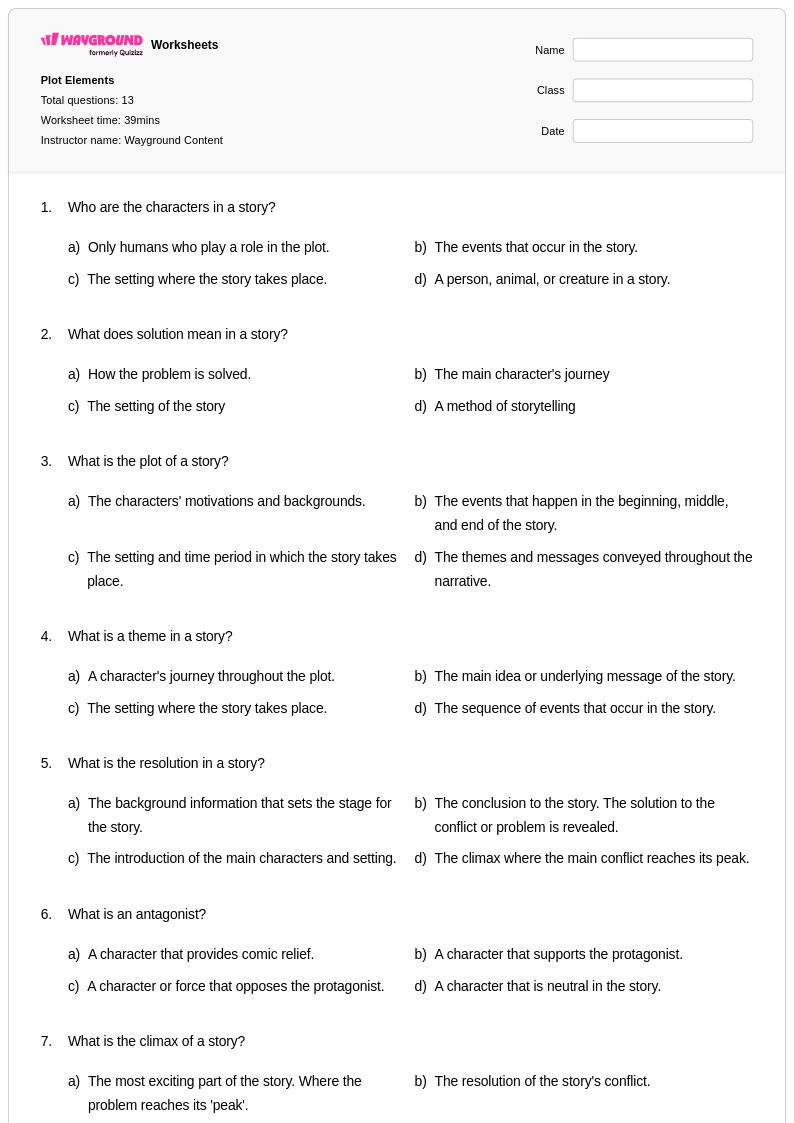
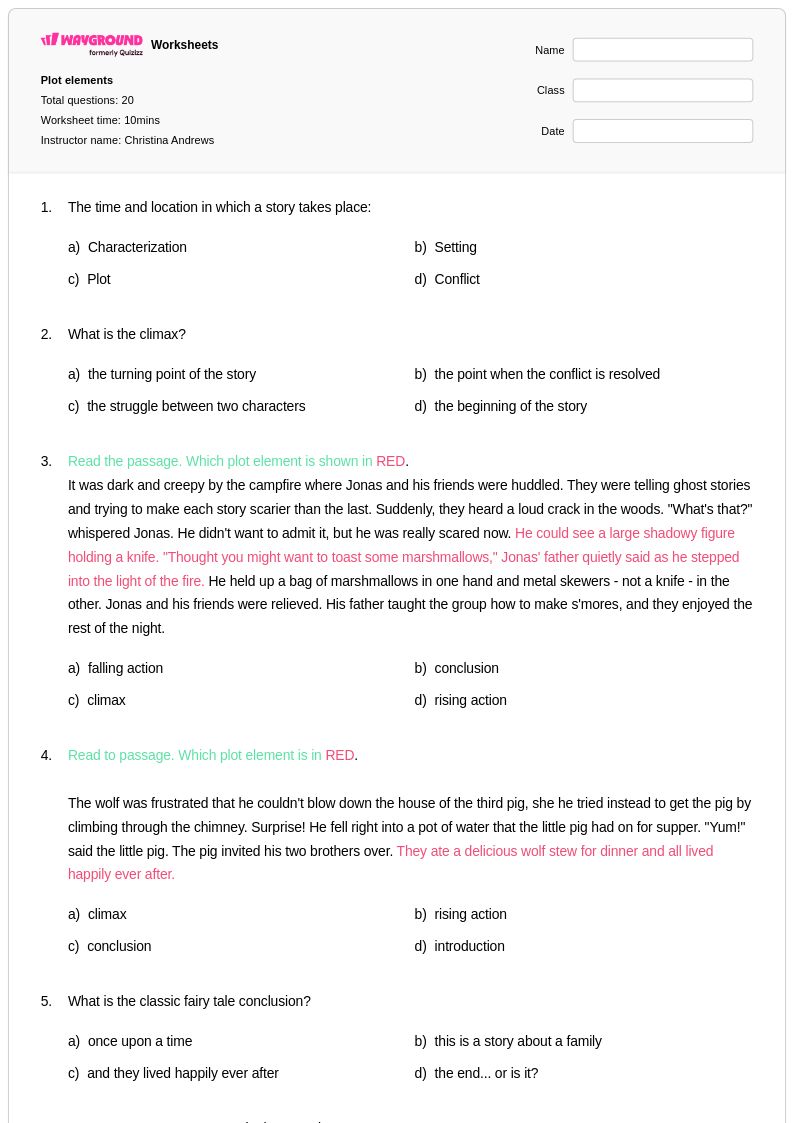
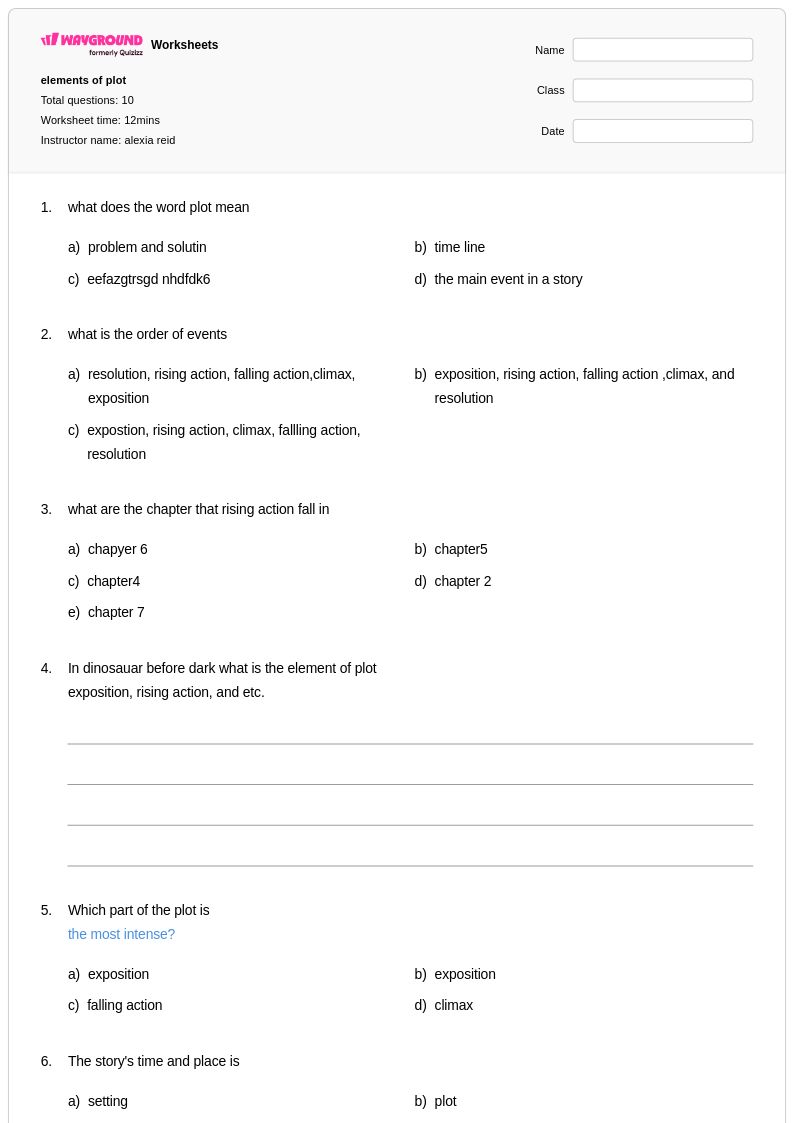
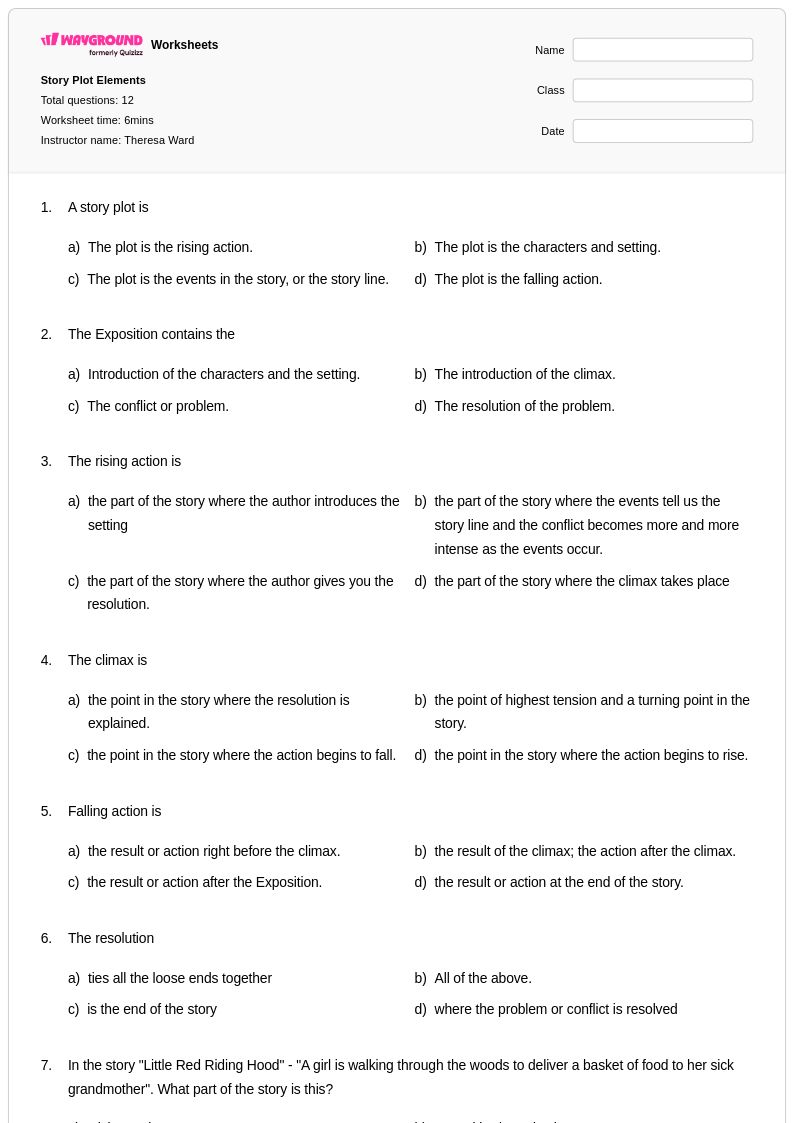
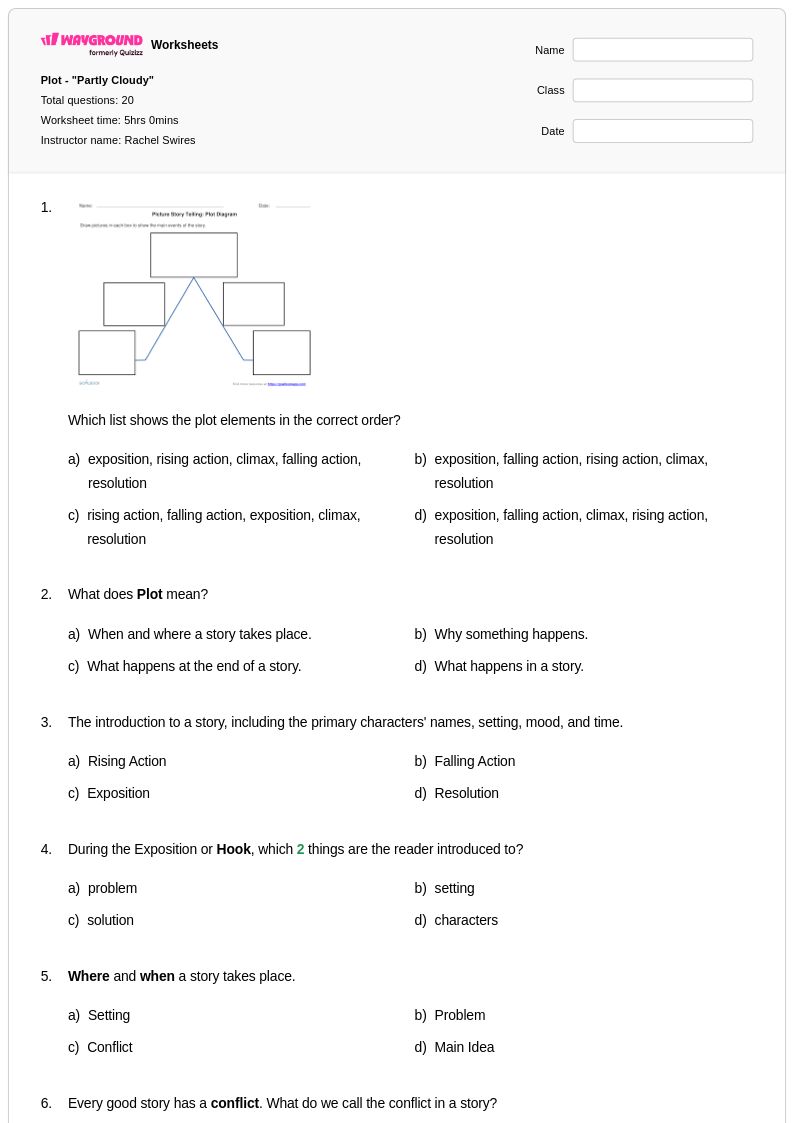
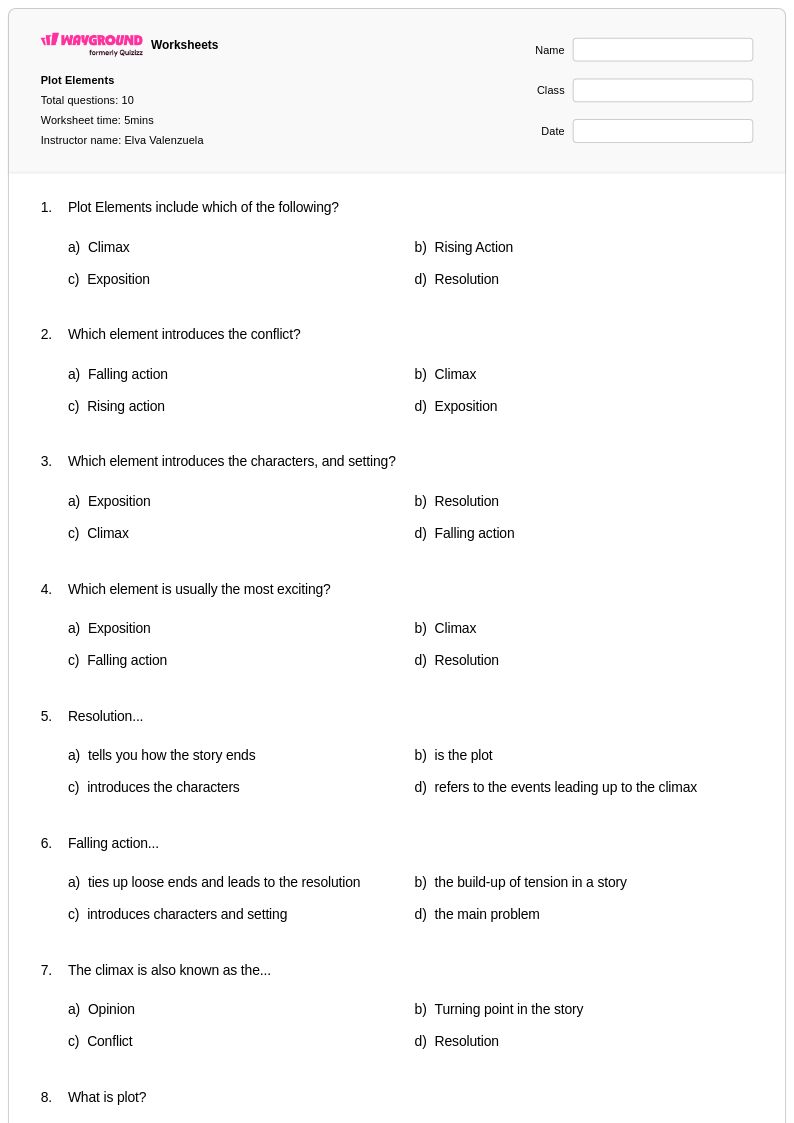
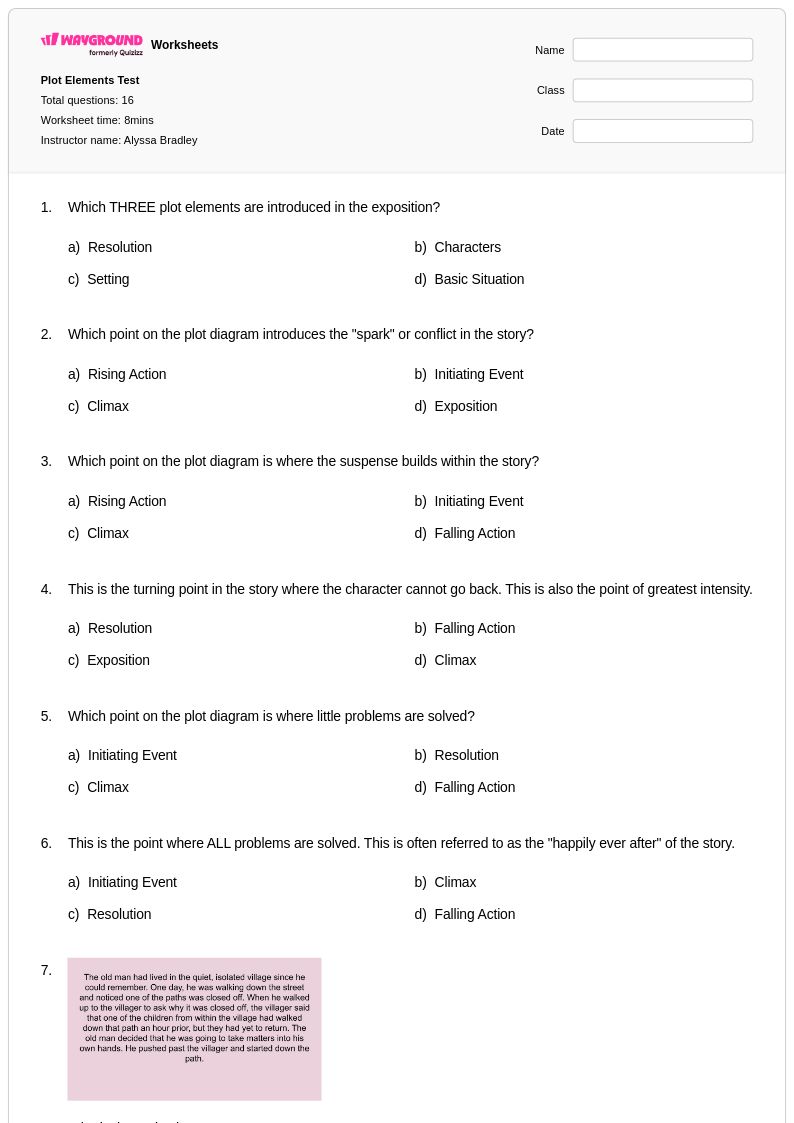
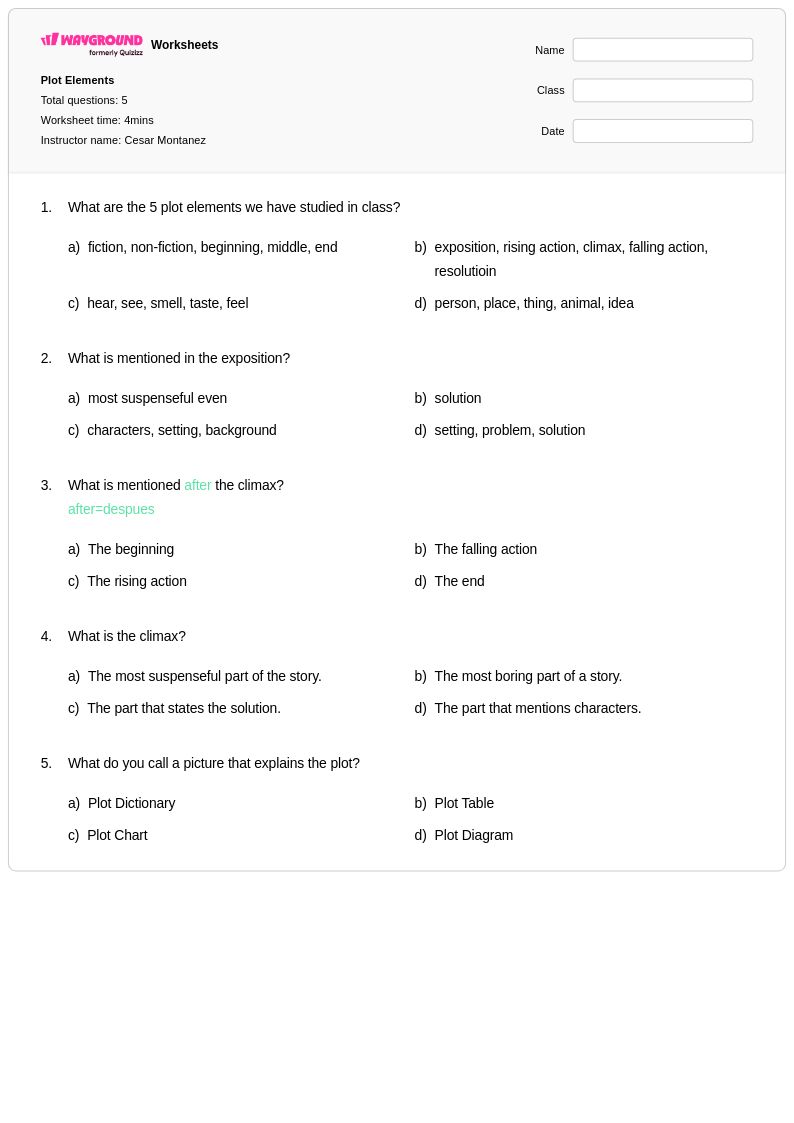
Plot elements worksheets for Grade 3 through Wayground (formerly Quizizz) provide essential practice for young readers developing fundamental story analysis skills. These comprehensive resources help third-grade students identify and understand key components of narrative texts, including characters, setting, problem, and resolution. Students work through carefully crafted practice problems that guide them to recognize how authors structure stories and develop plots through beginning, middle, and end sequences. The worksheets include engaging passages followed by targeted questions that strengthen critical thinking abilities, with complete answer keys provided to support independent learning and assessment. These free printables offer systematic skill-building opportunities that align with Grade 3 reading comprehension expectations.
Wayground (formerly Quizizz) empowers educators with millions of teacher-created resources specifically designed for plot elements instruction at the Grade 3 level. The platform's robust search and filtering capabilities enable teachers to quickly locate worksheets that match their students' specific needs and align with curriculum standards for narrative text analysis. Teachers can customize existing materials or create differentiated versions to support diverse learners, from struggling readers requiring additional scaffolding to advanced students ready for enrichment activities. Available in both printable pdf format and interactive digital versions, these resources facilitate flexible lesson planning and provide valuable tools for remediation, daily practice, and formative assessment of students' growing comprehension of story structure and plot development.
FAQs
How do I teach plot elements to students?
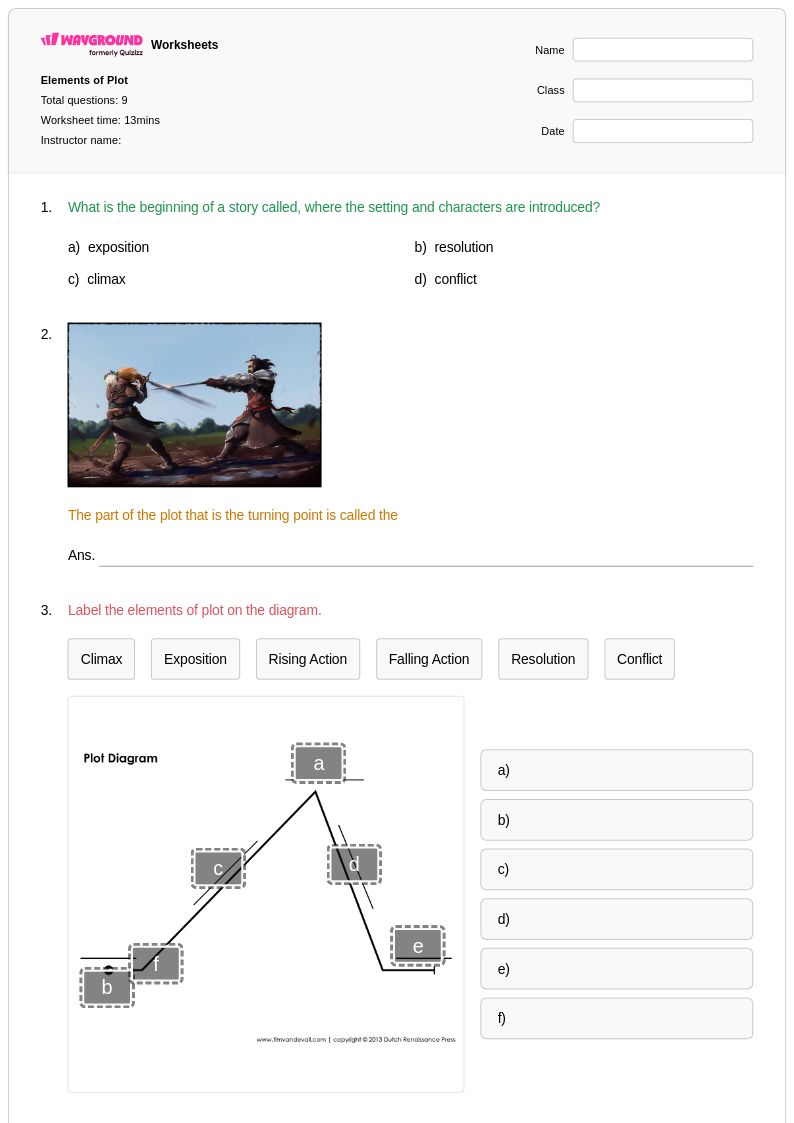
Start by introducing the five-part story arc (exposition, rising action, climax, falling action, resolution) using a familiar text students already know, such as a picture book or short story. Once students can name each stage, move to identifying them in unfamiliar texts, then to analyzing how each element contributes to the story's overall impact. Graphic organizers and story-mapping activities are especially effective for making abstract structure concrete and visible.
What exercises help students practice identifying plot elements?
Worksheets that ask students to match story events to specific plot stages, fill in story maps, or sequence events in order are highly effective for building recognition skills. Practice problems that use short passages allow students to apply plot analysis repeatedly across different genres and text types, which builds fluency and transferable comprehension skills. Moving from identifying elements in isolation to explaining how they function together deepens analytical thinking.
What mistakes do students commonly make when analyzing plot elements?
The most common error is confusing the climax with the most exciting moment in a story, rather than recognizing it as the turning point where the central conflict reaches its peak. Students also frequently conflate rising action with the entire middle section without tracking the escalating tension that defines it. Another persistent misconception is treating the resolution as simply the ending, rather than as the stage where the conflict is resolved and consequences are shown.
How can I differentiate plot elements instruction for struggling readers versus advanced students?
For struggling readers, reduce cognitive load by focusing on one or two plot elements at a time using short, simple texts, and consider providing sentence starters or word banks. Advanced students benefit from analyzing how authors subvert or complicate traditional plot structure, such as in non-linear narratives or stories with unresolved endings. On Wayground, teachers can apply accommodations such as Read Aloud and reduced answer choices to individual students, while the rest of the class receives standard settings without notification.
How do I use Wayground's plot elements worksheets in my classroom?
Wayground's plot elements worksheets are available as printable PDFs for traditional classroom use and in digital formats for technology-integrated or remote learning environments. Teachers can also host worksheets as a quiz directly on Wayground, making them suitable for interactive whole-class instruction, independent practice, or formative assessment. Answer keys are included with each worksheet, supporting both self-paced student review and efficient teacher-led correction.
How do plot elements connect to broader reading comprehension skills?
Understanding plot elements gives students a structural framework for making sense of any narrative, which directly supports skills like summarizing, making inferences, and identifying theme. When students can identify where a story is in its arc, they are better equipped to predict outcomes and understand character motivation. This structural literacy also transfers across genres, helping students navigate fiction, literary nonfiction, and even film with greater analytical confidence.