
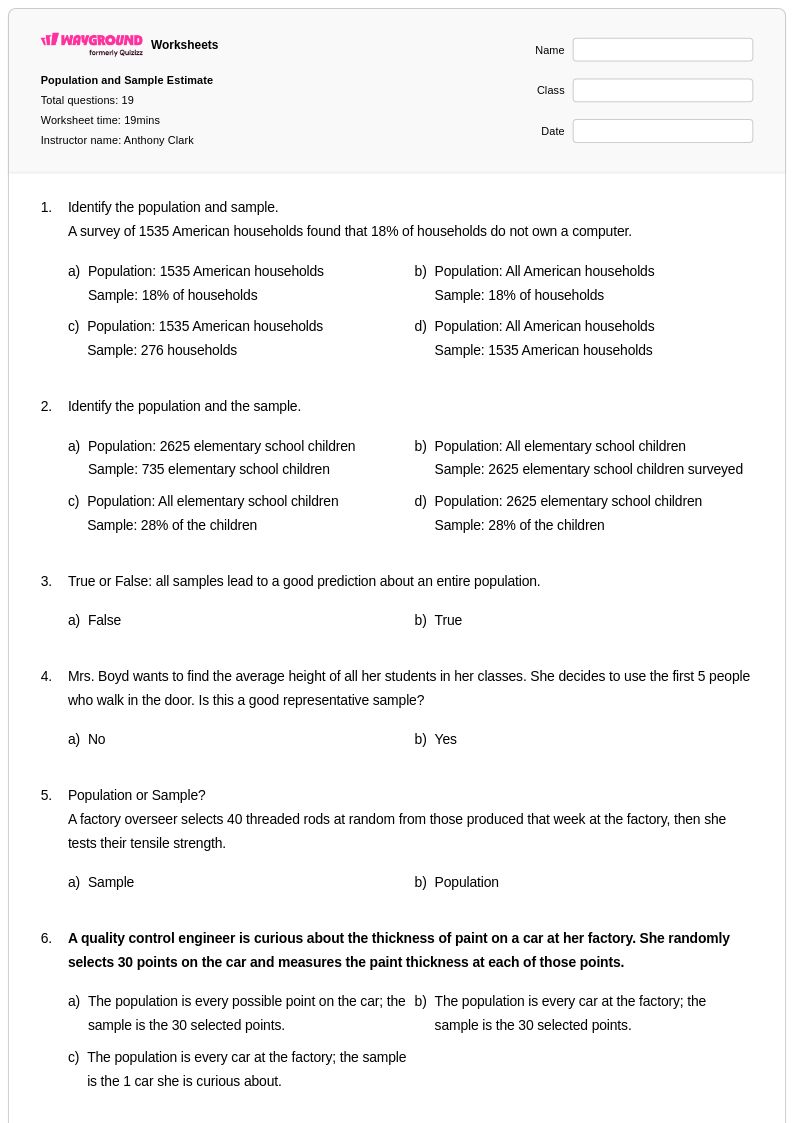
19 Q
11th - Uni
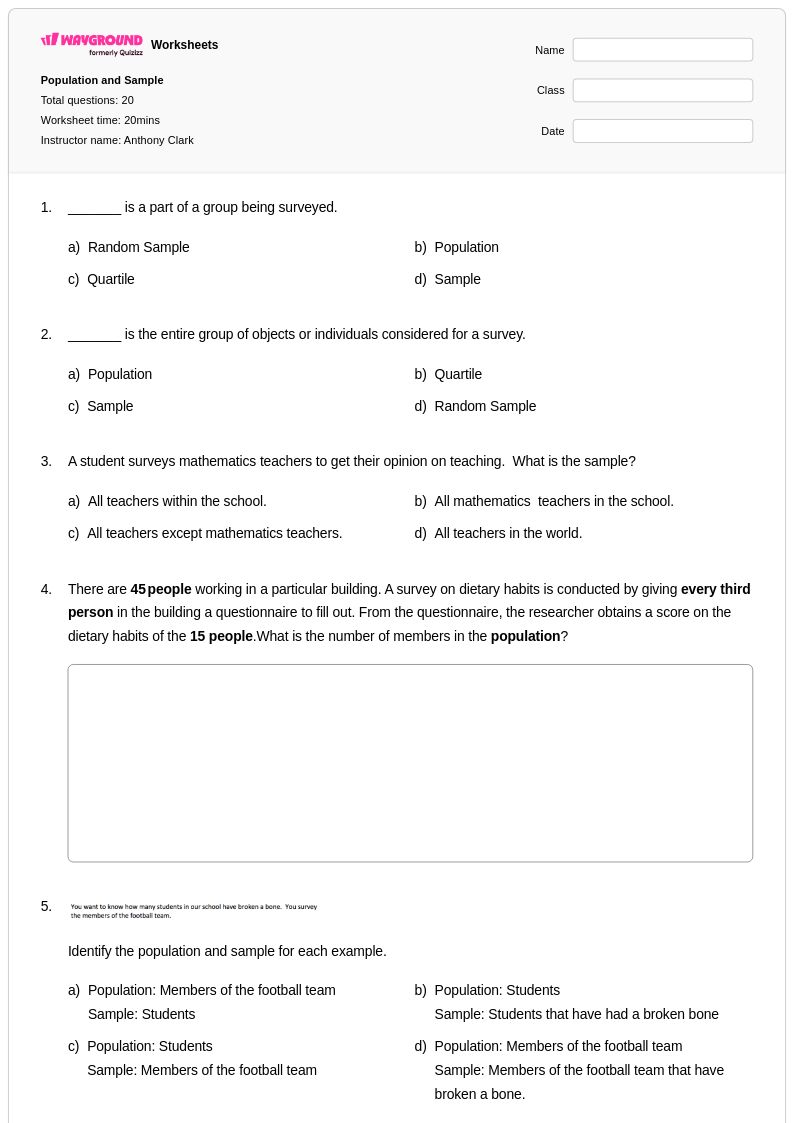
20 Q
7th - Uni
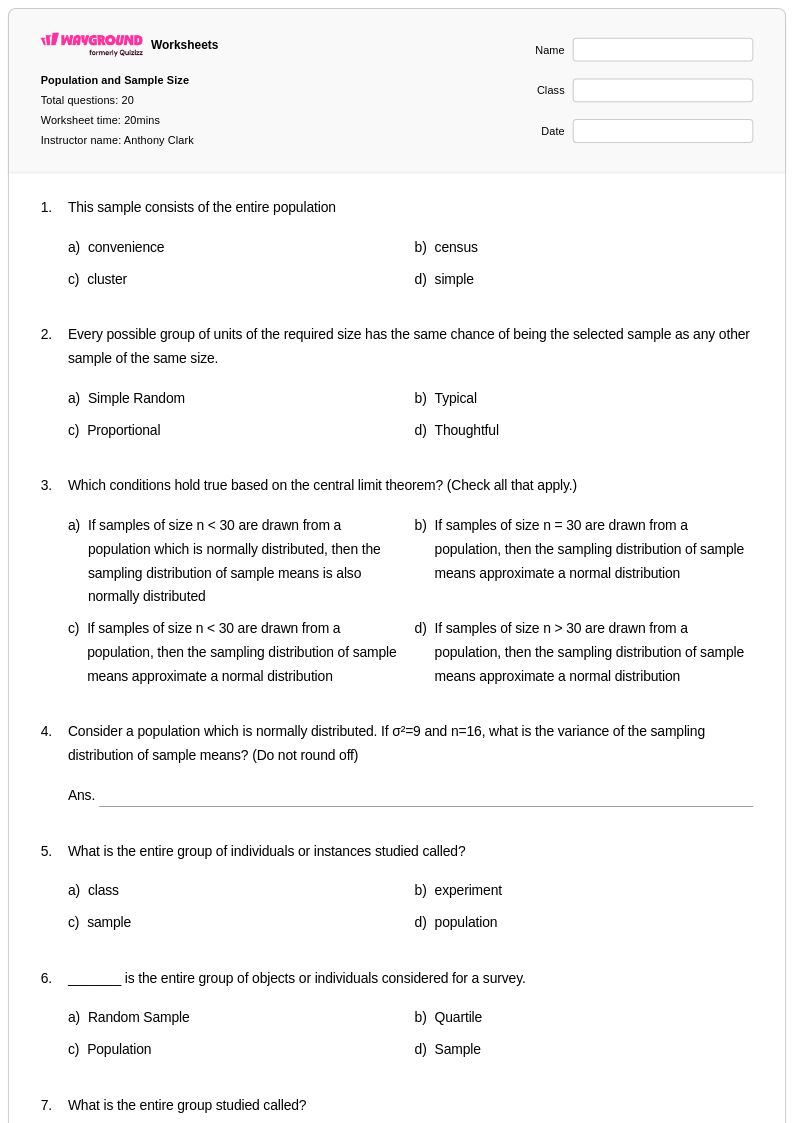
20 Q
11th - Uni
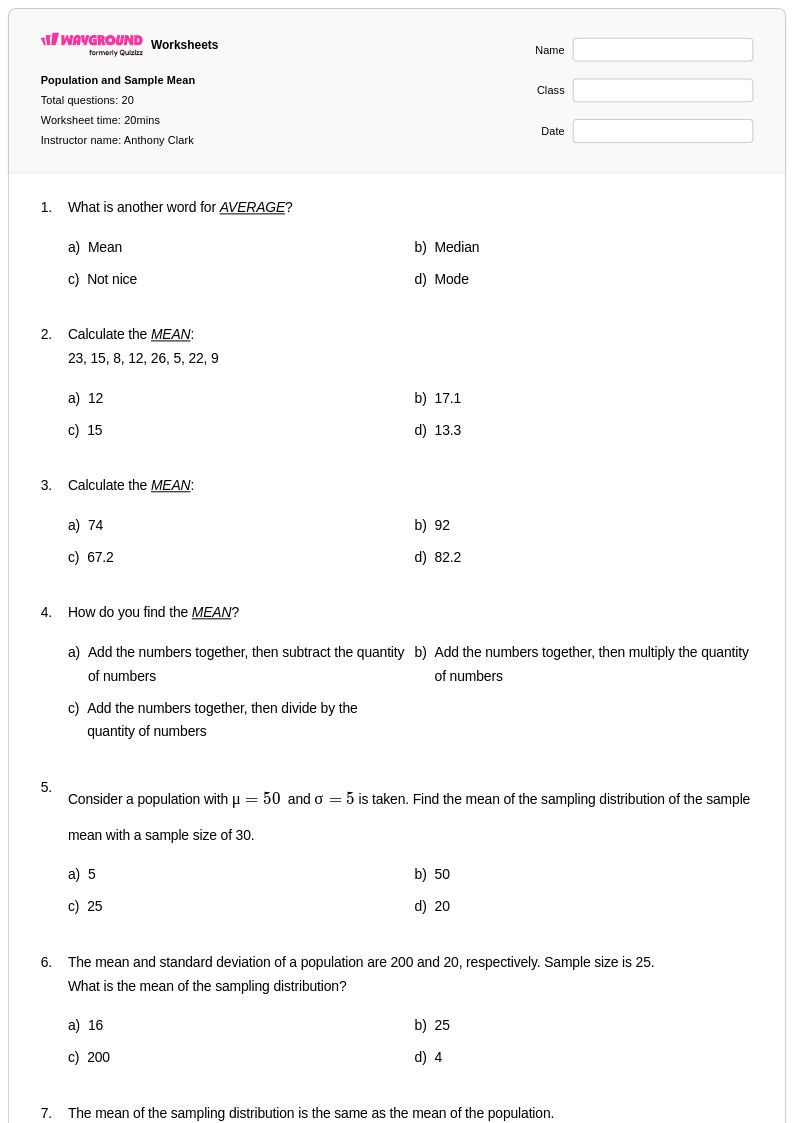
20 Q
12th - Uni
13 Q
11th - Uni
17 Q
7th - Uni
20 Q
7th - Uni
20 Q
7th - Uni
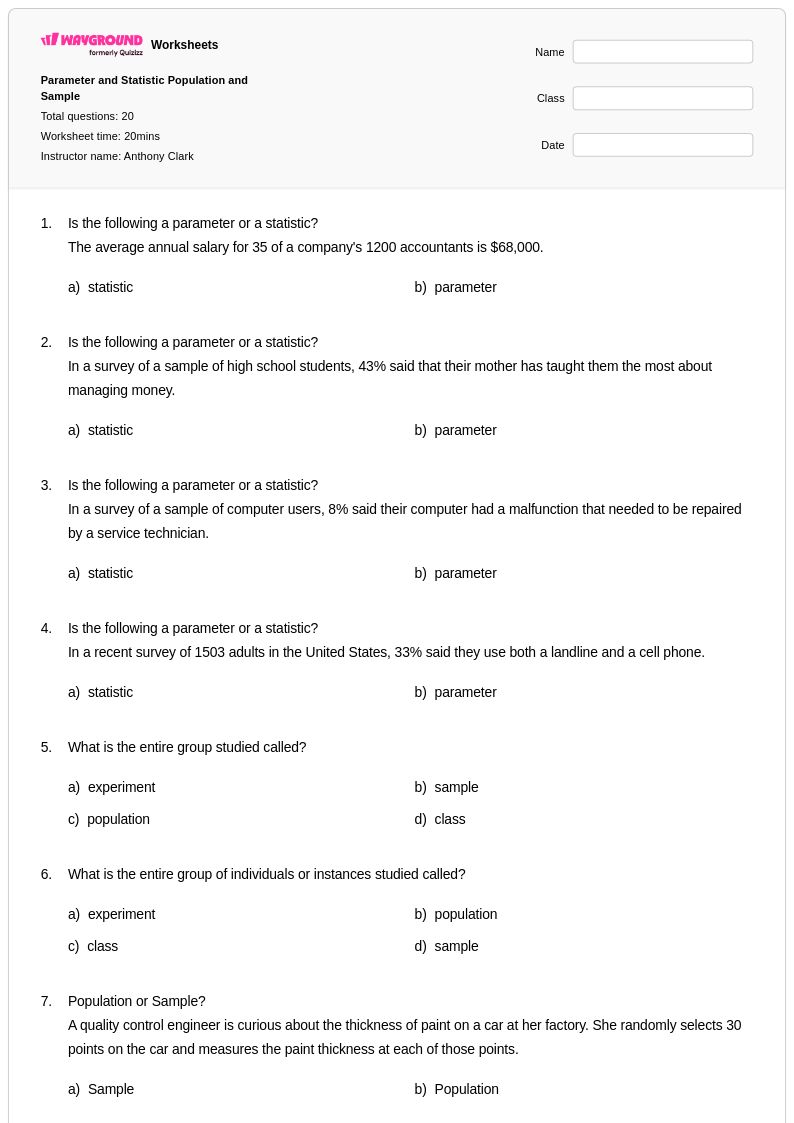
20 Q
12th - Uni
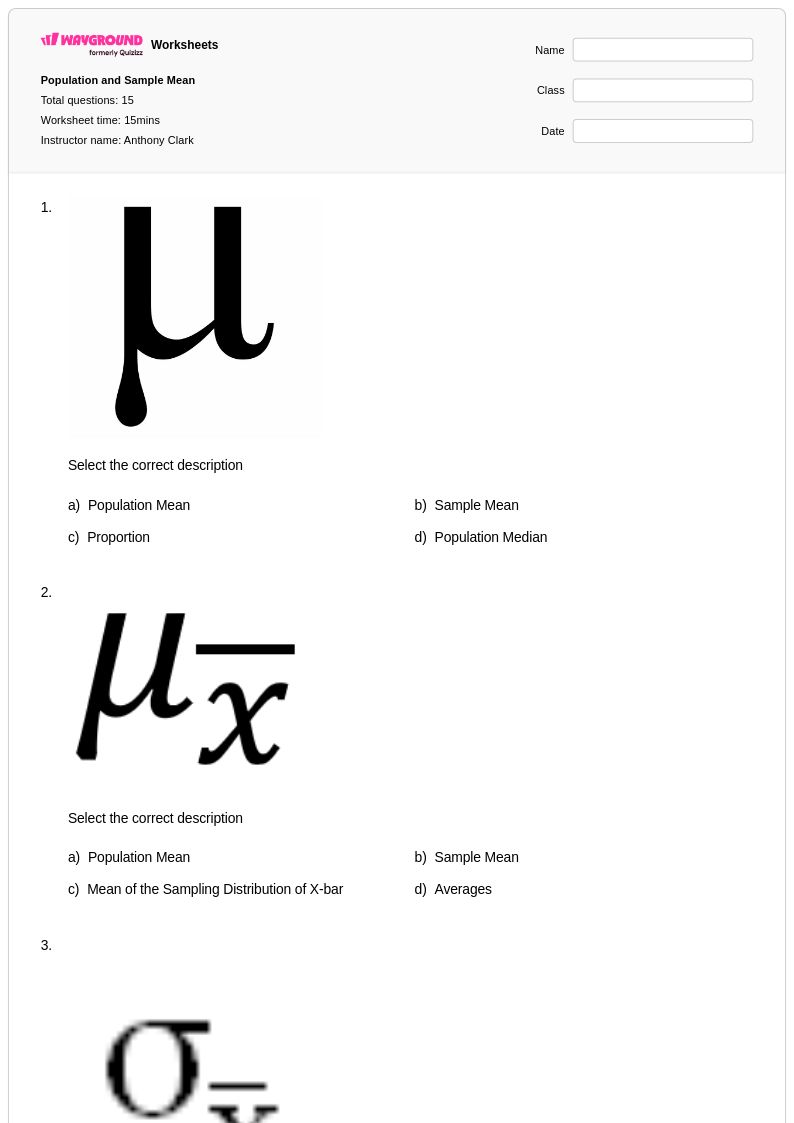
15 Q
12th - Uni
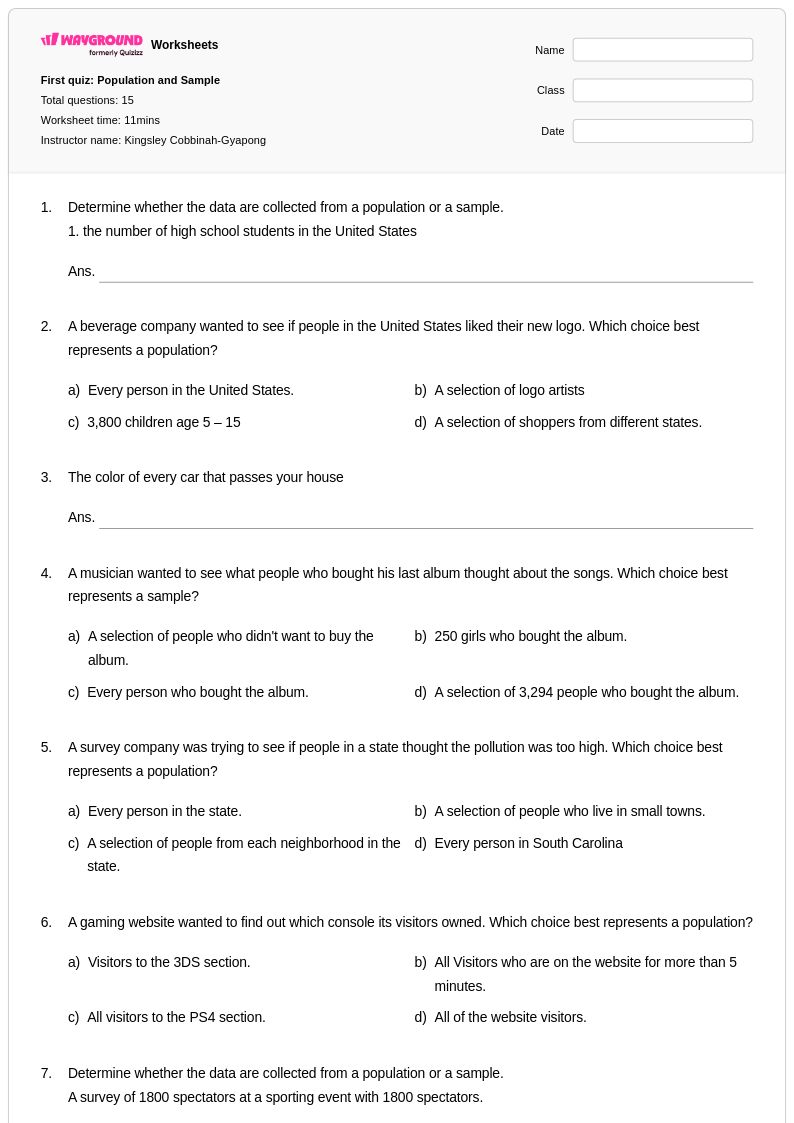
15 Q
9th - 12th
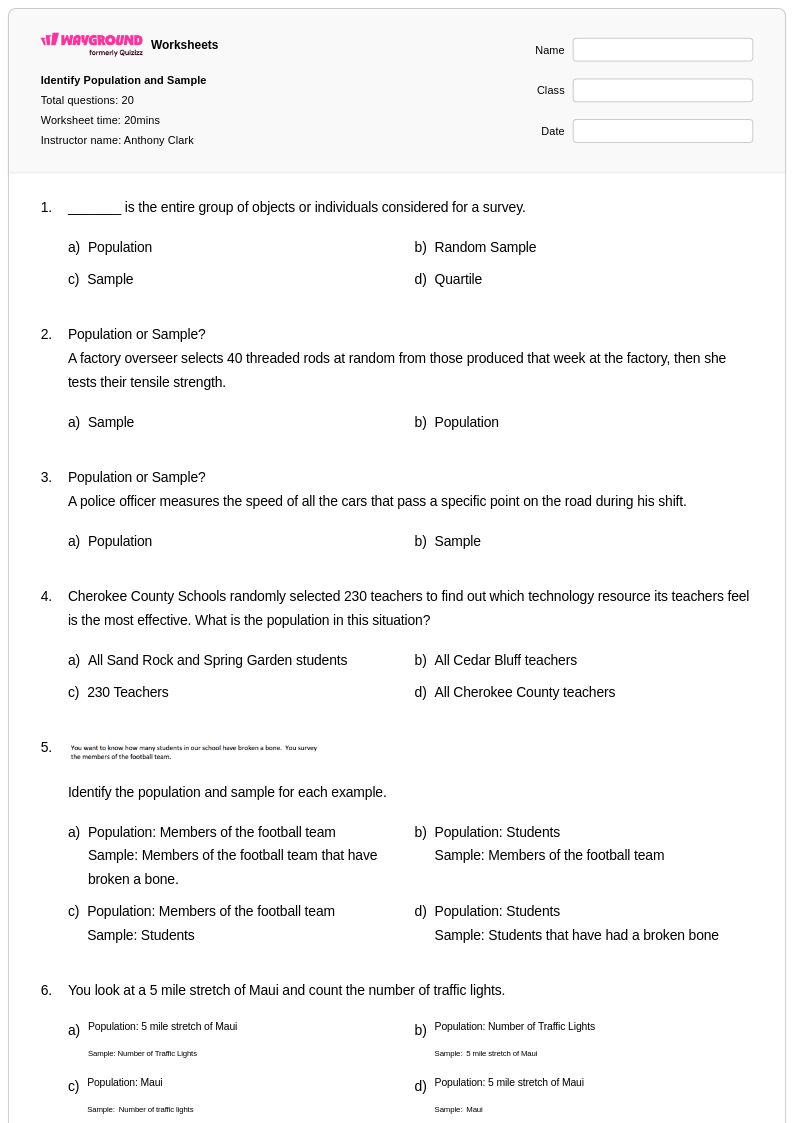
20 Q
7th - Uni
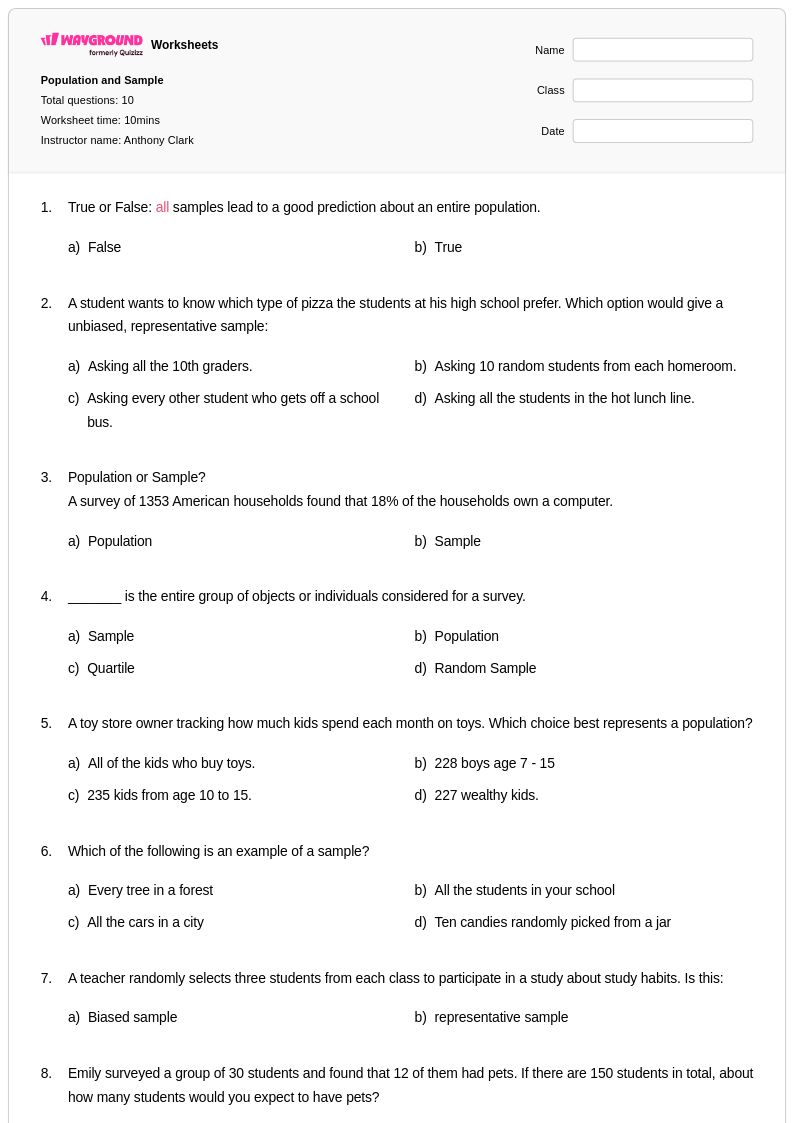
10 Q
7th - Uni
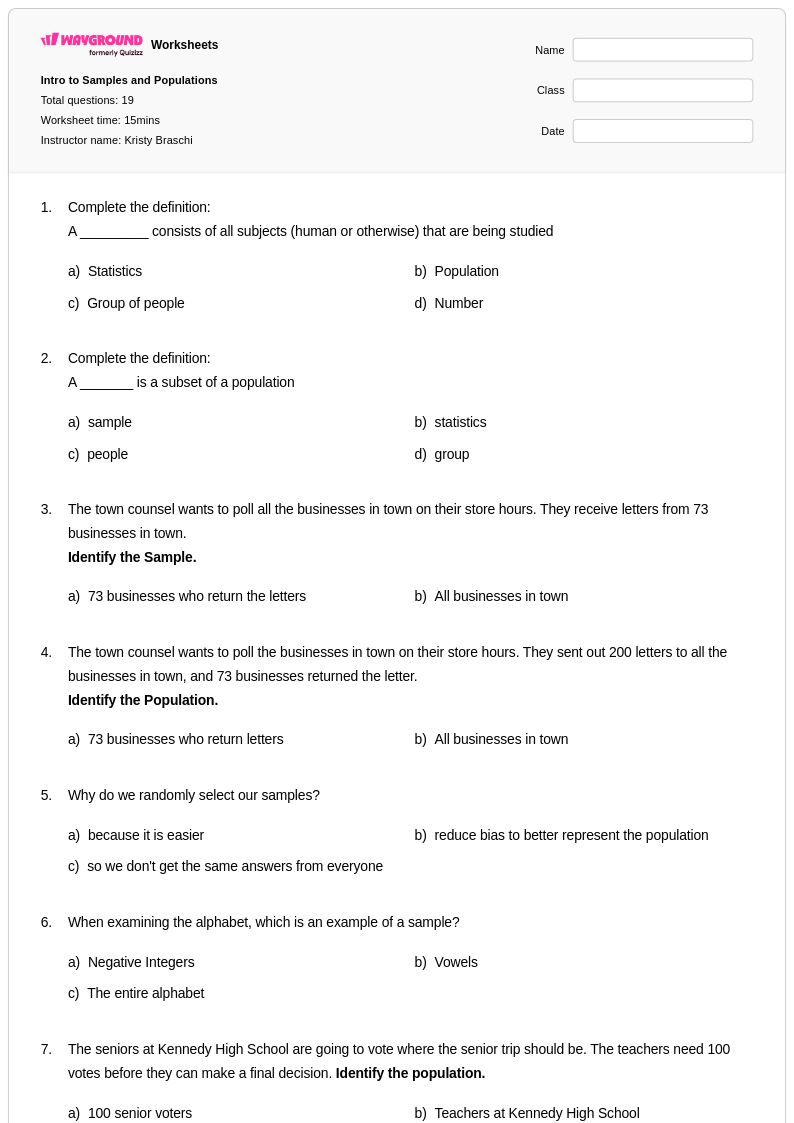
19 Q
7th - 12th
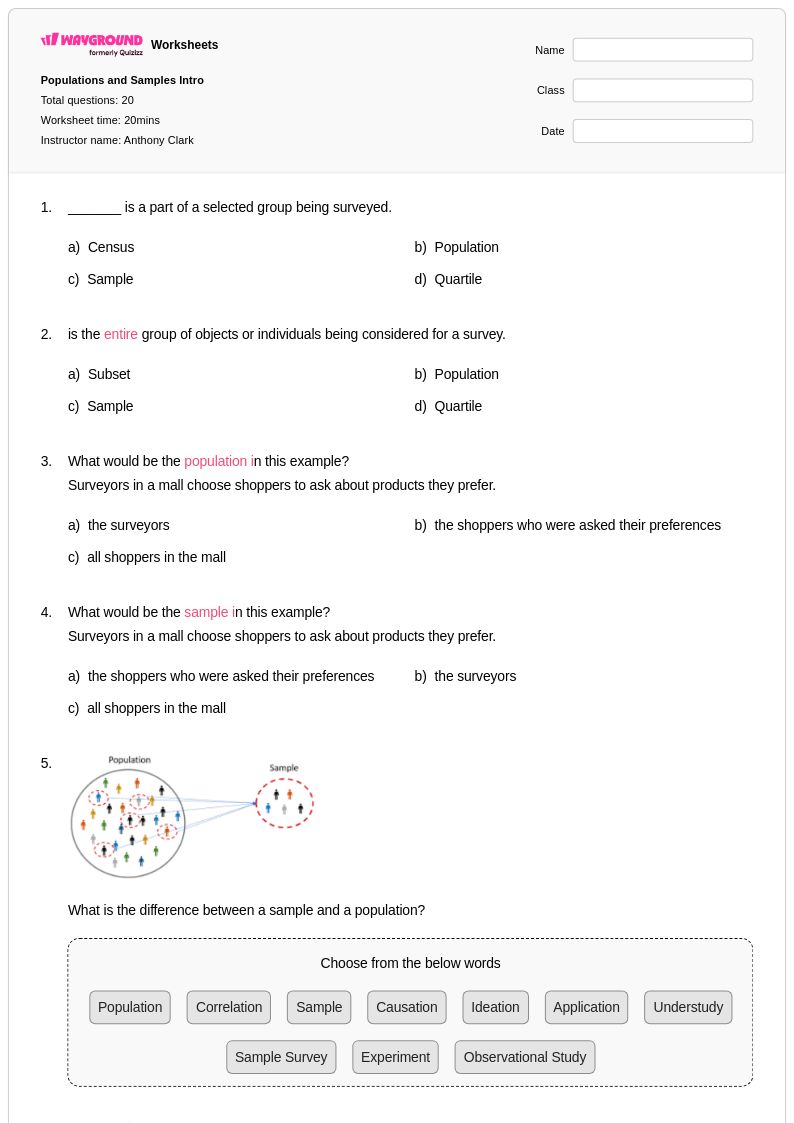
20 Q
7th - Uni
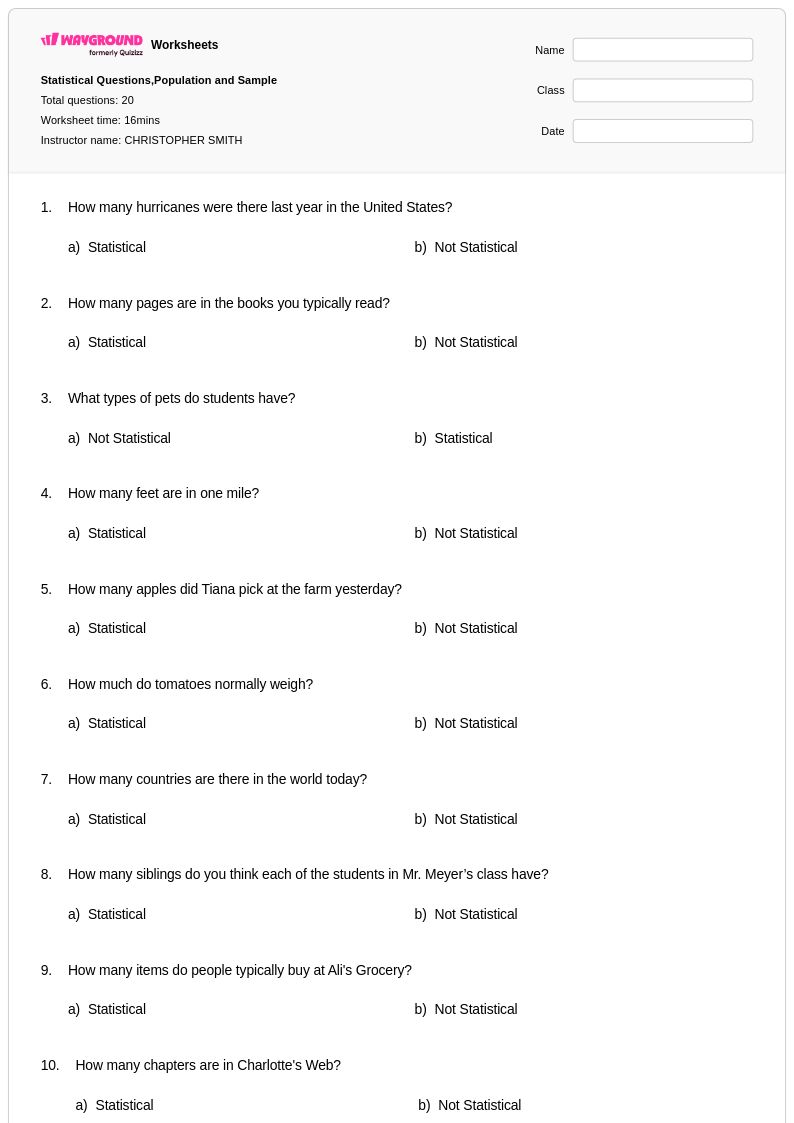
20 Q
12th - Uni
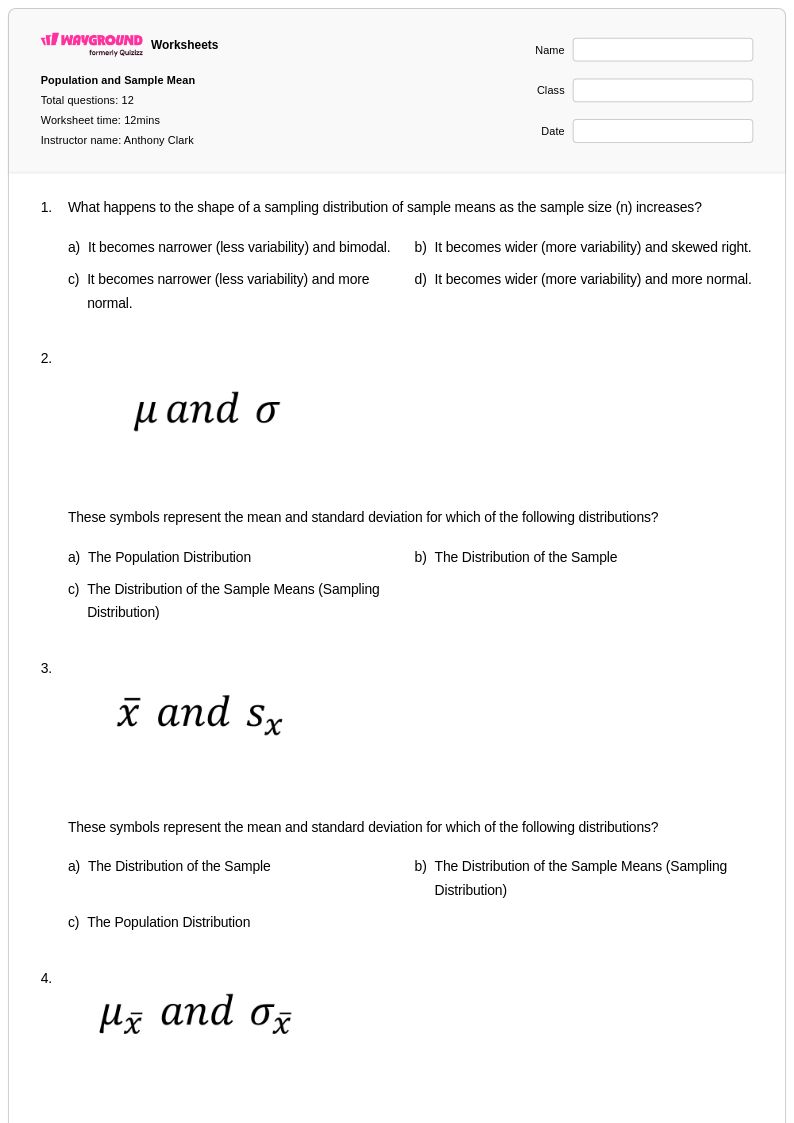
12 Q
12th - Uni
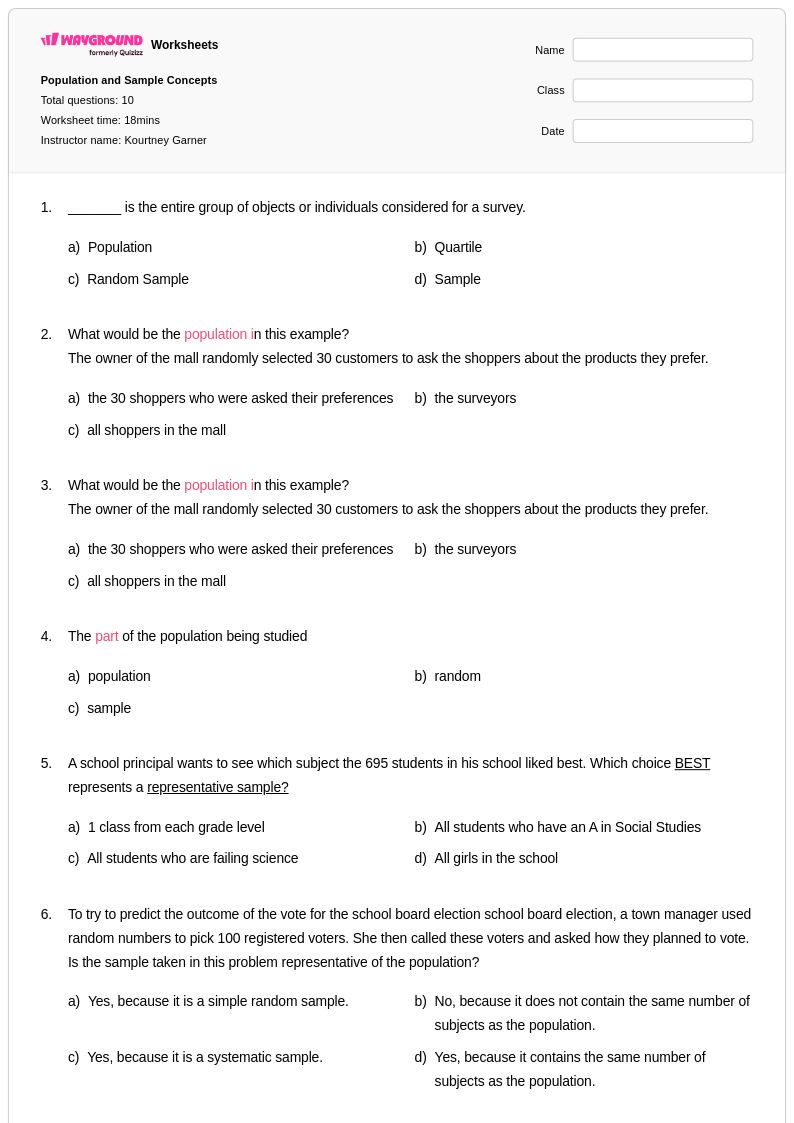
10 Q
7th - Uni
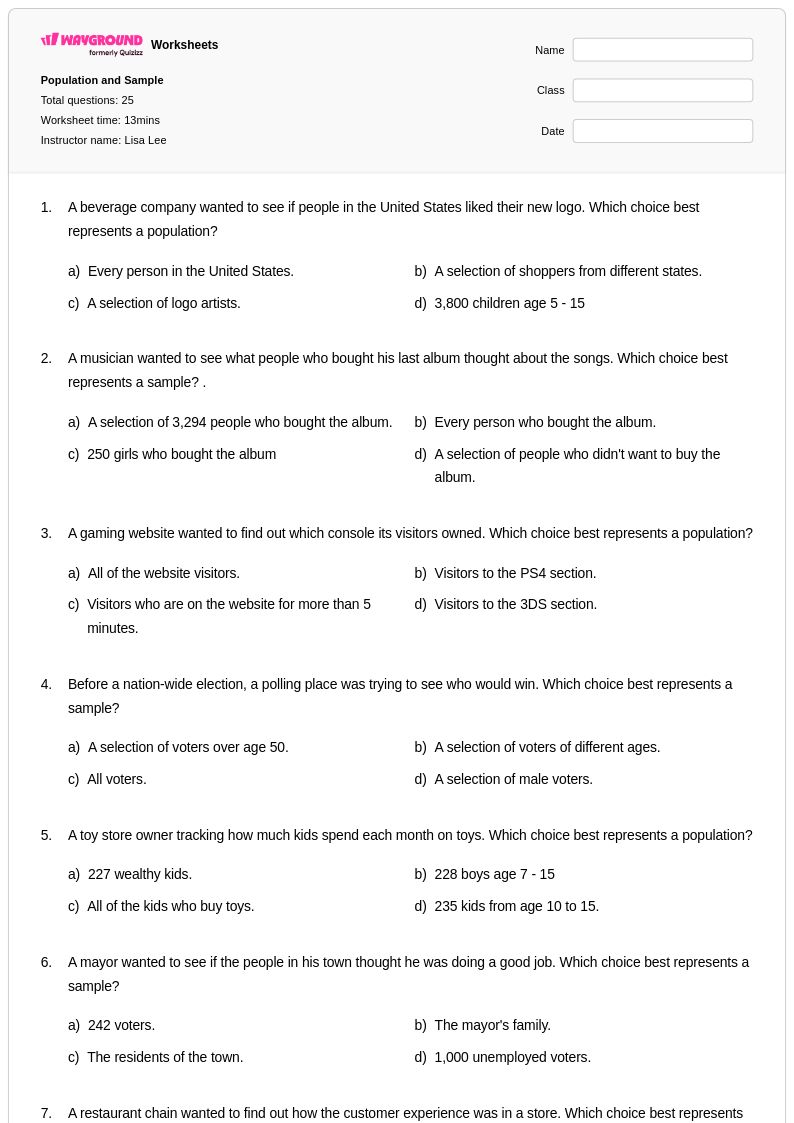
25 Q
12th
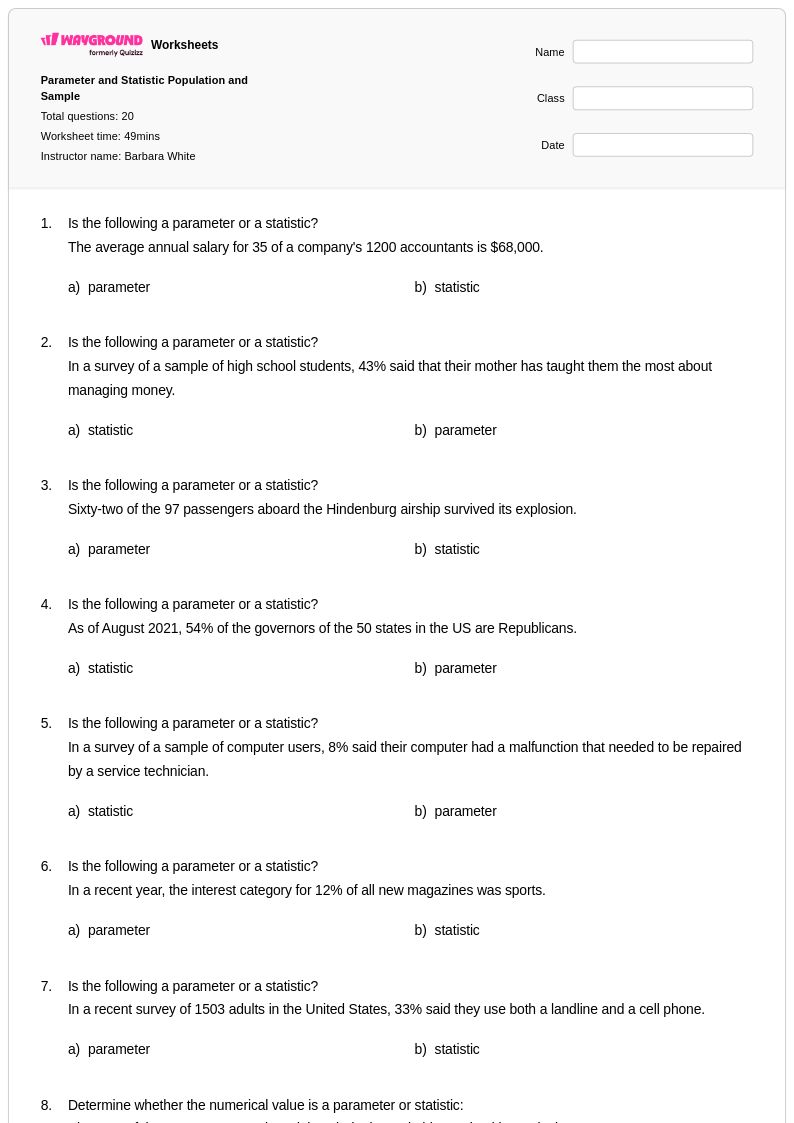
20 Q
9th - 12th
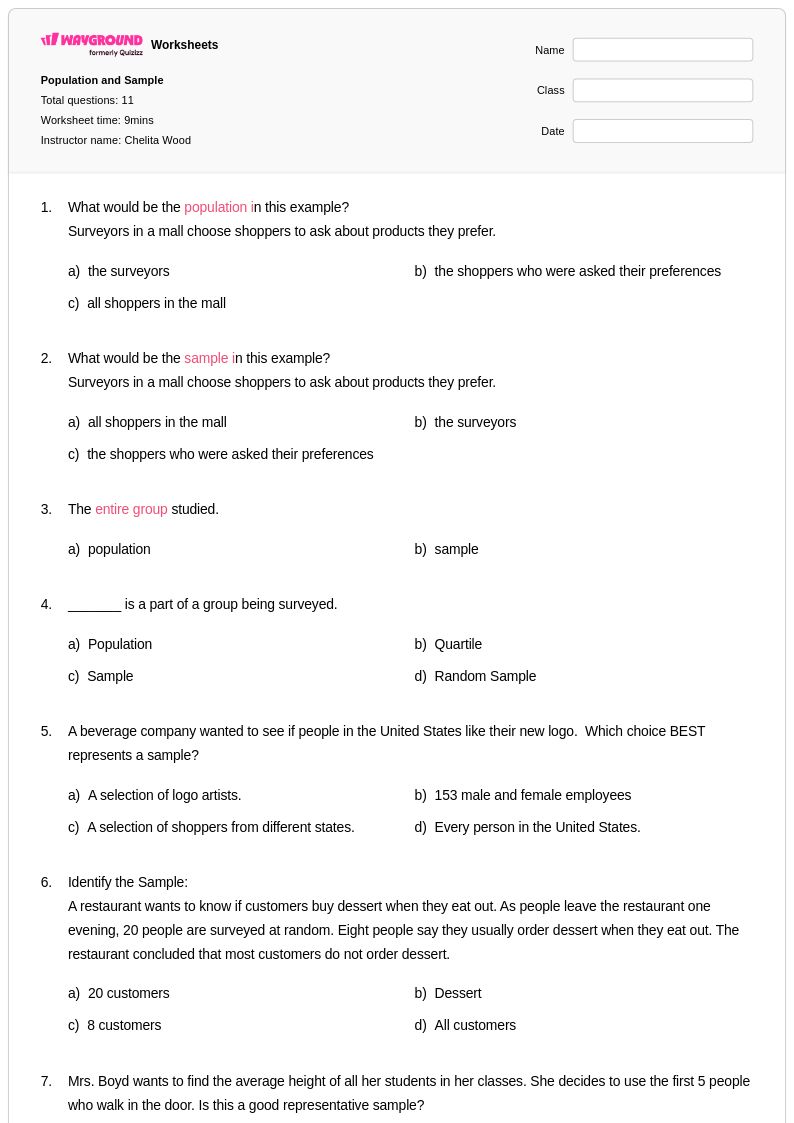
11 Q
12th
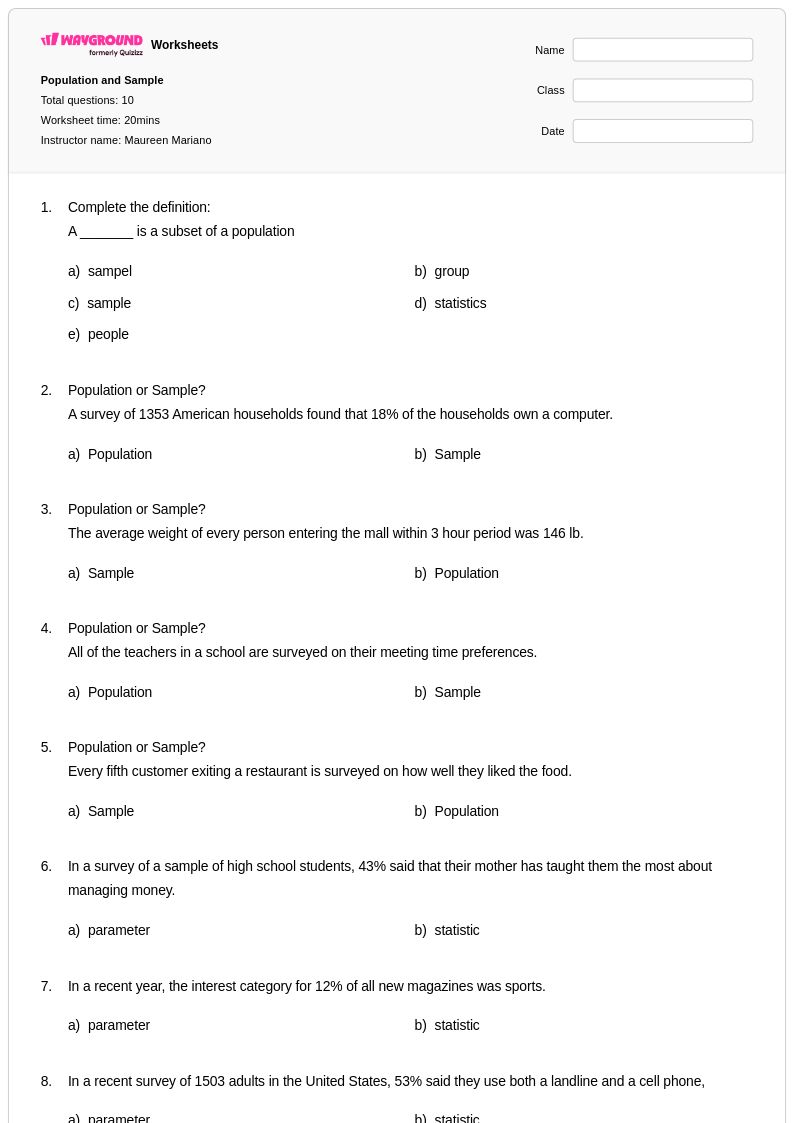
10 Q
12th
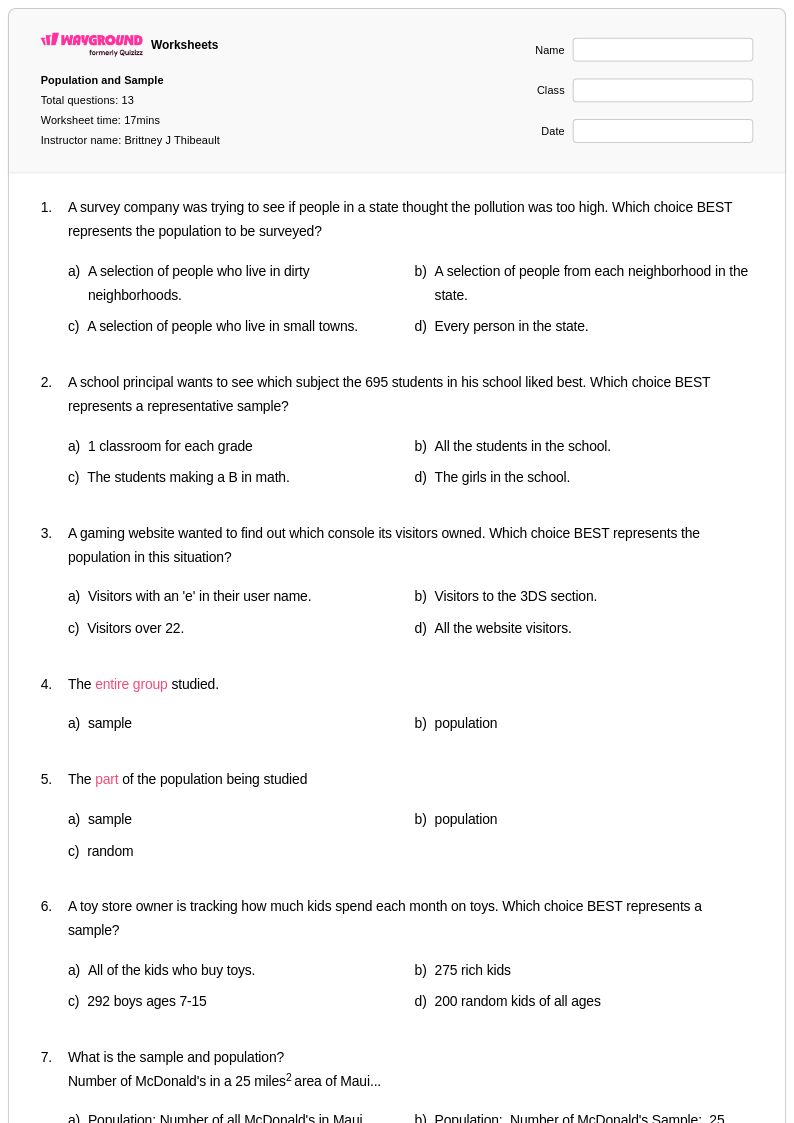
13 Q
12th
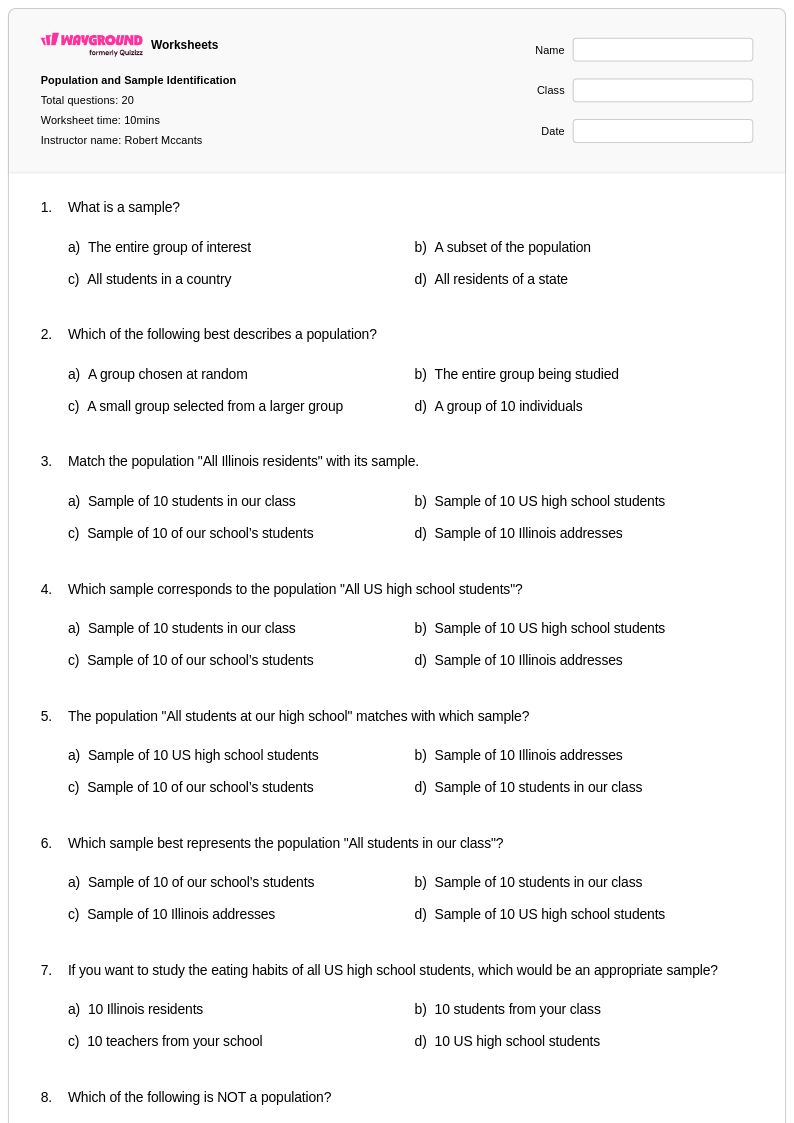
20 Q
12th
Explore Population and Sample Worksheets by Grades
Explore Other Subject Worksheets for grade 12
Explore printable Population and Sample worksheets for Grade 12
Population and sample concepts form a critical foundation in Grade 12 probability and statistics, and Wayground's comprehensive worksheet collection provides students with essential practice in distinguishing between these fundamental statistical concepts. These carefully designed worksheets help students master key skills including identifying populations versus samples, understanding sampling methods, recognizing bias in sample selection, and calculating sample statistics as estimates for population parameters. Students work through practice problems that challenge them to analyze real-world scenarios, determine appropriate sampling techniques, and evaluate the validity of statistical conclusions drawn from sample data. Each worksheet includes a detailed answer key to support independent learning, and the free printable pdf format ensures accessibility for all students seeking to strengthen their understanding of how samples represent larger populations.
Wayground's extensive library of teacher-created resources offers educators millions of high-quality materials specifically designed to support Grade 12 statistics instruction on population and sample concepts. The platform's robust search and filtering capabilities allow teachers to quickly locate worksheets that align with curriculum standards and match their students' specific learning needs. Advanced differentiation tools enable instructors to customize content difficulty levels, while the flexible format options including both digital and printable pdf versions accommodate diverse classroom environments and teaching styles. These features streamline lesson planning while providing targeted resources for remediation, enrichment, and skill practice, ensuring that every student develops a solid conceptual understanding of how statistical sampling connects sample data to broader population characteristics.