
19 Q
11th - Uni
20 Q
7th - Uni
20 Q
11th - Uni
13 Q
11th - Uni
17 Q
7th - Uni
20 Q
7th - Uni
20 Q
7th - Uni
13 Q
11th
15 Q
9th - 12th
20 Q
7th - Uni
10 Q
7th - Uni
19 Q
7th - 12th
20 Q
7th - Uni
12 Q
11th
10 Q
7th - Uni
18 Q
9th - 11th
20 Q
9th - 12th
10 Q
11th
20 Q
11th - Uni
20 Q
7th - Uni
19 Q
7th - Uni
20 Q
7th - Uni
20 Q
7th - Uni
14 Q
11th - Uni
Explore Population and Sample Worksheets by Grades
Explore Other Subject Worksheets for grade 11
Explore printable Population and Sample worksheets for Grade 11
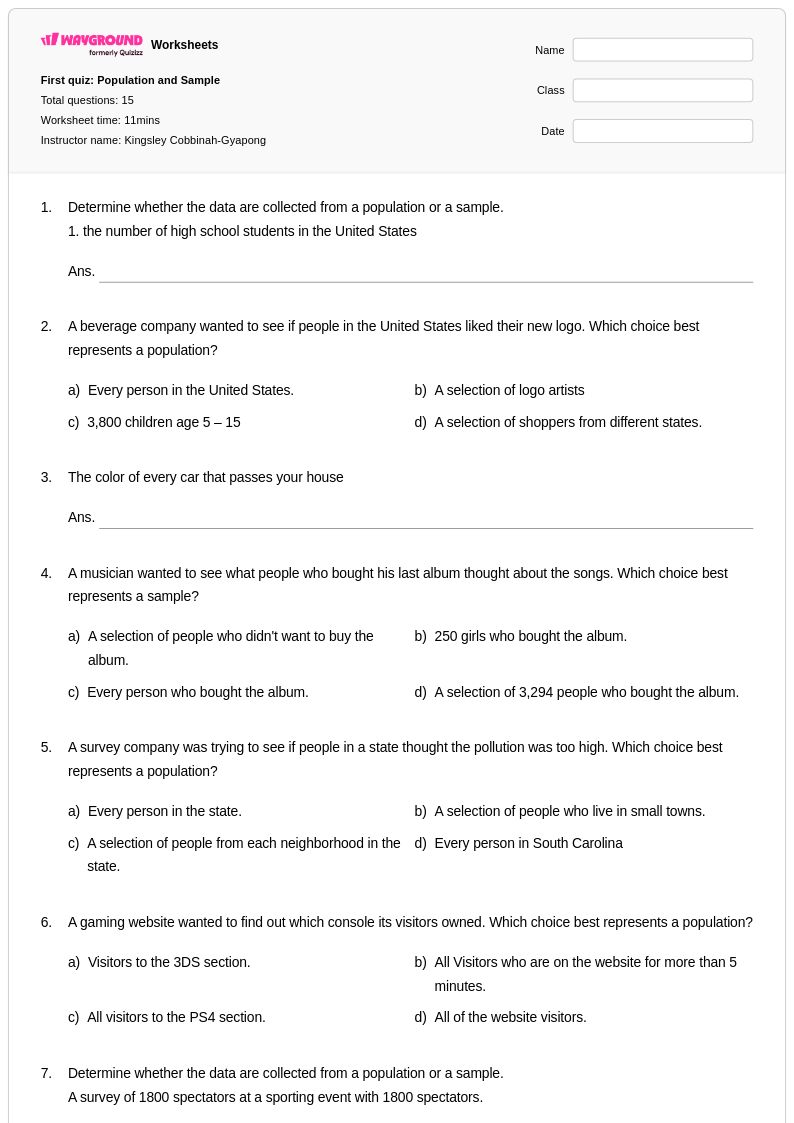
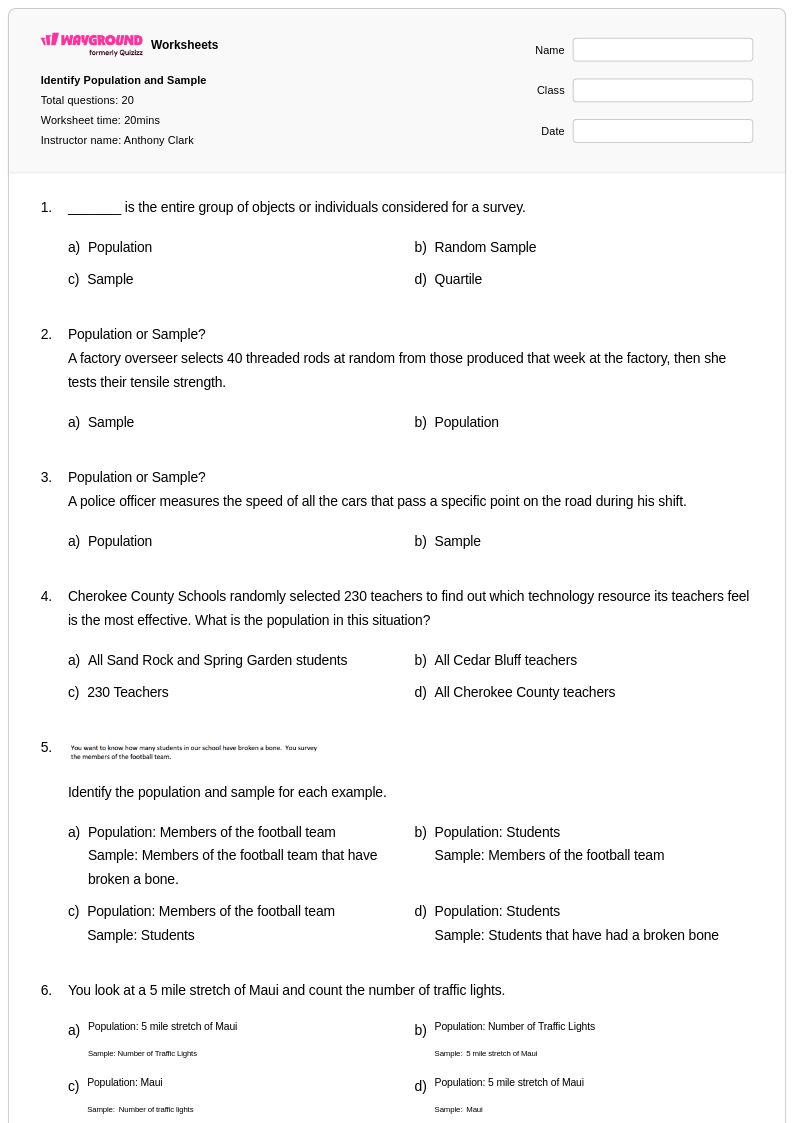
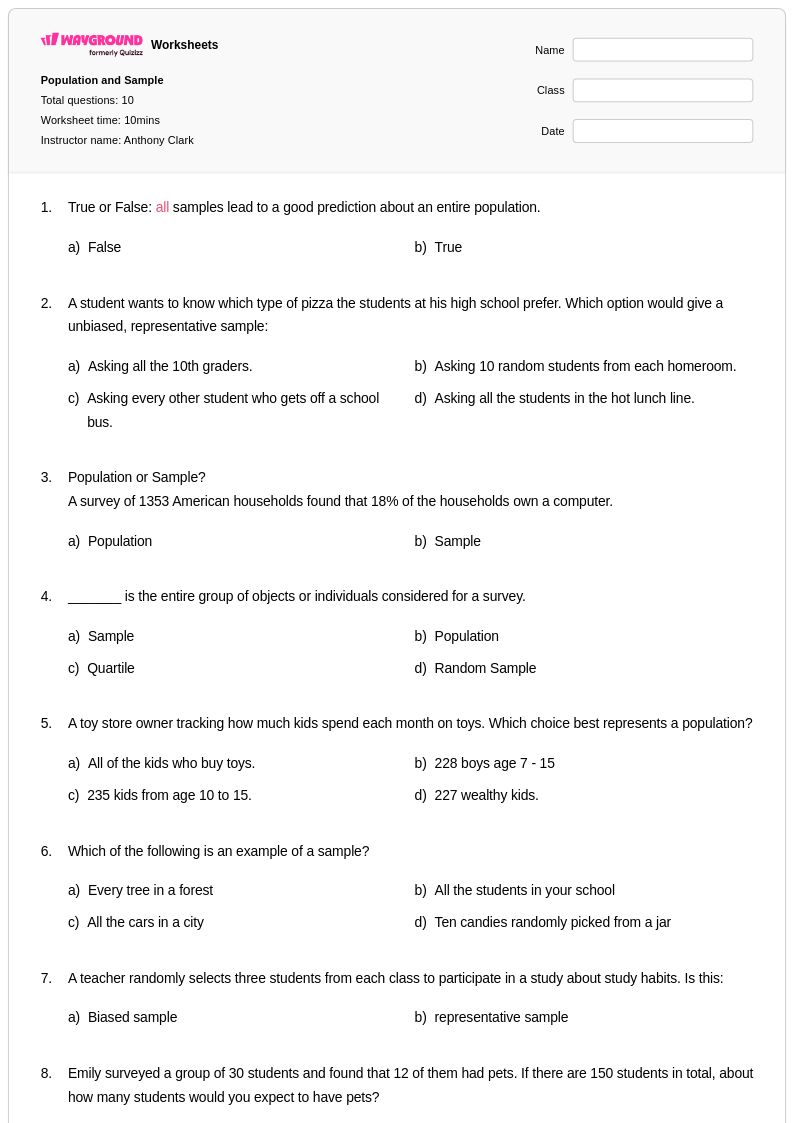
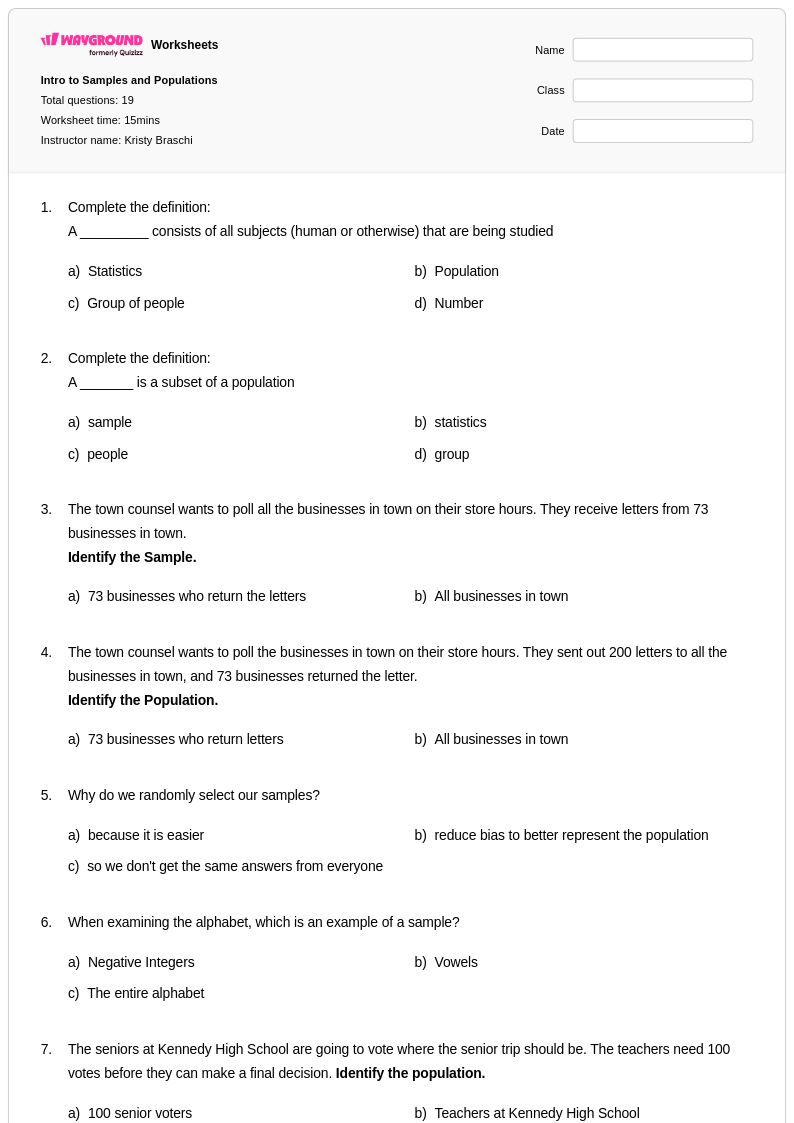
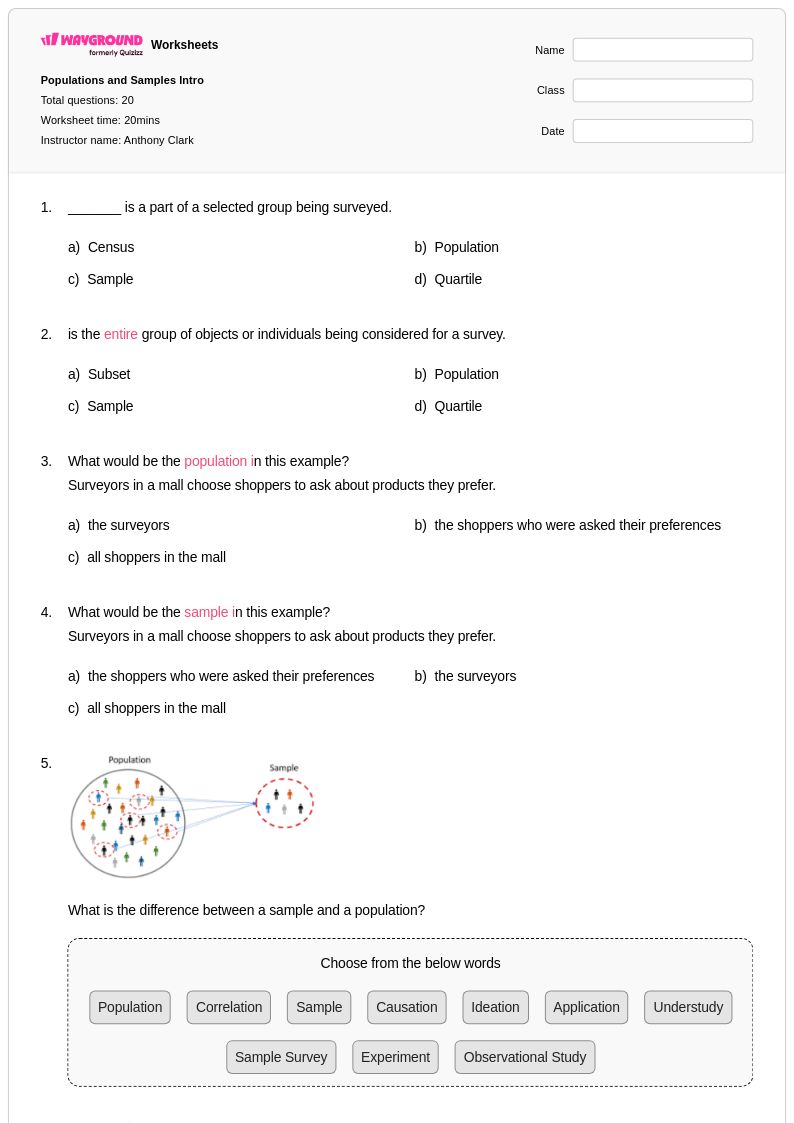
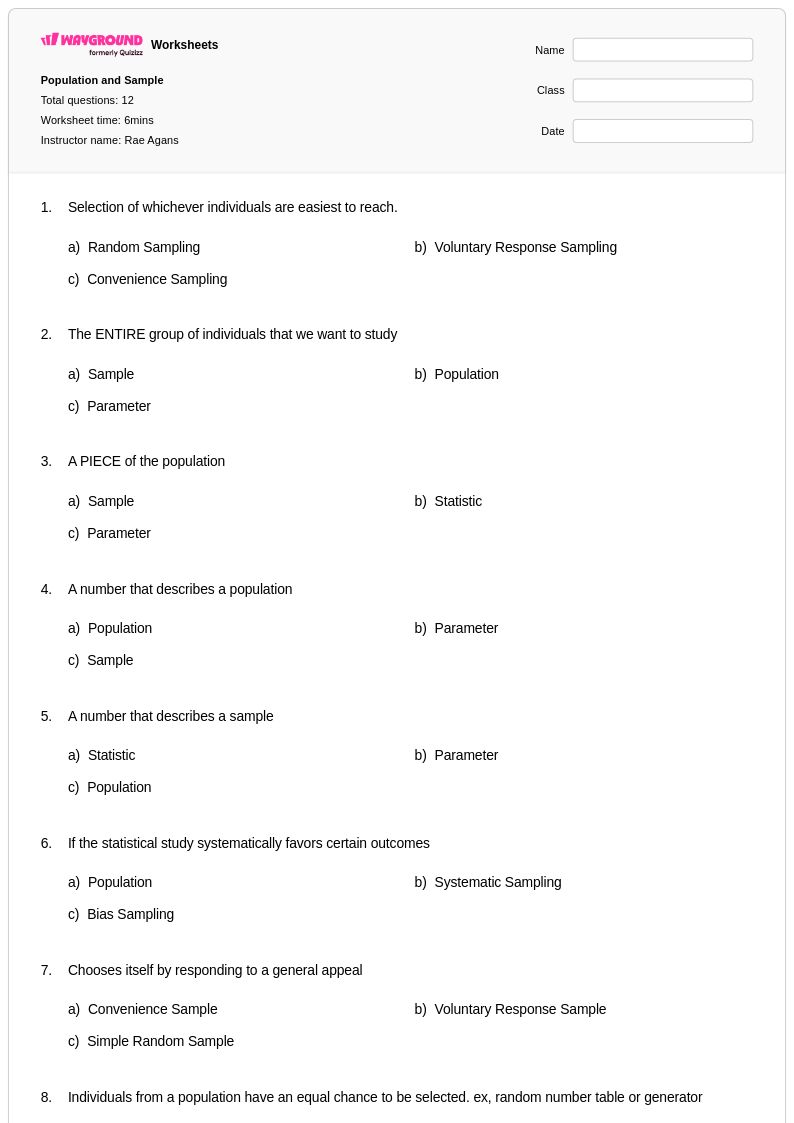
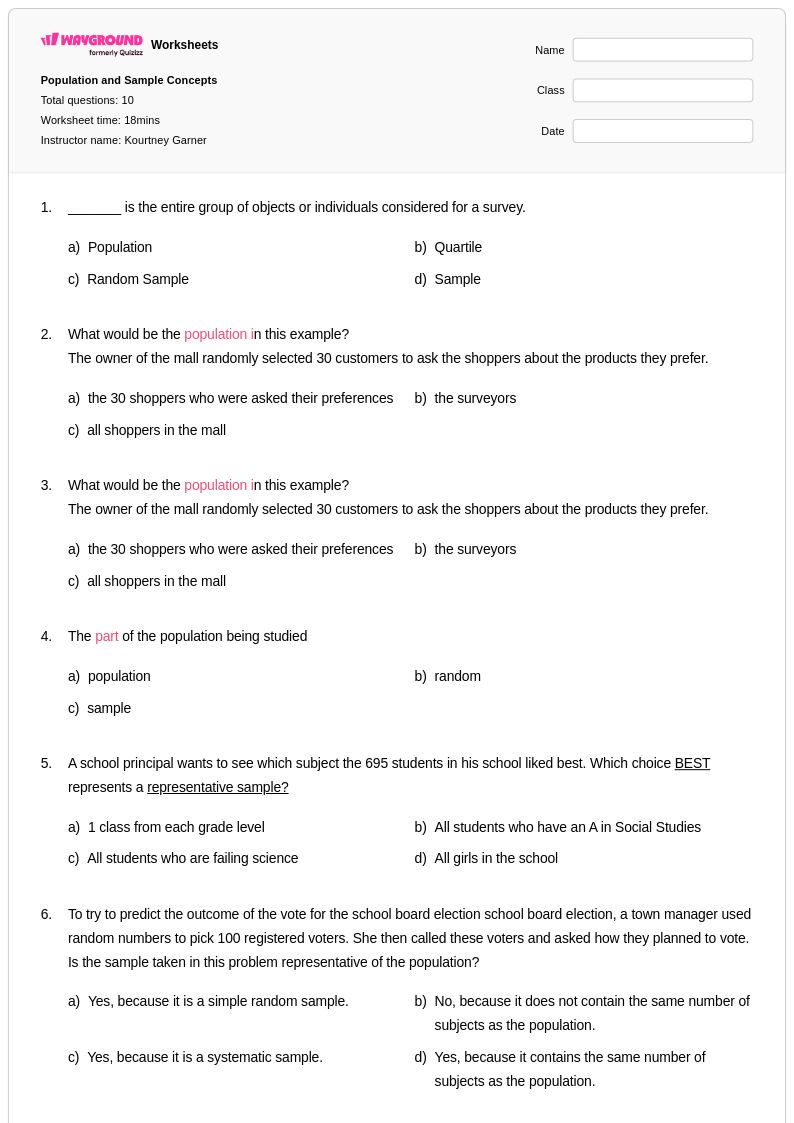
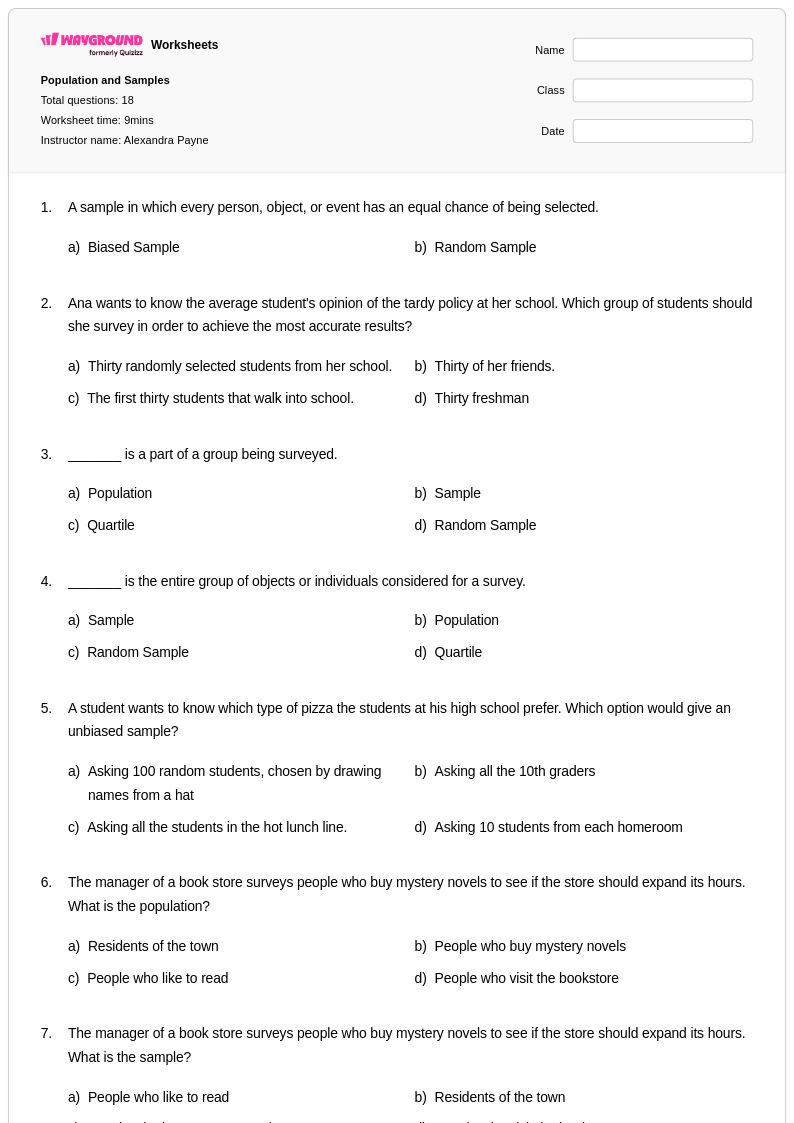
Population and sample concepts form the cornerstone of statistical inference in Grade 11 mathematics, and Wayground's comprehensive worksheet collection provides students with essential practice in distinguishing between these fundamental statistical constructs. These carefully designed worksheets guide students through identifying populations versus samples in real-world scenarios, calculating sample statistics, understanding sampling methods, and recognizing potential biases in data collection. Students develop critical thinking skills as they work through practice problems that explore random sampling, systematic sampling, and stratified sampling techniques while learning to make valid inferences about populations based on sample data. Each worksheet includes detailed answer keys that help students verify their understanding of sampling distributions, margin of error, and the relationship between sample size and accuracy, making these free printables invaluable resources for mastering statistical reasoning.
Wayground supports mathematics educators with millions of teacher-created resources specifically focused on population and sample methodology, offering robust search and filtering capabilities that allow teachers to locate worksheets aligned with specific Grade 11 curriculum standards and learning objectives. The platform's differentiation tools enable educators to customize difficulty levels and problem types to meet diverse student needs, whether providing remediation for struggling learners or enrichment challenges for advanced students. Teachers can access these resources in both printable PDF format for traditional classroom use and digital formats for interactive learning experiences, streamlining lesson planning while ensuring comprehensive coverage of sampling theory, parameter estimation, and statistical inference concepts. The flexible customization options allow educators to modify worksheets for targeted skill practice, assessment preparation, or collaborative learning activities that reinforce the critical distinction between population parameters and sample statistics.