
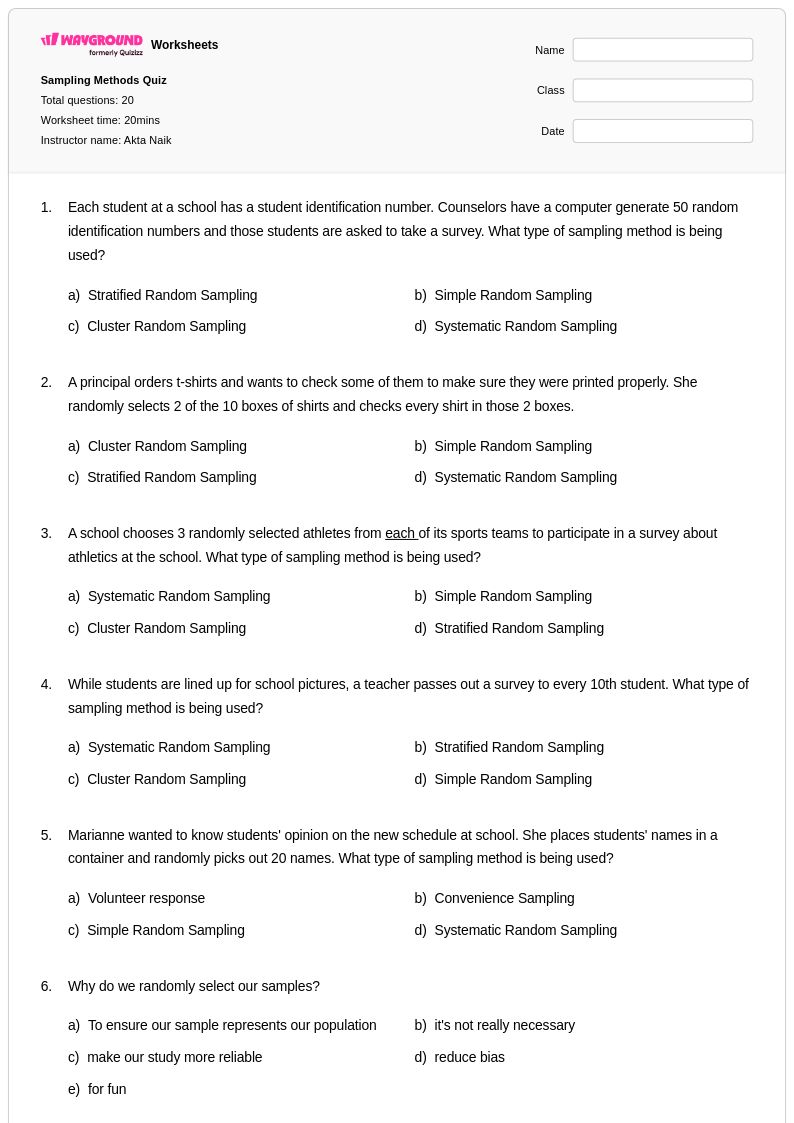
20 Q
9th - 12th
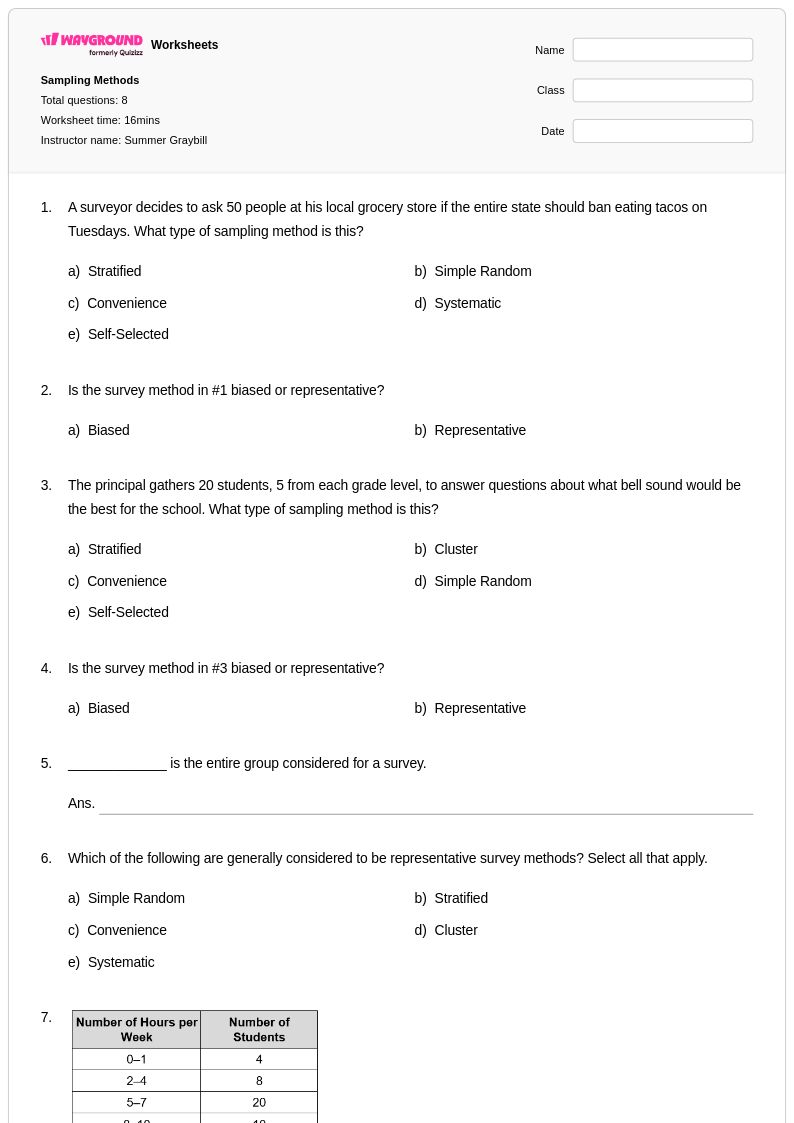
8 Q
9th - 12th
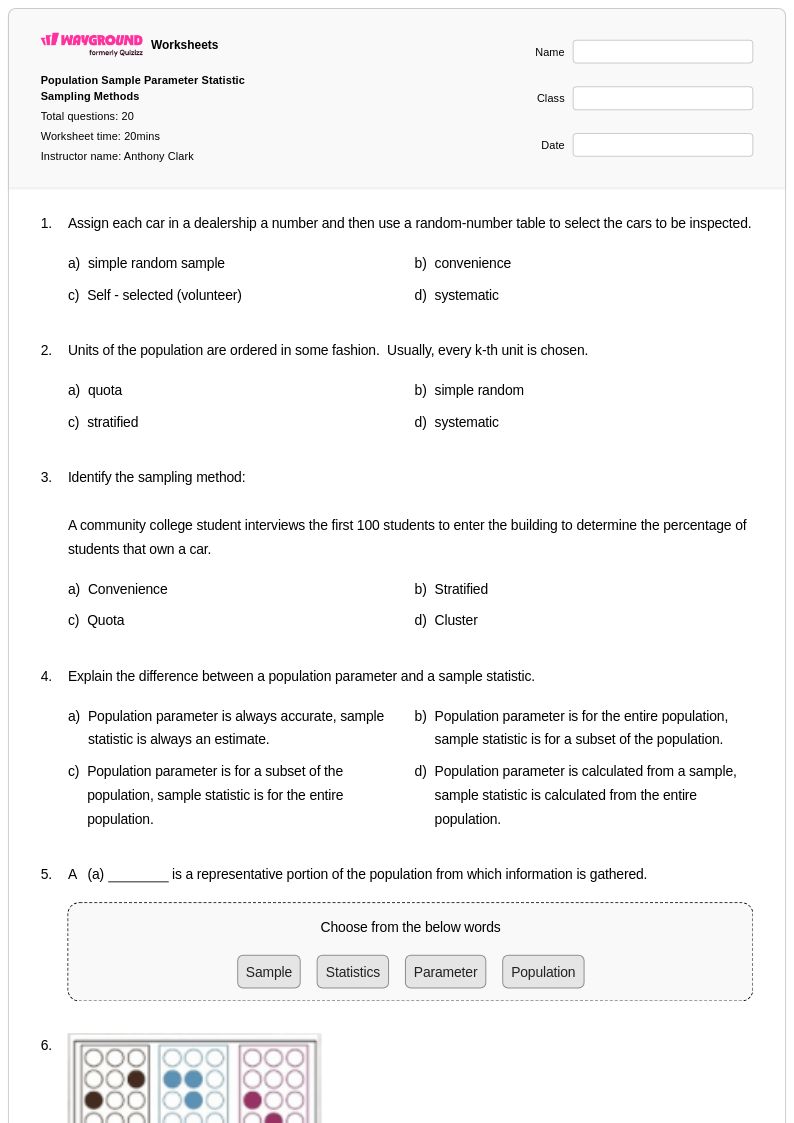
20 Q
11th - Uni
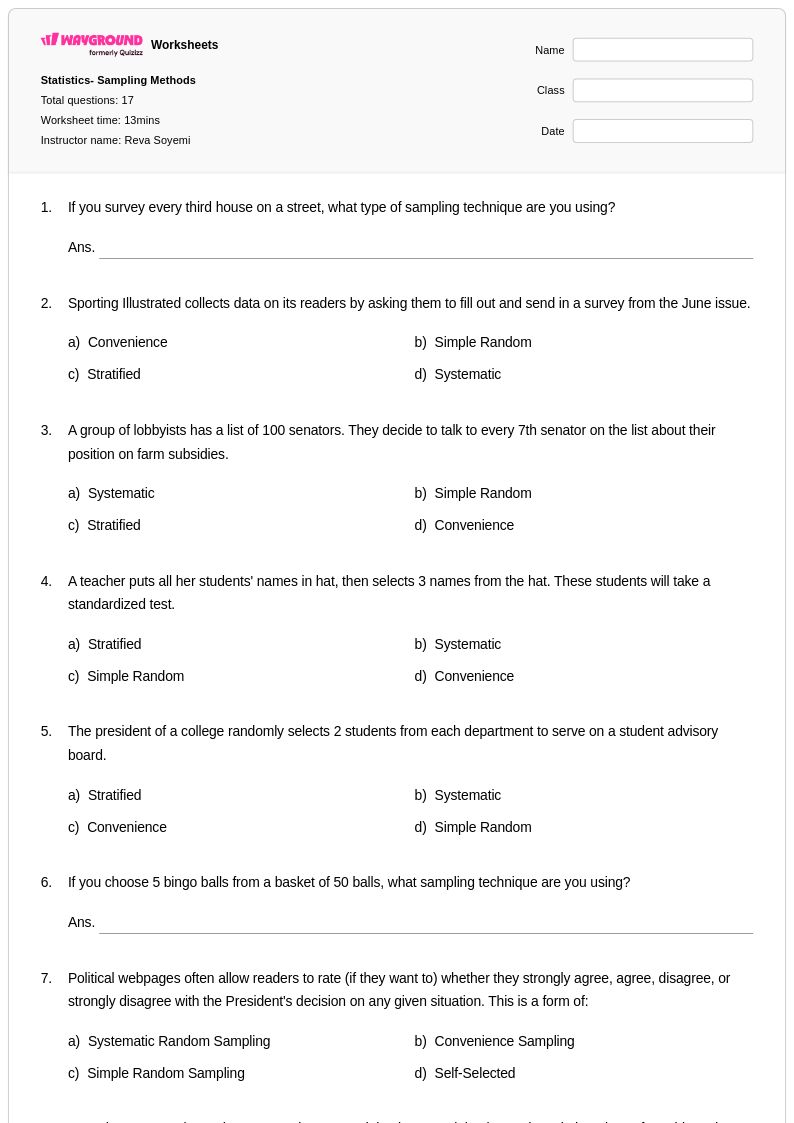
17 Q
10th - 12th
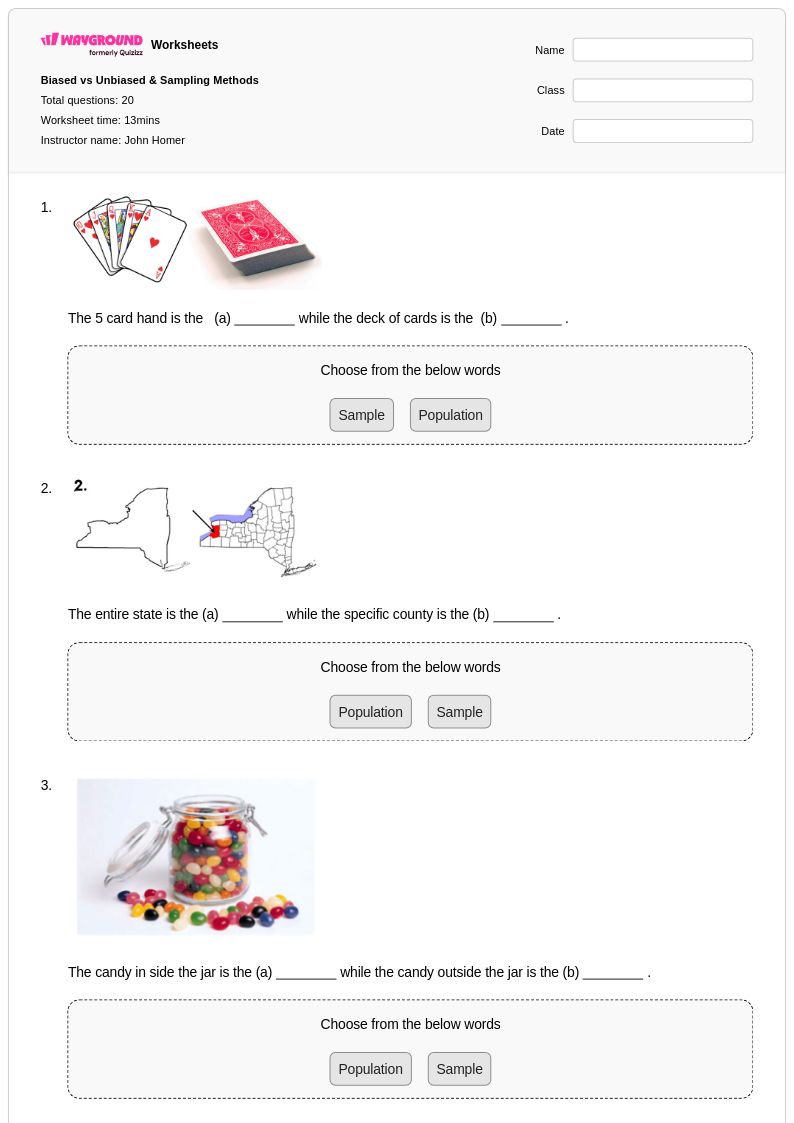
20 Q
8th - Uni
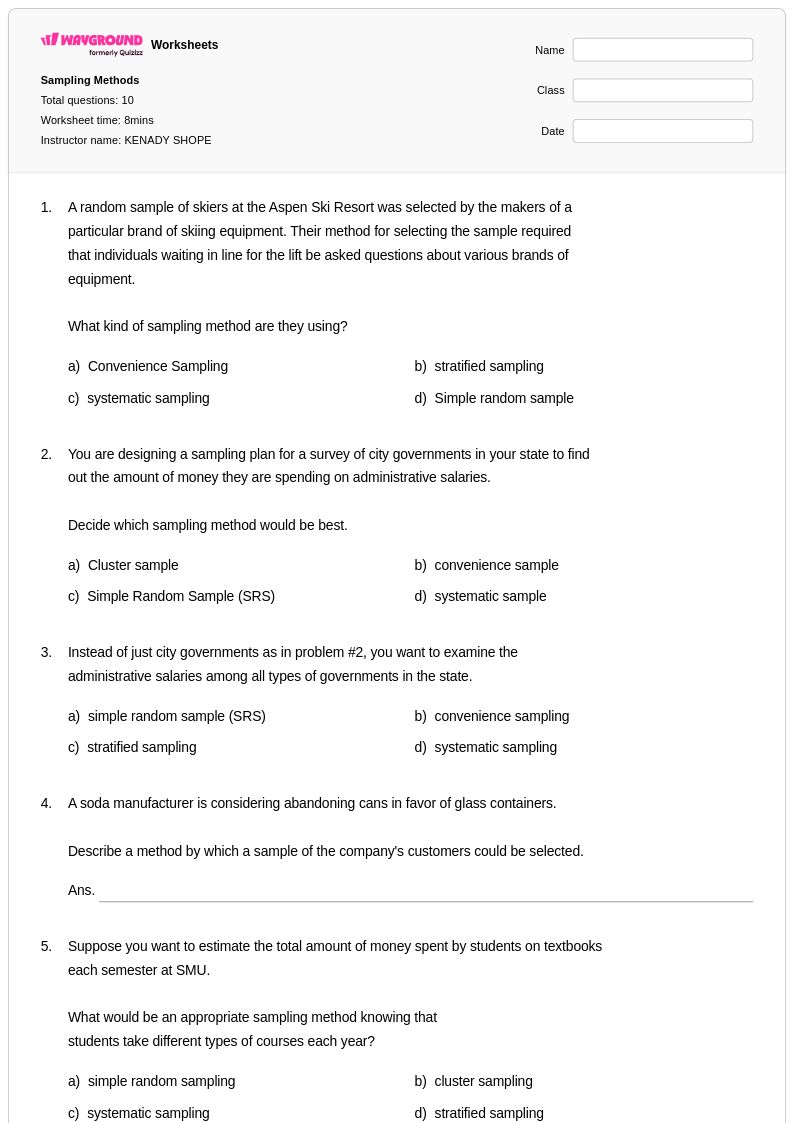
10 Q
11th - 12th
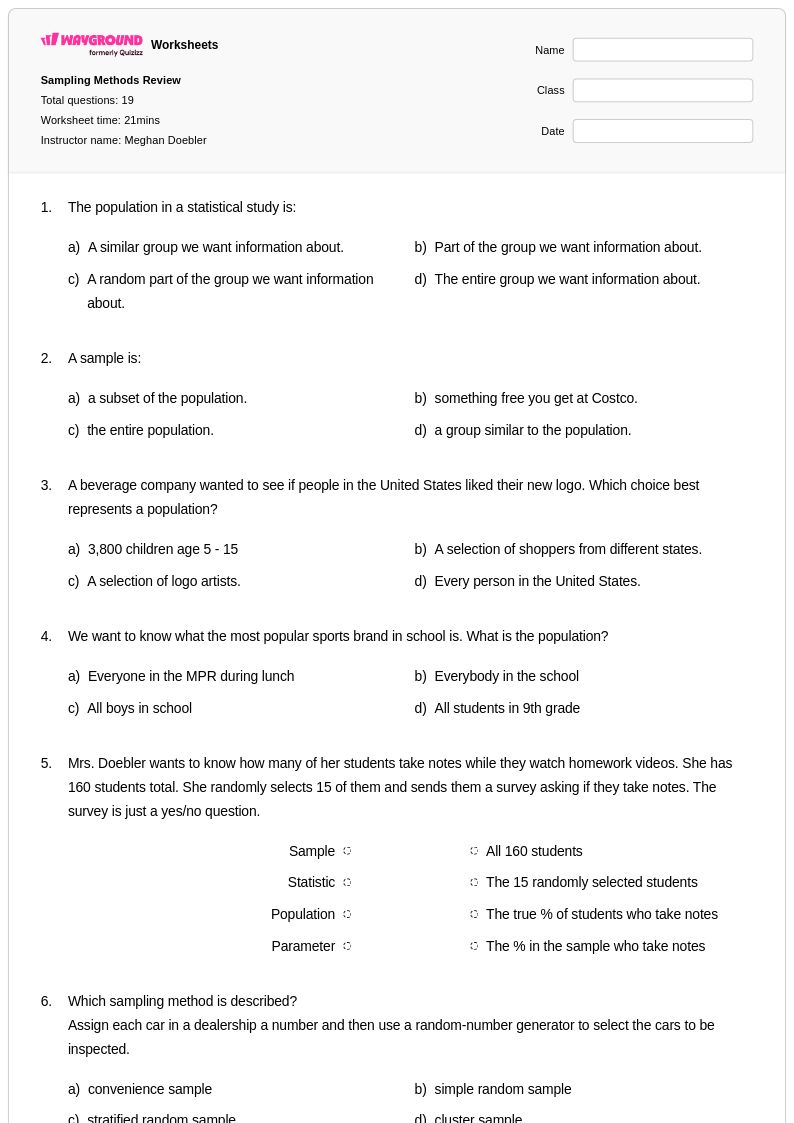
19 Q
9th - 12th
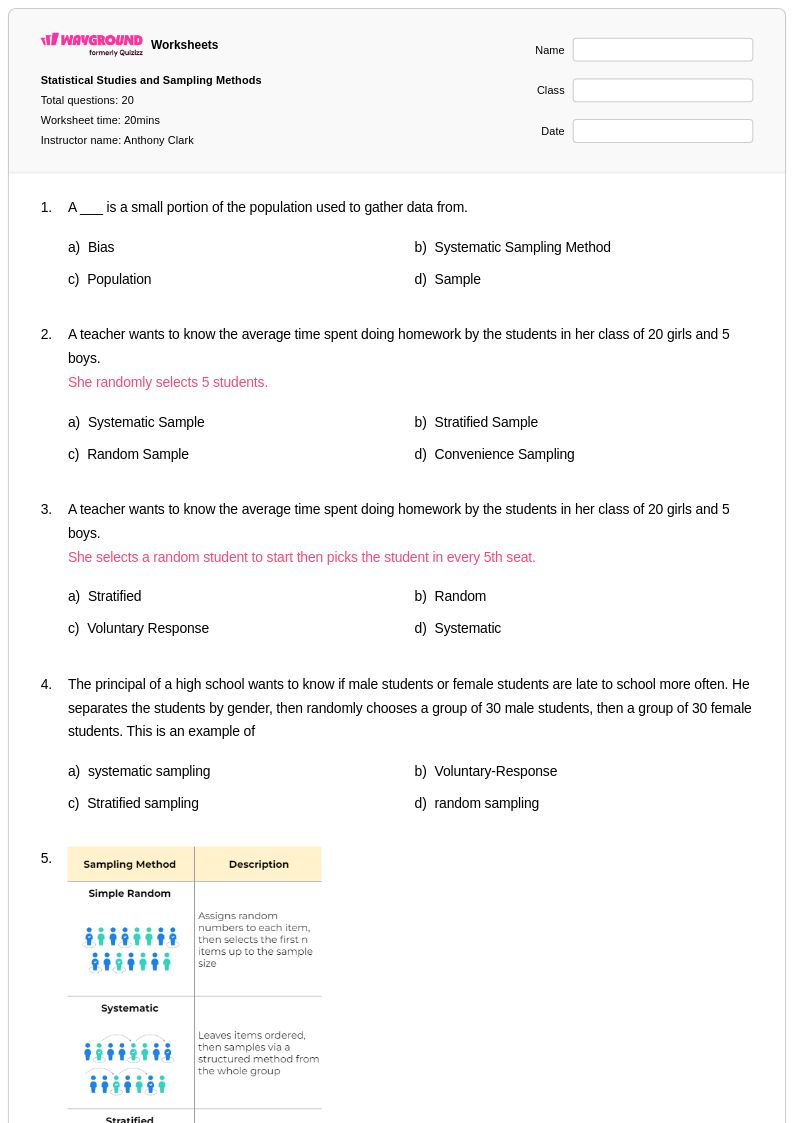
20 Q
11th - Uni
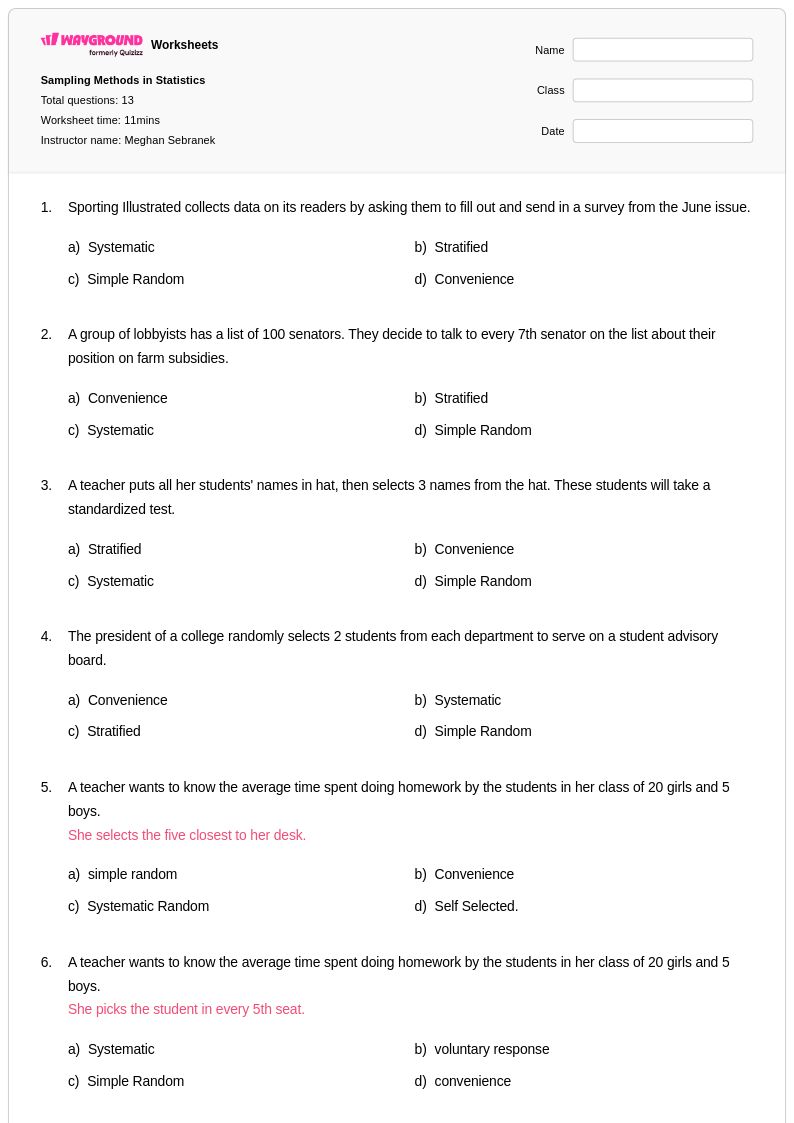
13 Q
5th - Uni
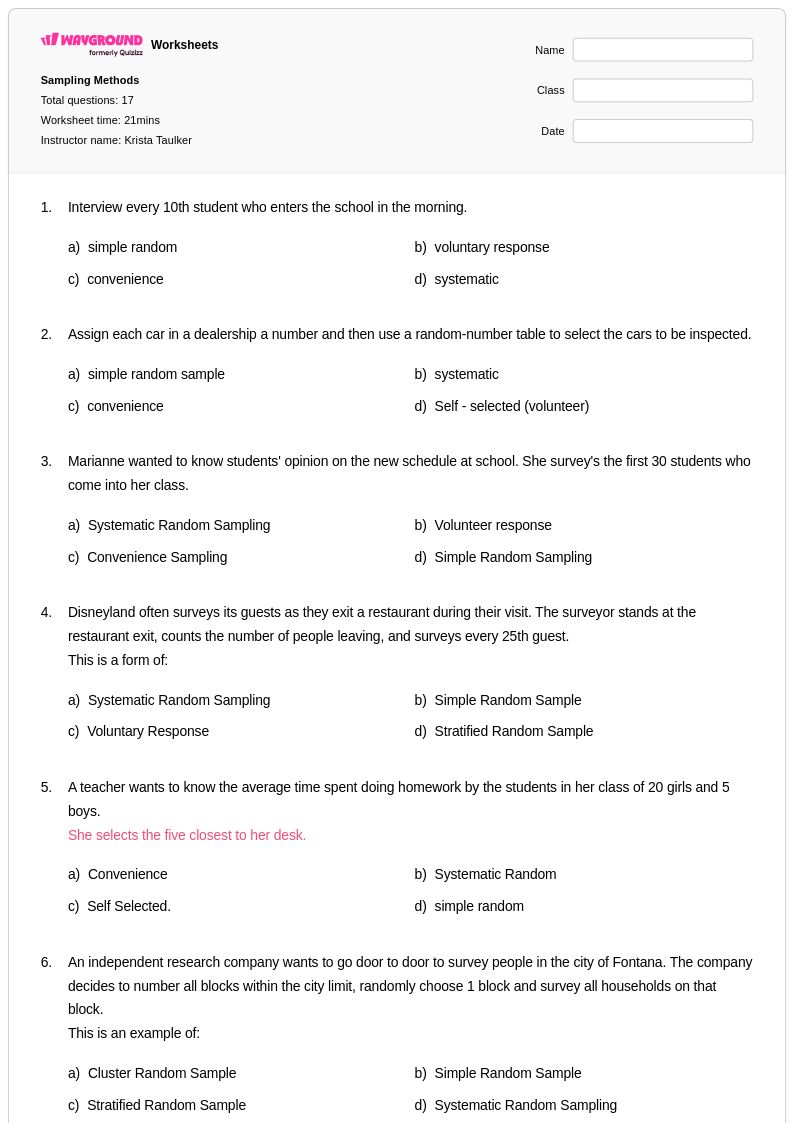
17 Q
10th - 12th
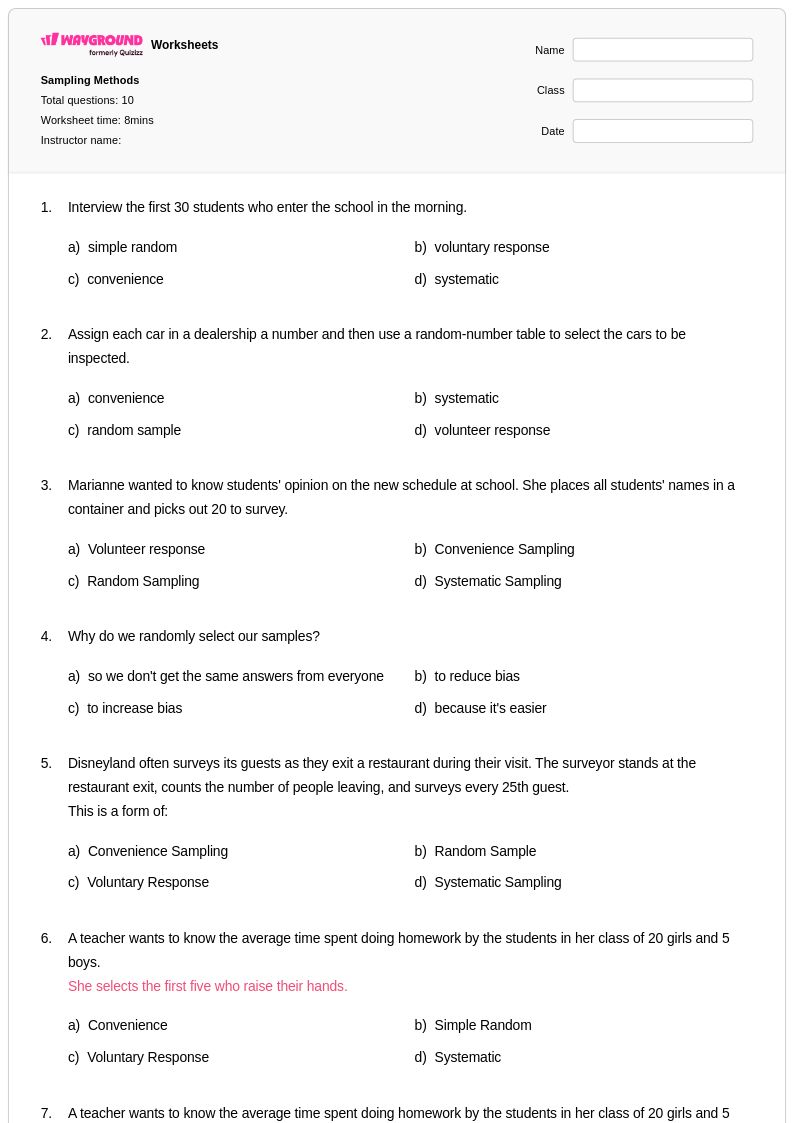
10 Q
7th - 11th
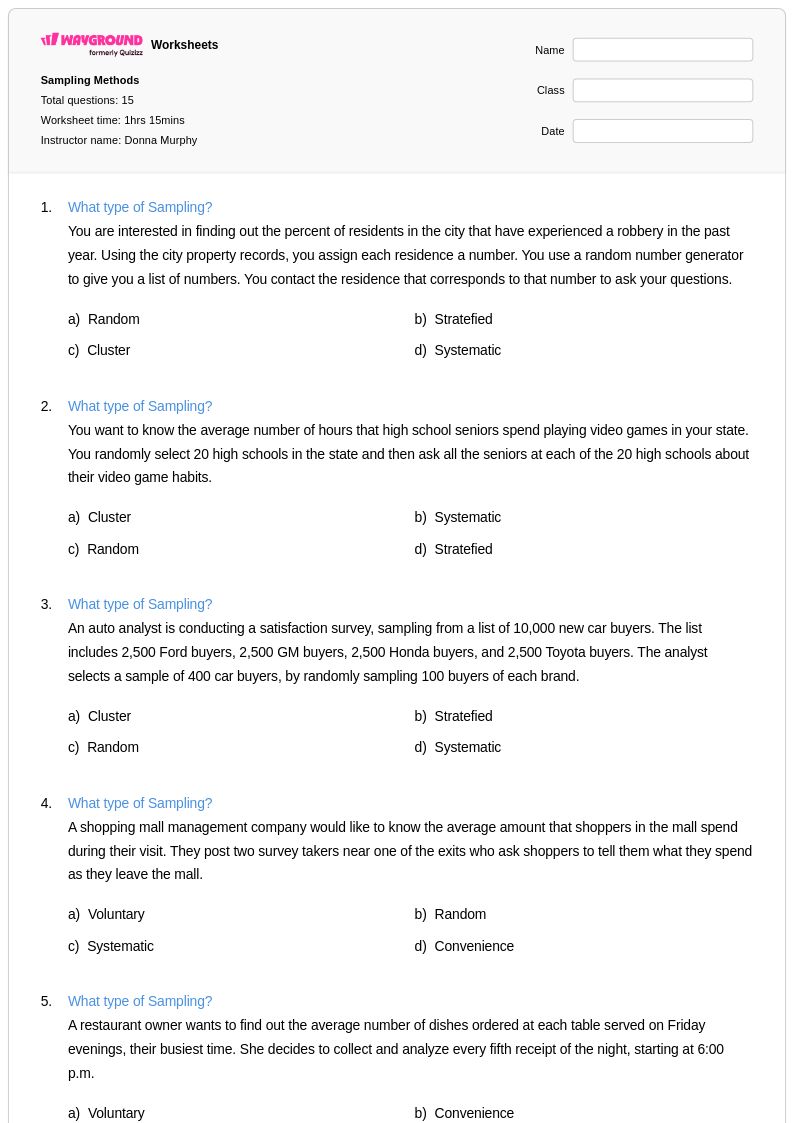
15 Q
9th - 12th
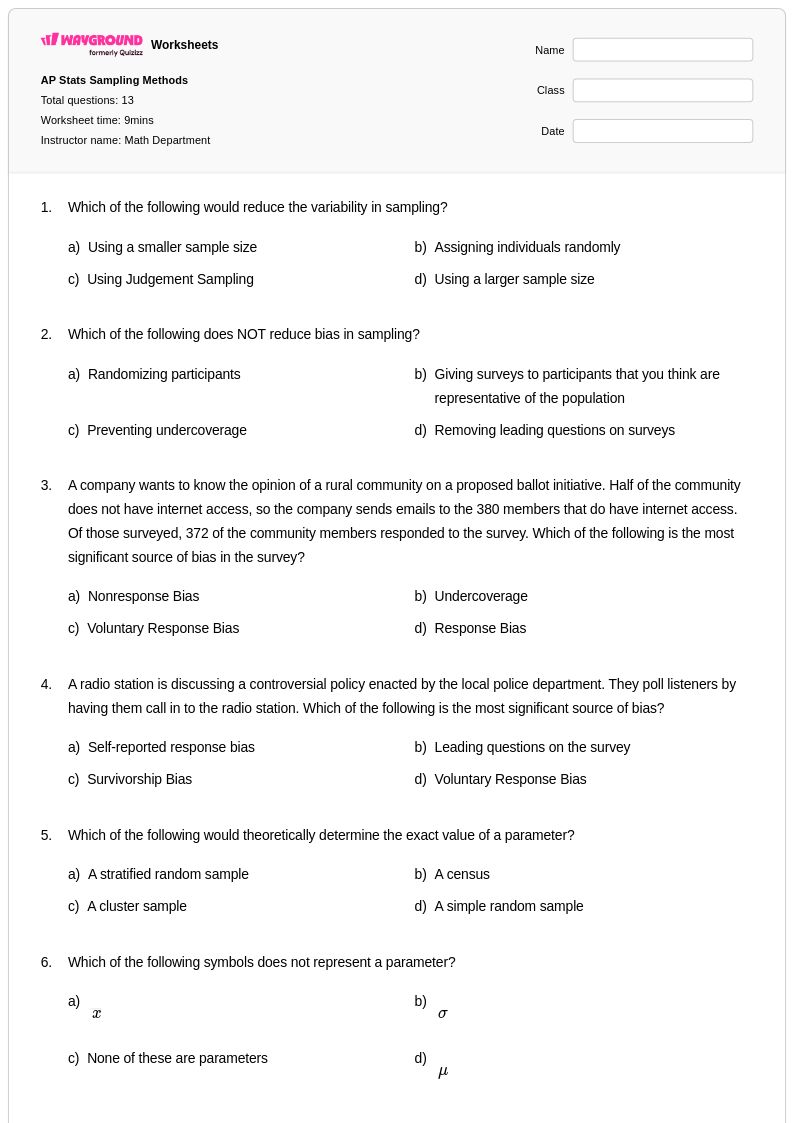
13 Q
9th - Uni
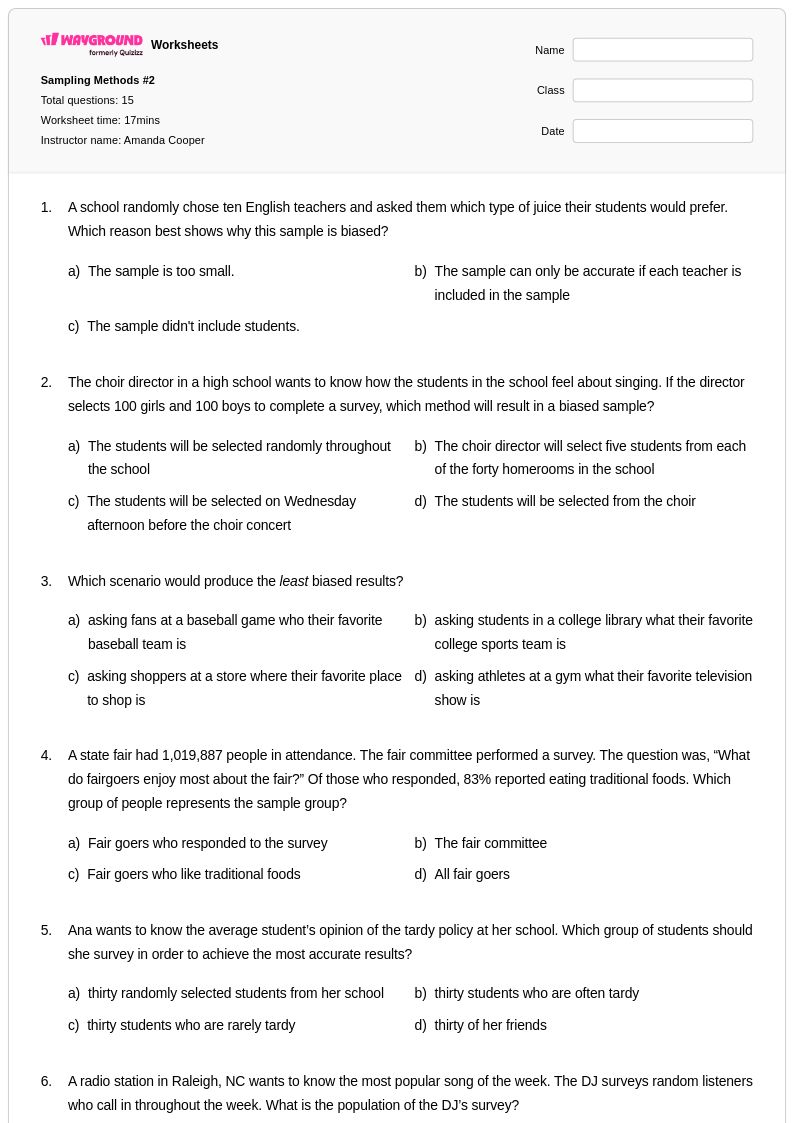
15 Q
10th - 12th
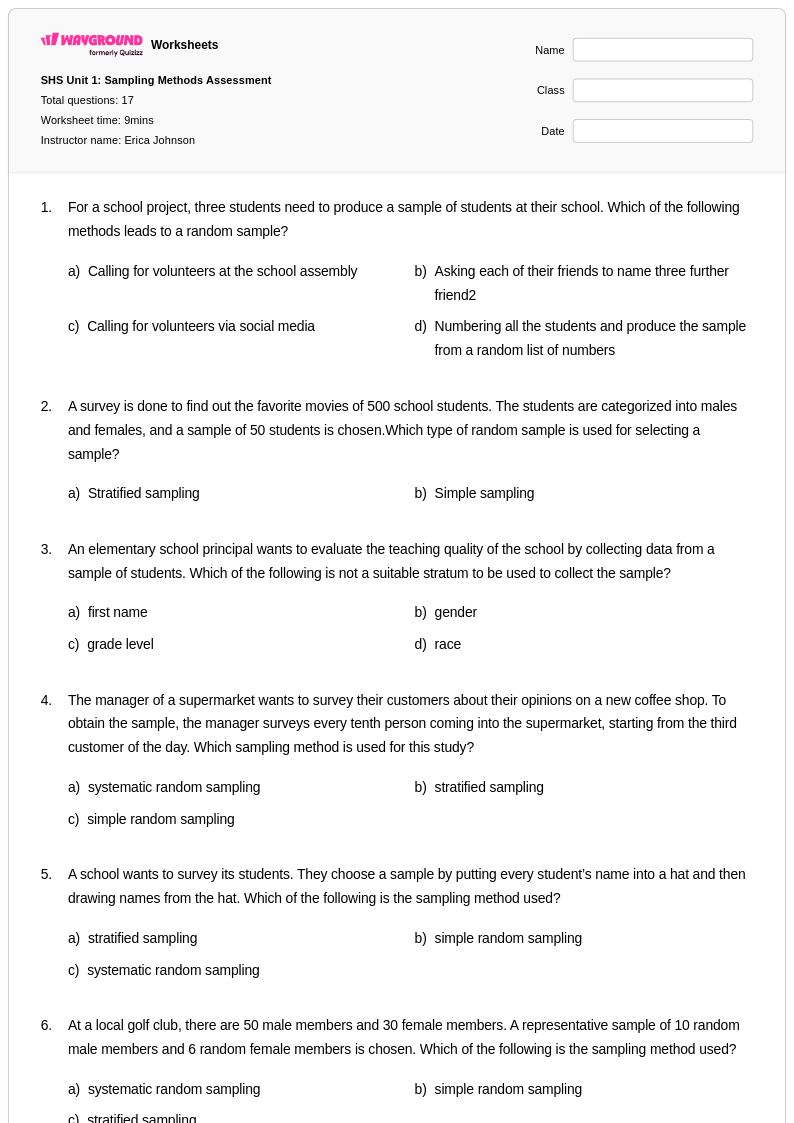
17 Q
9th - 12th
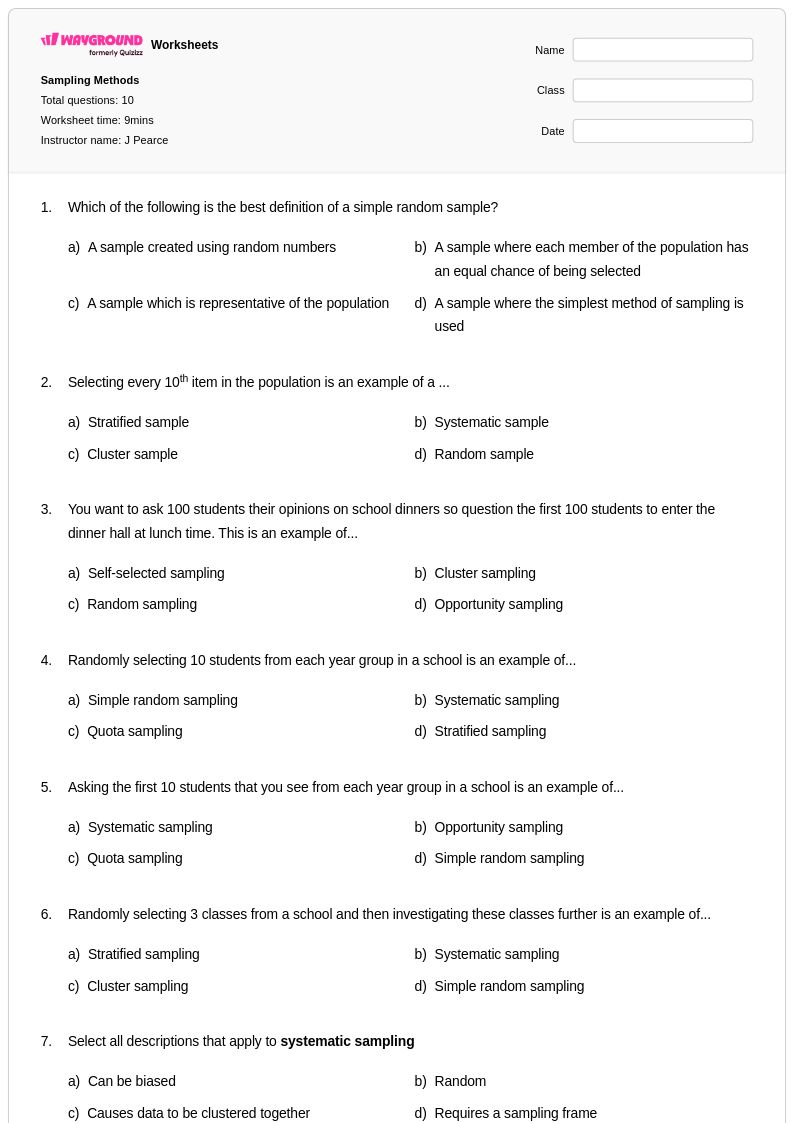
10 Q
9th - 12th
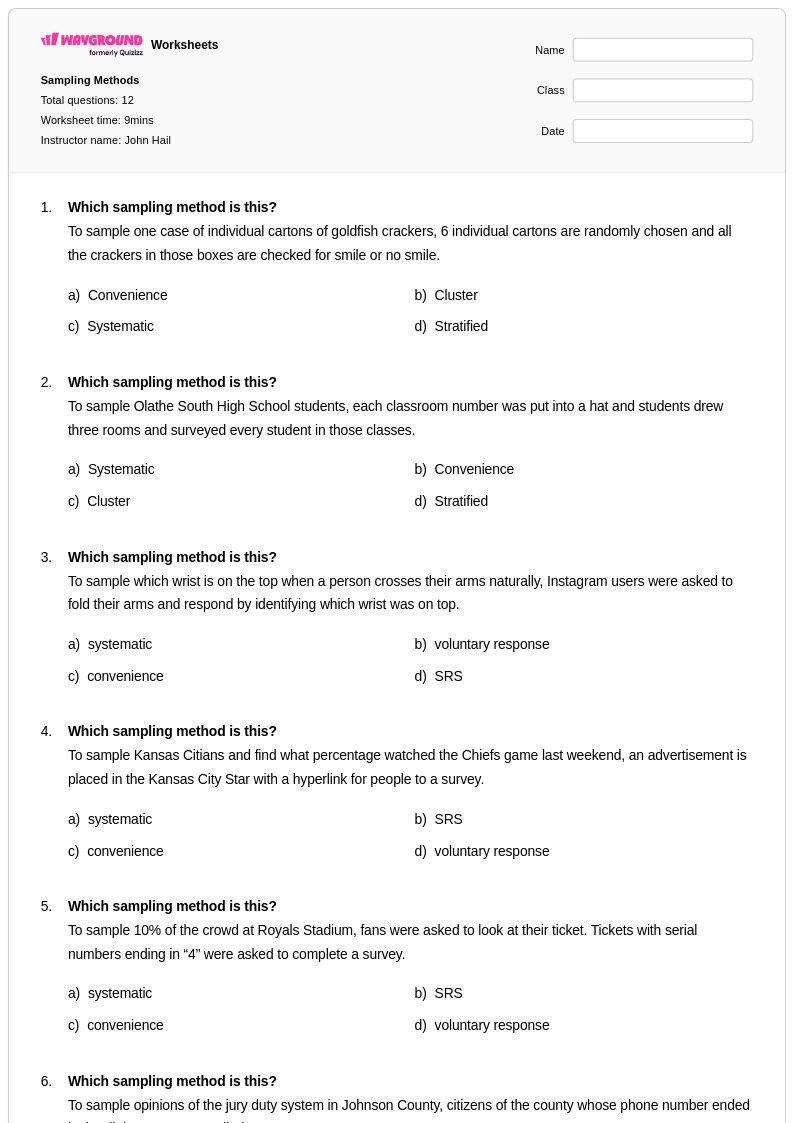
12 Q
11th - 12th
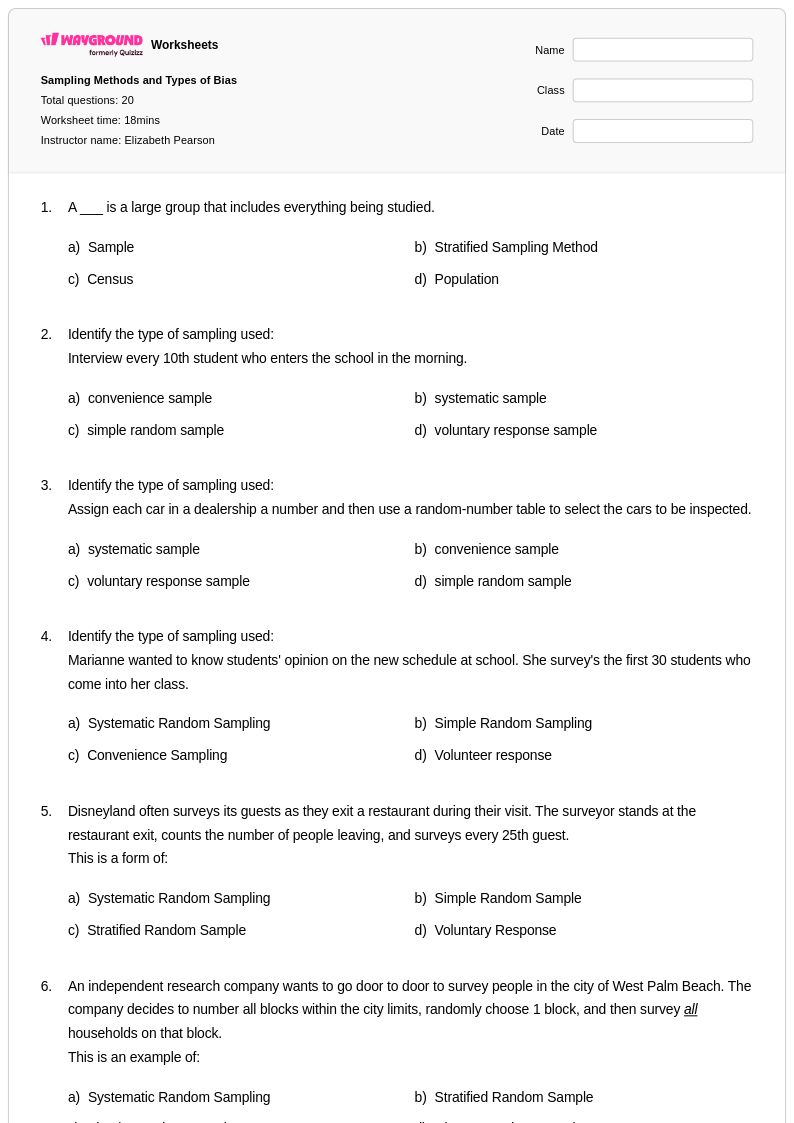
20 Q
10th - 12th
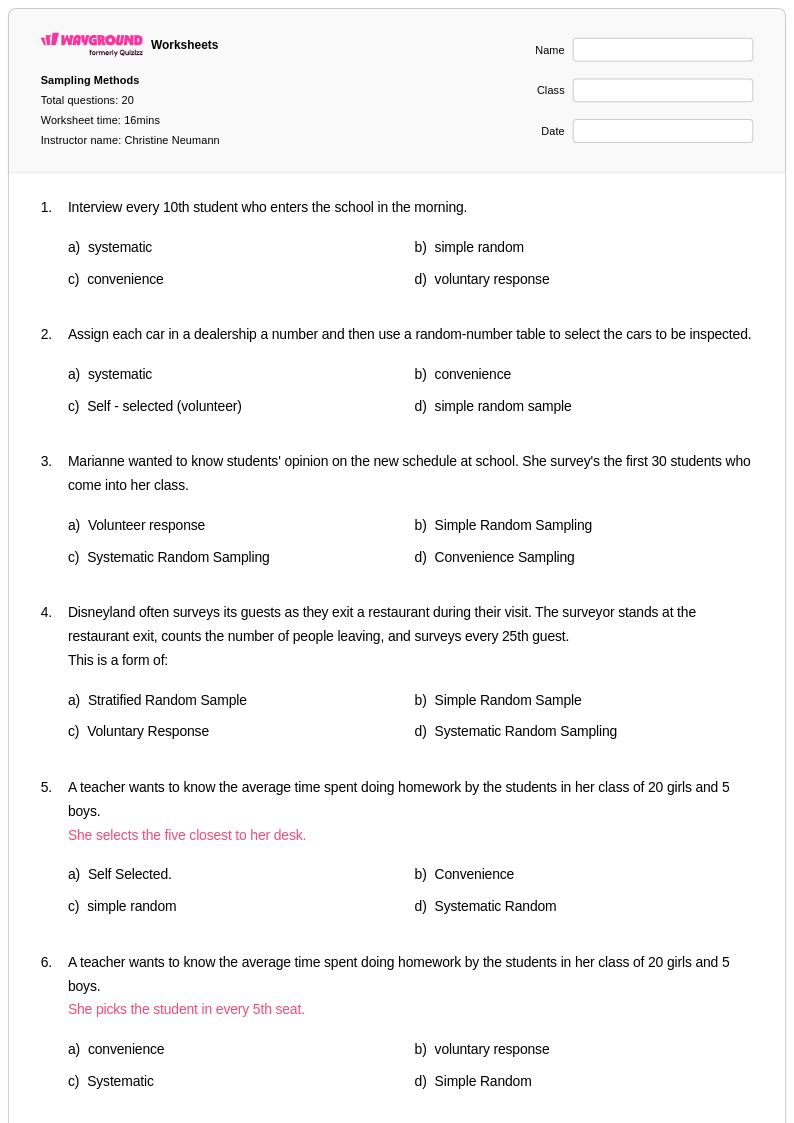
20 Q
11th - 12th
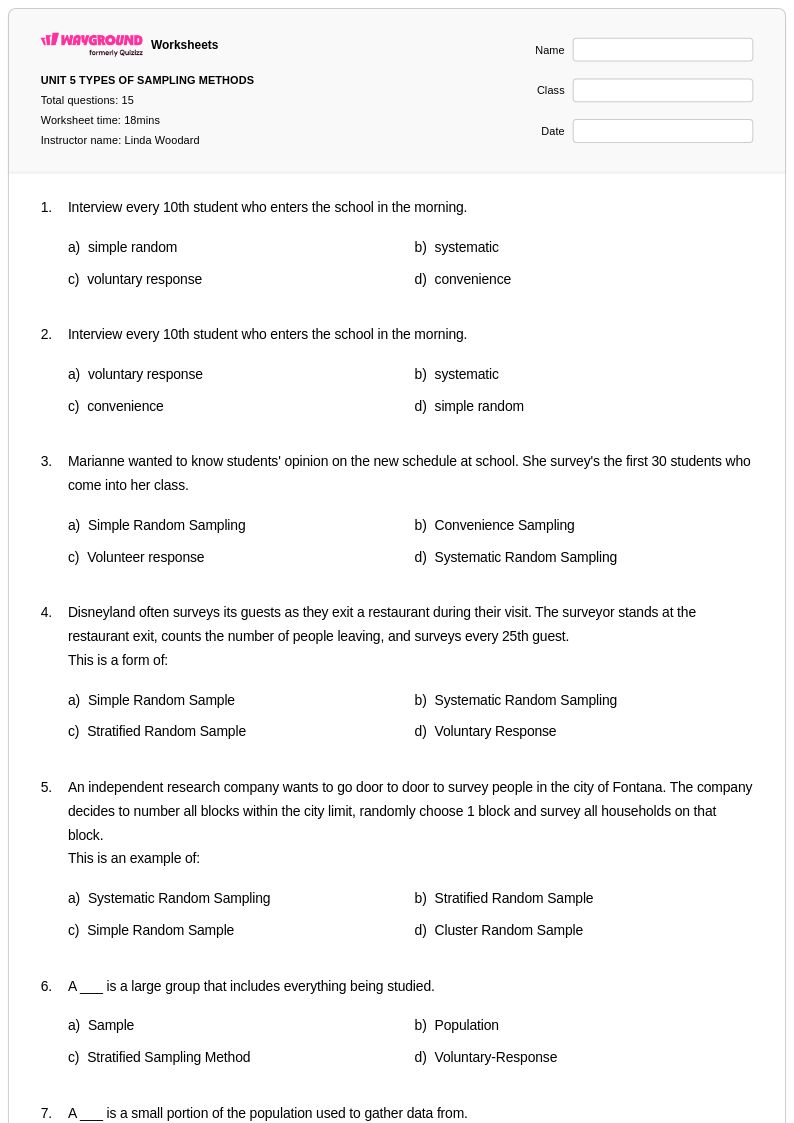
15 Q
9th - 12th
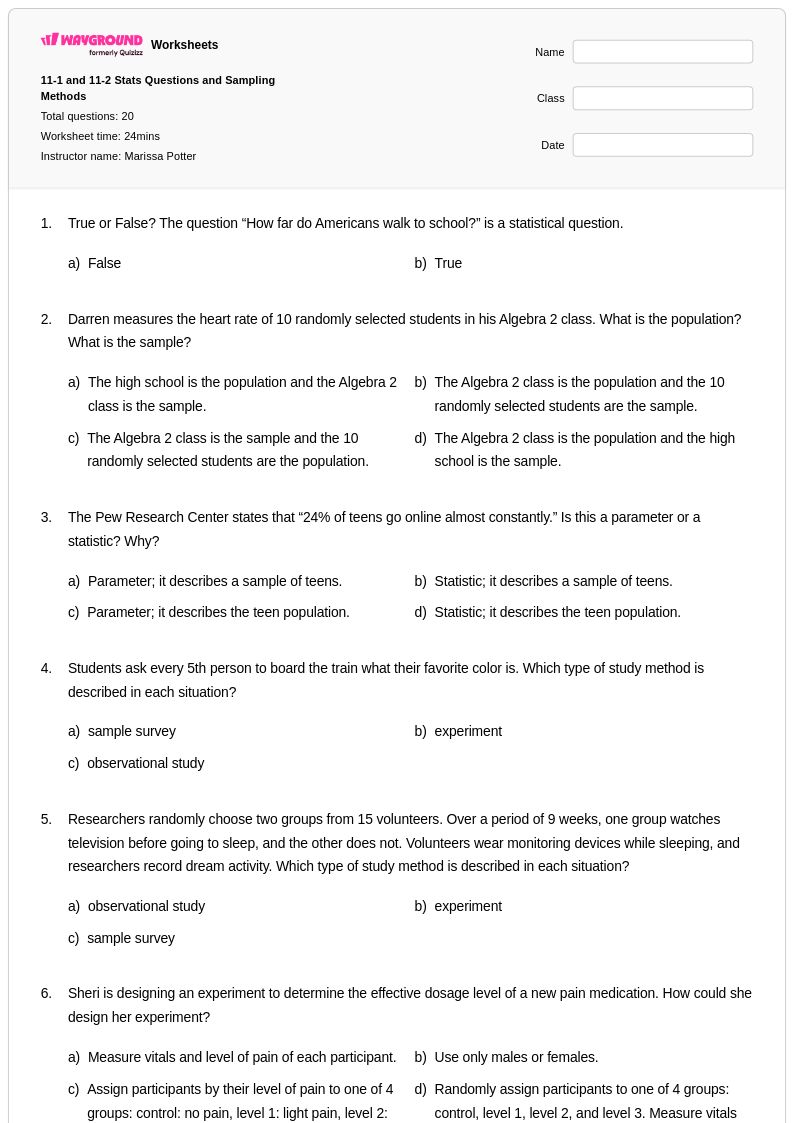
20 Q
11th
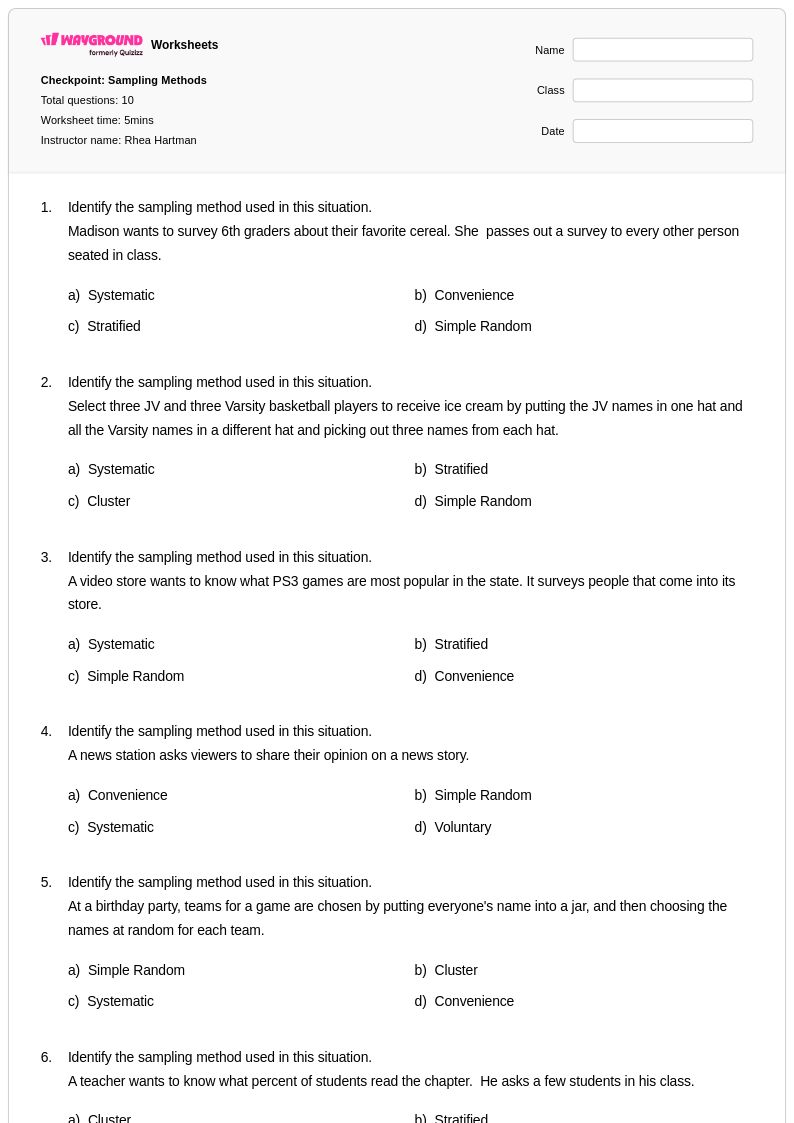
10 Q
9th - 12th
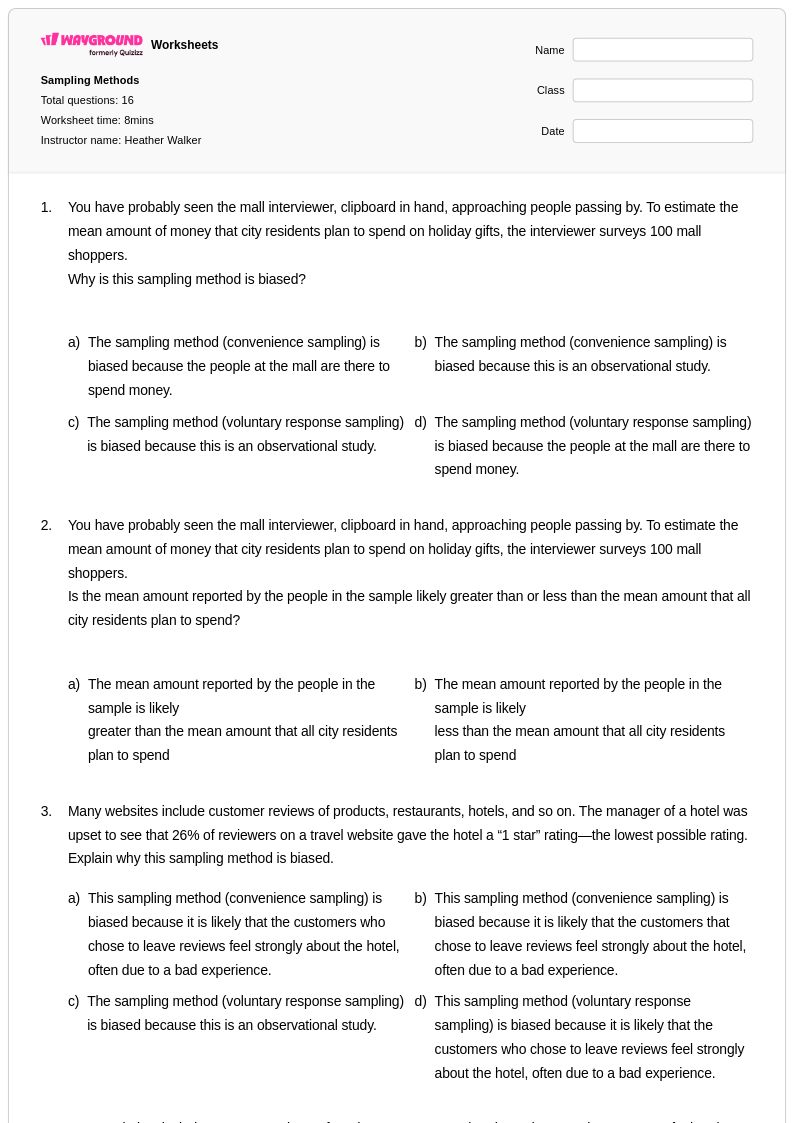
16 Q
9th - 12th
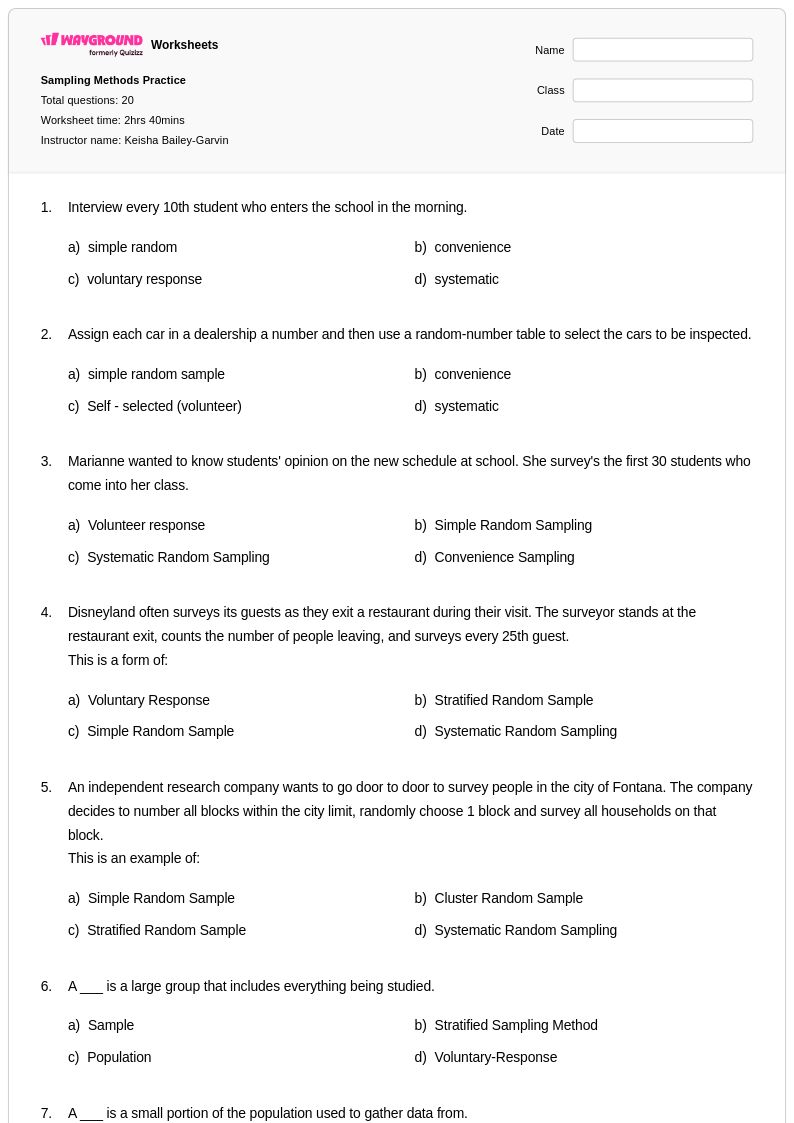
20 Q
11th - 12th
Explore Other Subject Worksheets for grade 11
Explore printable Sampling Methods worksheets for Grade 11
Sampling Methods worksheets for Grade 11 students provide comprehensive practice with the fundamental techniques used to collect representative data from populations. These professionally designed resources help students master essential statistical concepts including simple random sampling, systematic sampling, stratified sampling, and cluster sampling methods. Through carefully structured practice problems, students develop critical analytical skills needed to evaluate sampling bias, determine appropriate sample sizes, and select the most suitable sampling technique for specific research scenarios. Each worksheet collection includes detailed answer keys and explanations that guide students through complex probability calculations and statistical reasoning processes. Available as free printable pdf resources, these materials strengthen students' understanding of how sampling methodology directly impacts data quality and statistical conclusions.
Wayground, formerly Quizizz, empowers educators with millions of teacher-created Sampling Methods worksheets specifically aligned to Grade 11 mathematics standards and curriculum requirements. The platform's advanced search and filtering capabilities allow teachers to quickly locate resources targeting specific sampling concepts, from basic random selection techniques to advanced stratified sampling applications. These differentiated materials support flexible classroom instruction through customizable digital formats and printable pdf options that accommodate diverse learning preferences and technological environments. Teachers can seamlessly integrate these resources into lesson planning for initial concept introduction, targeted remediation for struggling students, or enrichment activities for advanced learners, while the comprehensive answer keys and detailed explanations facilitate efficient grading and provide valuable feedback for skill practice and assessment preparation.