
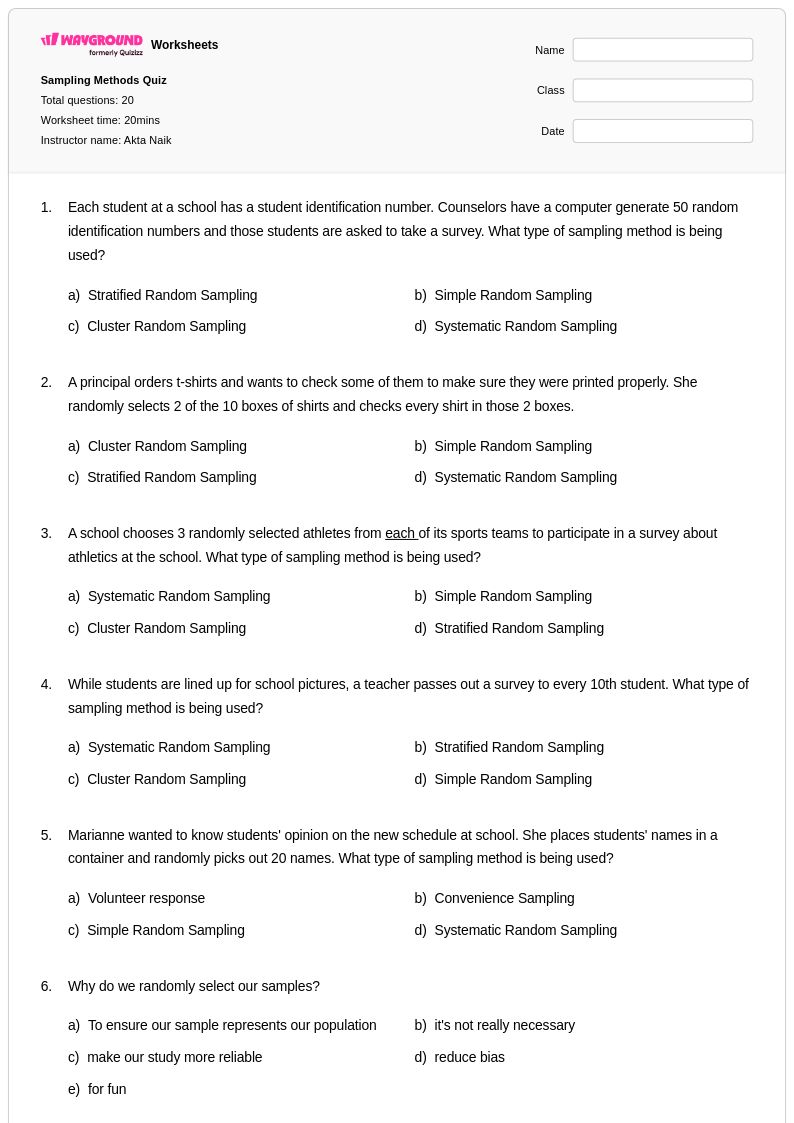
20 Q
9th - 12th
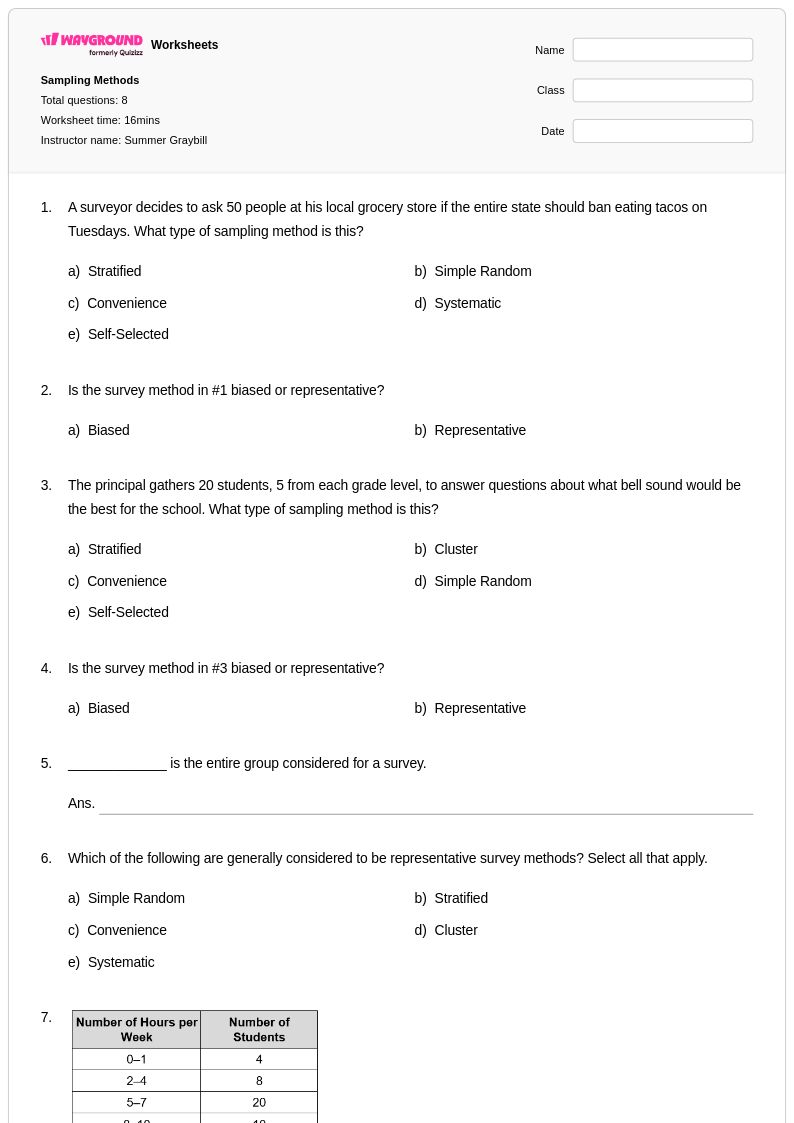
8 Q
9th - 12th
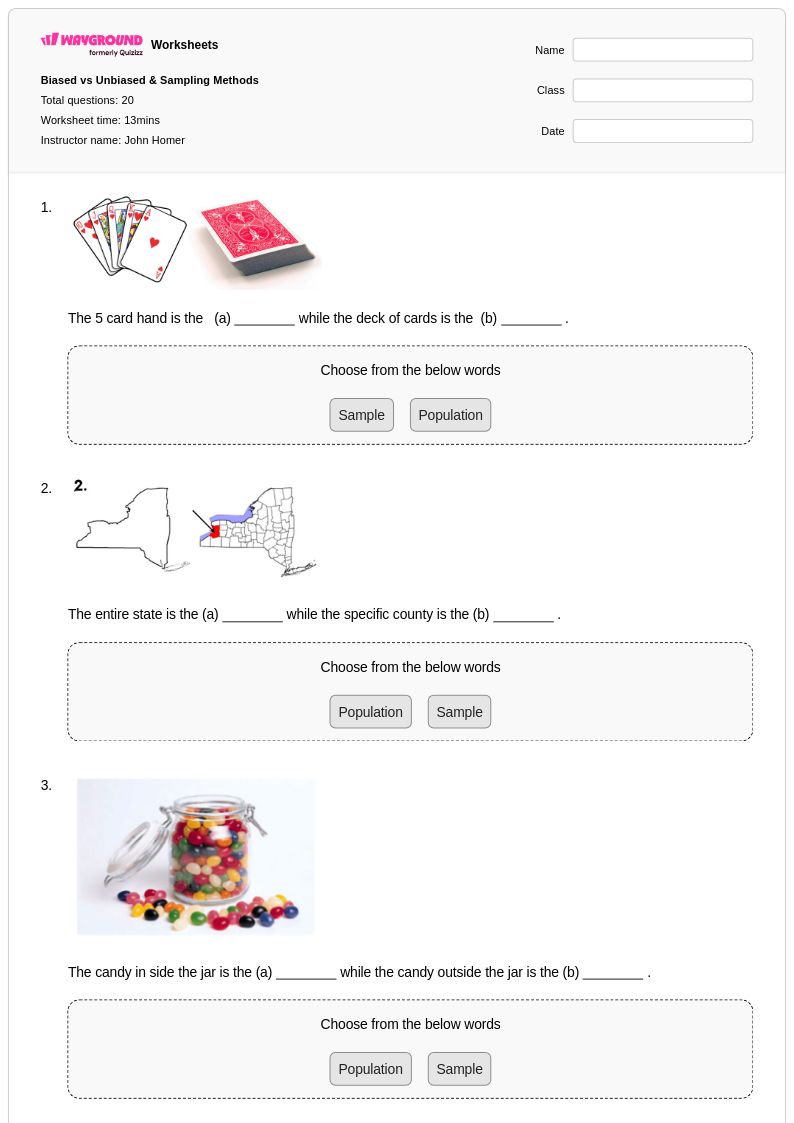
20 Q
8th - Uni
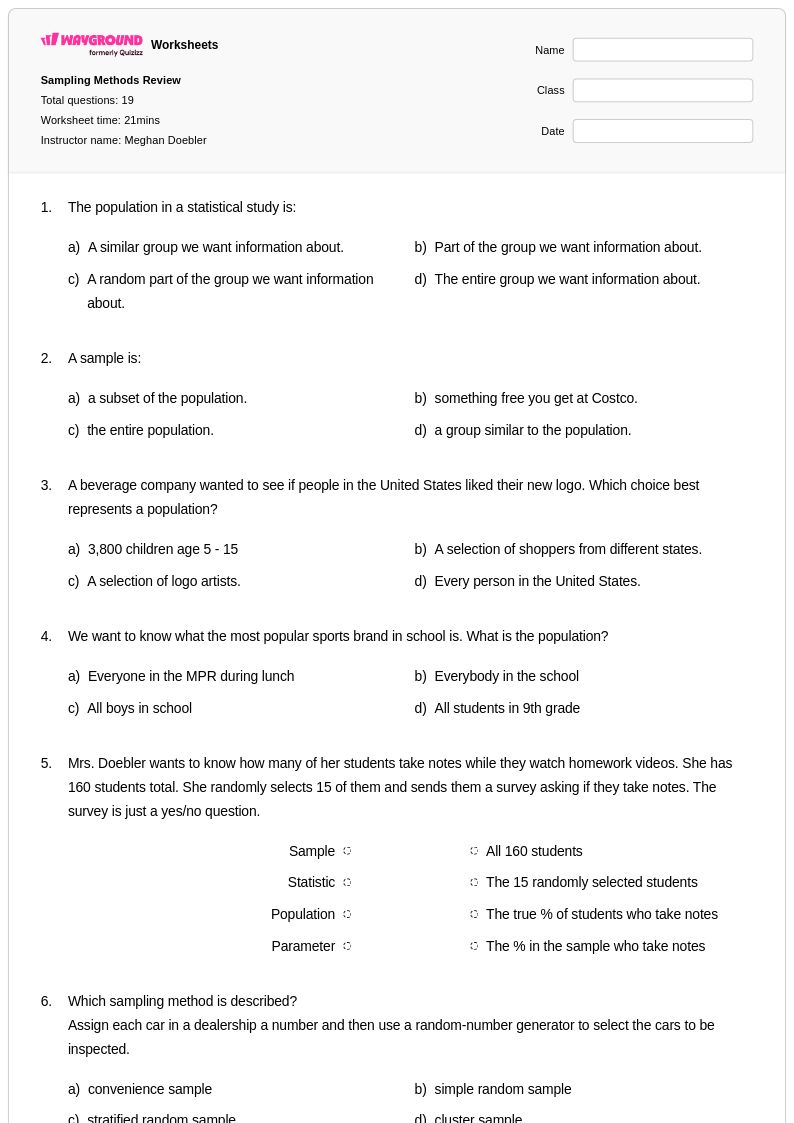
19 Q
9th - 12th
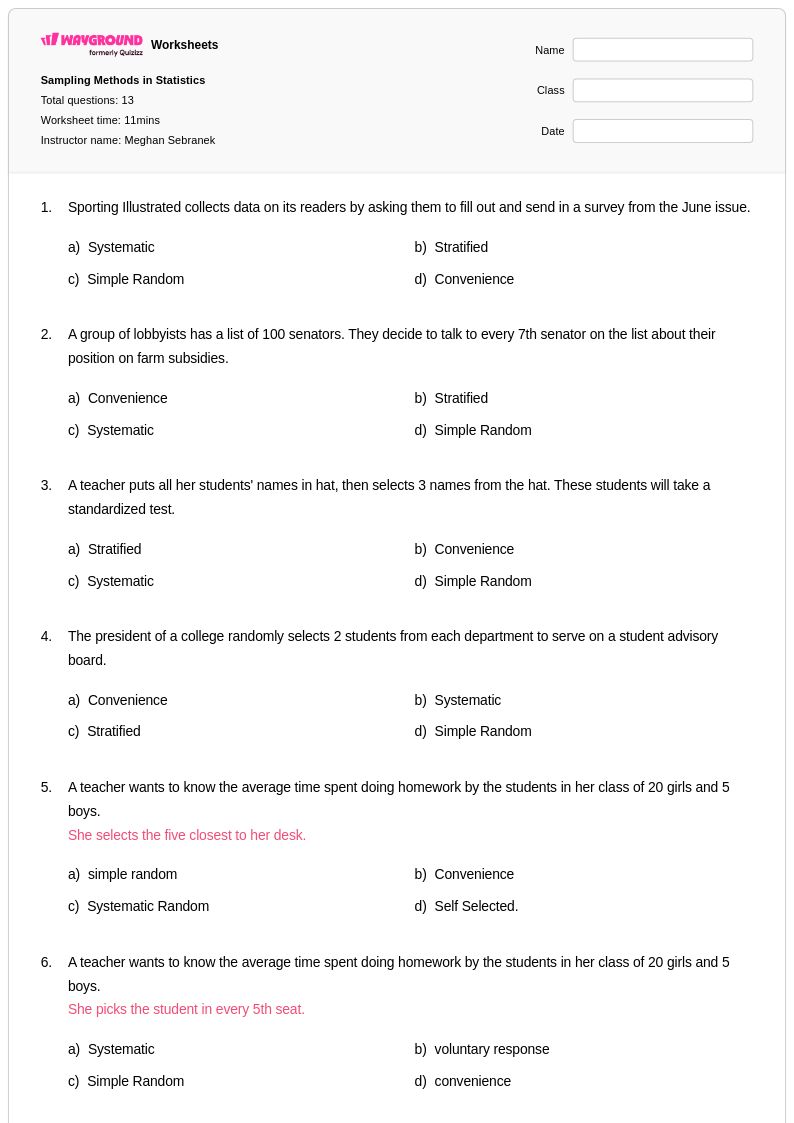
13 Q
5th - Uni
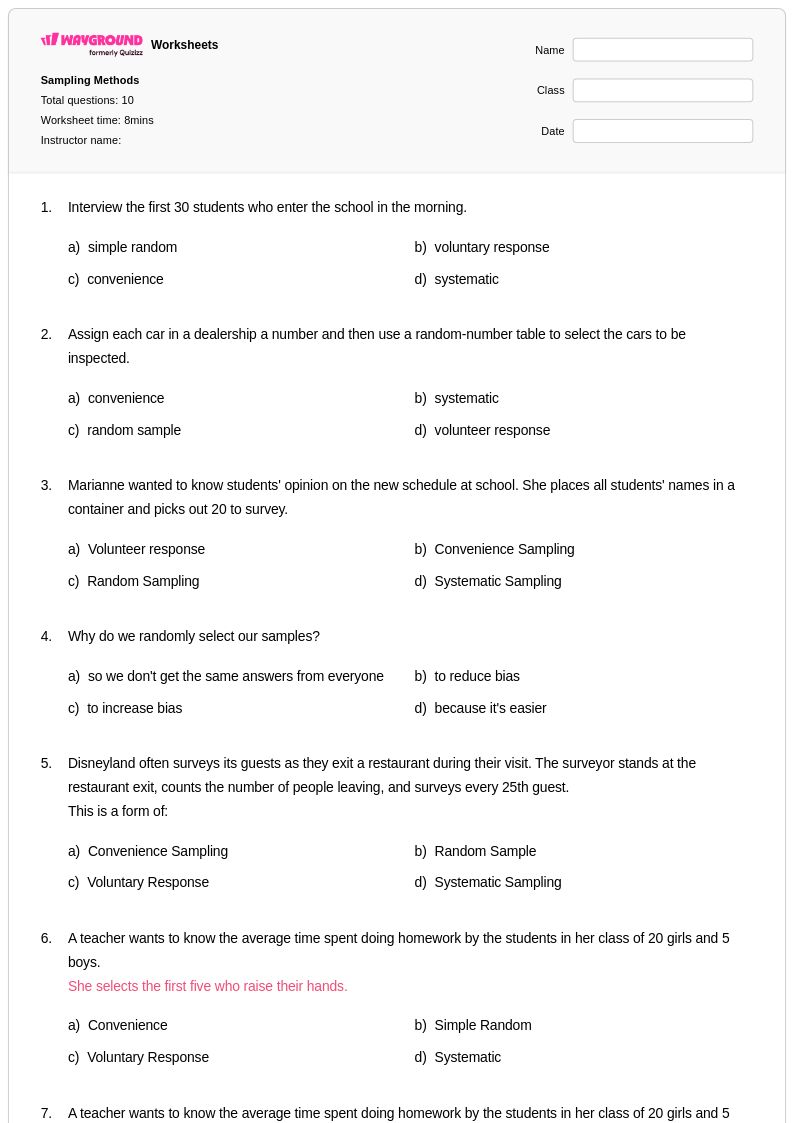
10 Q
7th - 11th
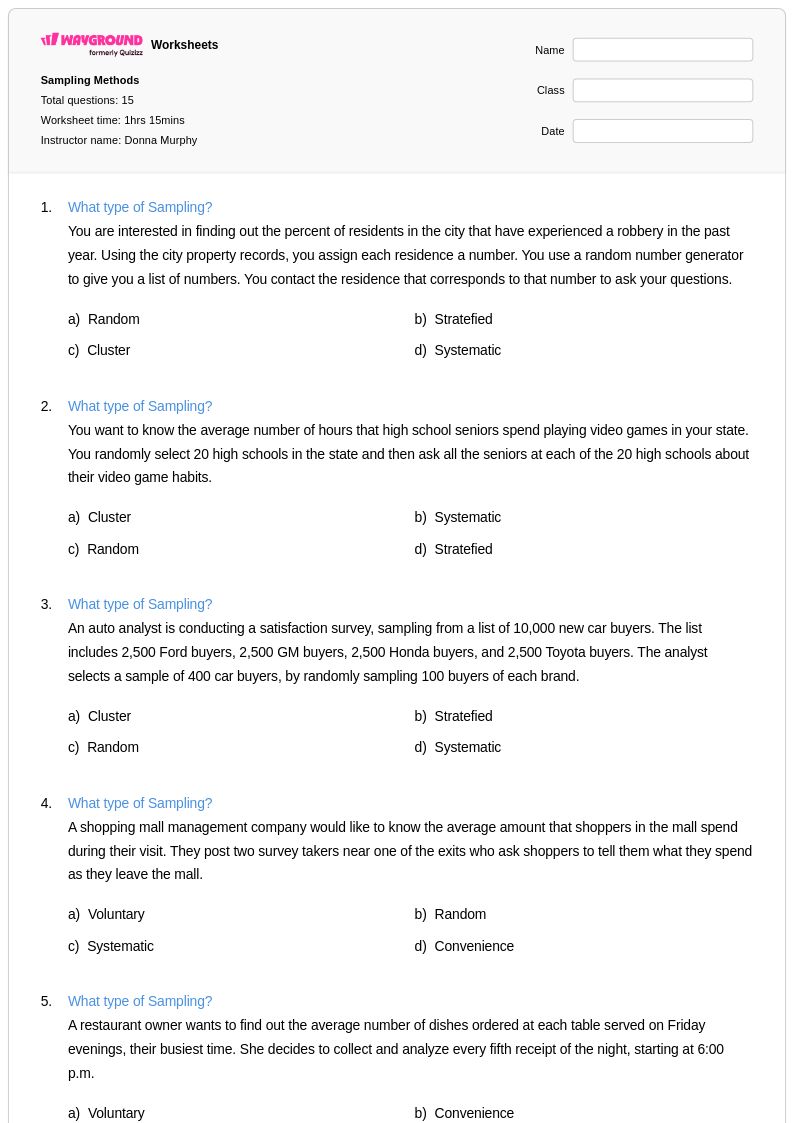
15 Q
9th - 12th
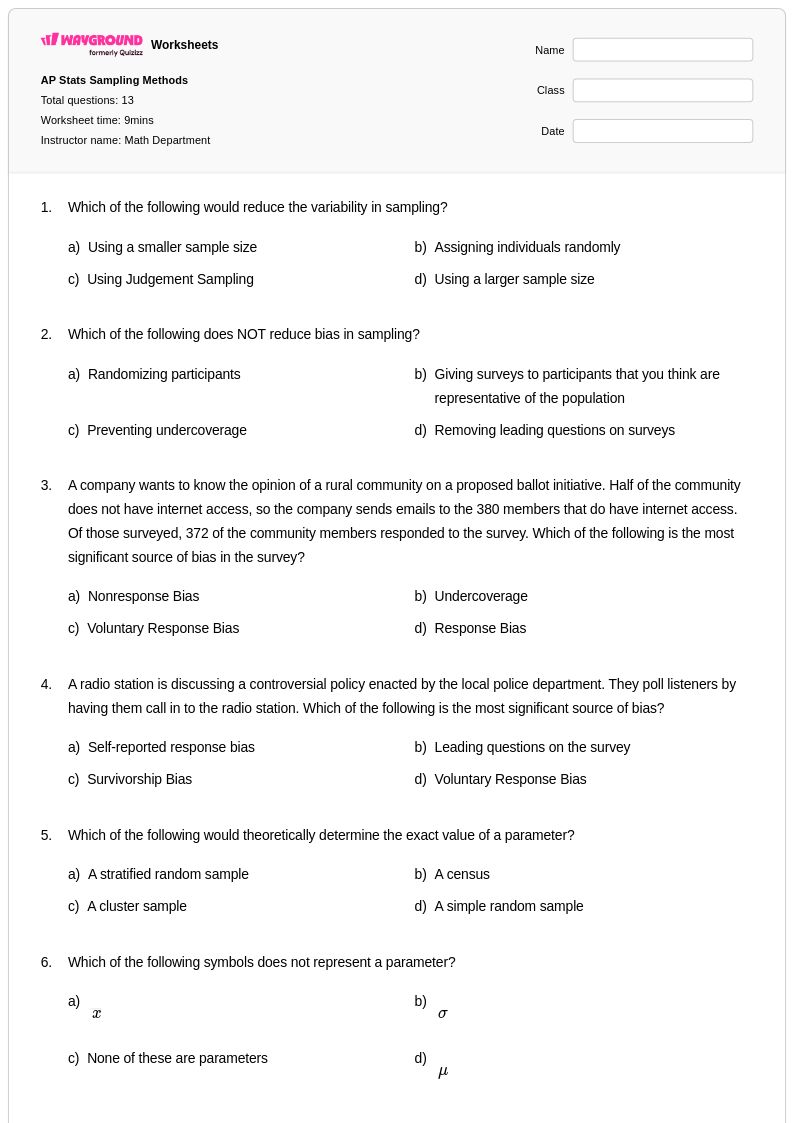
13 Q
9th - Uni
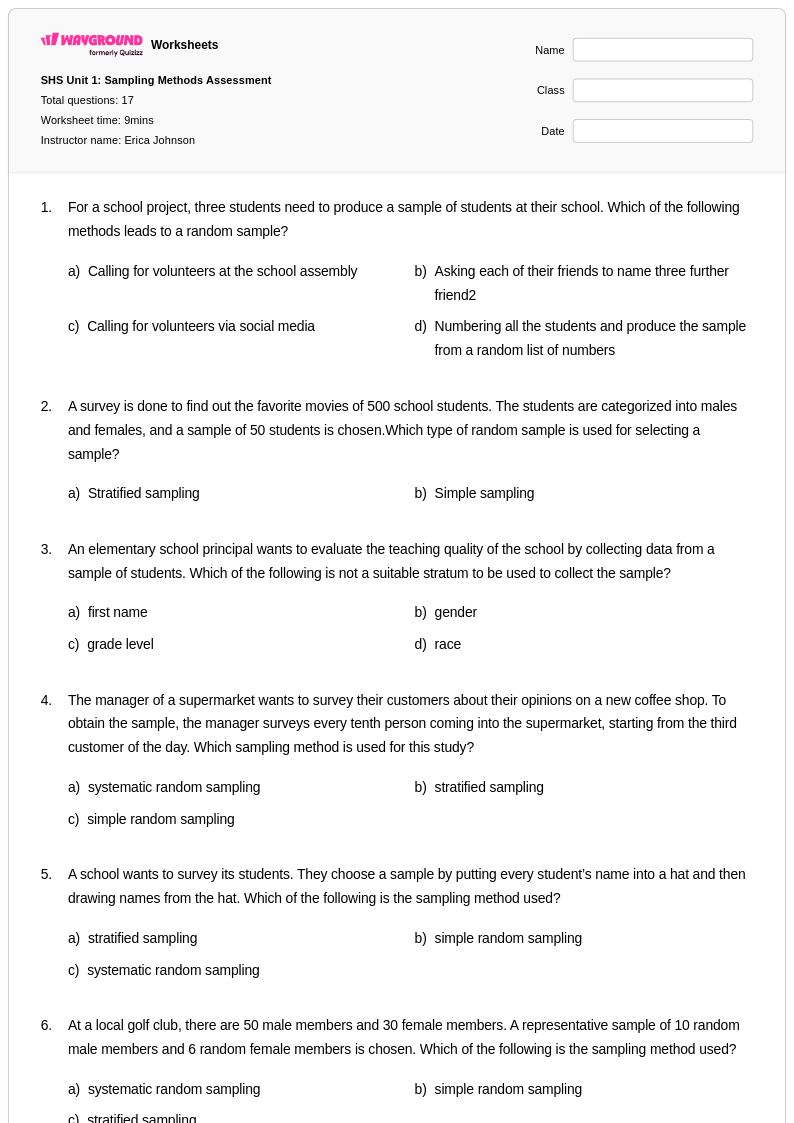
17 Q
9th - 12th
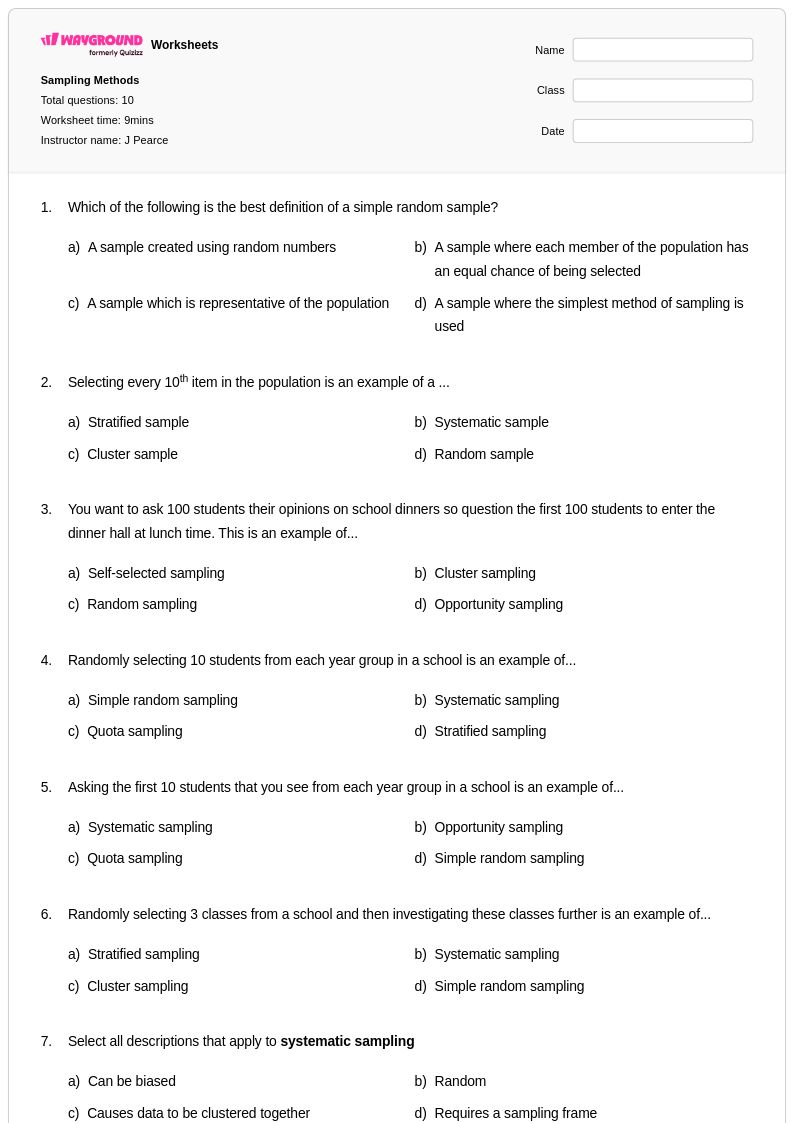
10 Q
9th - 12th
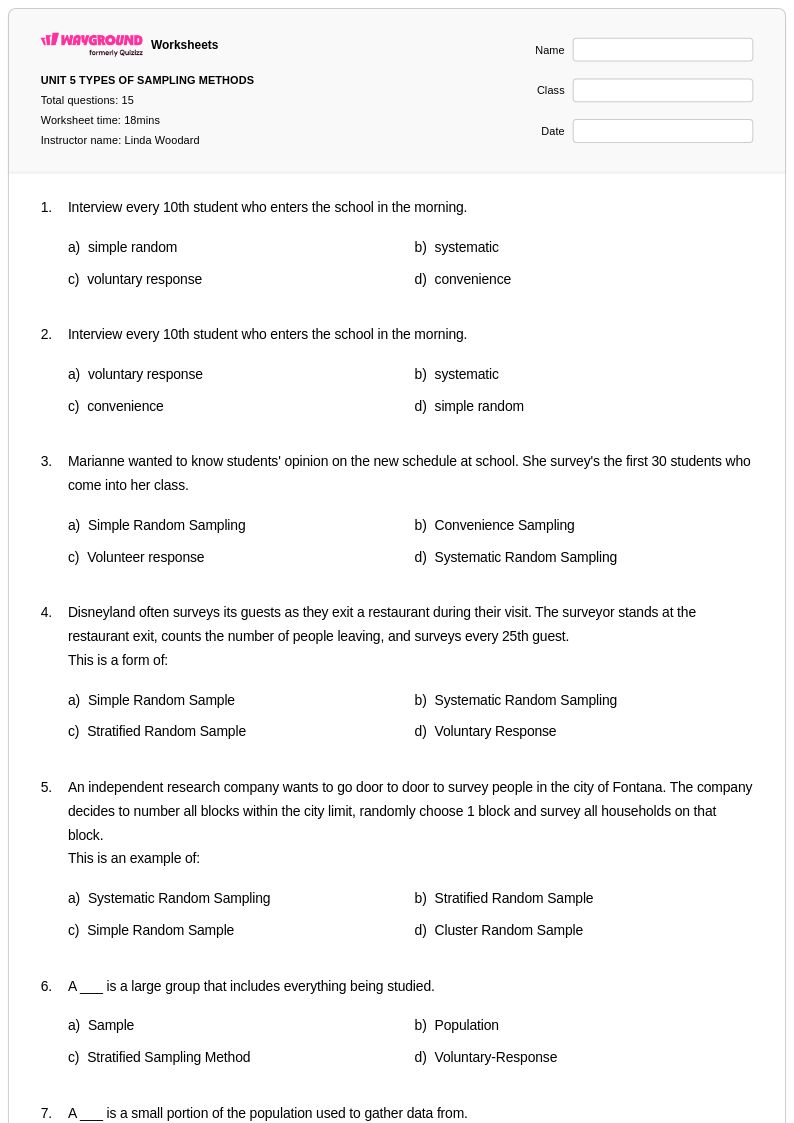
15 Q
9th - 12th
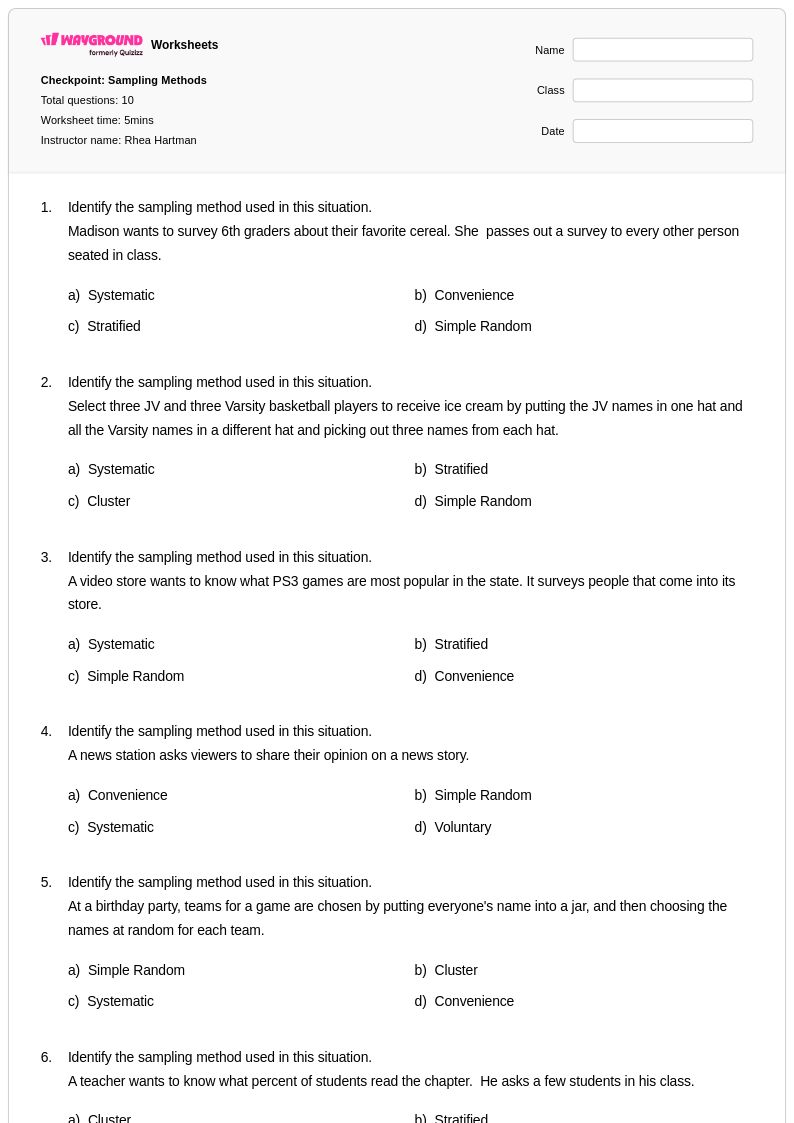
10 Q
9th - 12th
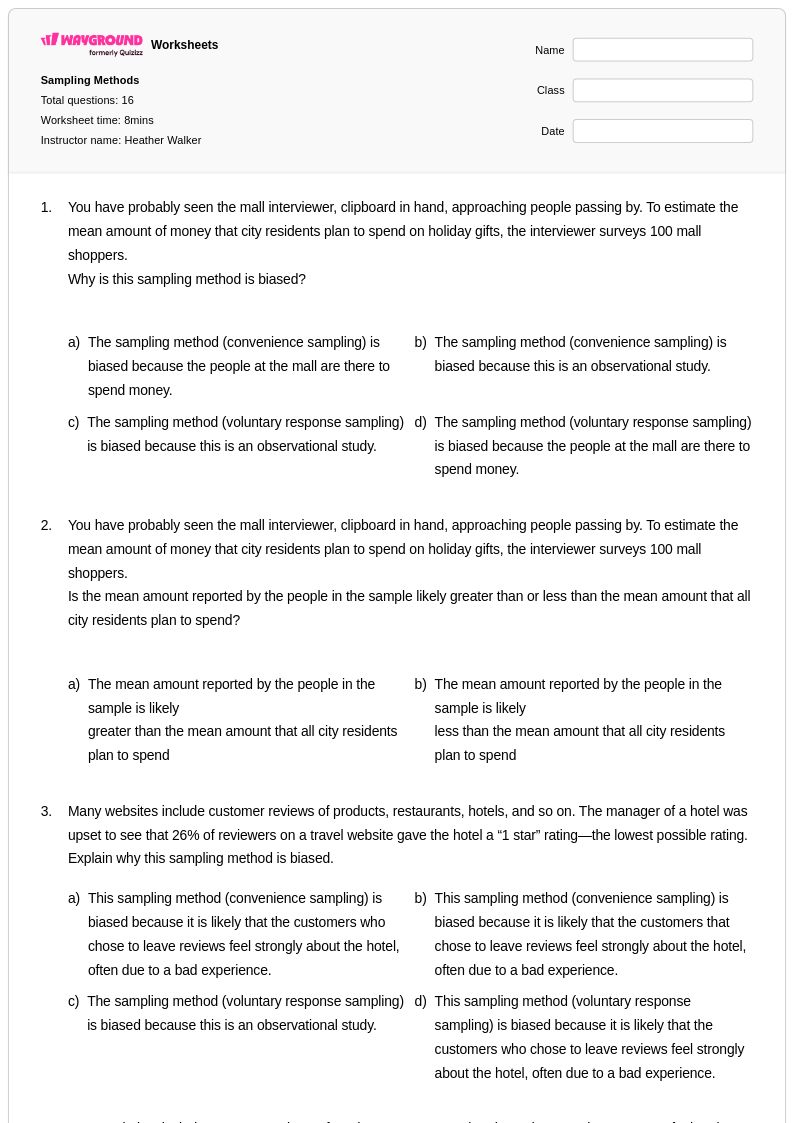
16 Q
9th - 12th
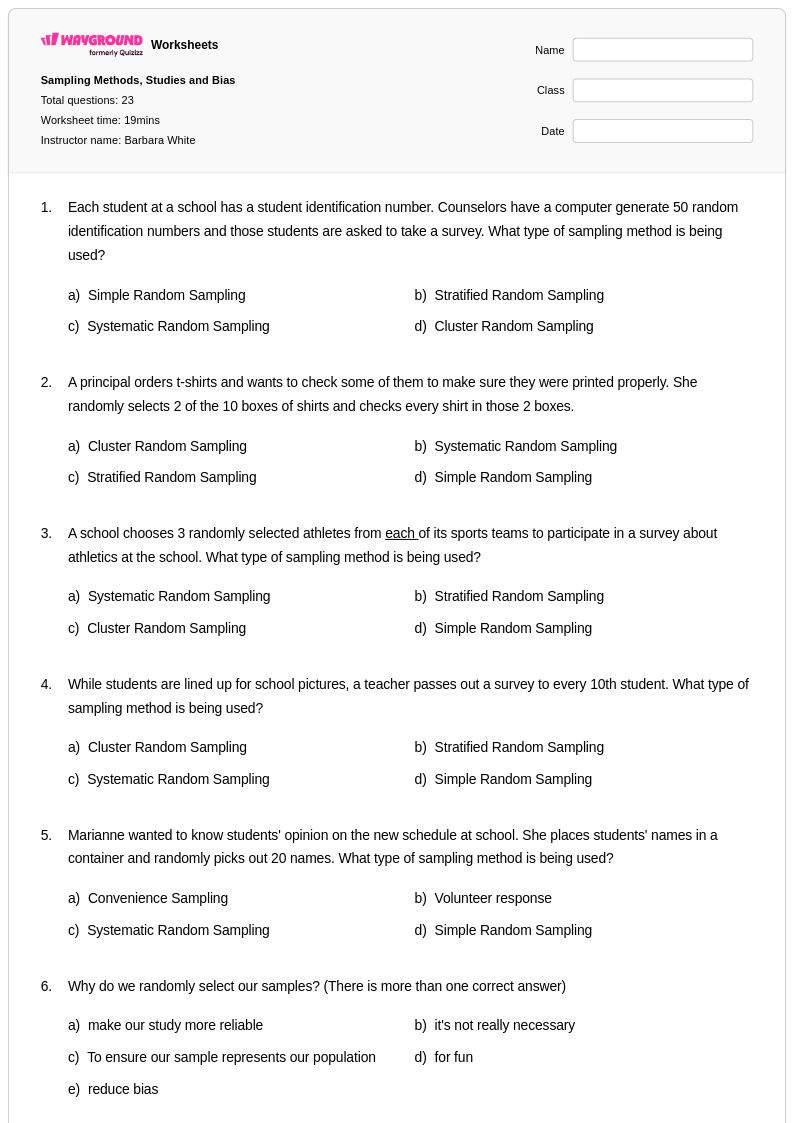
23 Q
9th - 12th
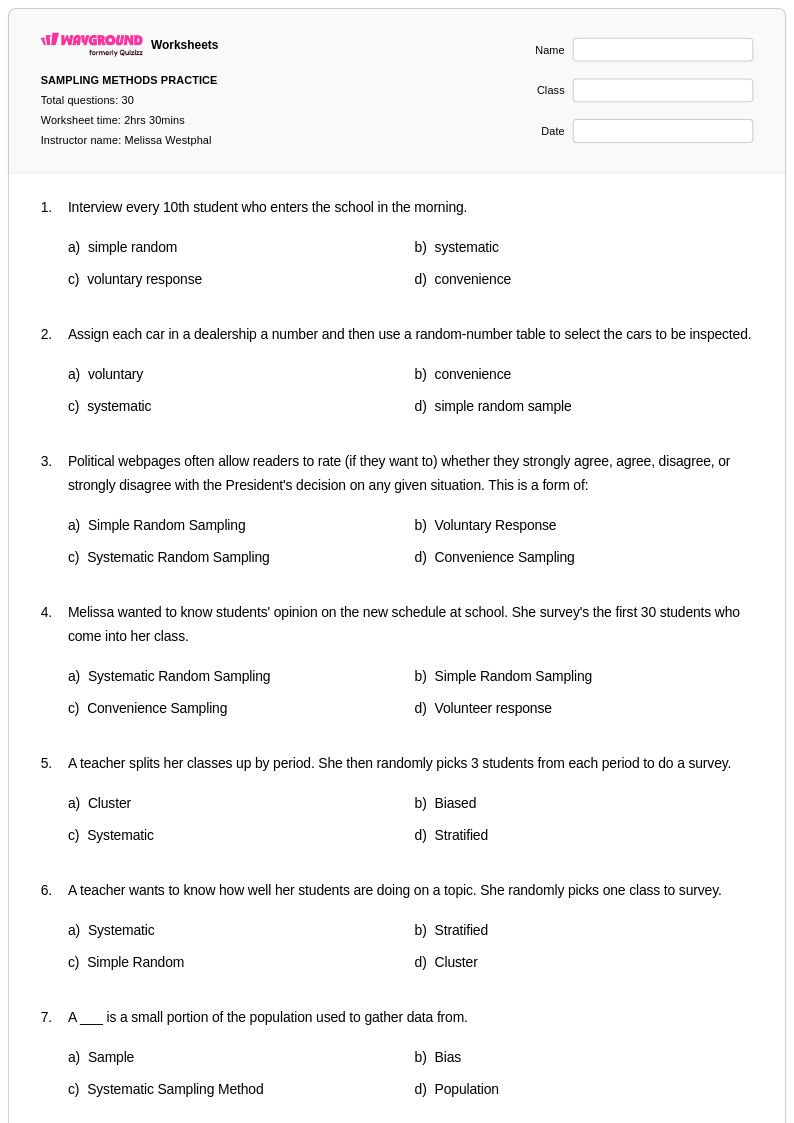
30 Q
9th - 12th
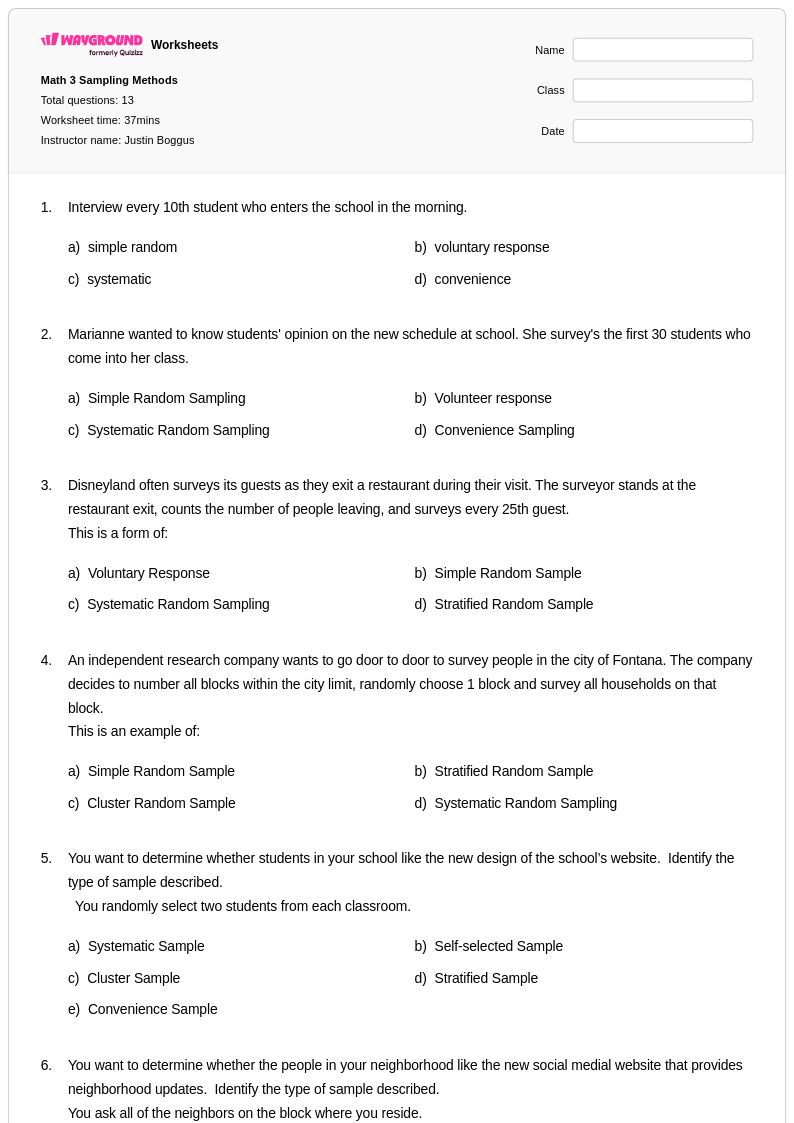
13 Q
9th - 12th
24 Q
6th - 12th
12 Q
9th
25 Q
9th - 12th
15 Q
9th - 12th
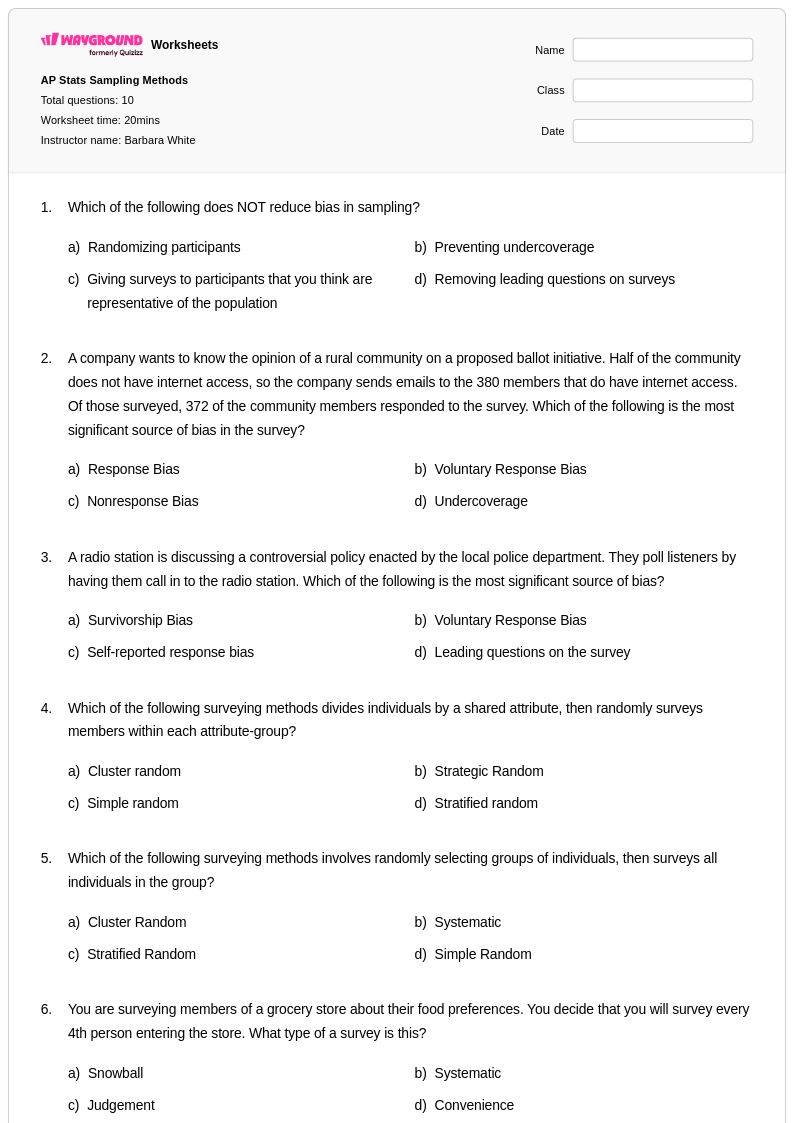
10 Q
9th - Uni
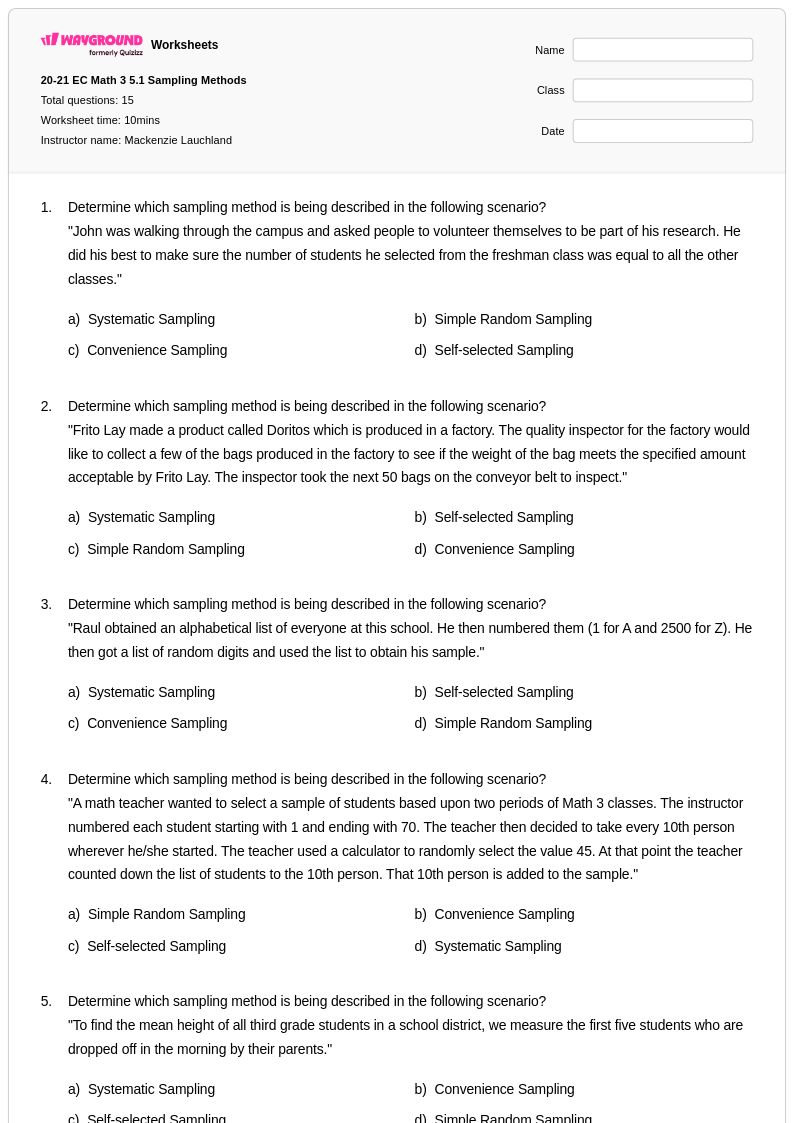
15 Q
9th - 12th
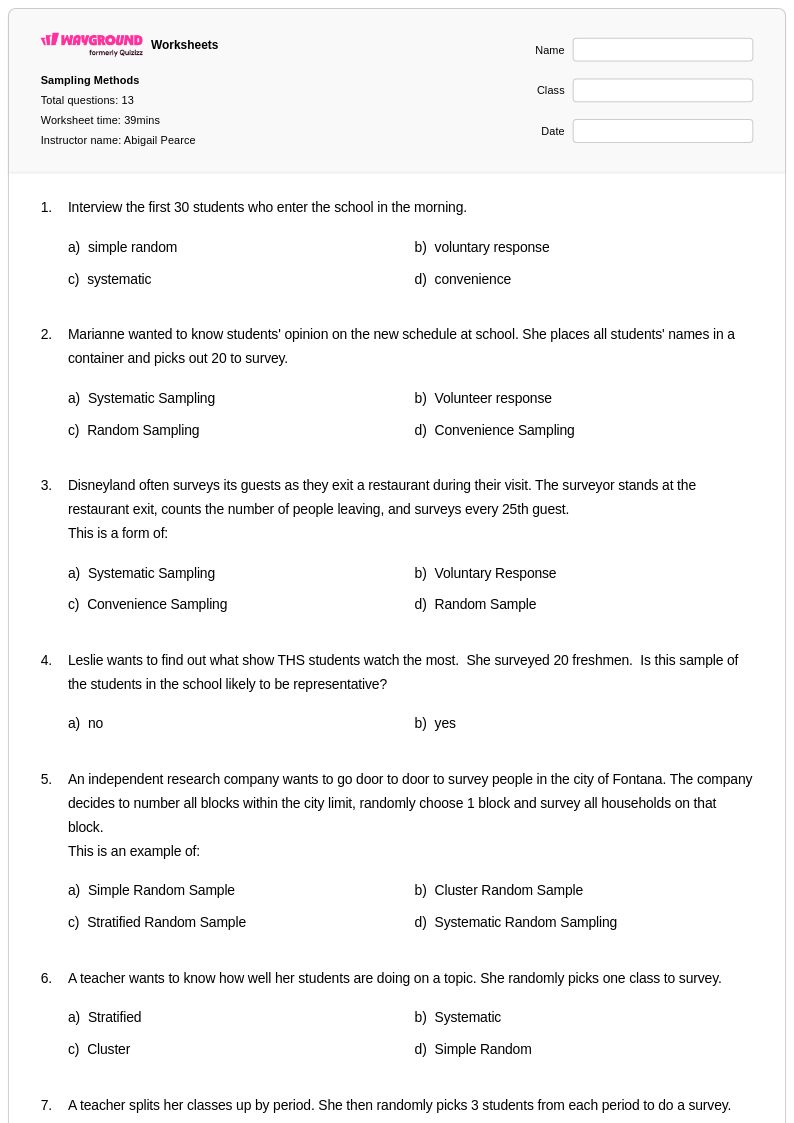
13 Q
9th - 12th
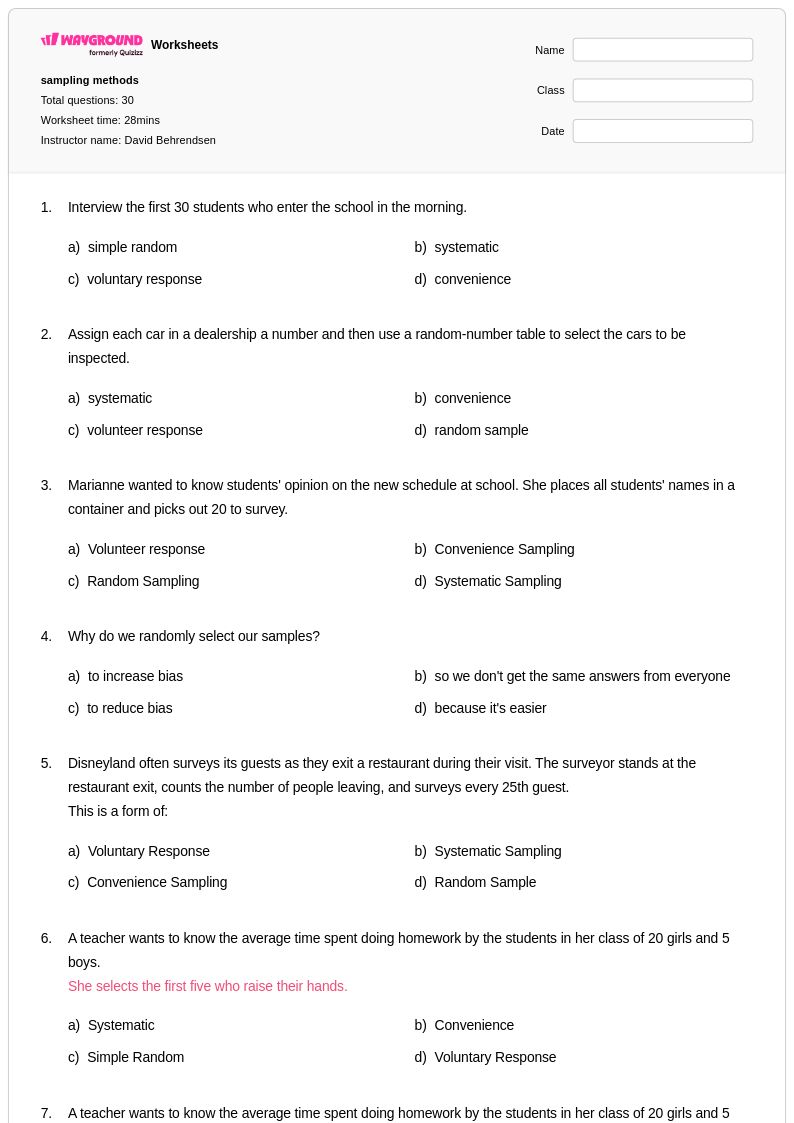
30 Q
7th - 12th
Explore Other Subject Worksheets for grade 9
Explore printable Sampling Methods worksheets for Grade 9
Sampling Methods worksheets for Grade 9 students available through Wayground (formerly Quizizz) provide comprehensive practice with the fundamental techniques statisticians use to collect representative data from larger populations. These carefully designed resources help students master essential concepts including simple random sampling, systematic sampling, stratified sampling, and cluster sampling, while developing critical thinking skills about sample bias, sample size determination, and the relationship between sampling methods and data validity. Each worksheet collection includes detailed answer keys and step-by-step solutions, with free printables covering practice problems that range from identifying appropriate sampling techniques for specific scenarios to calculating sampling intervals and analyzing the strengths and weaknesses of different methodological approaches.
Wayground (formerly Quizizz) supports mathematics educators with an extensive library of millions of teacher-created Sampling Methods resources specifically designed for Grade 9 probability and statistics instruction. The platform's robust search and filtering capabilities allow teachers to quickly locate worksheets that align with specific curriculum standards and learning objectives, while built-in differentiation tools enable seamless customization for students with varying skill levels and learning needs. Available in both printable pdf formats and interactive digital versions, these comprehensive worksheet collections streamline lesson planning and provide flexible options for classroom instruction, homework assignments, remediation sessions, and enrichment activities, ensuring that students develop a thorough understanding of how proper sampling methodology forms the foundation of reliable statistical analysis and data-driven decision making.
FAQs
What do 9th graders learn about sampling methods?
How do I teach the difference between sampling bias and sampling error?
What exercises are best for 9th graders learning sampling methods?
How can I use this 9th-grade sampling worksheet in my classroom?
How does this topic align with high school math standards?
How can I accommodate diverse learners with this worksheet?