
15 Q
9th - 12th
15 Q
9th - 12th
8 Q
9th - 12th
23 Q
9th - 12th
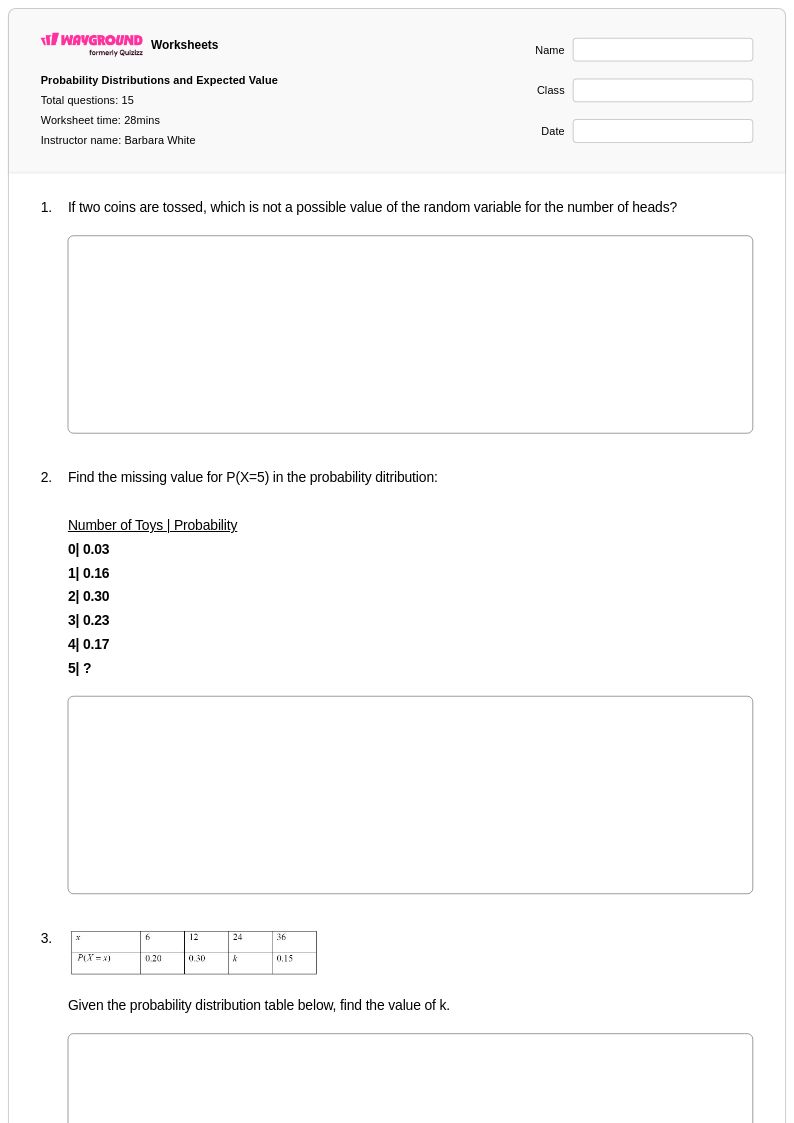
15 Q
9th - 12th
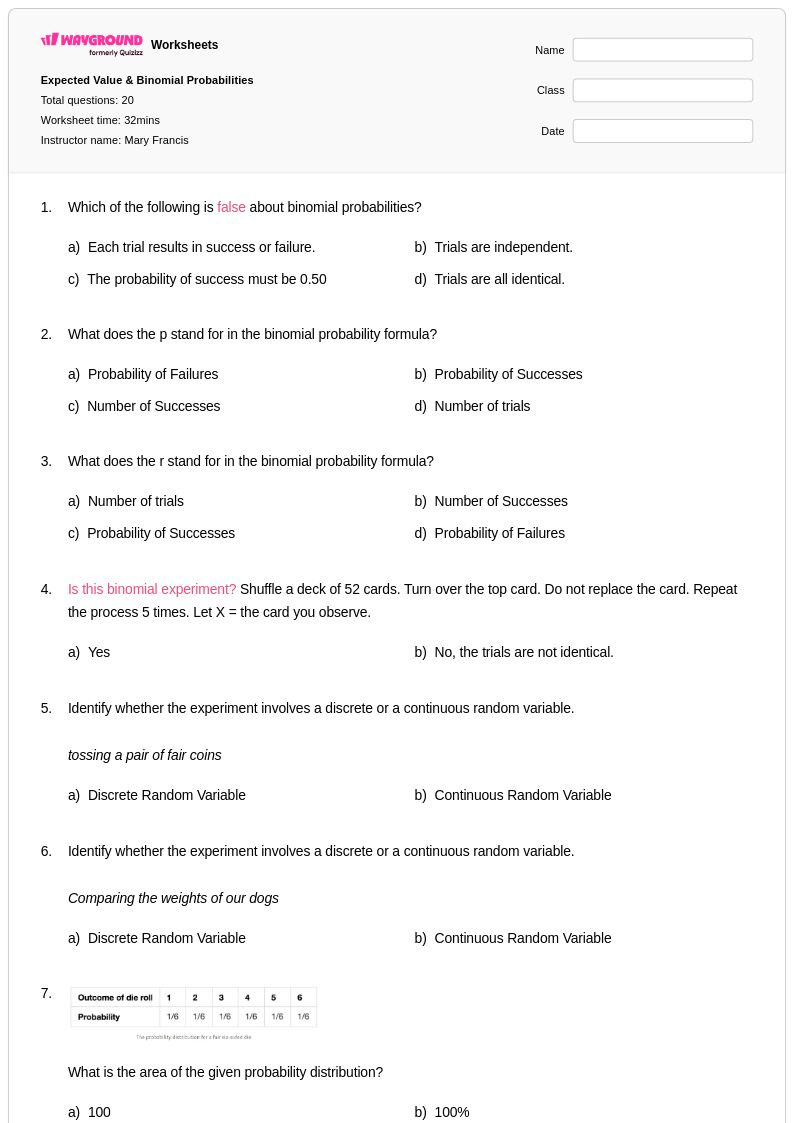
20 Q
9th - 12th
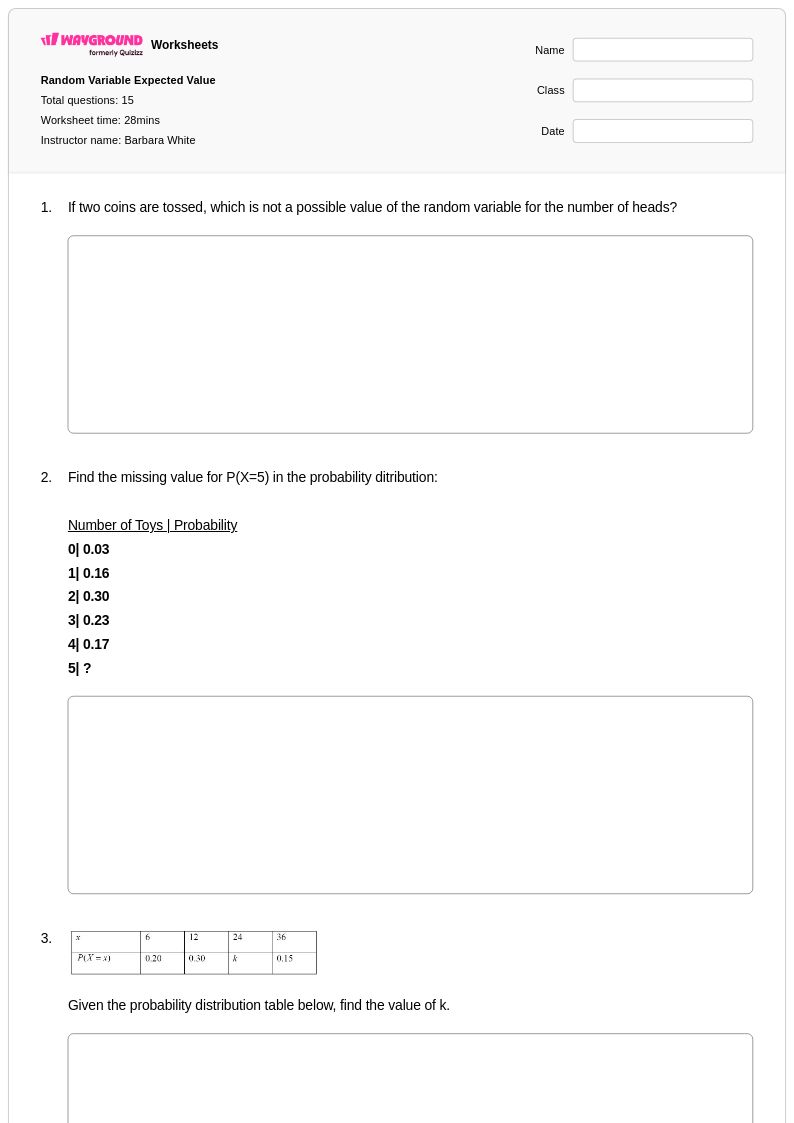
15 Q
9th - 12th
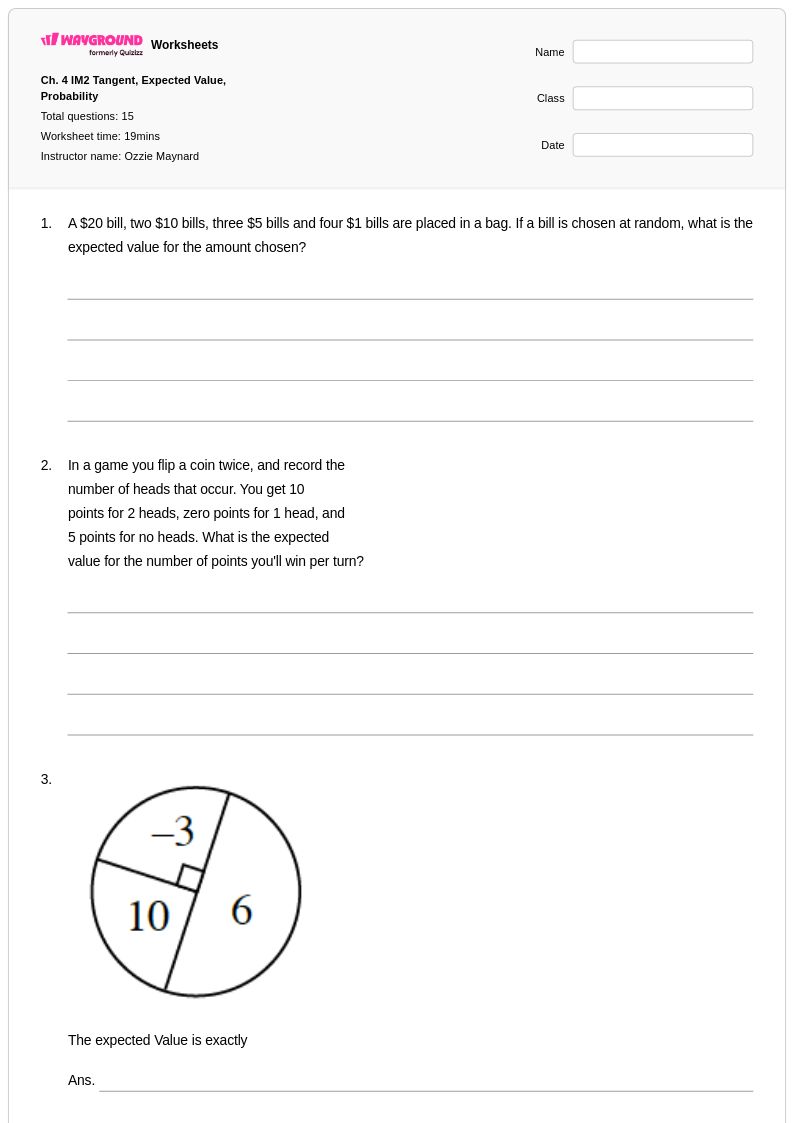
15 Q
8th - 11th
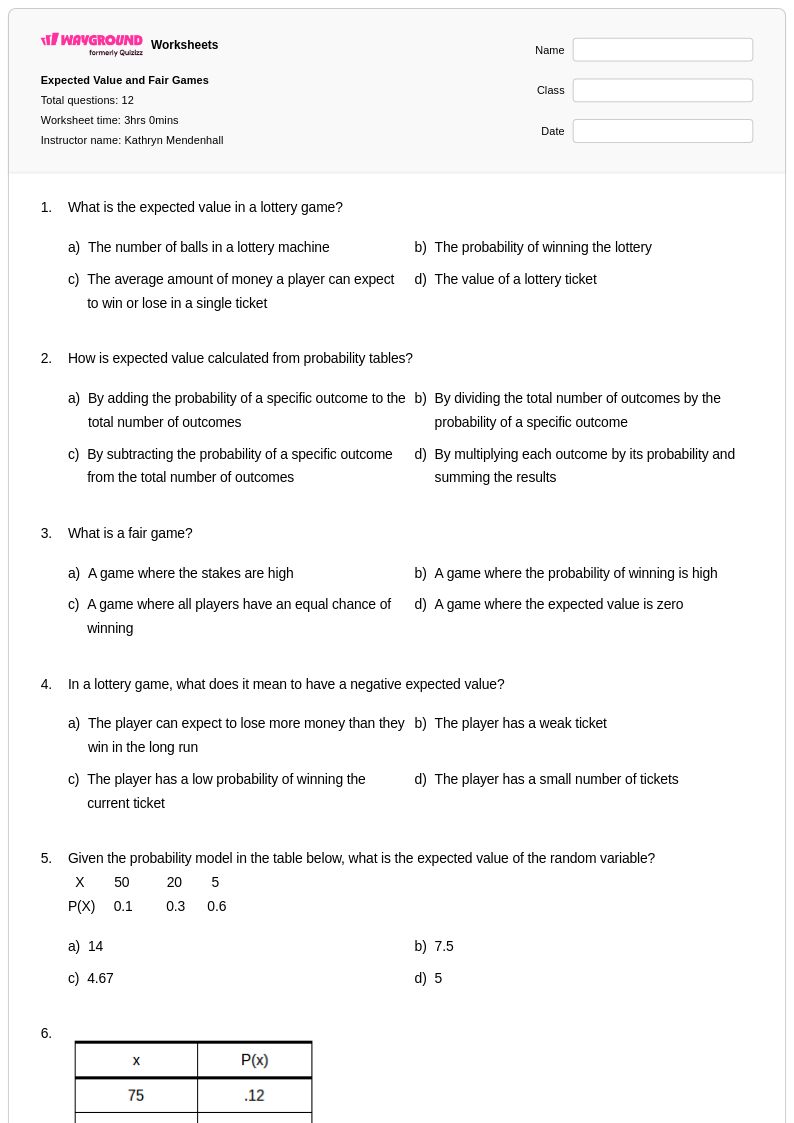
12 Q
9th - 12th
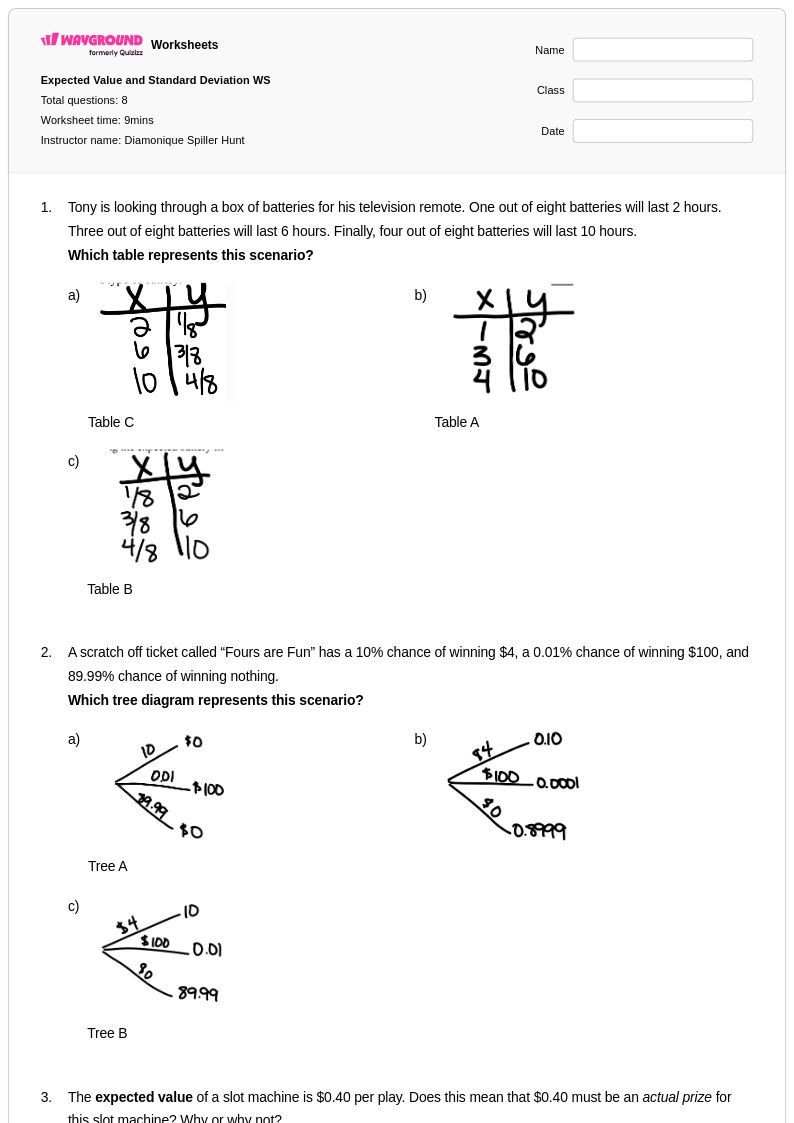
8 Q
9th - 12th
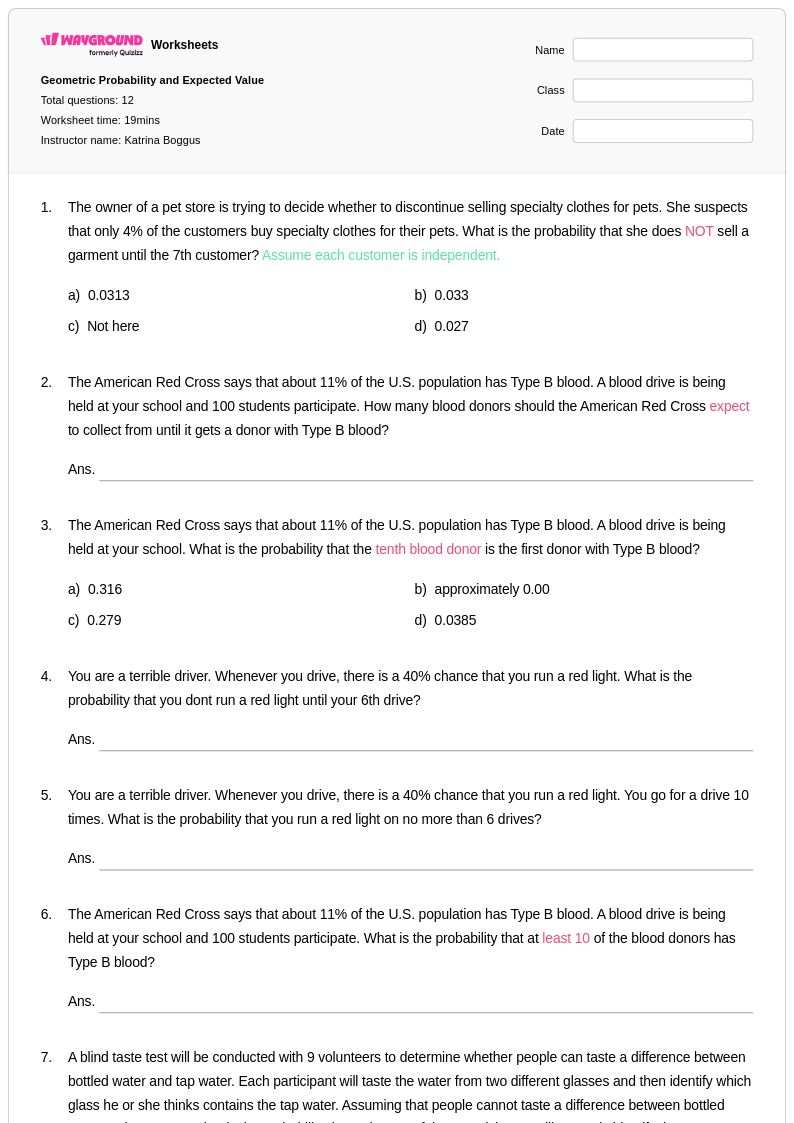
12 Q
9th - 12th
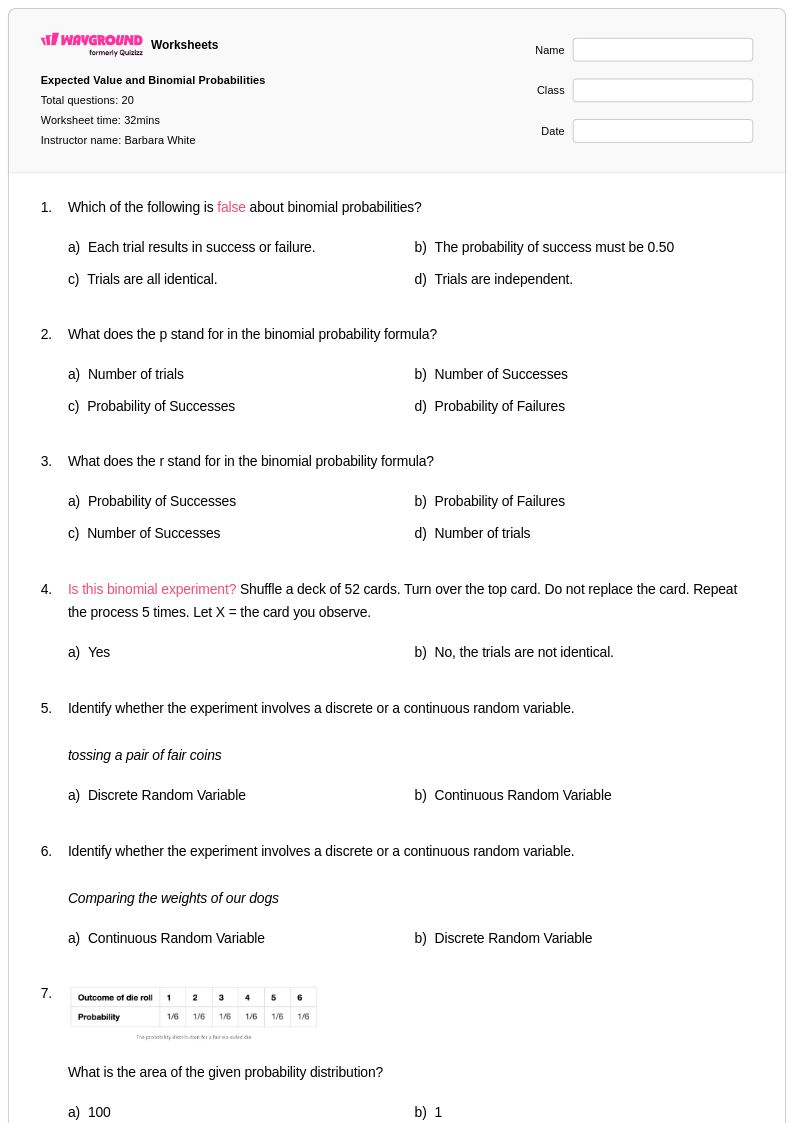
20 Q
9th - 12th
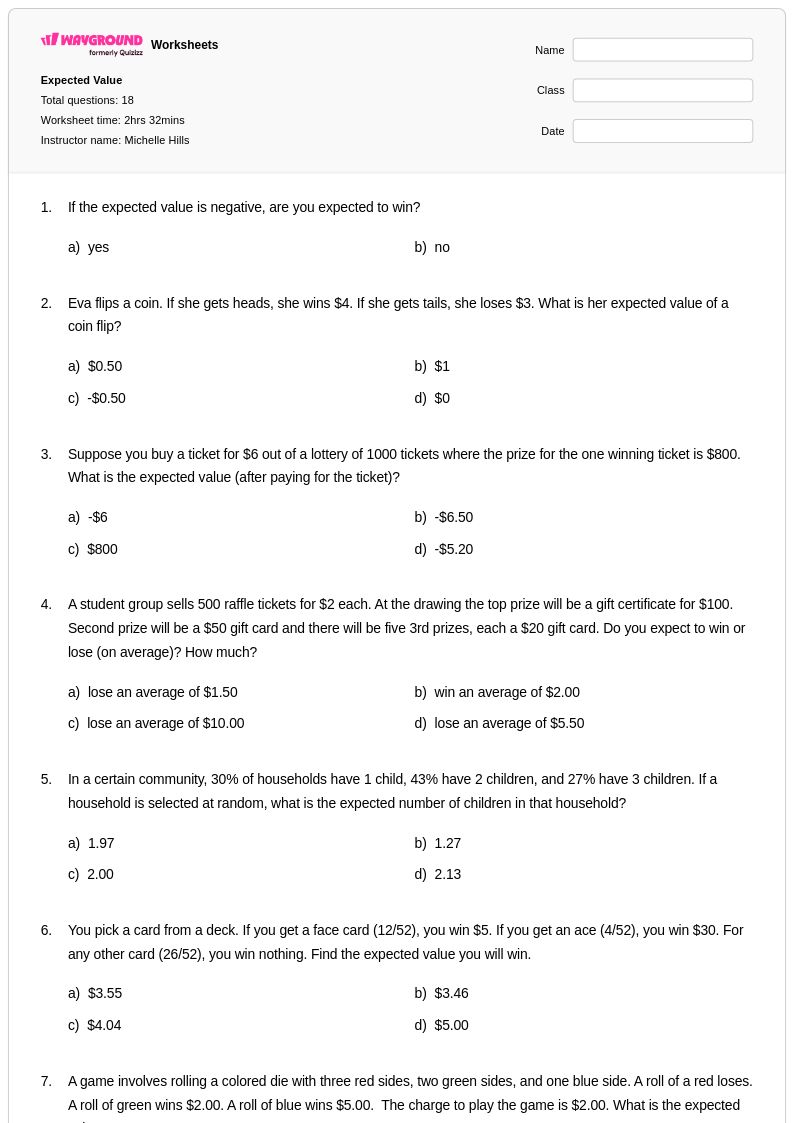
18 Q
9th - 12th
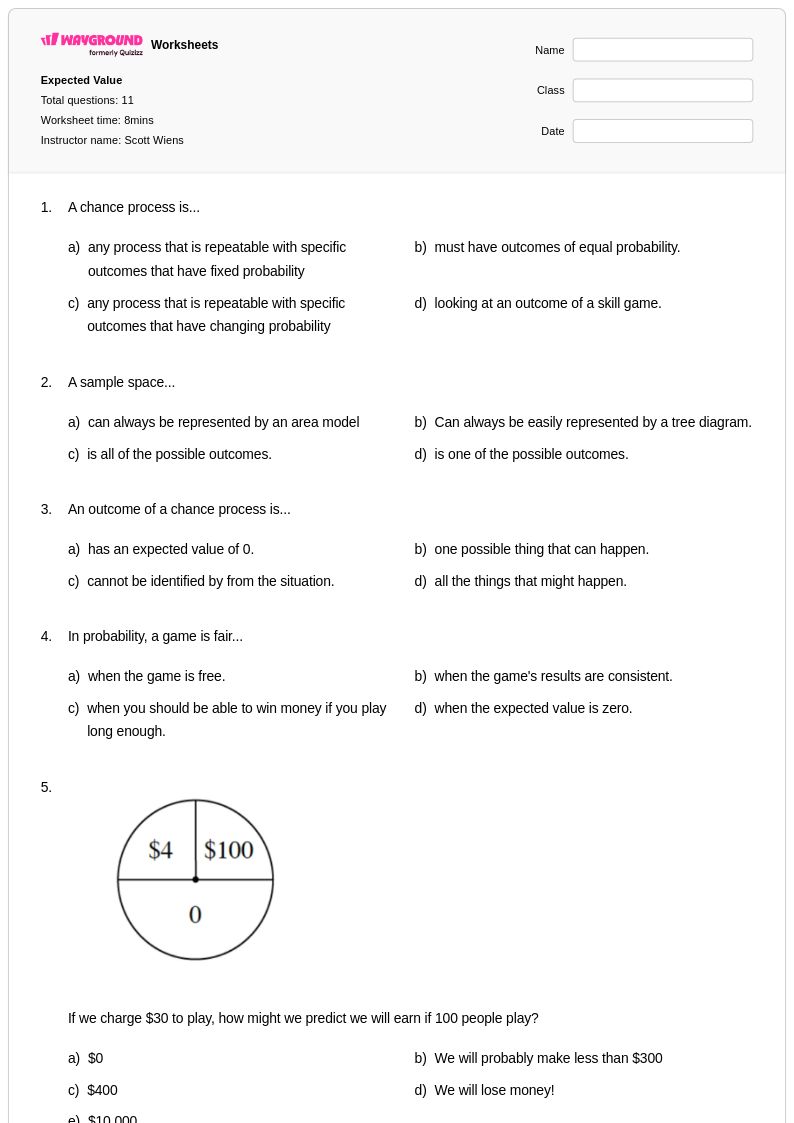
11 Q
9th - 10th
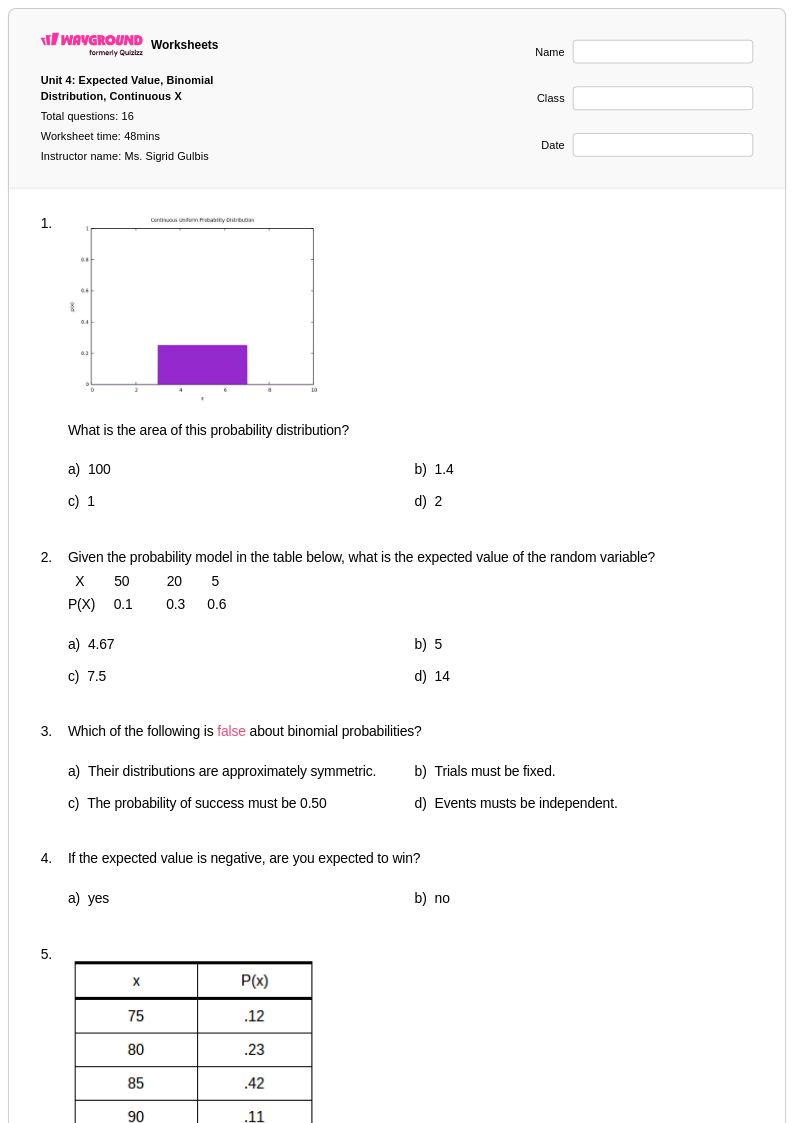
16 Q
9th - 12th
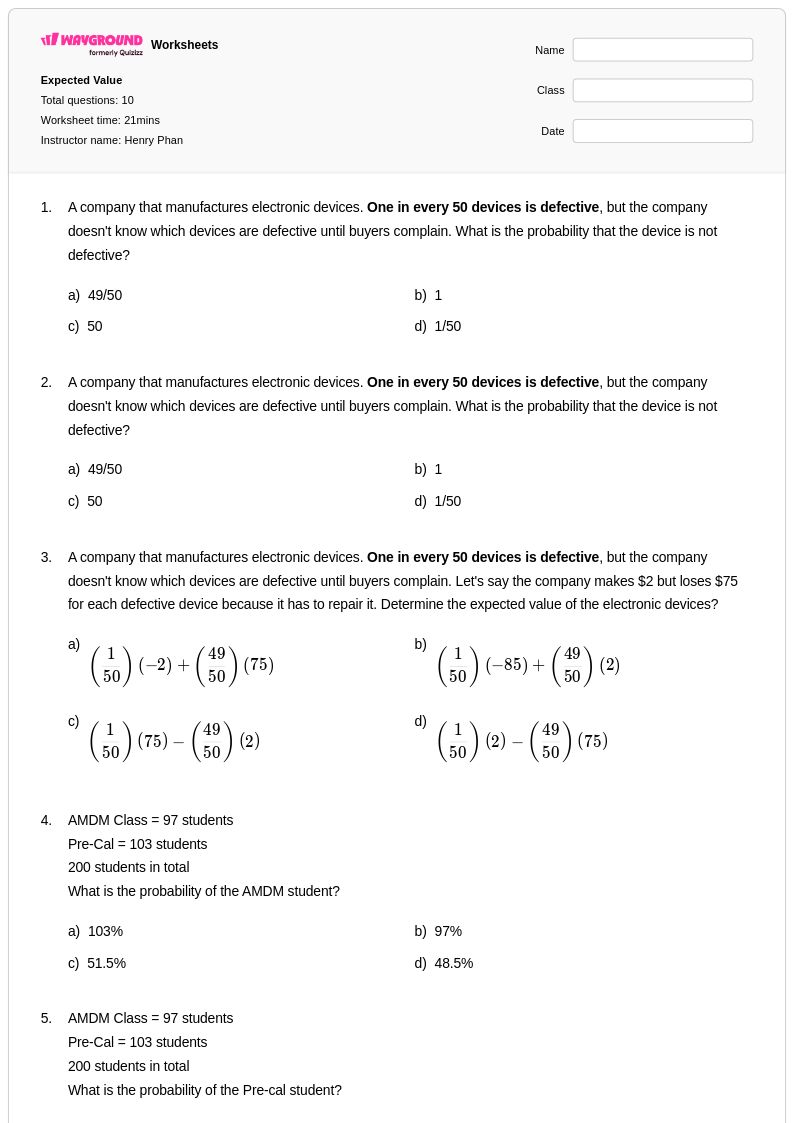
10 Q
9th - 12th
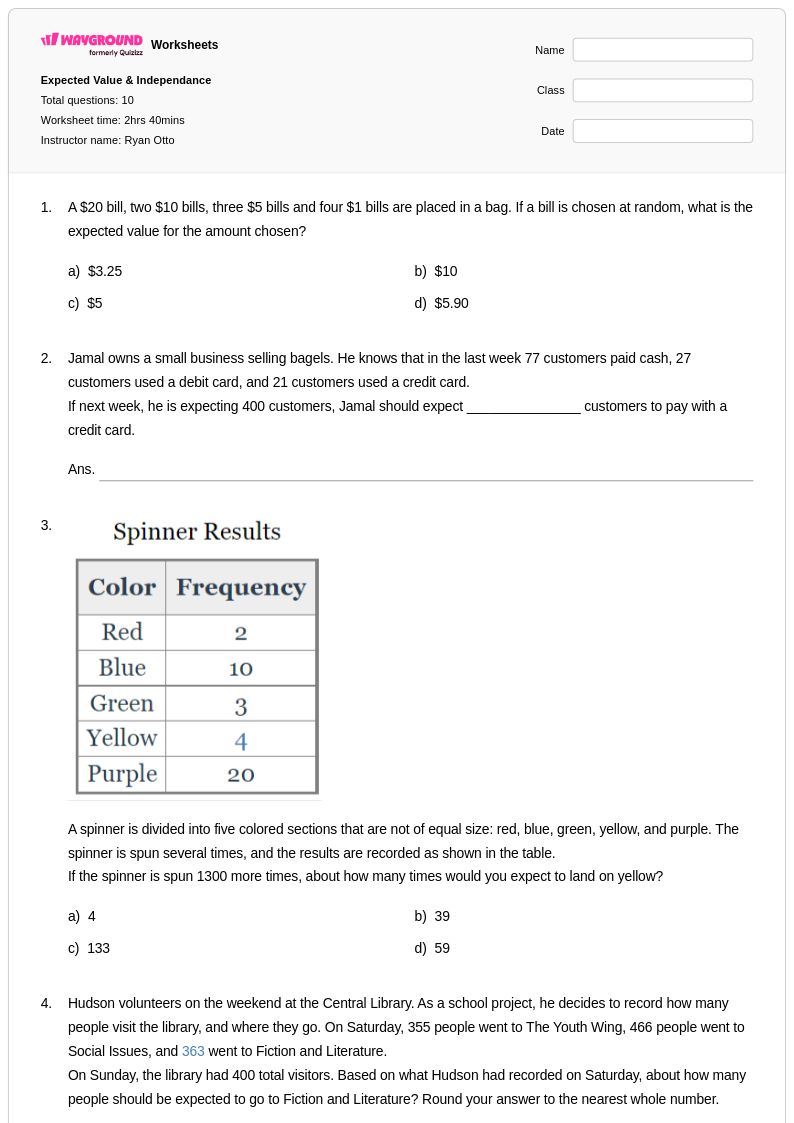
10 Q
9th
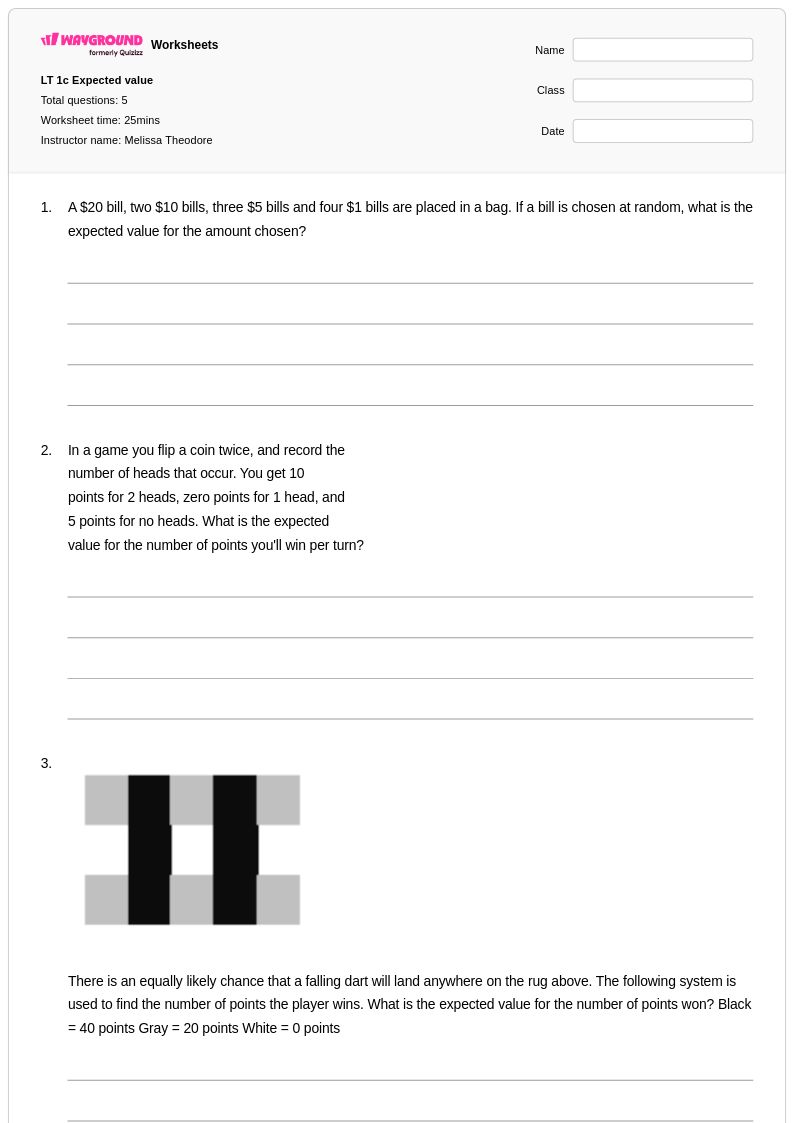
5 Q
7th - 10th
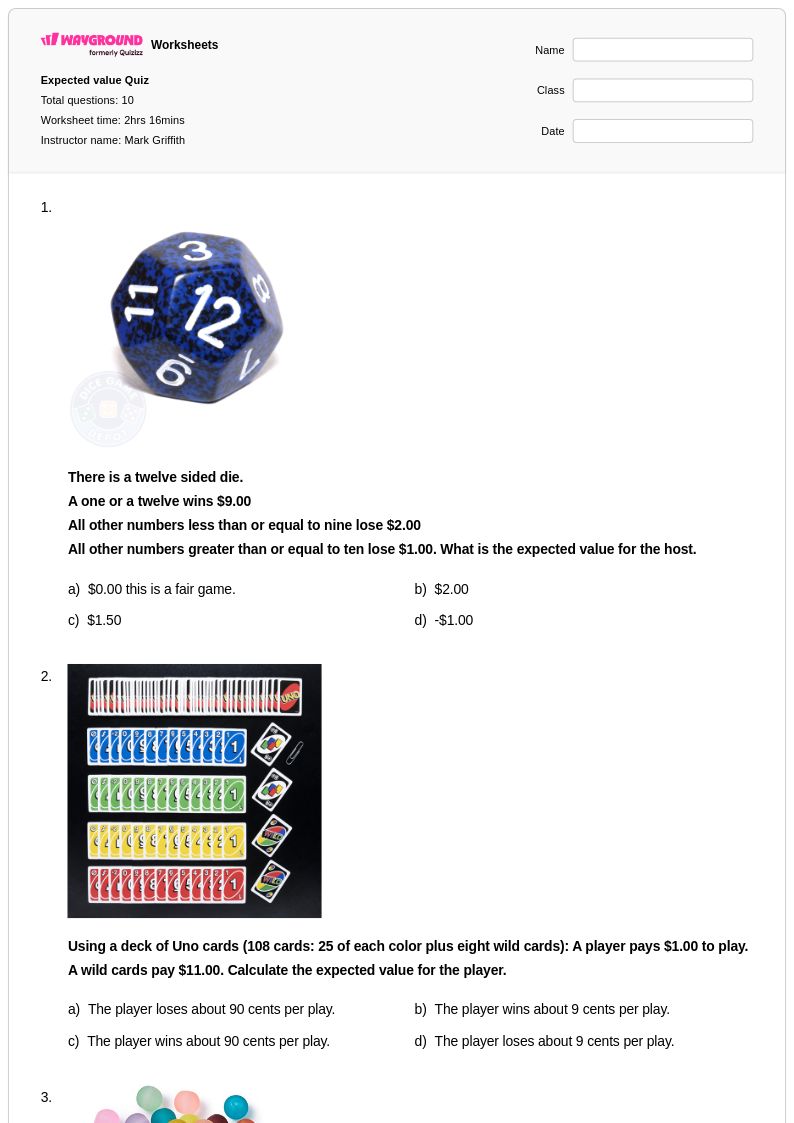
10 Q
9th - 12th
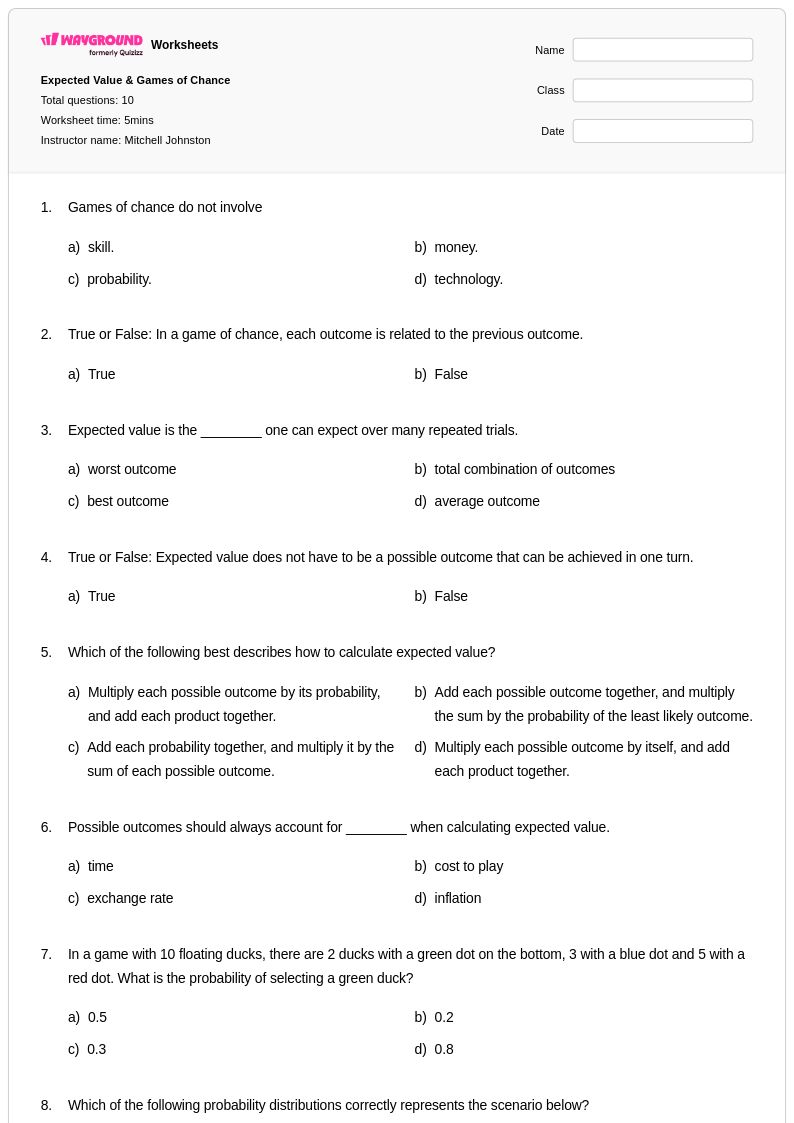
10 Q
9th - 12th
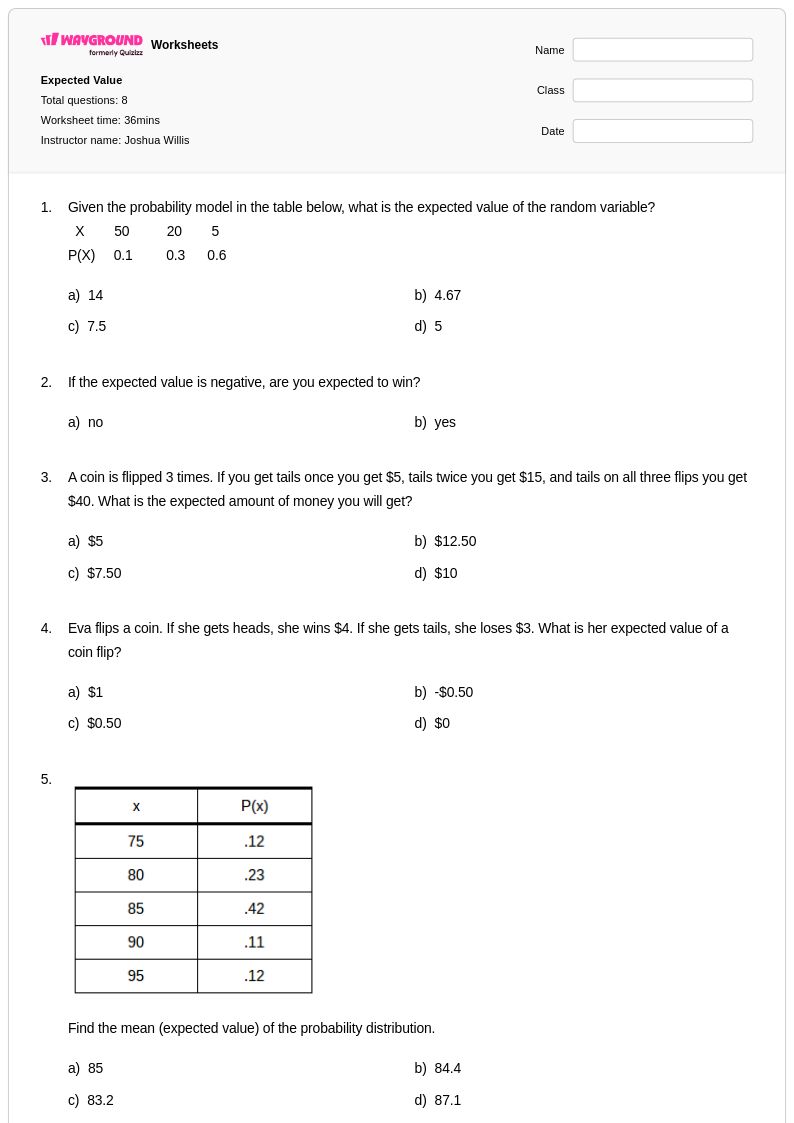
8 Q
9th - Uni
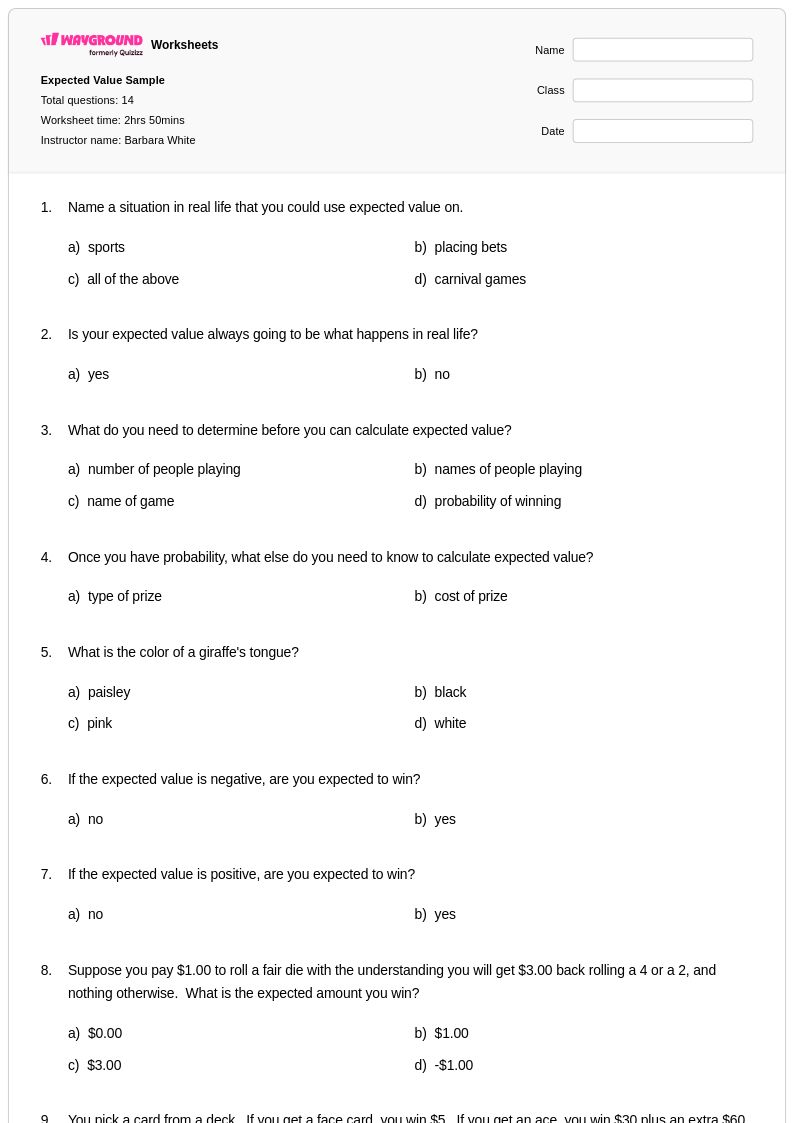
14 Q
9th - 12th
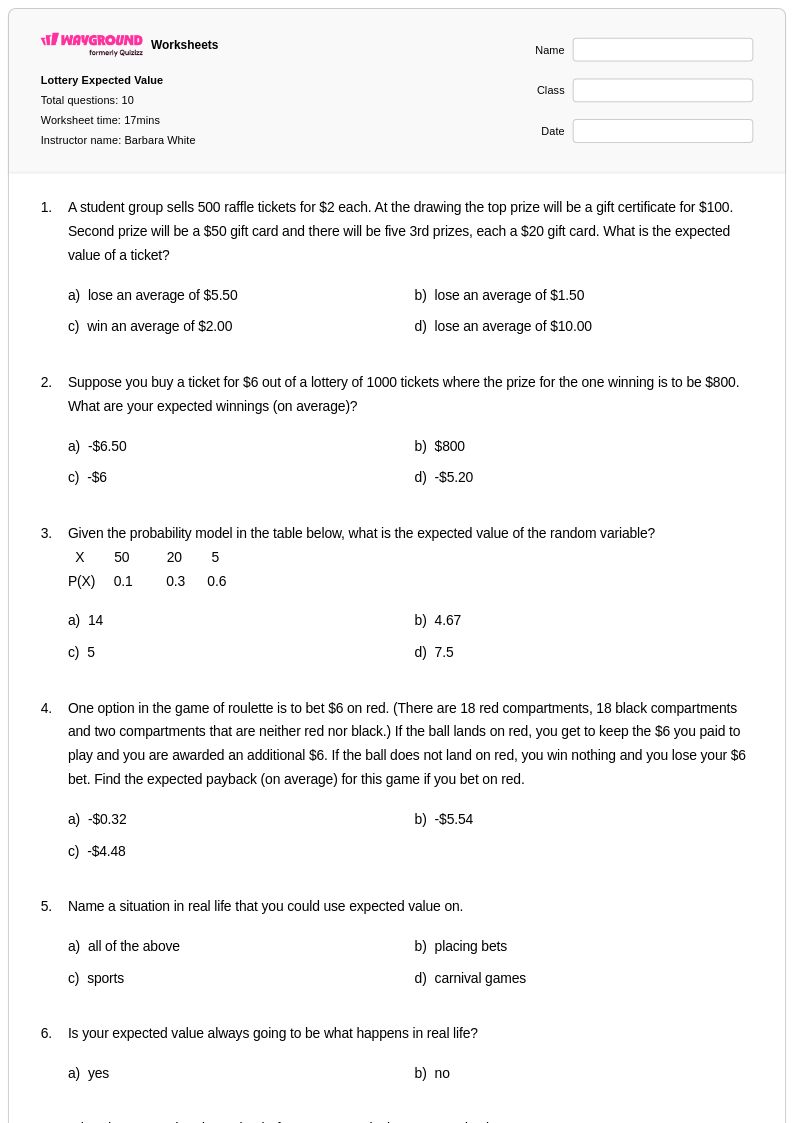
10 Q
9th - 12th
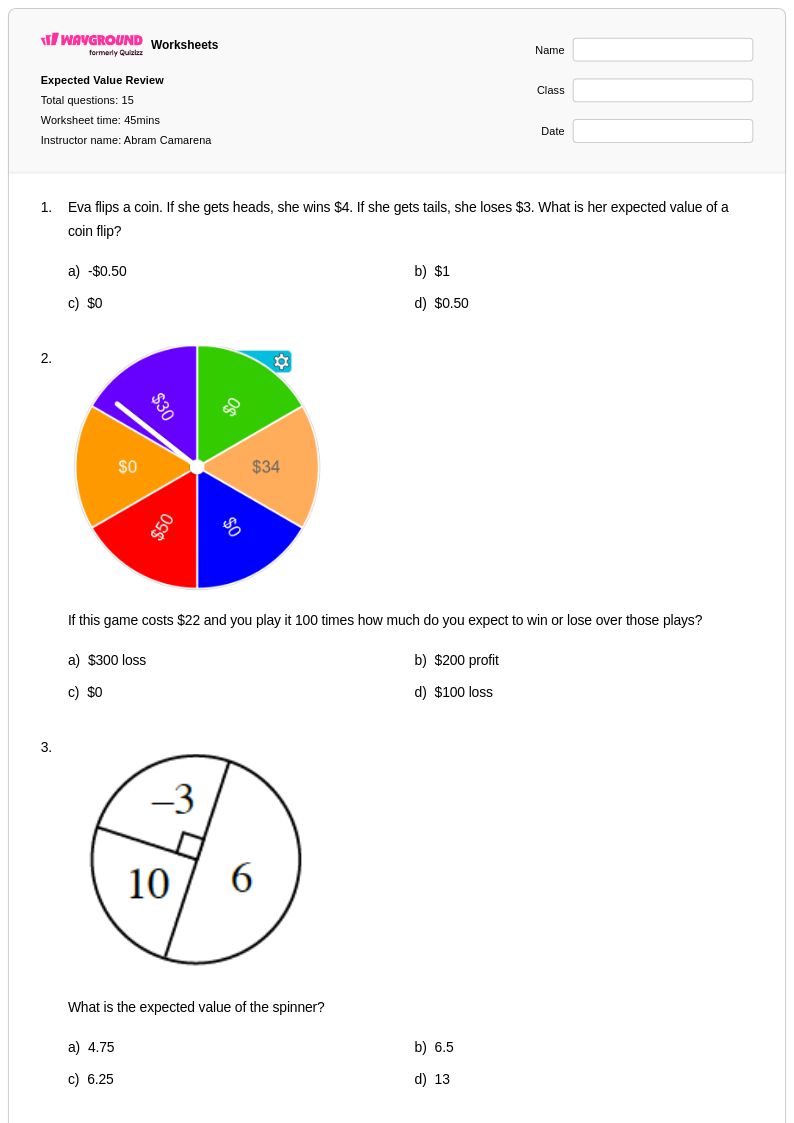
15 Q
9th
Explore Other Subject Worksheets for grade 9
Explore printable Expected Value worksheets for Grade 9
Expected value worksheets for Grade 9 students available through Wayground (formerly Quizizz) provide comprehensive practice opportunities for mastering this fundamental concept in probability and statistics. These carefully designed resources help students develop critical analytical skills by working through scenarios involving games of chance, insurance premiums, investment returns, and other real-world applications where calculating expected outcomes is essential. The worksheet collections include detailed practice problems that guide students through the process of multiplying probabilities by their corresponding values and summing these products to determine long-term averages. Each worksheet comes with a complete answer key, allowing students to verify their calculations and understand common mistakes, while teachers can access free printable pdf versions that support both classroom instruction and independent study sessions.
Wayground (formerly Quizizz) empowers educators with access to millions of teacher-created expected value resources that can be easily searched and filtered by difficulty level, problem type, and mathematical standards alignment. The platform's robust differentiation tools allow teachers to customize worksheets based on individual student needs, whether providing additional scaffolding for struggling learners or creating enrichment problems for advanced students ready to tackle more complex probability distributions. These flexible resources are available in both digital and printable pdf formats, enabling seamless integration into lesson planning while supporting various instructional approaches from direct teaching to remediation sessions. Teachers can efficiently identify specific areas where students need additional skill practice, then quickly generate targeted worksheet collections that reinforce expected value calculations through diverse problem-solving contexts that build mathematical reasoning and statistical literacy.
FAQs
How do I introduce expected value to 9th graders?
What practice problems are appropriate for 9th grade expected value?
What errors do 9th graders typically make with expected value?
How do I use these Grade 9 expected value worksheets in my classroom?
Is expected value taught in 9th grade math?
How can I support struggling 9th graders with expected value worksheets?