
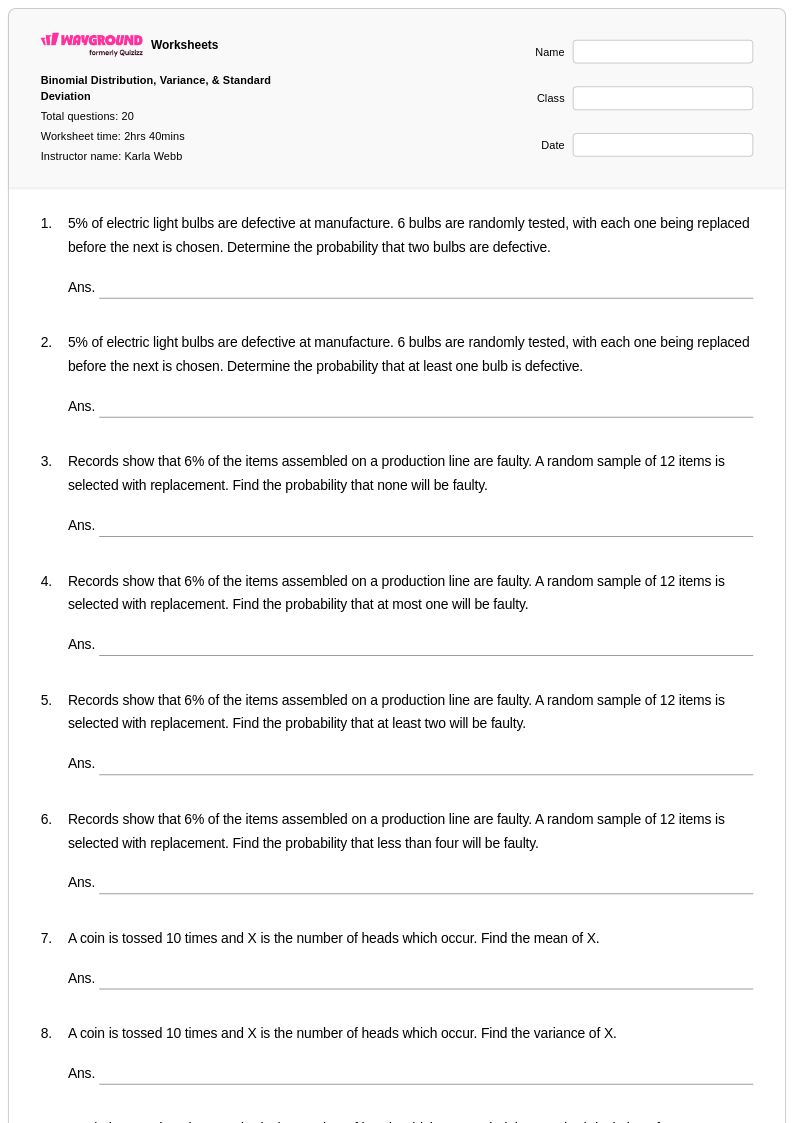
20 Q
9th - 12th
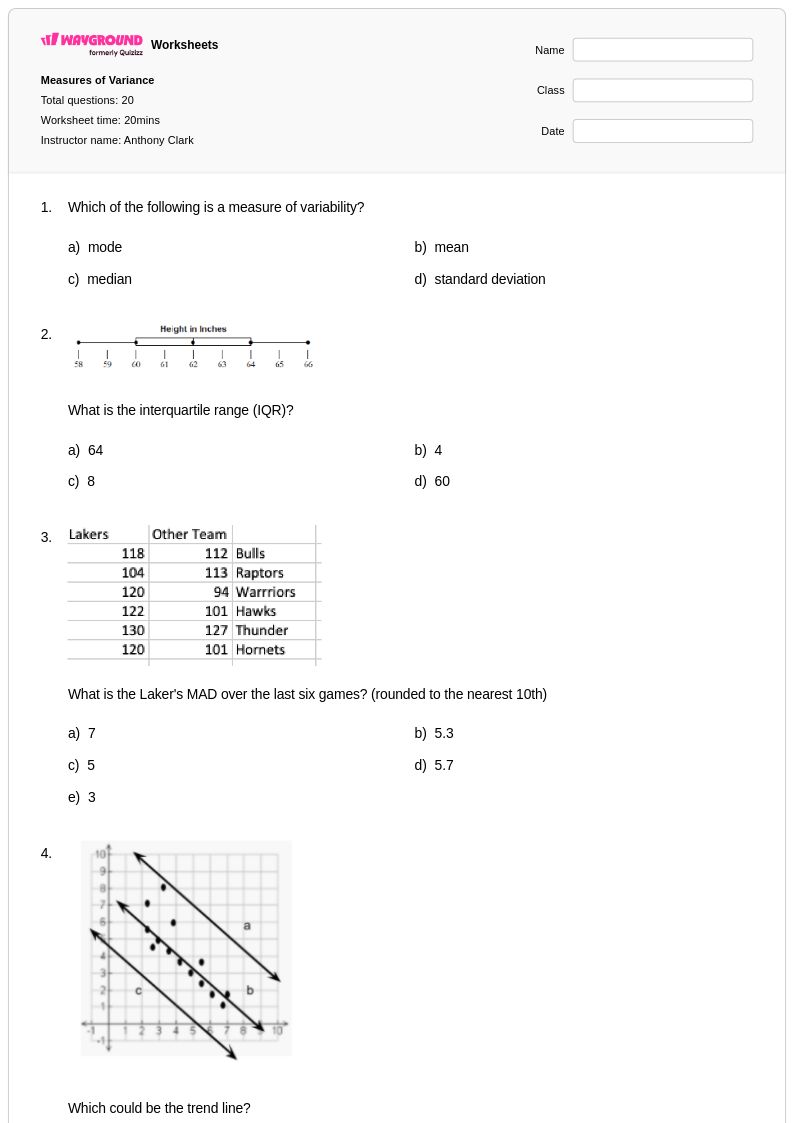
20 Q
7th - Uni
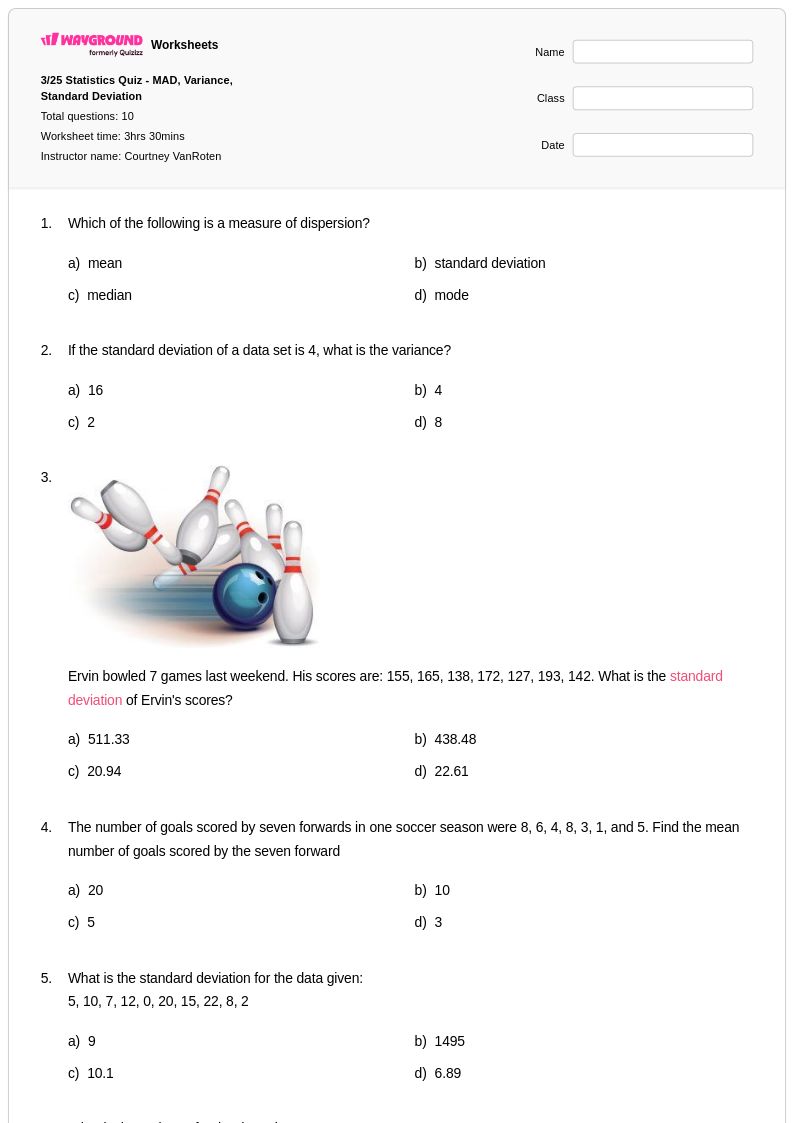
10 Q
9th - 12th
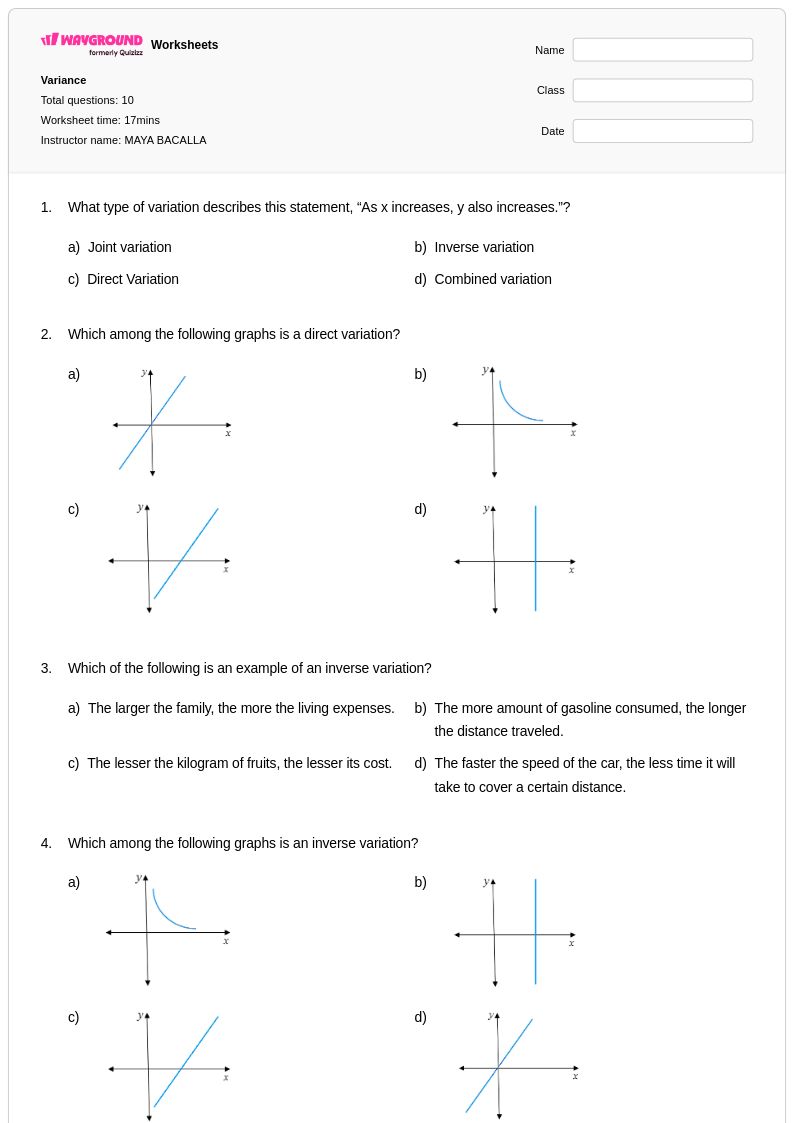
10 Q
9th
15 Q
9th - 12th
20 Q
9th - 12th
10 Q
9th - 12th
20 Q
6th - Uni
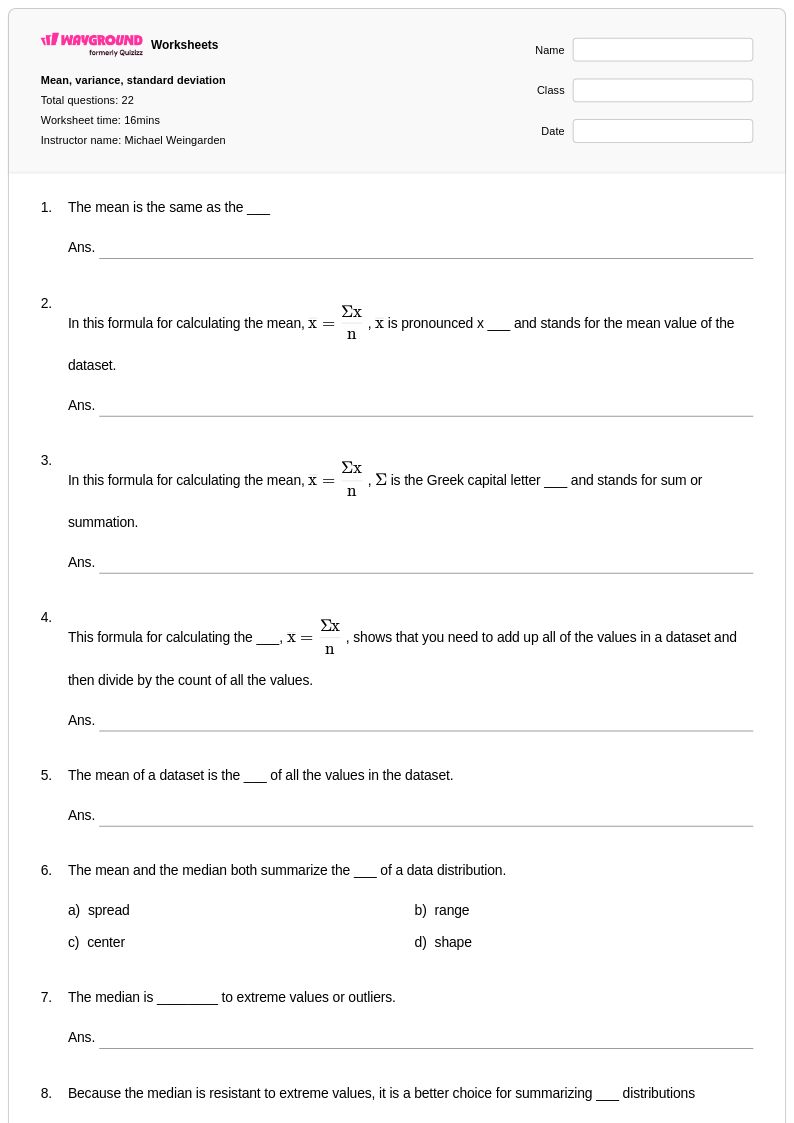
22 Q
9th - 12th
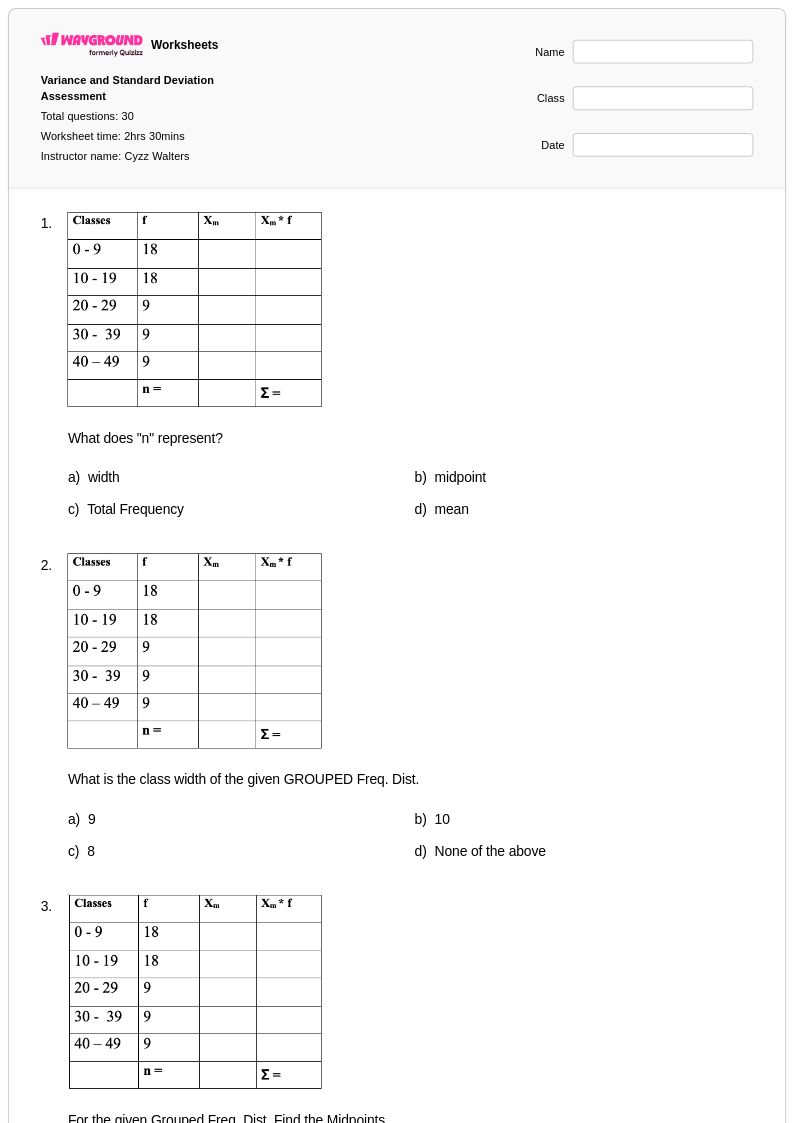
30 Q
9th - 12th
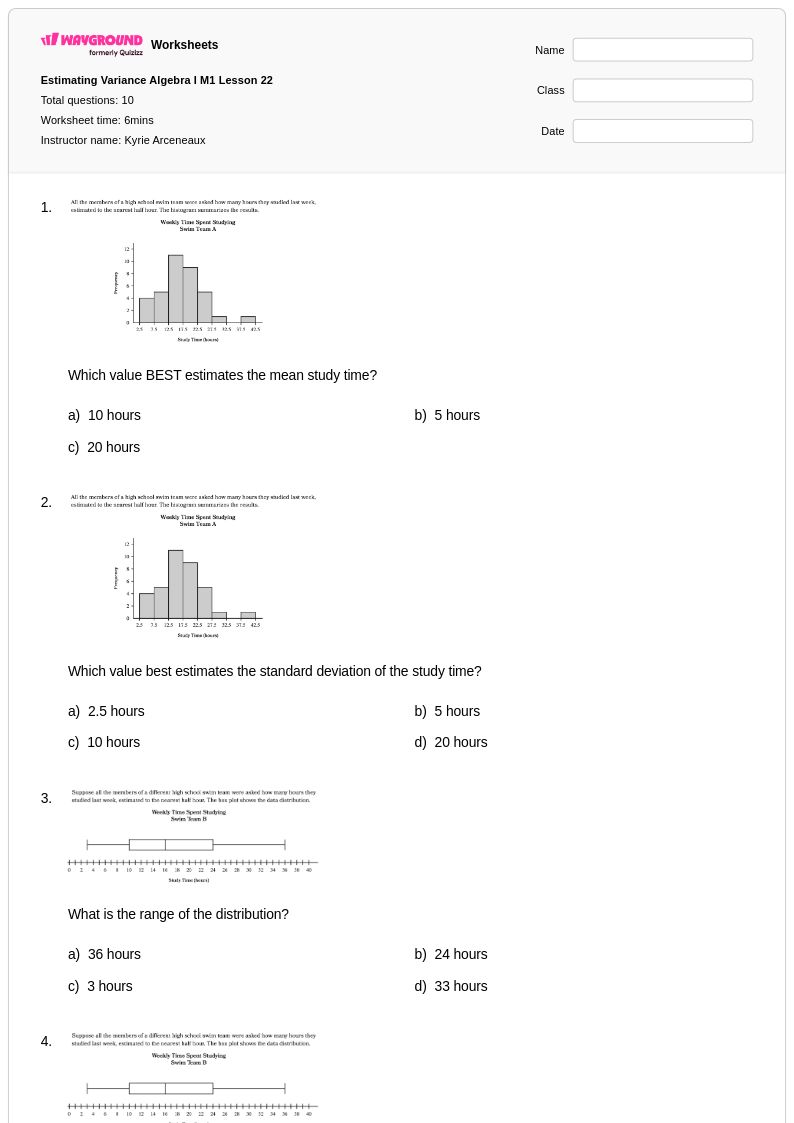
10 Q
9th - 12th
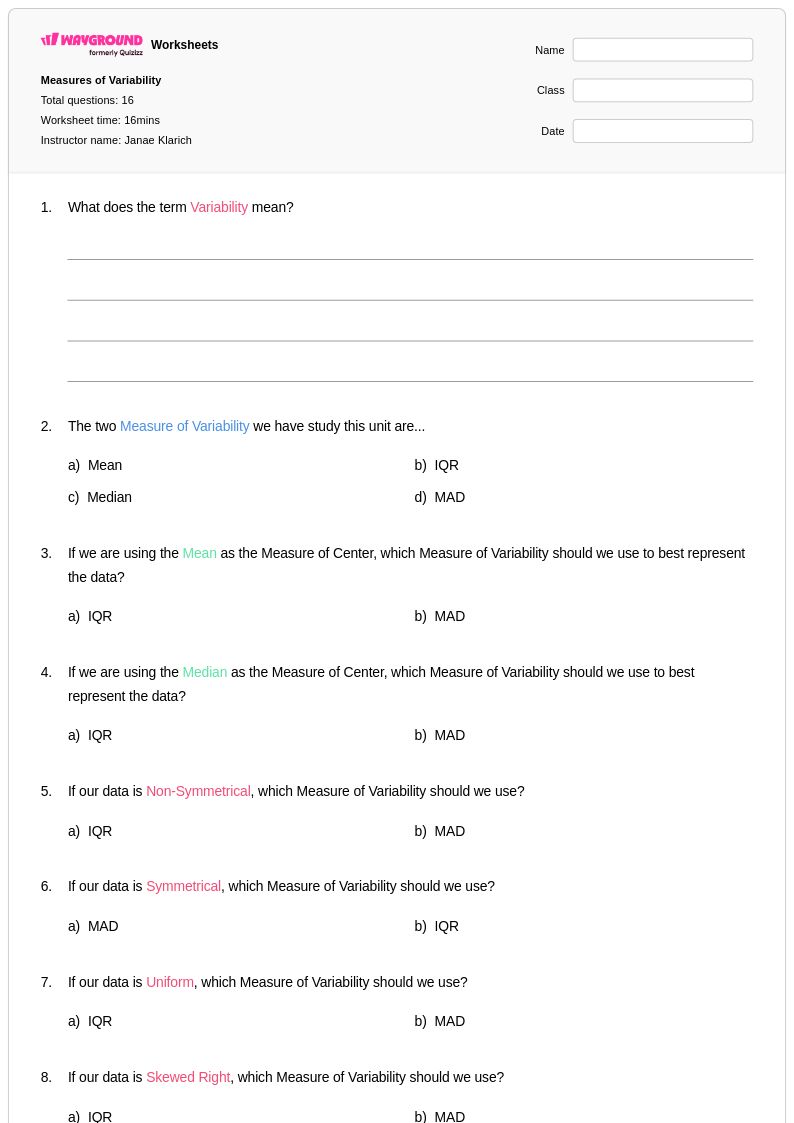
16 Q
8th - 9th
18 Q
9th - 12th
22 Q
8th - 9th
13 Q
9th - 12th
12 Q
9th
40 Q
9th
11 Q
9th
20 Q
7th - Uni
15 Q
9th - 12th
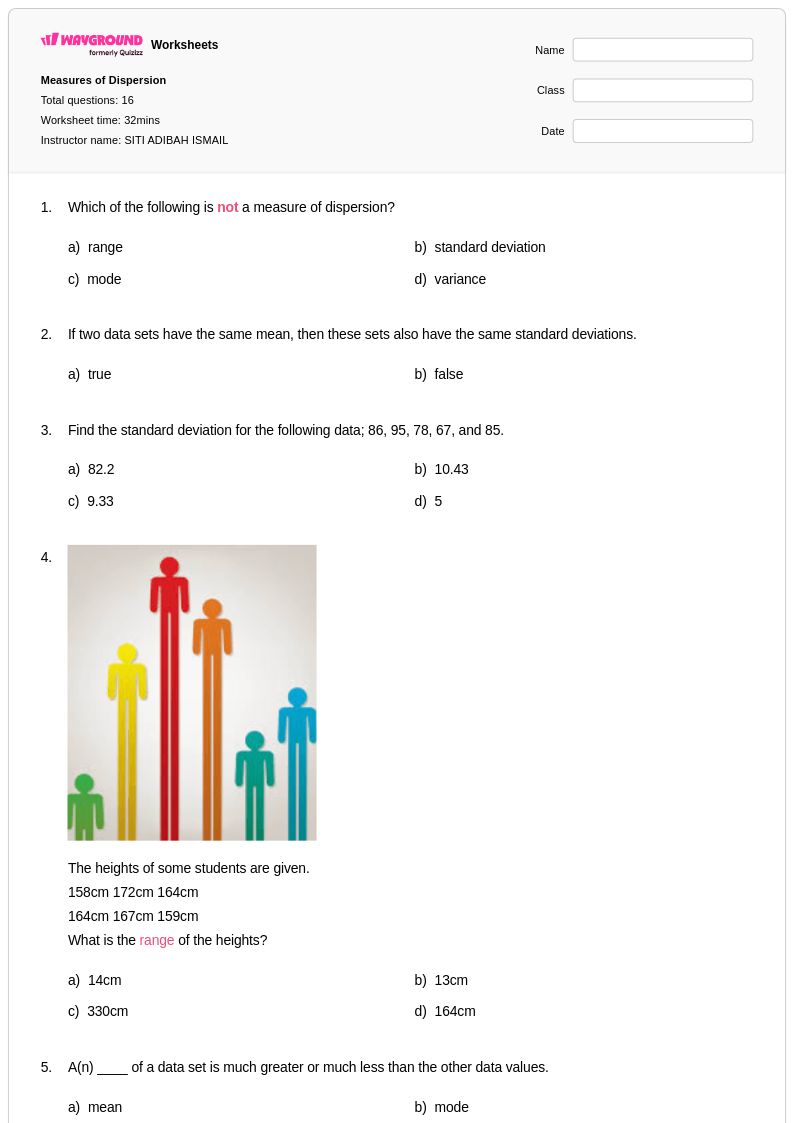
16 Q
5th - 11th
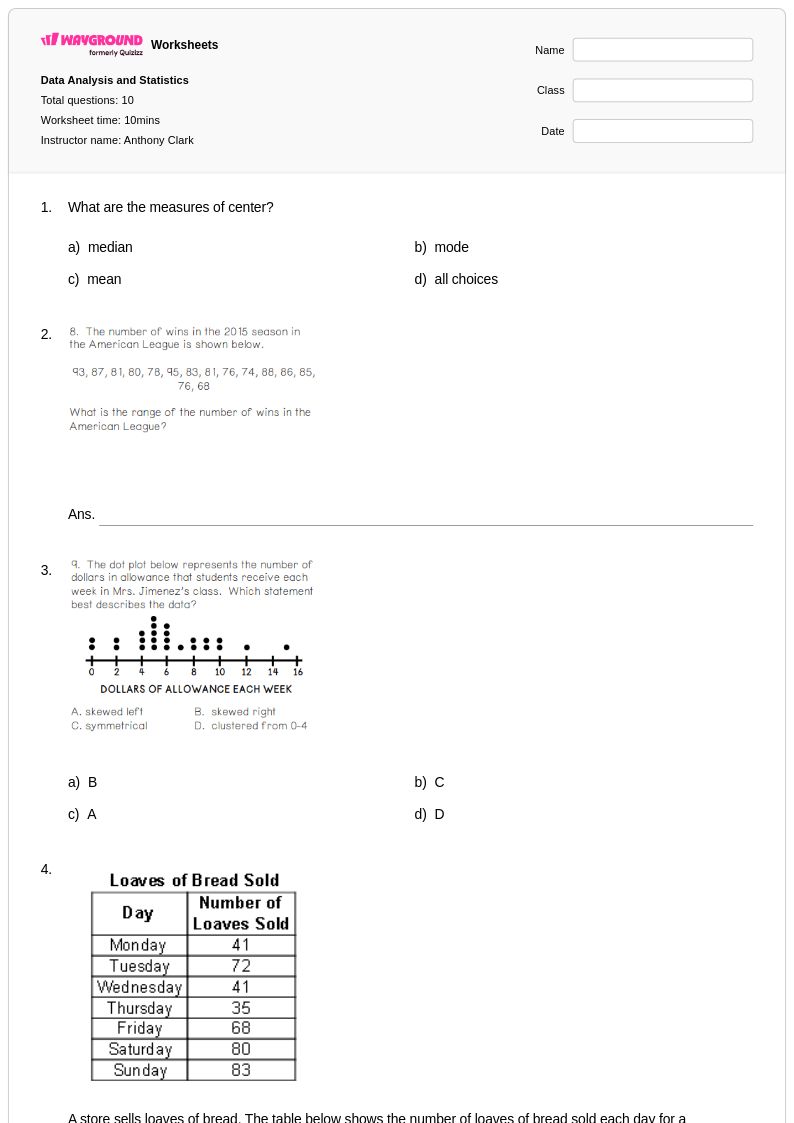
10 Q
6th - Uni
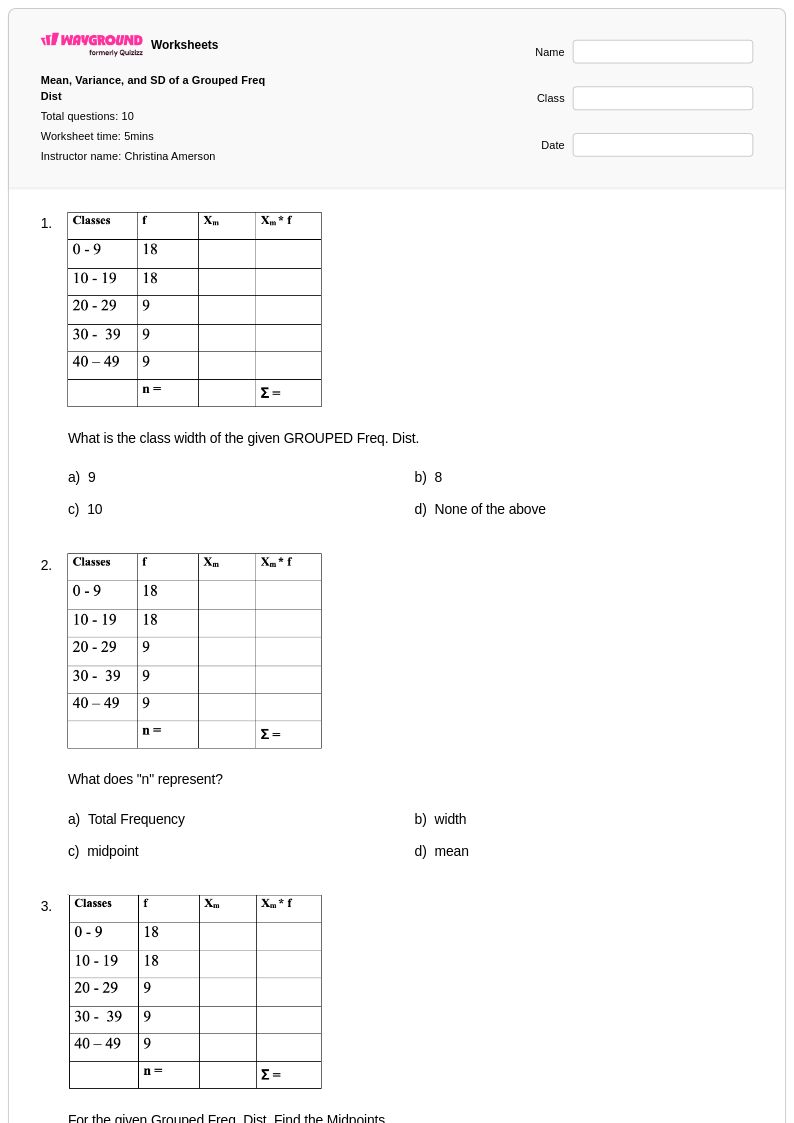
10 Q
9th - PD
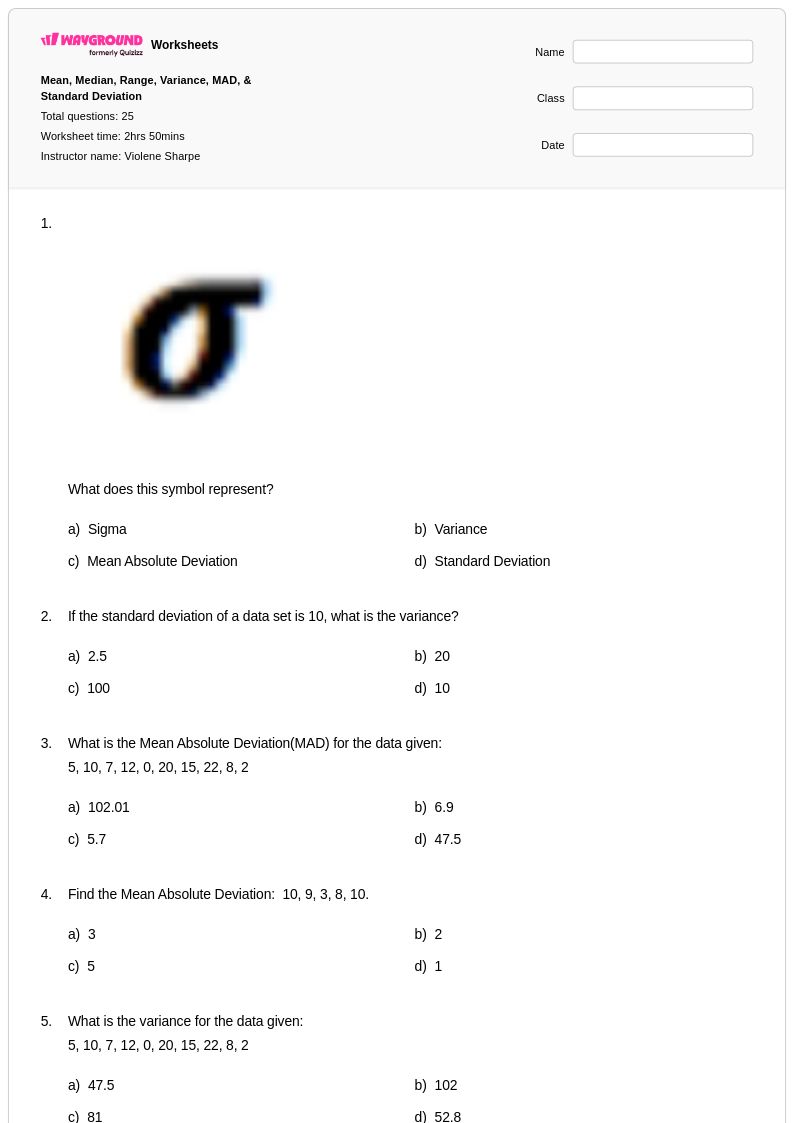
25 Q
9th - 12th
Explore Other Subject Worksheets for grade 9
Explore printable Variance worksheets for Grade 9
Variance worksheets for Grade 9 students available through Wayground (formerly Quizizz) provide comprehensive practice with this fundamental concept in probability and statistics. These carefully designed resources help students master the calculation and interpretation of variance as a measure of data spread, strengthening their understanding of how individual data points deviate from the mean. Students work through practice problems that cover sample variance, population variance, and the relationship between variance and standard deviation, while developing critical analytical skills needed for advanced statistical reasoning. Each worksheet includes detailed answer key materials and is available as free printable pdf resources, allowing students to build confidence through systematic practice with increasingly complex datasets and real-world applications.
Wayground (formerly Quizizz) supports mathematics educators with an extensive collection of teacher-created variance worksheets, drawing from millions of high-quality resources that can be easily accessed through robust search and filtering capabilities. Teachers benefit from materials that align with curriculum standards and offer built-in differentiation tools, enabling them to customize content for students at varying skill levels within Grade 9 mathematics courses. The platform's flexible format options include both printable pdf versions for traditional classroom use and digital formats for interactive learning environments, making these resources invaluable for lesson planning, targeted remediation, and enrichment activities. This comprehensive approach ensures that educators can effectively address diverse learning needs while providing students with multiple pathways to master variance concepts and strengthen their overall statistical literacy.