
20 Q
8th - Uni
20 Q
9th - Uni
20 Q
7th - Uni
10 Q
9th - 11th
7 Q
9th
12 Q
9th - Uni
20 Q
8th - Uni
12 Q
8th - Uni
12 Q
8th - Uni
11 Q
8th - Uni
20 Q
8th - Uni
20 Q
8th - Uni
10 Q
9th
13 Q
8th - Uni
20 Q
8th - Uni
14 Q
8th - Uni
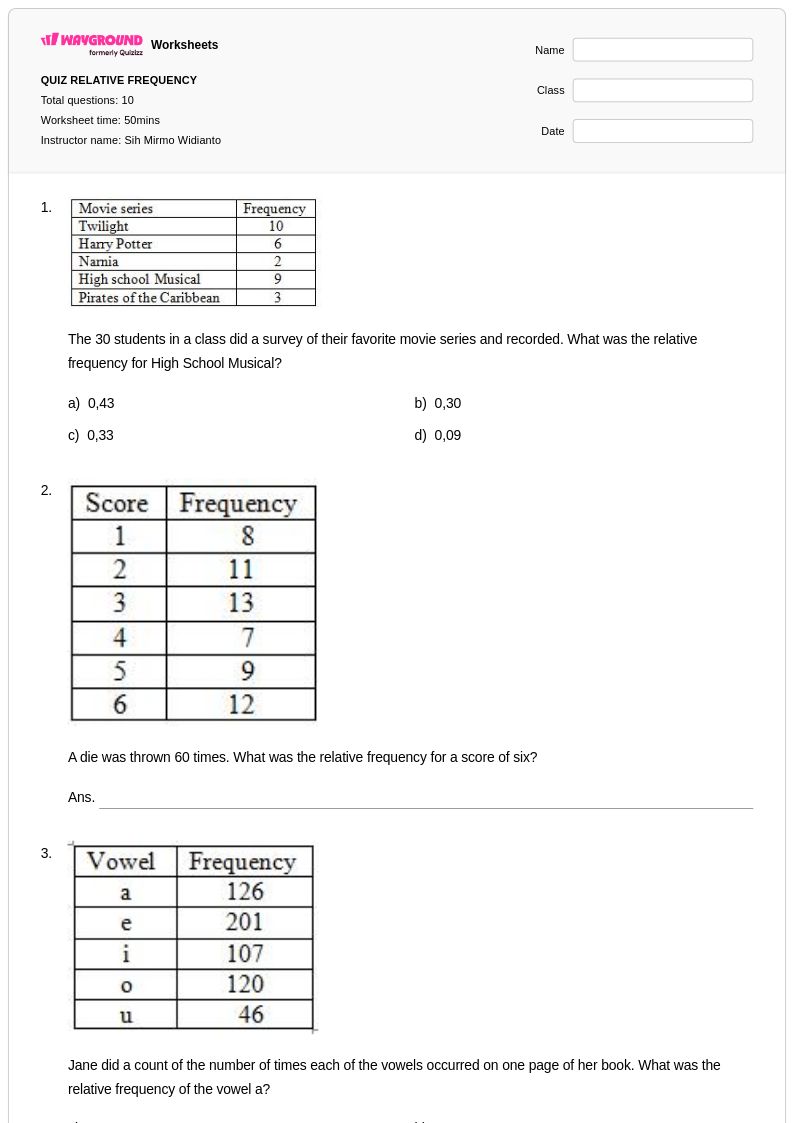
10 Q
9th
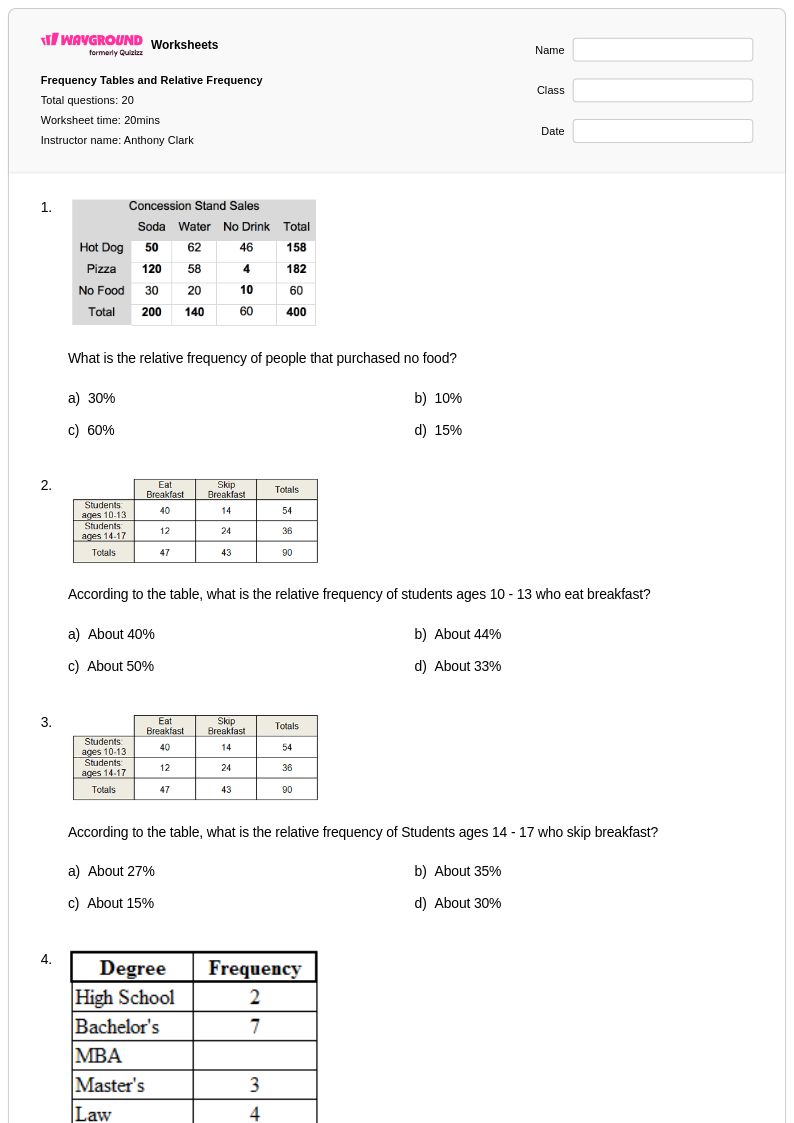
20 Q
8th - Uni
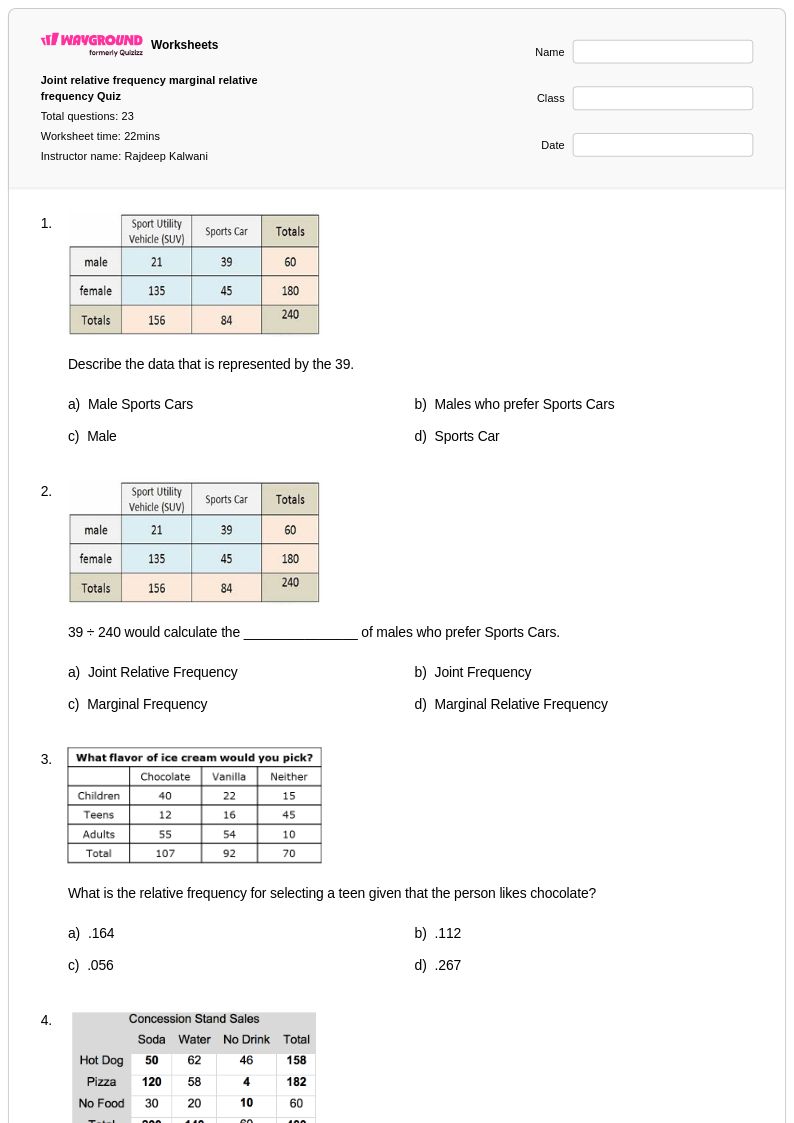
23 Q
9th - 12th
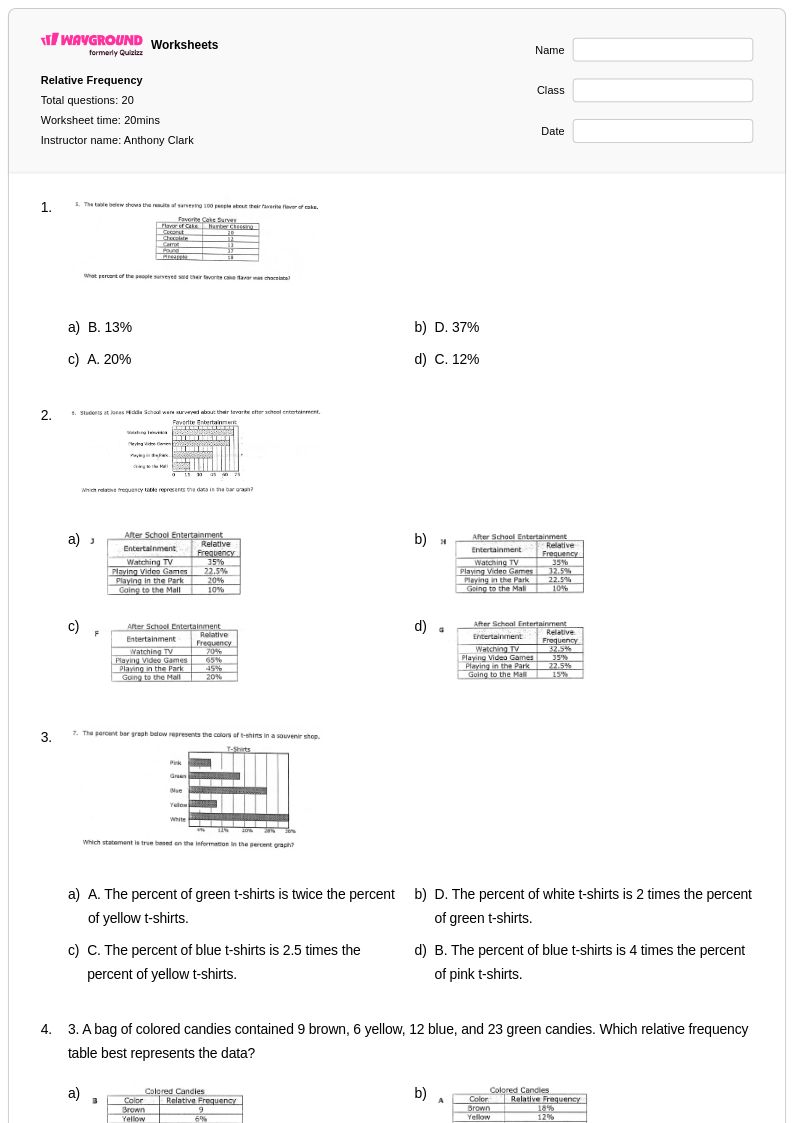
20 Q
8th - Uni
10 Q
8th - Uni
10 Q
8th - Uni
20 Q
8th - Uni
20 Q
8th - Uni
Explore Relative Frequency Worksheets by Grades
Explore Other Subject Worksheets for grade 9
Explore printable Relative Frequency worksheets for Grade 9
Relative frequency worksheets for Grade 9 mathematics provide students with essential practice in analyzing data patterns and understanding how often specific outcomes occur within a dataset. These comprehensive printables guide students through calculating relative frequencies using ratios and percentages, interpreting frequency tables, and making predictions based on observed data patterns. Each worksheet includes varied practice problems that strengthen students' ability to collect, organize, and analyze statistical information while building foundational skills for advanced probability concepts. The accompanying answer key allows for immediate feedback and self-assessment, while the free pdf format ensures easy access for both classroom instruction and independent study sessions.
Wayground, formerly Quizizz, empowers educators with an extensive collection of millions of teacher-created relative frequency resources specifically designed for Grade 9 mathematics instruction. The platform's robust search and filtering capabilities enable teachers to quickly locate worksheets that align with curriculum standards and match their students' specific learning needs. Advanced differentiation tools allow educators to customize difficulty levels and problem types, while the flexible format options include both printable pdf versions for traditional classroom use and digital formats for technology-enhanced learning environments. These versatile resources support comprehensive lesson planning, targeted remediation for struggling learners, enrichment opportunities for advanced students, and consistent skill practice that builds mathematical confidence and statistical reasoning abilities.
FAQs
Why is relative frequency covered again in 9th grade?
How should I approach teaching relative frequency in high school?
What kind of practice is appropriate for 9th graders?
What are common errors at the high school level?
How can I use this Wayground worksheet with my 9th graders?
How does this topic support high school math standards?