
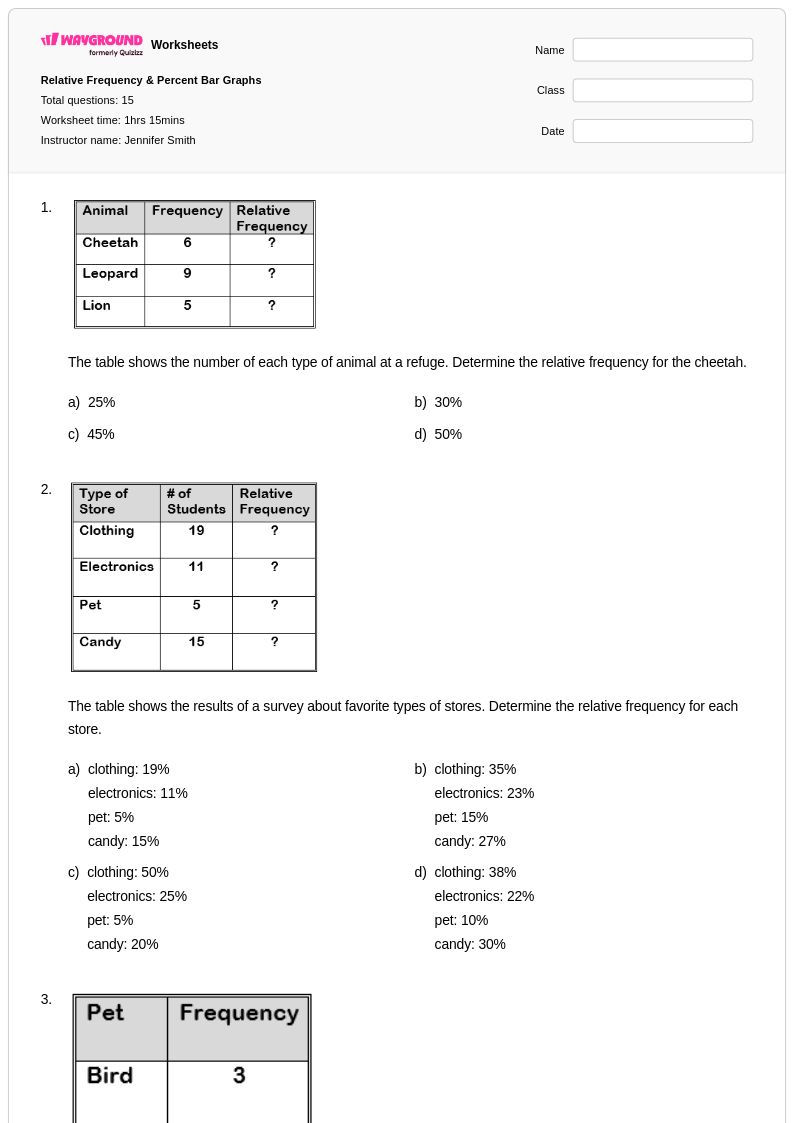
15 Q
6th
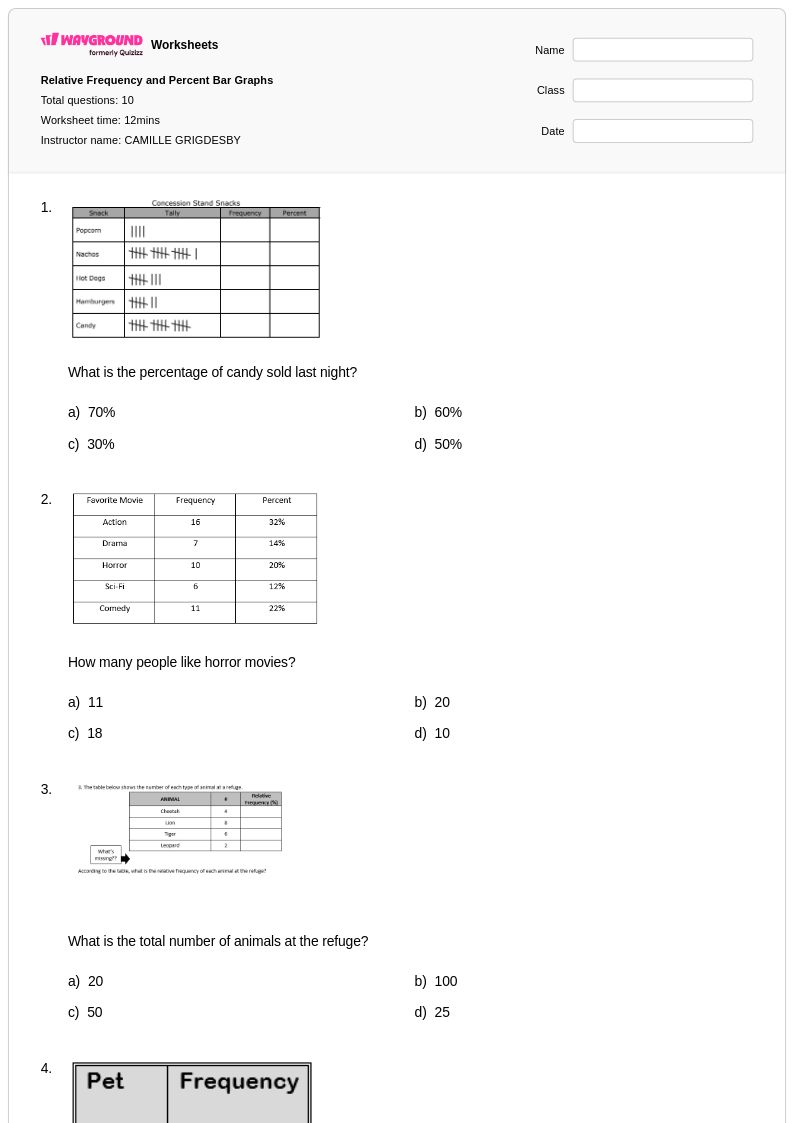
10 Q
6th
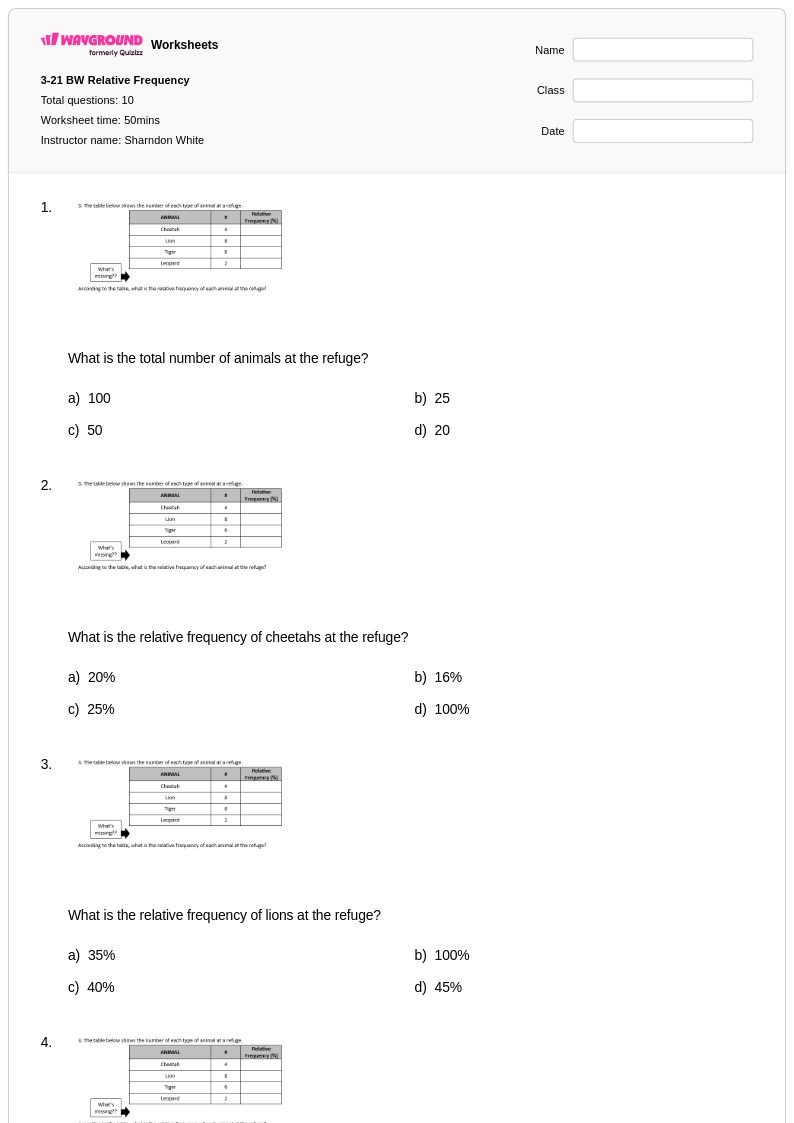
10 Q
6th
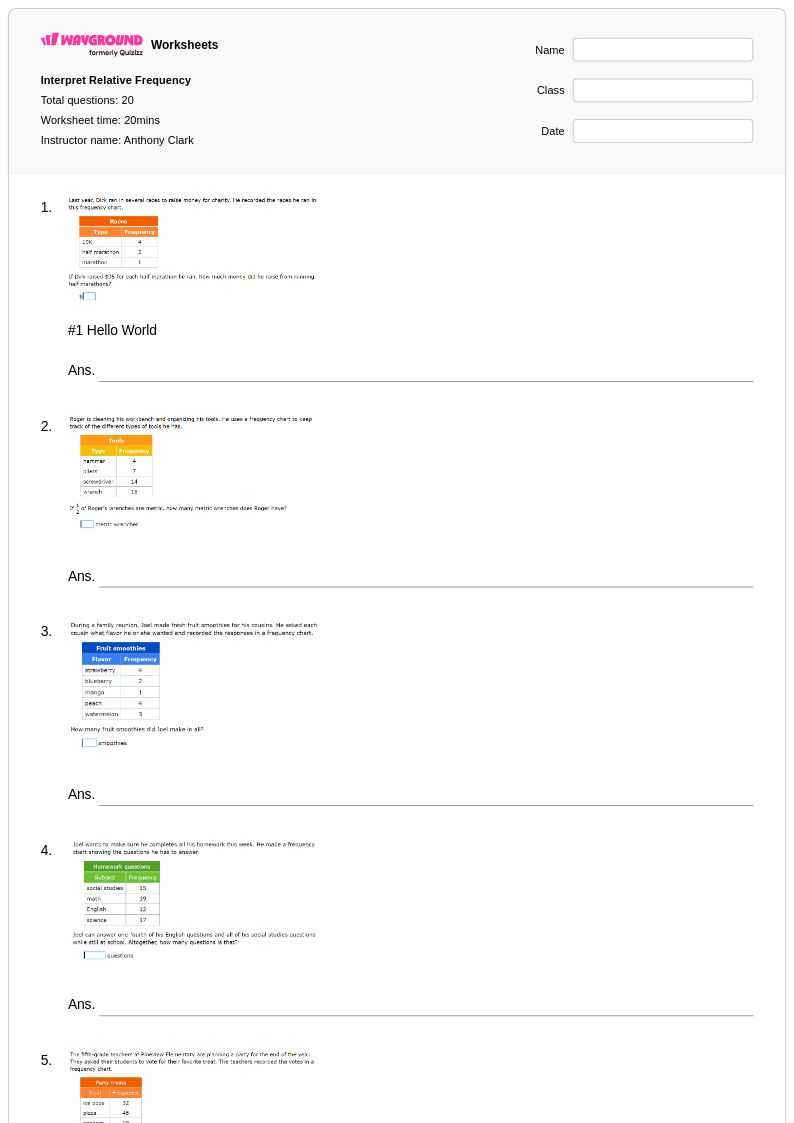
20 Q
5th - Uni
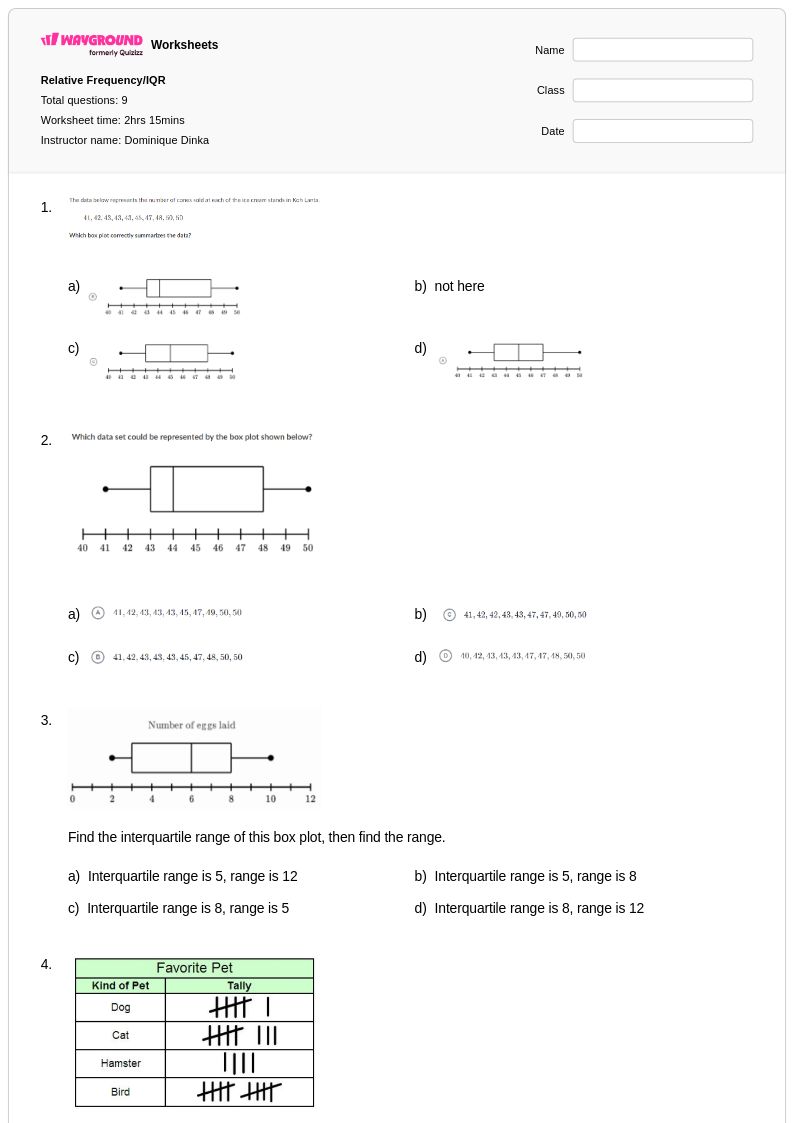
9 Q
6th
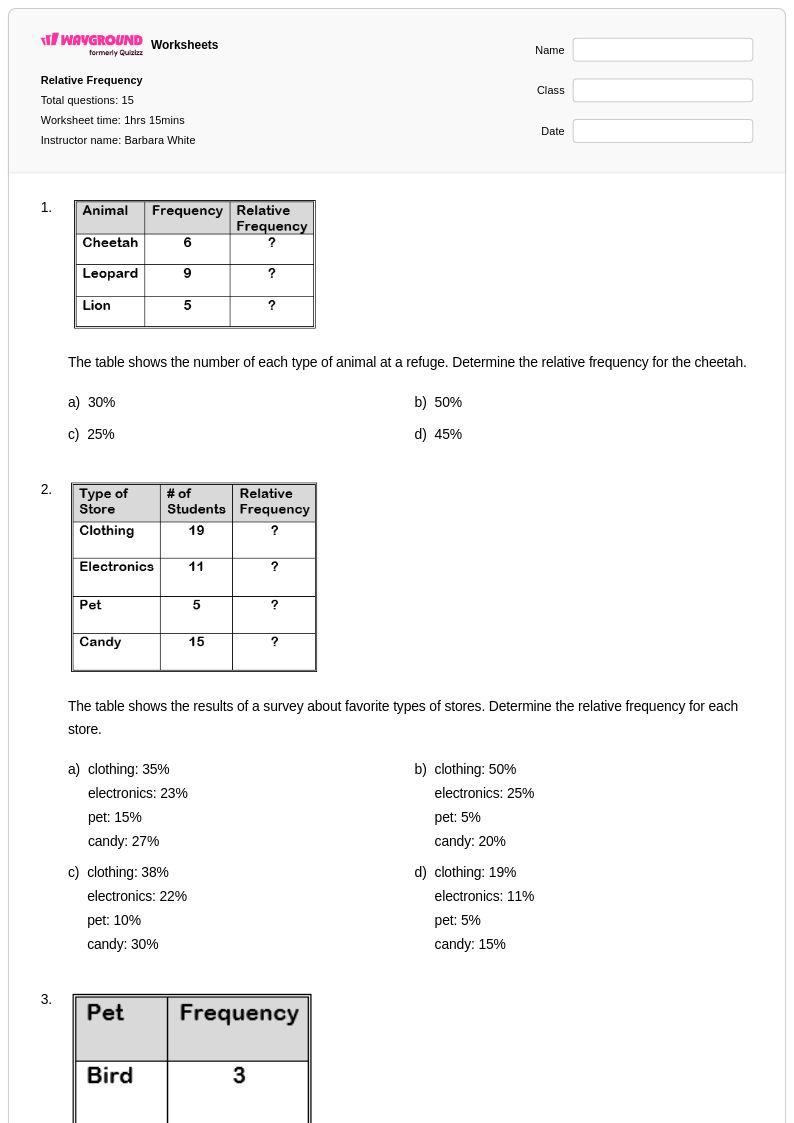
15 Q
6th
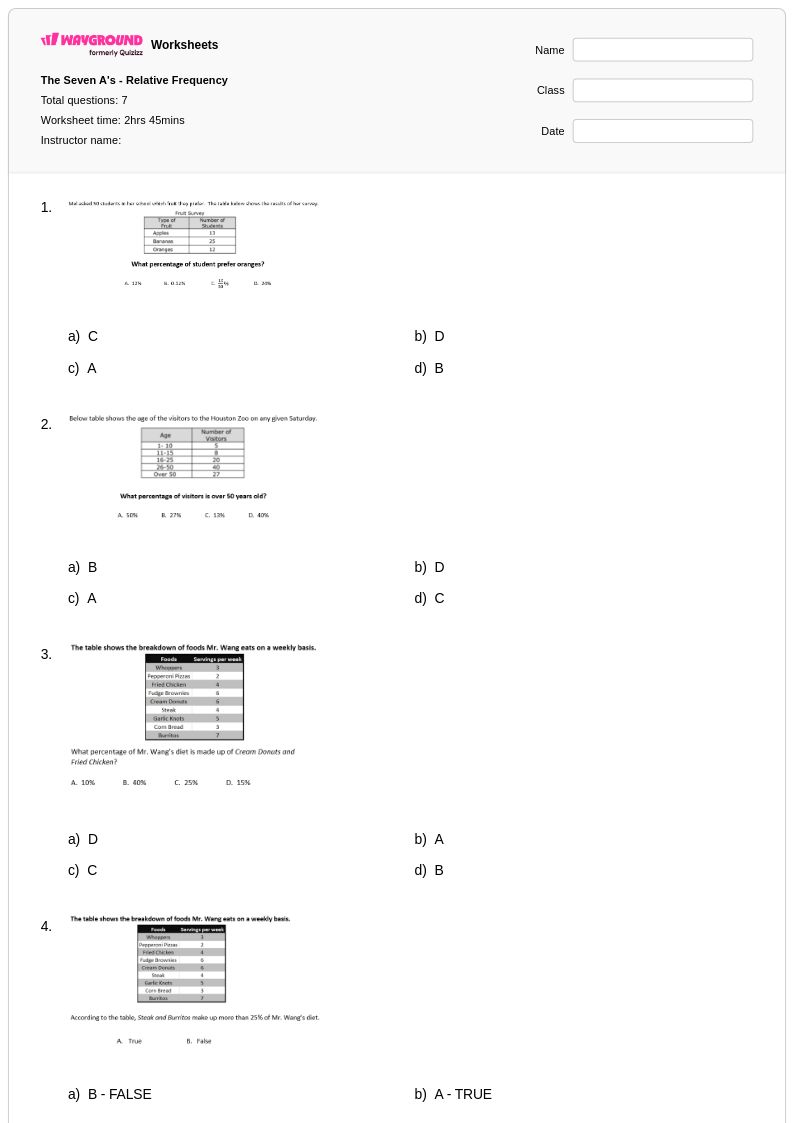
7 Q
6th
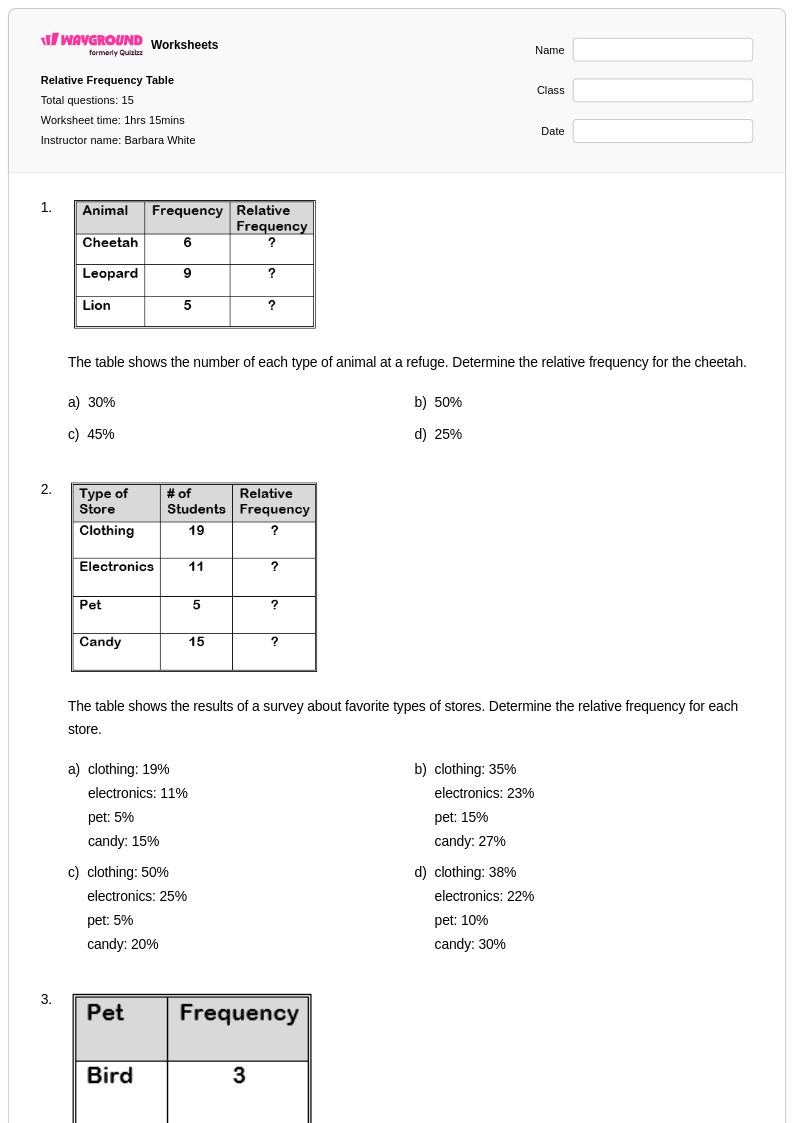
15 Q
6th
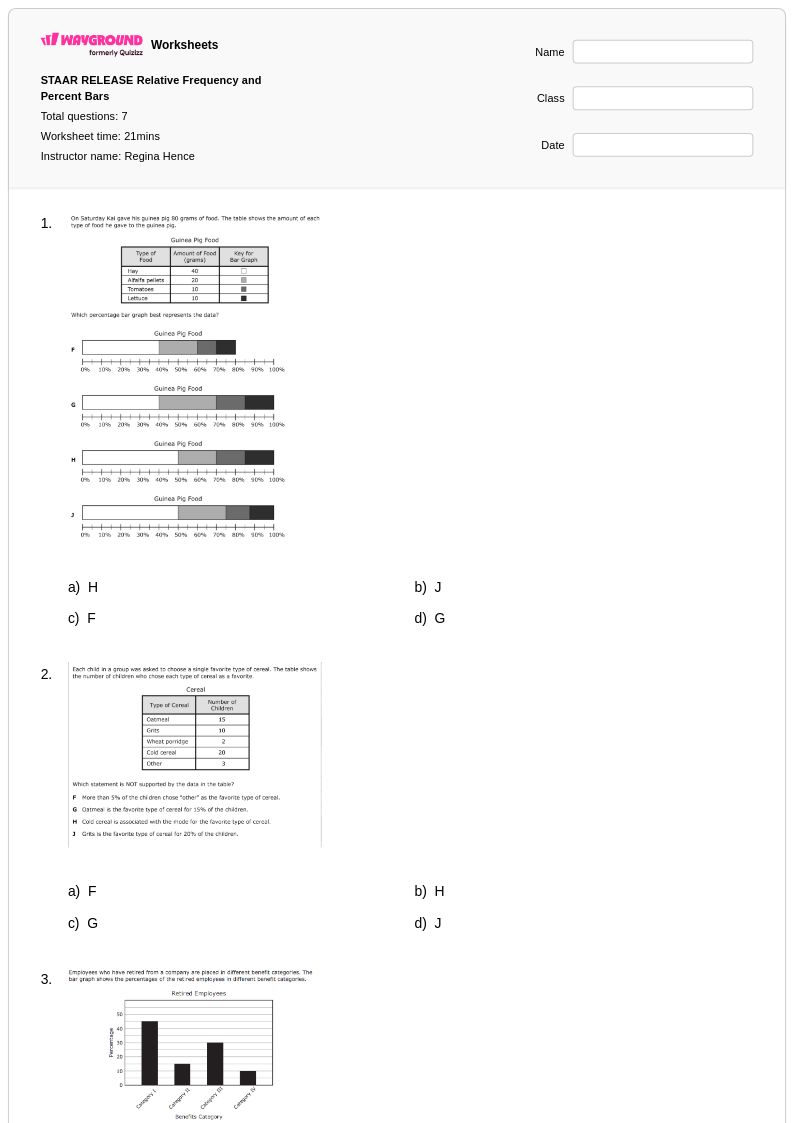
7 Q
6th
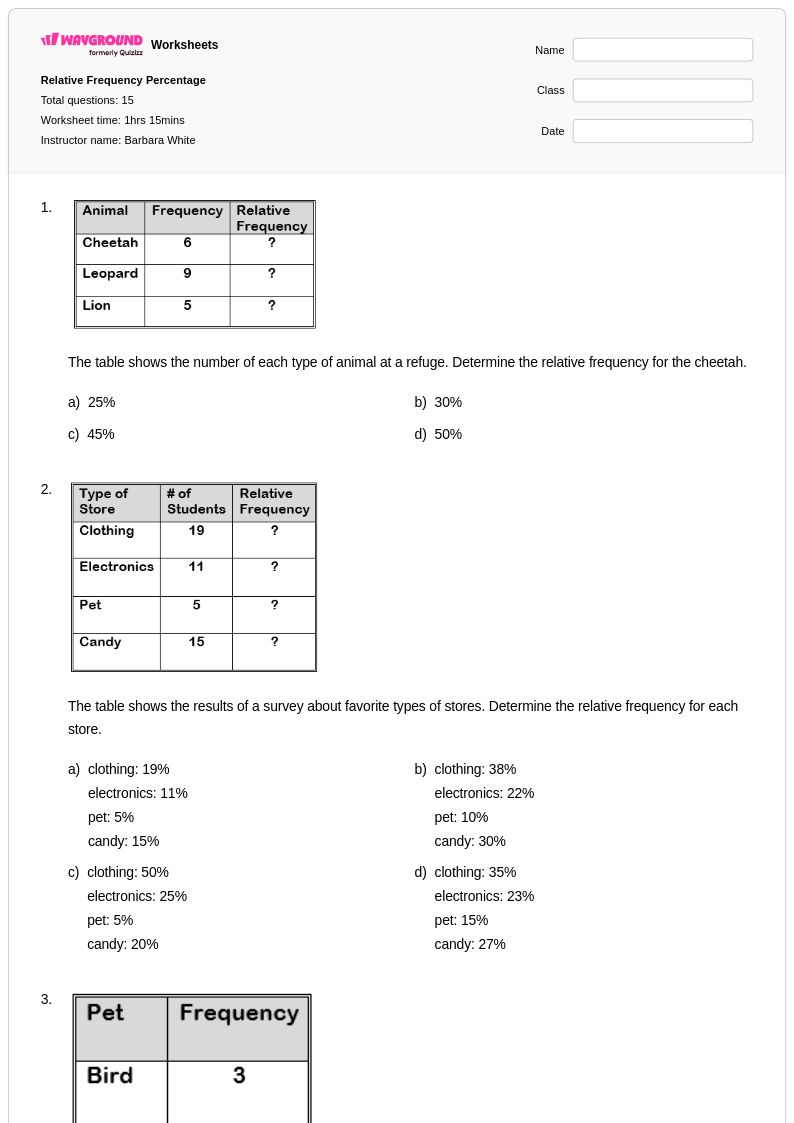
15 Q
6th
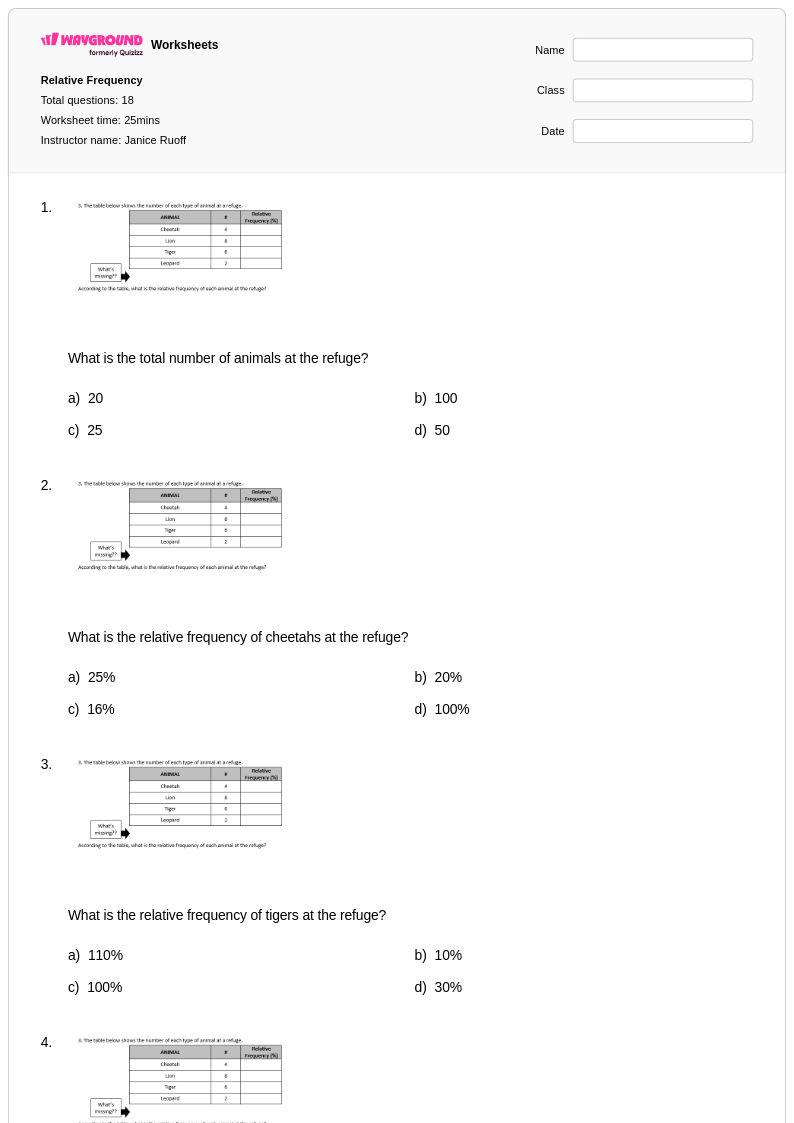
18 Q
6th
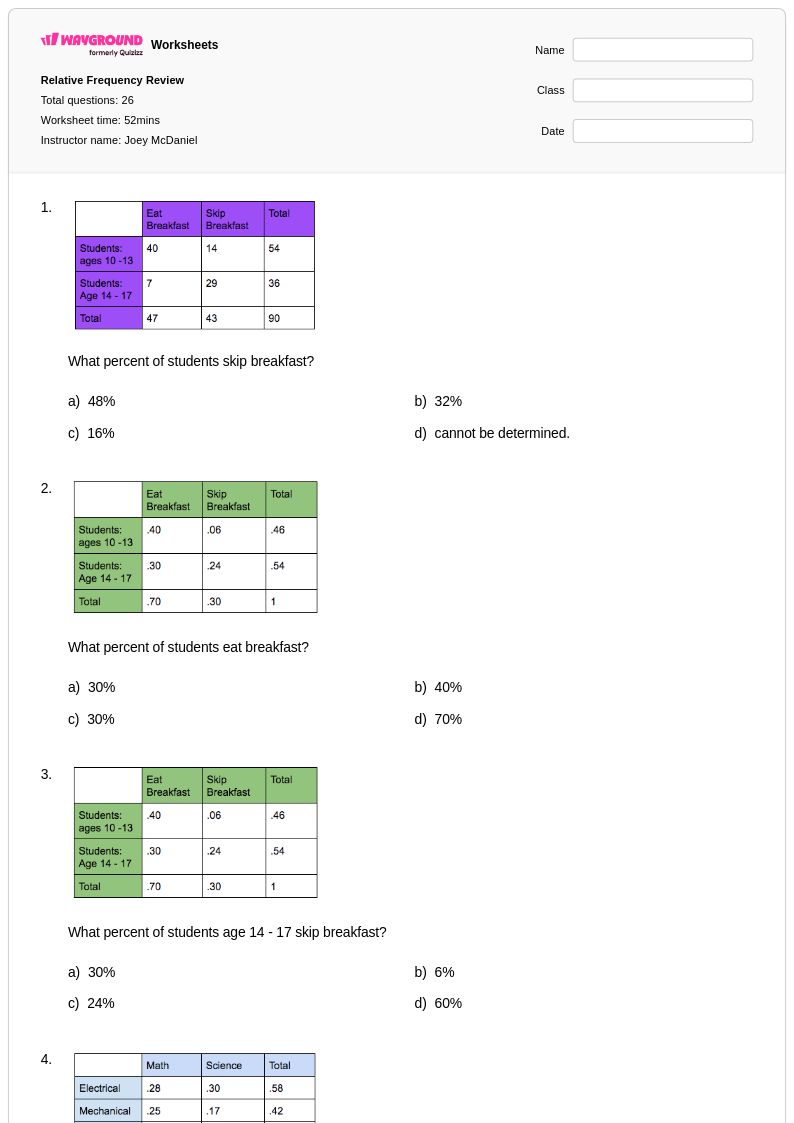
26 Q
6th - 9th
11 Q
6th
20 Q
KG - Uni
20 Q
6th

11 Q
6th
10 Q
6th
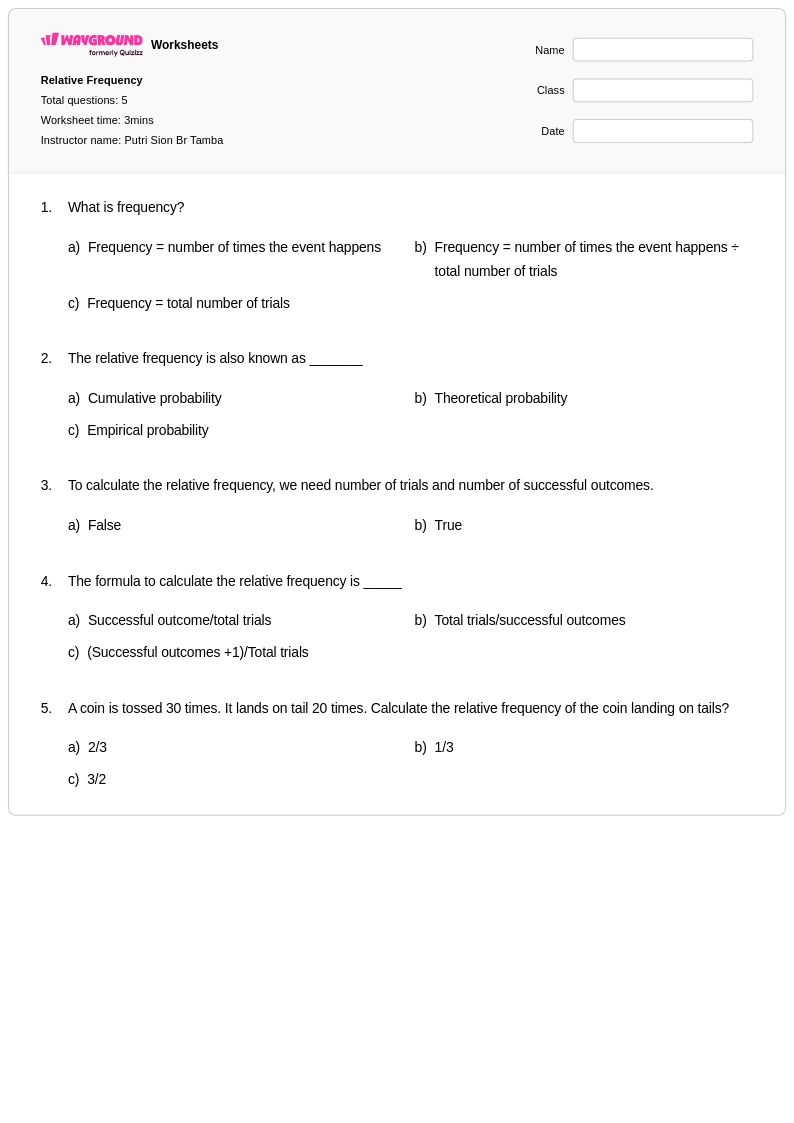
5 Q
6th
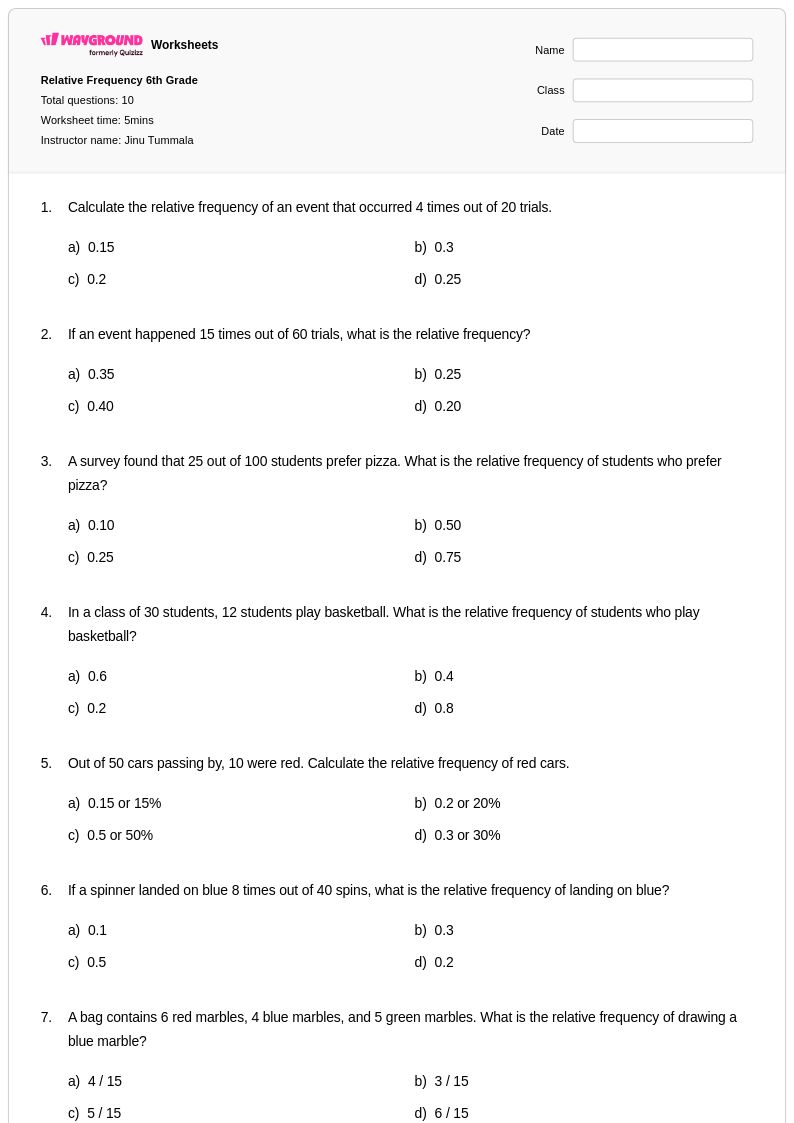
10 Q
6th
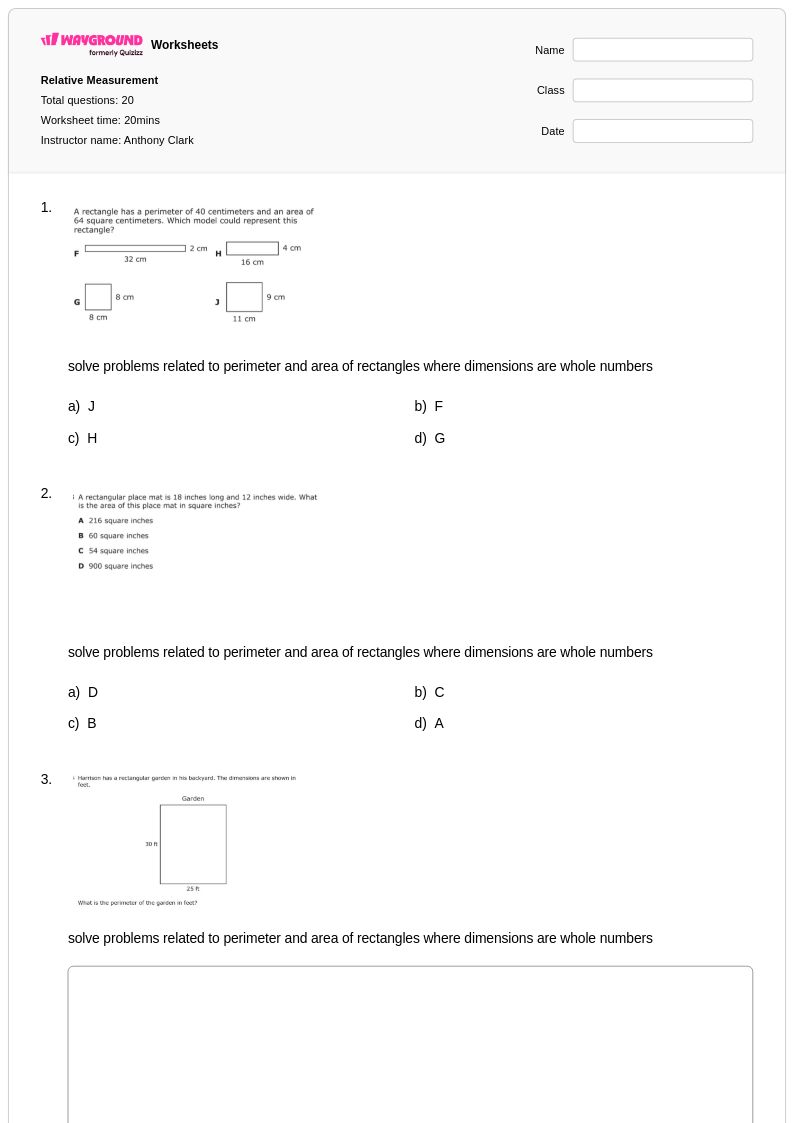
20 Q
4th - Uni

14 Q
6th
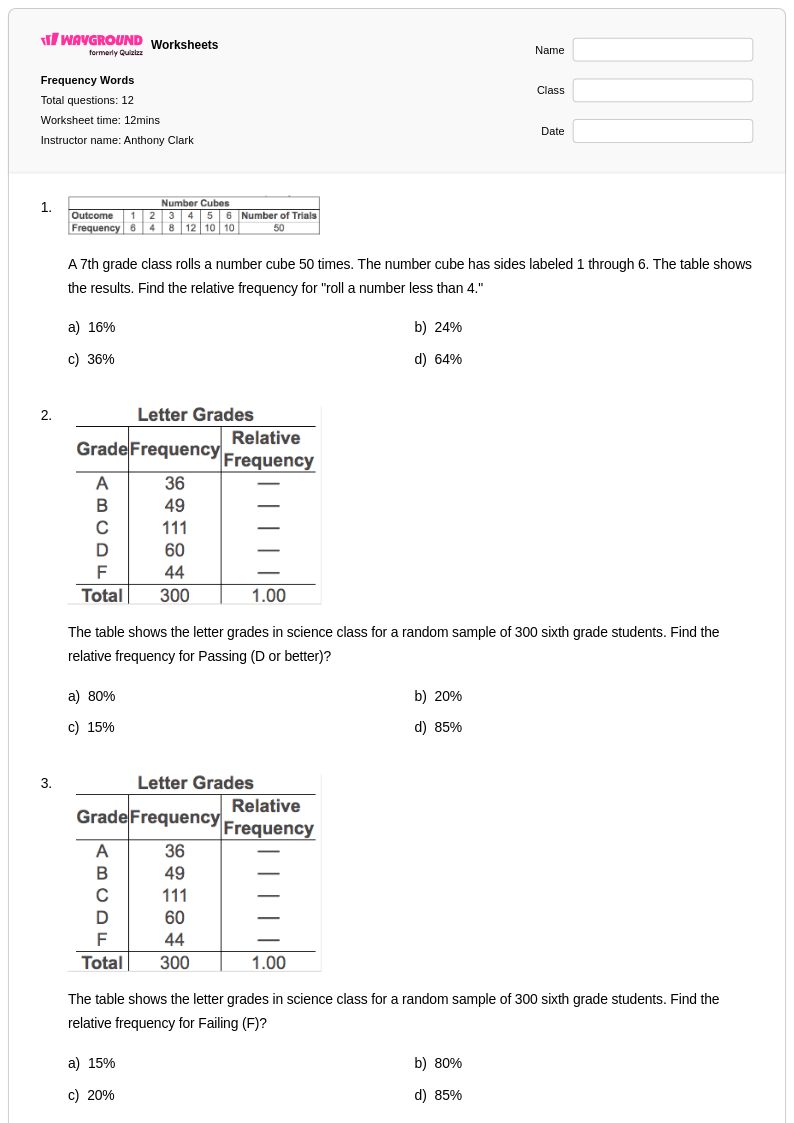
12 Q
5th - Uni
20 Q
5th - Uni
20 Q
6th
Explore Relative Frequency Worksheets by Grades
Explore Other Subject Worksheets for grade 6
Explore printable Relative Frequency worksheets for Grade 6
Relative frequency worksheets for Grade 6 students available through Wayground (formerly Quizizz) provide essential practice in understanding how often events occur within data sets and experiments. These comprehensive worksheets guide students through calculating relative frequencies by comparing the number of times an event occurs to the total number of trials, helping them develop critical statistical reasoning skills. Students work through practice problems involving dice rolls, coin flips, survey data, and real-world scenarios, learning to express relative frequencies as fractions, decimals, and percentages. Each worksheet includes a detailed answer key and is available as free printables in PDF format, making it easy for educators to incorporate meaningful statistical practice into their mathematics curriculum while building foundational concepts for advanced probability studies.
Wayground (formerly Quizizz) supports mathematics educators with millions of teacher-created relative frequency resources that can be easily discovered through robust search and filtering capabilities. The platform's extensive collection aligns with Grade 6 mathematics standards and offers powerful differentiation tools that allow teachers to customize worksheets based on individual student needs and learning objectives. These flexible resources are available in both printable and digital formats, including downloadable PDFs, enabling seamless integration into classroom instruction, homework assignments, and assessment preparation. Teachers can efficiently plan lessons, provide targeted remediation for struggling learners, offer enrichment opportunities for advanced students, and deliver consistent skill practice through these carefully curated relative frequency materials that adapt to diverse teaching environments and learning styles.
FAQs
What grade do students learn relative frequency?
How should I teach relative frequency to 6th graders?
What are common mistakes 6th graders make with this topic?
What kind of practice problems are best for 6th grade?
How can I use this 6th-grade worksheet?
How does this topic align with 6th-grade math standards?