
11 Q
7th - Uni
20 Q
7th - 9th
19 Q
7th - Uni
15 Q
7th - Uni
17 Q
7th - Uni
20 Q
9th - 12th
20 Q
7th - Uni
15 Q
7th - Uni
20 Q
7th - Uni
20 Q
7th - Uni
15 Q
9th - 12th
20 Q
7th - Uni
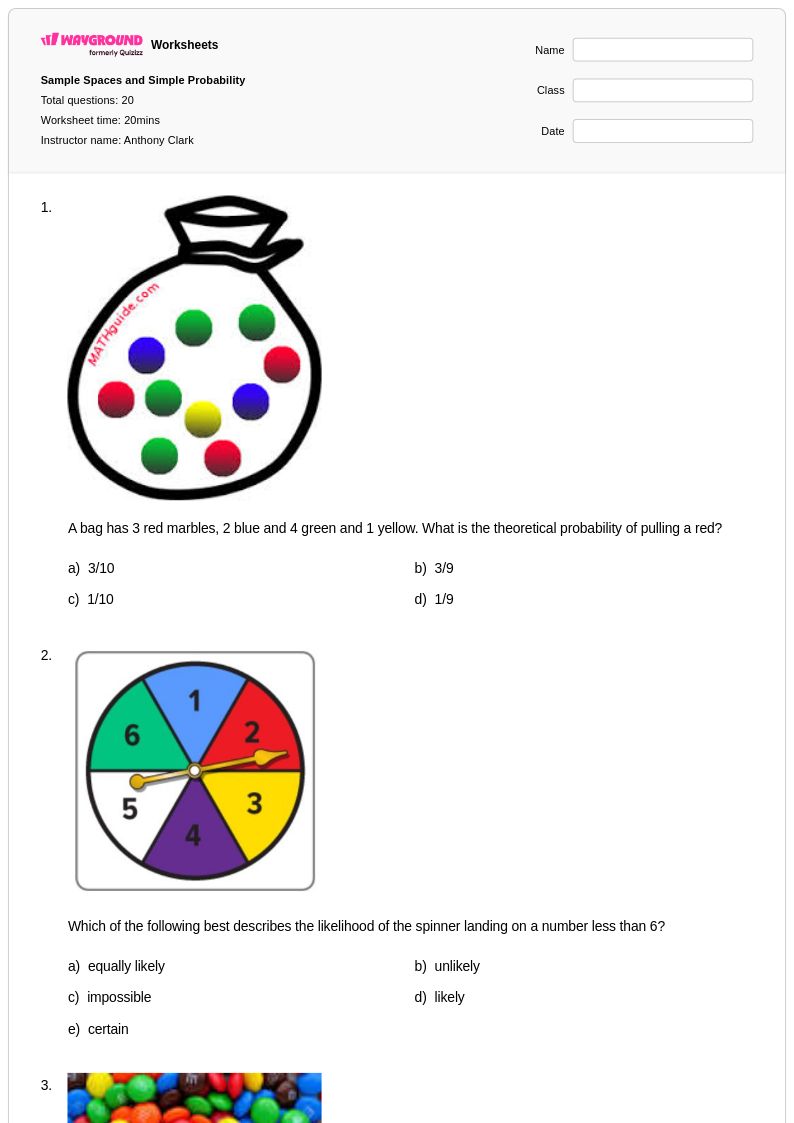
20 Q
7th - Uni
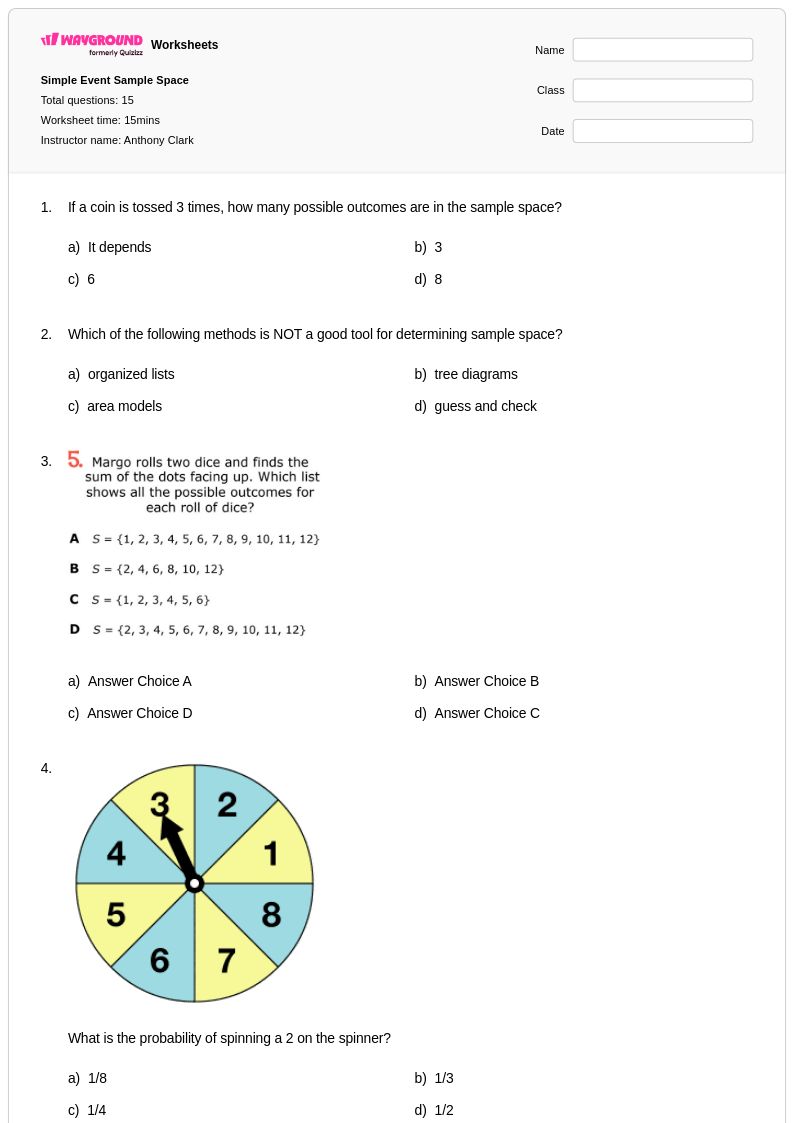
15 Q
7th - Uni
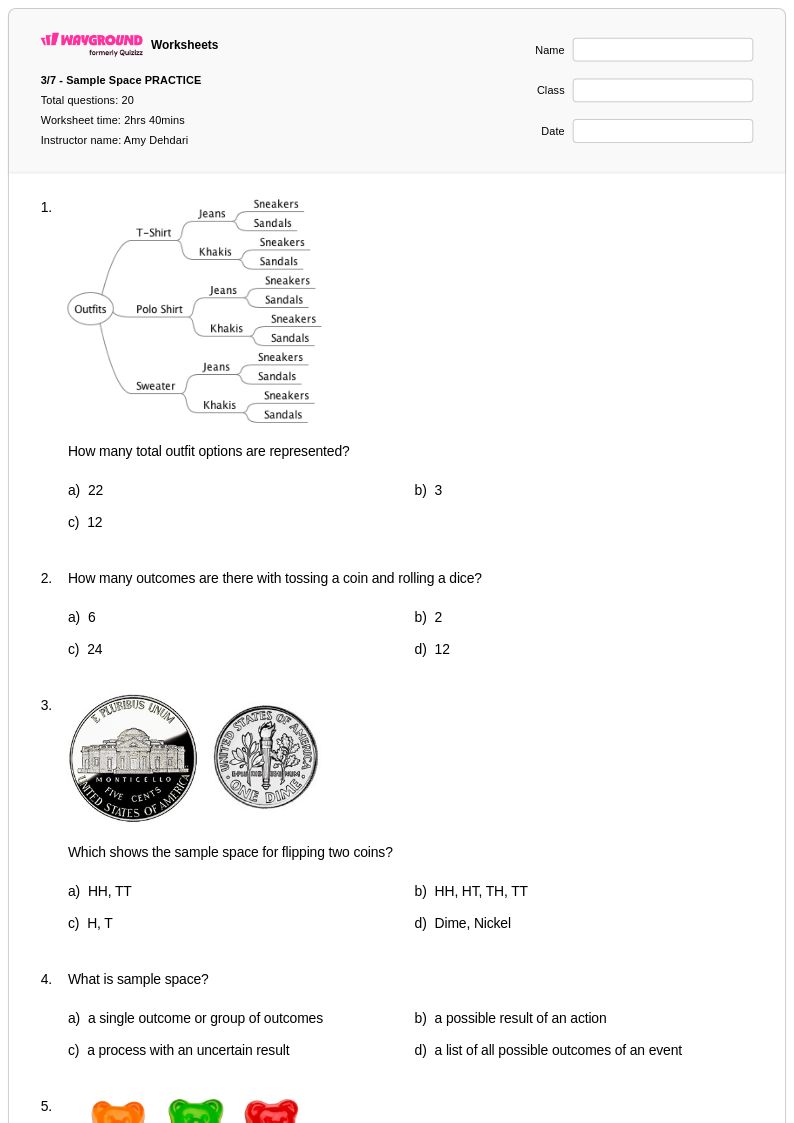
20 Q
7th - 12th
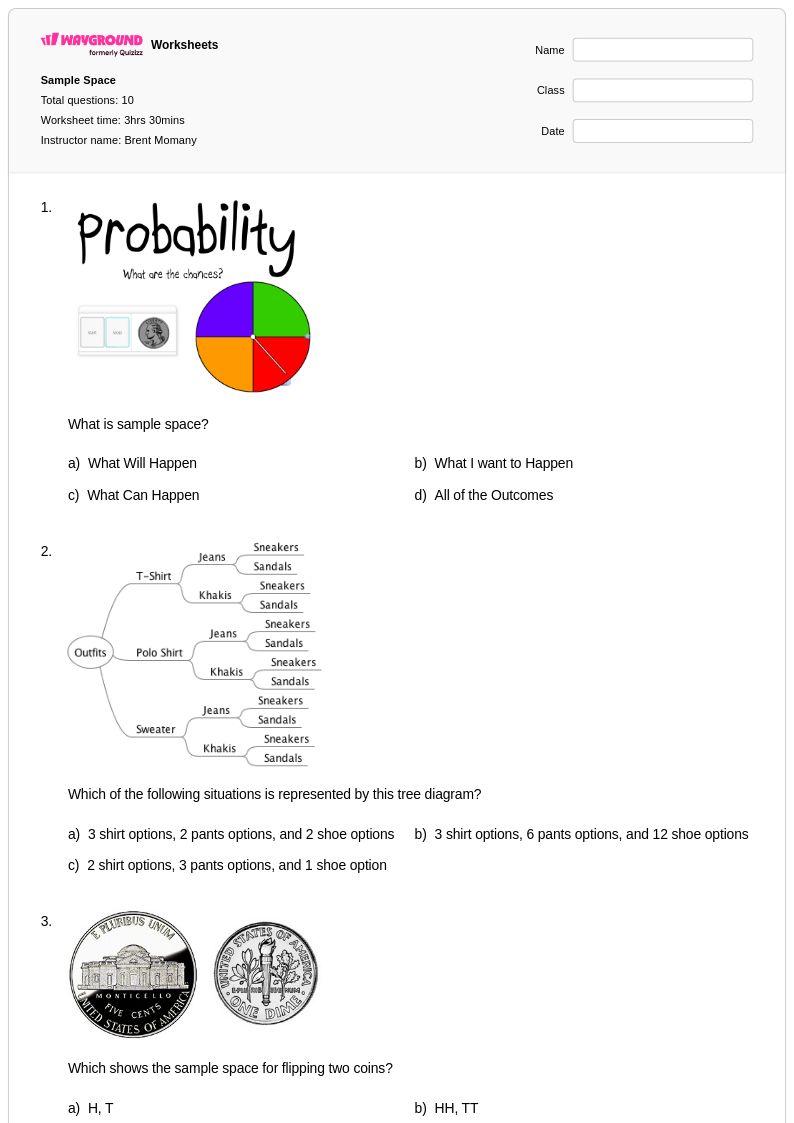
10 Q
9th
20 Q
7th - Uni
10 Q
7th - Uni
15 Q
7th - Uni
19 Q
8th - 10th
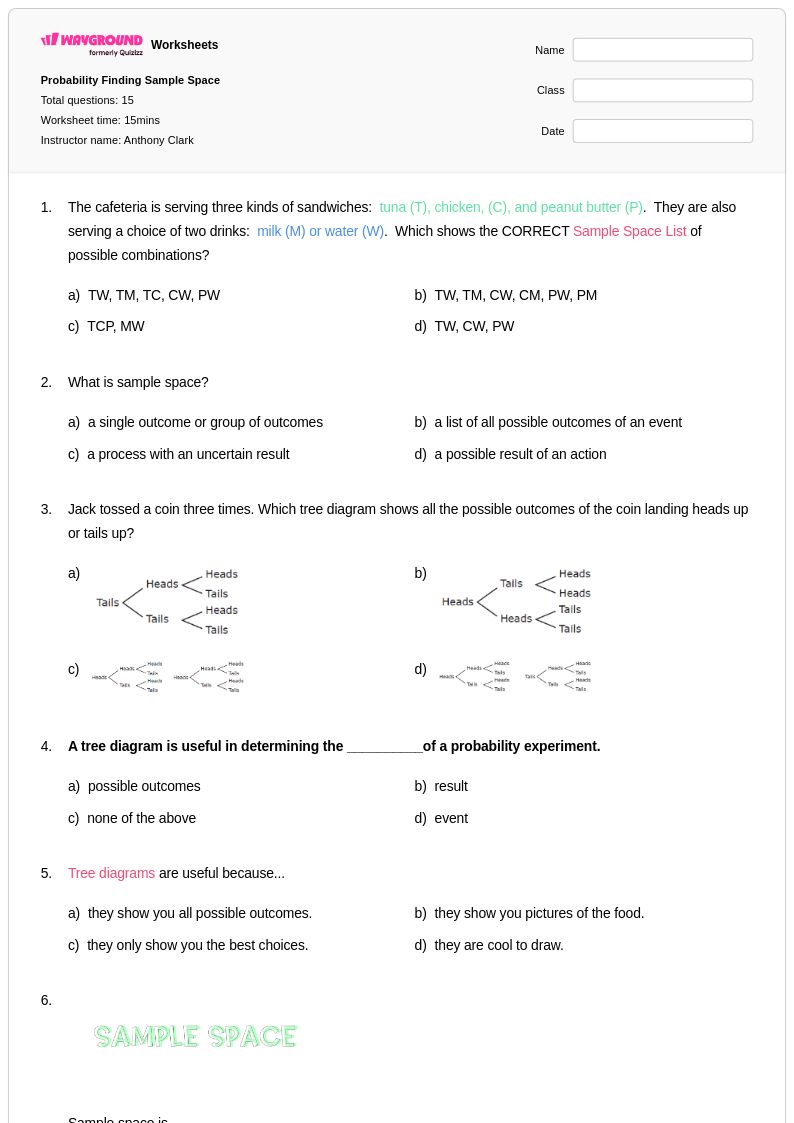
15 Q
7th - Uni
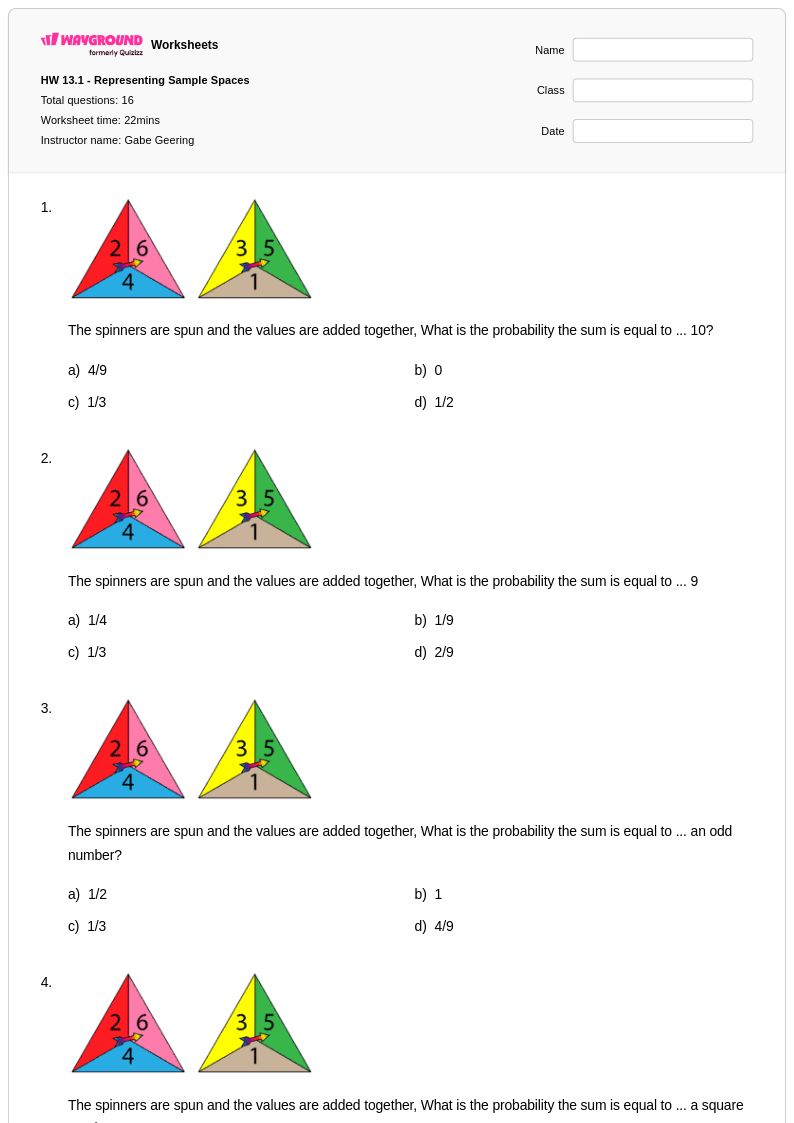
16 Q
6th - 12th
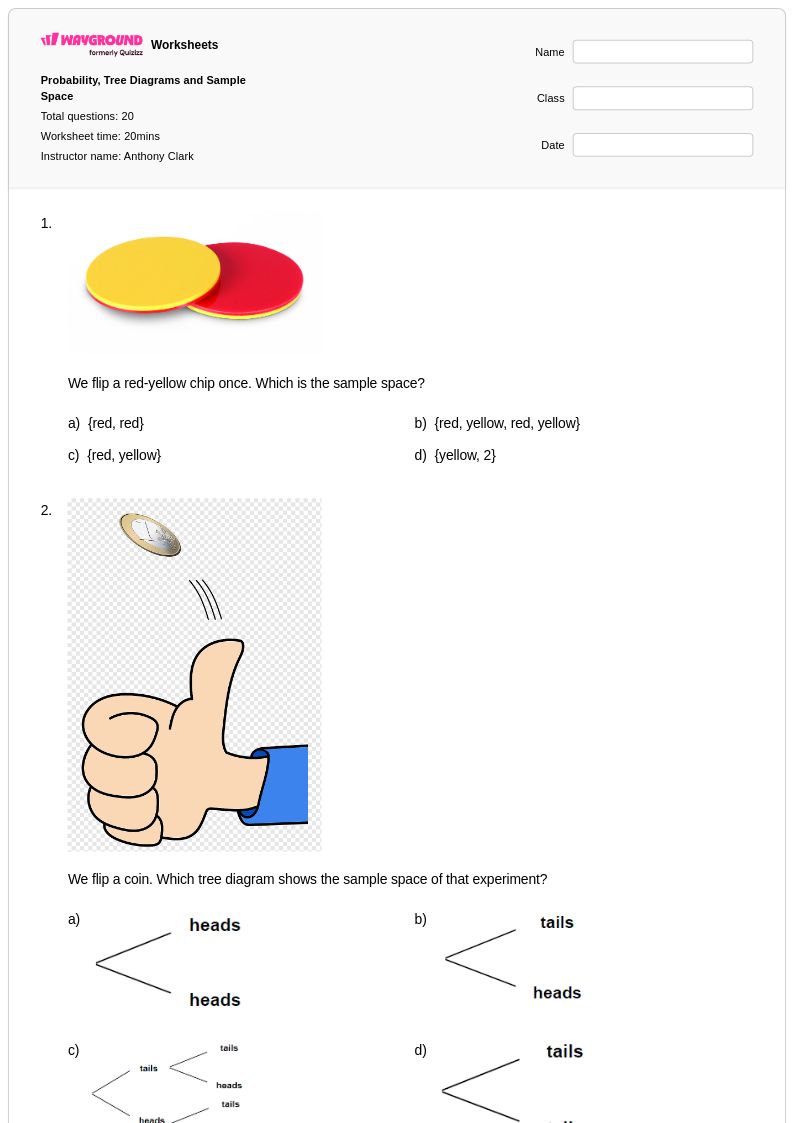
20 Q
7th - Uni
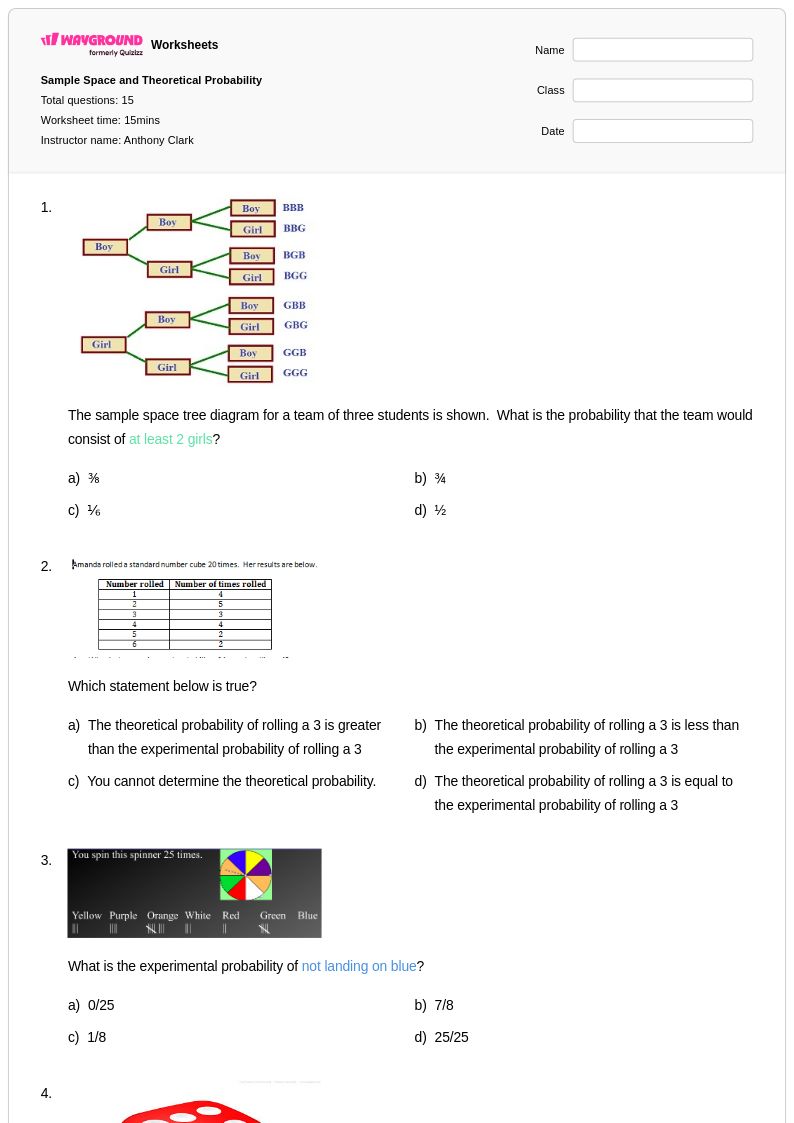
15 Q
7th - Uni
Explore Other Subject Worksheets for grade 9
Explore printable Sample Space worksheets for Grade 9
Sample space worksheets for Grade 9 students available through Wayground (formerly Quizizz) provide comprehensive practice in identifying and analyzing all possible outcomes of probability experiments. These expertly crafted resources strengthen students' foundational understanding of probability theory by guiding them through systematic approaches to listing outcomes, organizing data using tree diagrams and tables, and recognizing the relationship between sample spaces and probability calculations. The collection includes diverse practice problems ranging from simple coin tosses and dice rolls to more complex scenarios involving multiple events, ensuring students develop proficiency in determining complete sample spaces for various probability situations. Each worksheet comes with detailed answer keys and is available as free printable pdf resources, making them ideal for both classroom instruction and independent study.
Wayground (formerly Quizizz) supports mathematics educators with an extensive library of millions of teacher-created sample space worksheets specifically designed for Grade 9 probability and statistics instruction. The platform's robust search and filtering capabilities allow teachers to quickly locate resources that align with specific curriculum standards and match their students' skill levels, while built-in differentiation tools enable customization for diverse learning needs. These versatile worksheets are available in both printable pdf format and interactive digital versions, providing flexibility for traditional classroom settings, remote learning environments, and hybrid instruction models. Teachers can leverage these comprehensive resources for lesson planning, targeted remediation of probability concepts, enrichment activities for advanced learners, and systematic skill practice that builds students' confidence in analyzing sample spaces and calculating theoretical probabilities.
FAQs
How is sample space used in 9th-grade math?
How do I transition students from listing sample spaces to calculating probabilities?
What's a key conceptual hurdle for 9th graders with probability?
How can I use this 9th-grade worksheet in my class?
How does this align with high school Common Core standards for probability?
How can I support struggling students with 9th-grade probability?