
61 Q
9th - 12th
10 Q
9th - 12th
9 Q
11th
9 Q
11th - 12th
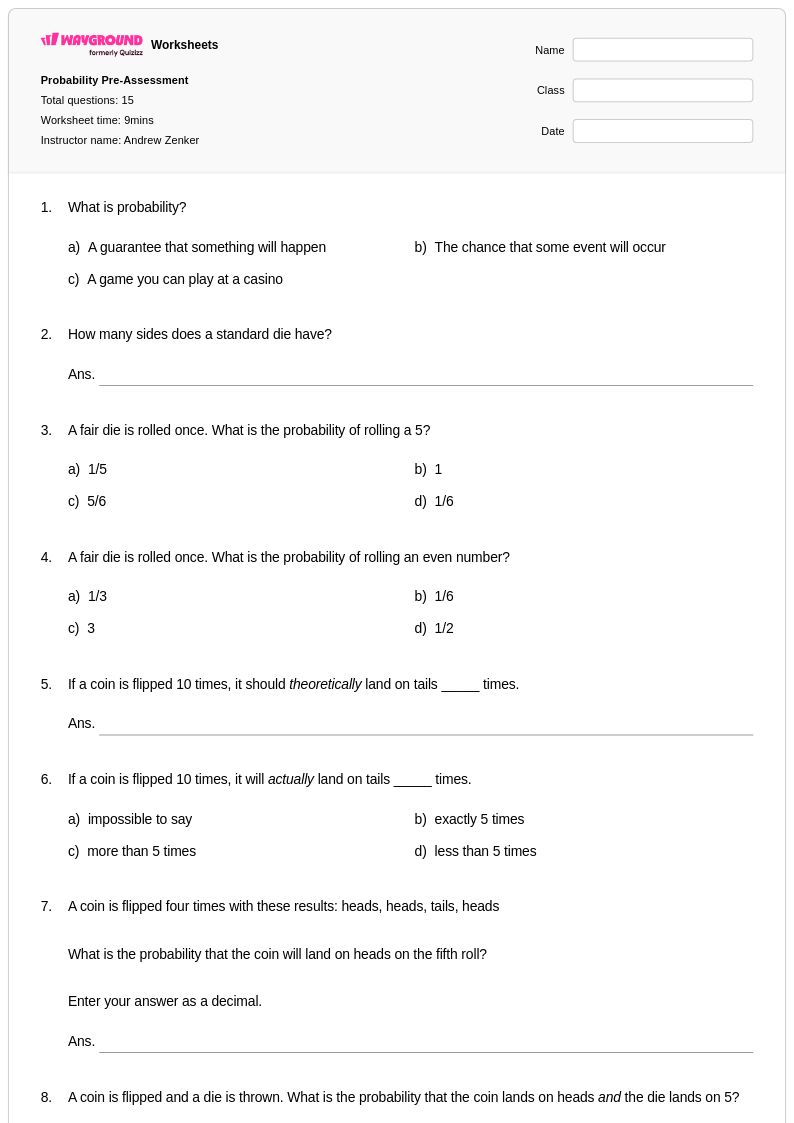
15 Q
9th - 12th
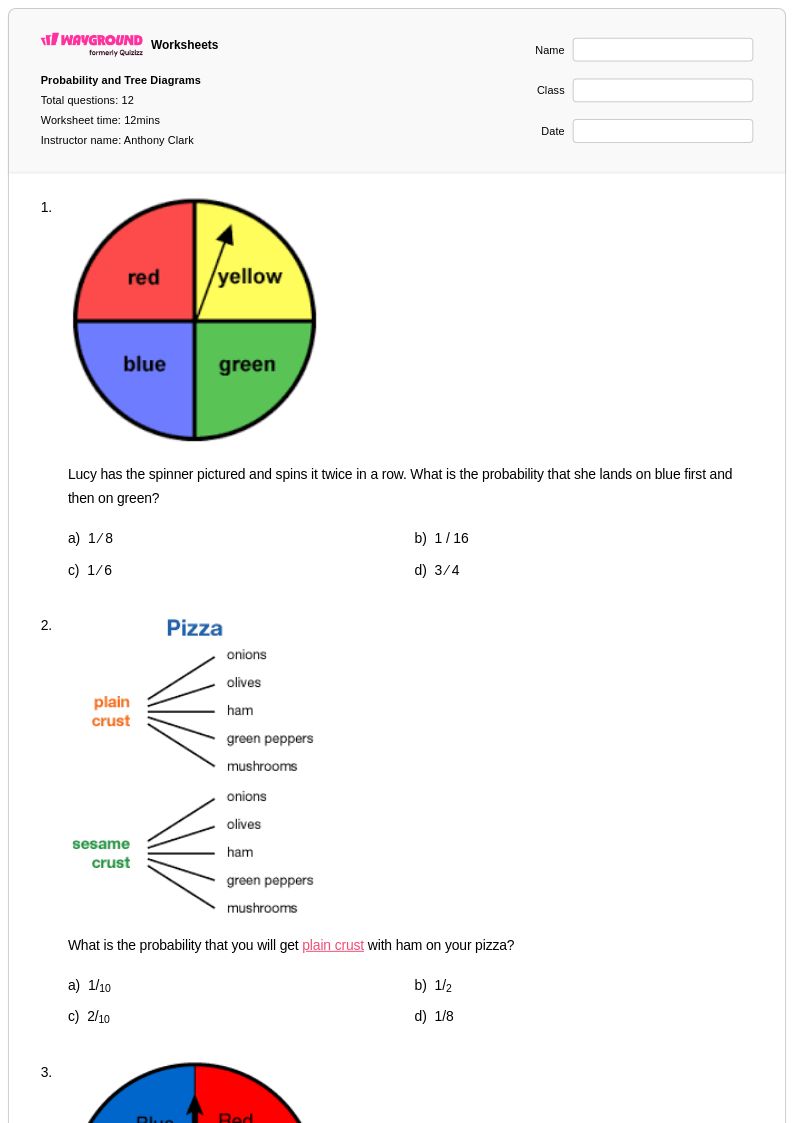
12 Q
7th - Uni
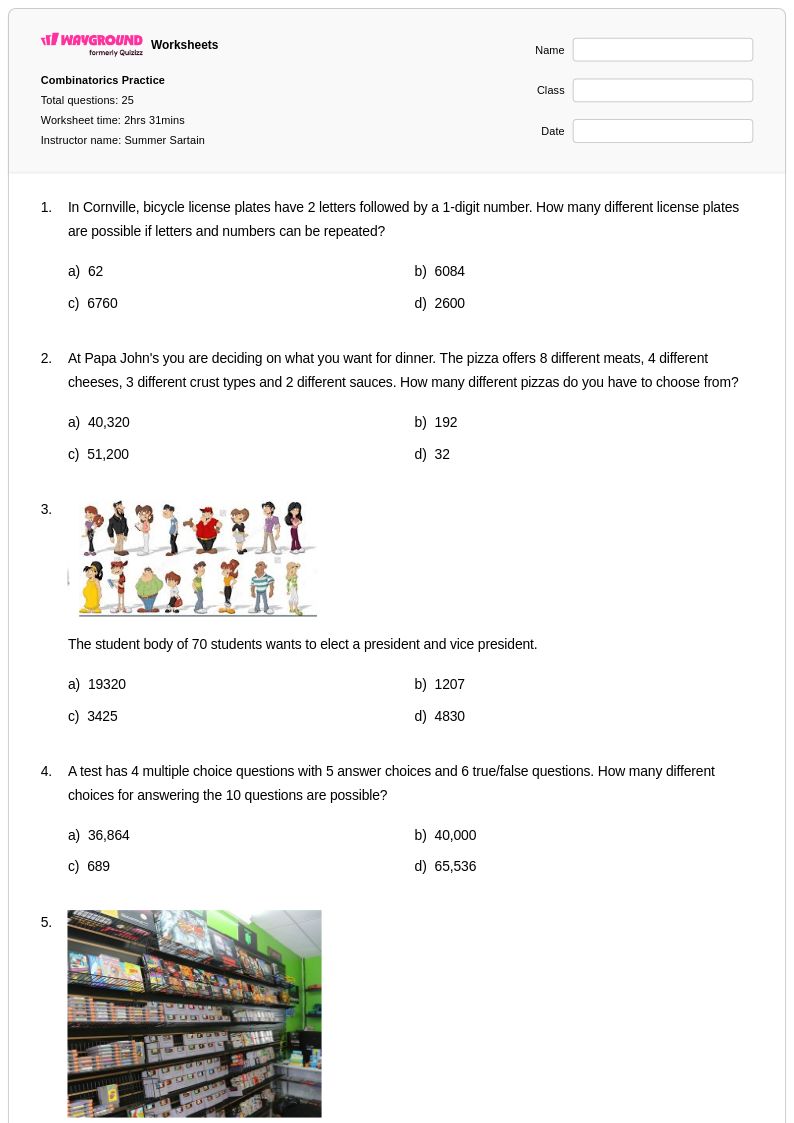
25 Q
9th - 12th
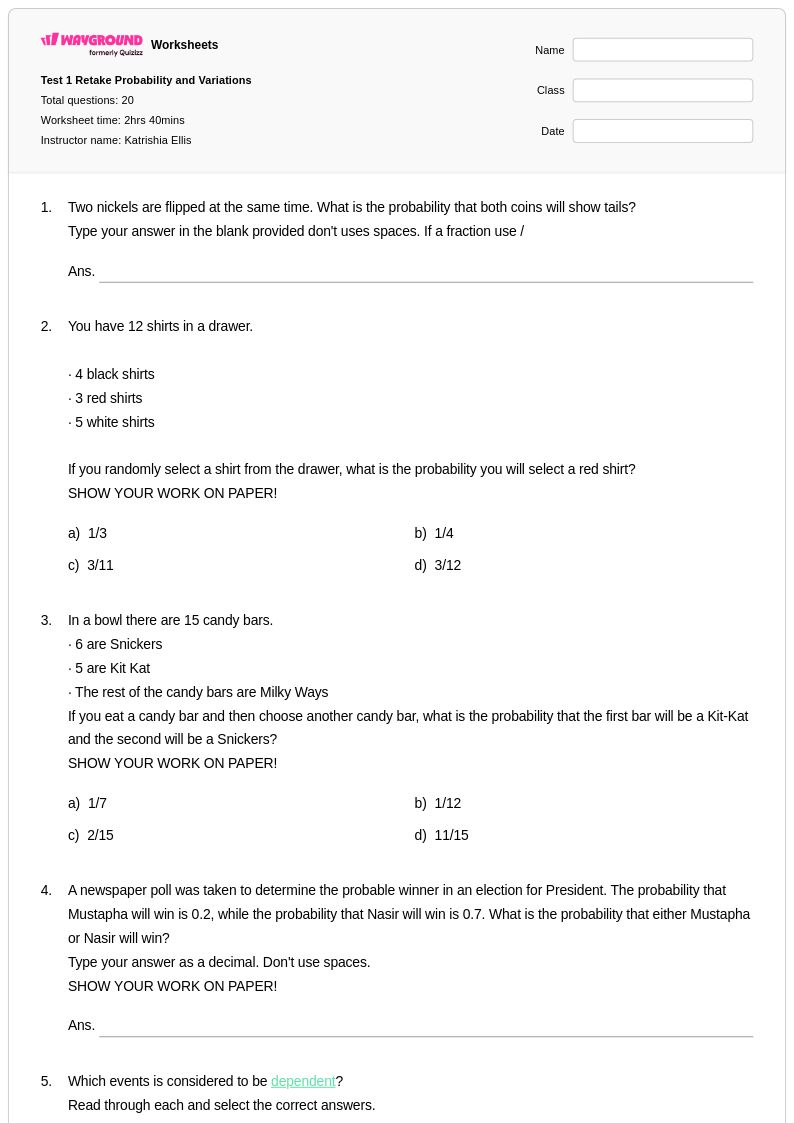
20 Q
9th - 11th
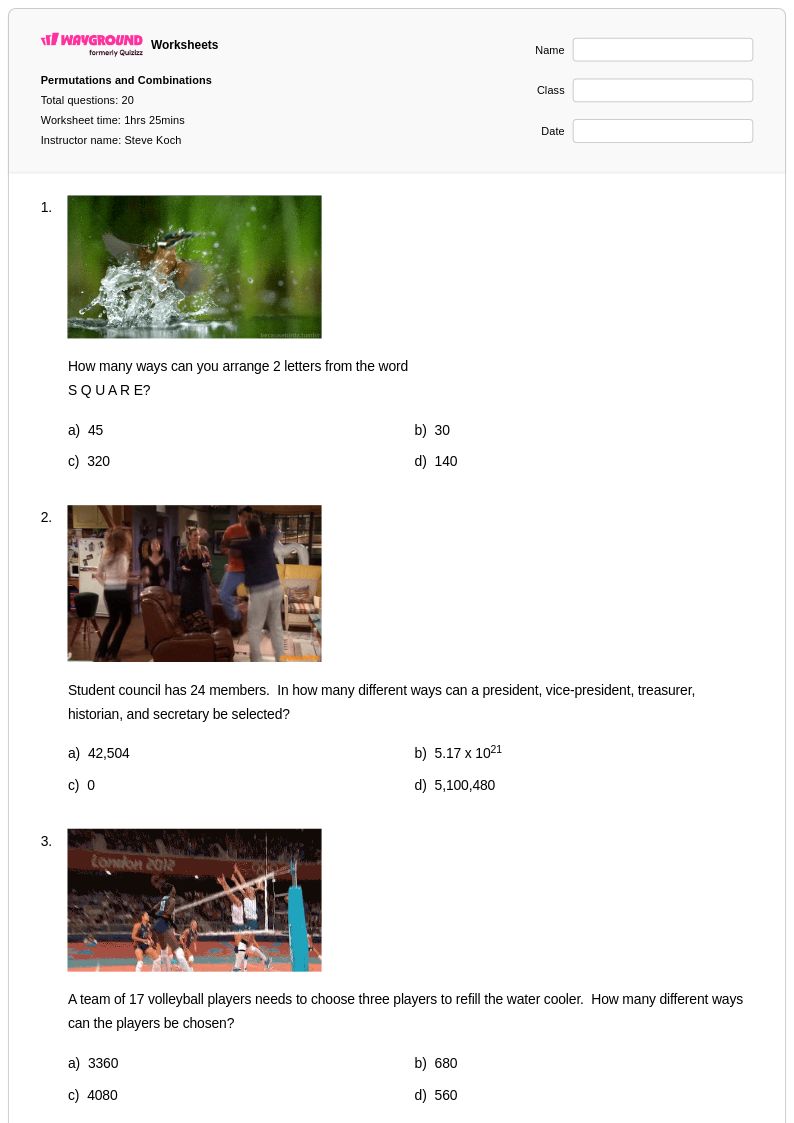
20 Q
9th - 12th
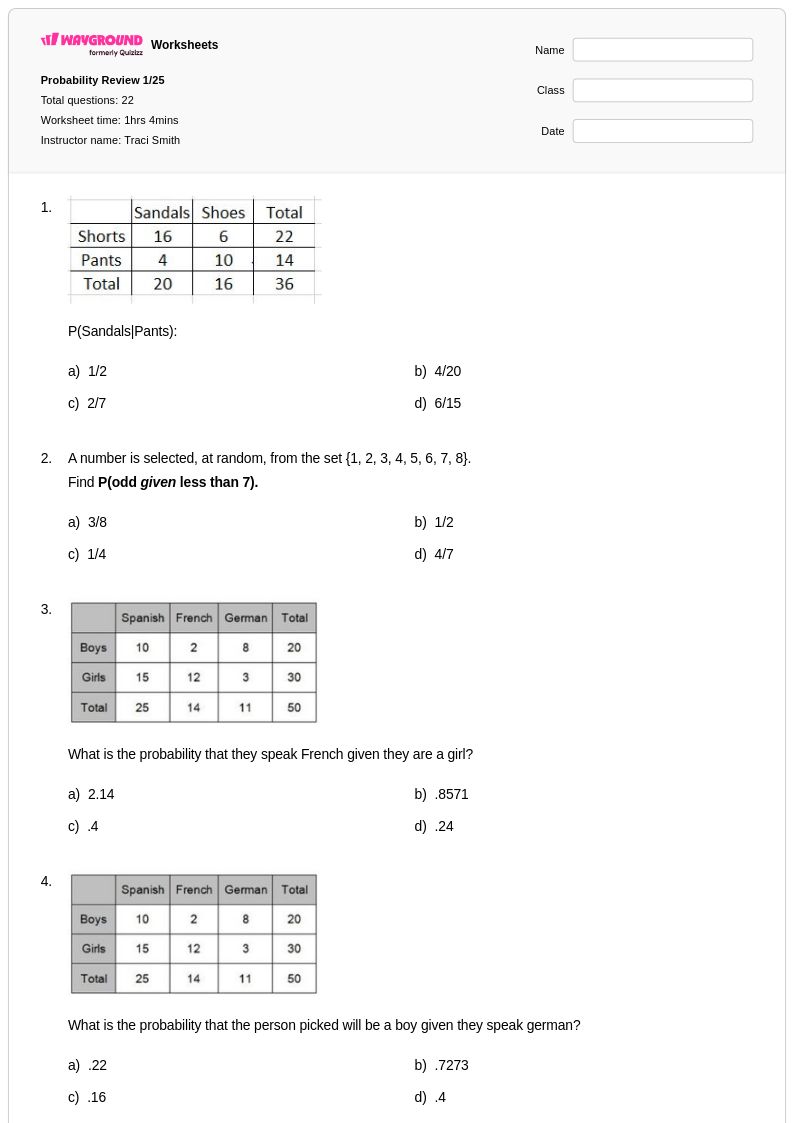
22 Q
9th - 12th
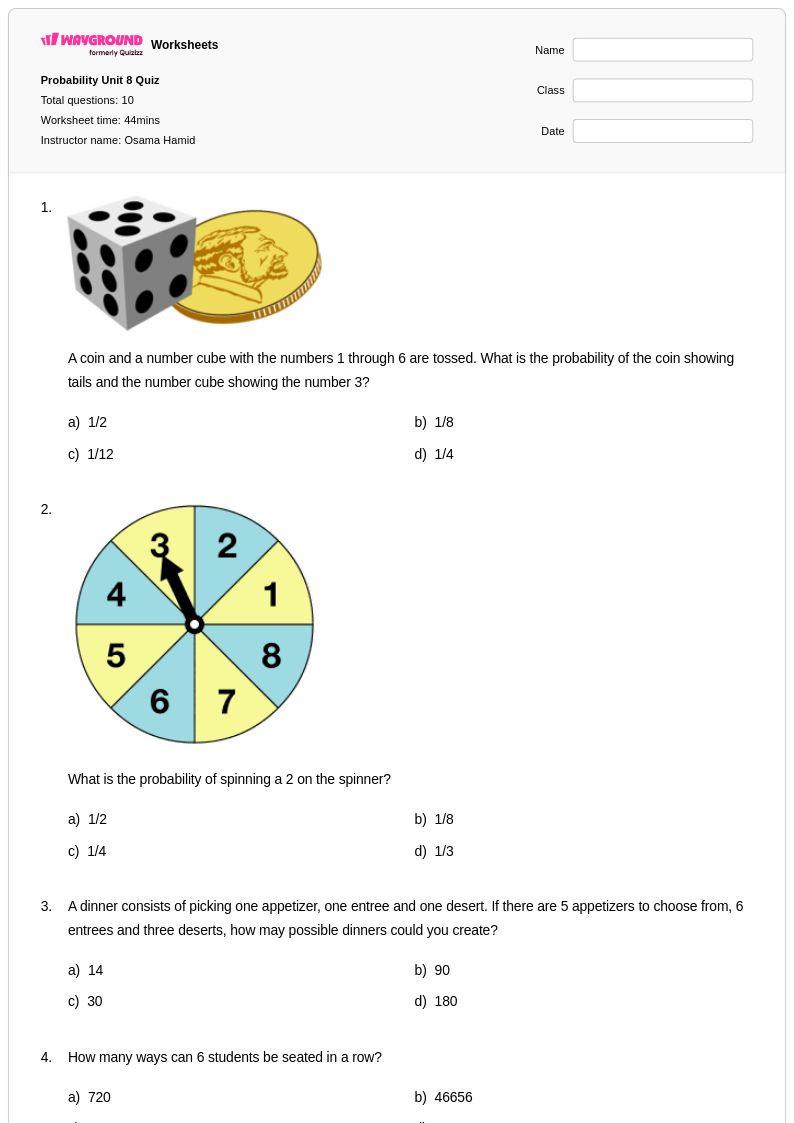
10 Q
9th - 12th
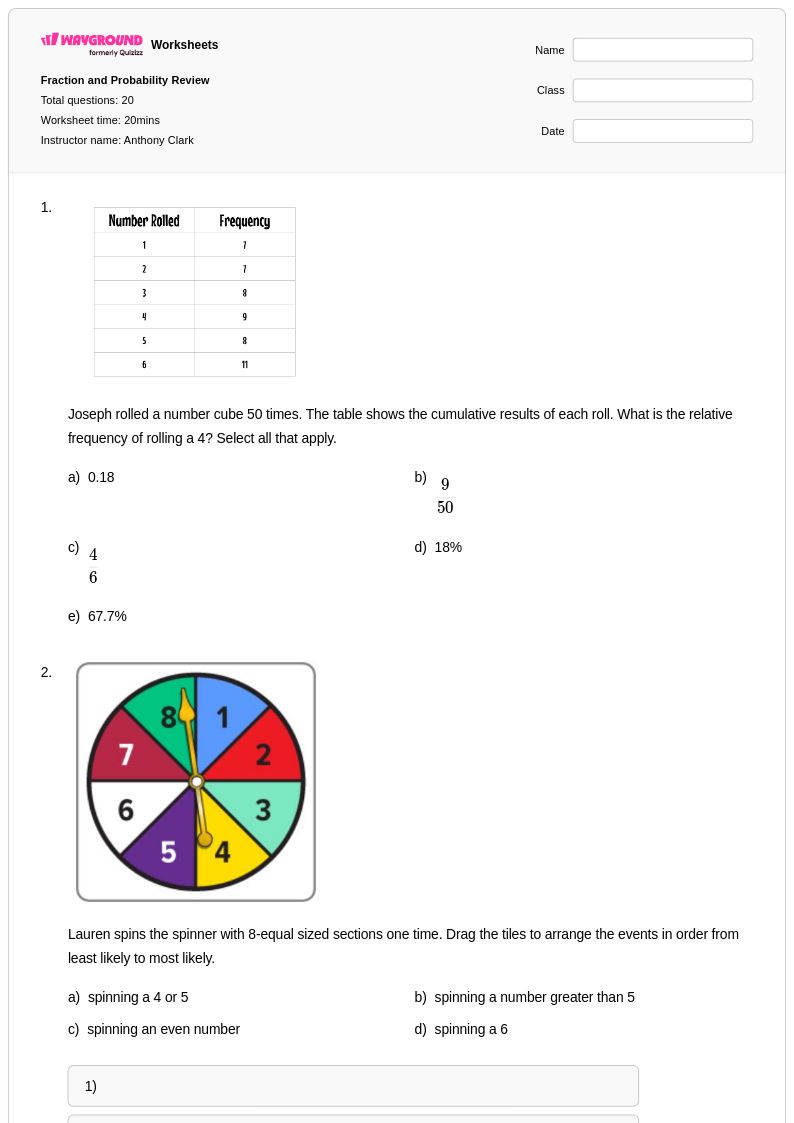
20 Q
7th - Uni
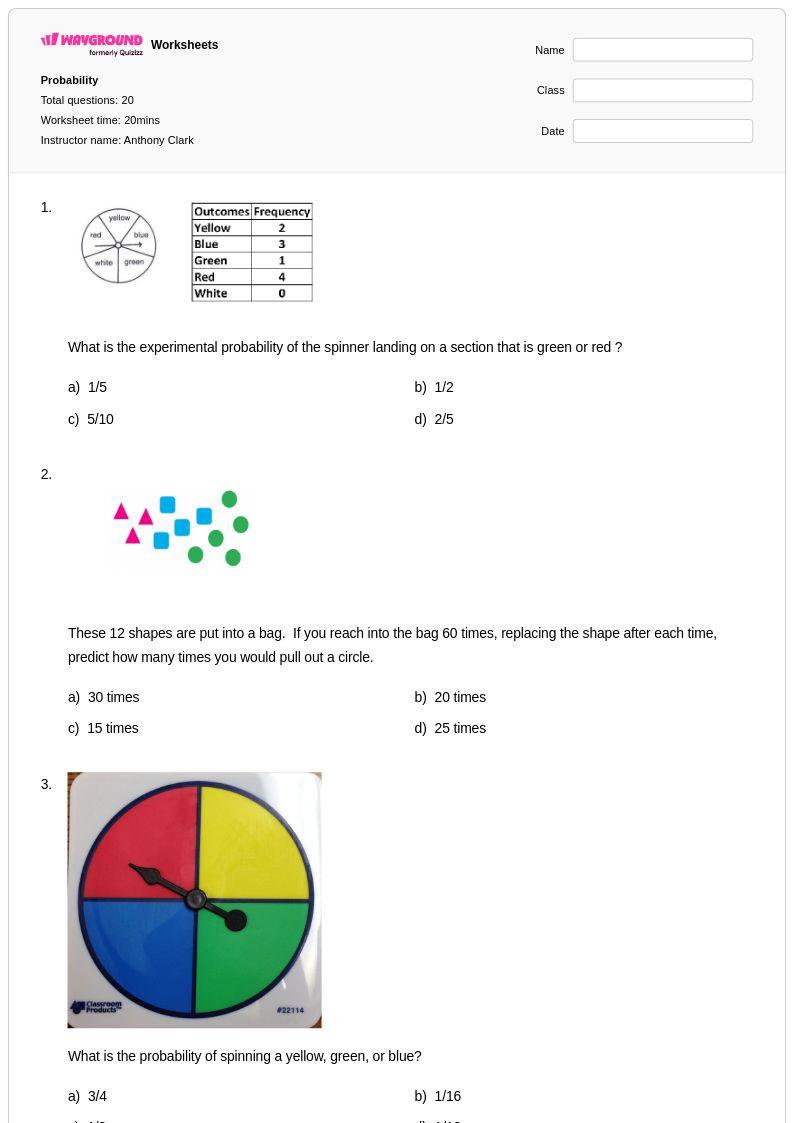
20 Q
7th - Uni
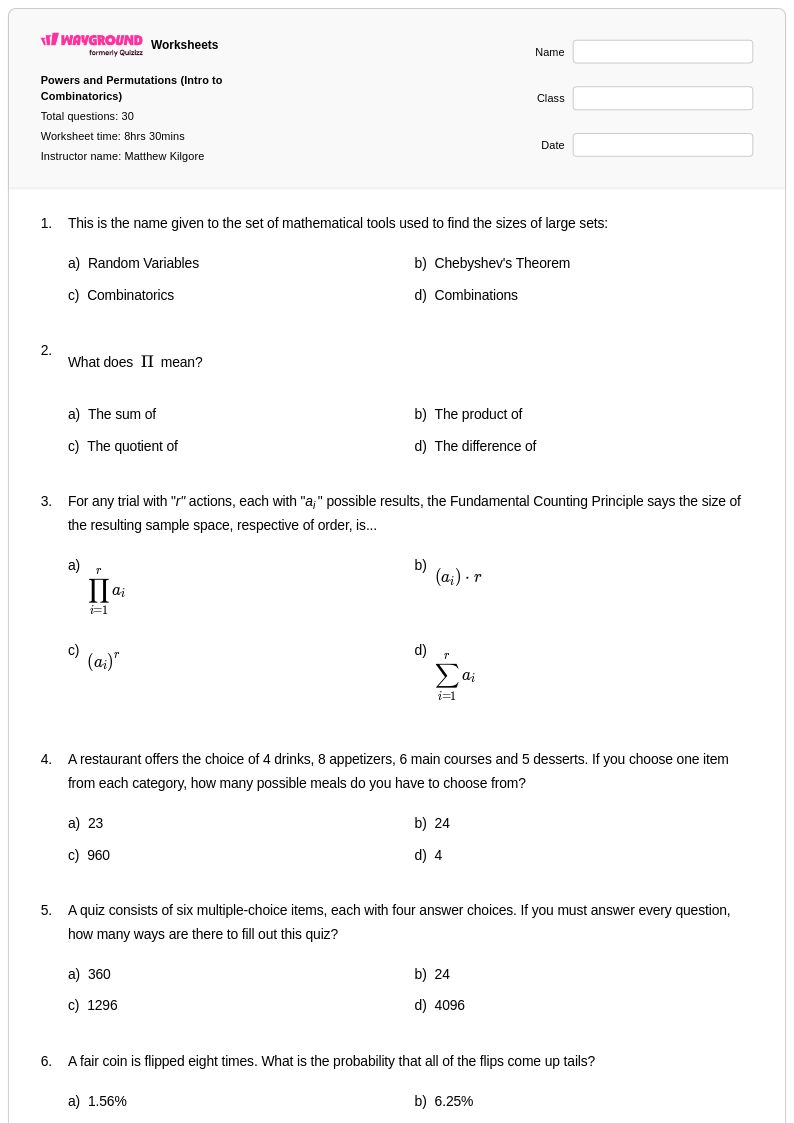
30 Q
11th - Uni
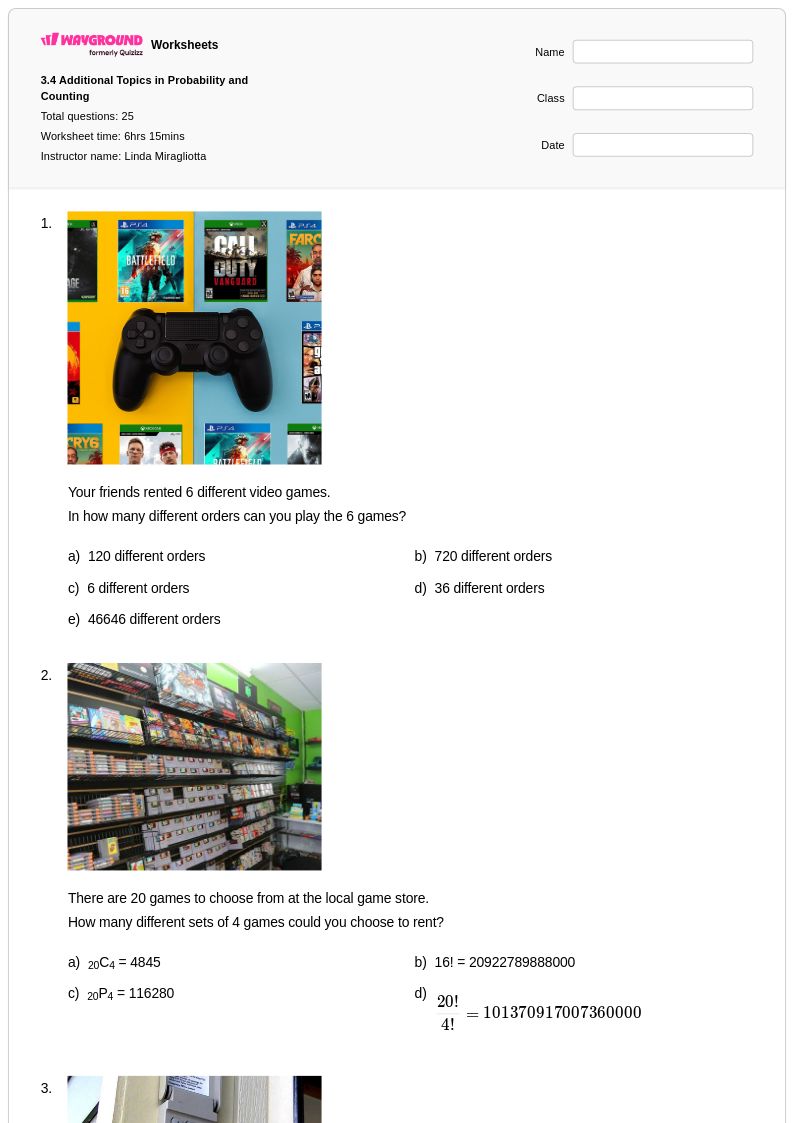
25 Q
9th - 12th
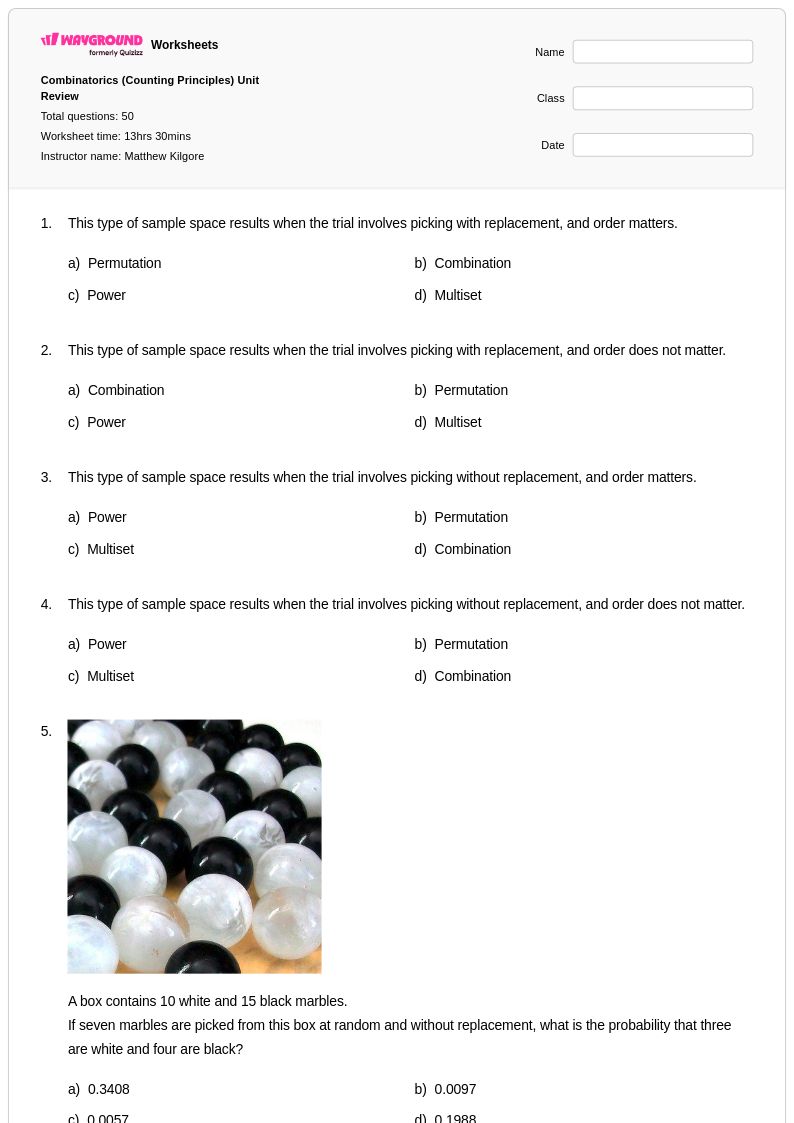
50 Q
11th - Uni
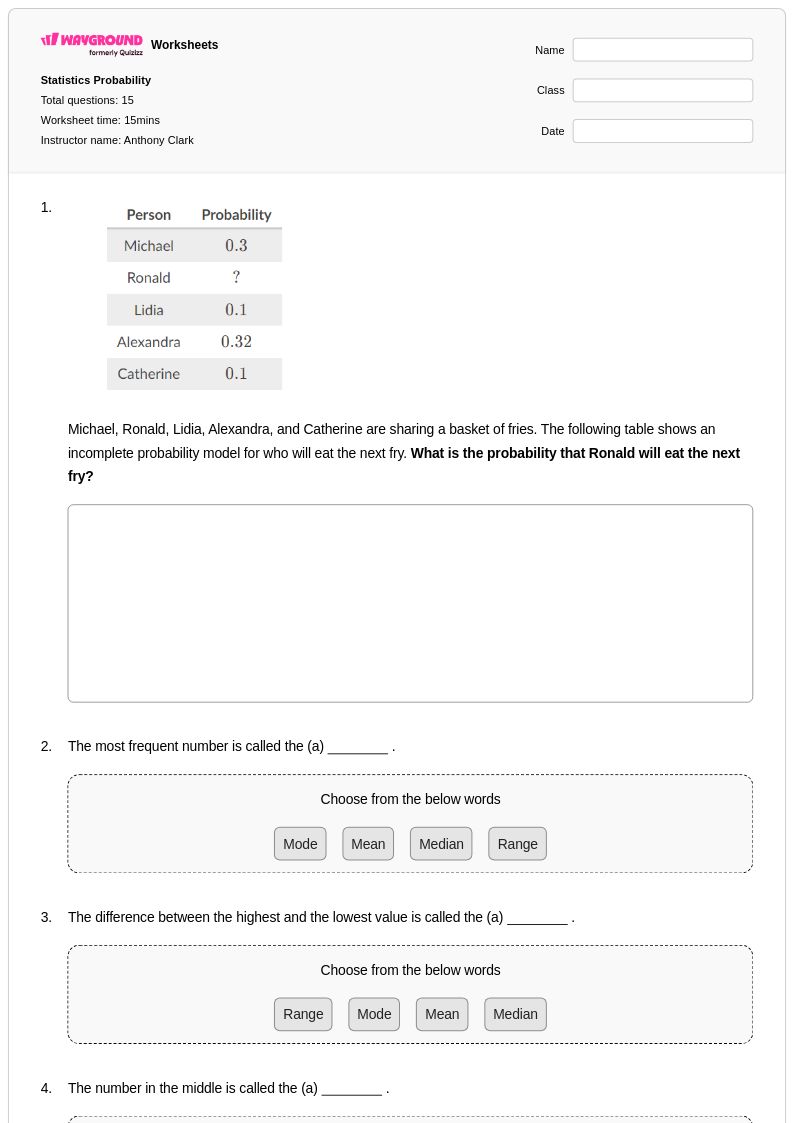
15 Q
7th - Uni
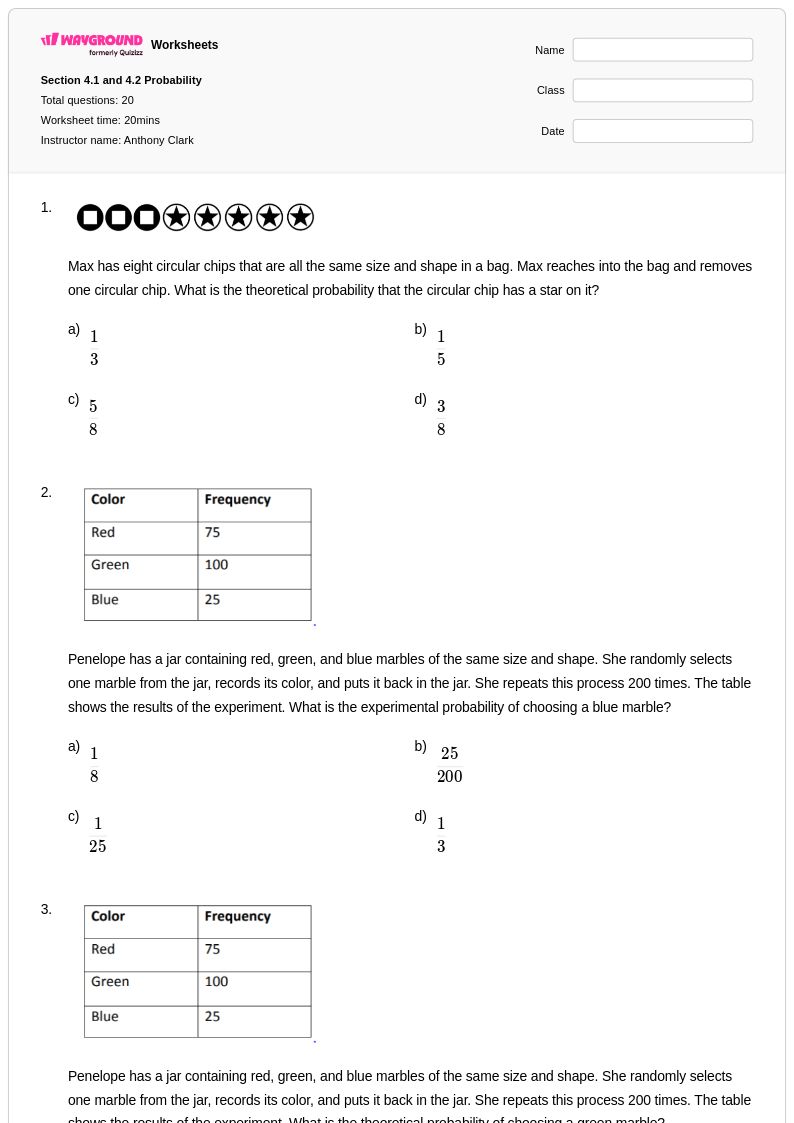
20 Q
7th - Uni
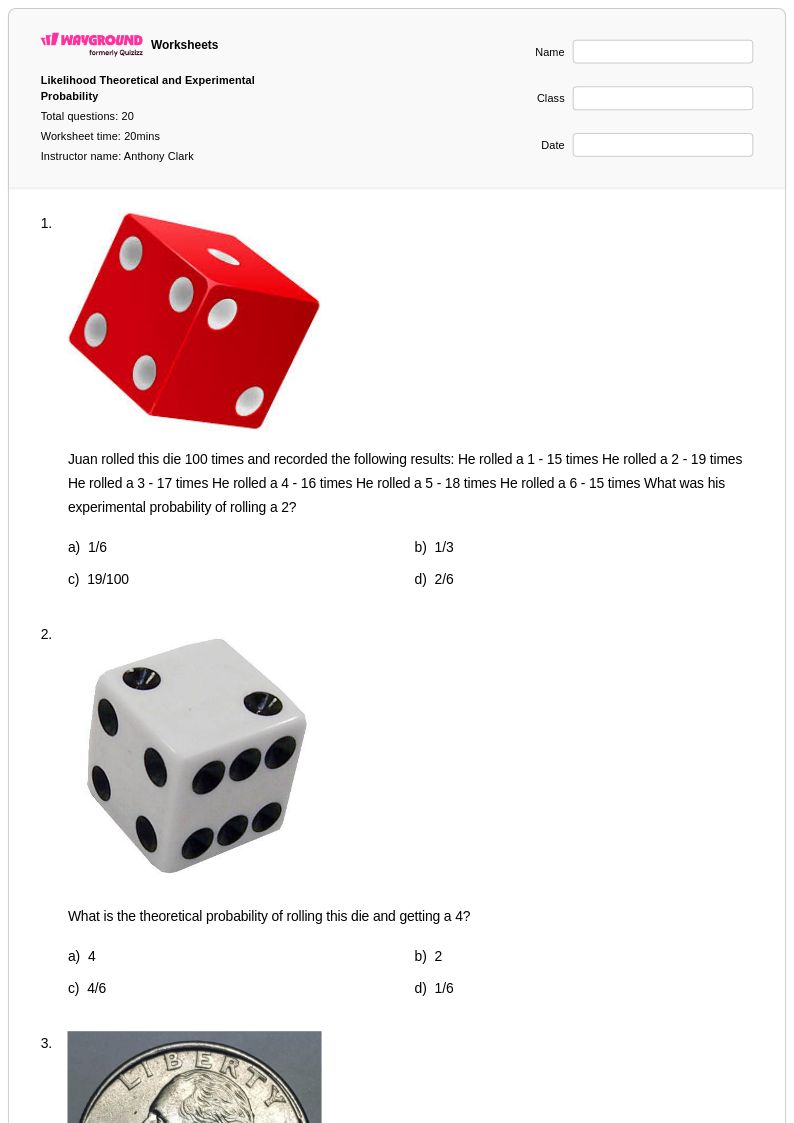
20 Q
7th - Uni
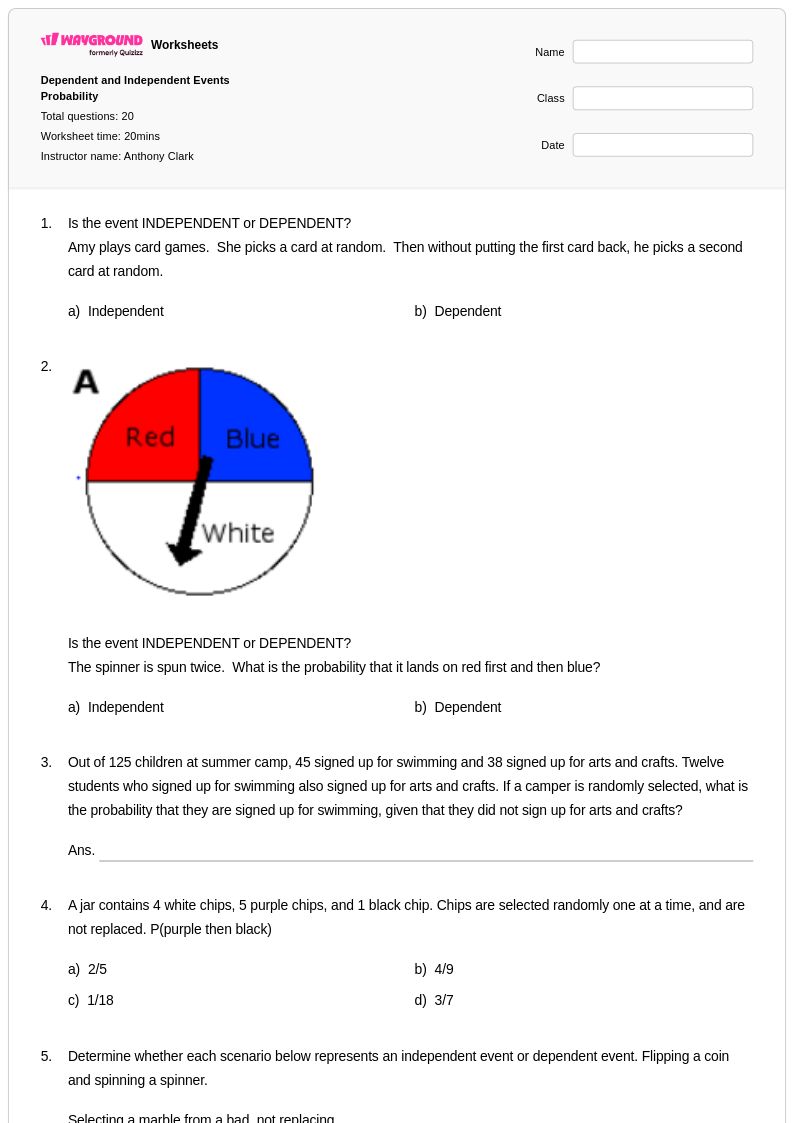
20 Q
7th - Uni
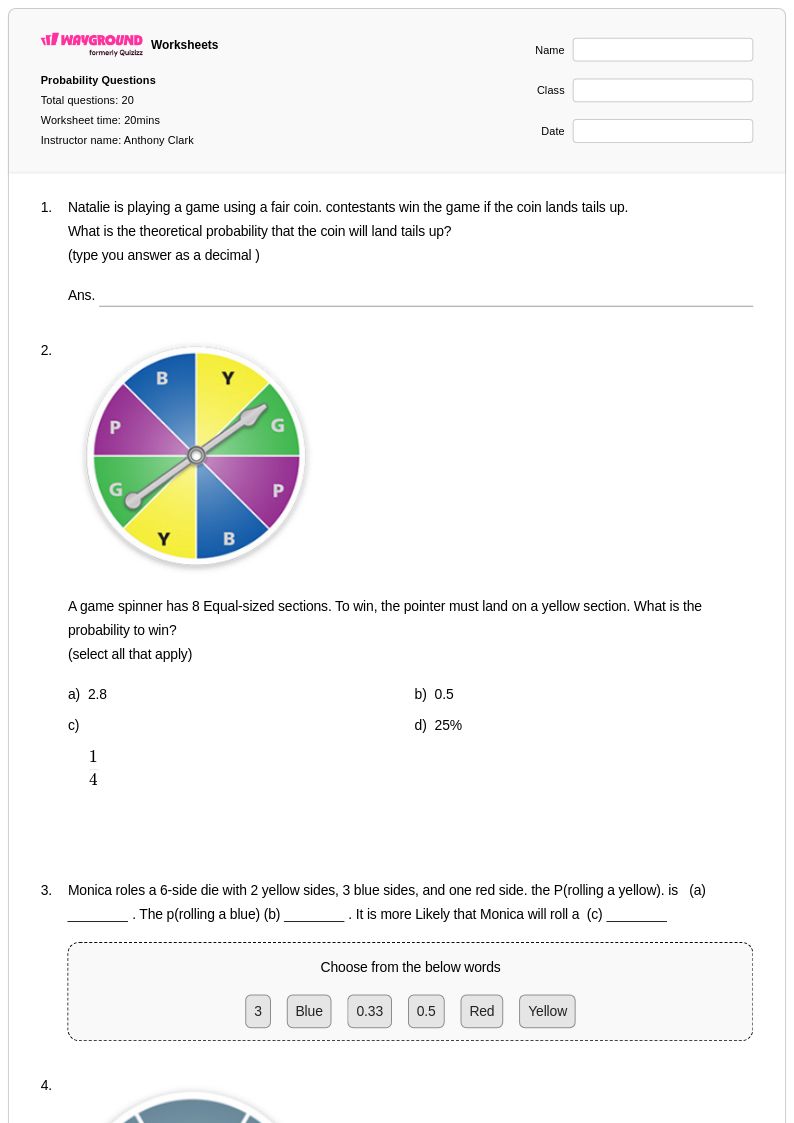
20 Q
7th - Uni
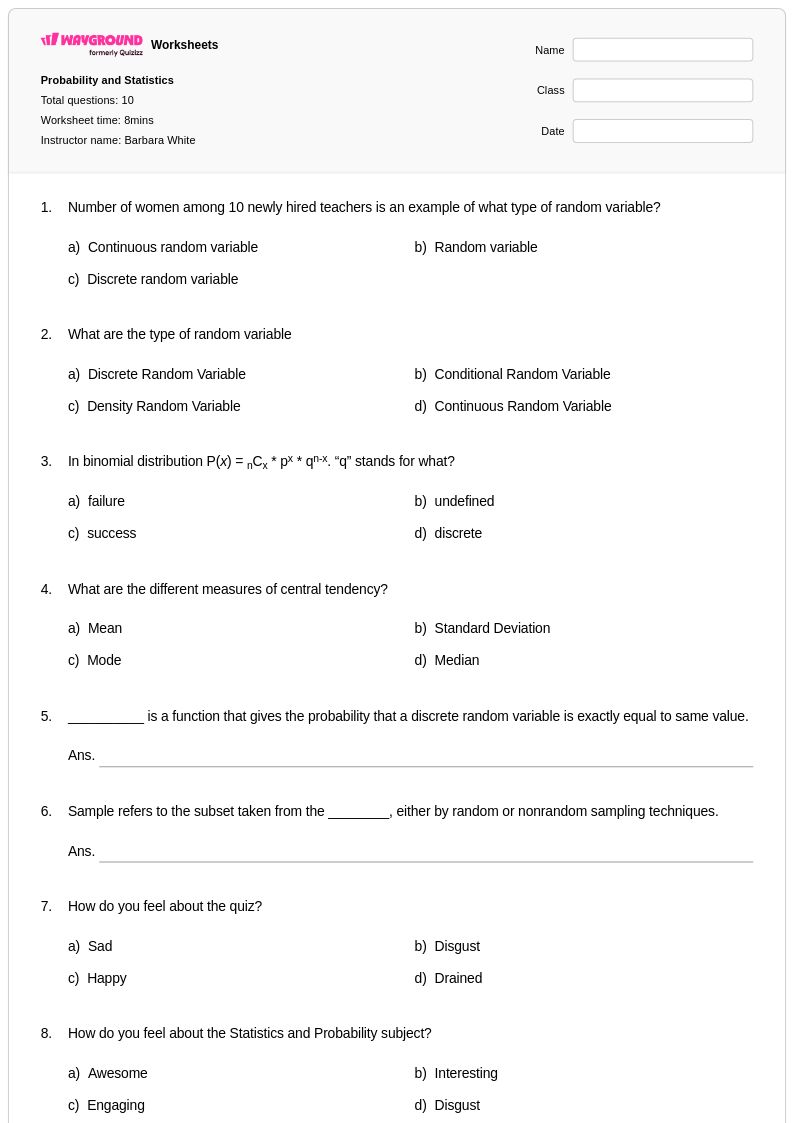
10 Q
11th
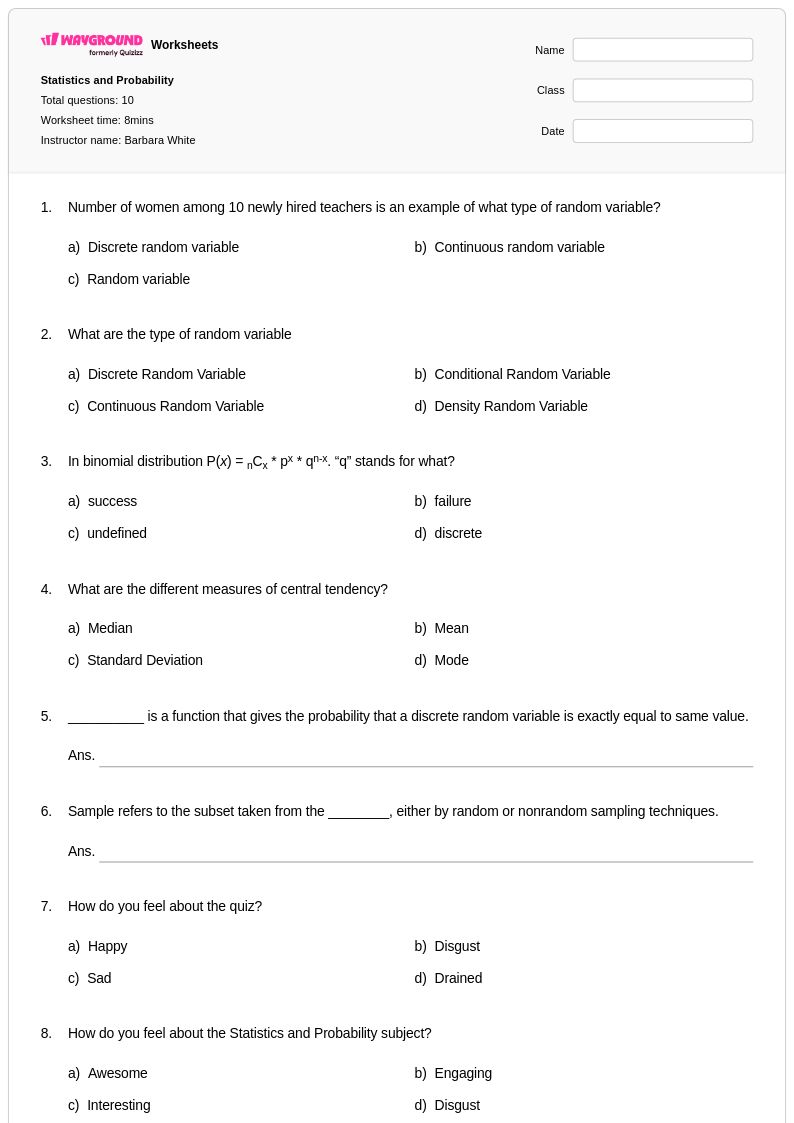
10 Q
11th
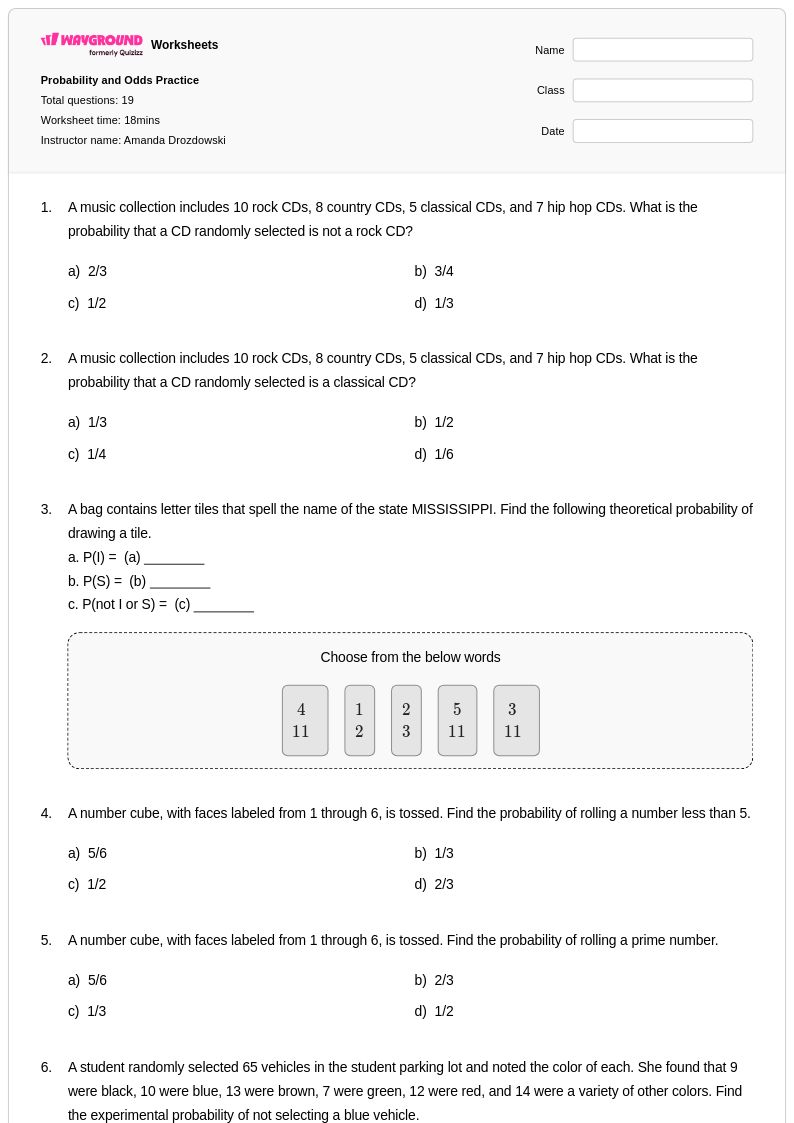
19 Q
9th - 12th
Explore Probability and Combinatorics Worksheets by Grades
Explore Other Subject Worksheets for grade 11
Explore printable Probability and Combinatorics worksheets for Grade 11
Probability and combinatorics worksheets for Grade 11 mathematics provide essential practice with advanced statistical concepts that form the foundation for higher-level mathematical reasoning. These comprehensive resources from Wayground (formerly Quizizz) help students master complex probability calculations, permutations, combinations, and statistical analysis through carefully structured practice problems. Students develop critical thinking skills as they work through scenarios involving conditional probability, independent and dependent events, and combinatorial problem-solving strategies. Each worksheet includes detailed answer keys that support self-assessment and enable students to identify areas requiring additional focus, while the free printable format ensures accessibility for both classroom instruction and independent study.
Wayground (formerly Quizizz) empowers educators with millions of teacher-created probability and combinatorics resources specifically designed to meet the rigorous demands of Grade 11 mathematics curricula. The platform's sophisticated search and filtering capabilities allow teachers to quickly locate worksheets aligned with specific learning standards, while built-in differentiation tools enable customization for diverse learning needs and skill levels. Teachers can seamlessly adapt materials for remediation with struggling students or provide enrichment challenges for advanced learners, utilizing both digital interactive formats and traditional pdf printables depending on their instructional approach. This flexibility supports comprehensive lesson planning and ensures that every student receives targeted practice opportunities that strengthen their understanding of probability theory and combinatorial mathematics.