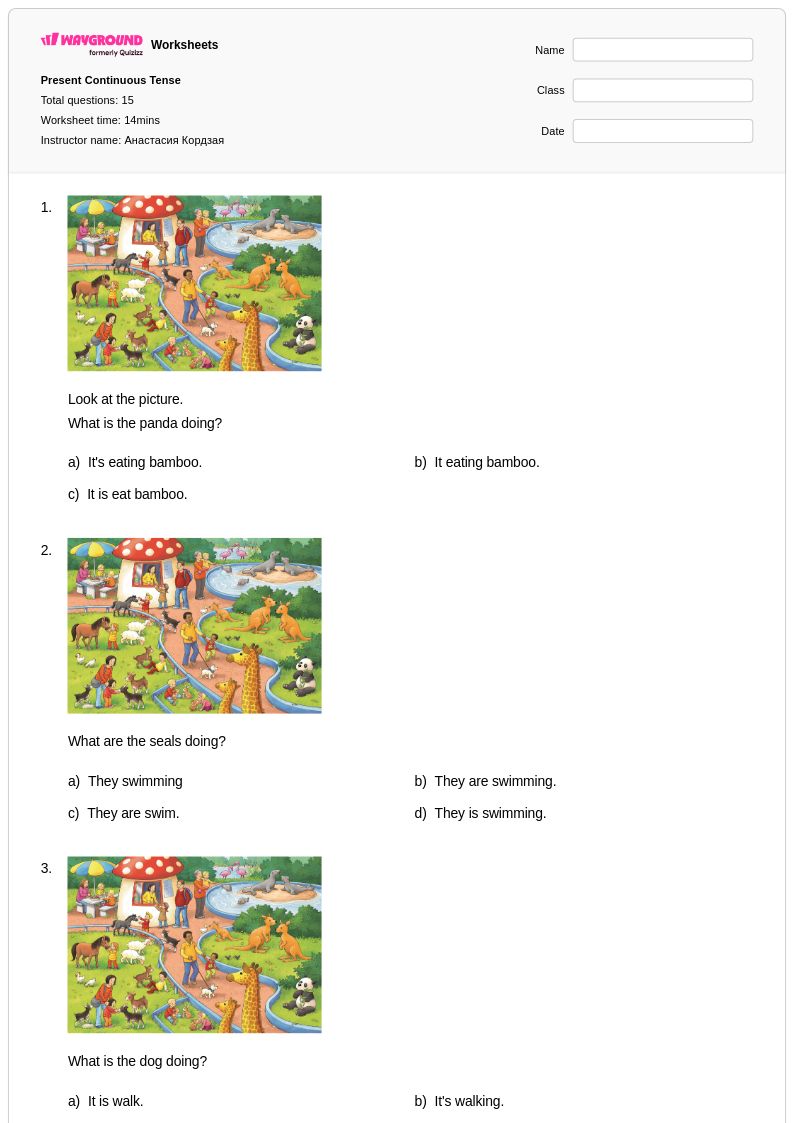
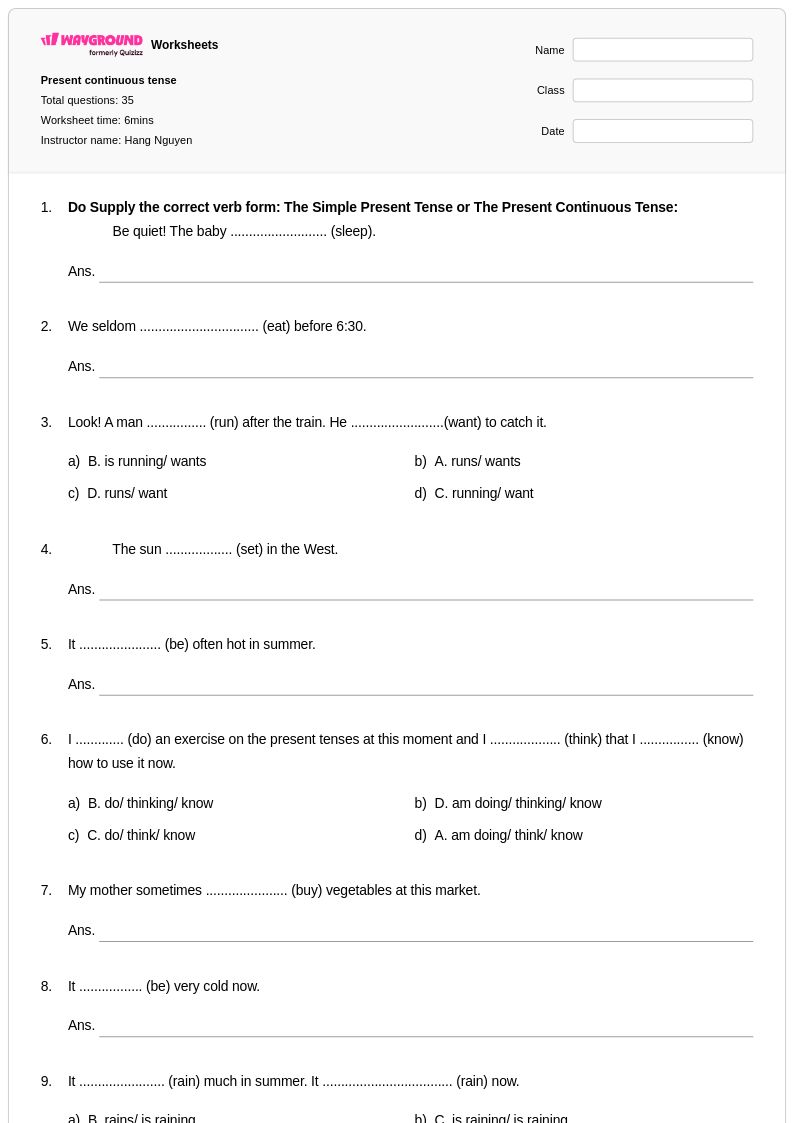
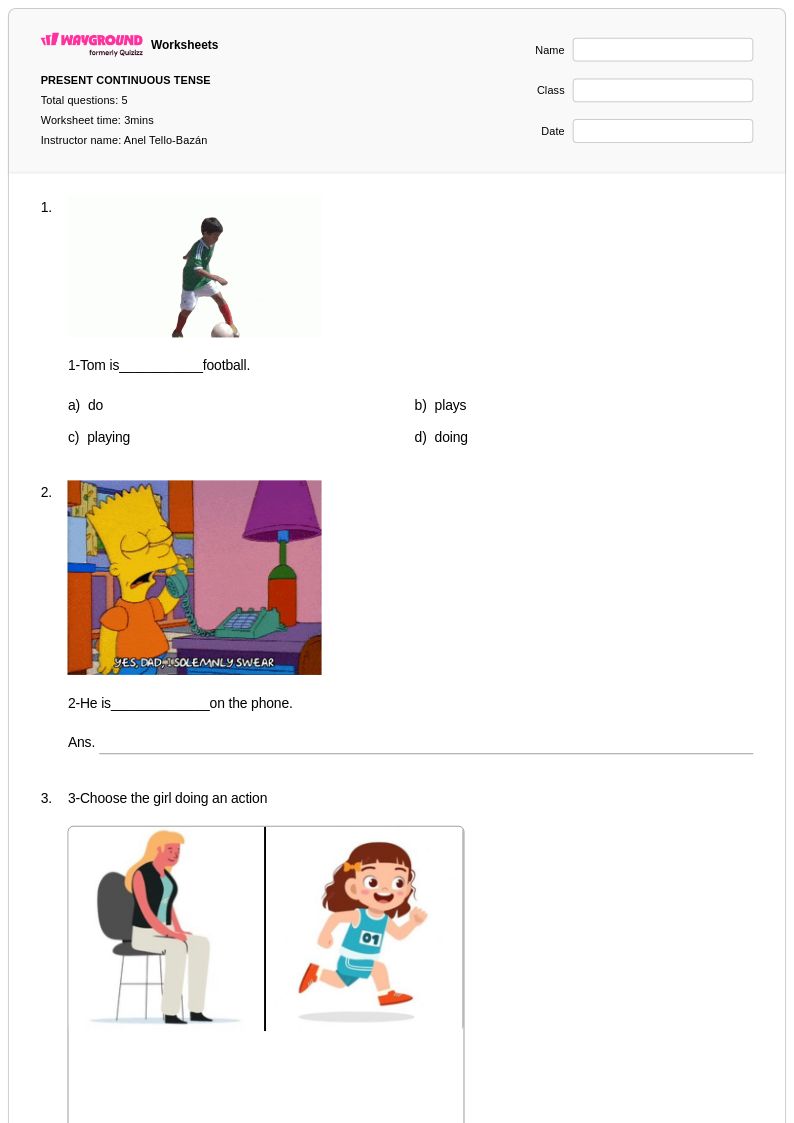
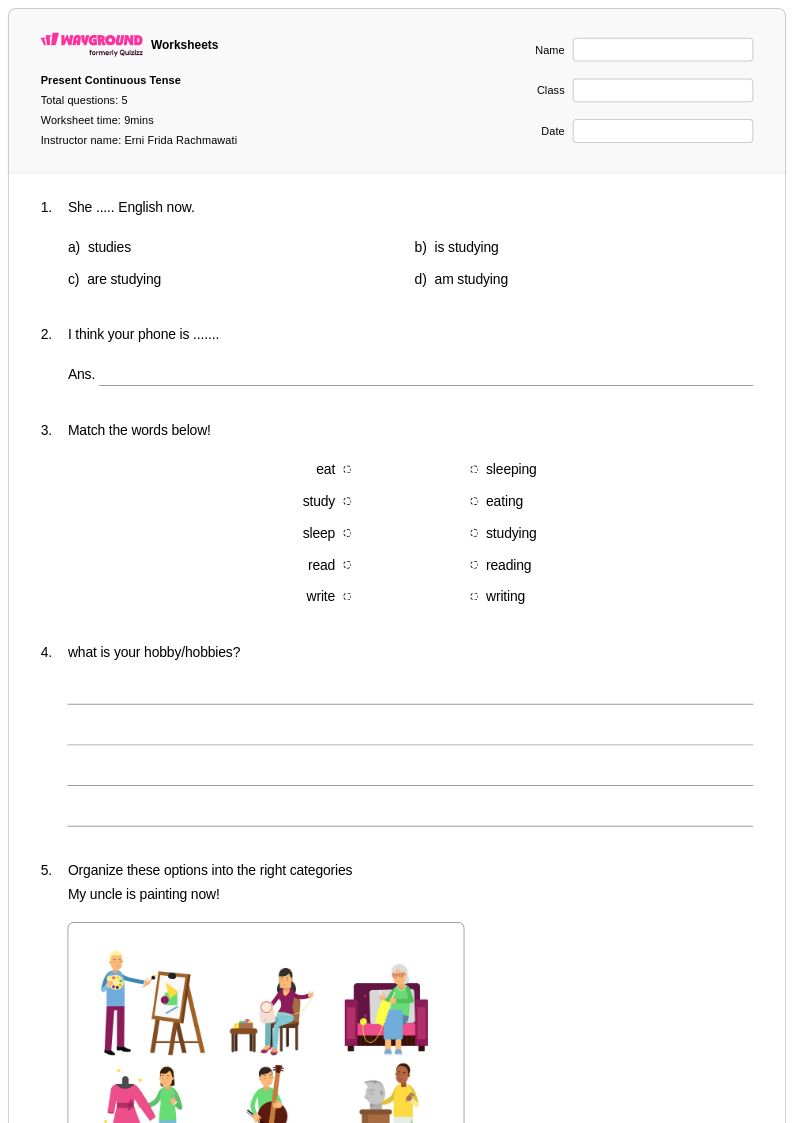
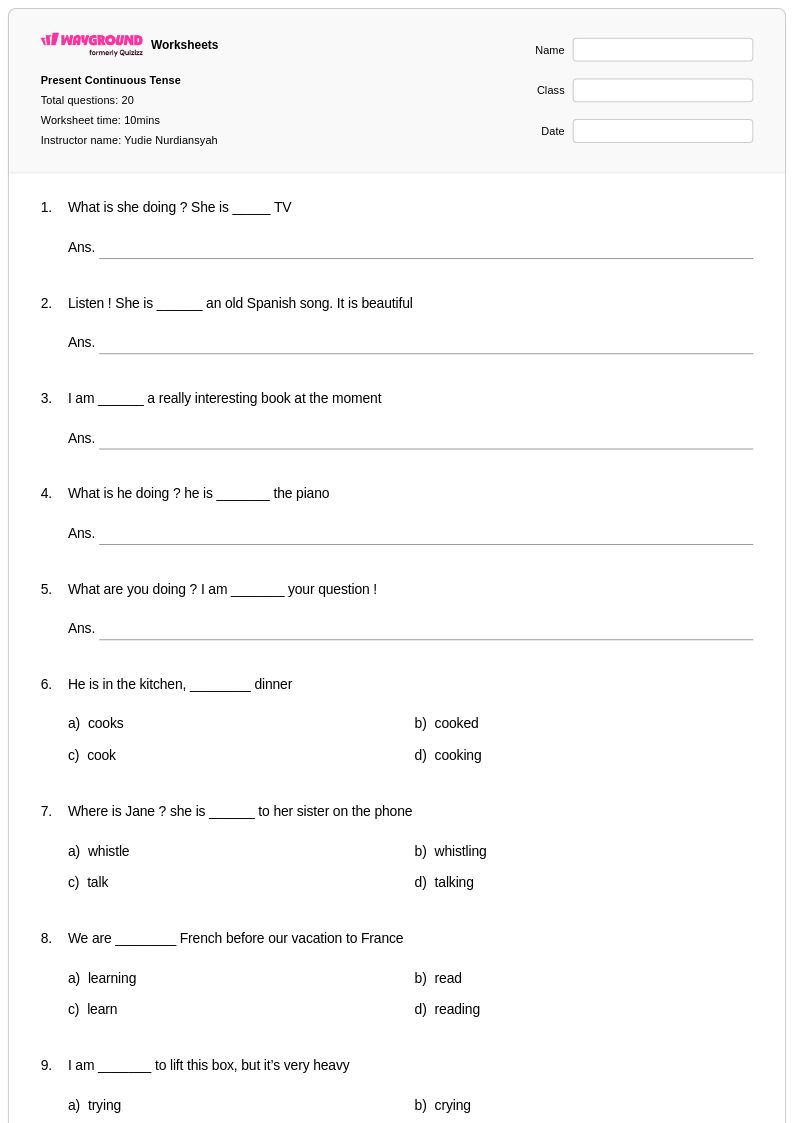
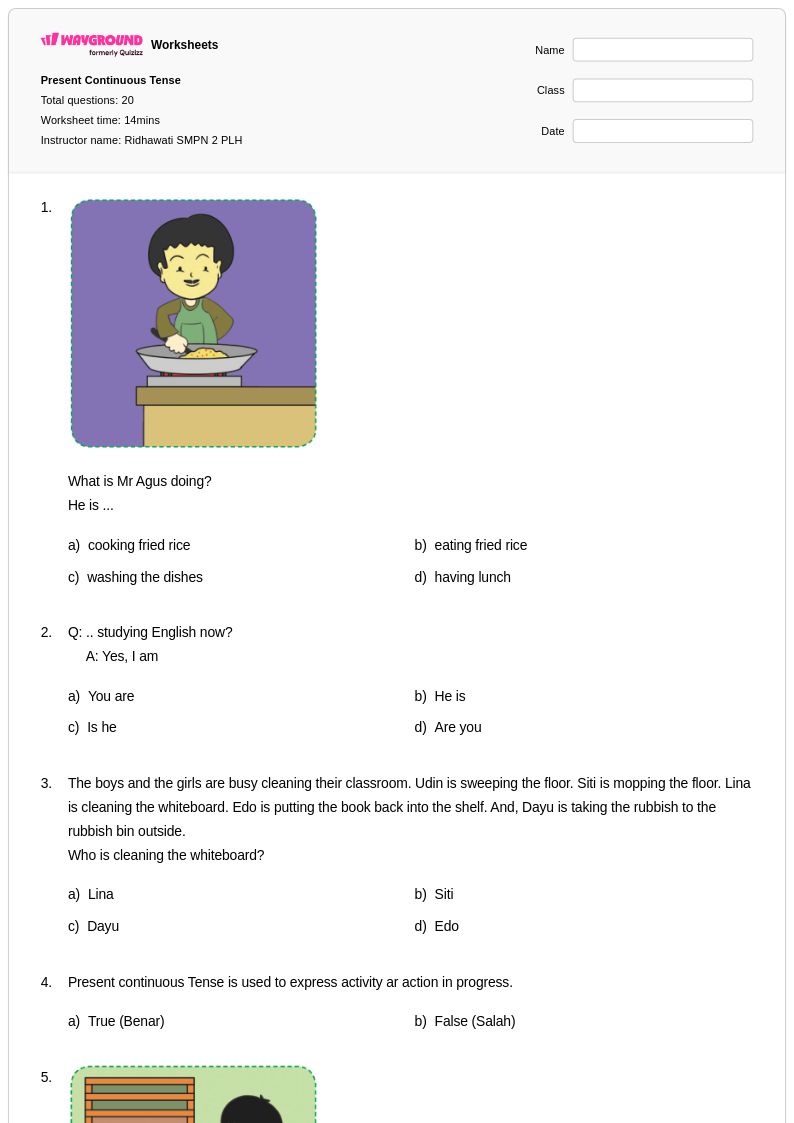
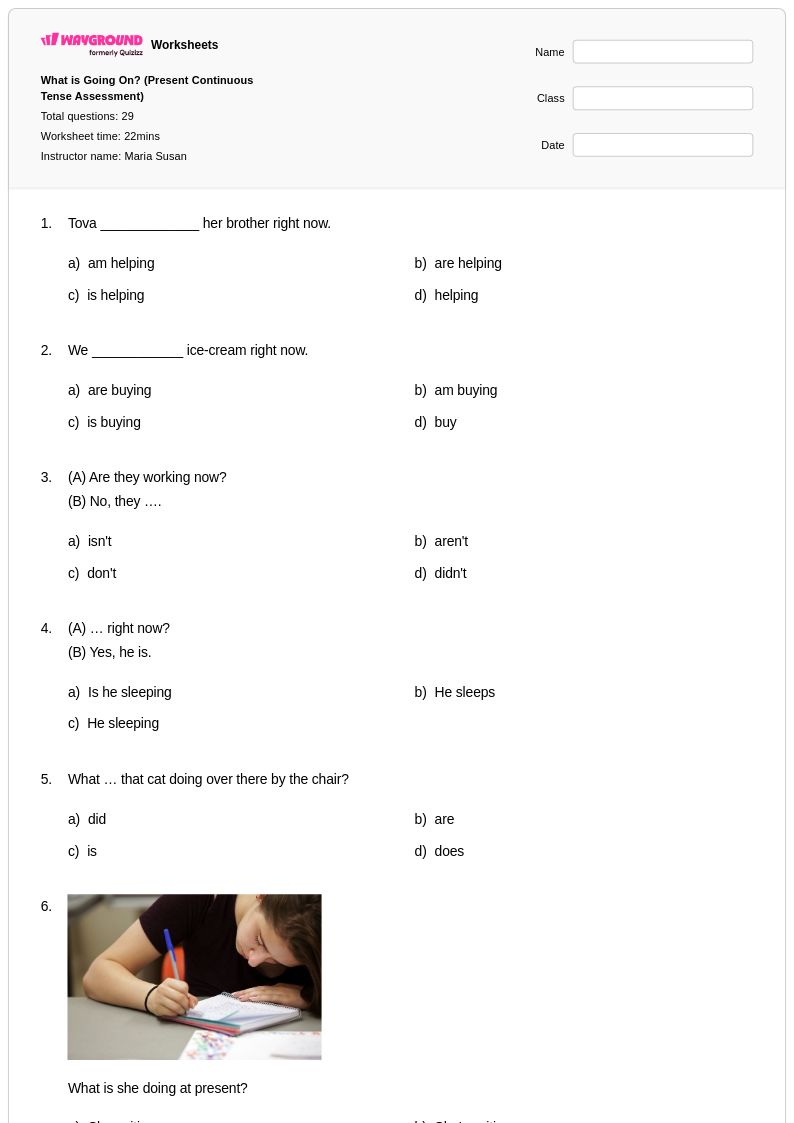
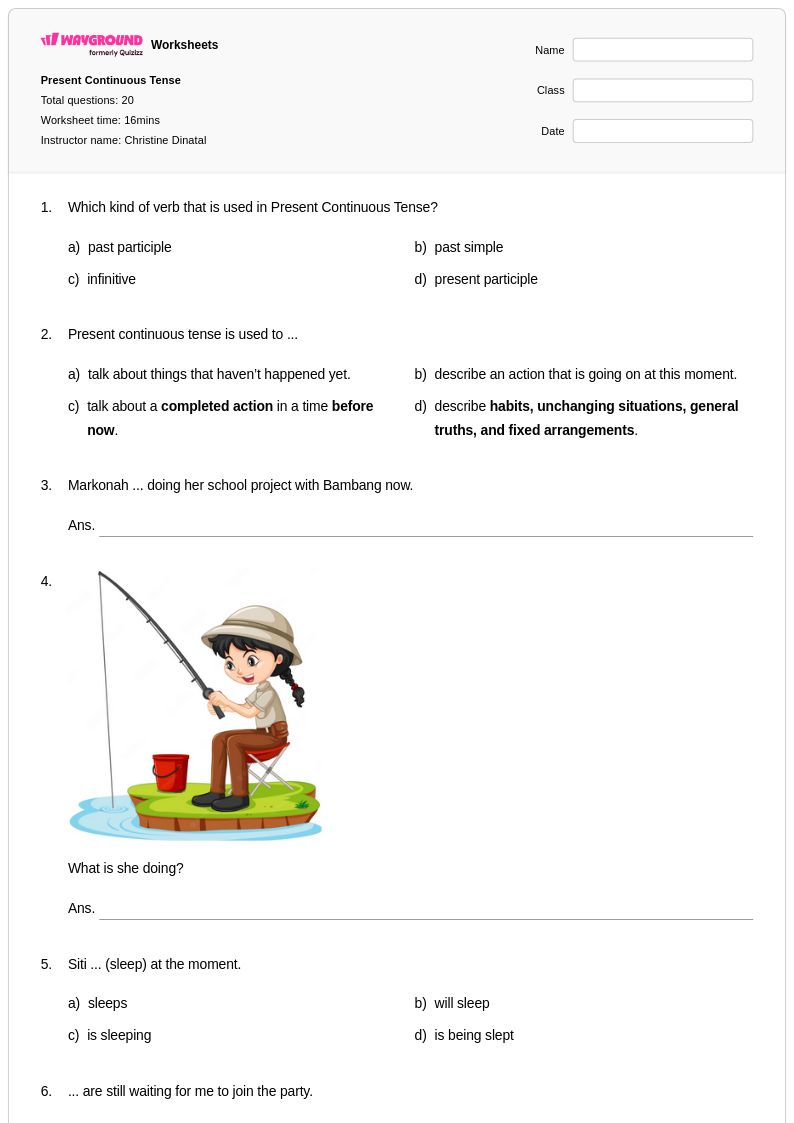
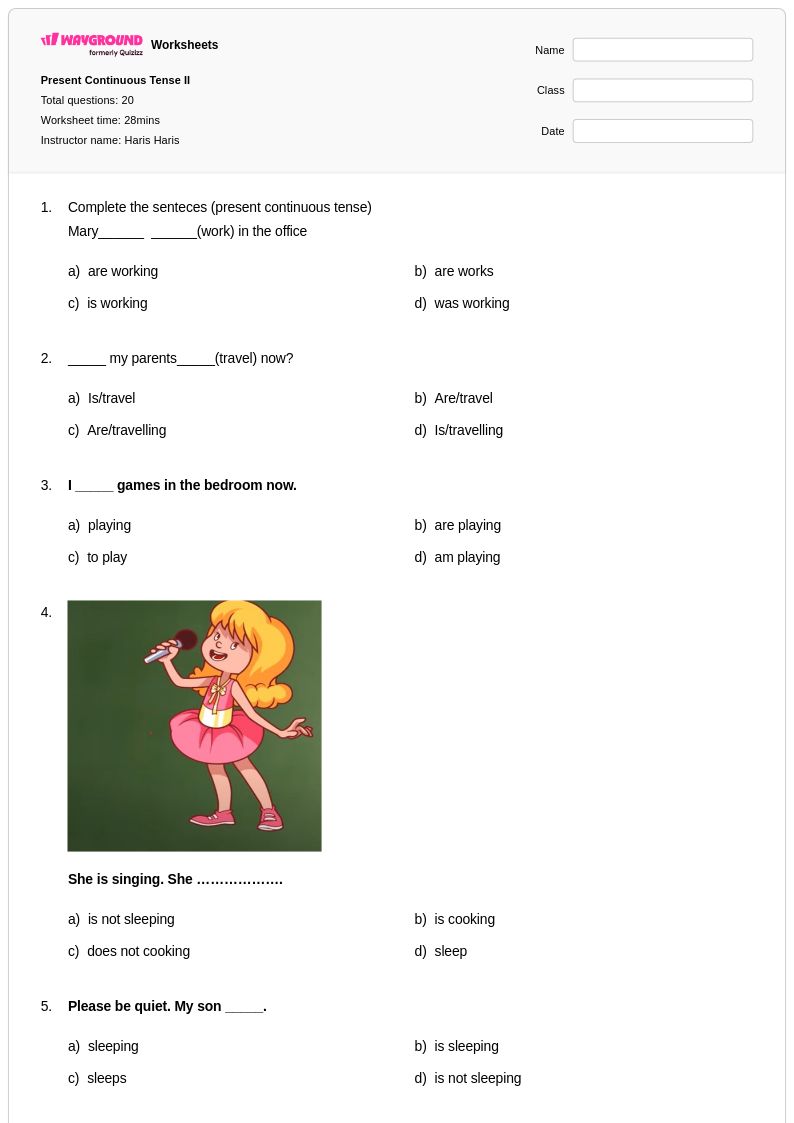
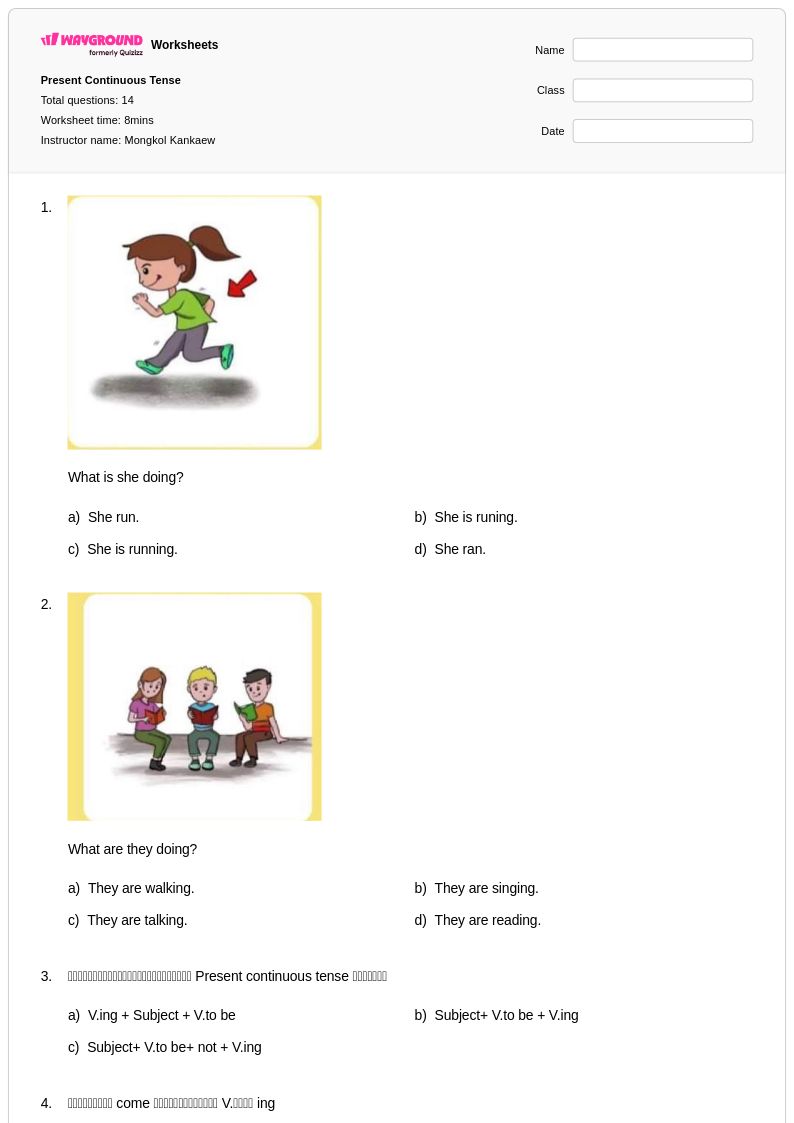
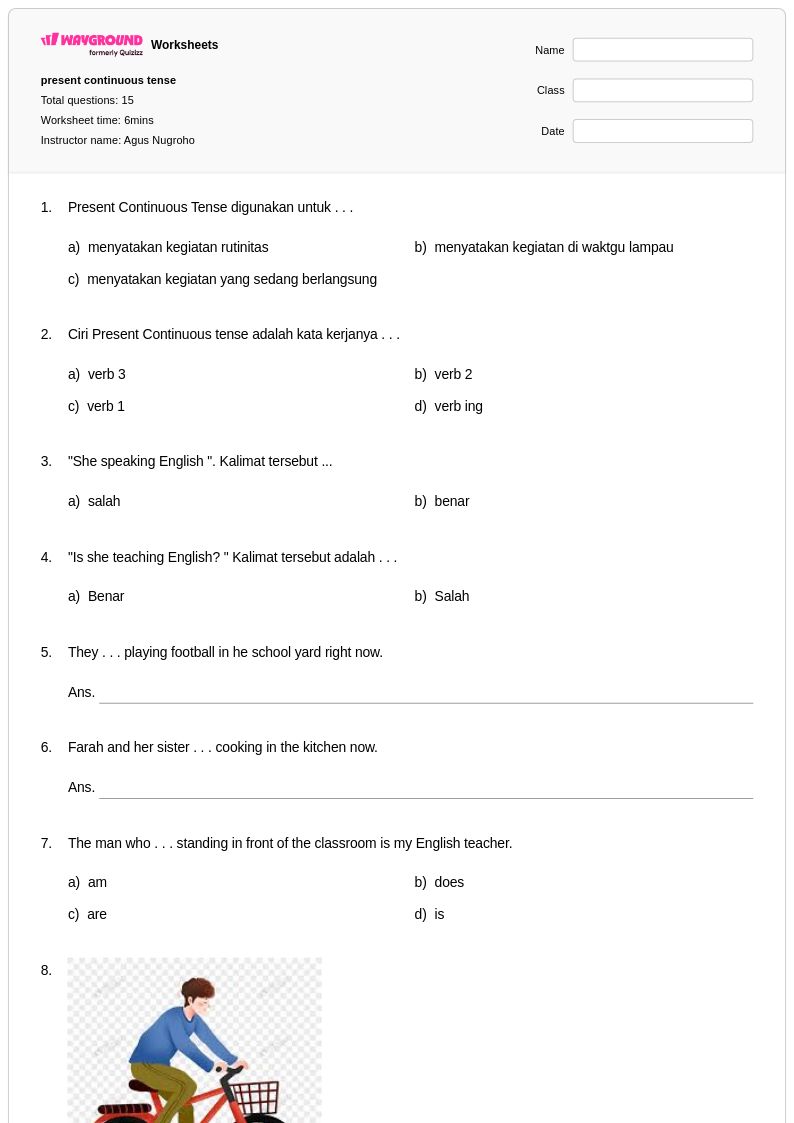
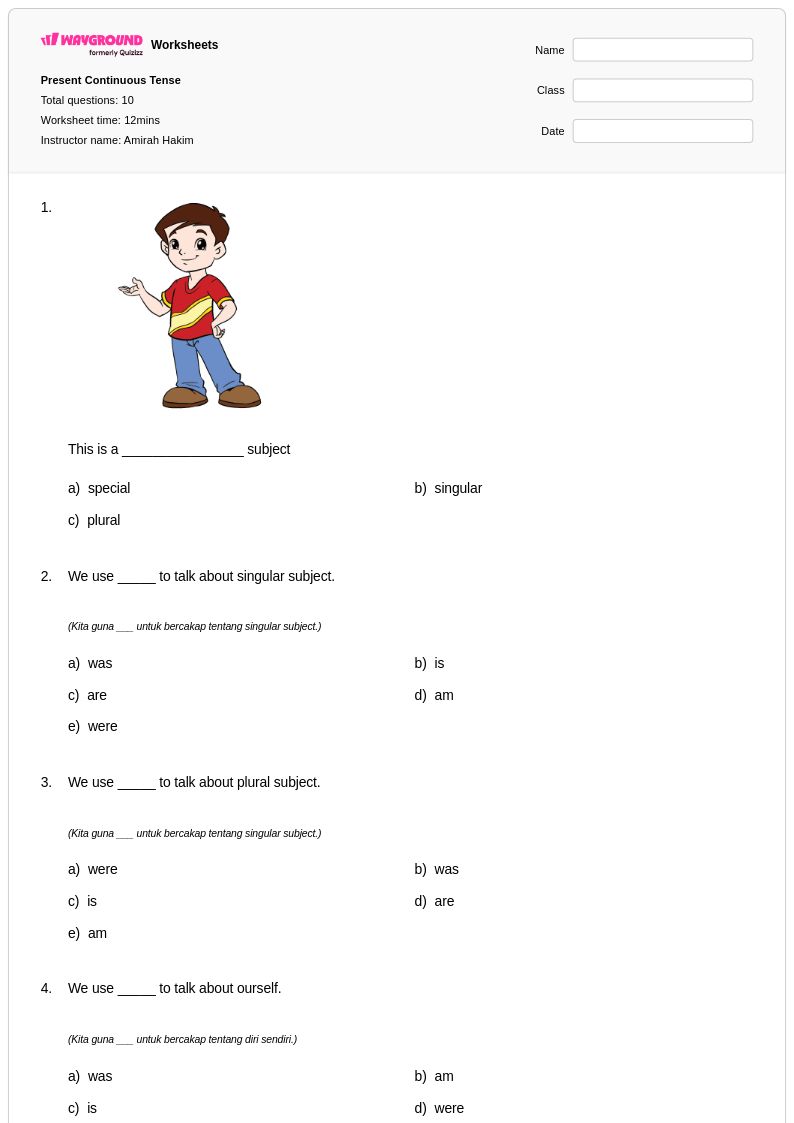
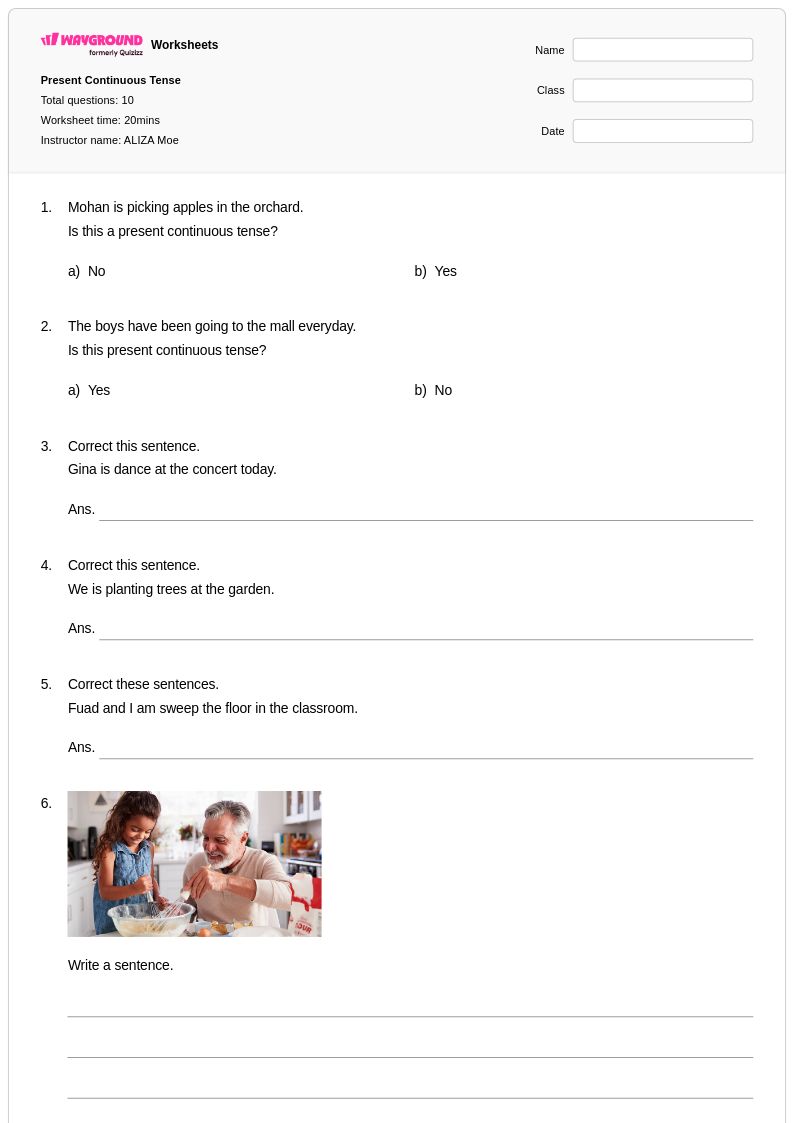
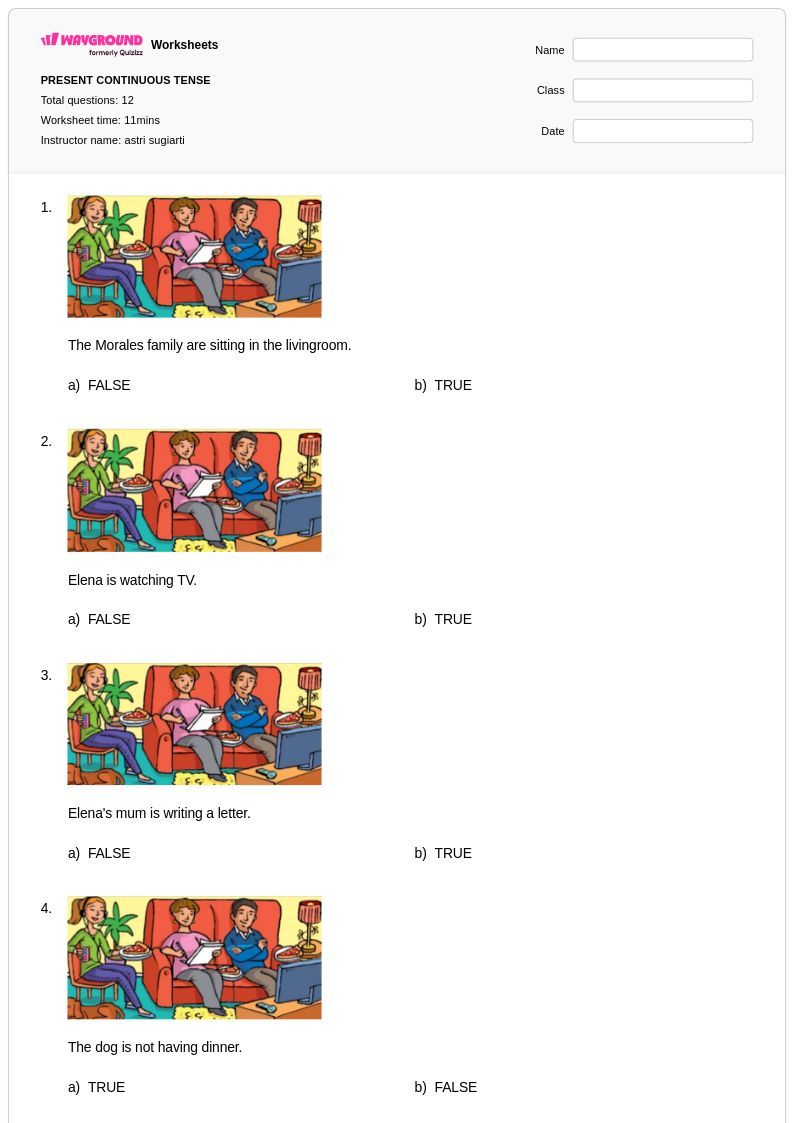
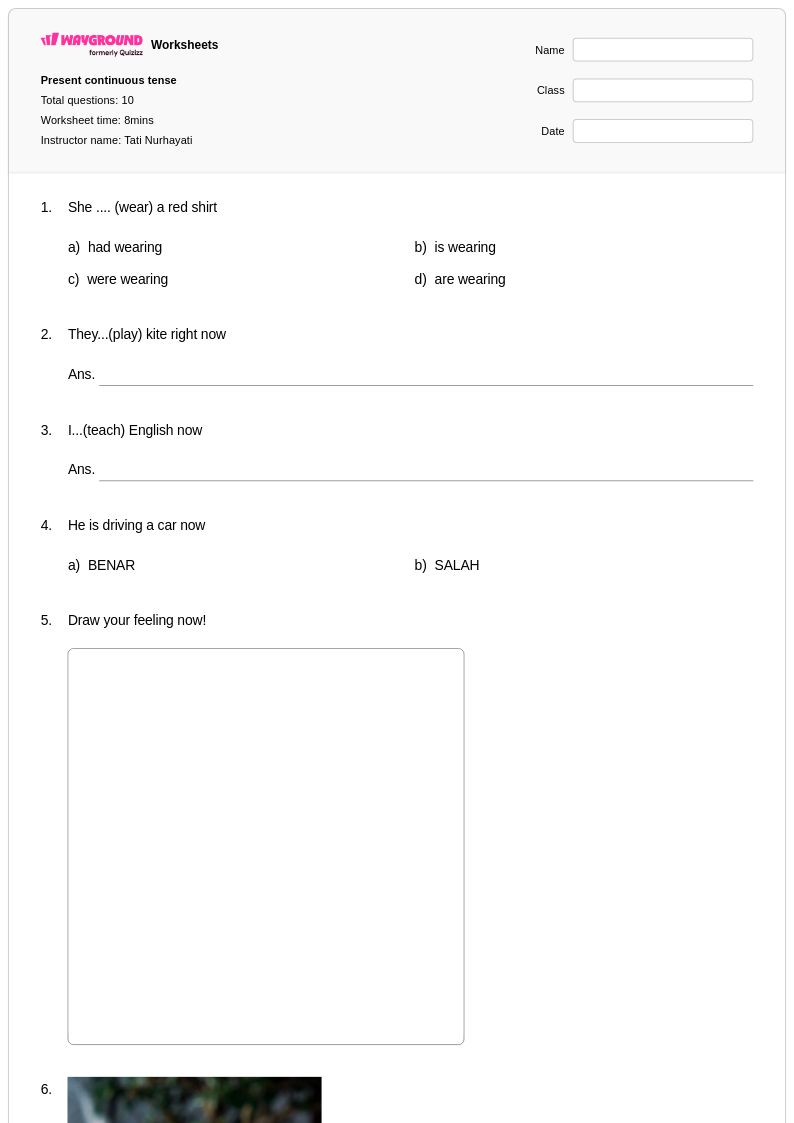
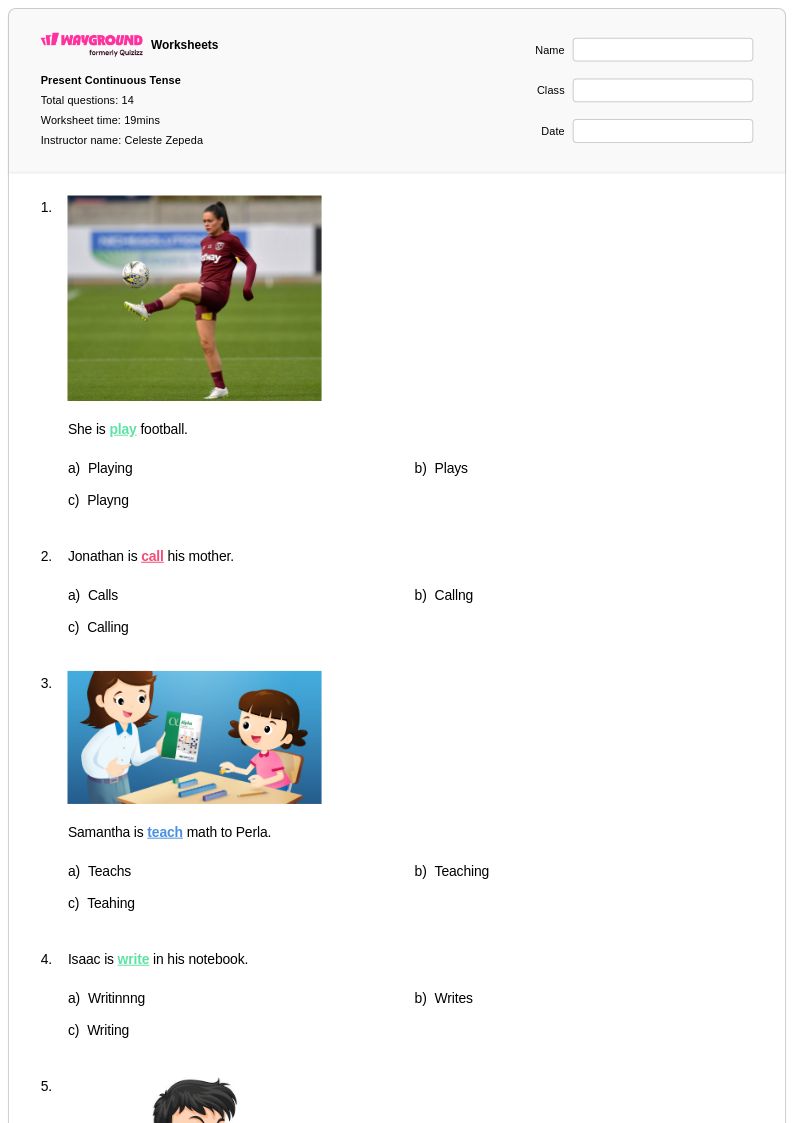
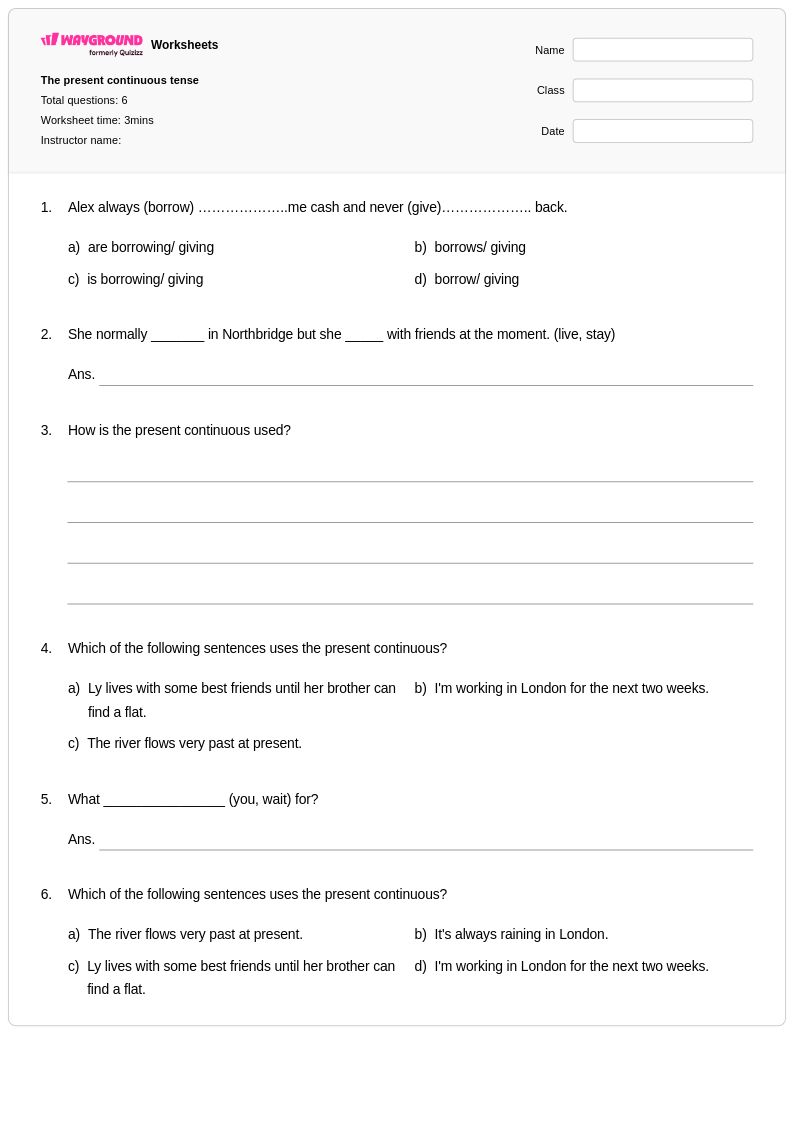
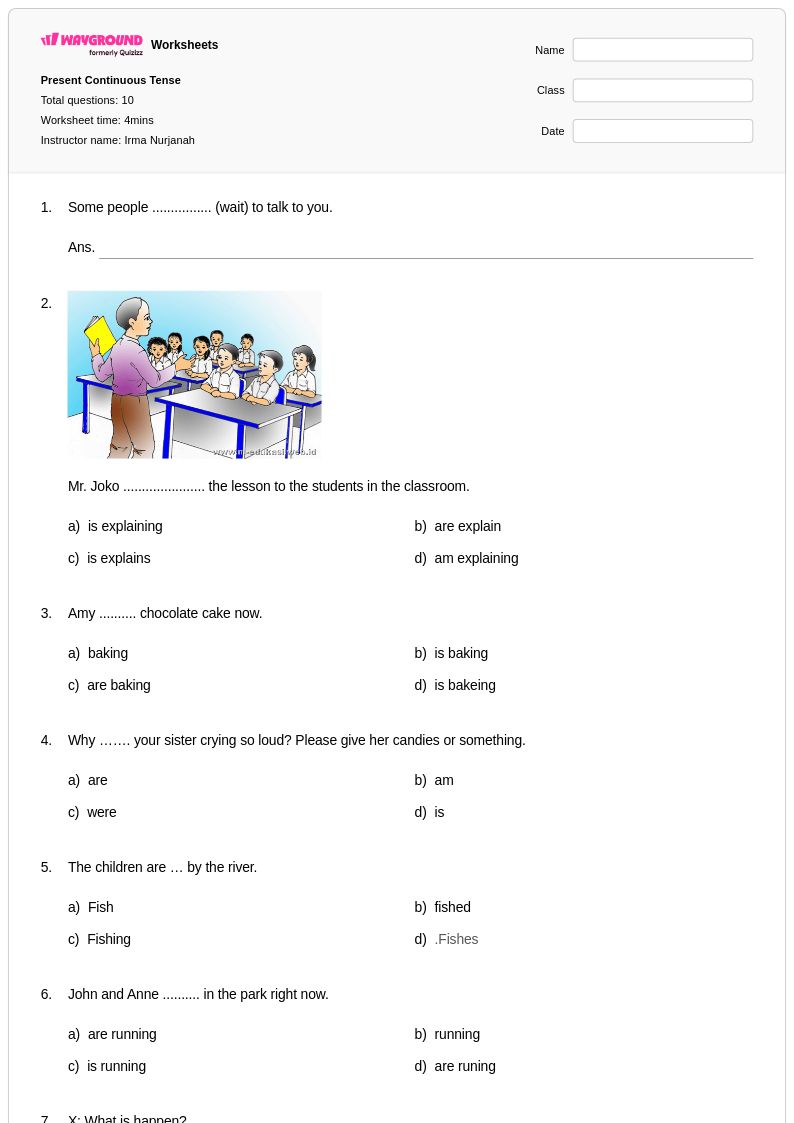
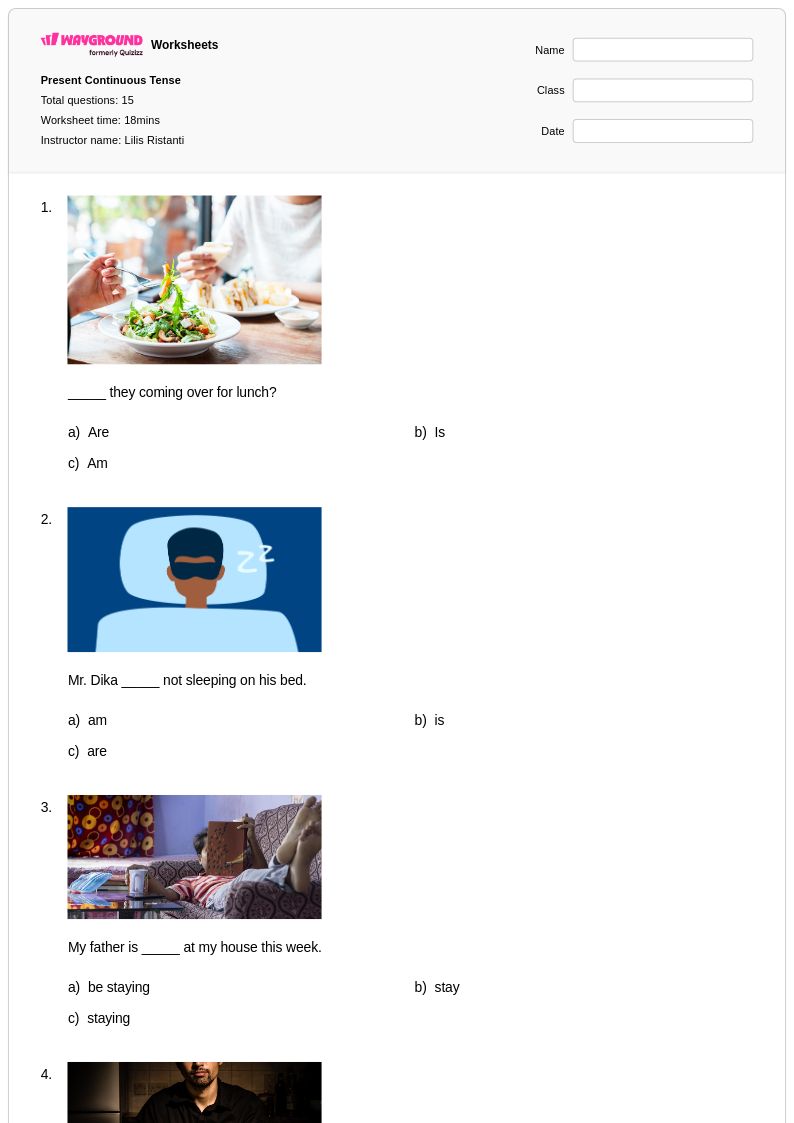
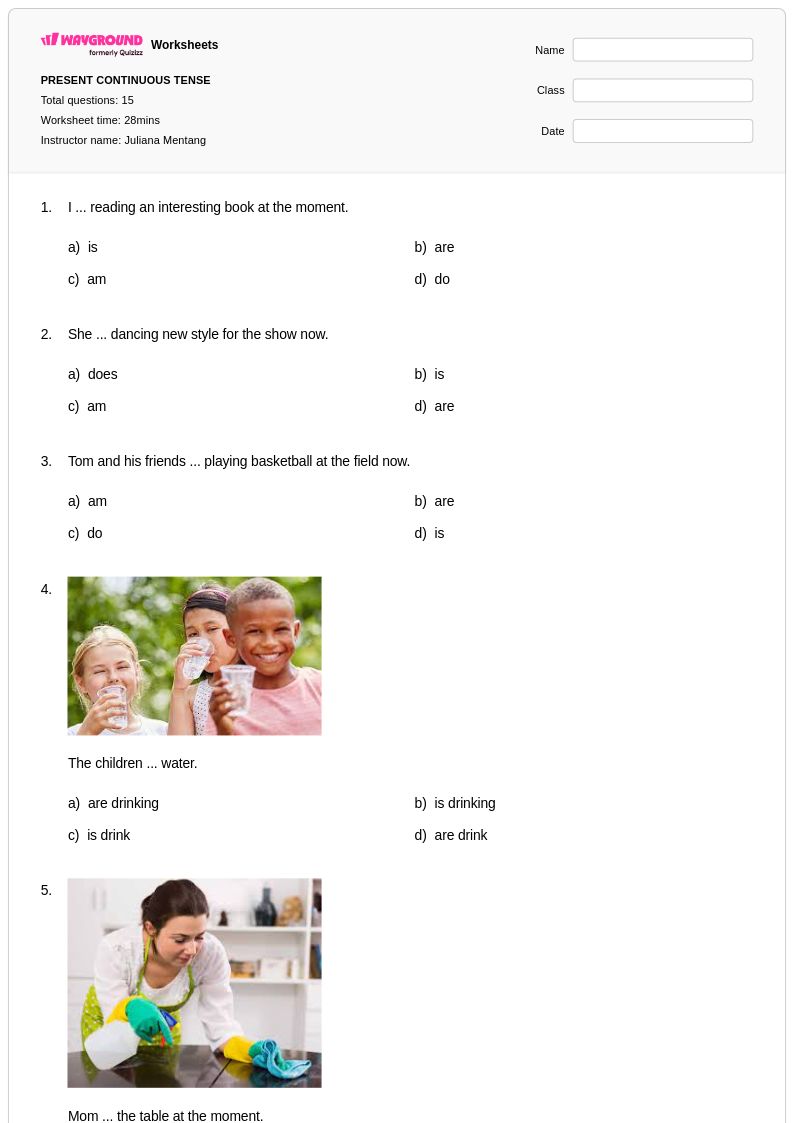
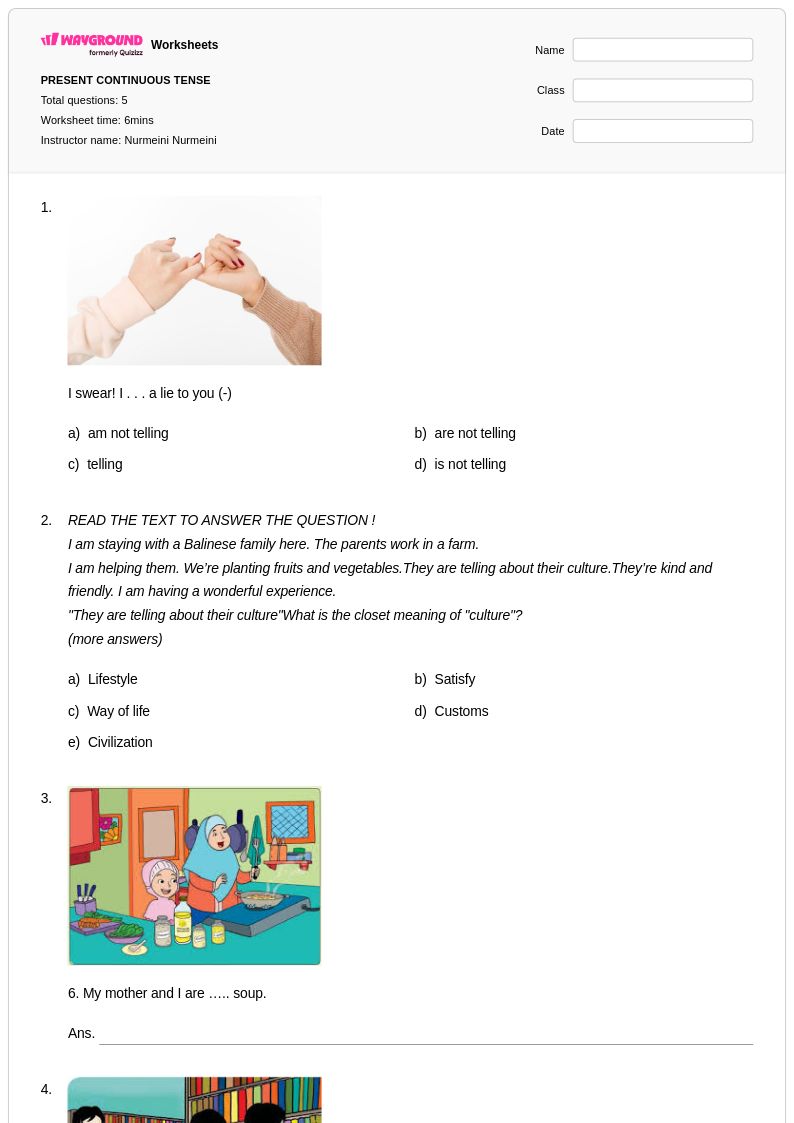
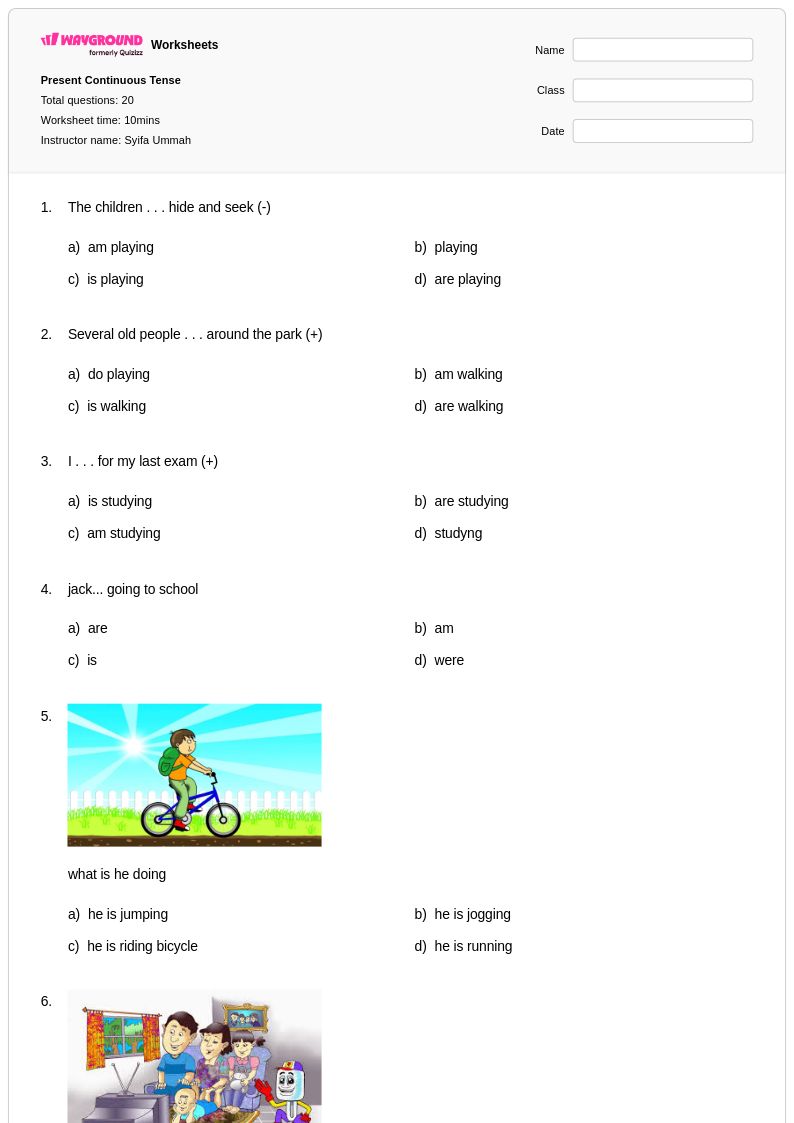
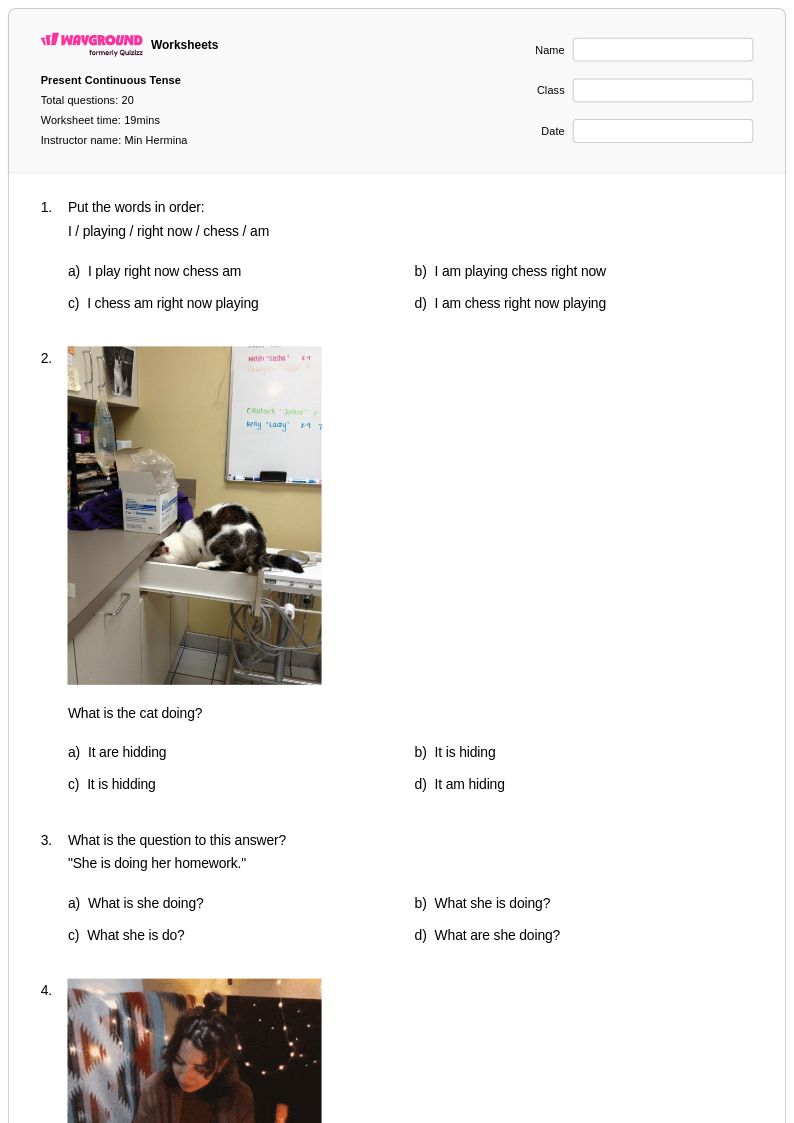
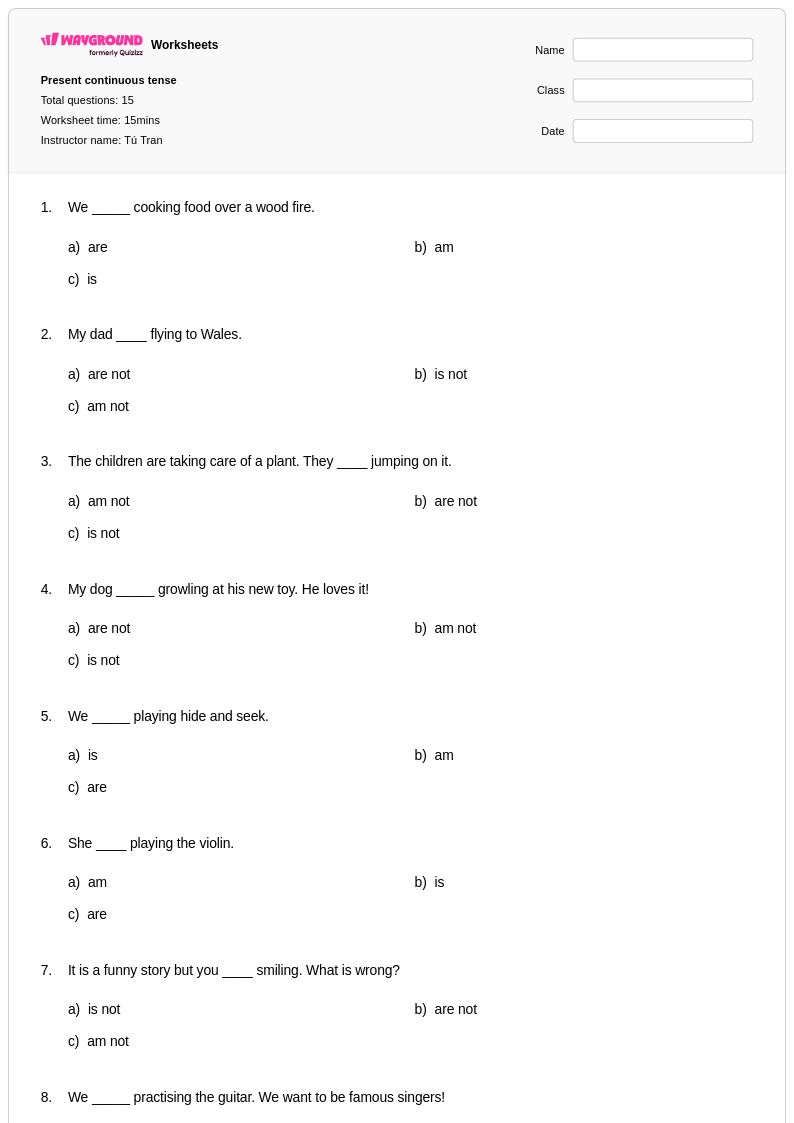
Enhance students' understanding of present continuous tense with Wayground's free printable worksheets, featuring comprehensive practice problems and answer keys to master ongoing actions and progressive verb forms.
Present continuous tense worksheets available through Wayground (formerly Quizizz) provide comprehensive practice opportunities for students to master this essential English grammar concept. These carefully designed resources focus on helping learners understand and correctly apply the present continuous tense structure, which describes actions happening at the moment of speaking or ongoing activities in the present time. The worksheets strengthen key skills including proper formation of present continuous sentences using "be" verbs with present participles, recognition of time markers like "now," "at the moment," and "currently," and differentiation between present simple and present continuous usage. Each worksheet collection includes detailed answer keys and is available as free printables in convenient pdf format, featuring varied practice problems that range from basic sentence completion to complex transformation exercises and contextual applications.
Wayground (formerly Quizizz) empowers educators with an extensive library of millions of teacher-created present continuous tense resources that streamline lesson planning and student assessment. The platform's robust search and filtering capabilities allow teachers to quickly locate worksheets aligned with specific curriculum standards and learning objectives, while built-in differentiation tools enable customization for diverse student needs and proficiency levels. These flexible resources are available in both printable pdf format for traditional classroom use and digital formats for interactive learning environments, making them ideal for remediation sessions with struggling students, enrichment activities for advanced learners, and regular skill practice across all ability levels. Teachers can easily modify existing worksheets or combine multiple resources to create comprehensive practice sets that target specific aspects of present continuous tense formation, usage, and application in real-world contexts.
FAQs
How do I teach present continuous tense to English learners?
Start by anchoring the concept in the present moment — use live demonstrations where students describe what you or a classmate is doing right now (e.g., 'She is writing on the board'). Introduce the structure explicitly: subject + am/is/are + verb-ing, and pair it with time markers like 'now,' 'at the moment,' and 'currently' so students can recognize the tense in context. Once the form is secure, contrast it with present simple to help learners understand that present continuous describes ongoing or temporary actions, not general habits or facts.
What exercises help students practice present continuous tense?
Effective practice exercises include sentence completion tasks where students fill in the correct form of 'be' and the present participle, sentence transformation drills that convert present simple statements into present continuous, and picture-description activities where students write sentences about what people are doing in an image. Contextual application exercises — such as writing a paragraph about what a family is doing on a Sunday morning — push students to use the tense naturally rather than in isolation.
What mistakes do students commonly make with present continuous tense?
The most common error is omitting or misusing the 'be' verb — students write 'She writing' instead of 'She is writing.' A second frequent mistake is applying present continuous to stative verbs (e.g., 'I am knowing the answer'), which do not take the progressive form in standard English. Students also confuse present continuous with present simple, using one where the other is grammatically required, particularly when describing habits versus actions in progress right now.
How do I differentiate present continuous tense practice for mixed-ability classrooms?
For struggling students, focus on controlled exercises like fill-in-the-blank sentence frames with the verb provided, and use visual supports such as action images to make the ongoing nature of the tense concrete. Advanced learners benefit from open-ended writing prompts and transformation tasks that require them to move fluidly between present simple and present continuous. On Wayground, teachers can apply individual accommodations such as read aloud support, reduced answer choices, and extended time to specific students, while the rest of the class works through default settings.
How can I use Wayground's present continuous tense worksheets in my classroom?
Wayground's present continuous tense worksheets are available as free printable PDFs for traditional classroom use and in digital formats for technology-integrated or remote learning environments. Teachers can also host worksheets as interactive quizzes directly on Wayground, making them suitable for whole-class instruction, independent practice stations, or homework assignments. Each worksheet includes a complete answer key, so teachers can use them for self-paced learning or efficient in-class review.
How do I help students distinguish between present simple and present continuous?
The clearest approach is to contrast the two tenses side by side using the same verb: 'She walks to school every day' (habit) versus 'She is walking to school right now' (action in progress). Teach students to look for frequency adverbs like 'always,' 'usually,' and 'every day' as signals for present simple, and time expressions like 'now,' 'at the moment,' and 'currently' as signals for present continuous. Transformation exercises that require students to switch between the two tenses in context are especially effective for building this distinction.