
Recommended Topics for you
- Antecedents
- Correcting Shifts in Pronoun Number and Person
- Demonstrative Pronouns
- Indefinite Pronouns
- Intensive Pronouns
- Pronoun-antecedent Agreement
- Reflexive Pronouns
- Relative Pronouns
- Vague Pronouns
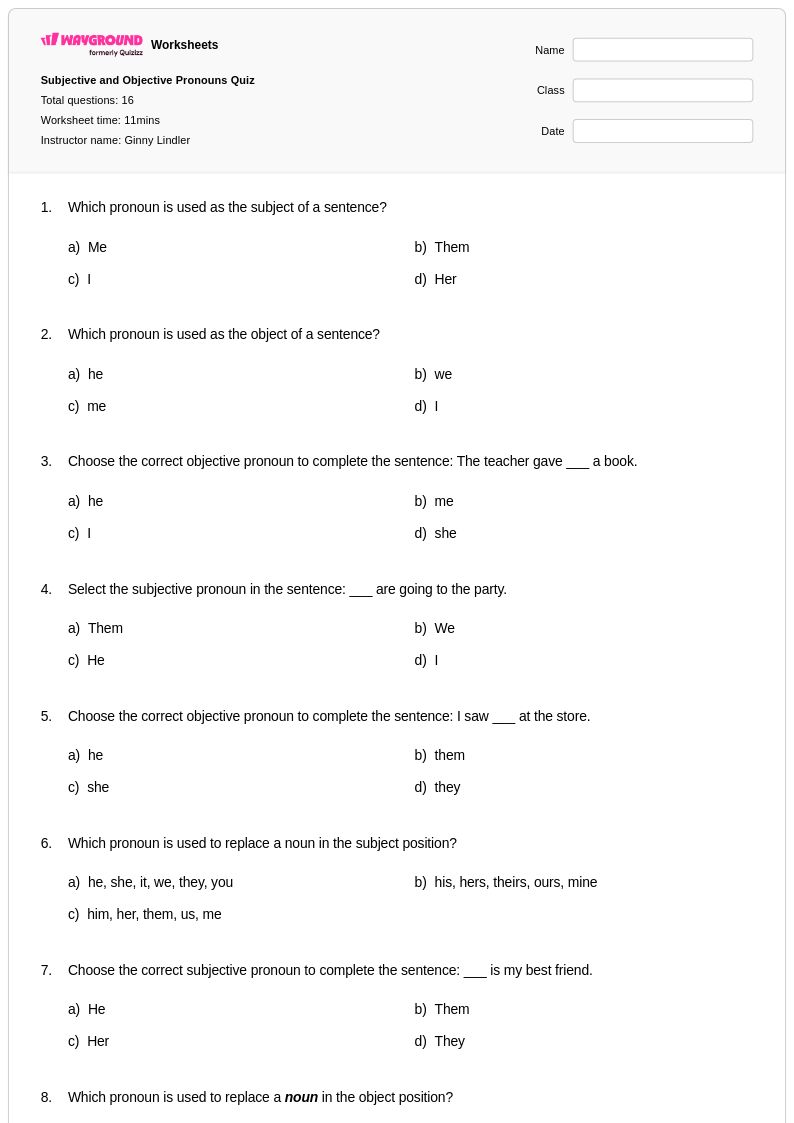
16 Q
6th
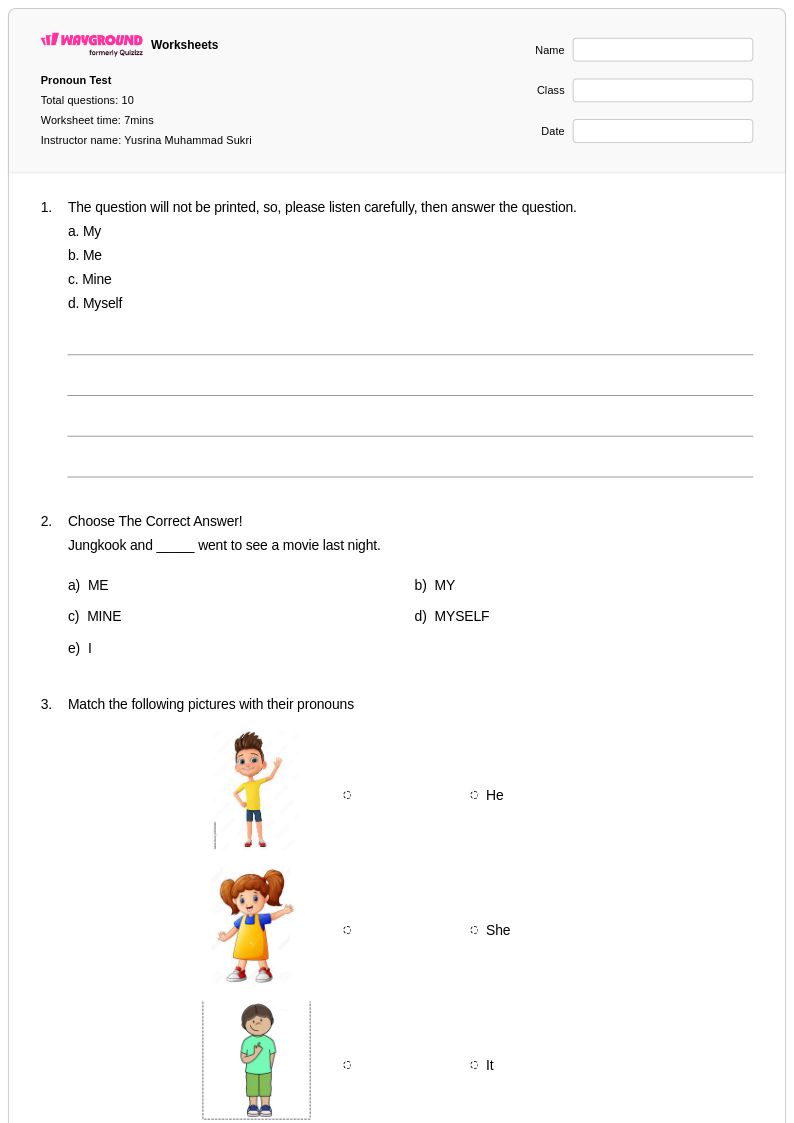
10 Q
10th
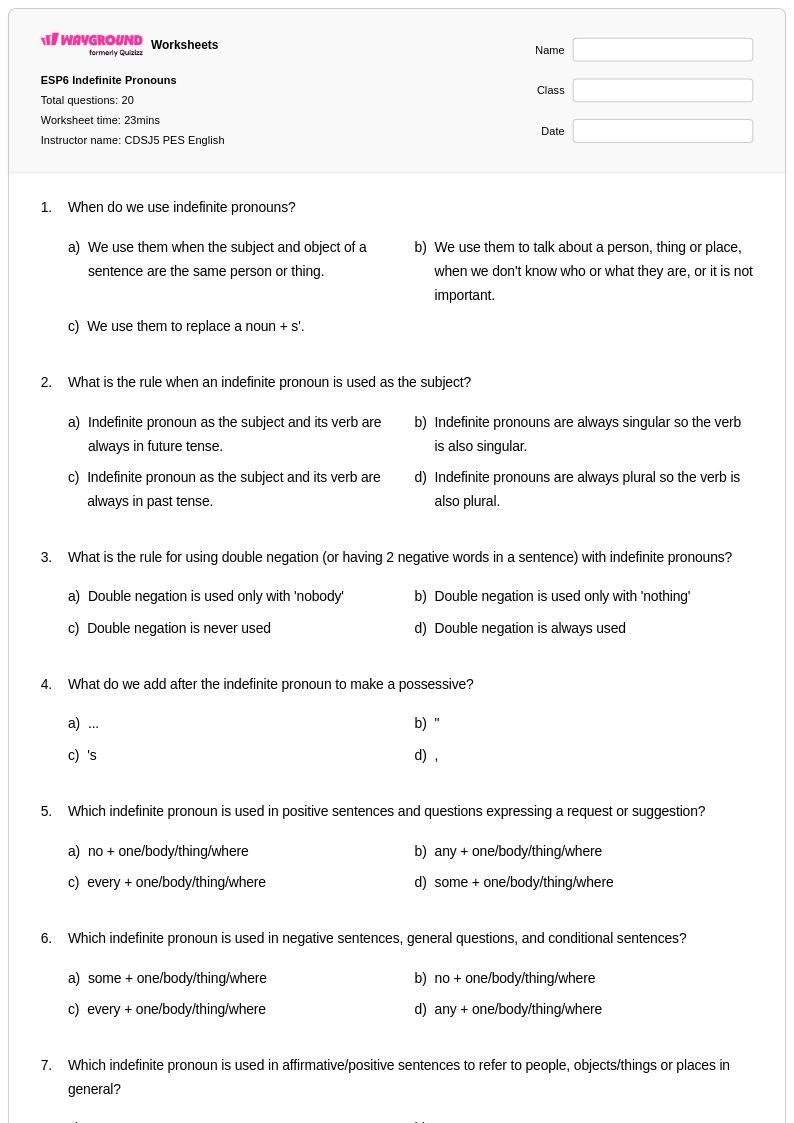
20 Q
6th
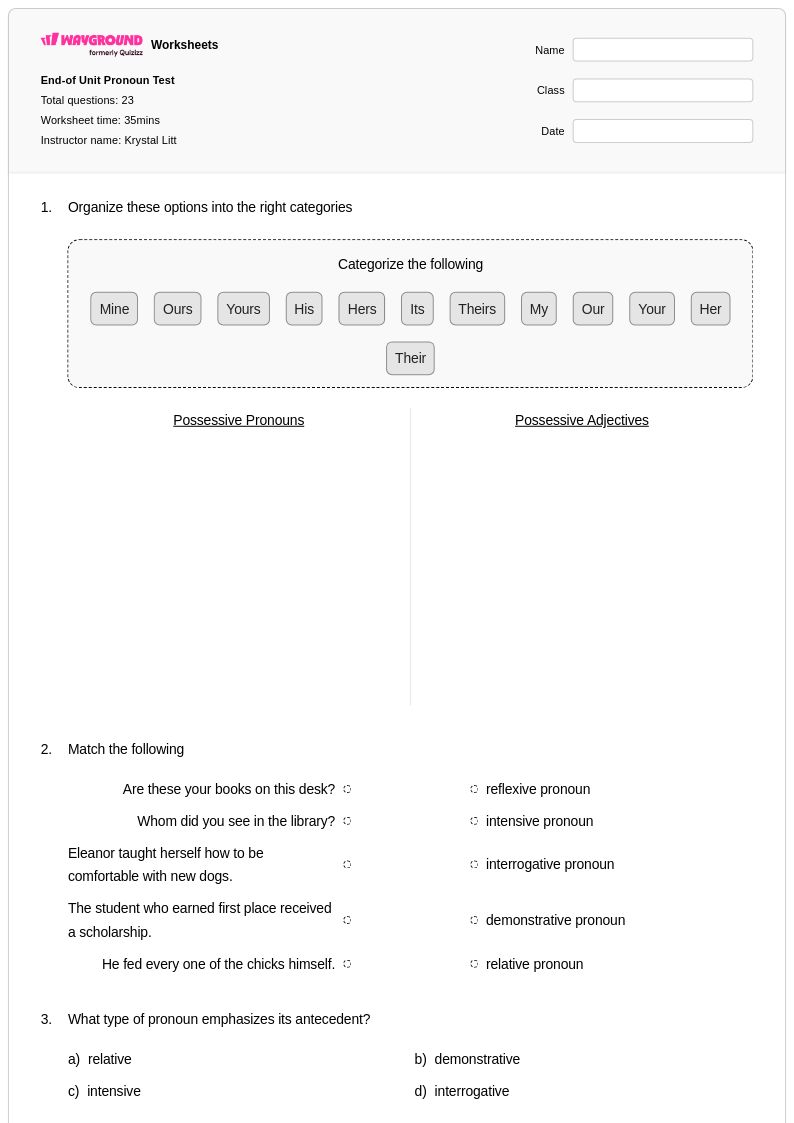
23 Q
6th - 8th
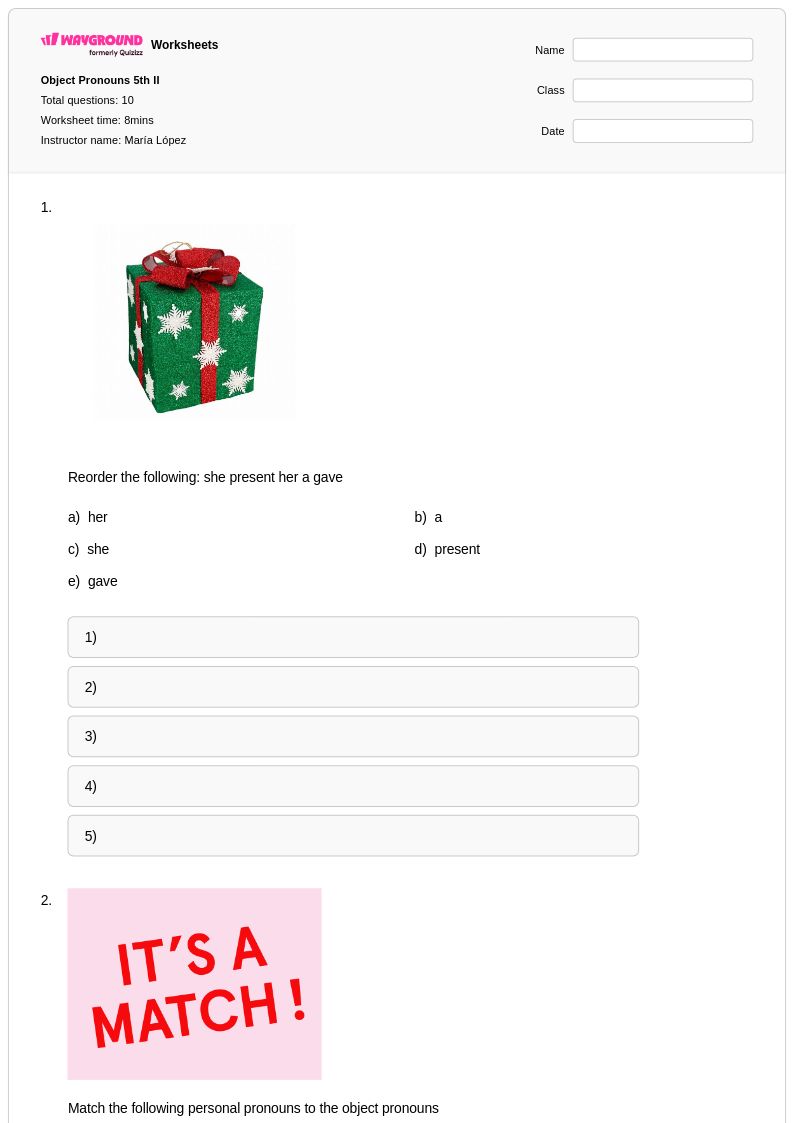
10 Q
5th
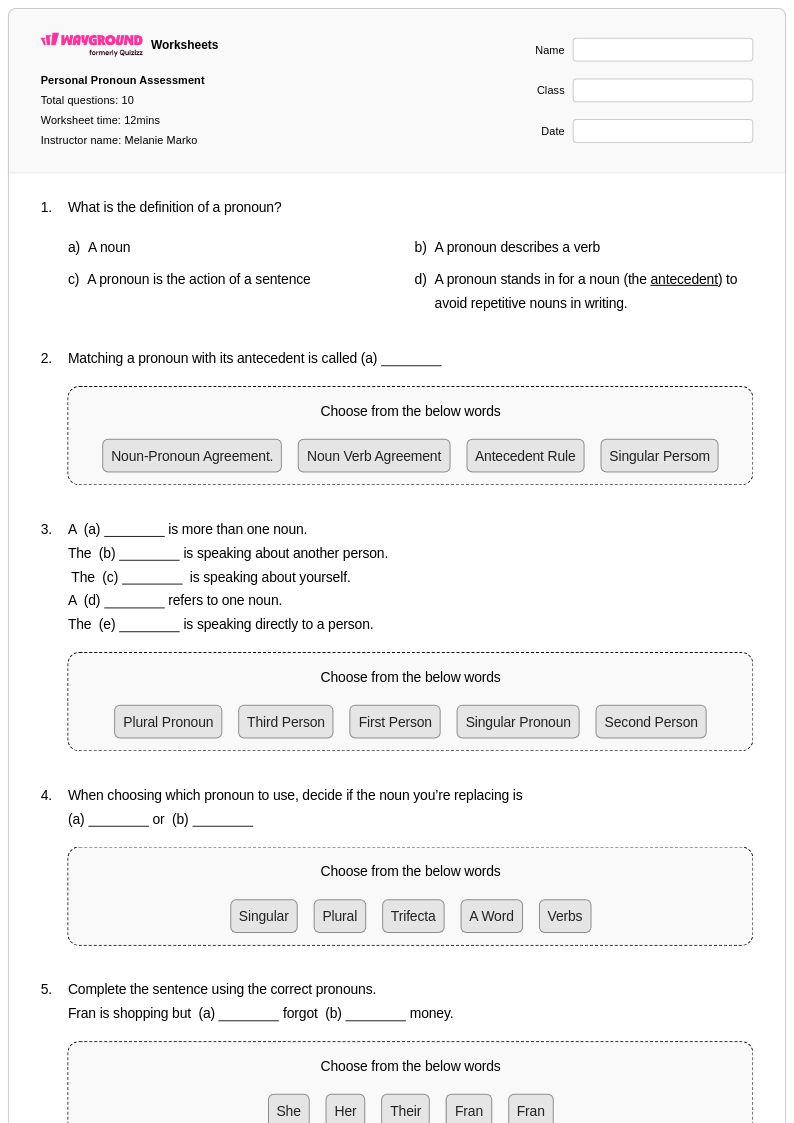
10 Q
3rd
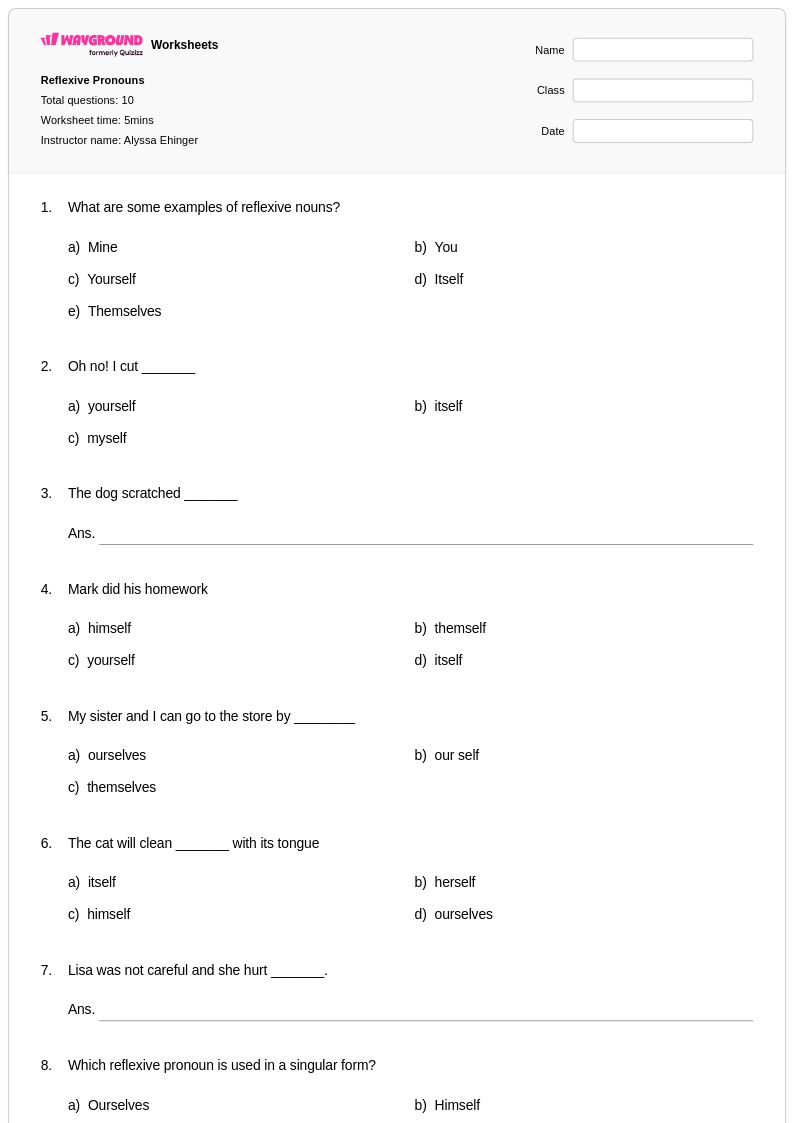
10 Q
2nd
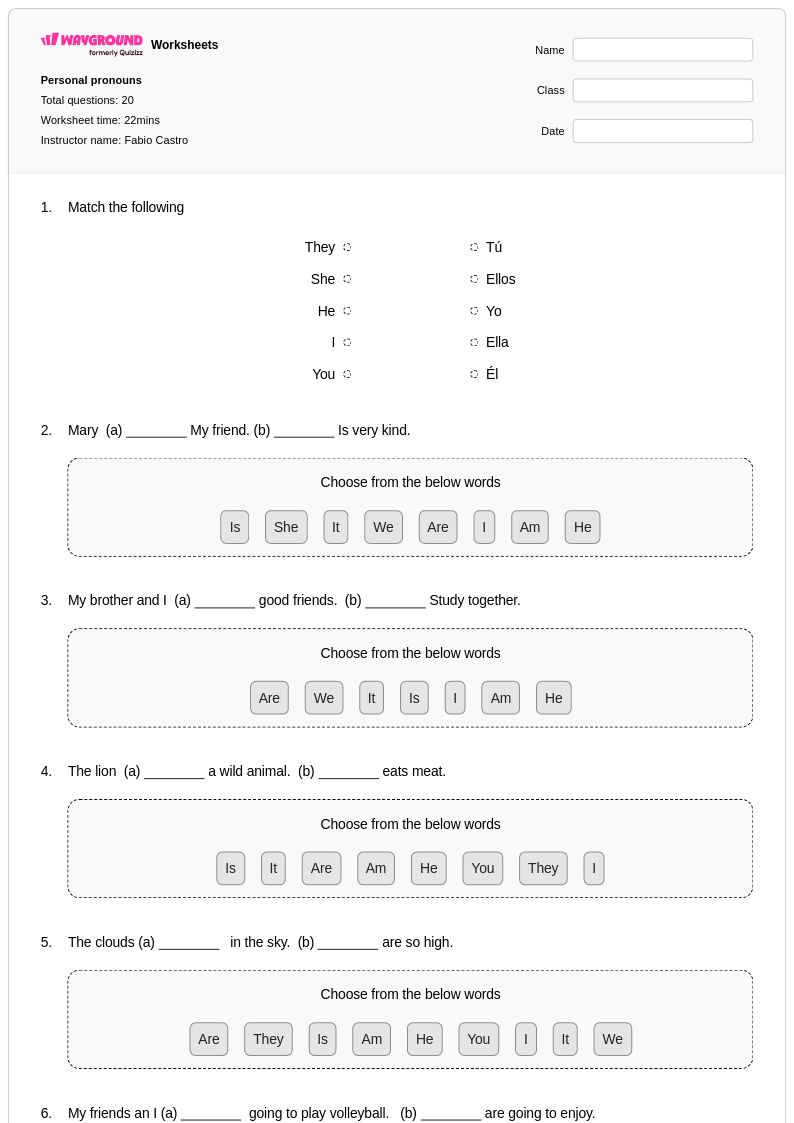
20 Q
PD
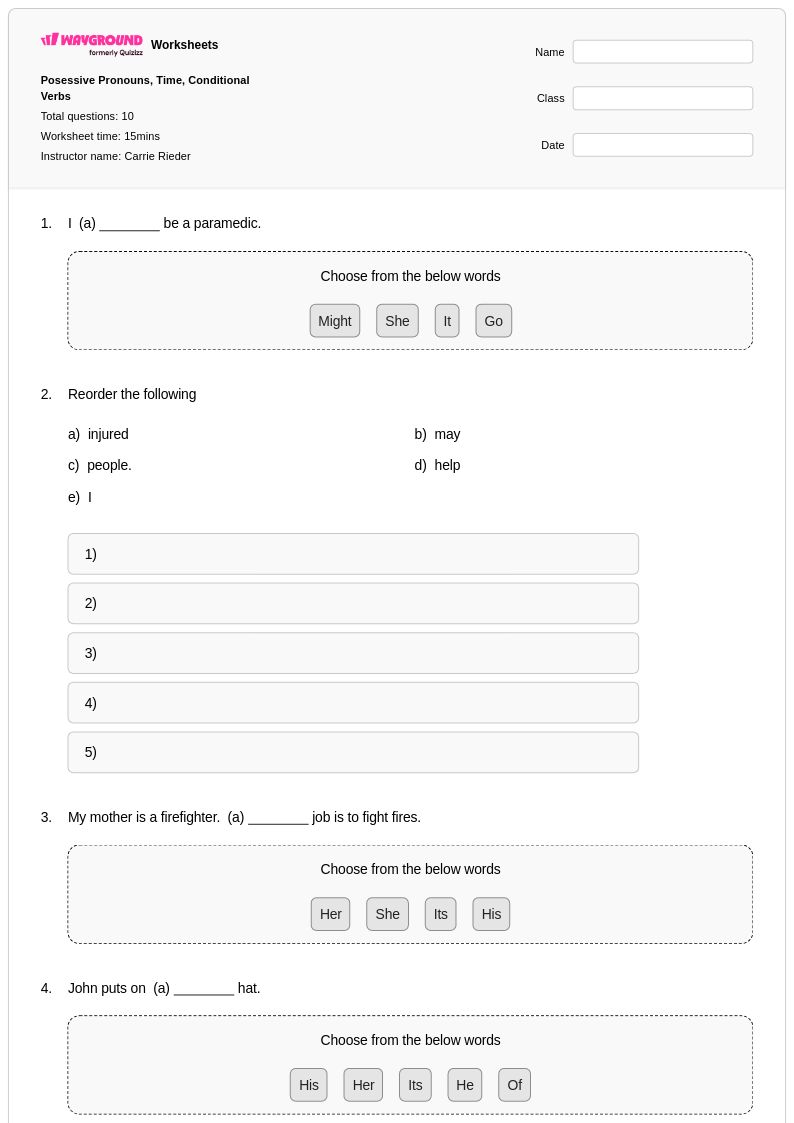
10 Q
6th
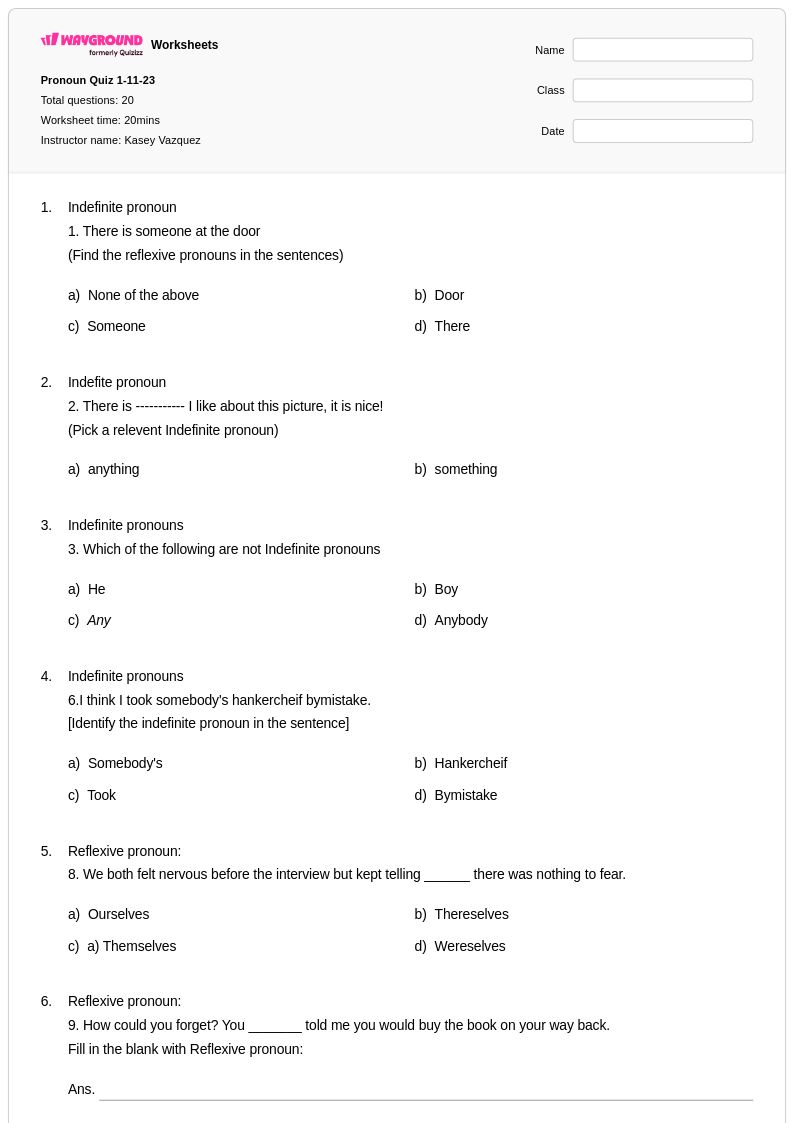
20 Q
6th
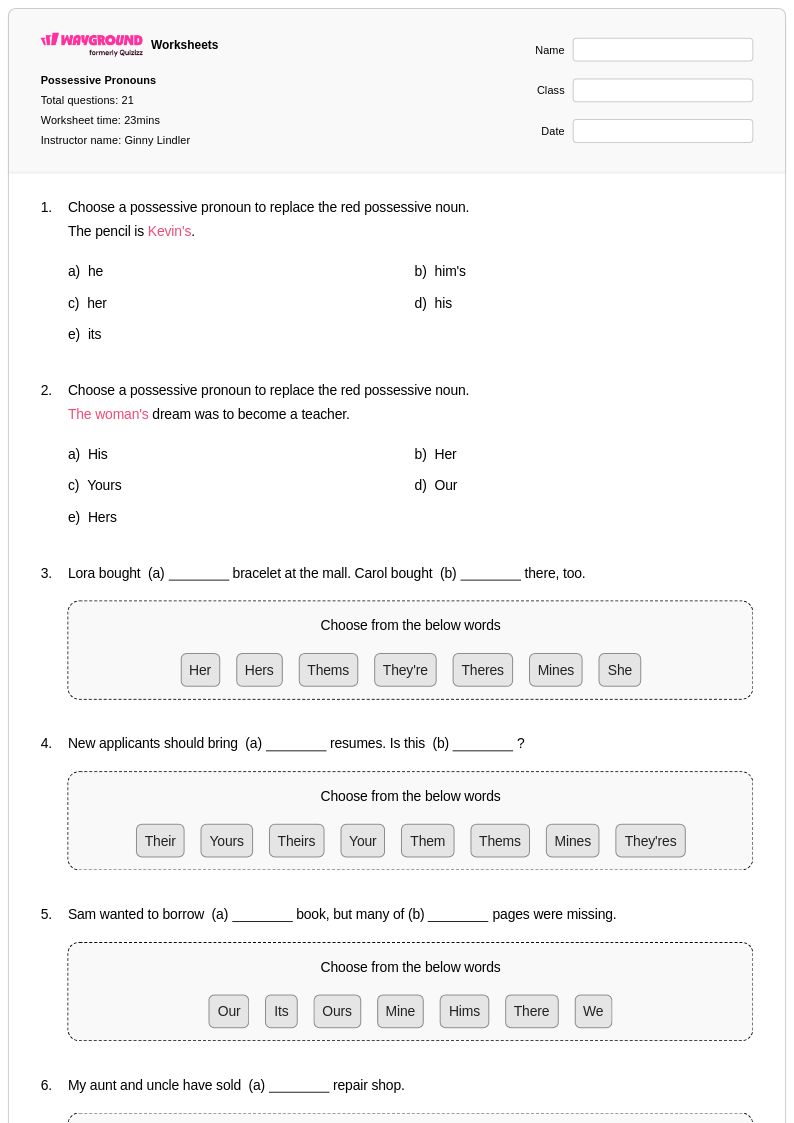
21 Q
6th
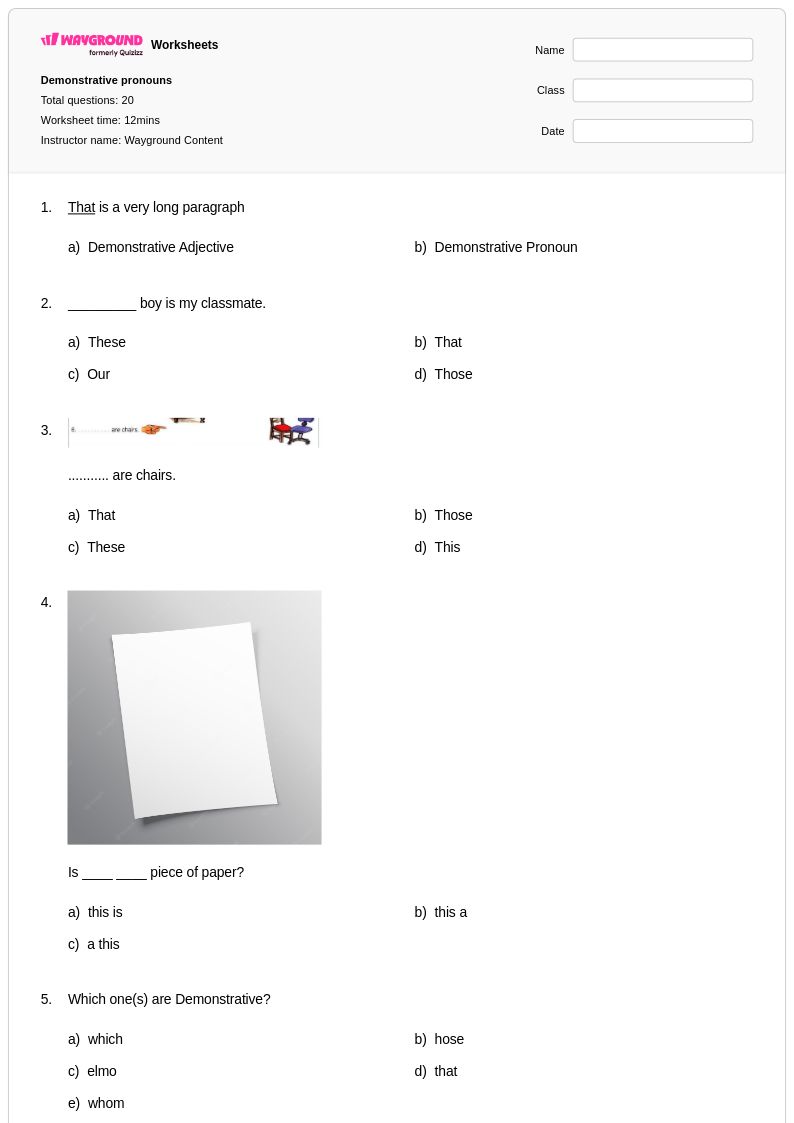
20 Q
3rd
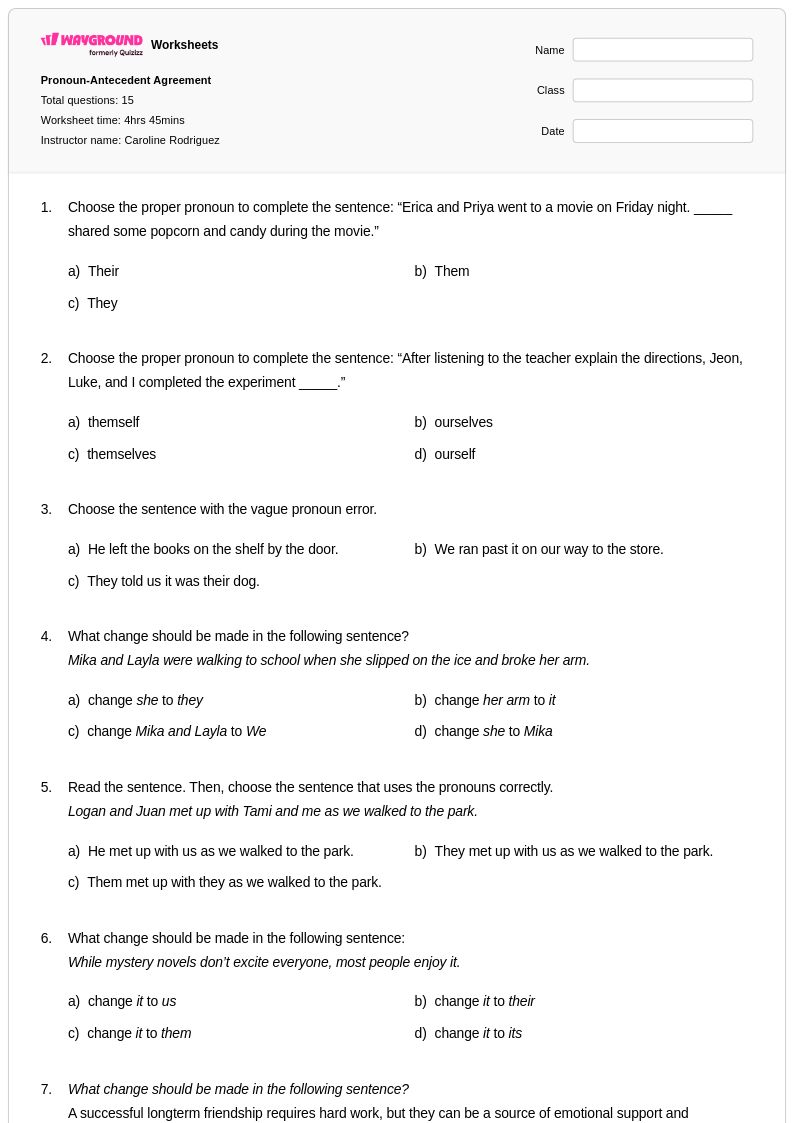
15 Q
7th
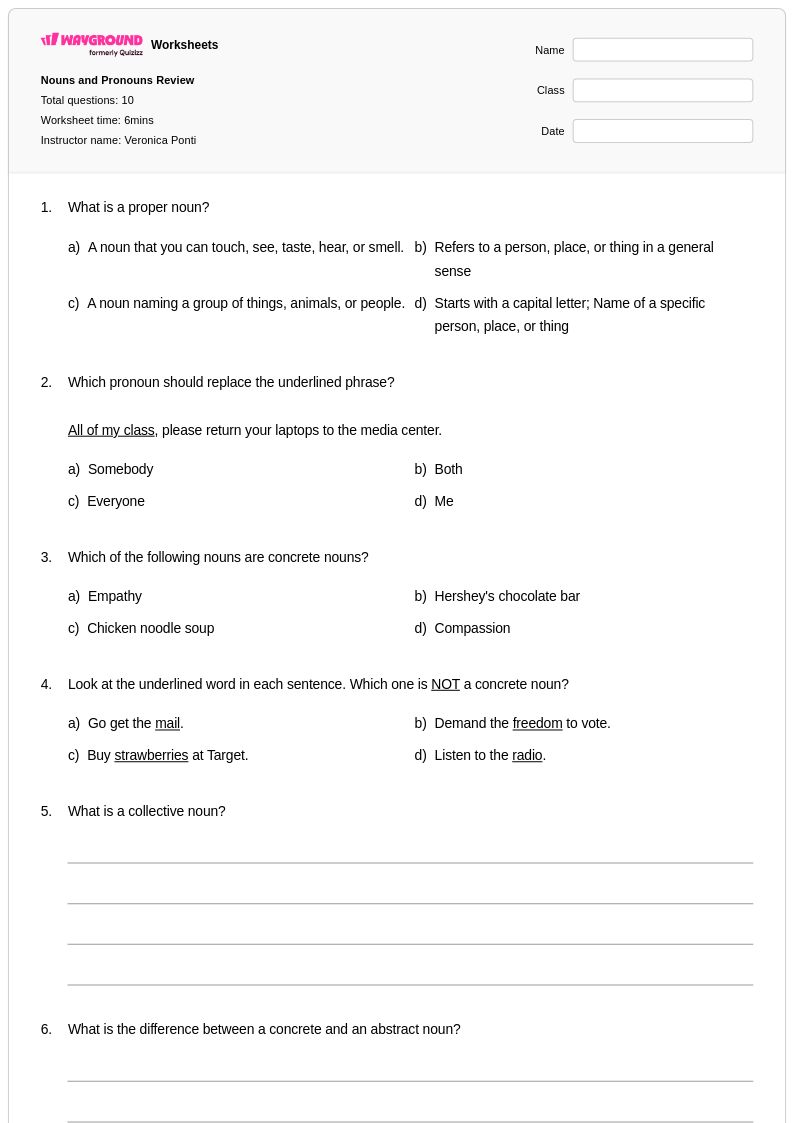
10 Q
7th

22 Q
9th - 10th
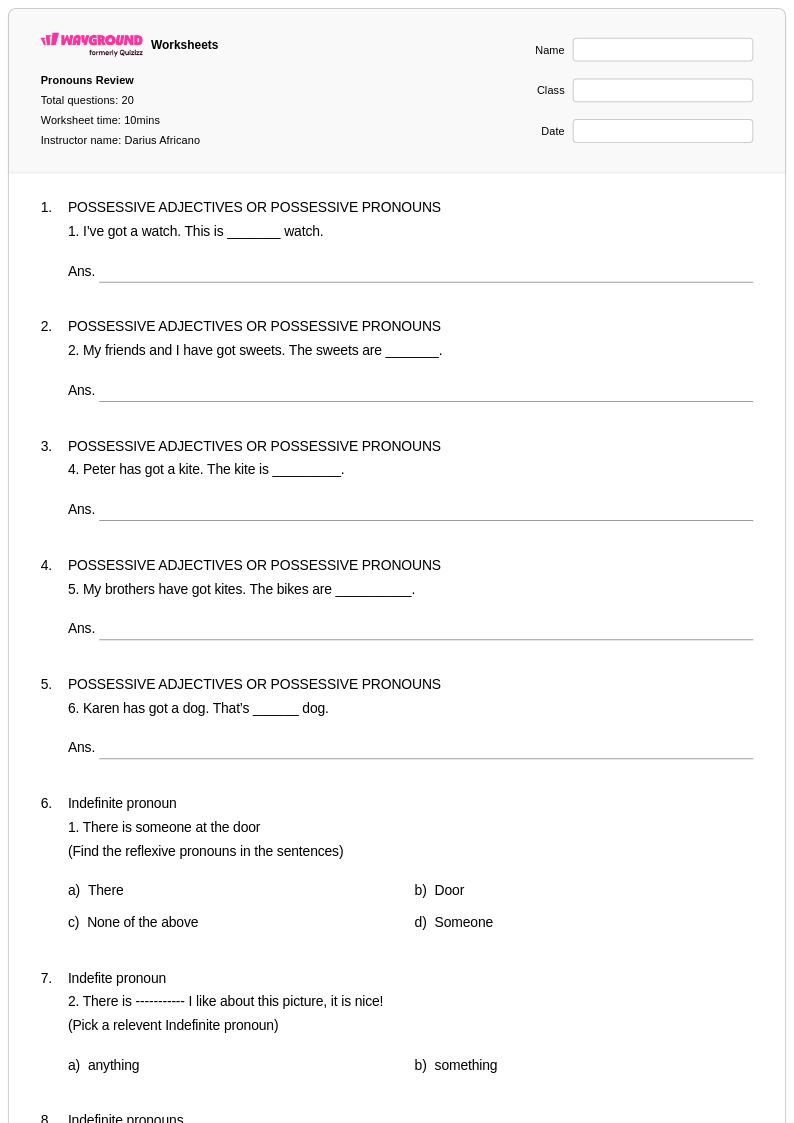
20 Q
9th - 12th
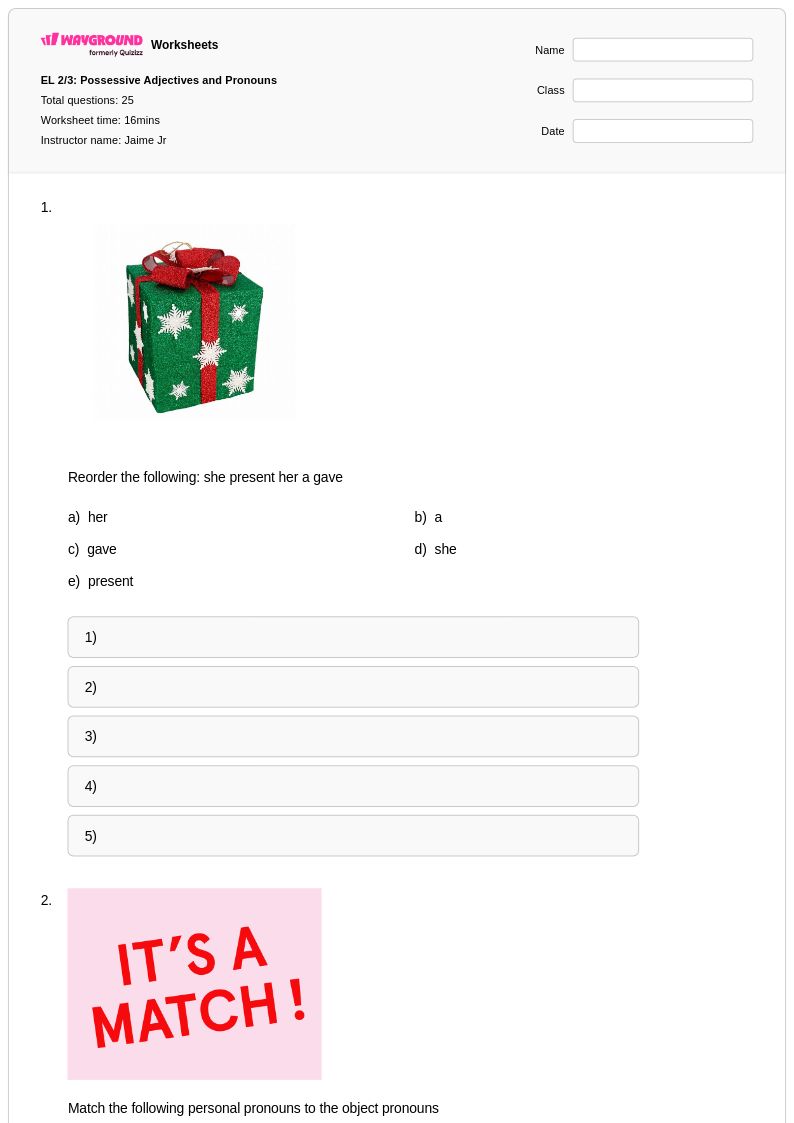
25 Q
7th
15 Q
KG
10 Q
5th
15 Q
5th
21 Q
7th
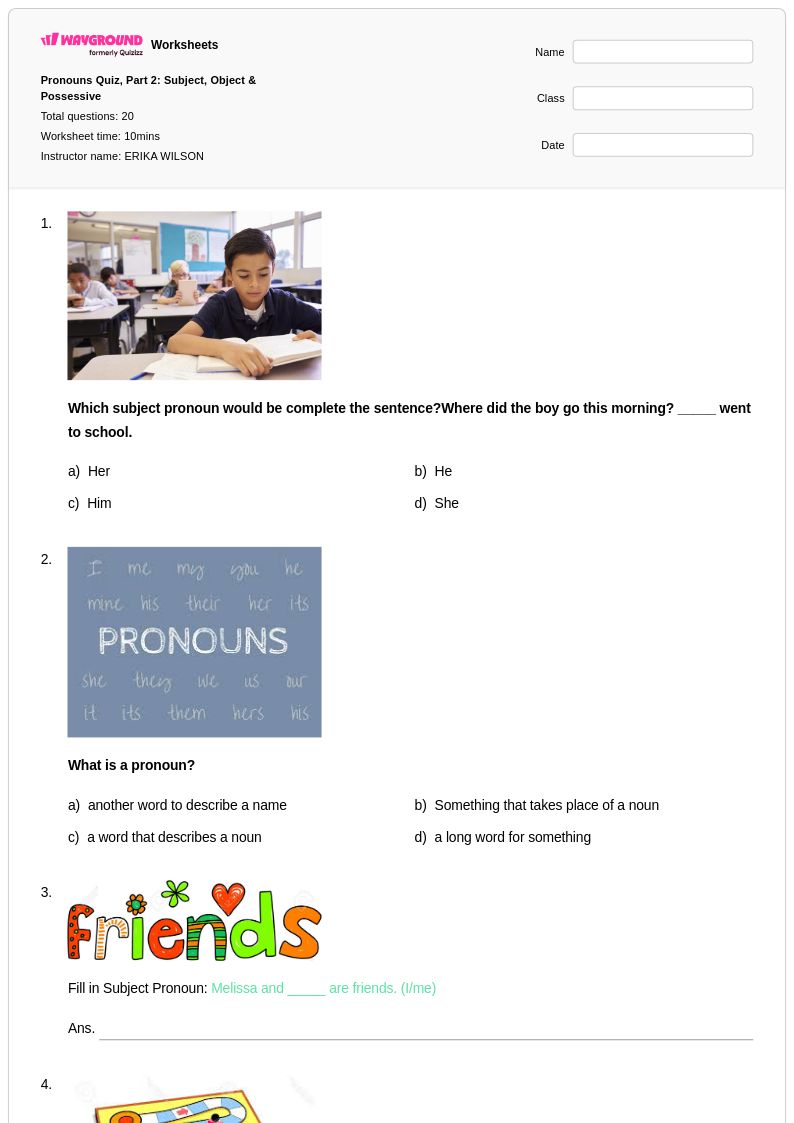
20 Q
6th
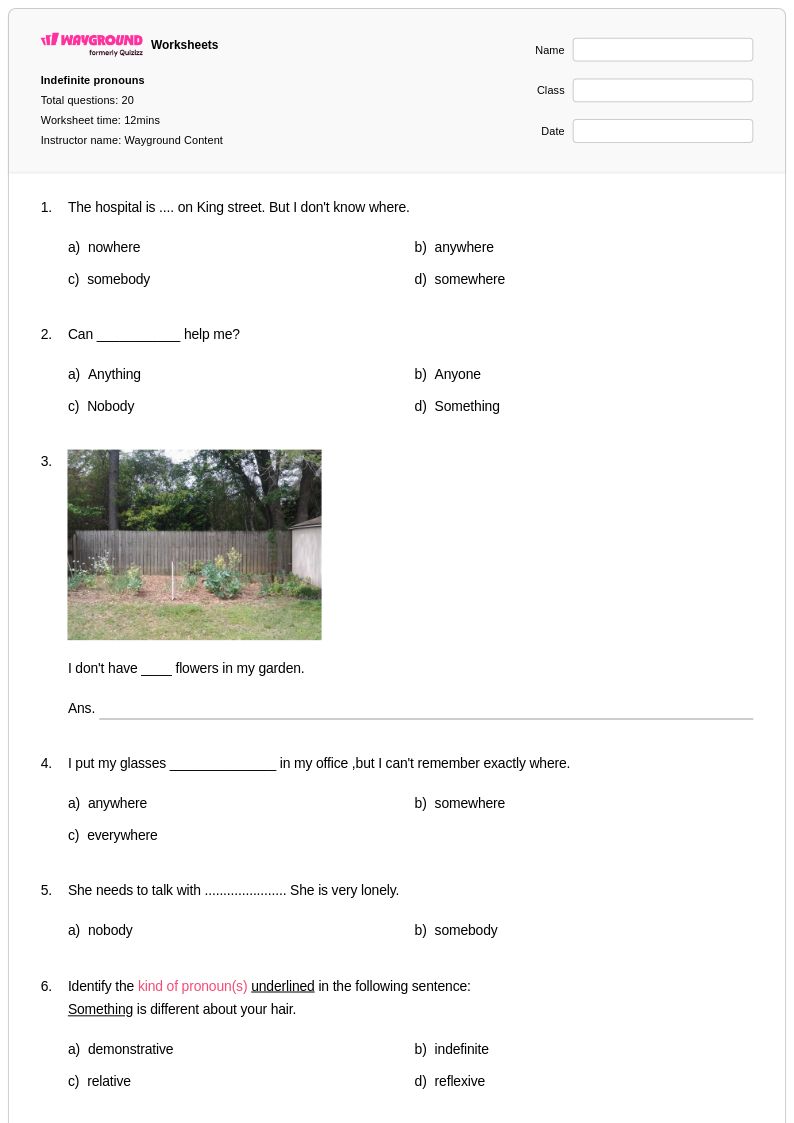
20 Q
1st - 3rd
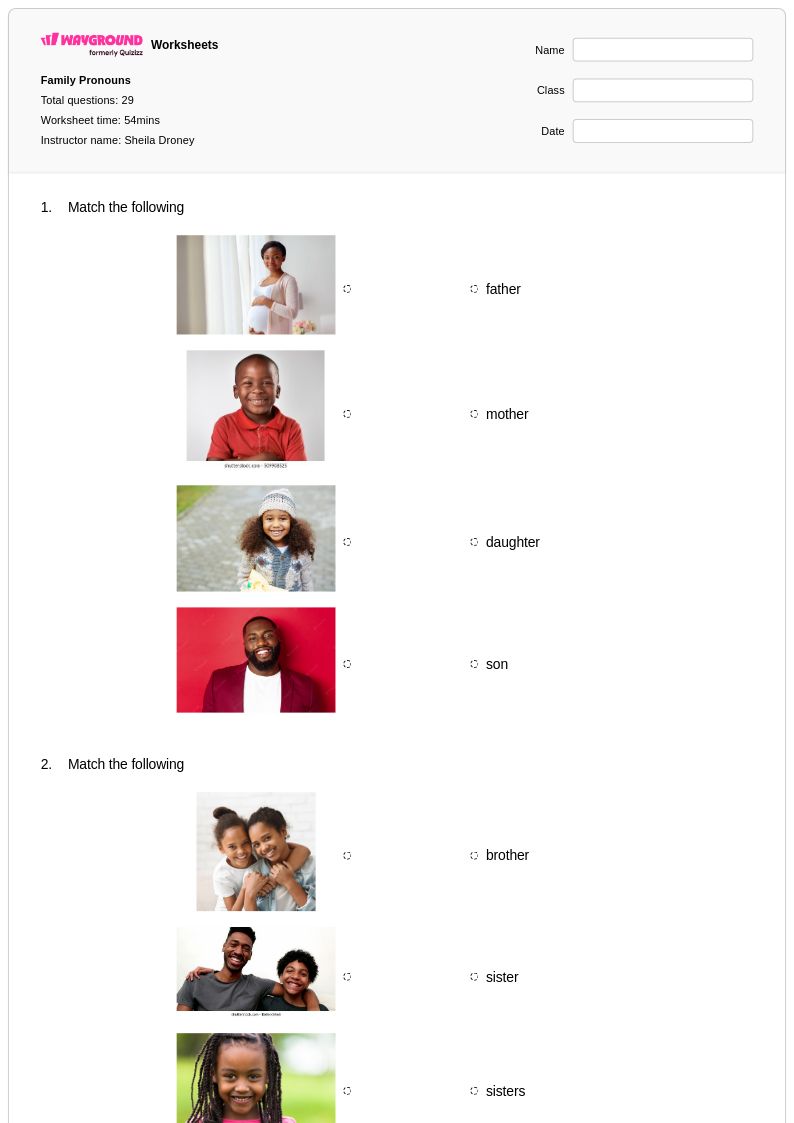
29 Q
9th
Explore Worksheets by Grade
Explore Pronouns Worksheets by Topics
Explore Worksheets by Subjects
Explore printable Pronouns worksheets
Pronoun worksheets available through Wayground (formerly Quizizz) provide comprehensive practice opportunities for students to master one of the fundamental building blocks of English grammar. These carefully designed educational resources focus on helping learners identify, classify, and correctly use various types of pronouns including personal, possessive, demonstrative, interrogative, relative, and indefinite pronouns. Each worksheet strengthens essential language skills through targeted practice problems that reinforce pronoun-antecedent agreement, proper case usage, and contextual application. Teachers can access these free printables complete with answer keys, ensuring efficient grading and immediate feedback opportunities. The collection includes pdf formats suitable for both classroom distribution and homework assignments, allowing students to develop fluency in recognizing how pronouns function as substitutes for nouns while maintaining clarity and coherence in their writing and speech.
Wayground (formerly Quizizz) empowers educators with an extensive library of millions of teacher-created pronoun worksheets that streamline lesson planning and differentiated instruction. The platform's robust search and filtering capabilities allow teachers to quickly locate resources aligned with specific curriculum standards and learning objectives, whether they need introductory exercises or advanced pronoun usage challenges. These versatile collections support both remediation for struggling learners and enrichment activities for advanced students, with customizable options that enable teachers to modify difficulty levels and focus areas. Available in both printable pdf format for traditional paper-based learning and digital formats for interactive online practice, these worksheet resources facilitate seamless integration into any instructional approach. The comprehensive nature of the collection ensures that educators have access to varied practice opportunities that build student confidence while reinforcing the critical role pronouns play in effective communication.
FAQs
How do I teach the different types of pronouns to students?
What exercises help students practice pronoun-antecedent agreement?
What mistakes do students commonly make with pronouns?
How do I help students understand vague pronoun references in their writing?
What is the difference between reflexive and intensive pronouns, and how do I teach it?
How do I use pronoun worksheets from Wayground in my classroom?