
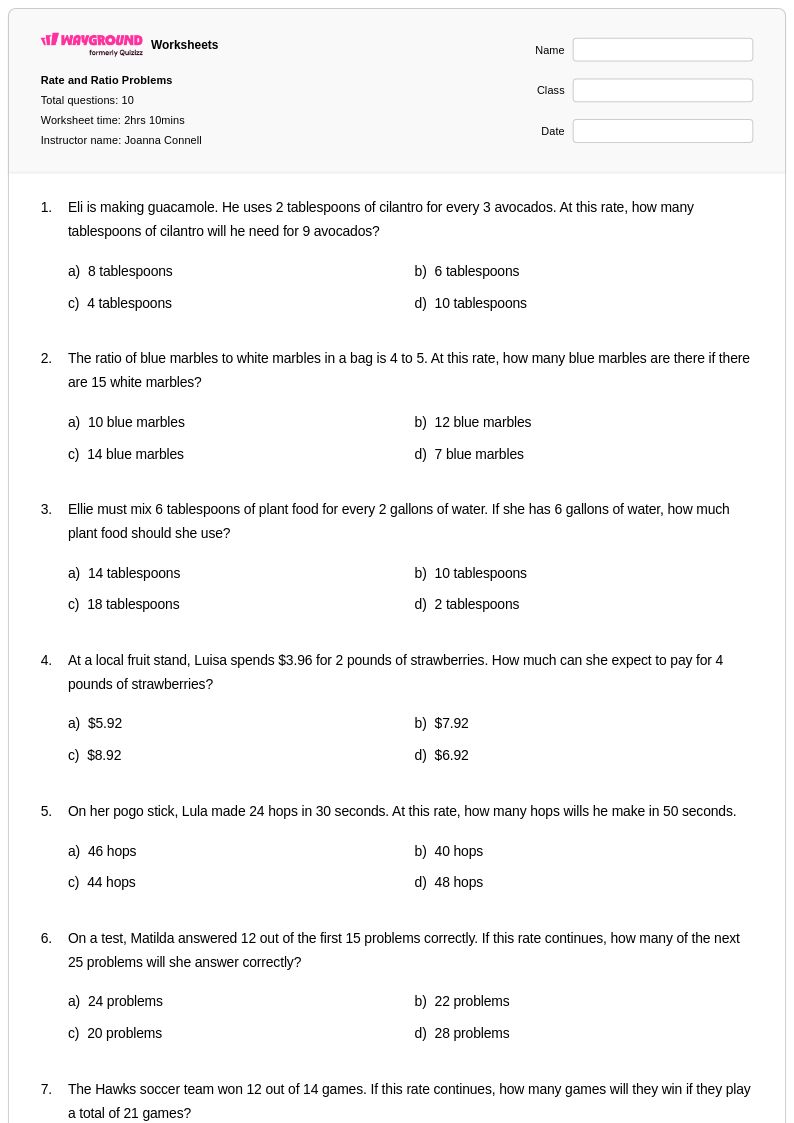
10 Q
6th
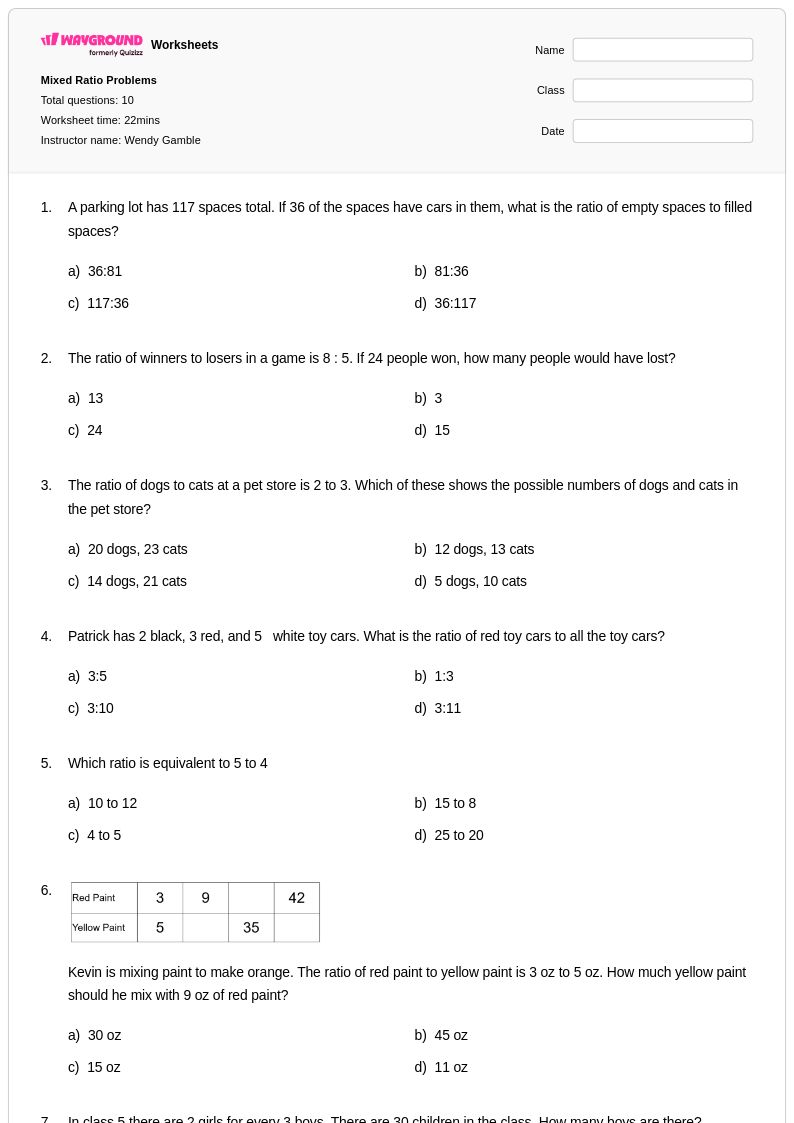
10 Q
6th
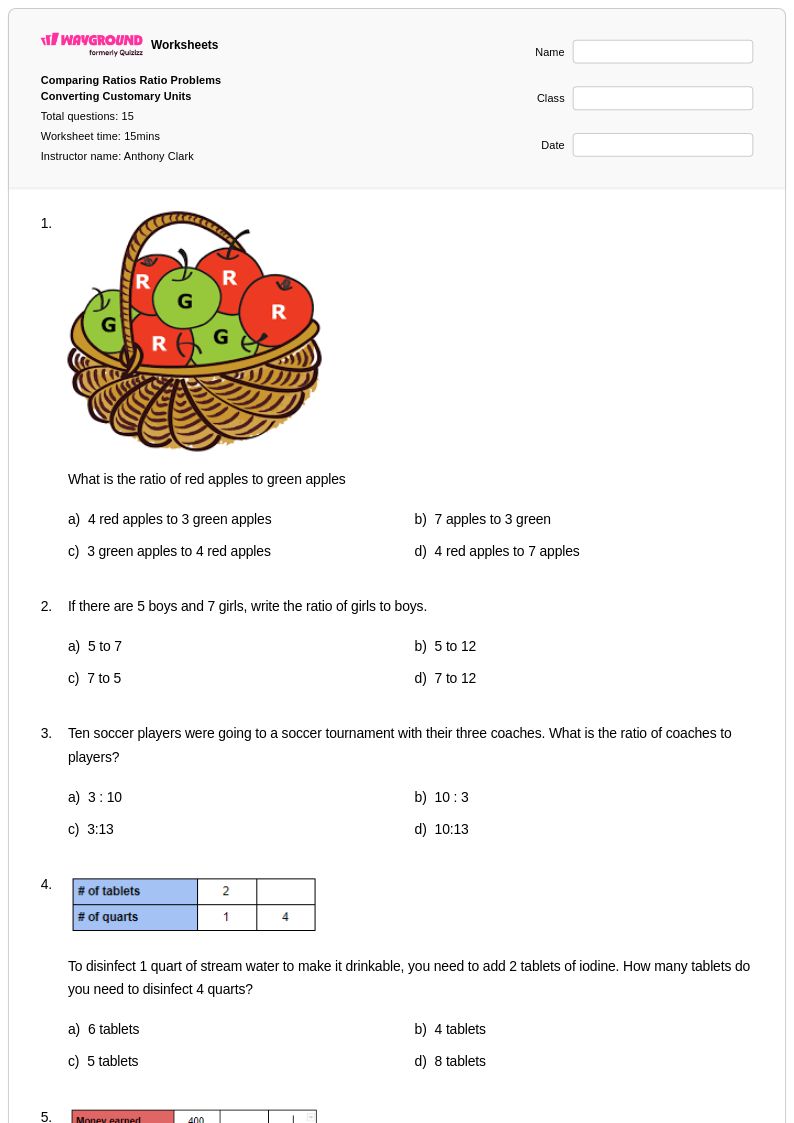
15 Q
6th - Uni
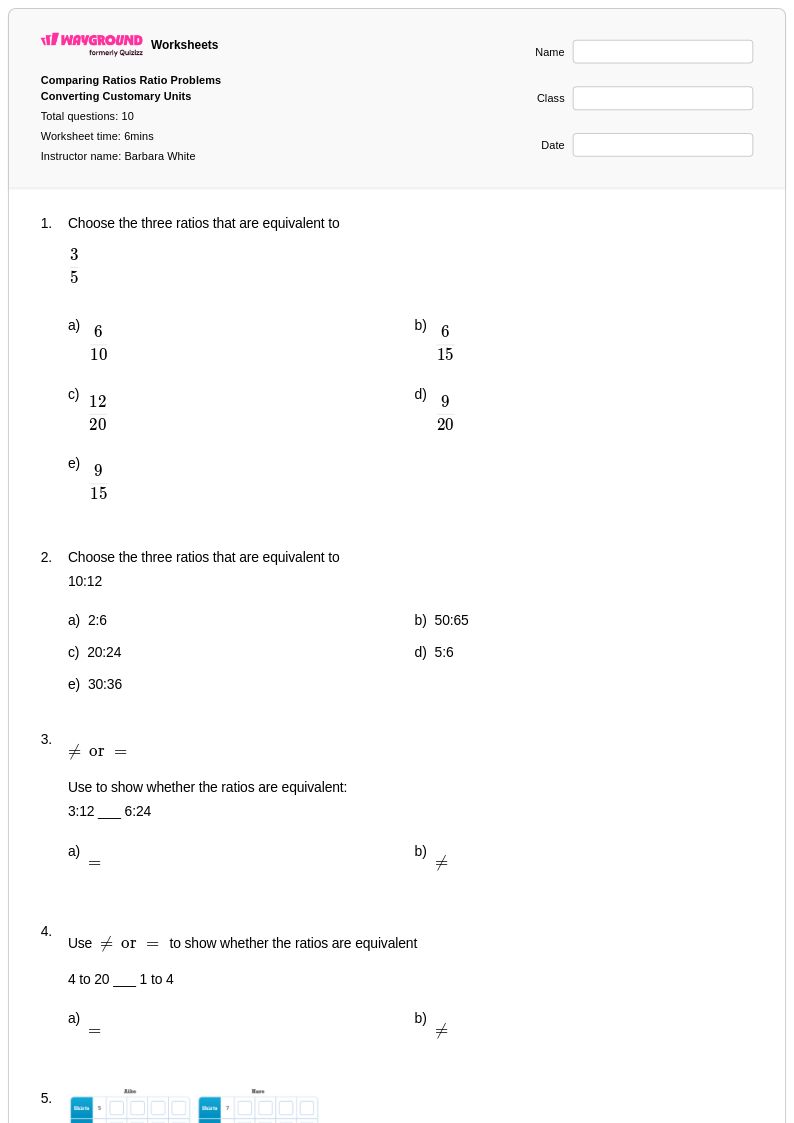
10 Q
6th - 9th
10 Q
6th
12 Q
6th
12 Q
6th
21 Q
6th
10 Q
6th
20 Q
6th
11 Q
6th - 11th
10 Q
6th
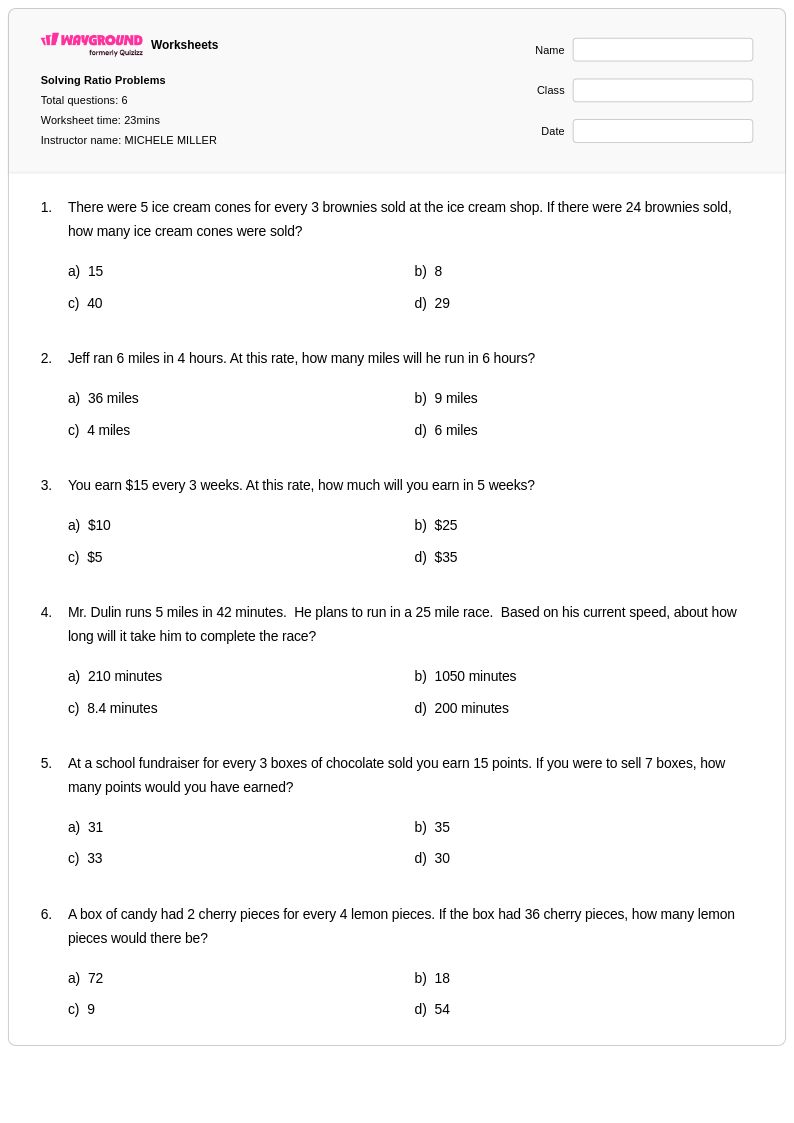
6 Q
6th
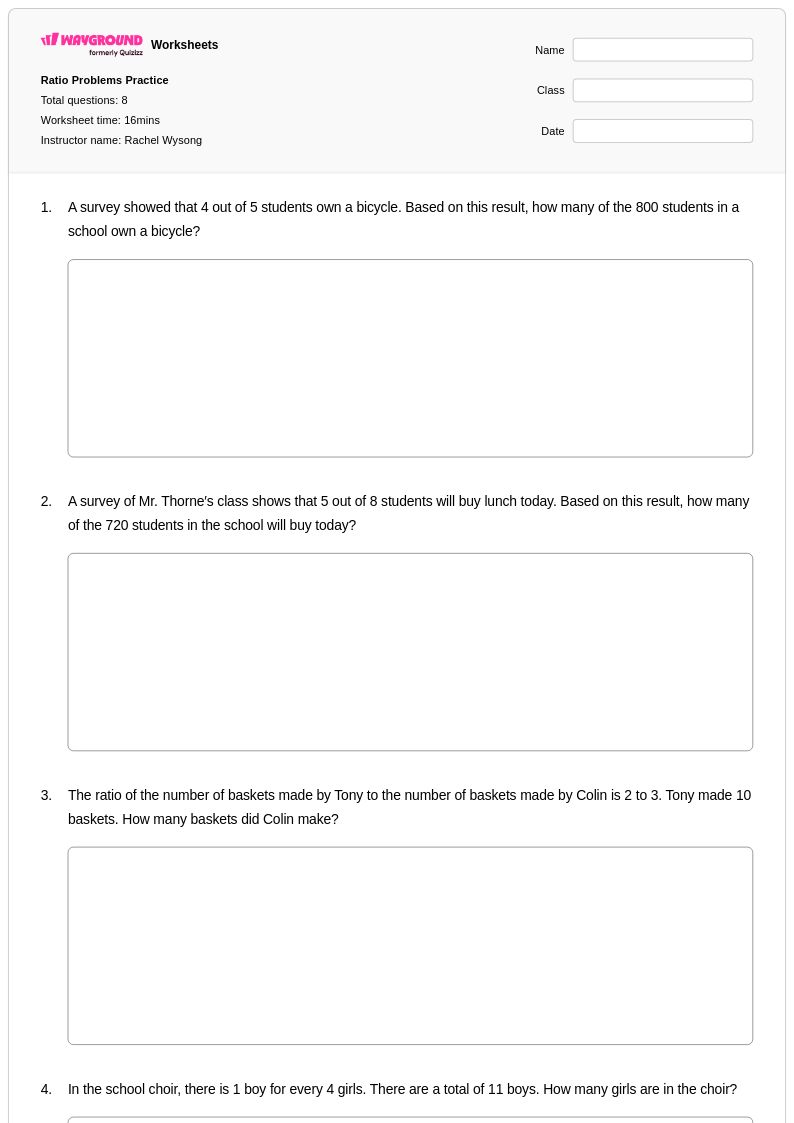
8 Q
6th
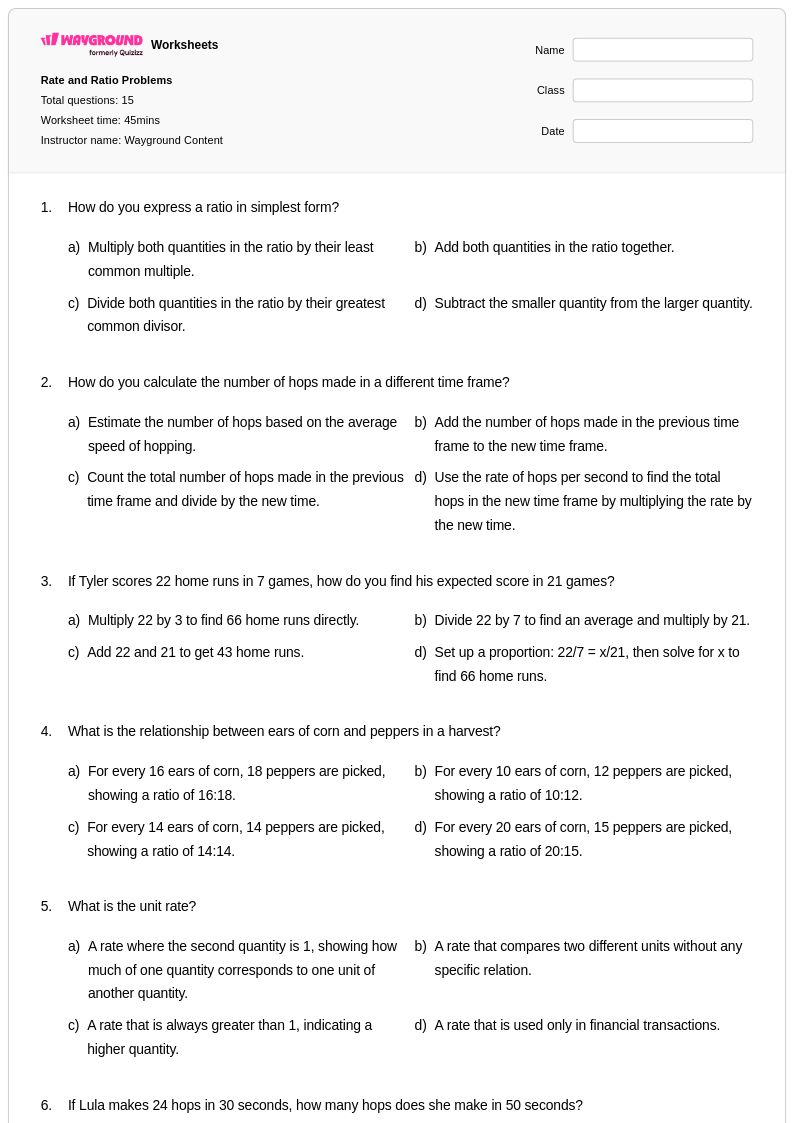
15 Q
6th
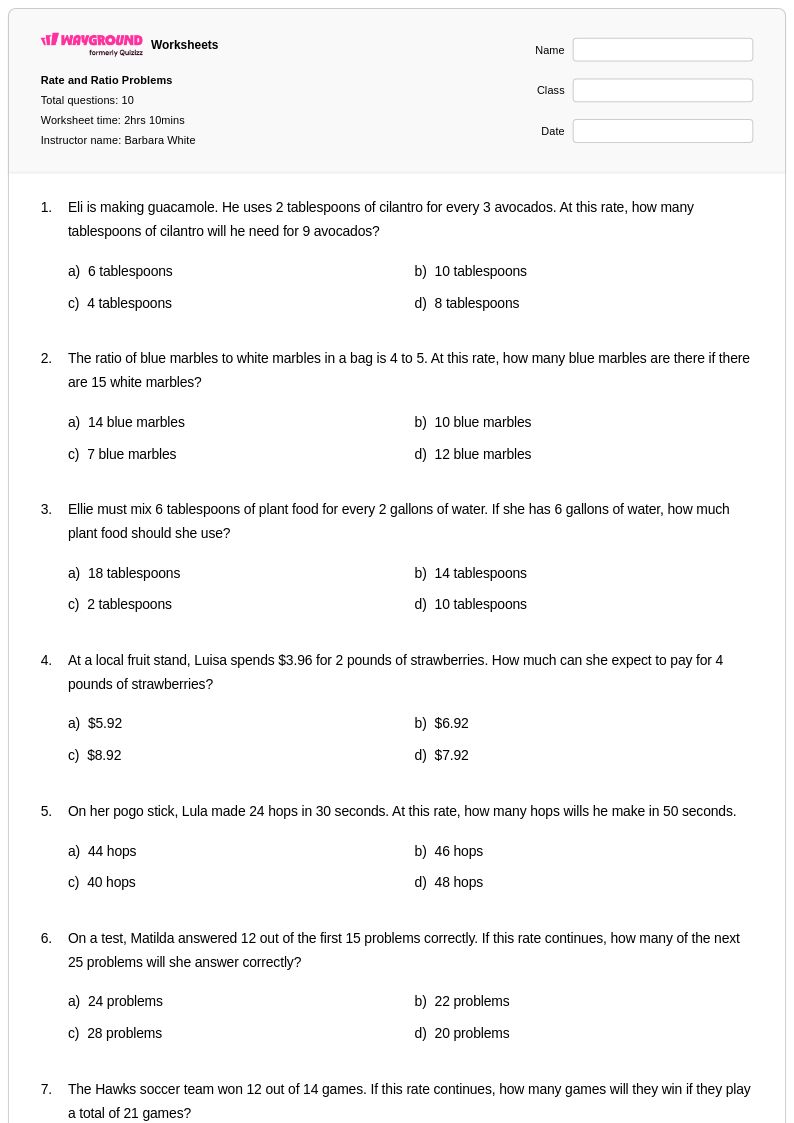
10 Q
6th
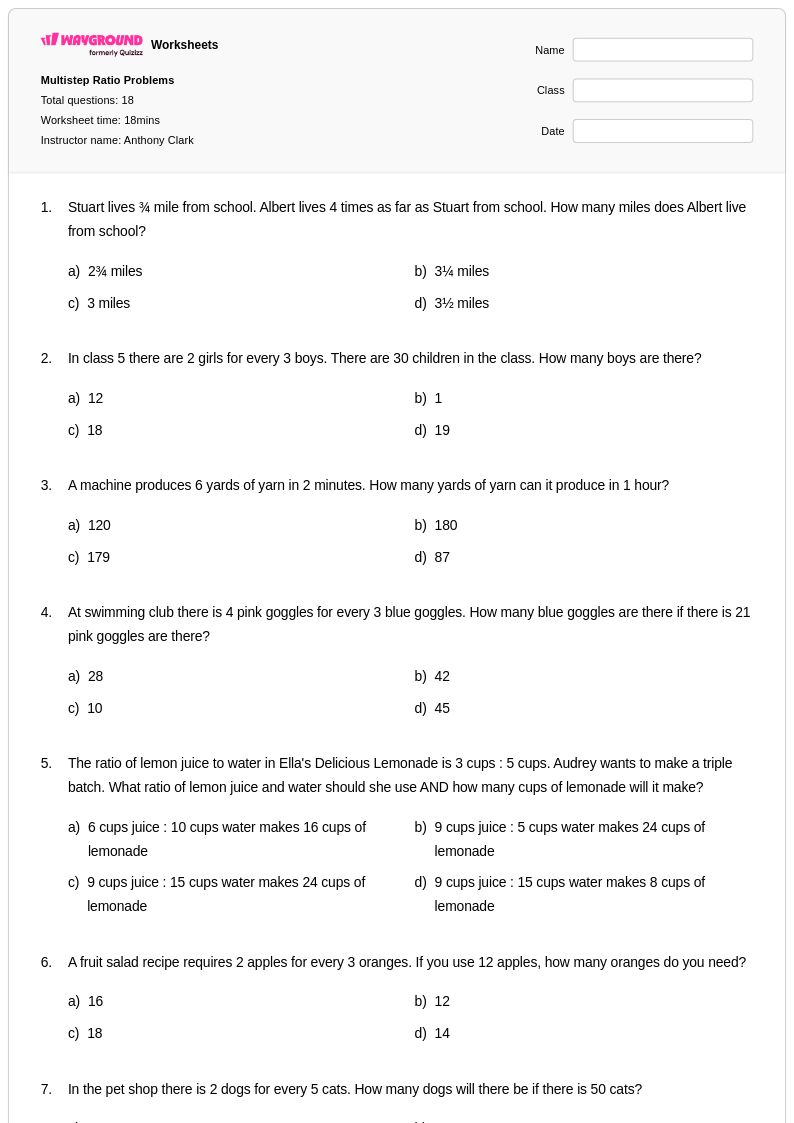
18 Q
4th - Uni
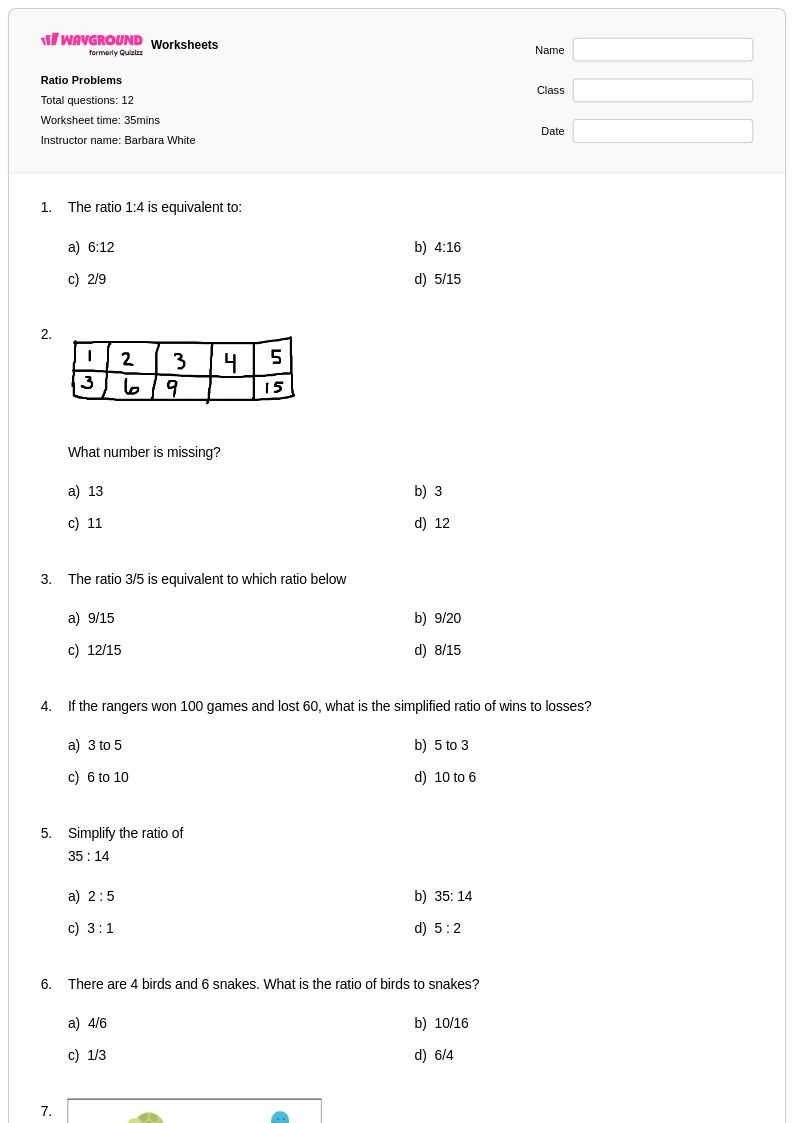
12 Q
5th - 6th
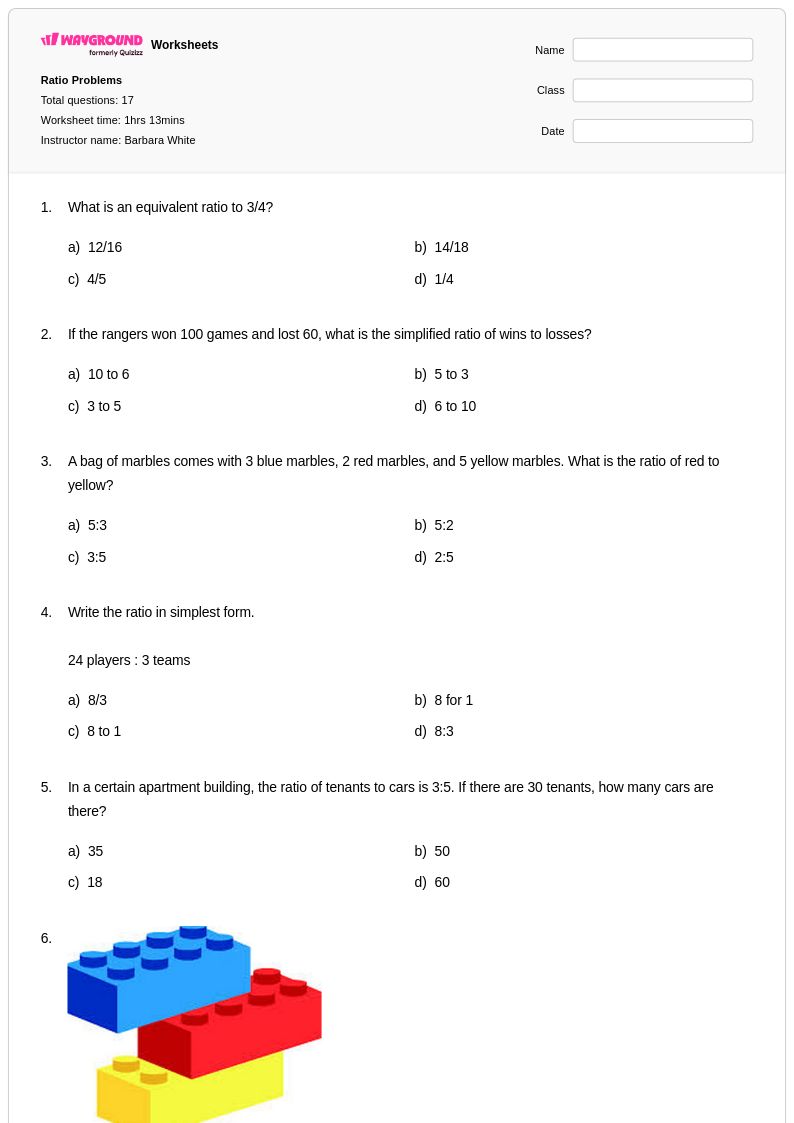
17 Q
6th
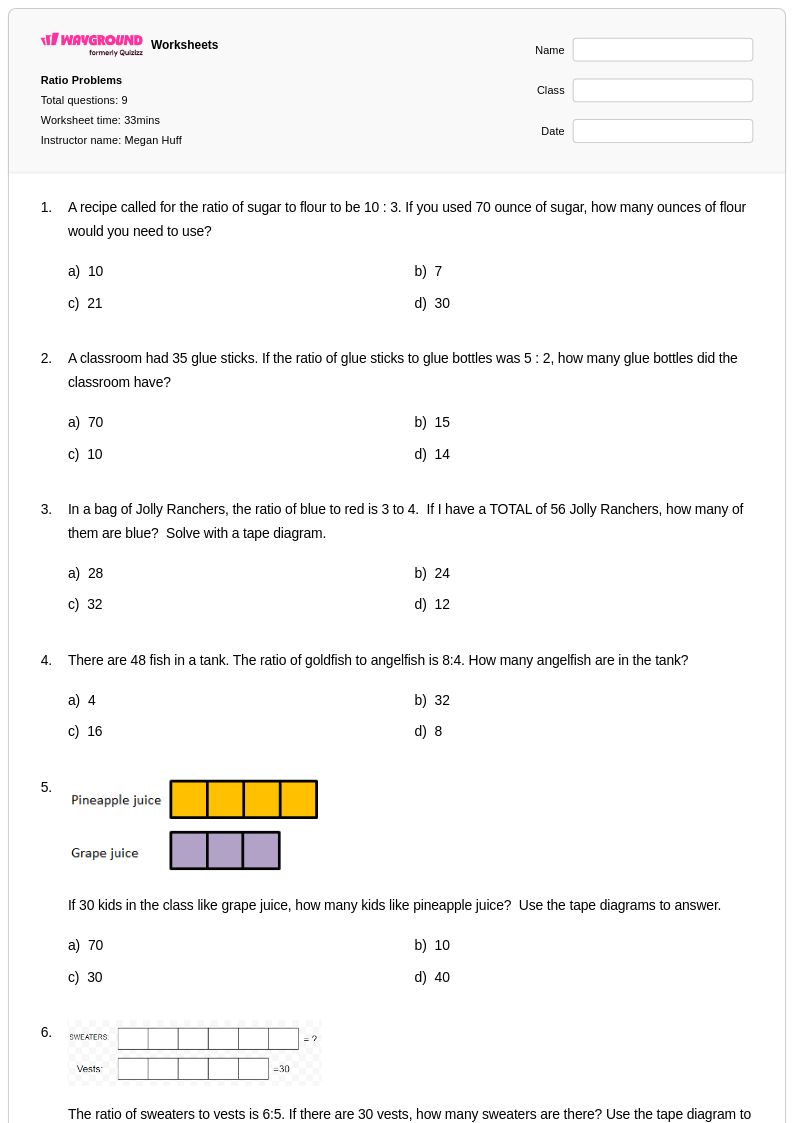
9 Q
6th
15 Q
6th - Uni
11 Q
6th
7 Q
6th - Uni
20 Q
6th - Uni
Explore Other Subject Worksheets for grade 6
Explore printable Ratio Problems worksheets for Grade 6
Ratio problems form a critical foundation in Grade 6 mathematics, bridging elementary arithmetic with more advanced proportional reasoning concepts. Wayground's comprehensive collection of ratio problems worksheets provides students with systematic practice in comparing quantities, simplifying ratios, solving equivalent ratio problems, and applying ratio concepts to real-world scenarios. These carefully designed printables strengthen essential skills including identifying proportional relationships, cross-multiplication techniques, and unit rate calculations that prepare students for advanced algebra concepts. Each worksheet comes complete with a detailed answer key, allowing teachers and students to verify solutions and understand problem-solving strategies, while the free pdf format ensures easy access for classroom instruction and home practice.
Wayground, formerly Quizizz, empowers educators with millions of teacher-created resources specifically designed for Grade 6 ratio problems instruction. The platform's robust search and filtering capabilities allow teachers to quickly locate worksheets aligned with specific curriculum standards and learning objectives, while differentiation tools enable customization based on individual student needs and skill levels. Teachers can seamlessly transition between printable pdf worksheets for traditional instruction and digital formats for technology-integrated classrooms, making lesson planning more efficient and flexible. These versatile resources support targeted remediation for struggling learners, provide enrichment opportunities for advanced students, and offer consistent skill practice that reinforces ratio concepts across multiple contexts and complexity levels.
FAQs
What do students learn about ratios in 6th grade?
How can I connect the concept of ratios to unit rates?
What are the most important types of ratio problems for 6th graders?
What's a common mistake when students use cross-multiplication to solve proportions?
How can I assign this Grade 6 ratio worksheet?
How does this worksheet align with the 6th grade Common Core standards?