Free Printable Ray Diagrams Worksheets for Grade 11
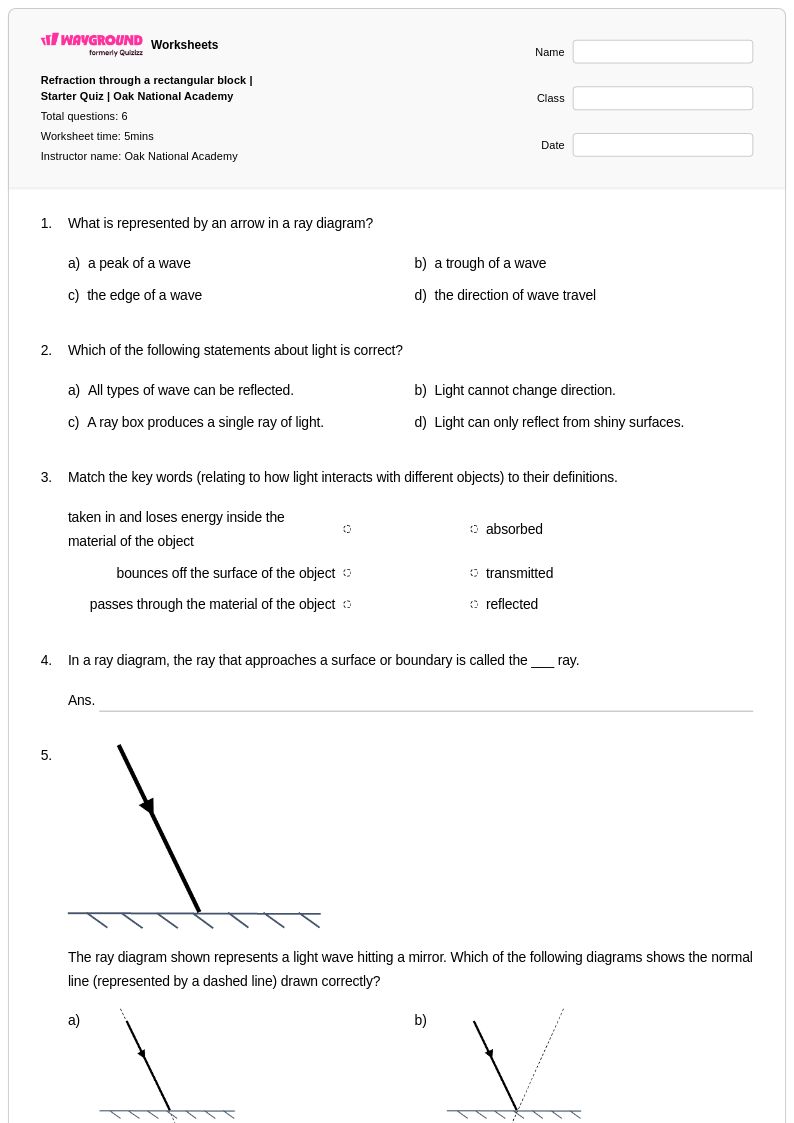
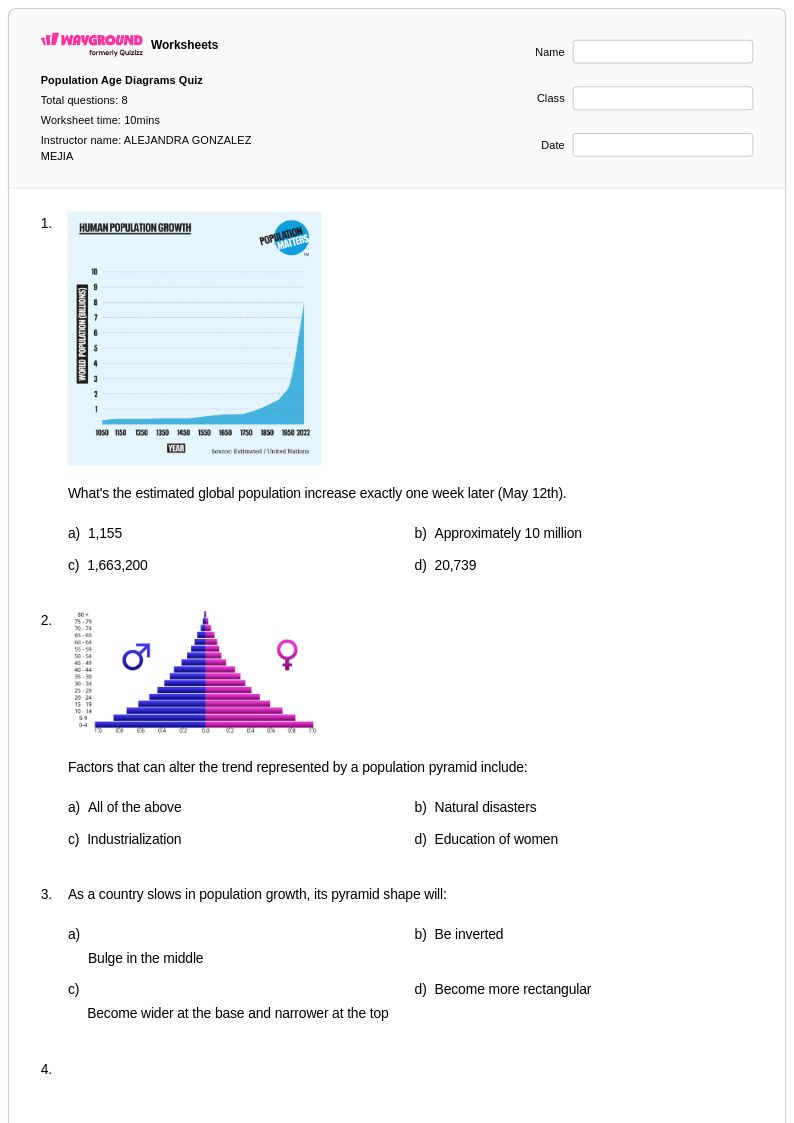
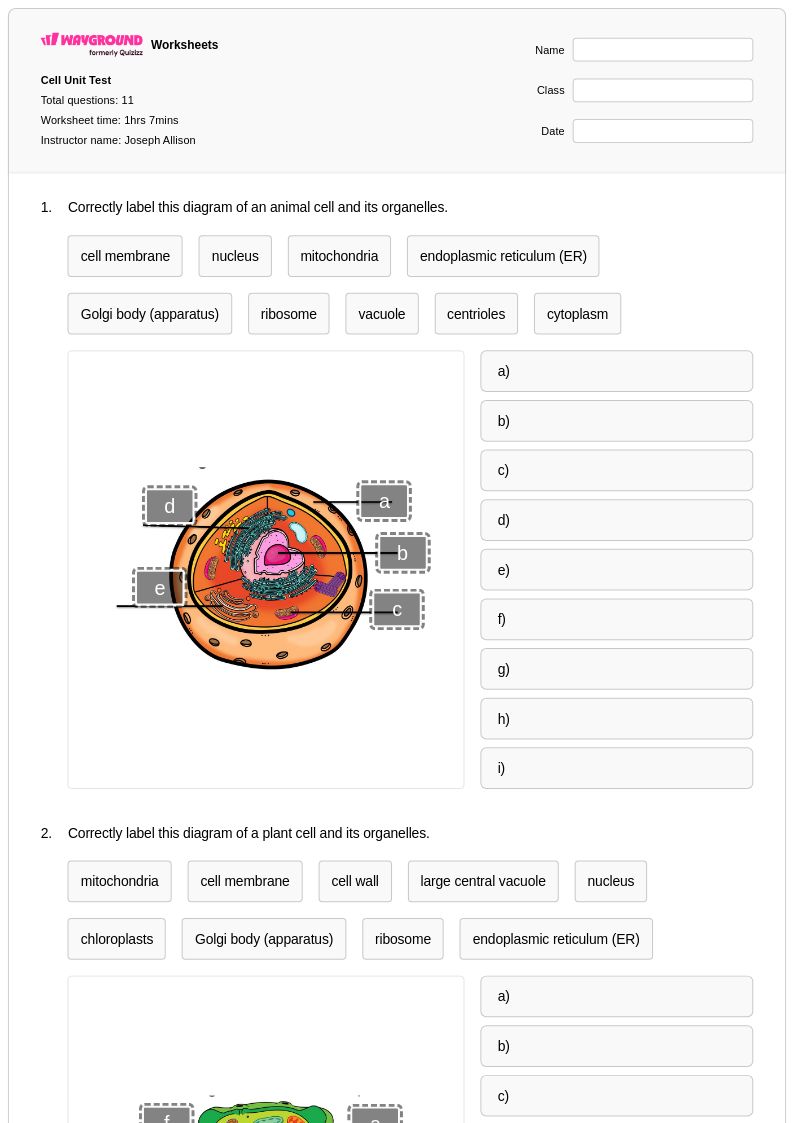
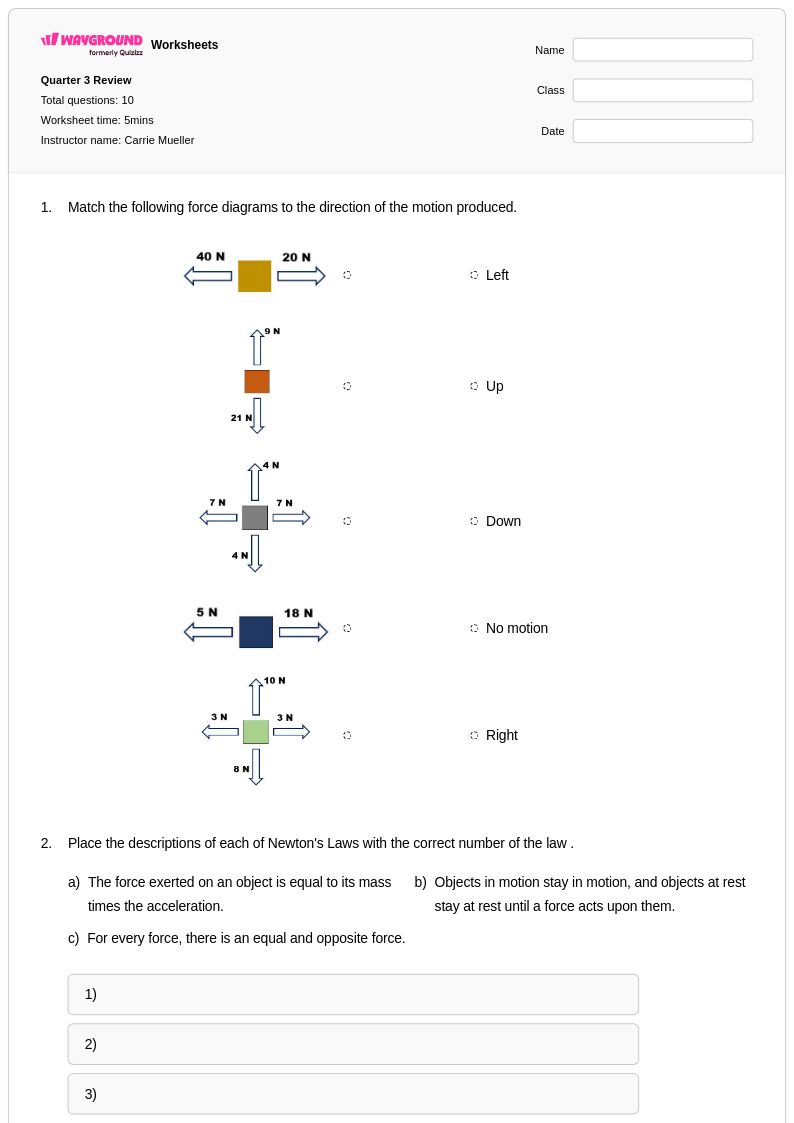
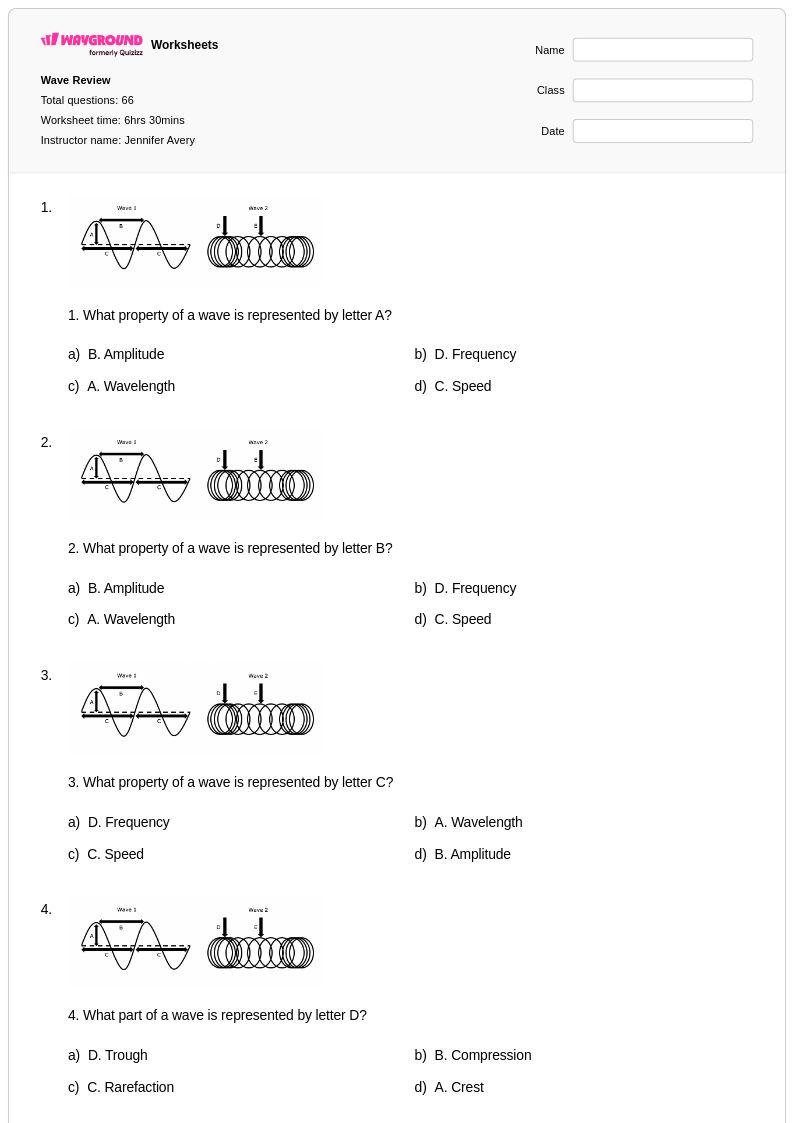
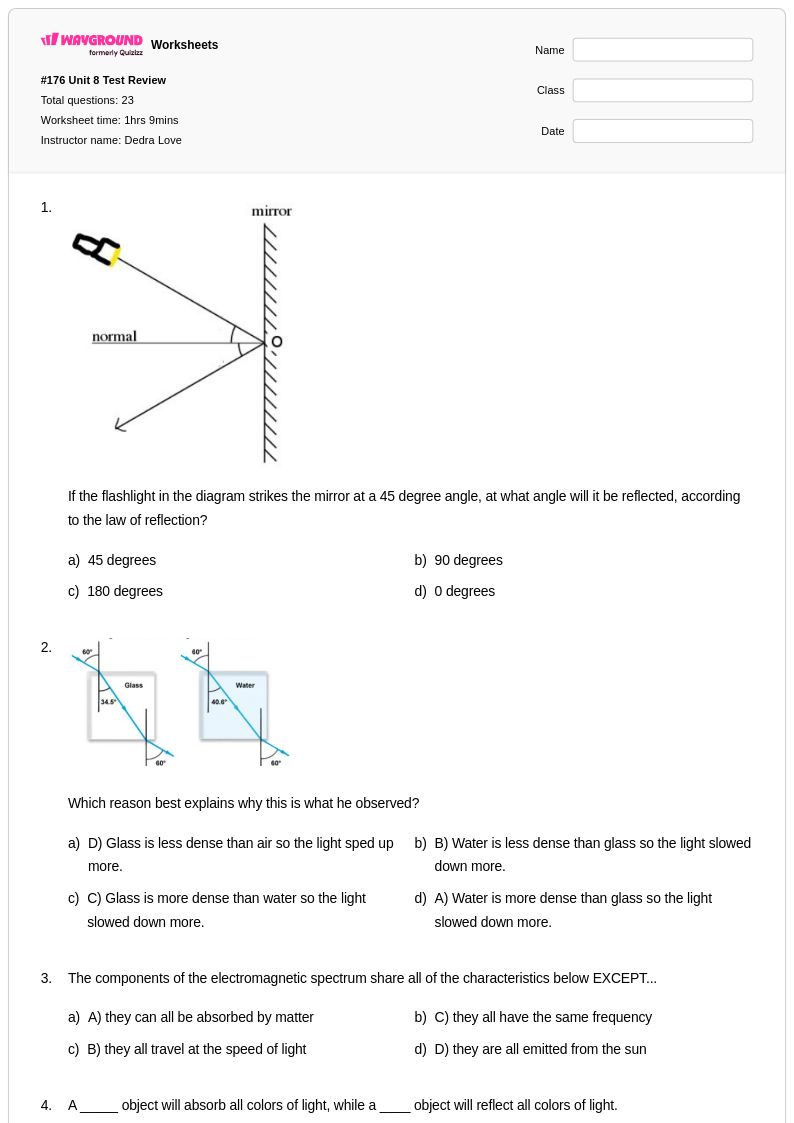
Grade 11 Ray Diagrams worksheets from Wayground provide free printable PDF practice problems and answer keys to help students master light path analysis and optical system visualization in geometric optics.
Explore printable Ray Diagrams worksheets for Grade 11
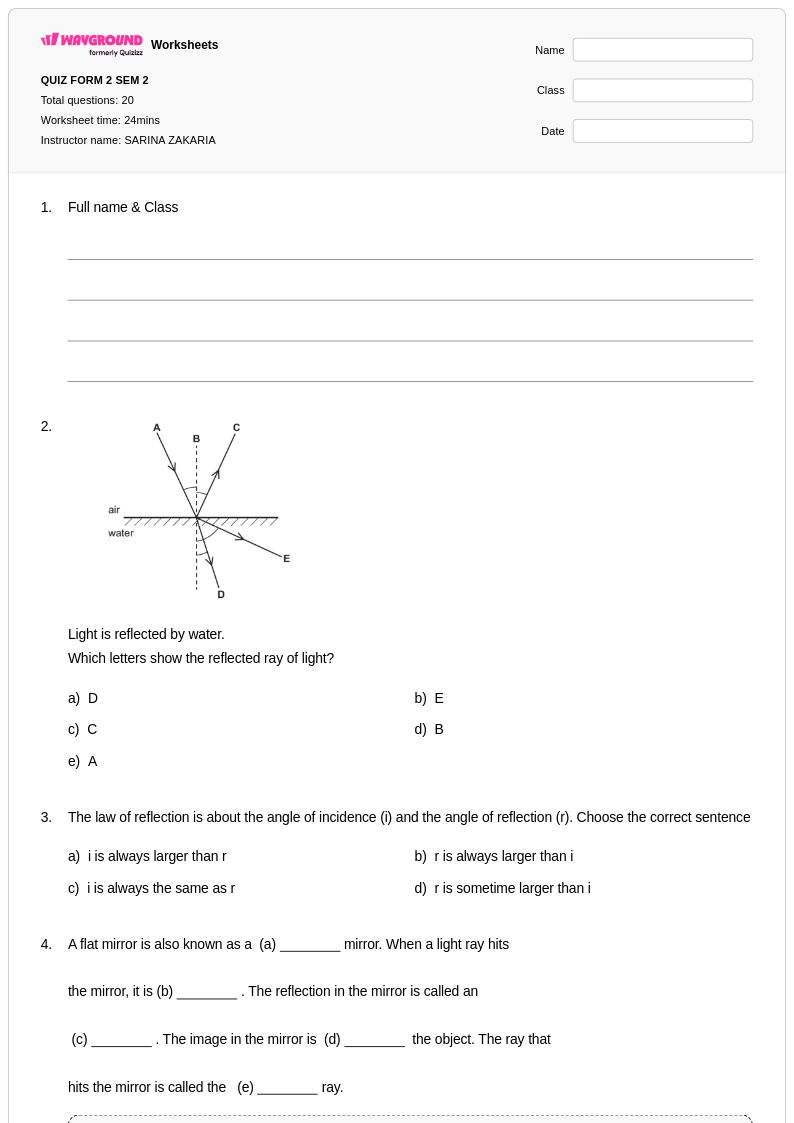
Ray diagrams for Grade 11 students represent a fundamental component of geometric optics education, requiring precise understanding of light behavior through various optical systems. Wayground's comprehensive collection of ray diagram worksheets provides students with essential practice in constructing accurate diagrams for mirrors, lenses, and complex optical instruments. These printable resources strengthen critical visualization skills while reinforcing core concepts such as focal points, image formation, and light ray principles. Each worksheet includes detailed answer keys that guide students through proper ray tracing techniques, from simple plane mirror reflections to sophisticated compound lens systems. The free pdf materials offer systematic practice problems that progress from basic ray construction to advanced optical scenarios, ensuring students develop both theoretical knowledge and practical diagramming abilities essential for physics mastery.
Wayground's extensive platform supports educators with millions of teacher-created ray diagram resources that streamline lesson planning and differentiated instruction. The robust search and filtering capabilities allow teachers to quickly locate worksheets aligned with specific curriculum standards and learning objectives, whether focusing on concave mirror applications or complex lens combinations. Digital and printable formats provide maximum flexibility for classroom implementation, while customization tools enable teachers to modify existing materials for targeted skill practice or remediation. These comprehensive worksheet collections facilitate both individual student assessment and collaborative learning activities, supporting teachers in addressing diverse learning needs through varied problem types and difficulty levels that enhance student understanding of geometric optics principles.
FAQs
How do I teach ray diagrams to students who struggle with geometric optics?
Start by grounding students in the rules before asking them to draw: for mirrors, the three principal rays (parallel to principal axis, through the focal point, and through the center of curvature) are the foundation of every diagram. Have students practice one ray at a time on simple plane mirrors before introducing concave and convex surfaces. Color-coding each ray type consistently across practice problems helps students internalize the rules visually. Once students can reliably draw individual rays, combine them to locate image position and describe image characteristics such as size, orientation, and whether the image is real or virtual.
What exercises help students practice drawing ray diagrams for lenses and mirrors?
Structured practice problems that increase in complexity are the most effective approach: begin with plane mirror reflections, then progress to concave and convex mirrors, and finally move to converging and diverging lenses. Exercises that require students to both construct the diagram and describe the resulting image (real or virtual, upright or inverted, magnified or reduced) reinforce the connection between geometry and optical outcomes. Adding object placement variations, such as placing the object inside versus outside the focal point, helps students recognize how image characteristics change with object distance.
What mistakes do students commonly make when drawing ray diagrams?
The most frequent error is drawing rays that do not pass precisely through the focal point or center of curvature, which leads to incorrectly located images. Students also commonly forget to extend rays beyond the mirror or lens surface to find virtual image intersections, resulting in missed virtual images altogether. Another persistent misconception is assuming that a virtual image can always be projected onto a screen, which confuses students when lab results contradict their diagrams. Requiring students to label each ray by type and verify intersections before describing image characteristics reduces these errors significantly.
How do I use Wayground's ray diagram worksheets in my classroom?
Wayground's ray diagram worksheets are available as printable PDFs for traditional classroom distribution and in digital formats for technology-integrated learning environments, including the option to host them as a quiz directly on Wayground. The printable format works well for in-class diagramming practice where students draw directly on the page, while the digital format supports remote or hybrid learning and allows for paperless submission. Both formats include answer keys, so teachers can use them for guided practice, independent work, or formative assessment.
How do I differentiate ray diagram instruction for students at different skill levels?
For students who are still building foundational skills, reduce complexity by providing partially completed diagrams where one or two rays are already drawn, requiring students to complete only the missing elements. Advanced students benefit from multi-lens or mirror-and-lens combination problems that require applying rules sequentially across two optical surfaces. On Wayground, teachers can assign accommodations such as reduced answer choices, read aloud, or extended time to individual students, making the same worksheet accessible across varied learner needs without requiring entirely separate materials.
At what point in a geometric optics unit should I introduce ray diagram worksheets?
Ray diagram worksheets are most effective after students have been introduced to the law of reflection, the concept of focal length, and the distinction between real and virtual images through direct instruction or lab work. Introducing worksheets too early, before students understand what a focal point represents physically, leads to rote copying rather than conceptual understanding. Worksheets are best used as a bridge between initial instruction and quantitative problem-solving with the mirror and thin lens equations, reinforcing why those equations produce the results they do.