Free Printable Roman Republic and Empire Worksheets for Grade 11
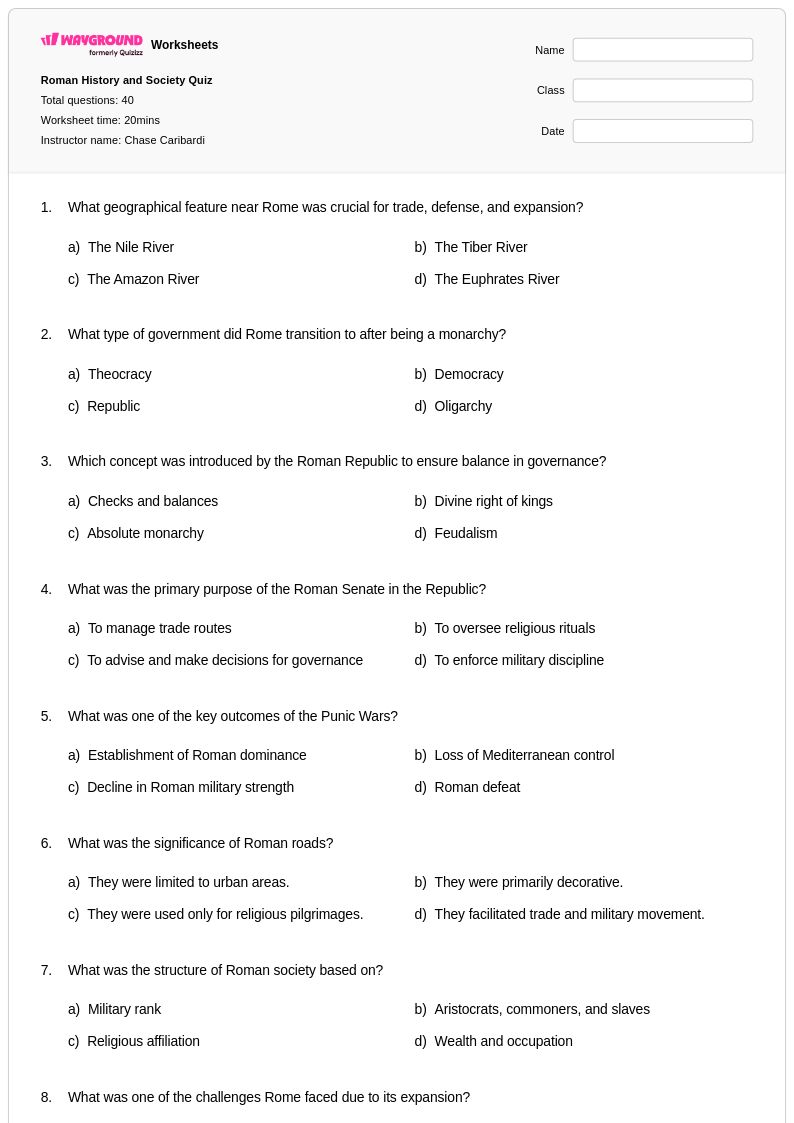
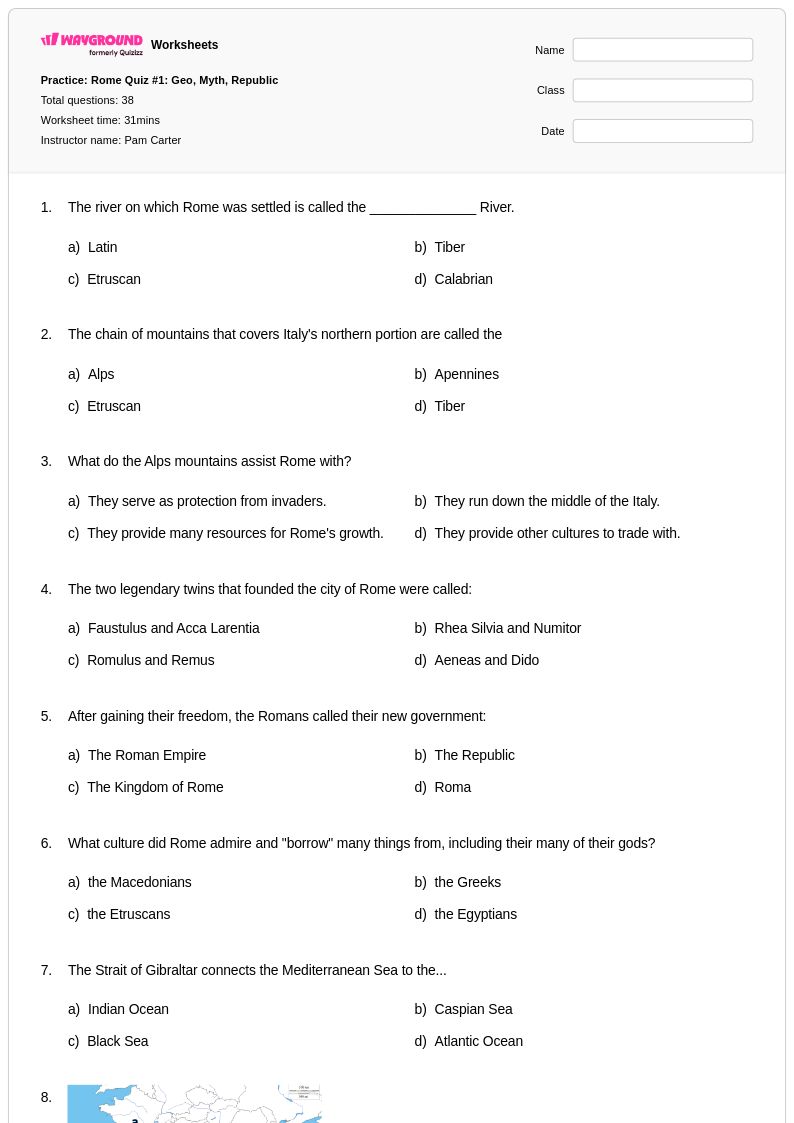
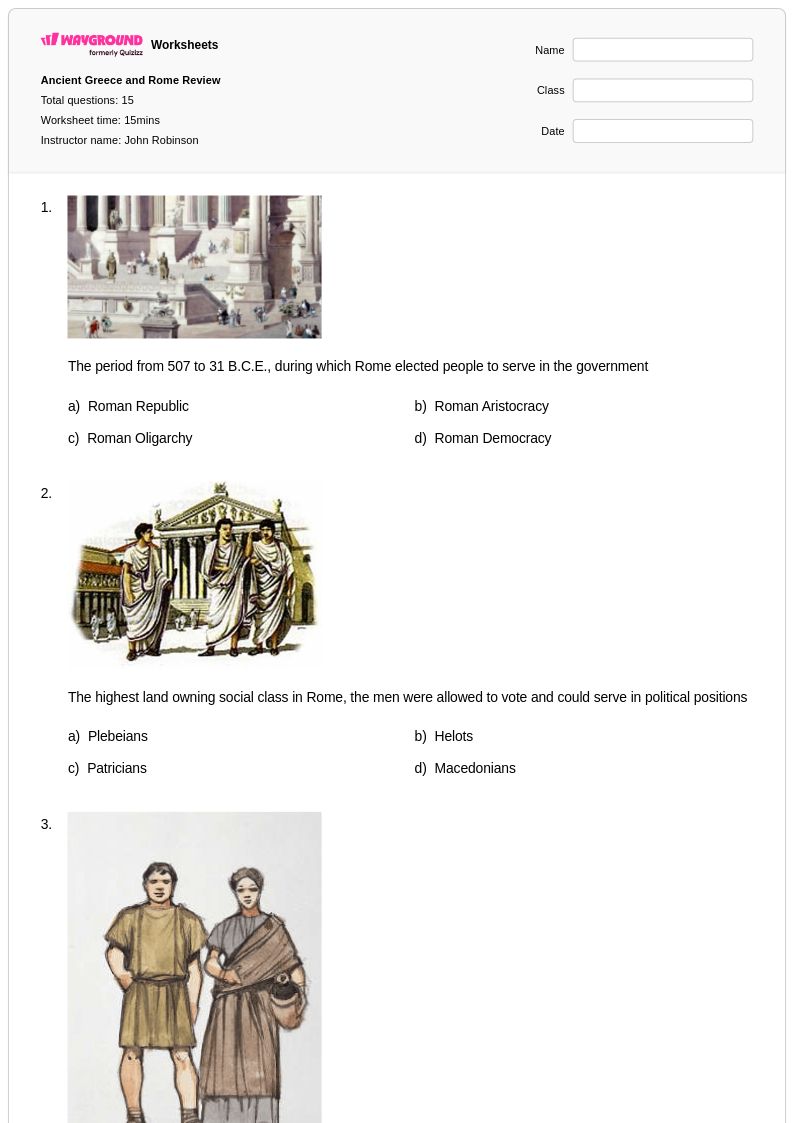
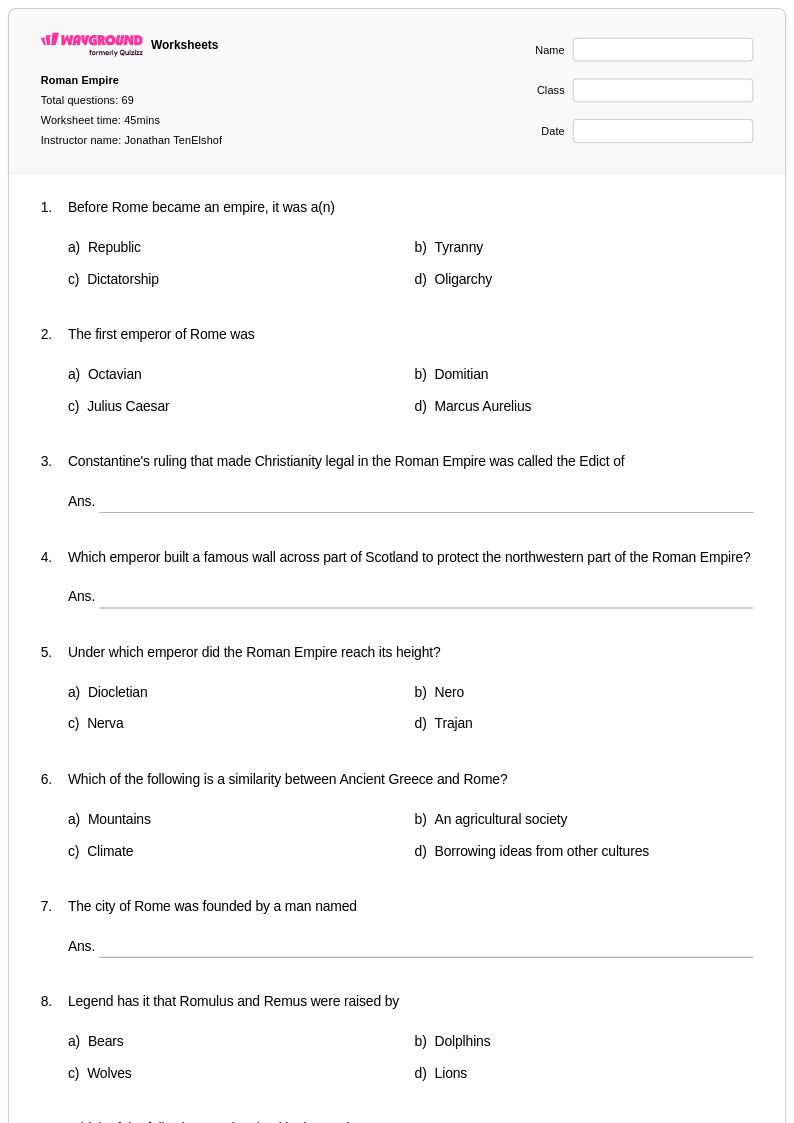
Explore Grade 11 Roman Republic and Empire free worksheets and printables from Wayground that help students master ancient Roman political systems, military conquests, and cultural transformations through engaging practice problems with answer keys.
Explore printable Roman Republic and Empire worksheets for Grade 11
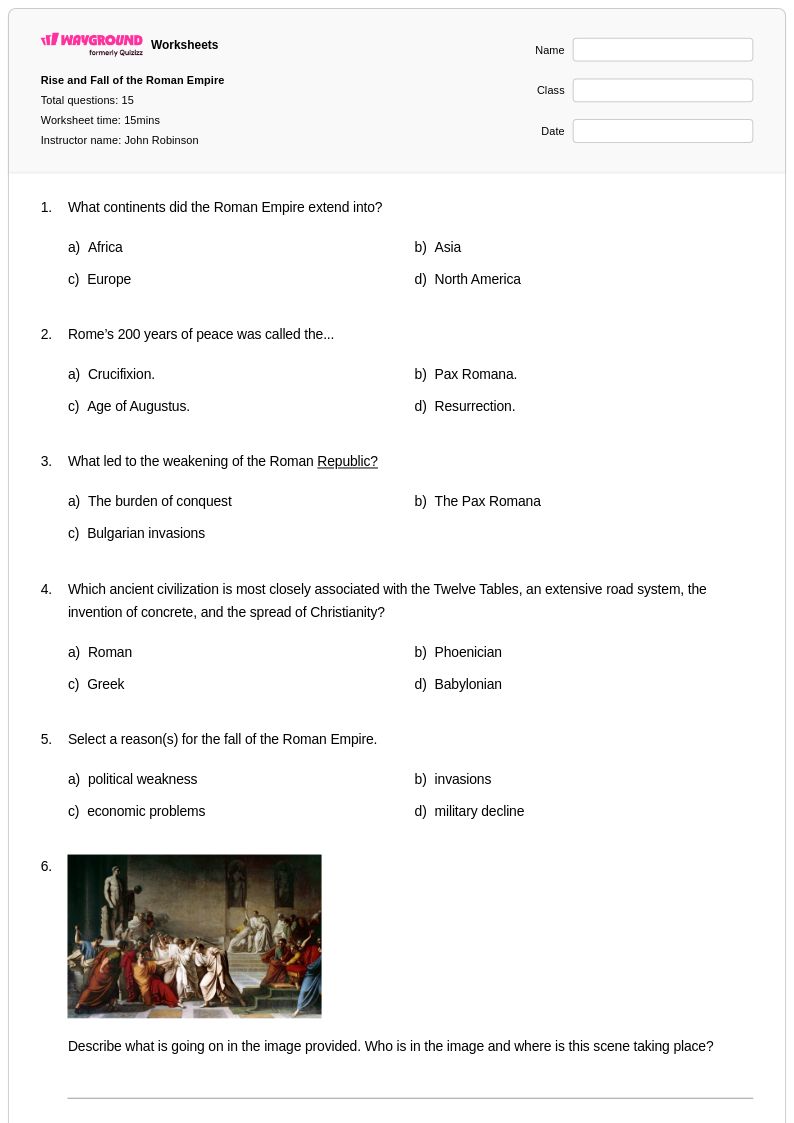
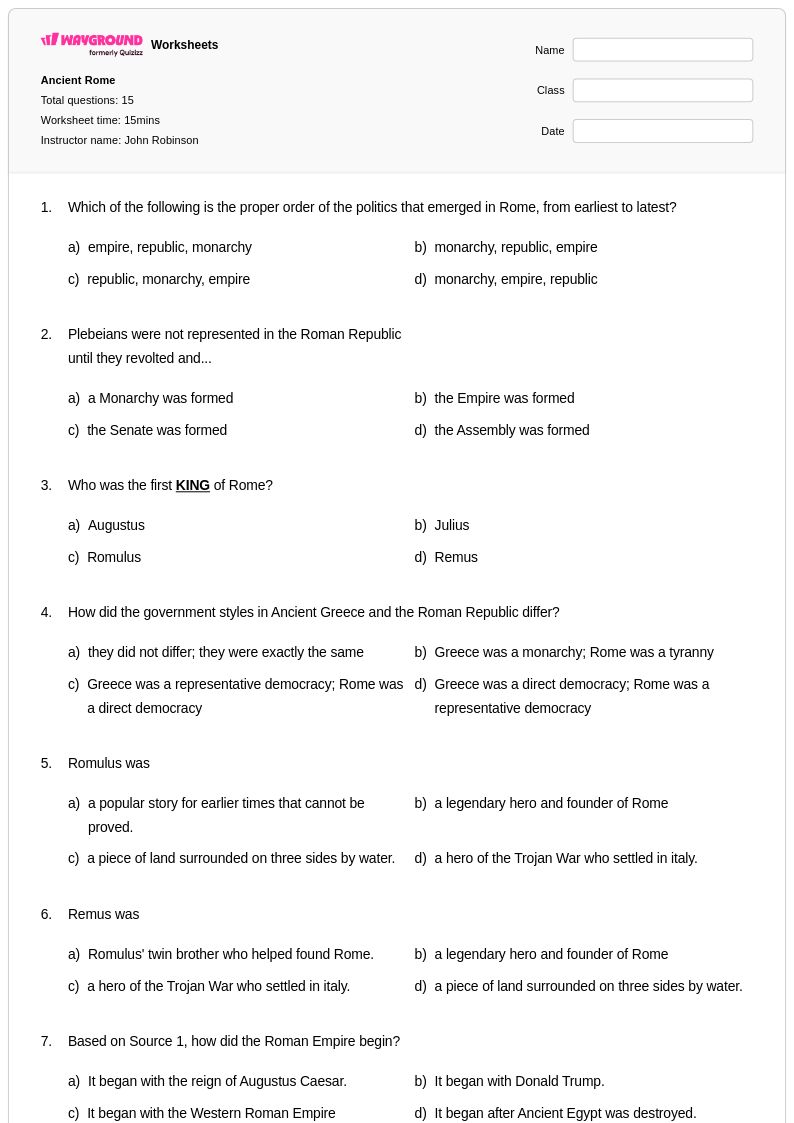
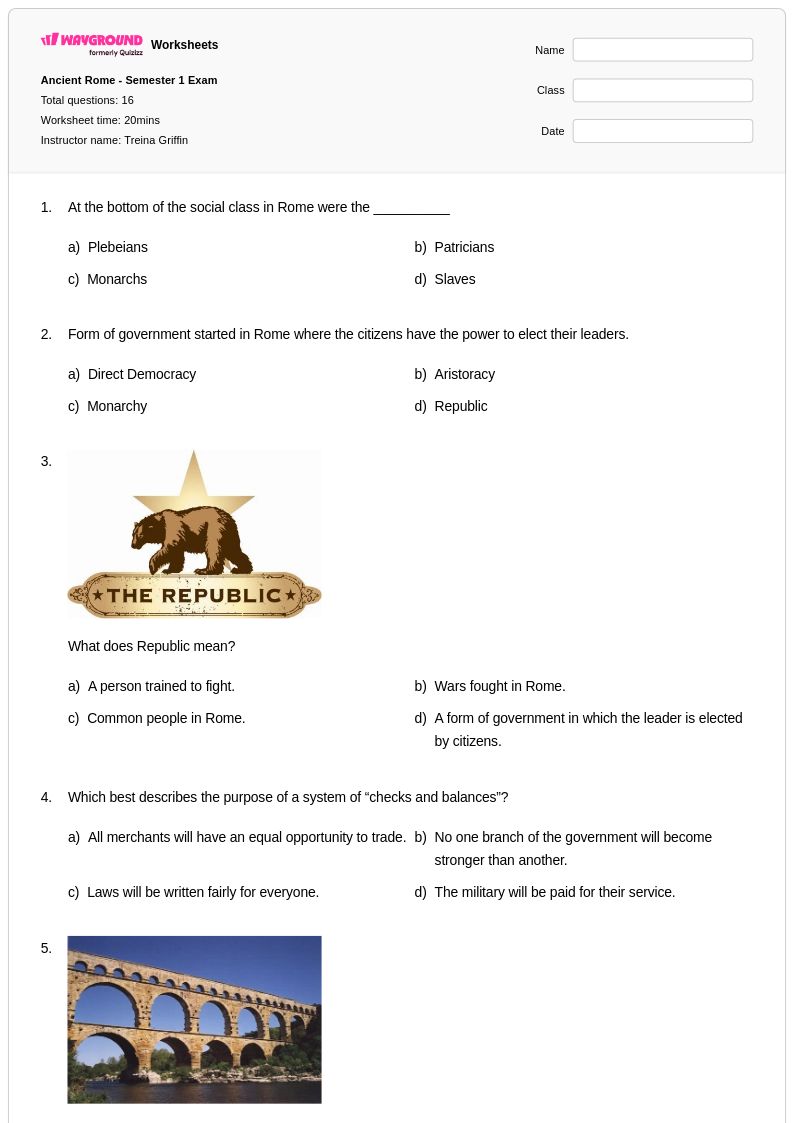
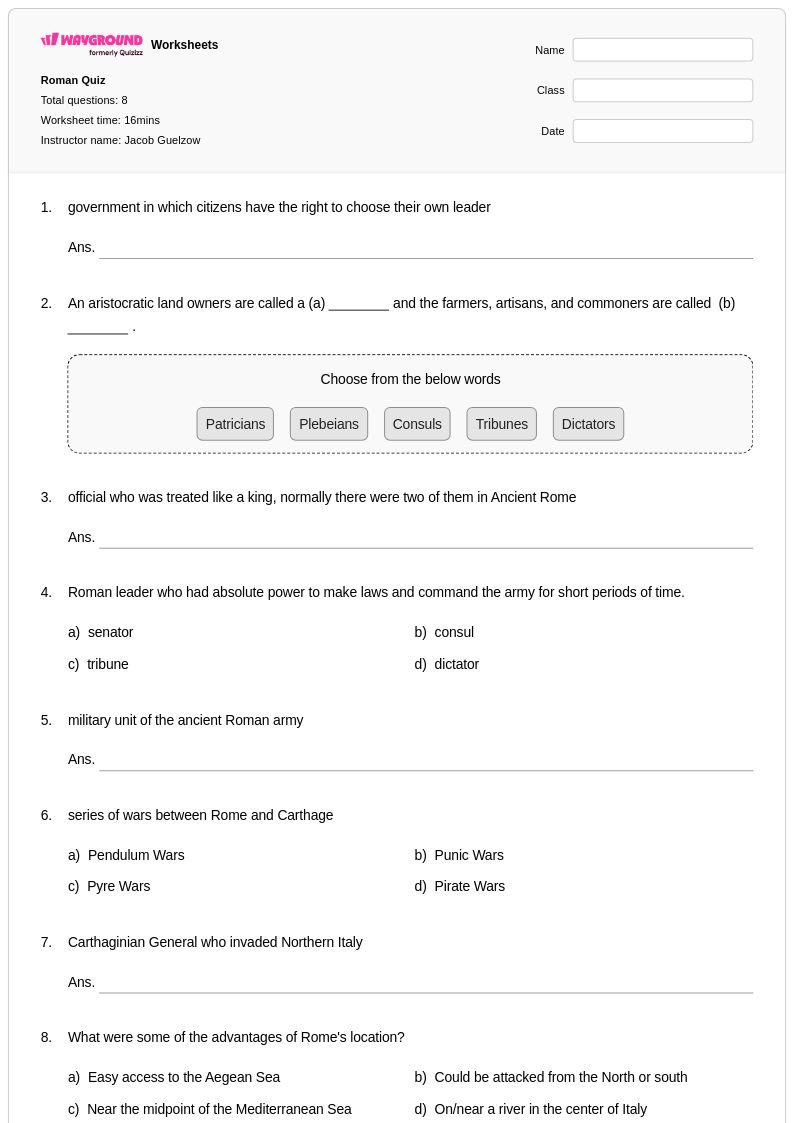
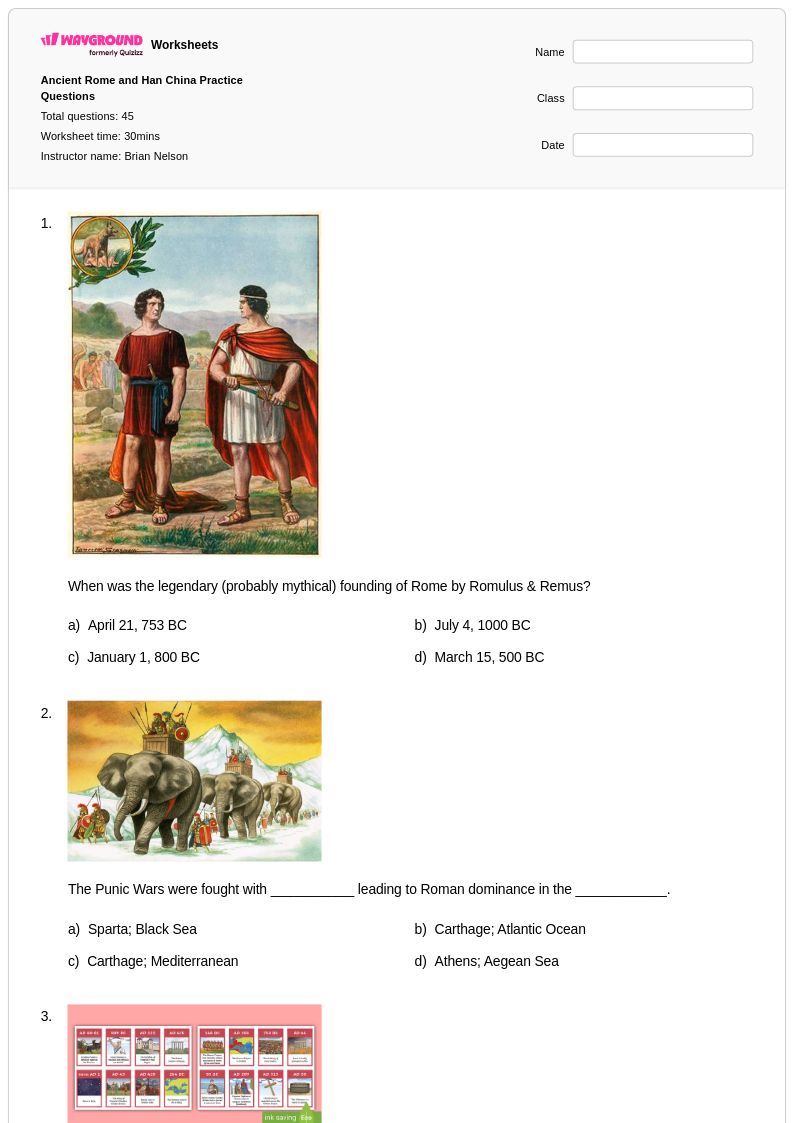
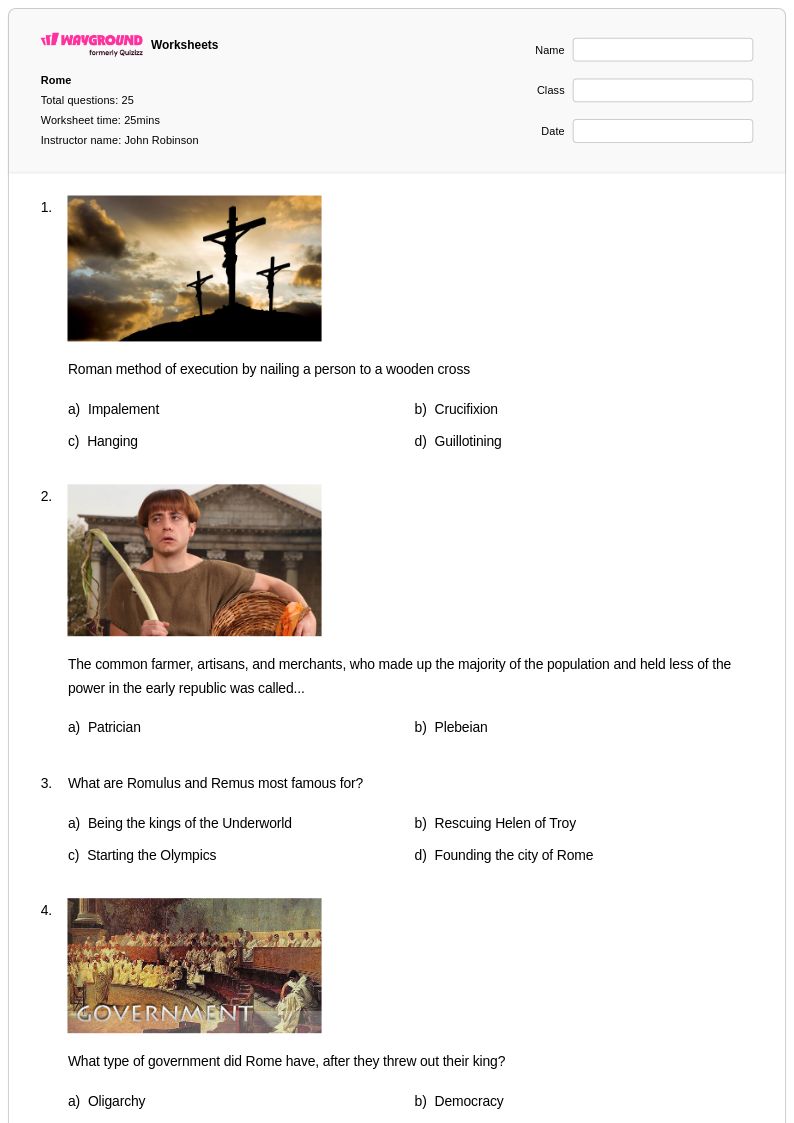
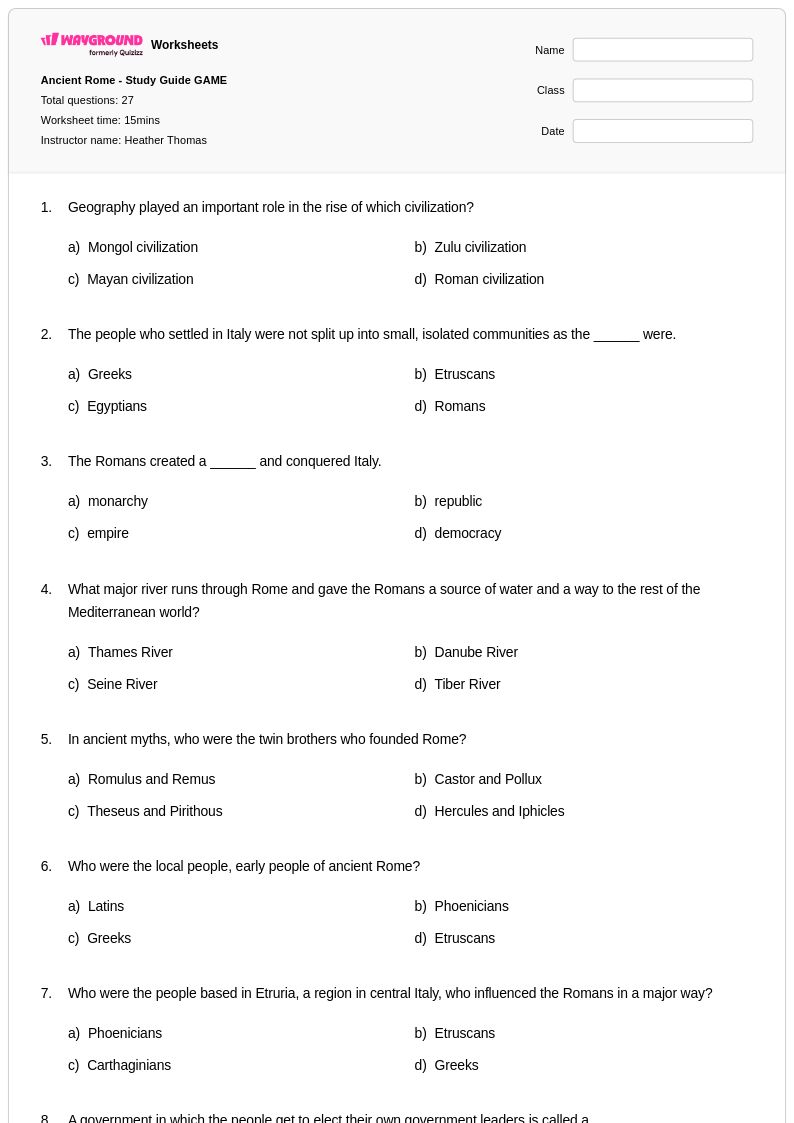
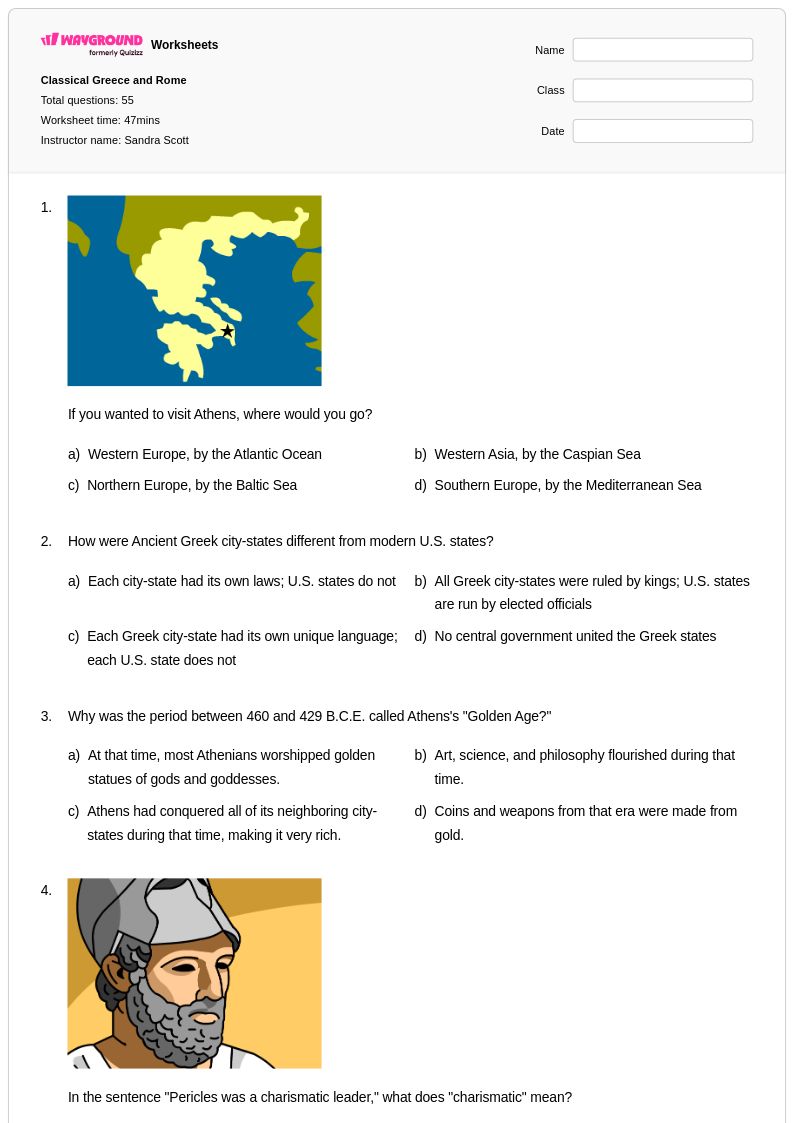
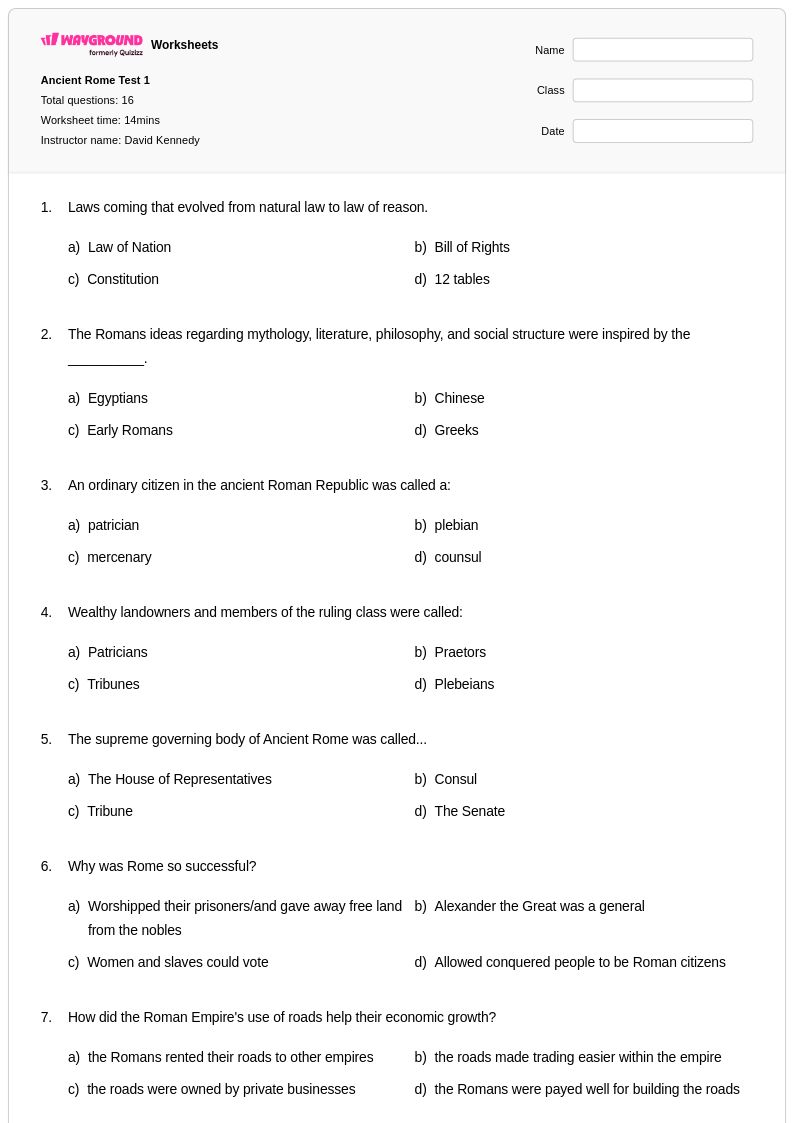
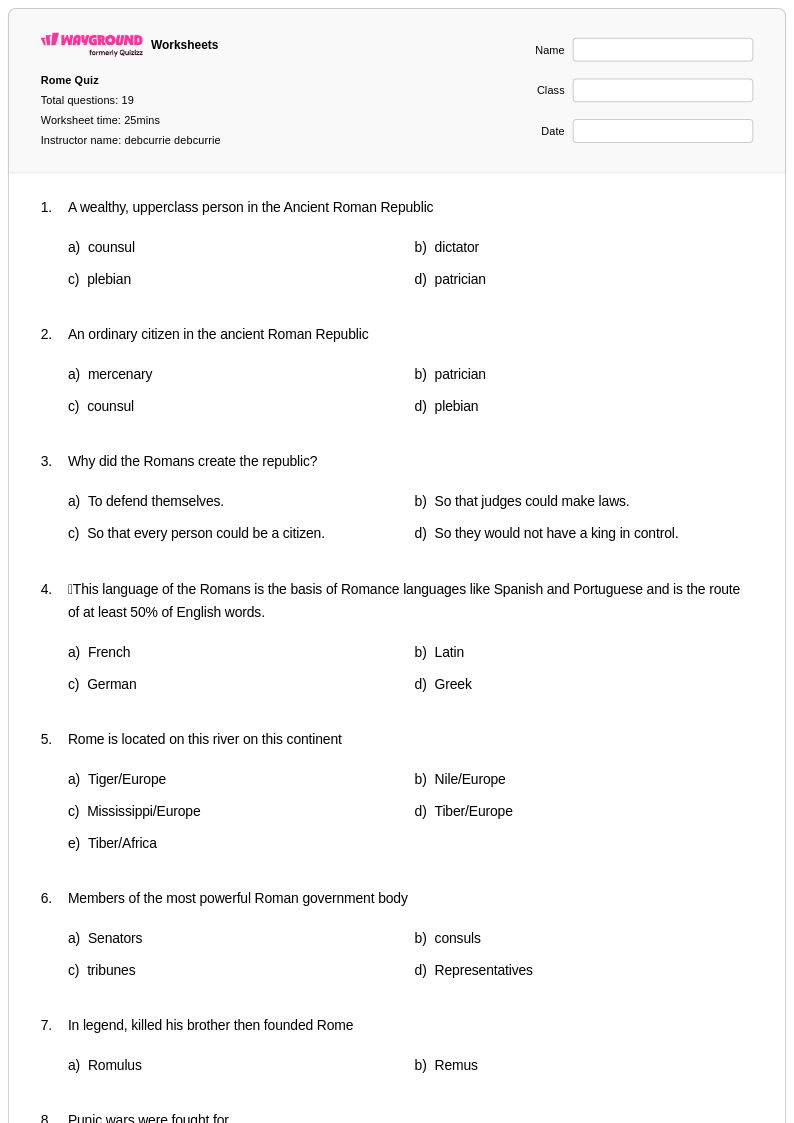
Grade 11 Roman Republic and Empire worksheets available through Wayground offer comprehensive coverage of one of history's most influential civilizations, from its republican foundations through imperial expansion and eventual decline. These educational resources strengthen critical thinking skills as students analyze primary sources, compare governmental structures, and evaluate the lasting impact of Roman political, military, and cultural innovations on Western civilization. The collection includes practice problems that challenge students to interpret historical maps showing territorial expansion, examine the causes and consequences of major events like the Punic Wars and Julius Caesar's rise to power, and assess the transformation from republic to empire. Each worksheet comes with a detailed answer key and is available as a free printable pdf, enabling teachers to provide targeted instruction on complex topics such as Roman law, engineering achievements, social hierarchies, and the factors contributing to imperial collapse.
Wayground supports educators with millions of teacher-created resources specifically designed for Roman Republic and Empire instruction, featuring robust search and filtering capabilities that allow quick access to materials aligned with state and national social studies standards. The platform's differentiation tools enable teachers to customize worksheets based on individual student needs, offering both remediation support for struggling learners and enrichment opportunities for advanced students ready to explore deeper historical connections. Available in both printable pdf format and interactive digital versions, these resources facilitate flexible lesson planning whether teachers need quick practice activities, comprehensive unit assessments, or supplementary materials for homework assignments. The extensive collection empowers educators to reinforce essential Grade 11 history concepts through varied instructional approaches, helping students develop the analytical skills necessary to understand how Roman political institutions, military strategies, and cultural achievements shaped the ancient Mediterranean world and continue to influence modern democratic societies.
FAQs
How do I teach the transition from the Roman Republic to the Roman Empire?
Teaching this transition works best when students examine the political pressures that destabilized the Republic, including military loyalty shifts, the role of figures like Julius Caesar and Augustus, and the erosion of Senate authority. Start with the structural differences between republican and imperial governance, then trace the sequence of events from the First Triumvirate through the Principate. Using primary source excerpts alongside political structure diagrams helps students grasp how power was gradually consolidated rather than seized overnight.
What exercises help students practice their knowledge of the Roman Republic and Empire?
Effective practice exercises include timeline sequencing activities that place events like the Punic Wars, Caesar's dictatorship, and the Pax Romana in order, as well as document analysis tasks using adapted primary sources. Comparative analysis prompts asking students to contrast the roles of the Senate, consuls, and tribunes with imperial offices deepen conceptual understanding. Map-based exercises tracing Rome's territorial expansion from city-state to Mediterranean empire are particularly effective at making the scope of Roman power concrete.
What are the most common mistakes students make when studying Roman Republic and Empire history?
Students frequently conflate the Republic and the Empire as a single continuous system rather than understanding the Republic's collapse as a distinct political rupture. Another common error is treating Julius Caesar as the first emperor, when Augustus formally established the Principate. Students also tend to overlook the role of the Punic Wars in reshaping Roman society, economy, and military structure, which are essential context for understanding the Republic's eventual instability.
How can I use Roman Republic and Empire worksheets in my classroom?
Wayground's Roman Republic and Empire worksheets are available as printable PDFs, making them easy to distribute in a traditional classroom setting, and in digital formats for technology-integrated or hybrid learning environments. Teachers can also host worksheets as a quiz directly on Wayground, enabling real-time student responses and instant feedback. This flexibility accommodates different instructional approaches, whether used as bell-ringers, guided note companions, assessment tools, or independent practice assignments.
How does Roman history connect to modern government and society?
Roman law, engineering, and governance form the foundation of many modern Western institutions, making this a high-transfer topic for students. The concept of a bicameral legislature, codified law, and republican representation all have direct Roman origins that students can trace to contemporary democratic systems. Prompting students to compare Roman governmental structures with modern democracies is an effective way to anchor ancient content in present-day relevance and build analytical writing skills.
How can I differentiate Roman Republic and Empire instruction for students at different skill levels?
For foundational learners, focus on key vocabulary, sequencing activities, and comprehension questions tied to the major periods and figures of Roman history. Advanced students benefit from analytical tasks such as evaluating competing historical interpretations of Rome's fall or comparing Roman imperialism to other historical empires. On Wayground, teachers can also apply individual accommodations such as read-aloud support, reduced answer choices, or extended time for students who need additional scaffolding, without affecting the experience of the rest of the class.