Free Printable The French Revolution Worksheets for Grade 11
Grade 11 French Revolution worksheets and printables help students explore this pivotal historical period through engaging practice problems, with free PDF resources and comprehensive answer keys available.
Explore printable The French Revolution worksheets for Grade 11
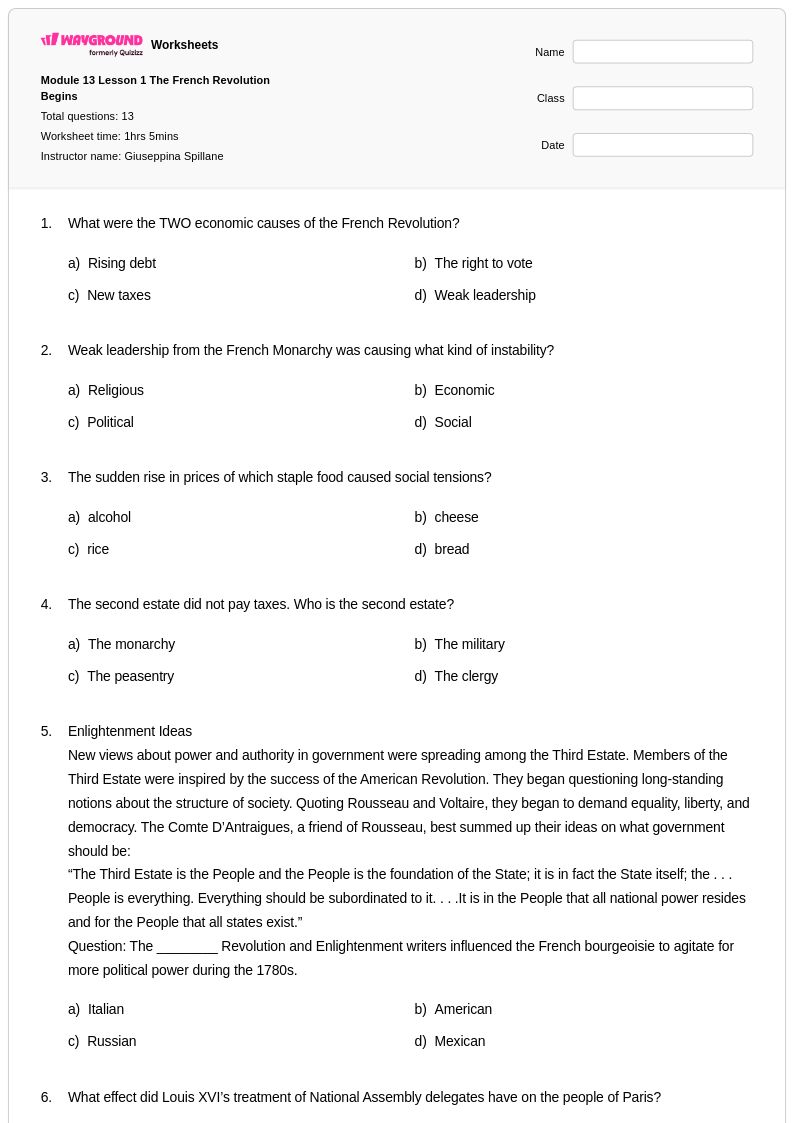
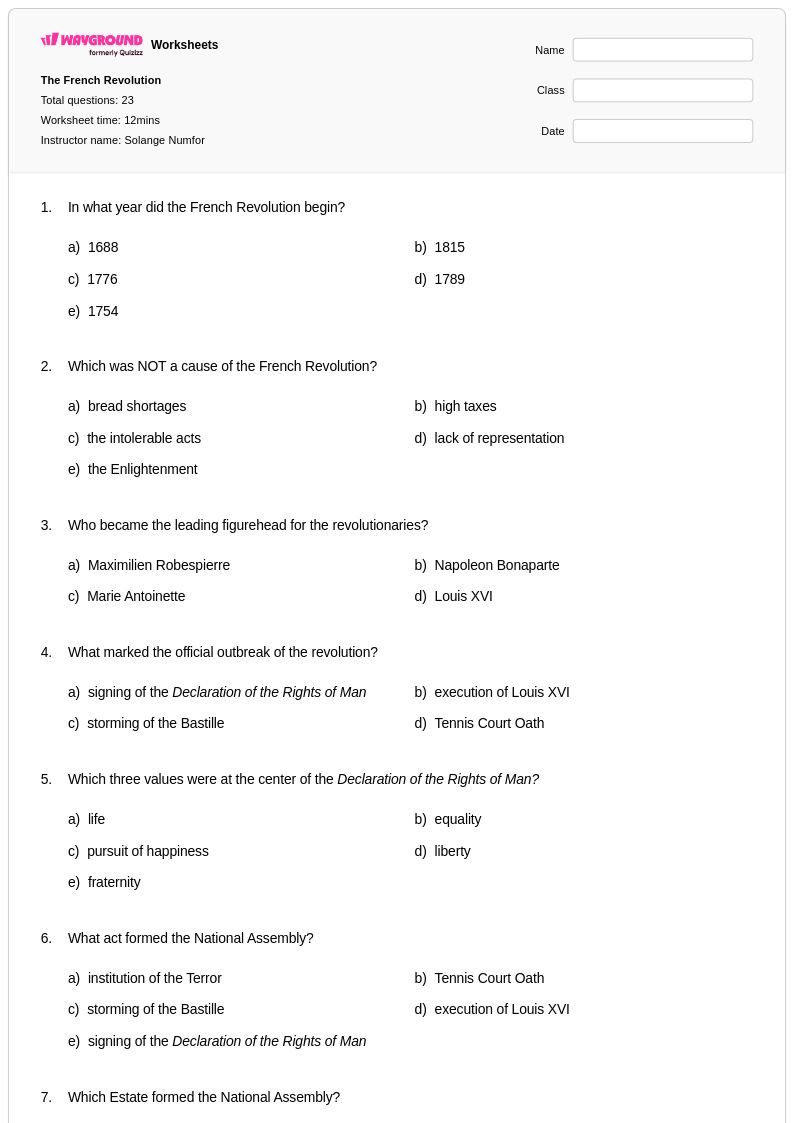
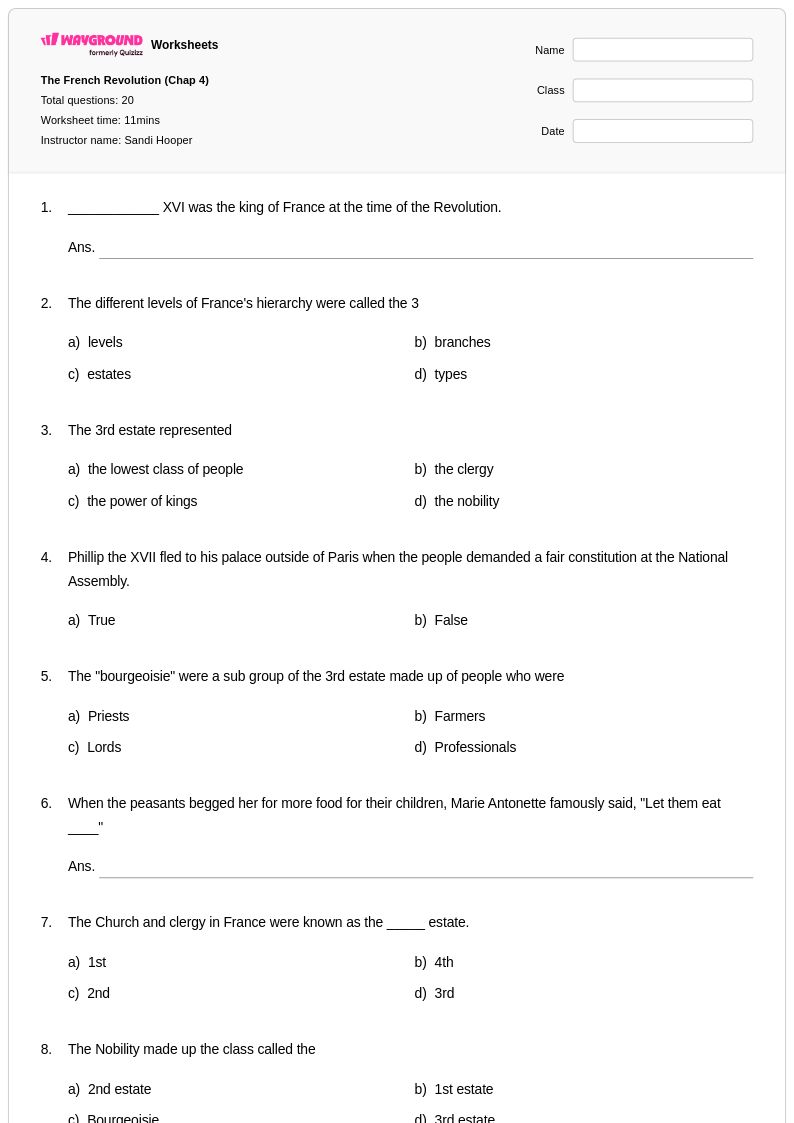
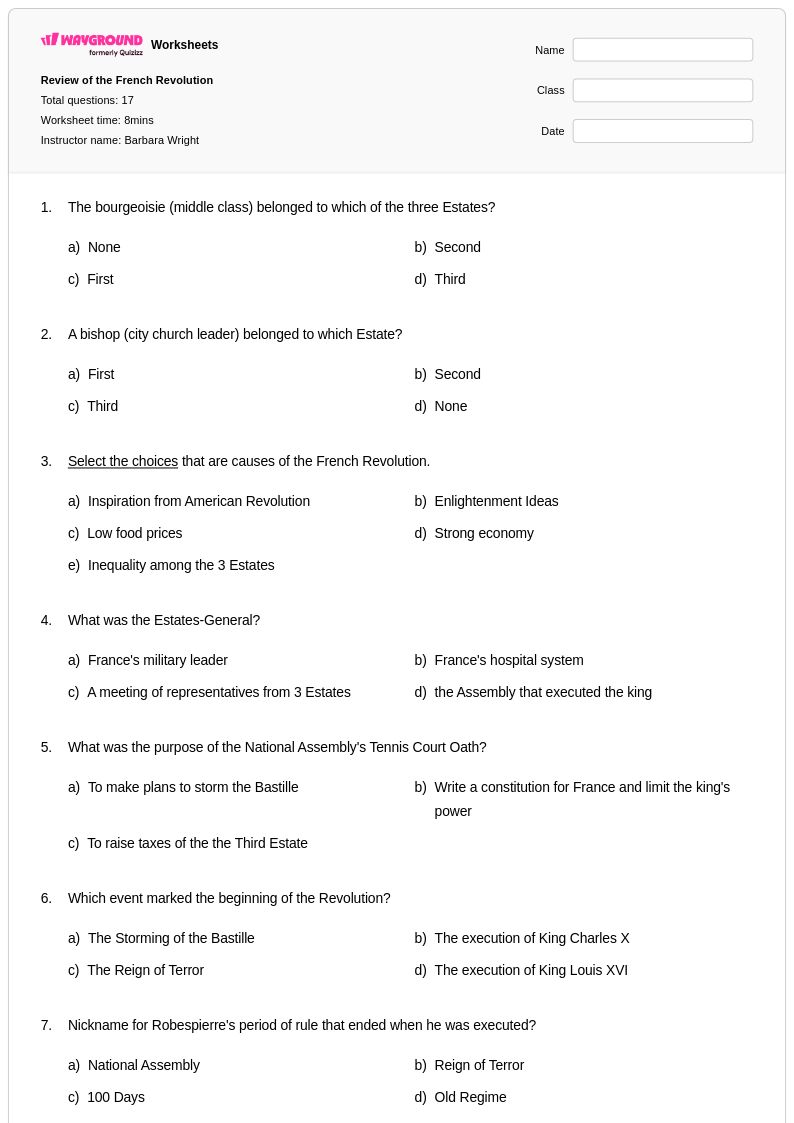
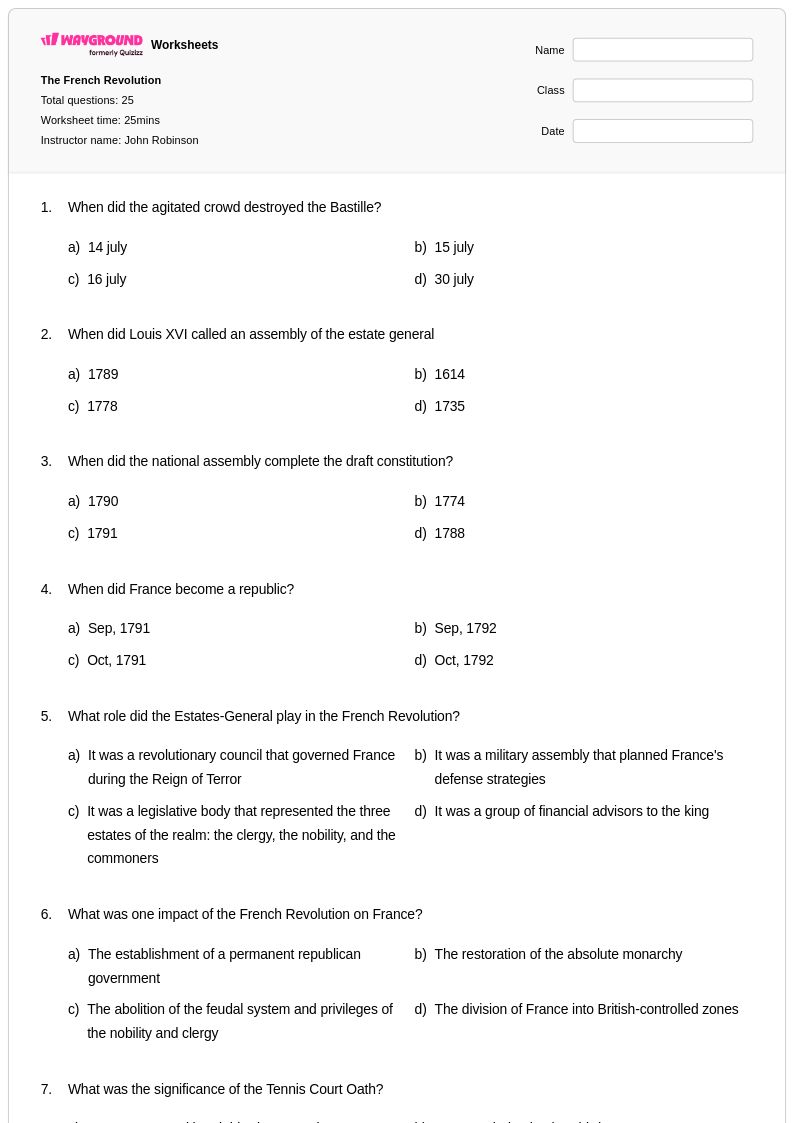
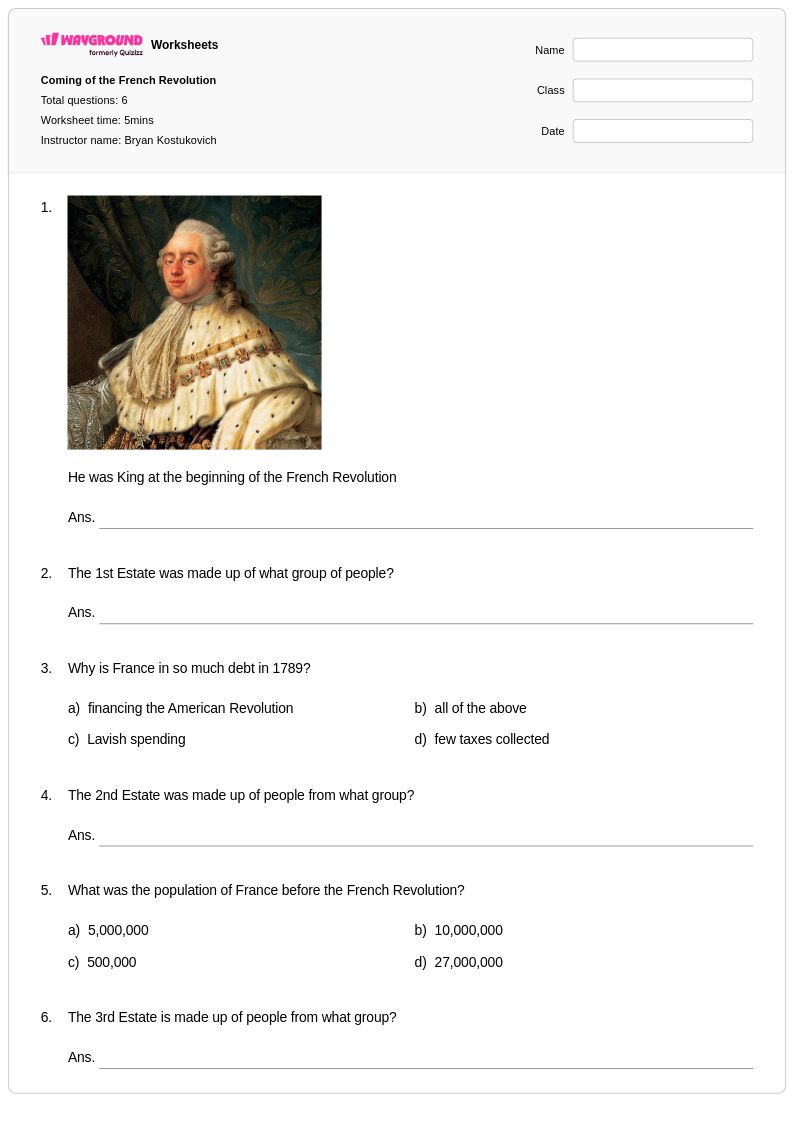
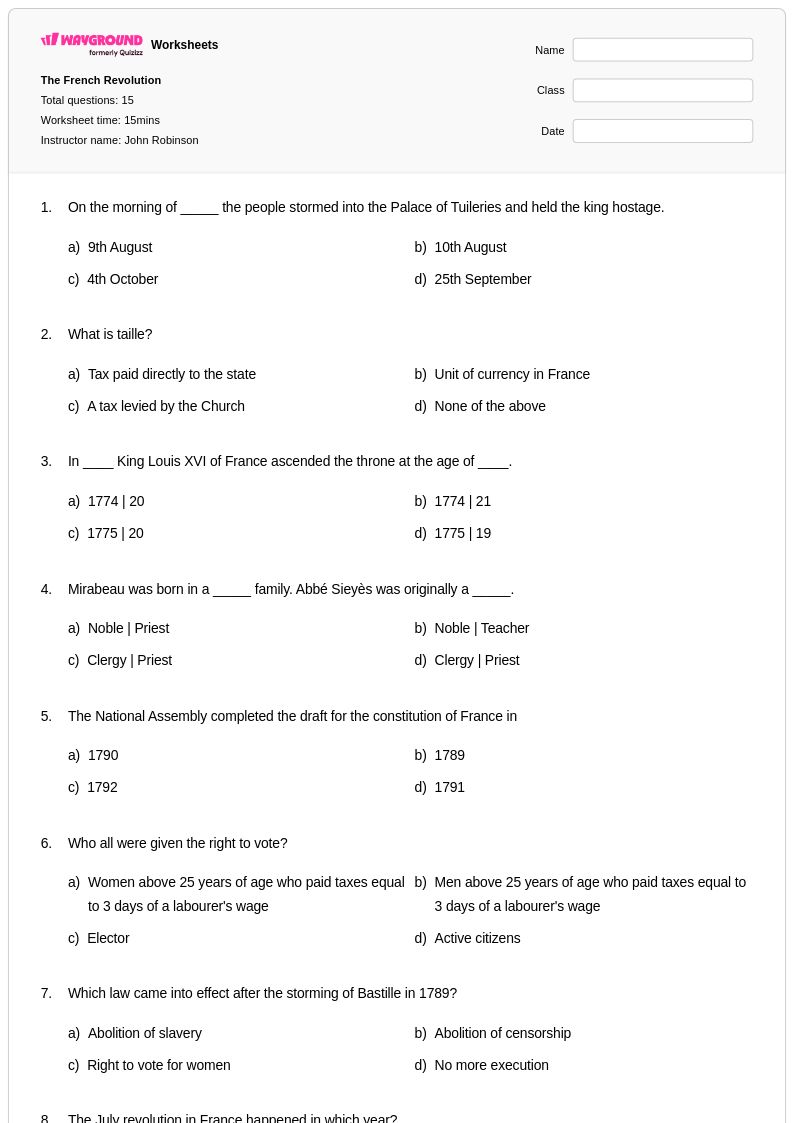
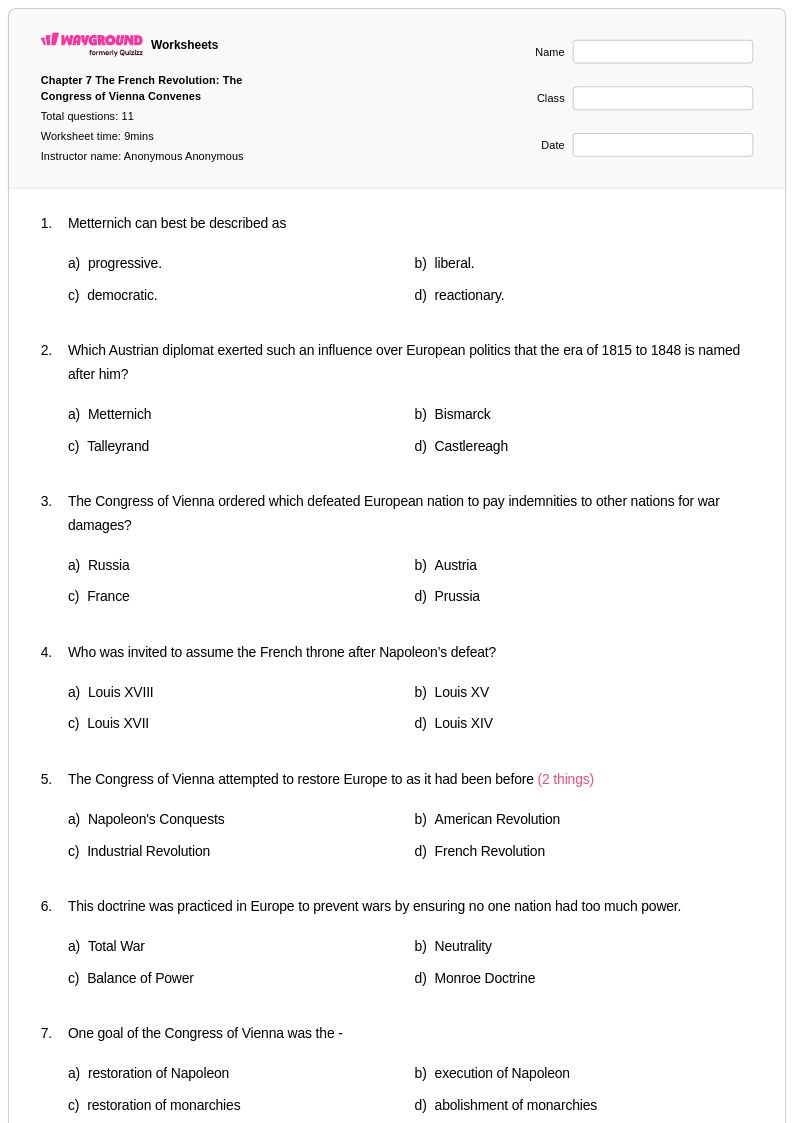
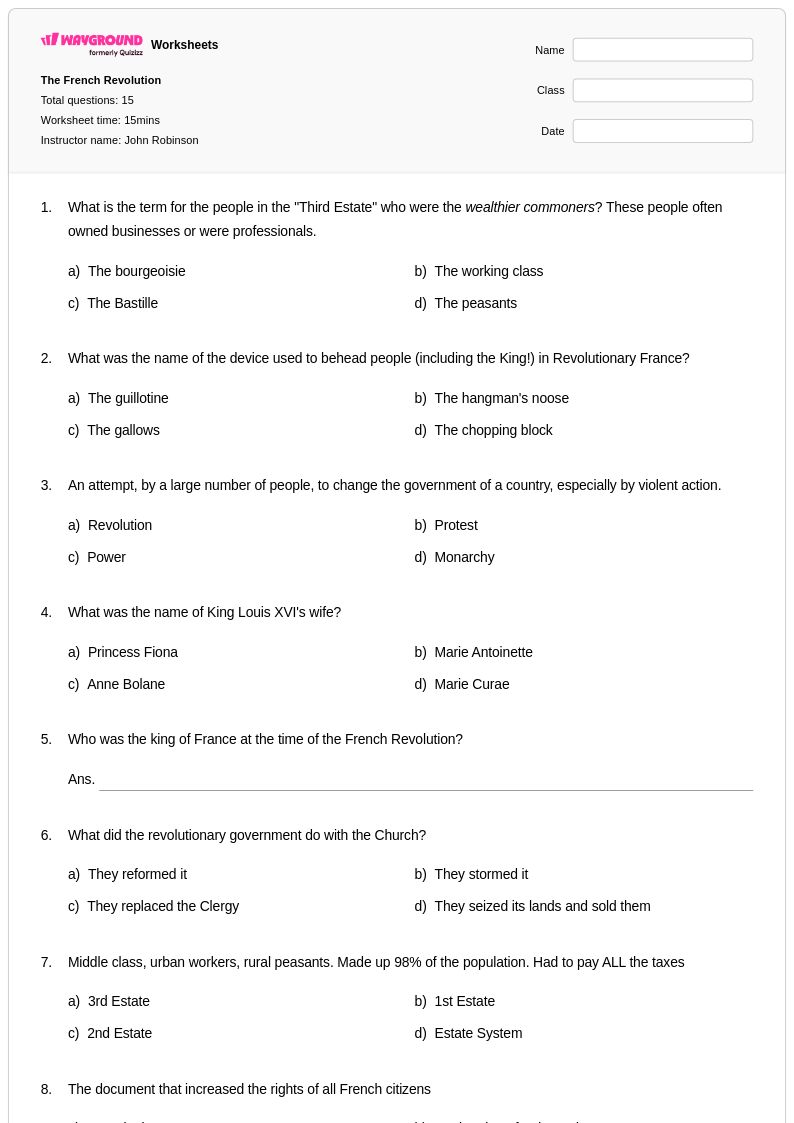
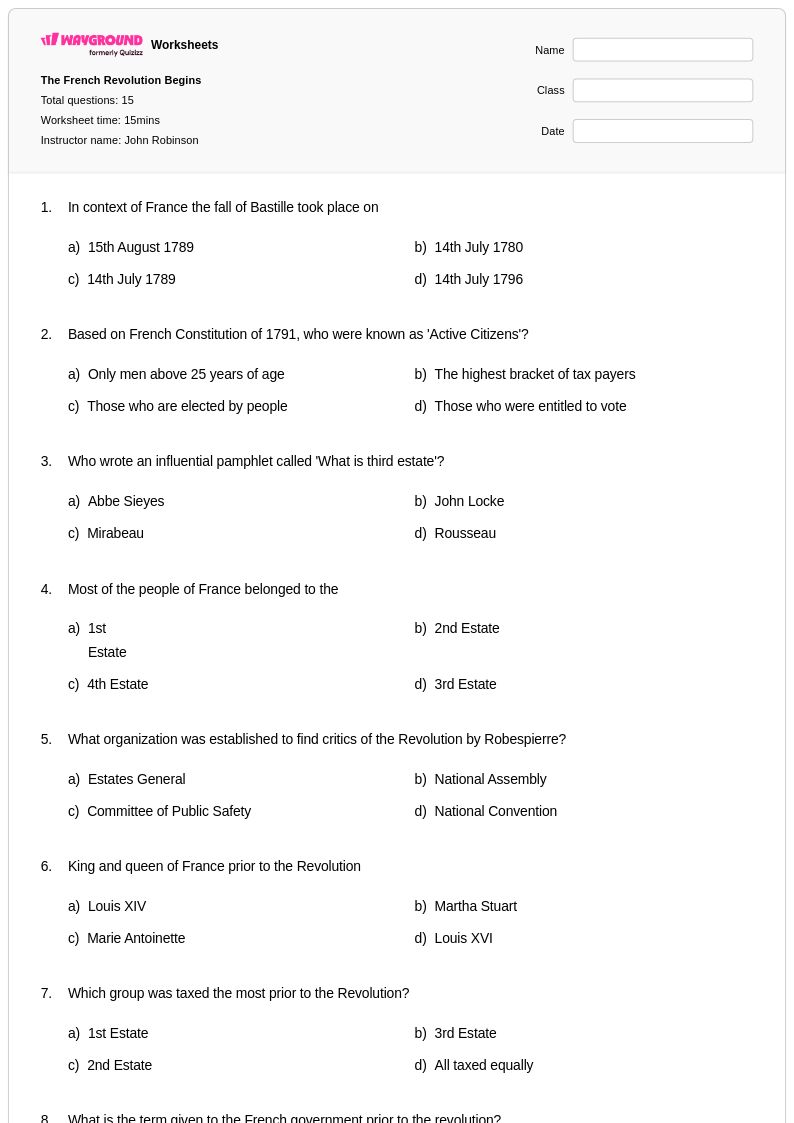
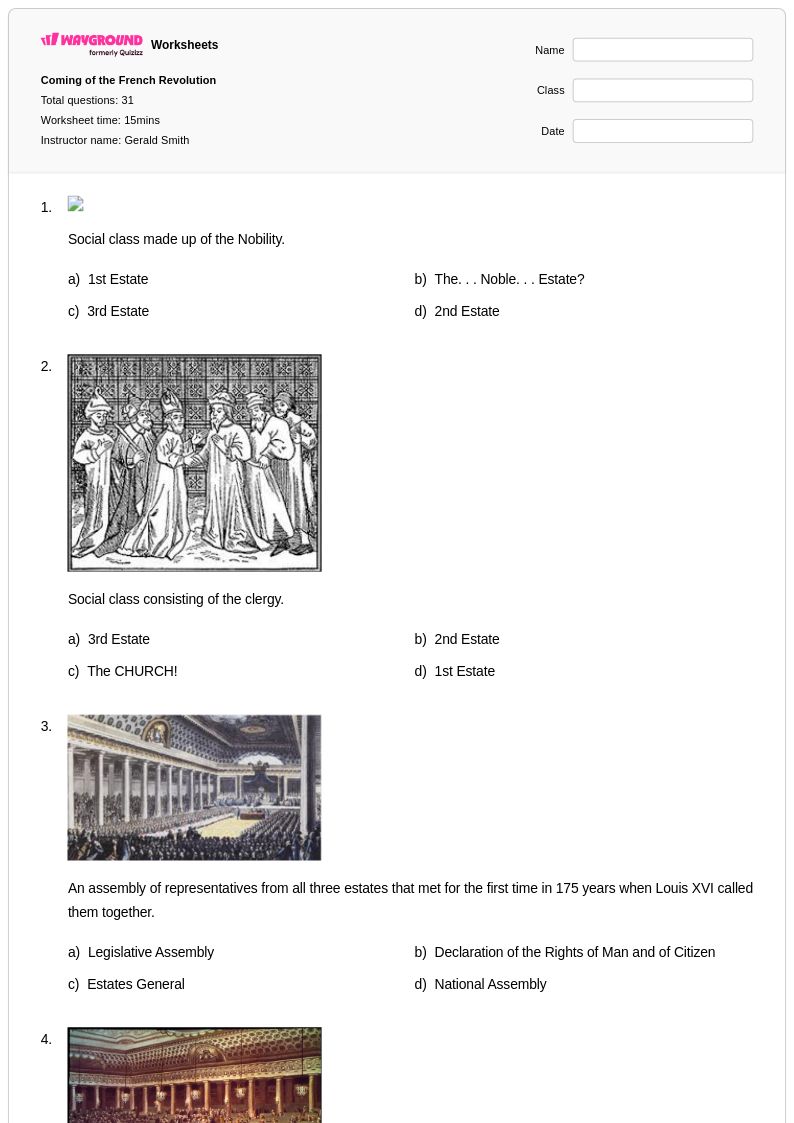
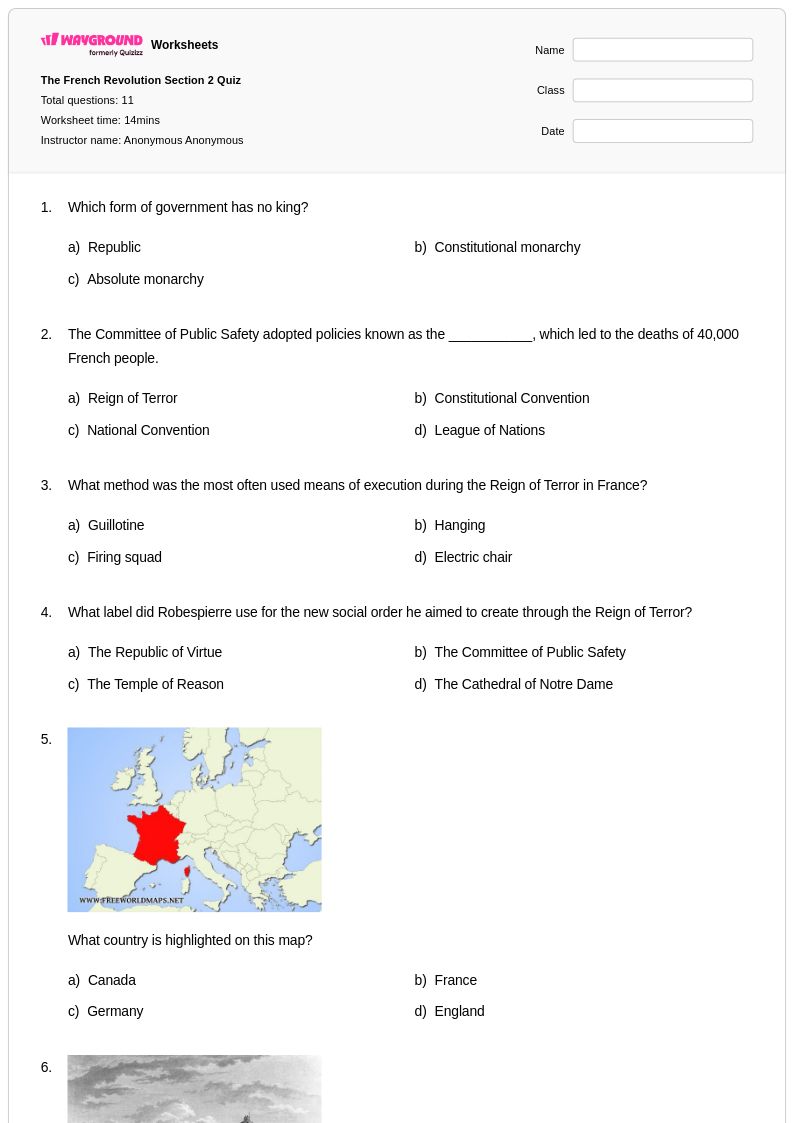
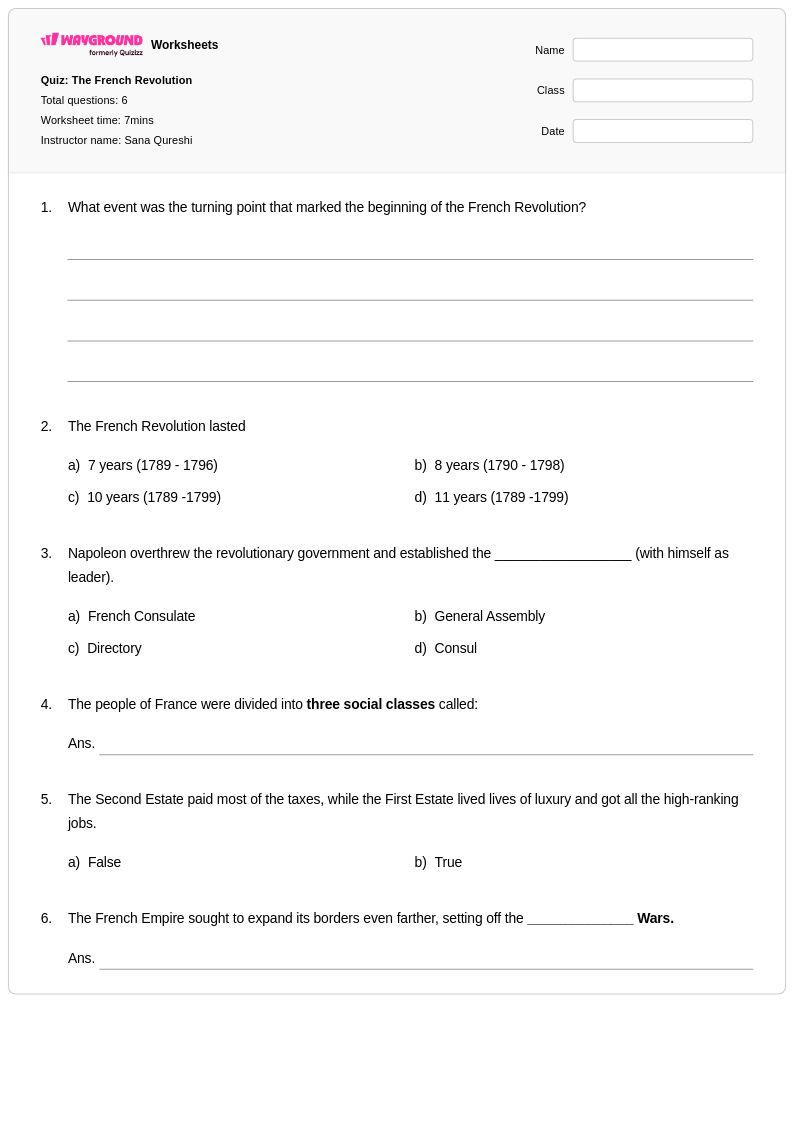
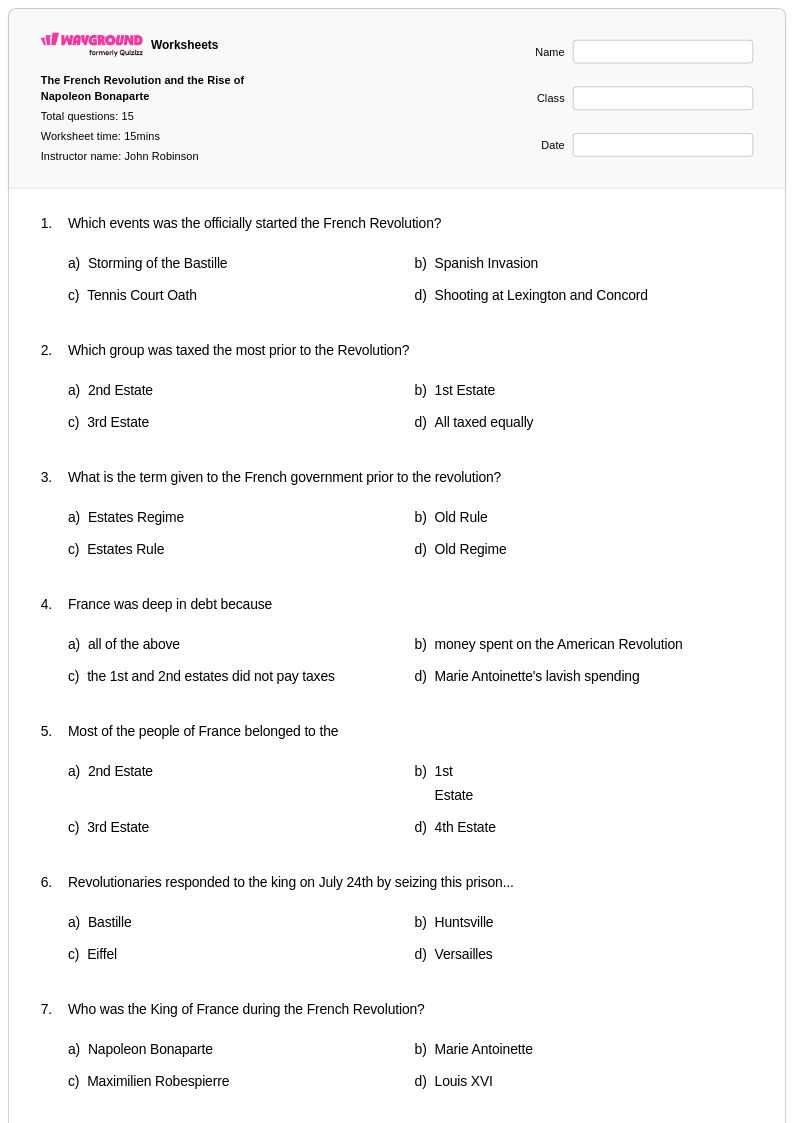
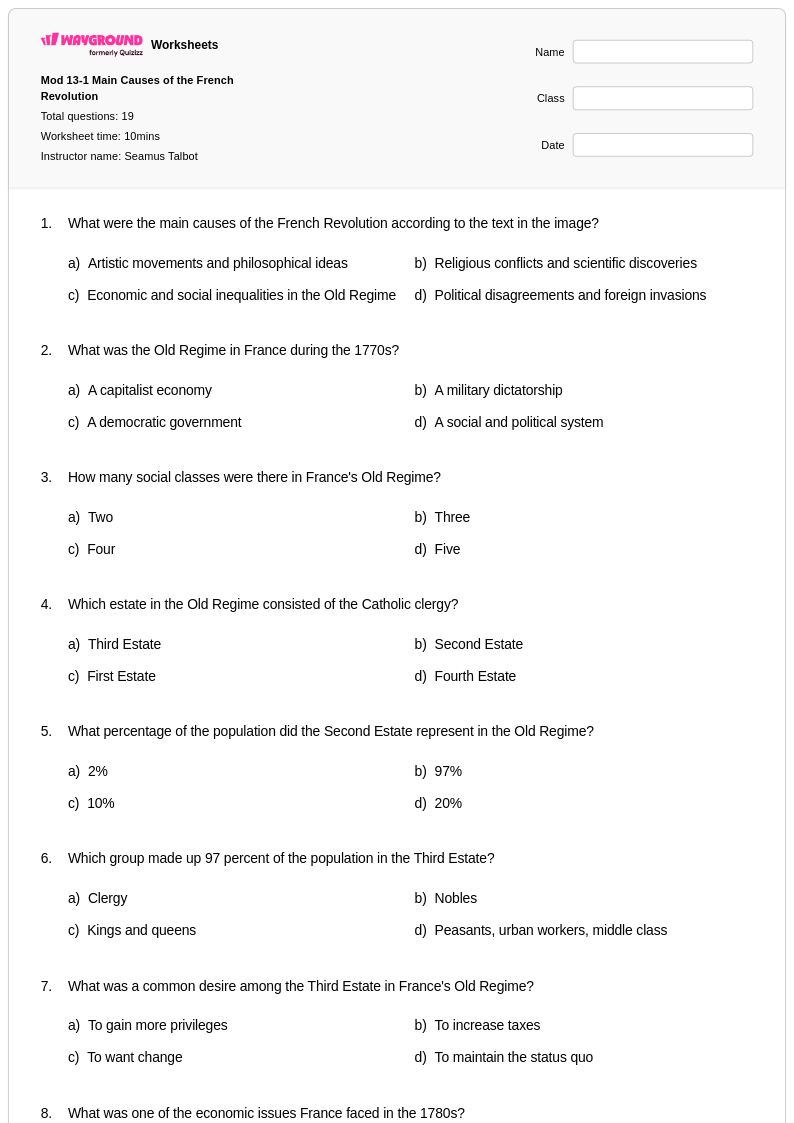
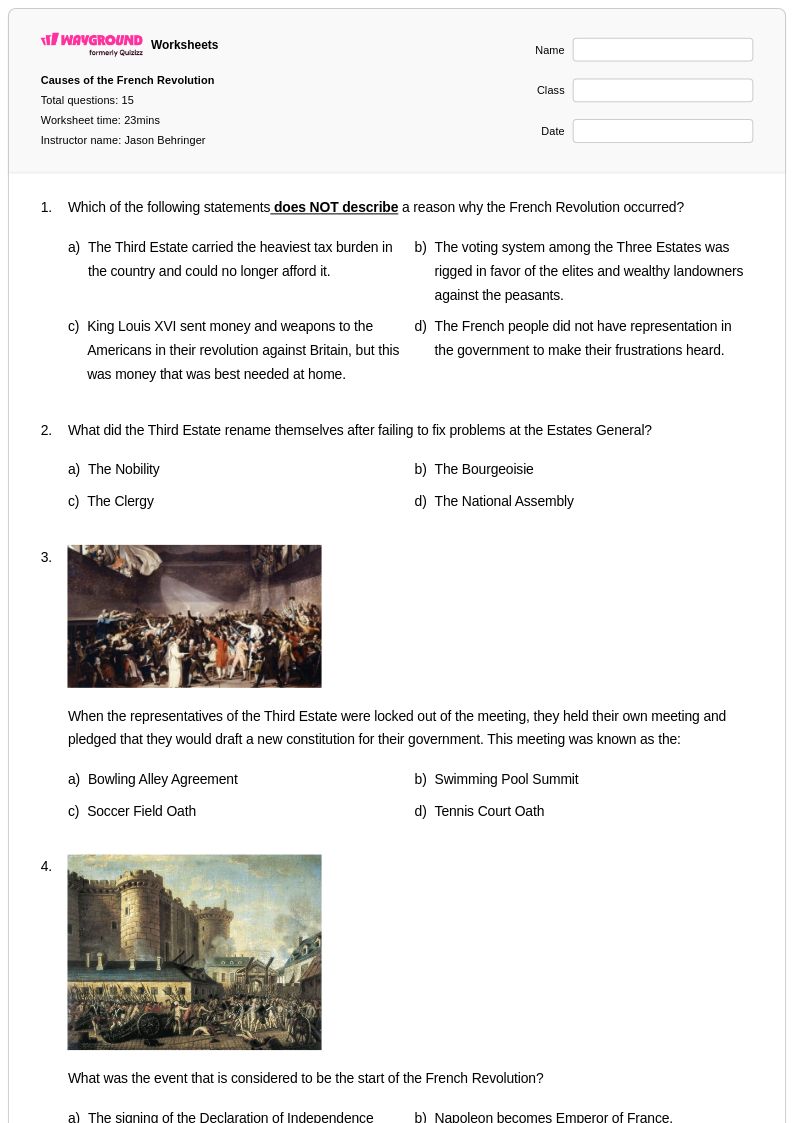
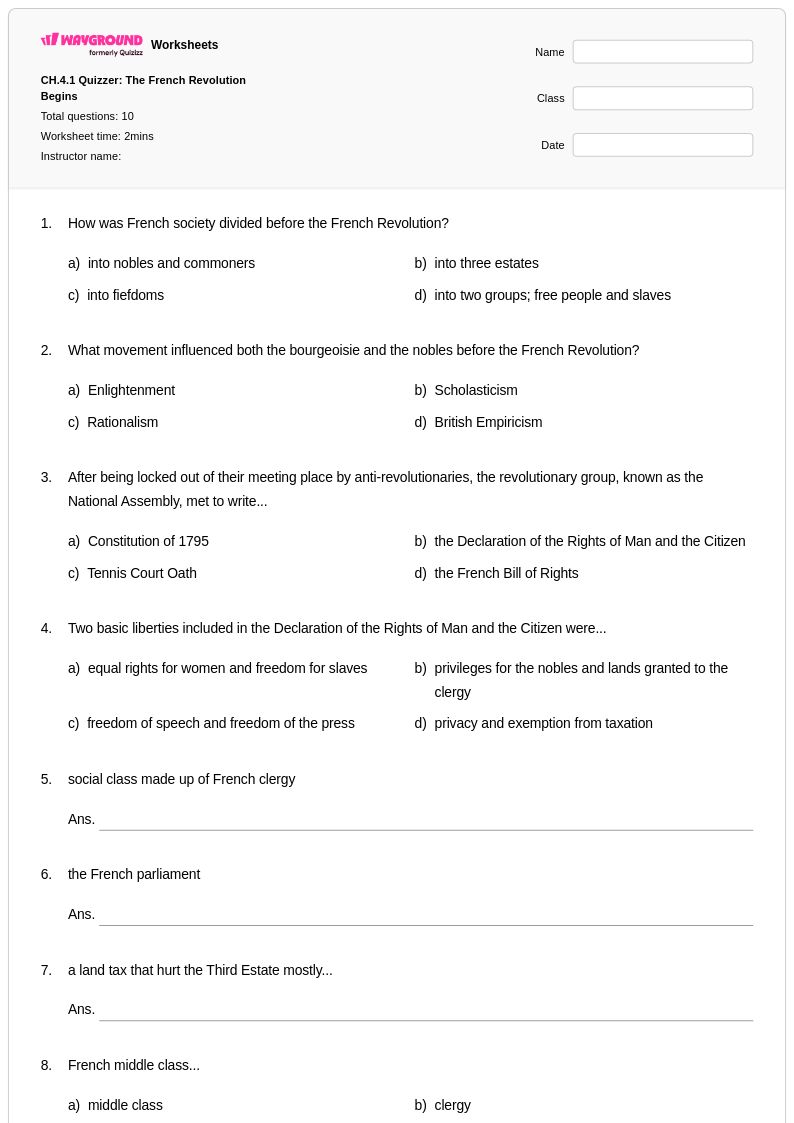
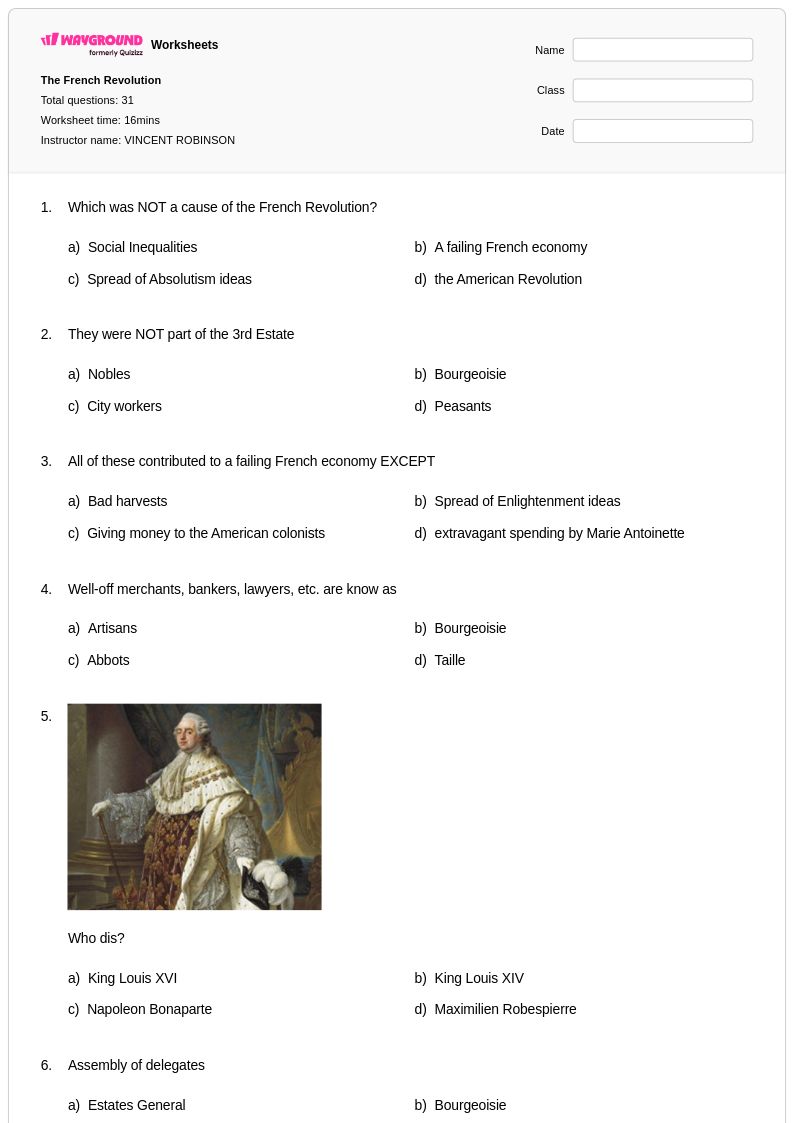
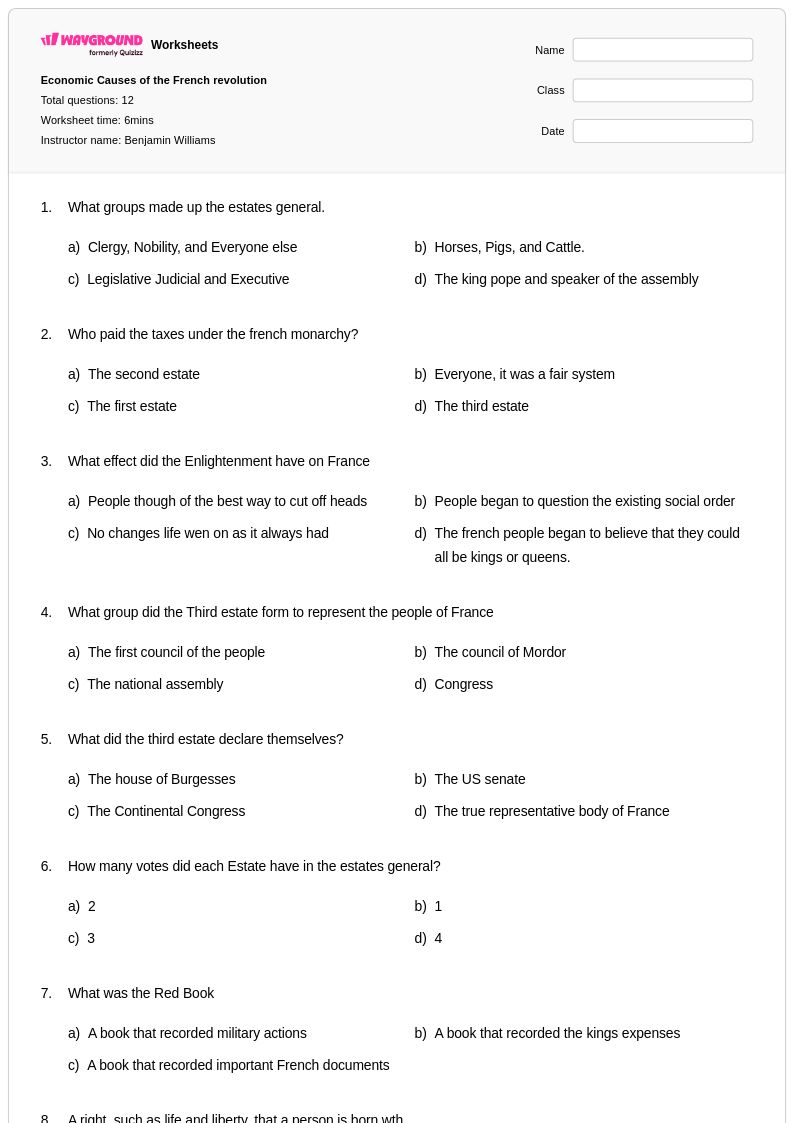
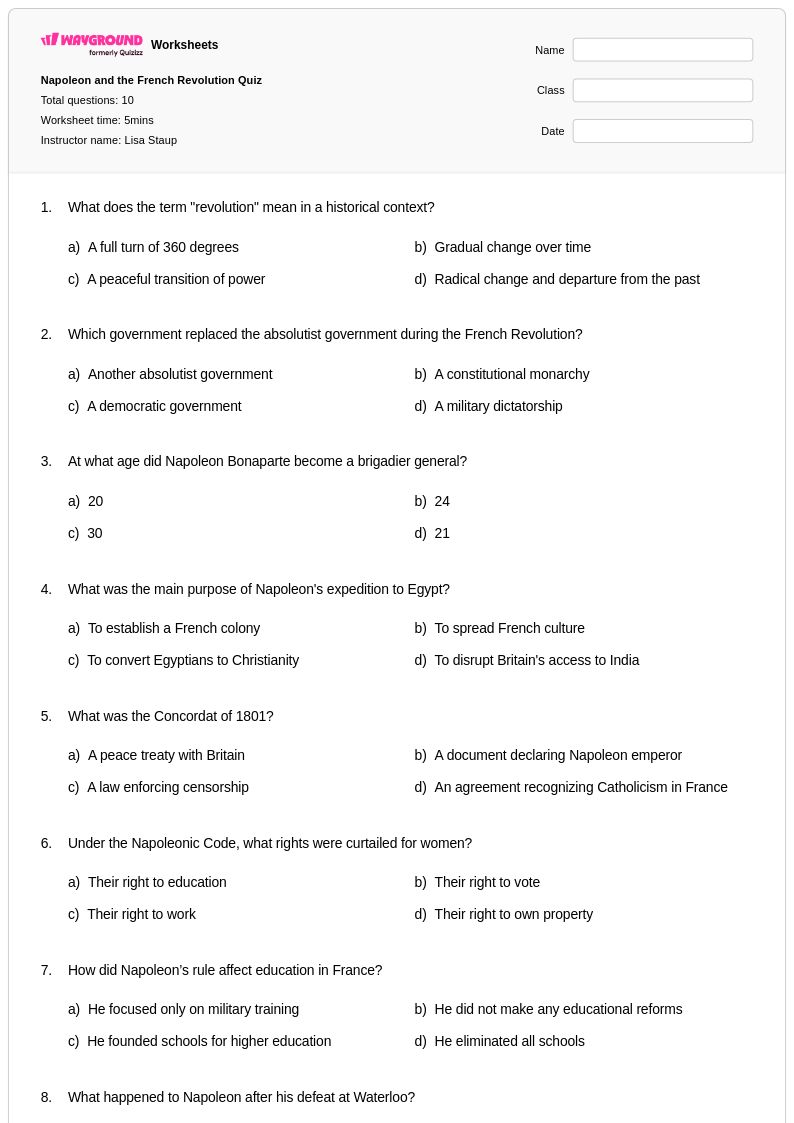
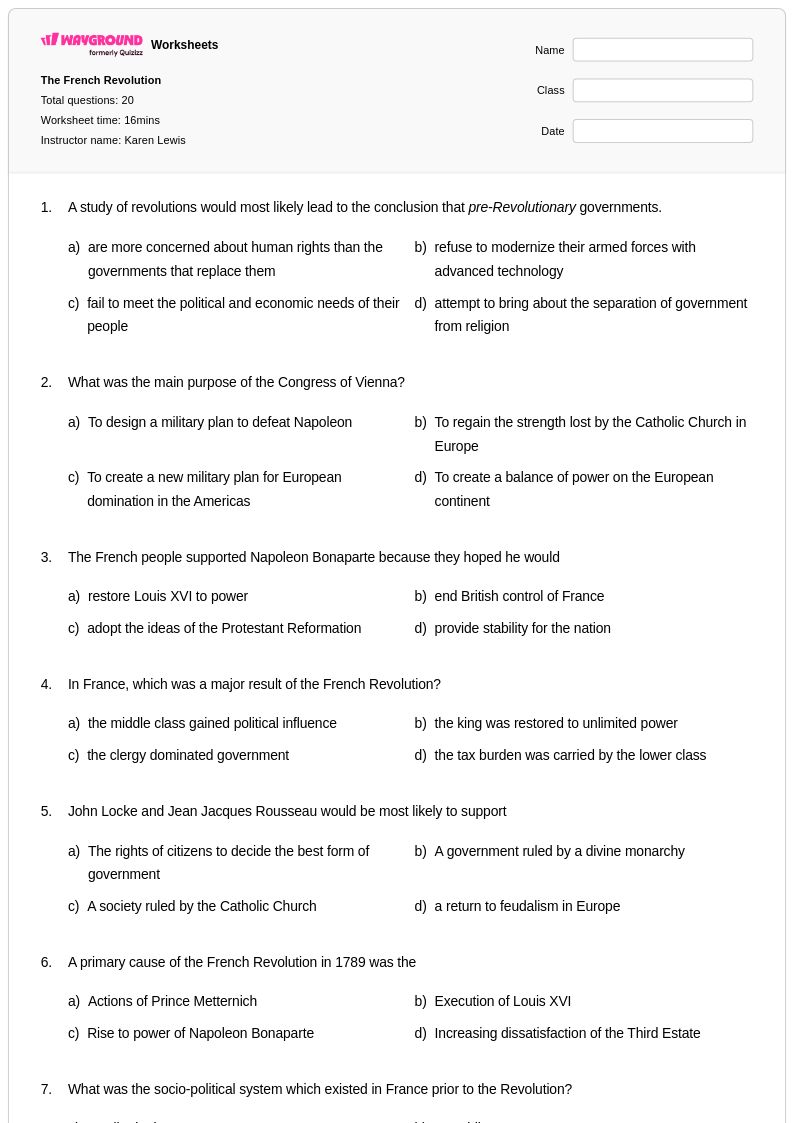
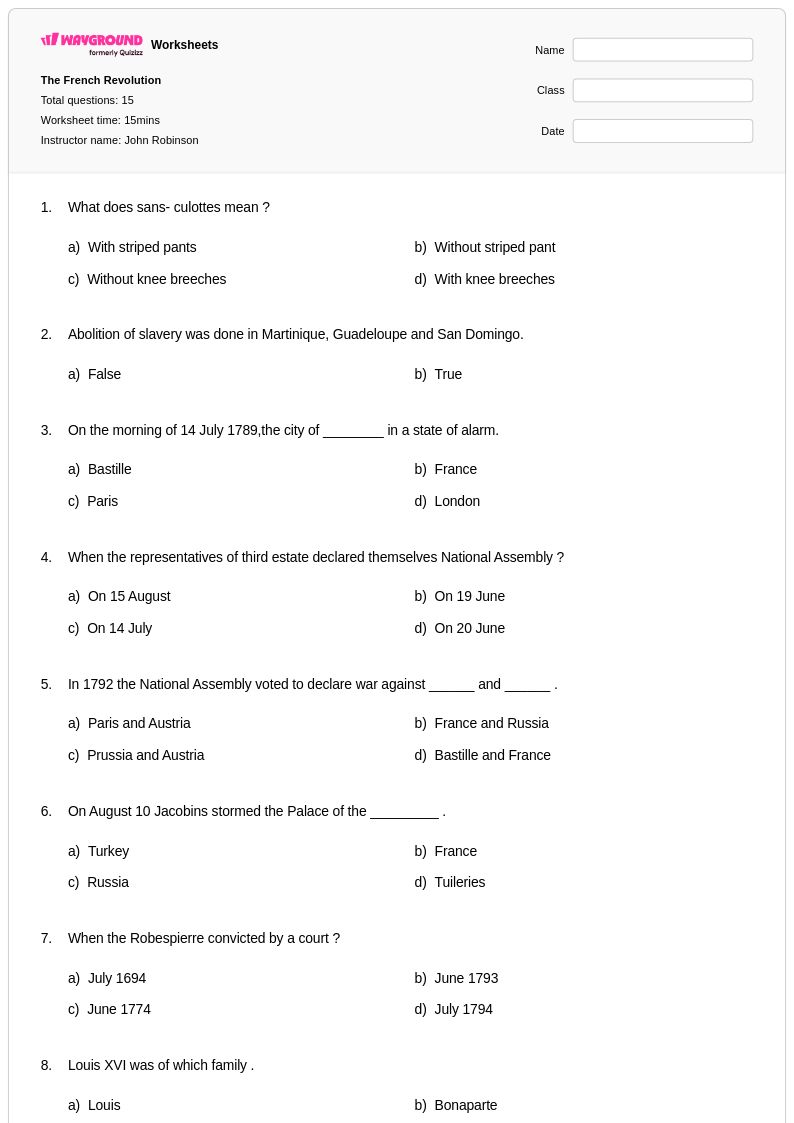
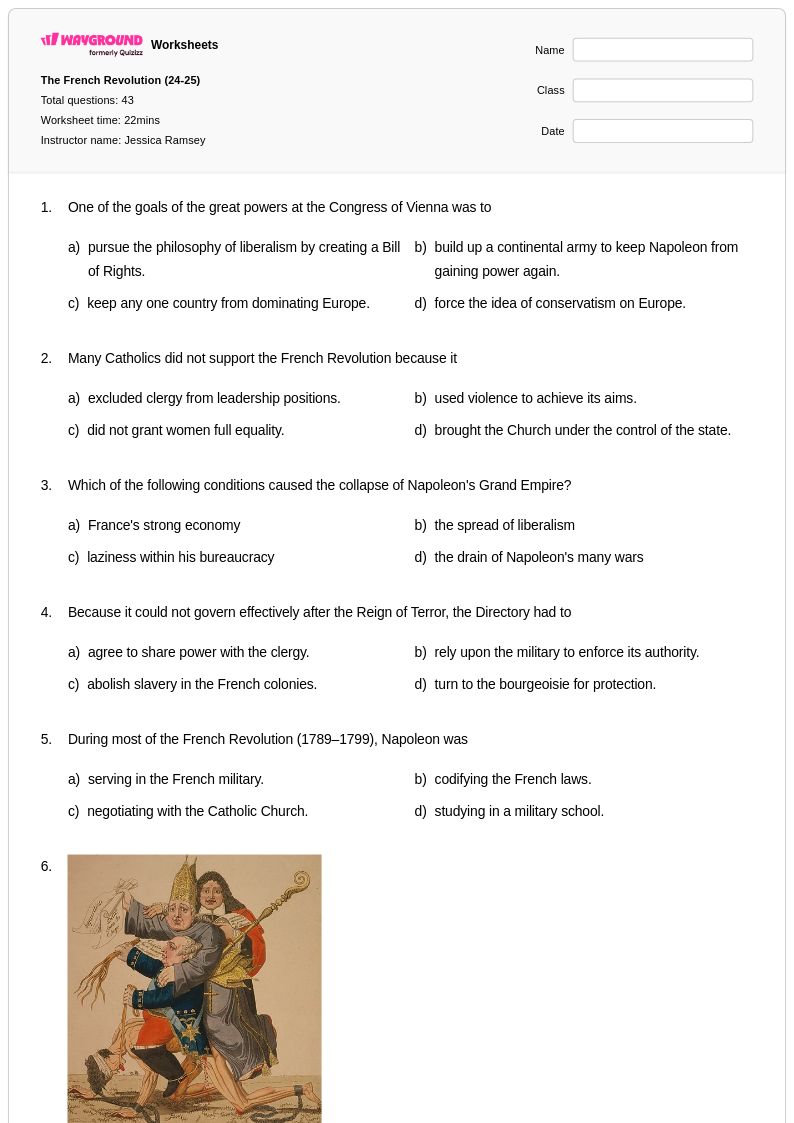
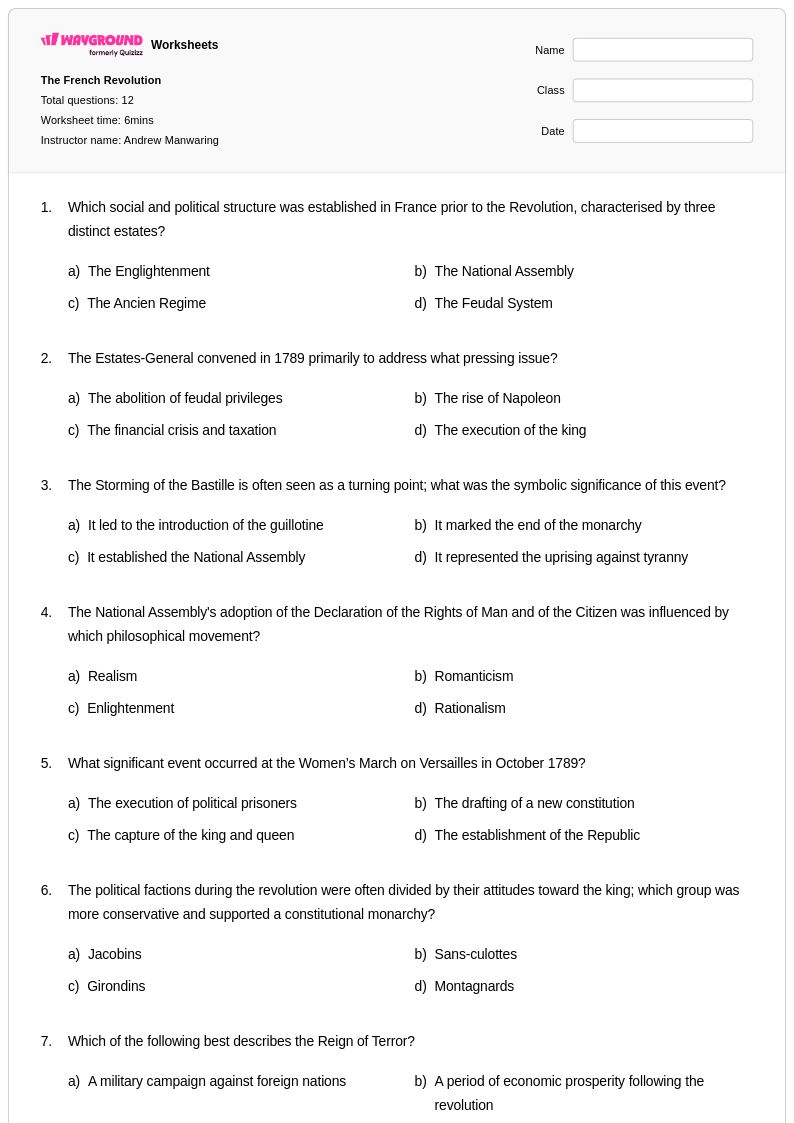
The French Revolution worksheets available through Wayground (formerly Quizizz) provide Grade 11 students with comprehensive practice materials that explore one of history's most transformative periods from 1789 to 1799. These expertly crafted resources strengthen critical thinking skills as students analyze the complex causes of revolutionary upheaval, examine key events like the storming of the Bastille and the Reign of Terror, and evaluate the lasting impact of revolutionary ideals on modern democratic societies. Each worksheet includes detailed answer keys that support independent learning, while free printable pdf formats ensure accessibility for diverse classroom environments. Practice problems guide students through primary source analysis, helping them understand how economic crisis, social inequality, and Enlightenment philosophy converged to reshape French society and influence global political movements.
Wayground (formerly Quizizz) empowers educators with millions of teacher-created French Revolution resources that streamline lesson planning and enhance instructional effectiveness. The platform's robust search and filtering capabilities allow teachers to quickly locate materials aligned with specific curriculum standards, while differentiation tools enable customization for varying student ability levels and learning styles. These comprehensive worksheet collections are available in both printable and digital pdf formats, providing flexibility for traditional classroom instruction, homework assignments, and remote learning scenarios. Teachers can seamlessly integrate these resources into remediation programs for struggling students, enrichment activities for advanced learners, and regular skill practice sessions that reinforce essential historical thinking competencies throughout their Grade 11 social studies curriculum.
FAQs
How do I teach the French Revolution to middle or high school students?
Start by grounding students in the social structure of the Ancien Régime — the division between the First, Second, and Third Estates — so they understand why resentment toward the monarchy and aristocracy was so widespread. From there, sequence instruction around key turning points: the financial crisis of 1789, the formation of the National Assembly, the Tennis Court Oath, and the storming of the Bastille. Connecting these events to the Declaration of the Rights of Man and Citizen helps students see ideology as a driver of revolution, not just grievance.
What are the most effective exercises for practicing French Revolution content?
Primary source analysis is one of the most effective practice formats — having students annotate and respond to documents like the Declaration of the Rights of Man and Citizen builds both content knowledge and historical thinking skills. Cause-and-effect graphic organizers work well for mapping the relationship between economic hardship, Enlightenment ideas, and revolutionary action. Sequencing activities that ask students to order events from 1789 through the rise of Napoleon reinforce chronological thinking, which is a persistent challenge for many students.
What mistakes do students commonly make when learning about the French Revolution?
Students frequently conflate the French Revolution with the American Revolution, assuming both had similar causes and outcomes — it's worth explicitly addressing how the social class dynamics, the role of the Church, and the violence of the Reign of Terror distinguish the French experience. Another common error is treating the Revolution as a single unified event rather than a series of phases with shifting leadership and ideology. Students also tend to underestimate Napoleon's role as both a product and a disruption of revolutionary ideals, often misidentifying him as a straightforward continuation rather than a transformation of the Revolution.
How do I use French Revolution worksheets in my classroom?
French Revolution worksheets on Wayground are available as printable PDFs for traditional classroom distribution and in digital formats for technology-integrated environments, making them flexible enough for in-person, hybrid, or remote instruction. You can also host them as a quiz directly on Wayground, which allows you to track student responses and identify gaps in understanding. Using different worksheet types across a unit — primary source analysis early on, cause-and-effect organizers mid-unit, and assessment-style practice toward the end — creates a structured progression that builds toward deeper historical analysis.
How can I differentiate French Revolution instruction for students at different levels?
For students who struggle with the volume of new vocabulary and names, reducing the number of answer choices on practice activities lowers cognitive load without removing the rigor of the content. Advanced learners benefit from tasks that ask them to draw connections between the French Revolution and later democratic movements, pushing beyond event recall into comparative historical thinking. On Wayground, teachers can apply individual accommodations — such as extended time, read aloud support, or reduced answer choices — to specific students while the rest of the class works under default settings, keeping differentiation seamless and unobtrusive.
How do I help students understand the causes of the French Revolution?
The most durable approach is to organize causes into categories — financial (France's near-bankruptcy after supporting the American Revolution), social (the inequity of the Estate system), political (an absolute monarchy resistant to reform), and ideological (Enlightenment challenges to divine right). Students who see causes as interconnected rather than isolated are far better positioned to write analytical responses and avoid the trap of attributing the Revolution to a single factor. Structured graphic organizers that ask students to link each cause to a specific consequence are especially effective for this.