Free Printable Singular to Plural Worksheets for Grade 3
Grade 3 students can master converting singular nouns to plural forms with Wayground's free printable worksheets, featuring engaging practice problems and complete answer keys in PDF format.
Explore printable Singular to Plural worksheets for Grade 3
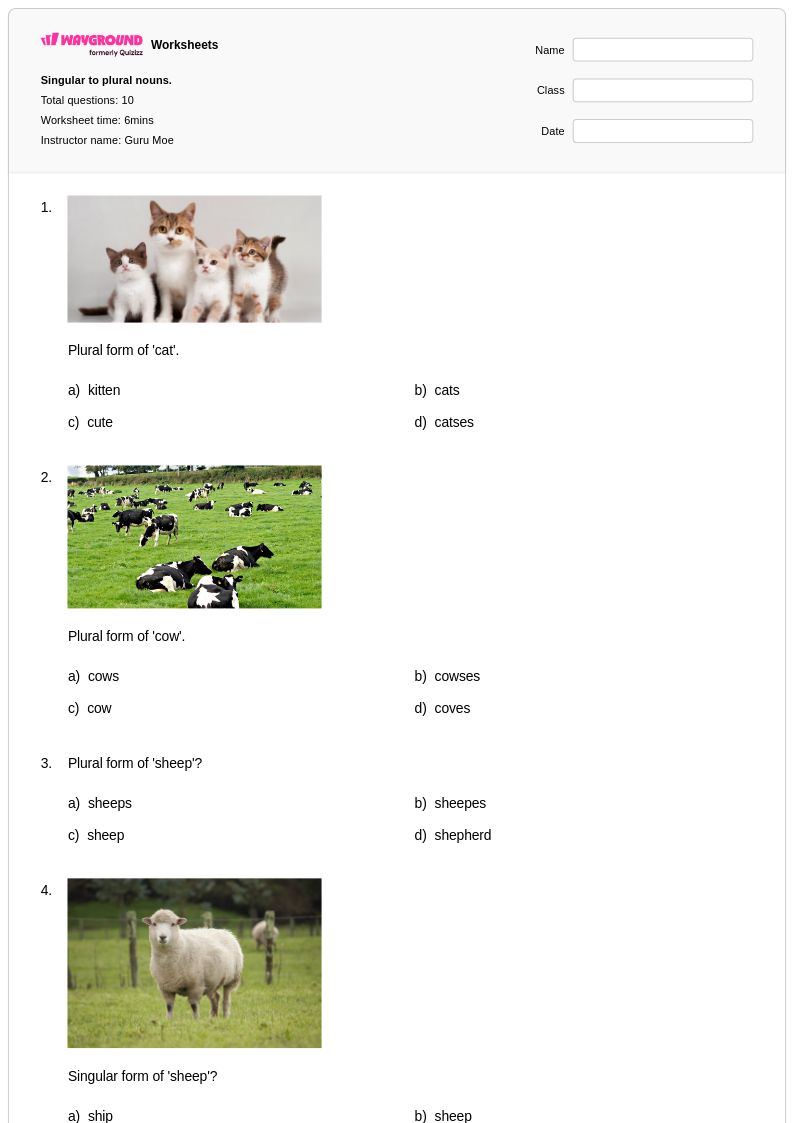
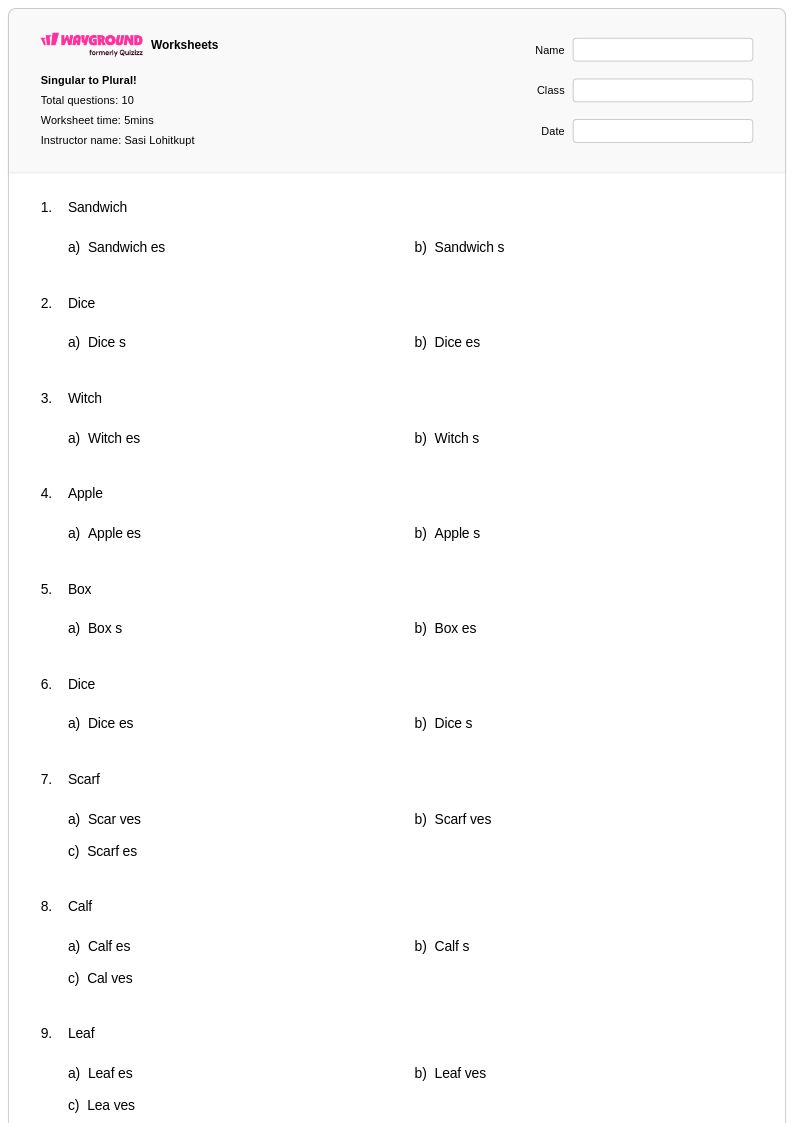
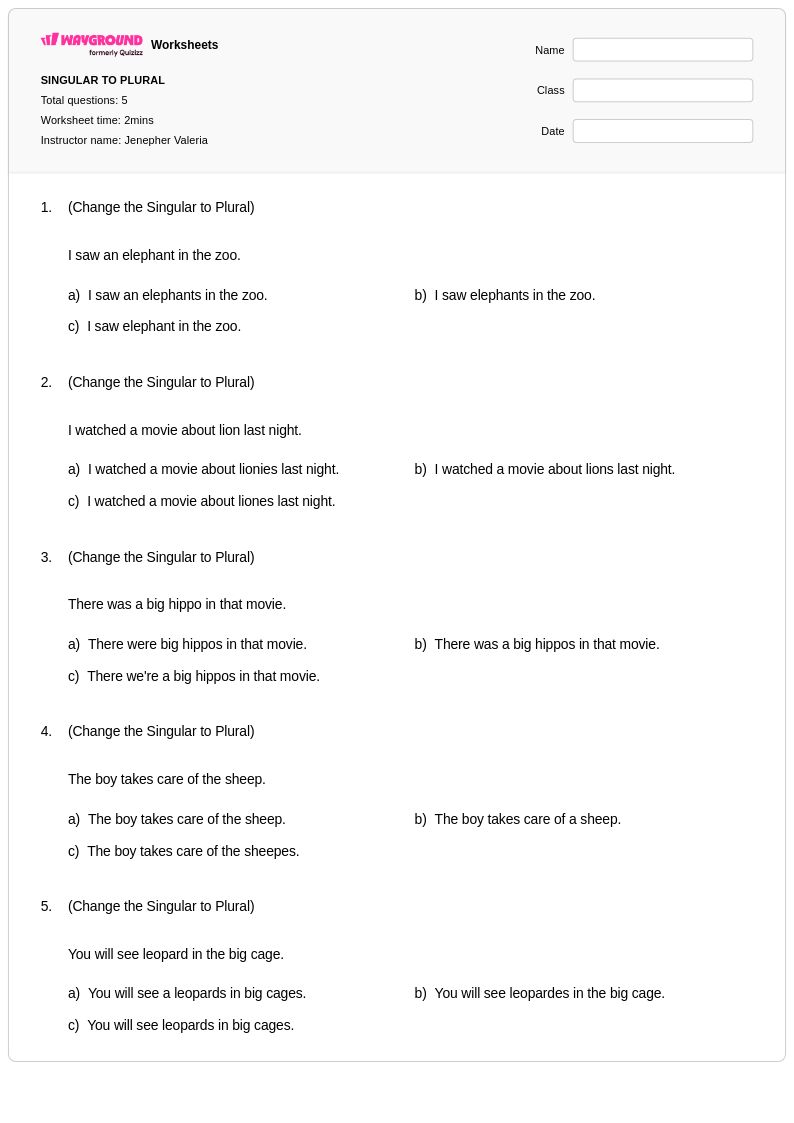
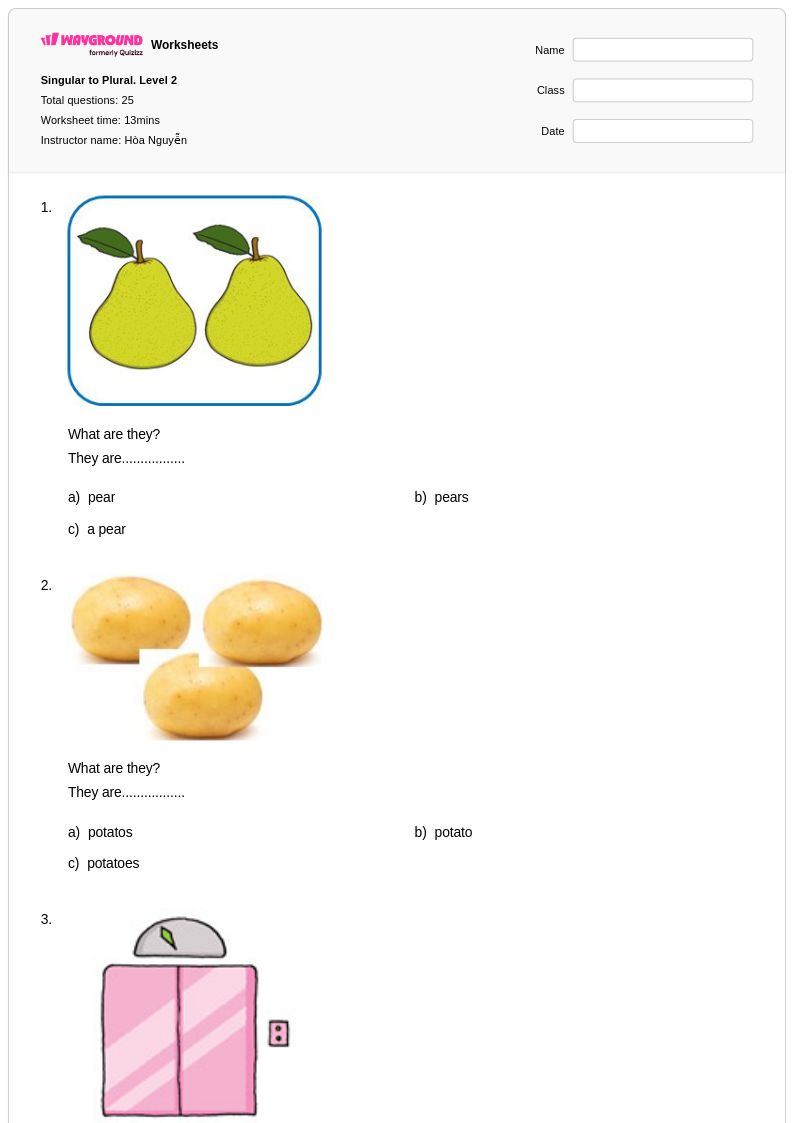
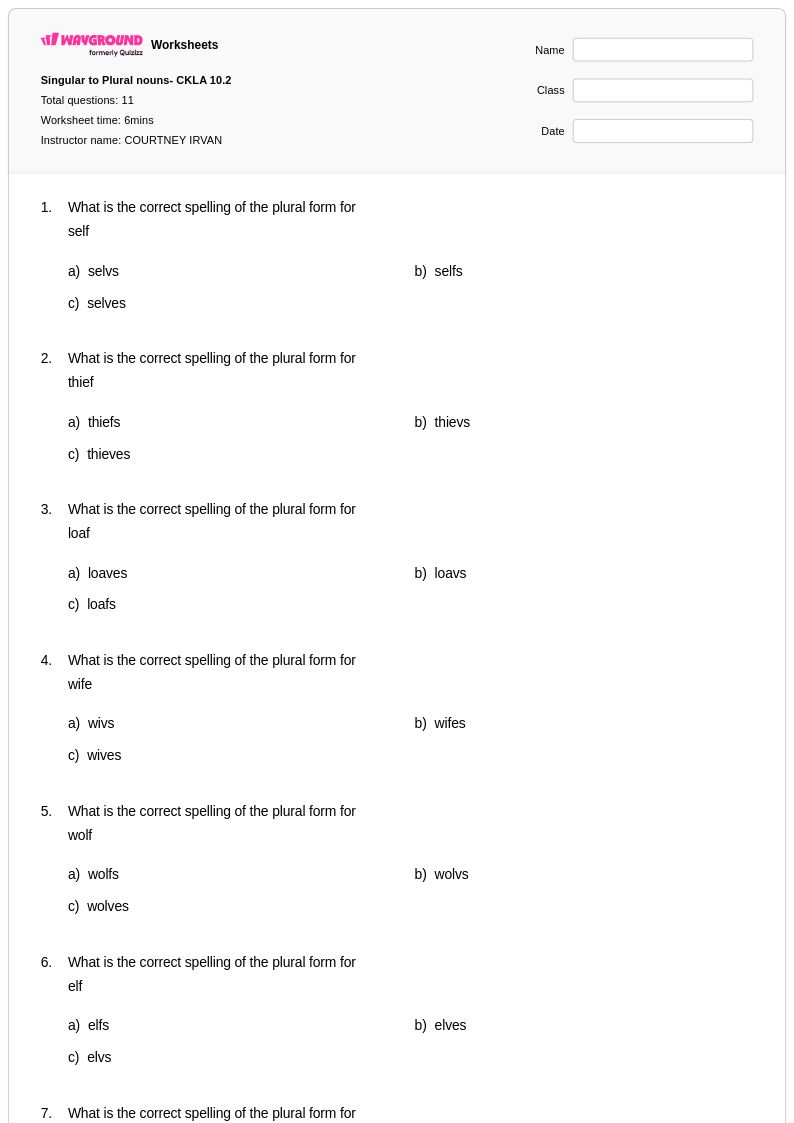
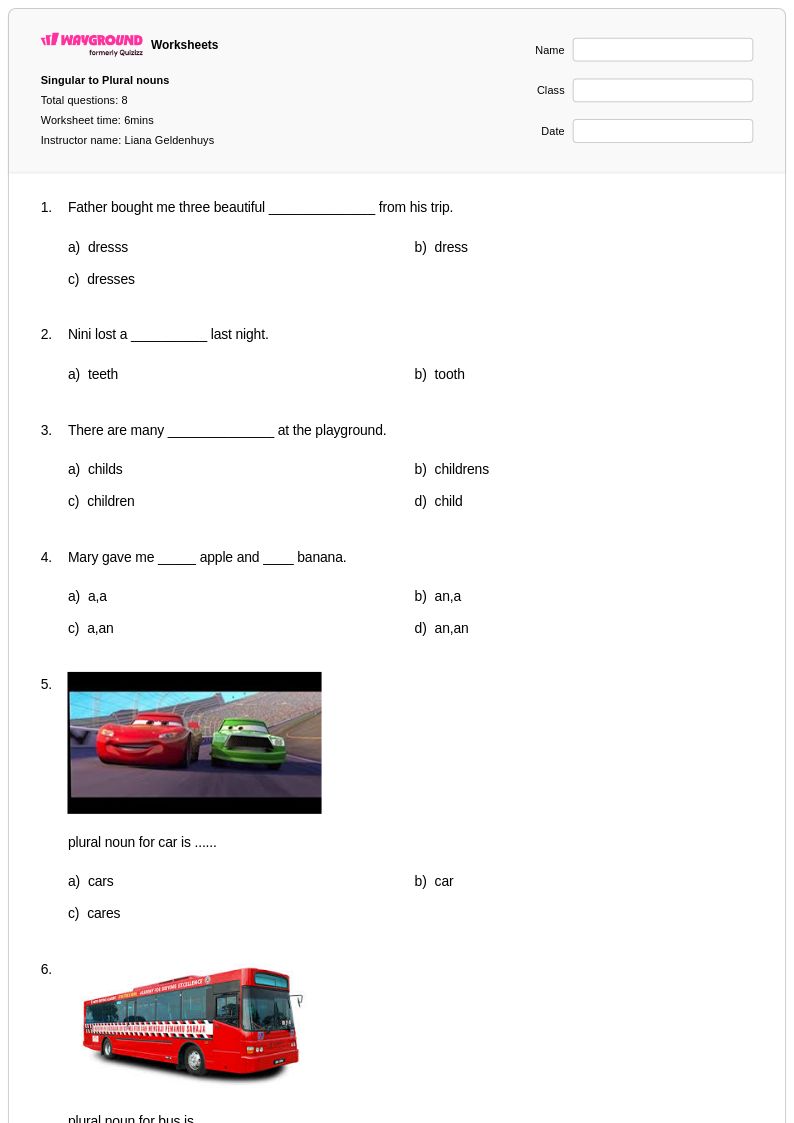
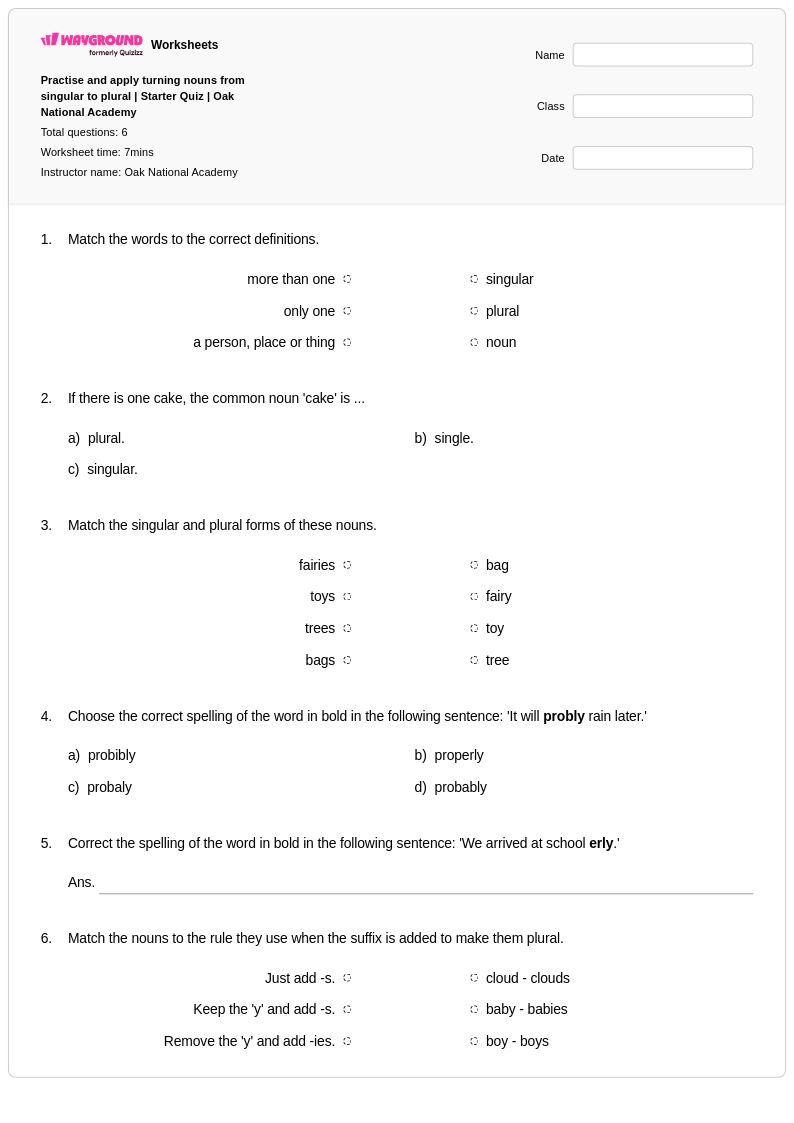
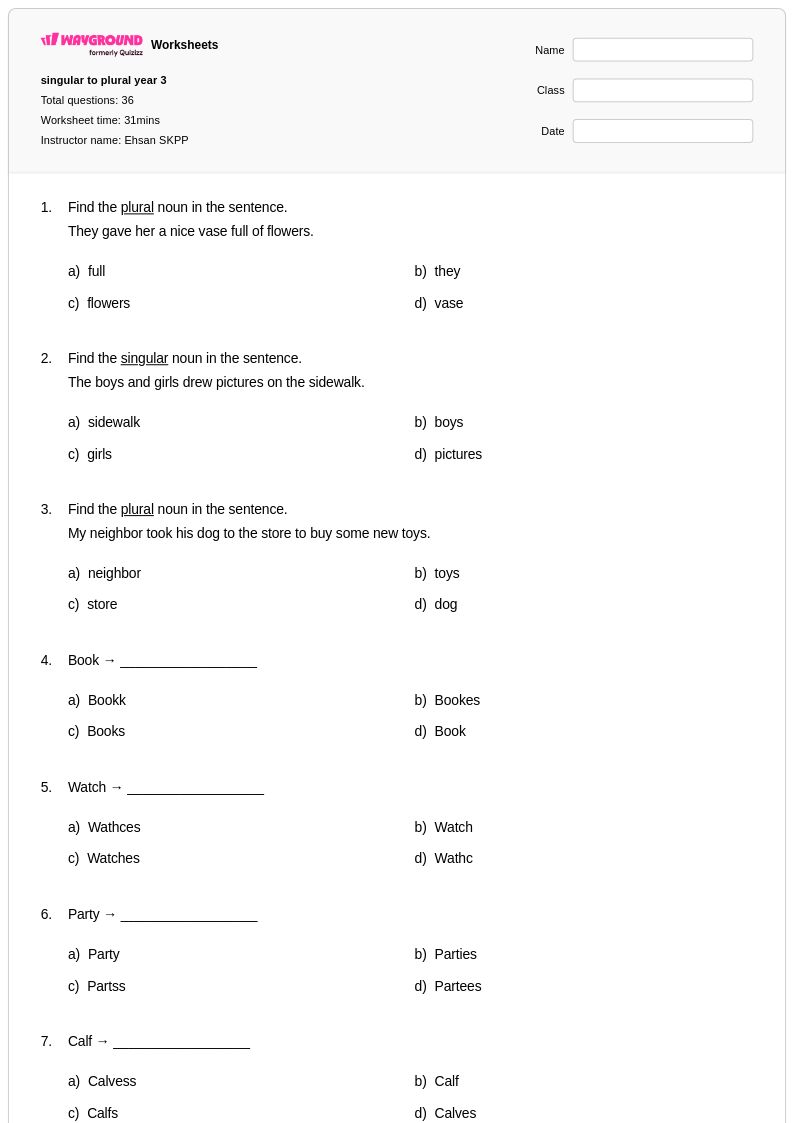
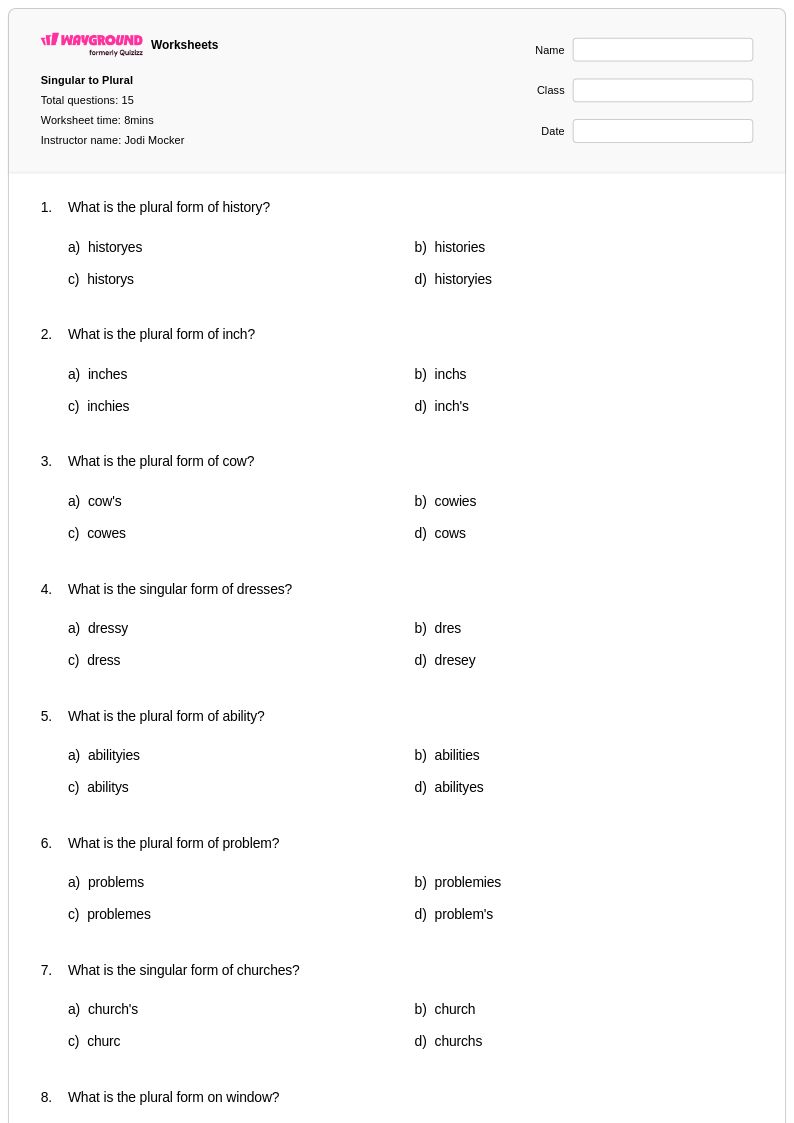
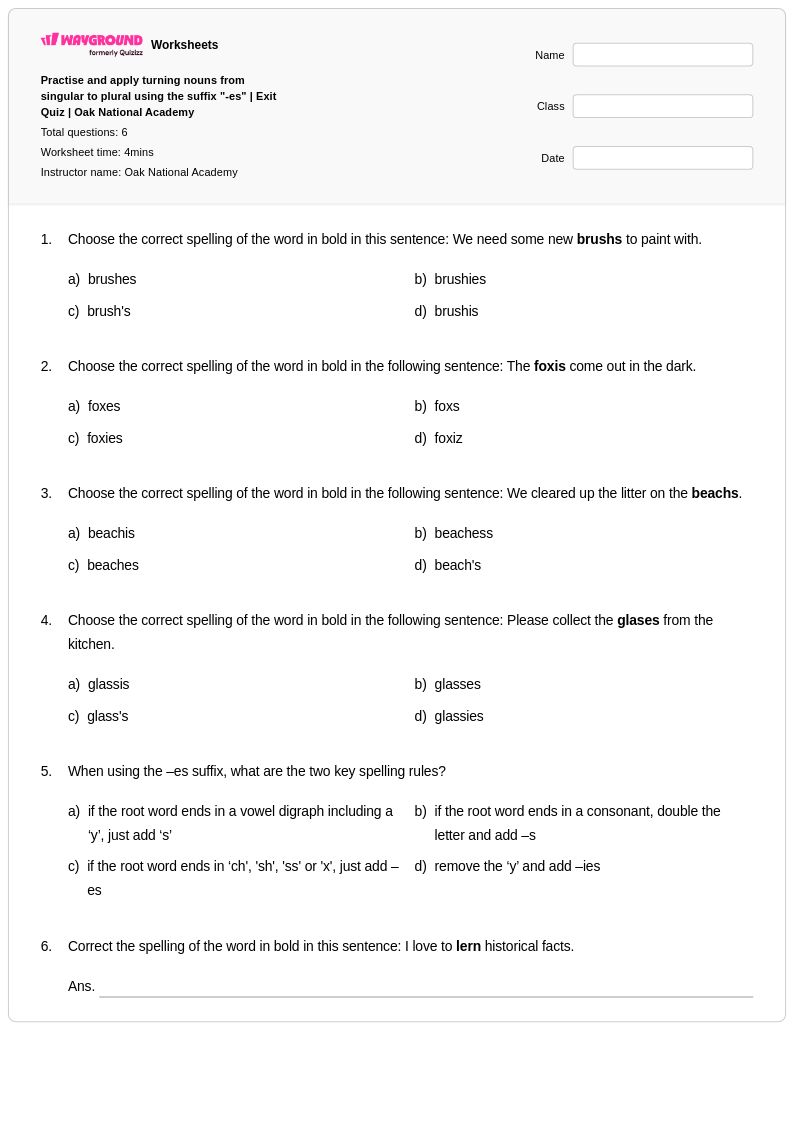
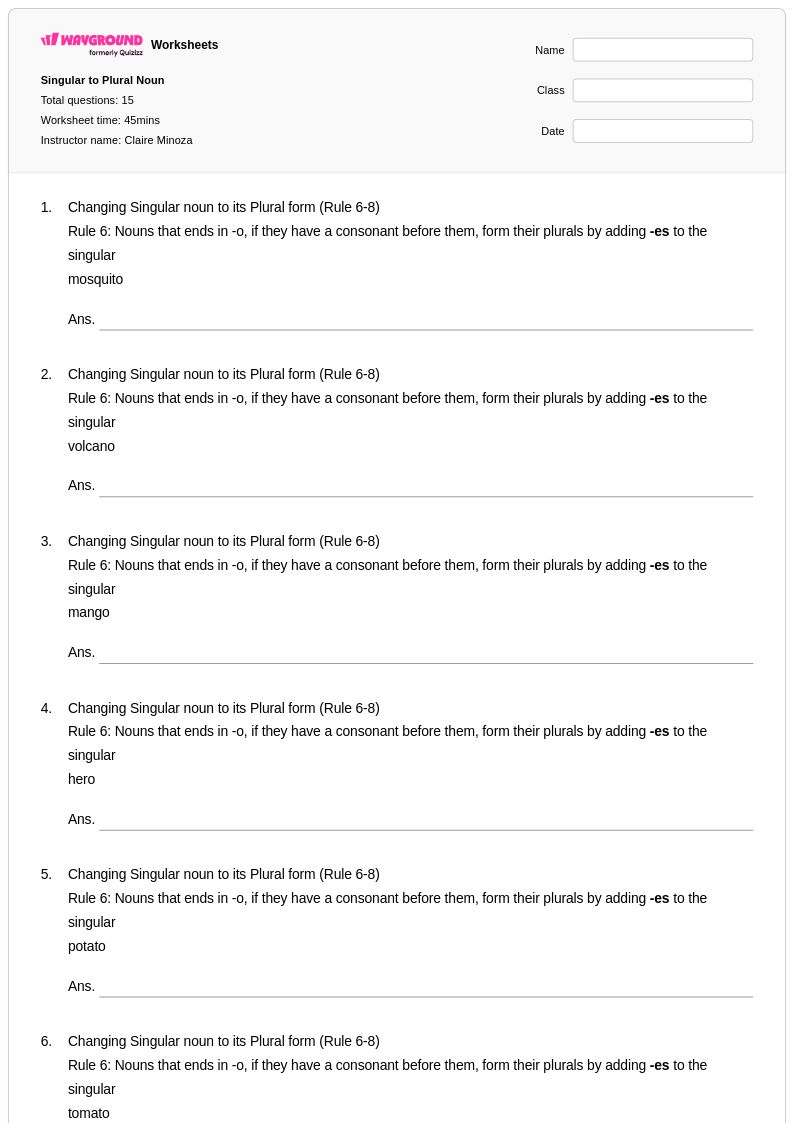
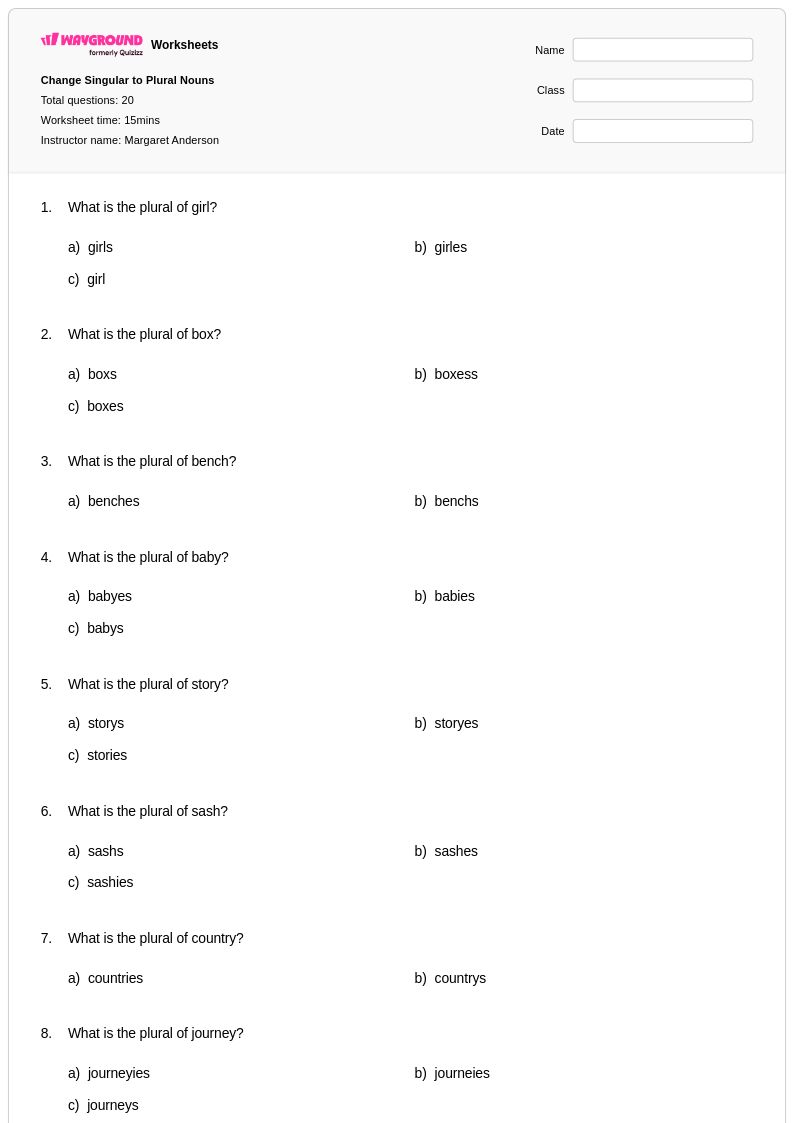
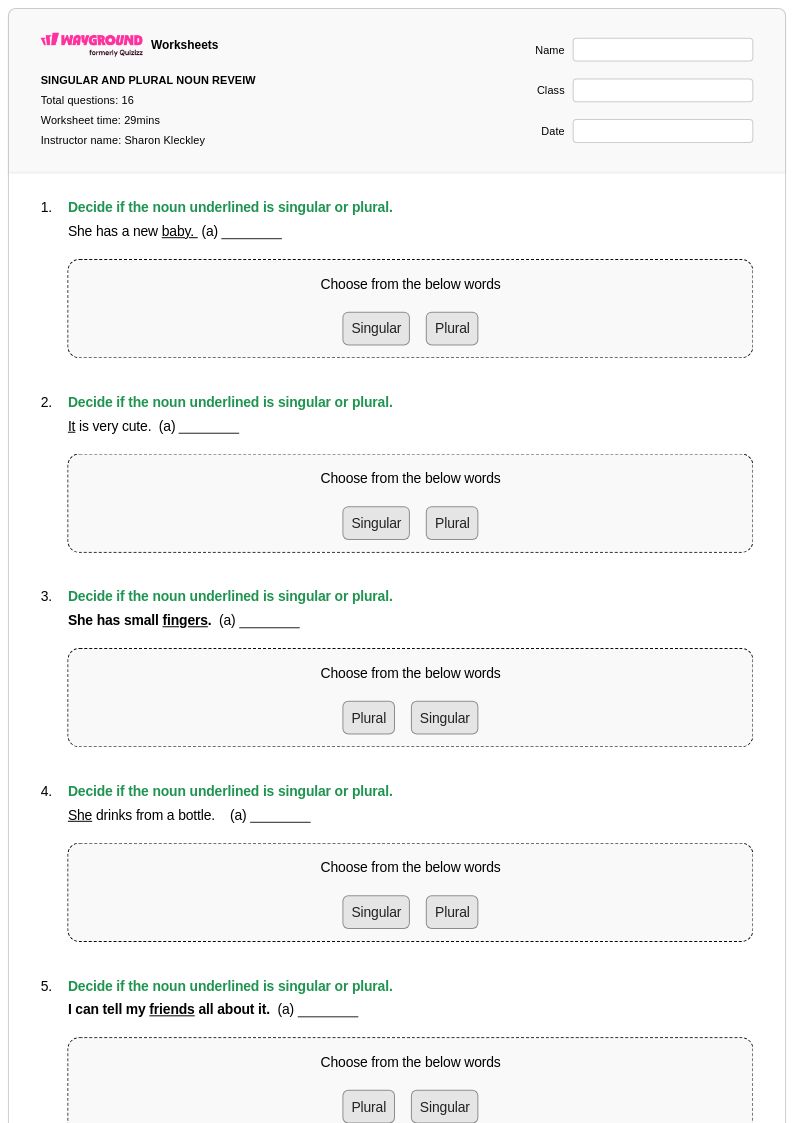
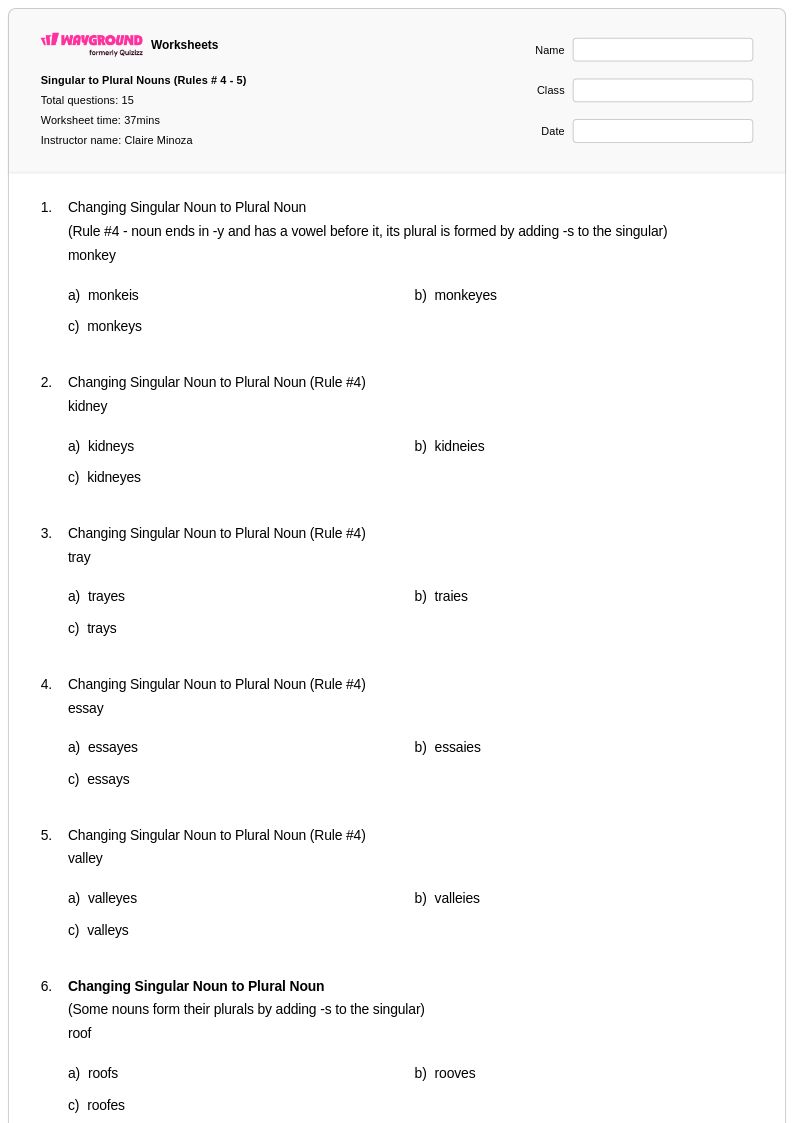
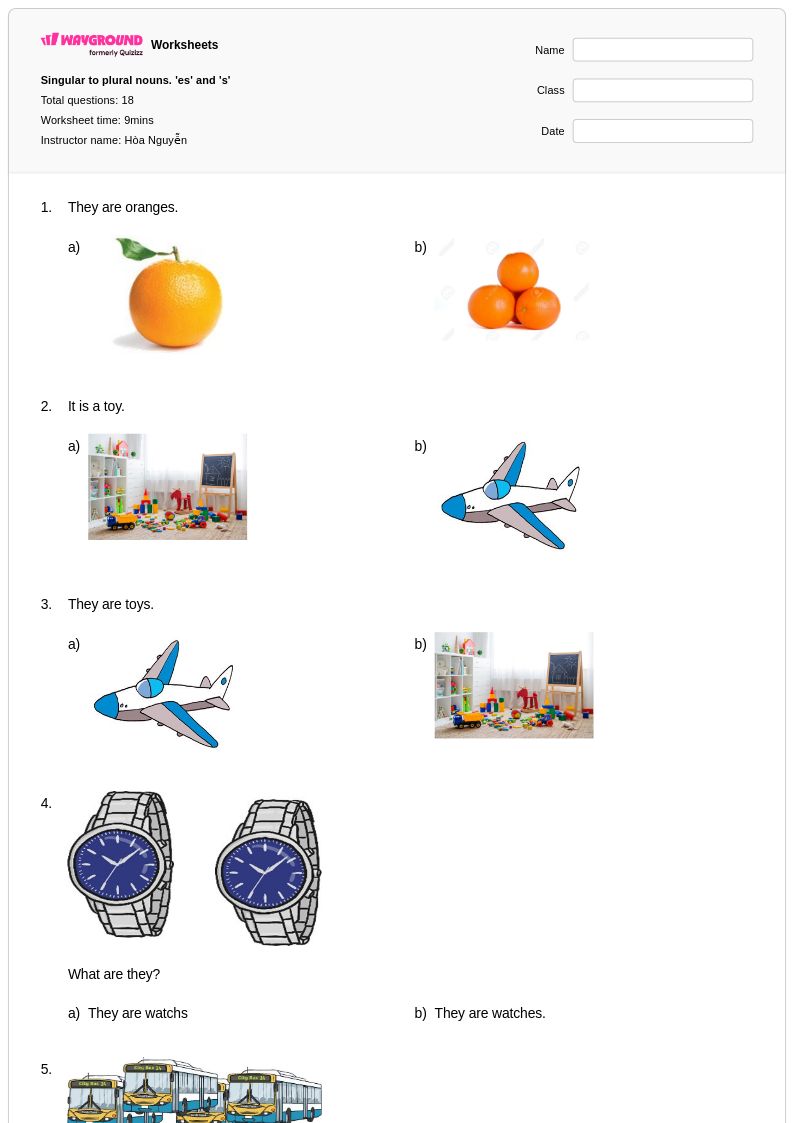
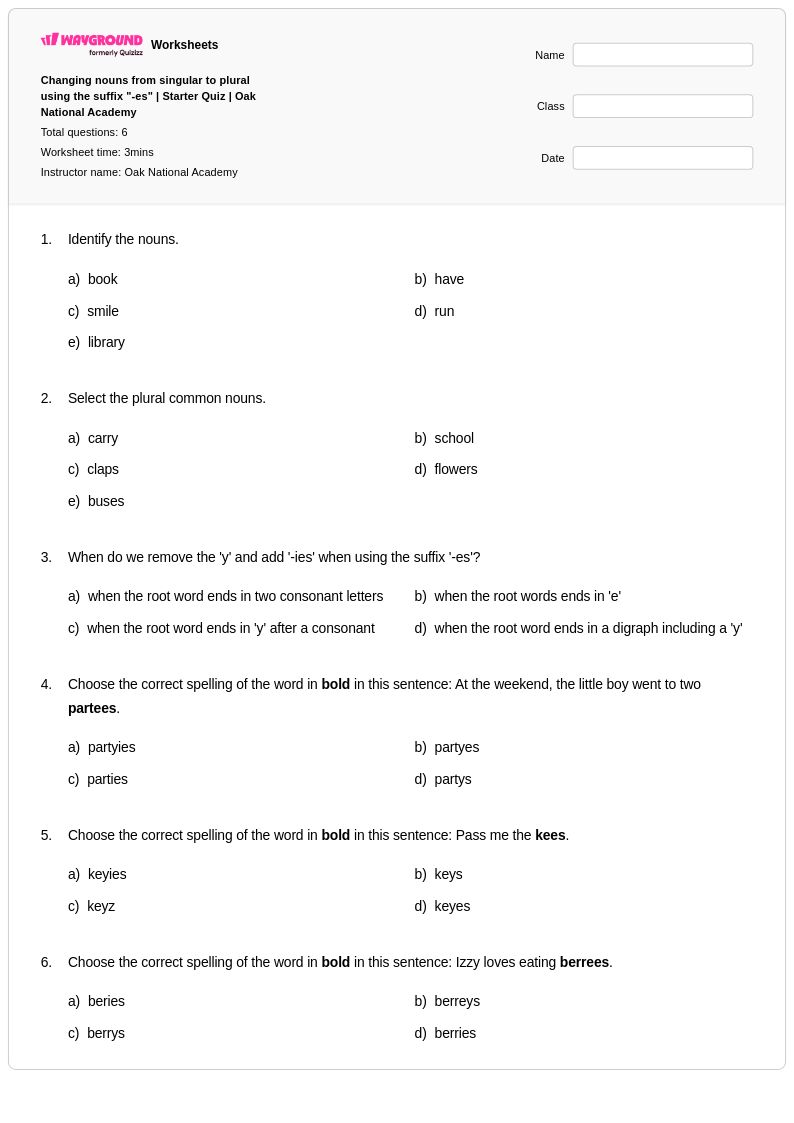
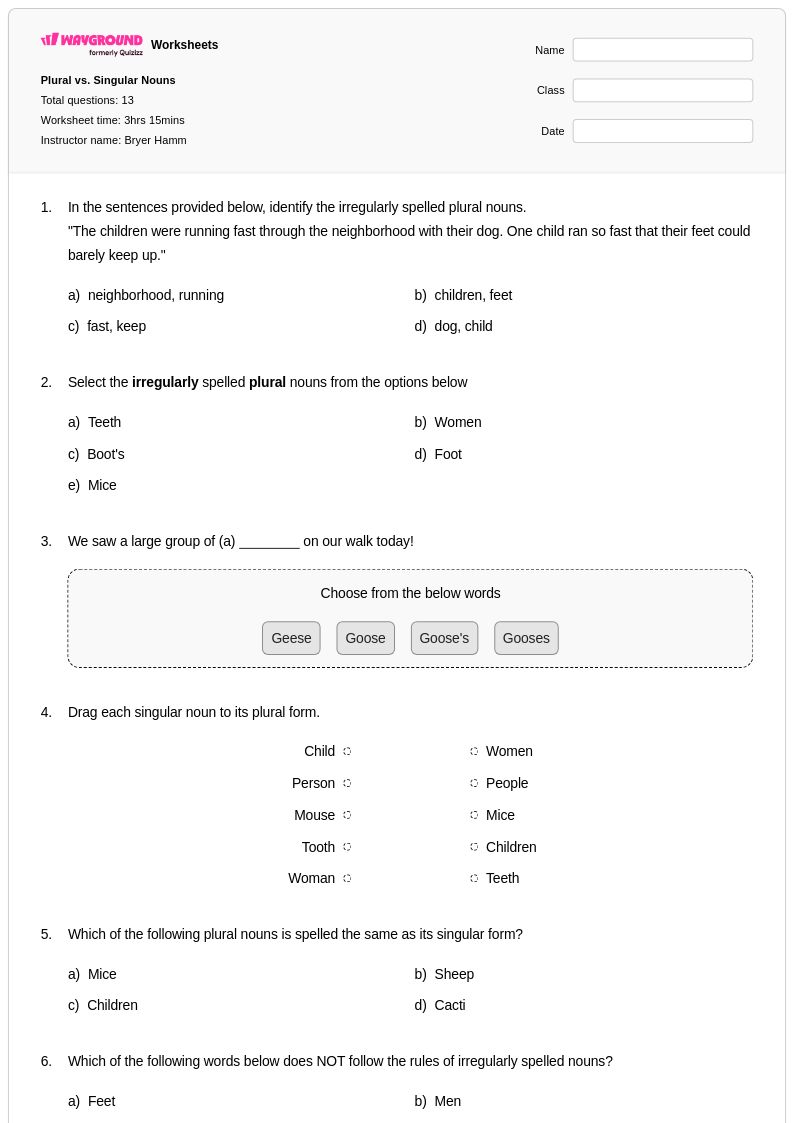
Singular to plural noun transformation worksheets for Grade 3 students through Wayground (formerly Quizizz) provide comprehensive practice in one of the most fundamental grammar skills young learners must master. These expertly designed resources help students understand and apply the essential rules for converting singular nouns into their plural forms, including regular plurals that simply add -s or -es, as well as irregular plurals that follow unique patterns like child to children or mouse to mice. Each worksheet collection includes carefully scaffolded practice problems that progress from basic regular plurals to more challenging irregular forms, complete with answer keys that enable independent learning and self-assessment. Teachers can access these free printable pdf resources to strengthen students' understanding of noun patterns, spelling rules, and vocabulary development through engaging exercises that make grammar practice both systematic and enjoyable.
Wayground (formerly Quizizz) empowers educators with millions of teacher-created singular to plural noun worksheets specifically designed for Grade 3 learners, featuring robust search and filtering capabilities that allow teachers to quickly locate resources aligned with their curriculum standards and learning objectives. The platform's differentiation tools enable teachers to customize worksheets based on individual student needs, whether for remediation support or enrichment challenges, while flexible formatting options provide both printable pdf versions for traditional classroom use and digital formats for interactive learning experiences. These comprehensive worksheet collections support effective lesson planning by offering varied practice opportunities that help teachers address diverse learning styles, reinforce spelling patterns, and provide targeted skill practice that builds students' confidence in applying plural noun rules across different writing and speaking contexts.
FAQs
How do I teach singular to plural noun rules to students?
Start by teaching the most common regular patterns first: adding -s to most nouns, adding -es to nouns ending in -s, -x, -z, -ch, or -sh, and changing -y to -ies when preceded by a consonant. Once students are confident with regular rules, introduce high-frequency irregular plurals such as child/children, mouse/mice, and goose/geese as vocabulary to memorize rather than rules to apply. Grouping irregular plurals by pattern (e.g., foot/feet, tooth/teeth) can help students recognize underlying similarities and reduce rote memorization load.
What exercises help students practice converting singular nouns to plural?
Effective practice exercises include fill-in-the-blank sentences where students write the plural form, sorting activities that group nouns by their pluralization rule, and error-correction tasks where students identify and fix incorrectly pluralized words. Worksheets that progress from simple regular nouns to irregular forms help students build confidence before tackling exceptions. Repeated, low-stakes practice with immediate answer key feedback is especially valuable for internalizing spelling changes like dropping the -y or doubling consonants.
What mistakes do students commonly make when forming plural nouns?
The most frequent errors involve overgeneralizing the -s rule to nouns that require -es (e.g., writing 'boxs' instead of 'boxes') and applying regular rules to irregular nouns (e.g., 'childs' instead of 'children' or 'mouses' instead of 'mice'). Students also frequently mishandle nouns ending in -f or -fe, forgetting to change the ending to -ves (e.g., 'leafs' instead of 'leaves'). Targeted practice with these specific categories, rather than general plural drills, is the most efficient way to correct these patterns.
How can I use singular to plural worksheets for students who need extra support?
For students who struggle with plural noun rules, reduce cognitive load by focusing on one rule category at a time before mixing them. On Wayground, teachers can enable the Reduced Answer Choices accommodation for selected students, which limits the number of options displayed in digital exercises, and the Read Aloud feature can support students who benefit from hearing the words pronounced. These accommodations can be applied individually so that other students receive standard settings without disruption.
How do I use Wayground's singular to plural worksheets in my classroom?
Wayground's singular to plural worksheets are available as printable PDFs, making them easy to distribute for independent practice, homework, or warm-up activities in a traditional classroom. They are also available in digital format, allowing teachers to assign them online for distance learning or blended instruction, and can be hosted as an interactive quiz directly on Wayground. Each worksheet includes an answer key, so students can self-check their work or teachers can provide immediate feedback after completion.
How do singular to plural noun worksheets support vocabulary development?
Practicing plural formation reinforces students' familiarity with a wide range of nouns, including irregular forms that appear frequently in academic and everyday writing. Because irregular plurals like geese, criteria, and phenomena must be learned as vocabulary items rather than derived from rules, repeated exposure through worksheet exercises builds the automaticity students need for fluent reading and writing. This vocabulary reinforcement is especially beneficial for English language learners, who may not have encountered these irregular forms in informal speech.