Free Printable Plural Nouns Worksheets for Grade 3
Enhance your Grade 3 student's understanding of plural nouns with Wayground's comprehensive collection of free worksheets, printables, and practice problems complete with answer keys in convenient PDF format.
Explore printable Plural Nouns worksheets for Grade 3
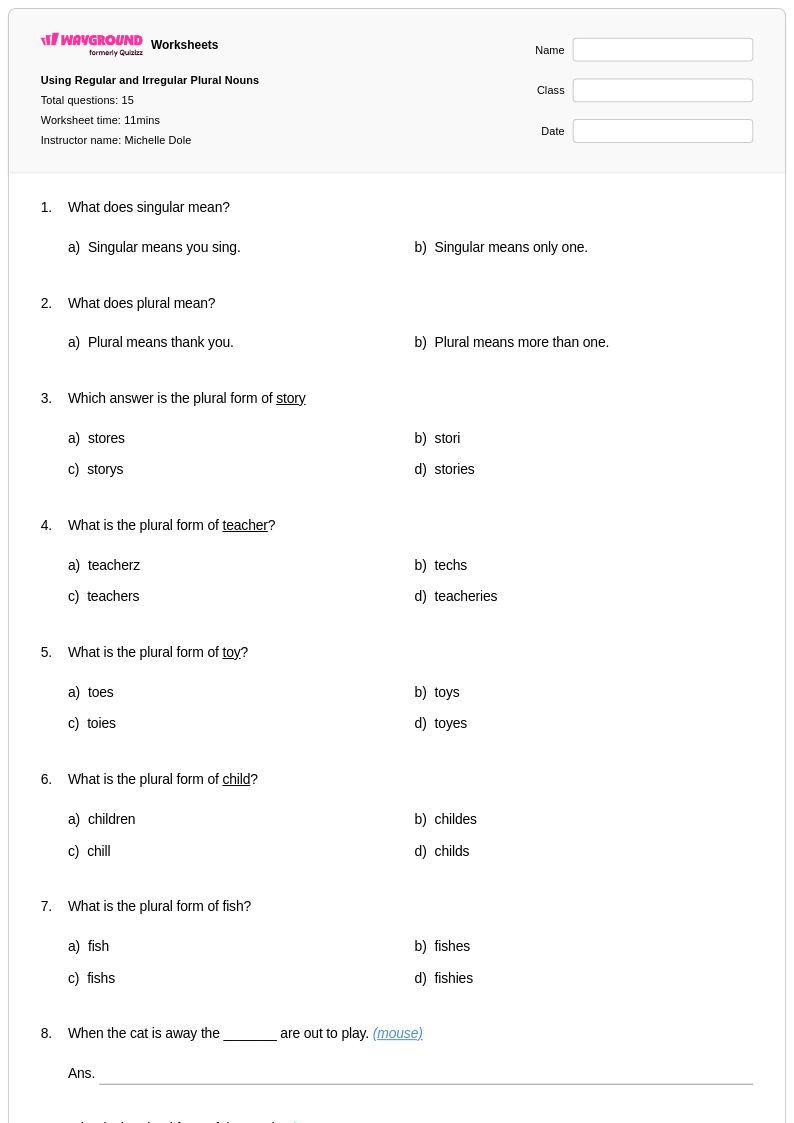
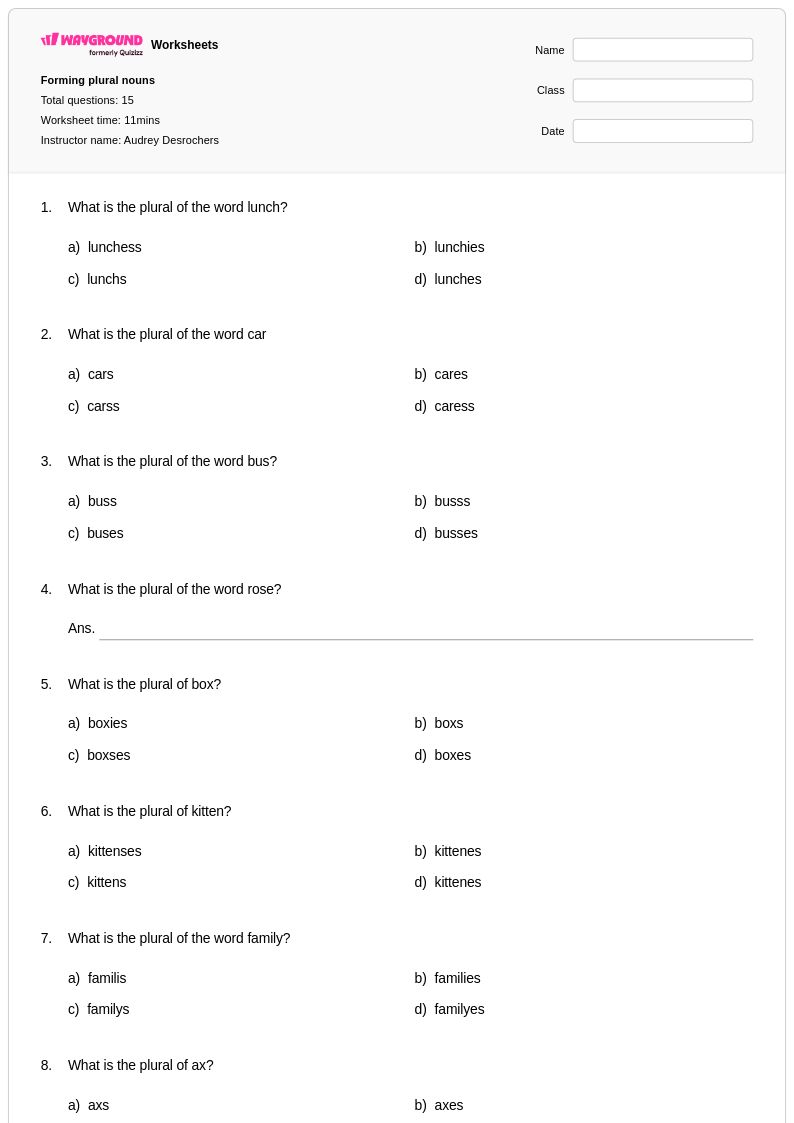
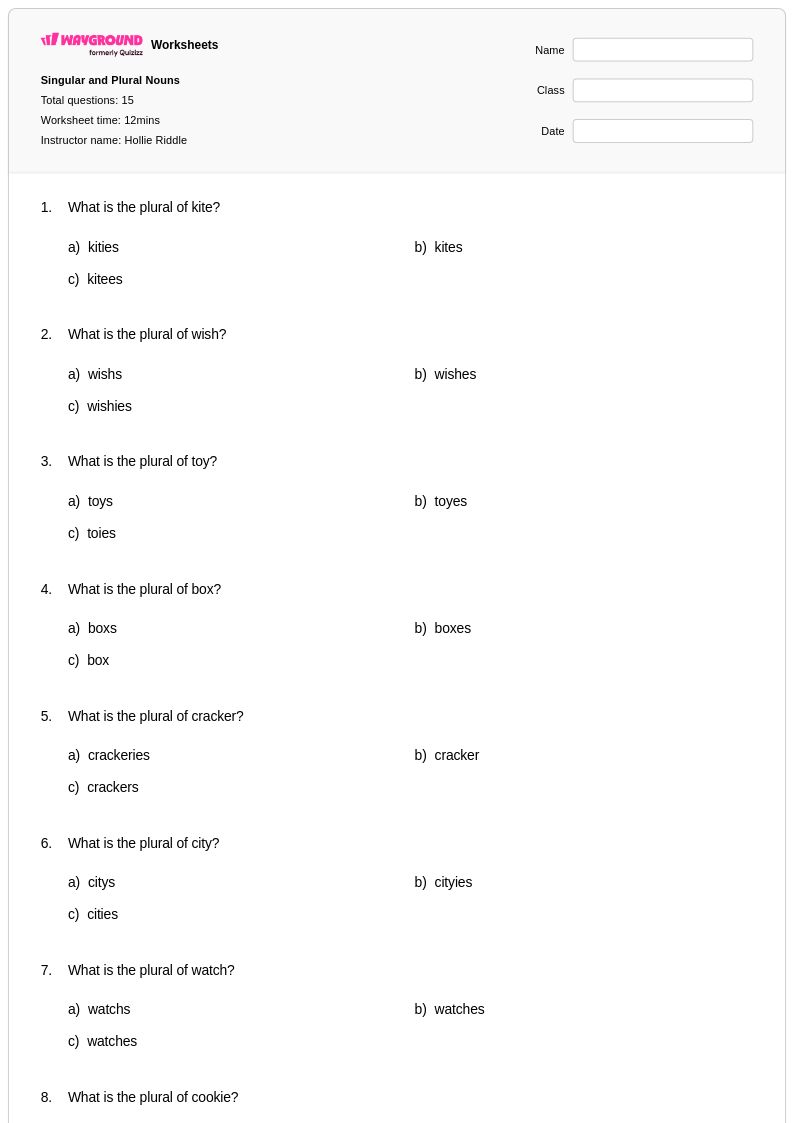
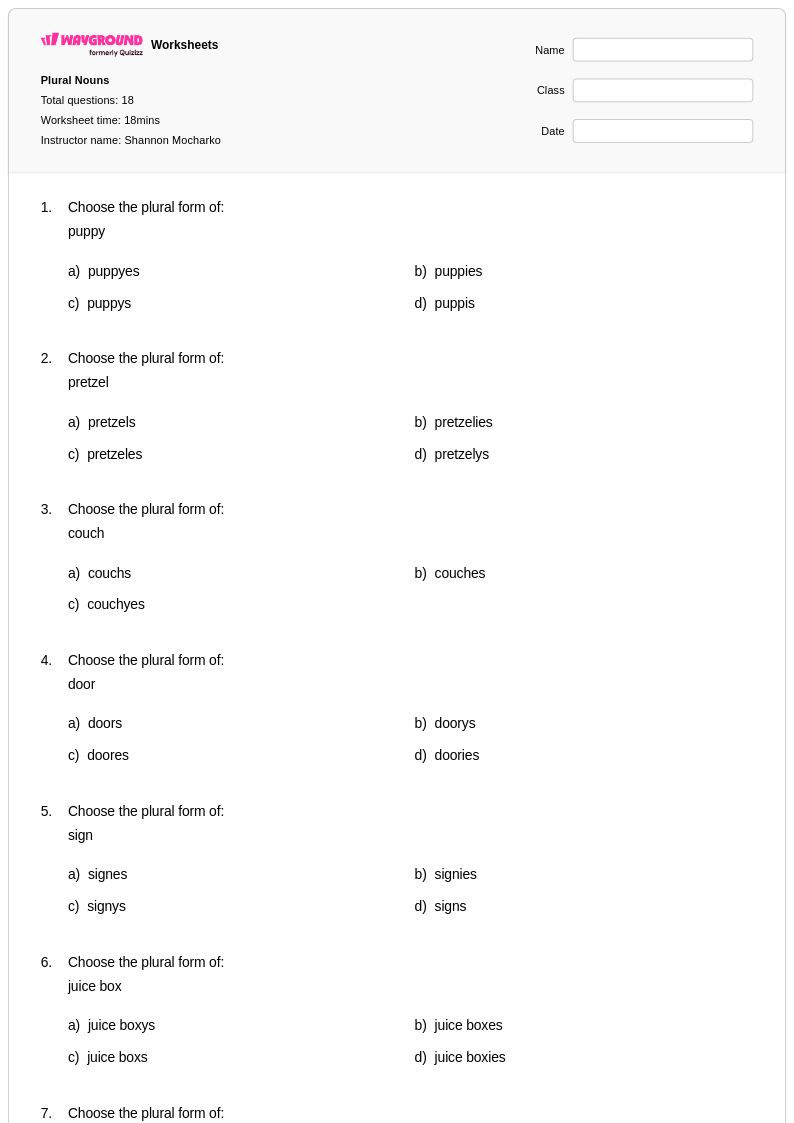
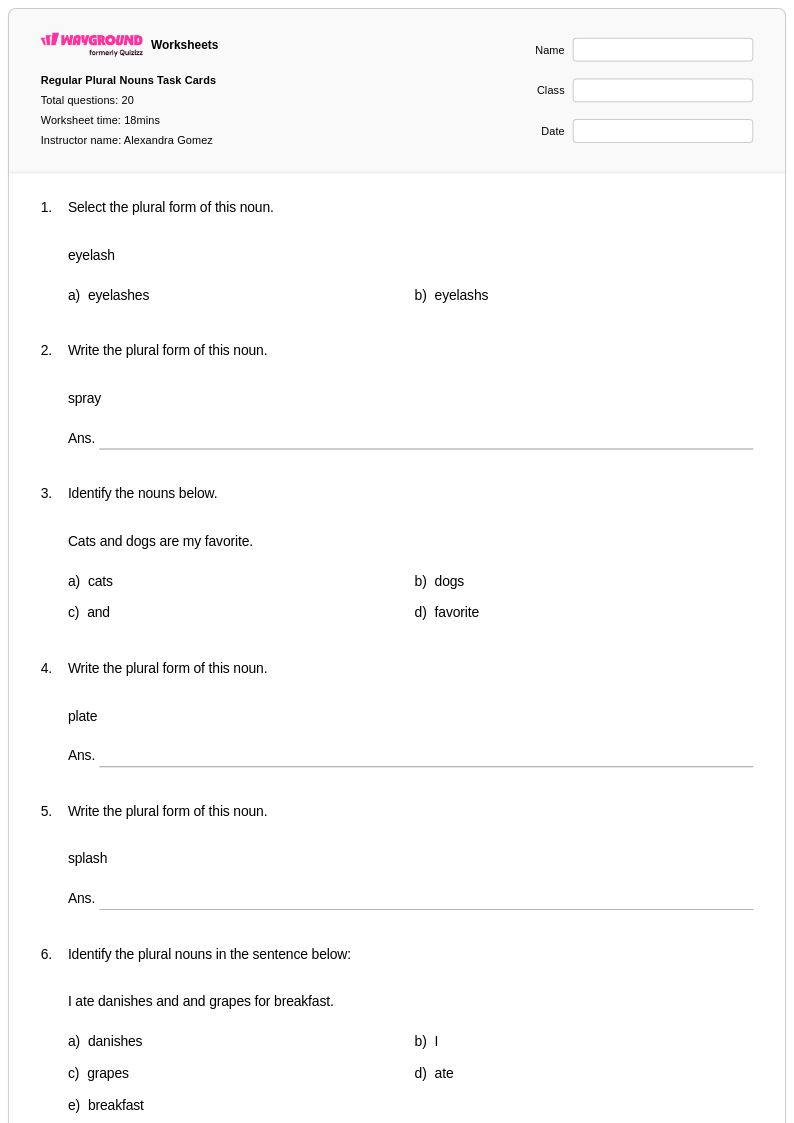
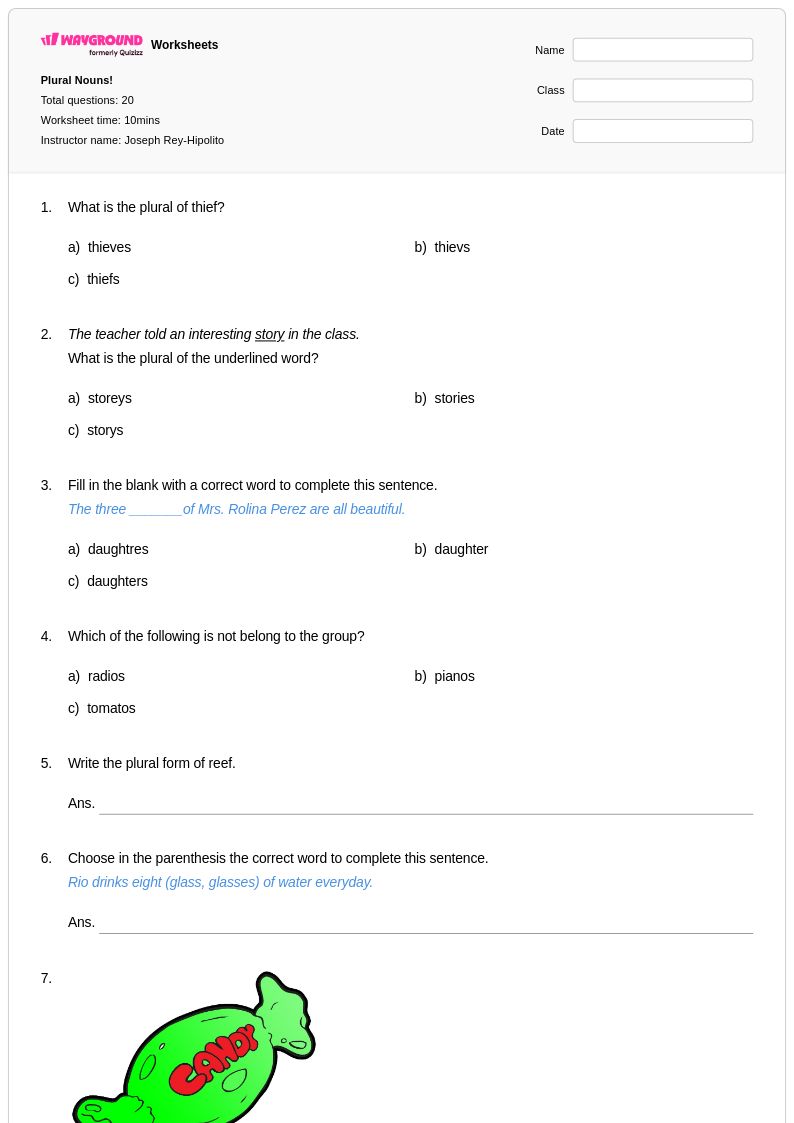
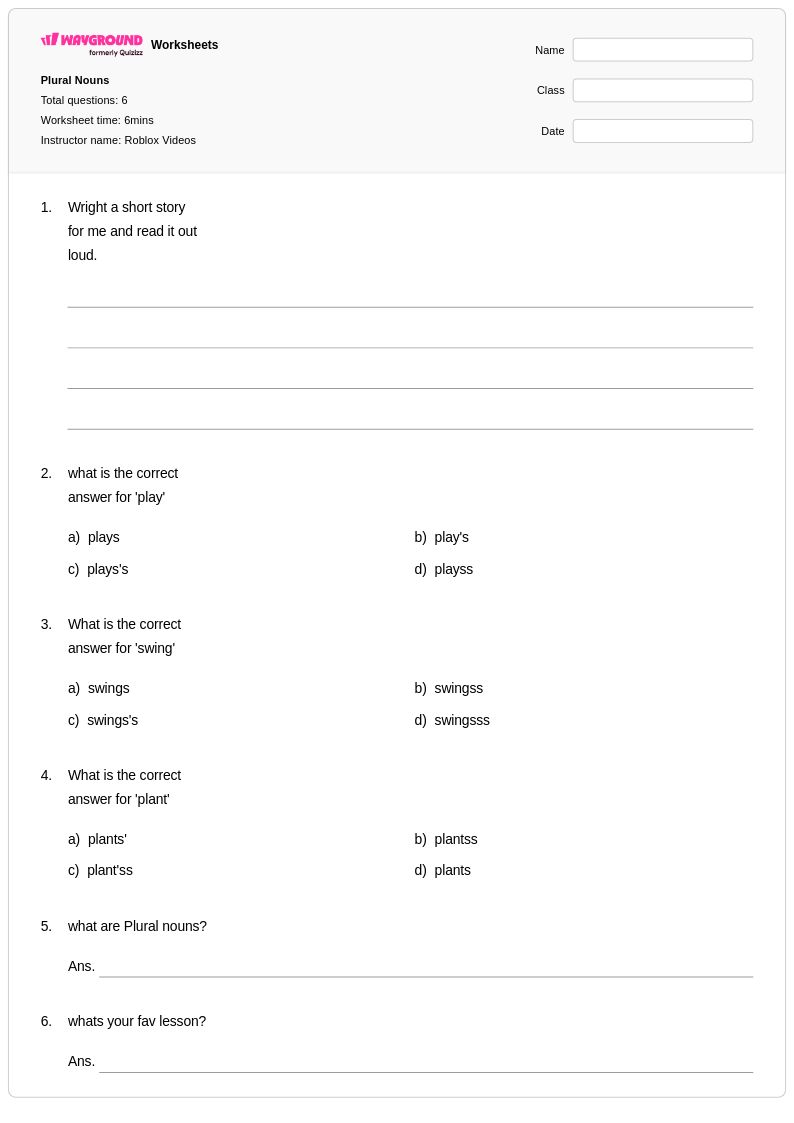
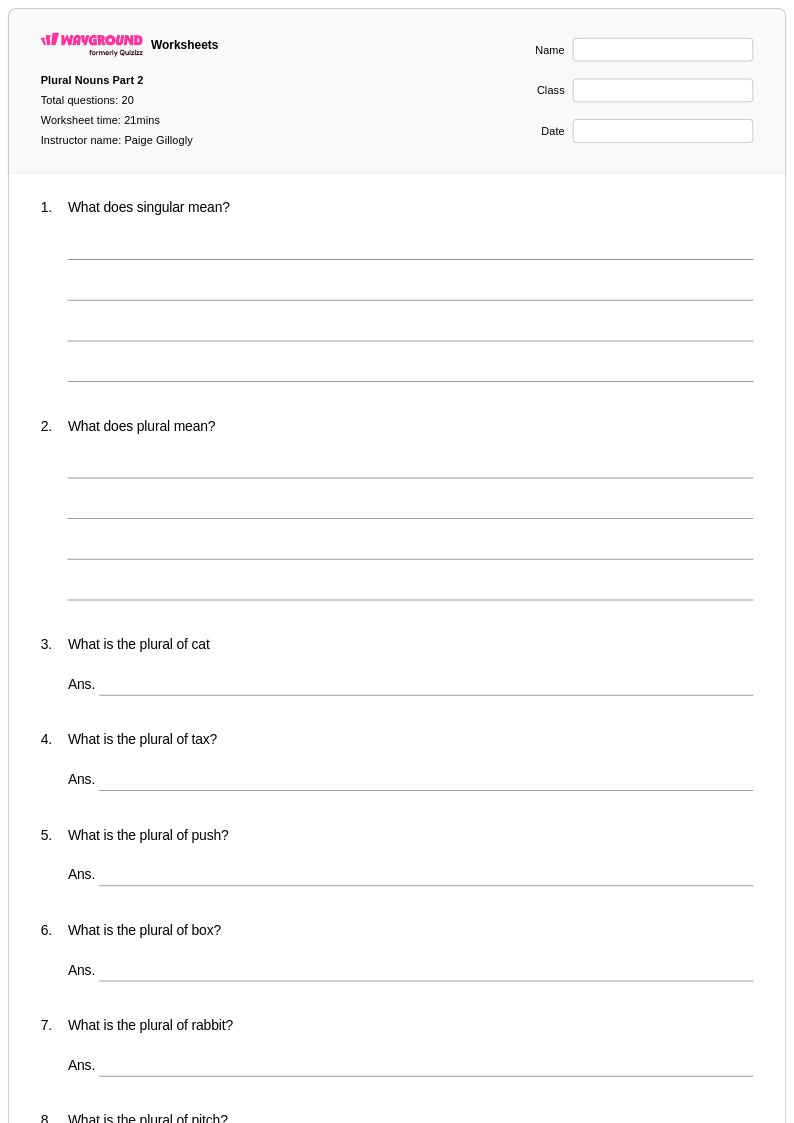
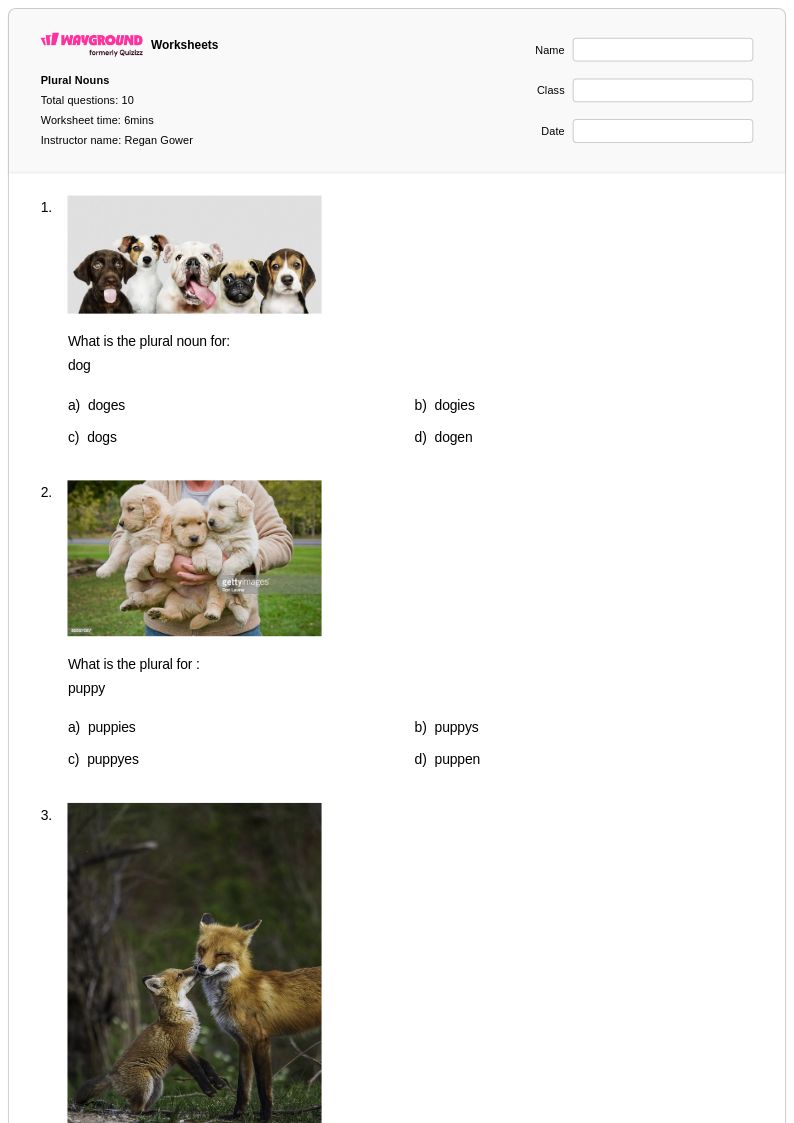
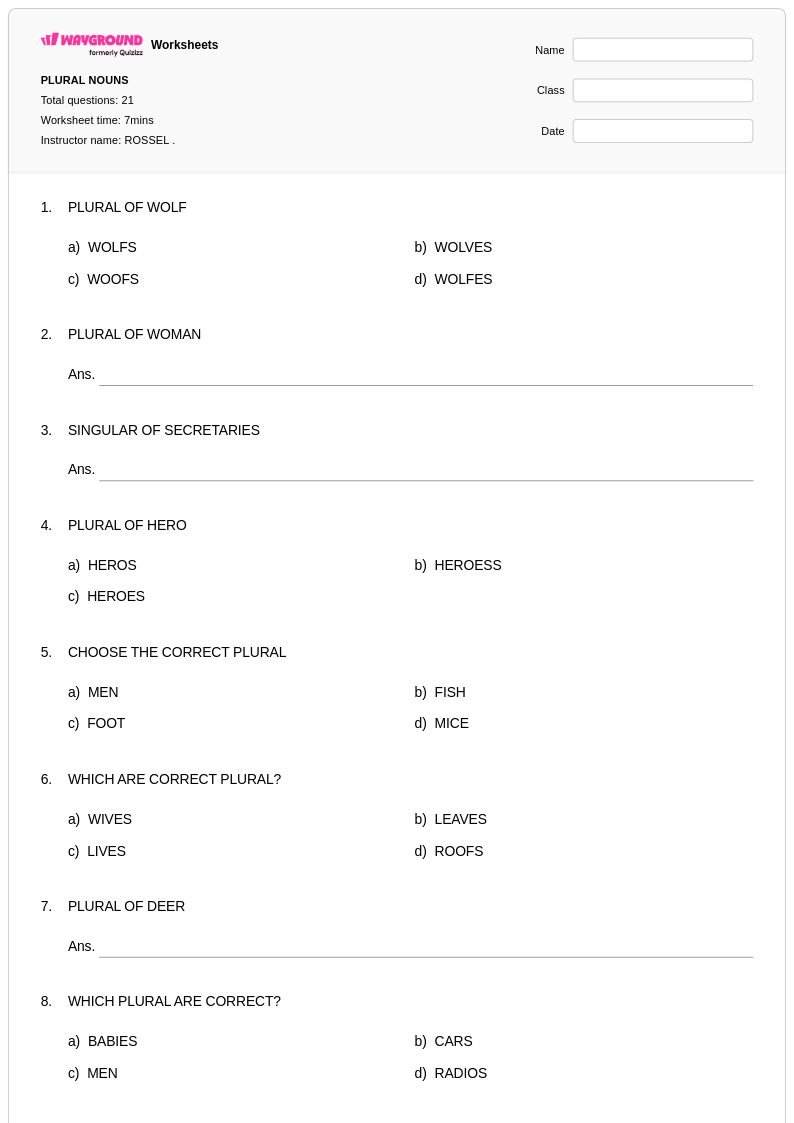
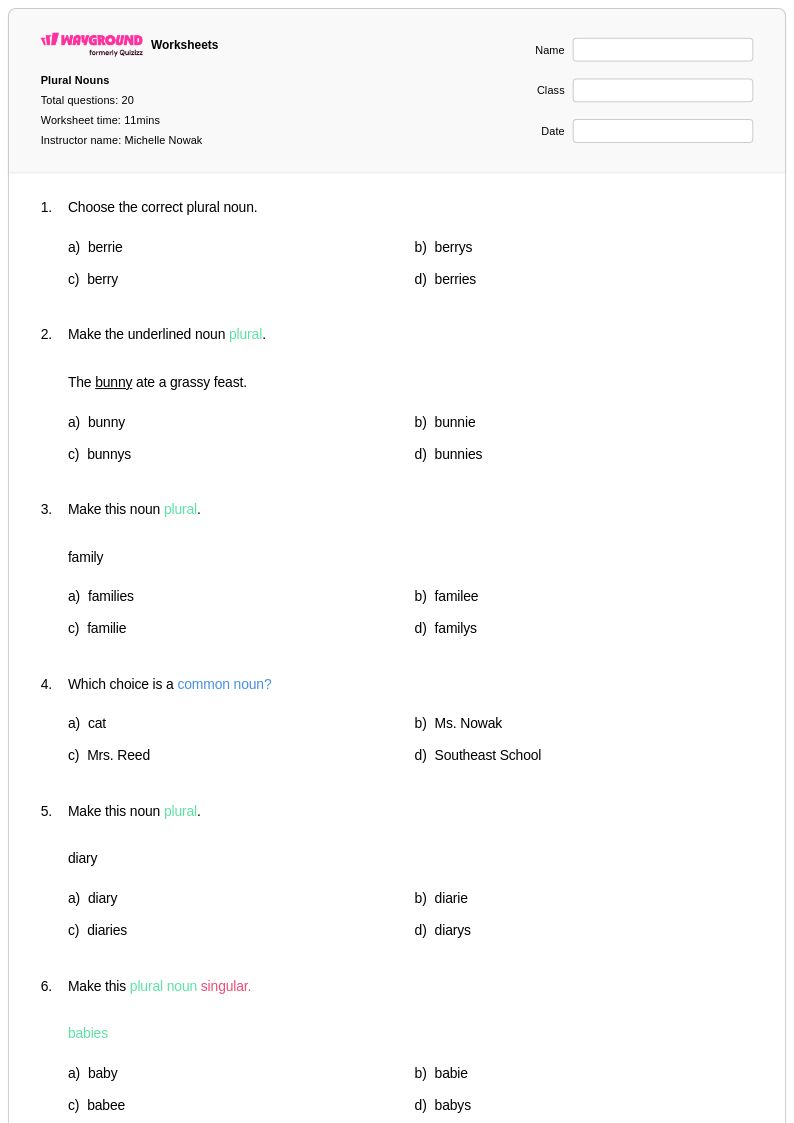
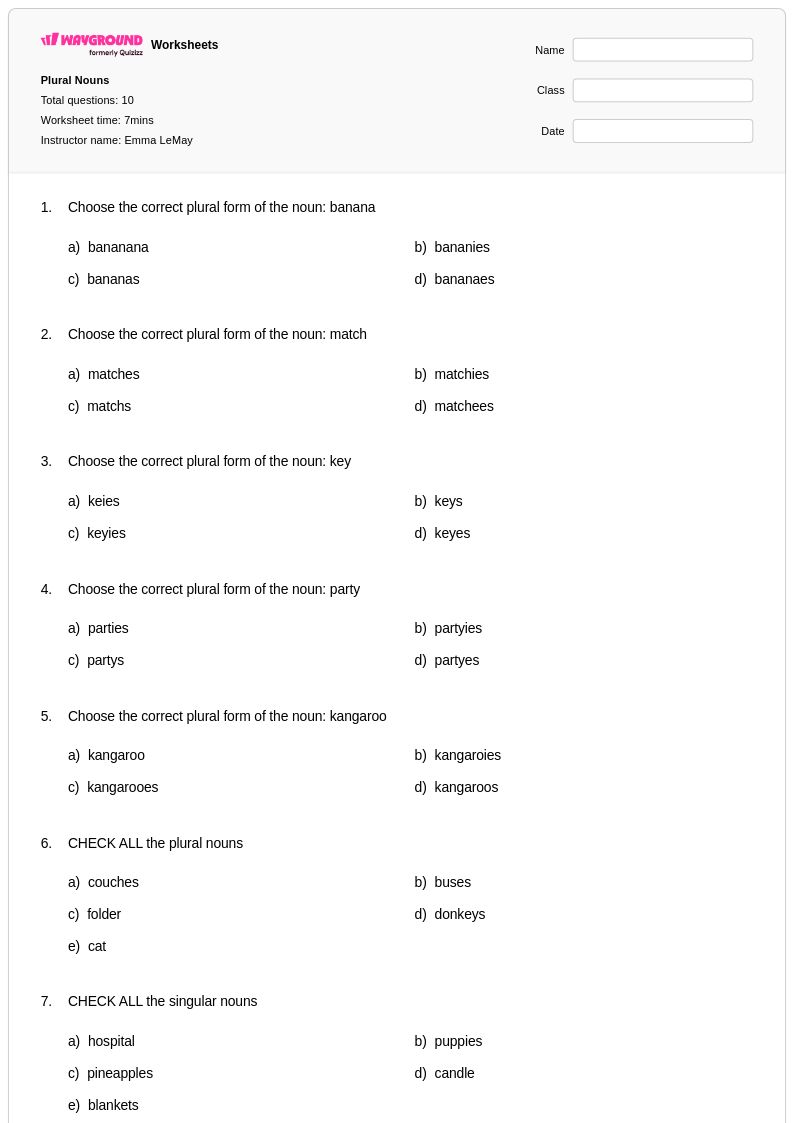
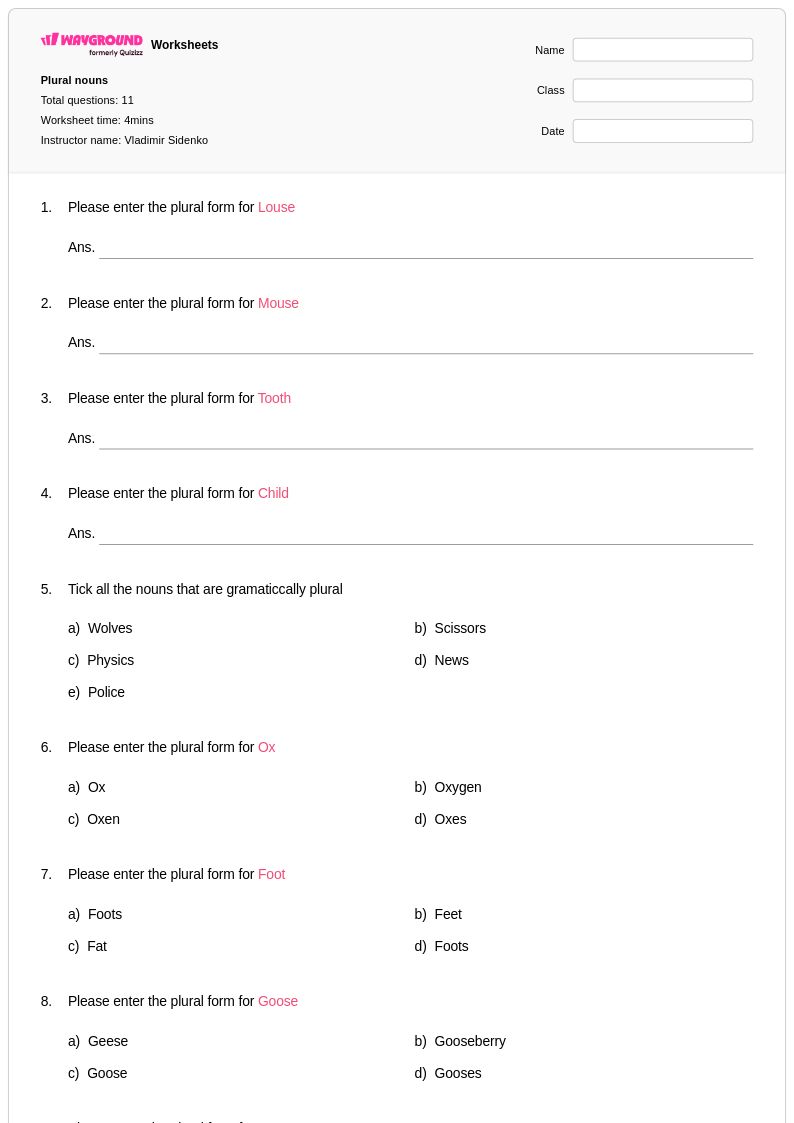
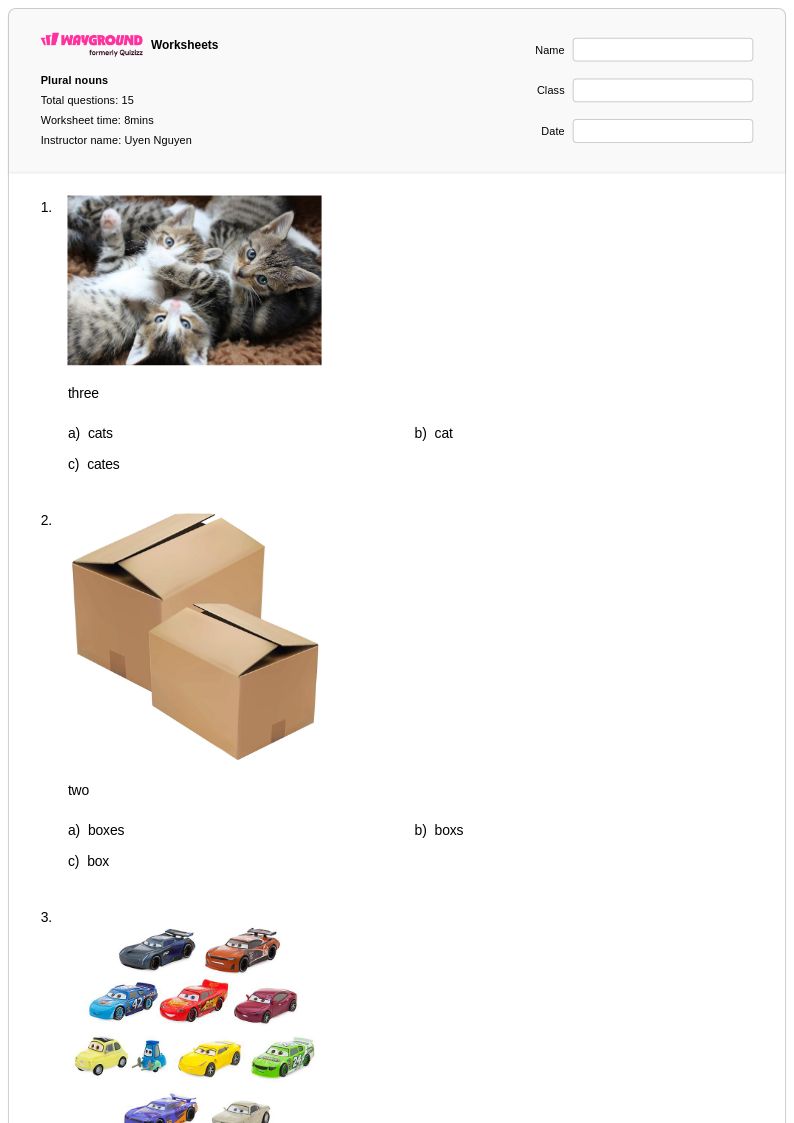
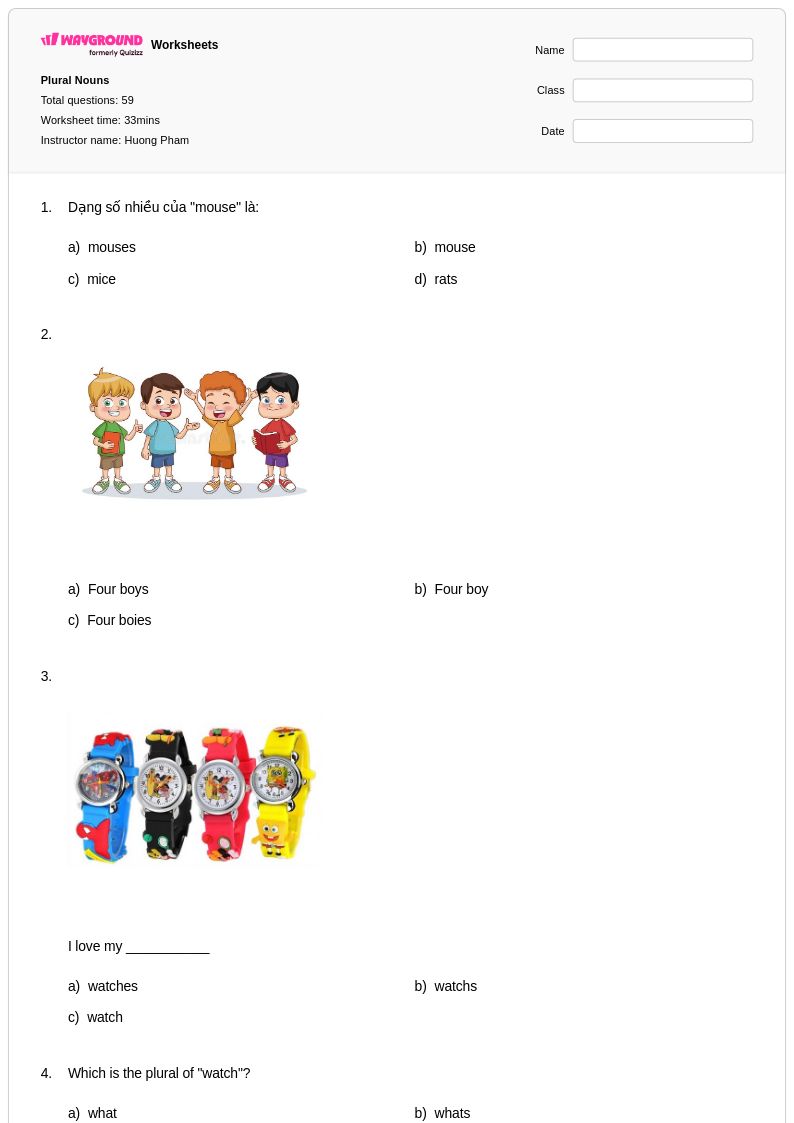
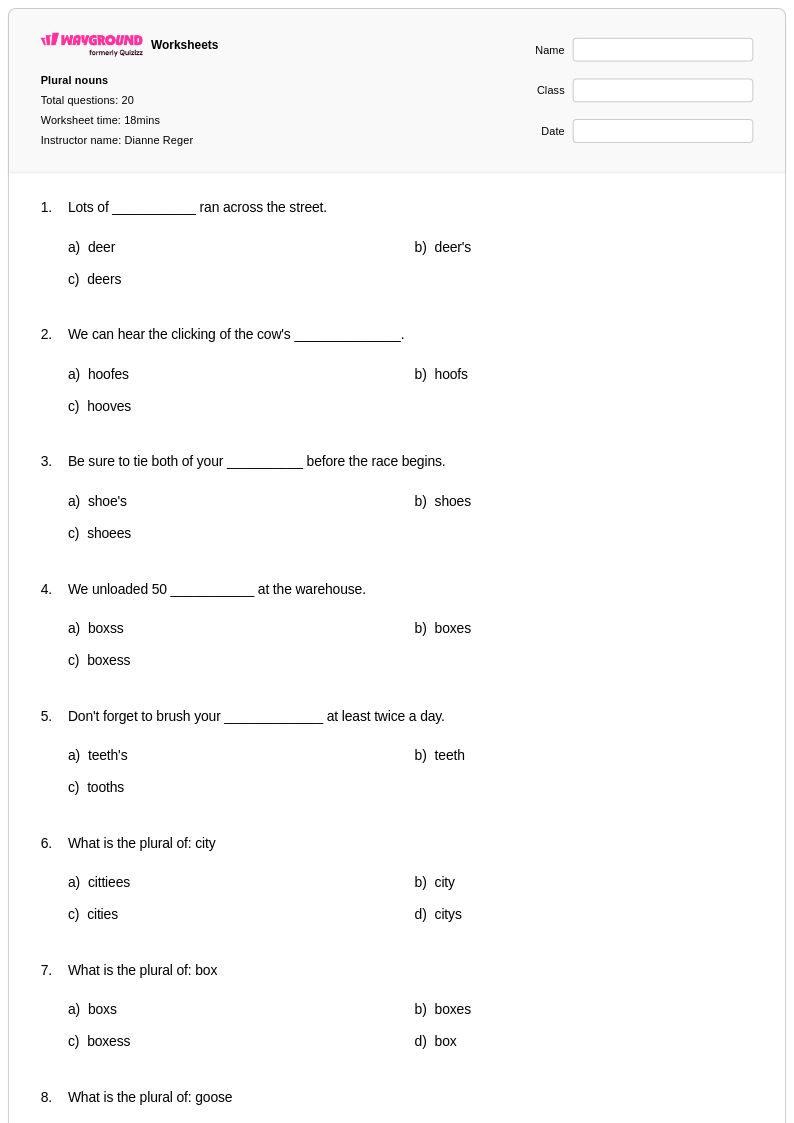
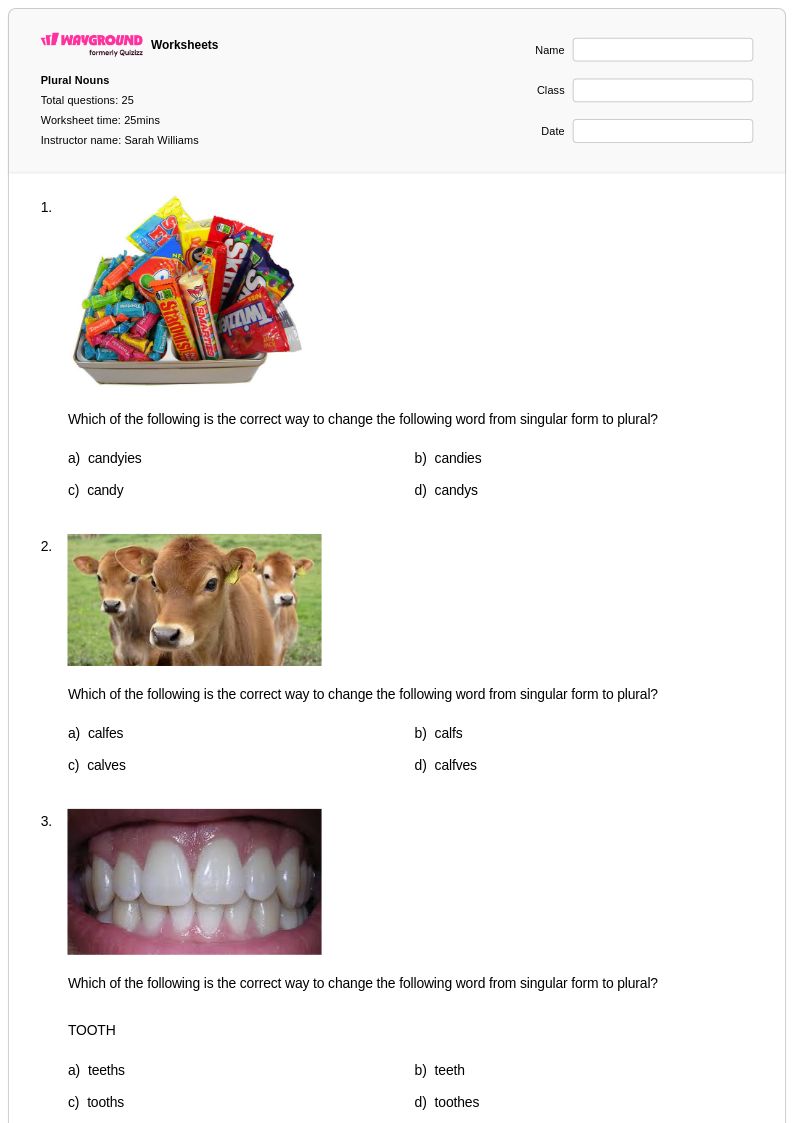
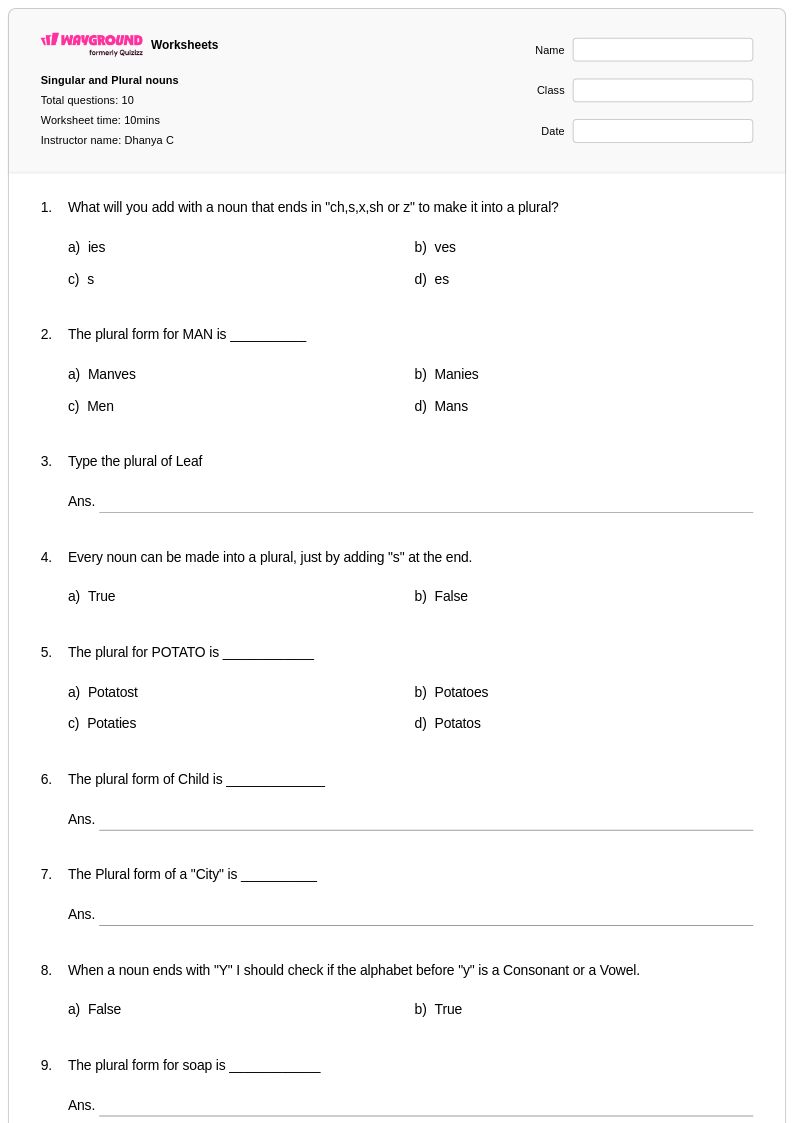
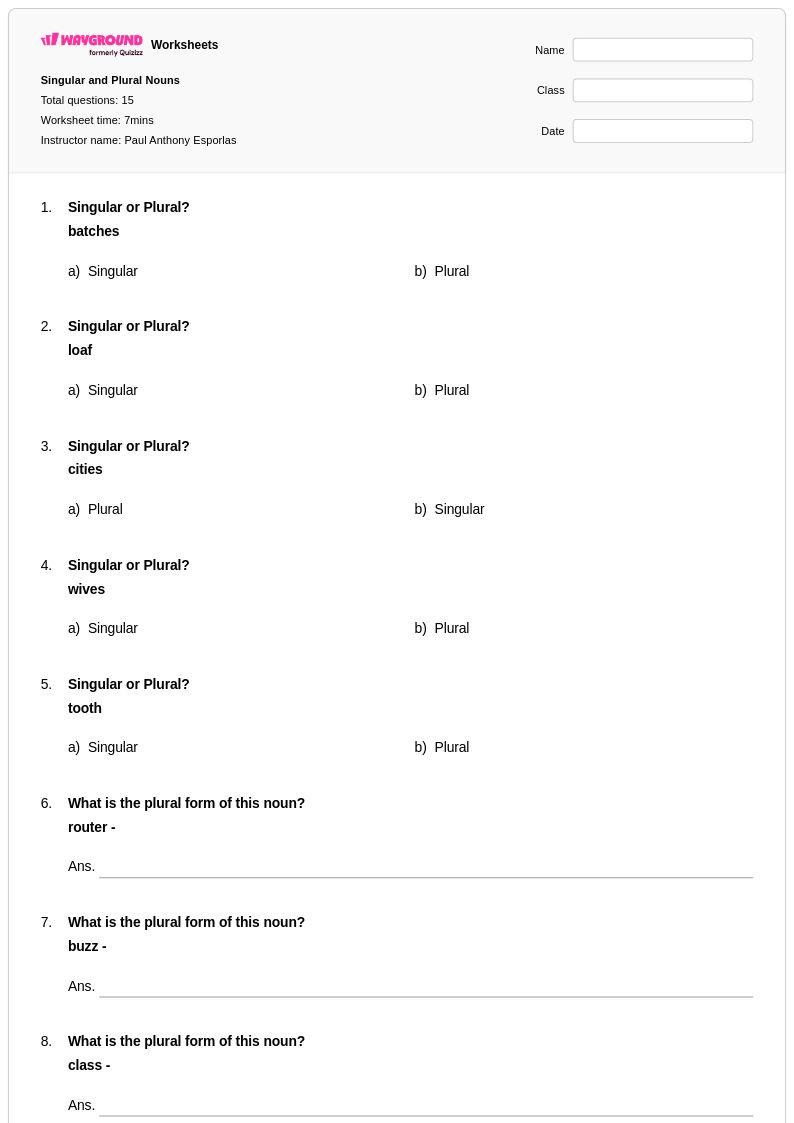
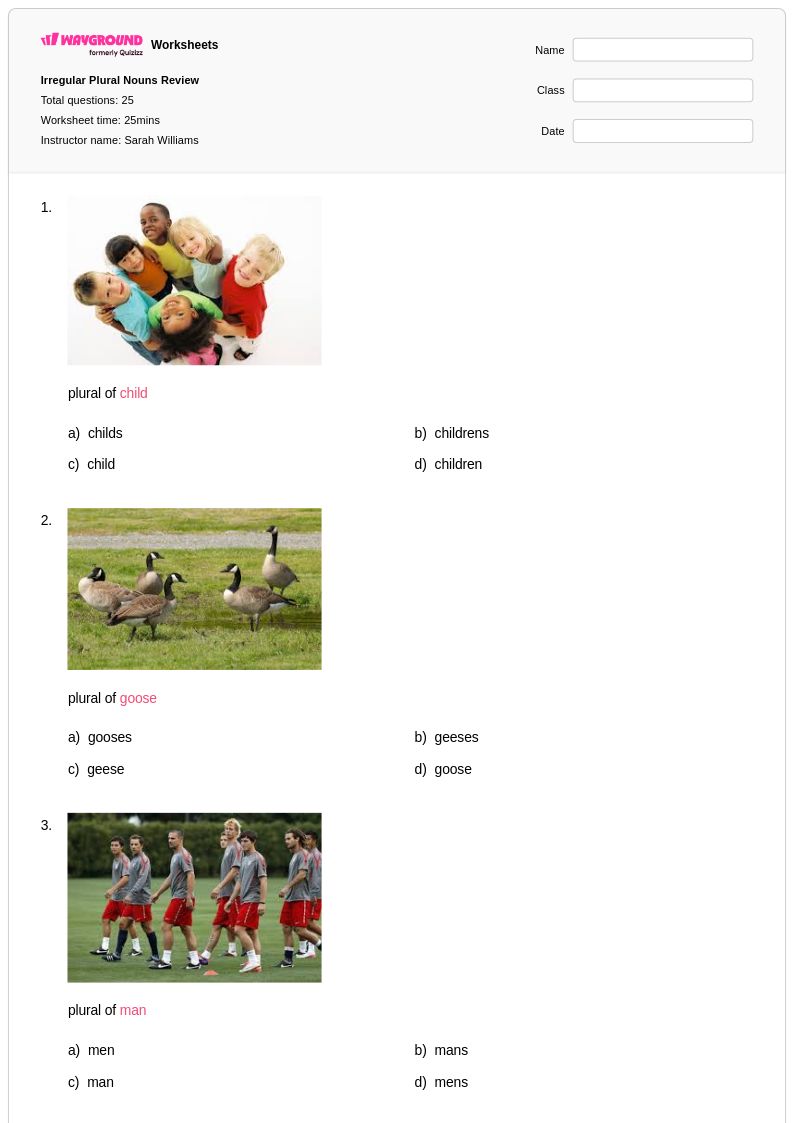
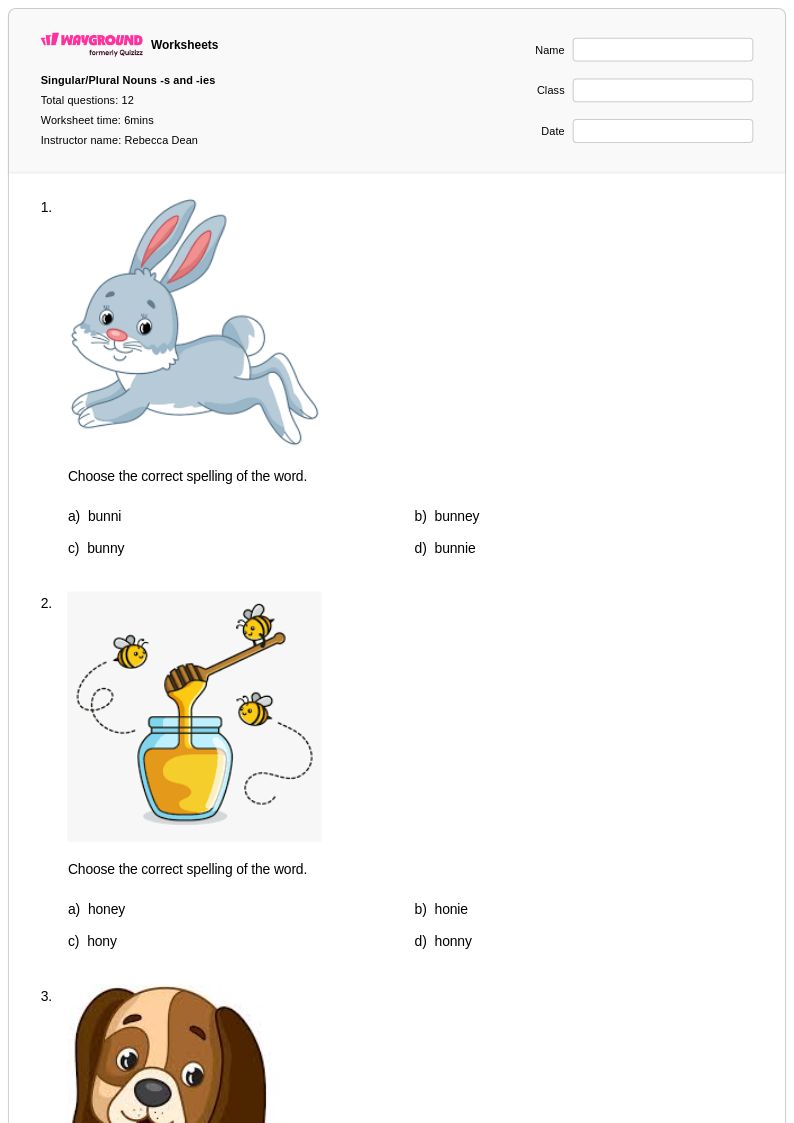
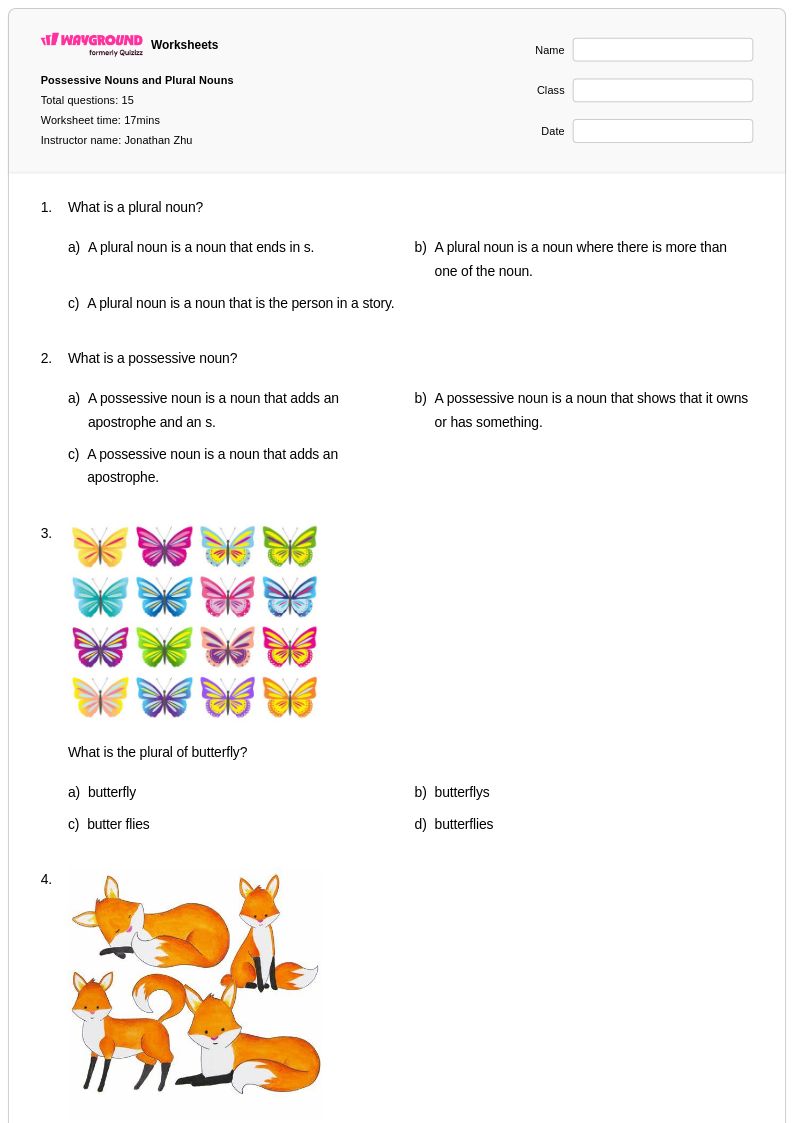
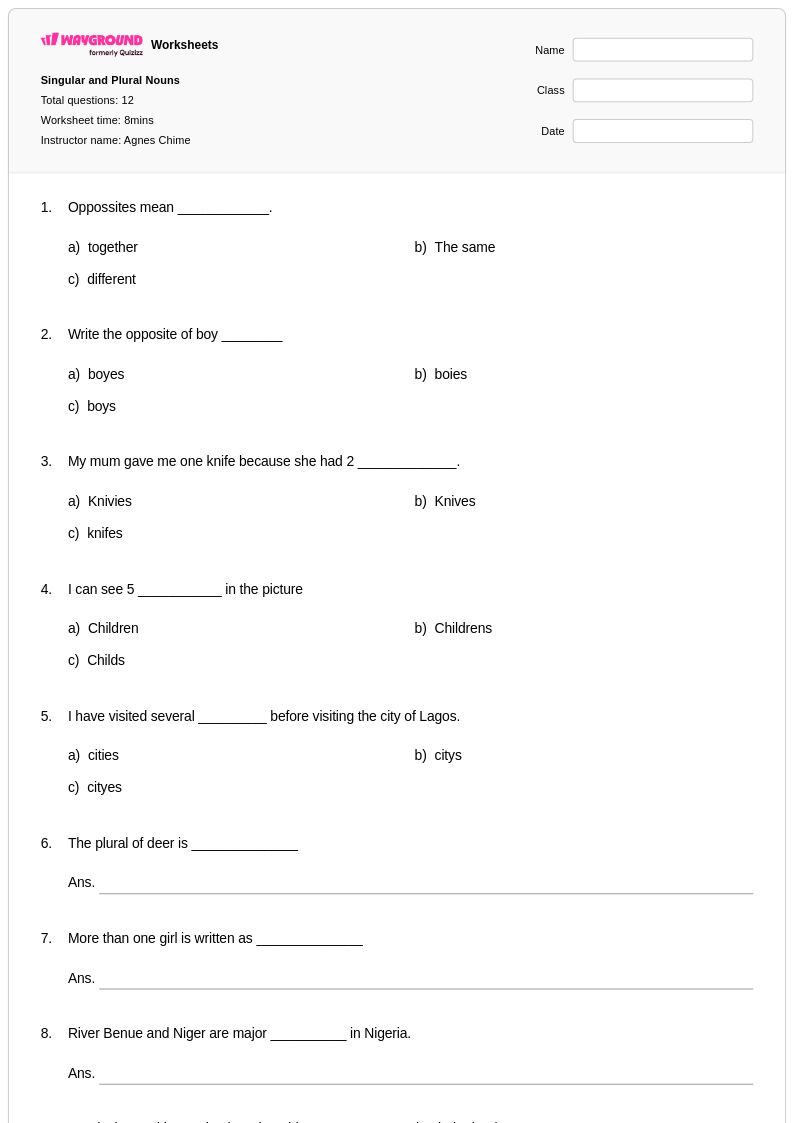
Plural nouns worksheets for Grade 3 students available through Wayground (formerly Quizizz) provide comprehensive practice in transforming singular nouns into their plural forms, a fundamental skill that strengthens students' understanding of English grammar and spelling patterns. These carefully designed worksheets guide third-grade learners through essential pluralization rules, including adding -s to most nouns, changing -y to -ies for words ending in consonant-y combinations, and mastering irregular plural forms like children, mice, and feet. Students engage with varied practice problems that reinforce standard pluralization patterns while building confidence with challenging exceptions, and teachers benefit from accompanying answer keys that streamline grading and facilitate immediate feedback. The free printable resources offer diverse formats including fill-in-the-blank exercises, matching activities, and sentence completion tasks that help students apply plural noun concepts in meaningful contexts.
Wayground (formerly Quizizz) empowers educators with an extensive collection of teacher-created plural noun worksheets, drawing from millions of resources that have been developed and refined by classroom professionals who understand Grade 3 learning objectives. The platform's robust search and filtering capabilities allow teachers to quickly locate materials aligned with specific standards and differentiate instruction based on individual student needs, whether for remediation of struggling learners or enrichment for advanced students. These customizable worksheets are available in both printable pdf formats for traditional classroom use and digital formats that support interactive learning, giving educators the flexibility to adapt their instruction to various teaching environments and learning preferences. The comprehensive resource library supports effective lesson planning by providing ready-to-use materials that can be seamlessly integrated into grammar instruction, homework assignments, or assessment preparation activities.
FAQs
How do I teach plural nouns to elementary students?
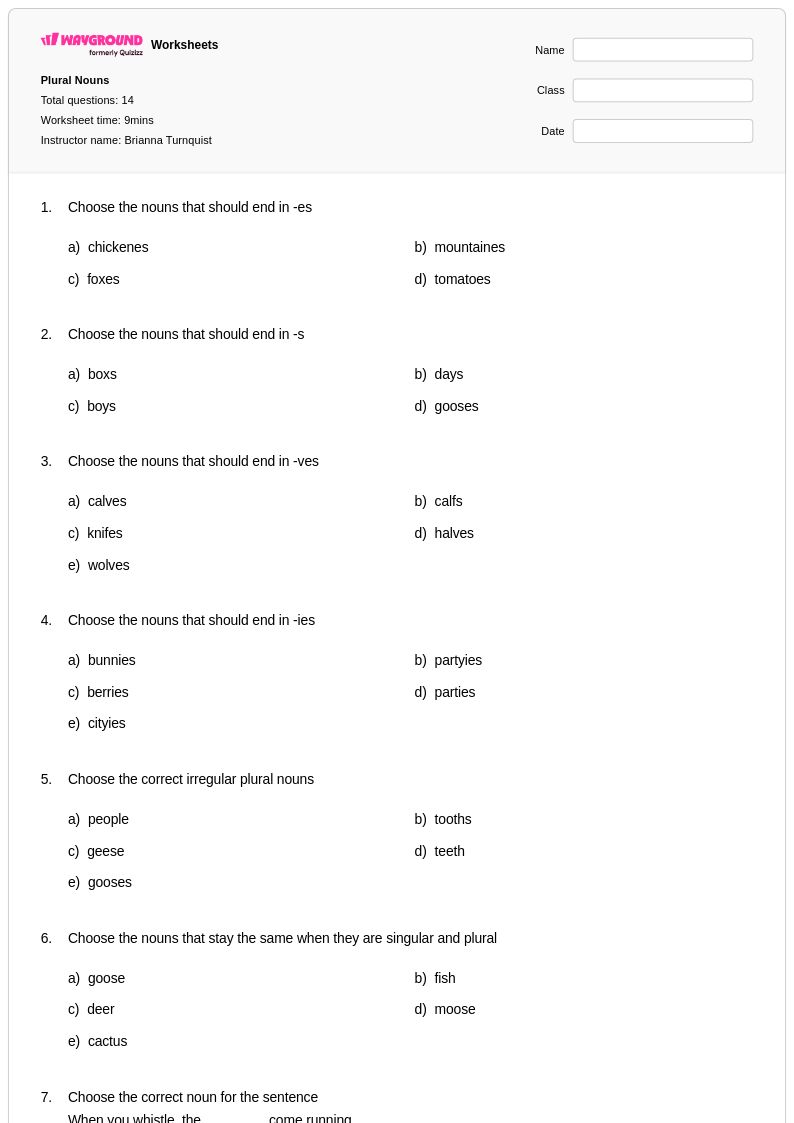
Start by establishing the base rule of adding -s to most nouns, then layer in exceptions progressively. Introduce -es for nouns ending in -s, -x, -z, -ch, and -sh, followed by the consonant-y rule (changing y to i and adding -es). Irregular plurals like children, mice, and geese are best taught through repeated exposure and pattern recognition rather than rote memorization. Grouping nouns by rule category helps students apply logic rather than guess.
What exercises help students practice plural noun rules?
Effective plural noun practice includes fill-in-the-blank transformation tasks where students convert singular nouns to plural forms, sorting activities that group nouns by pluralization rule, and error-correction exercises where students identify and fix incorrect plural spellings. Mixing regular and irregular plurals within the same practice set forces students to actively retrieve and apply the correct rule rather than defaulting to a single pattern.
What mistakes do students commonly make when forming plural nouns?
The most frequent errors involve over-applying the -s rule to nouns that require -es, and incorrectly pluralizing consonant-y nouns by simply adding -s instead of changing y to i and adding -es (for example, writing 'babys' instead of 'babies'). Students also frequently struggle with -f and -fe nouns, forgetting to change the ending to -ves for words like 'leaf' and 'knife.' Irregular plurals such as 'geese,' 'children,' and 'mice' are consistently misspelled because they follow no predictable pattern.
How do I use Wayground's plural nouns worksheets in my classroom?
Wayground's plural nouns worksheets are available as printable PDFs for traditional paper-based practice and in digital formats for technology-integrated classrooms, so they work equally well as homework packets, in-class practice, or interactive online assignments. Teachers can also host them as a quiz directly on Wayground, enabling real-time student responses and automatic scoring. Each worksheet includes a complete answer key, supporting independent student self-assessment or quick teacher review.
How do I differentiate plural noun instruction for students at different skill levels?
For students still building foundational skills, focus practice on regular plurals only before introducing exceptions. More advanced students can work through compound nouns and words borrowed from other languages, such as 'cactus/cacti' or 'criterion/criteria.' On Wayground, teachers can apply accommodations such as reduced answer choices for students who need additional support, or extended time settings for individual students, without affecting the experience of the rest of the class.
At what grade level are plural nouns typically taught?
Basic plural noun formation, such as adding -s and -es, is typically introduced in first and second grade as part of foundational grammar instruction. More complex rules, including consonant-y changes, -f/-fe endings, and irregular plurals, are generally reinforced through third and fourth grade. Students who continue to struggle with irregular or borrowed-language plurals may need targeted review in upper elementary or middle school.