
11 Q
1st
10 Q
1st - 2nd
10 Q
1st - 2nd
10 Q
1st - 2nd
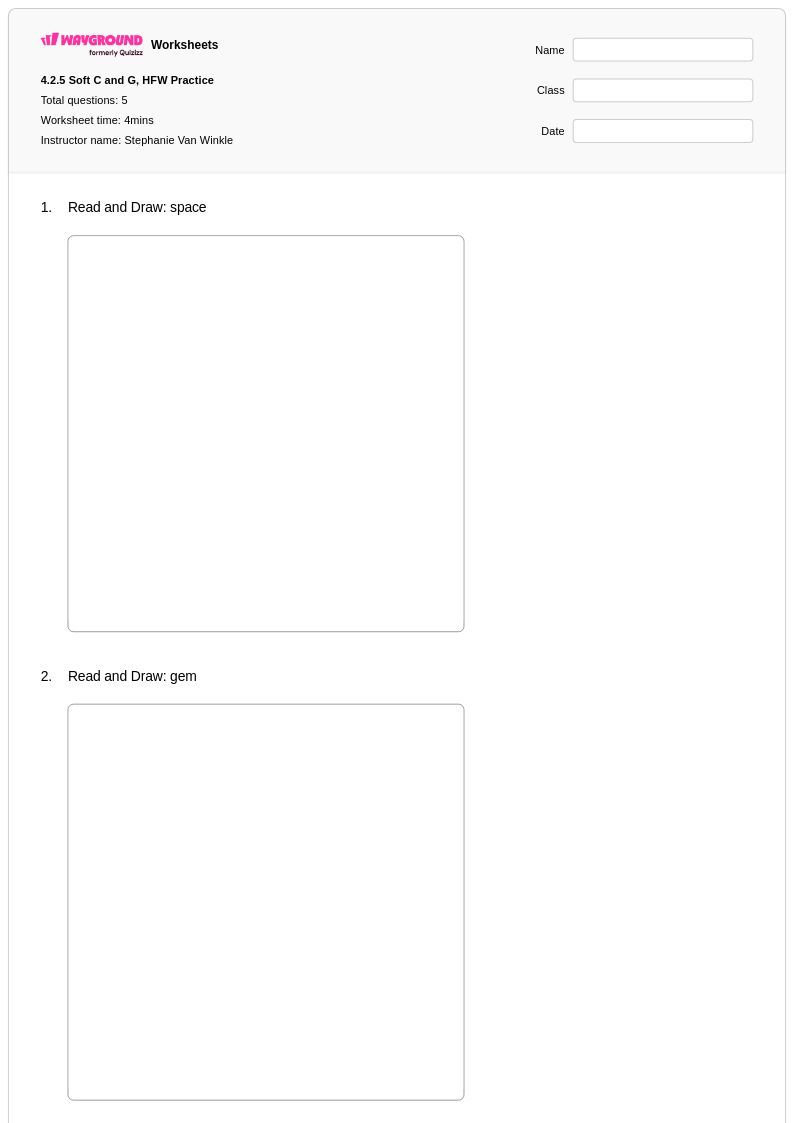
5 Q
1st - 5th
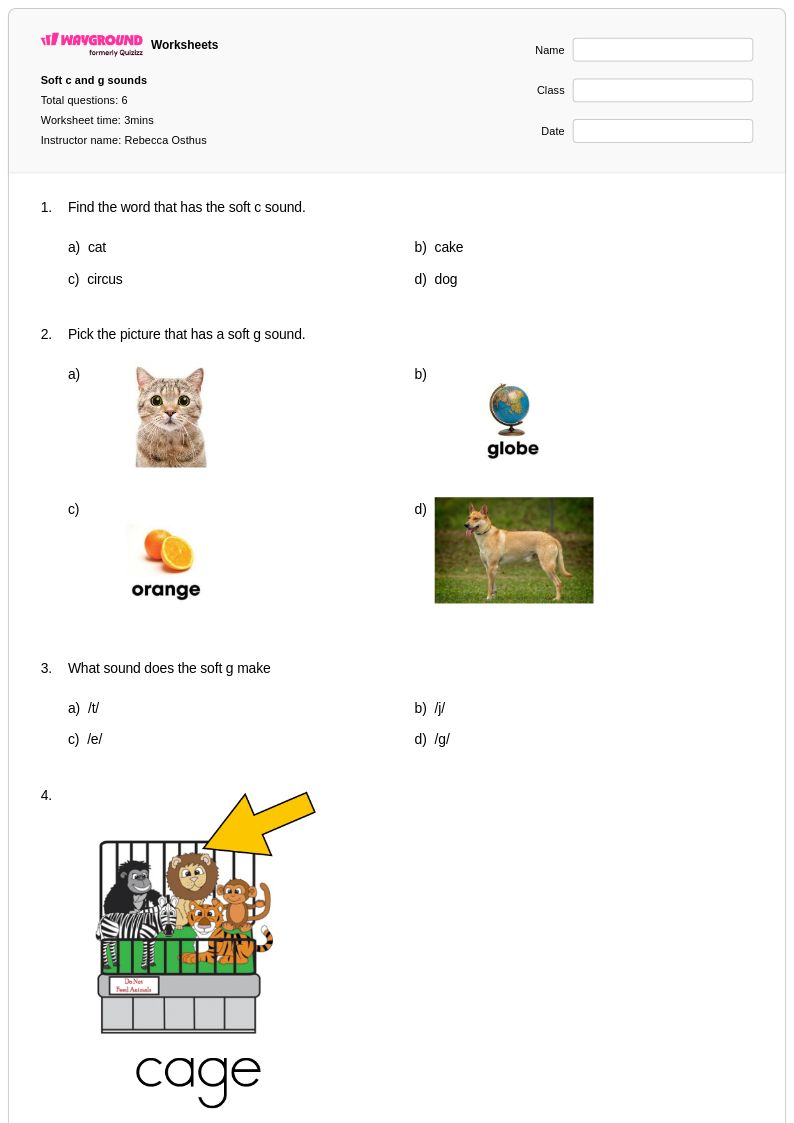
6 Q
1st
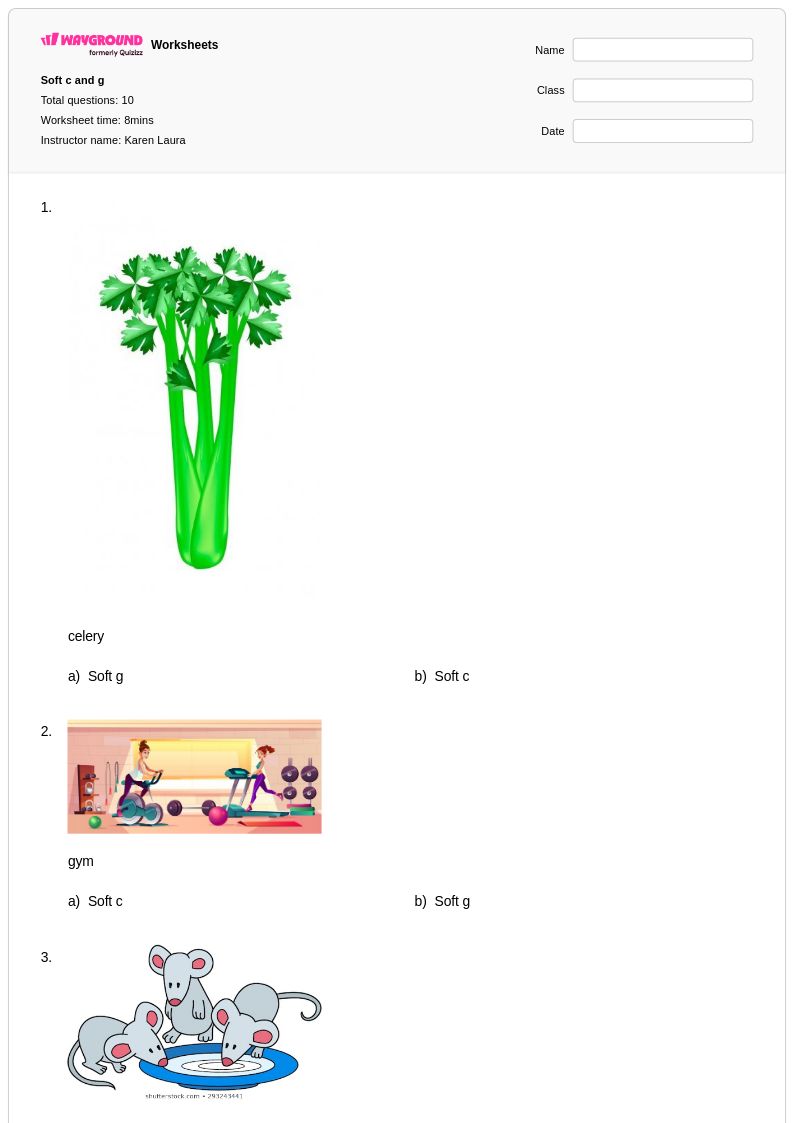
10 Q
1st
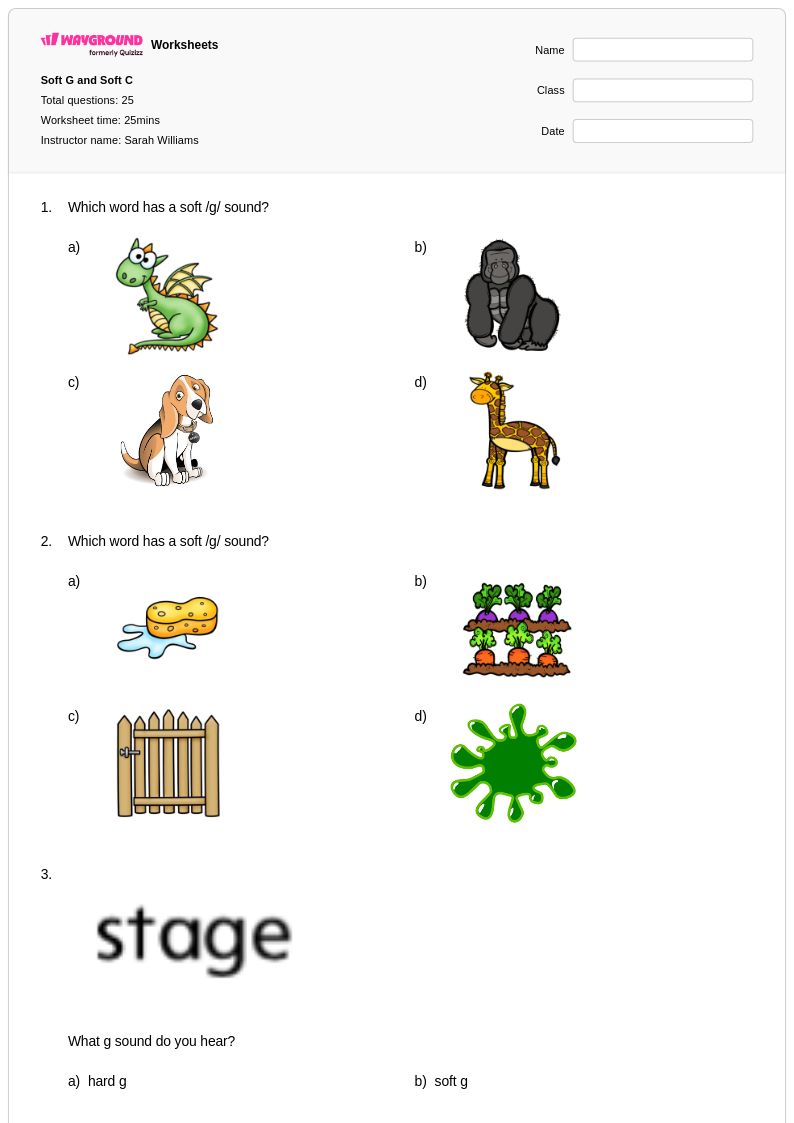
25 Q
1st - Uni
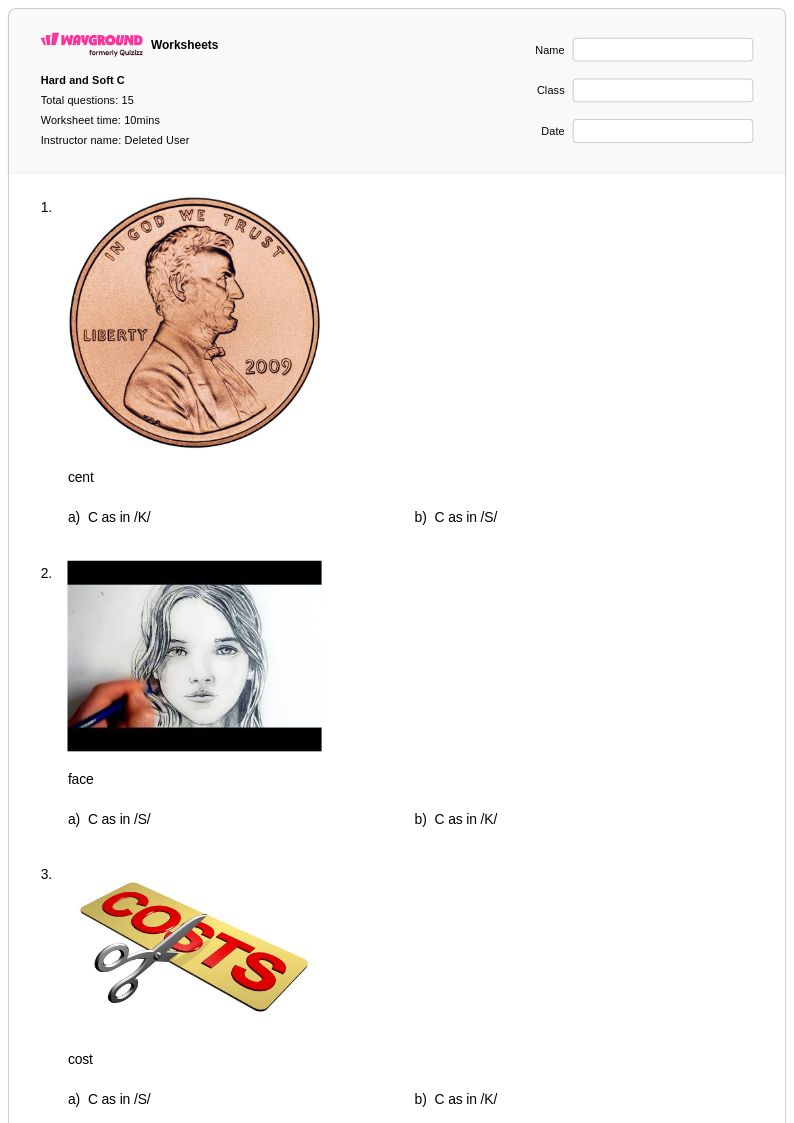
15 Q
1st - 2nd
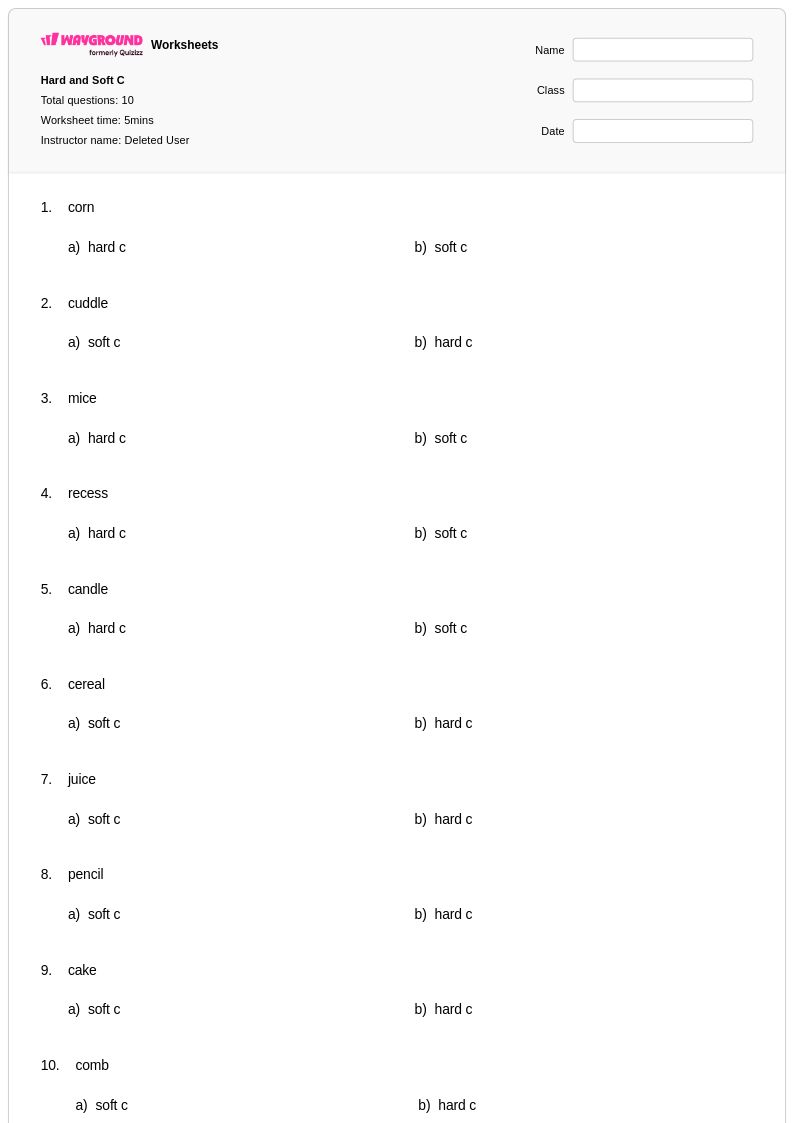
10 Q
1st - 2nd
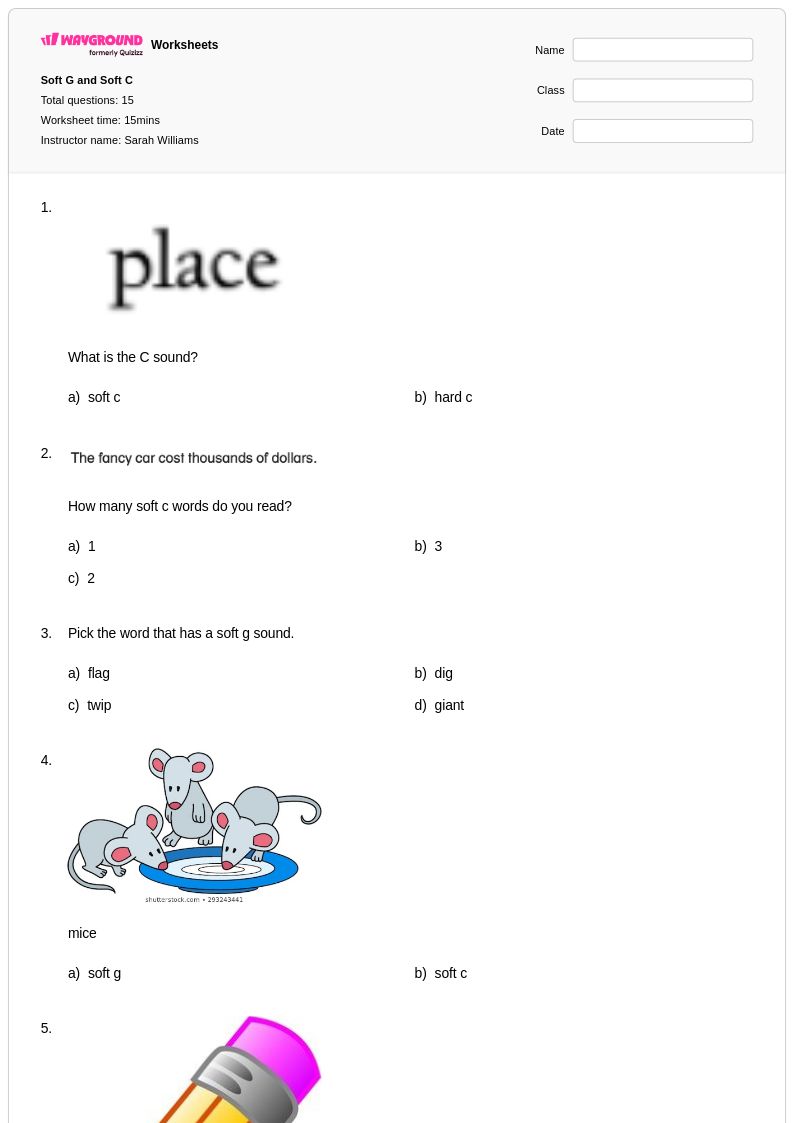
15 Q
1st - Uni
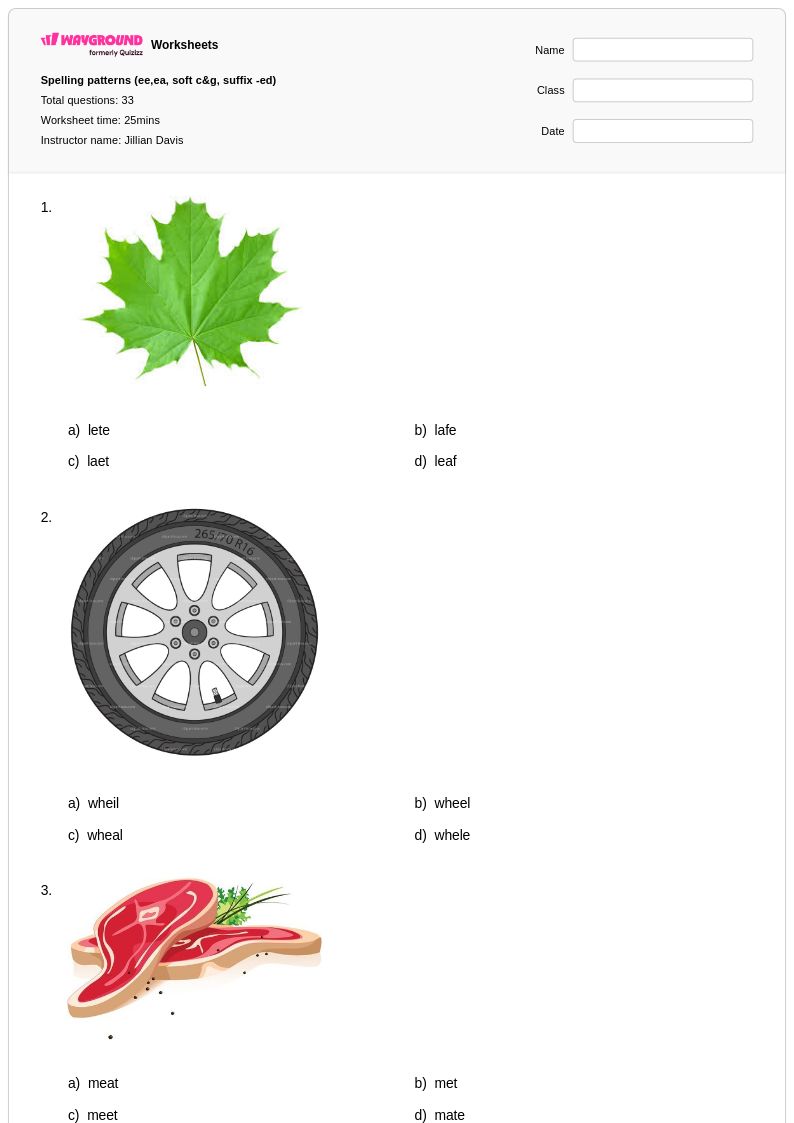
33 Q
1st
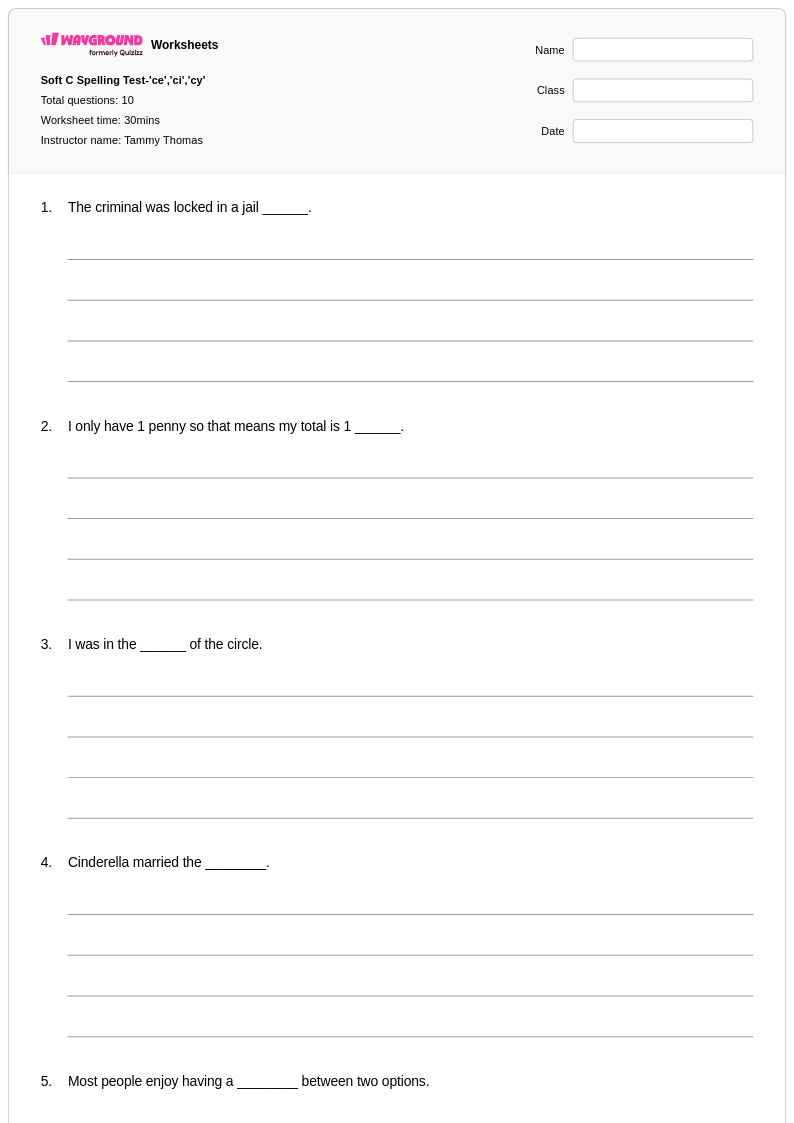
10 Q
1st
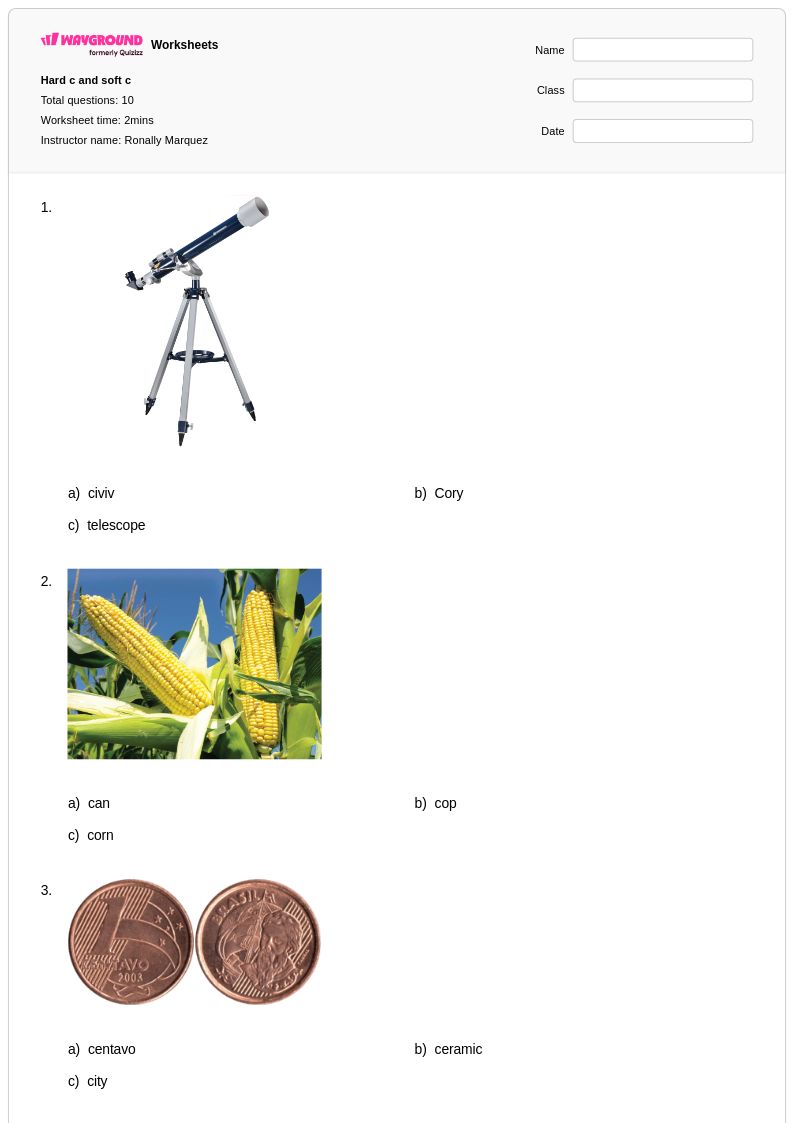
10 Q
1st
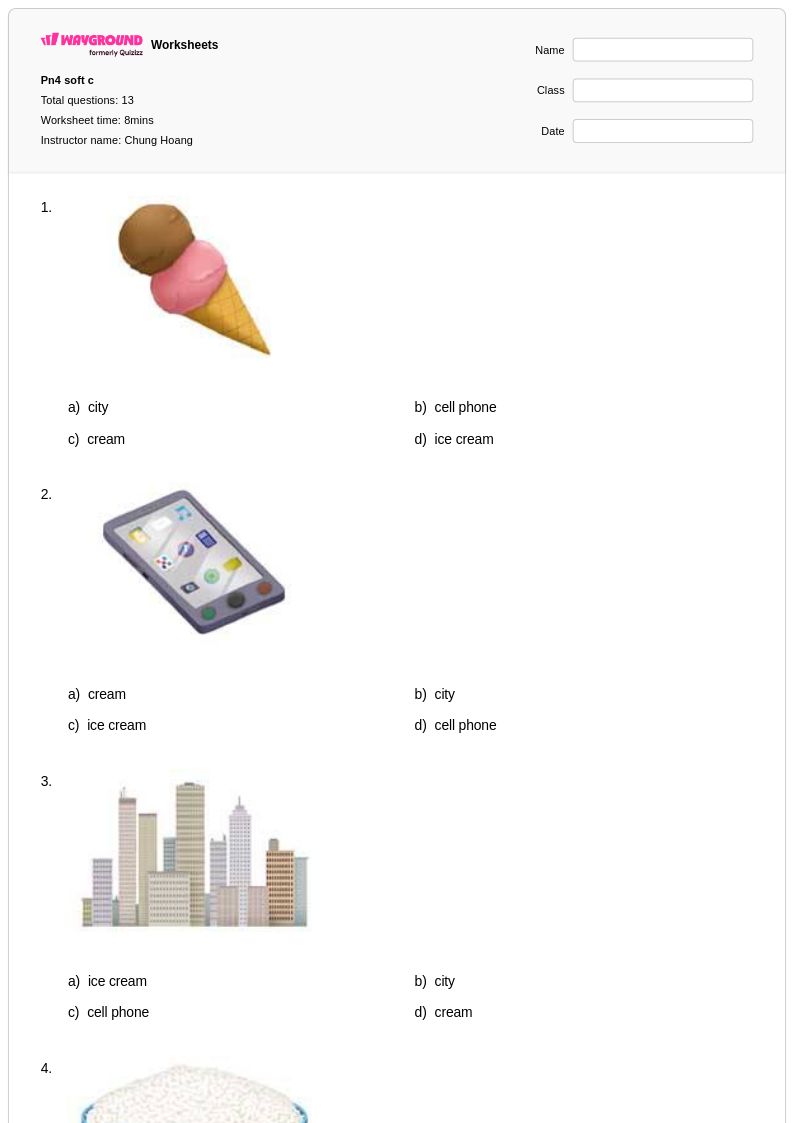
13 Q
KG - 1st
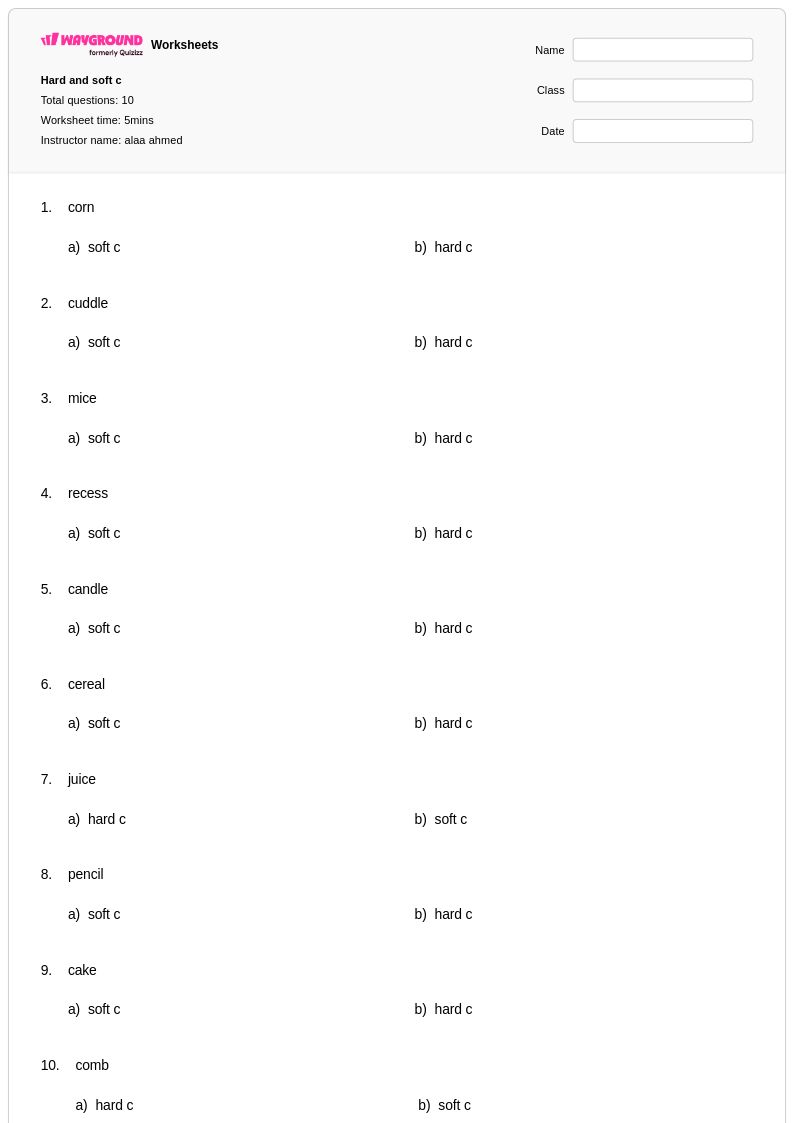
10 Q
KG - 1st
18 Q
1st - 3rd
10 Q
1st
10 Q
1st - 2nd
28 Q
KG - 4th
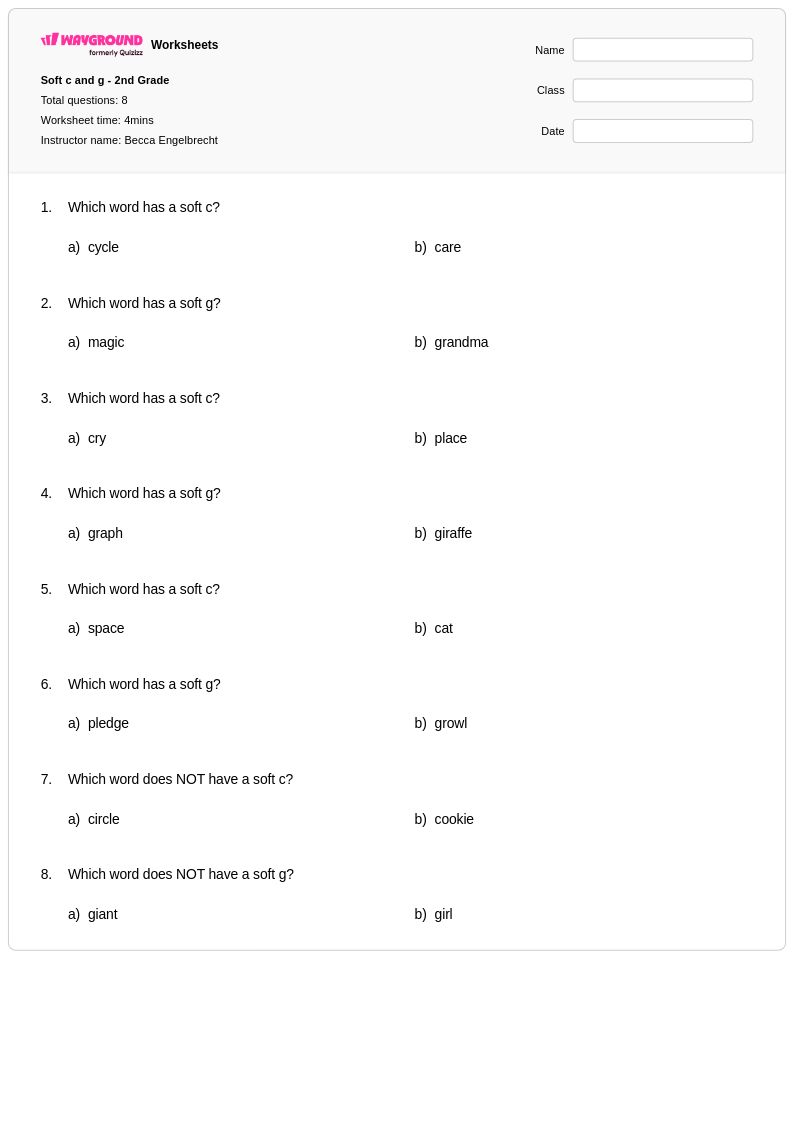
8 Q
1st - 2nd
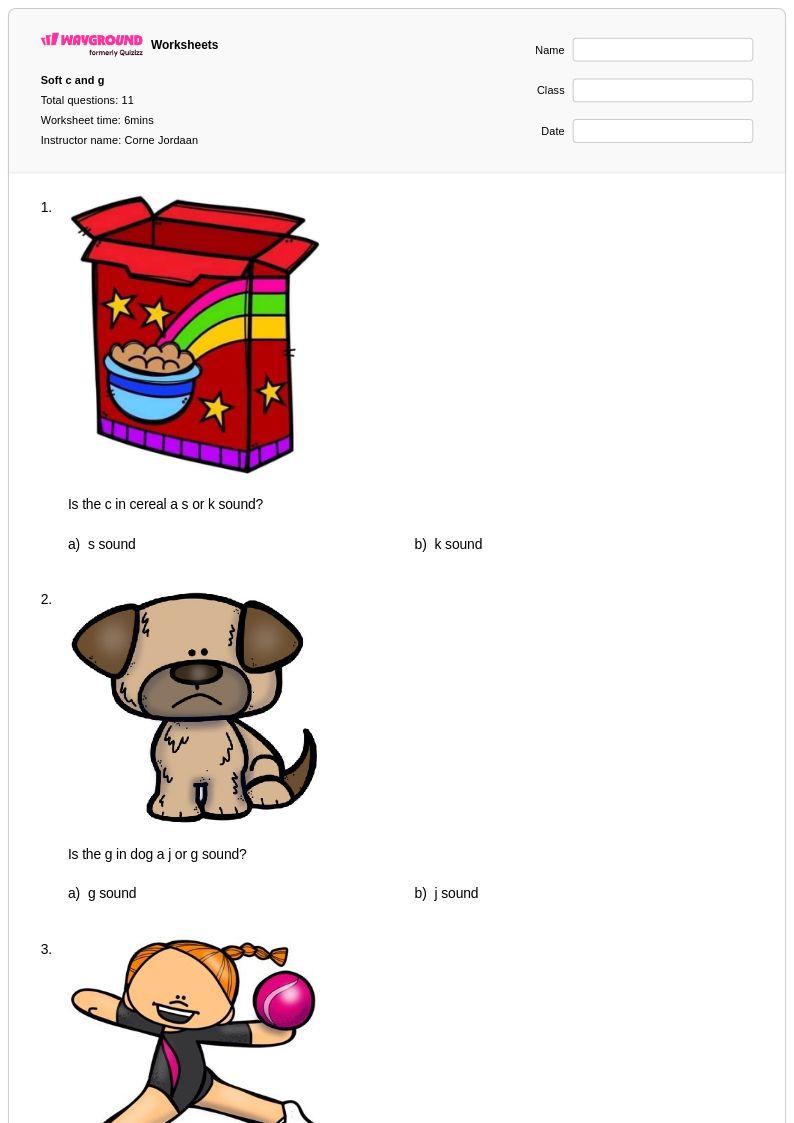
11 Q
1st - 3rd
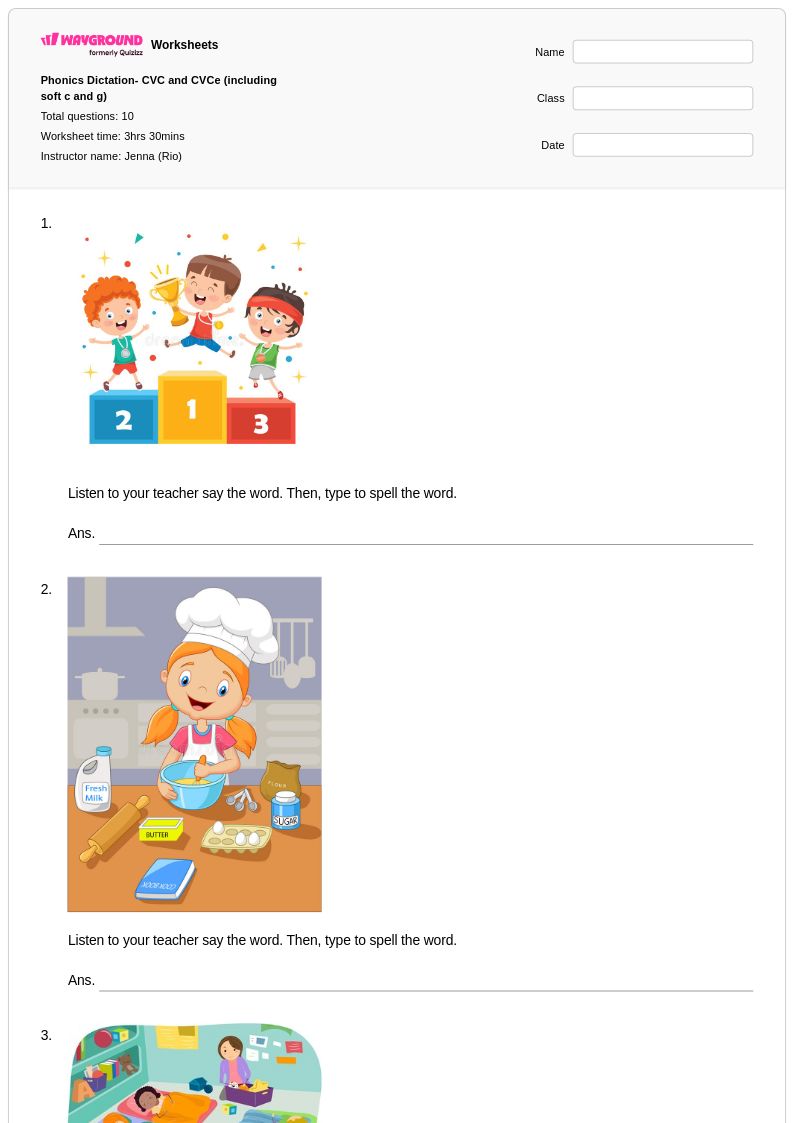
10 Q
1st
Explore Soft C Worksheets by Grades
Explore Other Subject Worksheets for grade 1
Explore printable Soft C worksheets for Grade 1
Soft C worksheets for Grade 1 students available through Wayground (formerly Quizizz) provide essential phonics instruction that helps young learners master one of English's most important spelling patterns. These carefully designed educational materials focus on teaching children when the letter C makes the /s/ sound, typically occurring before the vowels E, I, and Y in words like "city," "center," and "cycle." The worksheets strengthen foundational reading and spelling skills through systematic practice problems that guide students in recognizing and applying the soft C rule across various word families and contexts. Teachers can access comprehensive answer keys alongside each printable resource, ensuring efficient grading and immediate feedback opportunities. These free educational materials include diverse activities ranging from word sorting exercises to sentence completion tasks, all specifically crafted to reinforce phonemic awareness and phonetic decoding abilities essential for Grade 1 literacy development.
Wayground (formerly Quizizz) empowers educators with an extensive collection of millions of teacher-created soft C phonics resources, featuring robust search and filtering capabilities that allow quick identification of materials perfectly suited to individual classroom needs. The platform's standards-aligned worksheet collections support comprehensive lesson planning while offering sophisticated differentiation tools that accommodate diverse learning styles and ability levels within Grade 1 classrooms. Teachers benefit from flexible customization options that enable modification of existing materials to target specific skill gaps or extend learning for advanced students. Available in both printable PDF formats and interactive digital versions, these resources seamlessly integrate into various instructional approaches, whether supporting whole-group phonics lessons, small-group intervention sessions, or independent practice activities. This versatility ensures educators can effectively address remediation needs while providing enrichment opportunities that solidify students' understanding of the soft C phonics pattern across multiple learning contexts.
FAQs
How do I teach the soft C sound to early readers?
What words should I use to practice the soft C sound with students?
What mistakes do students commonly make with the soft C rule?
How can I use soft C worksheets to support differentiated instruction?
How do I use Wayground's soft C worksheets in my classroom?
How does the soft C rule affect students' spelling development?