Free Printable Specific Heat Worksheets for Grade 9
Explore Wayground's comprehensive Grade 9 specific heat worksheets featuring free printables and practice problems with answer keys to help students master thermal energy calculations and heat capacity concepts in physics.
Explore printable Specific Heat worksheets for Grade 9
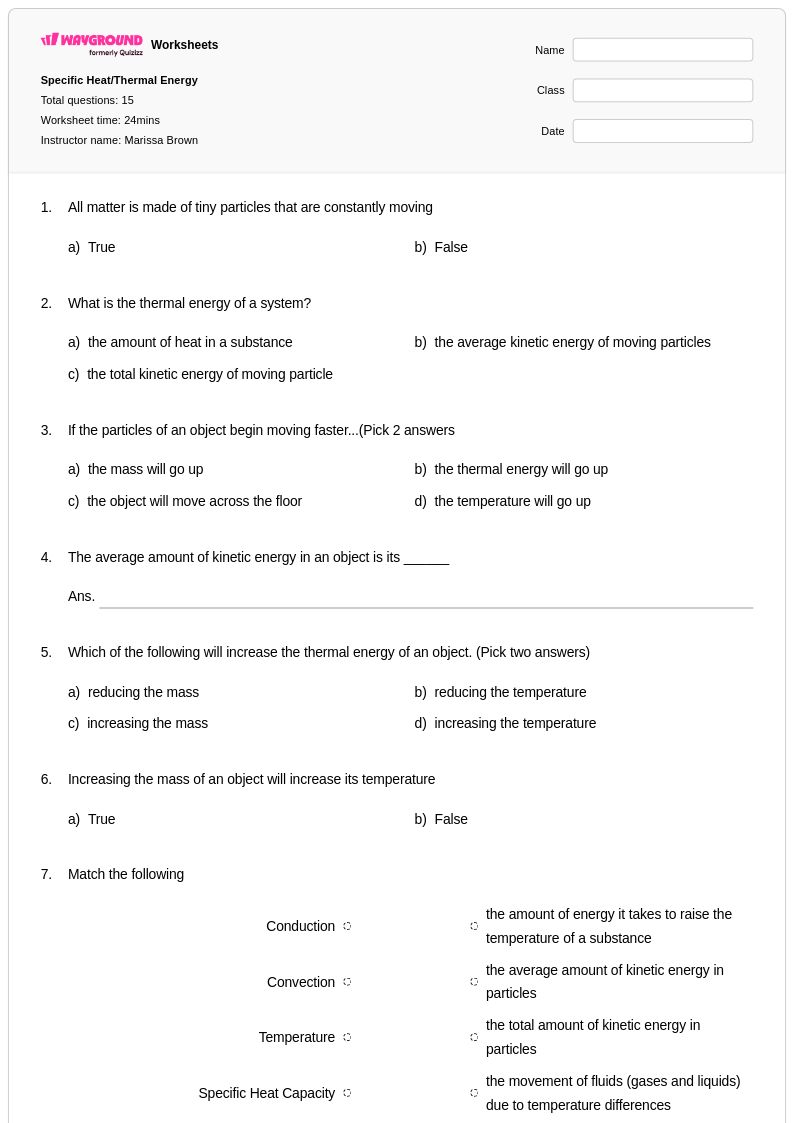
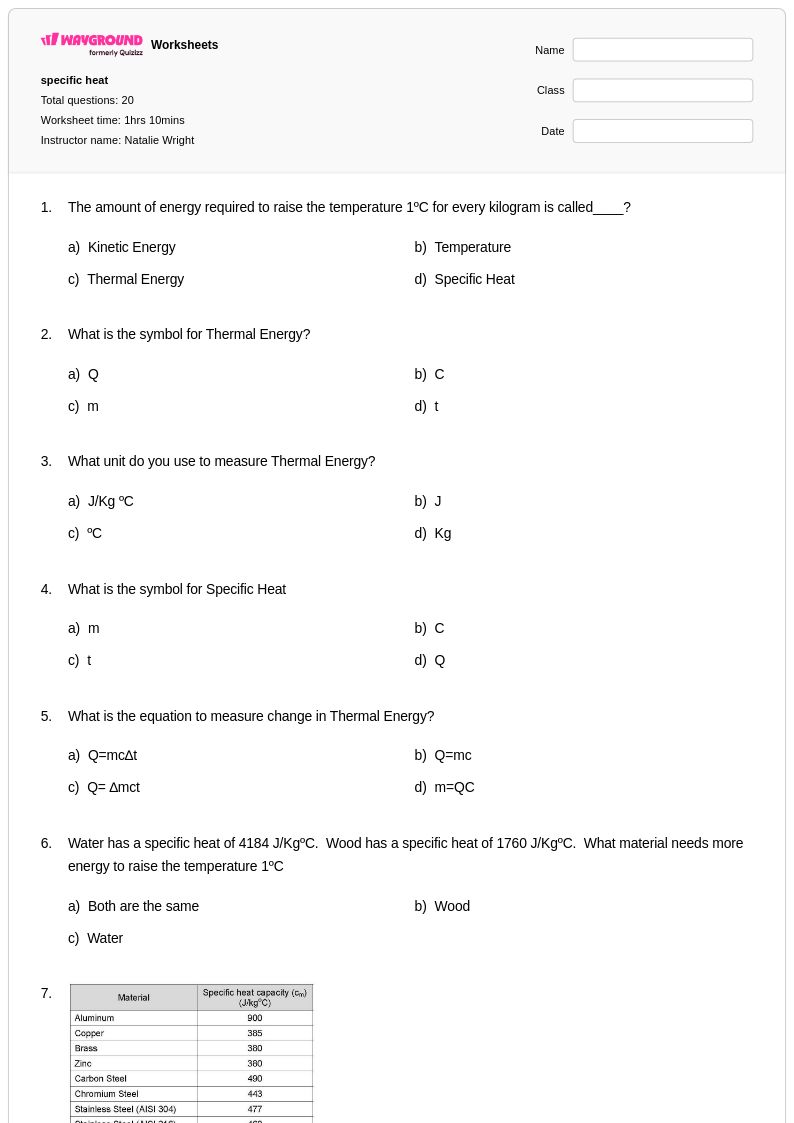
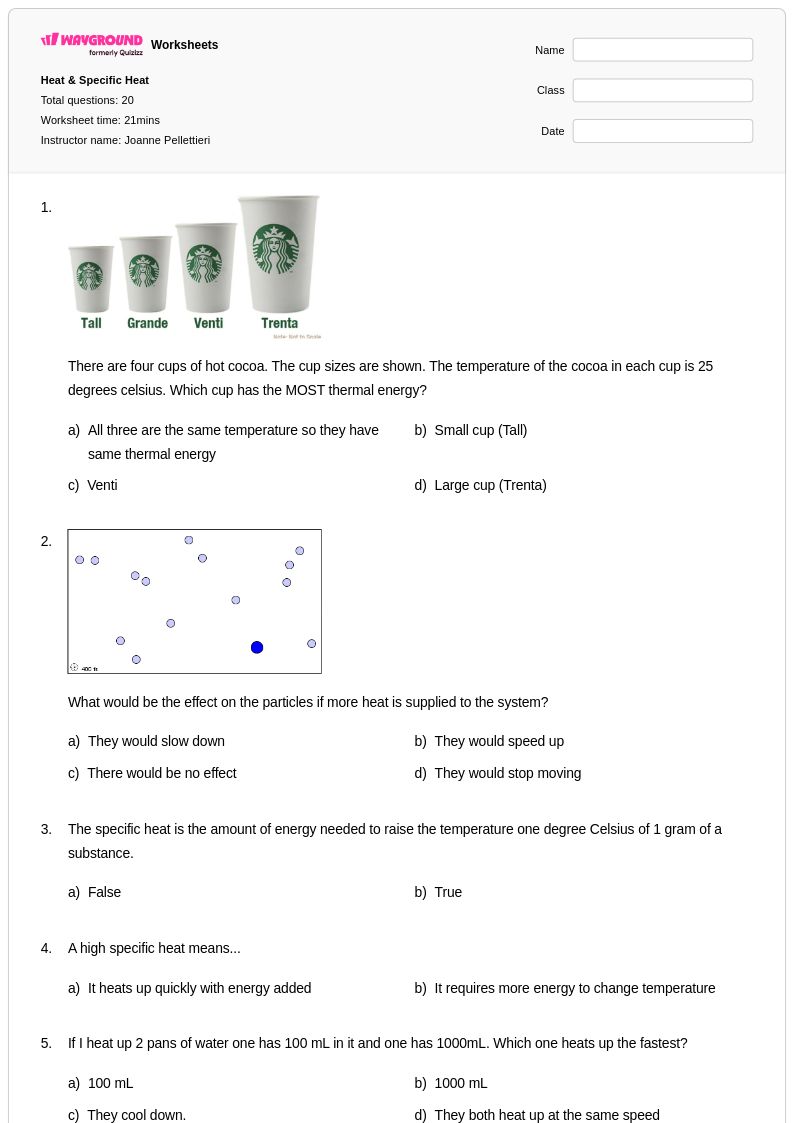
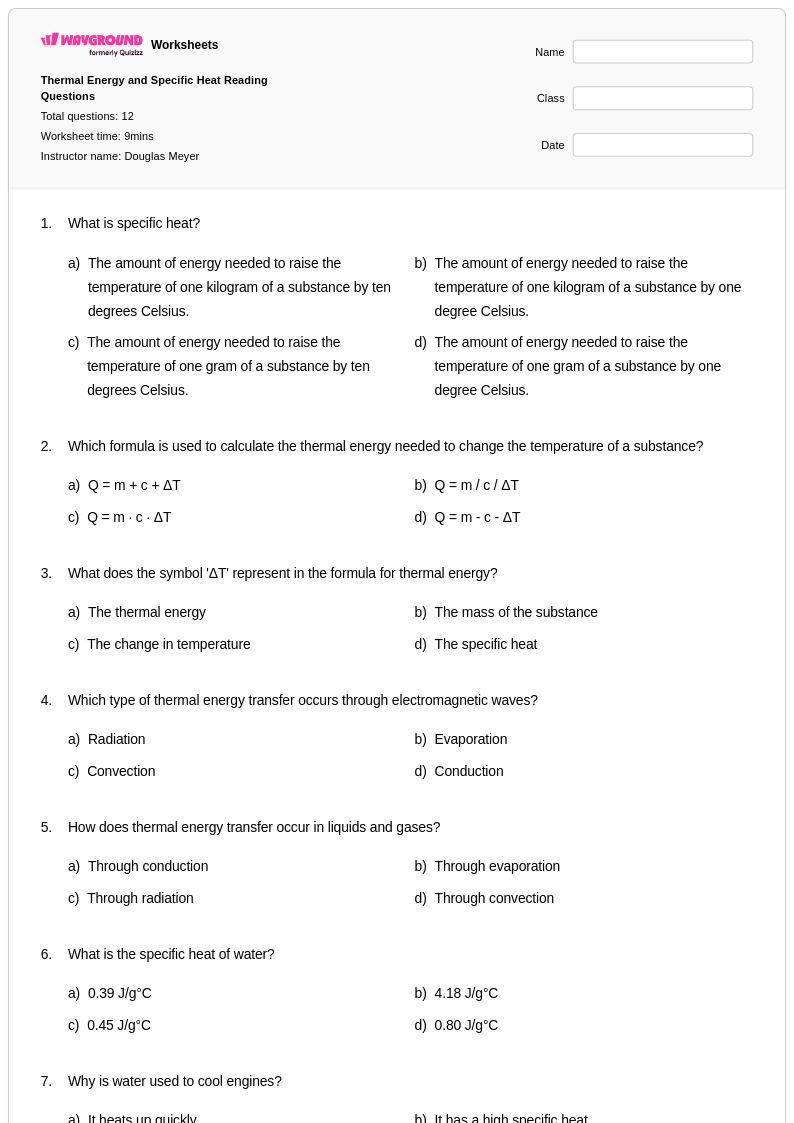
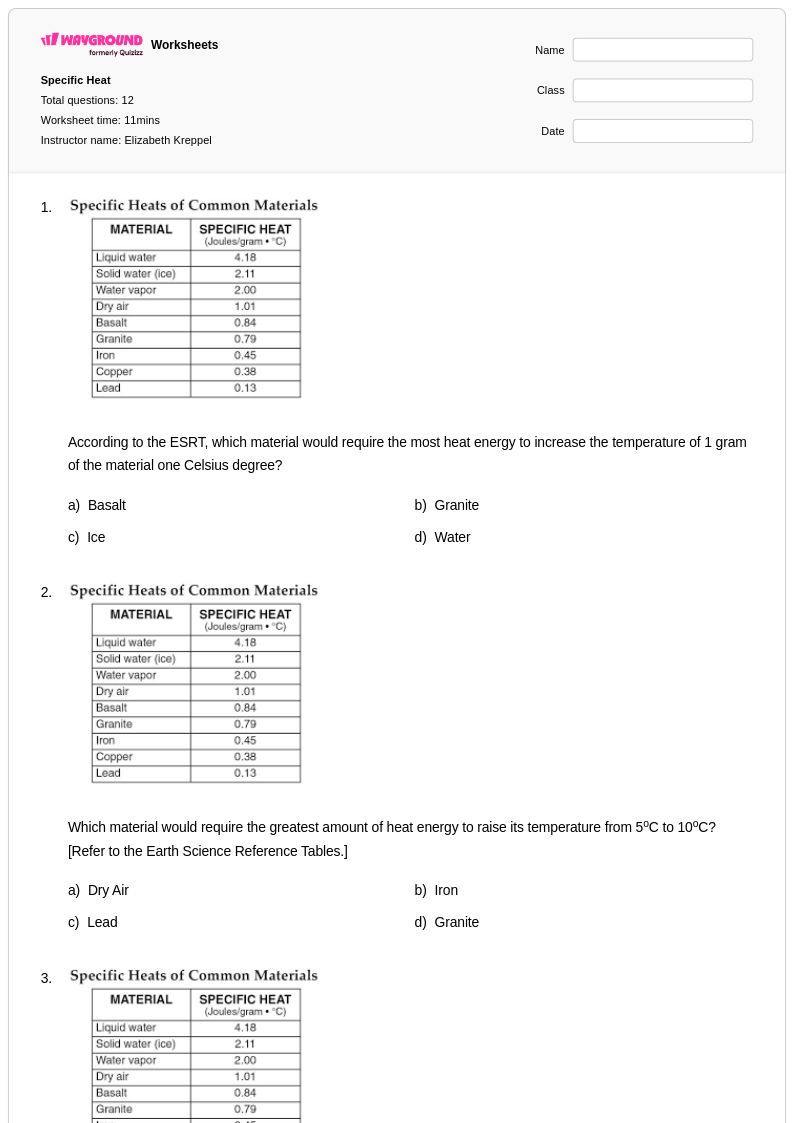
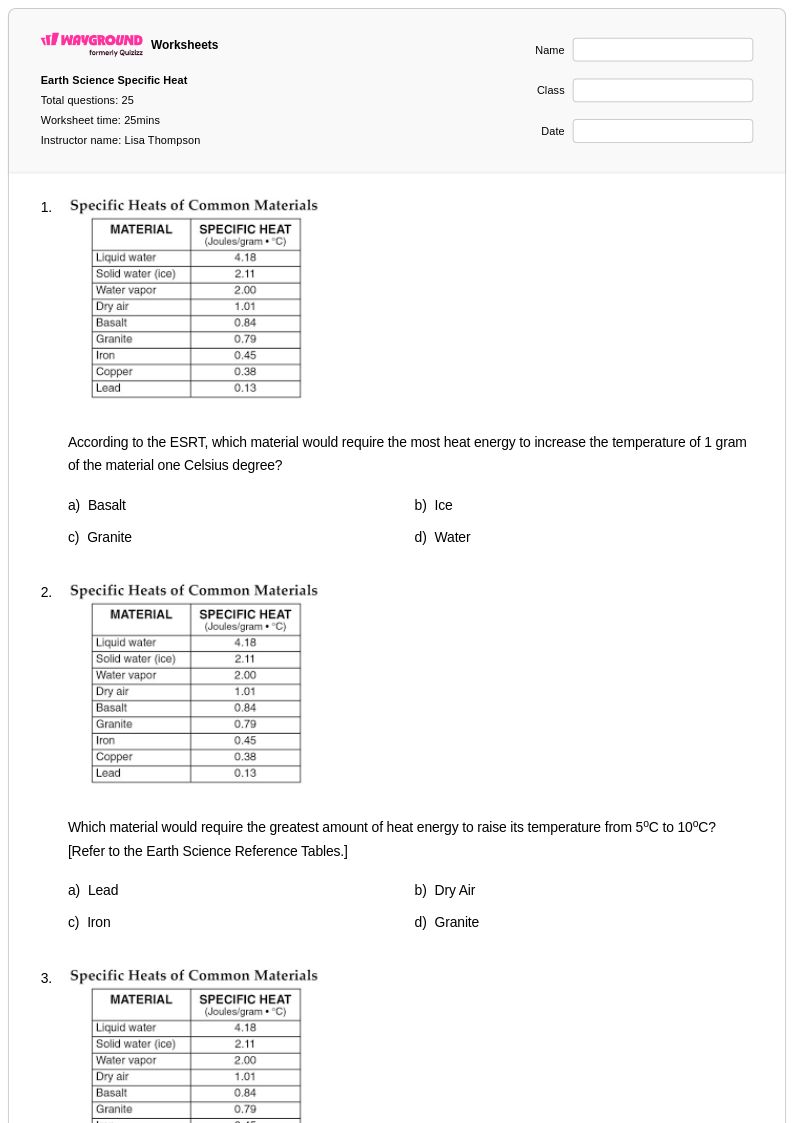
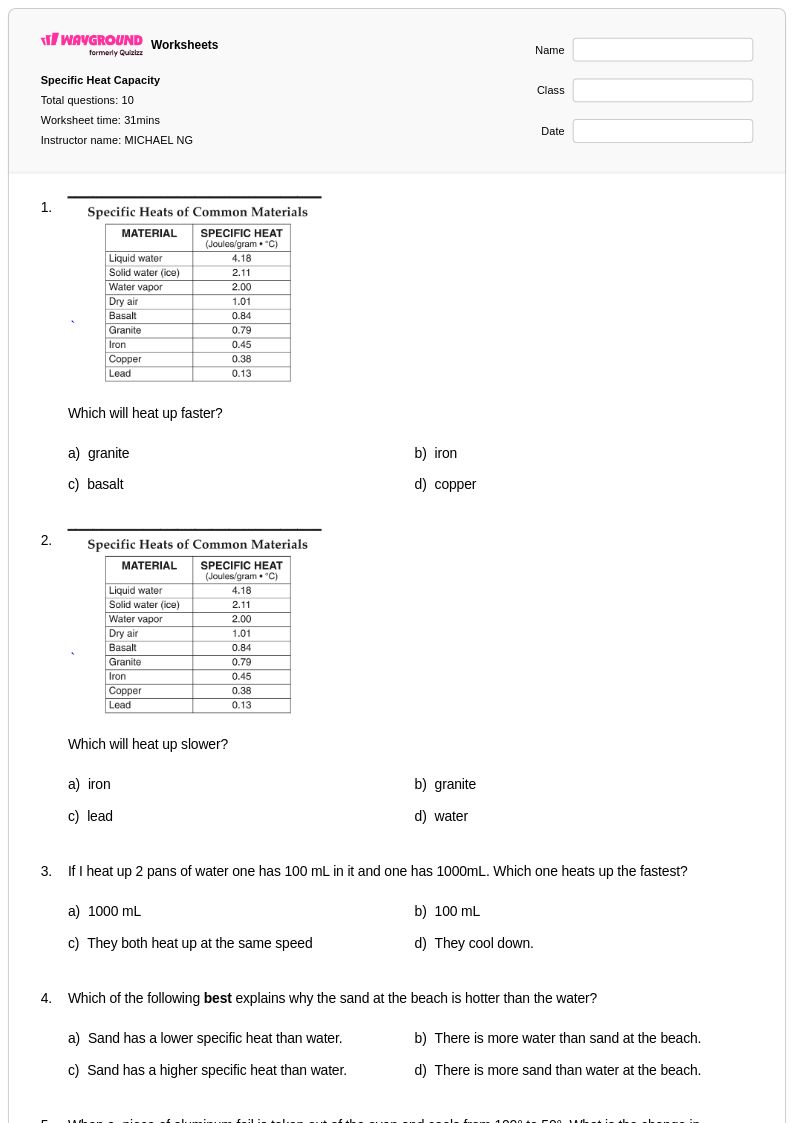
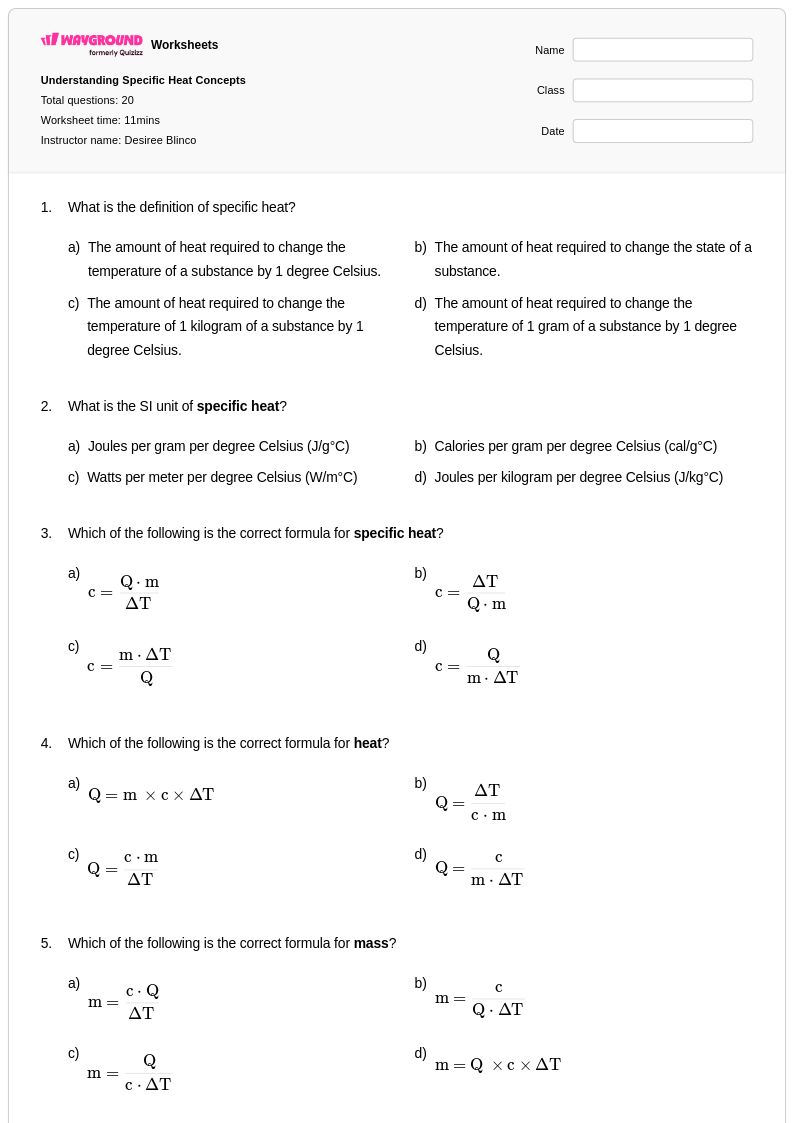
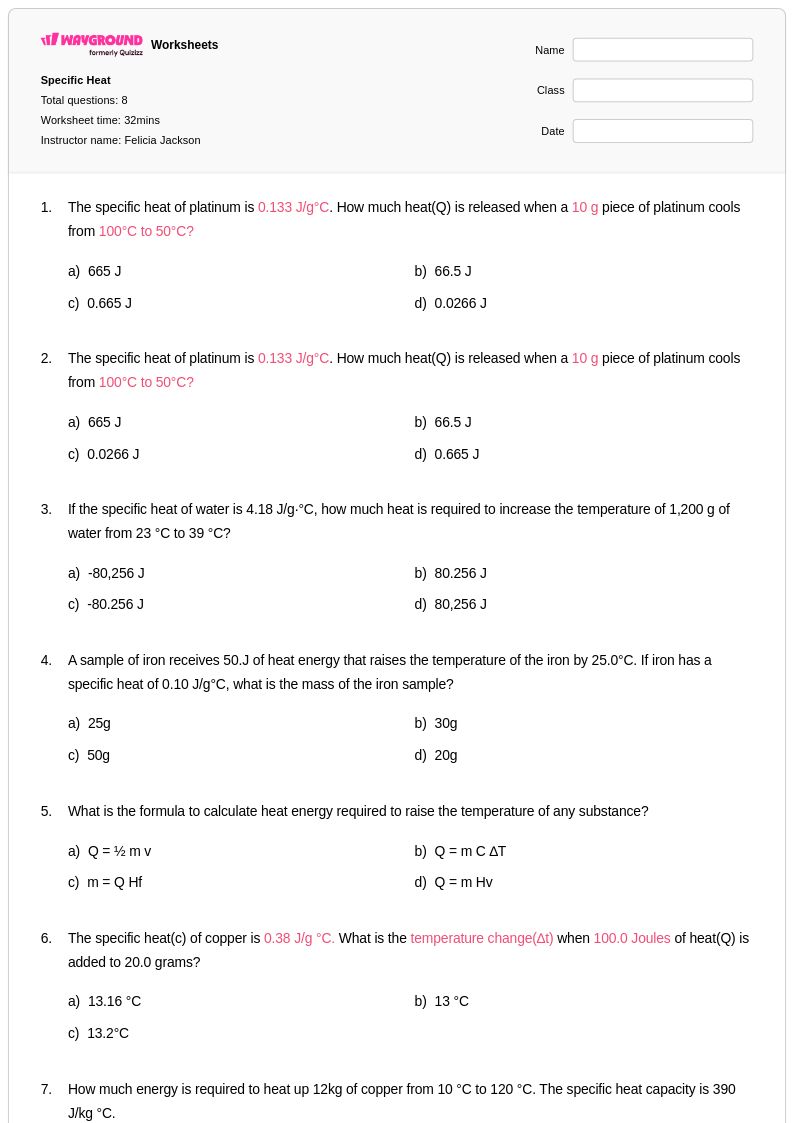
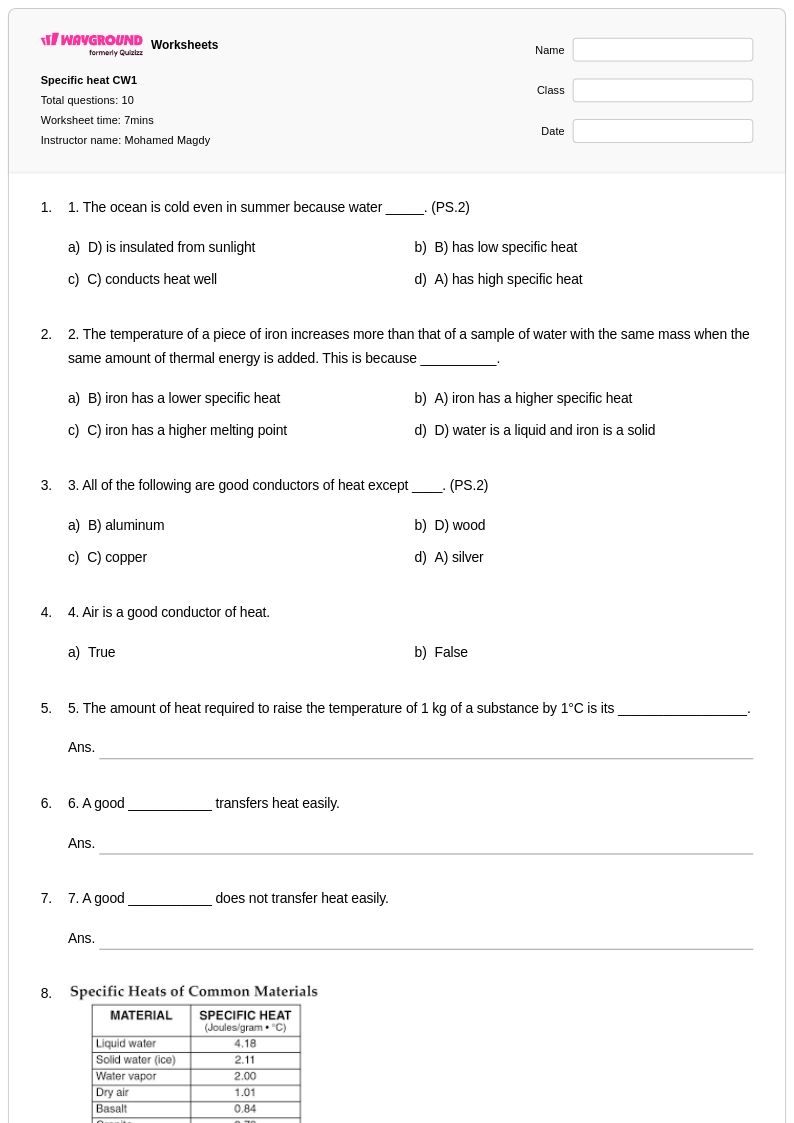
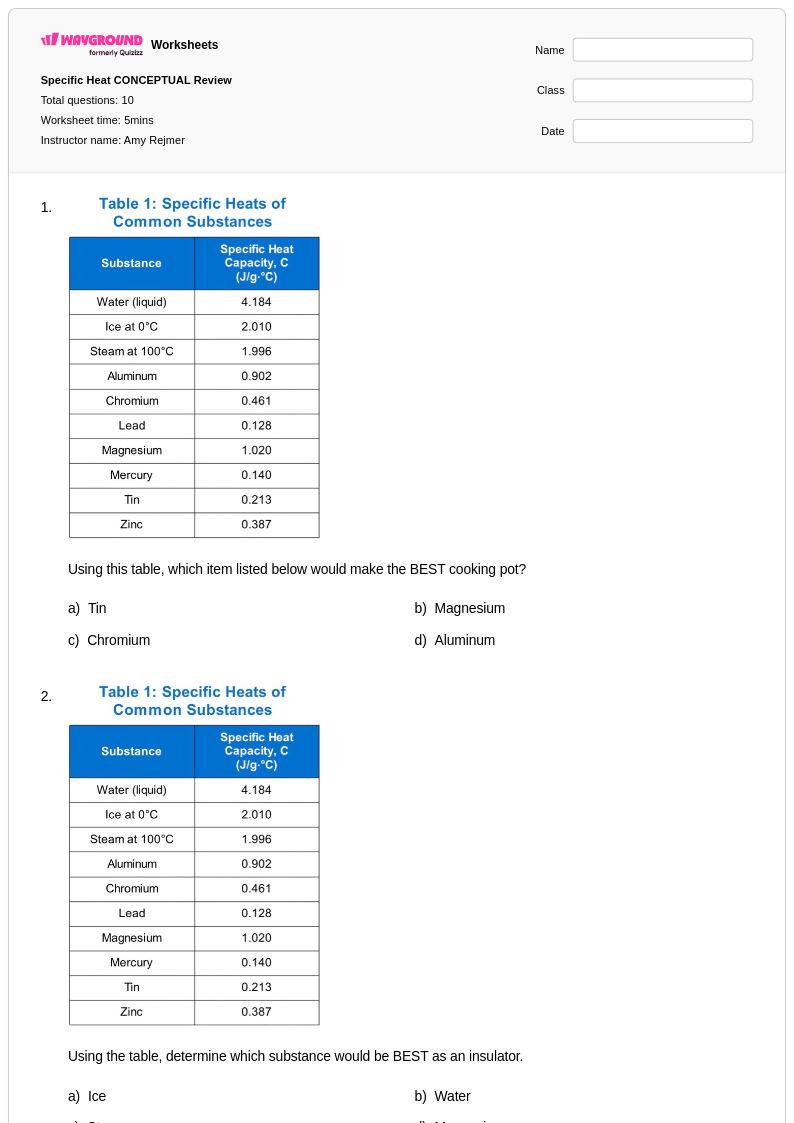
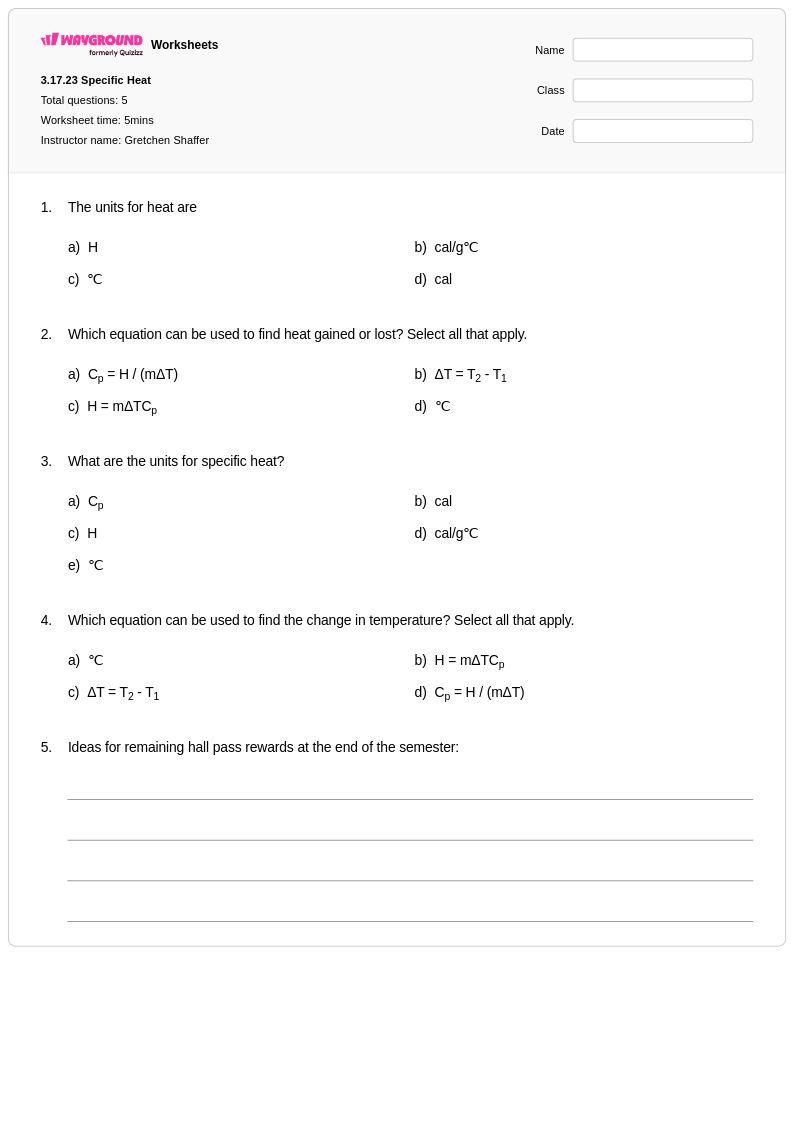
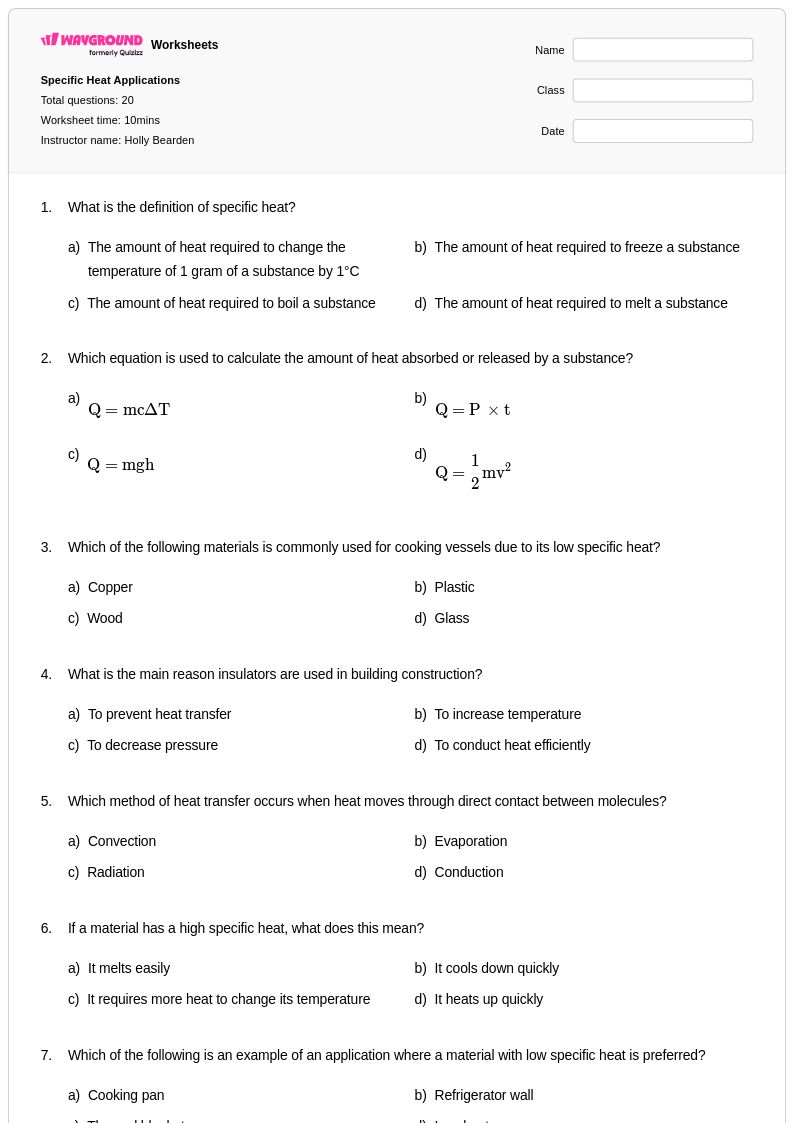
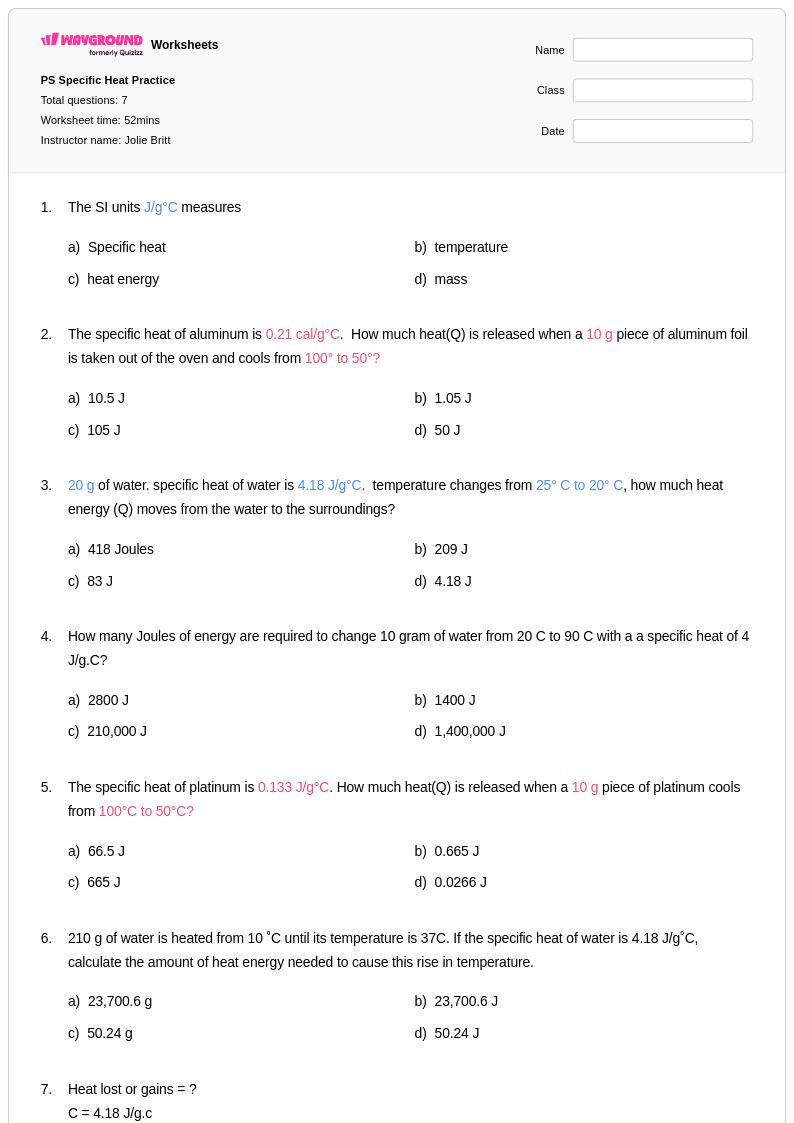
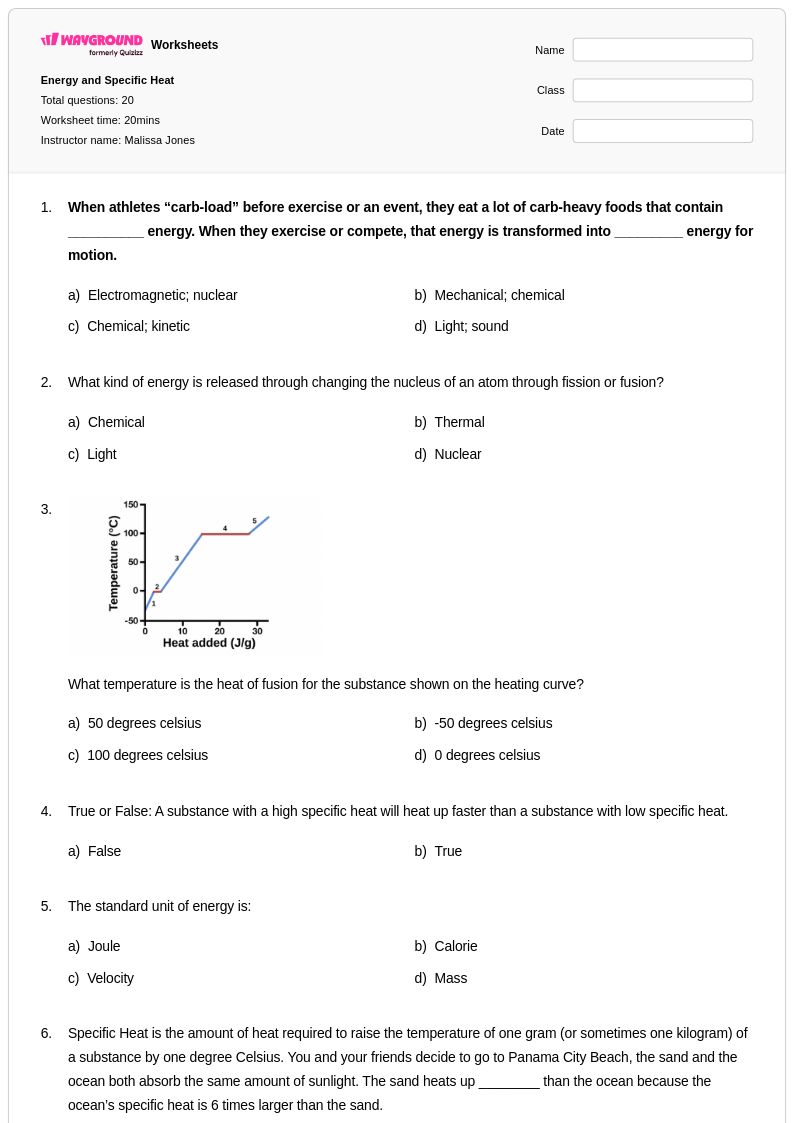
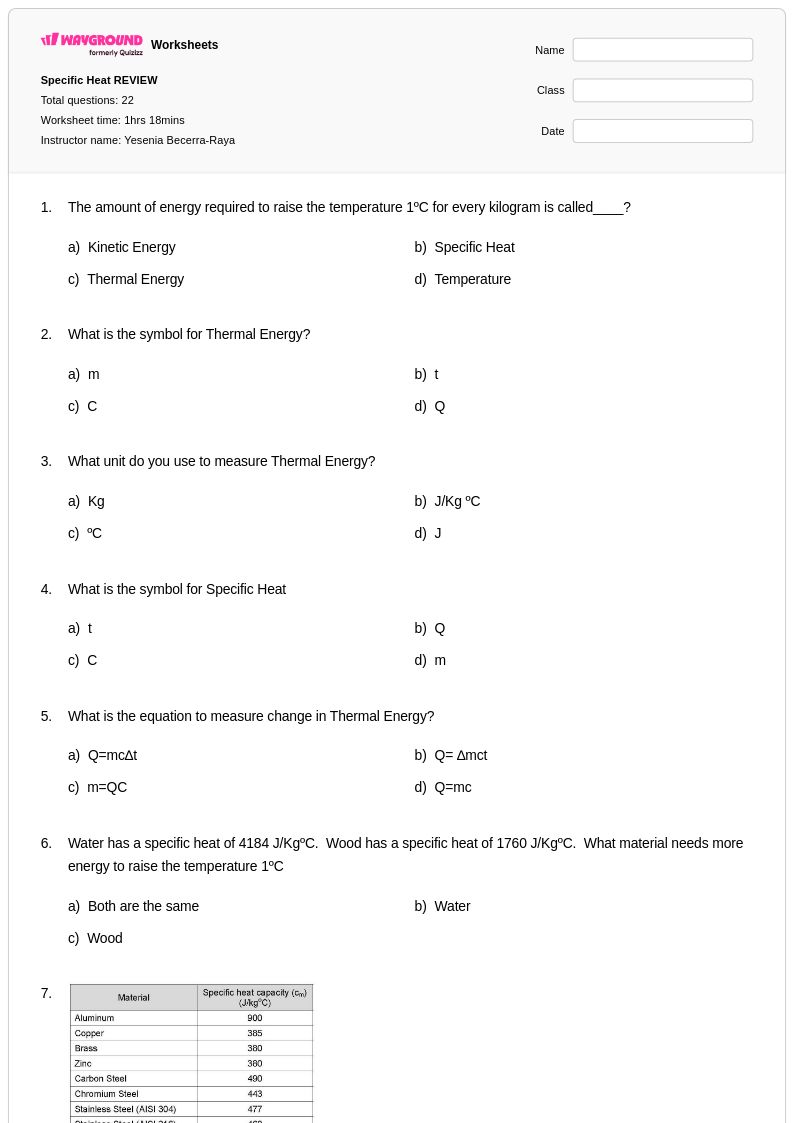
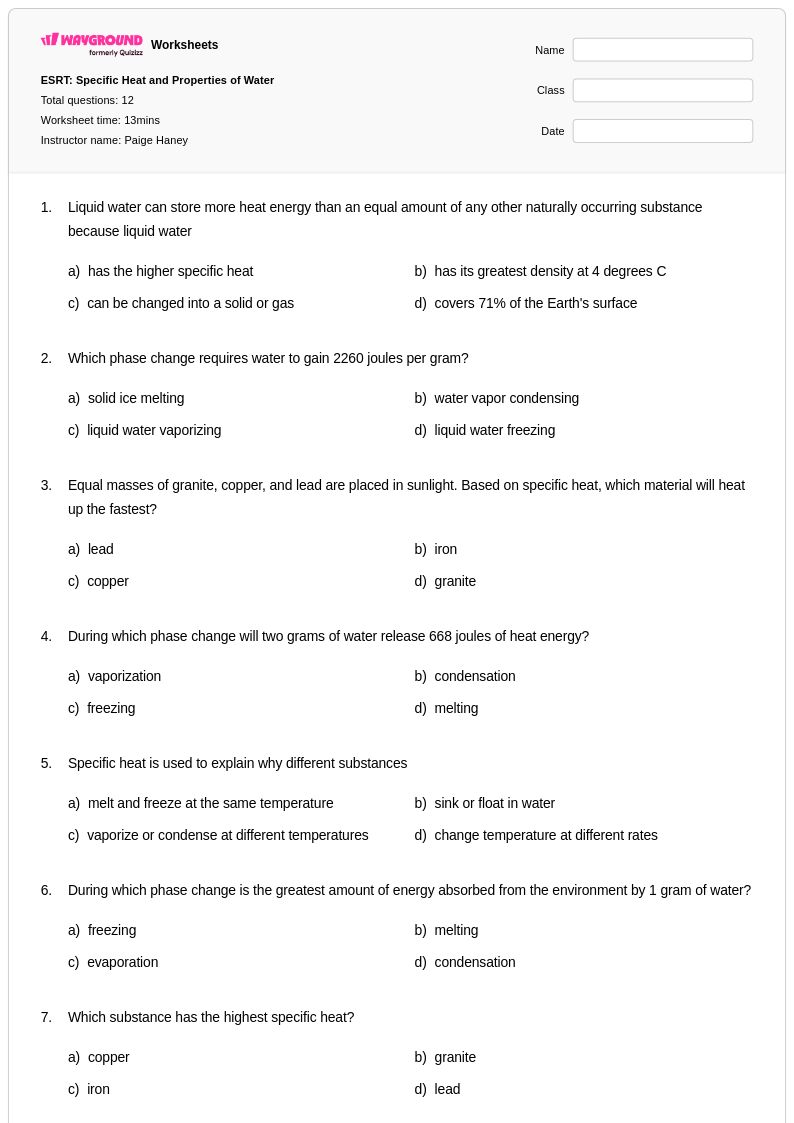
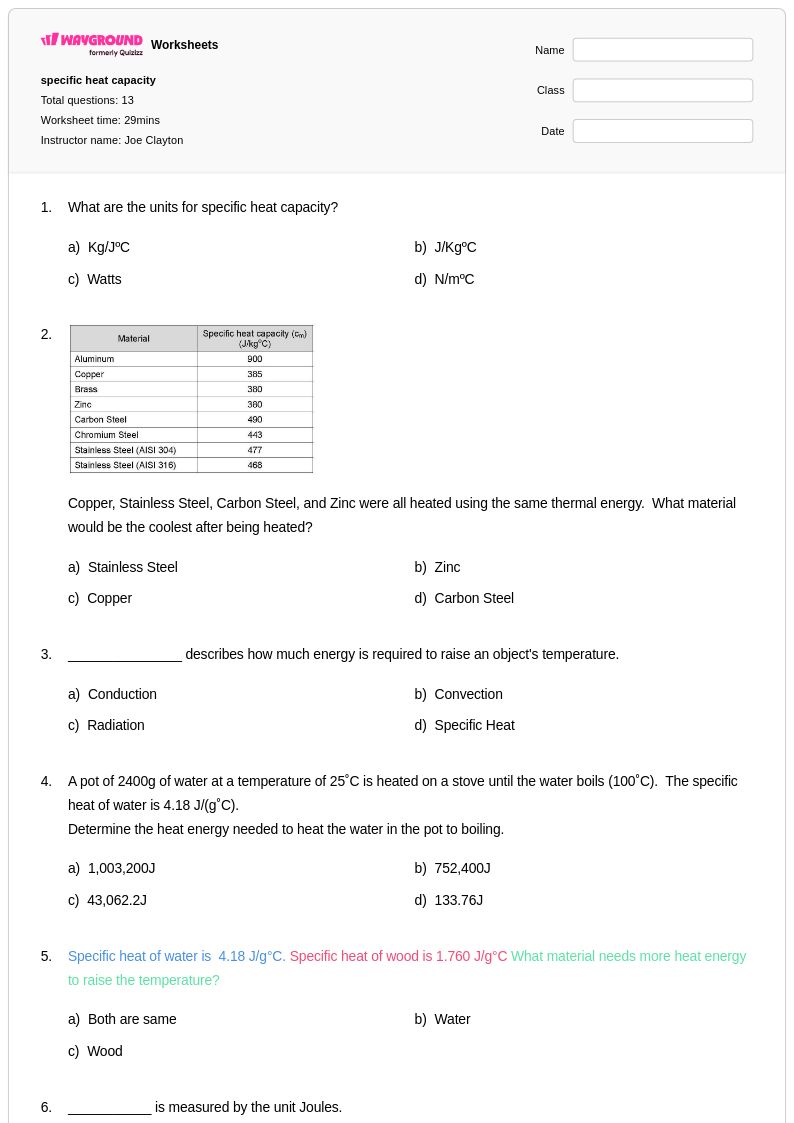
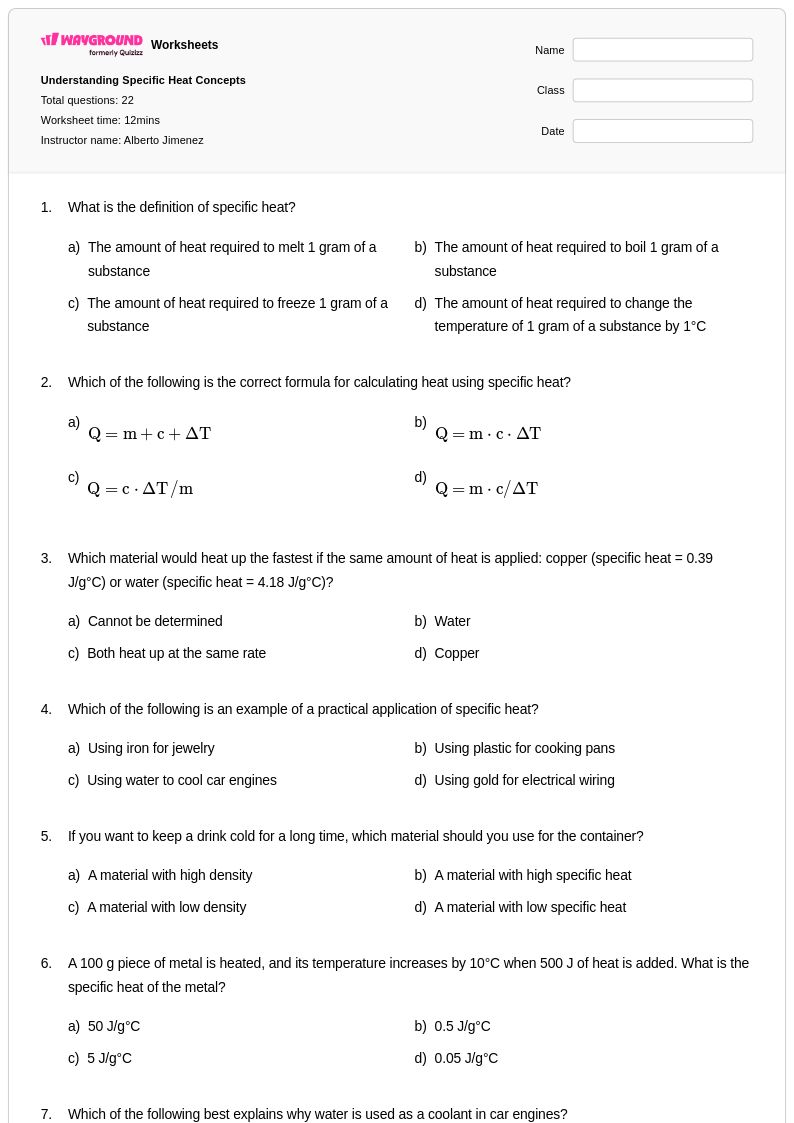
Specific heat worksheets for Grade 9 students available through Wayground (formerly Quizizz) provide comprehensive coverage of thermal energy concepts essential for understanding how different materials absorb and release heat energy. These expertly designed worksheets guide students through calculating specific heat capacity using the fundamental equation Q = mcΔT, analyzing heat transfer scenarios, and comparing the thermal properties of various substances like water, metals, and other common materials. The collection includes practice problems that range from basic specific heat calculations to more complex calorimetry applications, complete with detailed answer keys that support both independent study and classroom instruction. Students develop critical analytical skills as they work through free printable exercises that explore real-world applications of specific heat, from understanding why coastal areas have moderate climates to explaining how cooking utensils are designed for optimal heat transfer.
Wayground (formerly Quizizz) empowers Grade 9 physics teachers with millions of teacher-created specific heat resources that streamline lesson planning and enhance student engagement with thermal physics concepts. The platform's robust search and filtering capabilities allow educators to quickly locate worksheets aligned with specific learning standards, while built-in differentiation tools enable teachers to customize content difficulty levels to meet diverse student needs. Teachers can seamlessly access materials in both printable PDF formats for traditional classroom use and digital formats for interactive learning experiences, making it simple to incorporate specific heat practice into various instructional settings. These versatile resources support targeted skill practice for students who need additional reinforcement with heat capacity calculations, provide enrichment opportunities for advanced learners ready to tackle complex calorimetry problems, and offer efficient remediation tools for addressing common misconceptions about thermal energy transfer.
FAQs
How do I teach specific heat capacity to high school physics students?
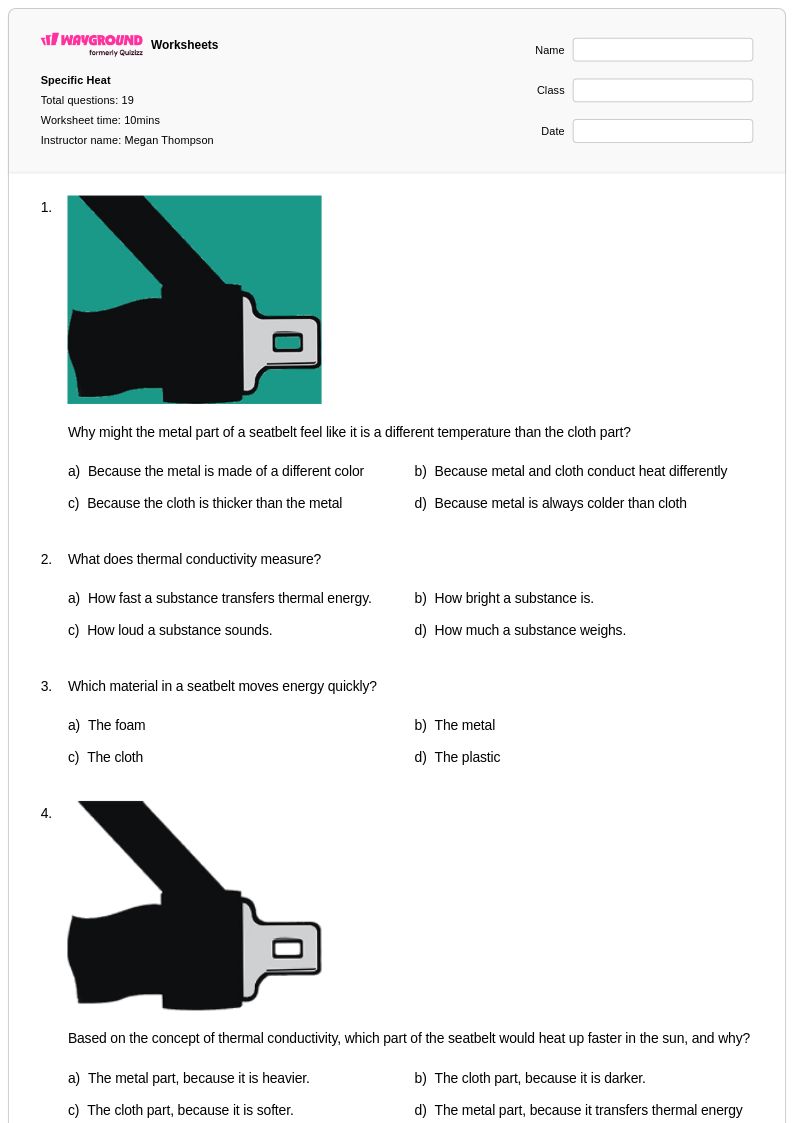
Start by grounding specific heat in everyday experience: ask students why a metal spoon heats up faster than a wooden handle, or why coastal cities have milder climates than inland ones. From there, introduce the formula Q = mcΔT and walk through each variable explicitly before students attempt calculations. Connecting the math to observable phenomena helps students develop intuition for why specific heat values differ across materials, which reduces formula-only memorization and builds genuine conceptual understanding.
What types of problems should students practice to master specific heat calculations?
Students should practice three core problem types: solving directly for heat energy (Q), solving for temperature change (ΔT), and solving for an unknown specific heat capacity (c) to identify a mystery substance. Calorimetry problems that model heat exchange between two substances at different temperatures add an important layer of complexity. Real-world contexts such as heating metals, cooling water, or comparing materials used in cookware make the problems more meaningful and help students see why specific heat matters beyond the formula.
What mistakes do students commonly make when solving specific heat problems?
The most common error is mishandling units, particularly confusing joules per gram per degree Celsius with kilojoules per kilogram per kelvin, which leads to answers that are off by factors of 1,000. Students also frequently forget that ΔT must be calculated as final temperature minus initial temperature, causing sign errors in heat transfer problems. In calorimetry problems, a recurring mistake is failing to apply the principle that heat lost by one substance equals heat gained by another, which means students set up only one side of the equation instead of both.
How do I differentiate specific heat instruction for students at different skill levels?
For students who are still building comfort with algebra, start with single-variable problems where Q and m are given and students solve only for ΔT before introducing multi-step calorimetry. More advanced students can be challenged with problems that require unit conversions, work with unfamiliar substances, or involve heat loss to the environment. On Wayground, teachers can apply accommodations such as reduced answer choices for students who need cognitive support, or enable Read Aloud for students with reading challenges, allowing the same worksheet to serve the full range of learners without separate preparation.
How can I use Wayground's specific heat worksheets in my classroom?
Wayground's specific heat worksheets are available as printable PDFs, making them easy to distribute for in-class problem sets, homework, or test review. They are also available in digital formats, which allows teachers to assign them for online or hybrid learning environments. Teachers can host worksheets as a quiz directly on Wayground, giving students an interactive experience while automatically collecting responses. Every worksheet includes a detailed answer key, so teachers can use them for independent practice, peer review, or self-checking activities without additional preparation.
How does specific heat relate to calorimetry, and should I teach them together?
Specific heat is a prerequisite concept for calorimetry because calorimetry problems require students to apply Q = mcΔT to calculate heat exchange between substances. Teaching them together is effective once students are fluent with the base formula, because calorimetry provides a natural extension that shows specific heat in a two-substance system rather than isolation. Introducing calorimetry too early, before students have practiced single-substance problems, tends to overwhelm students with algebraic complexity before they have conceptual footing.