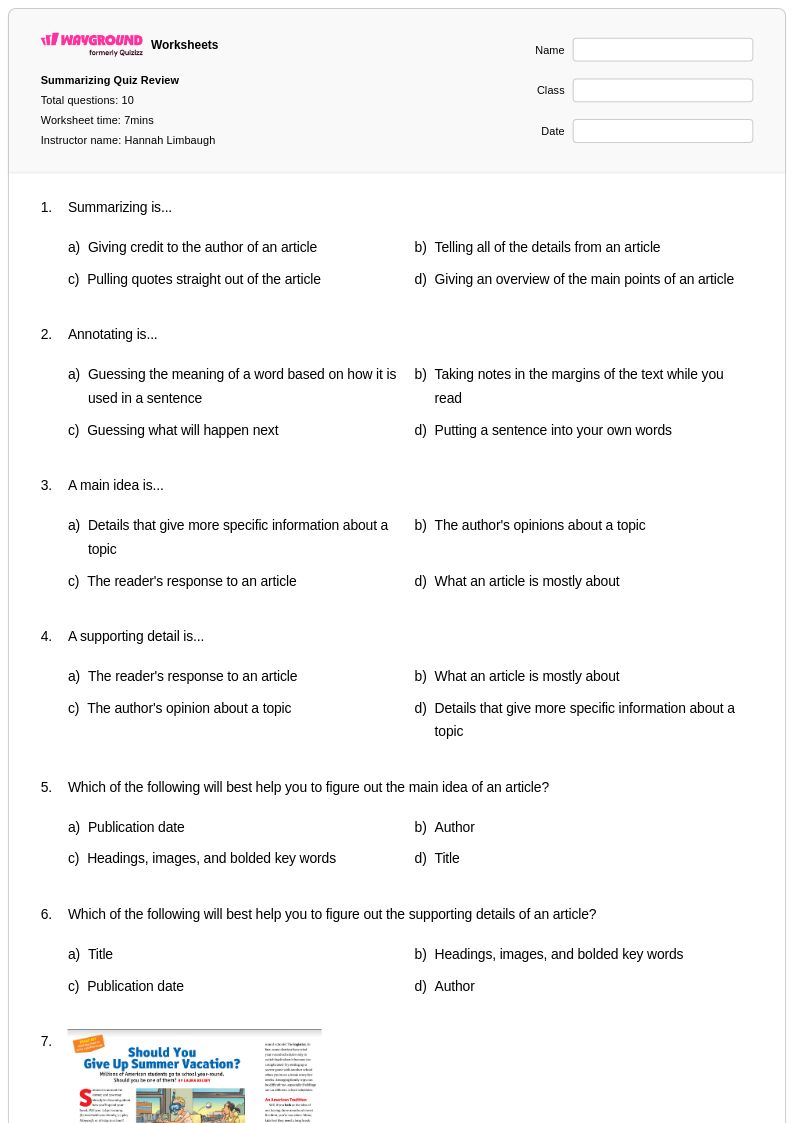
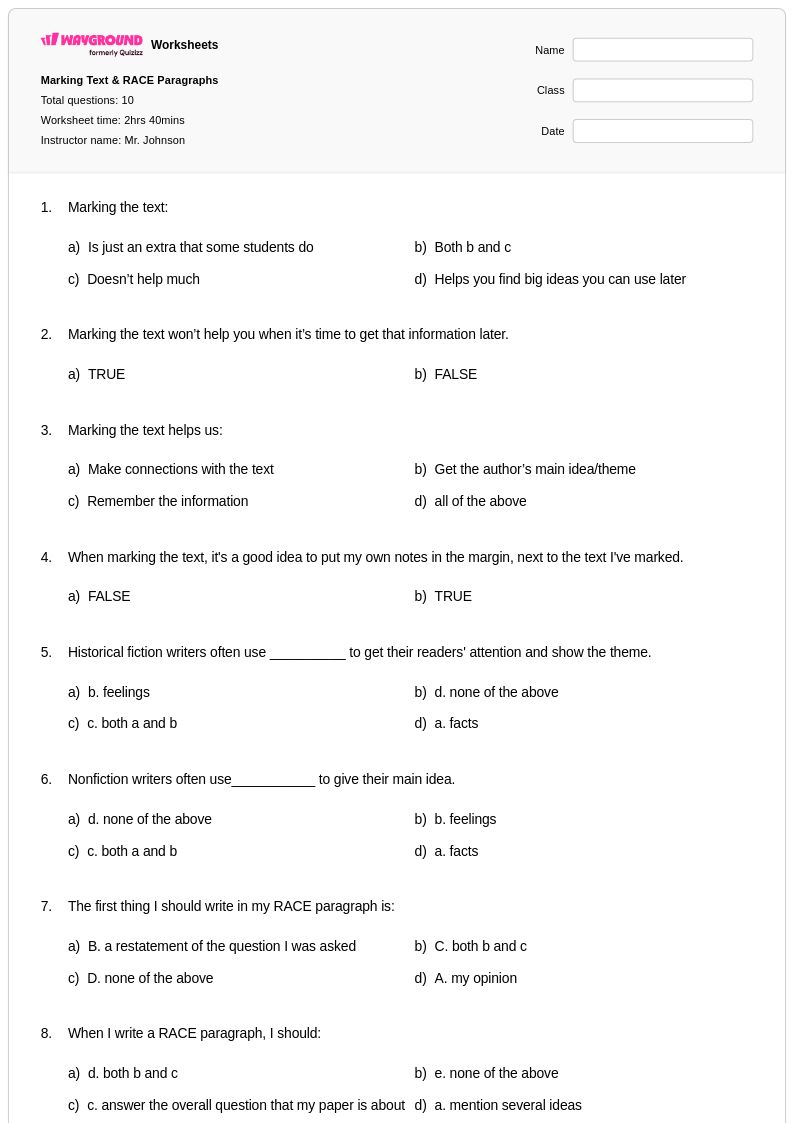
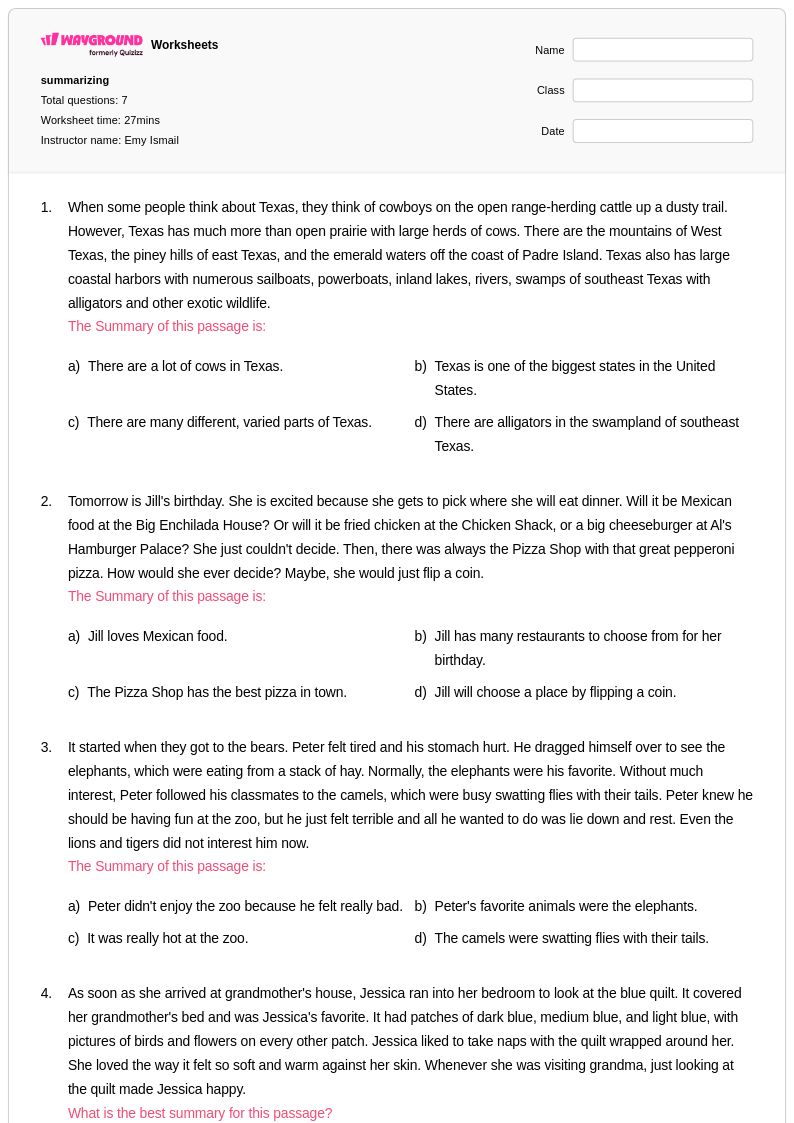
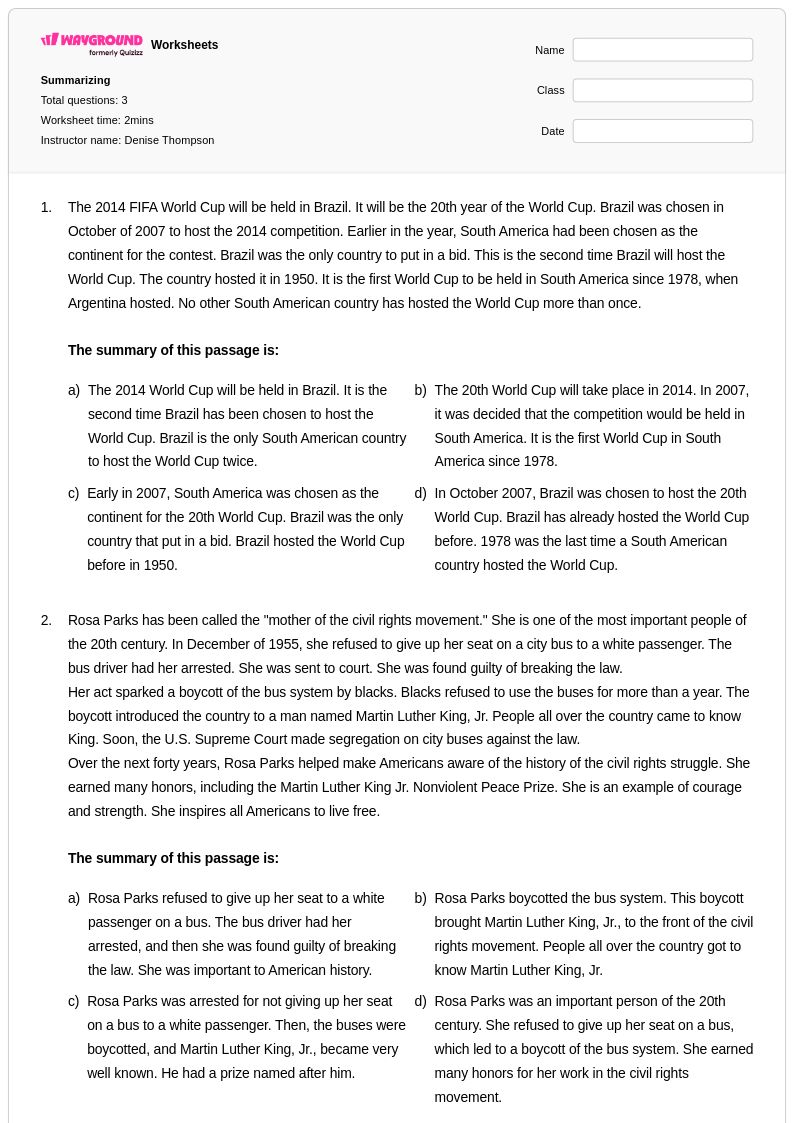
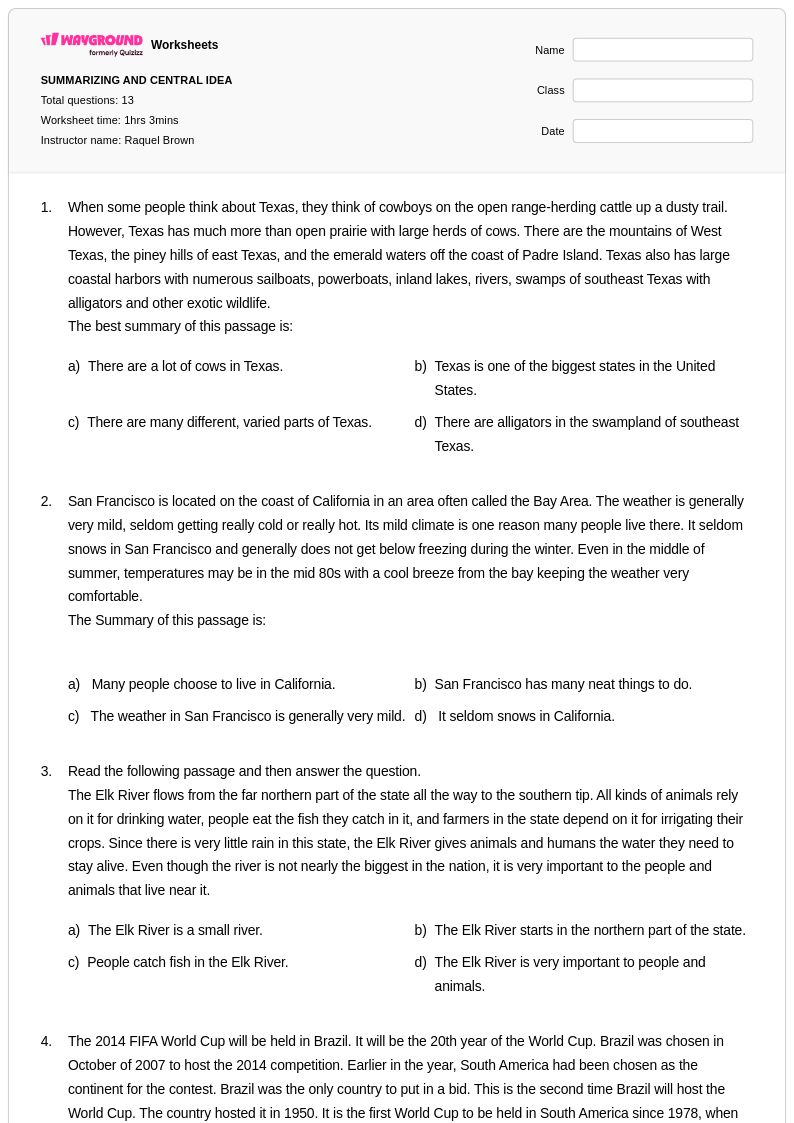
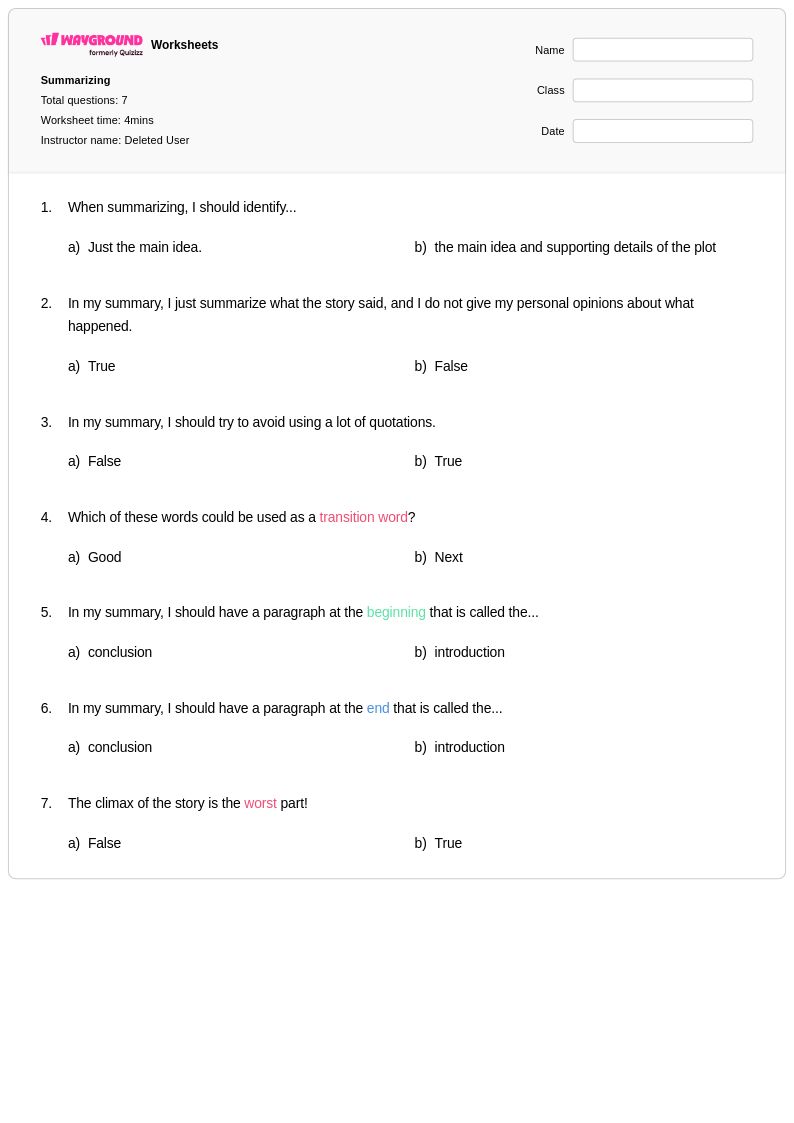
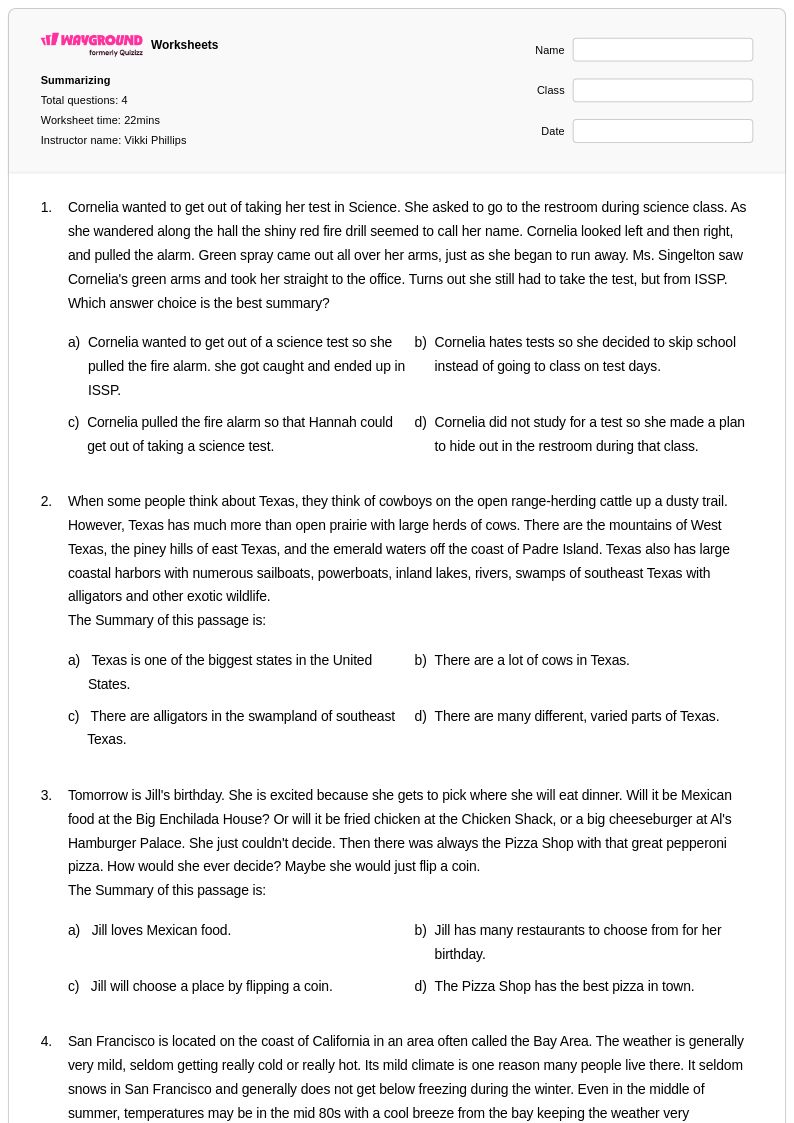
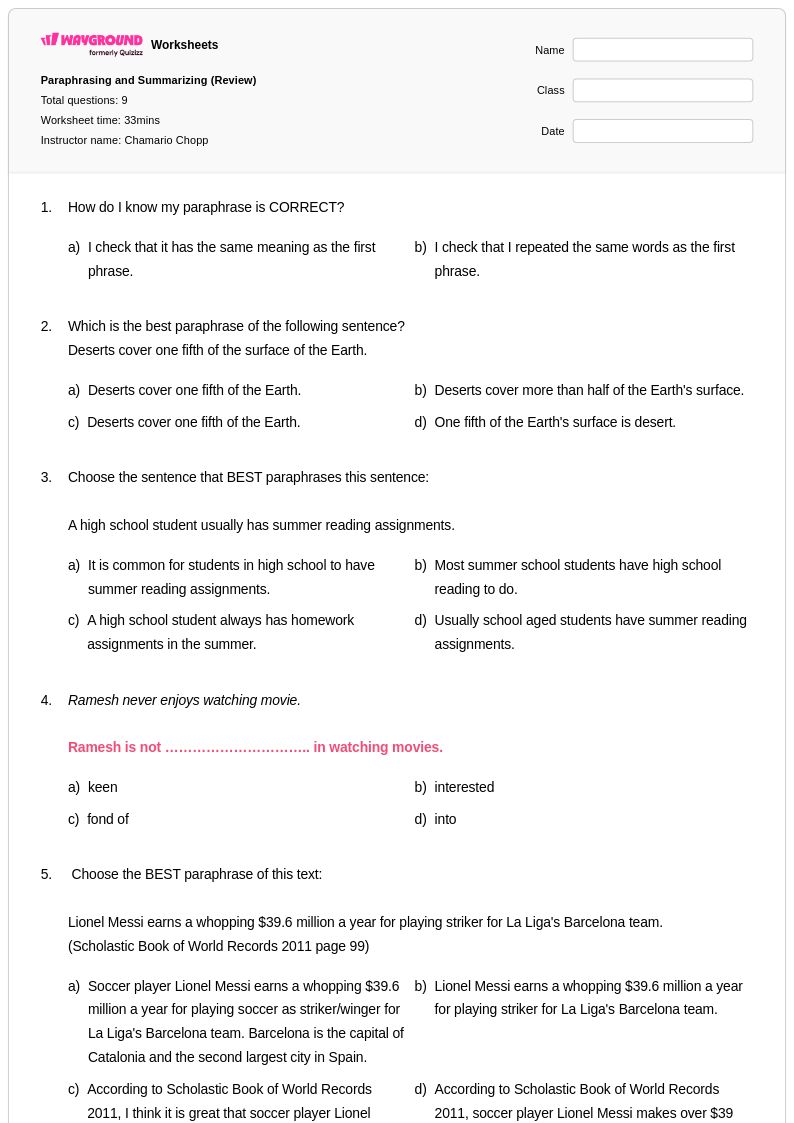
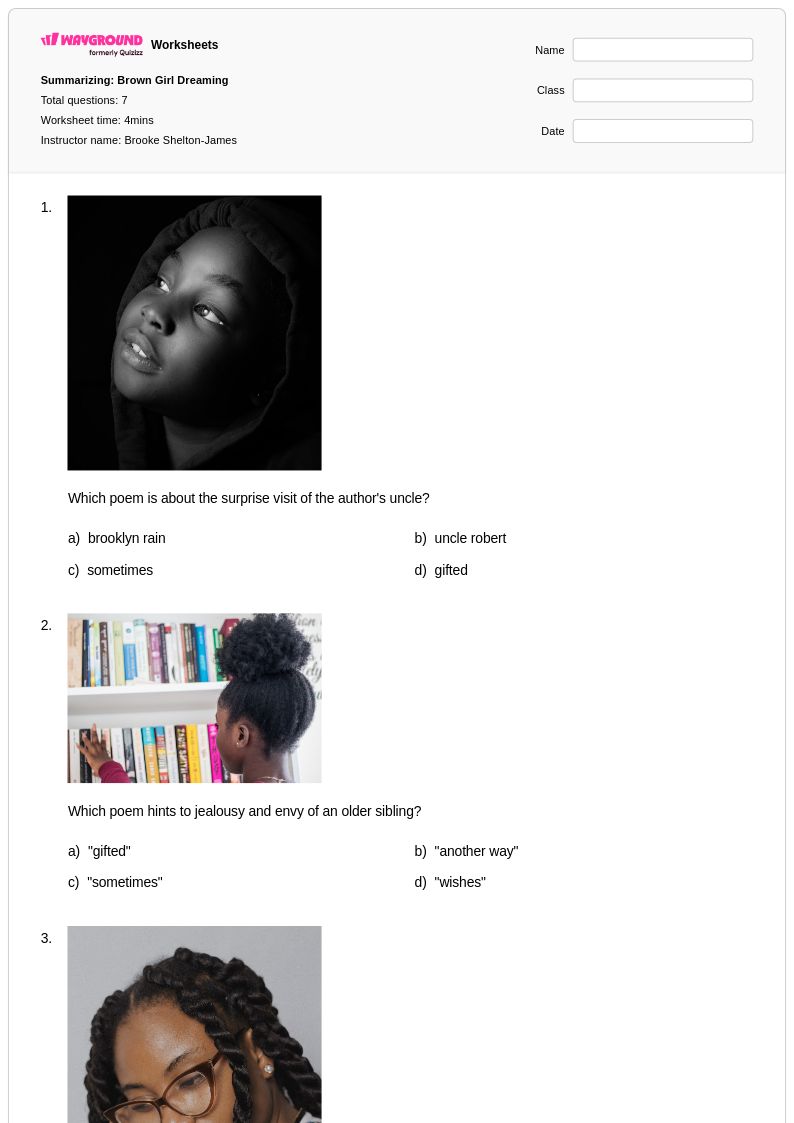
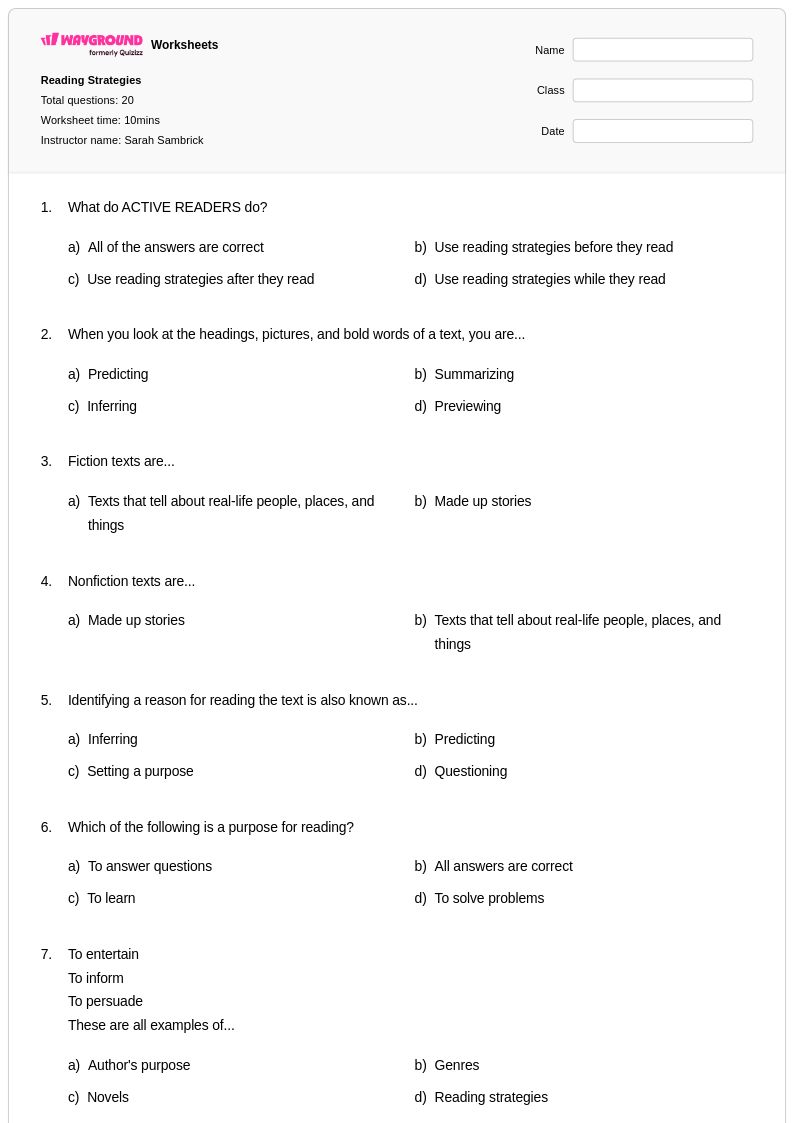
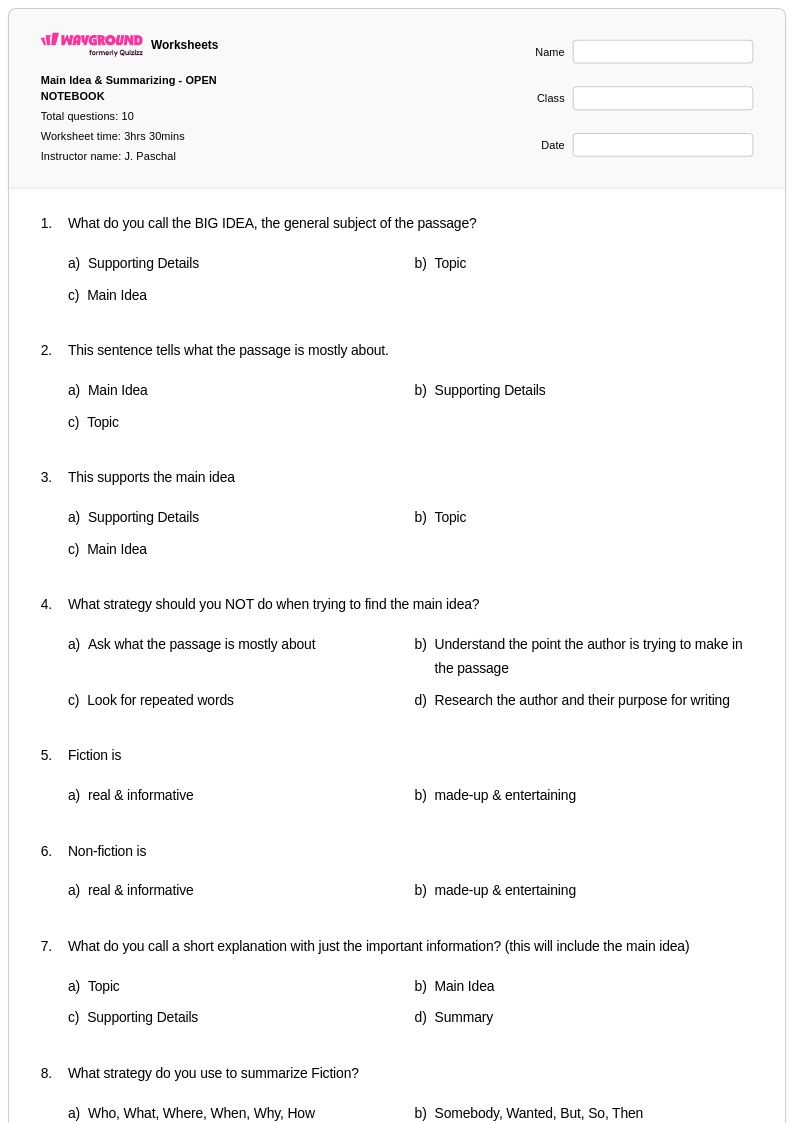
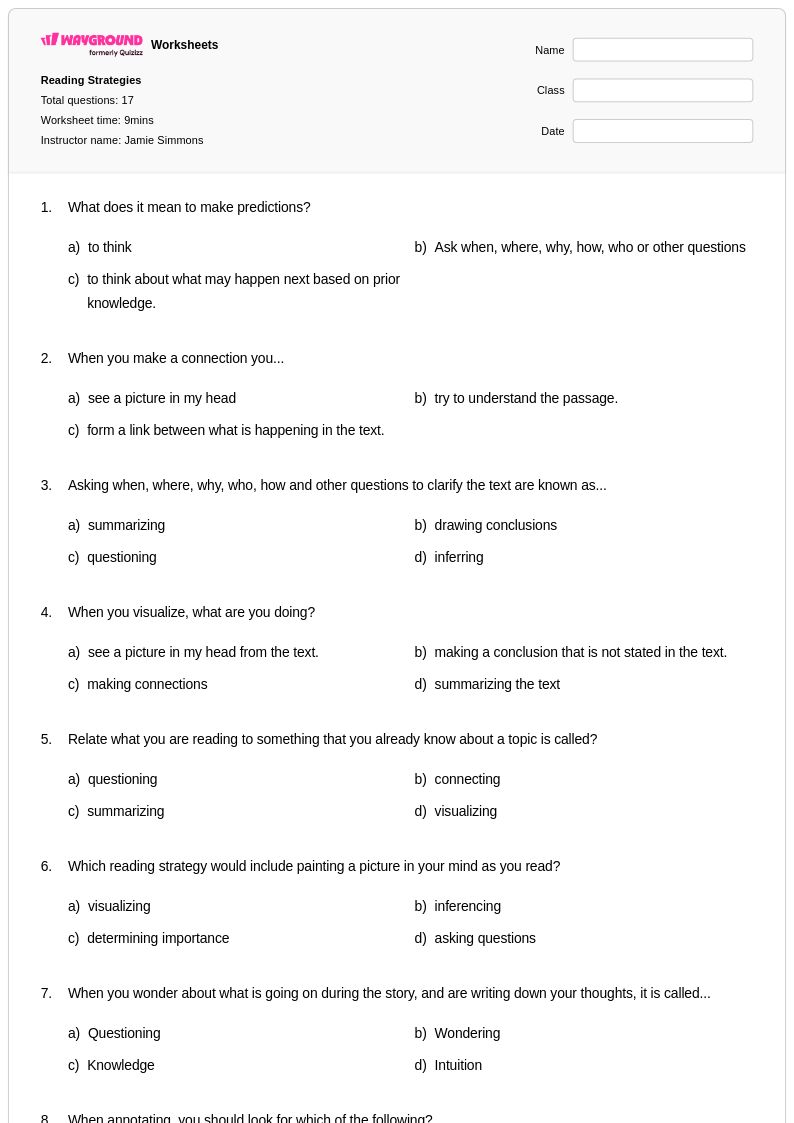
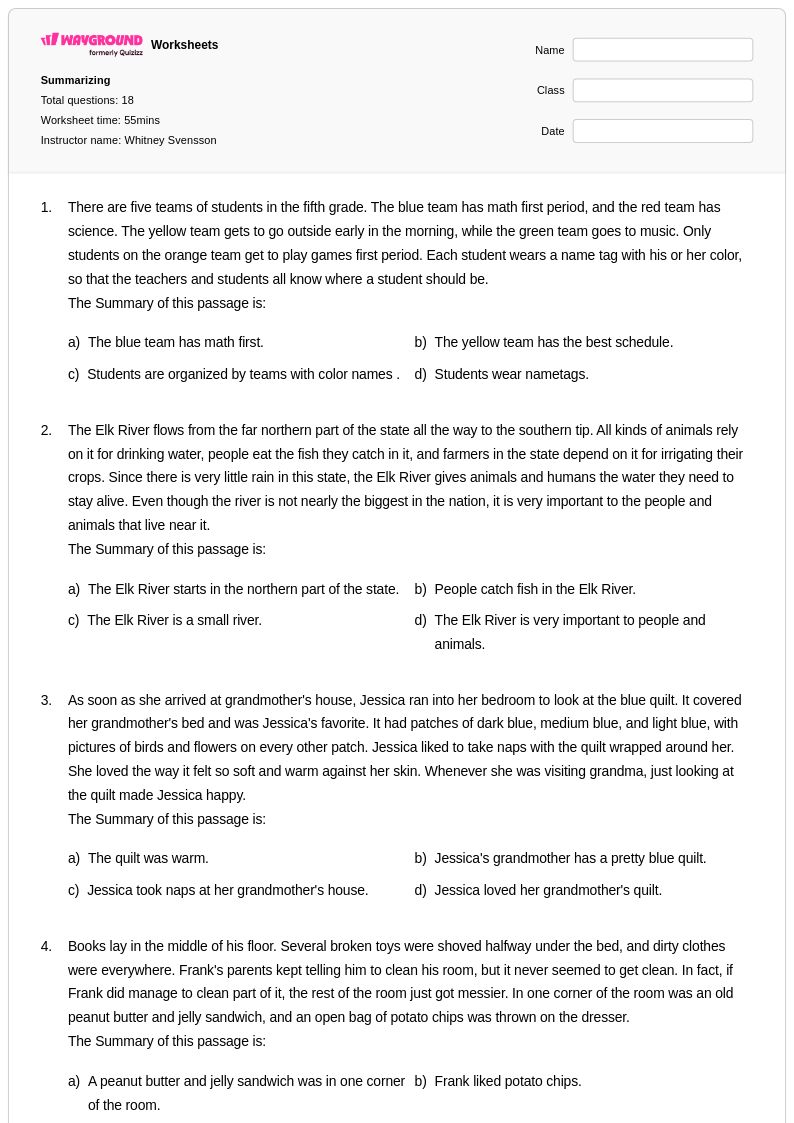
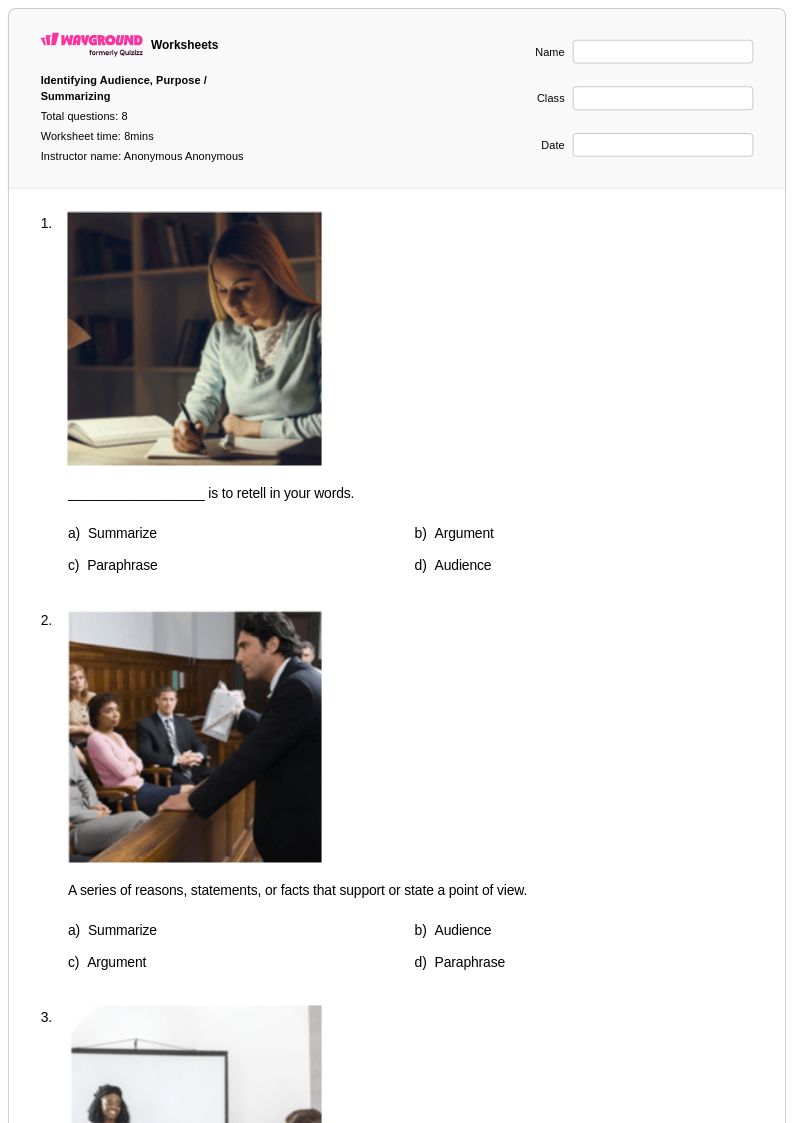
Grade 6 summarizing worksheets from Wayground help students master essential reading comprehension skills through engaging printables, practice problems, and comprehensive answer keys available as free PDF downloads.
Explore printable Summarizing worksheets for Grade 6
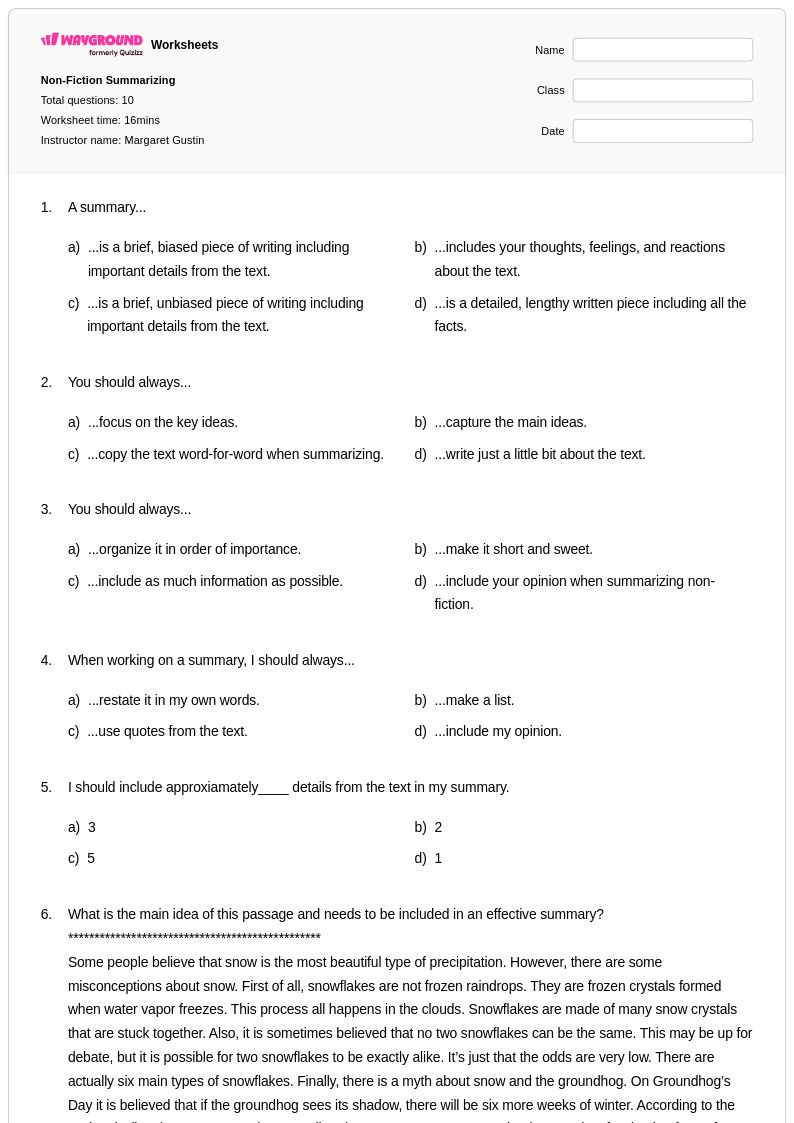
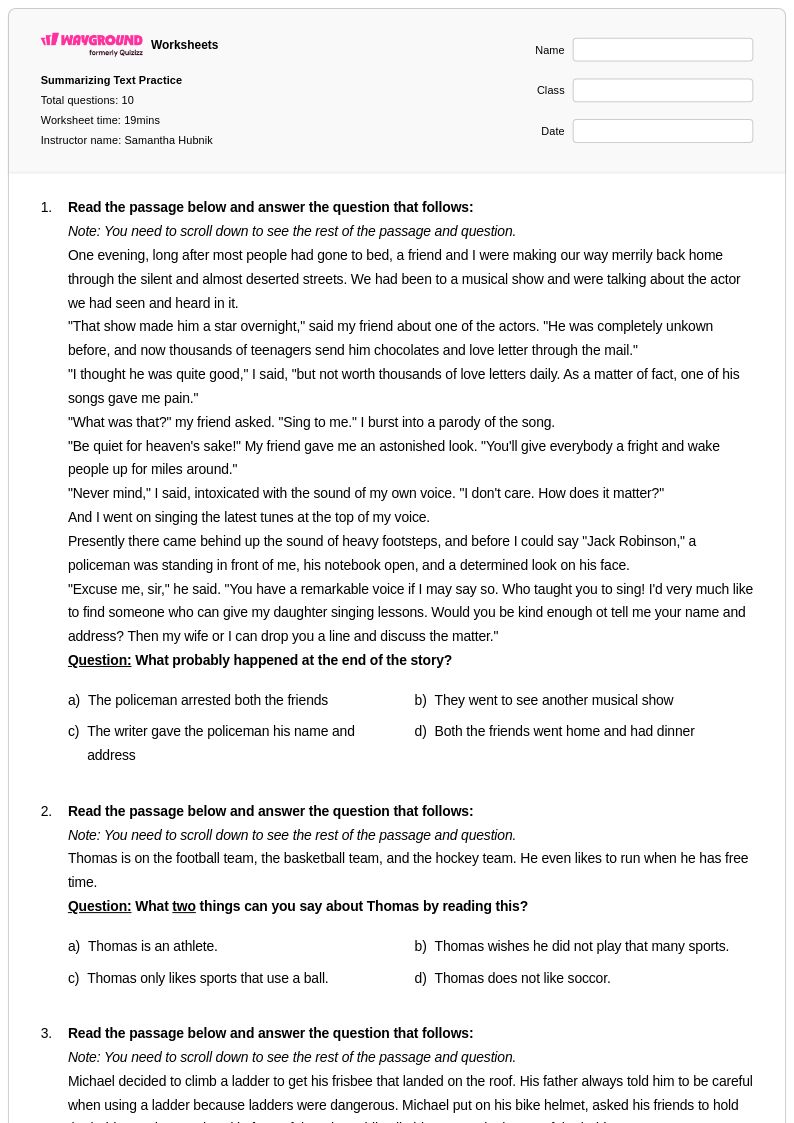
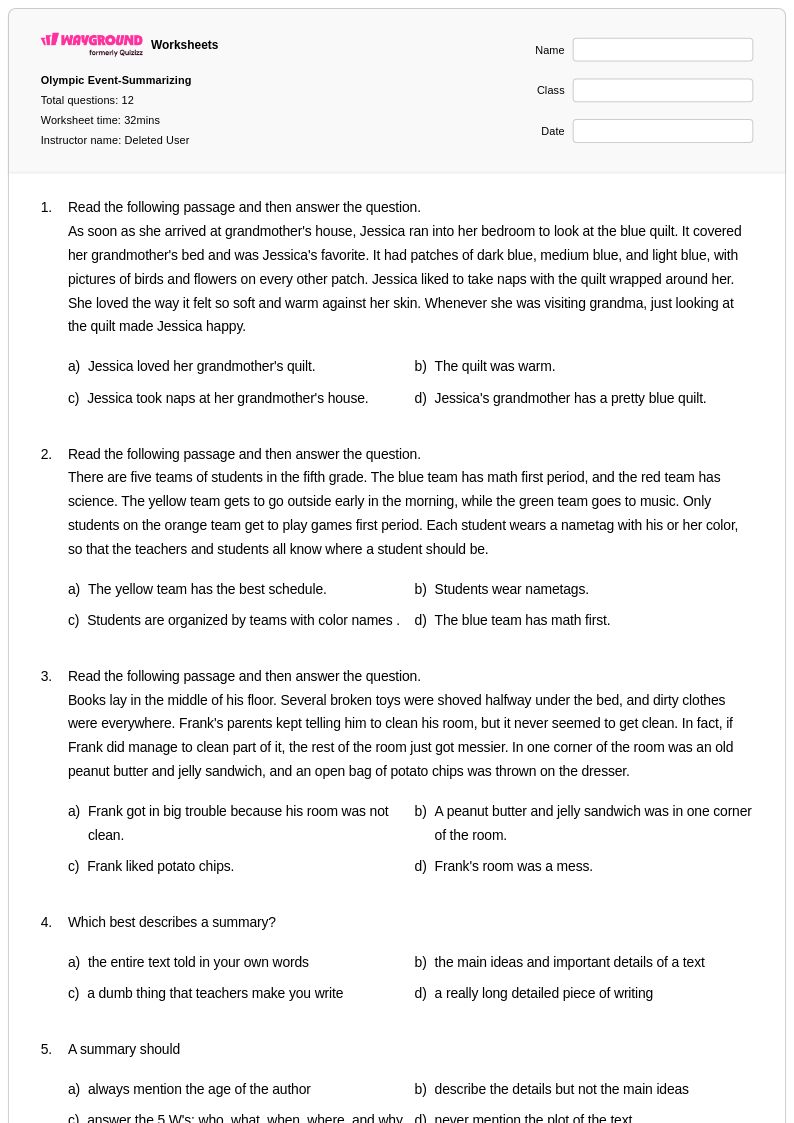
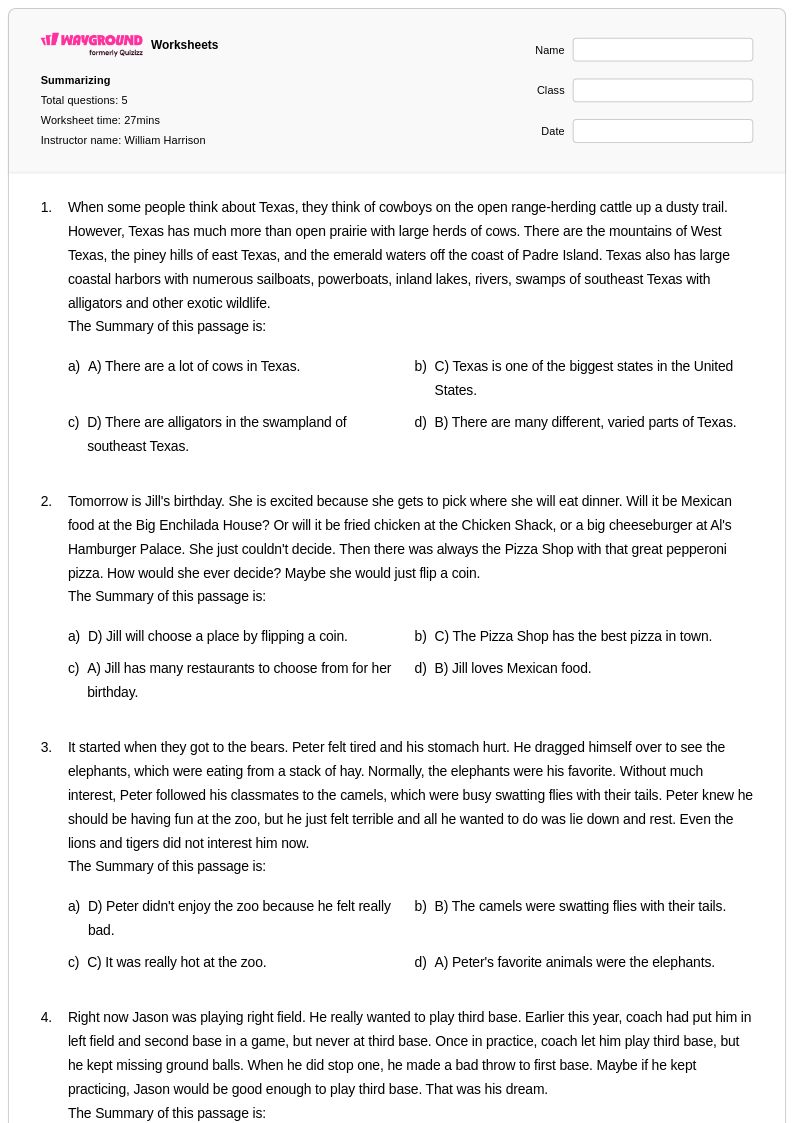
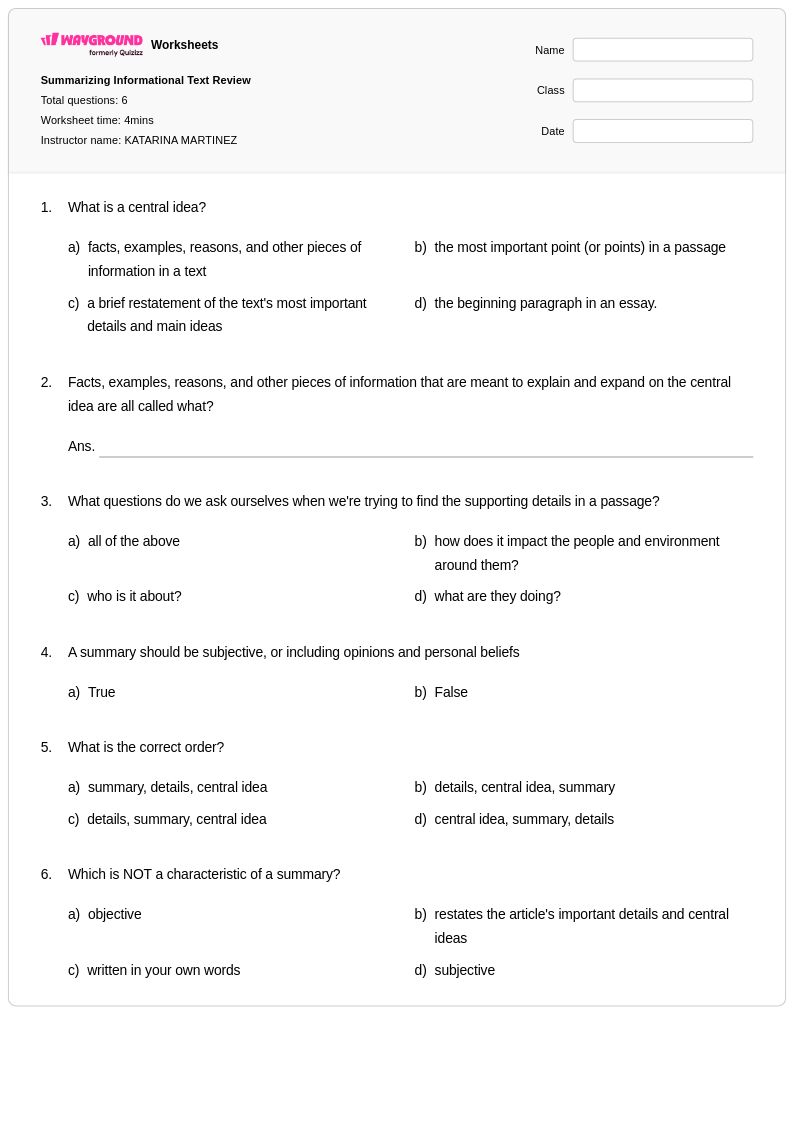
Summarizing worksheets for Grade 6 students available through Wayground (formerly Quizizz) provide comprehensive practice in one of the most essential reading comprehension strategies. These carefully designed resources help sixth-grade learners develop the critical ability to identify main ideas, distinguish between essential and supporting details, and condense longer texts into concise, accurate summaries. Students work through structured practice problems that guide them through the summarizing process, from recognizing key information to organizing ideas in logical sequence. Each worksheet includes an answer key to support independent learning and self-assessment, while the free printable format ensures accessibility for all classrooms. These pdf resources systematically build students' capacity to extract meaning from various text types, strengthening both their analytical thinking and written communication skills.
Wayground (formerly Quizizz) empowers educators with an extensive collection of millions of teacher-created summarizing worksheets, offering robust search and filtering capabilities that allow instructors to locate precisely the right materials for their Grade 6 reading instruction. The platform's comprehensive resources align with educational standards and provide differentiation tools that enable teachers to customize content for diverse learning needs, from remediation support for struggling readers to enrichment activities for advanced students. Available in both printable and digital formats including downloadable pdf versions, these flexible materials streamline lesson planning while providing targeted skill practice opportunities. Teachers can efficiently access high-quality summarizing exercises that support systematic instruction, ongoing assessment, and individualized intervention, ensuring that every sixth-grade student develops strong foundational skills in this crucial reading comprehension strategy.
FAQs
How do I teach summarizing to students who struggle to tell the difference between summarizing and retelling?
The most common confusion is that students treat summarizing as a retelling, reproducing events or details in sequence rather than distilling the core meaning. Teach the distinction explicitly by framing summarizing as answering: 'What is this text mostly about, and what are the most important ideas?' A useful classroom strategy is to give students a short passage and ask them to cross out any sentence that could be removed without losing the main point, then use what remains as the foundation of their summary. Repeated practice with both fiction and nonfiction texts helps students internalize this selection process.
What exercises best help students practice summarizing fiction and nonfiction texts?
For fiction, structured practice should focus on identifying character, conflict, and resolution without retelling every plot point. For nonfiction, students benefit most from exercises that require them to locate topic sentences, distinguish main ideas from supporting details, and synthesize information across multiple paragraphs. Scaffolded worksheets that begin with guided examples before moving to independent application are especially effective because they build the analytical habit gradually. Practicing across a variety of text types reinforces the transferability of the skill.
What are the most common mistakes students make when writing a summary?
The most frequent errors are including too much detail, copying sentences directly from the text rather than paraphrasing, and failing to capture the central idea. Students also commonly confuse their own opinion with what the text actually says, especially in nonfiction. Another persistent issue is writing summaries that focus on the beginning of a text and neglect later sections, which distorts the overall meaning. Identifying these patterns early allows teachers to target correction through focused practice on specific summarizing sub-skills.
How do I use Wayground's summarizing worksheets in my classroom?
Wayground's summarizing worksheets are available as printable PDFs for traditional classroom use and in digital formats for technology-integrated environments, giving teachers flexibility regardless of their setup. Teachers can also host worksheets as a quiz directly on Wayground, which enables real-time tracking of student responses. Each worksheet includes an answer key, allowing for immediate feedback and self-assessment. For students who need additional support, Wayground's accommodation tools include options such as read aloud, extended time, and reduced answer choices, all configurable per individual student.
How can I differentiate summarizing practice for students at different reading levels?
Differentiation for summarizing should address both text complexity and task structure. Advanced learners benefit from longer, multi-paragraph passages that require synthesis across sections, while struggling readers need shorter texts with explicit topic sentences and scaffolded prompts. On Wayground, teachers can customize existing worksheets to match student ability levels and apply individual accommodations such as read aloud support, reduced answer choices, or extended time, without other students being notified of those adjustments. These settings are saved and reusable across future sessions, reducing the administrative burden of repeated setup.
How does summarizing support broader reading comprehension skills?
Summarizing is one of the highest-leverage reading comprehension strategies because it requires students to actively process a text rather than passively read it. To write an accurate summary, students must identify main ideas, evaluate which details are essential, understand paragraph structure, and synthesize meaning across a full passage. This process builds the analytical thinking skills that underpin close reading, academic writing, and content-area learning across subjects. Regular summarizing practice has a compounding effect on overall reading comprehension because it trains students to read with purpose and selectivity.