
12 Q
6th
17 Q
6th
12 Q
6th
20 Q
6th
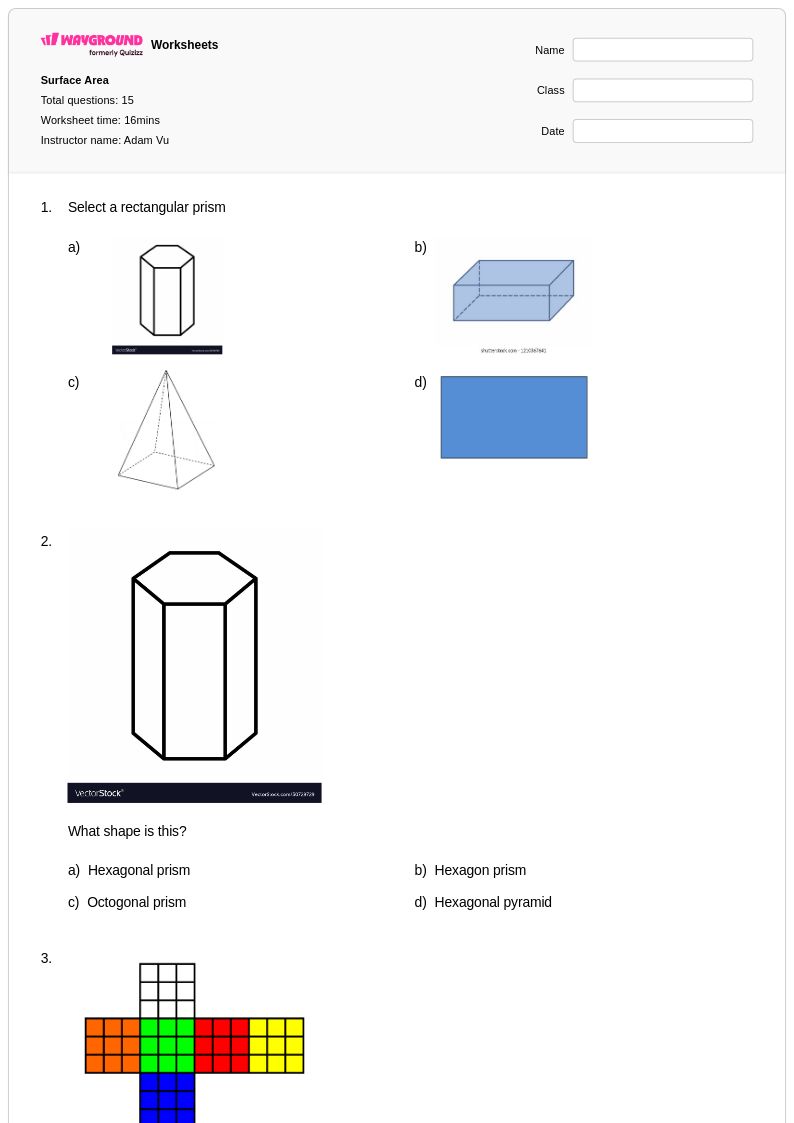
15 Q
6th
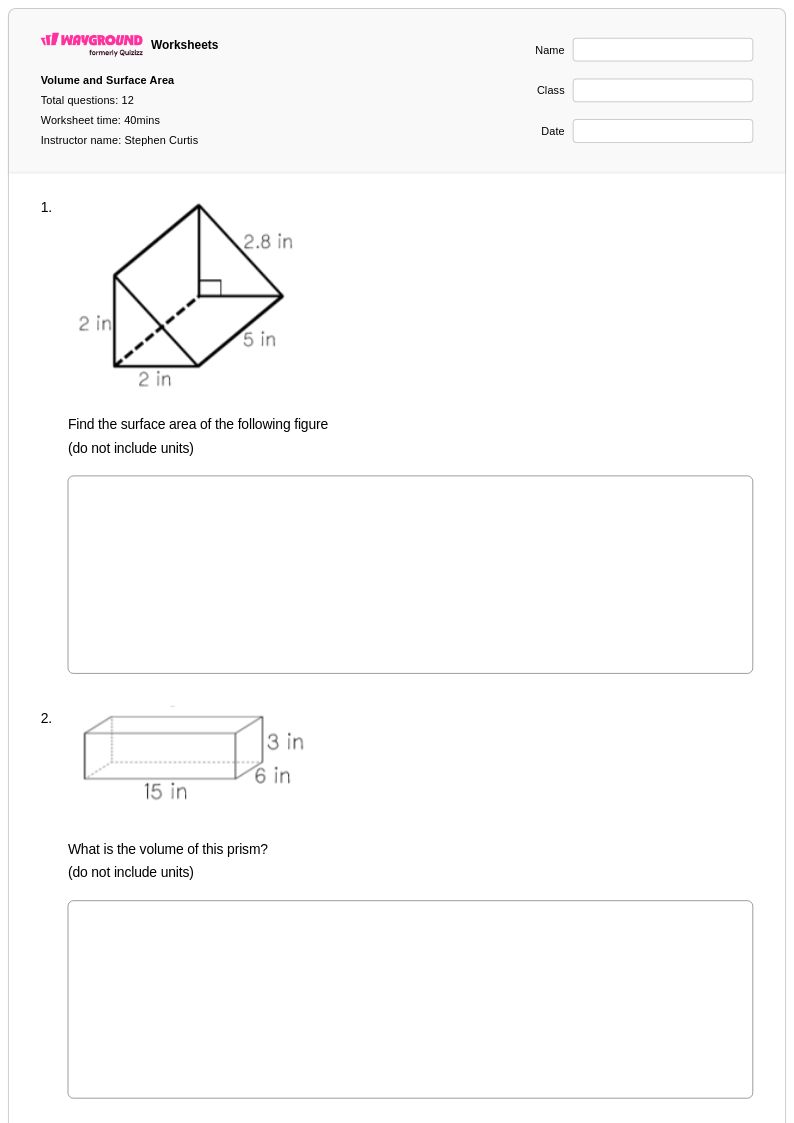
12 Q
6th
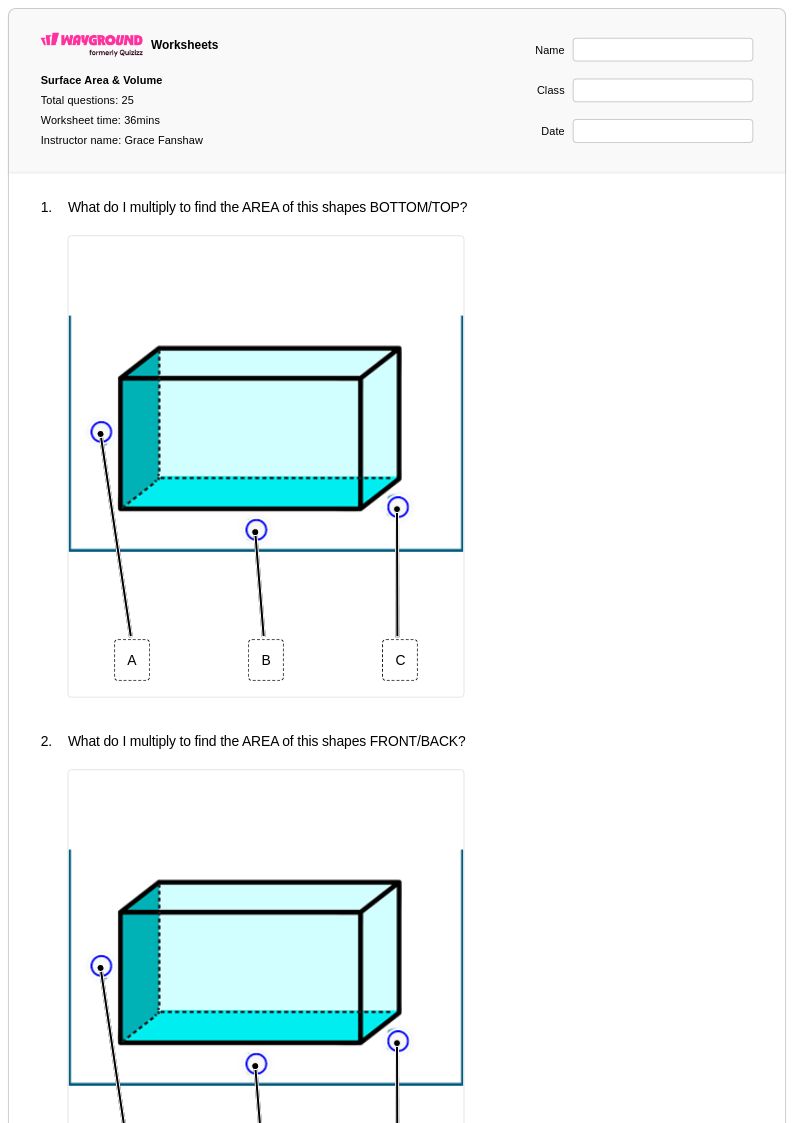
25 Q
6th
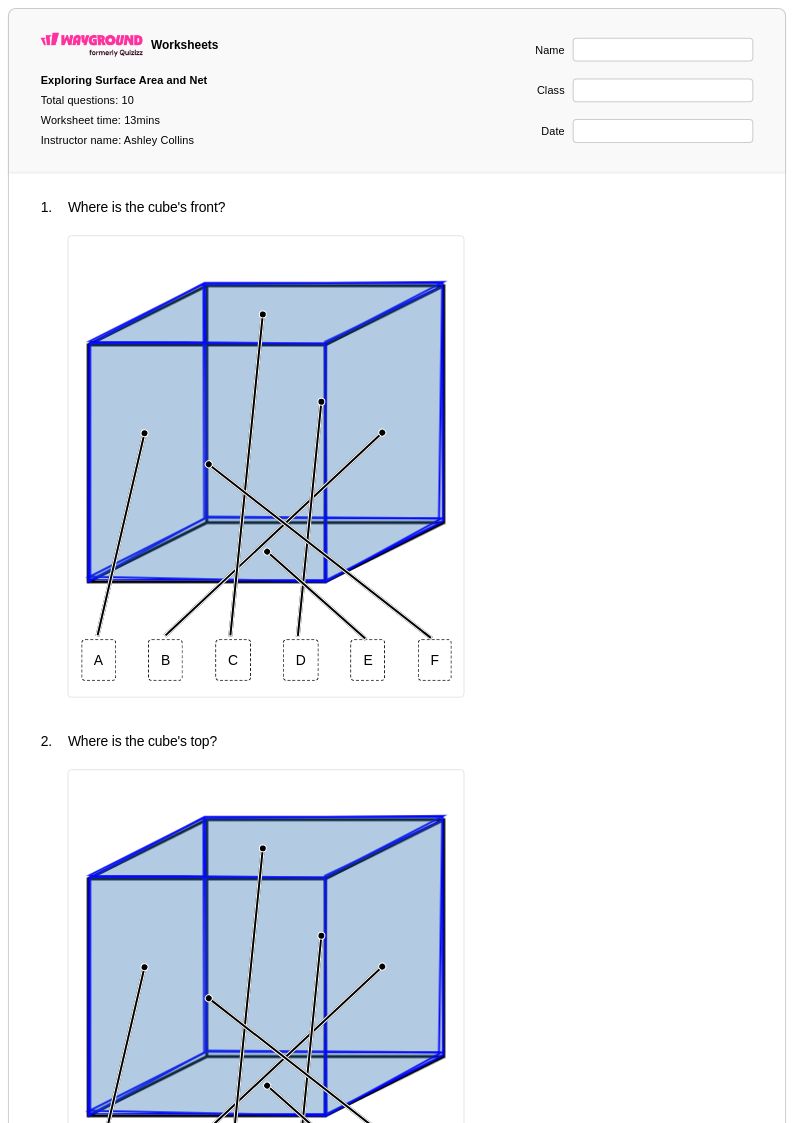
10 Q
6th
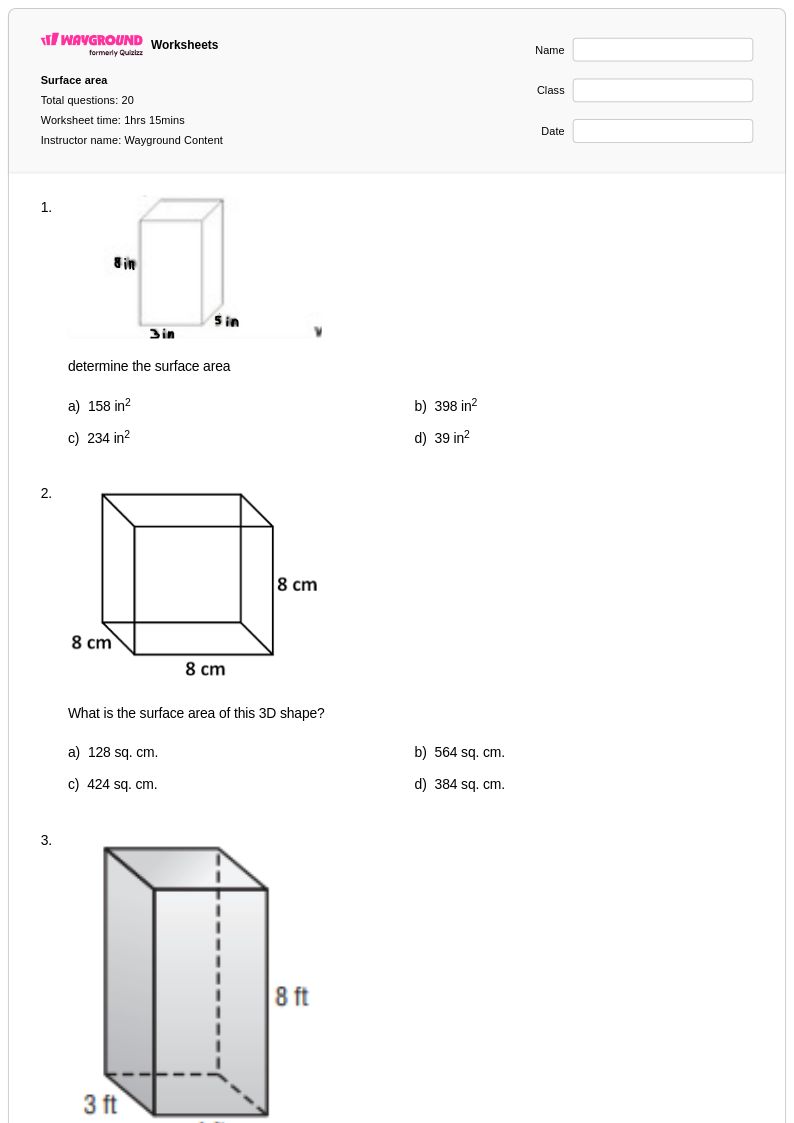
20 Q
6th
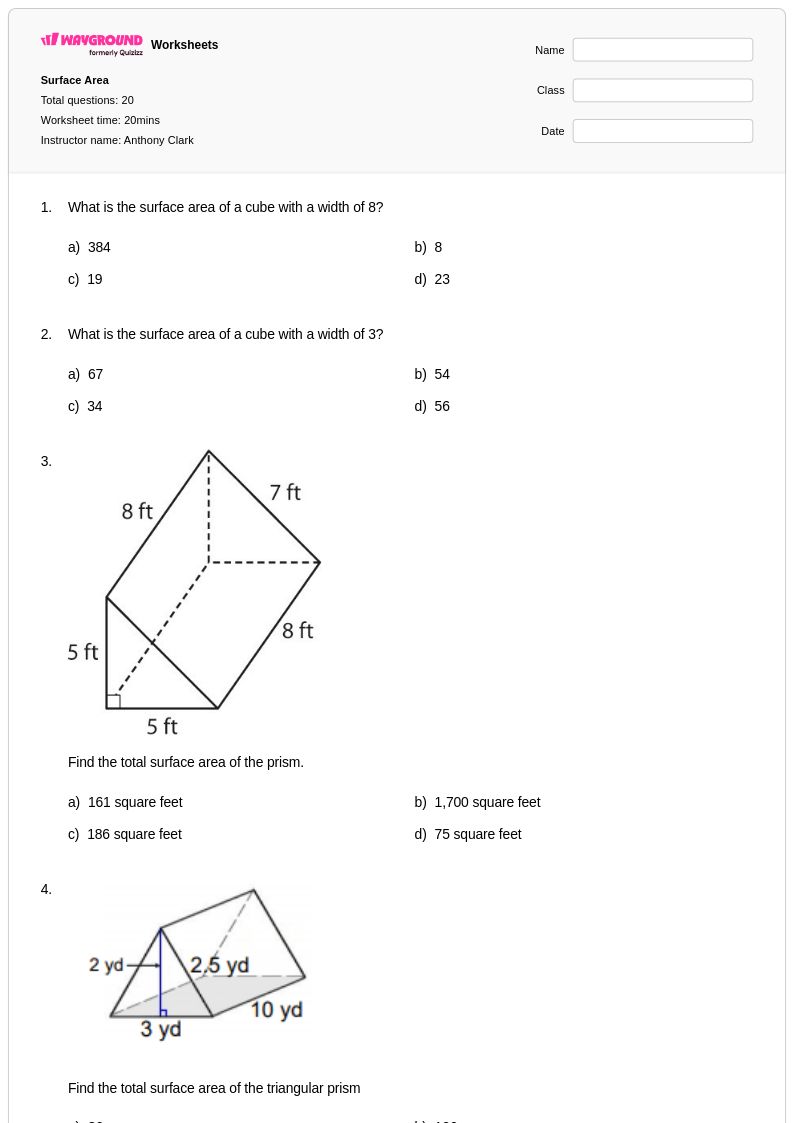
20 Q
6th - Uni
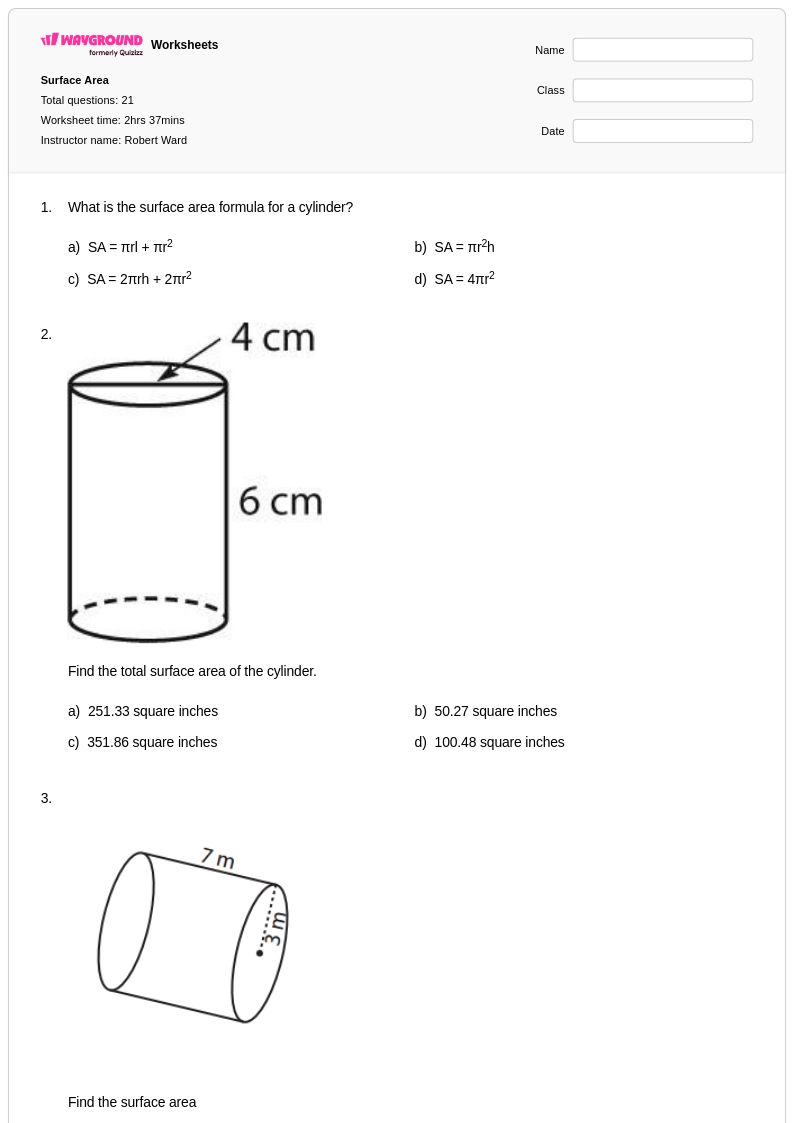
21 Q
6th - 8th
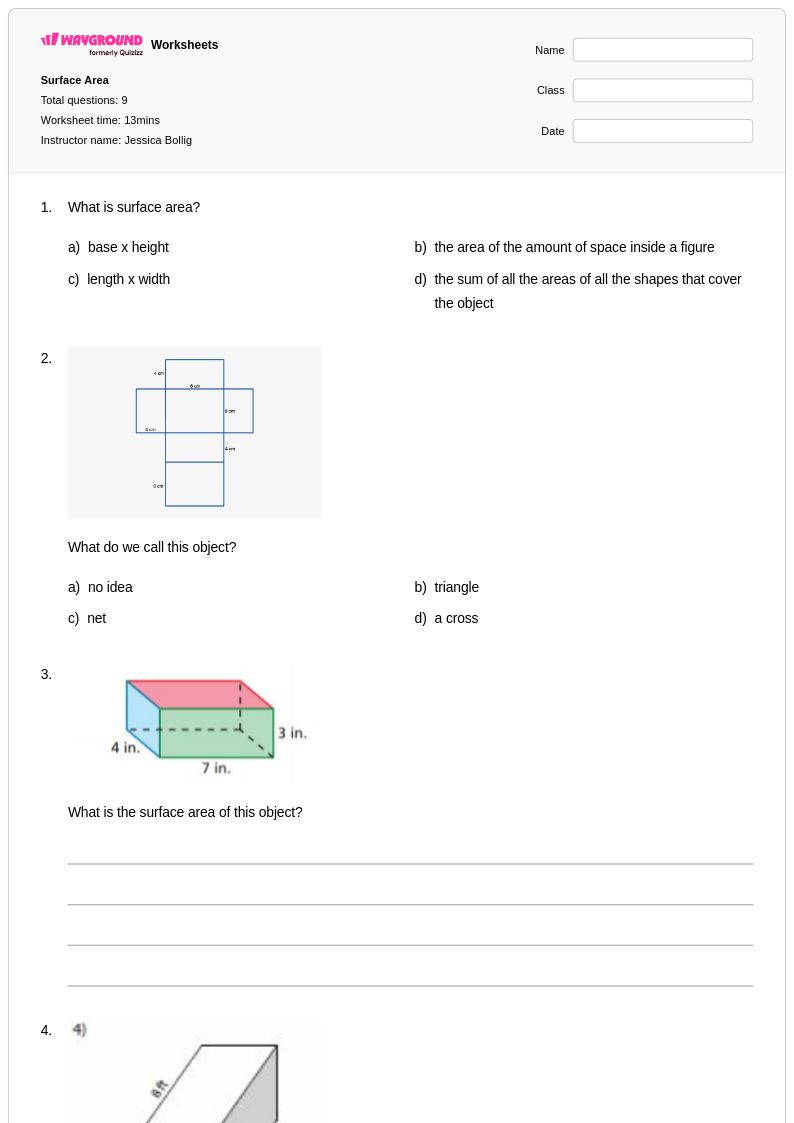
9 Q
6th
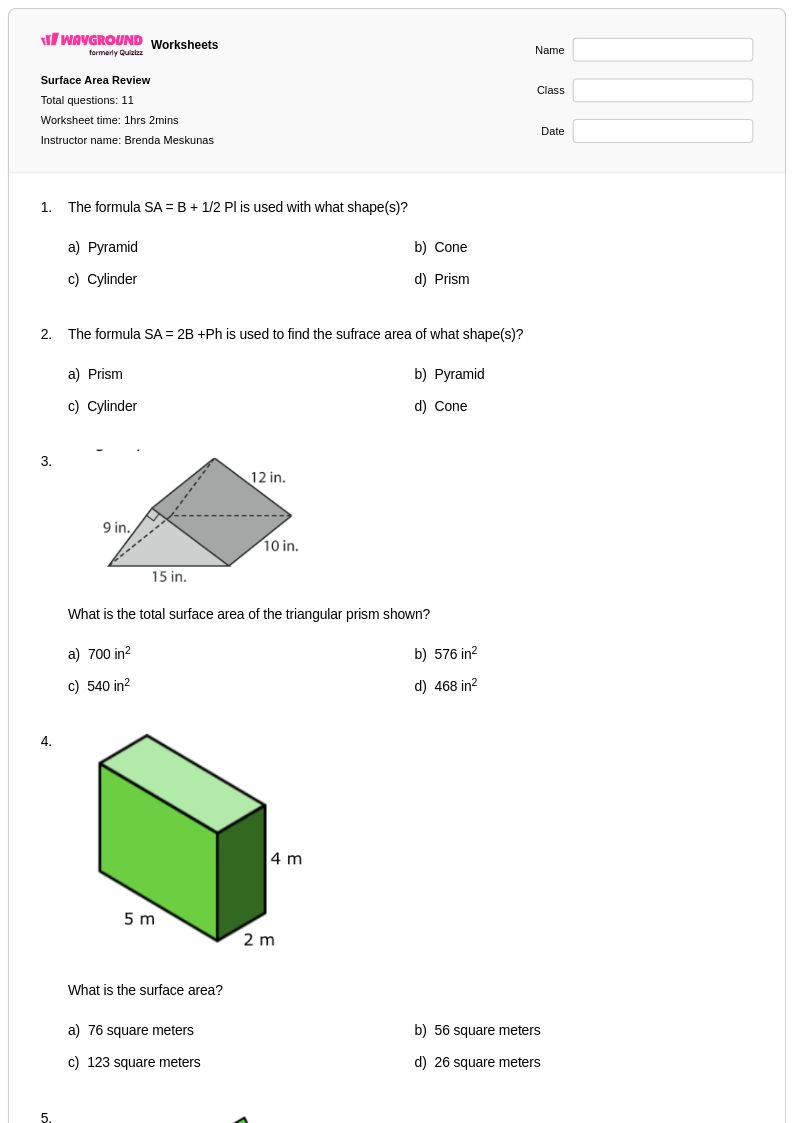
11 Q
5th - 8th
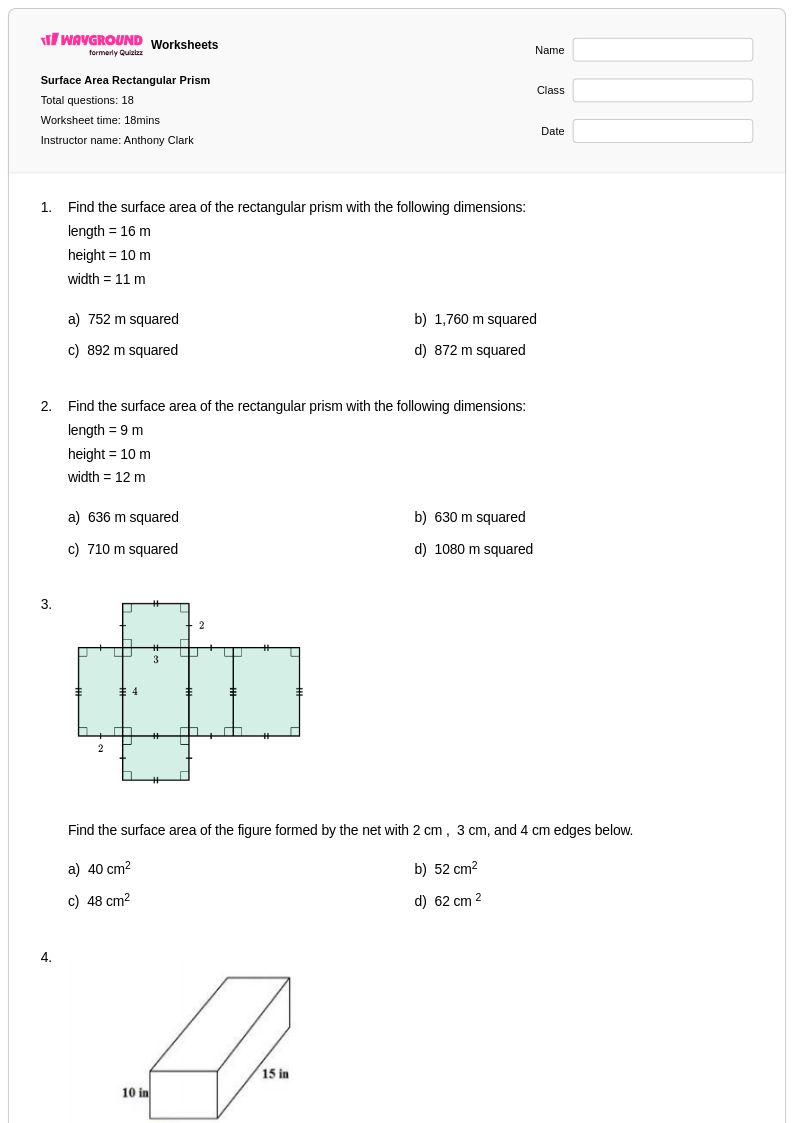
18 Q
6th - Uni
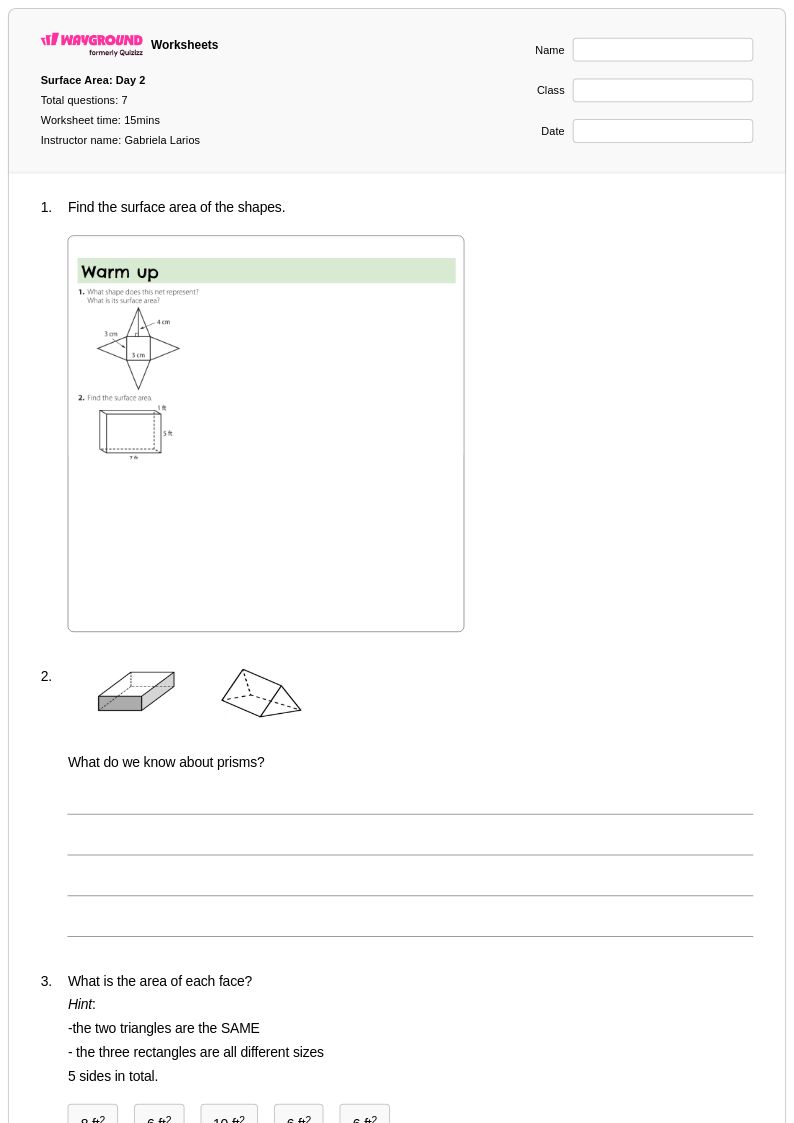
7 Q
6th
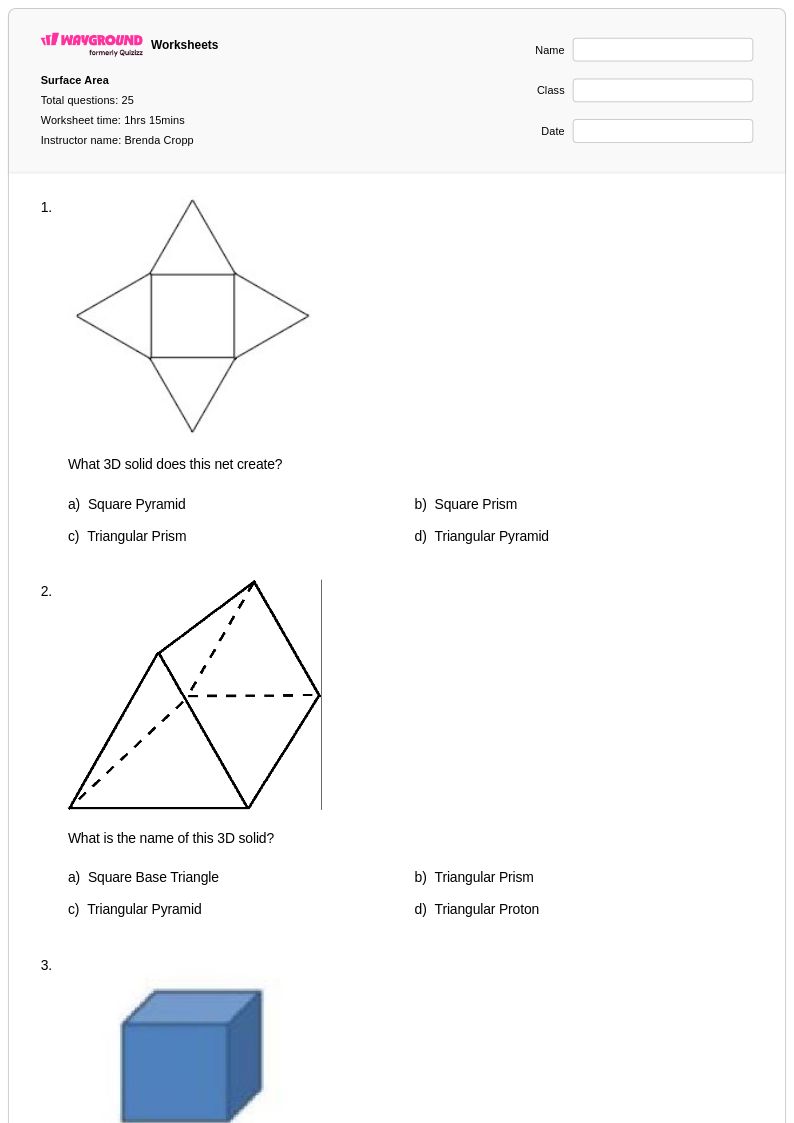
25 Q
6th - 8th
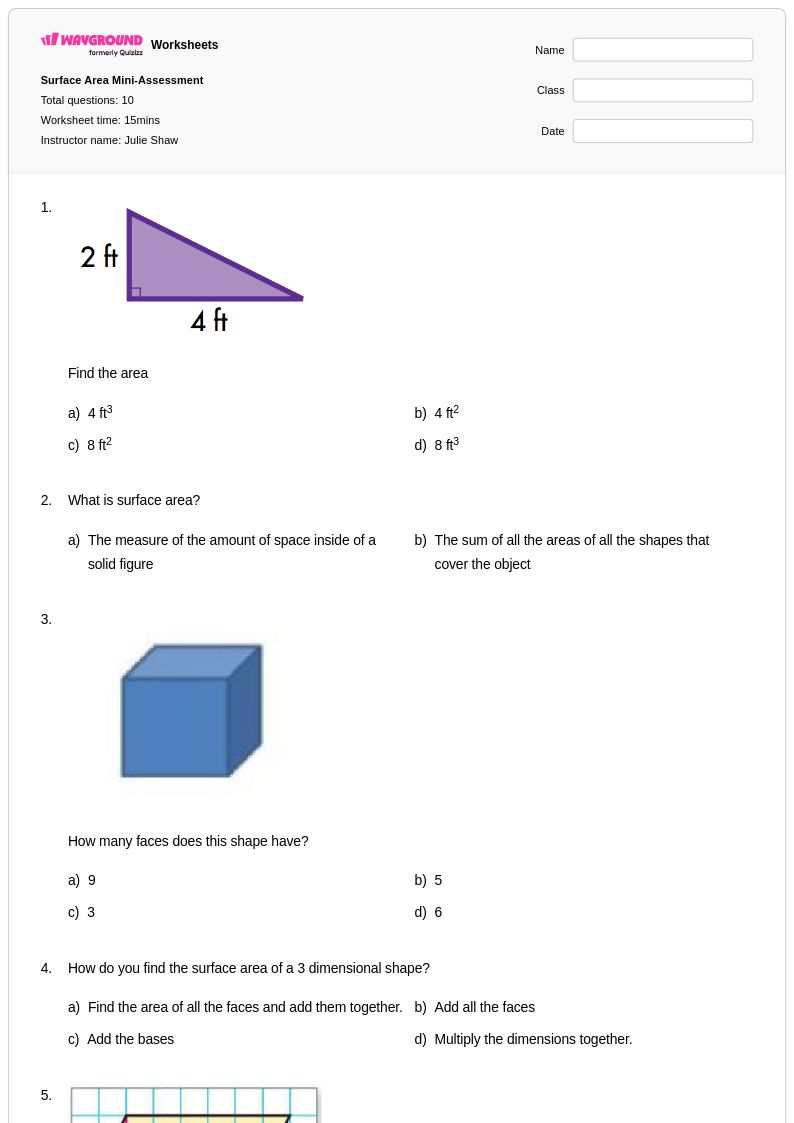
10 Q
6th
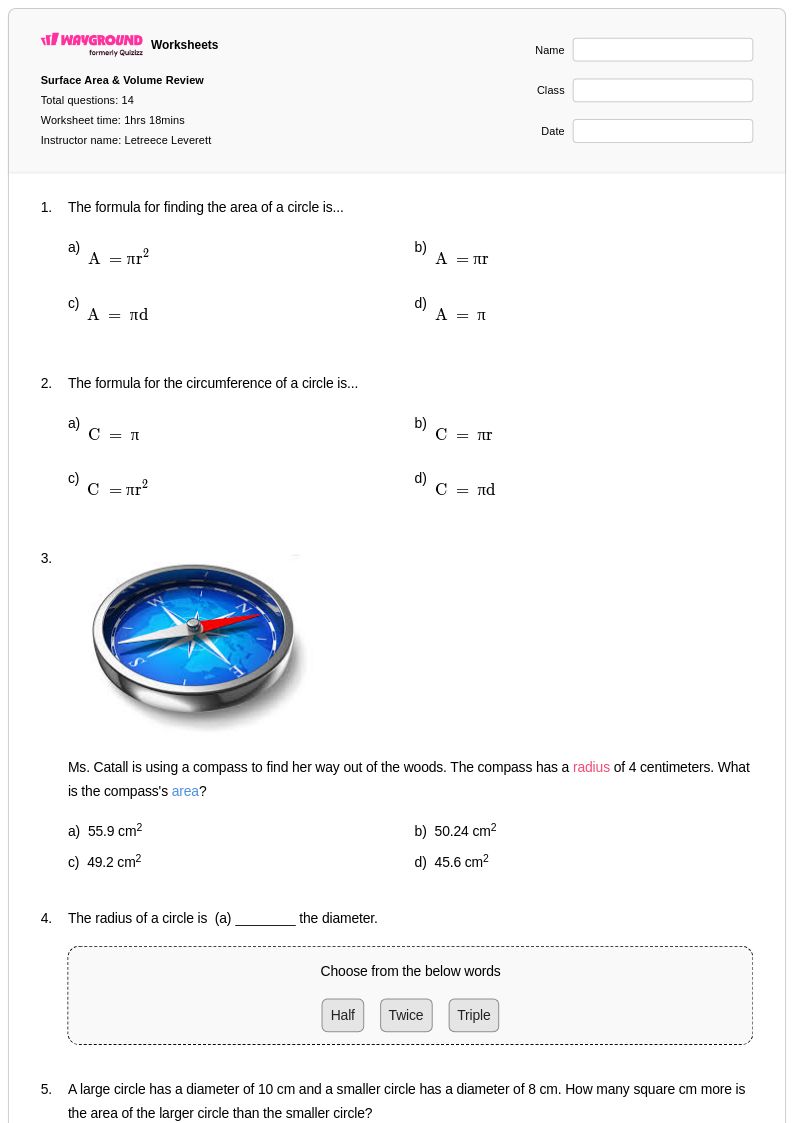
14 Q
6th - 8th
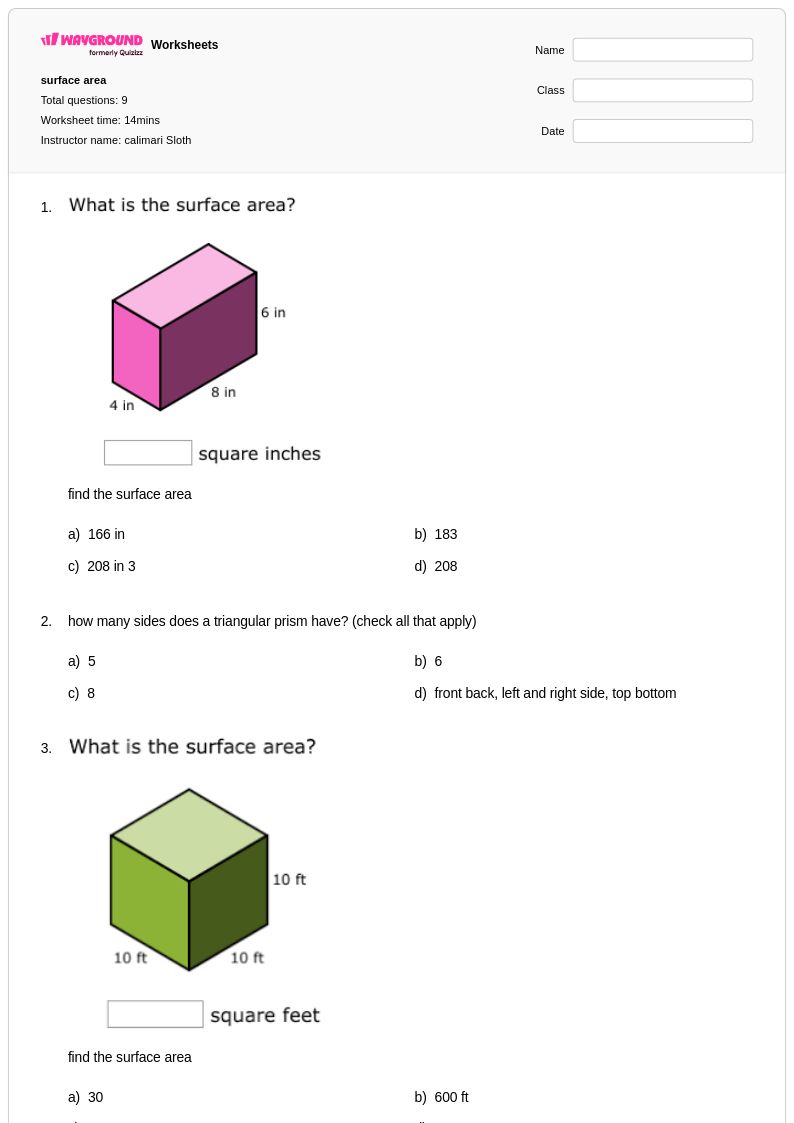
9 Q
6th - 7th
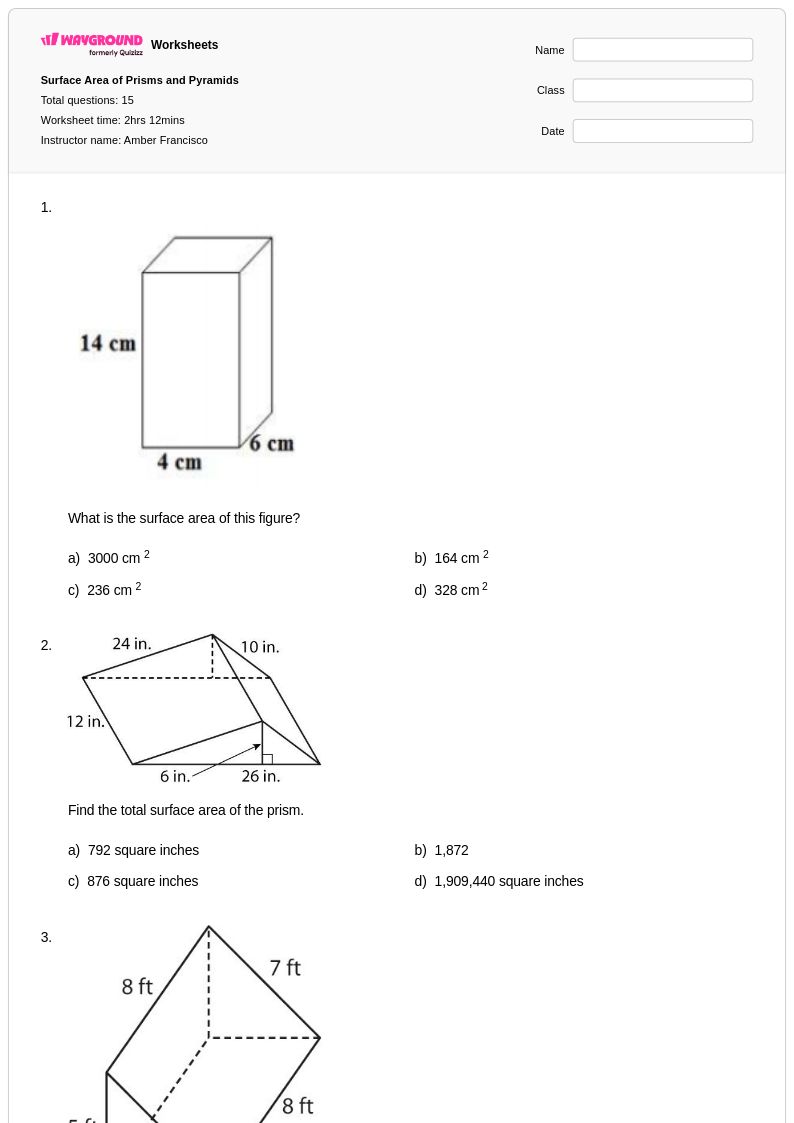
15 Q
6th
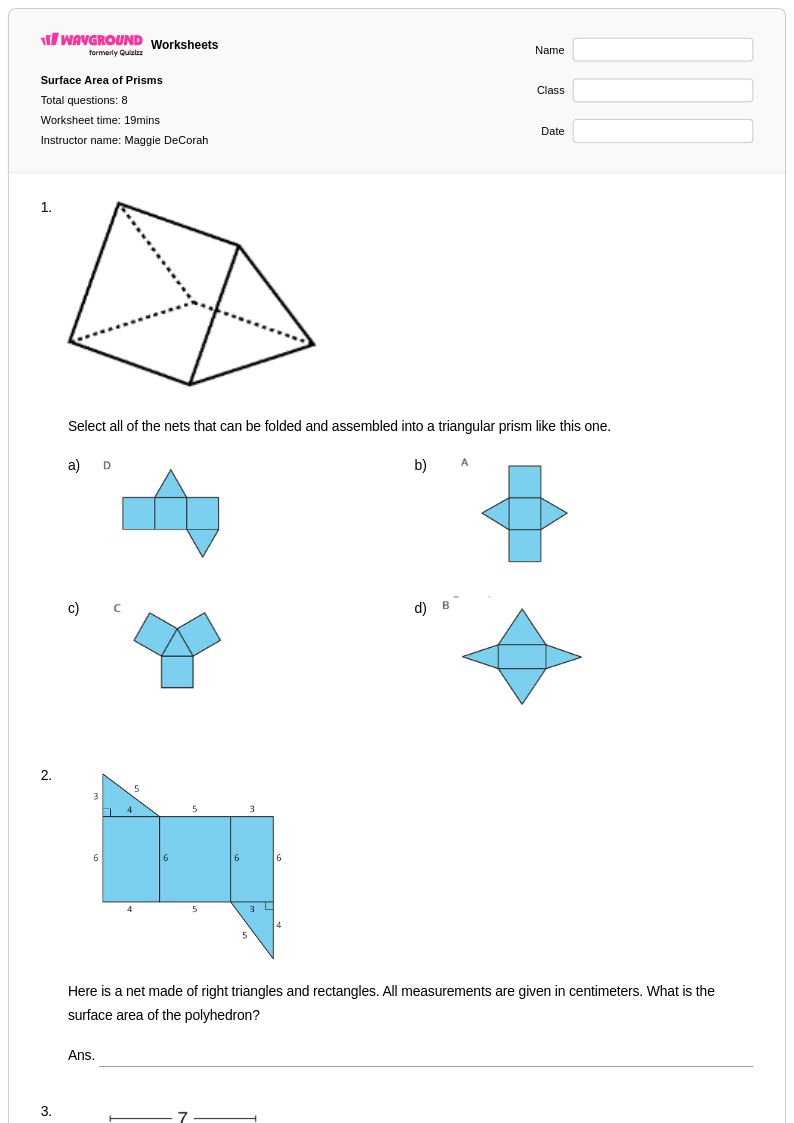
8 Q
6th
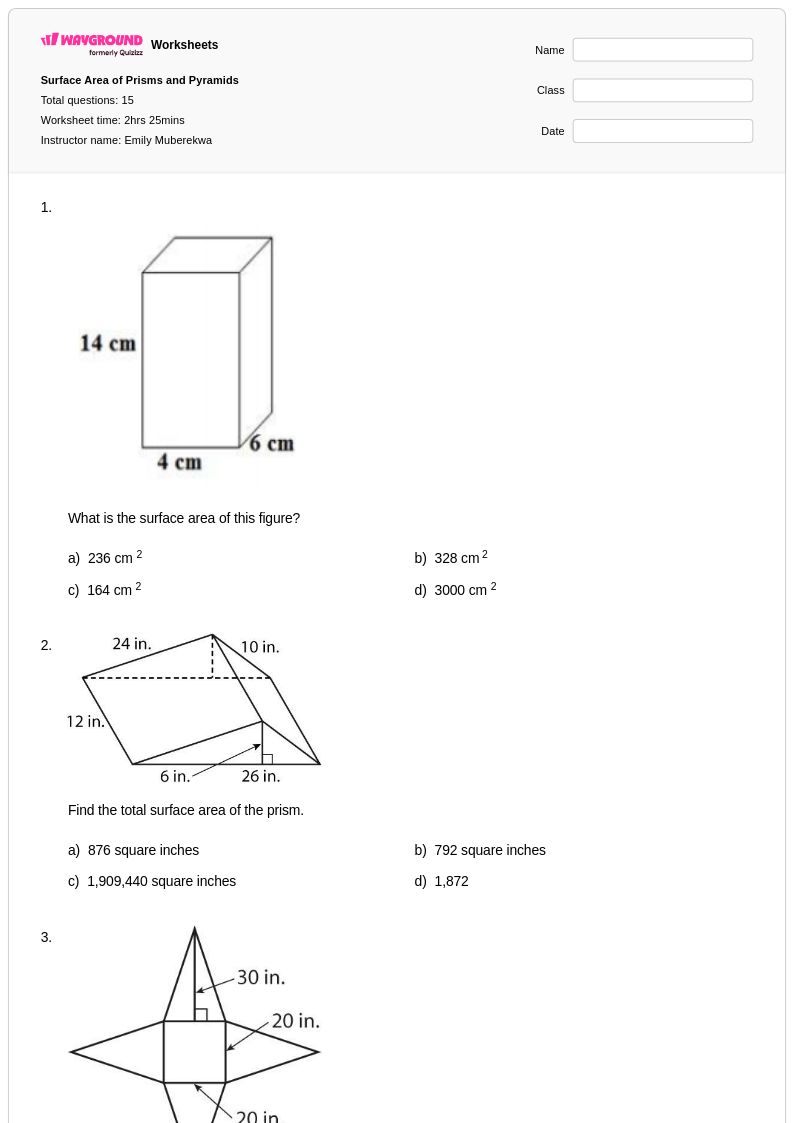
15 Q
6th
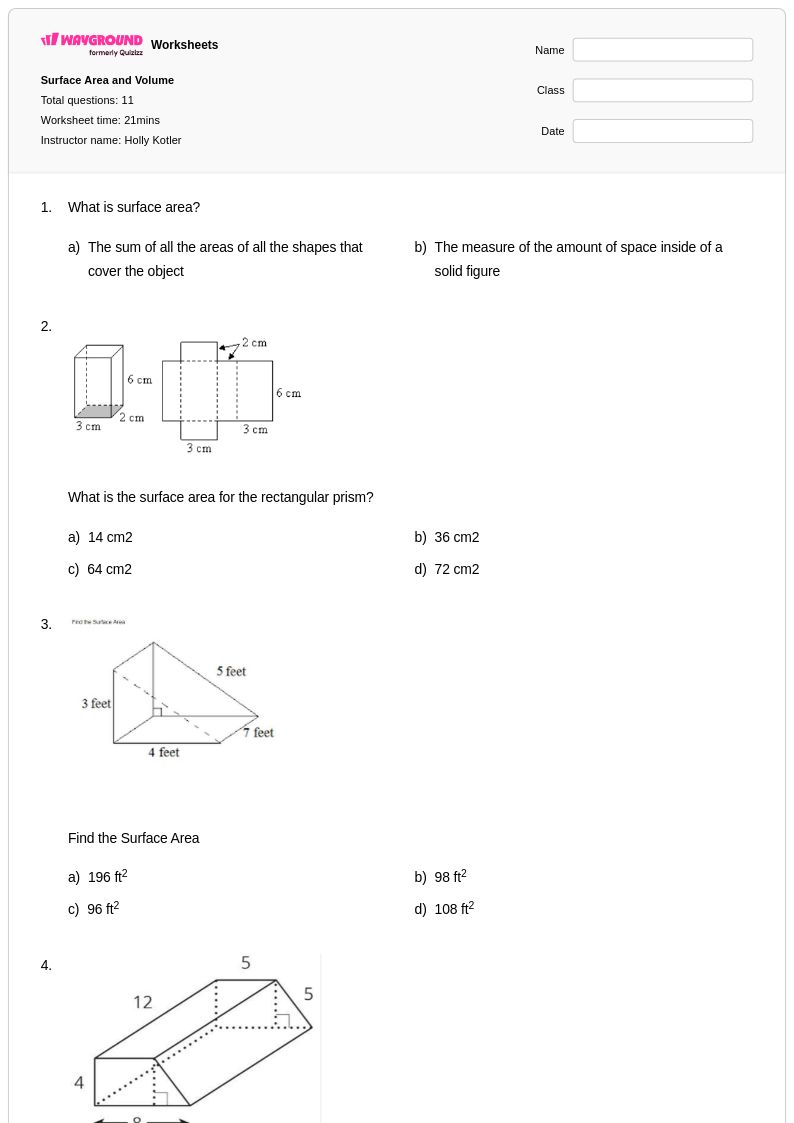
11 Q
6th - 8th
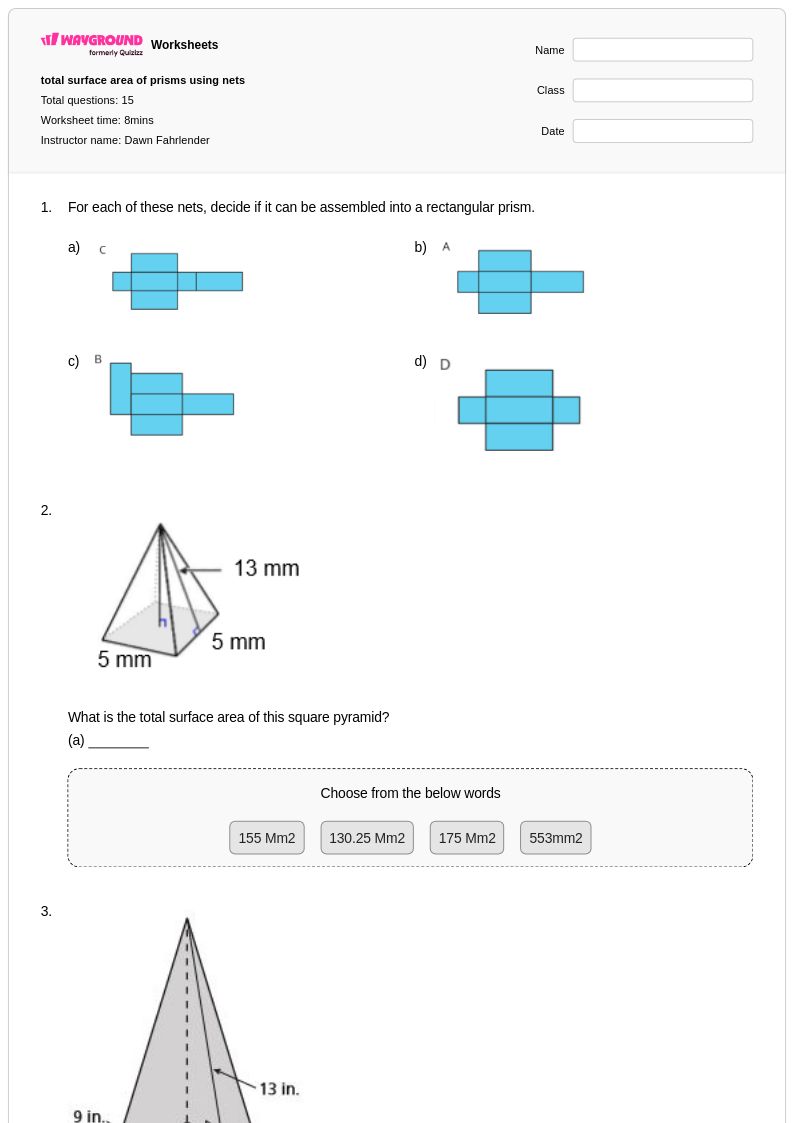
15 Q
6th - 8th
Explore Other Subject Worksheets for grade 6
Explore printable Surface Area worksheets for Grade 6
Surface area worksheets for Grade 6 students available through Wayground (formerly Quizizz) provide comprehensive practice with calculating the total area of three-dimensional shapes including rectangular prisms, triangular prisms, and pyramids. These expertly crafted worksheets strengthen essential geometric reasoning skills by guiding students through systematic approaches to finding surface area using nets, formulas, and visual decomposition strategies. Each worksheet collection includes detailed practice problems that progress from basic rectangular prisms to more complex composite figures, with complete answer keys provided to support independent learning and self-assessment. Available as free printables in convenient pdf format, these resources help students master the foundational concepts of surface area measurement that are critical for success in advanced geometry topics.
Wayground (formerly Quizizz) empowers educators with millions of teacher-created surface area worksheet resources that streamline lesson planning and differentiated instruction for Grade 6 mathematics classrooms. The platform's robust search and filtering capabilities allow teachers to quickly locate worksheets aligned to specific curriculum standards and learning objectives, while built-in customization tools enable seamless modification of practice problems to match diverse student needs and ability levels. These comprehensive worksheet collections are available in both printable pdf formats for traditional classroom use and interactive digital versions that provide immediate feedback, making them invaluable for remediation sessions, enrichment activities, and targeted skill practice. Teachers can efficiently organize surface area practice across multiple difficulty levels, ensuring every student receives appropriate challenge and support while building conceptual understanding of three-dimensional geometry.