Enhance students' understanding of the verb 'to be' with Wayground's comprehensive collection of free worksheets, printables, and practice problems featuring detailed answer keys for effective grammar mastery.
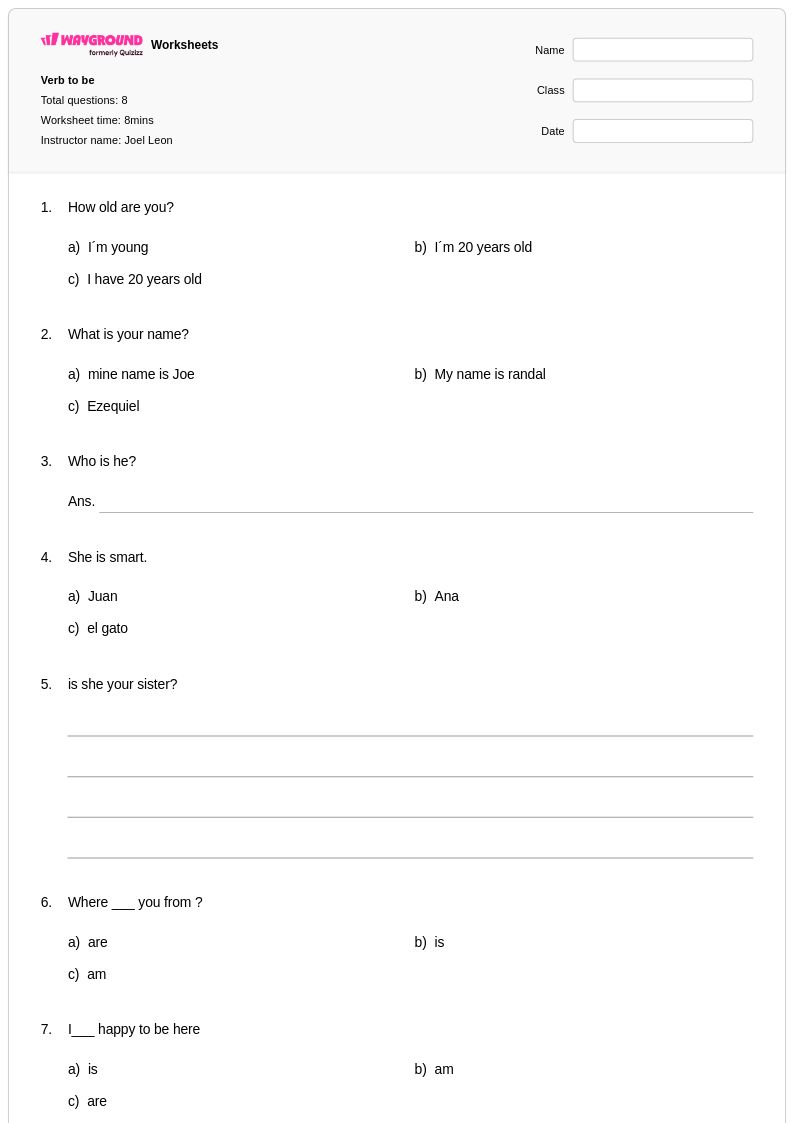
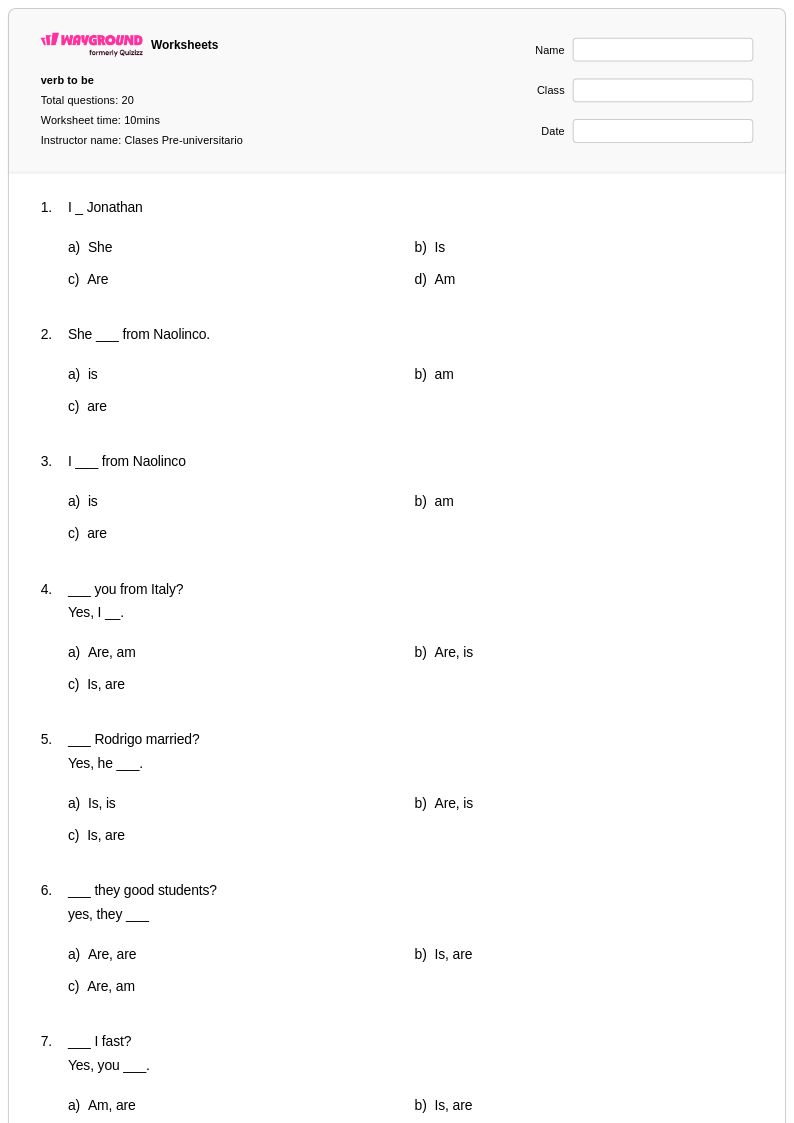
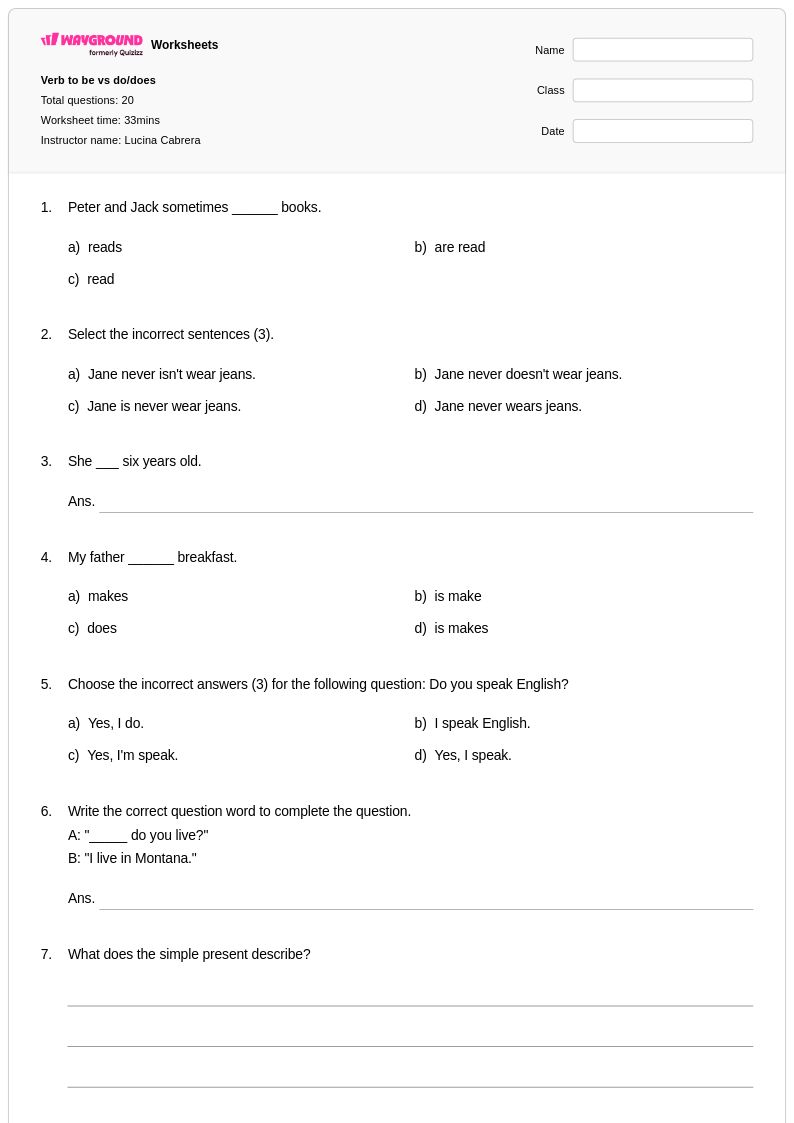
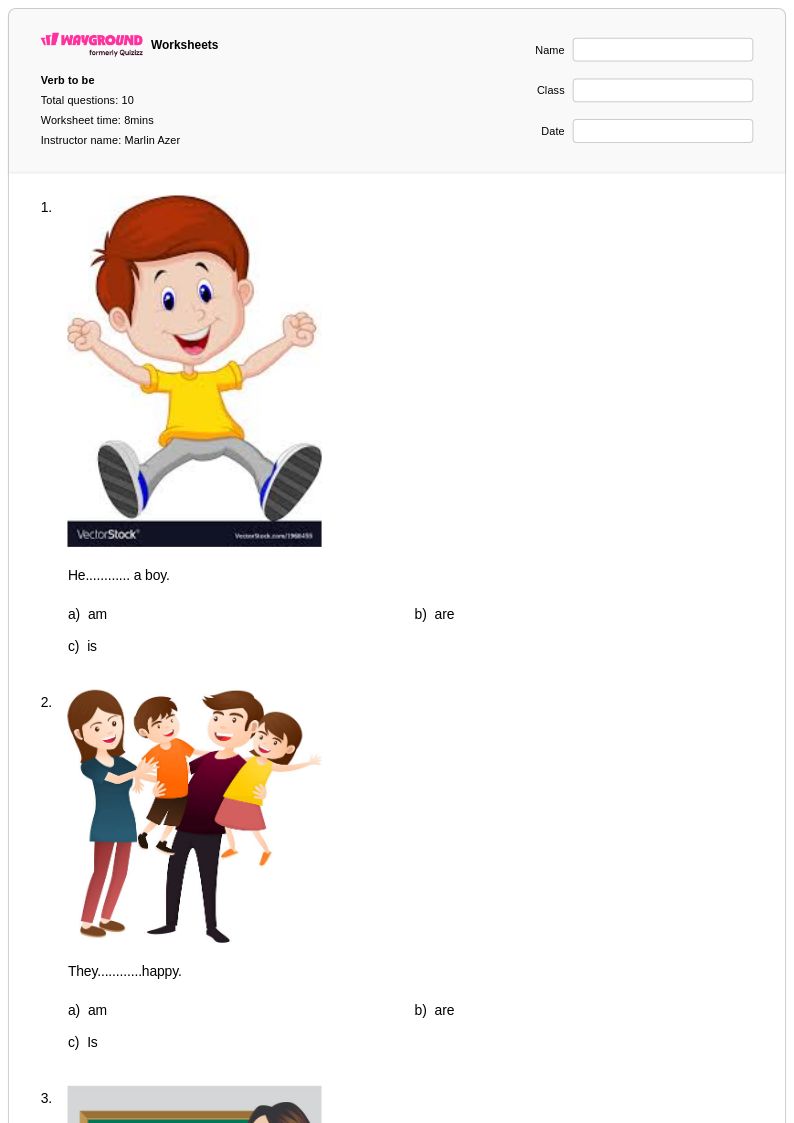
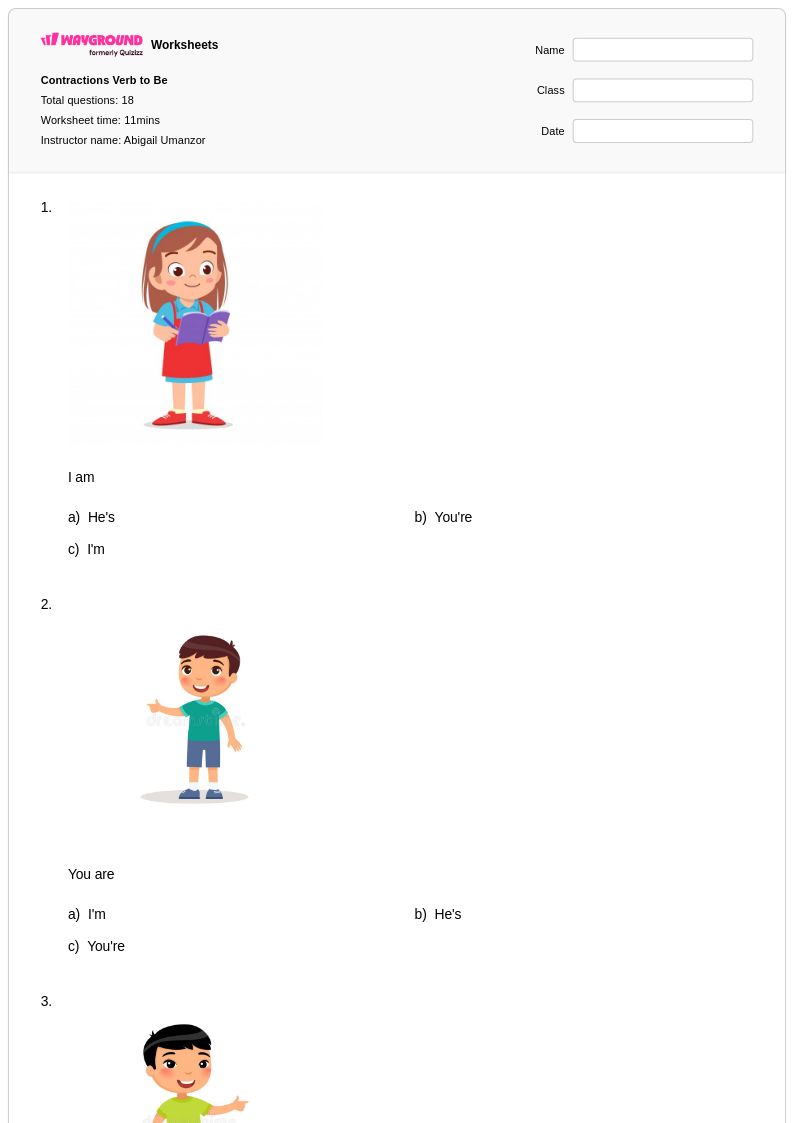
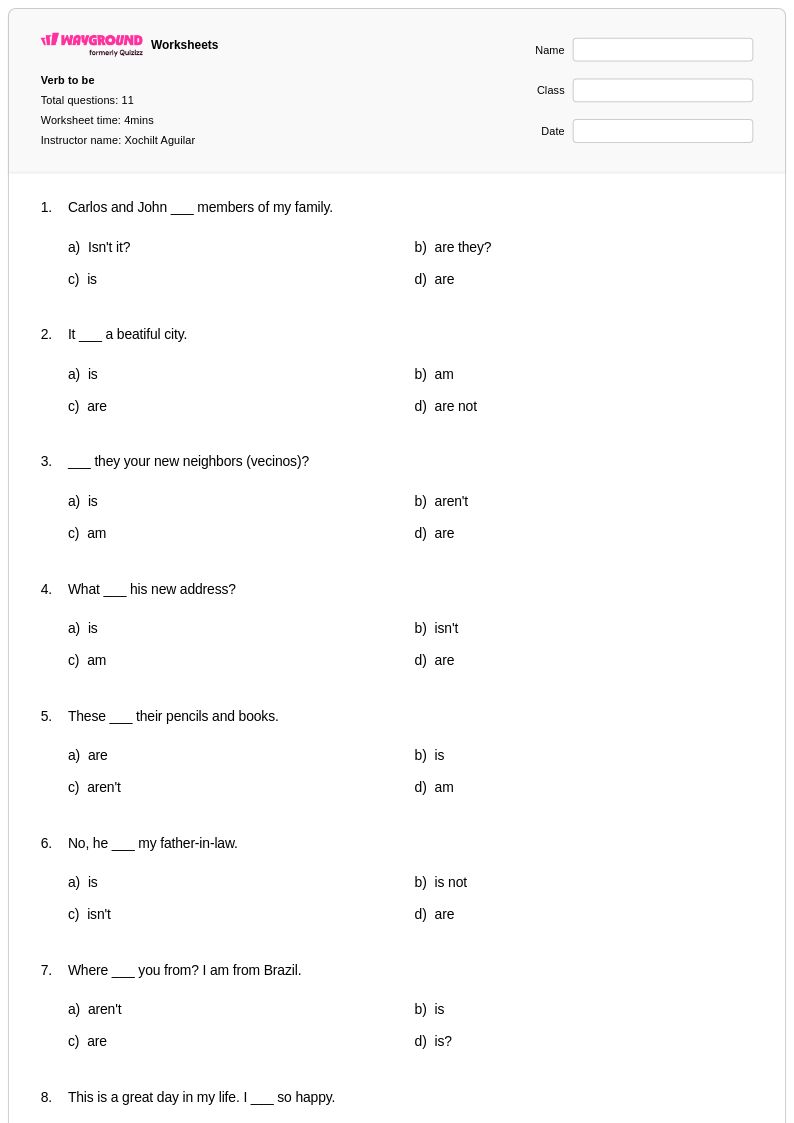
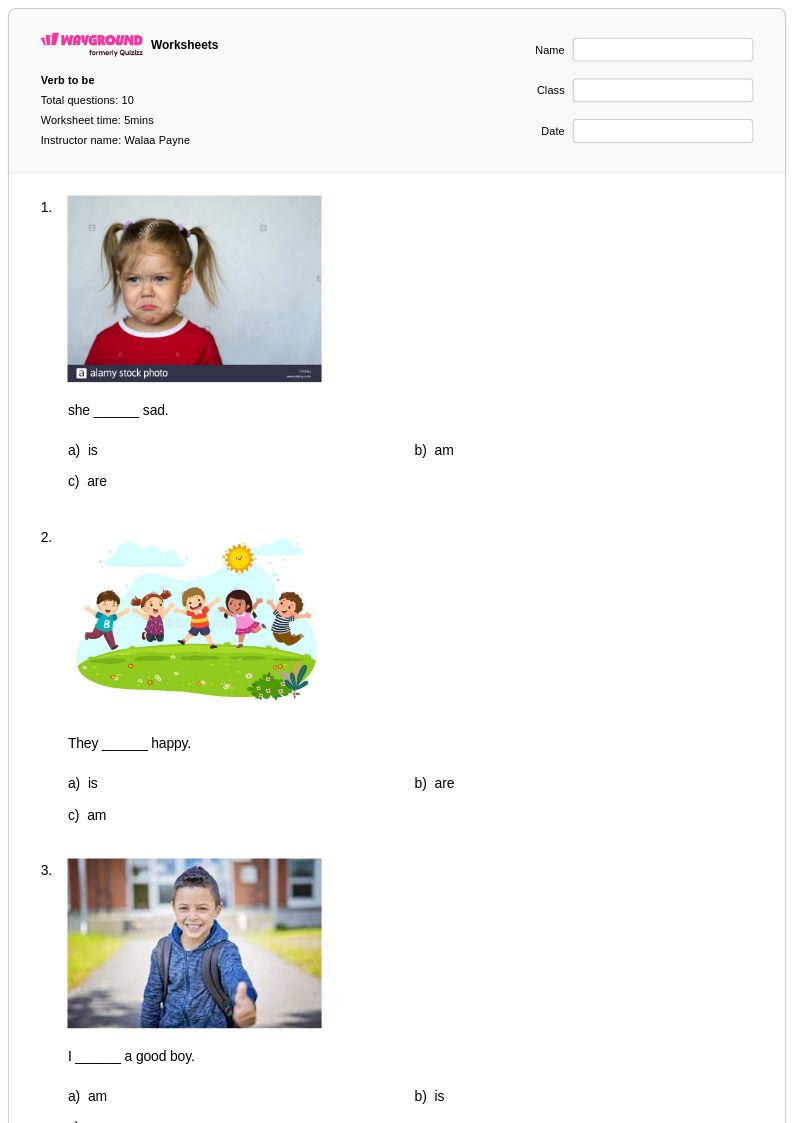
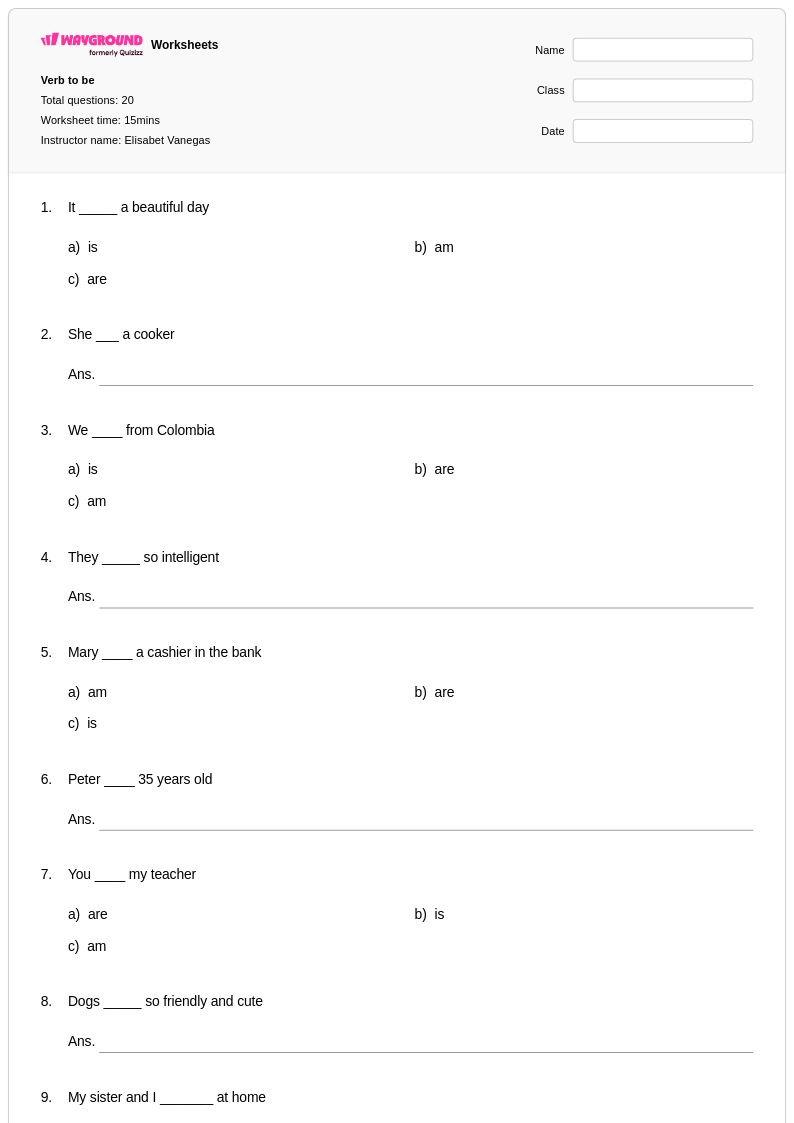
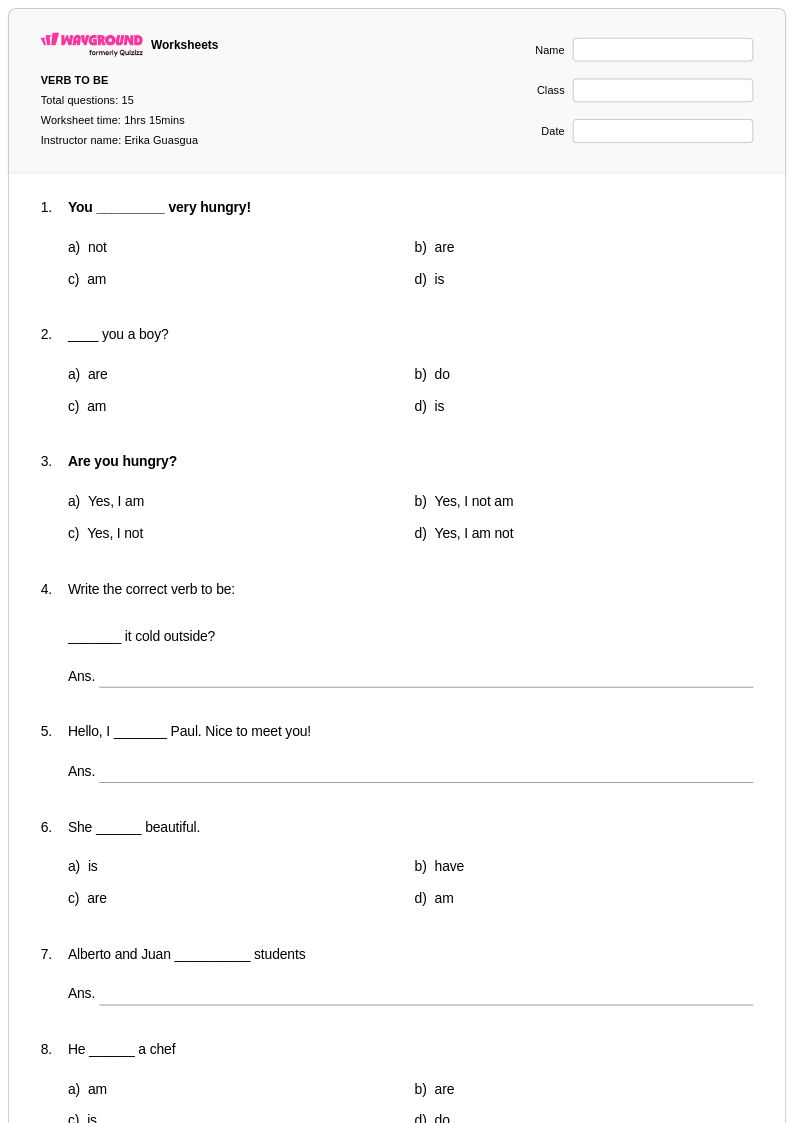
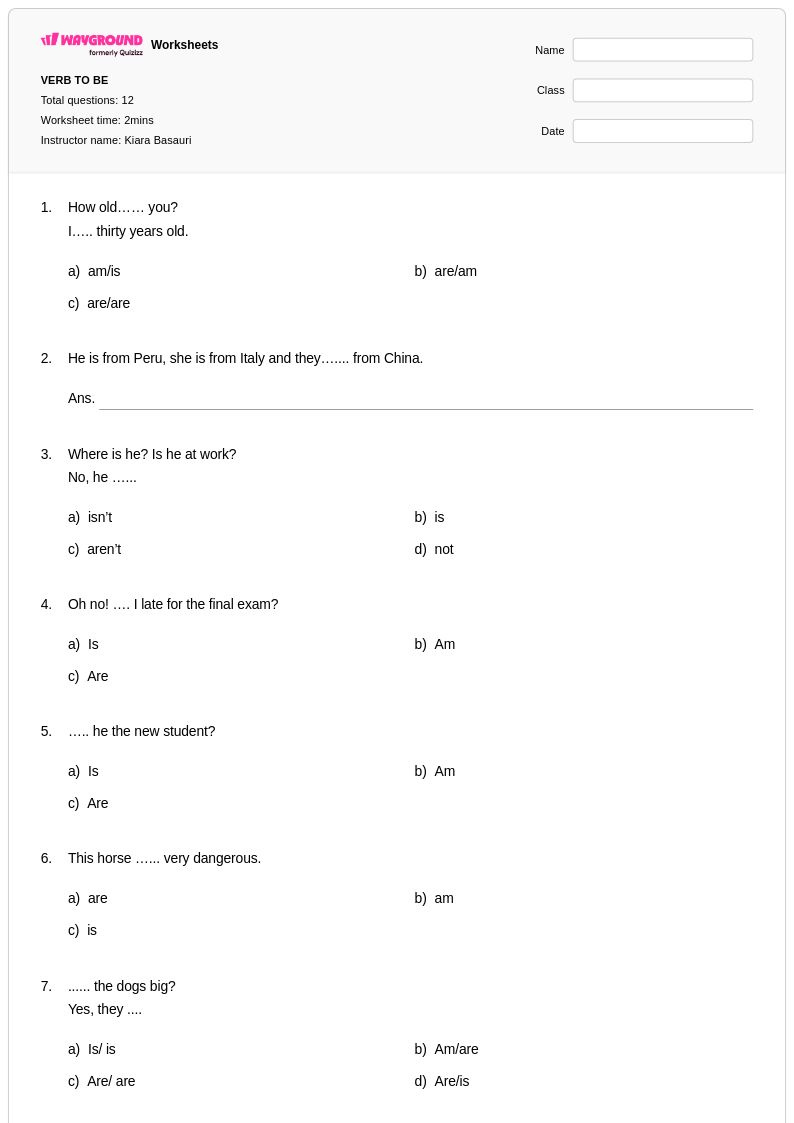
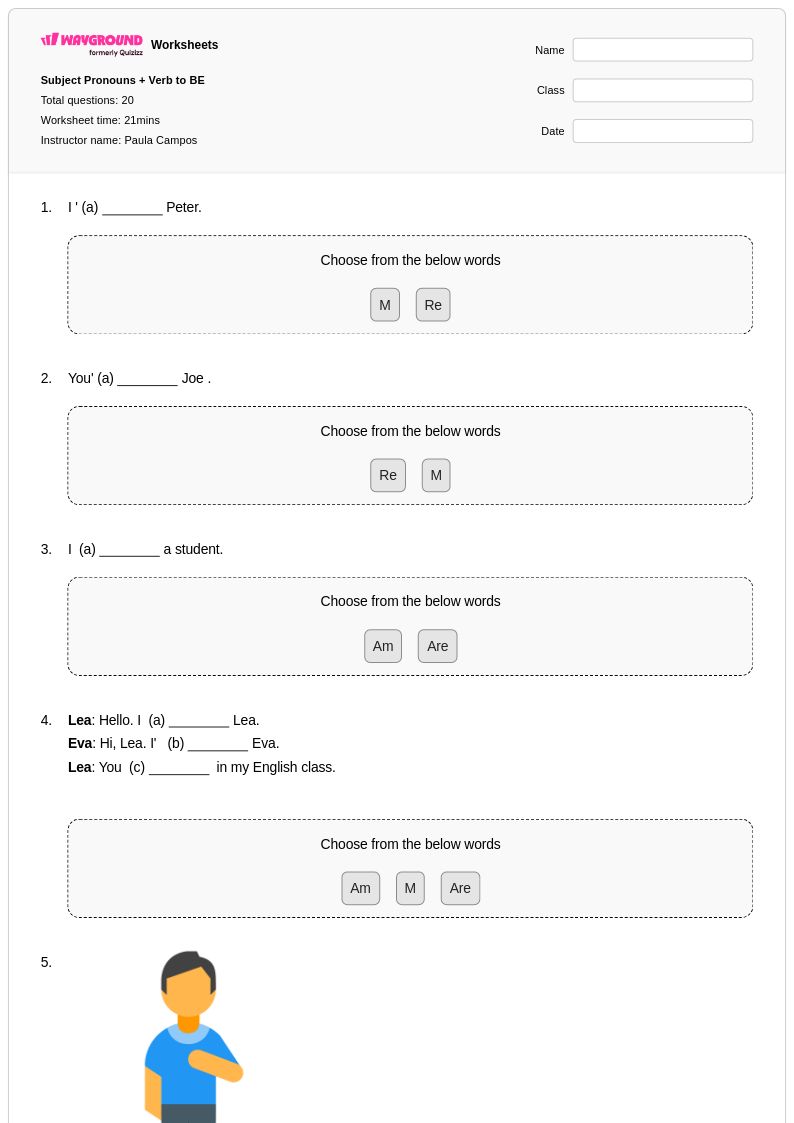
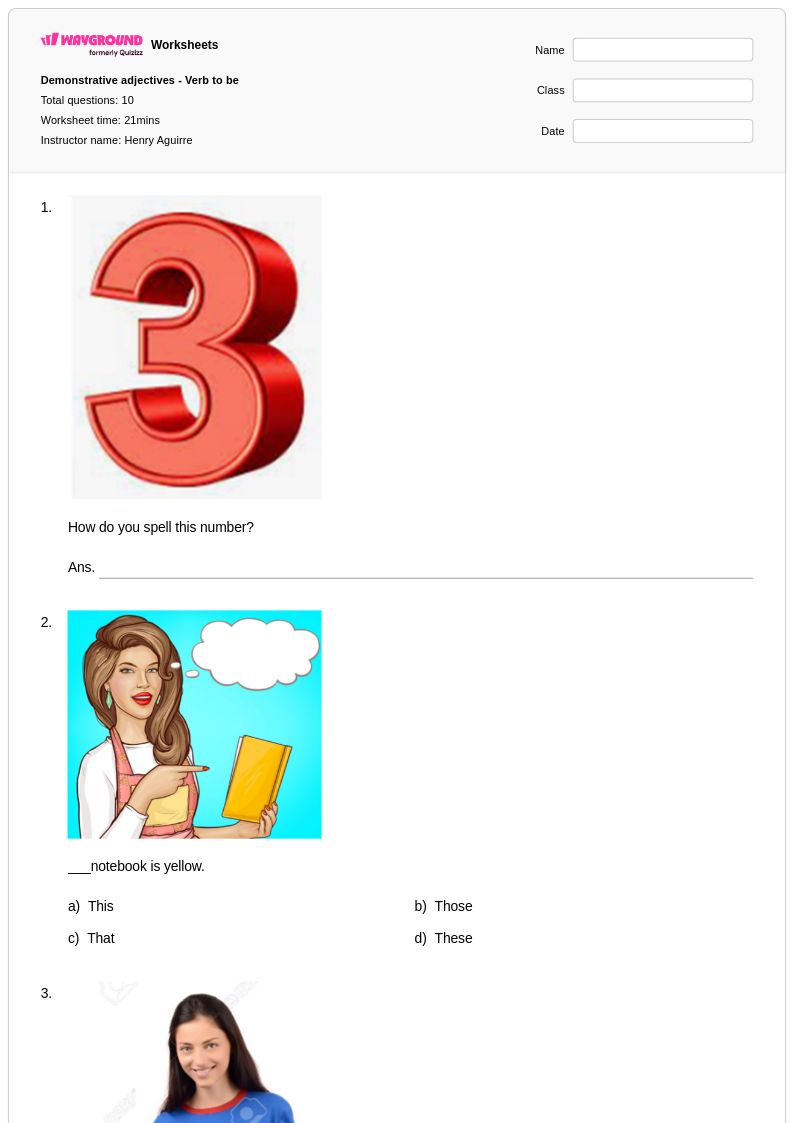
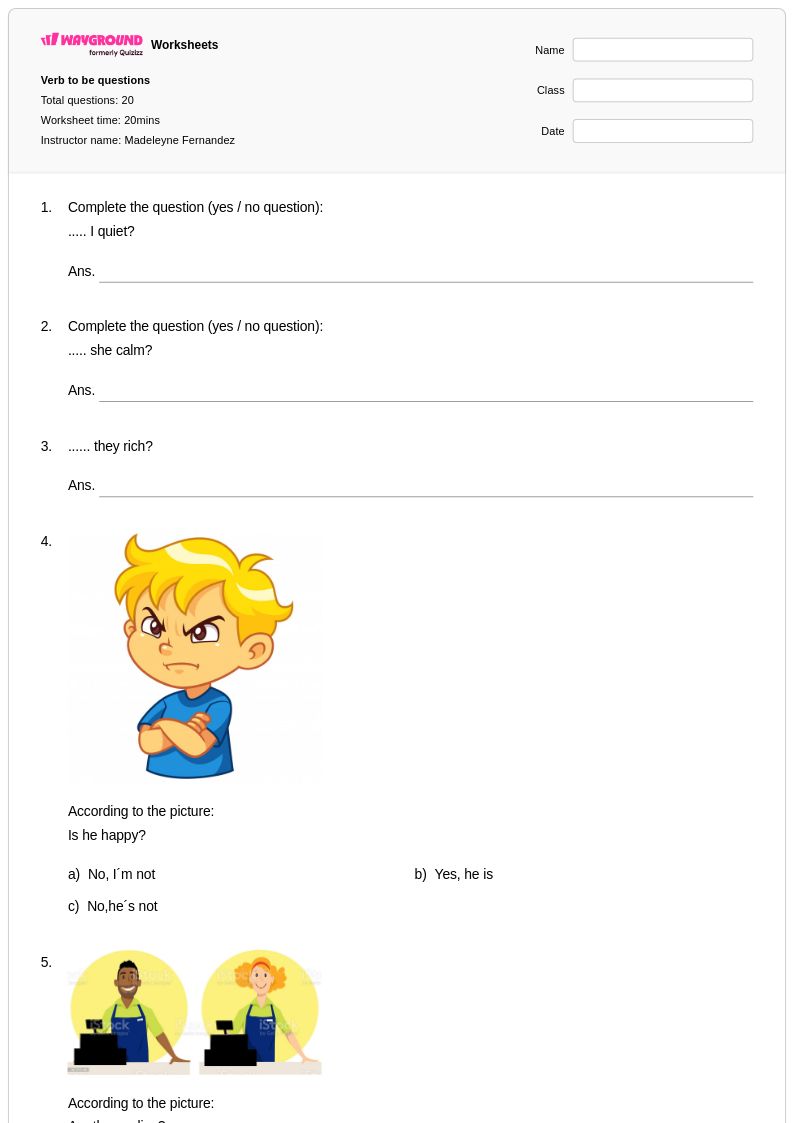
Verb 'to be' worksheets available through Wayground (formerly Quizizz) provide comprehensive practice for one of the most fundamental elements of English grammar. These carefully designed resources help students master the various forms of the verb 'to be' including am, is, are, was, were, being, and been, while developing essential skills in subject-verb agreement, sentence construction, and proper tense usage. The worksheets feature diverse practice problems that guide learners through identifying correct forms in context, completing sentences with appropriate conjugations, and transforming statements into questions and negative forms. Each worksheet collection includes detailed answer keys and is available as free printables in convenient PDF format, making it easy for educators to incorporate targeted grammar instruction into their lesson plans and provide students with structured opportunities to reinforce their understanding of this crucial auxiliary verb.
Wayground (formerly Quizizz) supports teachers with an extensive library of millions of teacher-created verb 'to be' worksheet resources that streamline lesson planning and enhance student outcomes. The platform's robust search and filtering capabilities allow educators to quickly locate materials that align with specific learning standards and match their students' proficiency levels, while built-in differentiation tools enable seamless customization for diverse learning needs. These worksheet collections are available in both printable and digital formats, including downloadable PDFs, providing flexibility for classroom instruction, homework assignments, and independent practice sessions. Teachers can leverage these comprehensive resources for targeted remediation to address individual student gaps, skill-building practice to reinforce core concepts, and enrichment activities that challenge advanced learners, ensuring that all students develop confident mastery of the verb 'to be' and its essential role in English sentence structure.
FAQs
How do I teach the verb 'to be' to students who are new to English grammar?
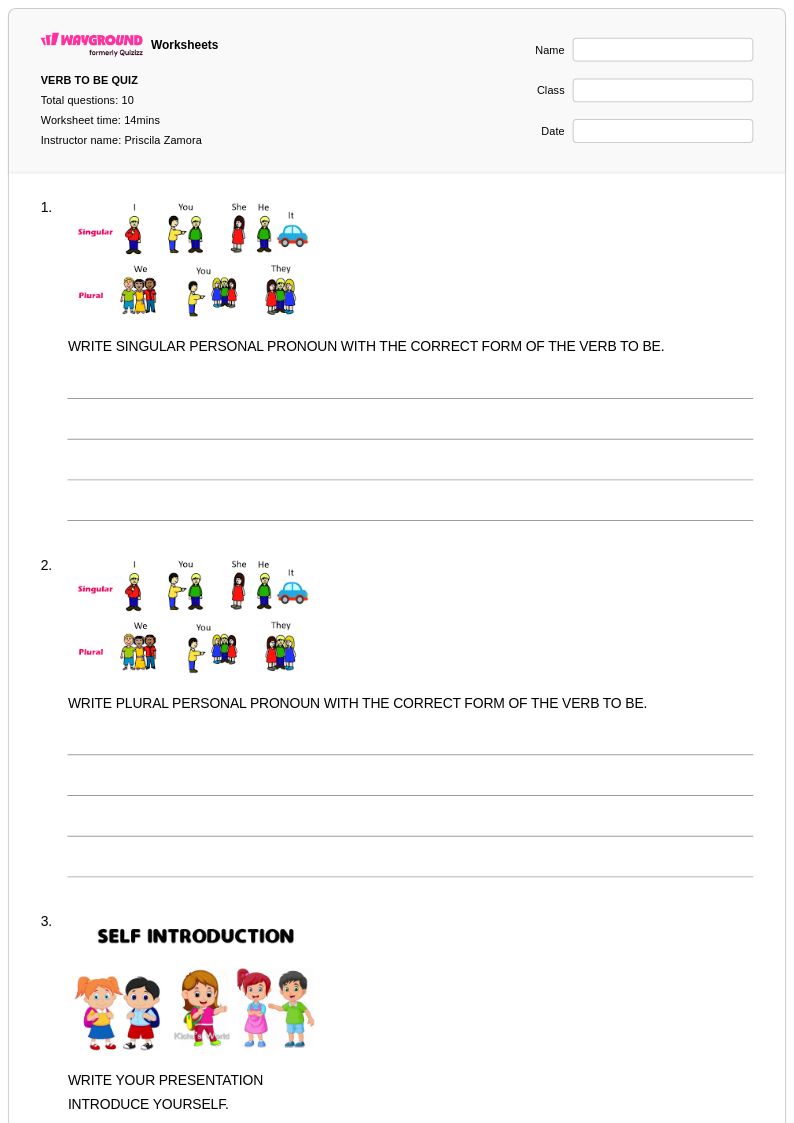
Start by introducing the present tense forms — am, is, are — in the context of simple, relatable sentences about identity, age, and location before introducing past tense forms like was and were. Visual anchor charts pairing each pronoun with its correct form help students internalize the patterns. Once students are comfortable identifying correct forms, progress to sentence construction exercises where they must choose and apply the right conjugation independently.
What exercises help students practice the different forms of the verb 'to be'?
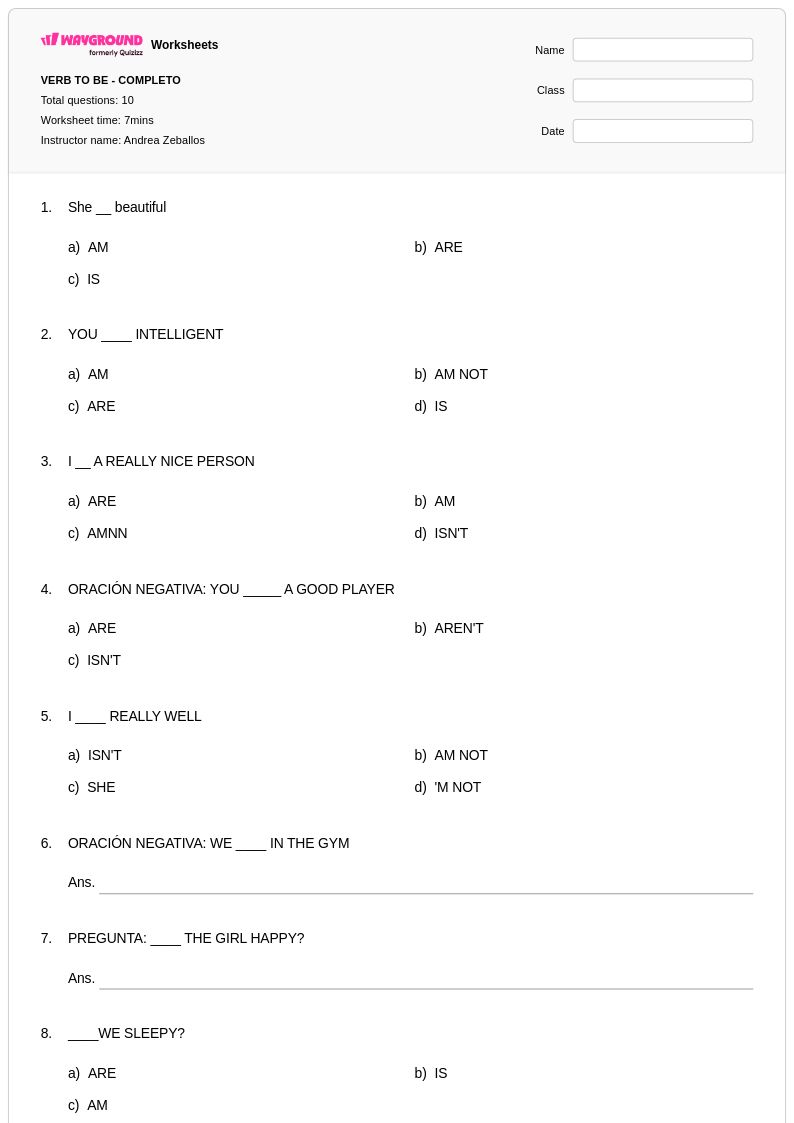
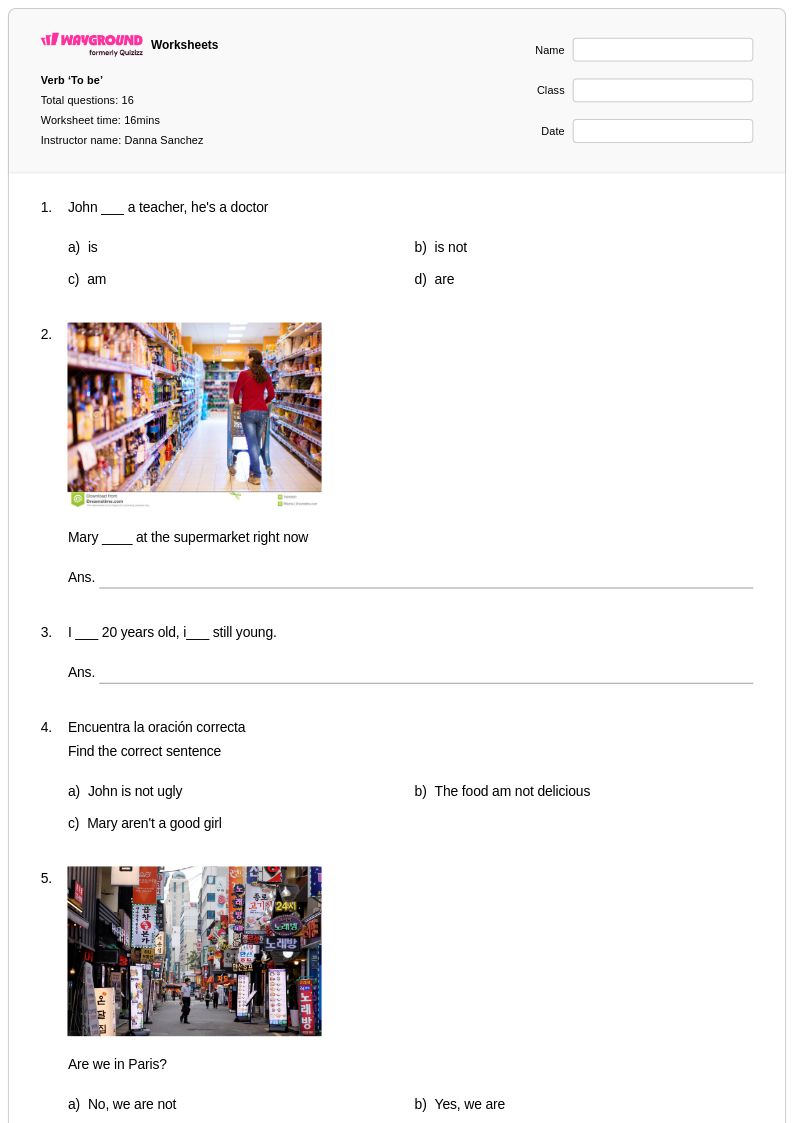
Effective practice exercises include fill-in-the-blank sentences requiring students to select the correct conjugation based on subject and tense, sentence transformation tasks where students convert affirmative statements into questions and negative forms, and error-correction activities where students identify and fix incorrect usage. These exercise types build both recognition and production skills, which are both necessary for confident grammar use.
What mistakes do students commonly make when learning the verb 'to be'?
The most frequent errors include using 'is' with plural subjects (e.g., 'They is happy'), confusing present and past forms in context (e.g., writing 'He were tired' instead of 'He was tired'), and omitting the verb entirely, which is especially common among students whose first language does not require an explicit copula. Targeted fill-in-the-blank and correction exercises that isolate these error patterns are particularly effective for remediation.
How do I help ELL students master subject-verb agreement with the verb 'to be'?
ELL students benefit most from repetitive, low-stakes practice that reinforces the pronoun-to-verb pairing in clear, consistent contexts before introducing exceptions or complex tenses. Sentence stems, cloze activities, and speaking drills alongside written practice give students multiple pathways to internalize the pattern. Digital worksheets with read-aloud support can also reduce language-processing barriers so students can focus on the grammatical structure itself.
How can I use verb 'to be' worksheets in both print and digital classroom settings?
Verb 'to be' worksheets on Wayground are available as printable PDFs for traditional classroom use and in digital formats for technology-integrated environments, giving teachers flexibility for in-class instruction, homework assignments, and independent practice. Digital versions can also be hosted as a quiz on Wayground, allowing teachers to track completion and review student responses. Both formats include detailed answer keys, so grading and feedback are efficient regardless of how the worksheet is delivered.
How do I differentiate verb 'to be' practice for students at different proficiency levels?
For lower-proficiency students, focus on present tense forms with simple, high-frequency sentence patterns before introducing past tense or negative constructions. More advanced students can work on transforming sentences between affirmative, negative, and interrogative forms, or on using 'being' and 'been' in progressive and perfect constructions. Wayground also supports individual accommodations such as reduced answer choices and read-aloud settings, which can reduce cognitive load for students who need additional support without disrupting the rest of the class.