
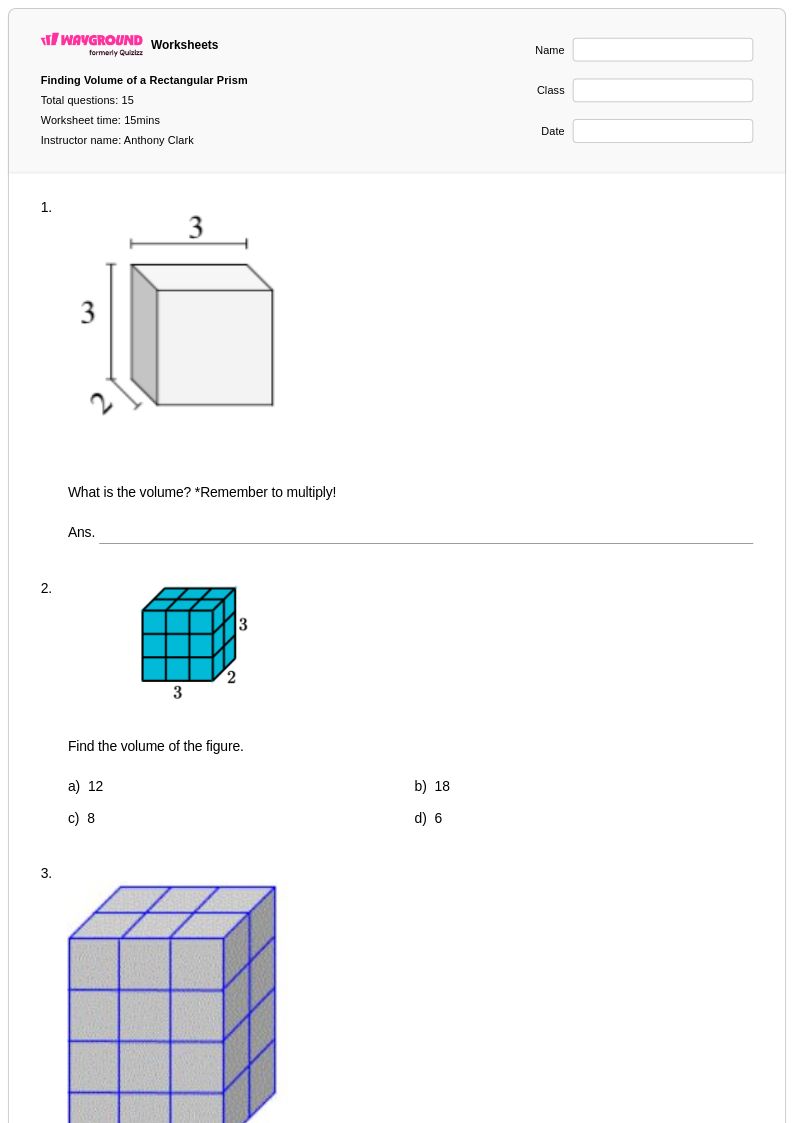
15 Q
5th - Uni
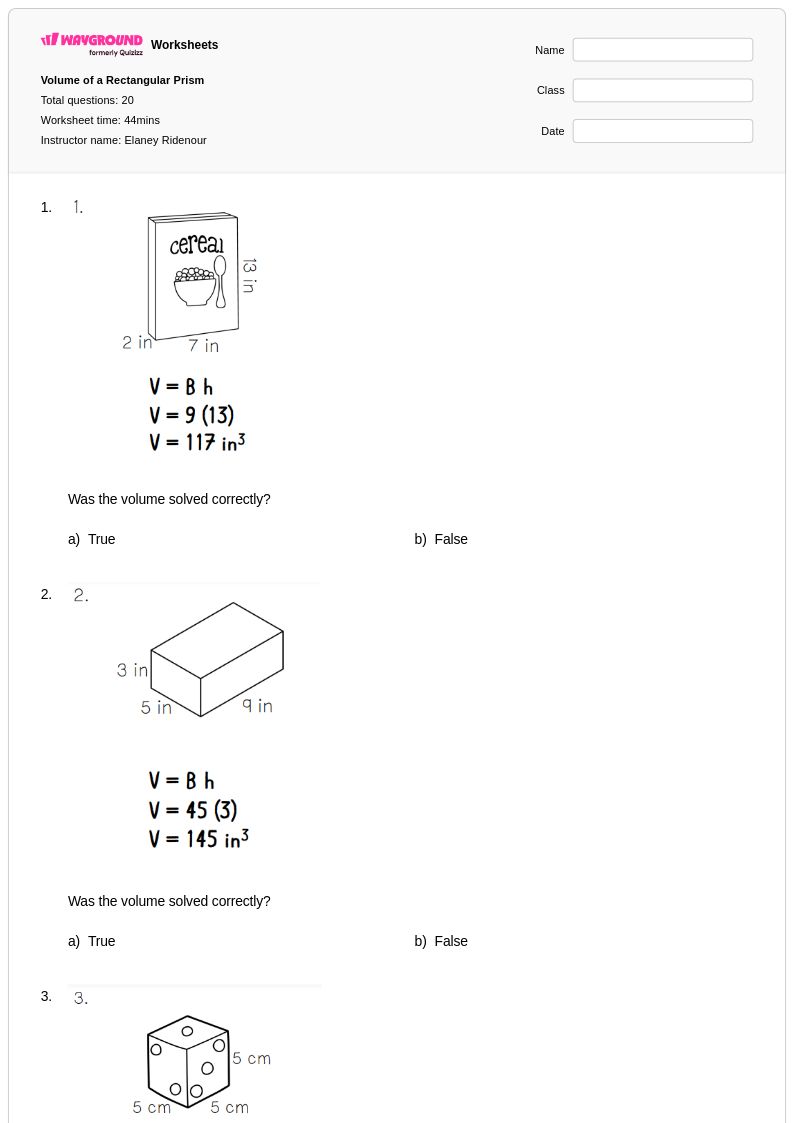
20 Q
6th - 8th
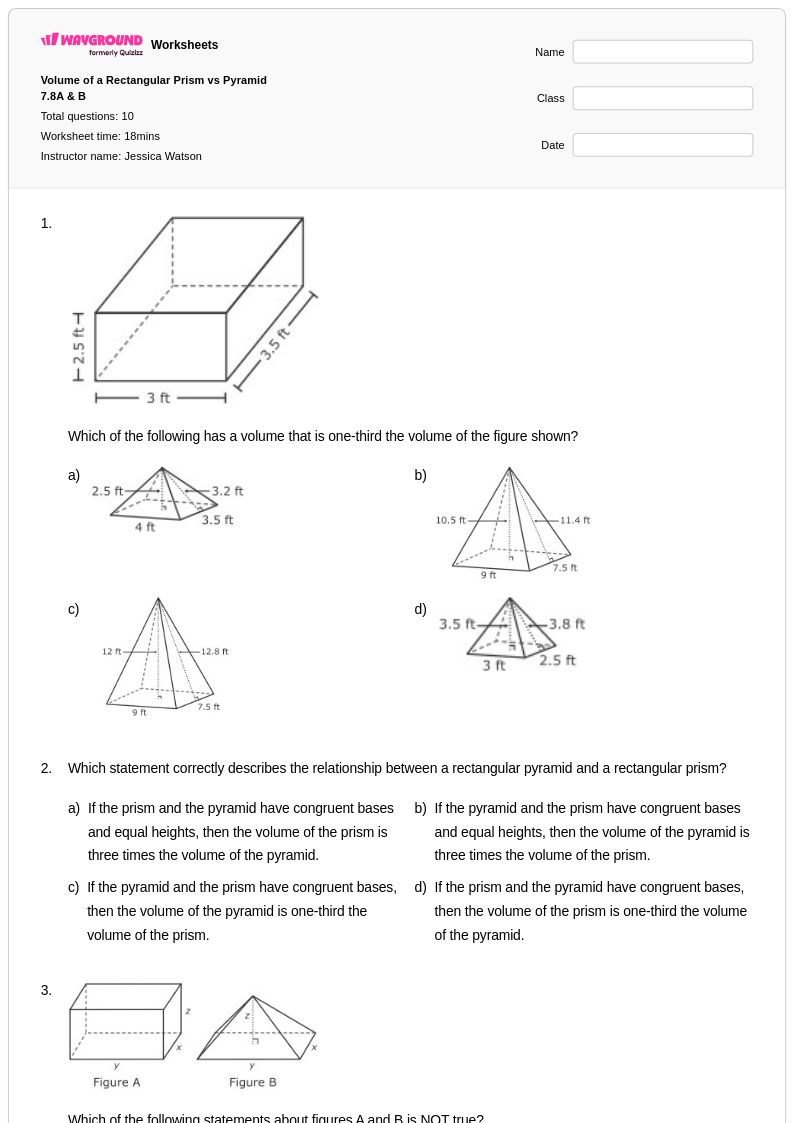
10 Q
7th
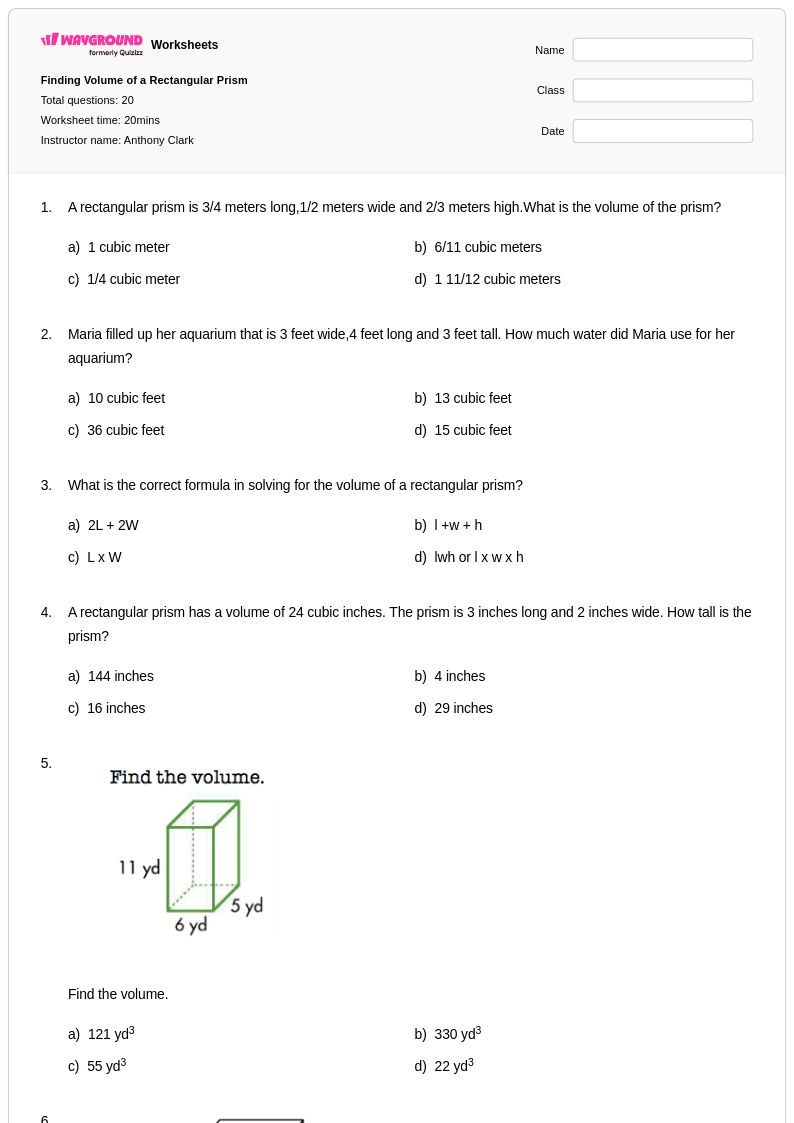
20 Q
5th - Uni
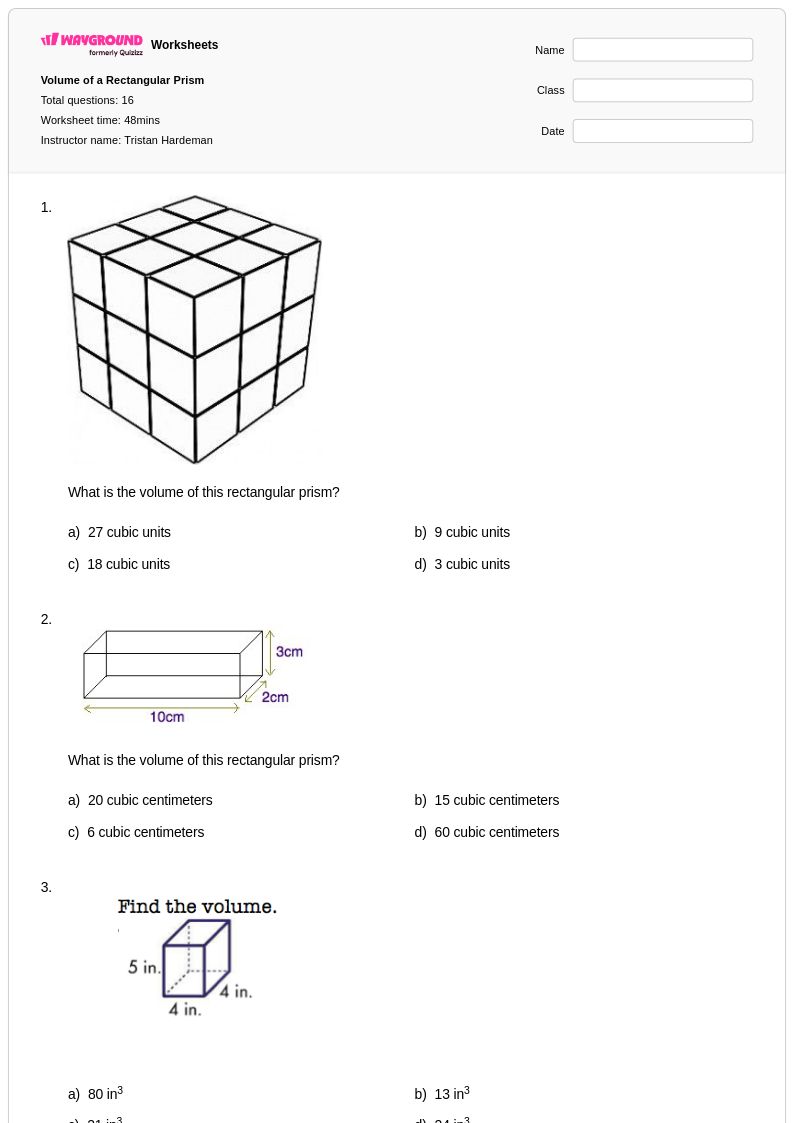
16 Q
7th
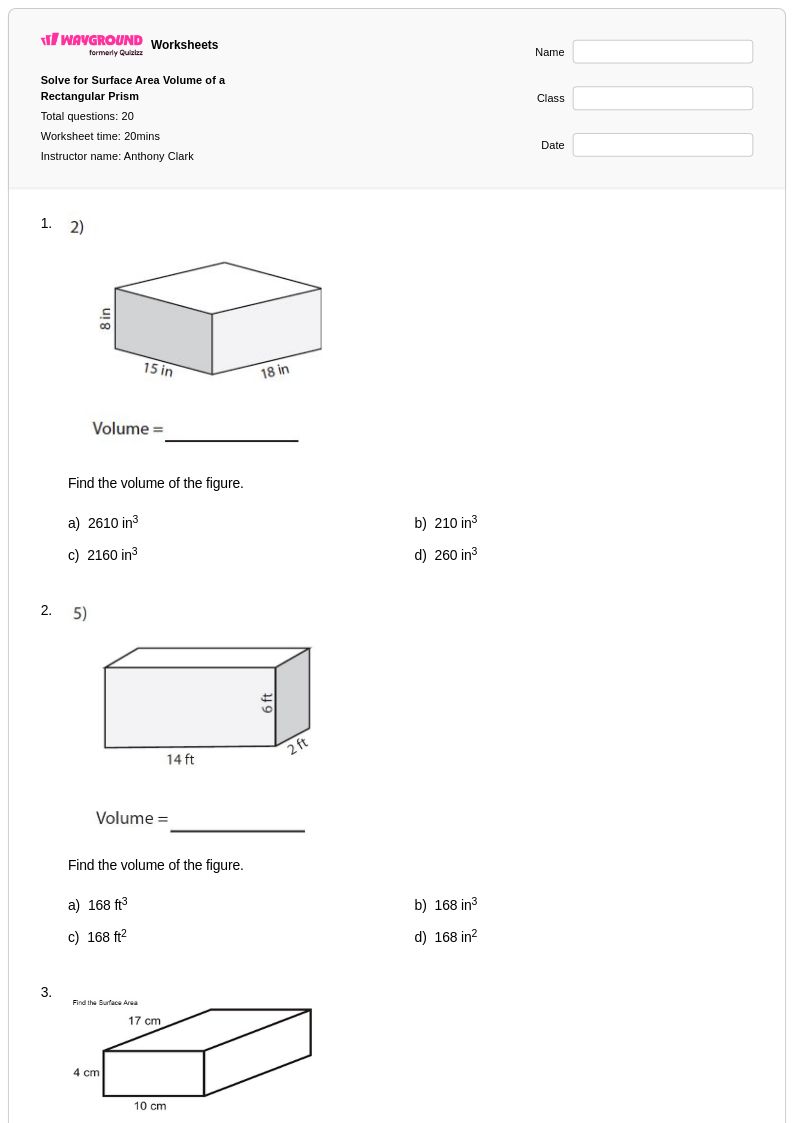
20 Q
7th - Uni

11 Q
6th - 10th
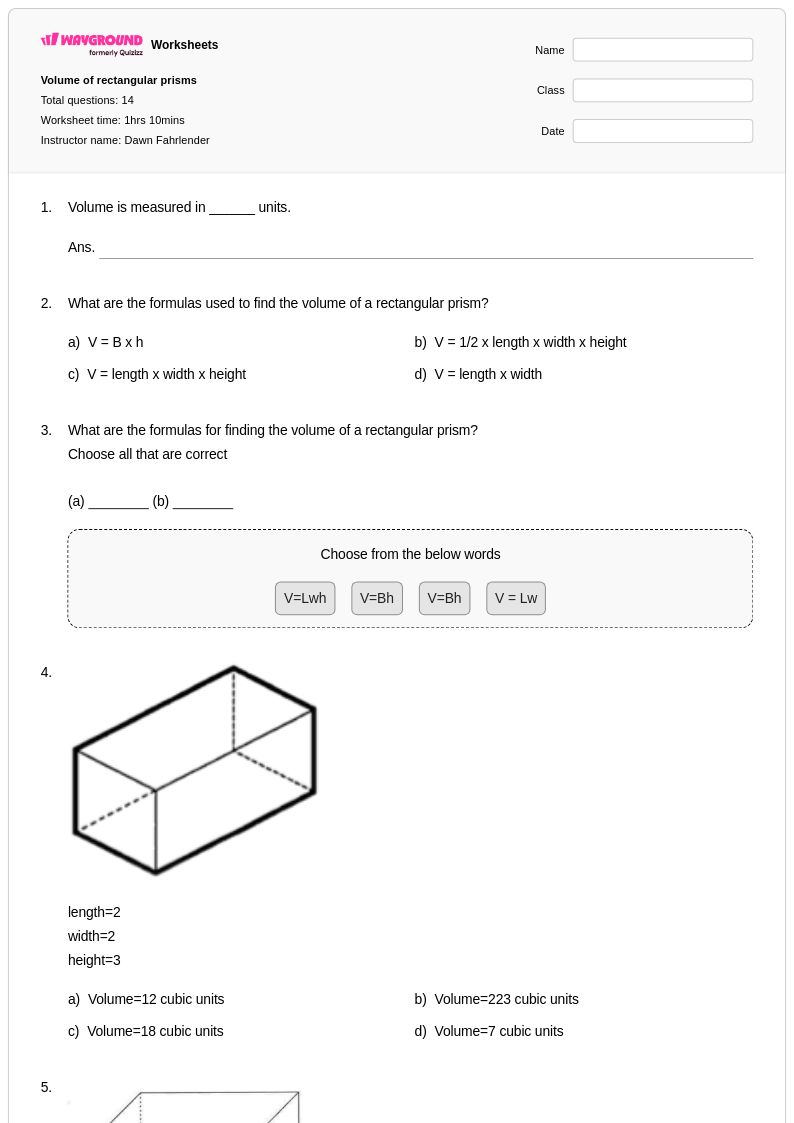
14 Q
6th - 8th
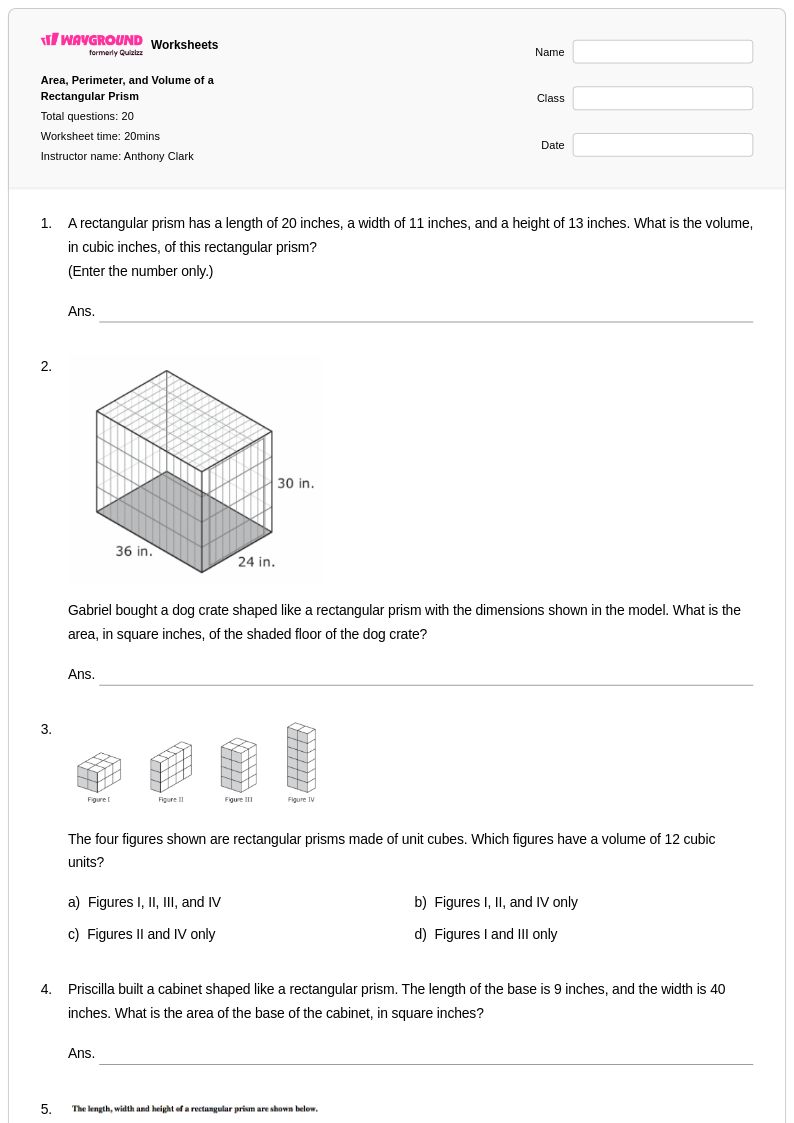
20 Q
5th - Uni
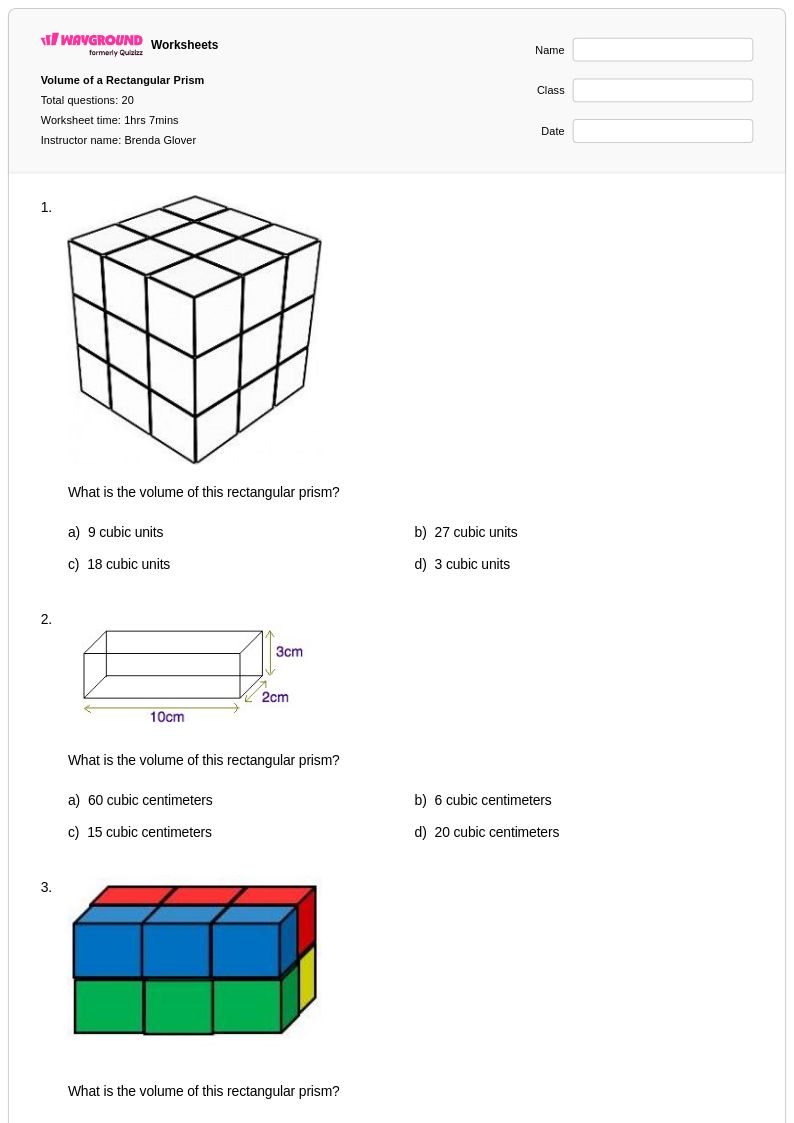
20 Q
6th - 8th

11 Q
6th - 10th
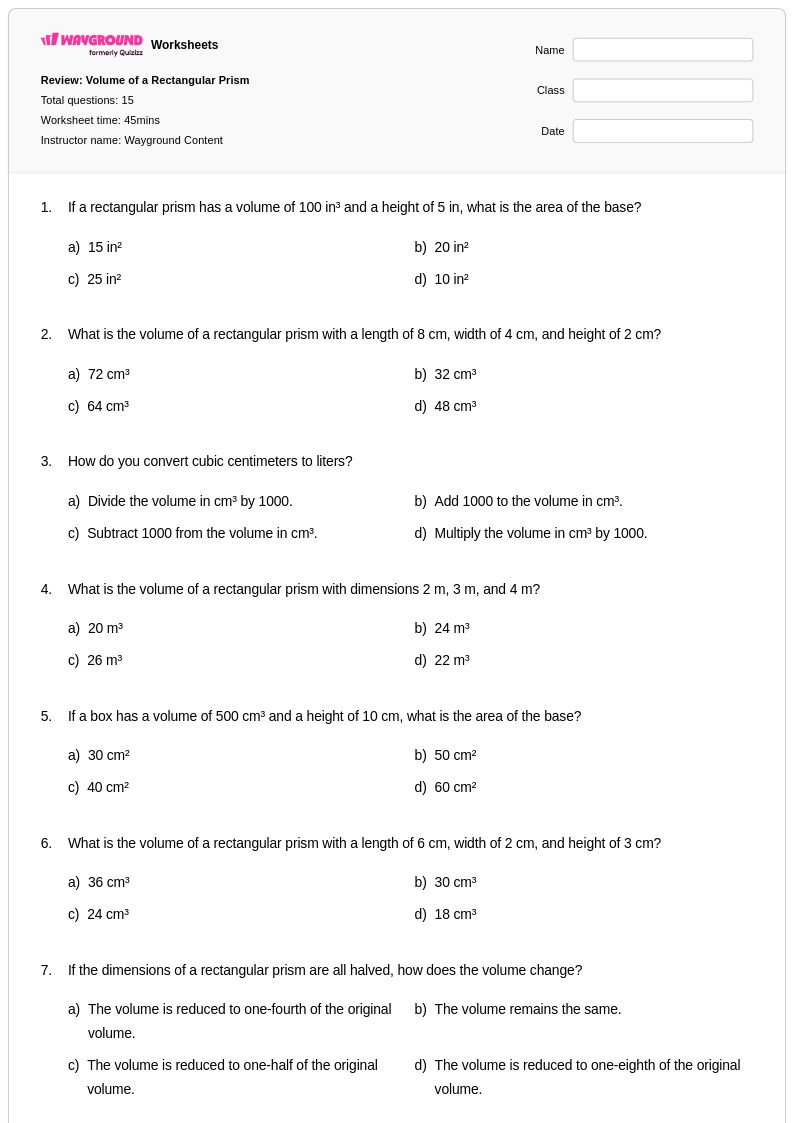
15 Q
7th
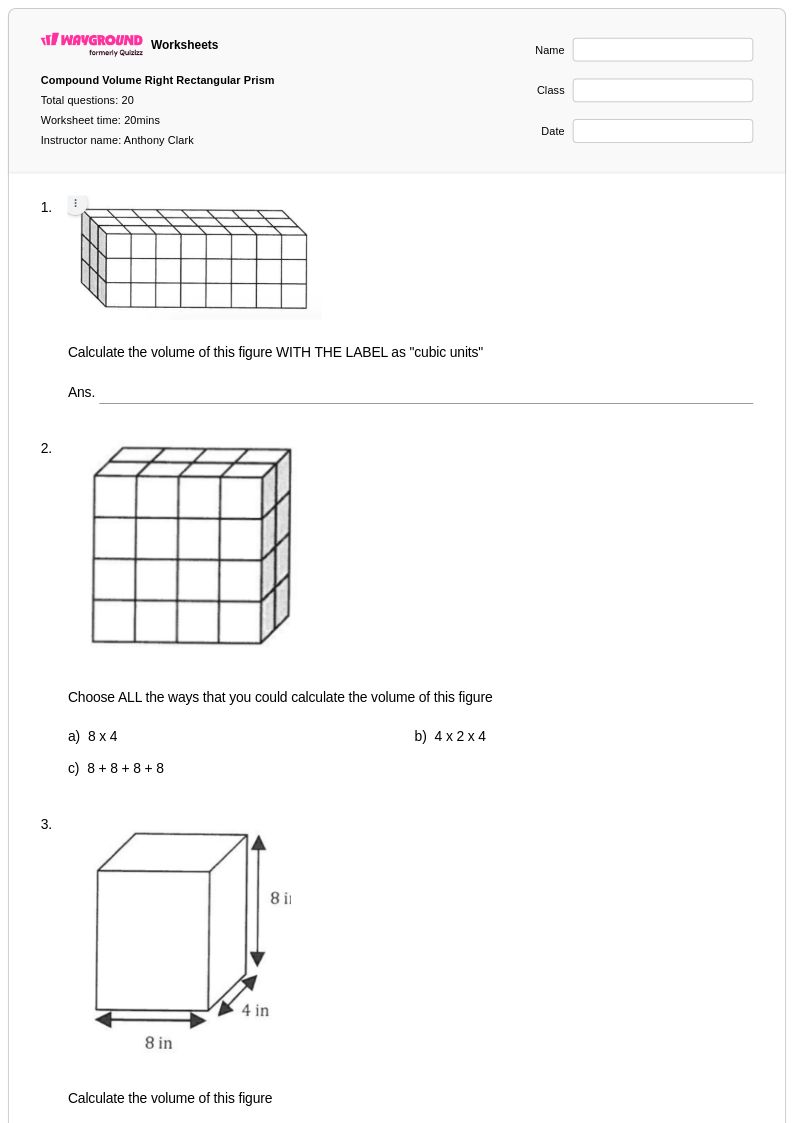
20 Q
5th - Uni
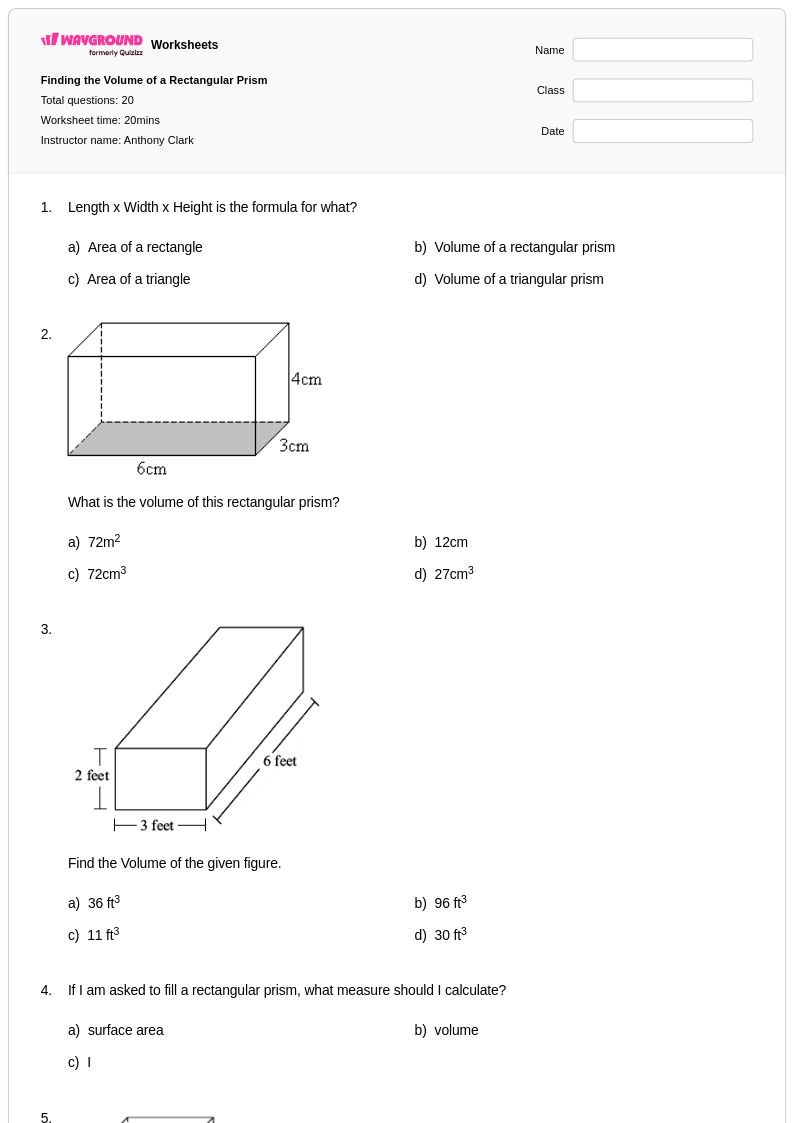
20 Q
6th - Uni
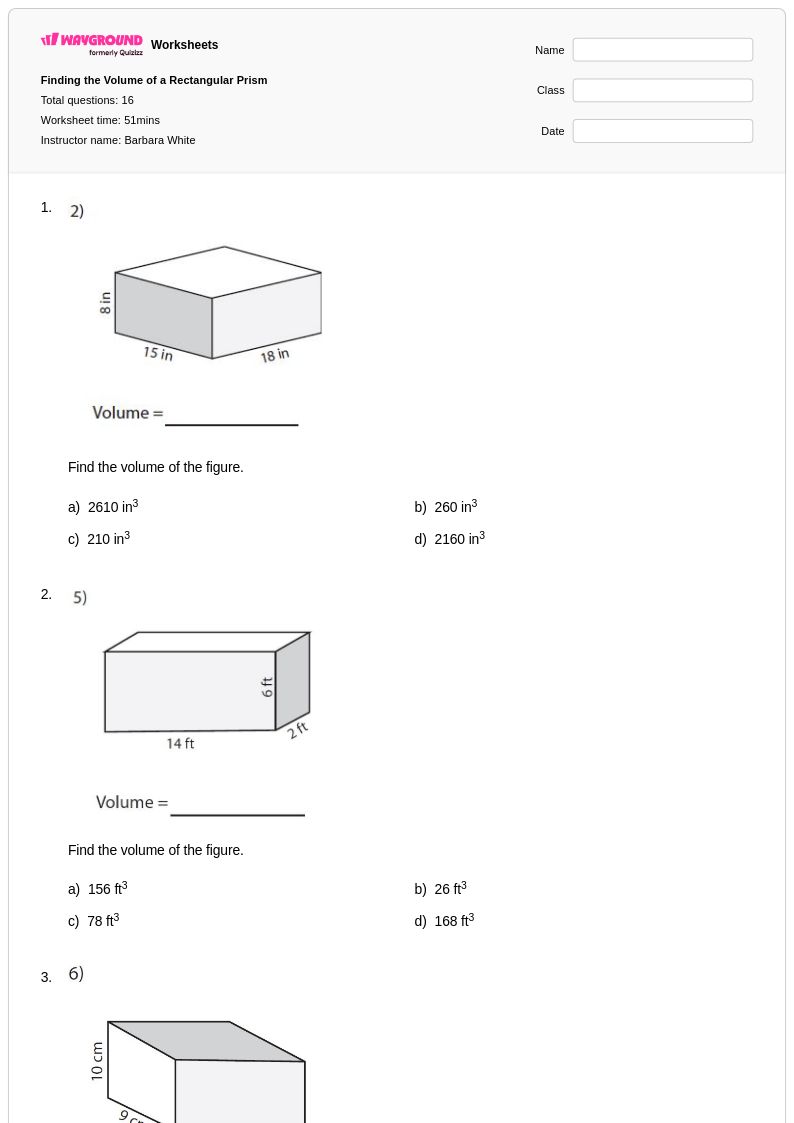
16 Q
5th - 7th
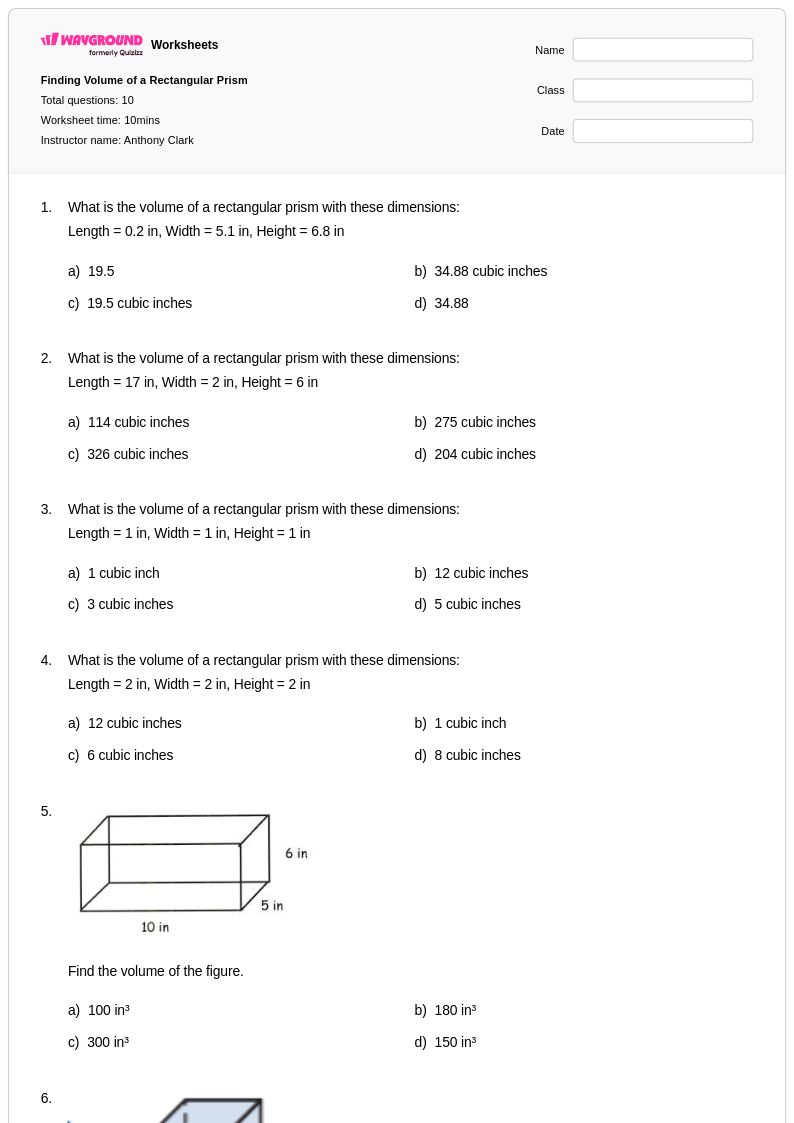
10 Q
5th - Uni
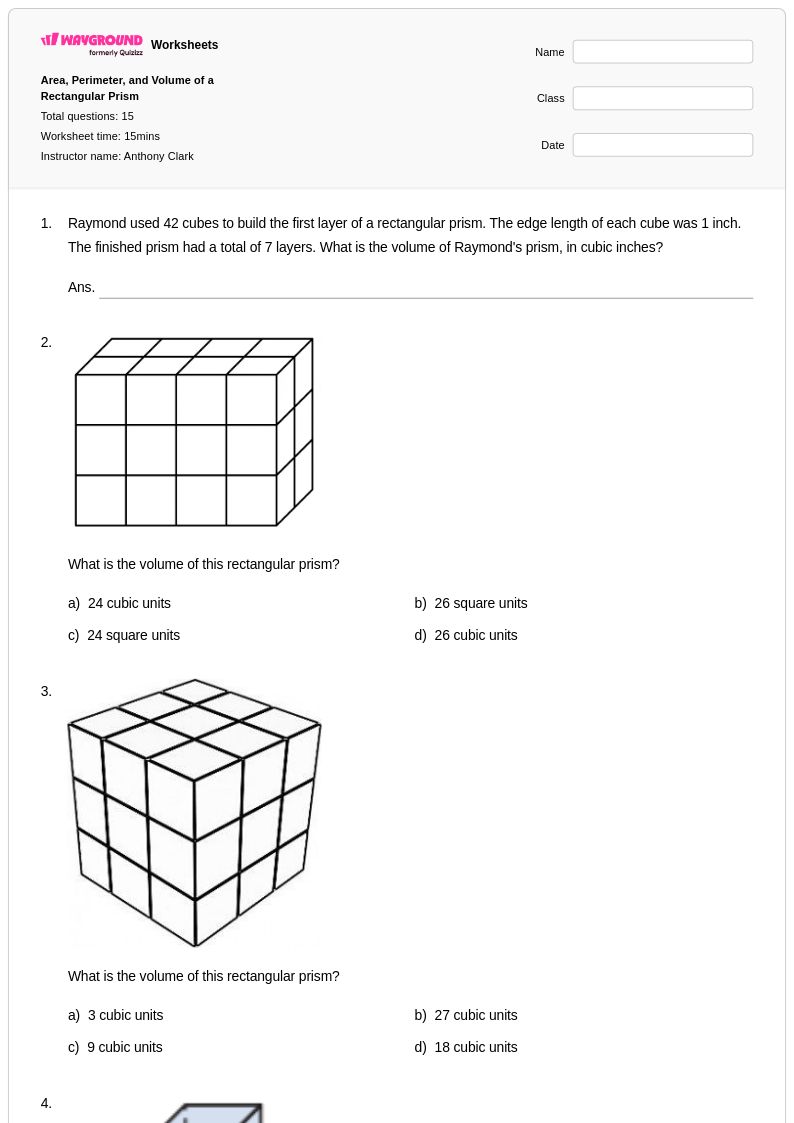
15 Q
5th - Uni
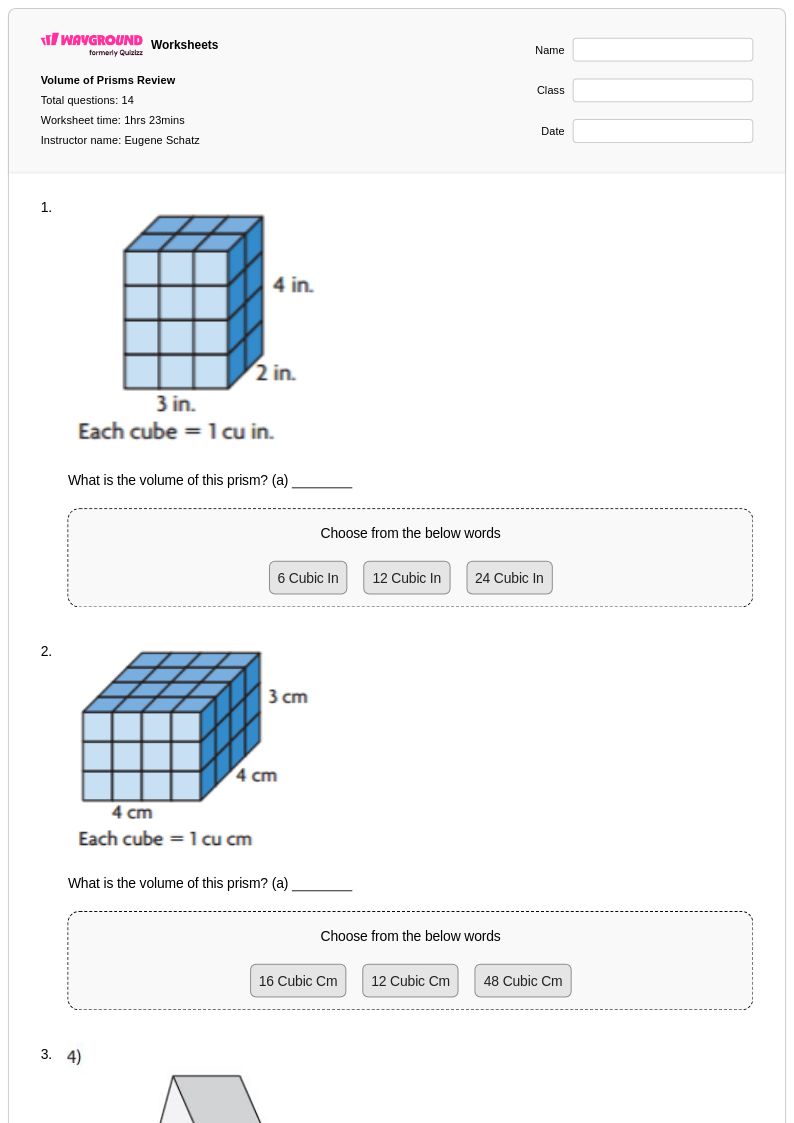
14 Q
7th
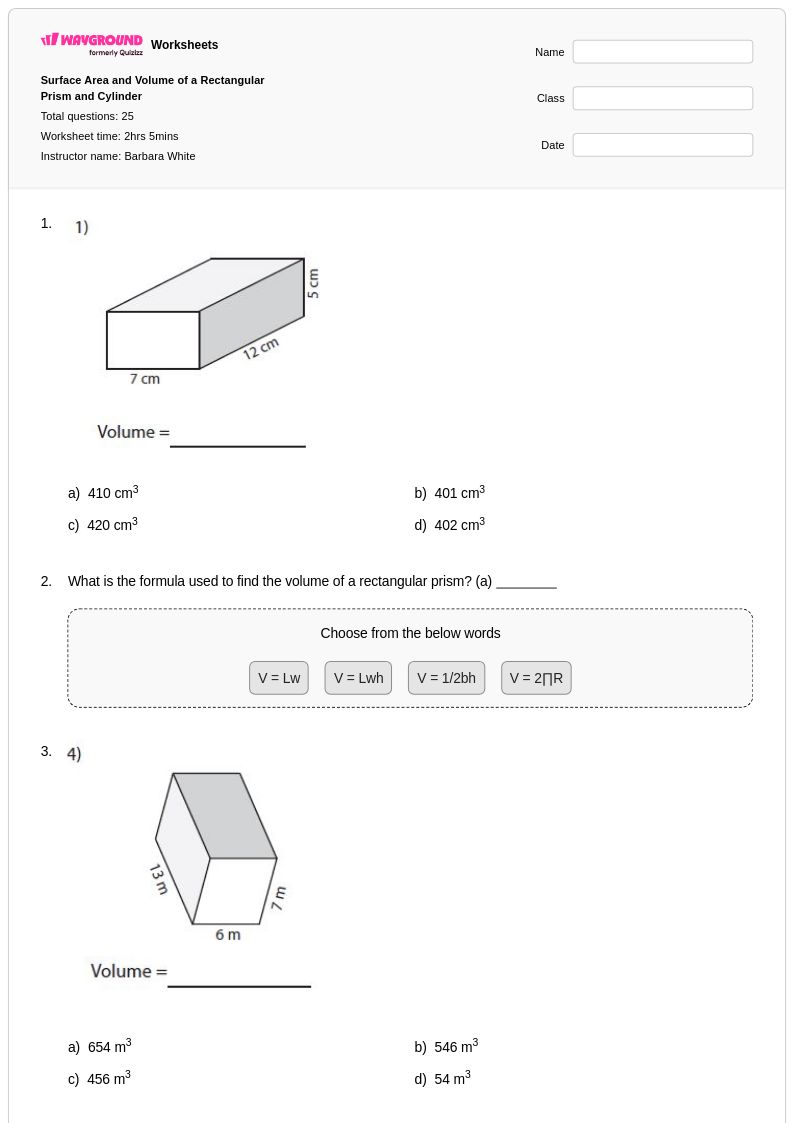
25 Q
5th - 8th
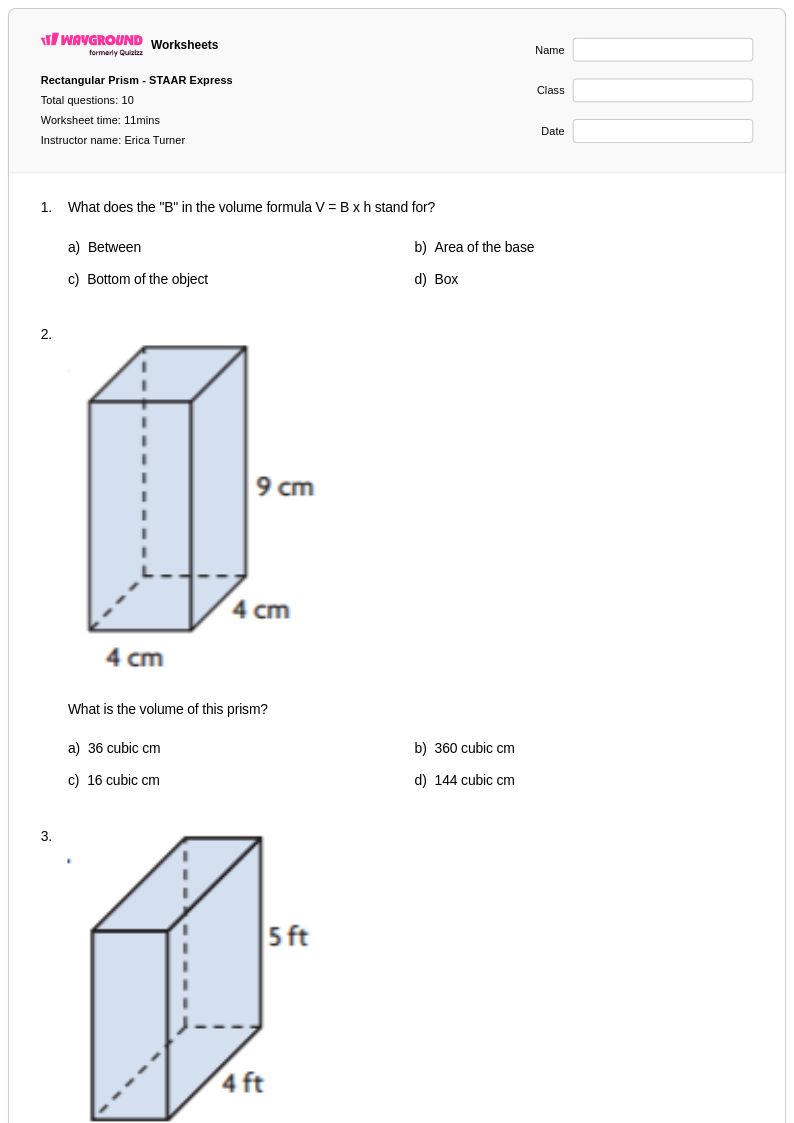
10 Q
6th - 8th
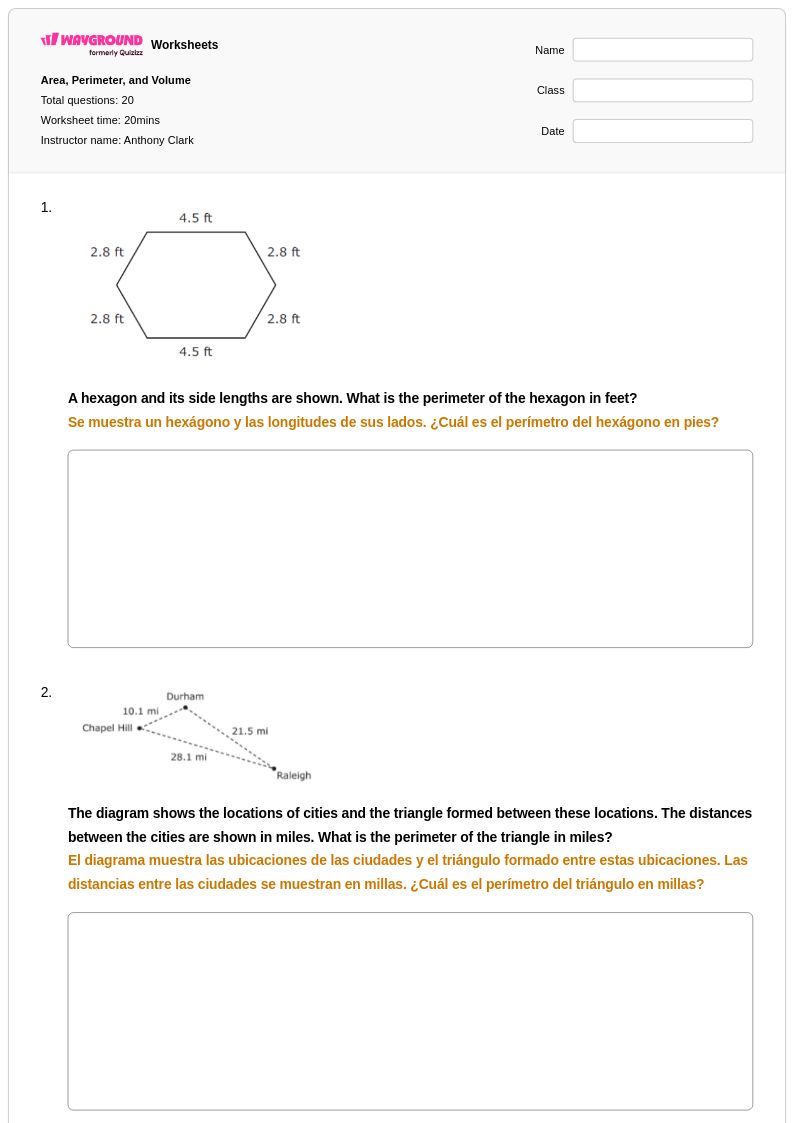
20 Q
5th - Uni
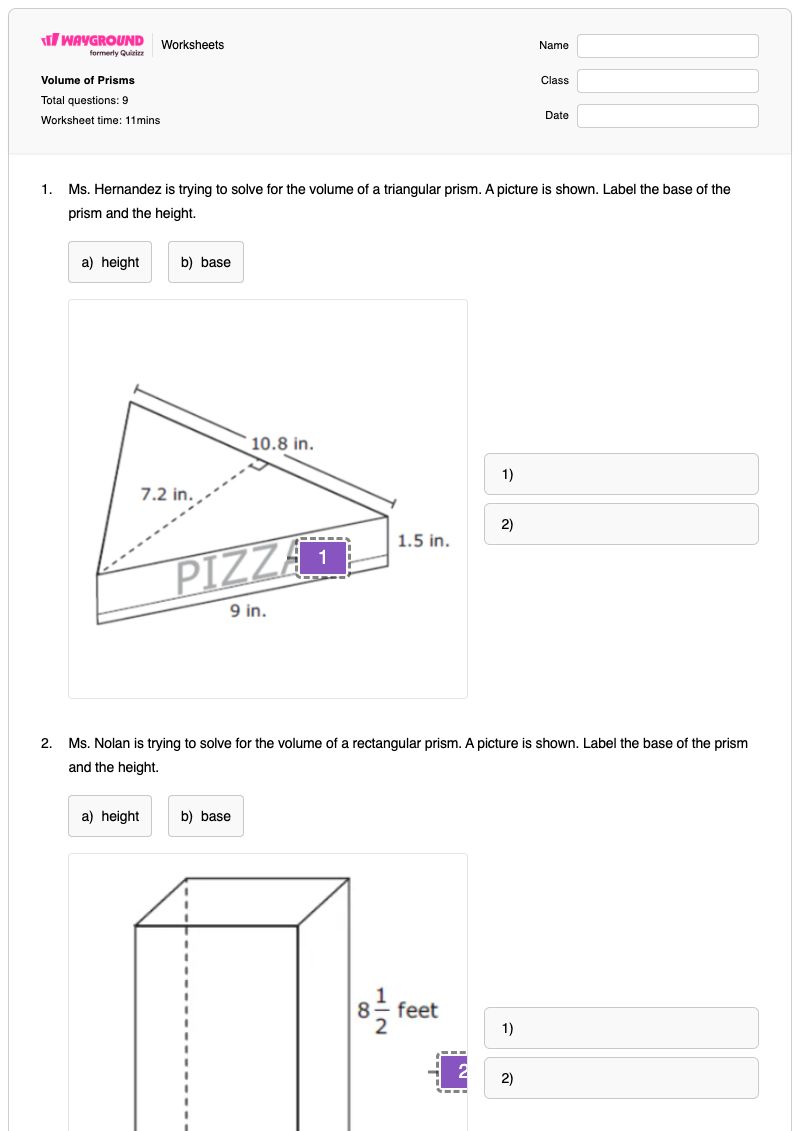
9 Q
7th
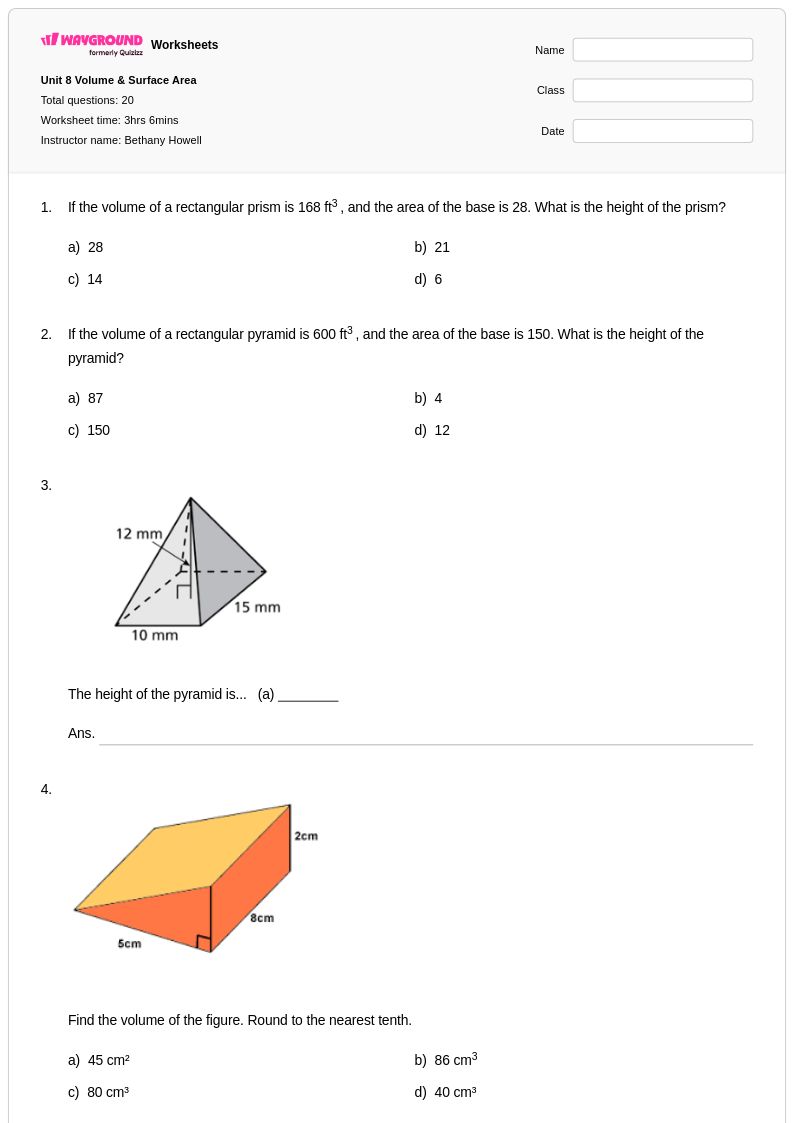
20 Q
7th
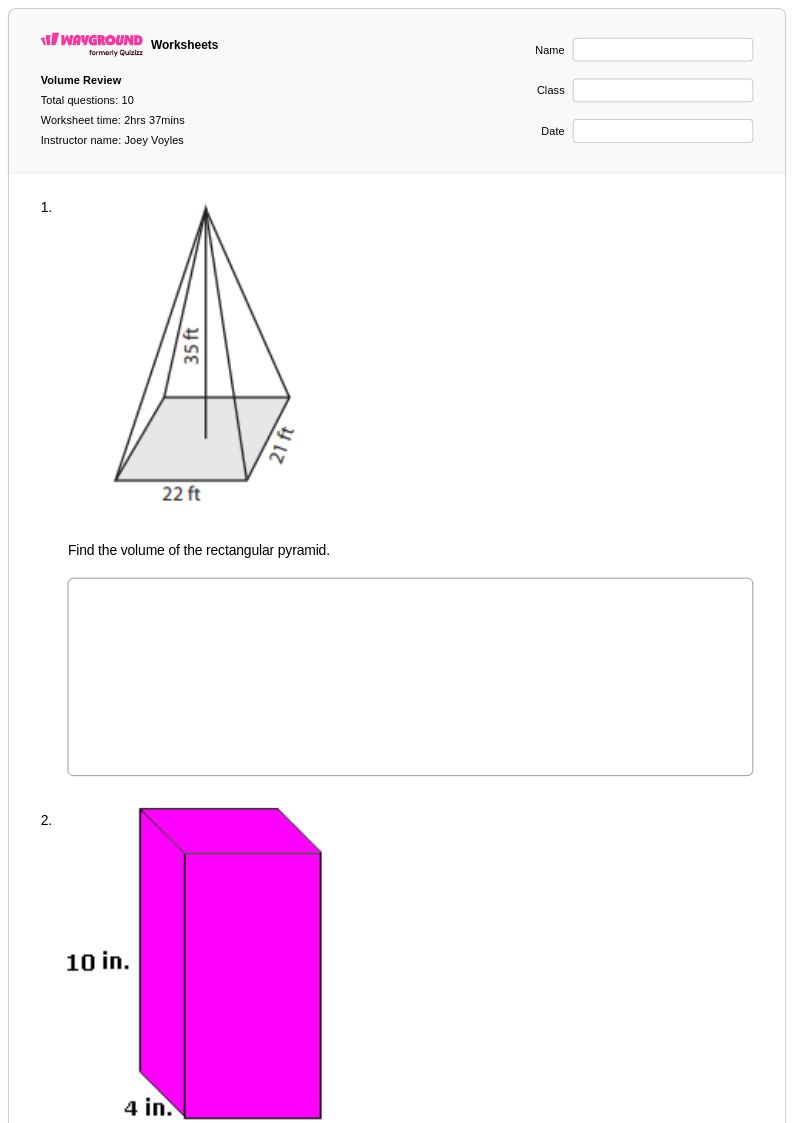
10 Q
7th
Explore Volume of a Rectangular Prism Worksheets by Grades
Explore Other Subject Worksheets for grade 7
Explore printable Volume of a Rectangular Prism worksheets for Grade 7
Volume of a rectangular prism worksheets for Grade 7 students through Wayground (formerly Quizizz) provide comprehensive practice opportunities that strengthen spatial reasoning and mathematical calculation skills essential for geometric understanding. These carefully designed resources guide students through the fundamental formula V = l × w × h, helping them master the process of calculating three-dimensional space within rectangular solids through systematic practice problems that progress from basic applications to more complex real-world scenarios. Each worksheet collection includes detailed answer keys that support both independent learning and teacher assessment, while the free printable pdf format ensures accessibility for classroom use, homework assignments, and remediation activities that reinforce this critical mathematical concept.
Wayground (formerly Quizizz) empowers educators with millions of teacher-created worksheet resources specifically designed for volume of rectangular prism instruction, featuring robust search and filtering capabilities that allow teachers to quickly locate materials aligned with their curriculum standards and student needs. The platform's differentiation tools enable instructors to customize content difficulty levels, while flexible formatting options provide both printable pdf versions for traditional classroom environments and digital formats for technology-integrated learning experiences. These comprehensive features streamline lesson planning by offering ready-to-use practice materials that support targeted skill development, facilitate remediation for struggling learners, provide enrichment opportunities for advanced students, and ensure consistent skill practice across diverse learning contexts.