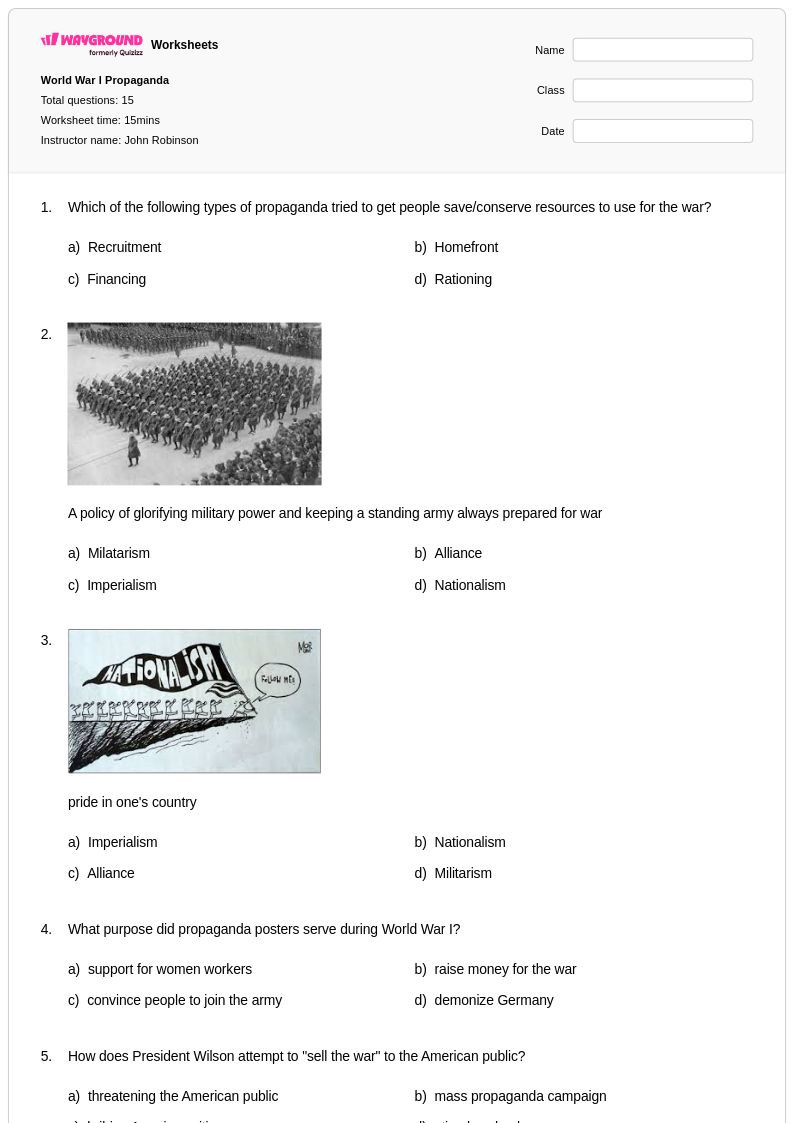
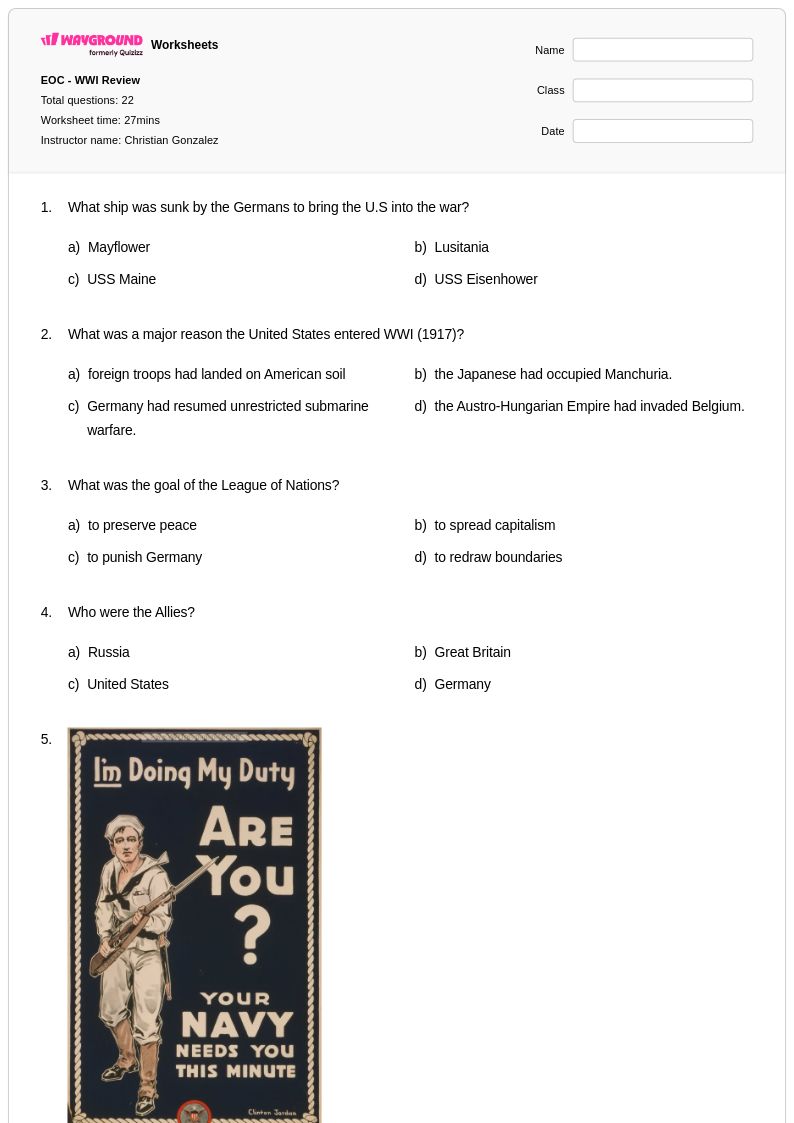
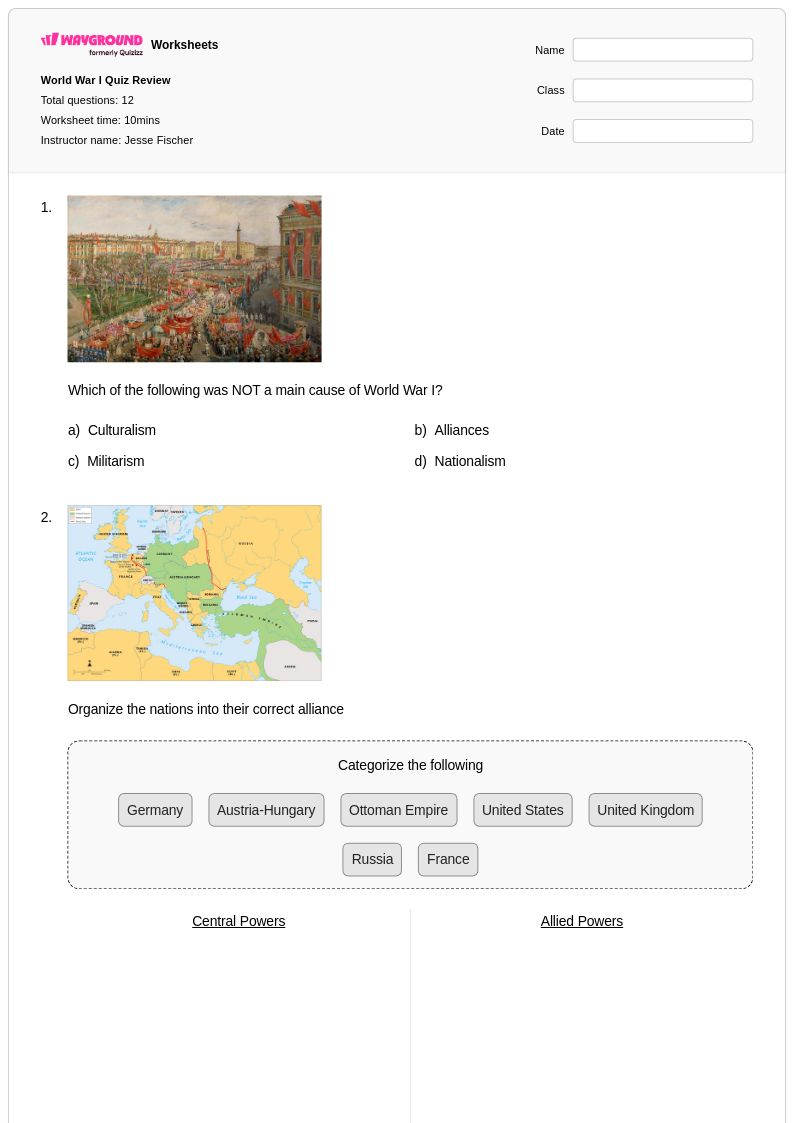
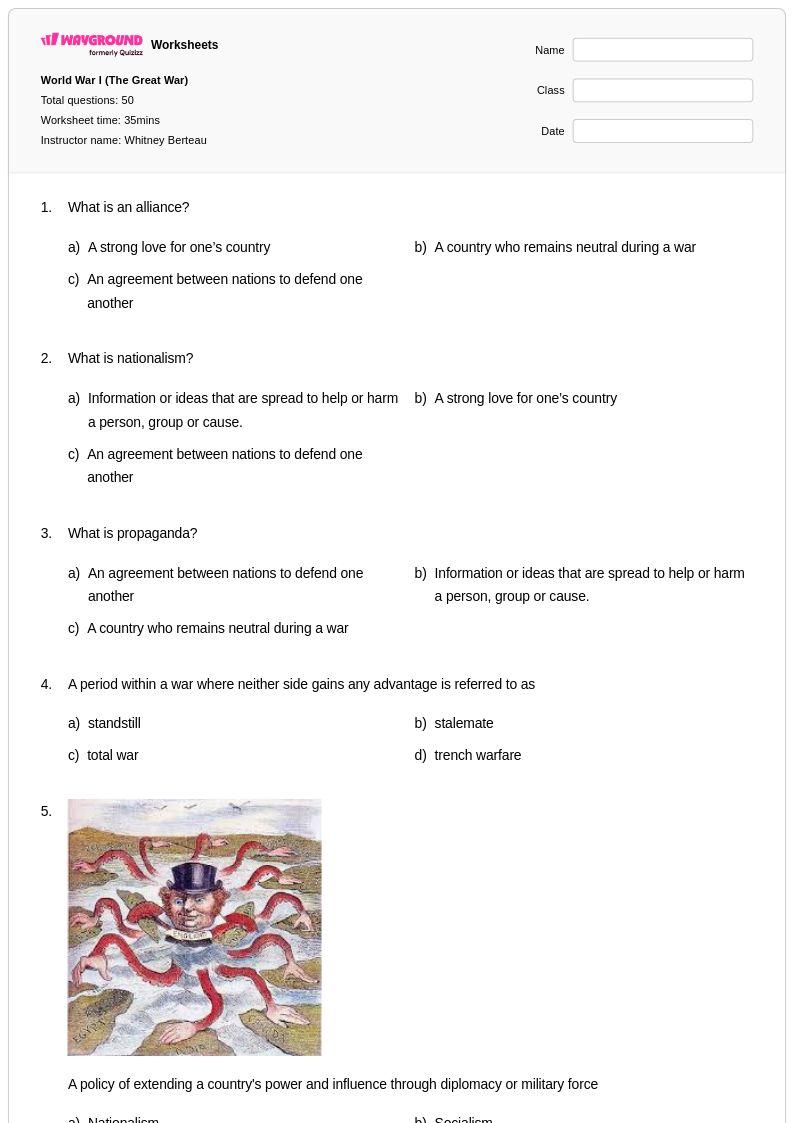
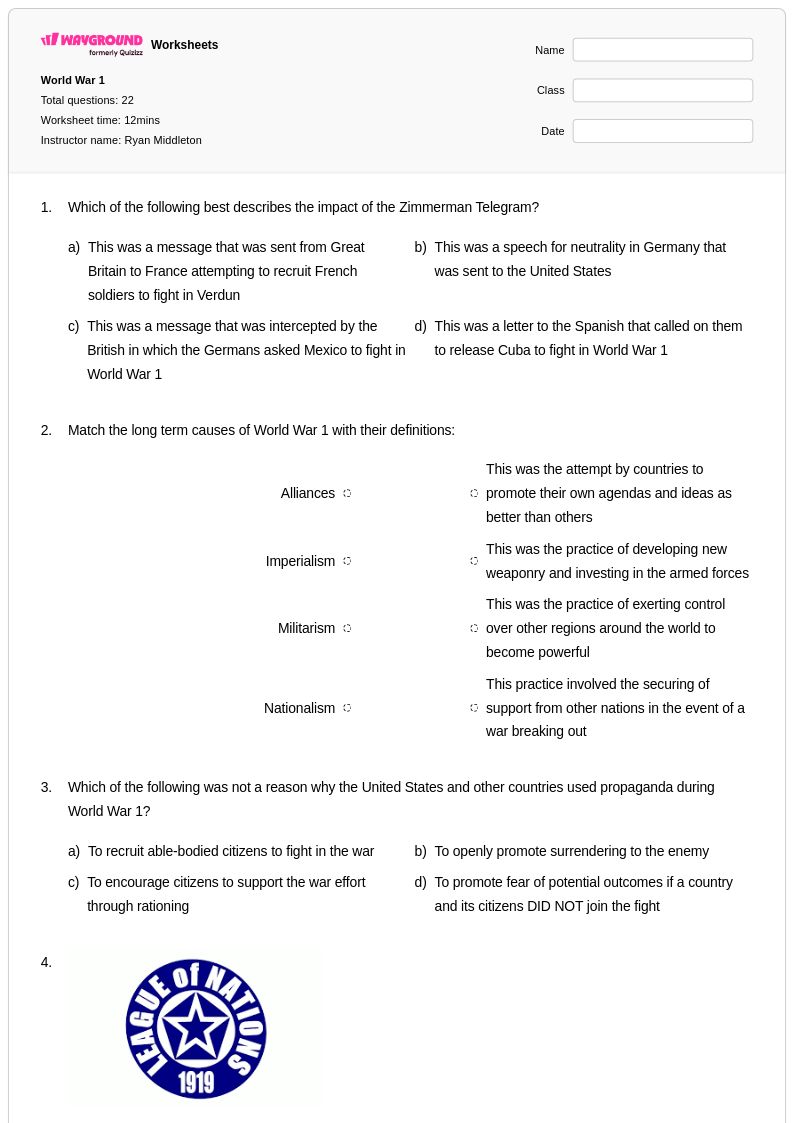
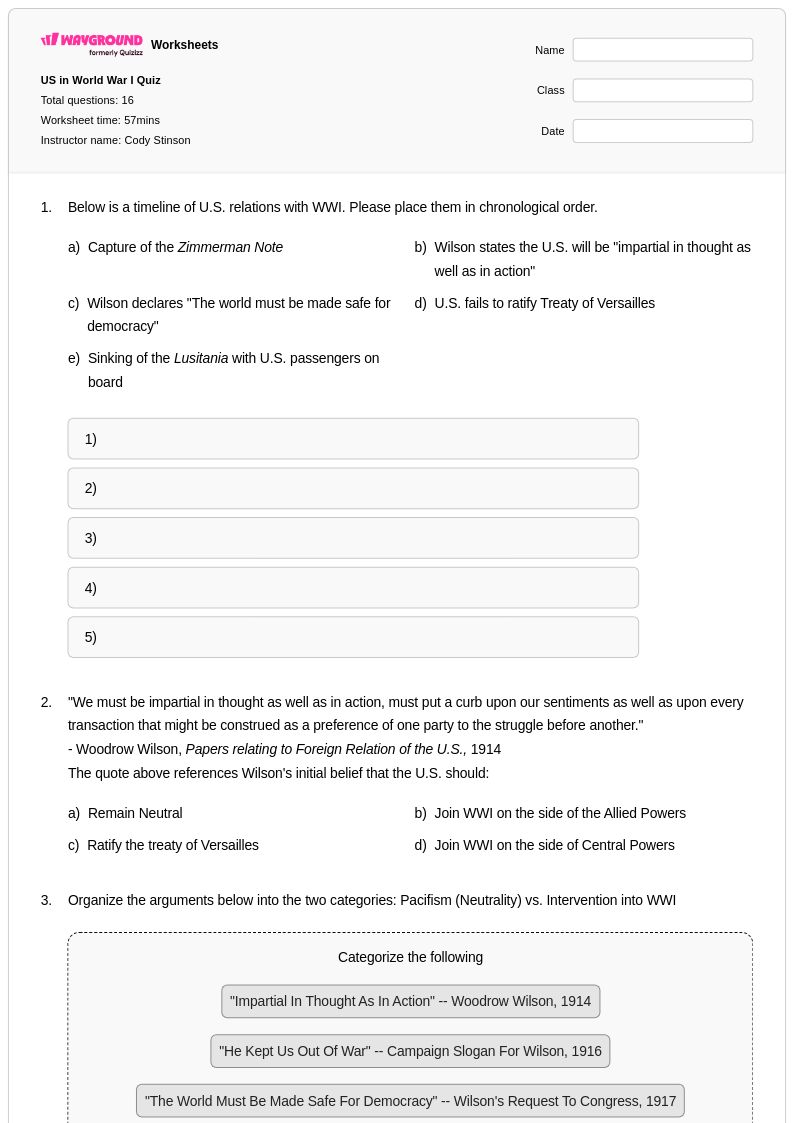
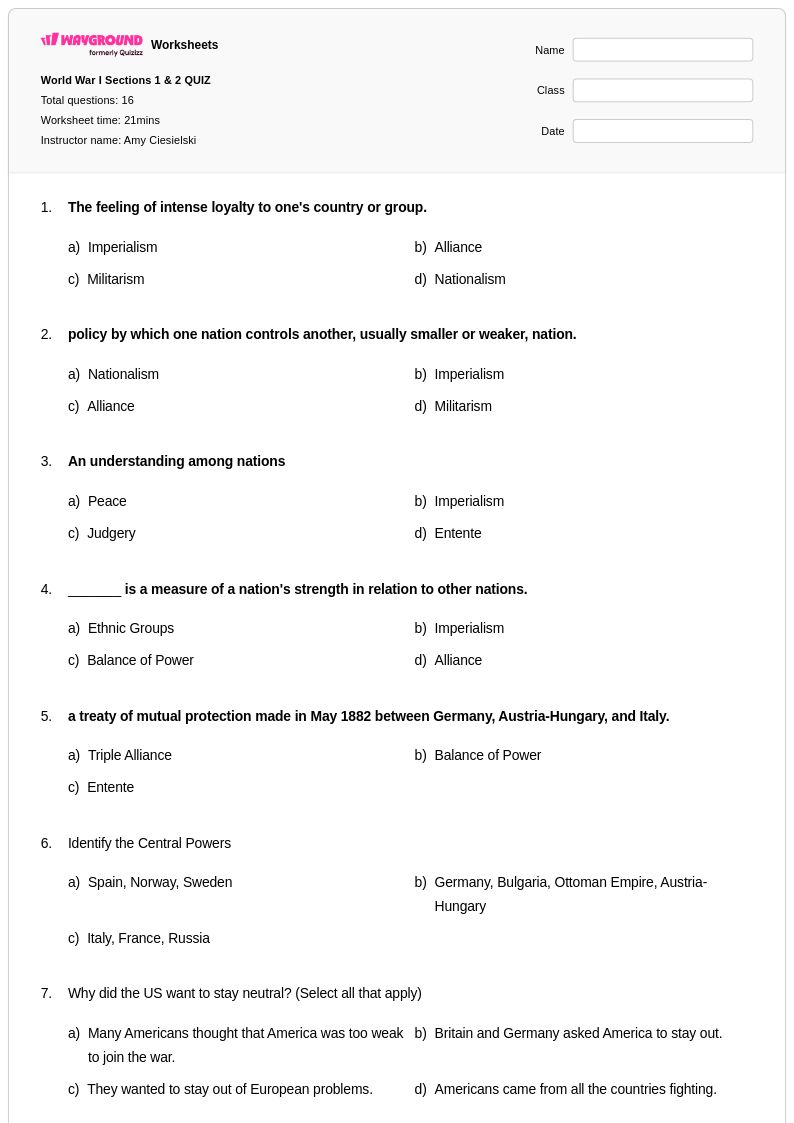
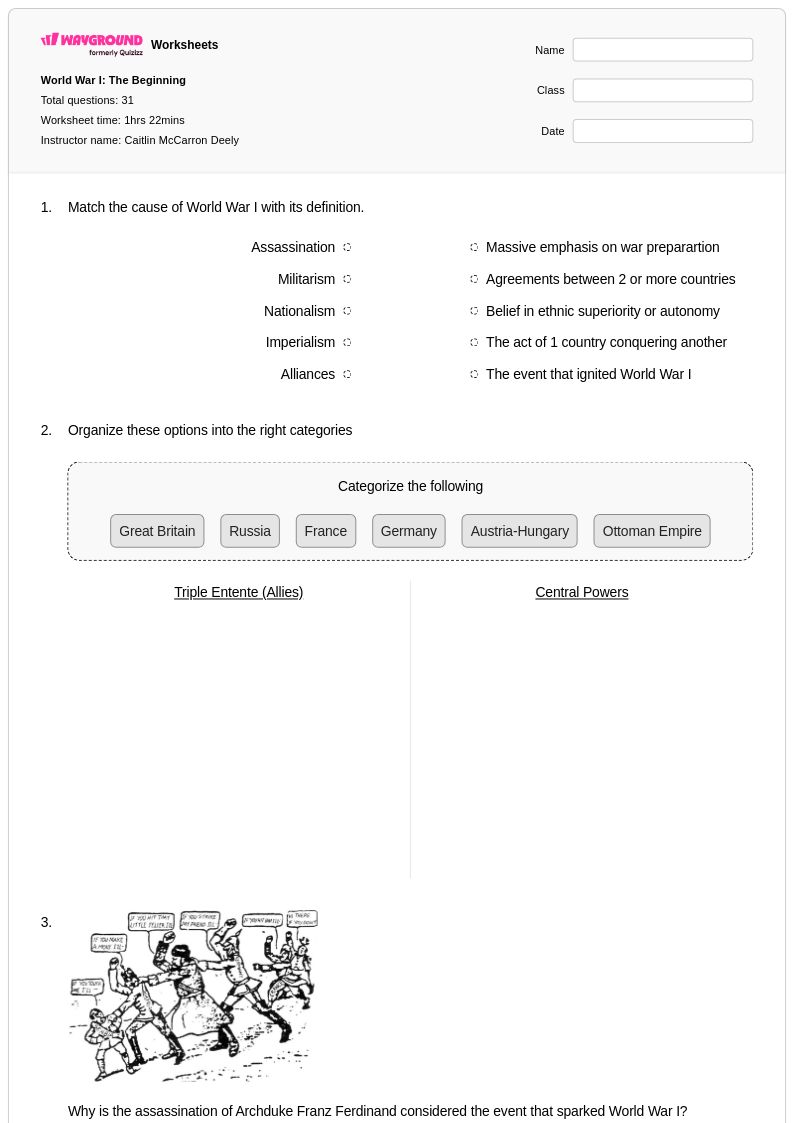
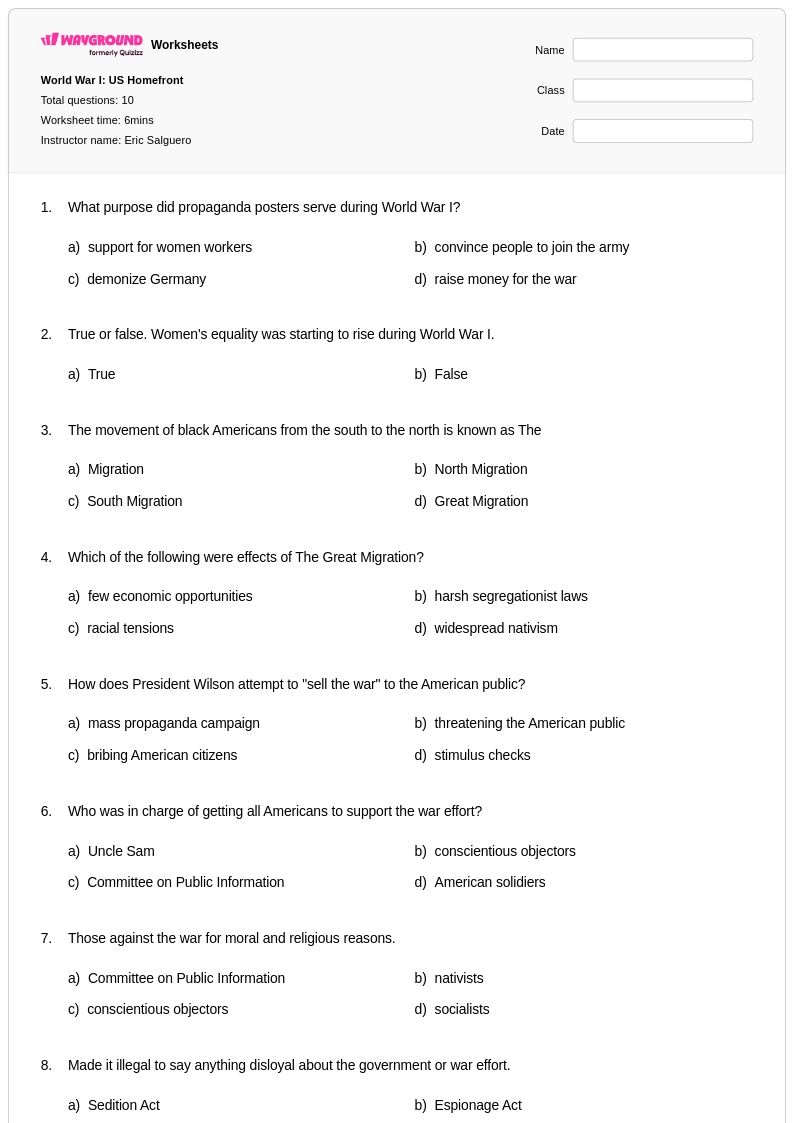
Explore free World War I propaganda worksheets and printables that help students analyze historical persuasion techniques, examine primary sources, and understand how nations used media to influence public opinion during the Great War.
Explore printable World War I Propaganda worksheets
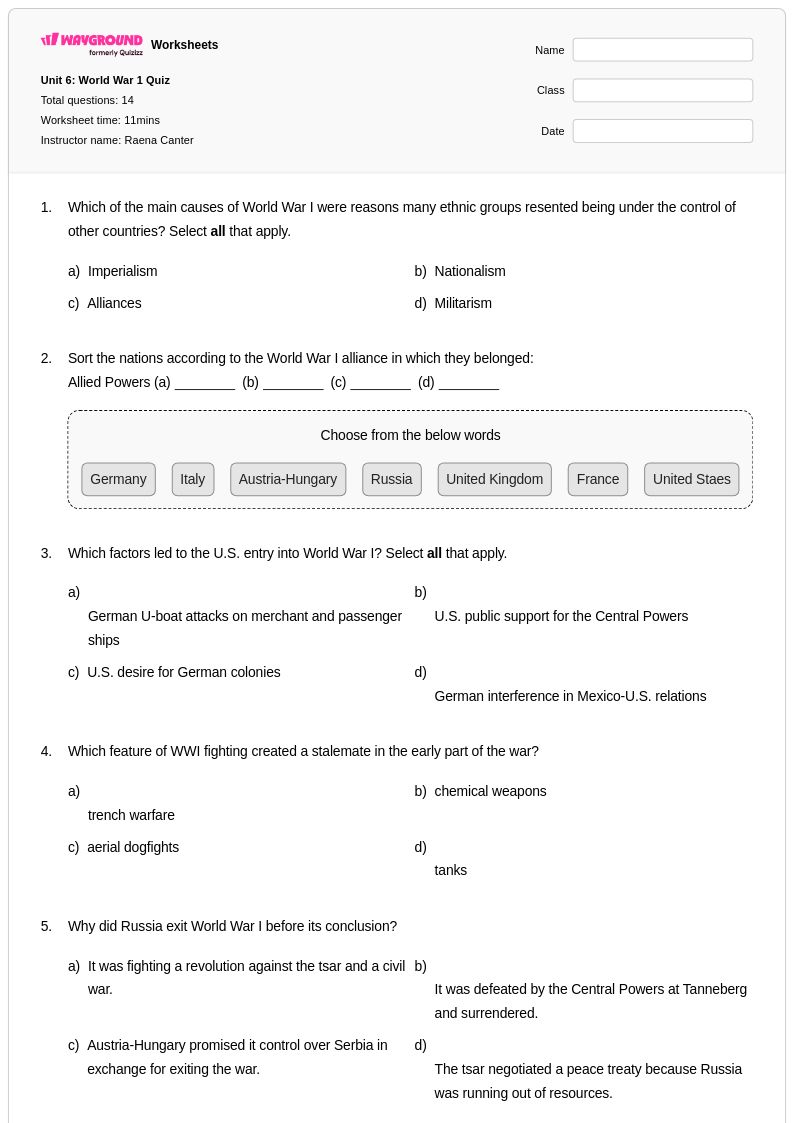
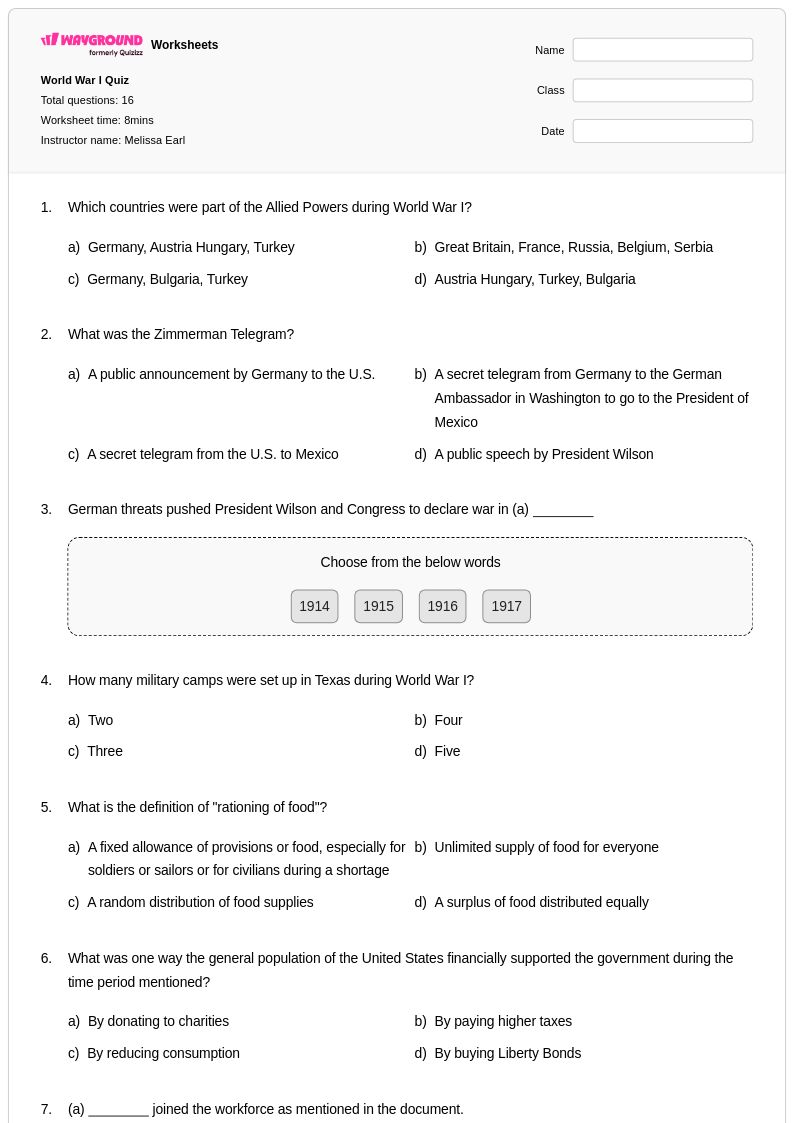
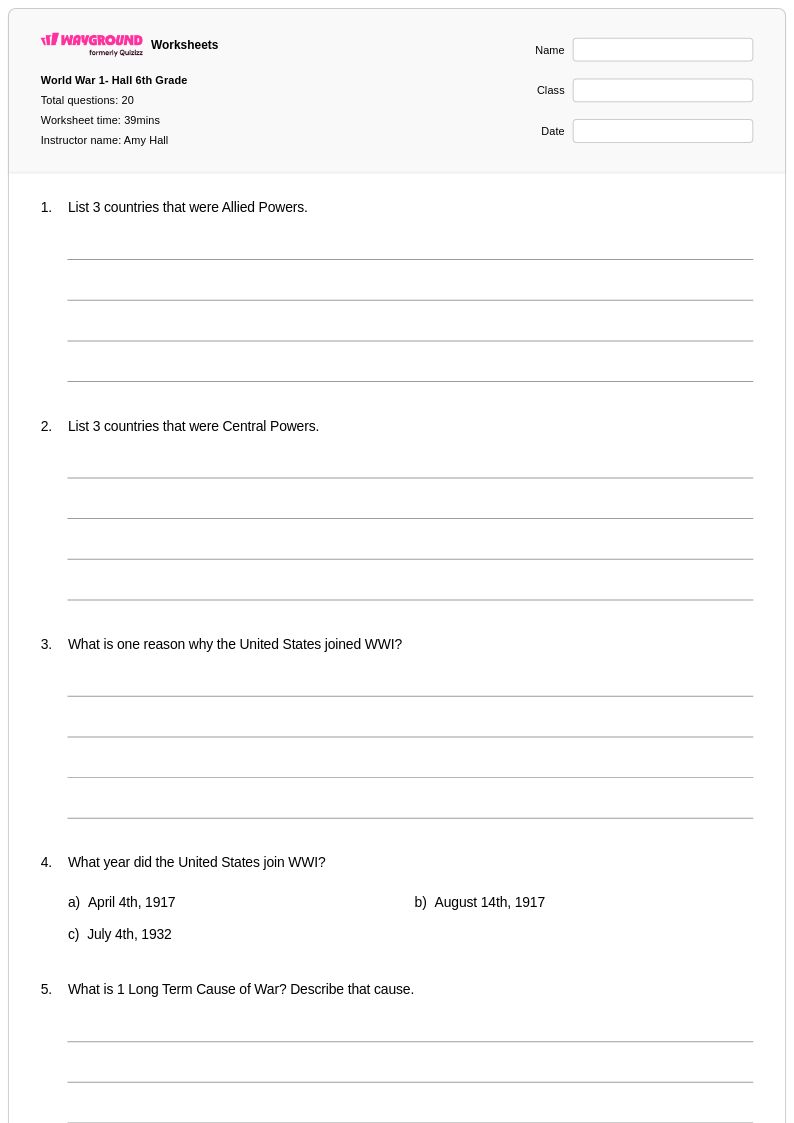
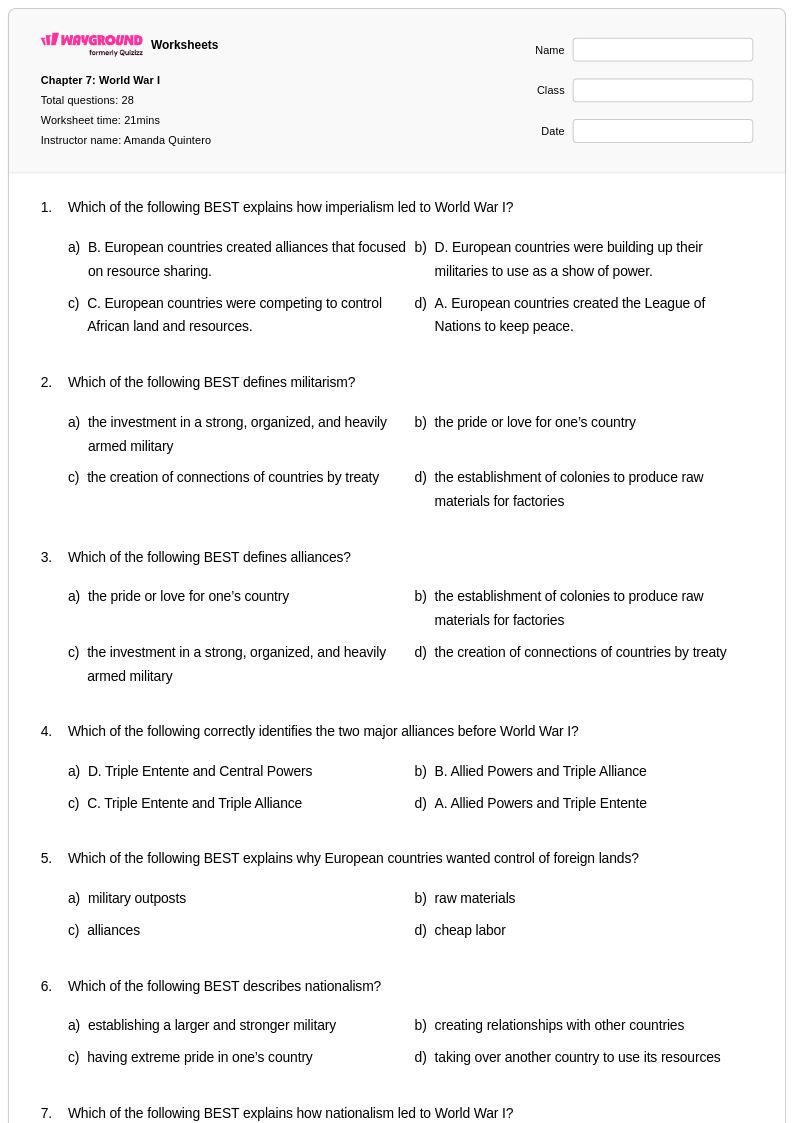
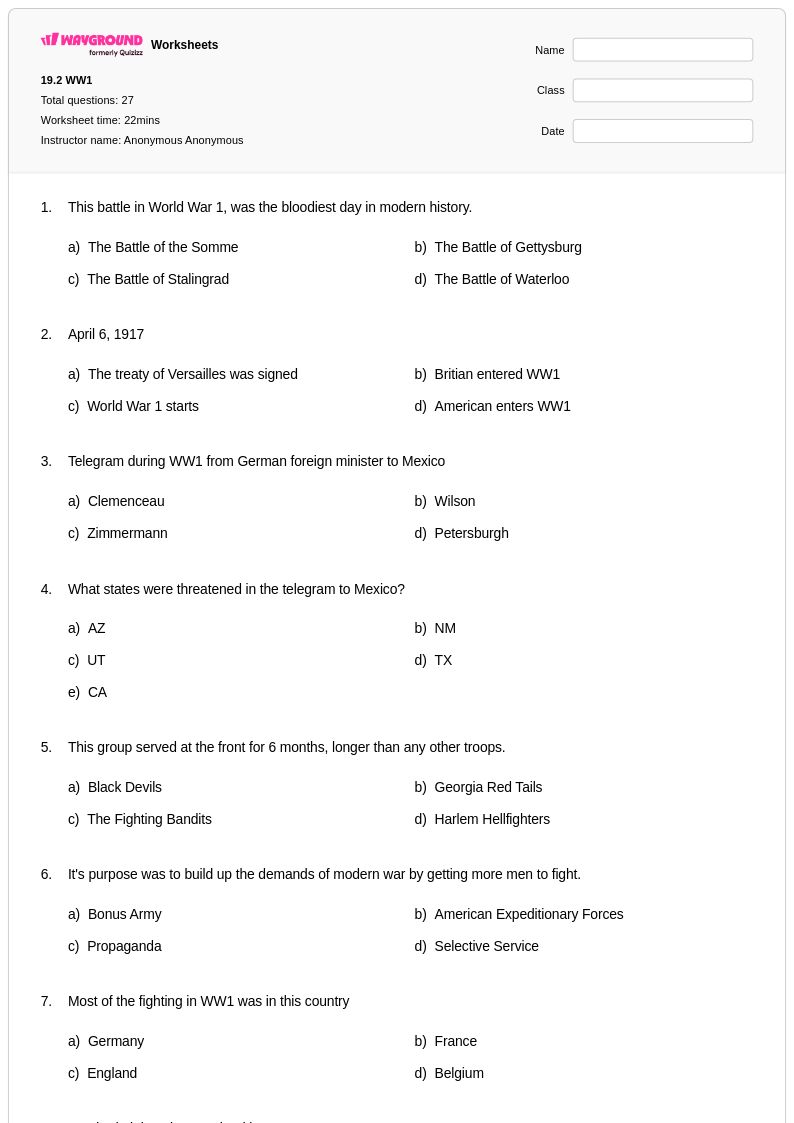
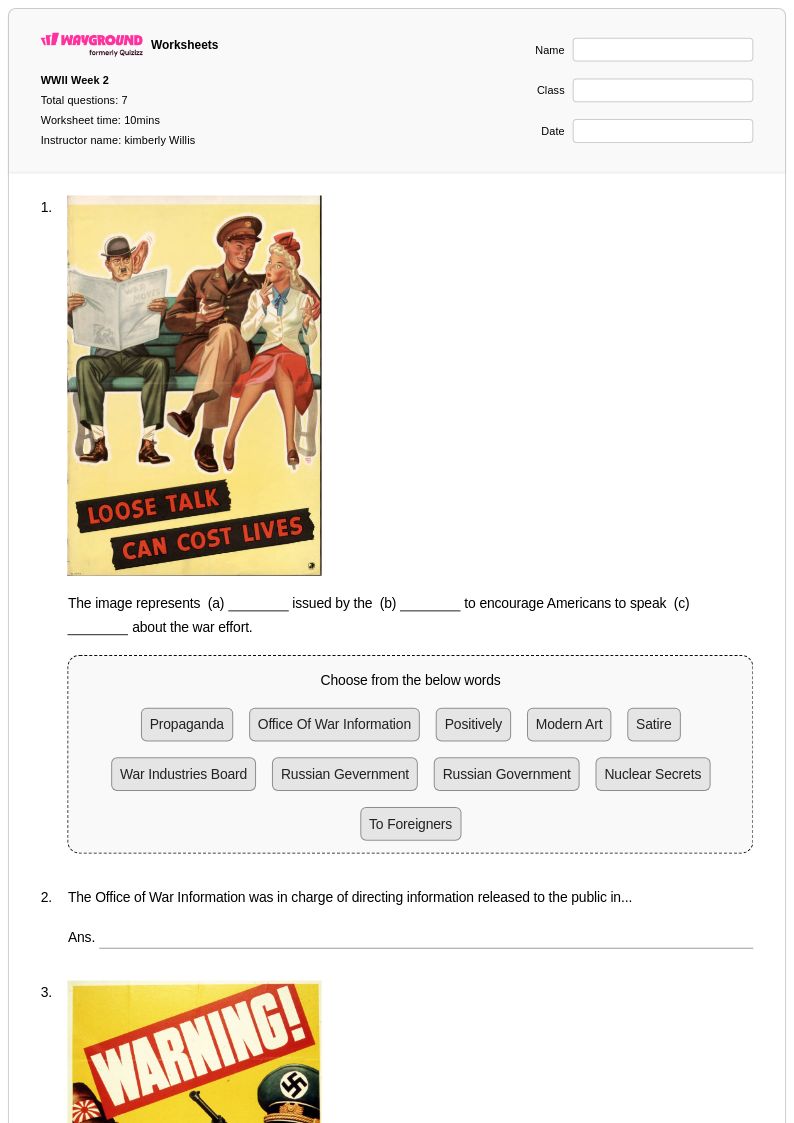
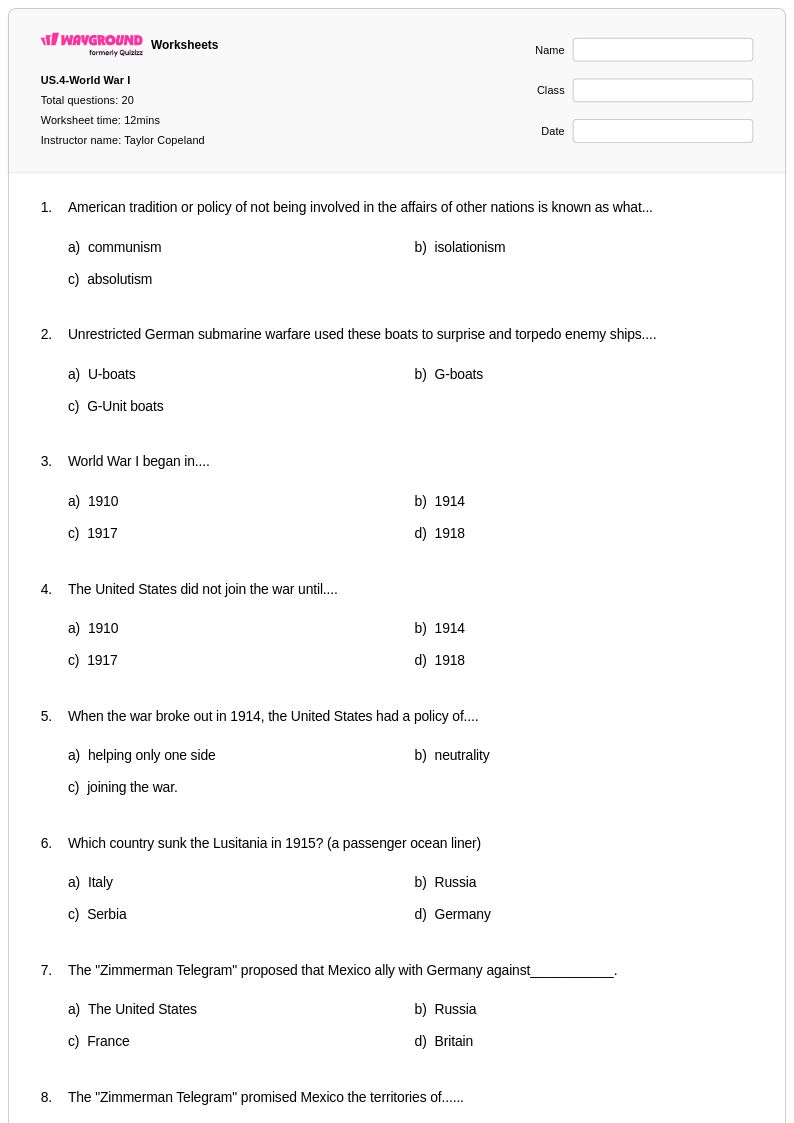
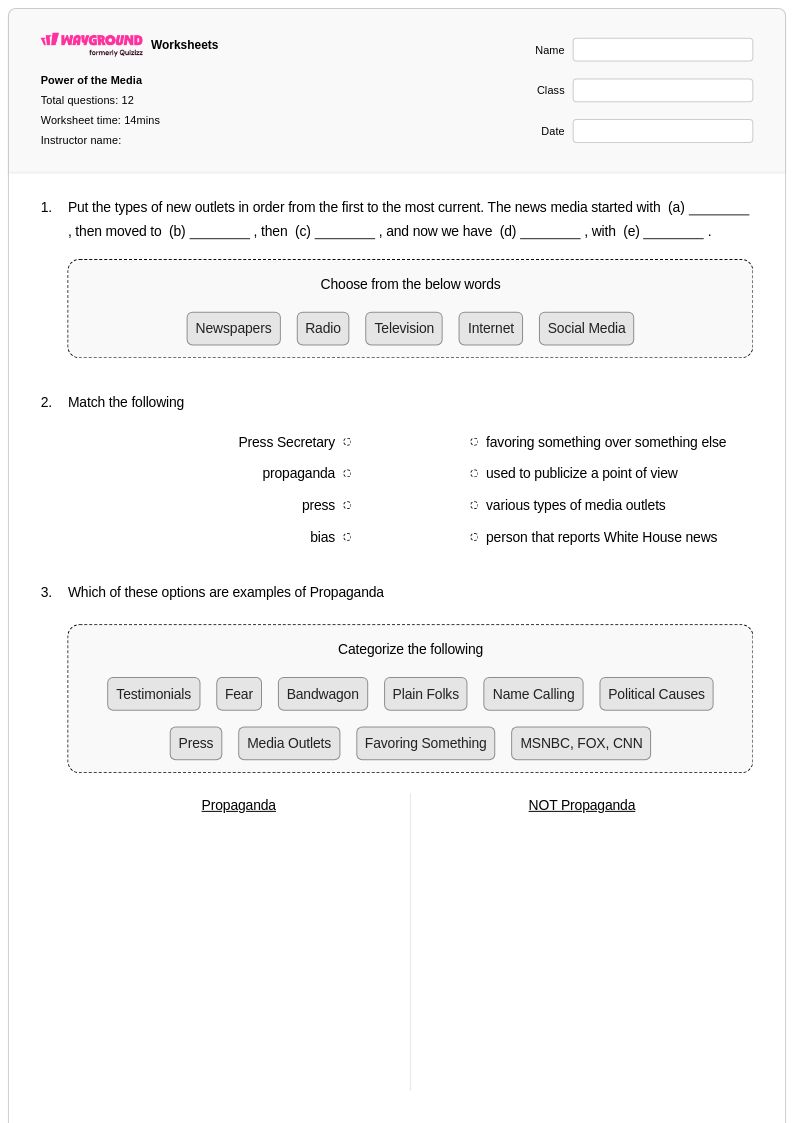
World War I Propaganda worksheets available through Wayground (formerly Quizizz) provide students with comprehensive opportunities to analyze and evaluate the powerful persuasive techniques employed during the Great War. These educational resources strengthen critical thinking skills by engaging learners in examining authentic propaganda posters, speeches, and media from various participating nations between 1914 and 1918. Students develop essential analytical abilities as they identify bias, symbolism, and emotional appeals while exploring how governments used propaganda to maintain public support, recruit soldiers, and demonize enemies. The collection includes practice problems that challenge students to compare propaganda techniques across different countries, answer key materials that support independent learning, and free printables that make these valuable resources accessible to all educators seeking to enhance their World War I curriculum.
Wayground (formerly Quizizz) supports teachers with an extensive collection of World War I Propaganda worksheets created by millions of educators who understand the importance of historical analysis in social studies instruction. The platform's robust search and filtering capabilities enable teachers to quickly locate materials aligned with specific standards and learning objectives, while differentiation tools allow for customization based on individual student needs and abilities. These flexible resources are available in both printable pdf formats for traditional classroom use and digital formats for technology-integrated learning environments. Teachers can efficiently plan comprehensive lessons, provide targeted remediation for students struggling with source analysis, offer enrichment opportunities for advanced learners, and facilitate regular skill practice that builds students' capacity to critically evaluate historical sources and understand the role of propaganda in shaping public opinion during wartime.
FAQs
How do I teach World War I propaganda in a history class?
Start by grounding students in the context of the Great War before introducing propaganda materials — students need to understand the political pressures governments faced in order to recognize why propaganda was necessary. Use primary source posters and speeches from multiple nations, including the U.S., Britain, and Germany, and guide students to identify specific techniques such as emotional appeals, demonization of the enemy, and patriotic symbolism. Having students compare propaganda across different countries helps them see that these techniques were universal, not unique to any one side, which builds more nuanced historical thinking.
What are the most effective exercises for practicing propaganda analysis with high school students?
The most effective exercises ask students to do something with a source rather than just describe it. Have students annotate propaganda posters by labeling specific rhetorical techniques, write short comparative analyses between two pieces from different nations, or evaluate how effectively a piece of propaganda achieved its stated goal, whether recruitment, bond sales, or civilian morale. Structured practice with real primary sources from 1914 to 1918 builds the analytical habits students need for document-based questions on standardized assessments.
What mistakes do students commonly make when analyzing WWI propaganda?
The most common error is treating propaganda as straightforwardly false rather than as strategically framed truth — students often dismiss it as "lying" without analyzing the persuasive choices being made. A related misconception is assuming that only enemy nations used propaganda, when in fact all major powers, including the United States and Britain, ran coordinated propaganda campaigns. Students also frequently confuse the technique being used with the message being conveyed, so direct instruction on distinguishing symbolism, emotional appeal, and loaded language as separate analytical categories is important.
How can I use WWI propaganda worksheets to support source analysis skills across different skill levels?
Scaffolded worksheets work best when lower-level tasks ask students to identify and label techniques, while higher-level tasks ask them to evaluate effectiveness or compare across sources. On Wayground, teachers can apply accommodations such as reduced answer choices for students who need additional support, or enable Read Aloud so that written prompts are accessible to struggling readers. Because these settings can be assigned at the individual student level without notifying the rest of the class, differentiation happens seamlessly within a single shared activity.
How do I use World War I propaganda worksheets from Wayground in my classroom?
Wayground's World War I propaganda worksheets are available as printable PDFs for traditional classroom use and in digital formats for technology-integrated environments, so they work equally well as paper handouts or assigned online activities. Teachers can also host worksheets as a quiz directly on Wayground, enabling real-time feedback and automated grading. Answer keys are included, which supports independent practice, stations work, and student self-assessment without adding to teacher prep time.
How does analyzing WWI propaganda connect to broader historical thinking skills?
Propaganda analysis is one of the clearest entry points into sourcing and corroboration, two of the core historical thinking skills in most state and national standards. When students examine who created a piece of propaganda, for what audience, and at what moment in the war, they are practicing exactly the same skills they need to evaluate any primary source. WWI propaganda is particularly effective for this because the persuasive intent is transparent, making the analytical moves more visible and teachable than in sources where bias is more subtle.