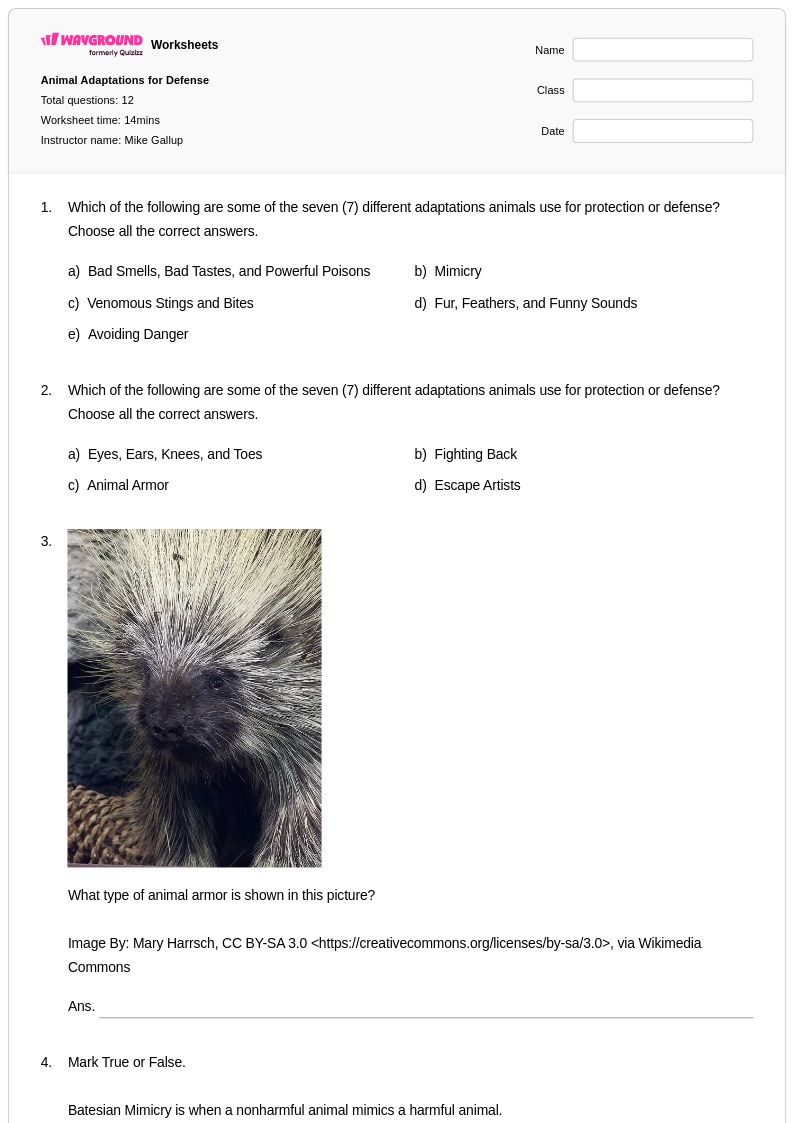
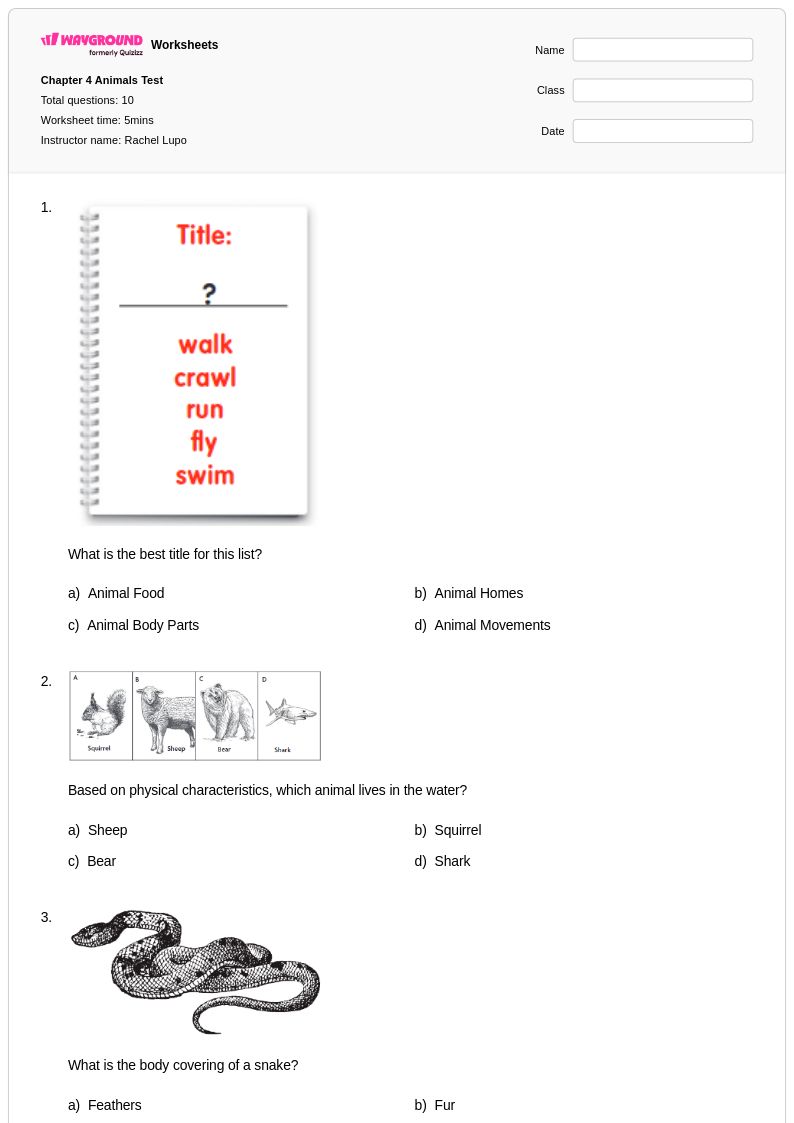
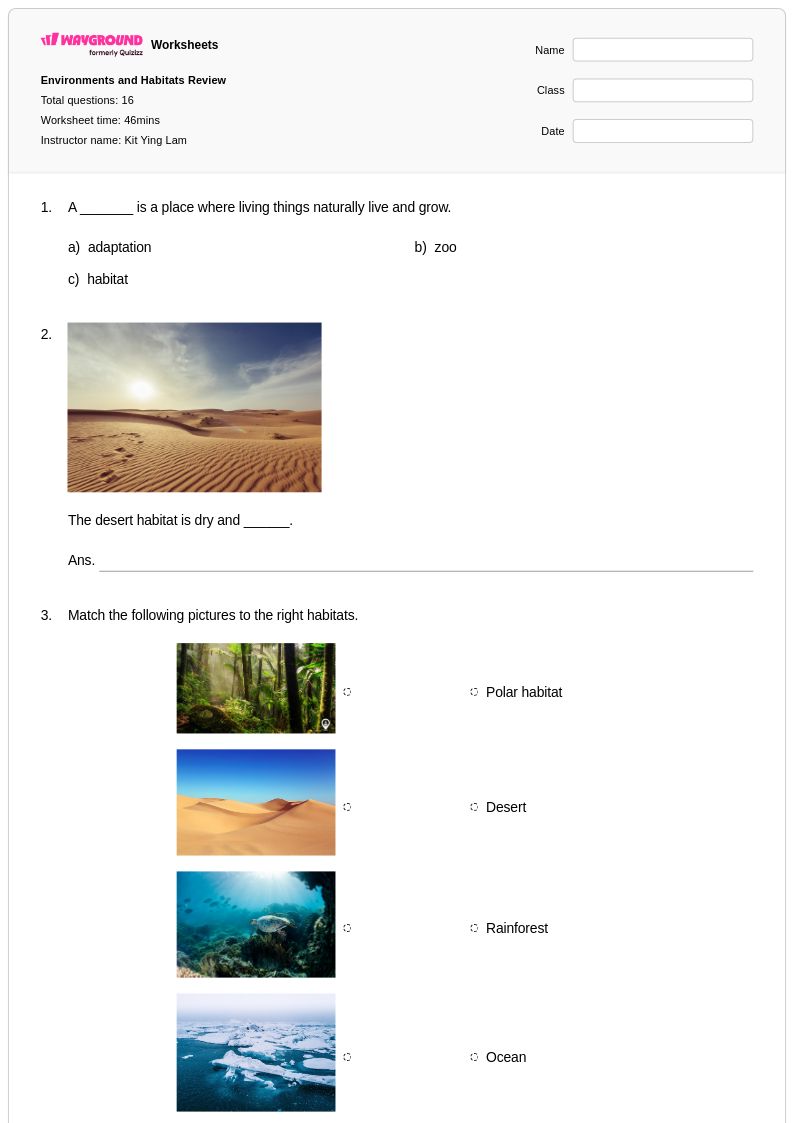
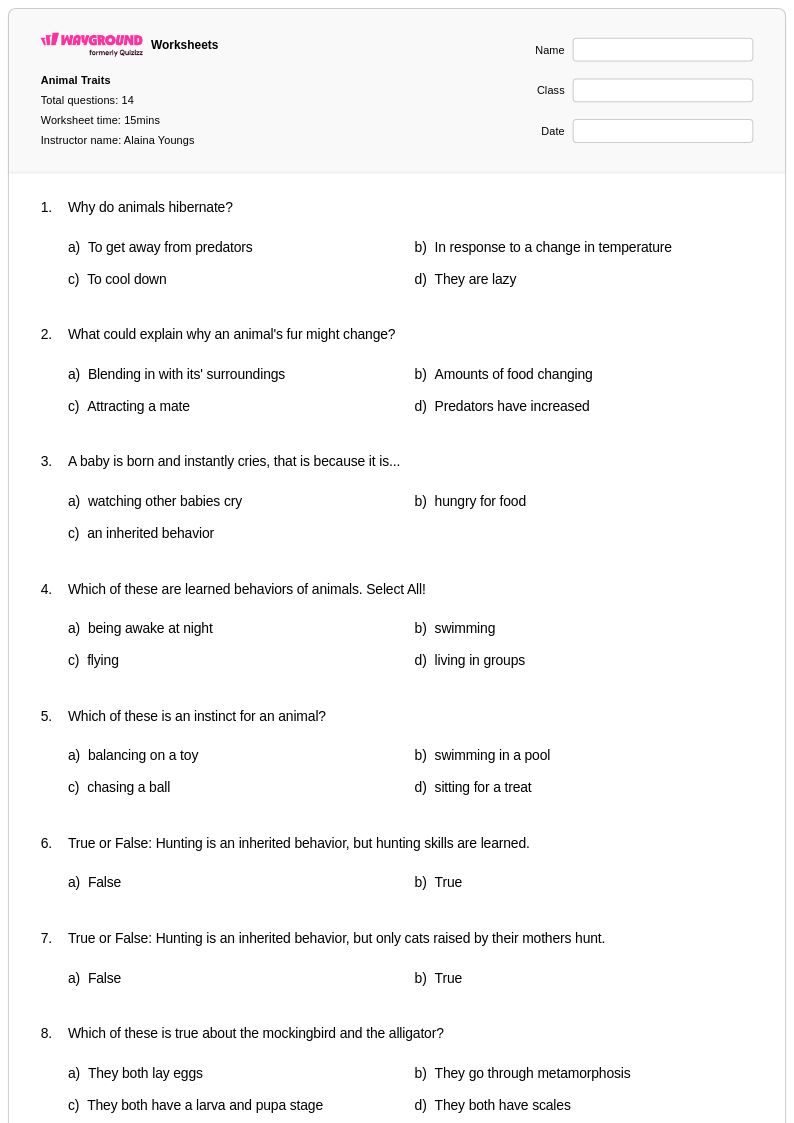
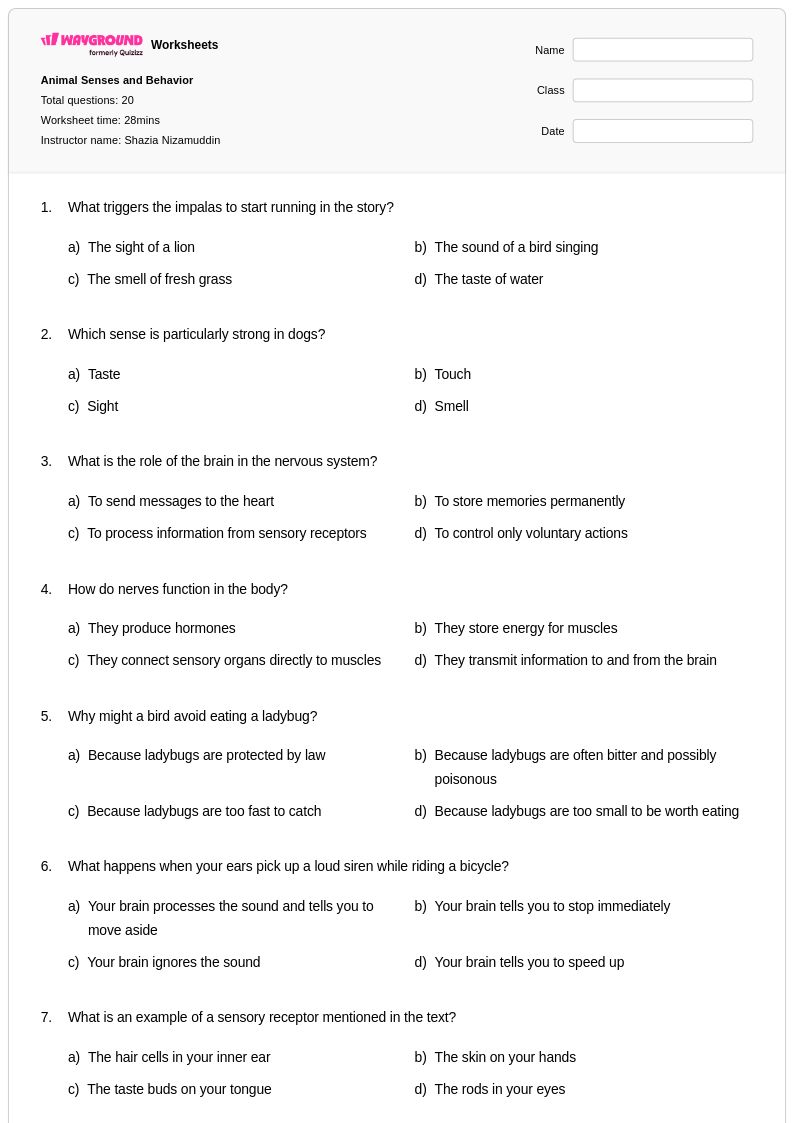
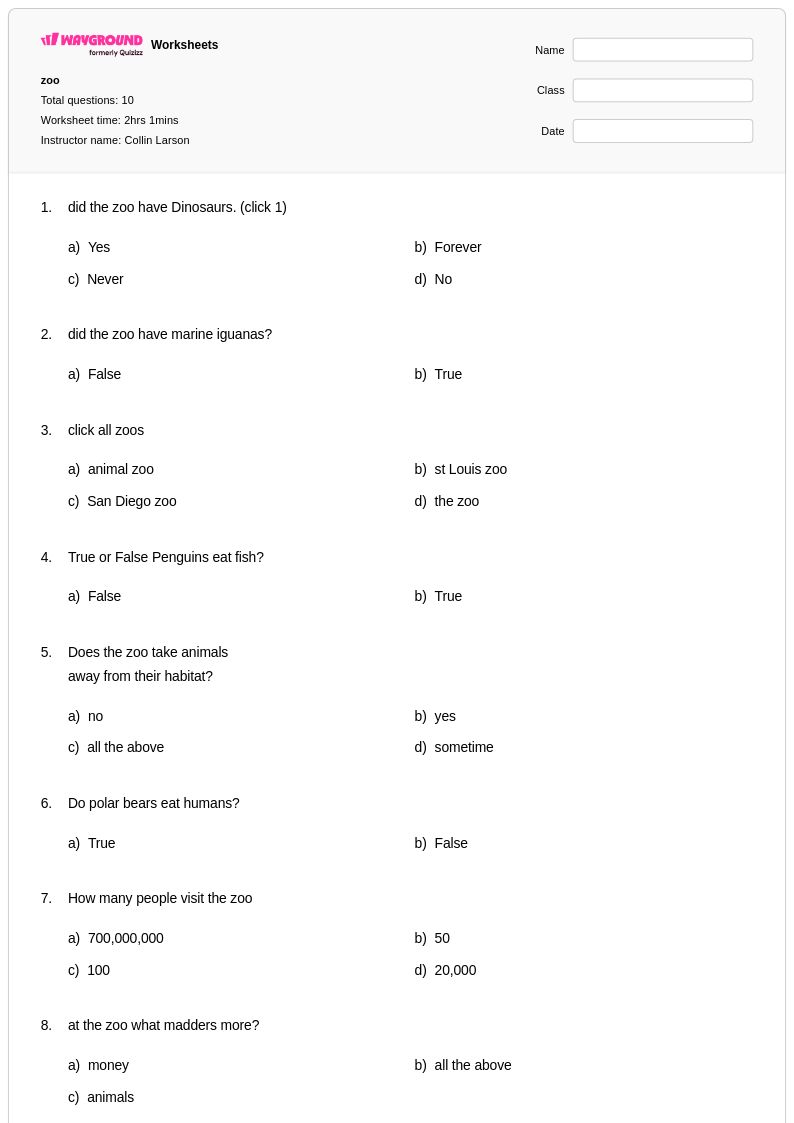
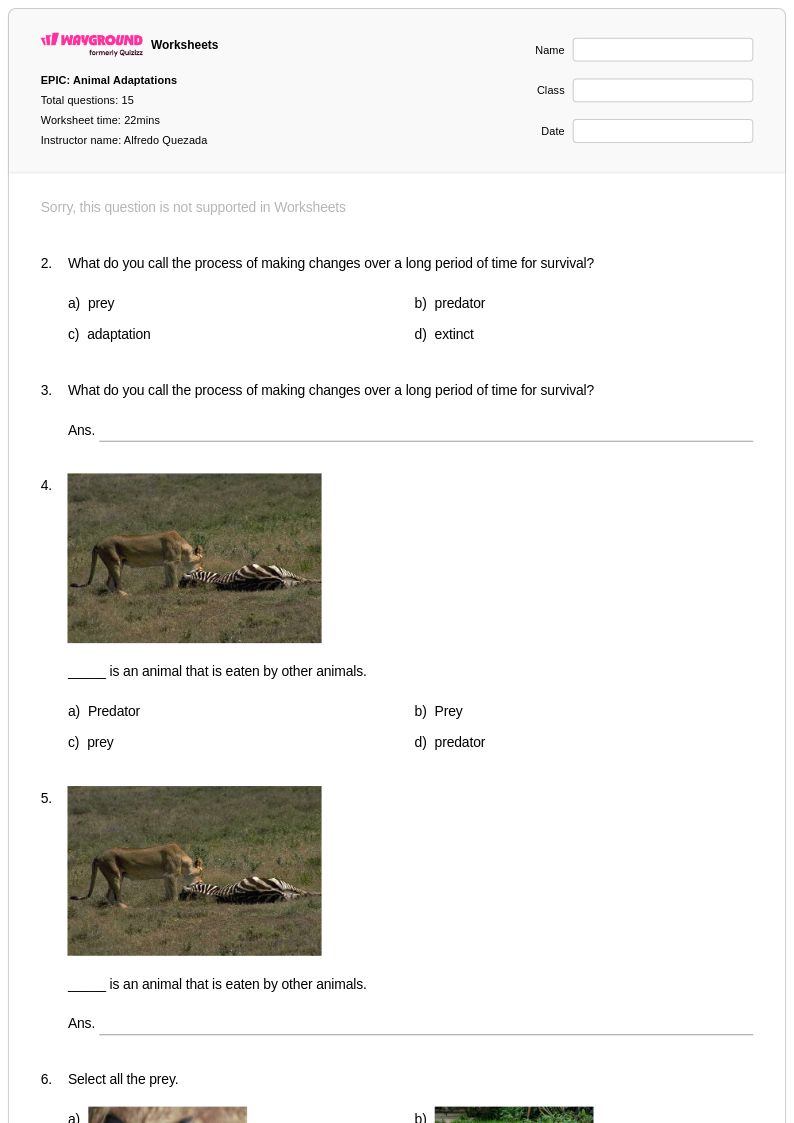
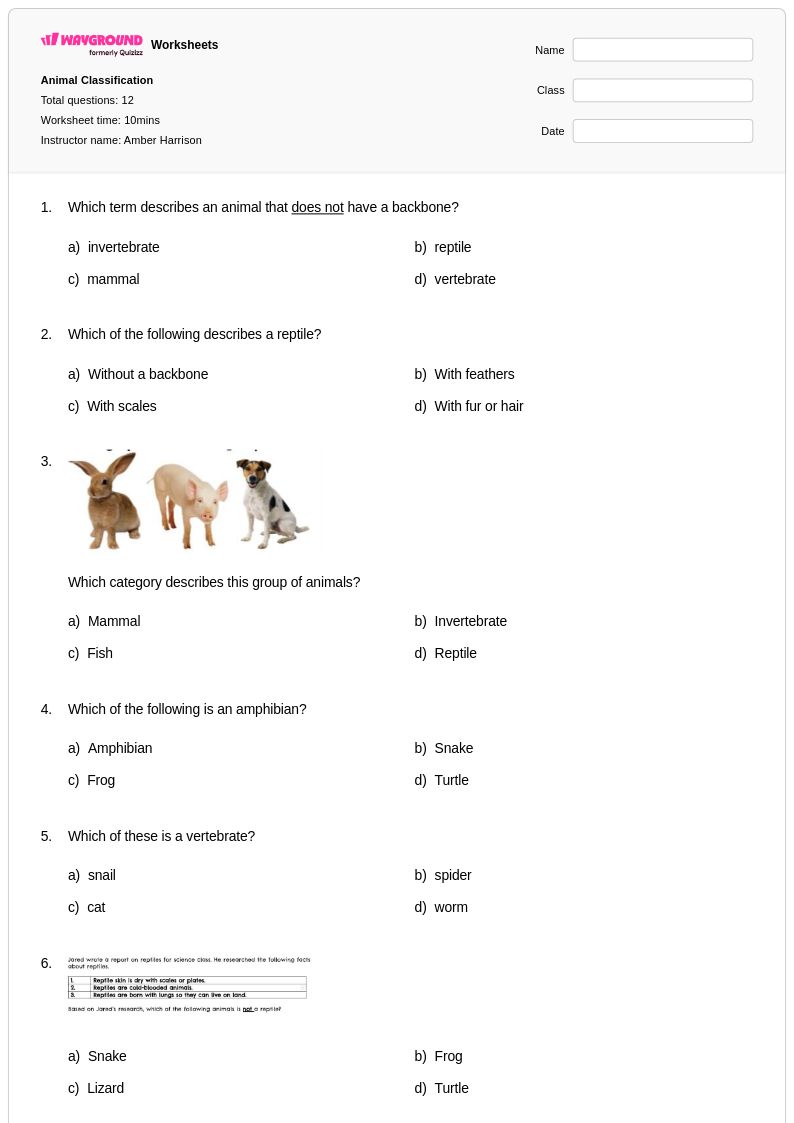
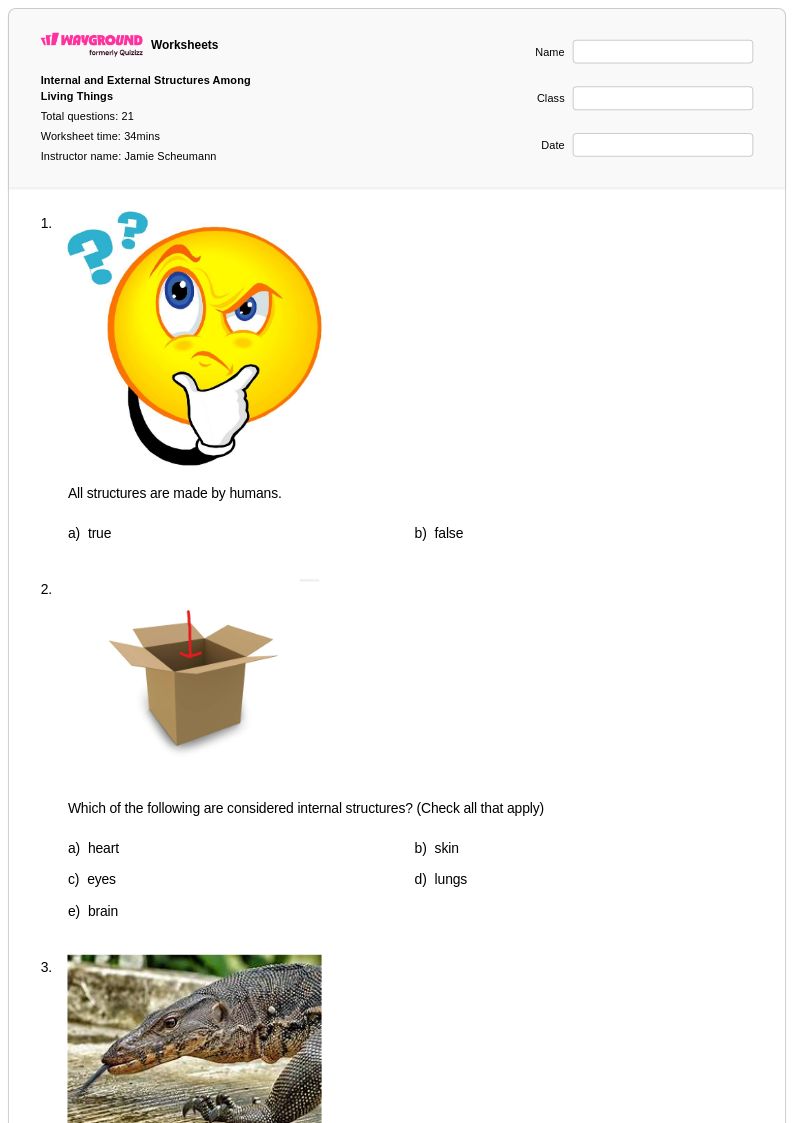
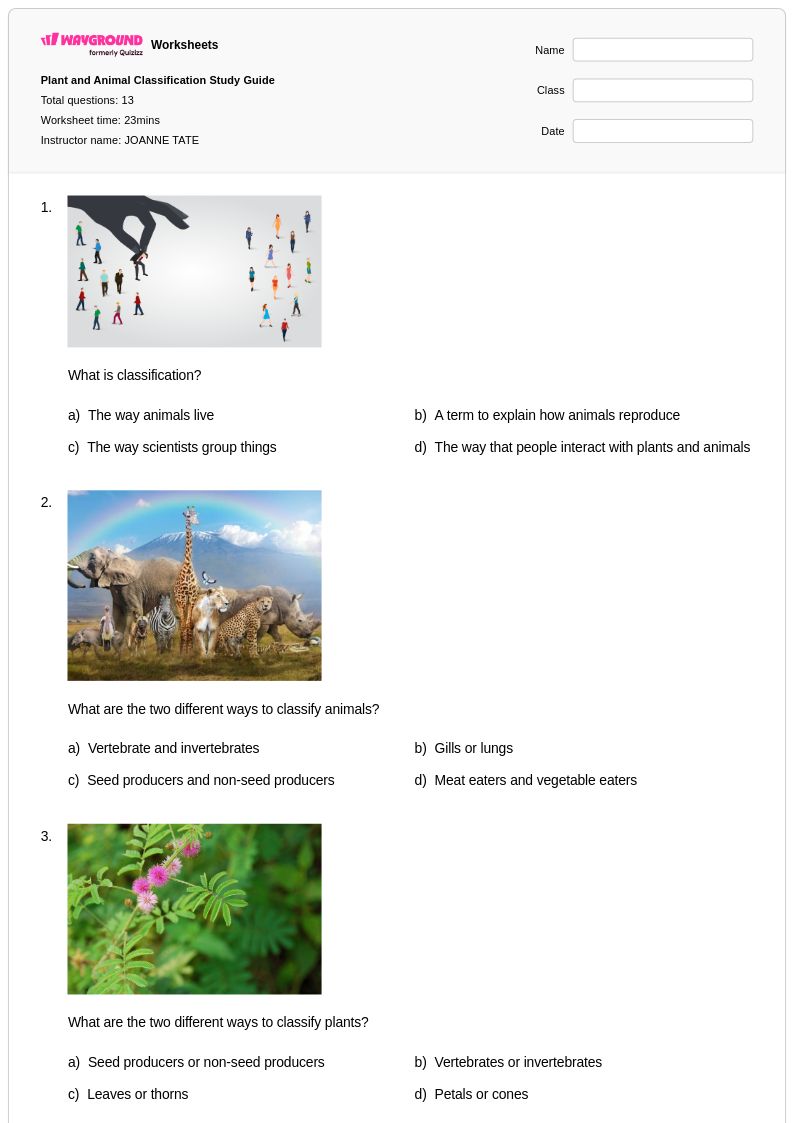
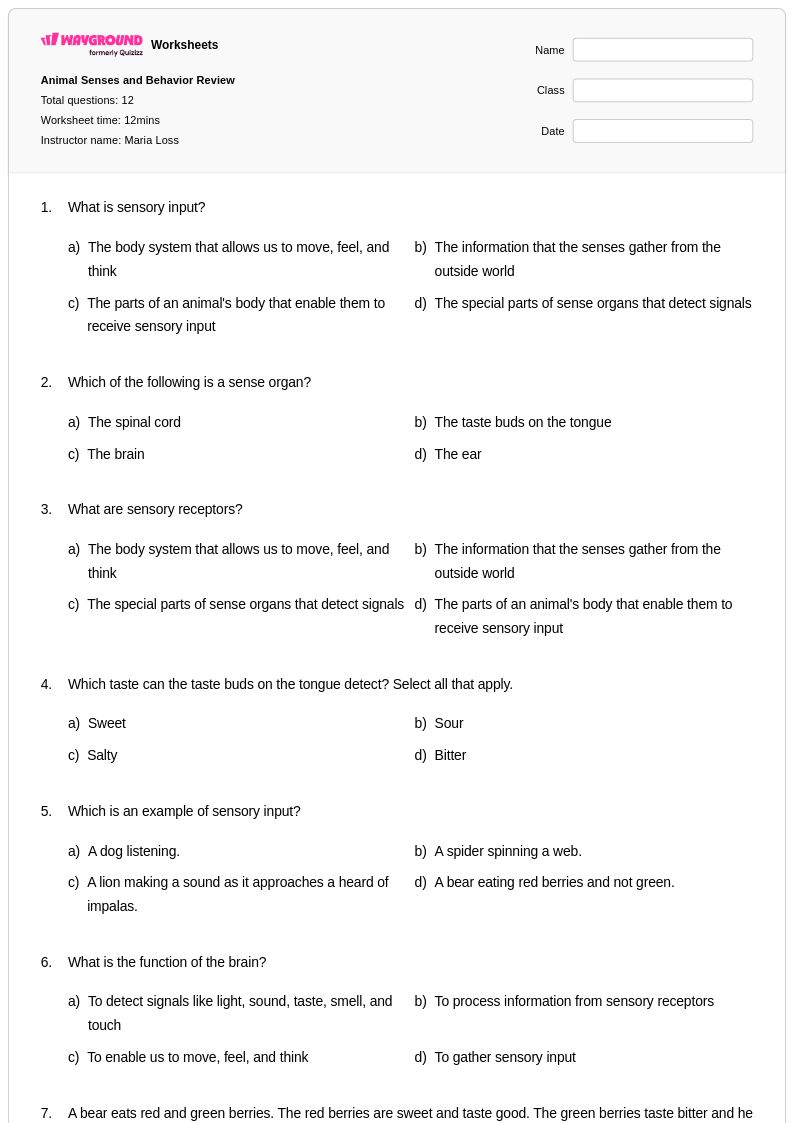
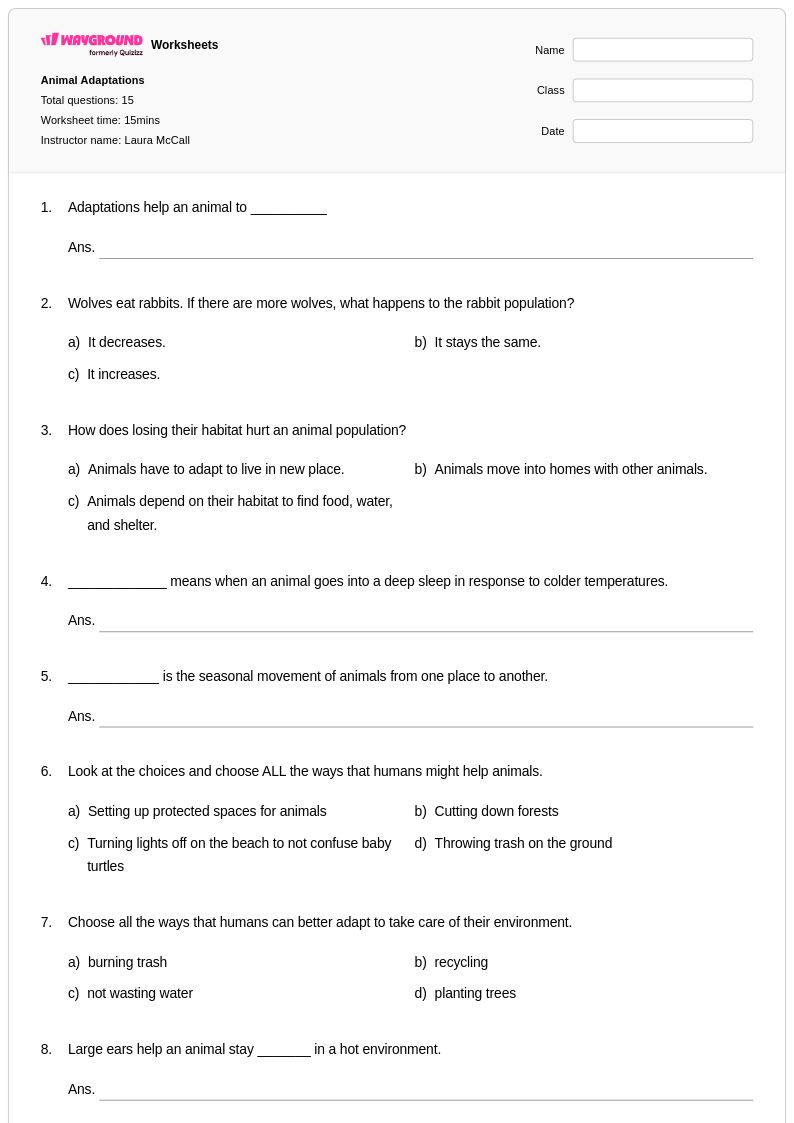
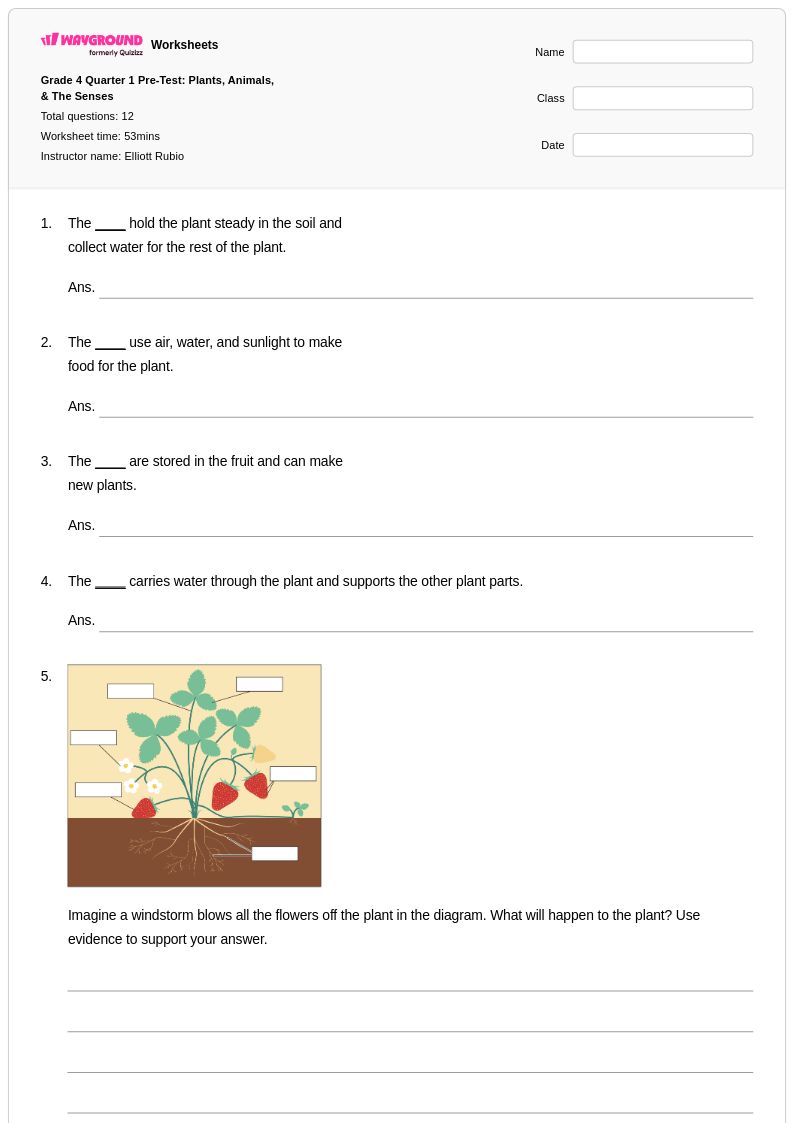
Discover free Grade 4 zoo animals worksheets and printables that help students explore animal habitats, behaviors, and characteristics through engaging practice problems with complete answer keys.
Explore printable Zoo Animals worksheets for Grade 4
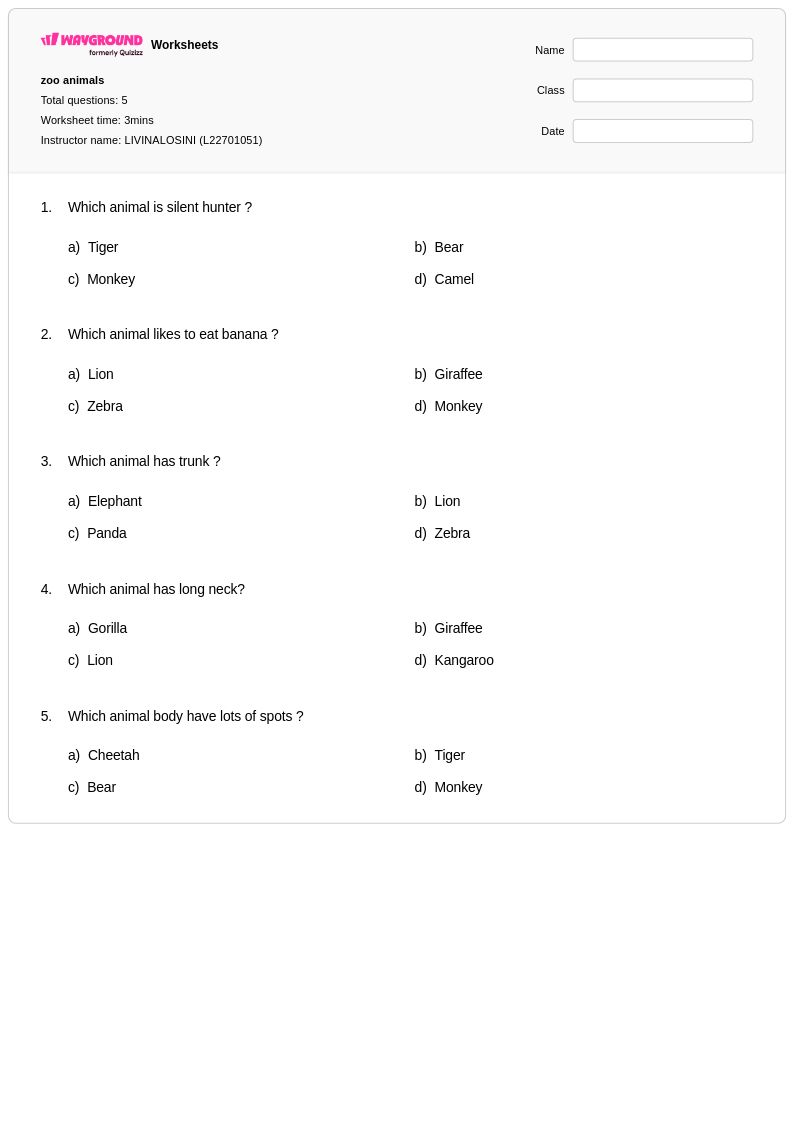
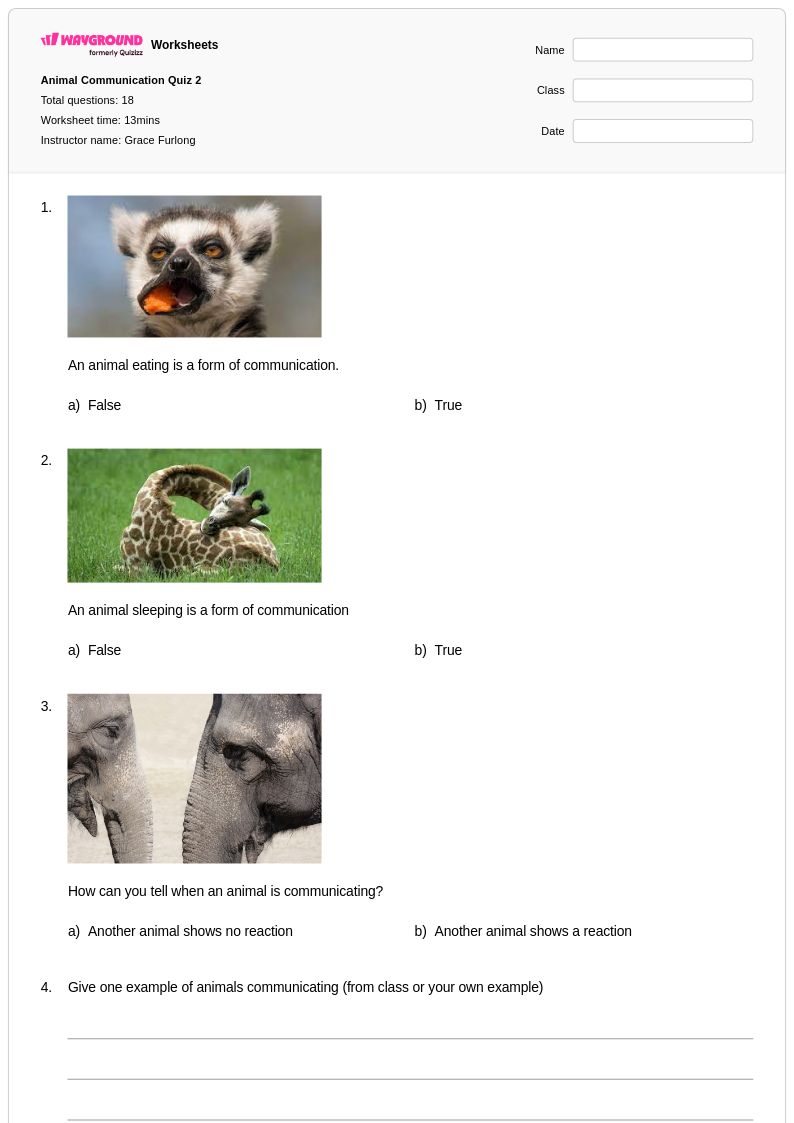
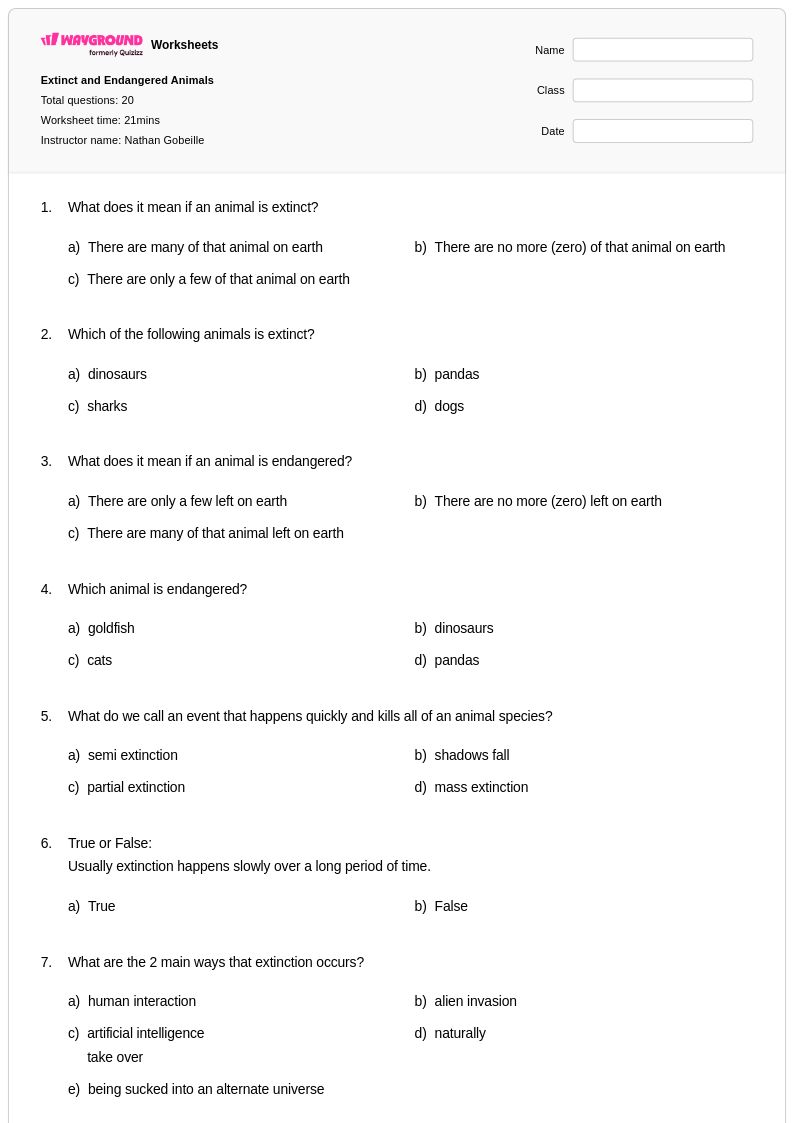
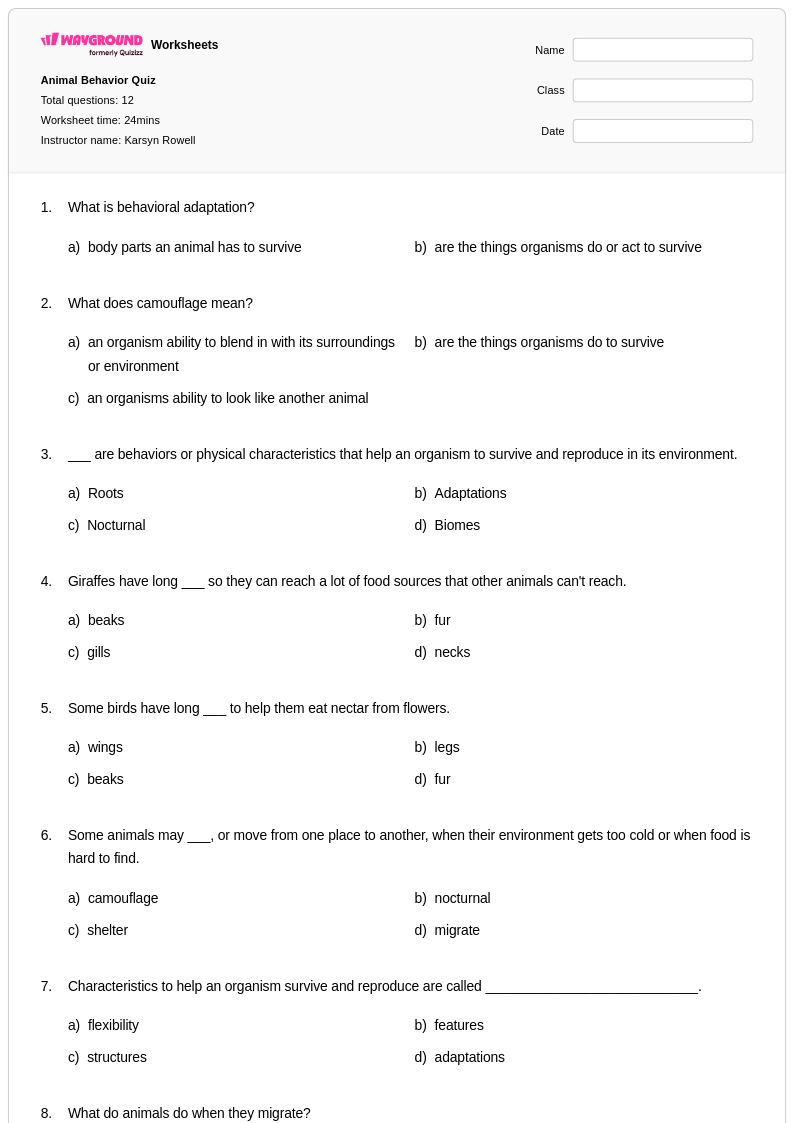
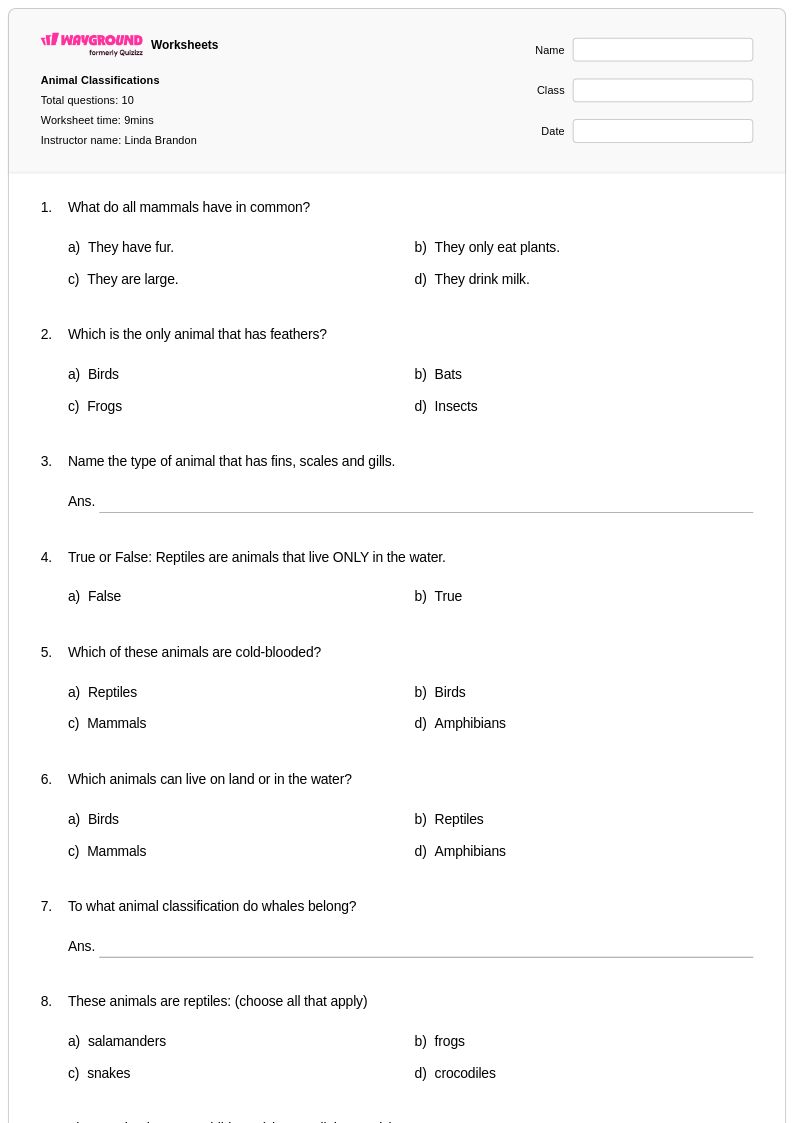
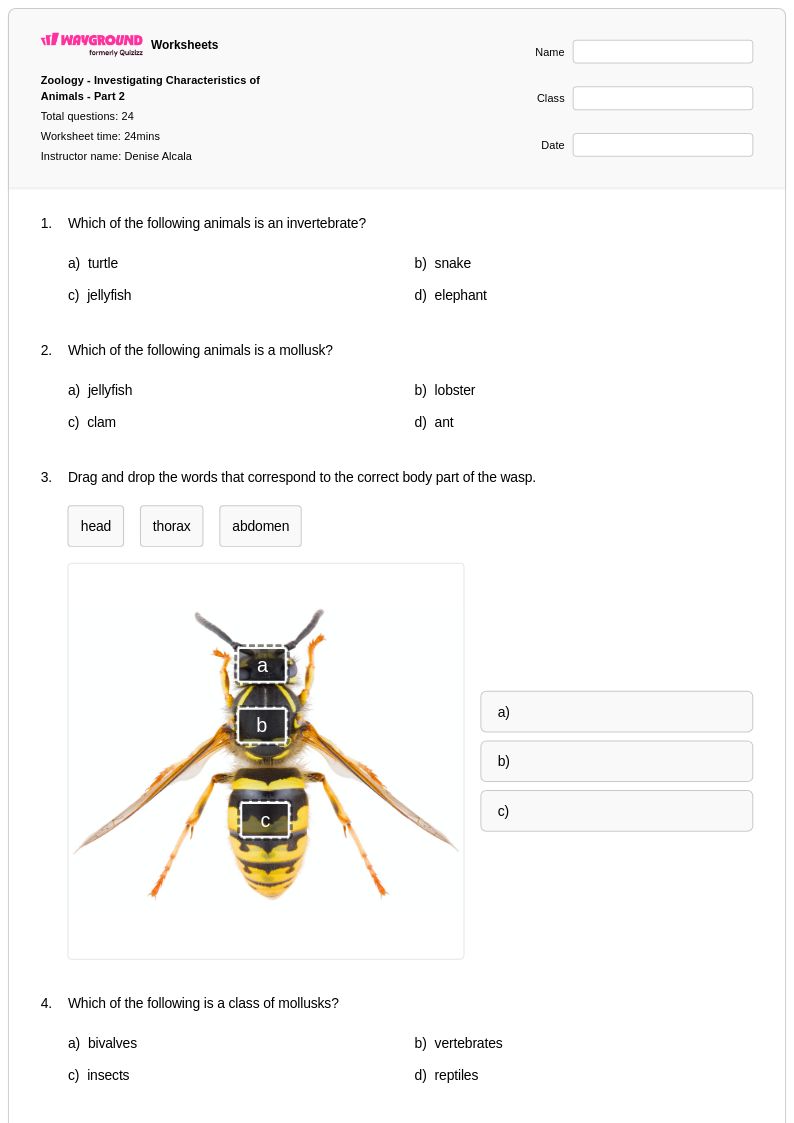
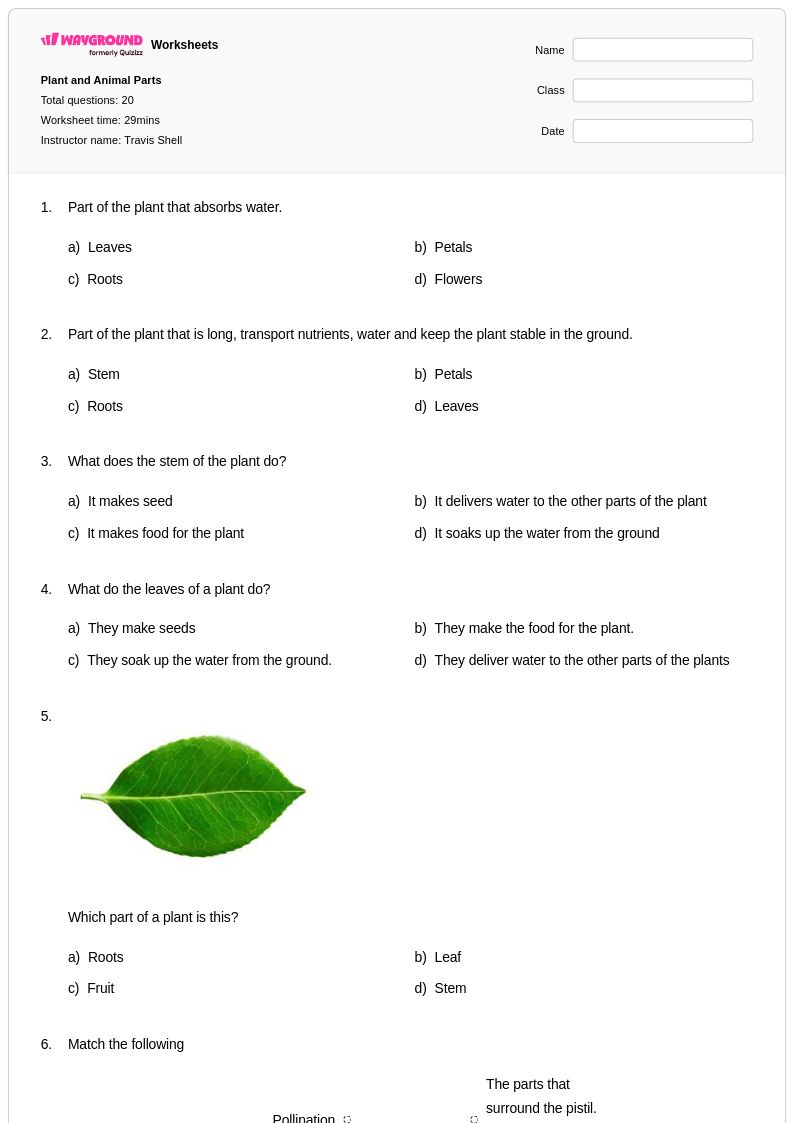
Zoo animals worksheets for Grade 4 students available through Wayground (formerly Quizizz) provide comprehensive learning opportunities that connect life science concepts with fascinating animal studies. These educational resources help fourth-grade students develop critical thinking skills while exploring animal habitats, classification systems, physical adaptations, and behavioral patterns of creatures commonly found in zoological settings. Students engage with practice problems that challenge them to categorize animals by their characteristics, analyze food chains and ecosystems, and understand the relationship between animal features and their environments. The collection includes free printables with detailed answer keys that allow teachers to assess student understanding of vertebrate and invertebrate distinctions, mammalian versus reptilian traits, and the specific needs different species require for survival in captivity versus wild settings.
Wayground (formerly Quizizz) empowers educators with millions of teacher-created zoo animal resources that streamline lesson planning and support diverse learning needs in Grade 4 life science instruction. The platform's robust search and filtering capabilities enable teachers to quickly locate worksheets aligned with specific curriculum standards while accessing materials in both printable pdf formats and interactive digital versions. These differentiation tools allow educators to customize content difficulty levels, making it simple to provide remediation support for struggling learners or enrichment activities for advanced students exploring complex animal behavior and conservation topics. Teachers can efficiently organize skill practice sessions, create targeted assessments, and develop engaging activities that bring the excitement of zoo environments into the classroom while reinforcing fundamental biological concepts essential for elementary science education.
FAQs
How do I teach zoo animals to elementary students in a meaningful way?
Effective zoo animal instruction connects observable animal traits to broader life science concepts like habitat, adaptation, and diet. Start by grouping animals by shared characteristics — mammals, reptiles, birds — so students build classification skills alongside content knowledge. Pairing structured observation activities with direct vocabulary instruction helps students develop the scientific language they need to describe and compare species accurately.
What types of exercises help students practice zoo animal concepts?
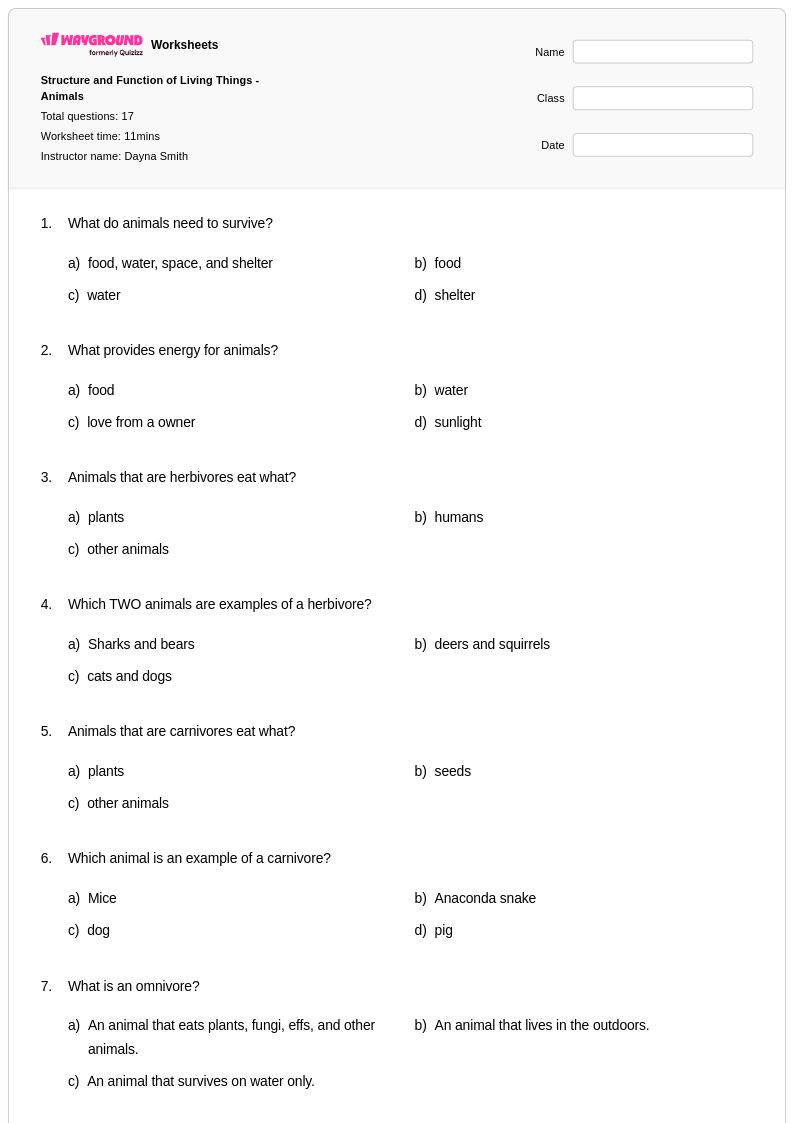
Practice exercises that ask students to match animals to their habitats, classify animals by diet (herbivore, carnivore, omnivore), and compare physical adaptations are particularly effective for building zoological understanding. Worksheets that require students to analyze animal life cycles or explain how a specific adaptation helps an animal survive push beyond recall into scientific reasoning. These types of tasks reinforce both content knowledge and inquiry skills simultaneously.
What misconceptions do students commonly have about zoo animals?
A common misconception is that zoo animals live in the same conditions as their wild counterparts — students often conflate a zoo enclosure with a natural habitat, which can blur their understanding of wild ecosystems. Students also frequently confuse dietary classifications, assuming all large animals are carnivores or that herbivores and omnivores are interchangeable terms. Targeted practice that explicitly contrasts wild habitats with zoo settings, and that requires students to justify dietary classifications with evidence, helps address both errors.
How can I use zoo animal worksheets to support students with different learning needs?
Zoo animal worksheets on Wayground can be assigned digitally, which allows teachers to apply individual accommodations directly to student accounts. For students who need additional support, features like Read Aloud can narrate questions and content, while Reduced Answer Choices lowers cognitive load during practice. Extended time settings can be configured per student, and all accommodations are saved for future sessions so teachers do not need to reconfigure them each time.
How do I use Wayground's zoo animal worksheets in my classroom?
Wayground's zoo animal worksheets are available as printable PDFs for traditional classroom use and in digital formats for technology-integrated instruction. Teachers can also host worksheets directly as a quiz on Wayground, making it easy to collect student responses and review understanding in one place. Each worksheet includes a complete answer key, so teachers can provide immediate, targeted feedback on student understanding of animal habitats, adaptations, and life cycles.
How do zoo animal worksheets connect to life science standards?
Zoo animal worksheets address core life science standards related to organism characteristics, ecosystems, food chains, and biodiversity. Topics like physical adaptations, dietary classifications, and animal life cycles map directly to NGSS disciplinary ideas and state science frameworks across multiple grade bands. Using these worksheets as structured practice helps students build the conceptual foundation needed for more advanced ecology and biology units.