Free Printable Anabolic Enzymes Worksheets for Class 11
Discover Class 11 anabolic enzymes worksheets and printables from Wayground that help students master enzyme synthesis processes through comprehensive practice problems, free PDF resources, and detailed answer keys.
Explore printable Anabolic Enzymes worksheets for Class 11
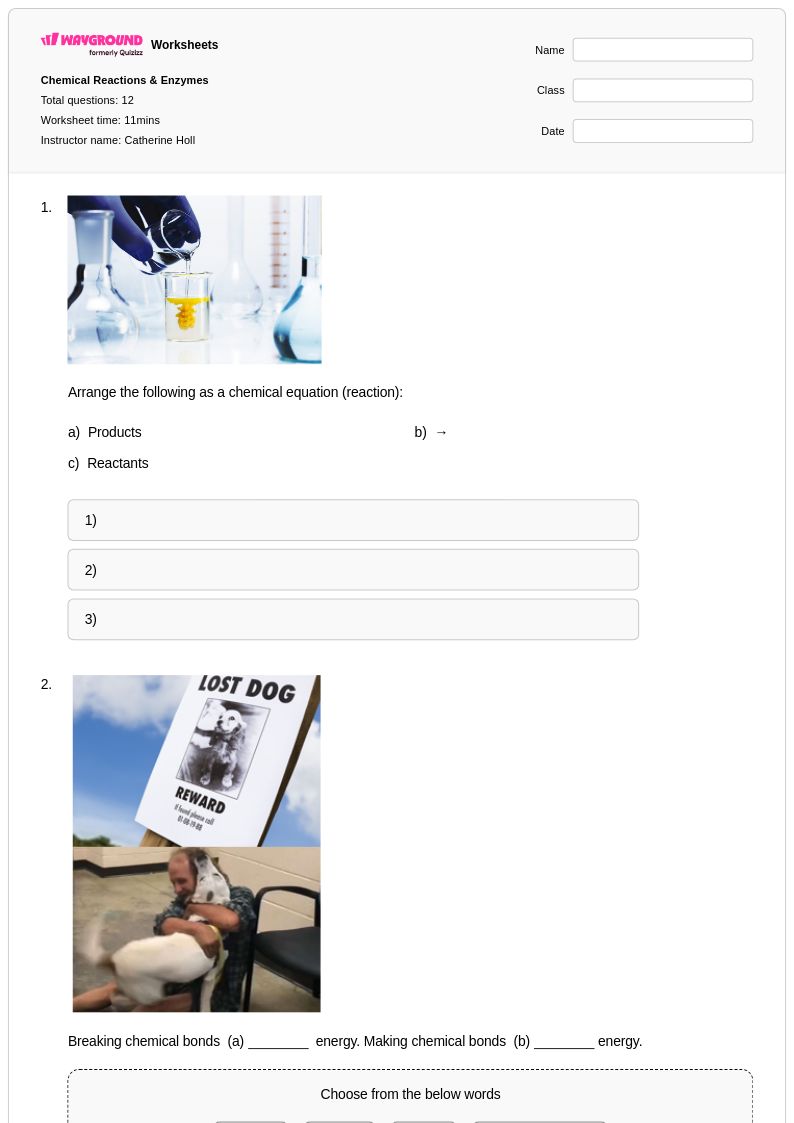
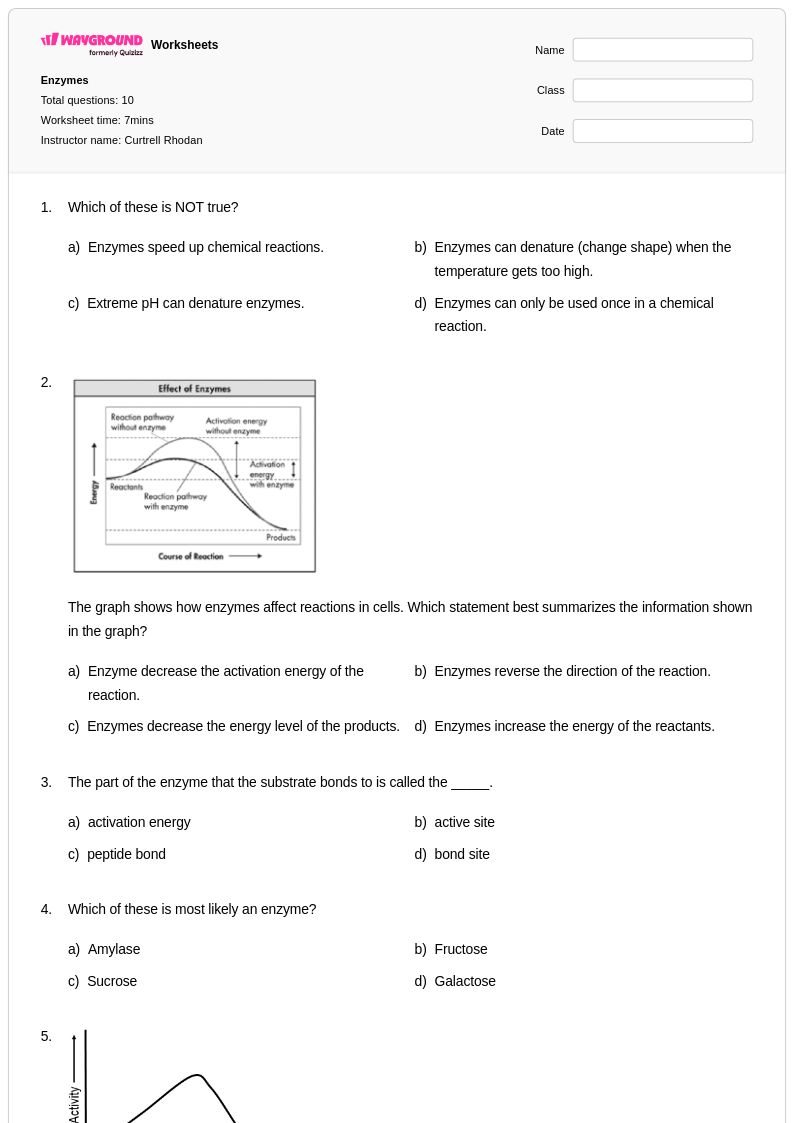
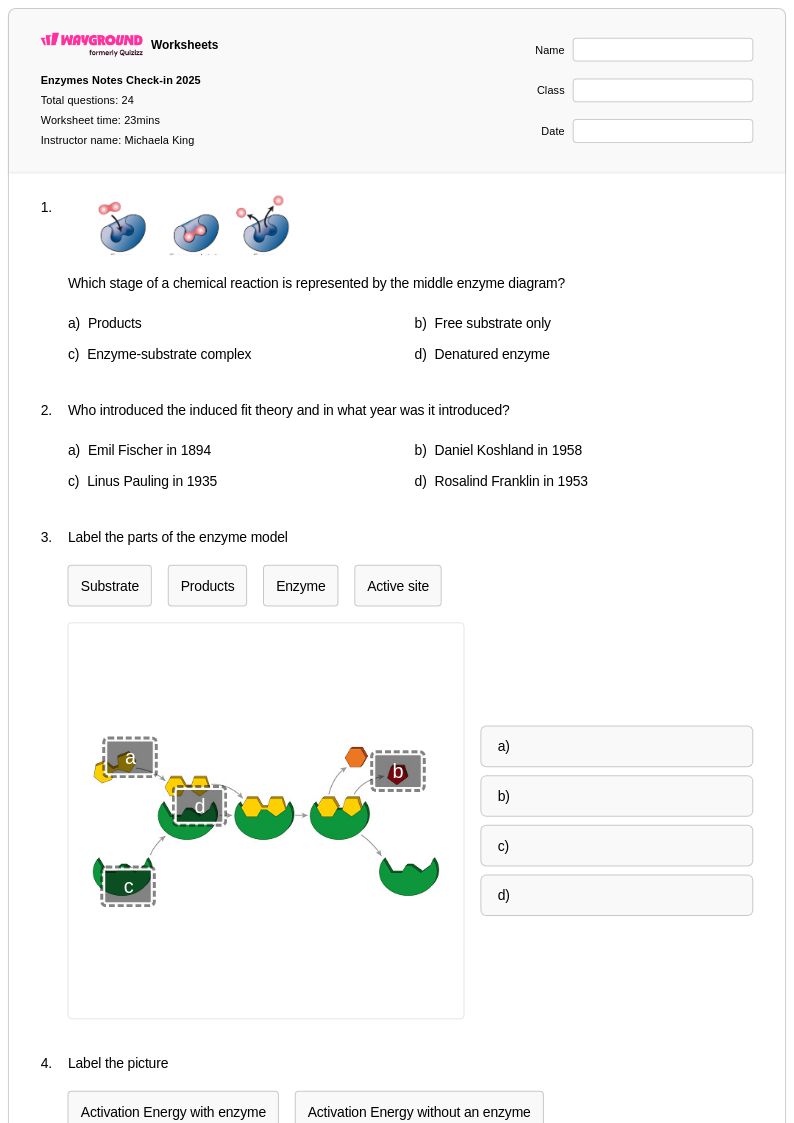
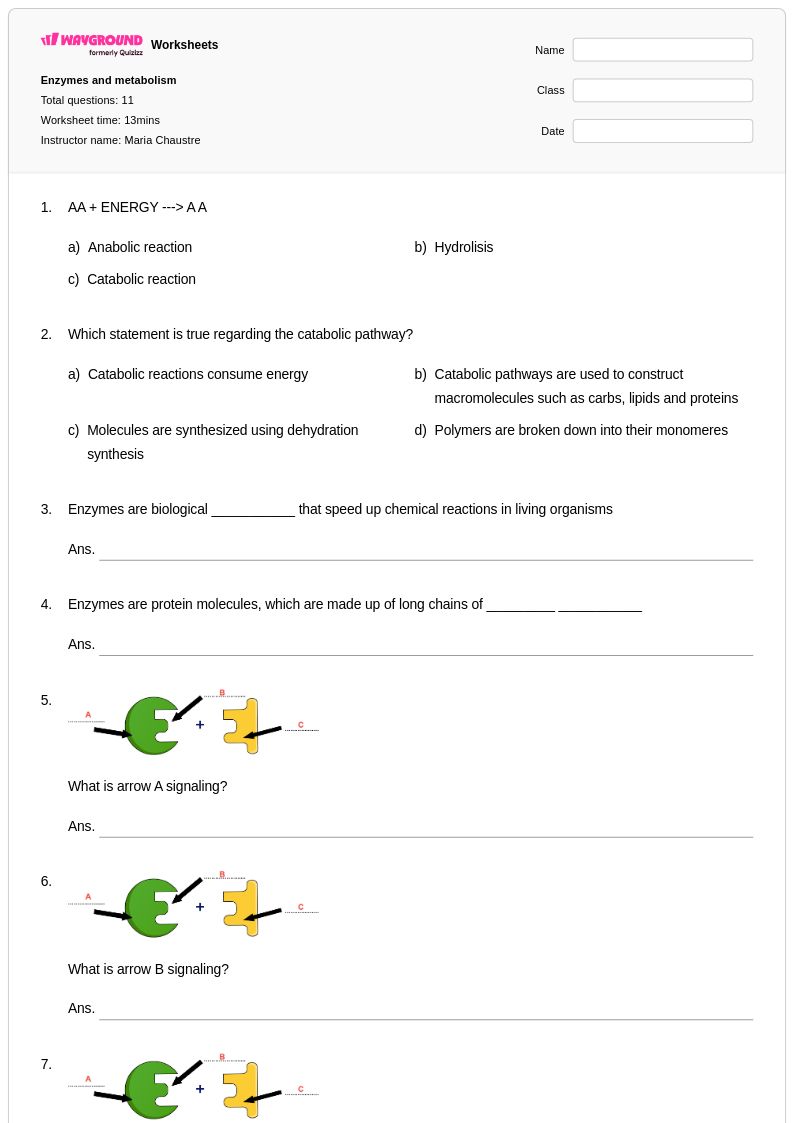
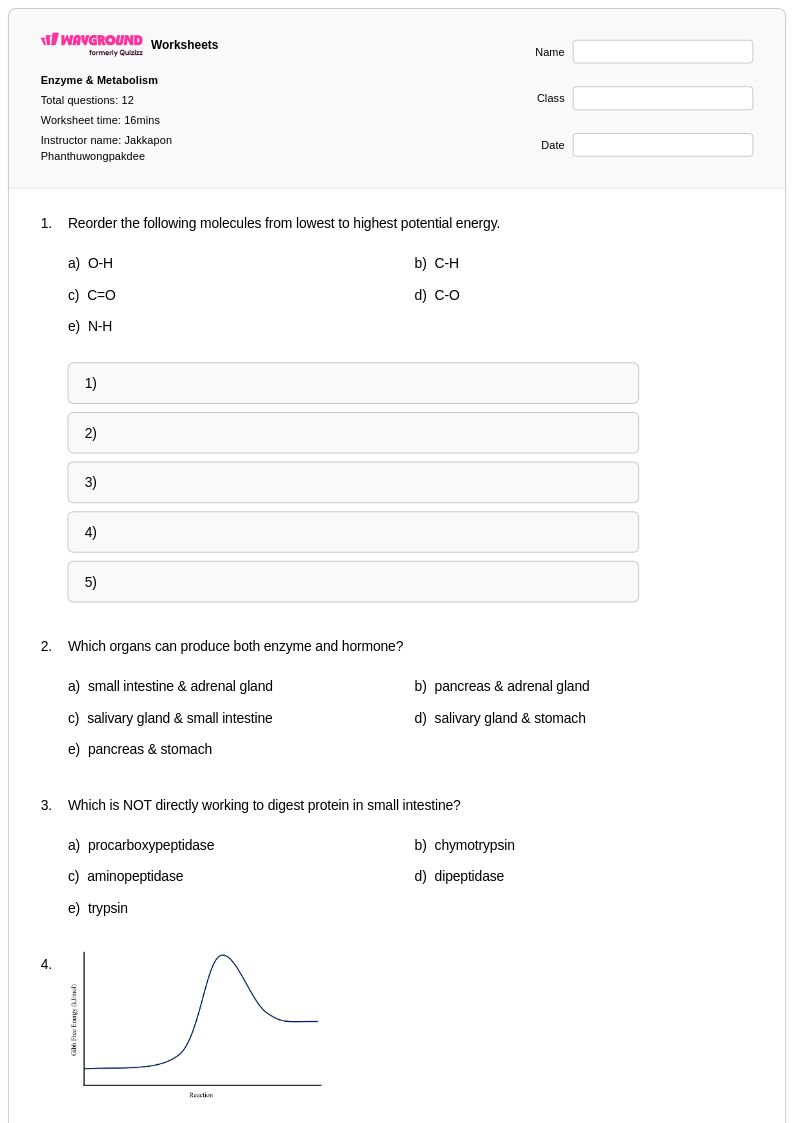
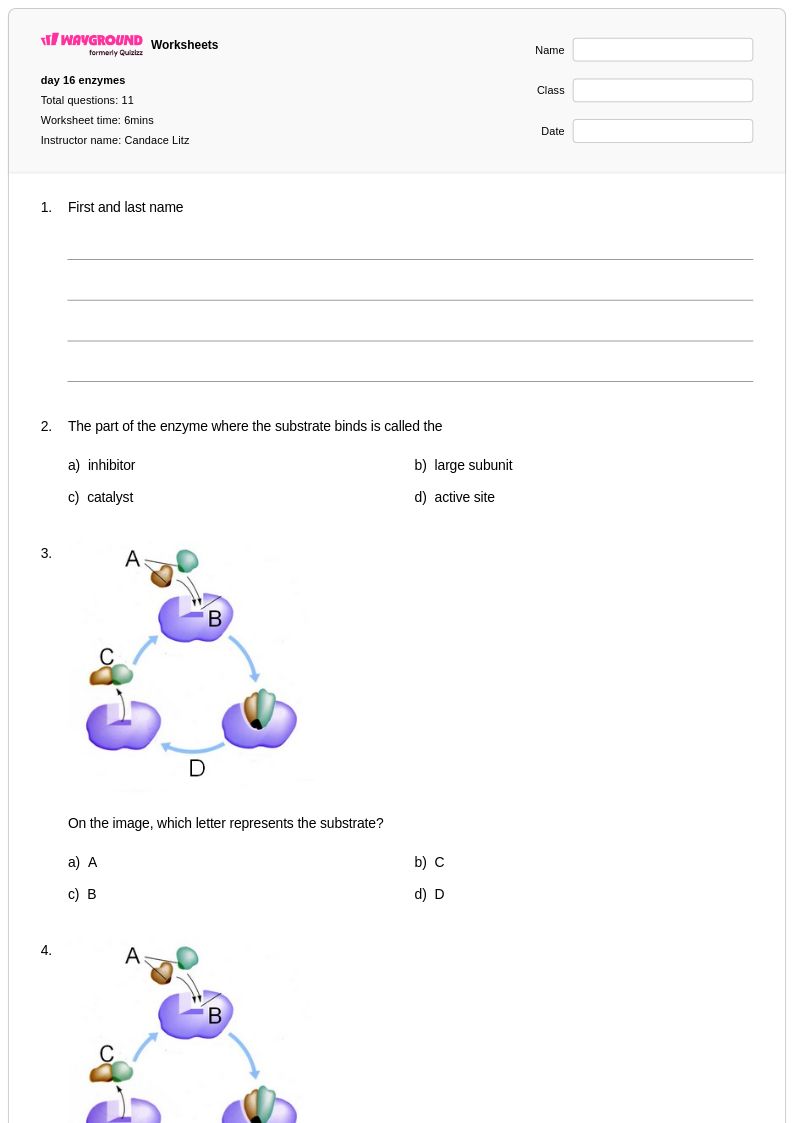
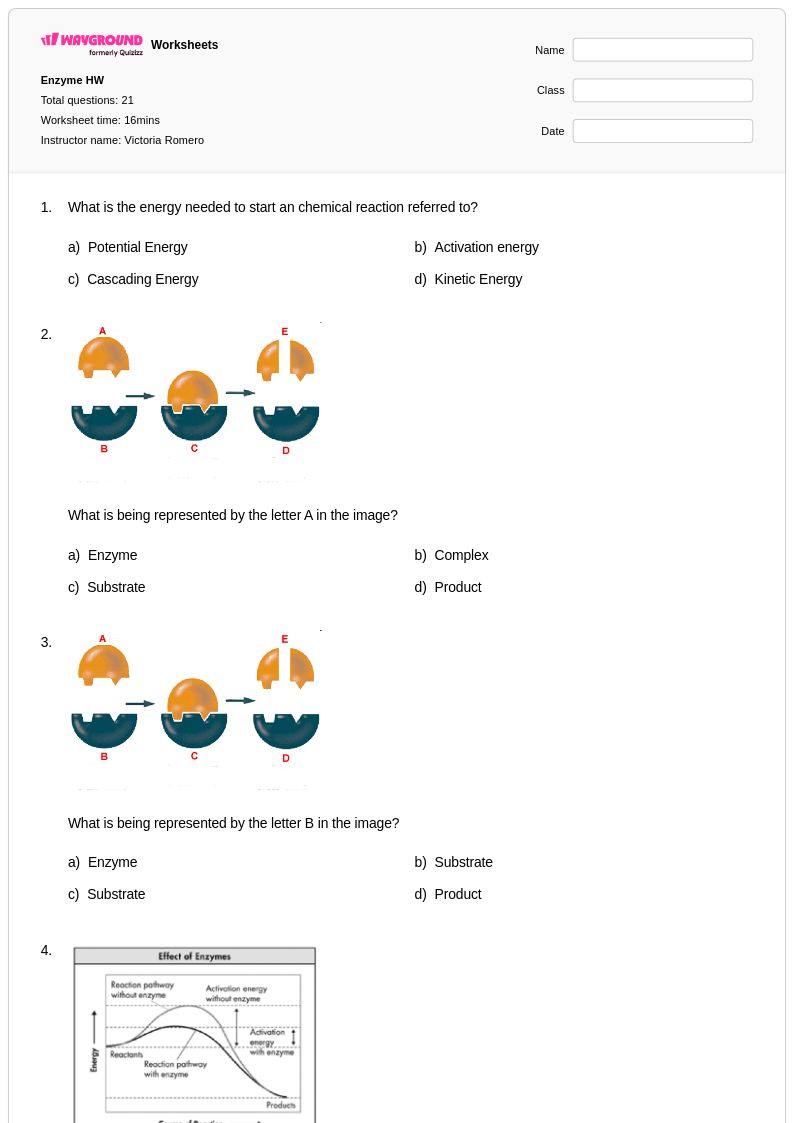
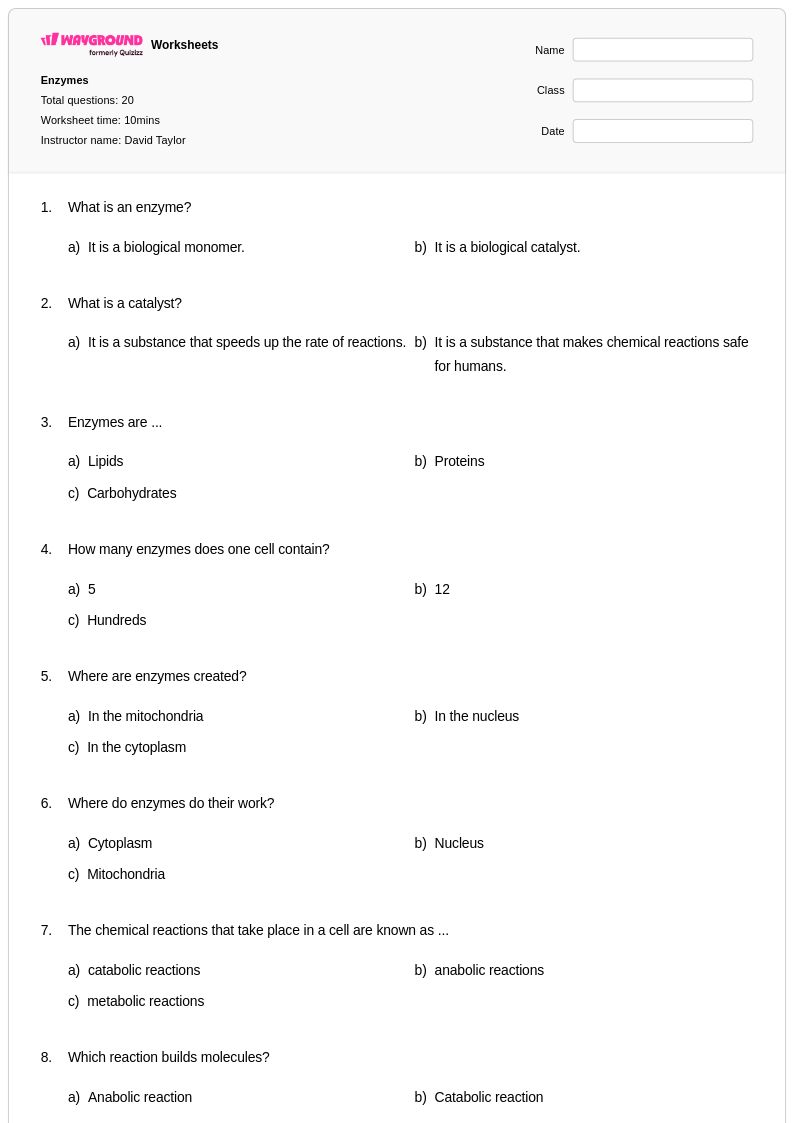
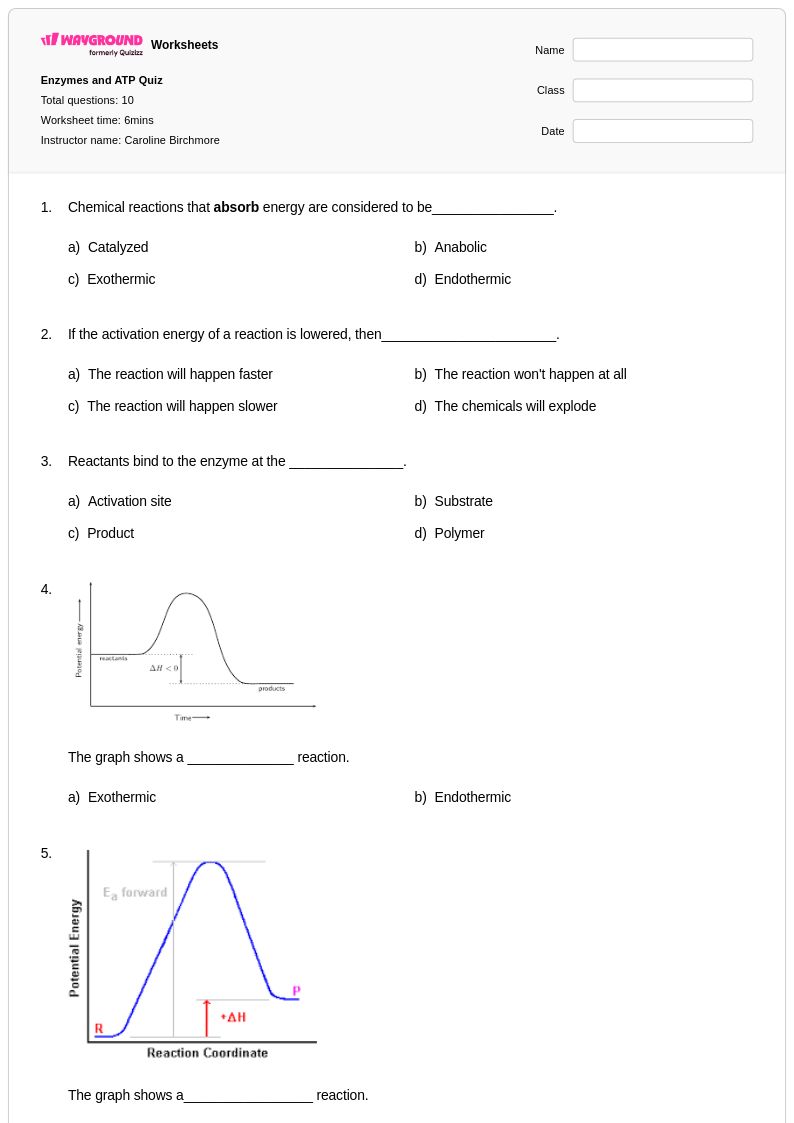
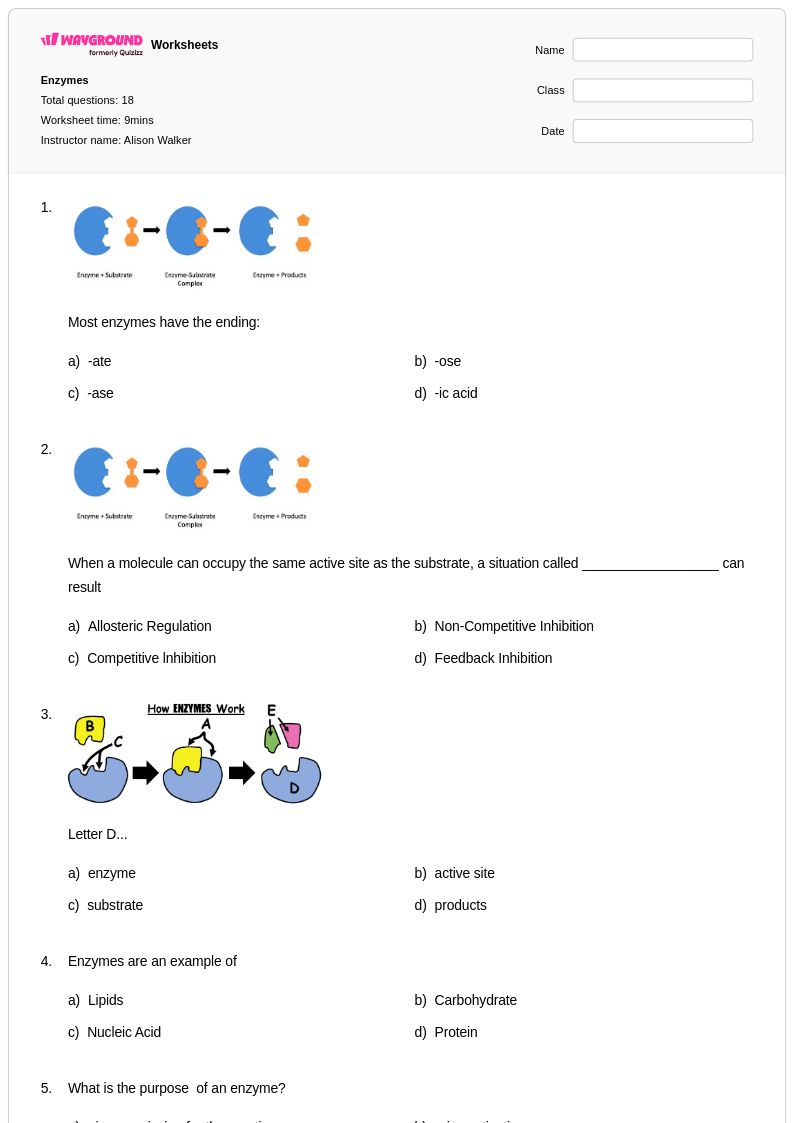
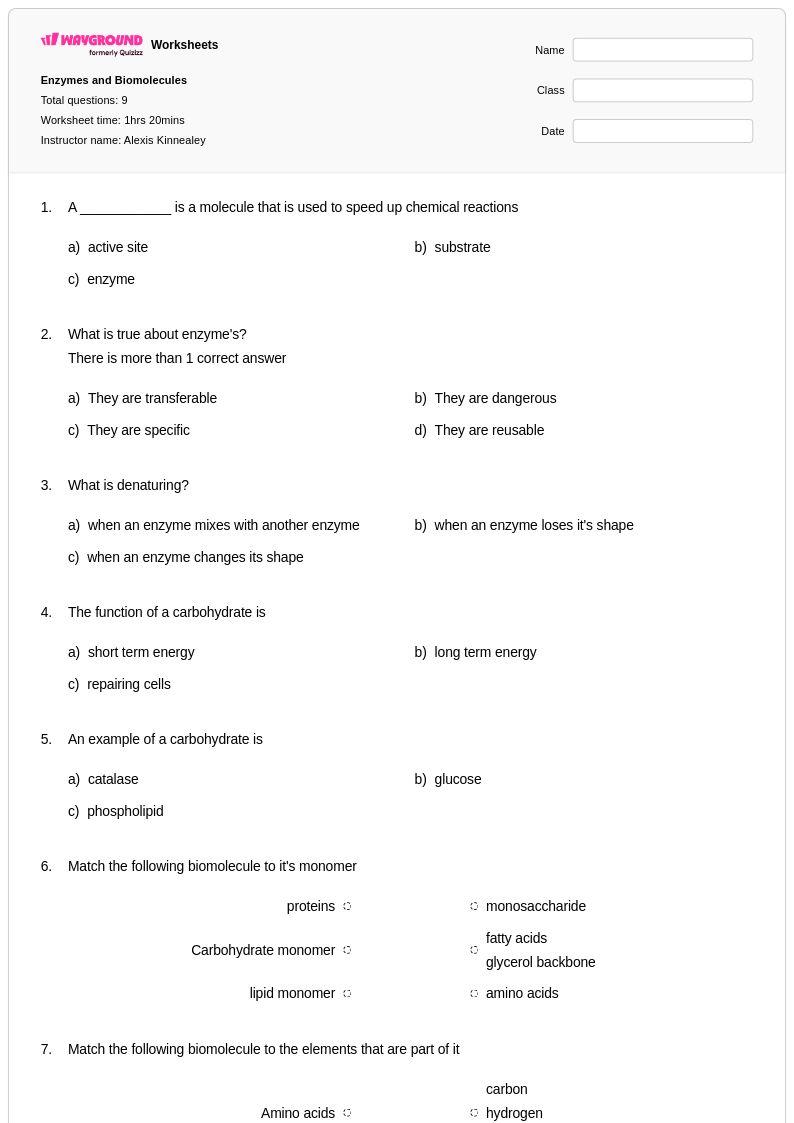
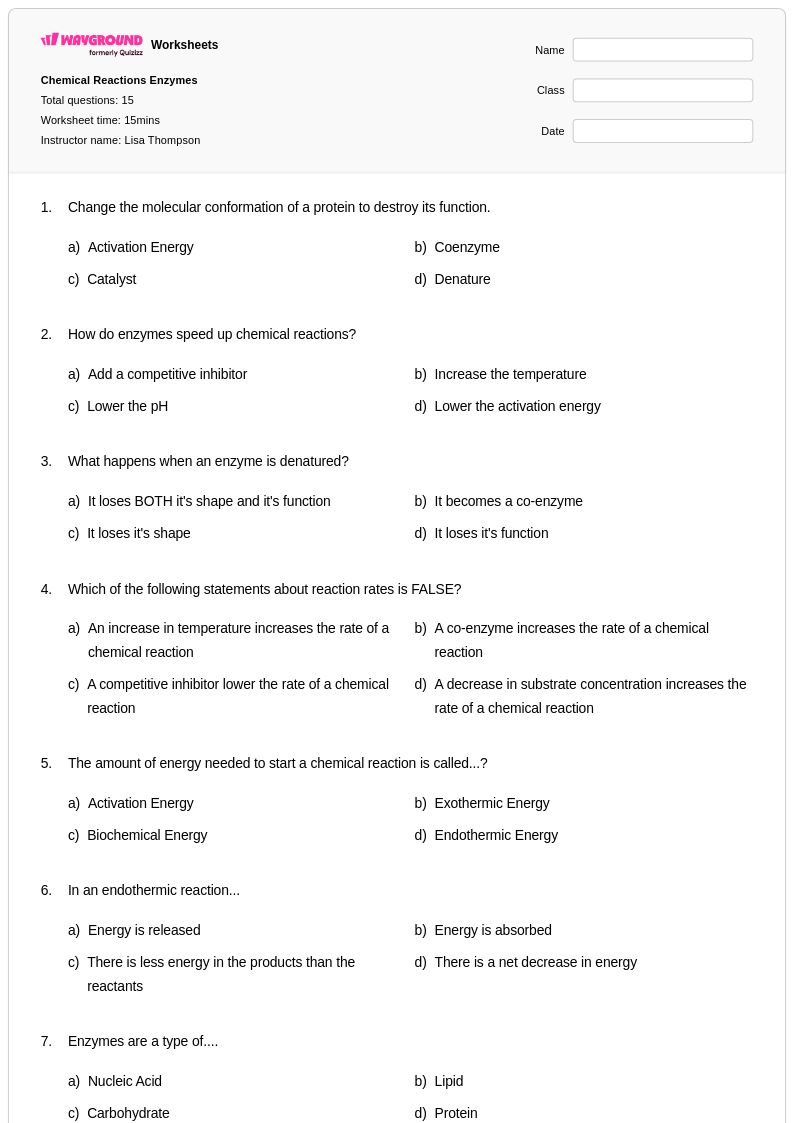
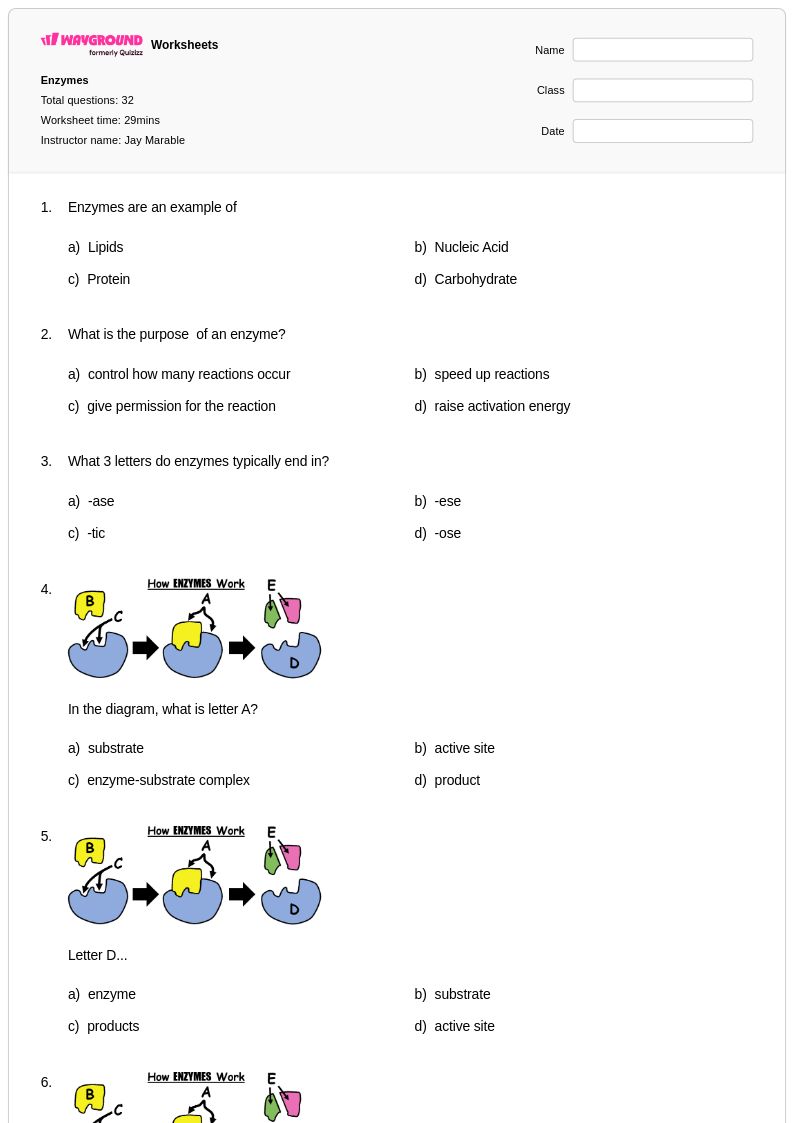
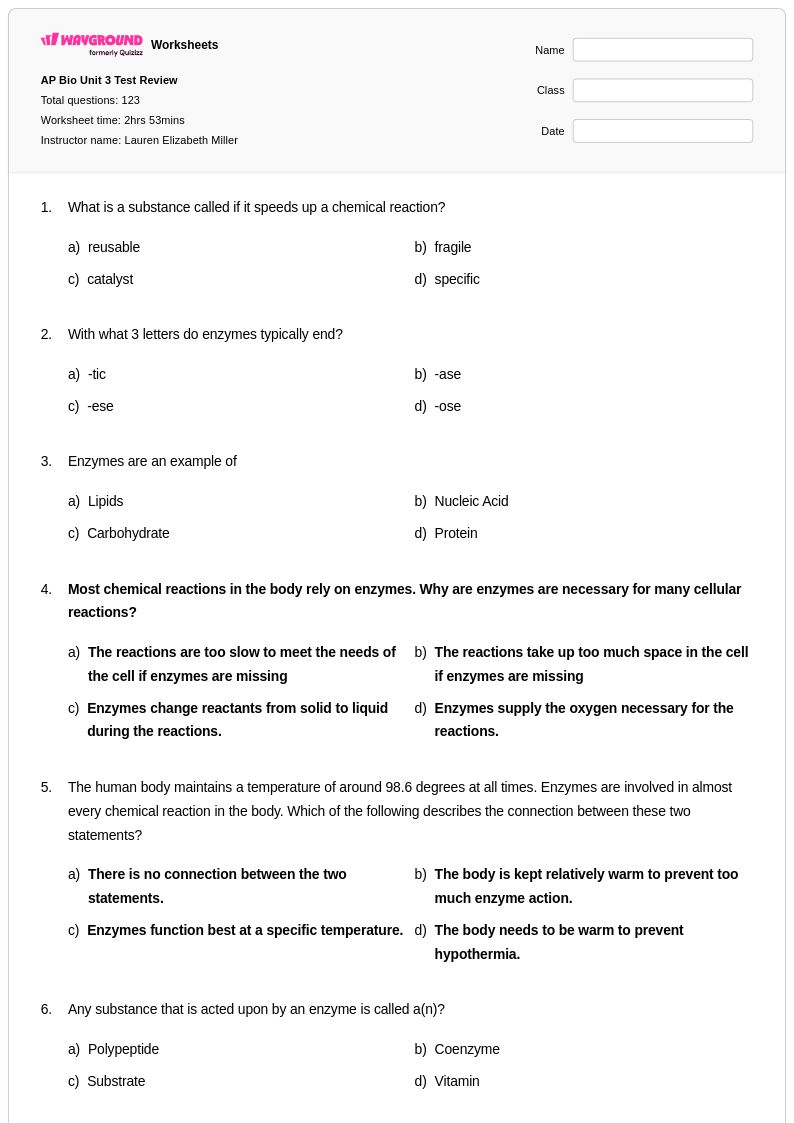
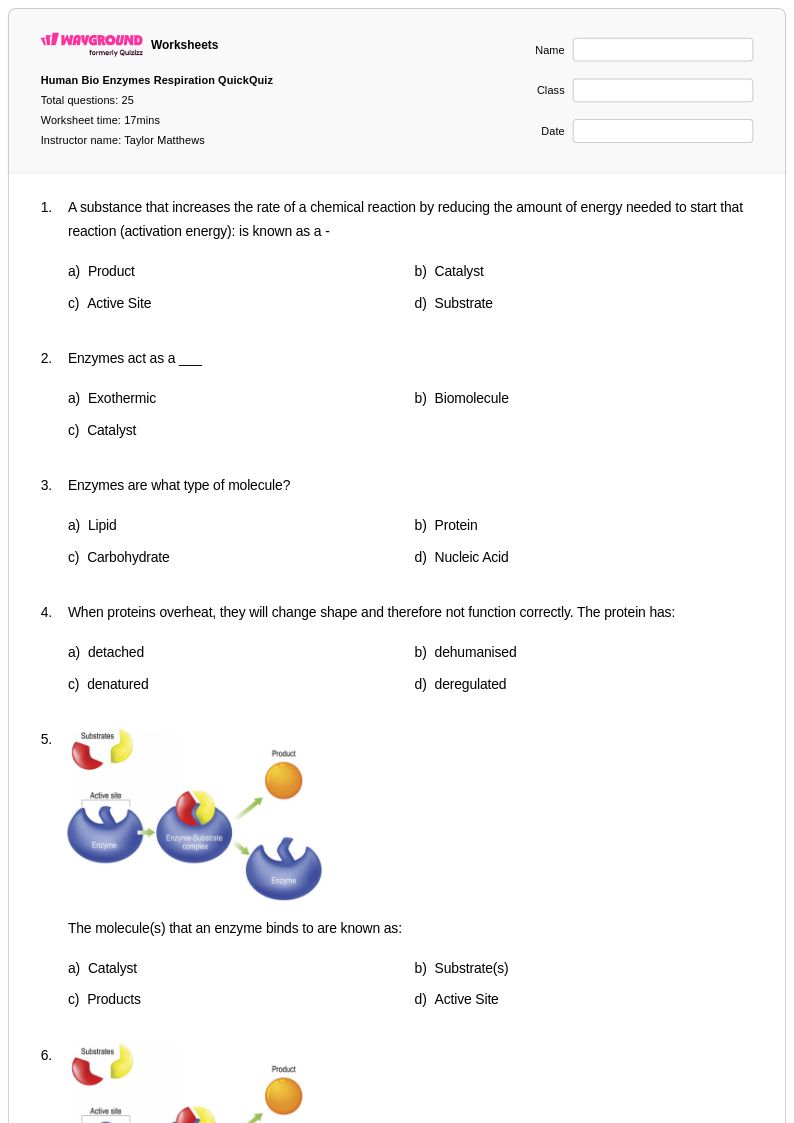
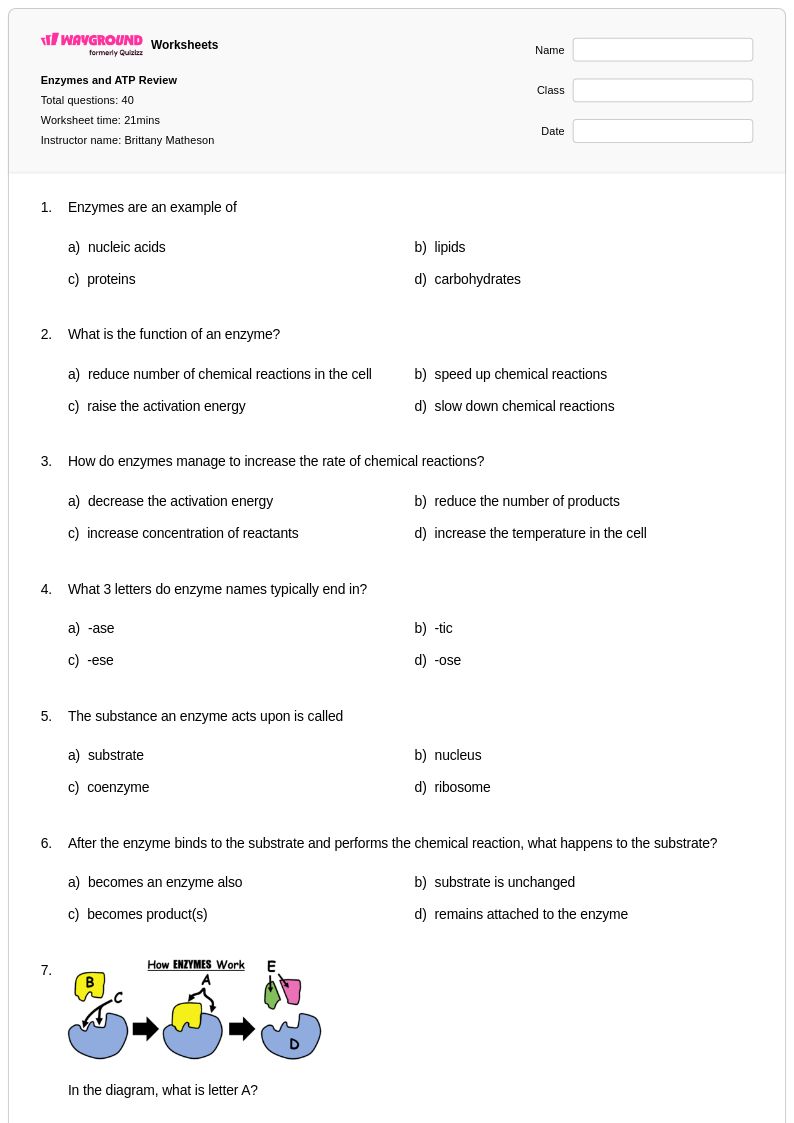
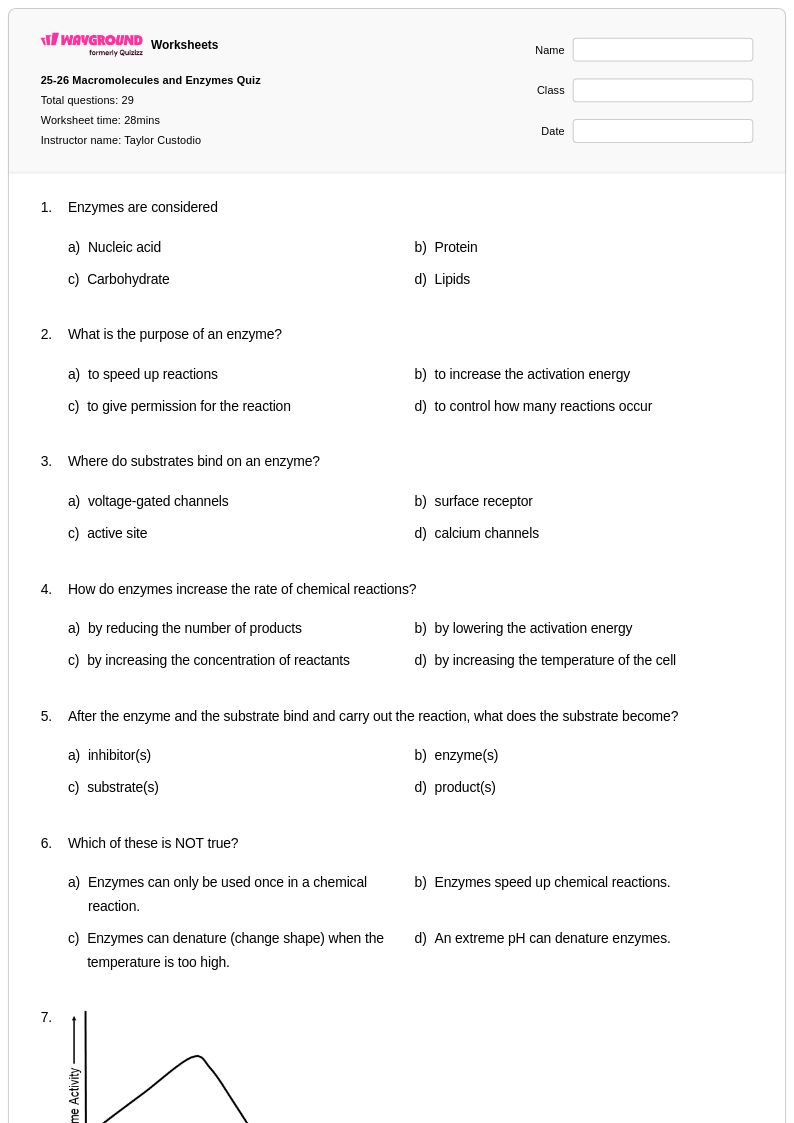
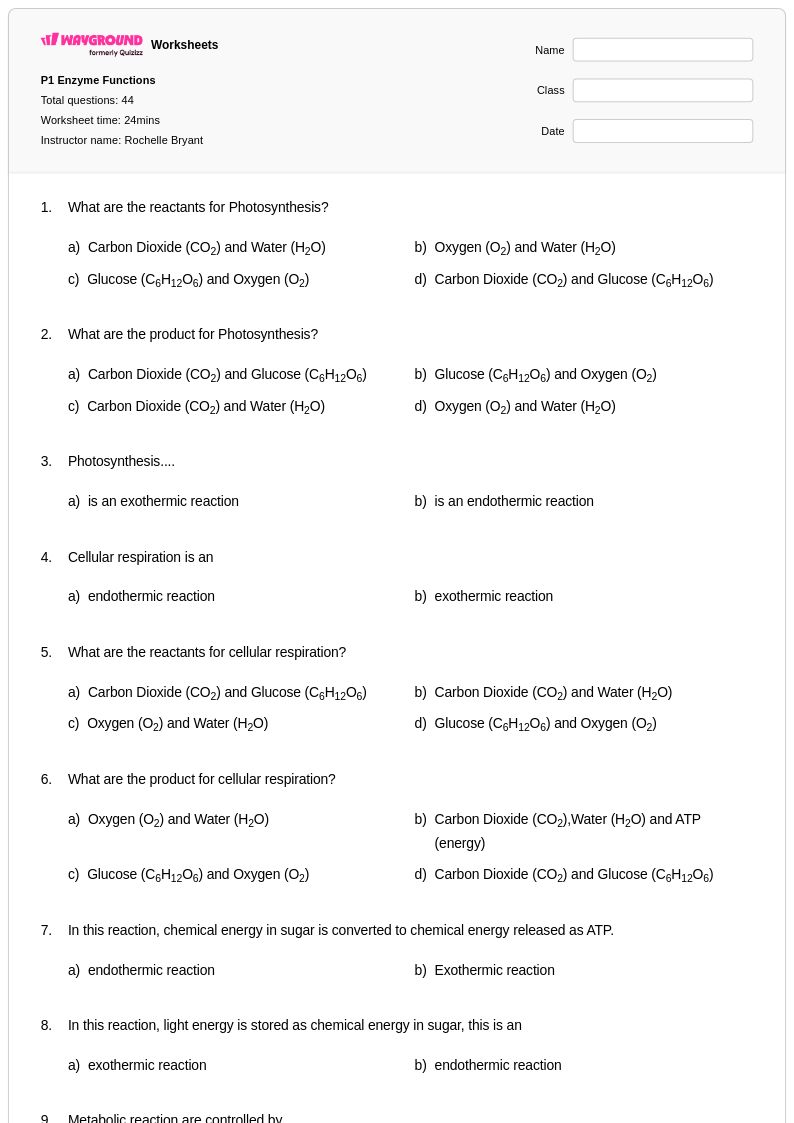
Class 11 anabolic enzymes worksheets available through Wayground (formerly Quizizz) provide comprehensive coverage of these essential protein catalysts that drive biosynthetic pathways in living organisms. These expertly crafted educational resources help students master the complex mechanisms by which anabolic enzymes facilitate the construction of larger molecules from smaller precursors, including protein synthesis, DNA replication, and fatty acid biosynthesis. The worksheets strengthen critical thinking skills through detailed practice problems that explore enzyme kinetics, allosteric regulation, and the role of cofactors in anabolic processes. Each worksheet collection includes thorough answer keys and is available as free printables in convenient PDF format, allowing students to work through challenging scenarios involving enzyme-substrate interactions, competitive inhibition, and metabolic pathway integration at the advanced high school level.
Wayground (formerly Quizizz) empowers biology educators with access to millions of teacher-created resources specifically designed for Class 11 anabolic enzyme instruction. The platform's robust search and filtering capabilities enable teachers to quickly locate worksheets aligned with specific curriculum standards and learning objectives, while differentiation tools allow for seamless customization based on individual student needs and comprehension levels. These anabolic enzymes worksheet collections are available in both printable and digital formats, including downloadable PDFs that facilitate flexible classroom implementation. Teachers leverage these comprehensive resources for targeted skill practice, remediation support for struggling learners, and enrichment activities for advanced students, with the platform's extensive library ensuring access to varied question types, laboratory scenarios, and real-world applications that reinforce understanding of anabolic enzyme function in cellular metabolism.
FAQs
How do I teach anabolic enzymes in a high school or college biology class?
Start by grounding students in the distinction between anabolic and catabolic reactions before introducing specific enzymes. Use concrete examples like DNA polymerase in DNA replication, ribosomes and aminoacyl-tRNA synthetases in protein synthesis, and acetyl-CoA carboxylase in fatty acid synthesis to anchor abstract concepts. Once students can identify the enzyme and its substrate, move into regulation — allosteric control, feedback inhibition, and hormonal signaling all give students meaningful context for why these pathways are tightly controlled.
What practice problems help students understand anabolic enzyme function?
Effective practice problems ask students to trace a specific anabolic pathway step by step, identify which enzyme catalyzes each reaction, and predict what happens when an enzyme is inhibited or overactivated. Pathway-mapping exercises, enzyme-substrate matching tasks, and scenario-based questions about metabolic disorders or drug mechanisms are especially useful. These formats push students beyond memorization and require them to apply their understanding of enzyme structure and function in a biological context.
What common mistakes do students make when learning about anabolic enzymes?
The most frequent misconception is conflating anabolic enzymes with the energy-releasing processes of catabolism — students often assume that because ATP is involved, a pathway must be catabolic. A second common error is treating enzymes as passive participants rather than regulated catalysts, which leads to confusion about allosteric sites and feedback loops. Students also frequently struggle to distinguish between enzymes that are unique to anabolic pathways versus those shared with catabolic ones, such as enzymes in gluconeogenesis versus glycolysis.
How can I use anabolic enzymes worksheets to assess student understanding?
Use worksheets that require students to label enzyme roles within a named anabolic pathway, explain regulatory mechanisms in writing, and analyze the metabolic consequences of enzyme dysfunction. Diagram-completion tasks and short-answer questions about biosynthetic reactions are strong formative assessment tools because they reveal whether students understand the logic of the pathway or are simply recalling vocabulary. Answer keys that explain enzyme mechanisms — not just list correct answers — help teachers identify exactly where student reasoning breaks down.
How do I use Wayground's anabolic enzymes worksheets in my classroom?
Wayground's anabolic enzymes worksheets are available as printable PDFs for traditional classroom distribution and in digital formats for technology-integrated learning environments, including the option to host them as a quiz directly on Wayground. Each worksheet includes a detailed answer key that explains enzyme mechanisms and regulatory processes, making them practical for independent practice, guided review, or formative assessment. For students who need additional support, Wayground's accommodation tools allow teachers to enable read-aloud, extended time, or reduced answer choices on an individual basis without affecting the rest of the class.
How do I differentiate instruction for students who struggle with anabolic pathways?
Break down complex pathways into single-reaction steps and have struggling students focus on one enzyme at a time before asking them to sequence an entire pathway. Visual supports such as color-coded pathway diagrams and enzyme-substrate lock-and-key models reduce cognitive load while preserving conceptual accuracy. On Wayground, teachers can assign individual accommodations — including read-aloud for question text, reduced answer choices, and extended time — to specific students, so differentiated support is embedded directly into the practice experience without singling students out.