Free Printable Mrna Editing and Processing Worksheets for Class 11
Class 11 mRNA editing and processing worksheets from Wayground help students master post-transcriptional modifications through comprehensive practice problems, free printable PDFs, and detailed answer keys for effective biology learning.
Explore printable Mrna Editing and Processing worksheets for Class 11
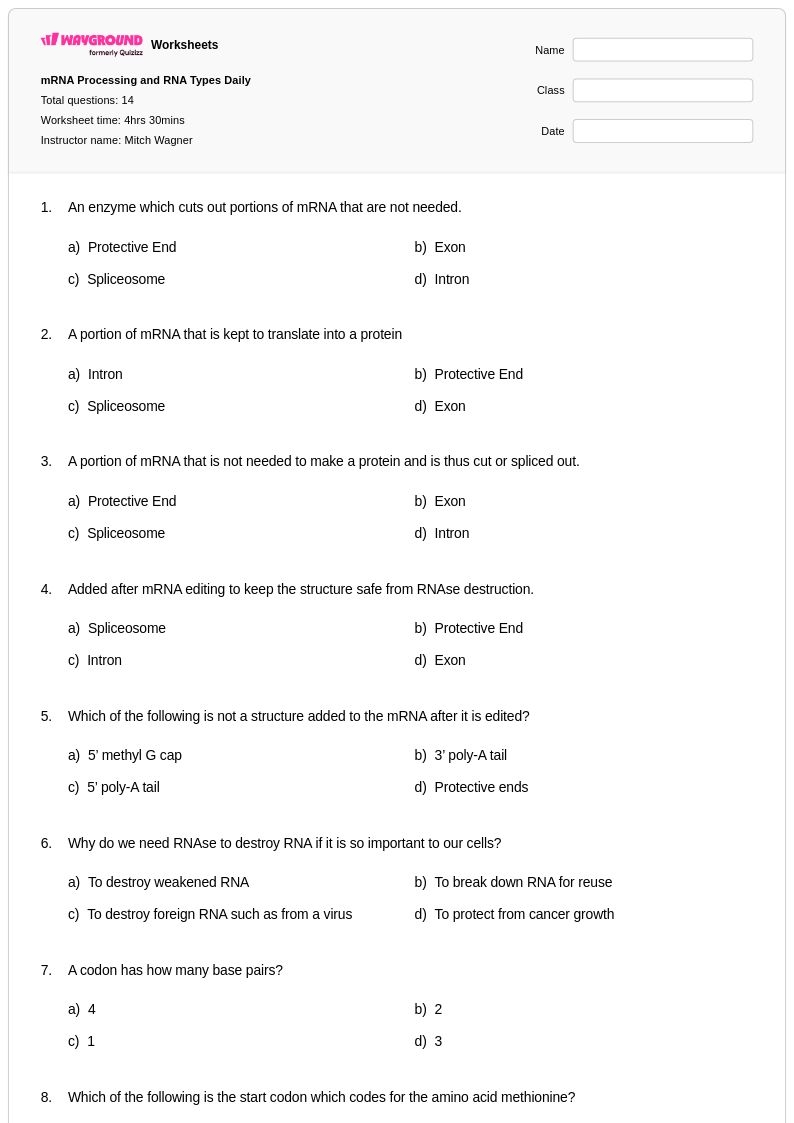
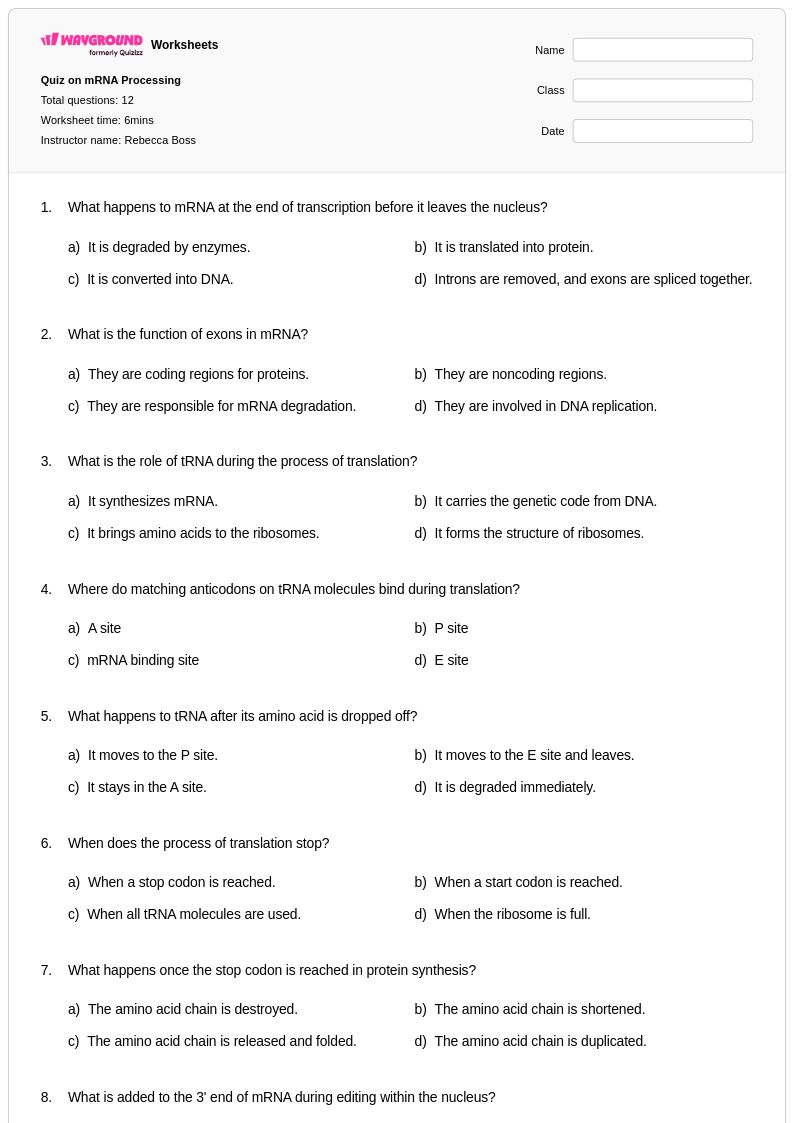
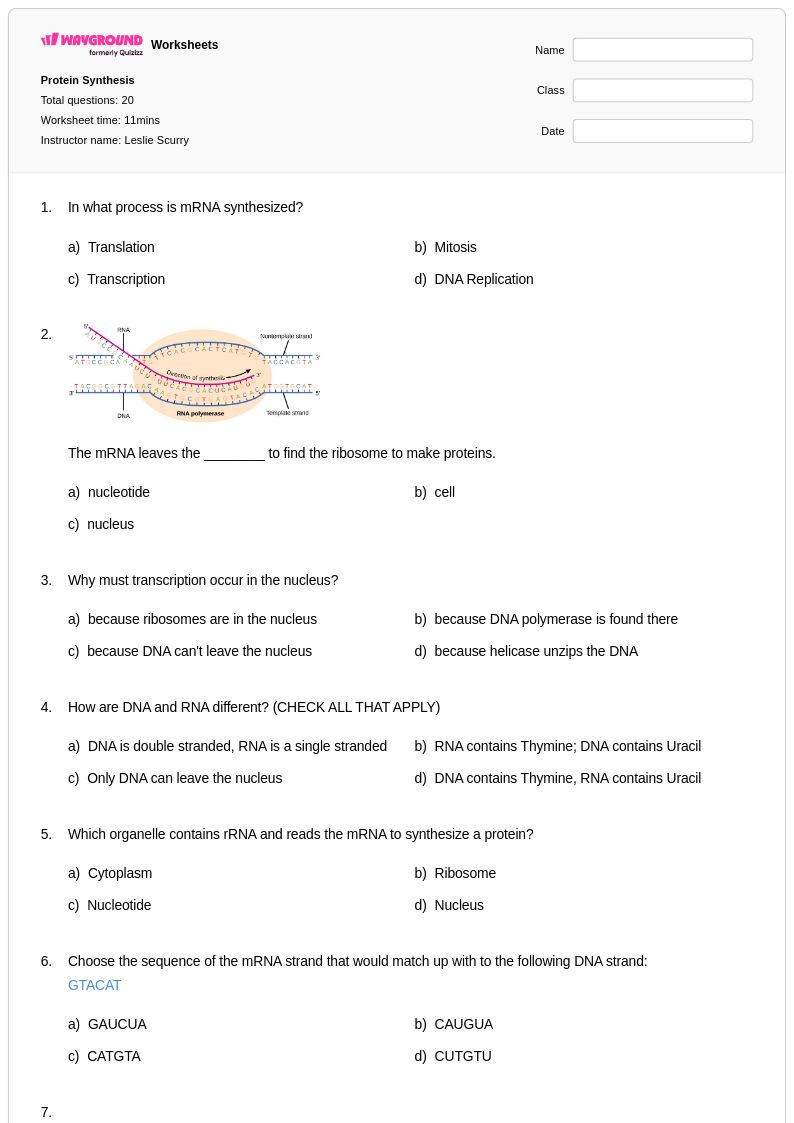
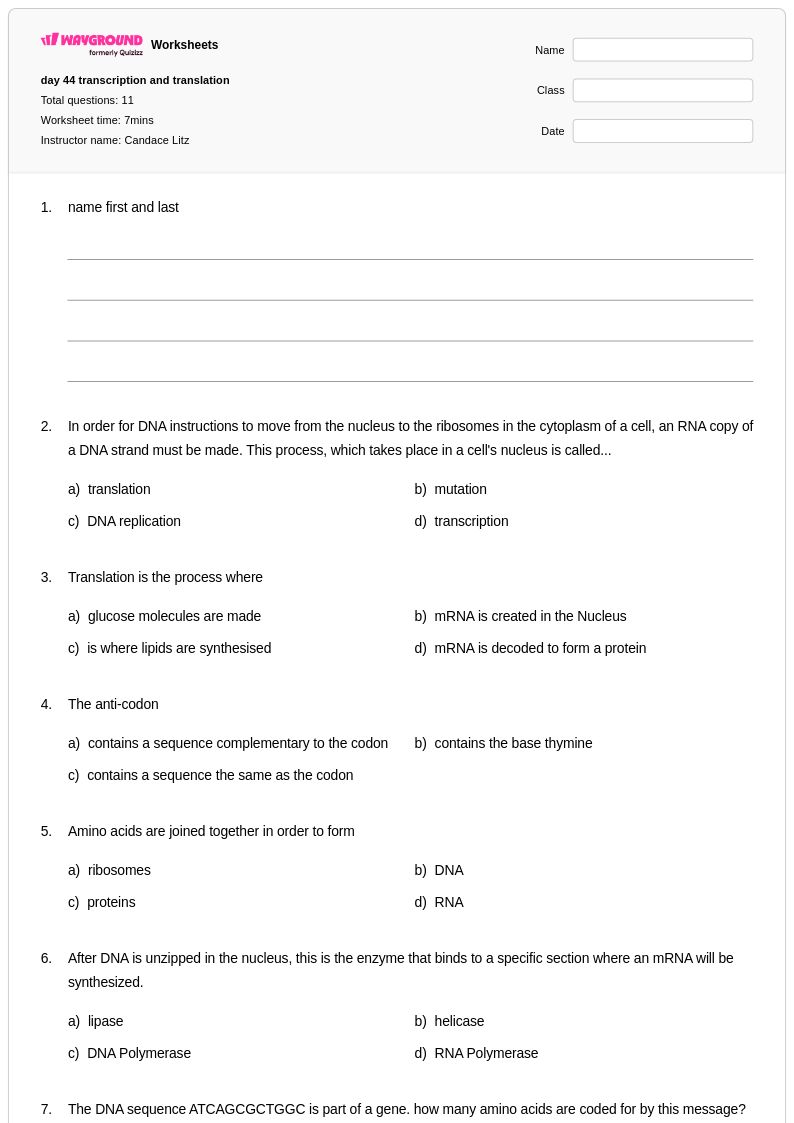
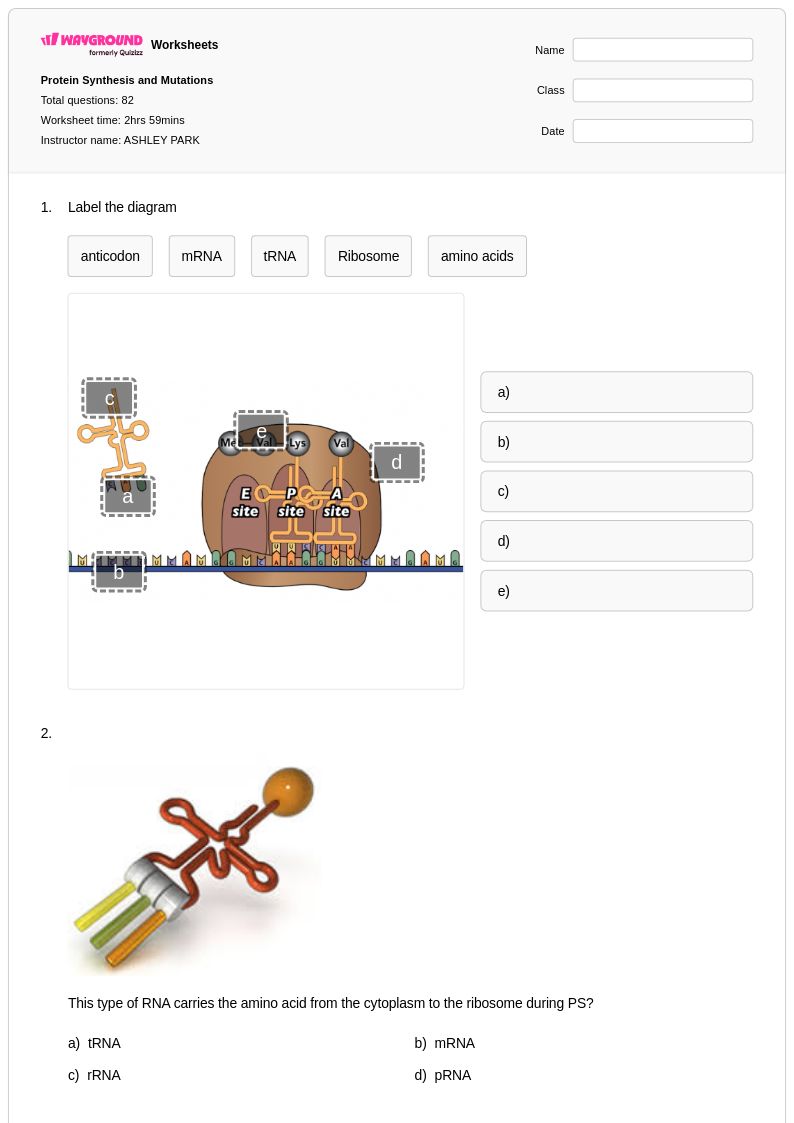
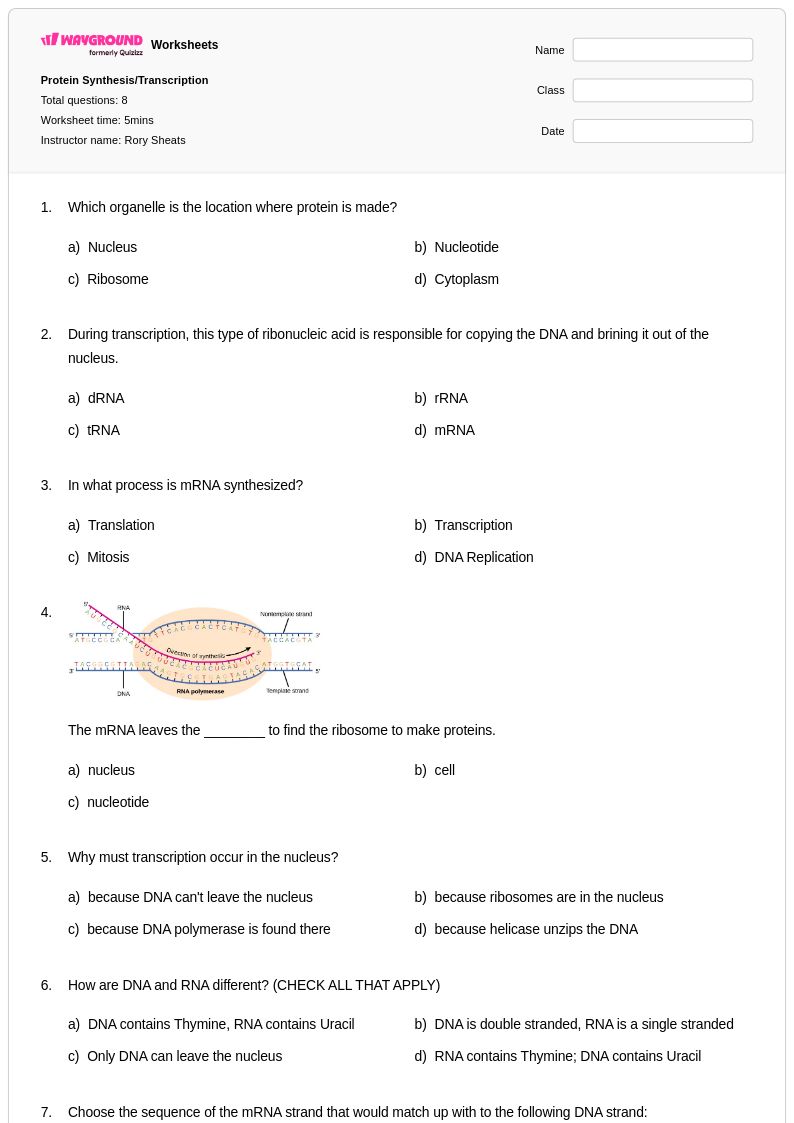
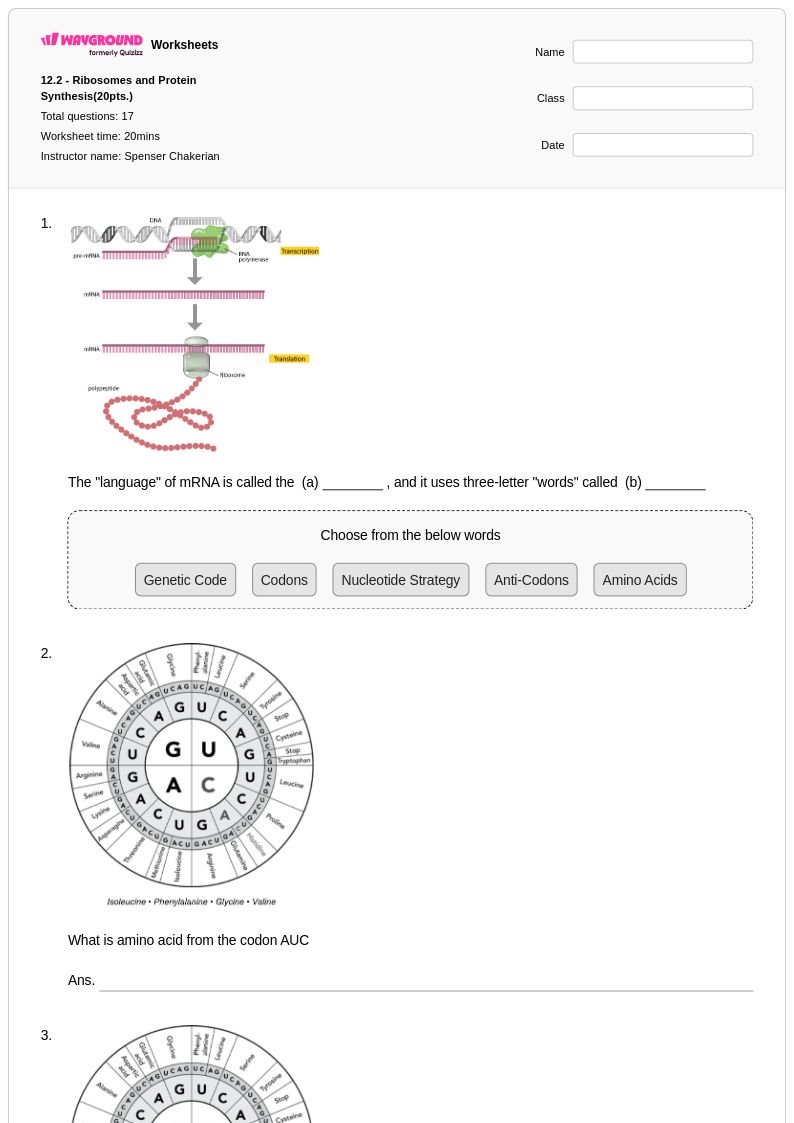
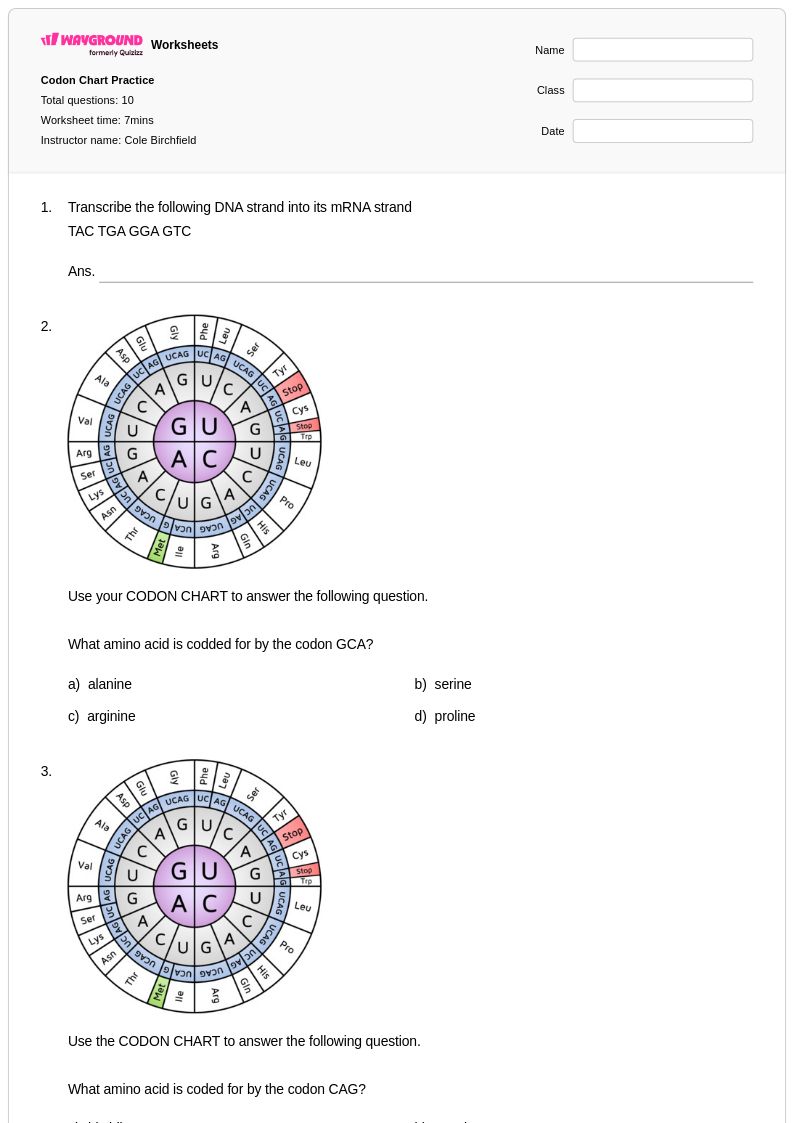
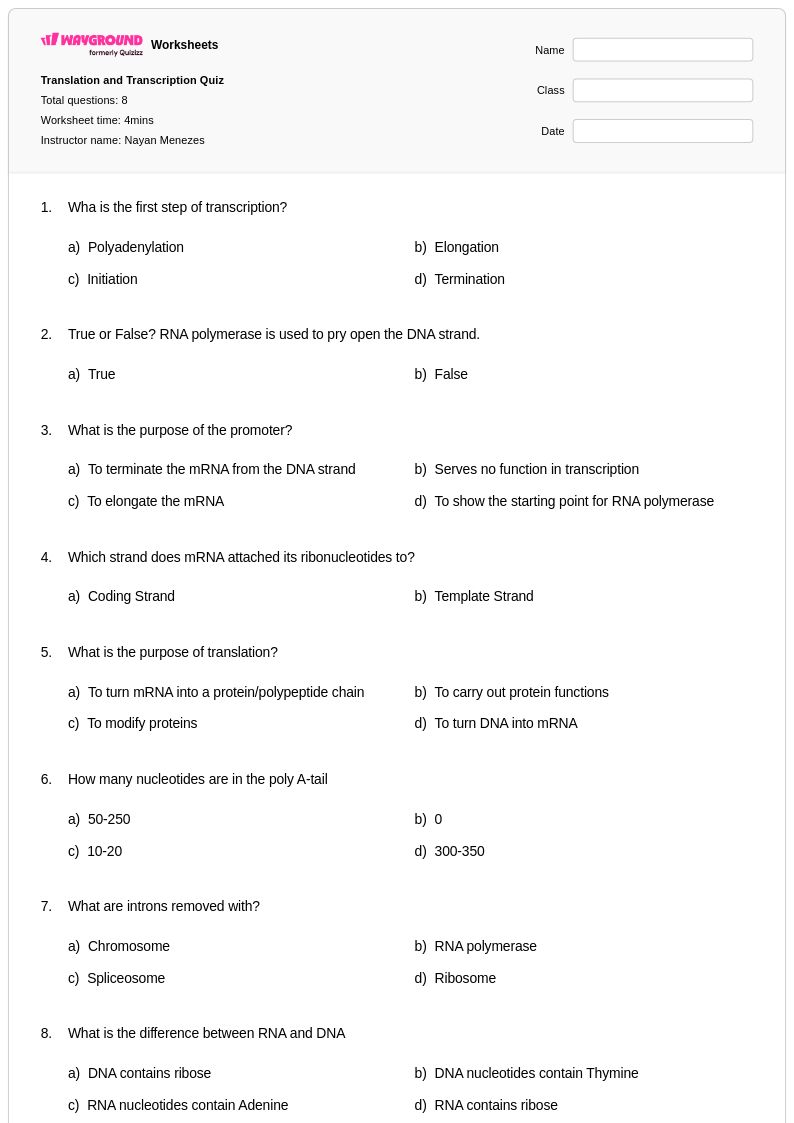
mRNA editing and processing worksheets for Class 11 students available through Wayground (formerly Quizizz) provide comprehensive coverage of post-transcriptional modifications that transform primary RNA transcripts into mature messenger RNA molecules. These expertly designed educational resources strengthen students' understanding of critical molecular processes including 5' capping, 3' polyadenylation, and intron splicing mechanisms that occur in eukaryotic cells. Students develop mastery of complex concepts such as spliceosome assembly, alternative splicing patterns, and RNA editing events through carefully scaffolded practice problems that progress from basic identification tasks to advanced analysis scenarios. Each worksheet collection includes detailed answer keys and explanatory materials, with free printables available in convenient pdf formats that support both independent study and classroom instruction.
Wayground (formerly Quizizz) empowers educators with access to millions of teacher-created mRNA editing and processing resources that align with advanced biology curriculum standards and learning objectives. The platform's robust search and filtering capabilities enable teachers to quickly locate materials targeting specific aspects of RNA processing, from basic mechanistic steps to sophisticated regulatory mechanisms and clinical applications. Comprehensive differentiation tools allow instructors to customize worksheet complexity and modify practice problems to accommodate diverse learning needs, supporting both remediation for struggling students and enrichment opportunities for advanced learners. These versatile resources are available in both printable and digital formats, facilitating seamless integration into lesson planning while providing flexible options for skill practice, formative assessment, and targeted intervention strategies that enhance student comprehension of these fundamental molecular biology processes.
FAQs
How do I teach mRNA editing and processing to biology students?
Start by grounding students in the central dogma before introducing post-transcriptional modifications as a refinement layer between transcription and translation. Use the major events — 5' capping, 3' polyadenylation, and intron splicing — as a sequential framework so students can see how each step protects and prepares the mRNA for export and translation. Connecting each modification to a functional consequence (e.g., the 5' cap protects against degradation and aids ribosome binding) helps students move beyond memorization toward mechanistic understanding.
What exercises help students practice mRNA splicing and post-transcriptional modifications?
Effective practice exercises include labeling pre-mRNA diagrams with splice sites, introns, and exons, then predicting the mature mRNA sequence after splicing. Scenarios that ask students to identify the role of the spliceosome or trace the consequences of a splice site mutation on the final protein product build analytical depth. Alternative splicing problems — where students determine how different exon combinations produce distinct proteins from the same gene — are particularly valuable for reinforcing the regulation of gene expression.
What mistakes do students commonly make when learning about mRNA processing?
A frequent misconception is that introns are simply errors or junk DNA rather than regulated, functional sequences that can be selectively retained or excluded through alternative splicing. Students also commonly confuse the location of processing, assuming it occurs in the cytoplasm rather than the nucleus before export. Another persistent error is conflating transcription and mRNA processing as a single event rather than recognizing post-transcriptional modification as a distinct, regulated stage of gene expression.
How does alternative splicing affect gene expression, and how do I explain it to students?
Alternative splicing allows a single pre-mRNA to produce multiple distinct mature mRNAs by including or excluding different exons, which in turn generates different protein isoforms from a single gene. This is a powerful concept because it helps explain how the human genome can encode far more functional diversity than the raw gene count suggests. A useful classroom strategy is to give students a fixed set of exons and have them map out all possible mRNA combinations, making the regulatory logic of alternative splicing concrete and visible.
How can I use mRNA editing and processing worksheets in my classroom?
Wayground's mRNA editing and processing worksheets are available as printable PDFs for traditional classroom use and in digital formats for technology-integrated learning environments, including the option to host them as a graded quiz directly on Wayground. Practice problems span from foundational identification tasks to complex mutation analysis scenarios, making them suitable for initial instruction, homework, or review. All worksheets include complete answer keys, supporting self-assessment, peer review, and efficient teacher grading.
How do I differentiate mRNA processing instruction for students at different levels?
For students who are struggling, focus on the three core modifications — 5' capping, polyadenylation, and basic splicing — before introducing spliceosome mechanics or alternative splicing. Advanced learners can be challenged with mutation-prediction problems, asking them to trace how a point mutation at a splice donor or acceptor site disrupts the final mRNA and the resulting protein. On Wayground, teachers can apply accommodations such as reduced answer choices or read-aloud support to individual students, ensuring scaffolding is targeted without signaling differences to the rest of the class.